A 20-minute follow-up counseling session for a 7th-grade student to deepen their awareness of Automatic Negative Thoughts (ANTs), identify personal triggers, and practice cognitive restructuring techniques.
A 45-minute interactive lesson for middle schoolers to understand the psychology of procrastination and learn practical strategies to overcome it, featuring a movement-based icebreaker.
Week 2 of the EF module focuses on identifying common organizational 'glitches' and matching them to systems like color-coding, planners, and visual schedules. Students create a personal 'Organization Blueprint' for their physical and digital spaces.
A series of 6 reflective worksheets designed for a 12-year-old girl to build self-awareness regarding lying, swearing, and class avoidance, focusing on emotional regulation and accountability.
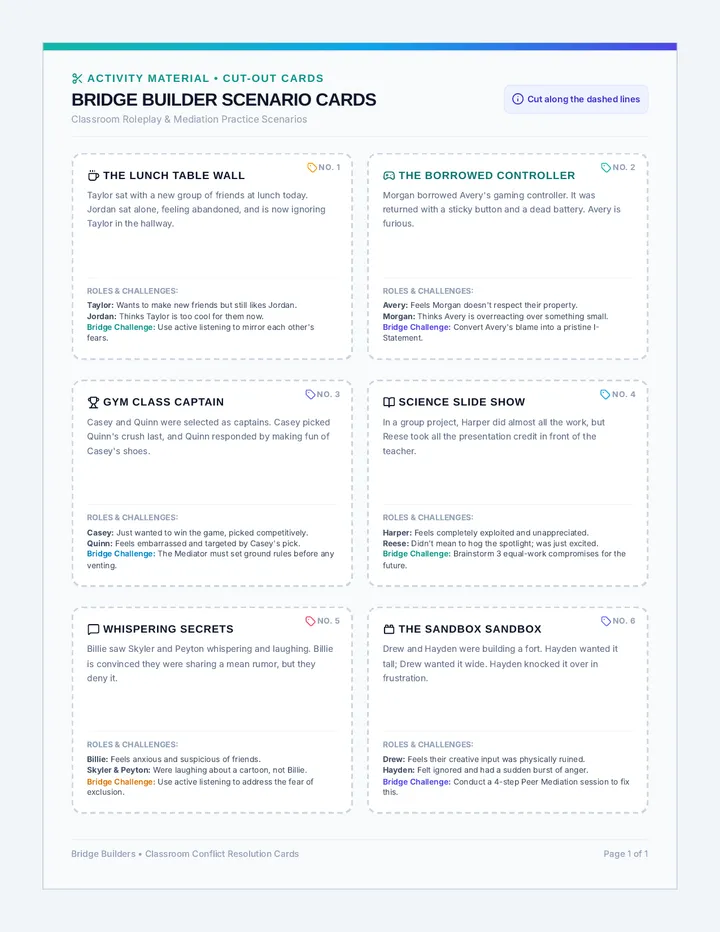
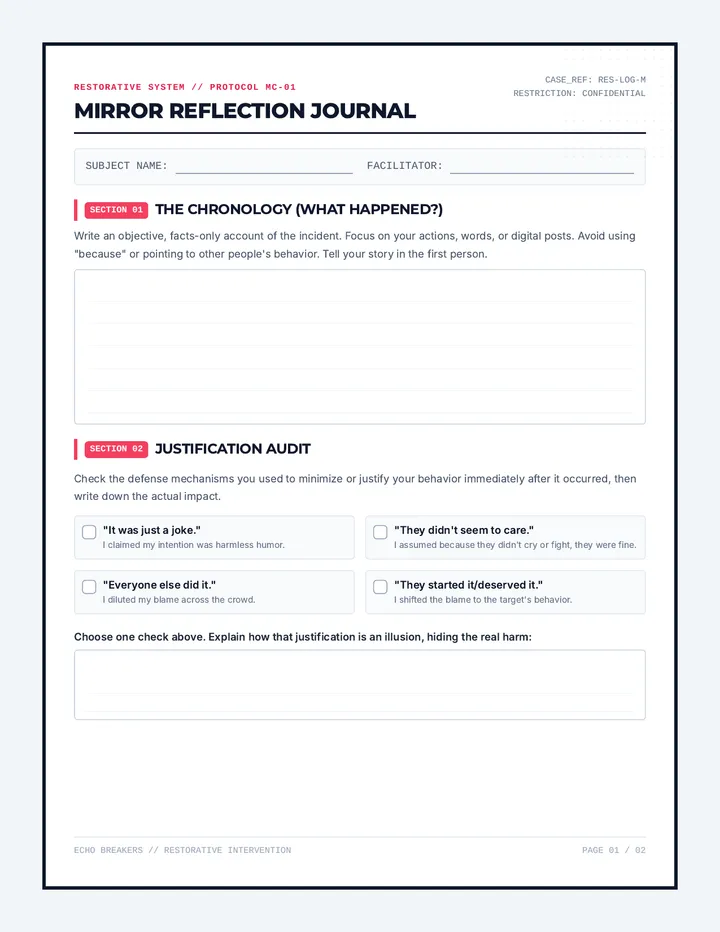
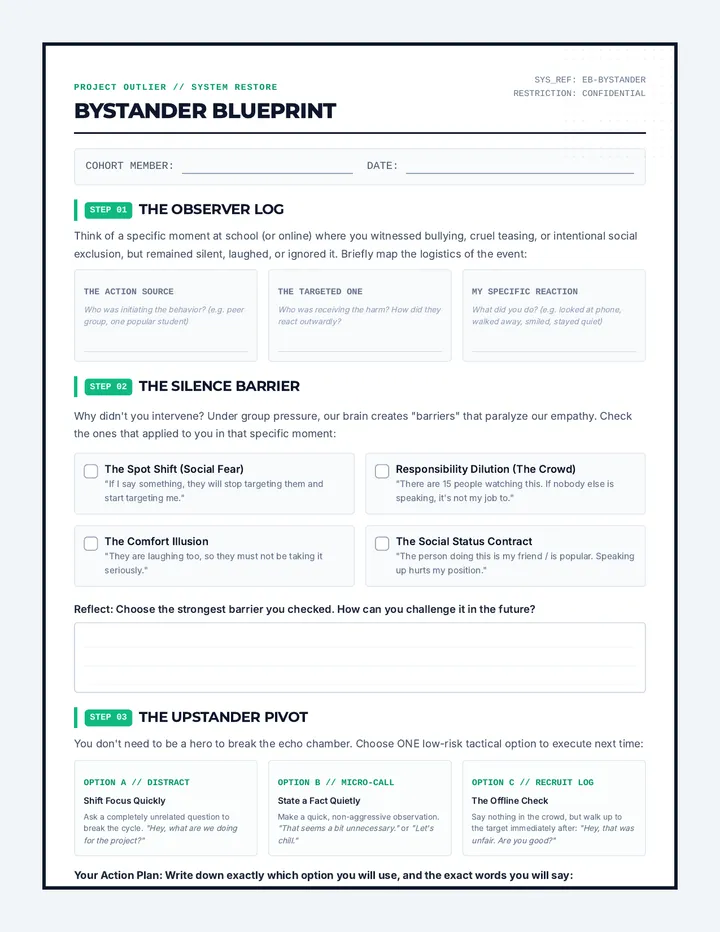
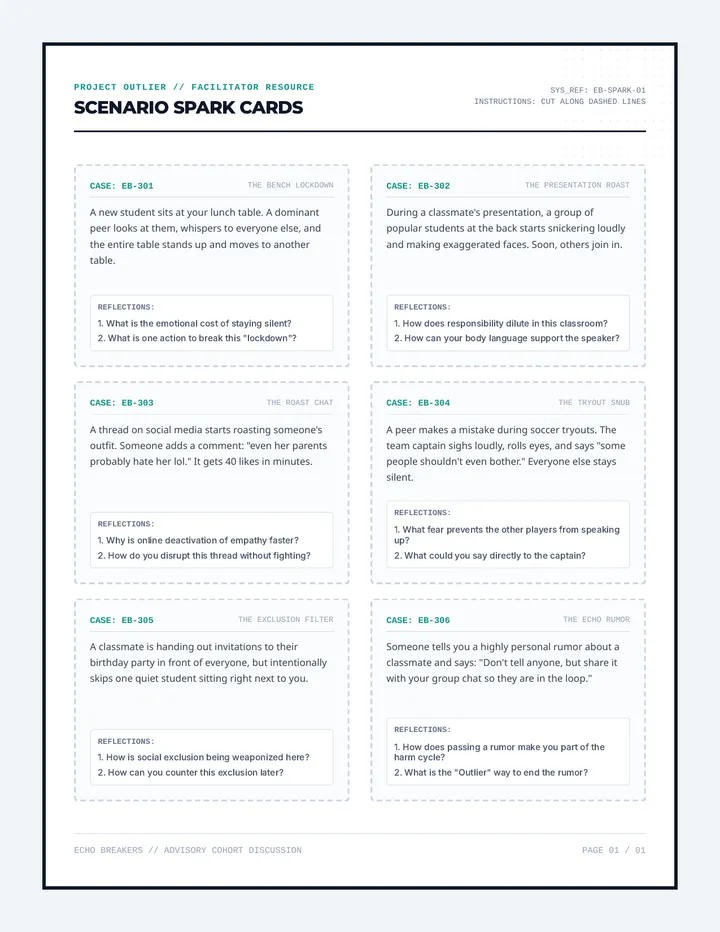
A set of resources designed to help parents and students distinguish between peer conflict and bullying, providing clear action plans for resolution and support.
A comprehensive lesson on building executive functioning skills through organizational systems, including brainstorming challenges and creating personal blueprints for school and home.
A collection of evidence-based strategies for students with ADHD to manage impulses, boredom, medication, and social reputation through a "blueprint" for self-regulation.
Week 7 of the Executive Functioning module, focusing on Working Memory. Students learn strategies to hold and manipulate 'data streams' using chunking, visualization, and external systems.
A 30-minute interactive lesson for 7th graders to understand how social media designs encourage impulsivity and how to develop mindful digital habits.
A foundational look at the CASEL Social Emotional Learning framework, covering the five core competencies and the benefits of implementation.
A targeted organization and time management workshop designed for upper elementary and middle school students to build effective daily systems for academic success.
A high-energy, 15-minute classroom game where 7th-grade students navigate social and personal scenarios using a quick-thinking decision-making framework. Students work in small groups to evaluate consequences and choose the best path forward under pressure.
An interactive lesson designed to help students identify common cognitive distortions (mind traps) and develop practical skills for challenging negative thought patterns through role-play and analysis.