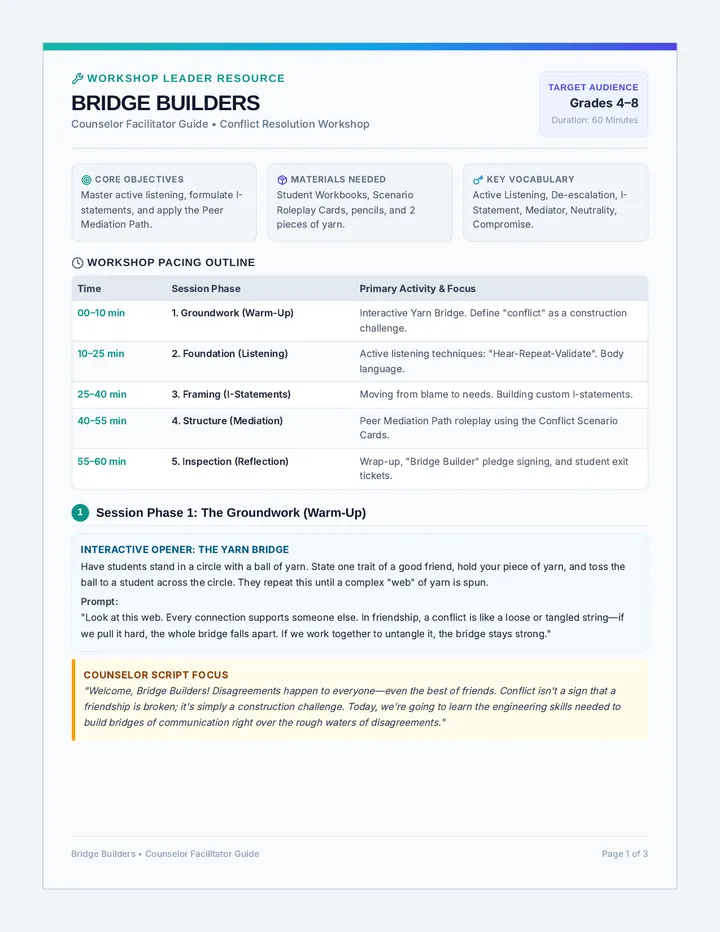
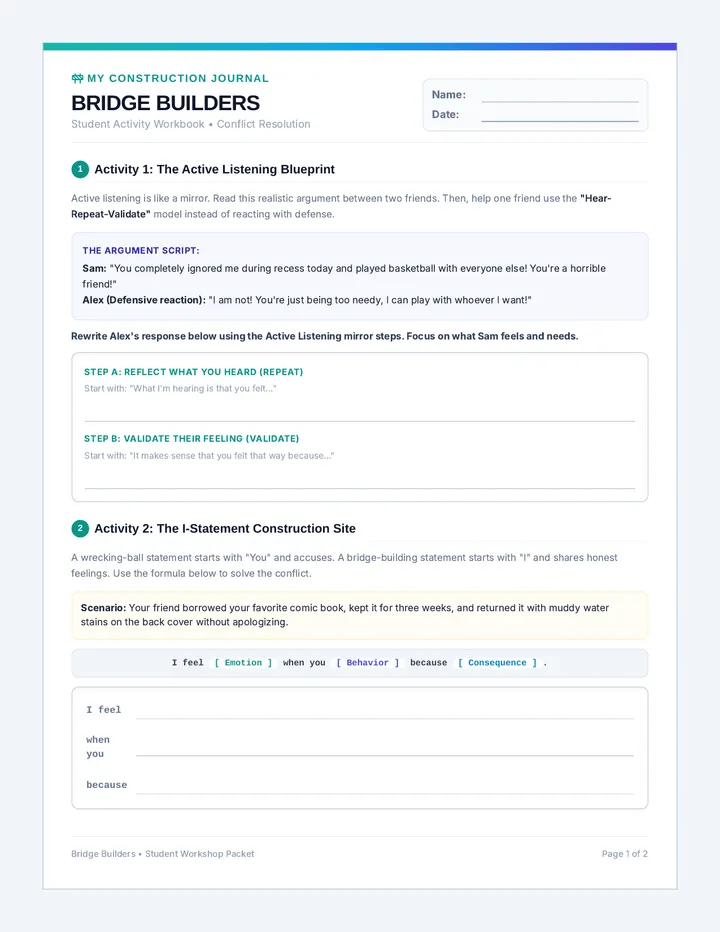
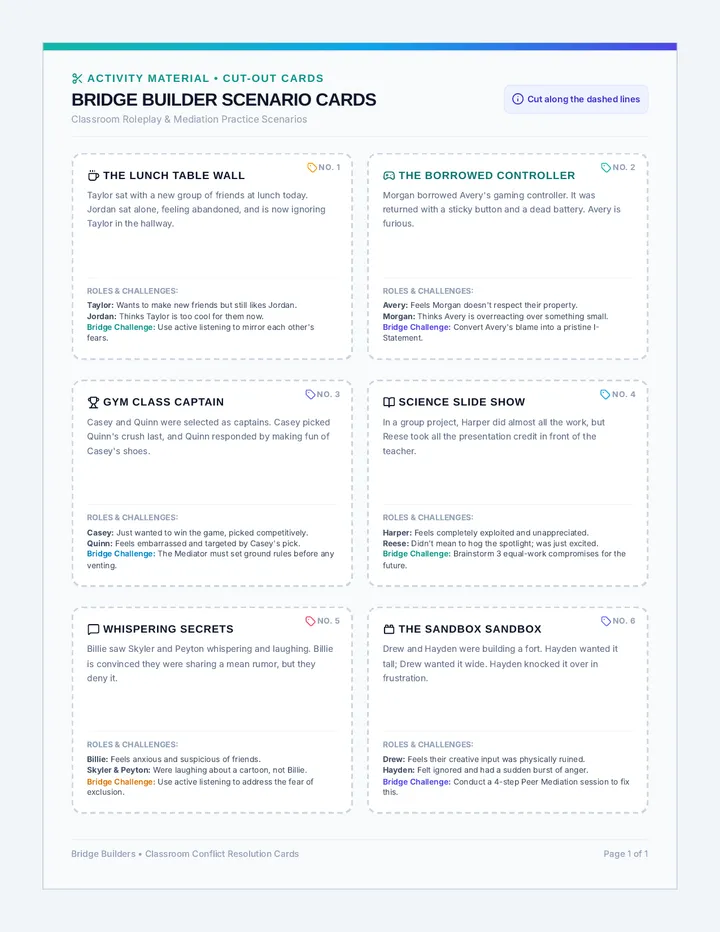
This lesson focuses on identifying healthy versus unhealthy conflict, mastering communication tools like active listening and 'I' statements, and applying a step-by-step problem-solving framework to real-life disagreements.
A middle school lesson focused on identifying conflict styles and practicing assertive communication through a navigation-themed framework.
A lesson for 5th-9th graders on processing corrective feedback, managing defensive reactions, and using scripts to accept criticism gracefully. Students learn to distinguish between constructive and destructive feedback while mastering the 'physiological sting' of being corrected.
Students will learn to identify unspoken classroom expectations and peer body language through the lens of a 'Social Decoder.' The lesson focuses on situational awareness, interpreting environmental cues, and adjusting behavior to match the 'vibe' of different settings.
A 30-minute 1:1 guided discussion designed for 8th graders to explore emotional intelligence, identify personal 'inner weather,' and develop healthy processing strategies.

A reflection and tracking lesson where students set personal goals for self-control and monitor their progress.
A dedicated session for practicing responses through a variety of classroom scenarios in a worksheet packet format.
Provides concrete steps for responding appropriately to redirection: Stop, Listen, and Adjust.
Explains the role of teacher redirection as helpful 'course correction' rather than criticism, establishing the 'Roger That' mindset.
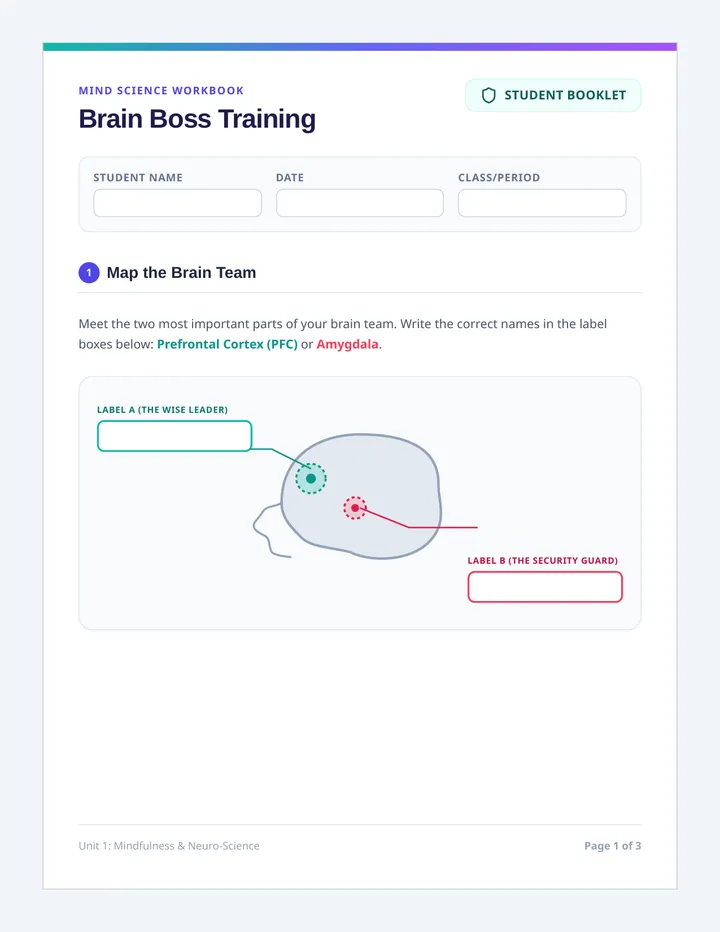
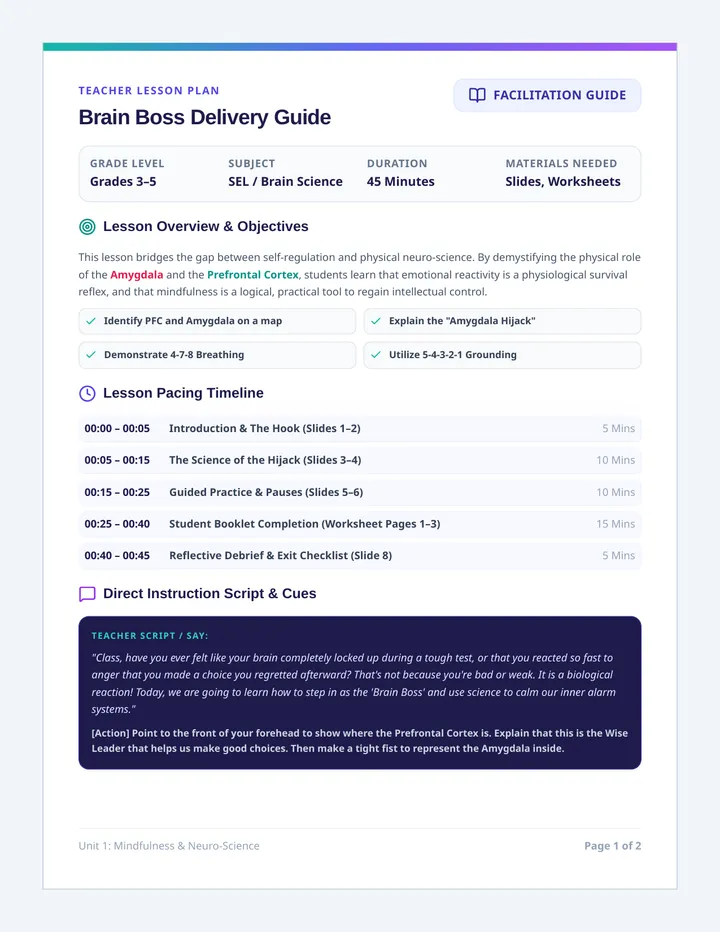
Introduces the concept of self-control as 'piloting' one's own brain and body, identifying internal signals of losing control.
A concise 30-minute 1:1 guided discussion for middle schoolers to identify and articulate complex emotions. Using a cartography metaphor, students map physical sensations and build a more precise emotional vocabulary.
A 1:1 goal-setting workshop for 8th graders to help them define and plan academic, social, personal well-being, and hobby-related goals using a structured blueprint approach.
An independent accountability project designed for students to reflect on their communication choices and develop empathy through a series of self-paced investigation activities.