Teacher's answer key for the Web Wisely Worksheet, including correct answers, instructional notes for each question, and exemplar responses for the short writing task.
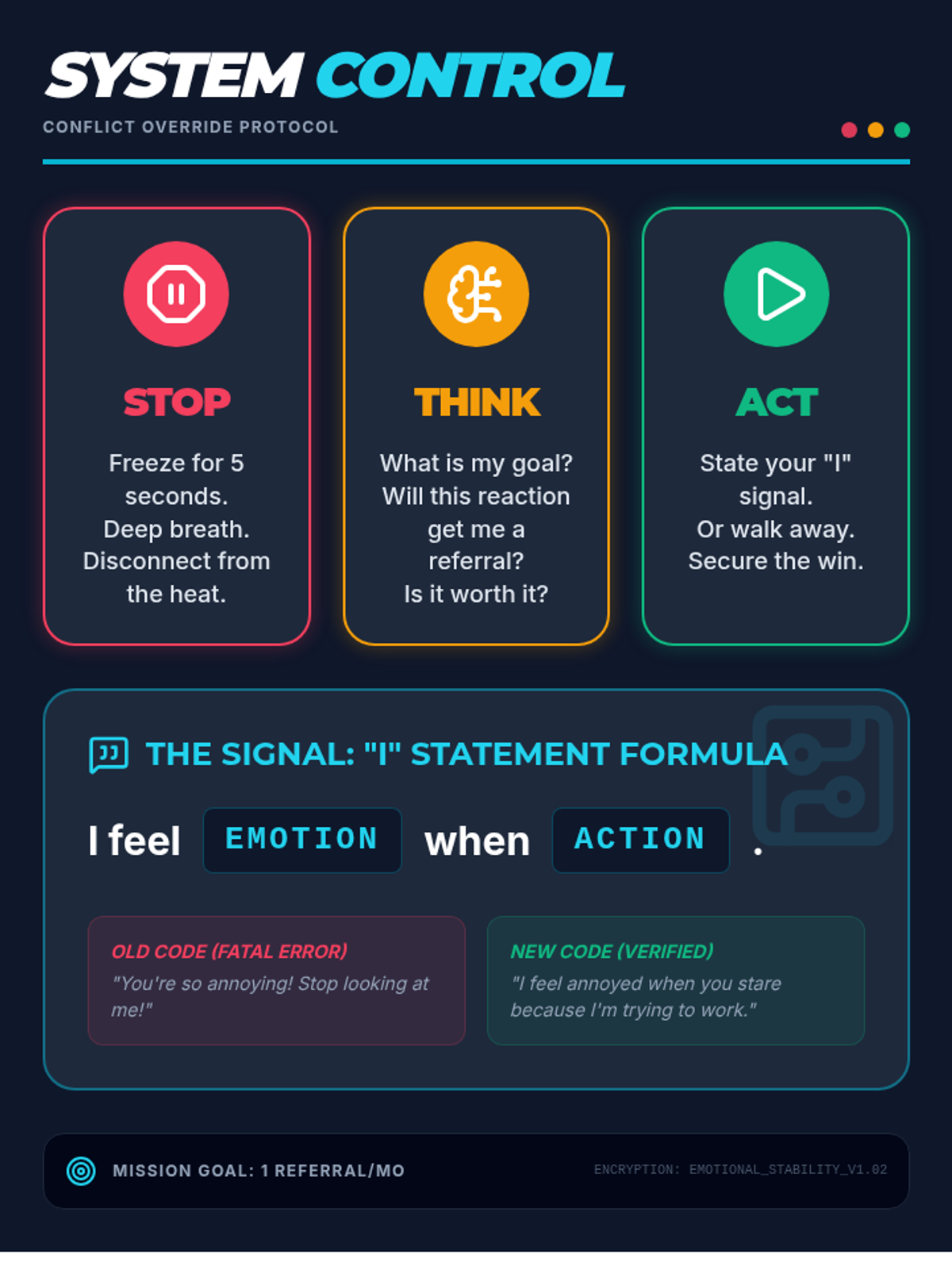
A high-impact visual anchor chart for a student's desk, featuring the Stop-Think-Act circuit breaker and the "I" statement formula in a modern, tech-themed design.
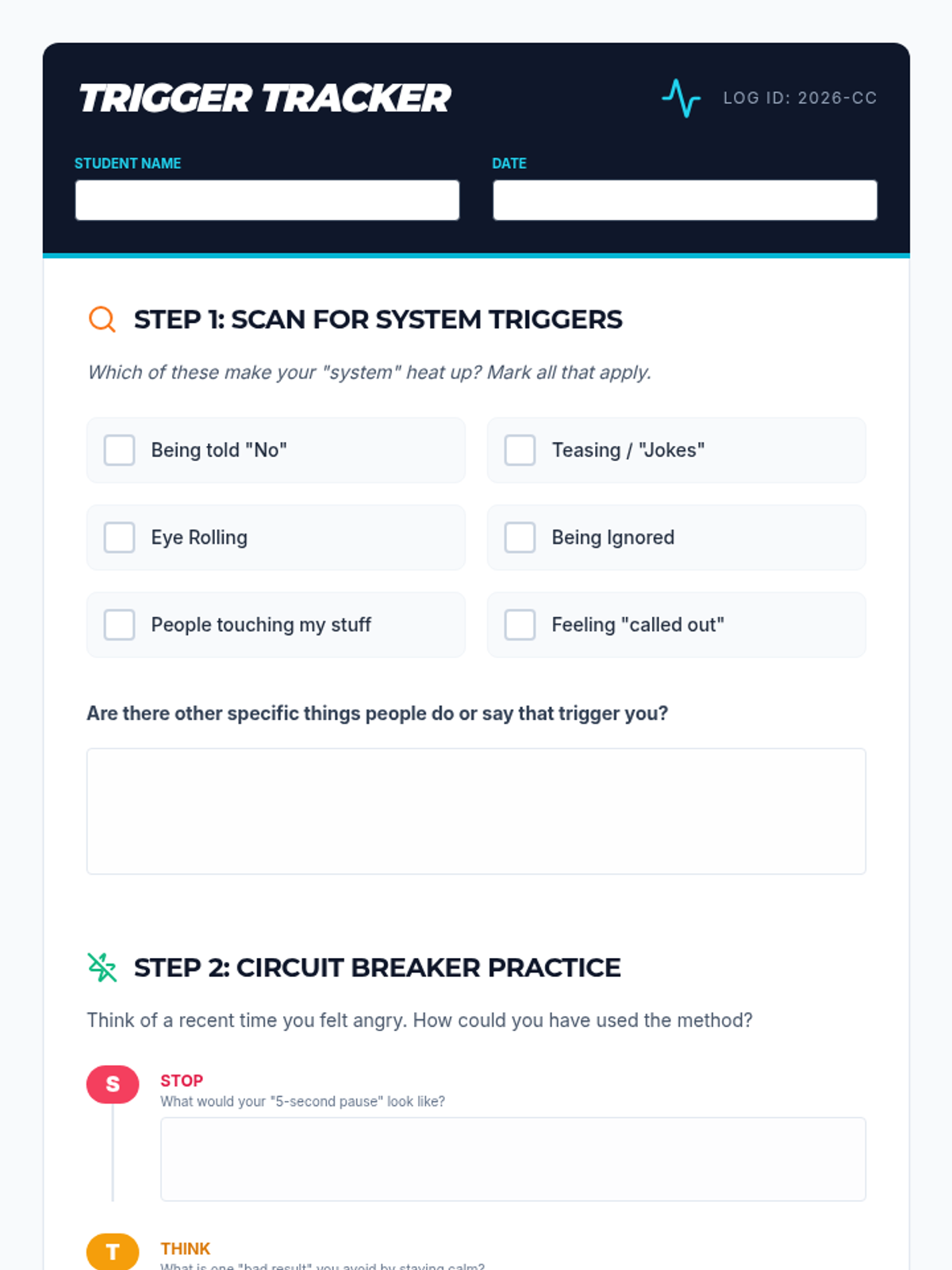
A guided self-reflection worksheet for the student to identify their personal triggers and practice the Stop-Think-Act method and "I" statements in a technical, log-style format.
A modern, tech-themed slide deck designed for remote screen-sharing. It guides a student through identifying emotional triggers, the Stop-Think-Act method, and the mechanics of "I" statements.
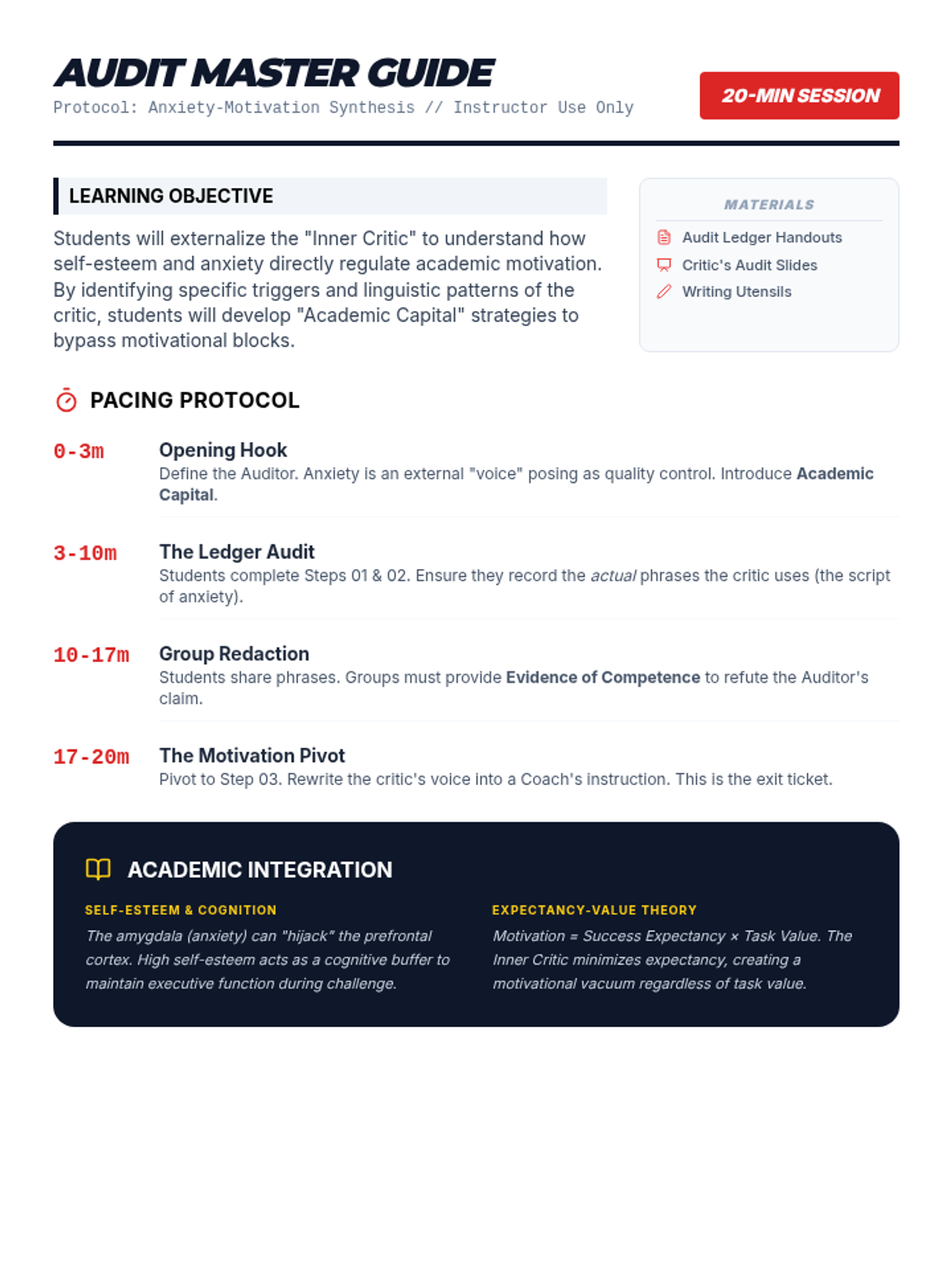
A teacher-facing facilitation guide for the 'Critics Audit' session. Includes a tight 20-minute pacing protocol, discussion prompts for groups, and deep academic background connecting self-esteem to cognitive function and motivation theory.
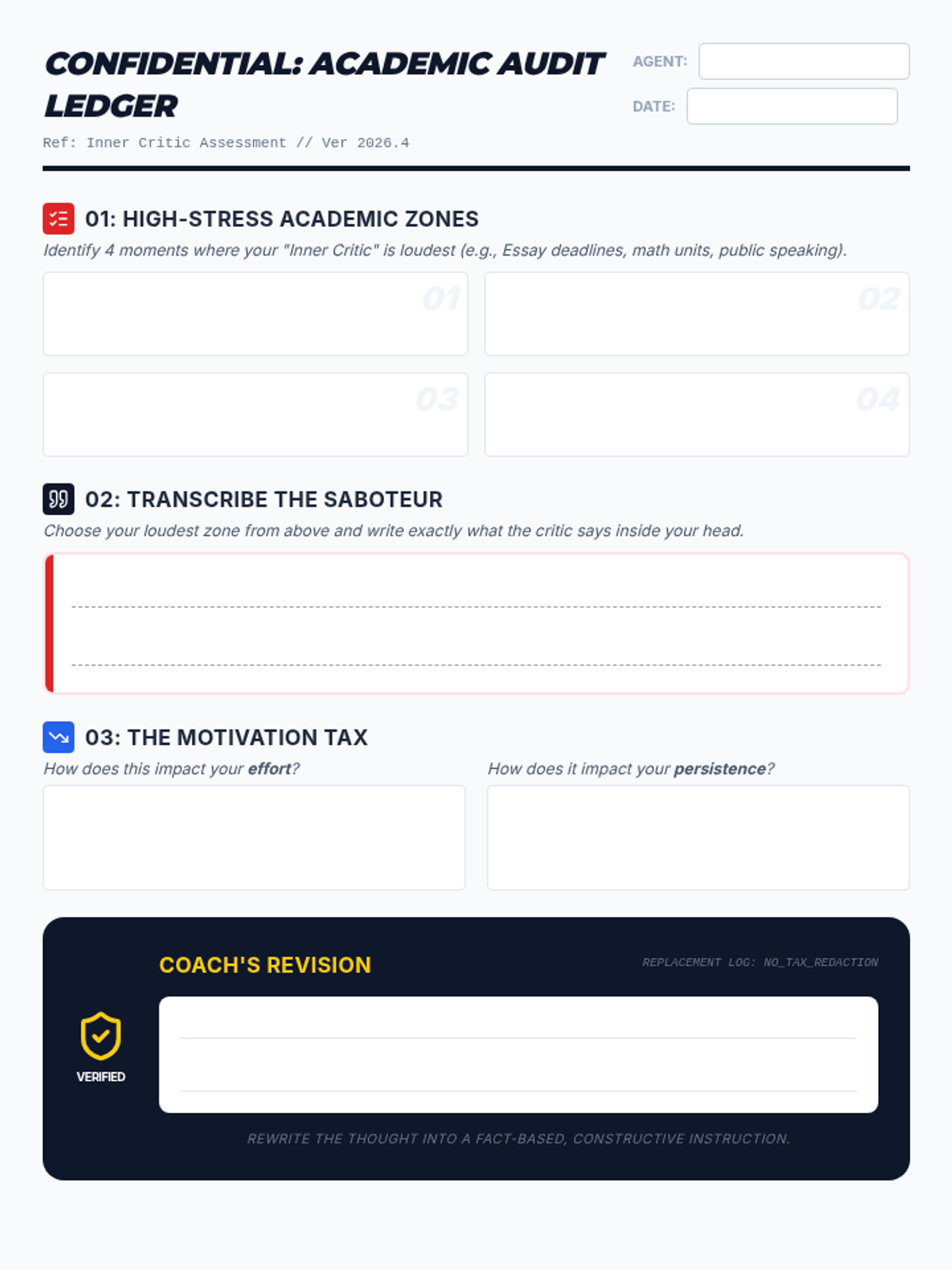
A structured 'Academic Audit Ledger' handout where students list their academic anxiety triggers, transcribe their inner critic's specific messaging, and map out the negative impact on their motivational effort and persistence.
A high-energy, 20-minute slide deck that guides students through an 'Academic Audit' of their inner critic. The presentation frames self-esteem as 'academic capital' and provides a structured flow for identifying and refuting anxious thoughts that hinder school motivation.
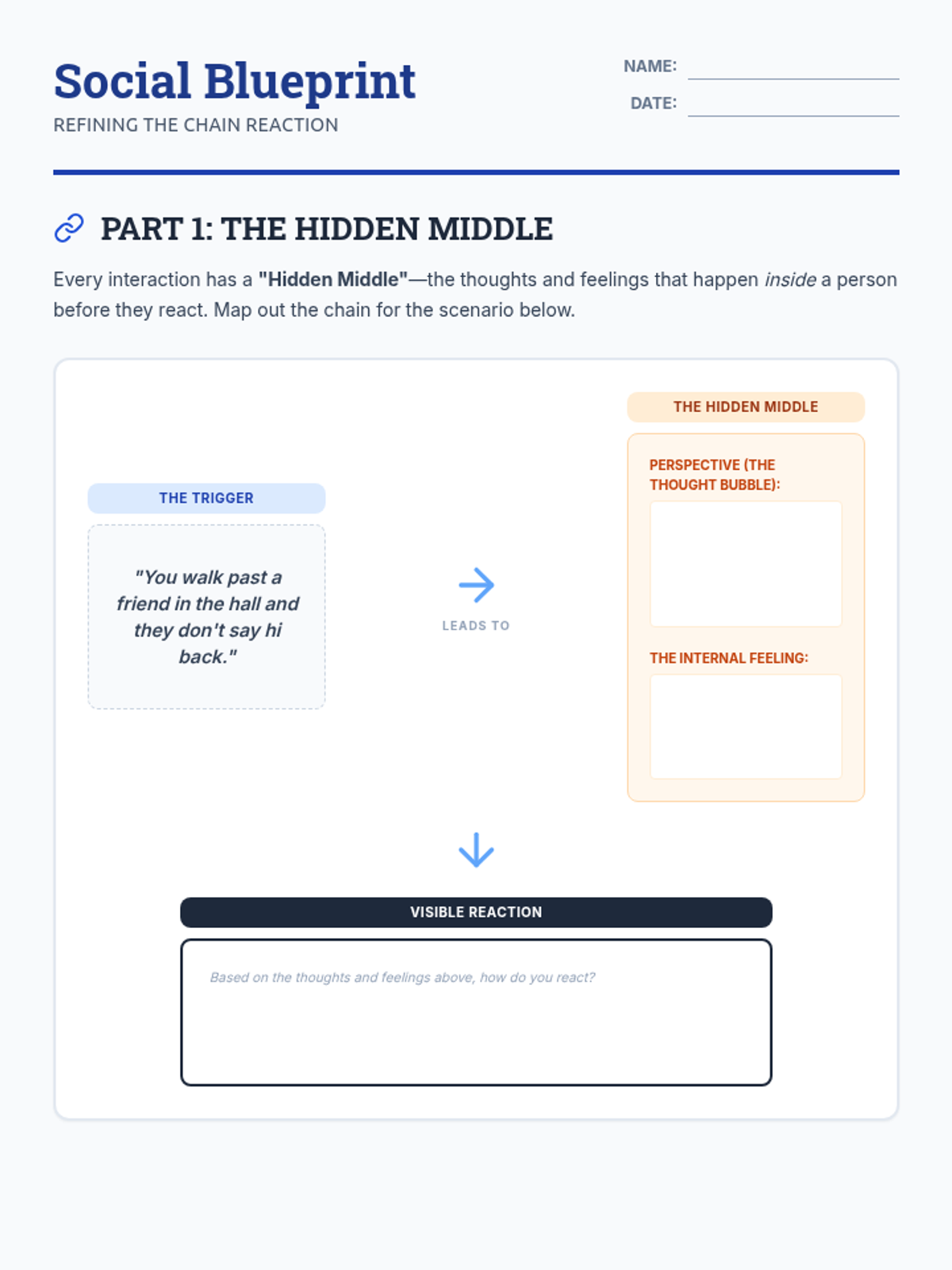
A student worksheet matching the 'Social Blueprint' slides, featuring two parts: 'The Hidden Middle' (mapping perspectives) and 'The Redraw' (conflict resolution practice).
A 5-slide presentation using a 'Social Blueprint' theme to teach the concept of social-emotional chain reactions, focusing on perspective-taking and conflict resolution for 7th graders.
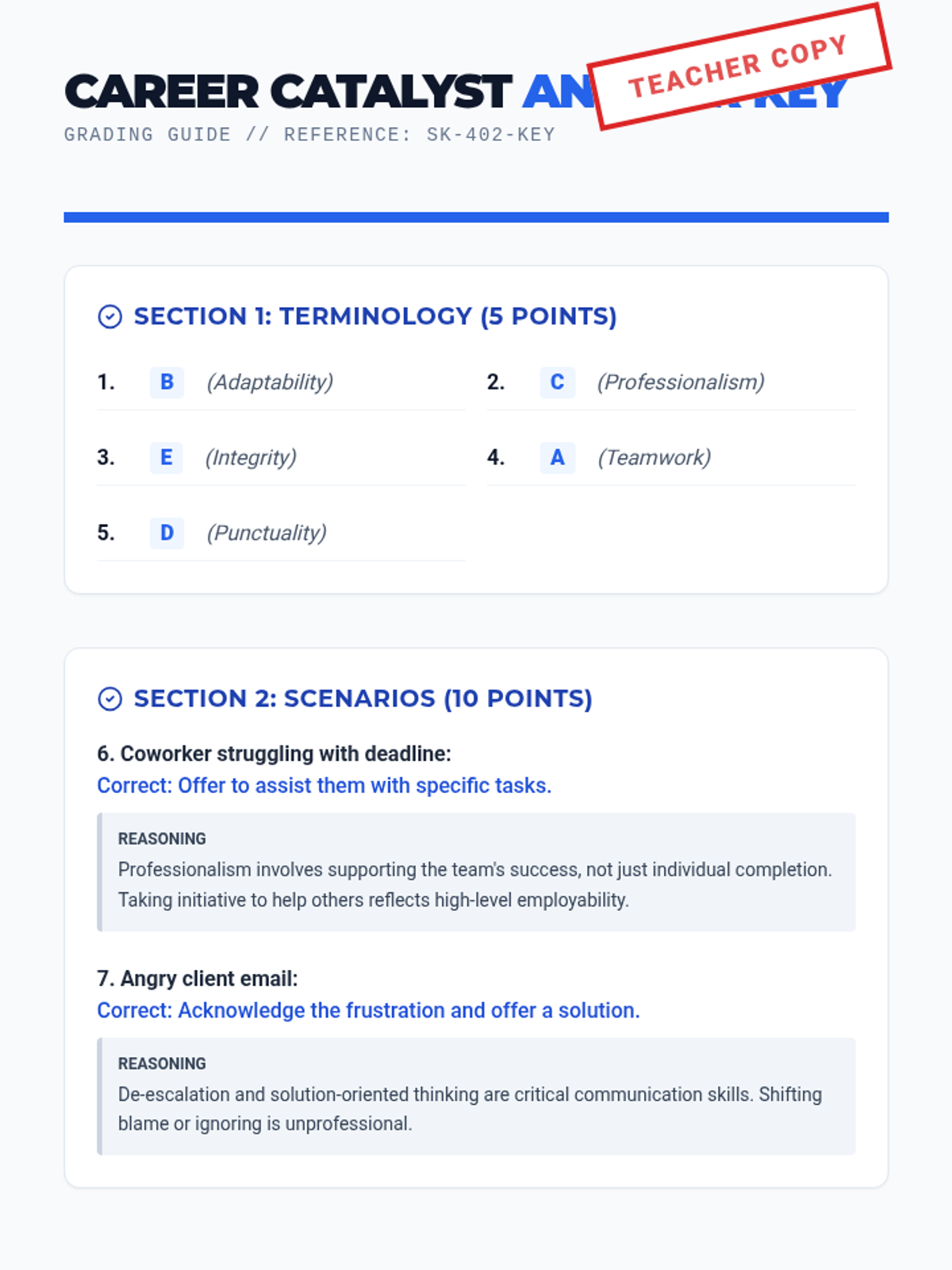
An answer key for the Career Catalyst Quiz, providing correct responses, grading points, and detailed reasoning for the open-ended questions. Improved for readability and layout consistency. Fixed page breaks and contrast issues.
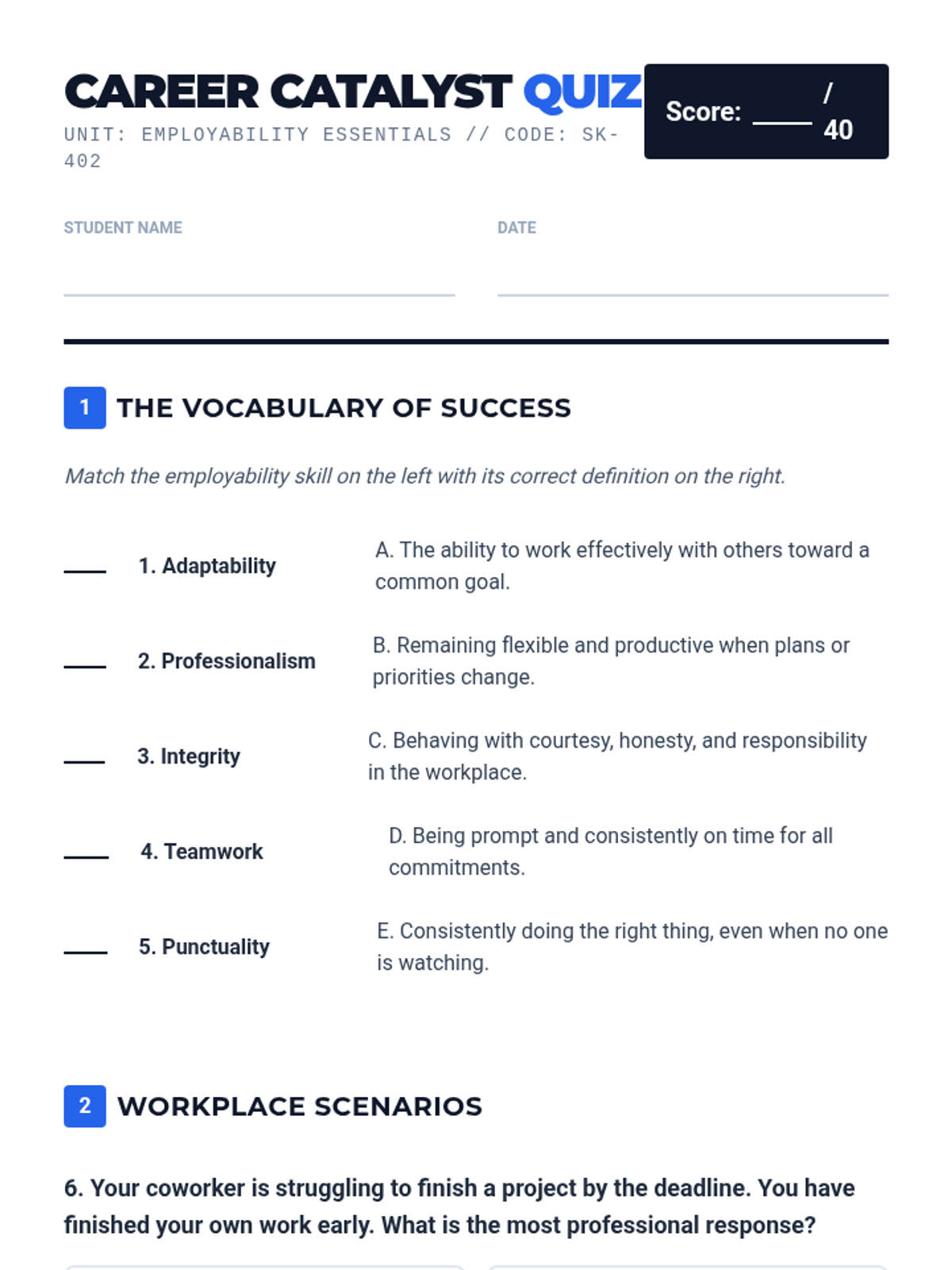
A comprehensive assessment covering key employability skills including vocabulary matching, scenario-based multiple choice, and critical thinking short responses. Optimized for print with improved spacing and layout stability. Fixed self-audit alignment.
A visual presentation introducing key employability skills including communication, teamwork, problem-solving, time management, and professionalism through high-impact slides, now including interactive knowledge checks. Fixed answer choice uniformity and layout overlaps.
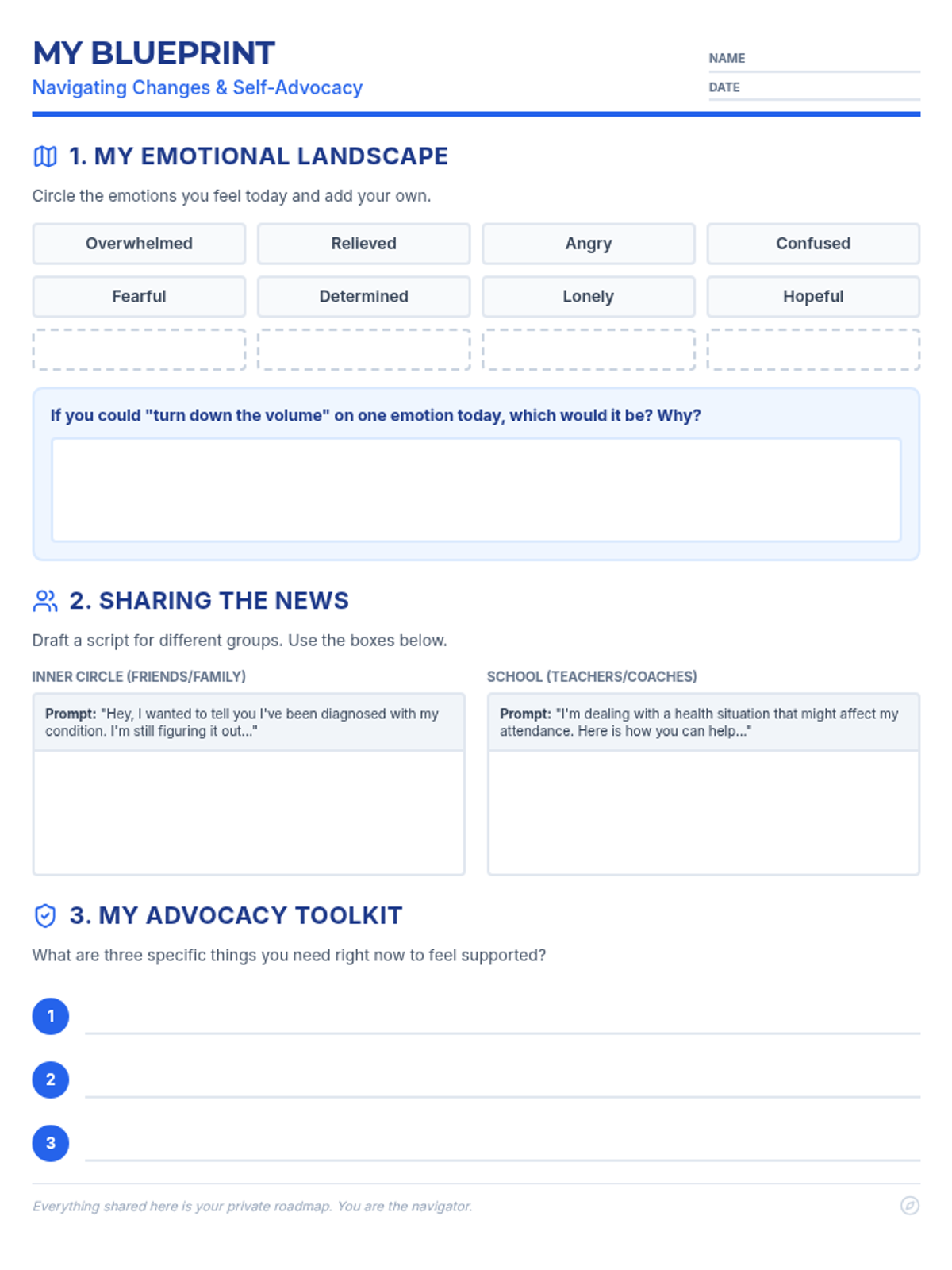
A student-facing reflection worksheet designed to help 11th graders process emotions after a medical diagnosis, plan communication strategies with friends and teachers, and identify specific self-advocacy needs.
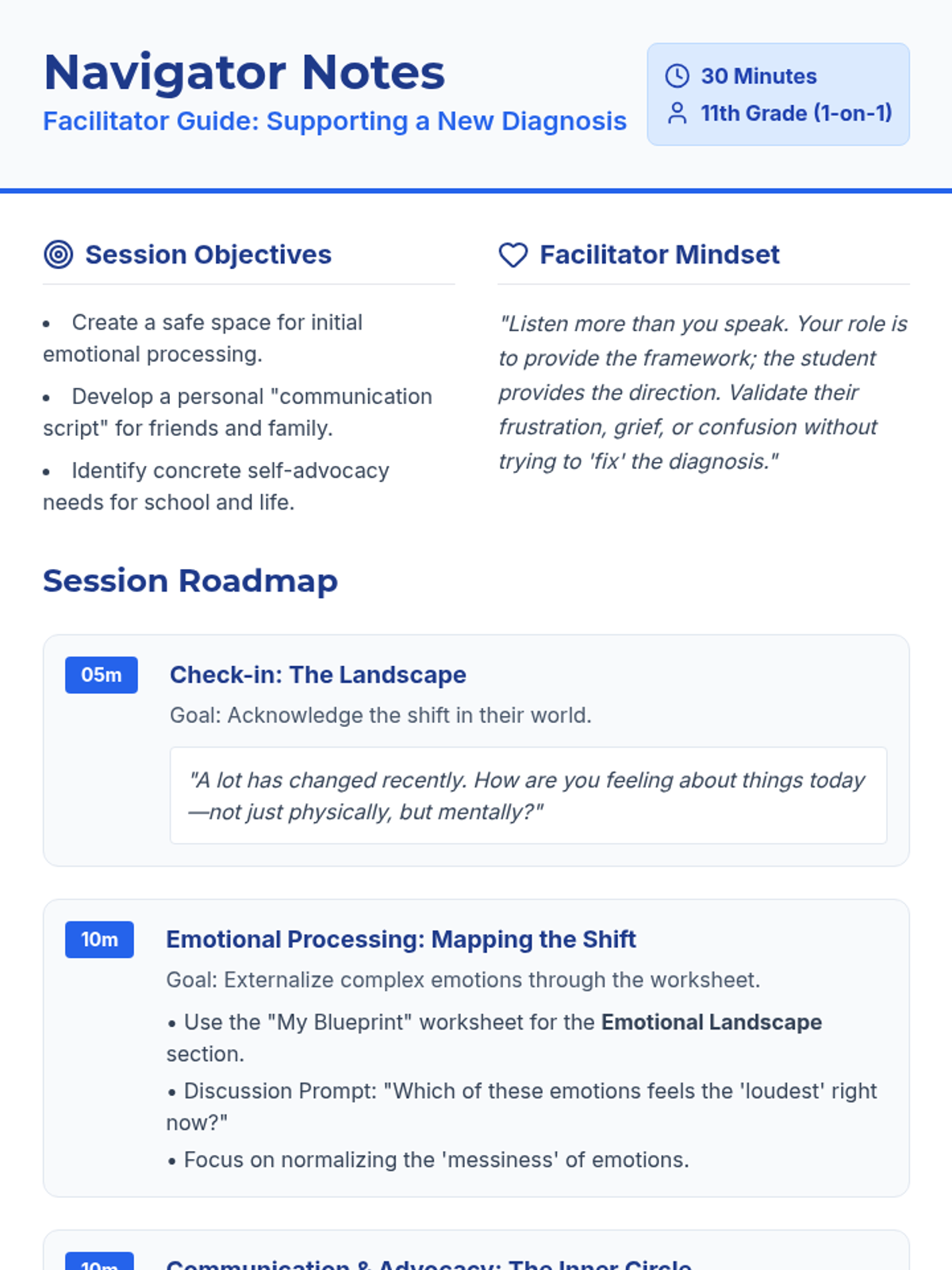
A comprehensive facilitator guide for a 1-on-1 session with an 11th grader navigating a new medical diagnosis, featuring a 30-minute timeline, discussion prompts, and key mindset strategies for educators.
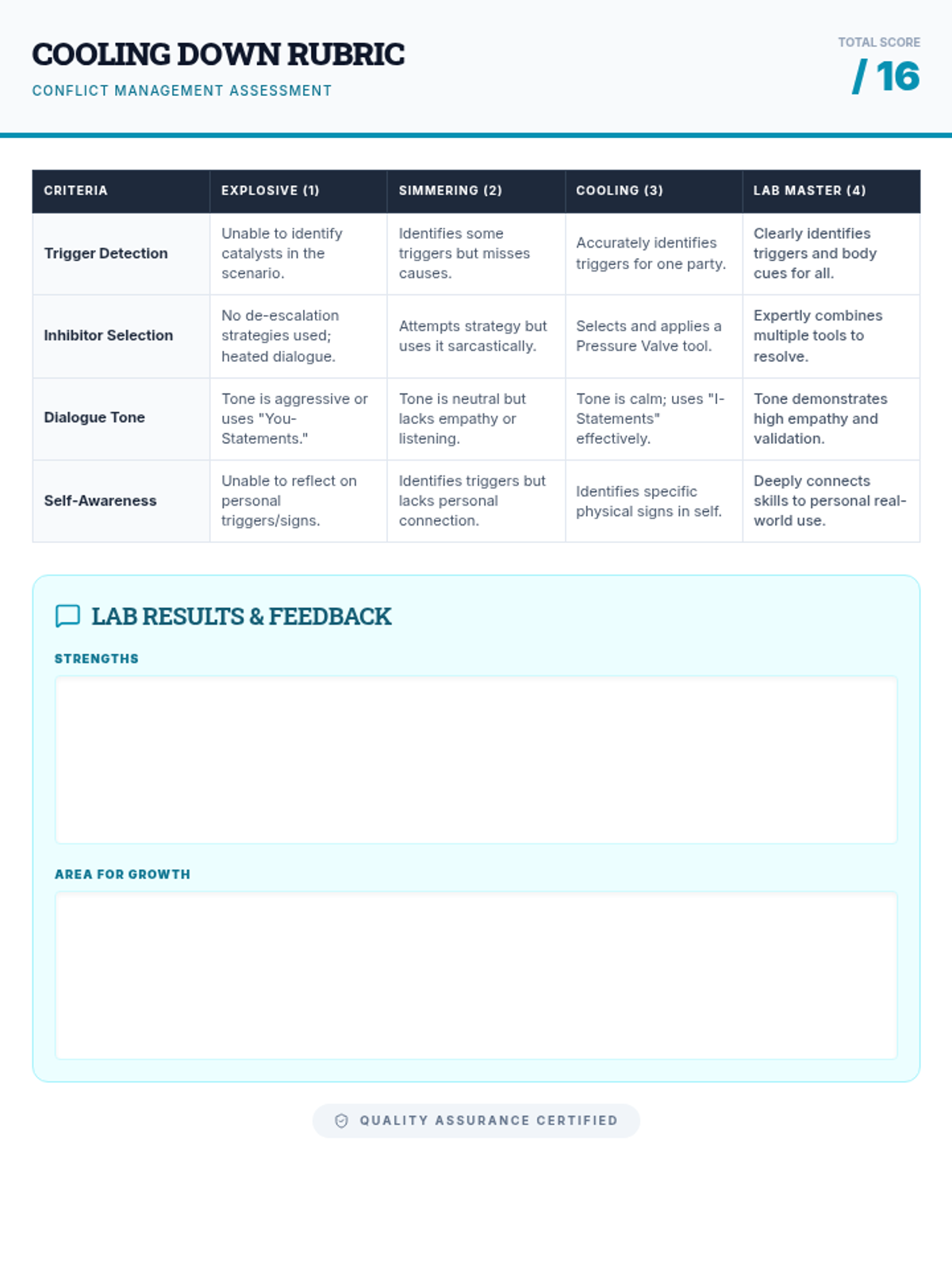
A detailed grading rubric for teachers to assess student work on de-escalation skills, ranging from 'Explosive' to 'Lab Master' levels of proficiency.
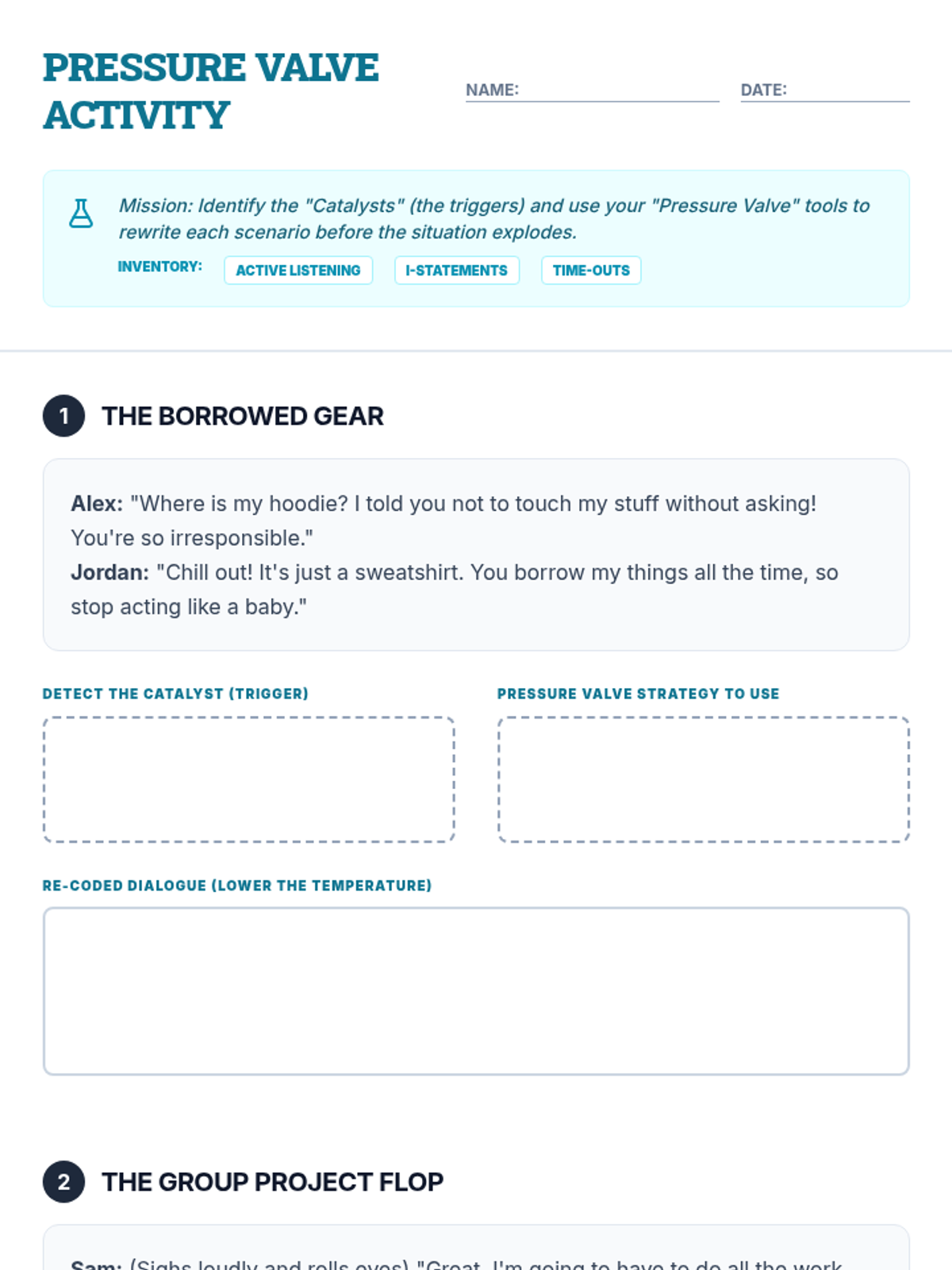
A student worksheet featuring conflict scenarios ('The Borrowed Gear' and 'The Group Project Flop') where students identify triggers and rewrite dialogue using de-escalation techniques.
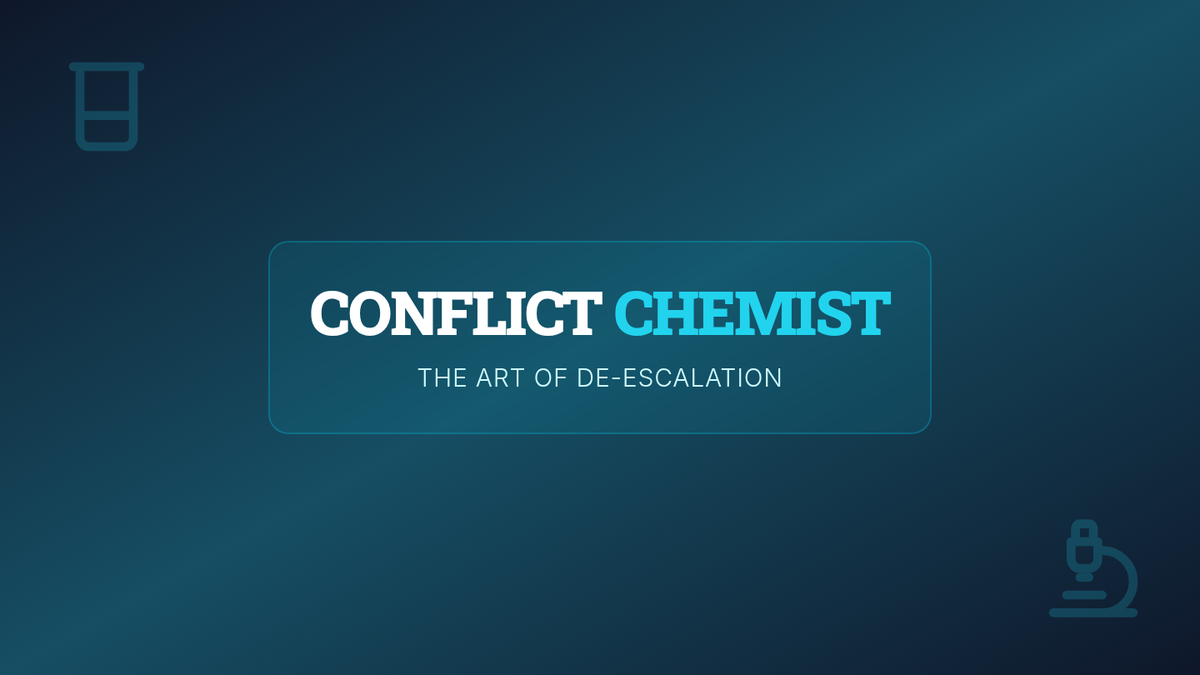
A visually engaging slide deck titled 'Conflict Chemist' that explains the concepts of catalysts (triggers) and inhibitors (de-escalation tools) using a lab-themed metaphor.
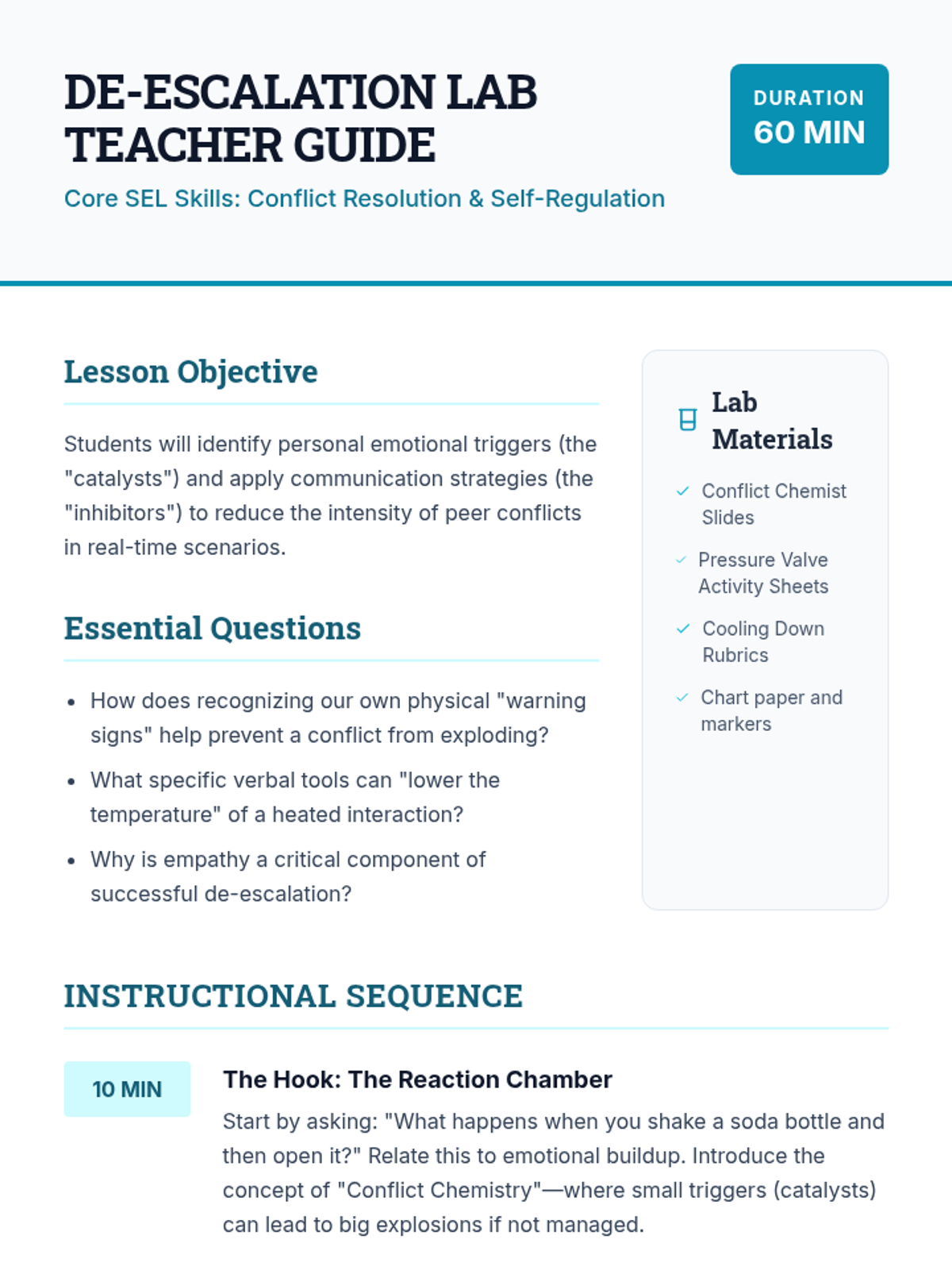
A comprehensive facilitation guide for teachers to lead the De-escalation Lab session, including lesson objectives, timing, step-by-step instructions, and differentiation strategies.
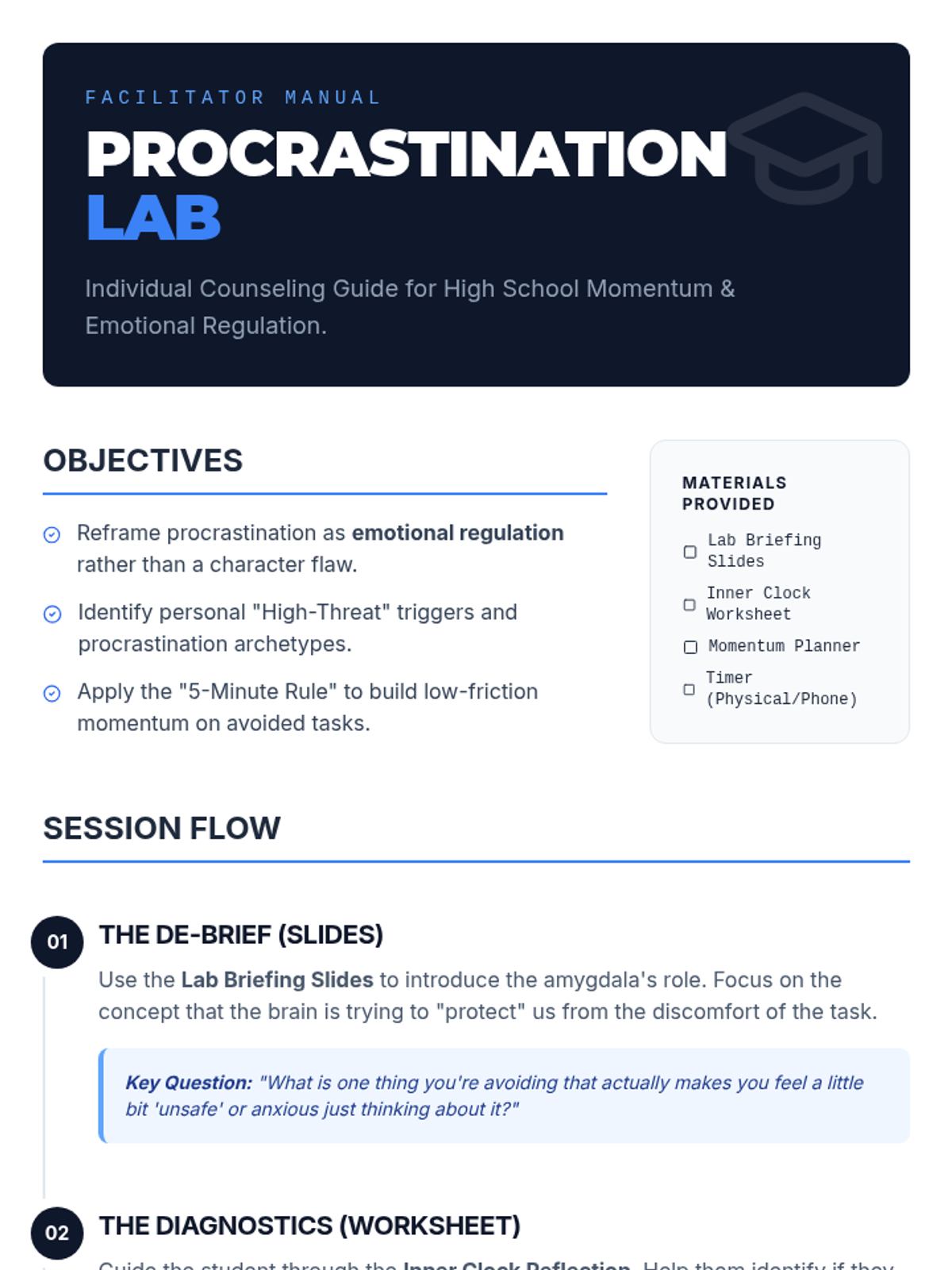
A facilitator's guide for counselors to deliver the Procrastination Lab lesson, including objectives, session flow, and discussion prompts.
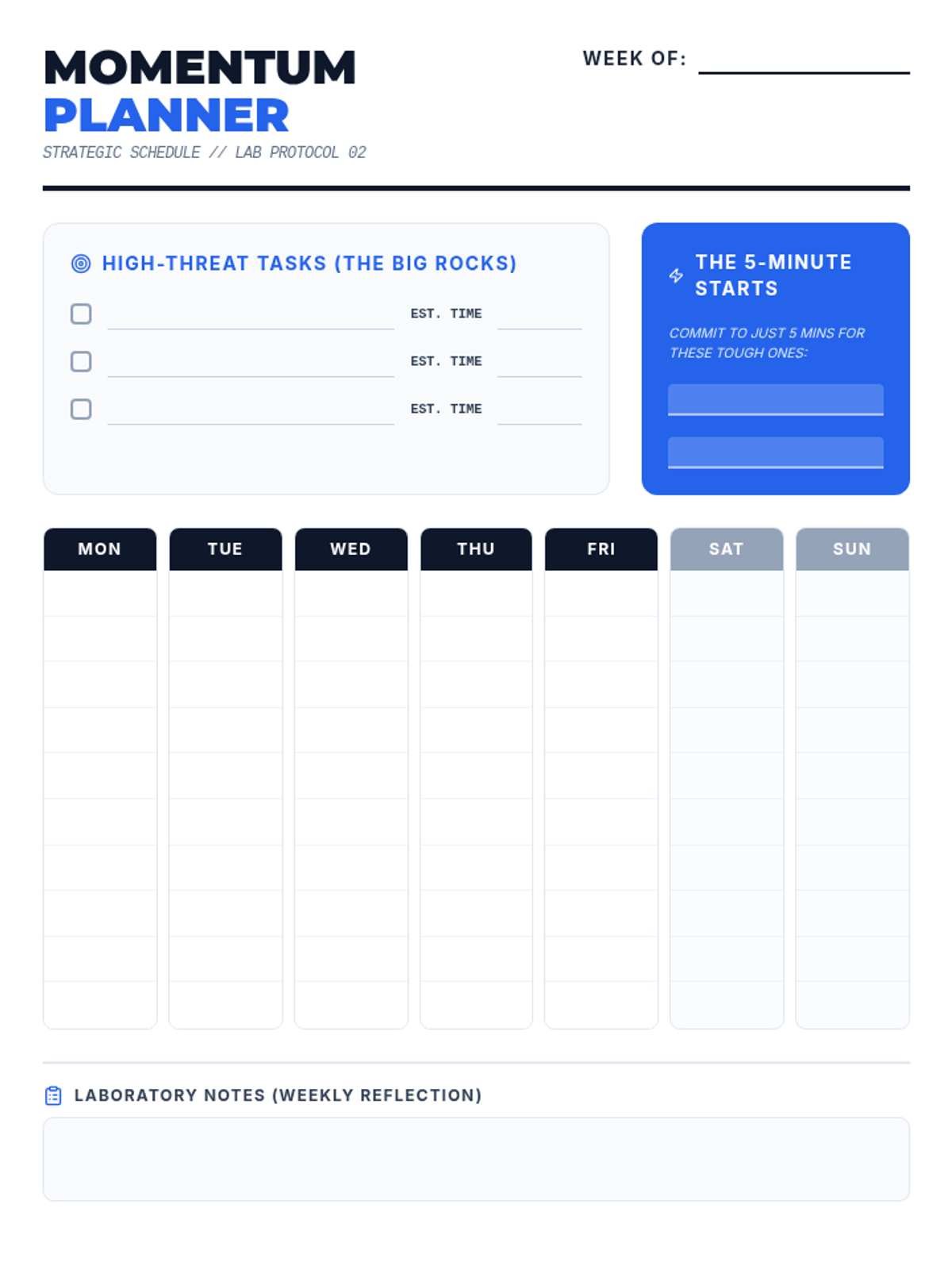
A specialized weekly planner template for high schoolers that prioritizes "High-Threat" tasks and encourages the "5-Minute Start" strategy.
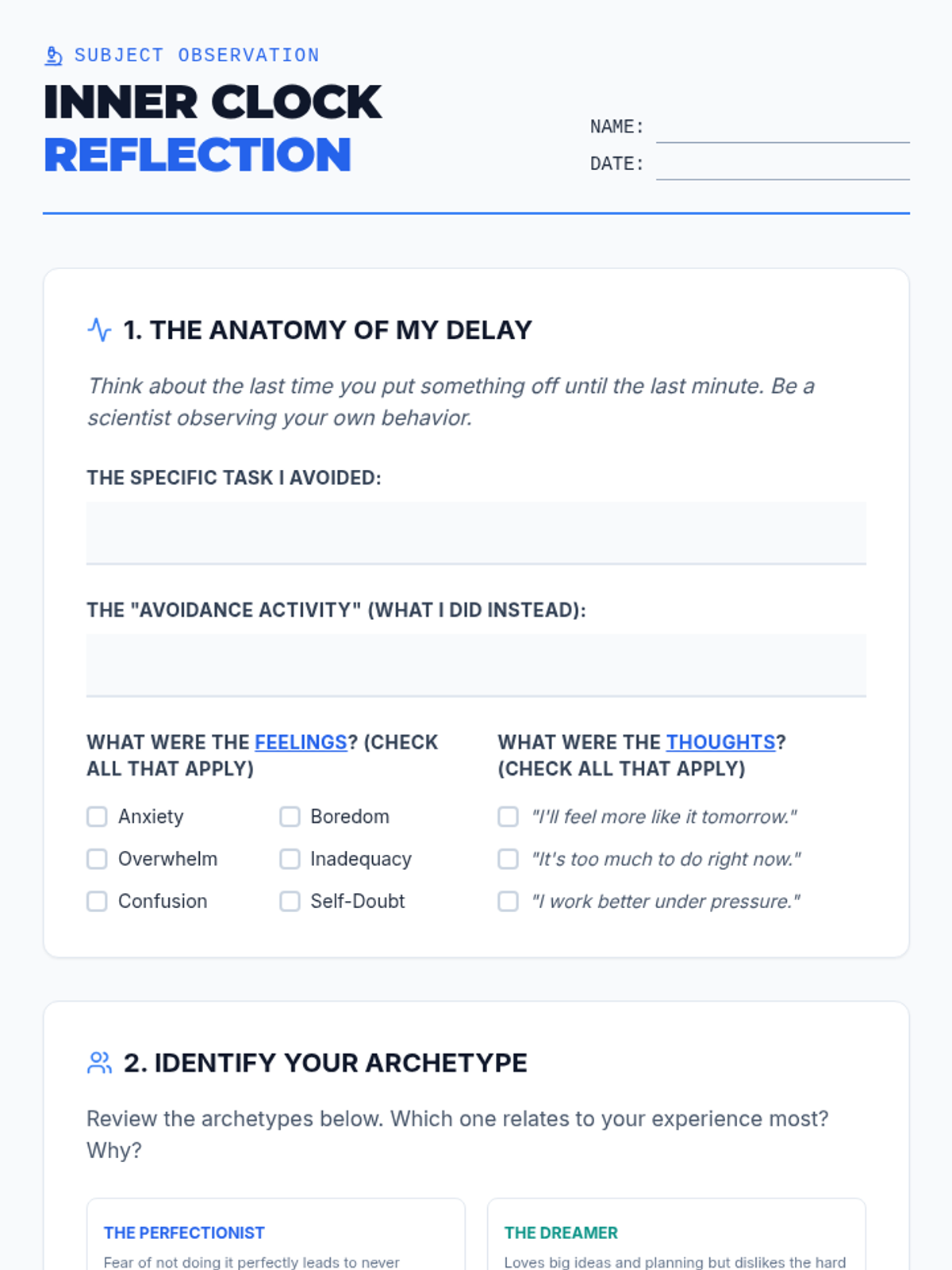
A guided reflection worksheet for students to analyze their procrastination habits, feelings, and identify their personal procrastinator archetype.
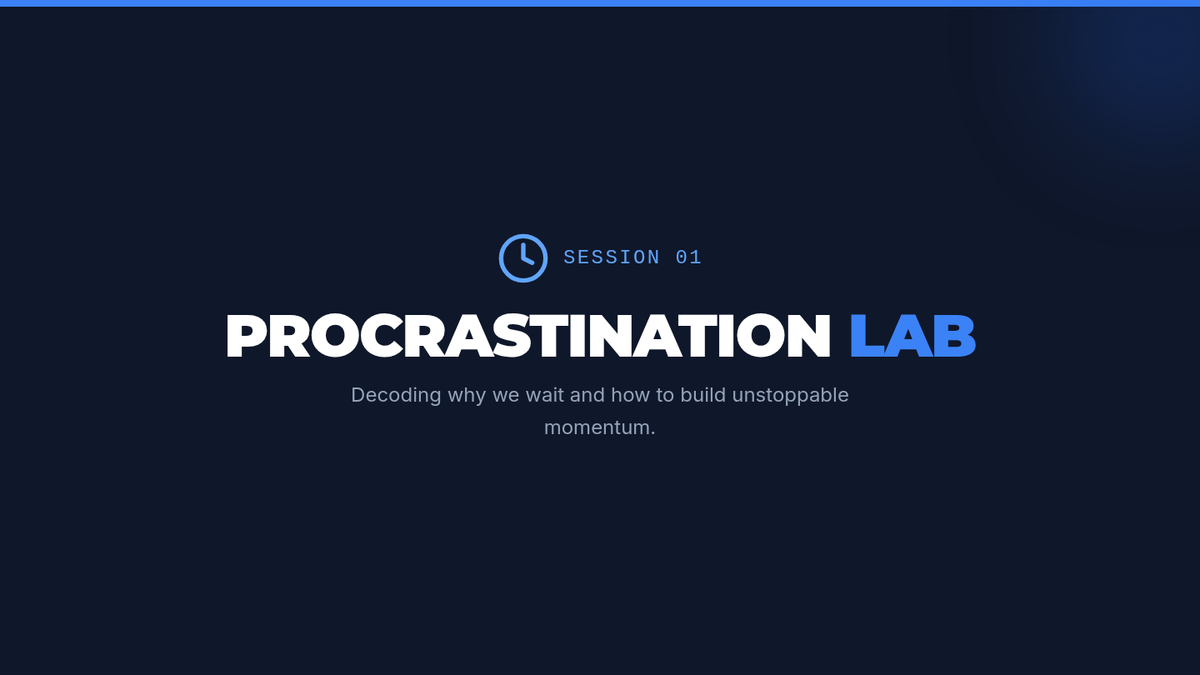
A slide deck for high schoolers explaining the psychology of procrastination as emotional regulation, identifying procrastinator types, and introducing the 5-minute rule.
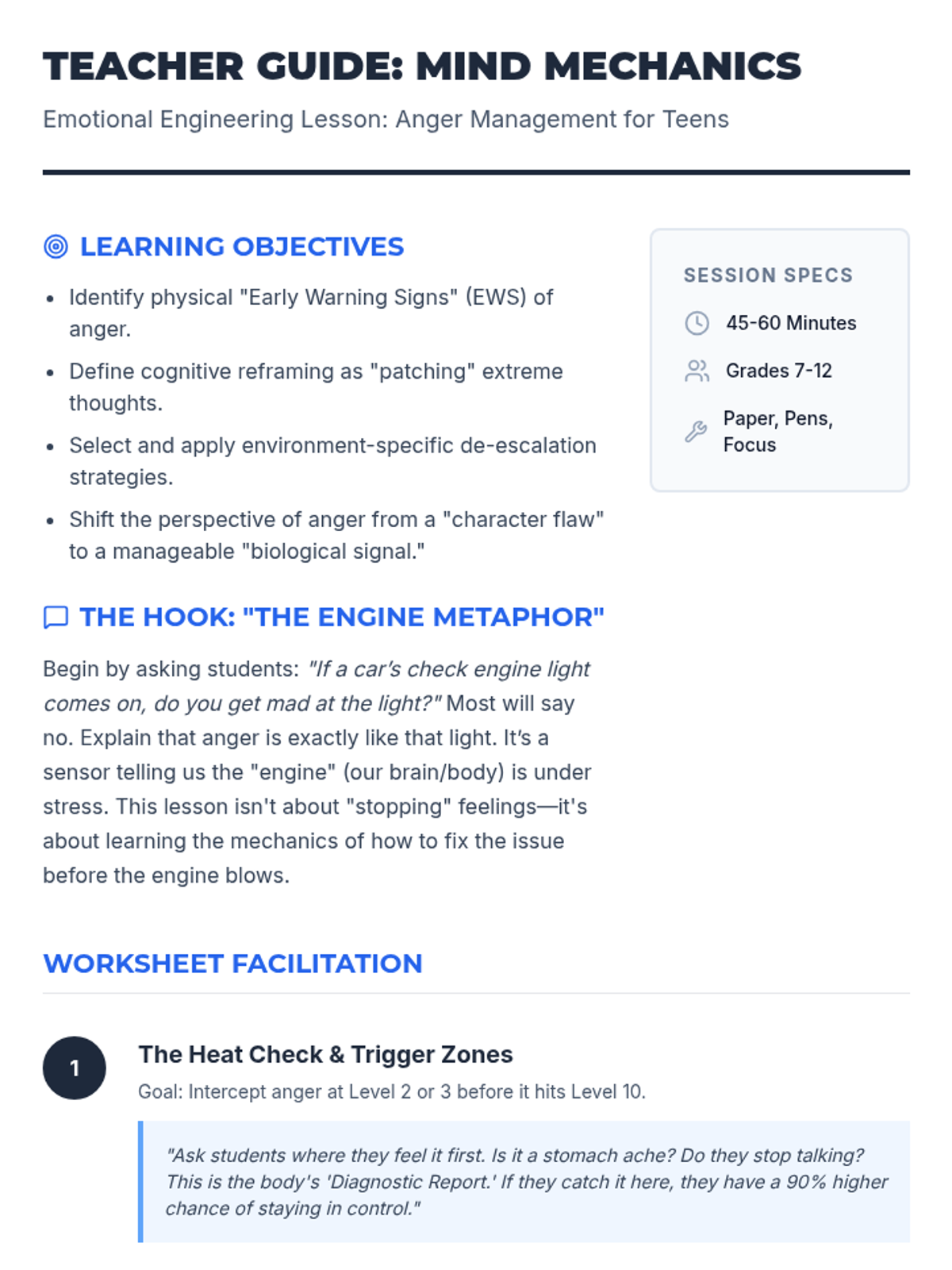
A professional facilitation guide for teachers to deliver the "Mind Mechanics" lesson. Includes learning objectives, the "Engine" metaphor hook, section-by-section breakdown, and expert tips on handling teen emotional regulation without dismissal.
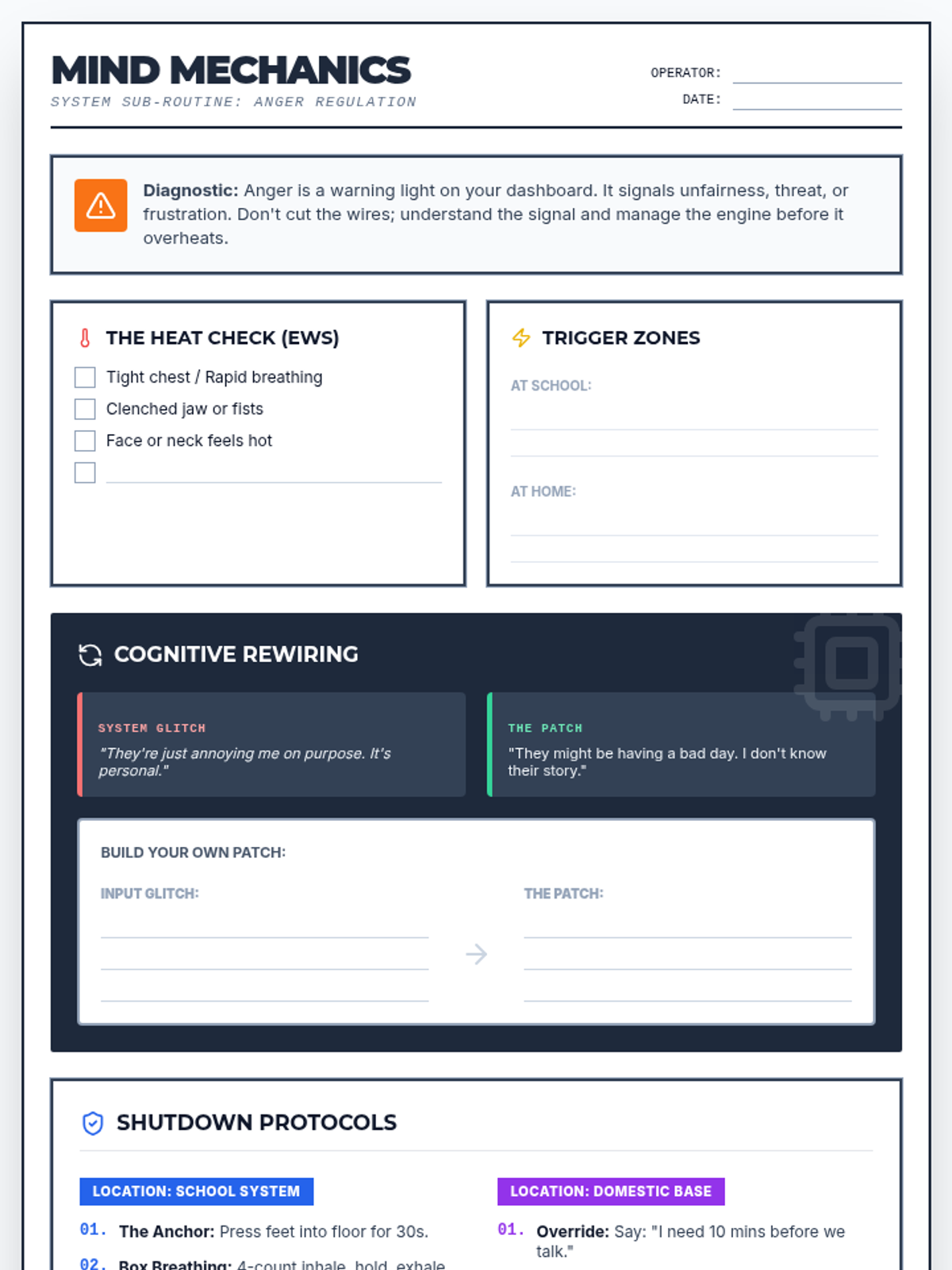
A student-facing worksheet themed as a technical blueprint or repair manual. It helps teenagers identify physical signs of anger, practice cognitive reframing (the "Glitch" vs the "Patch"), and learn specific de-escalation protocols for school and home.
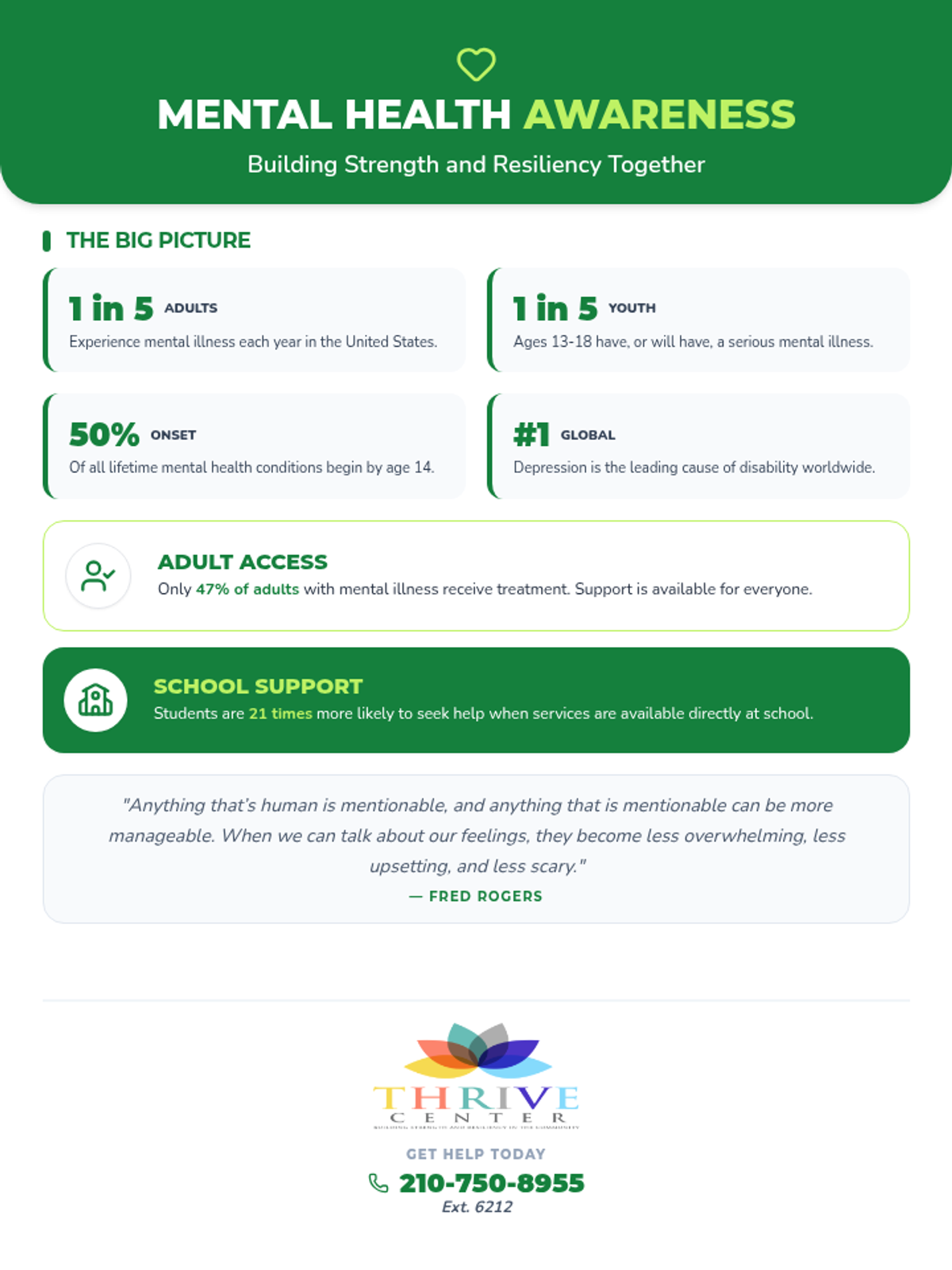
A comprehensive community flyer combining youth and adult mental health statistics, featuring a centered and enlarged Thrive Center logo along with contact information. Includes a powerful closing quote from Fred Rogers.
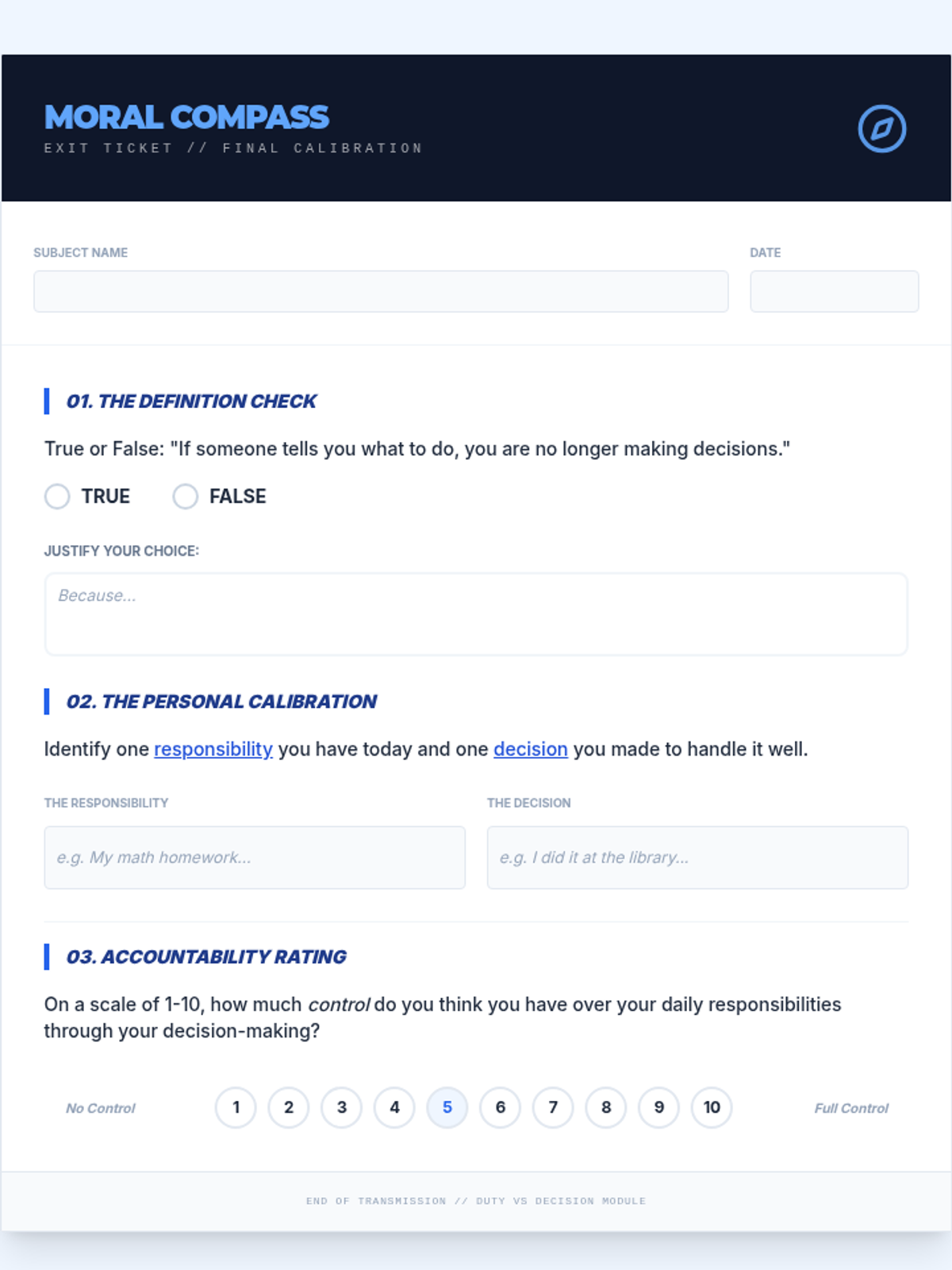
A focused exit ticket designed to assess students' understanding of the relationship between duties and choices, featuring a T/F conceptual check, personal application scenarios, and a self-rating accountability scale.
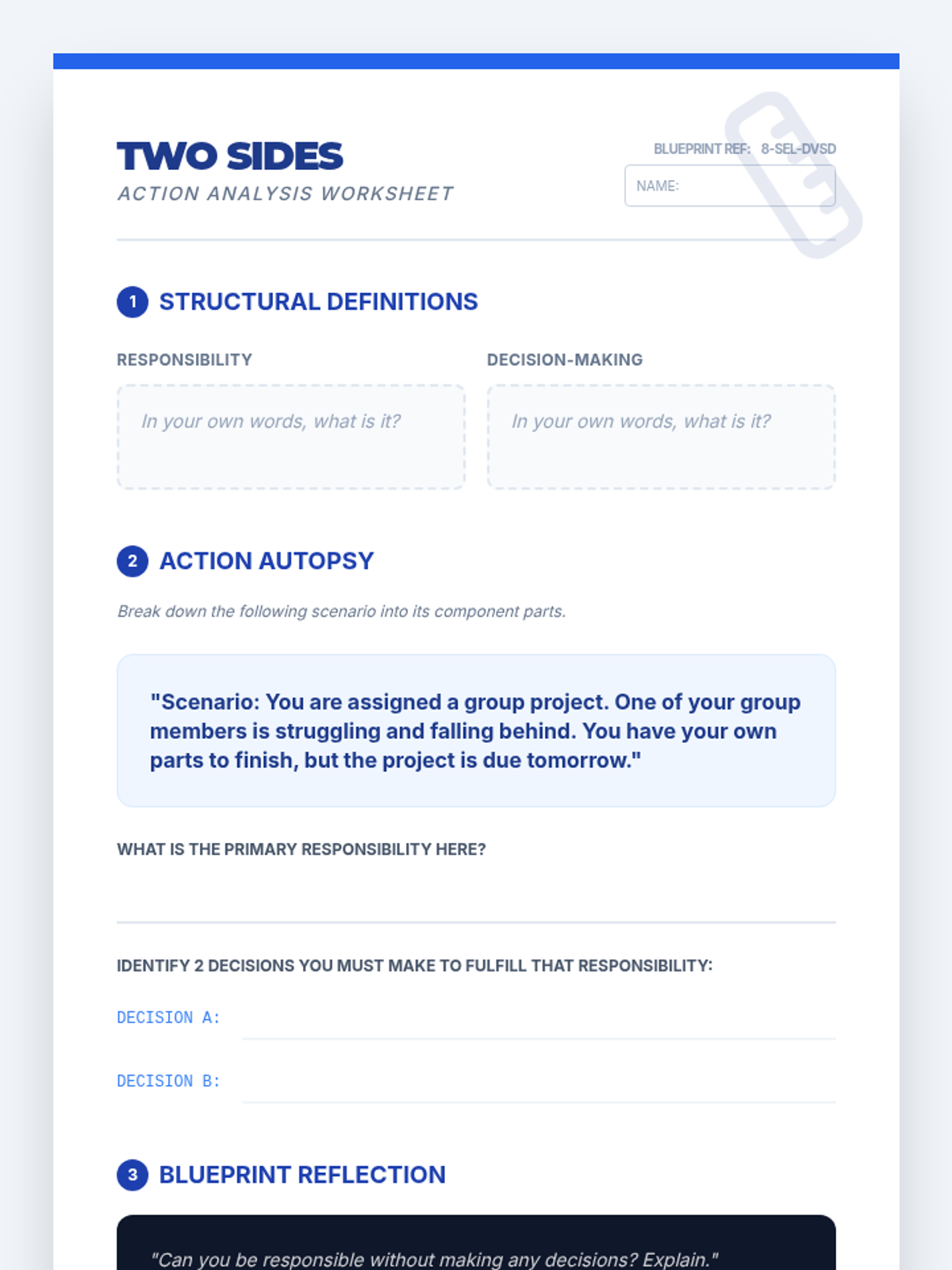
A structured worksheet that challenges students to perform an 'Action Autopsy' on real-world scenarios, breaking them down into primary responsibilities and the specific decisions required to fulfill them.
A high-impact slide deck for teaching the difference between responsibility and decision-making, featuring an 'Architectural Blueprint' theme, definitions, a 'Power Blend' intersection model, and interactive class practice scenarios.
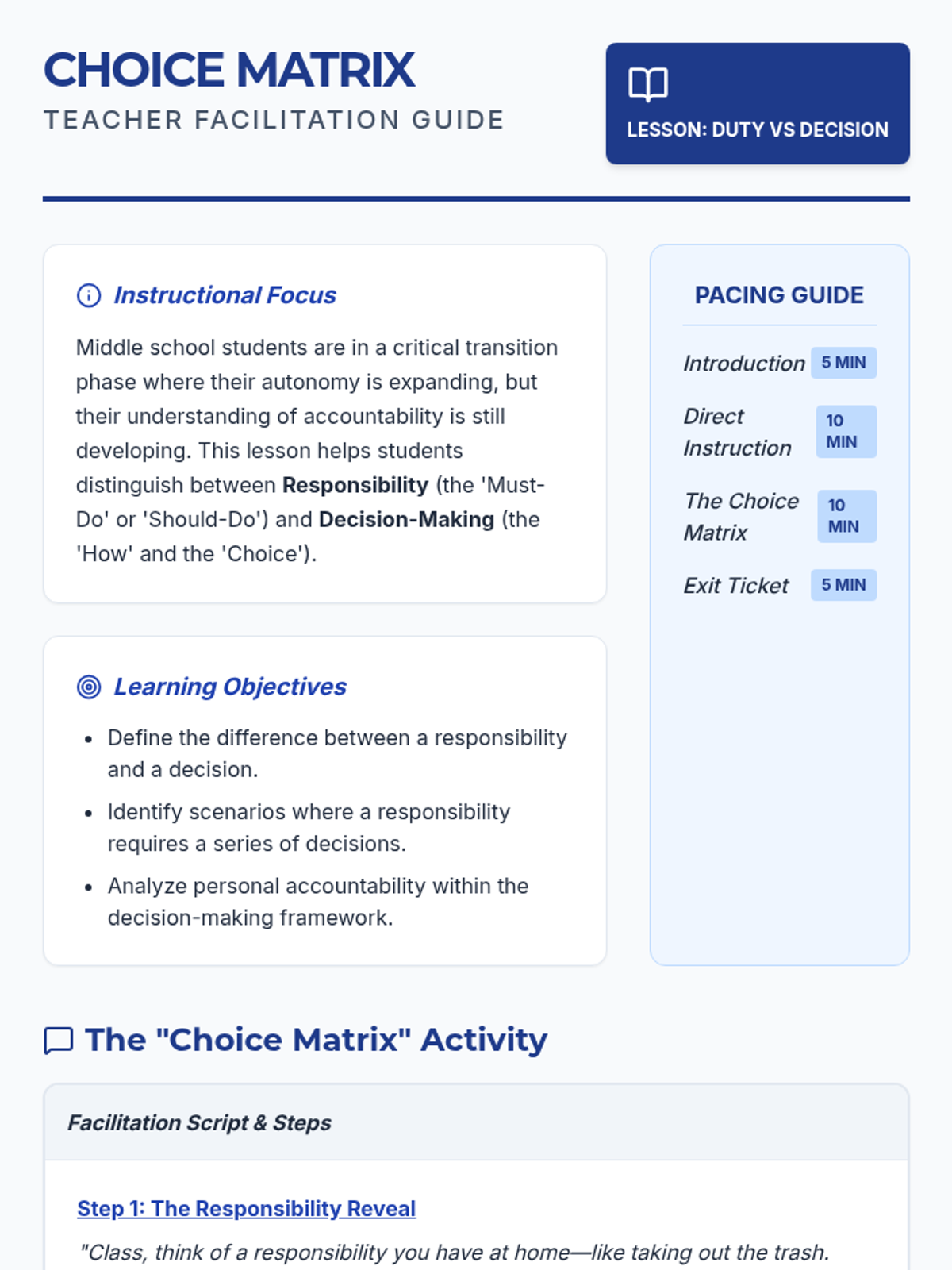
A comprehensive facilitation guide for teachers to lead the 'Choice Matrix' activity, including pacing suggestions, discussion prompts, and strategies for addressing common student misconceptions about accountability.
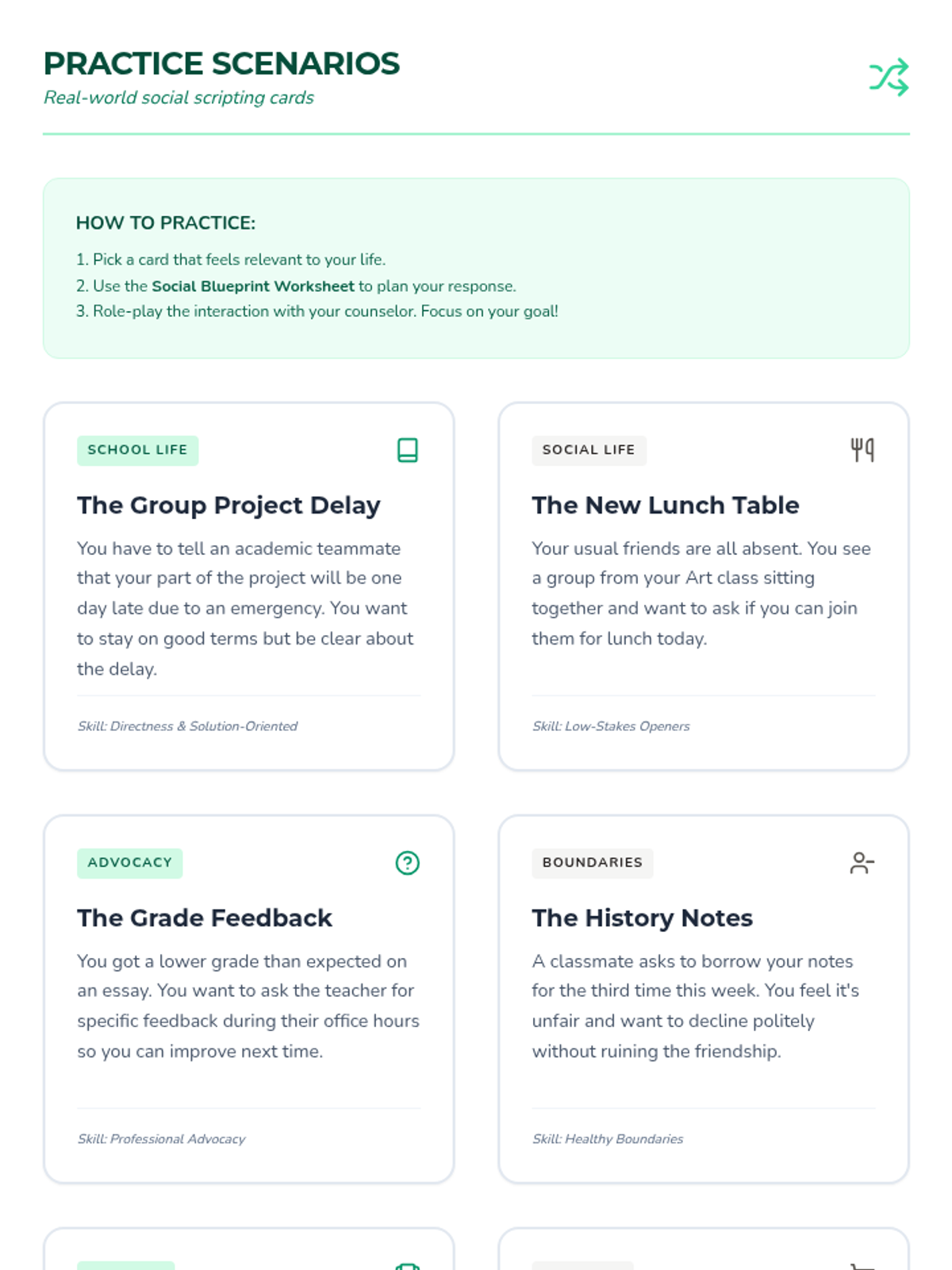
A set of printable role-play cards featuring diverse high school social scenarios for practicing social scripting and communication skills.
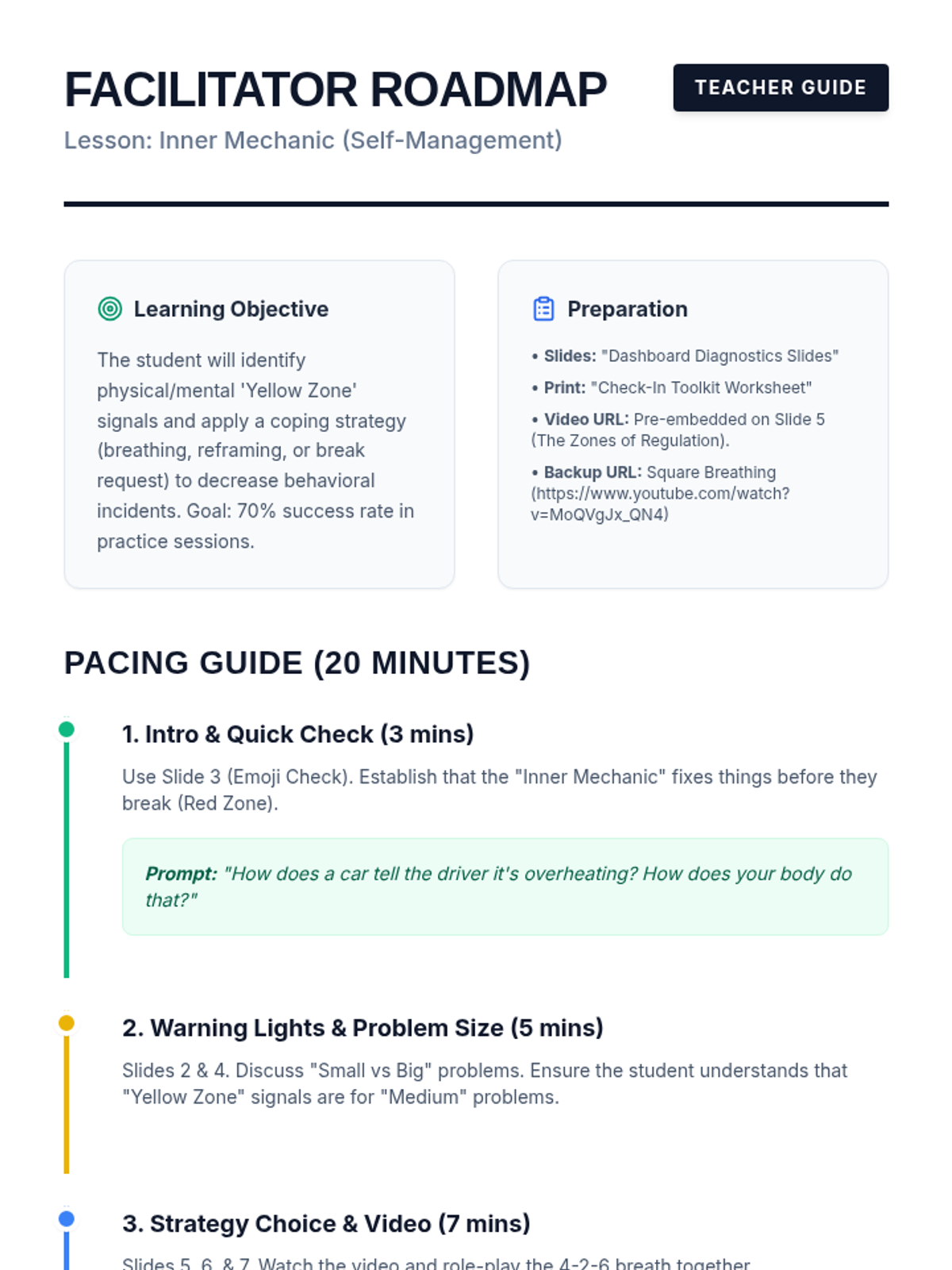
A facilitator guide providing a step-by-step roadmap for teaching the Inner Mechanic lesson. Includes pacing, discussion prompts, preparation tips, and troubleshooting advice. Fixed page breaks and simplified instructions.
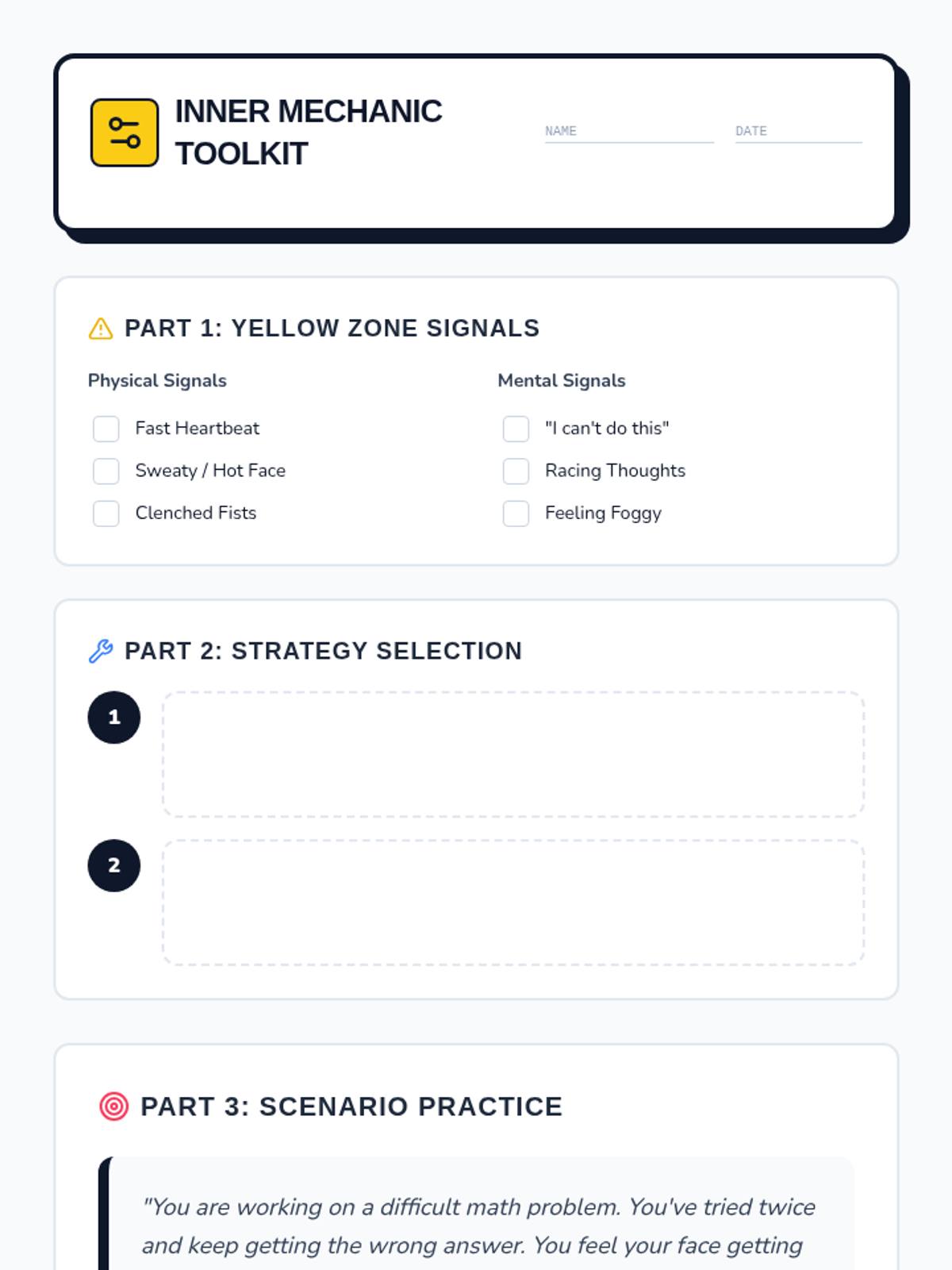
A student-facing toolkit worksheet designed to help students map out their Yellow Zone signals, select preferred coping strategies, and practice applying them to a challenging classroom scenario. Optimized for a 2-page print format.
A slide deck for teaching self-regulation using a 'Dashboard Diagnostics' theme. Includes sections on identifying Yellow Zone signals, 'Size of the Problem', and a visual choice board of coping strategies. Updated with improved contrast and an embedded video.
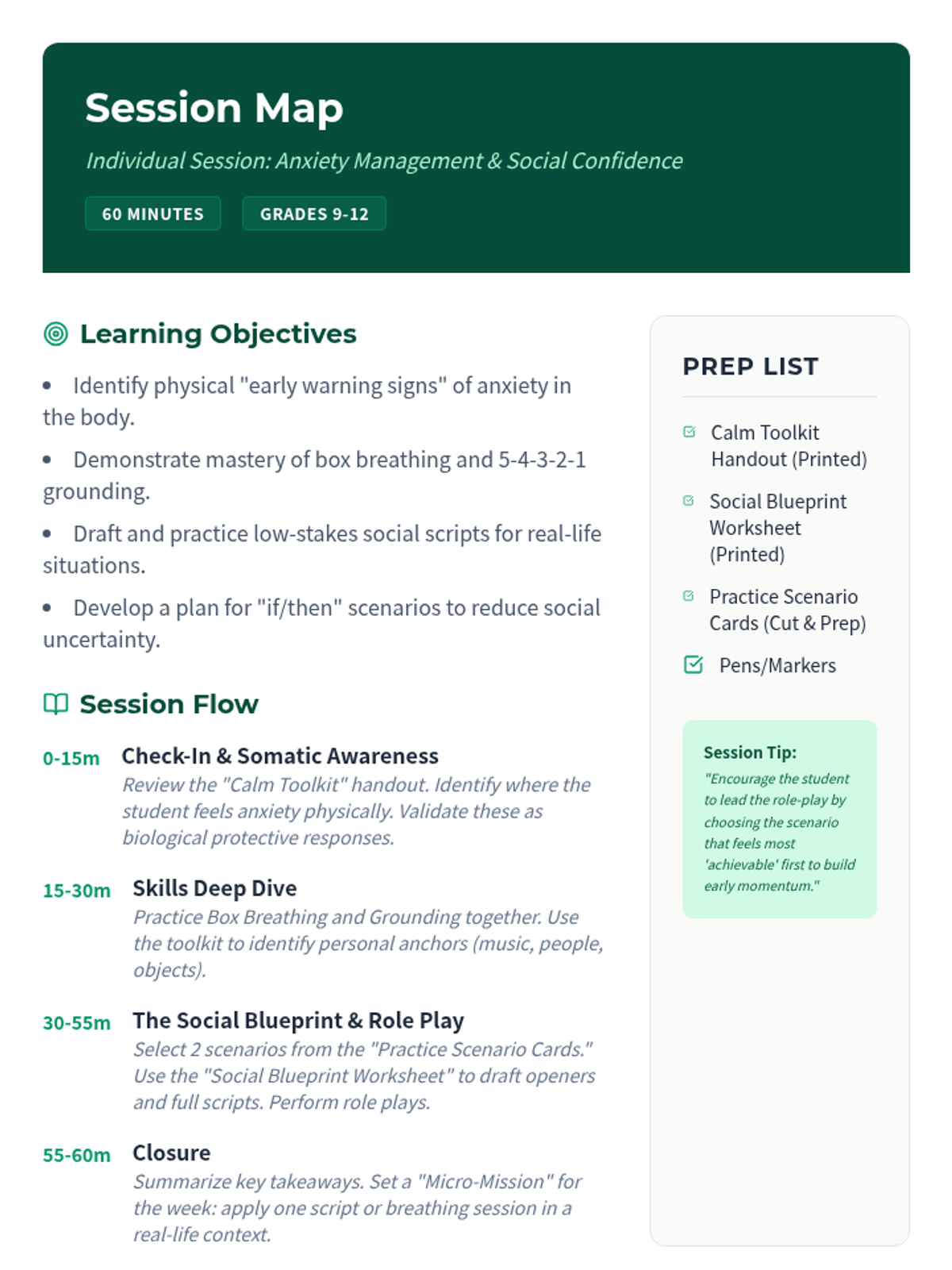
A facilitation guide for counselors including session objectives, a timed session flow, prep list, and tips for managing role-play anxiety.
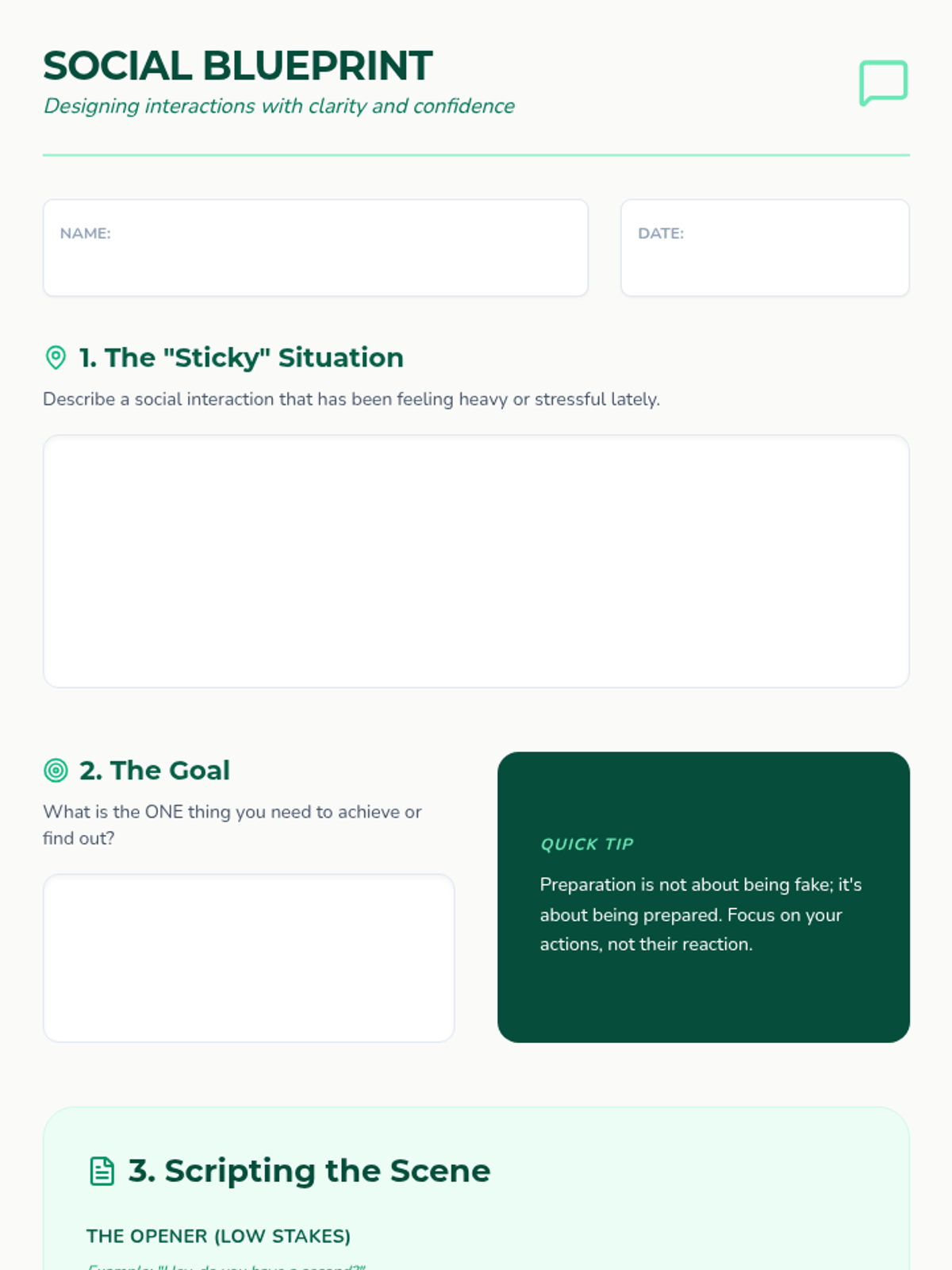
A worksheet for students to identify anxiety-inducing social situations and draft specific scripts and openers for role-play practice.
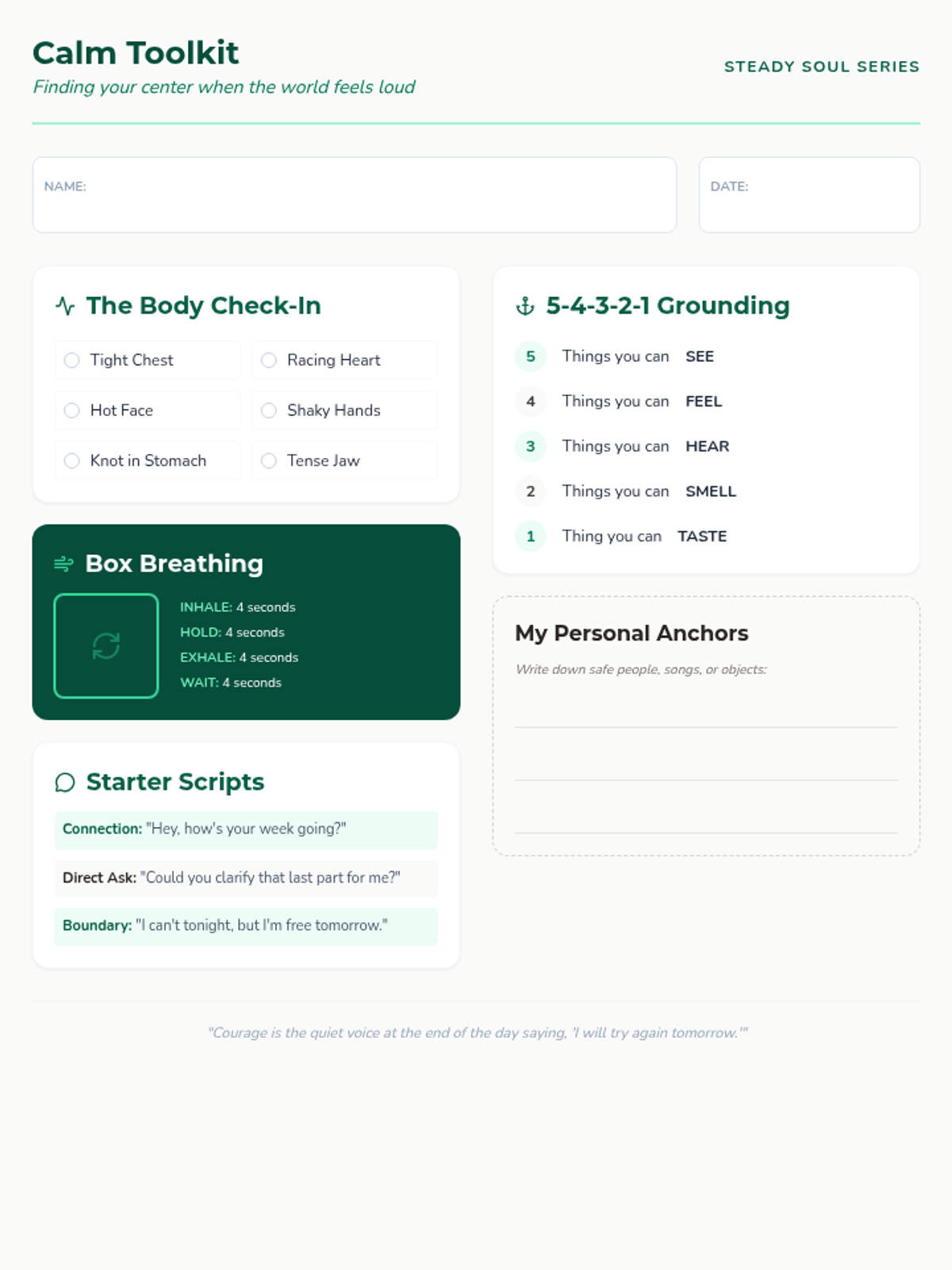
A student reference sheet detailing physical sensations of anxiety, box breathing, and the 5-4-3-2-1 grounding technique.
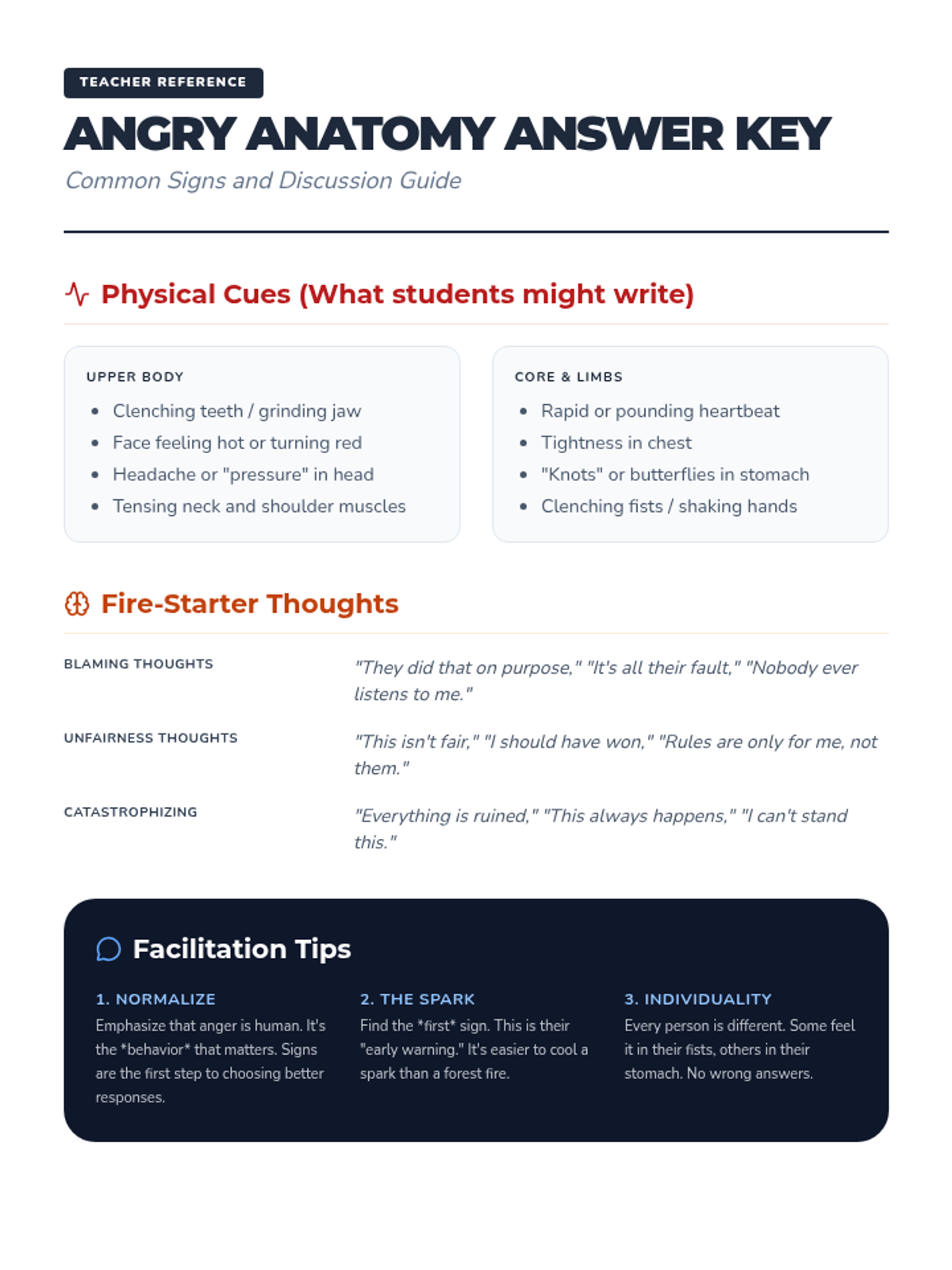
An answer key and teacher guide for the Angry Anatomy worksheet, featuring common student responses and discussion prompts.
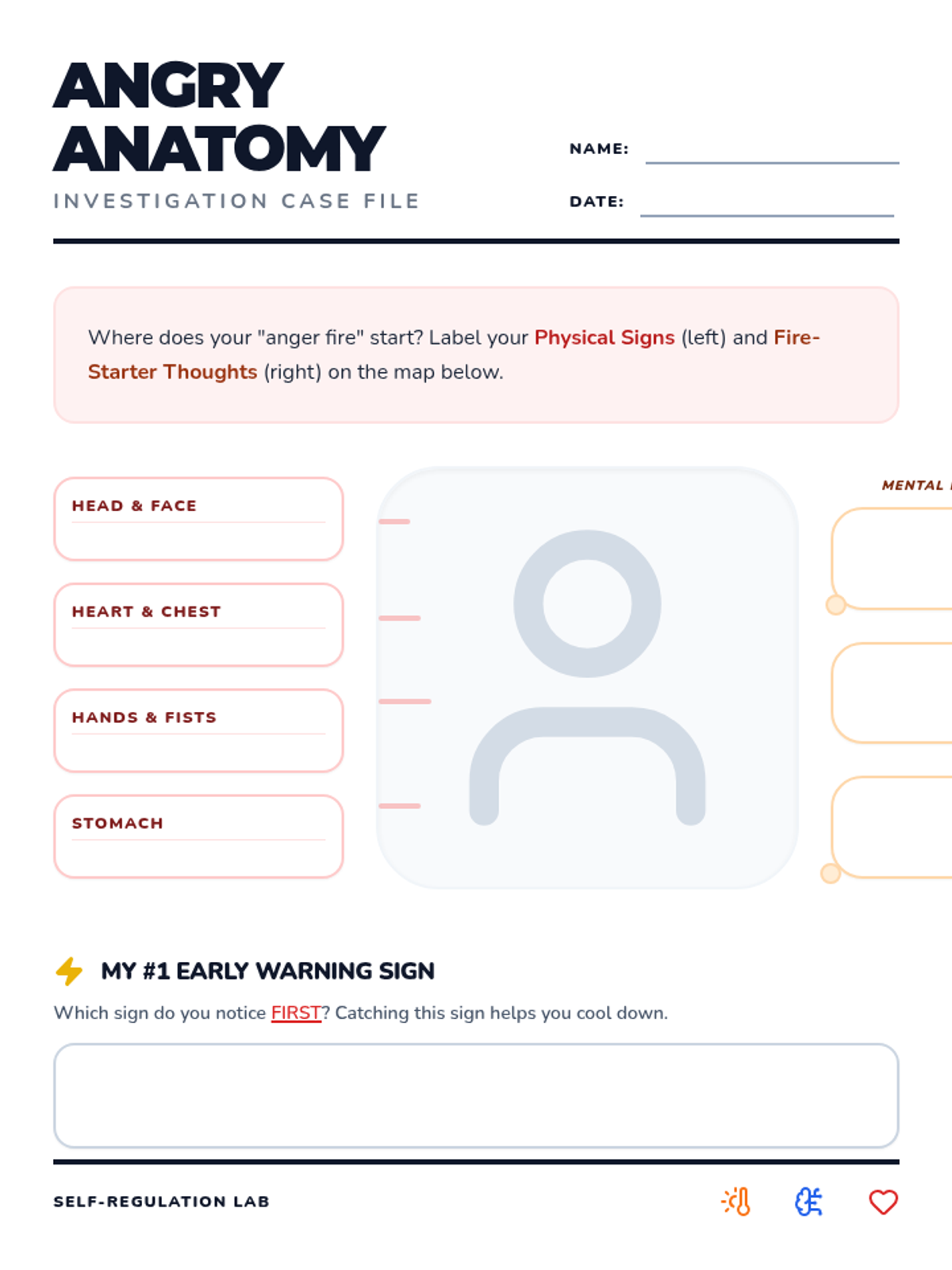
A body map graphic organizer for students to identify and label their physical anger cues and internal thought patterns.
A slide deck explaining the physical and mental signs of anger to prepare students for the Body Map activity.
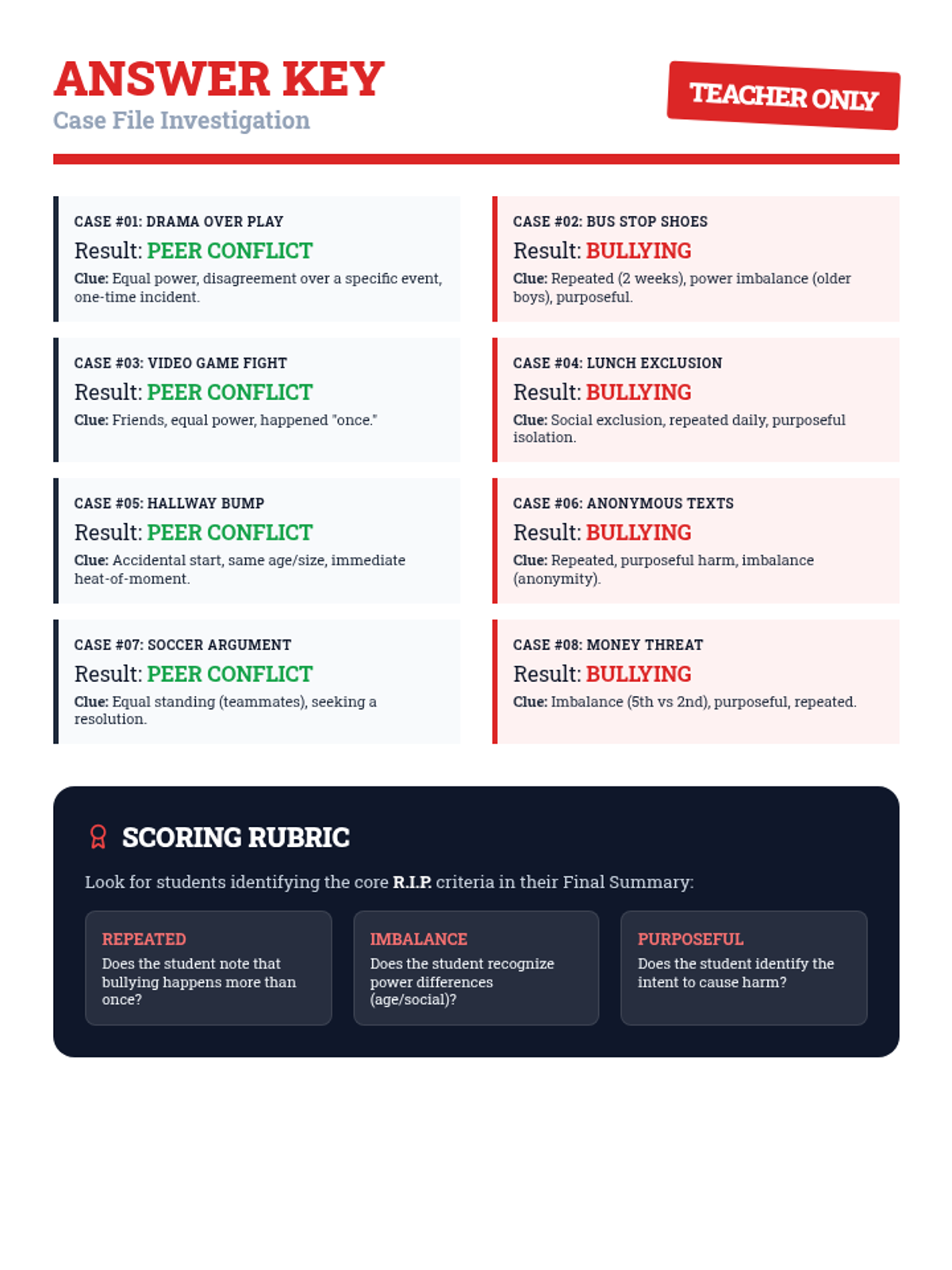
An answer key for the Case File Worksheet, providing the correct categorization for each scenario along with the specific clues related to the RIP criteria.
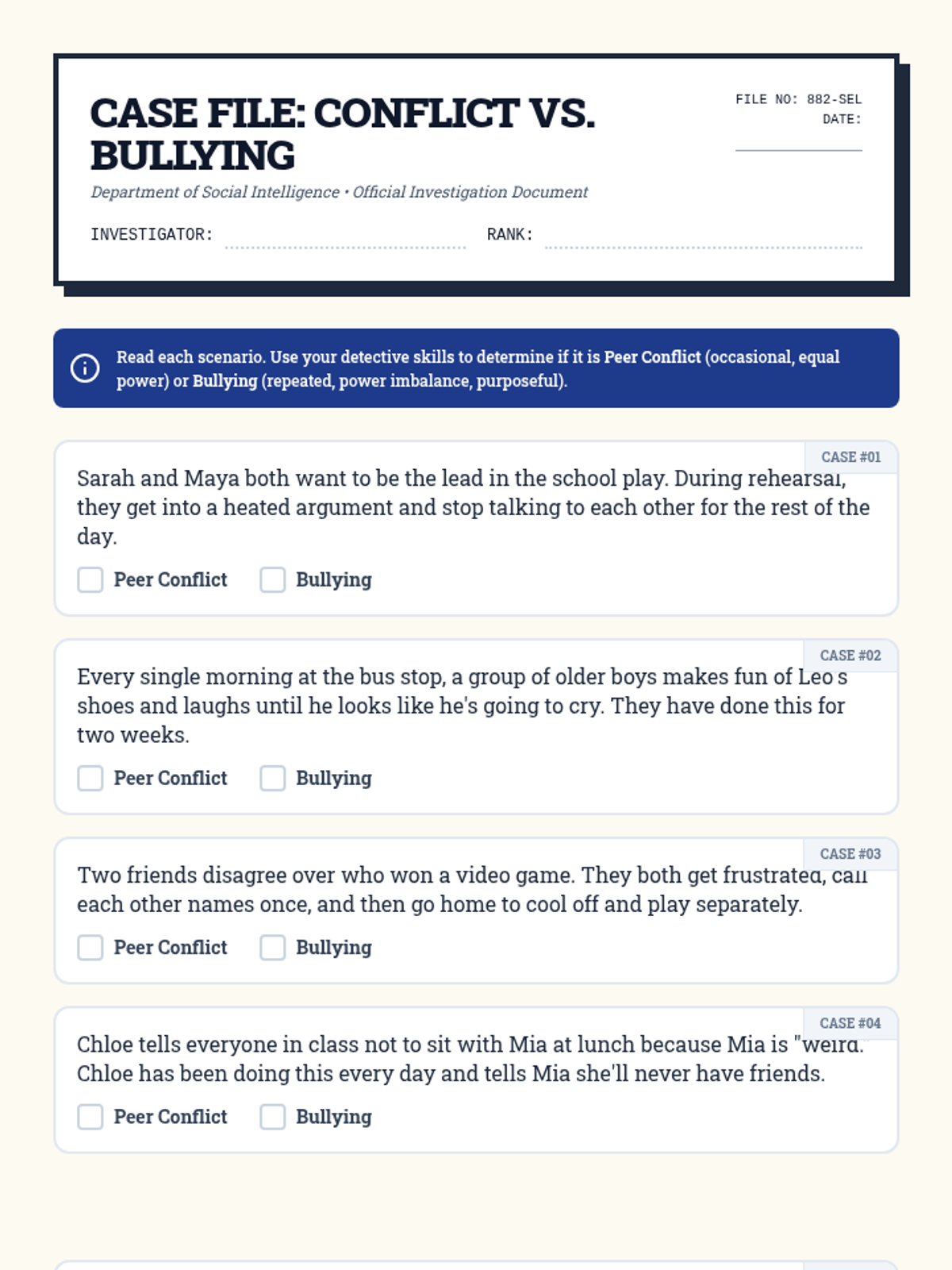
A student worksheet designed as a 'Case File' where investigators read 8 scenarios and use the RIP criteria to distinguish between peer conflict and bullying.
A 4-slide presentation introducing the definitions of peer conflict and bullying, featuring the 'RIP' criteria (Repeated, Imbalance of power, Purposeful).
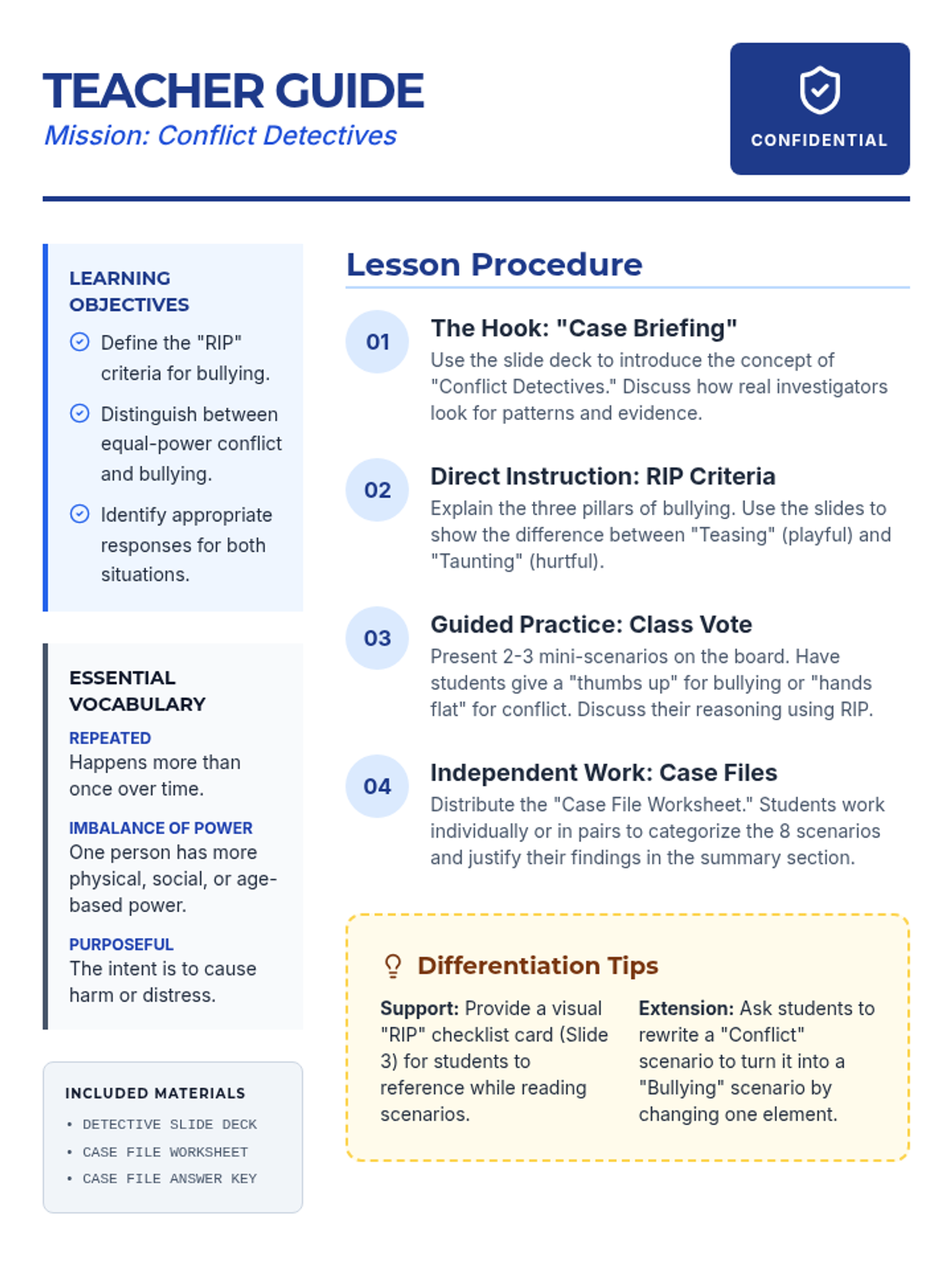
A teacher's guide for the Conflict Detectives lesson, including learning objectives, essential vocabulary, and a step-by-step instructional procedure.
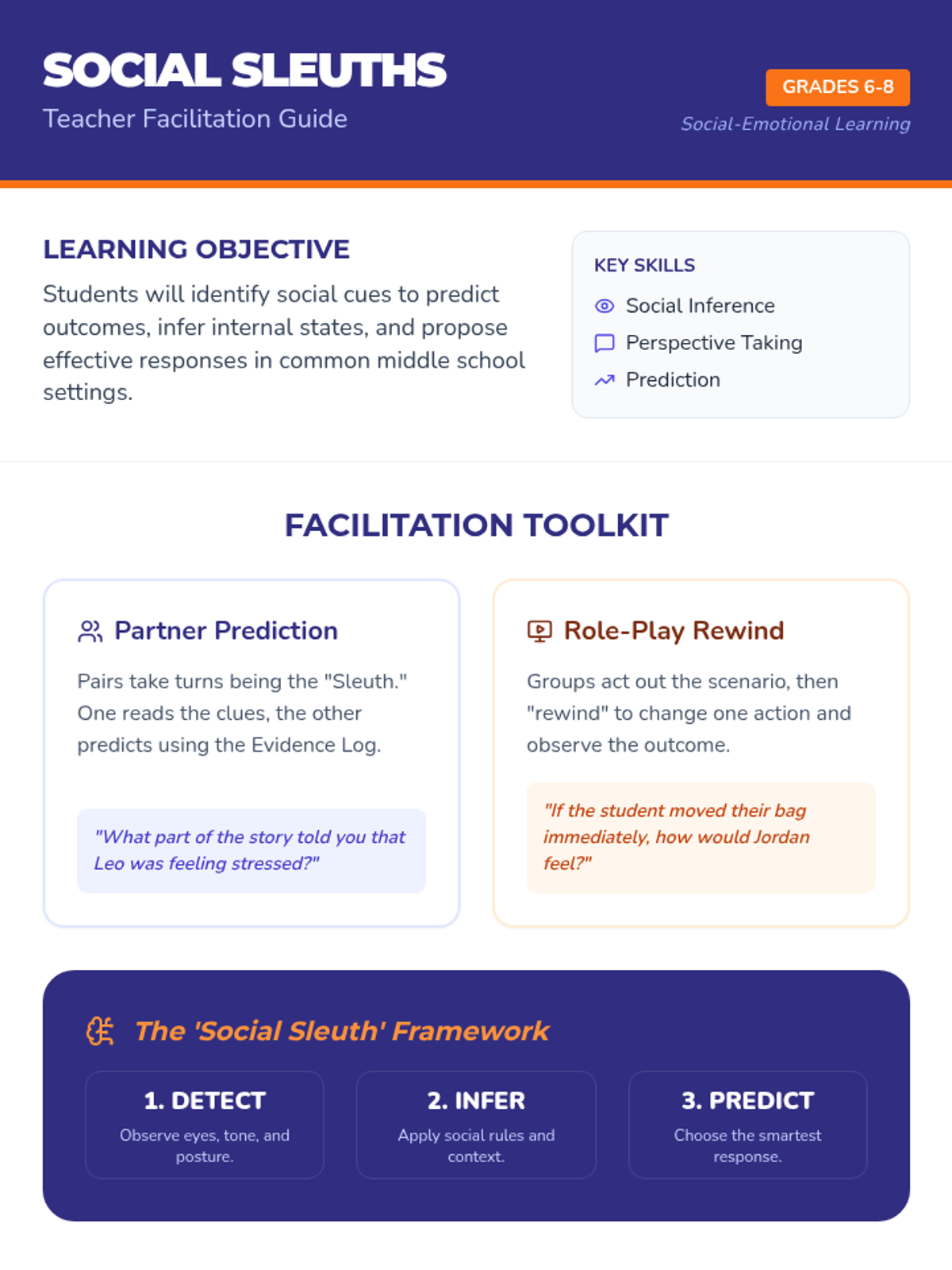
A comprehensive teacher facilitation guide for the Social Sleuths lesson. Includes detailed instructional strategies, a 'Social Sleuth' framework, a complete answer key for all 6 scenarios, and debriefing questions to deepen student understanding of social prediction.
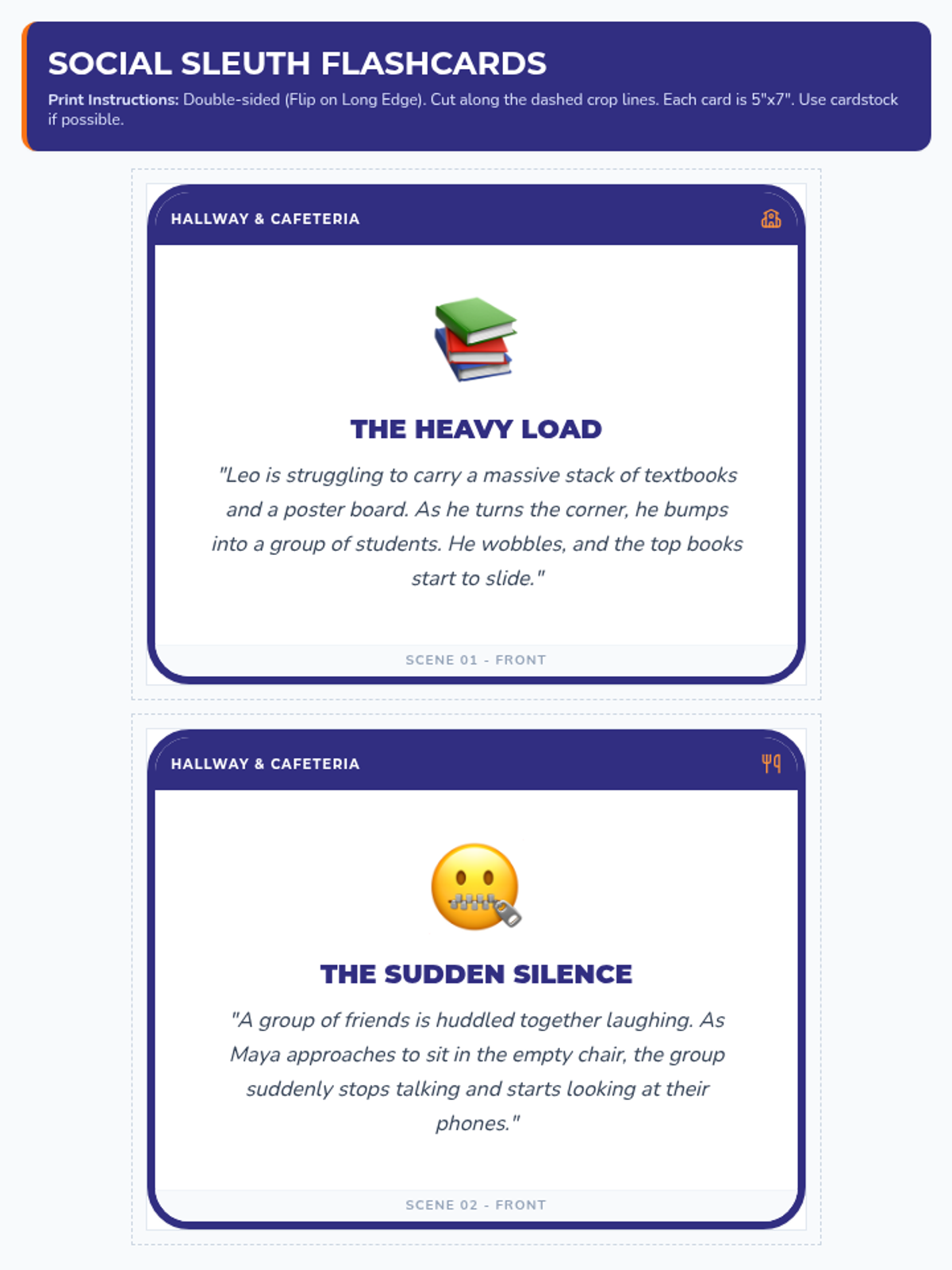
A set of 6 double-sided social prediction flashcards for middle schoolers. Each card features a realistic social scenario in hallways, on the bus, or online, paired with inquiry-based prompts and a dedicated writing area for 'evidence' notes to help students practice social inference.
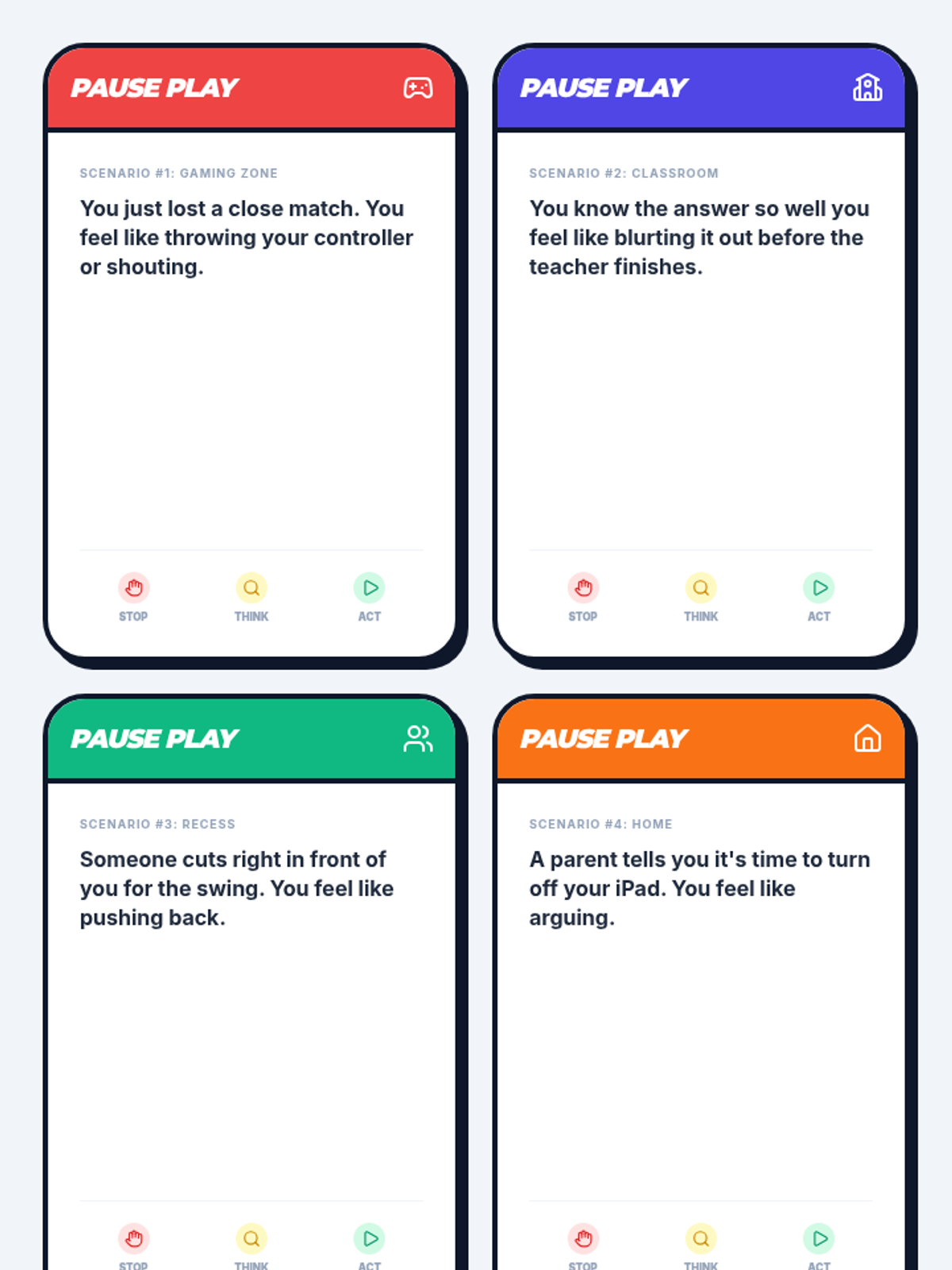
A set of printable scenario cards for small group discussion or role-play. Each card presents a relatable impulsive situation (gaming, classroom, social) and prompts students to apply the 'Stop, Think, Act' strategy to find a better response.
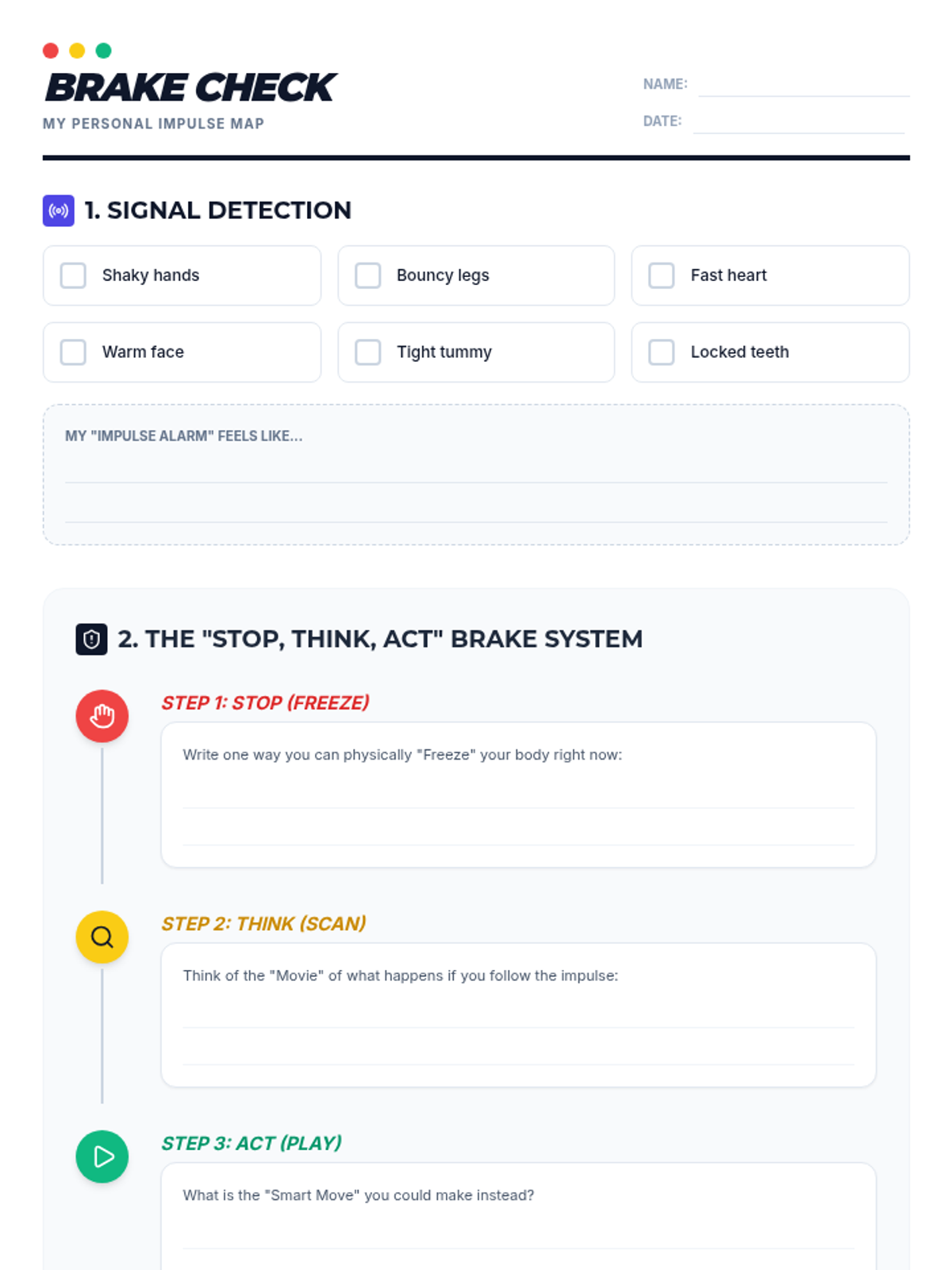
A student worksheet that guides learners through identifying their physical 'impulse signals' and practicing the 'Stop, Think, Act' strategy. It features a modern 'Impulse Map' layout with dedicated writing areas for self-reflection.
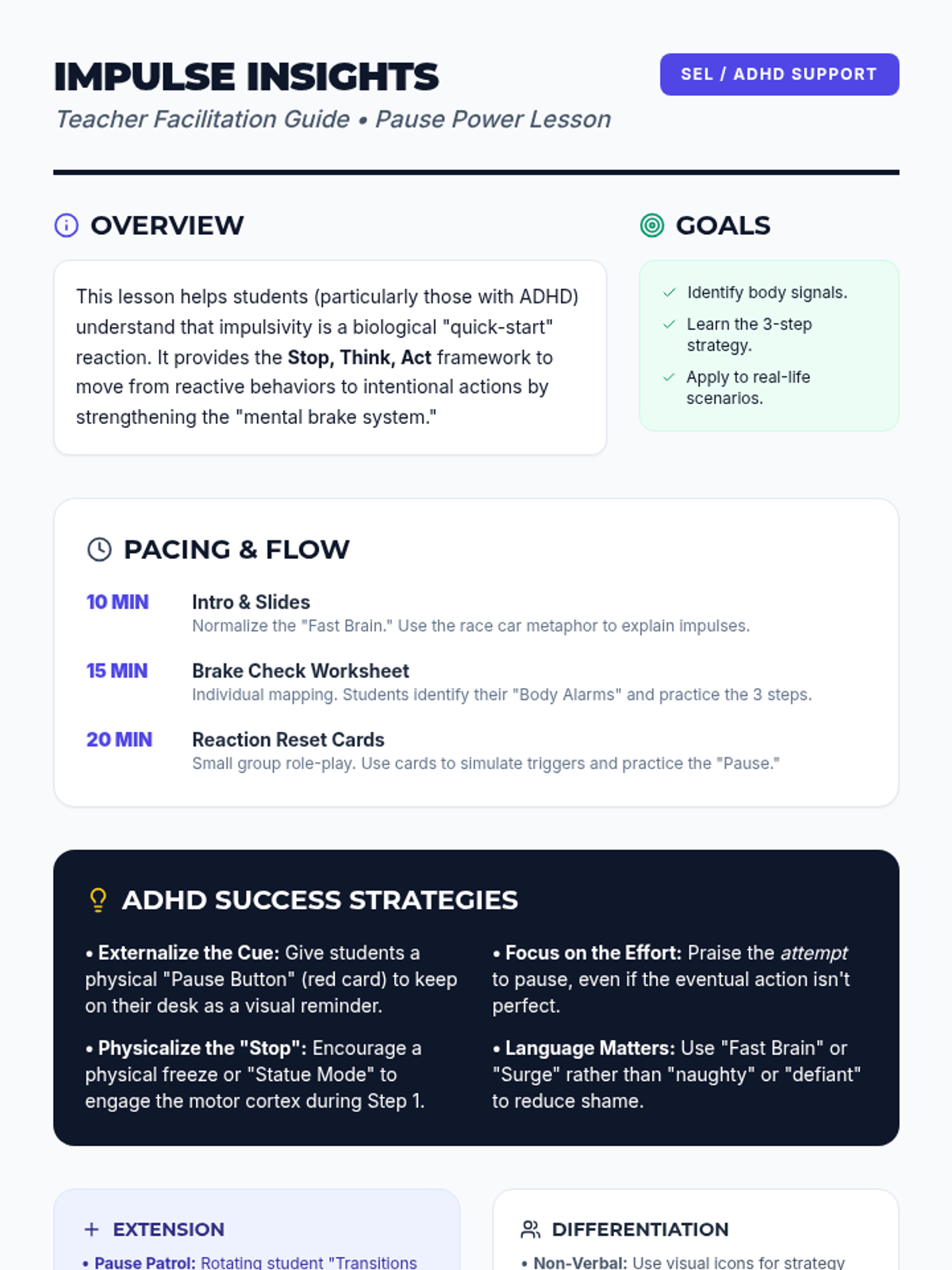
A comprehensive teacher guide for the 'Pause Power' lesson, featuring learning objectives, a detailed pacing guide, and specific instructional strategies for supporting students with ADHD.
A visually engaging slide deck that introduces the 'Stop, Think, Act' strategy using a 'Pause Power' theme. It includes definitions of impulsivity, step-by-step breakdowns of the strategy, and a real-life application example suitable for students with ADHD.
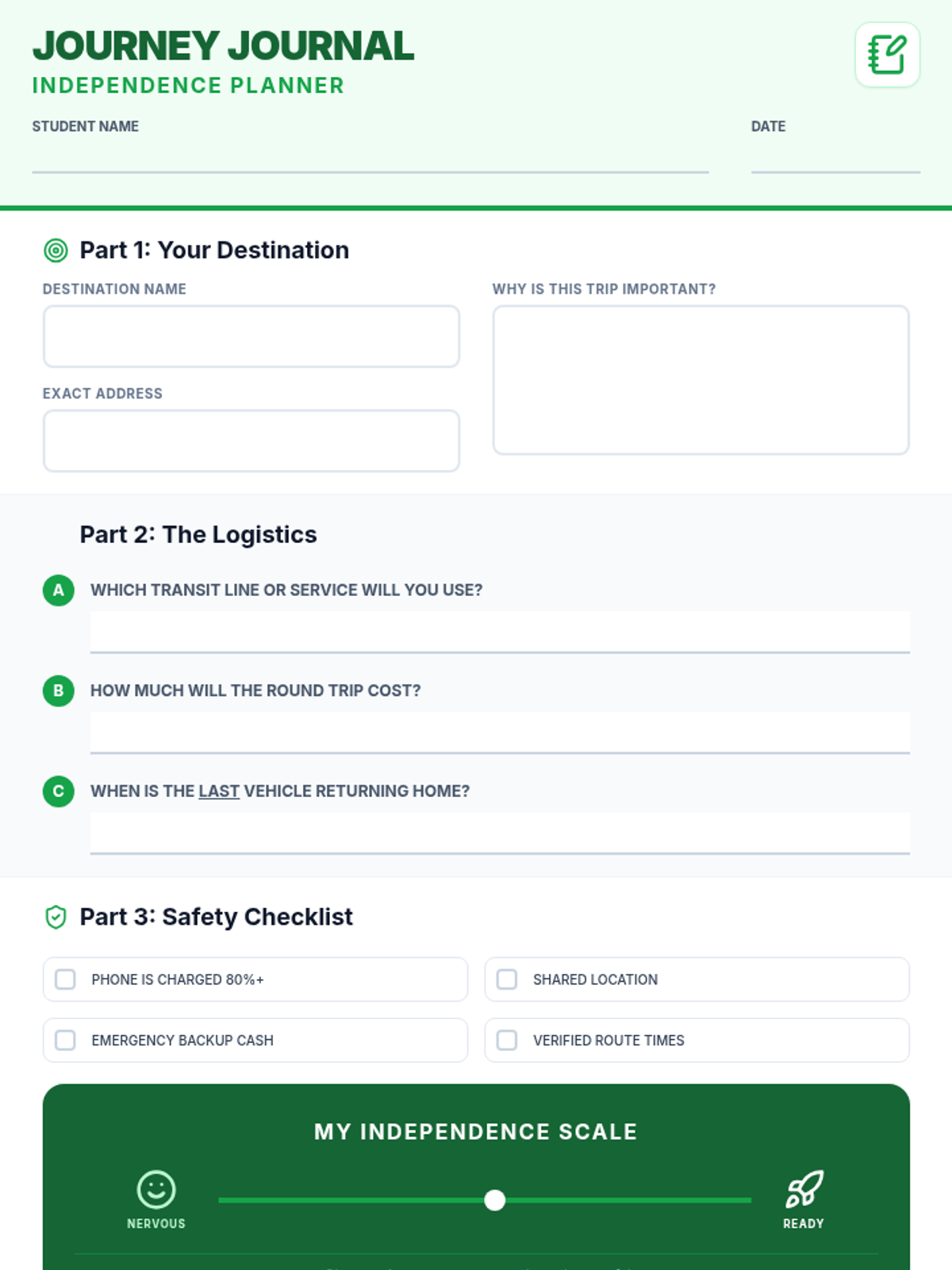
A reflective worksheet and planning journal for students to map out a personal travel goal, calculate costs, and review safety protocols before their first solo trip.