An expanded sorting activity with 24 scenario cards (12 triggers and 12 coping skills) for students to categorize, reinforcing identification and strategy selection.
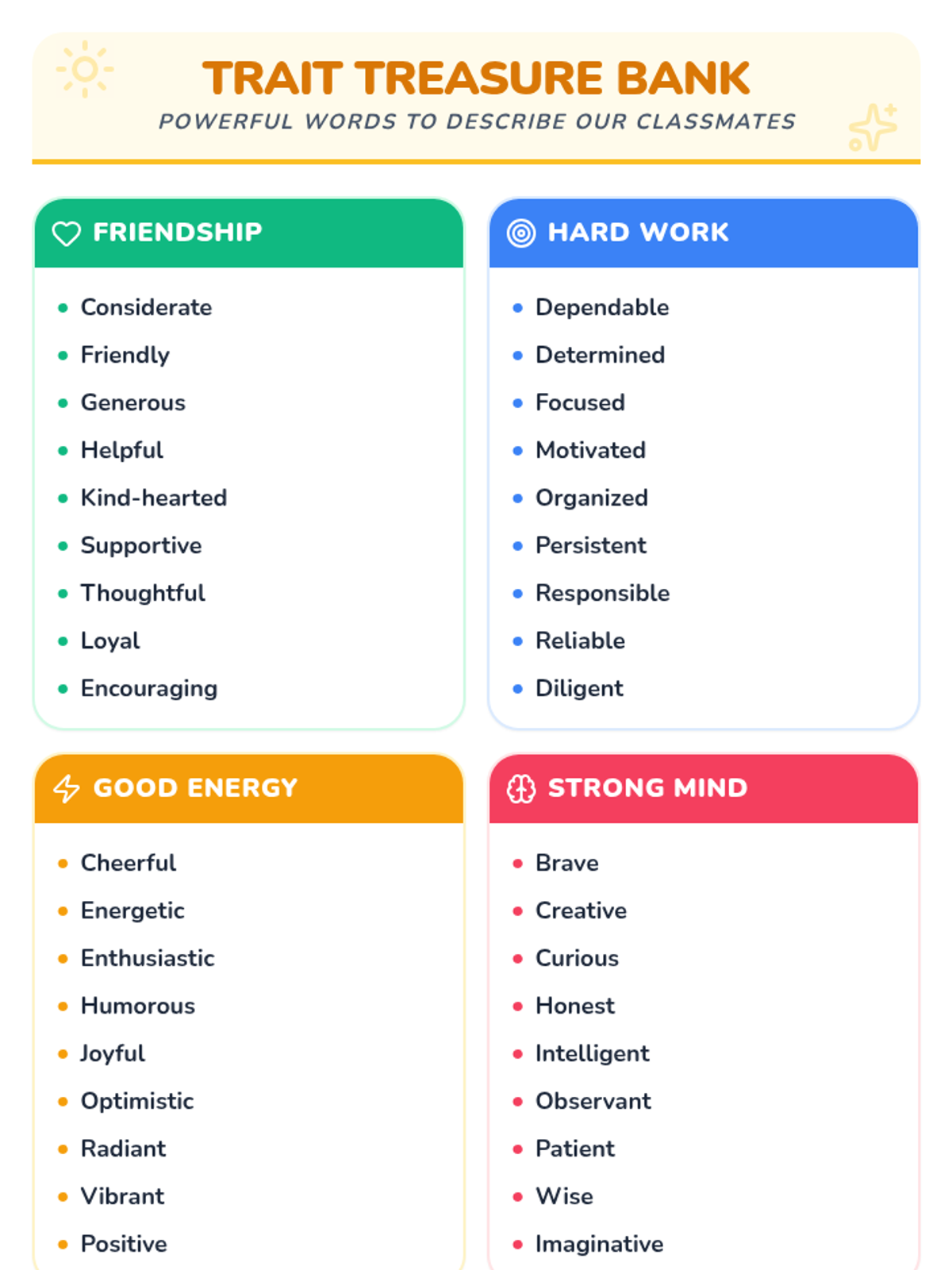
A vibrant, categorized anchor chart featuring positive character traits for students to use when describing their classmates. Organized into four color-coded categories with large, readable text for classroom display. Optimized for single-page printing.
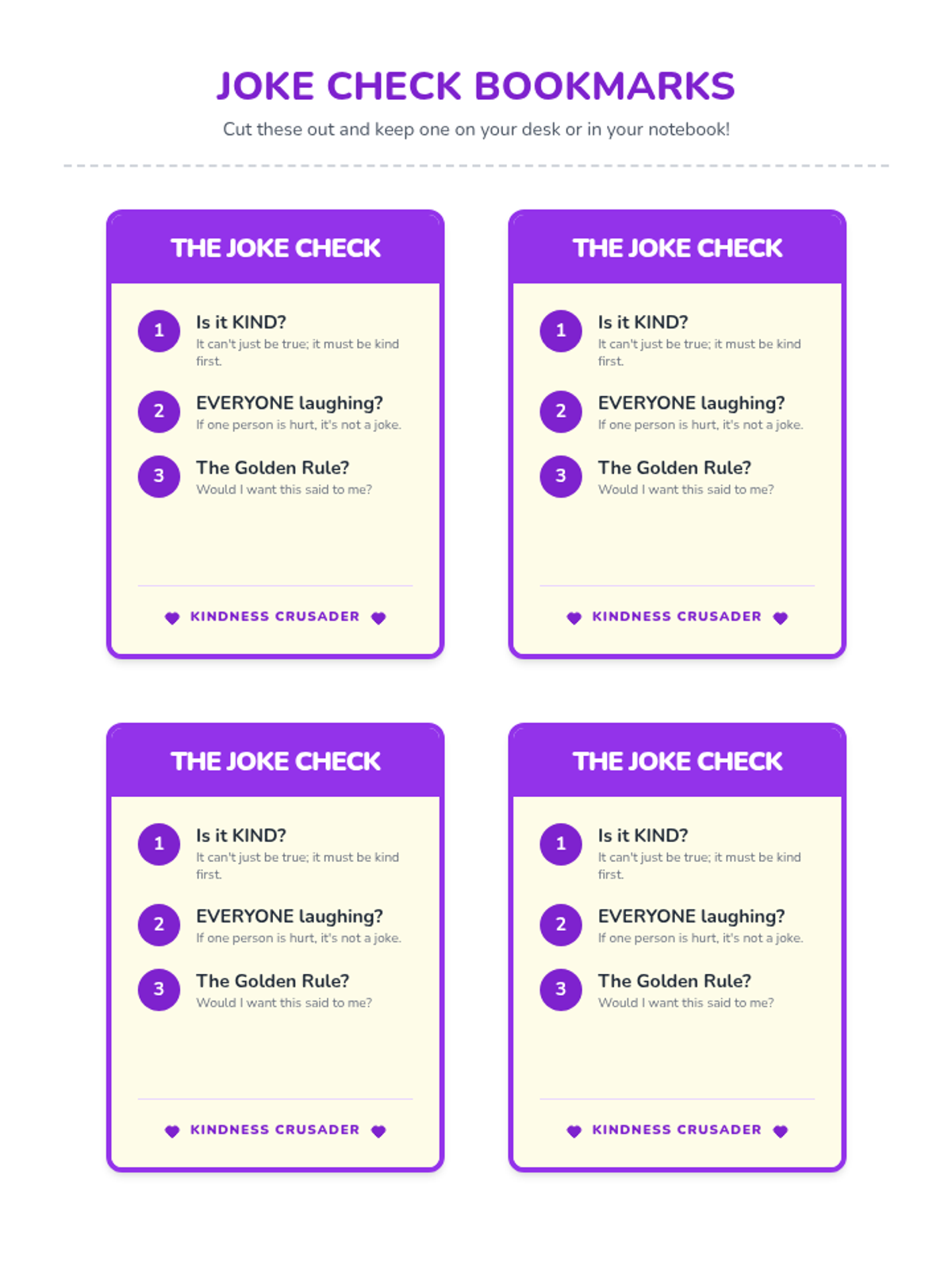
Printable reference bookmarks for students featuring the '3-Second Joke Check'. Designed to be kept on desks or in notebooks as a persistent visual cue for empathy and kindness in social interactions.
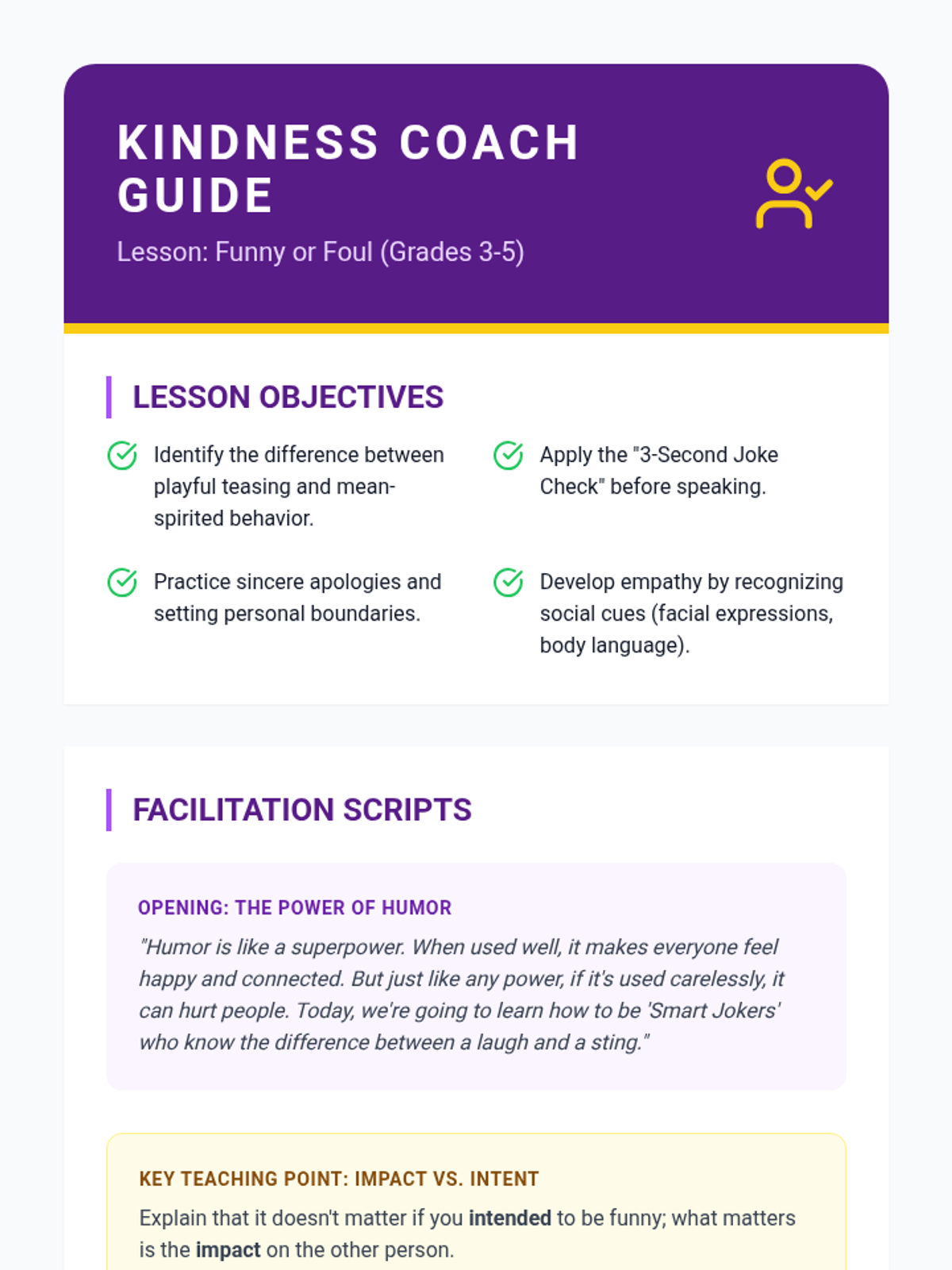
A comprehensive teacher's guide for the 'Funny or Foul' lesson. Includes lesson objectives, discussion scripts, analogies for explaining impact vs. intent, role-play scenarios, and a detailed 45-minute pacing guide.
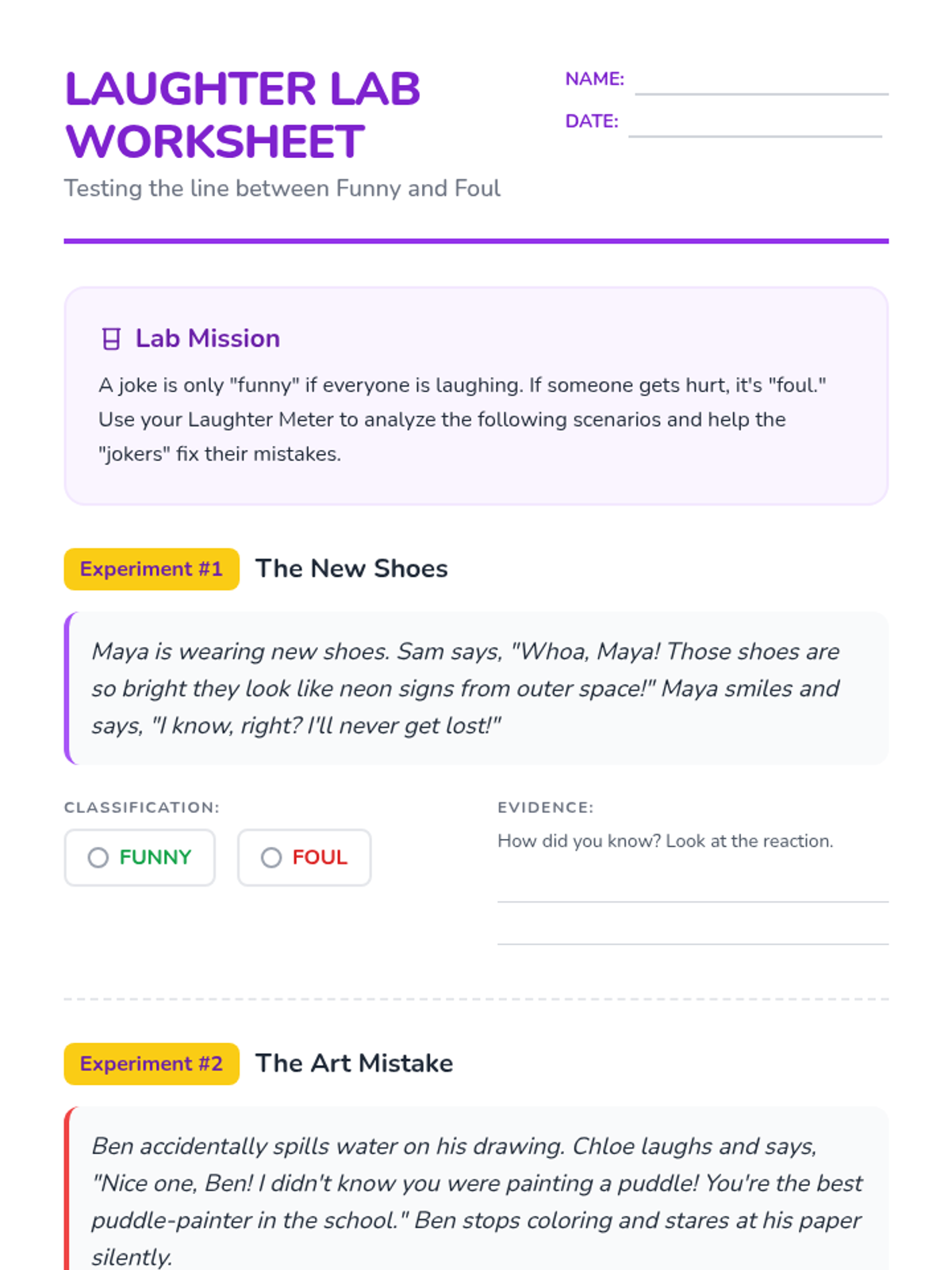
A scenario-based worksheet for 3rd-5th graders to analyze the difference between funny and foul humor. Students classify social interactions, explain their reasoning, and practice writing sincere apologies.
An engaging slide deck for grades 3-5 that explains the difference between harmless jokes and hurtful comments using a 'Laughter Meter' and '3-Second Joke Check'. Includes real-world scenarios and strategies for apologizing or speaking up.
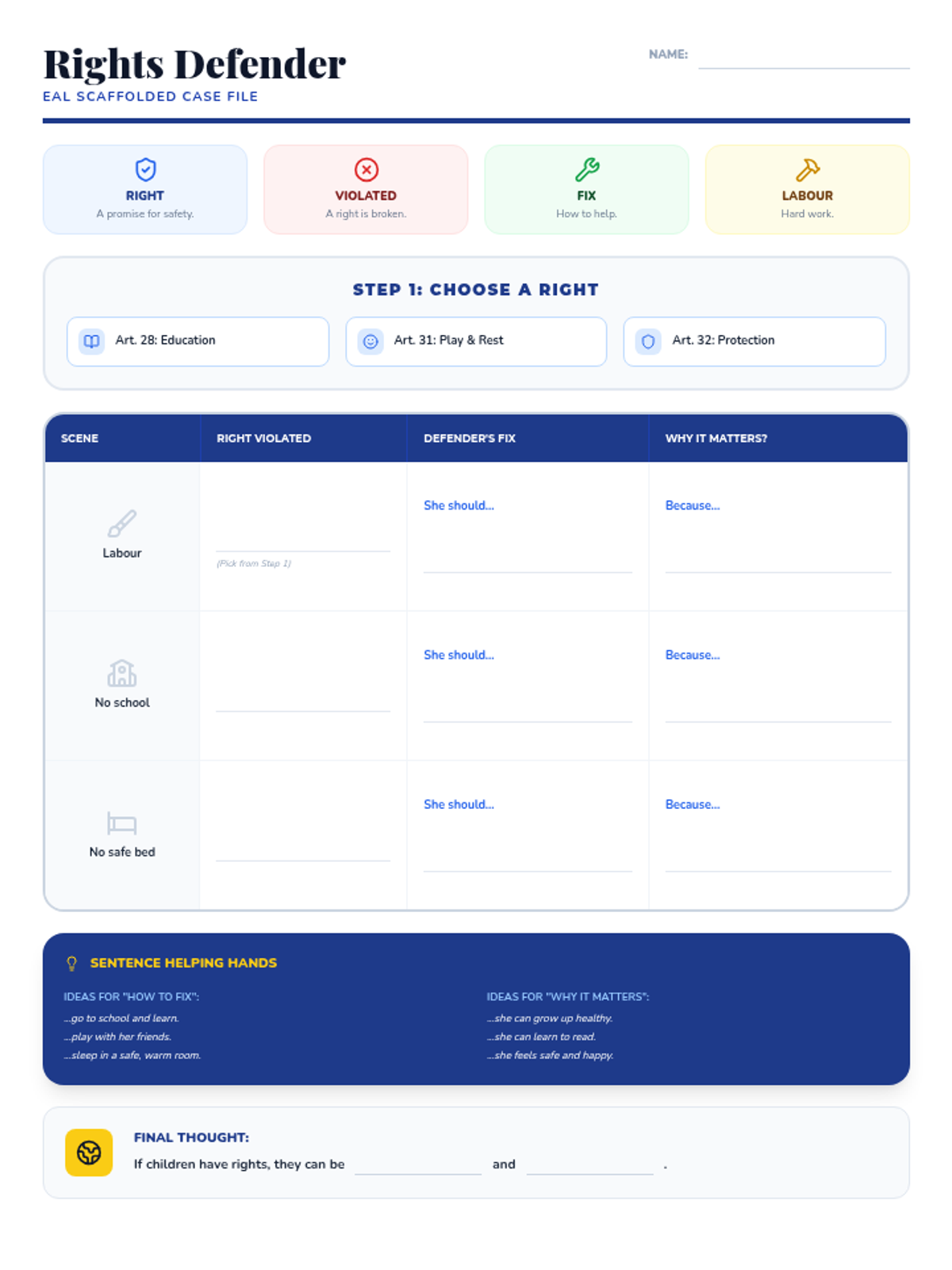
A heavily scaffolded, visual version of the P4 Human Rights activity for EAL learners. Features visual vocabulary, sentence stems, and simplified word banks for all columns. Optimized for a single page.
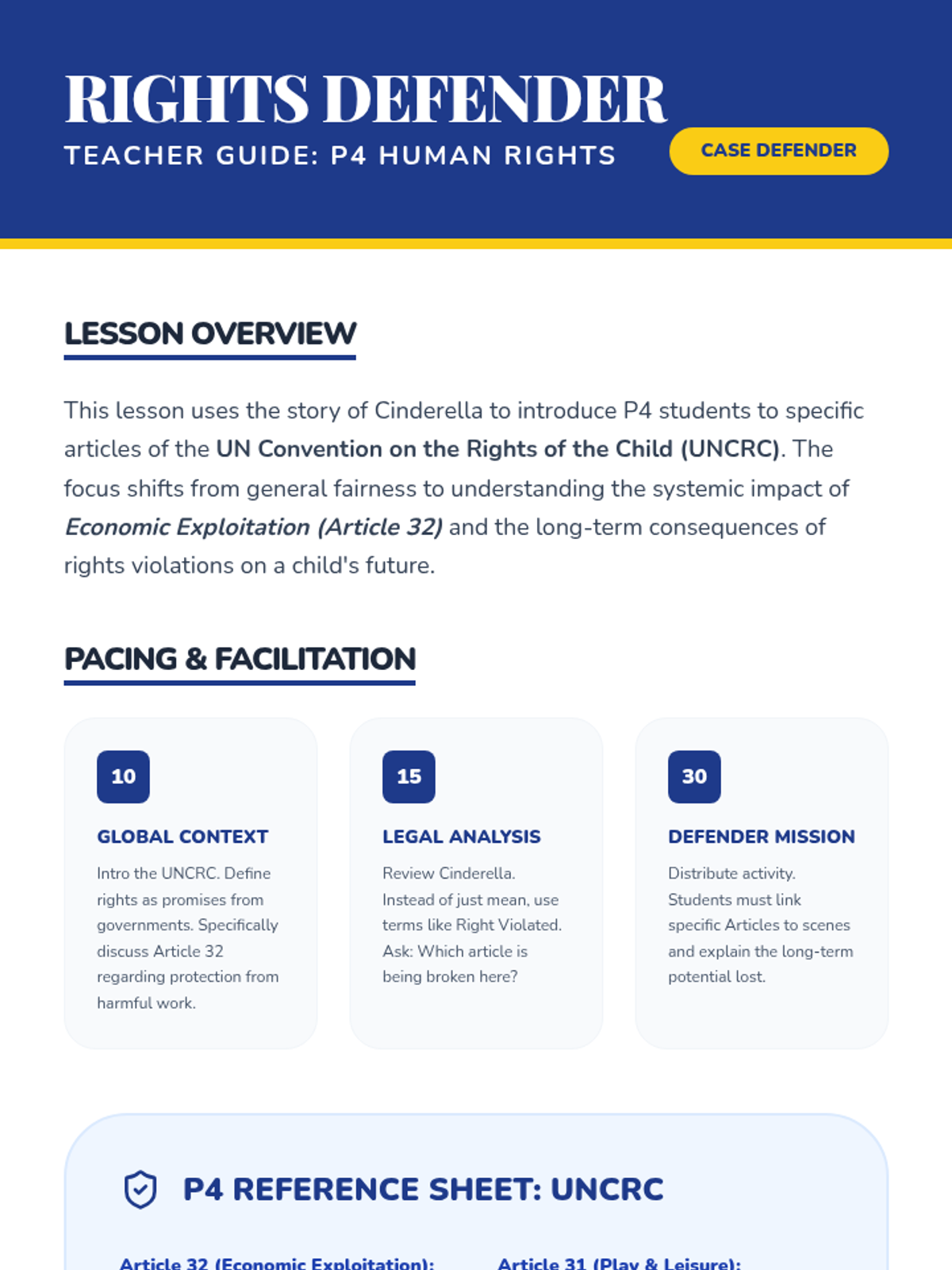
Teacher's guide for the P4 Human Rights lesson, focusing on the UNCRC, Cinderella as a case study, and the long-term impact of rights violations. Fixed markdown and contrast issues.
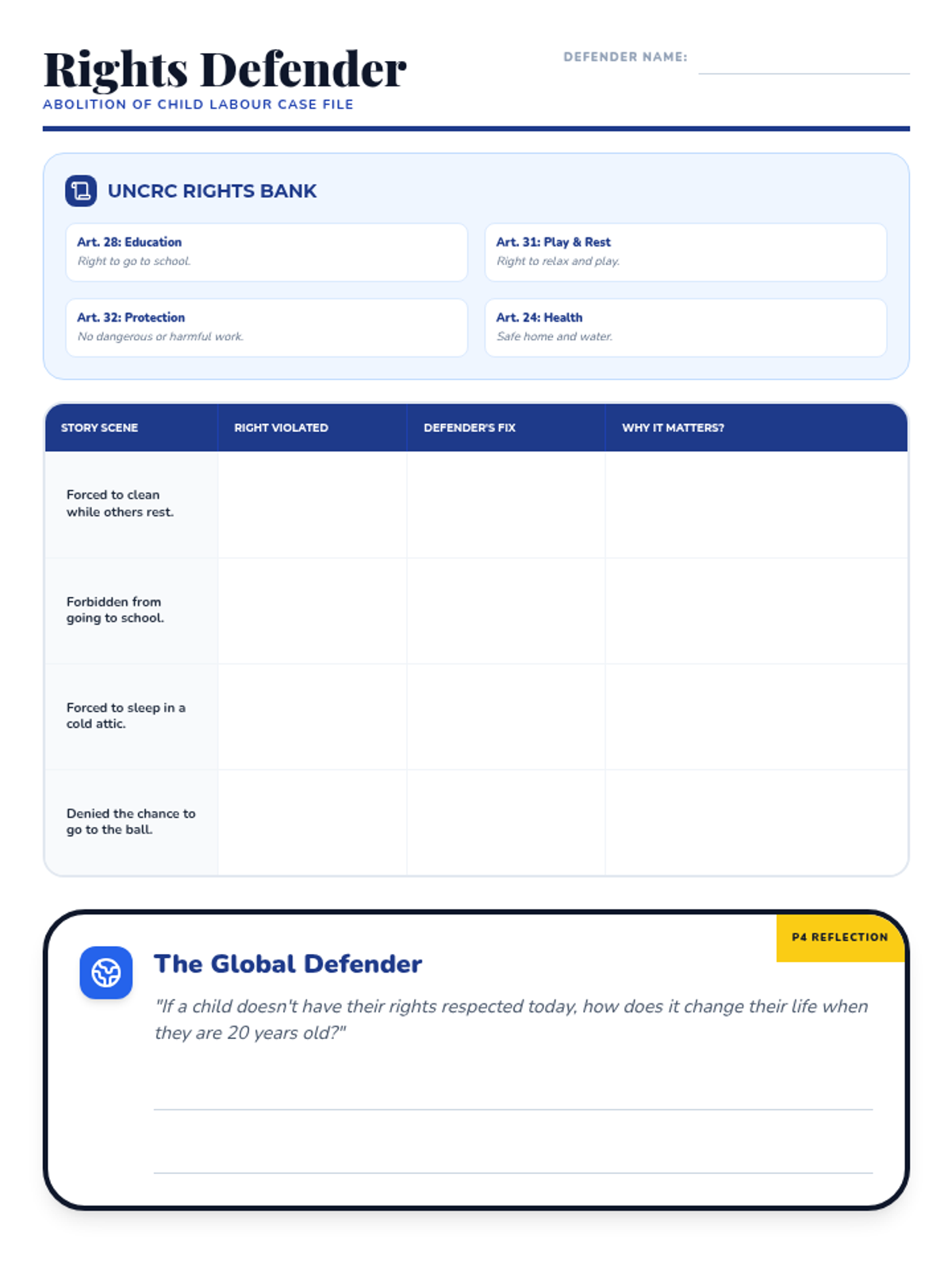
A P4 Human Rights activity analyzing Cinderella through the UNCRC. Students identify specific article violations, propose solutions, and reflect on the long-term impact of child labour. Consolidates content onto one page and improves legibility.