Revised scenario cards for 3rd-5th graders with fluid height containers to ensure no text is truncated. Improved visual design for instructions and consistent card layout. Final revision to fix footer page break and text sizing.
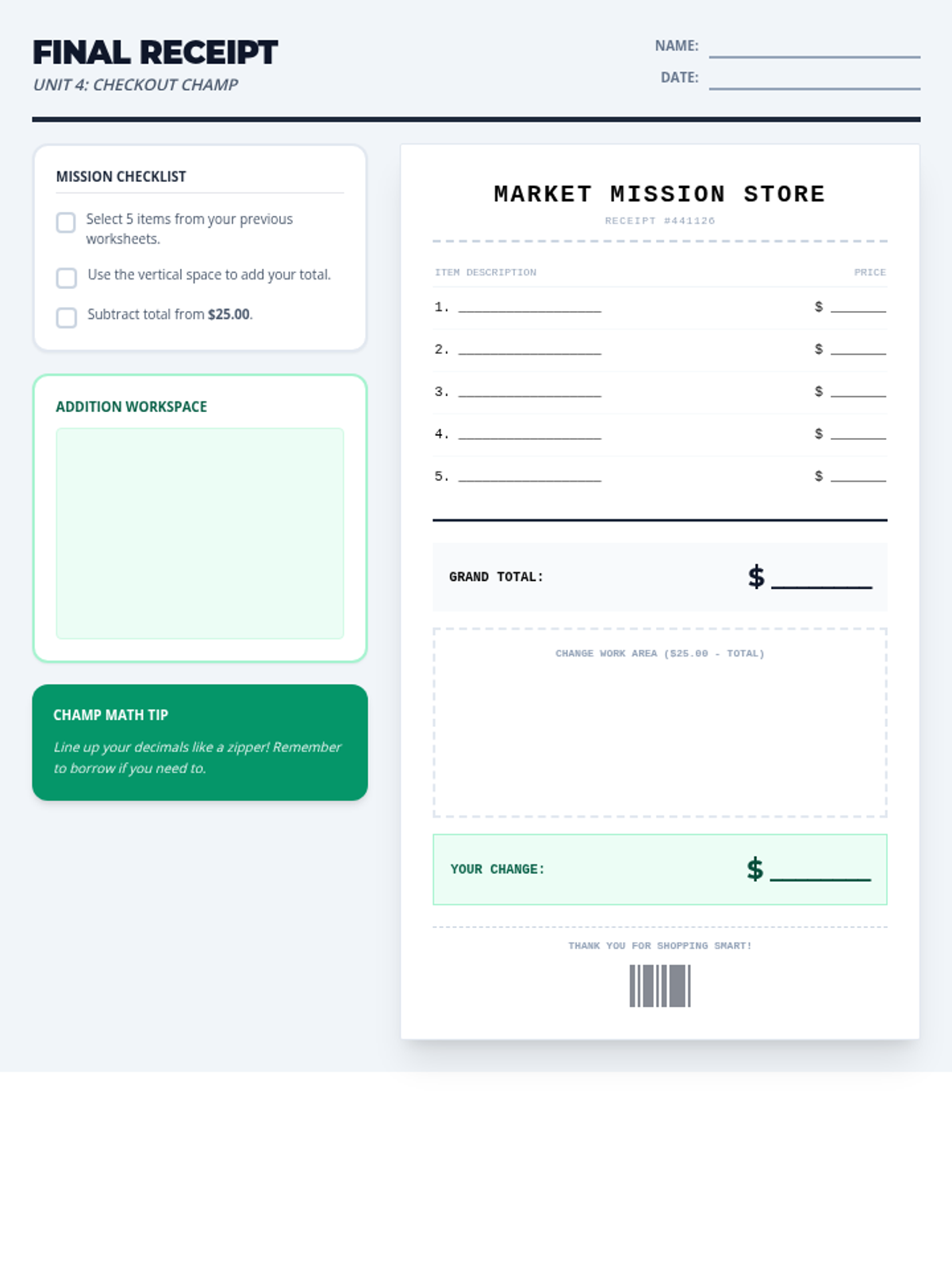
A final project worksheet for Lesson 4 that simulates a grocery receipt, where students calculate their final total and determine their remaining change from a $25 budget. Revised to fix page breaks, formatting, and added addition workspace.
Concluding slide deck for Lesson 4, guiding students through the final checkout process. Revised to fix a minor typo in the success checklist.
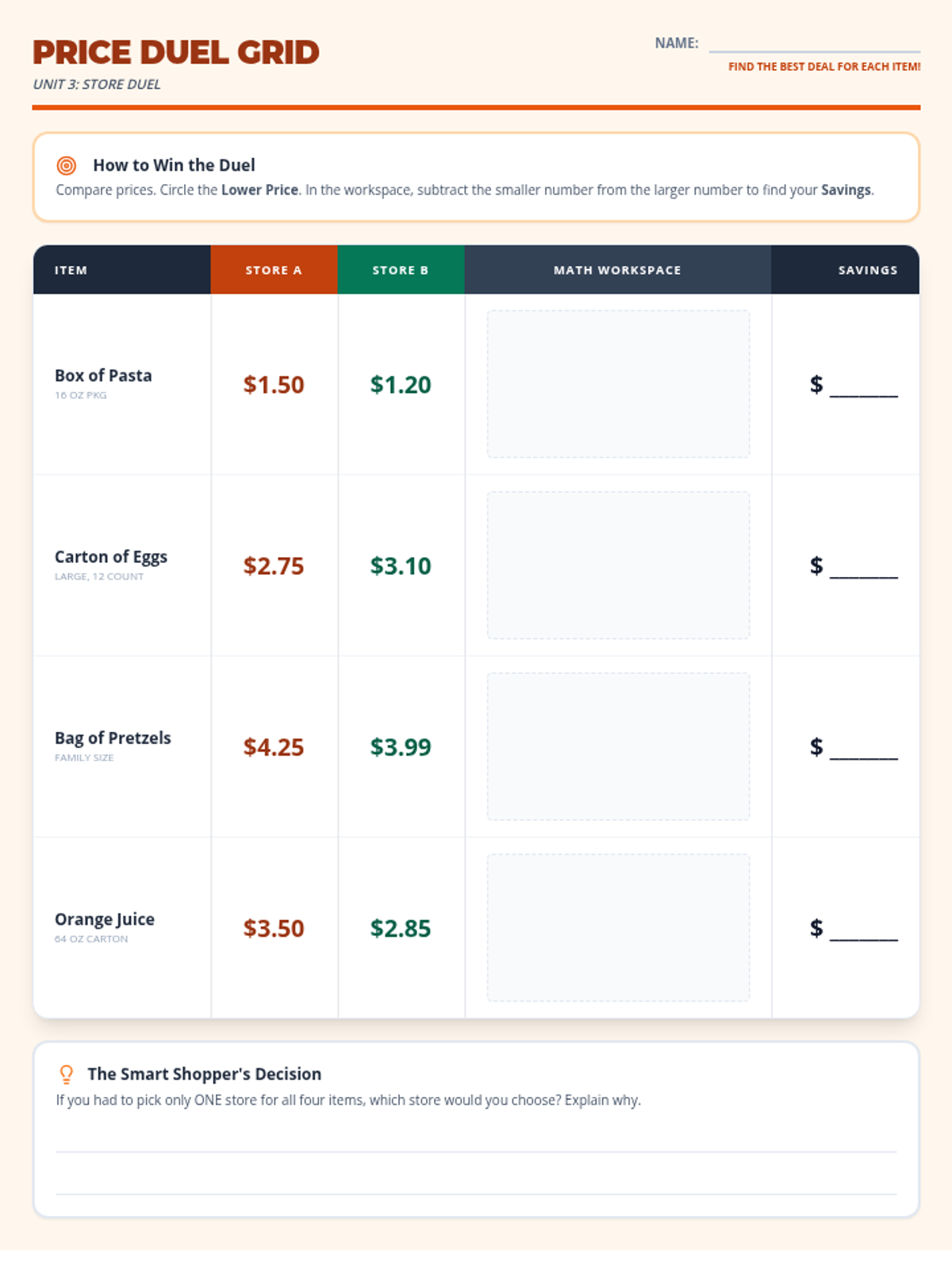
A comparison grid for Lesson 3 where students compare prices for the same items at two different stores and calculate the savings. Revised to fix layout, workspace size, and column logic.
Slide deck for Lesson 3 focusing on price comparison strategies, identifying the best deals, and reviewing decimal subtraction.
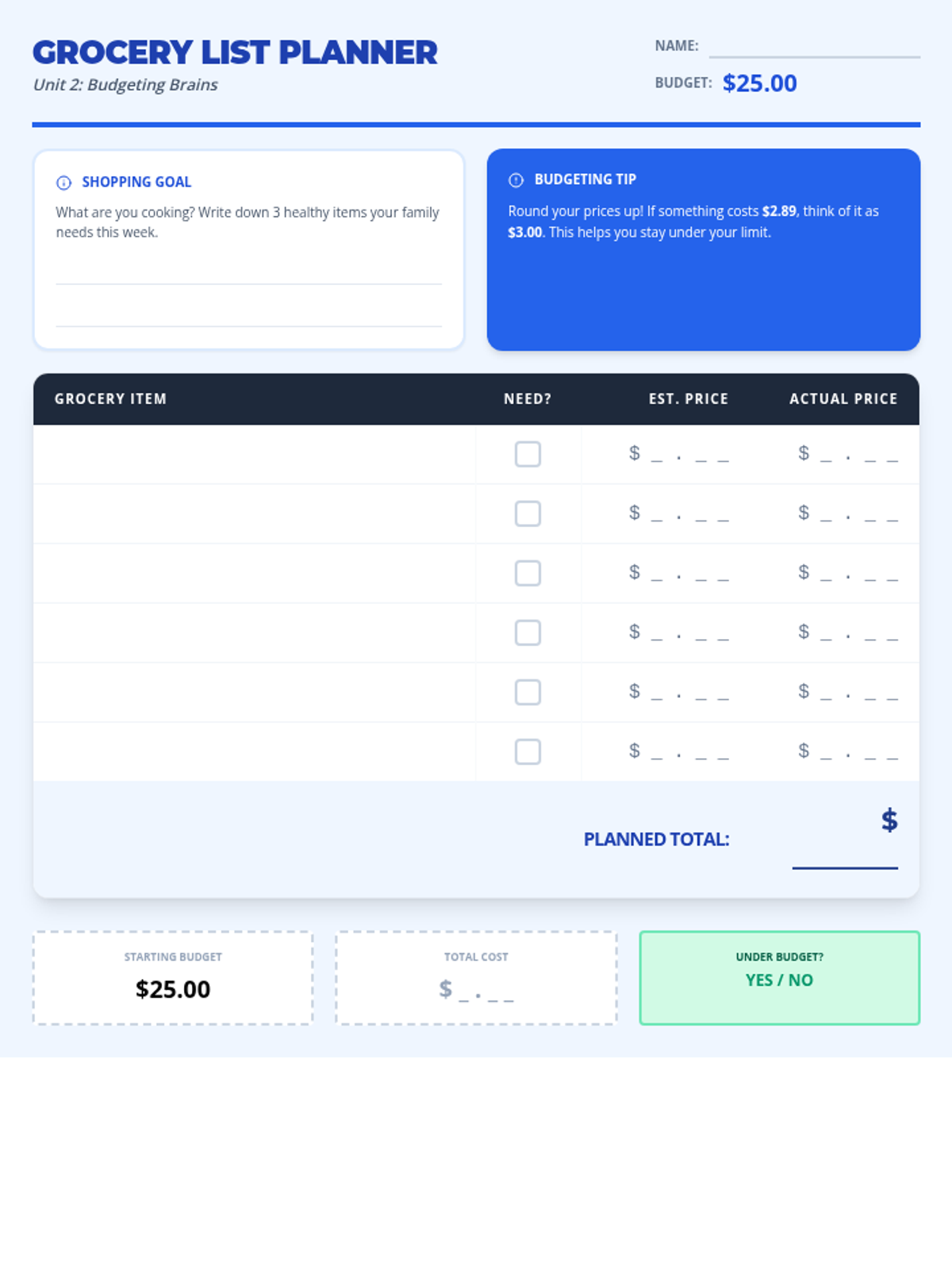
A graphic organizer for Lesson 2 that helps students plan a shopping trip, estimate costs, and track whether items are 'needs' or 'wants' while staying within a $25 budget. Revised to fix page breaks and formatting.
Slide deck for Lesson 2 focusing on budgeting basics, identifying needs vs. wants, and planning a shopping trip within a $25 limit.
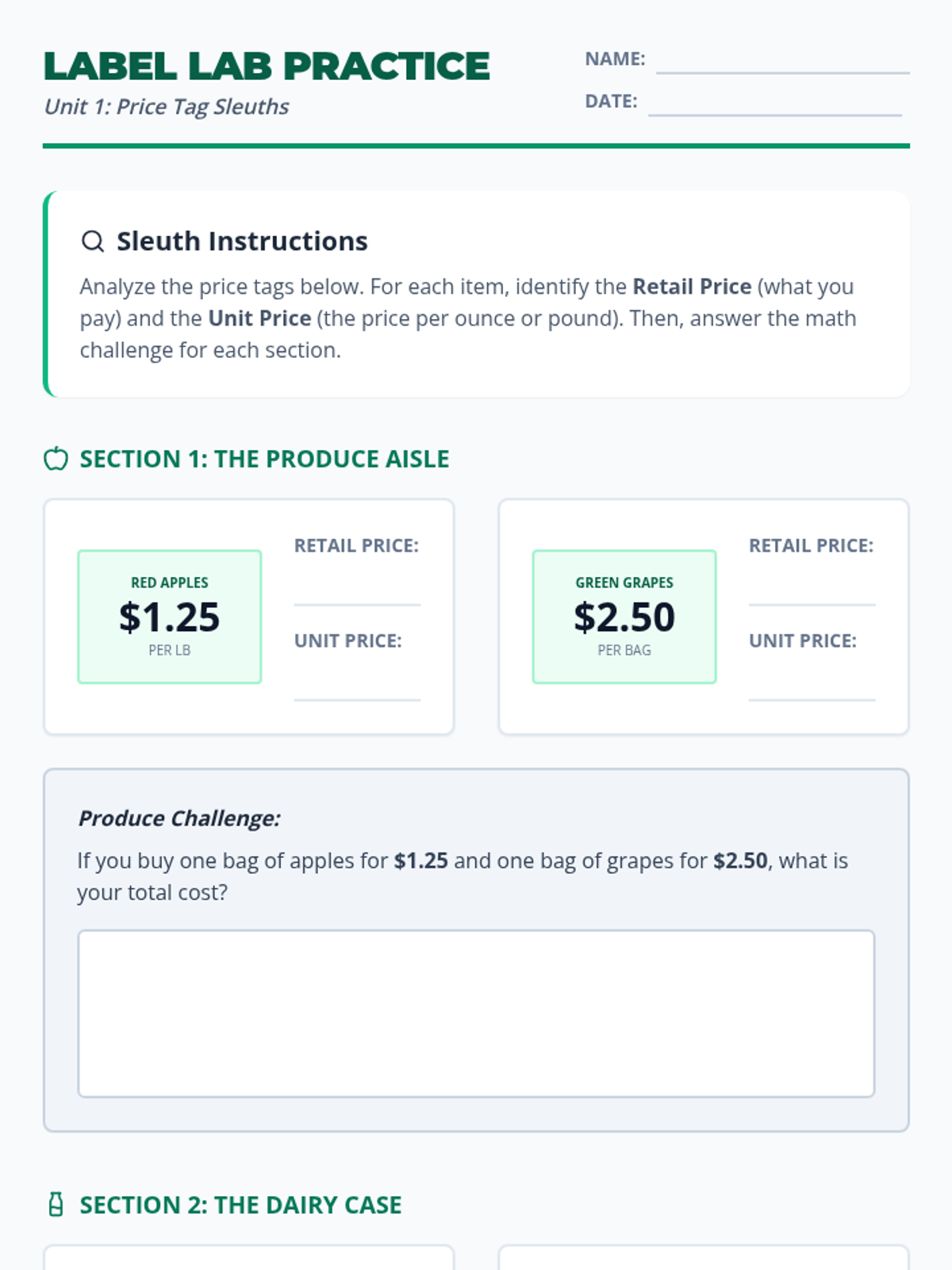
A practice worksheet for Lesson 1 where students identify retail and unit prices from visual tags and perform basic decimal addition/subtraction. Revised to fix page break and formatting issues.
An introductory slide deck for Lesson 1 that teaches students how to read grocery price labels and the basics of unit pricing.
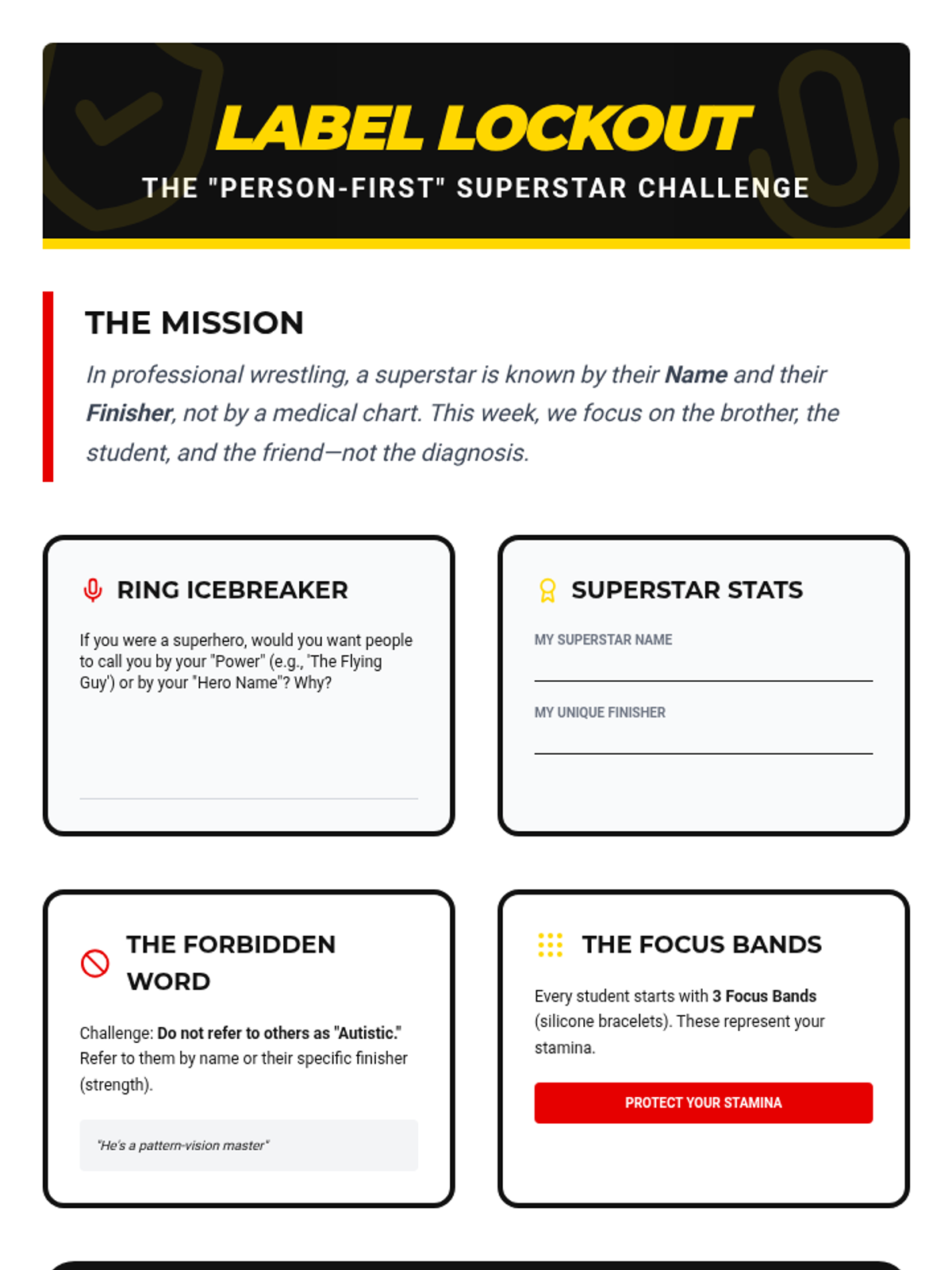
A week-long challenge guide where students avoid labels like 'autistic' to focus on individual strengths, using silicone bracelets as tokens in a 'Referee' style game.
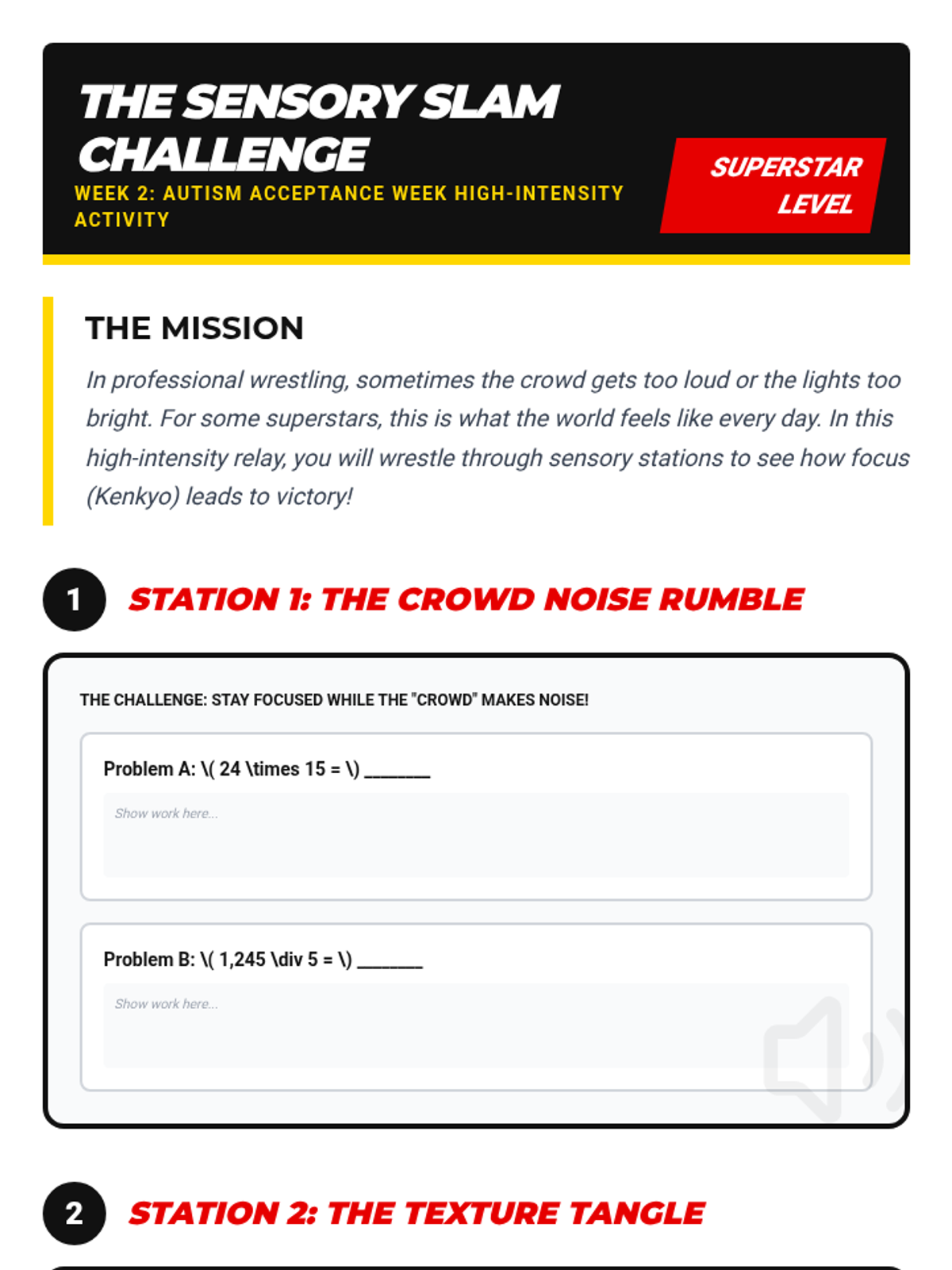
A sensory awareness activity for Autism Acceptance Week that uses high-energy challenges to simulate sensory processing differences and promote inclusive focus strategies.