A structured reflection worksheet for students to identify preoccupying thoughts, recognize physical anxiety symptoms, and plan 'pivots' to refocus on their current task.
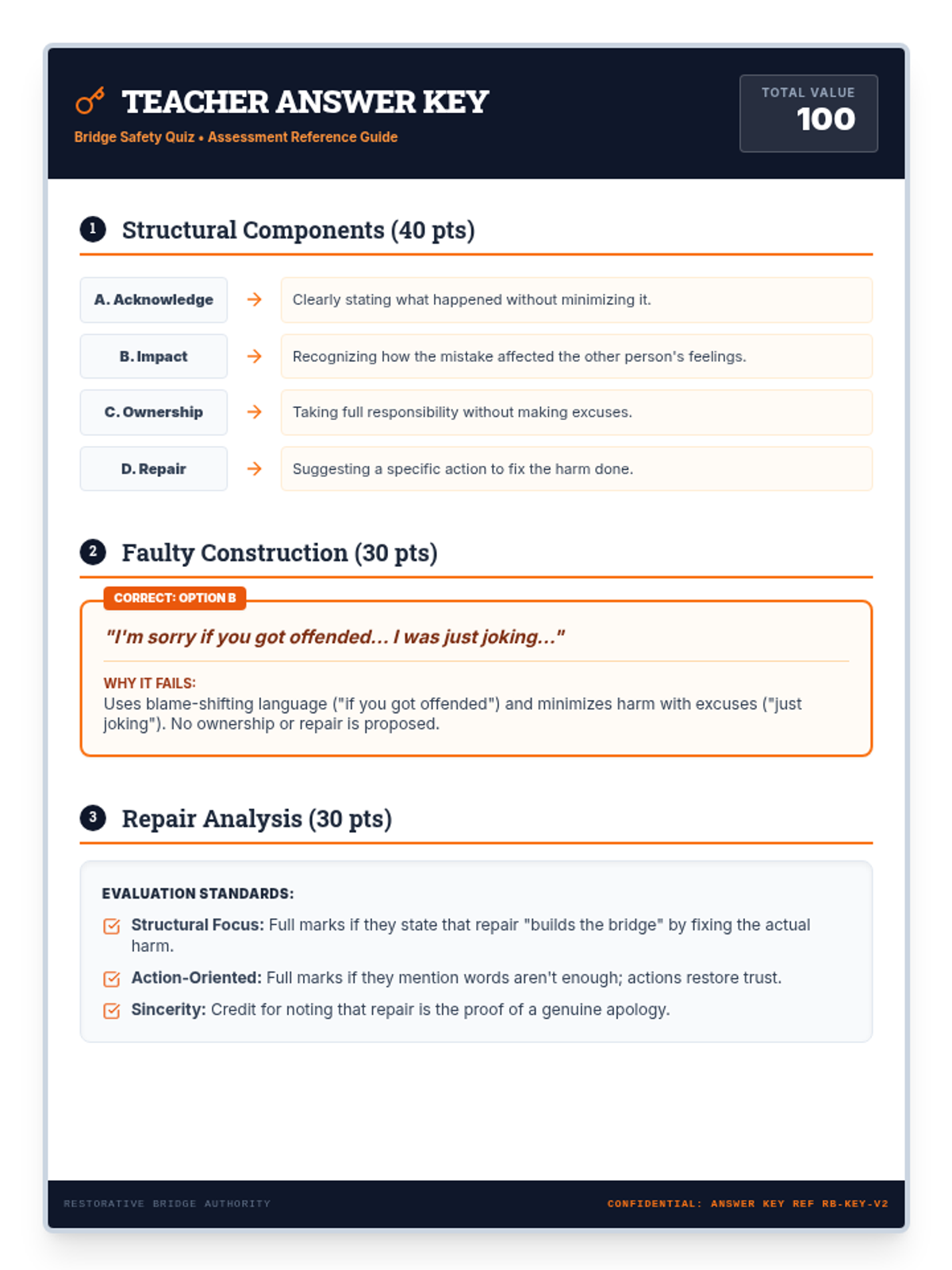
A teacher answer key for the 'Bridge Safety Quiz' assessment, providing correct answers and scoring criteria for the restorative apology framework.
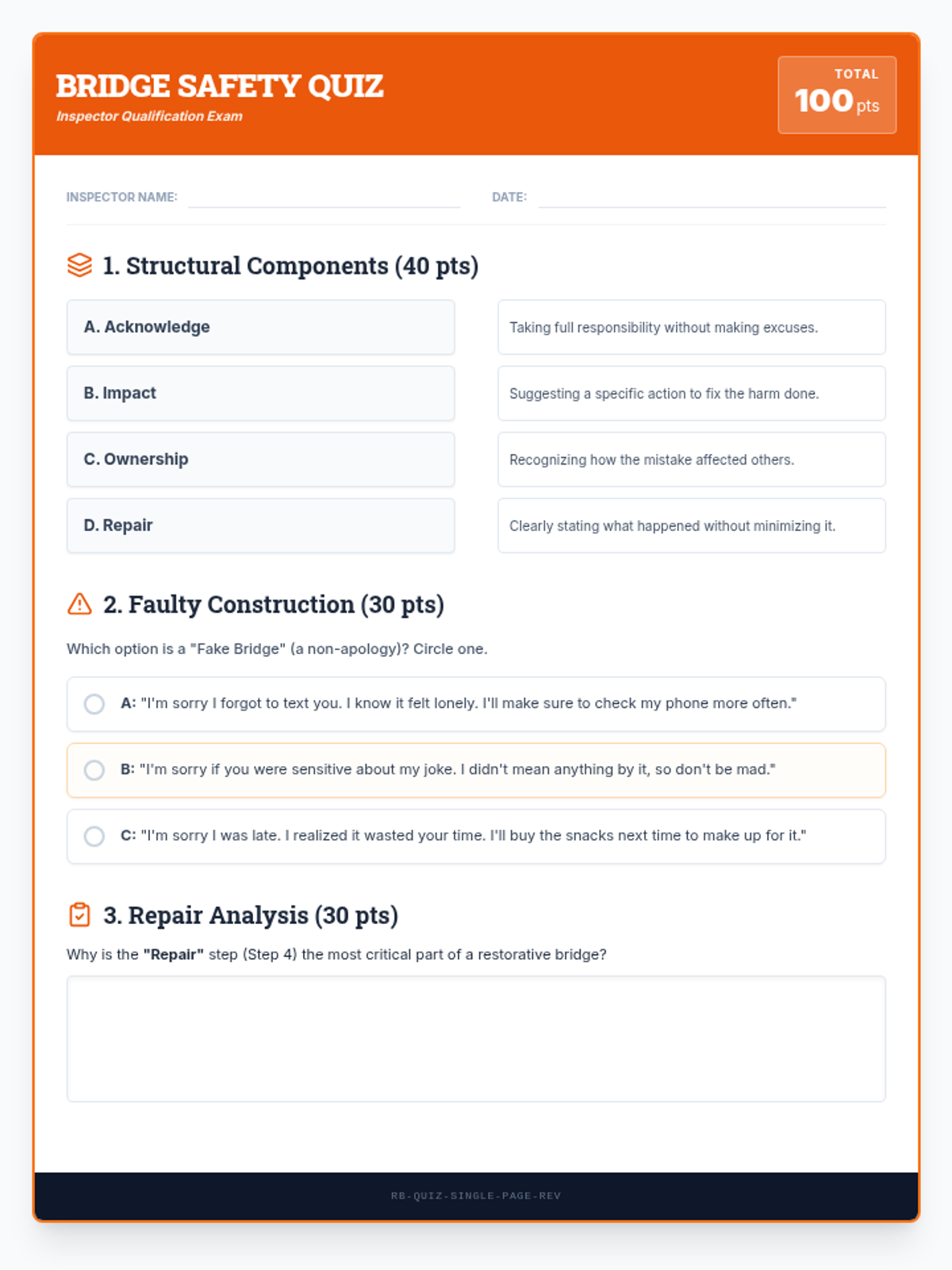
A student assessment titled 'Bridge Safety Quiz' that tests understanding of the 4-part restorative apology framework and the ability to identify ineffective apologies.
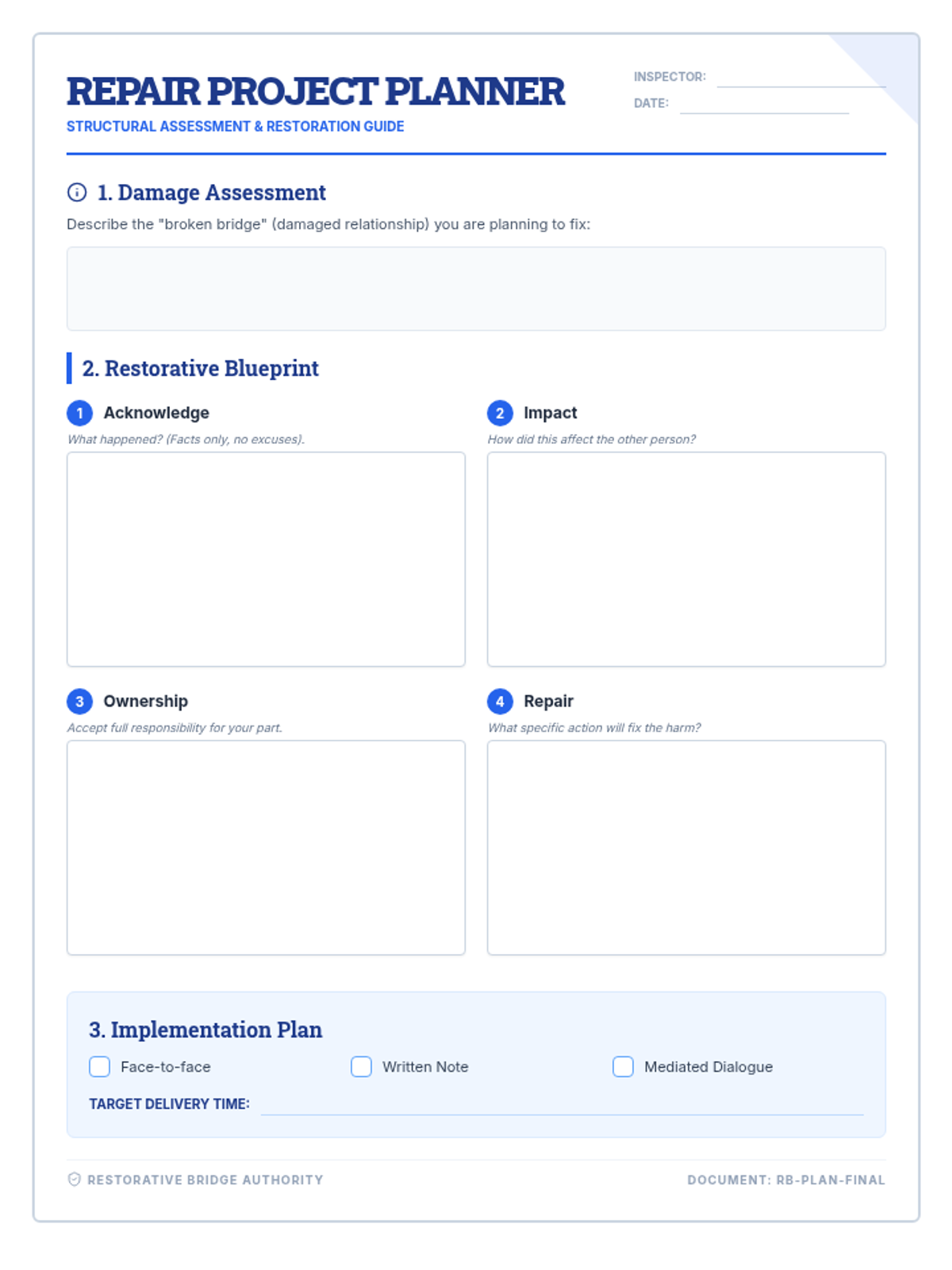
A student worksheet titled 'Repair Project Planner' that helps middle schoolers plan a real-life restorative apology using the 4-part bridge framework.
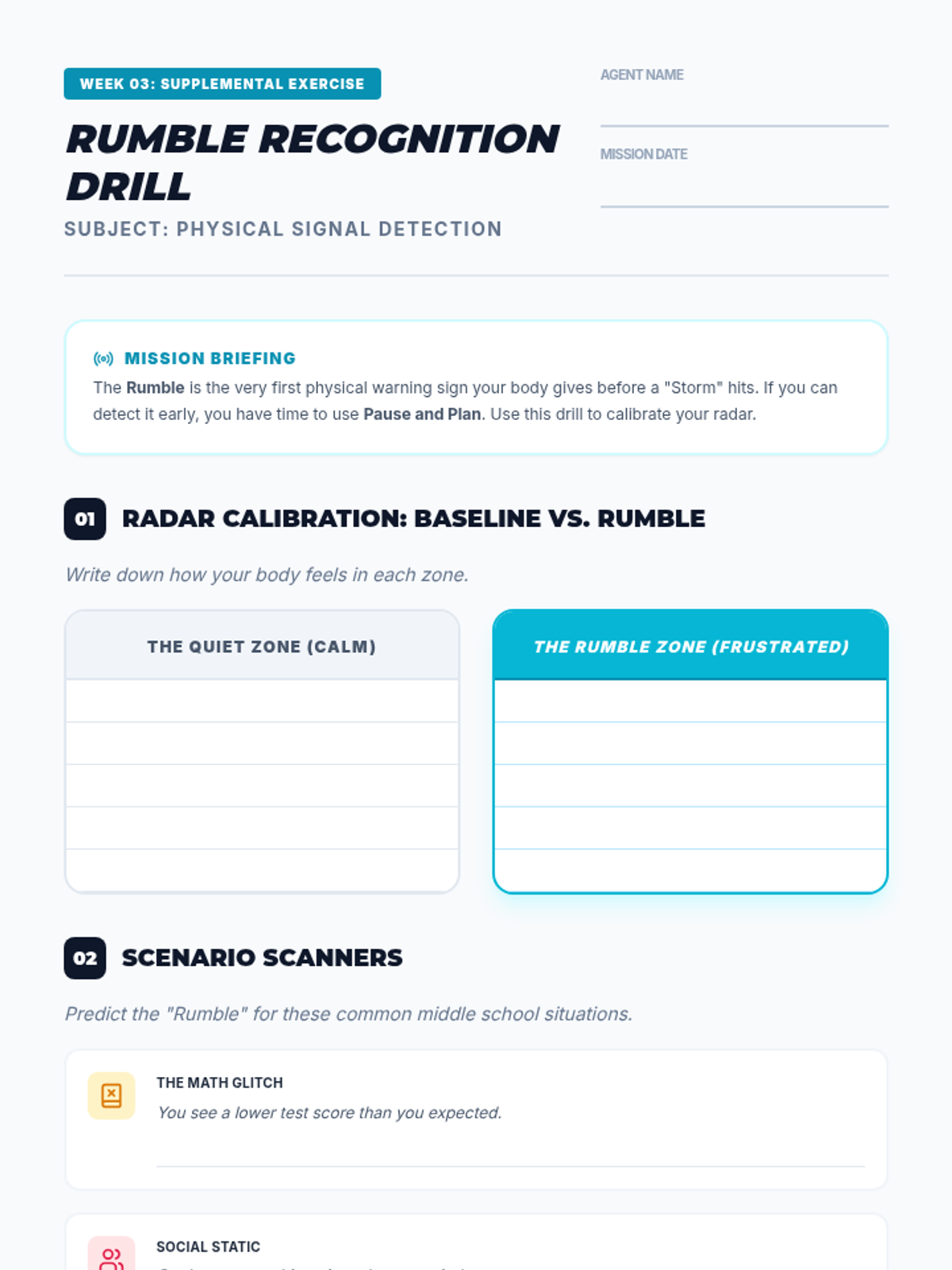
A supplemental worksheet for Week 3, providing structured practice for identifying physical warning signs (the "Rumble") across different scenarios and personalizing a "First Signal" detection plan. Now with guided writing lines and optimized 2-page layout.
Instructional slides for Week 3 (Mapping the Storm), focusing on the "Storm Analogy" and identifying the physical "Rumble" before an emotional outburst. Includes body radar points and common environmental triggers.
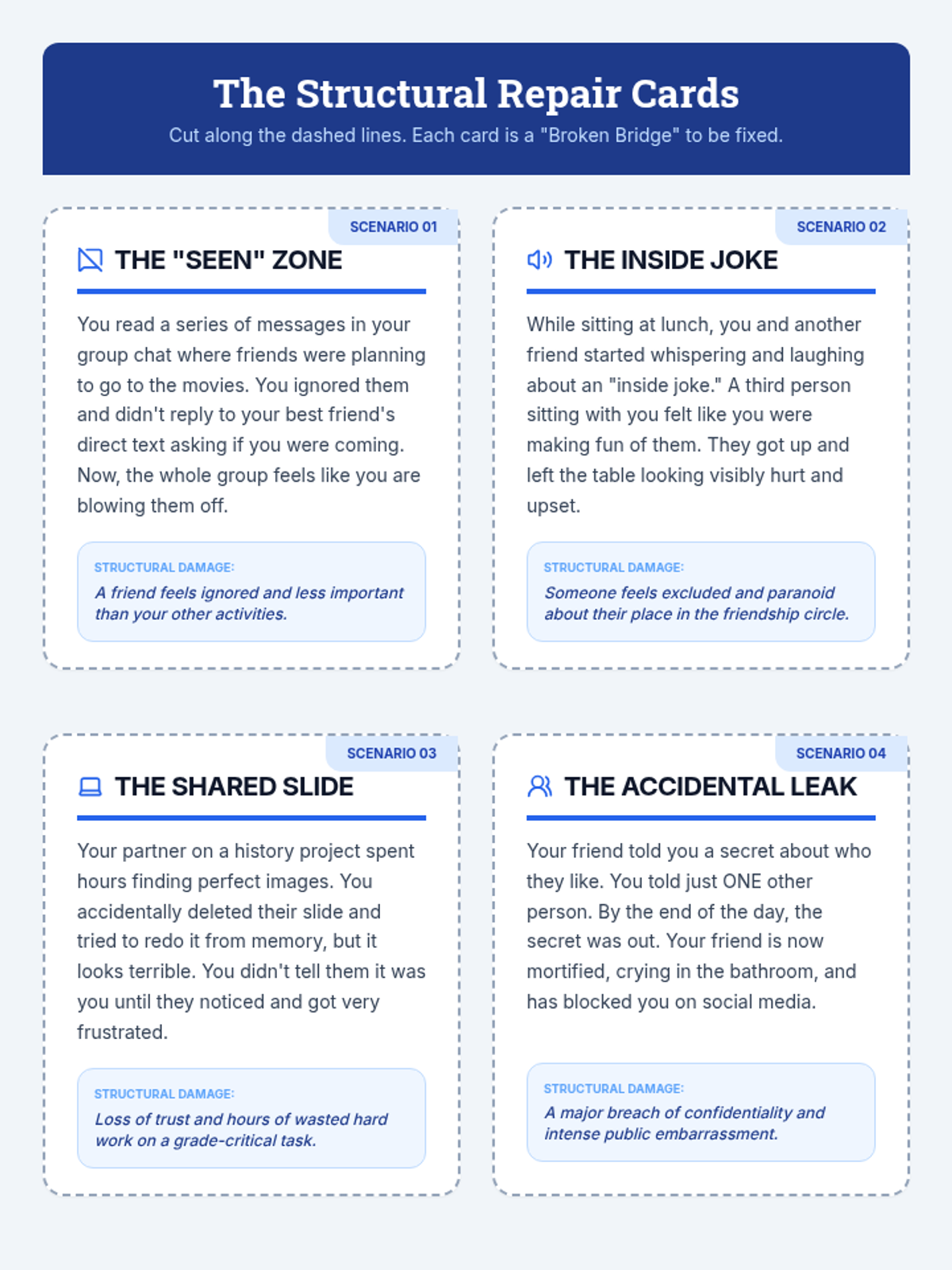
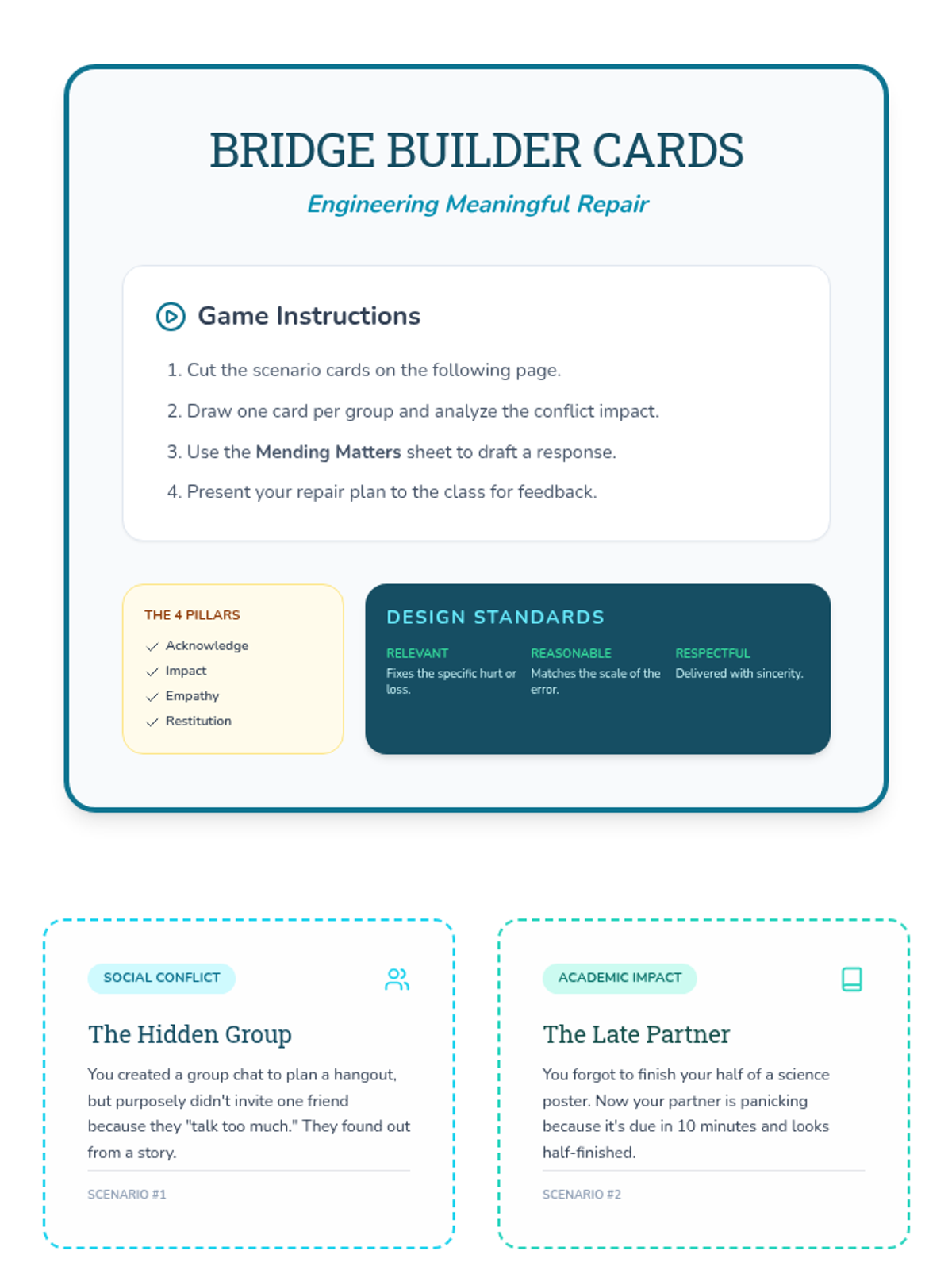
A set of scenario cards for a restorative dialogue activity, presenting common middle school social conflicts as 'broken bridges' that require structural repair.
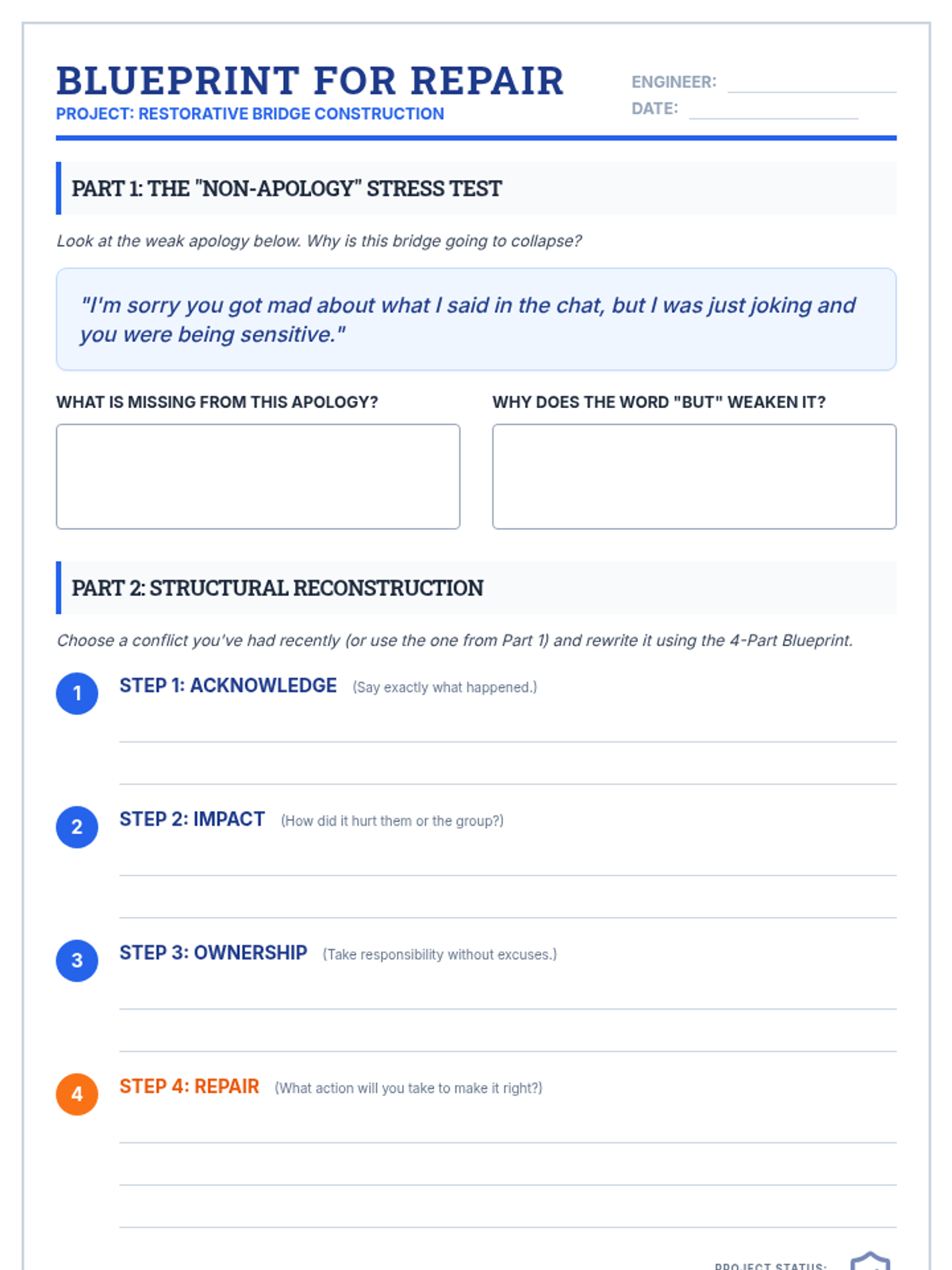
A student worksheet titled 'Blueprint for Repair' that guides middle schoolers through deconstructing a weak apology and building a 4-part restorative apology for a real-life scenario.
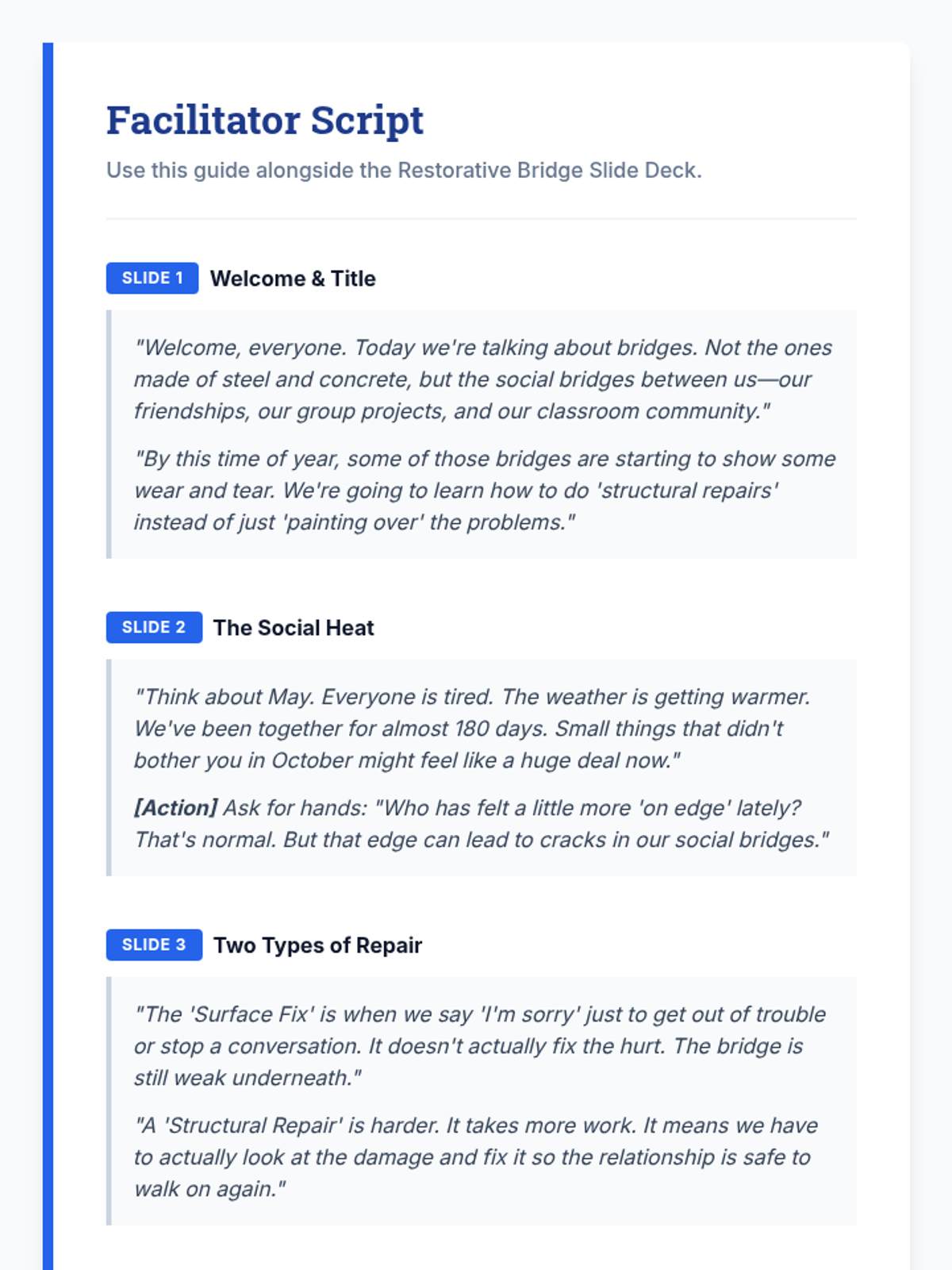
A detailed facilitator script for the Restorative Bridge workshop, providing slide-by-slide narration and engagement prompts for teachers.
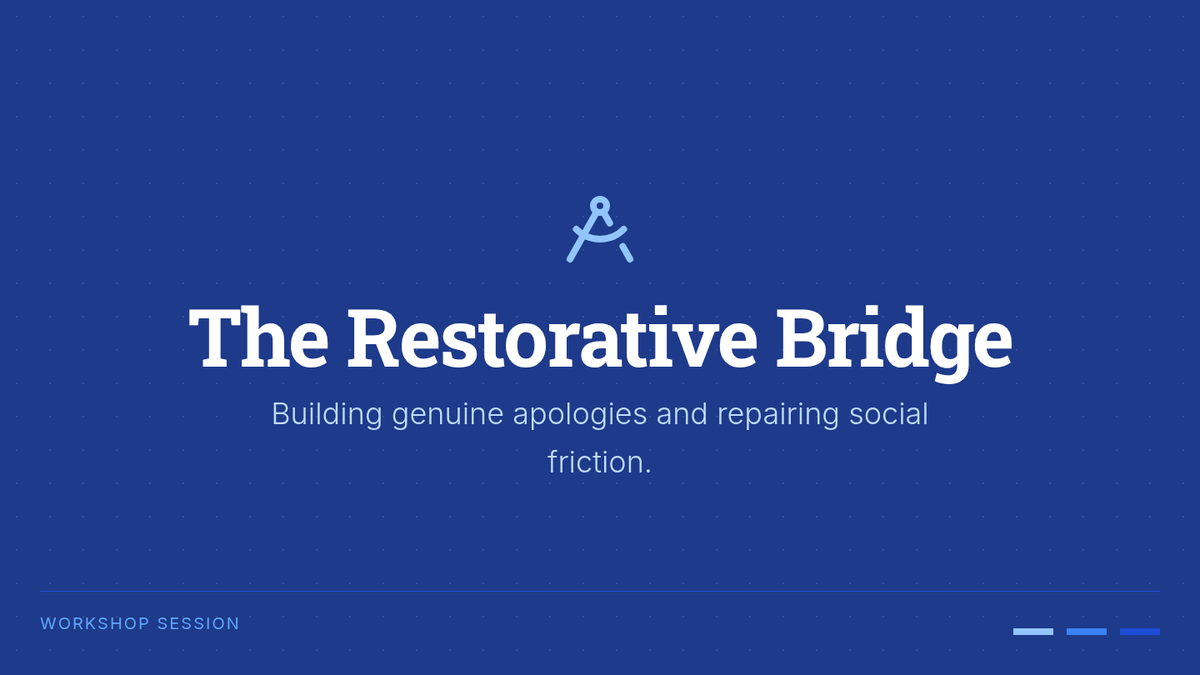
Visual presentation for the Restorative Bridge workshop, featuring the bridge metaphor, the 4-part apology framework, and practical examples of restorative dialogue.
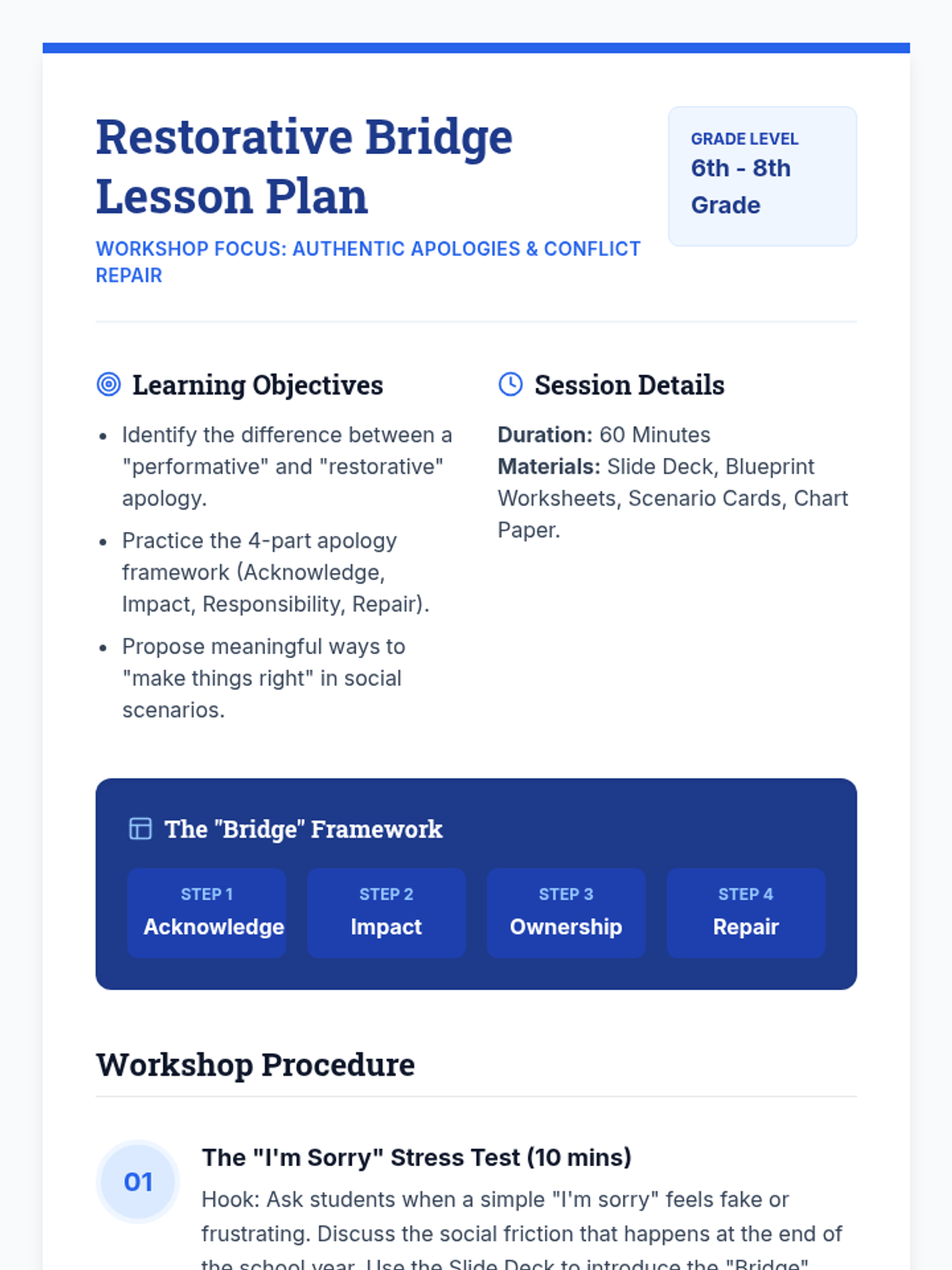
A comprehensive teacher's guide for the Restorative Bridge workshop, featuring learning objectives, a 4-part framework, and a step-by-step facilitation guide.
Printable activity cards featuring realistic middle school conflict scenarios, categorized by type, to be used for restorative dialogue practice.
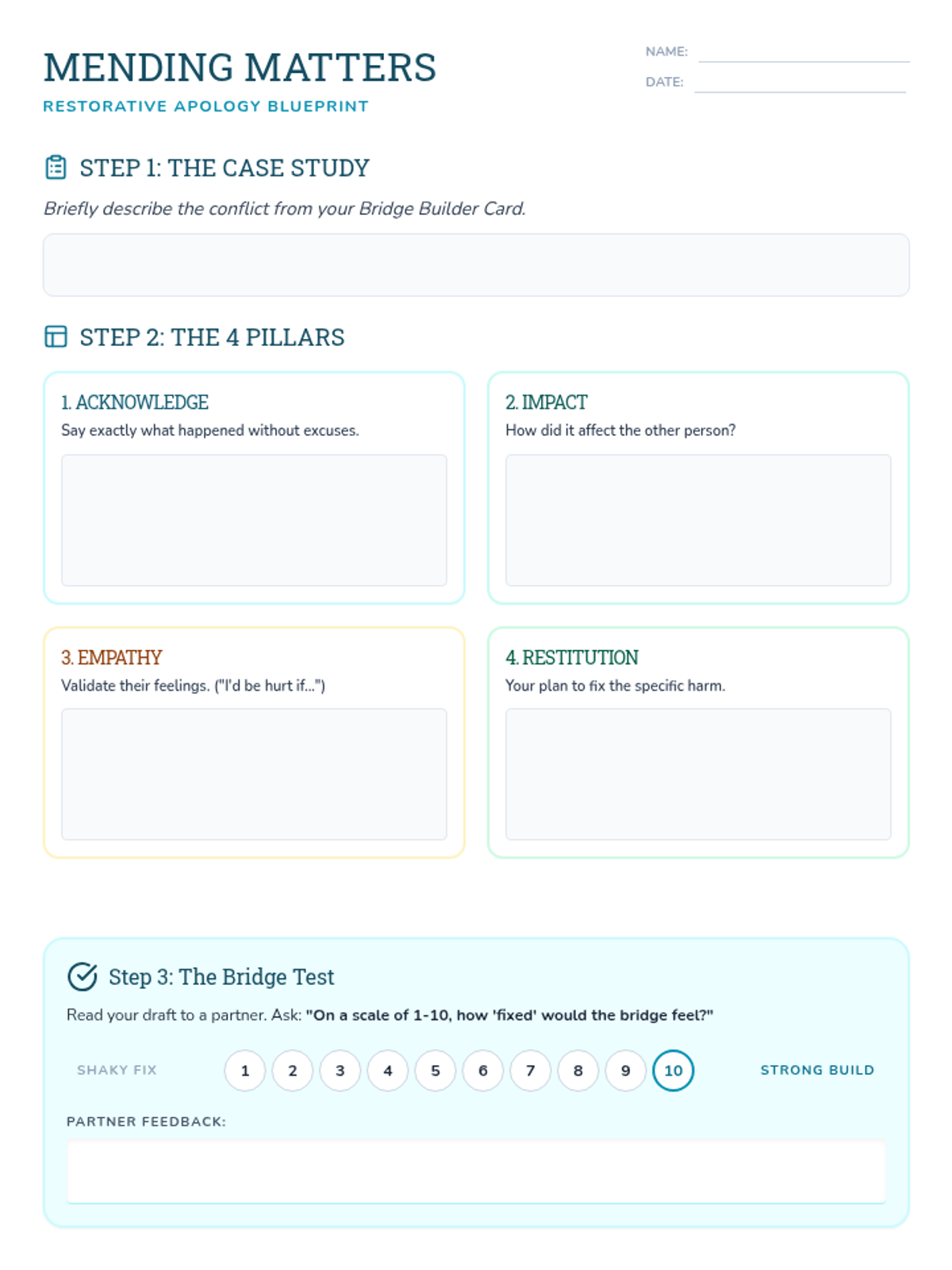
A student worksheet designed to guide learners through drafting a restorative apology using the '4 Pillars' framework, including a peer-feedback 'Bridge Test' section.
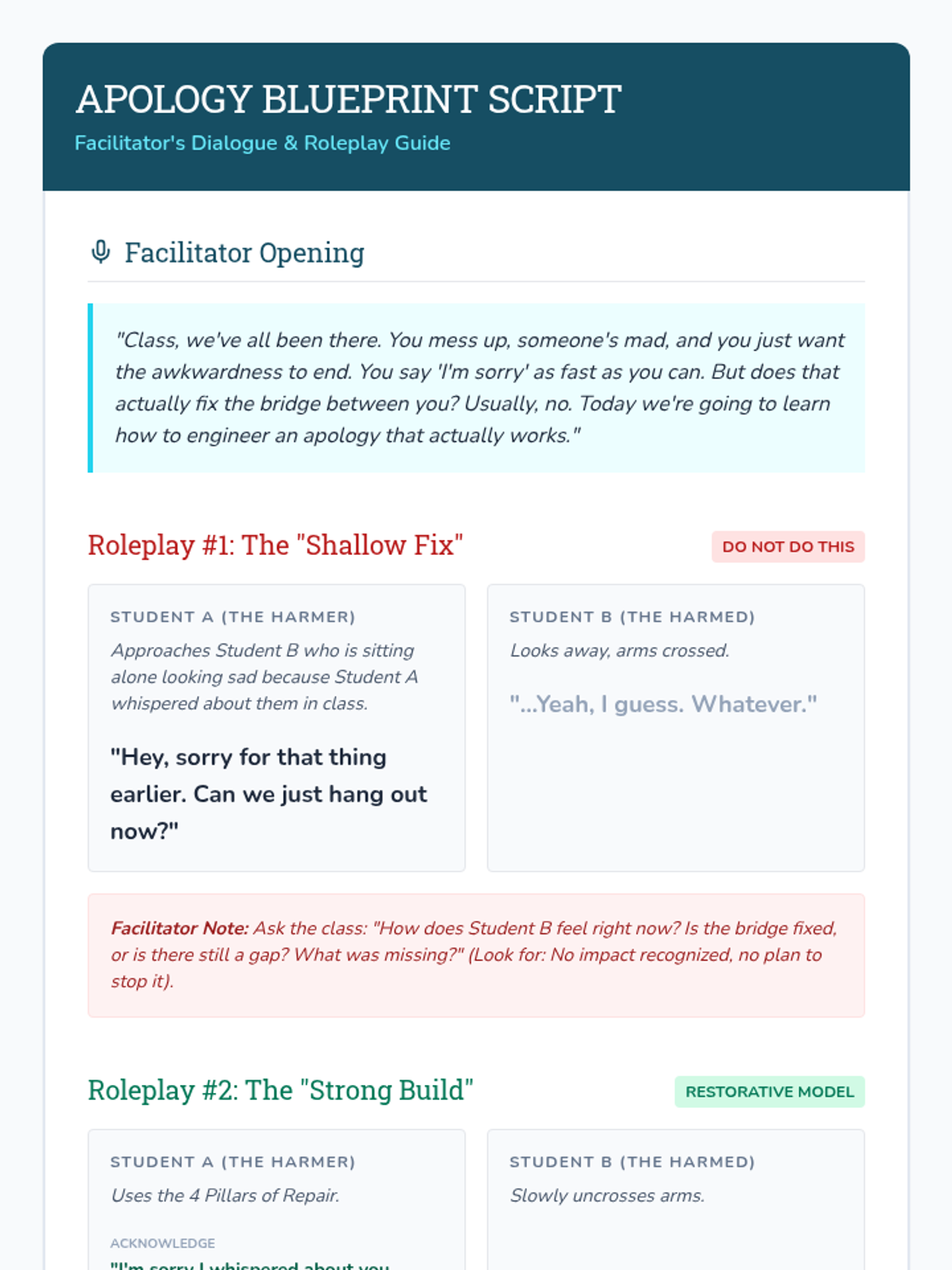
A facilitation script for teachers to demonstrate the difference between shallow and restorative apologies through roleplay and guided discussion prompts.
A visual presentation for middle school students exploring the '4 Pillars of Repair' in restorative justice, moving from shallow apologies to meaningful restitution.
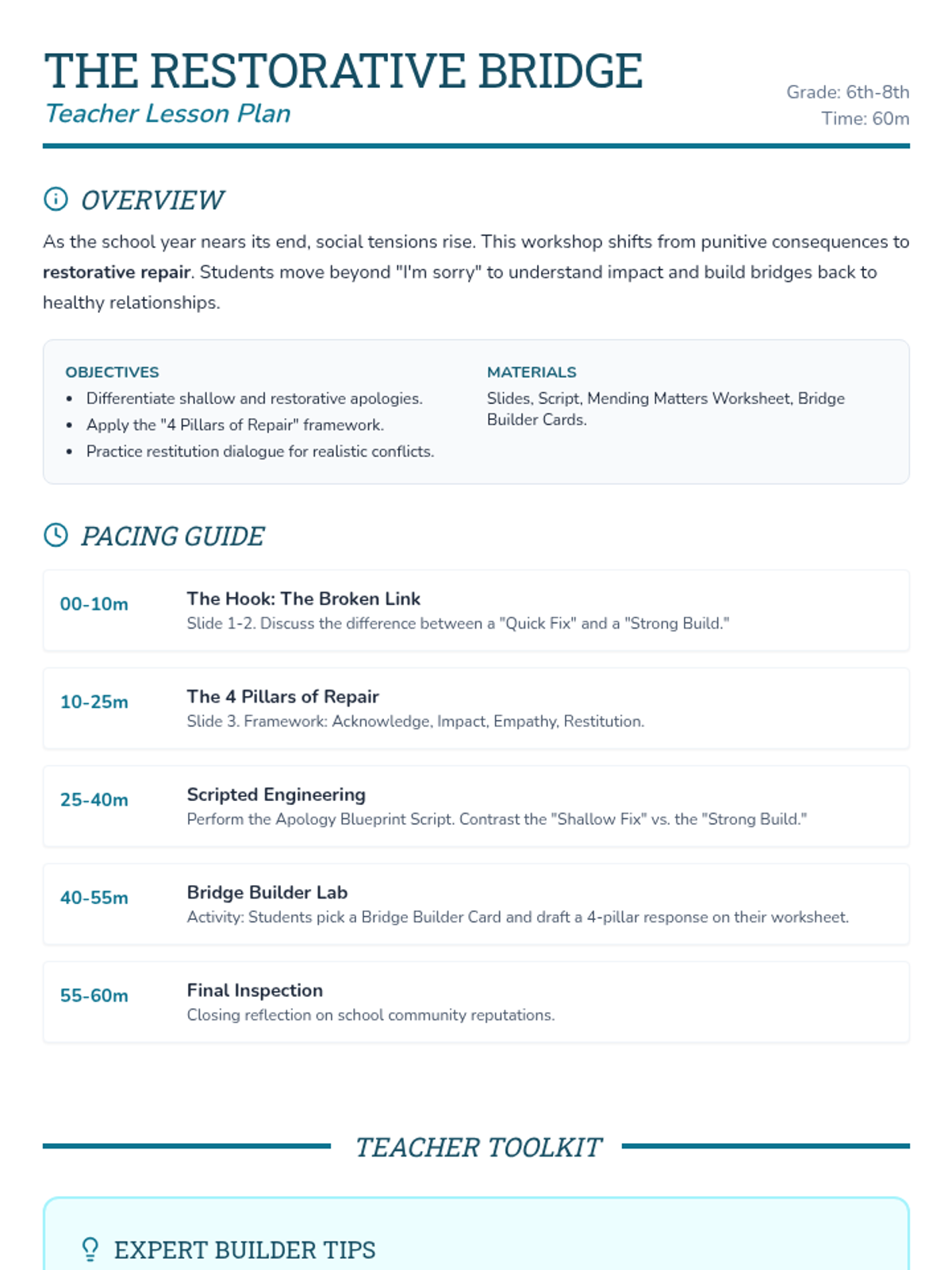
Comprehensive teacher lesson plan for 'The Restorative Bridge' workshop, featuring learning objectives, a detailed pacing guide, and pedagogical tips for middle school social-emotional learning.