A revised student iPad and YouTube use contract featuring 'I will' statements, visual icons, and clear consequences, optimized for single-page printing.
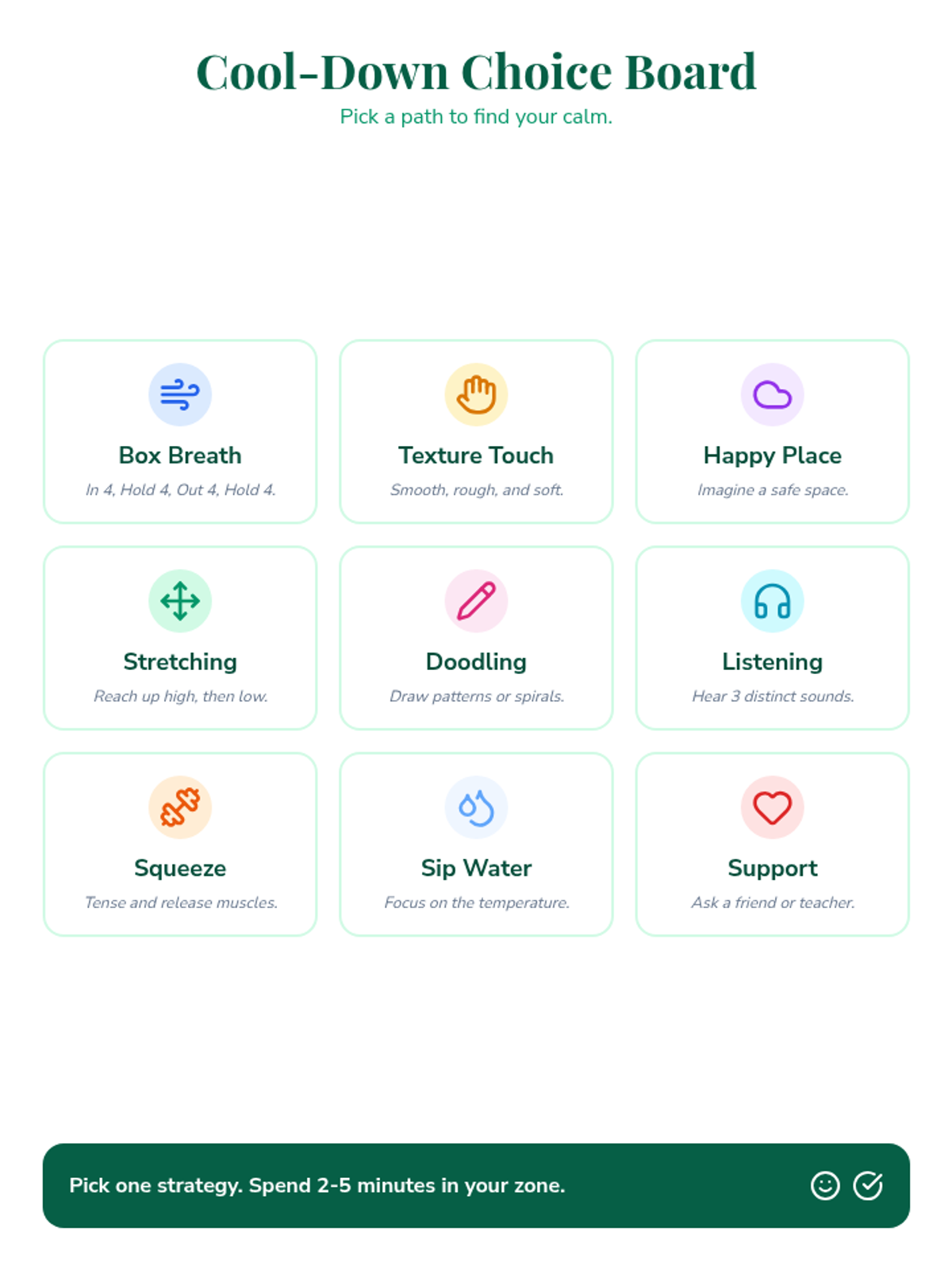
A visual cool-down choice board featuring nine diverse self-regulation strategies including breathing exercises, sensory tasks, and movement breaks.
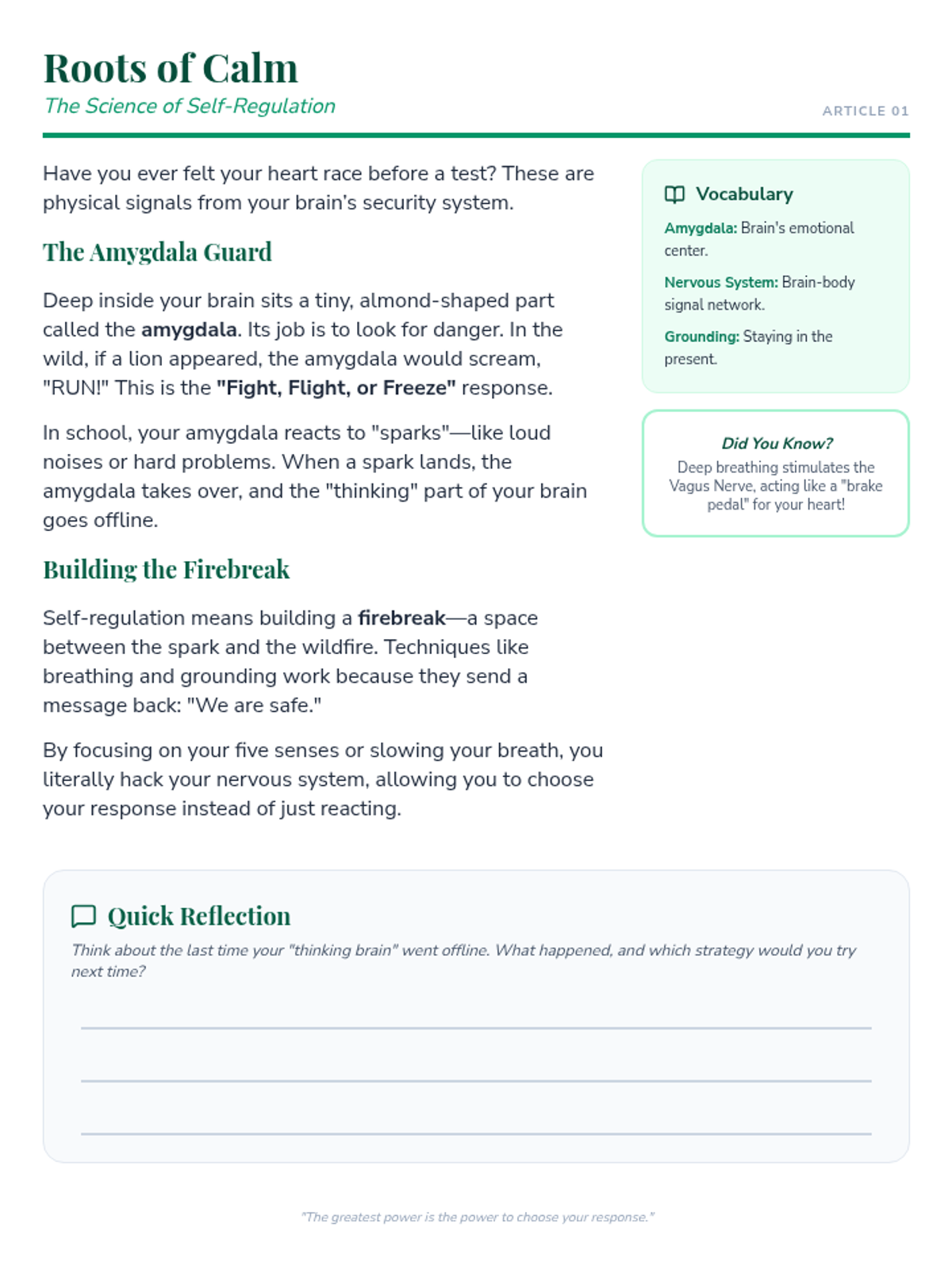
An informational reading passage explaining the science of stress, the role of the amygdala, and how self-regulation techniques like grounding 'hack' the nervous system.
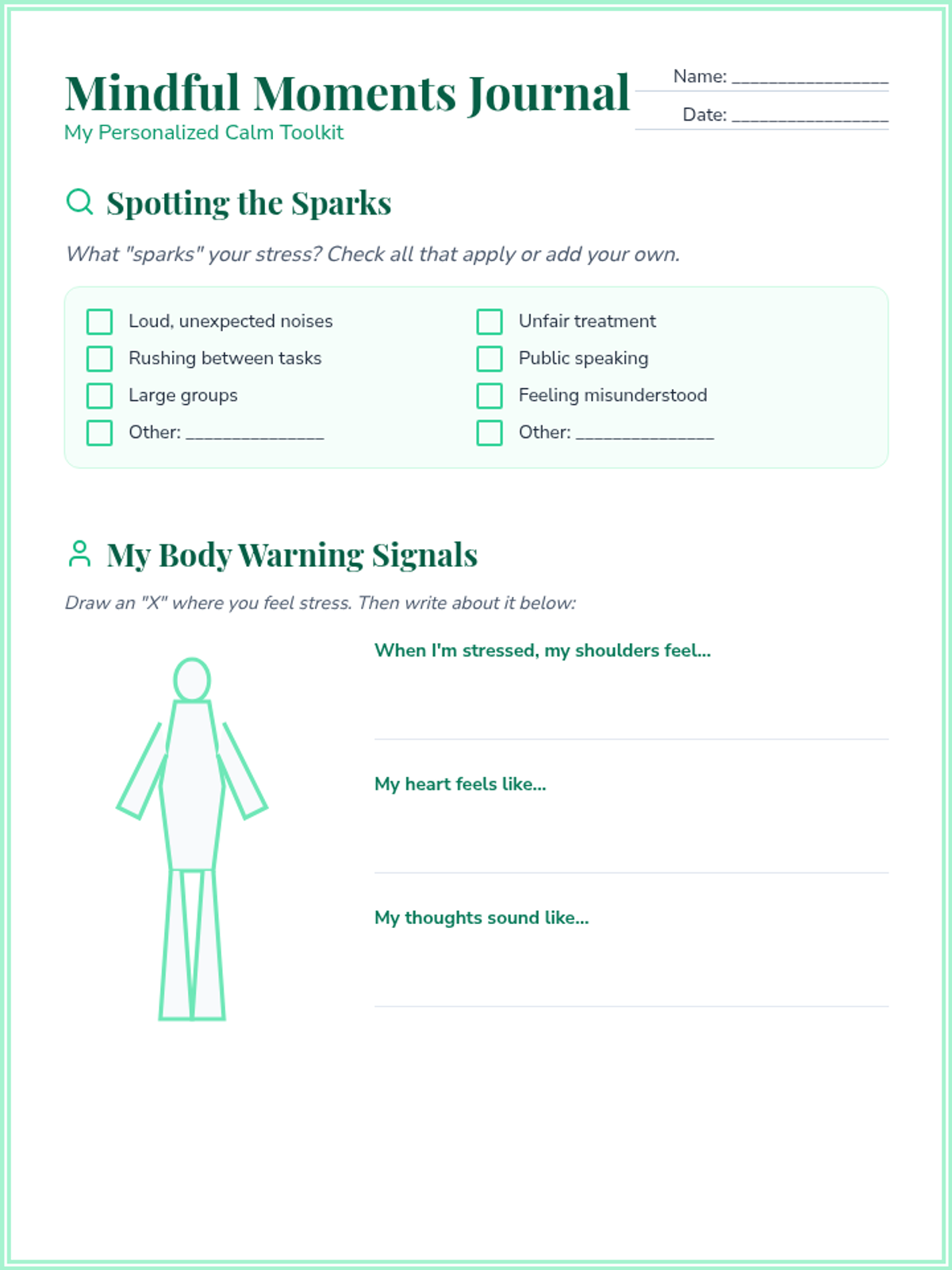
A two-page student journal for identifying stress triggers, mapping physical responses, and building a personalized four-step calm toolkit.
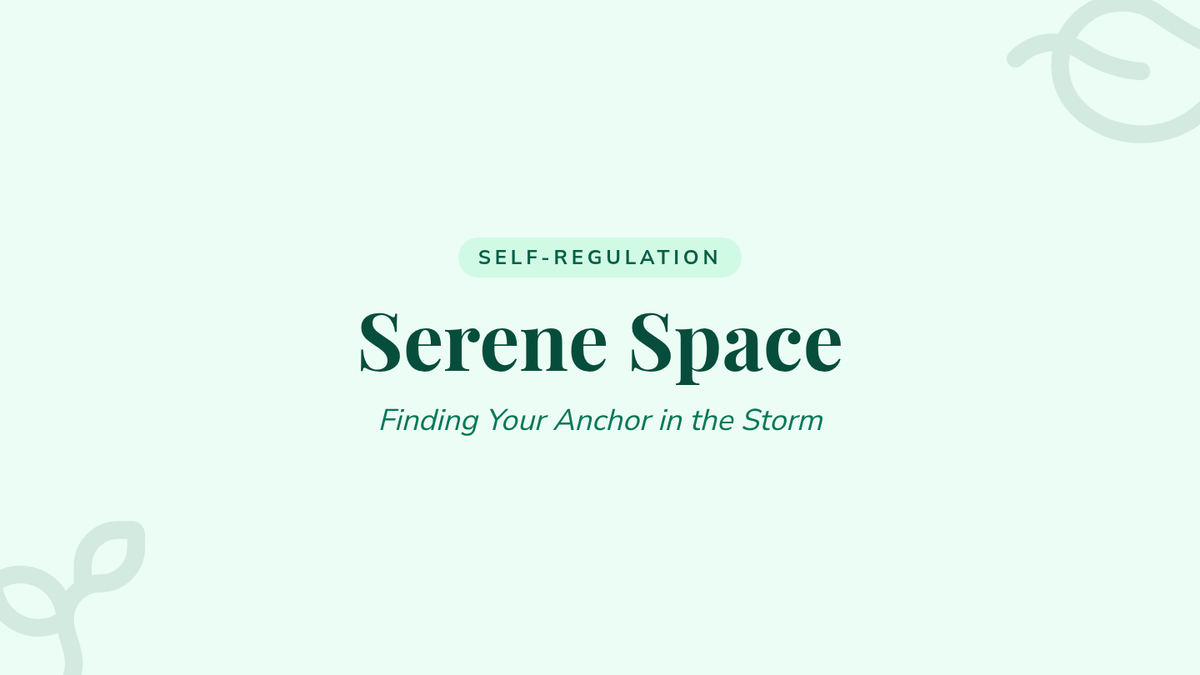
Engaging slides for the Serene Space lesson, introducing the 'amygdala spark' concept, body awareness categories, and the 5-4-3-2-1 grounding technique.
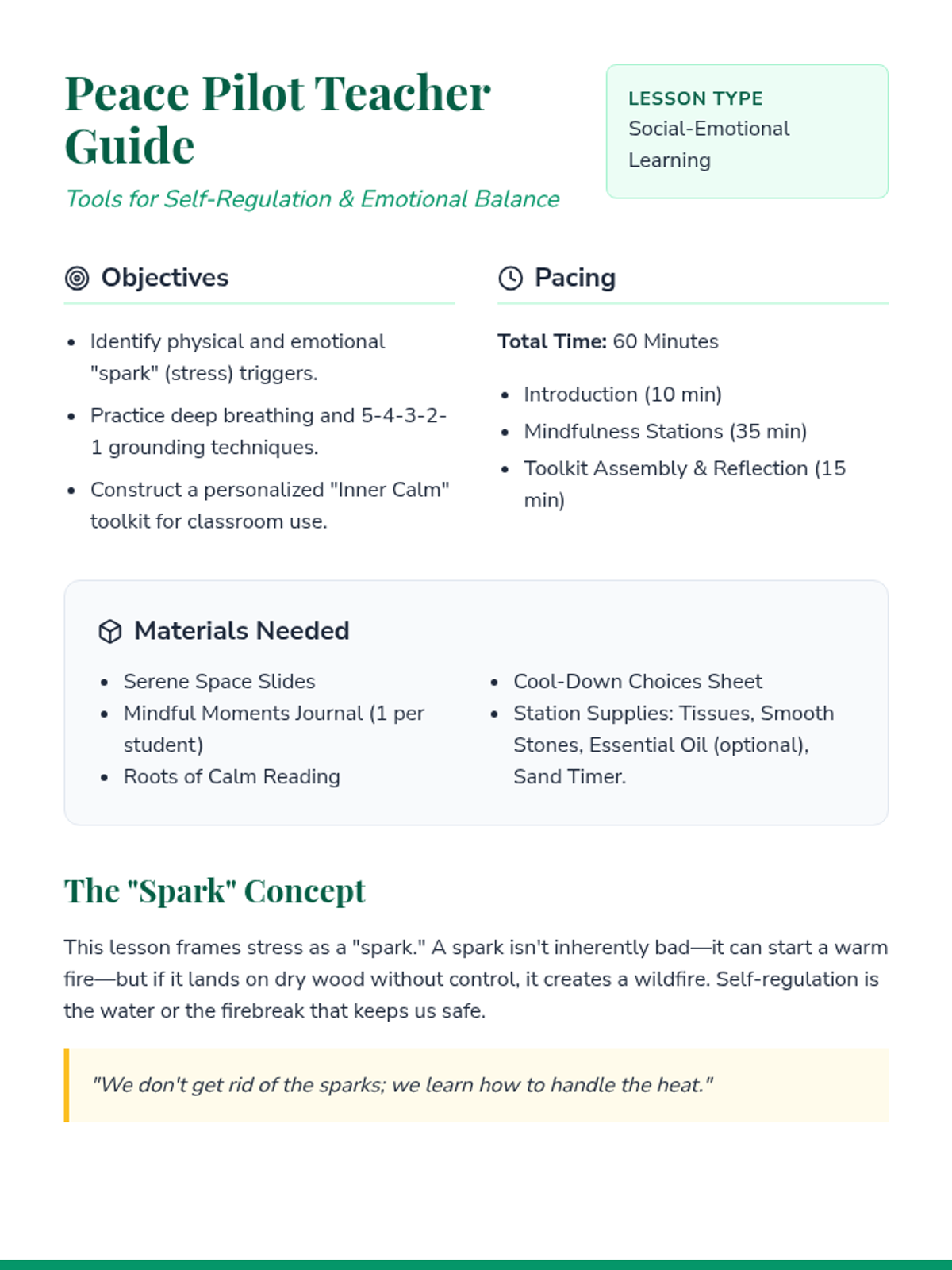
A comprehensive teacher guide for the Inner Calm lesson, featuring the 'spark' concept, station rotation instructions, and facilitation tips for self-regulation.
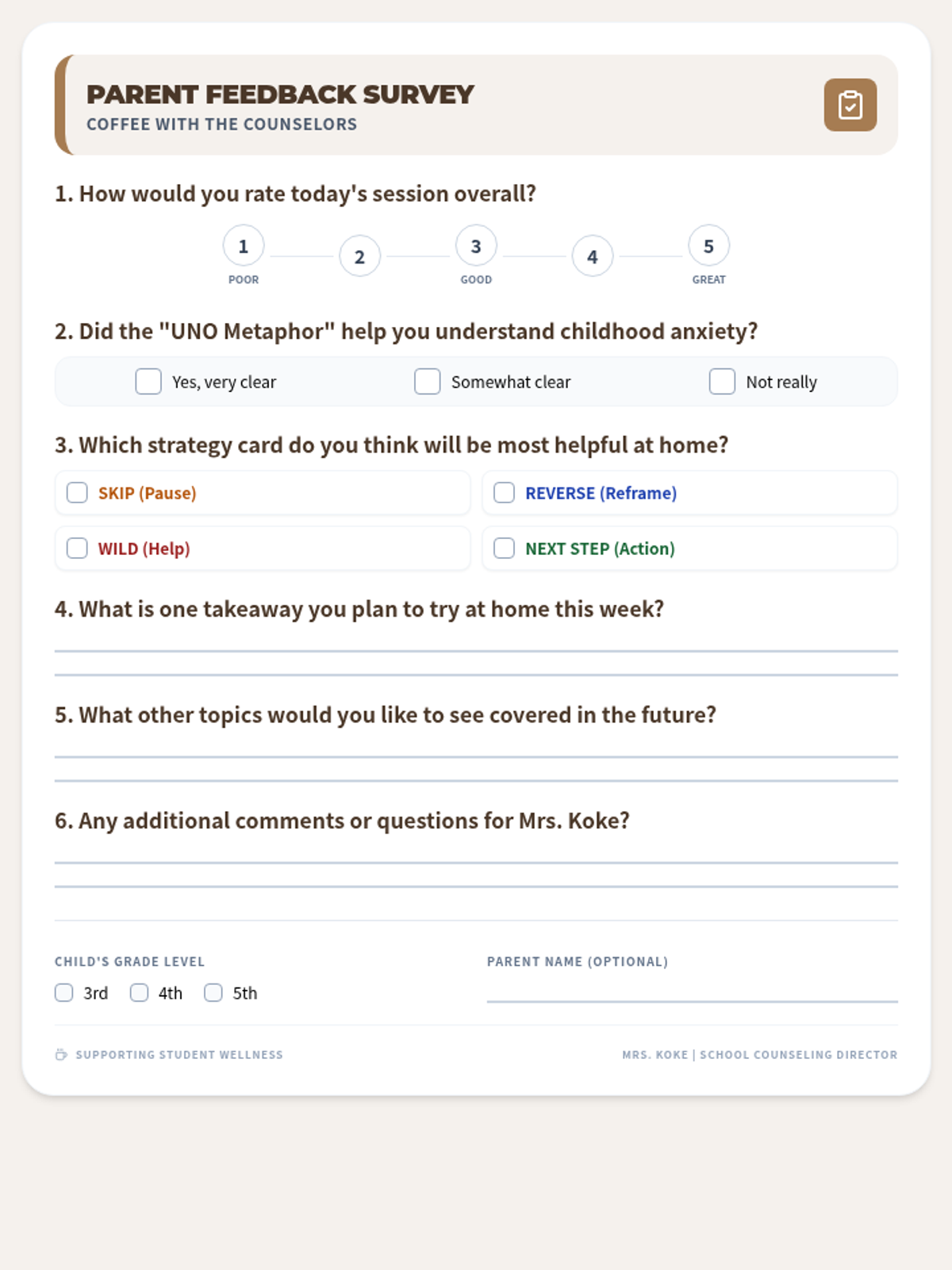
A professional feedback survey for parents to complete at the end of the 'Coffee with the Counselors' session. It features a clean design with thematic elements, gathering data on session quality, the effectiveness of the UNO metaphor, and interest in future topics.
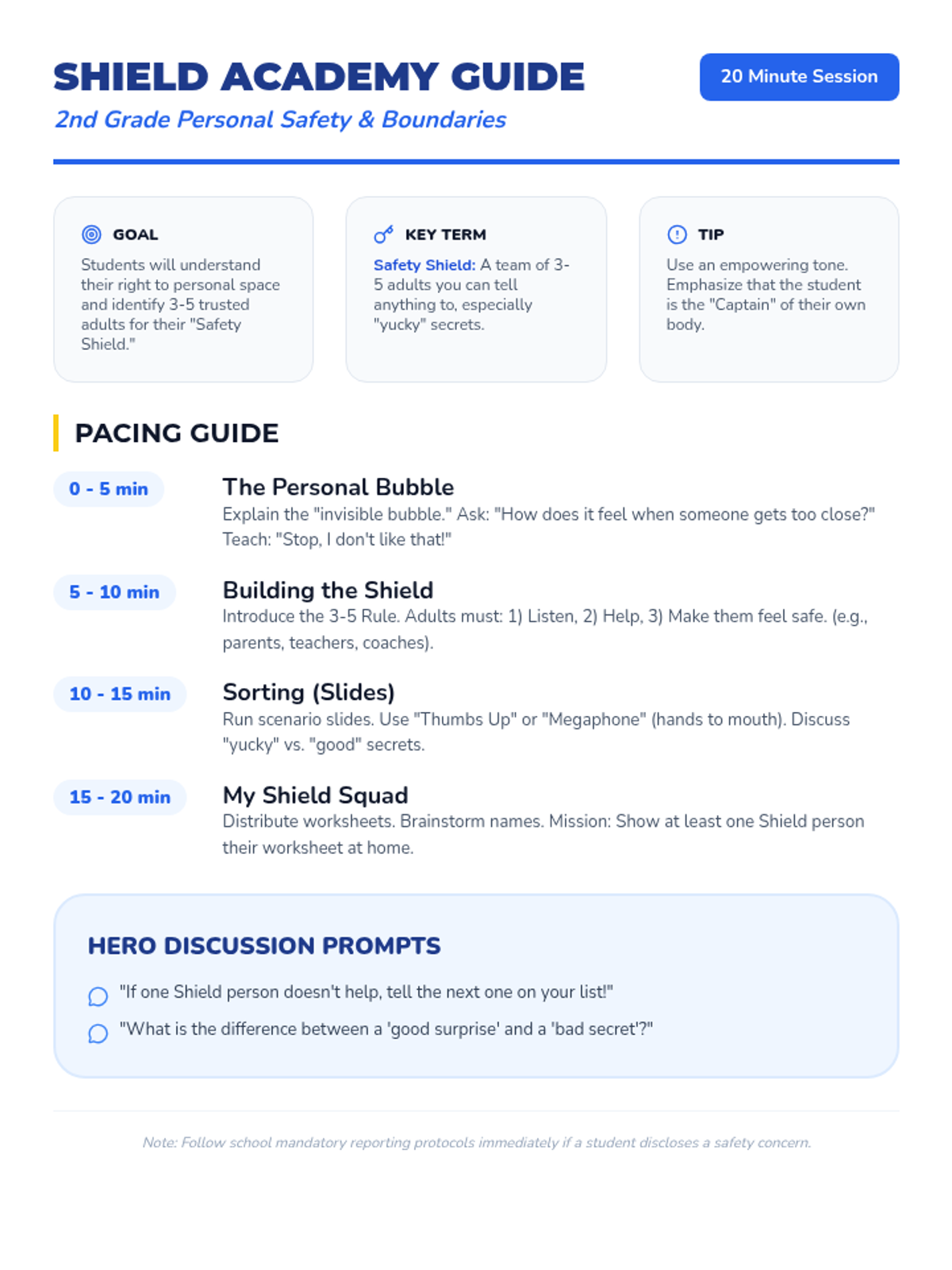
A comprehensive teacher's guide for the 20-minute Safety Shield lesson. Includes pacing, discussion prompts, key definitions, and instructions for managing the activities effectively. Revised to fit on a single page and improve layout.
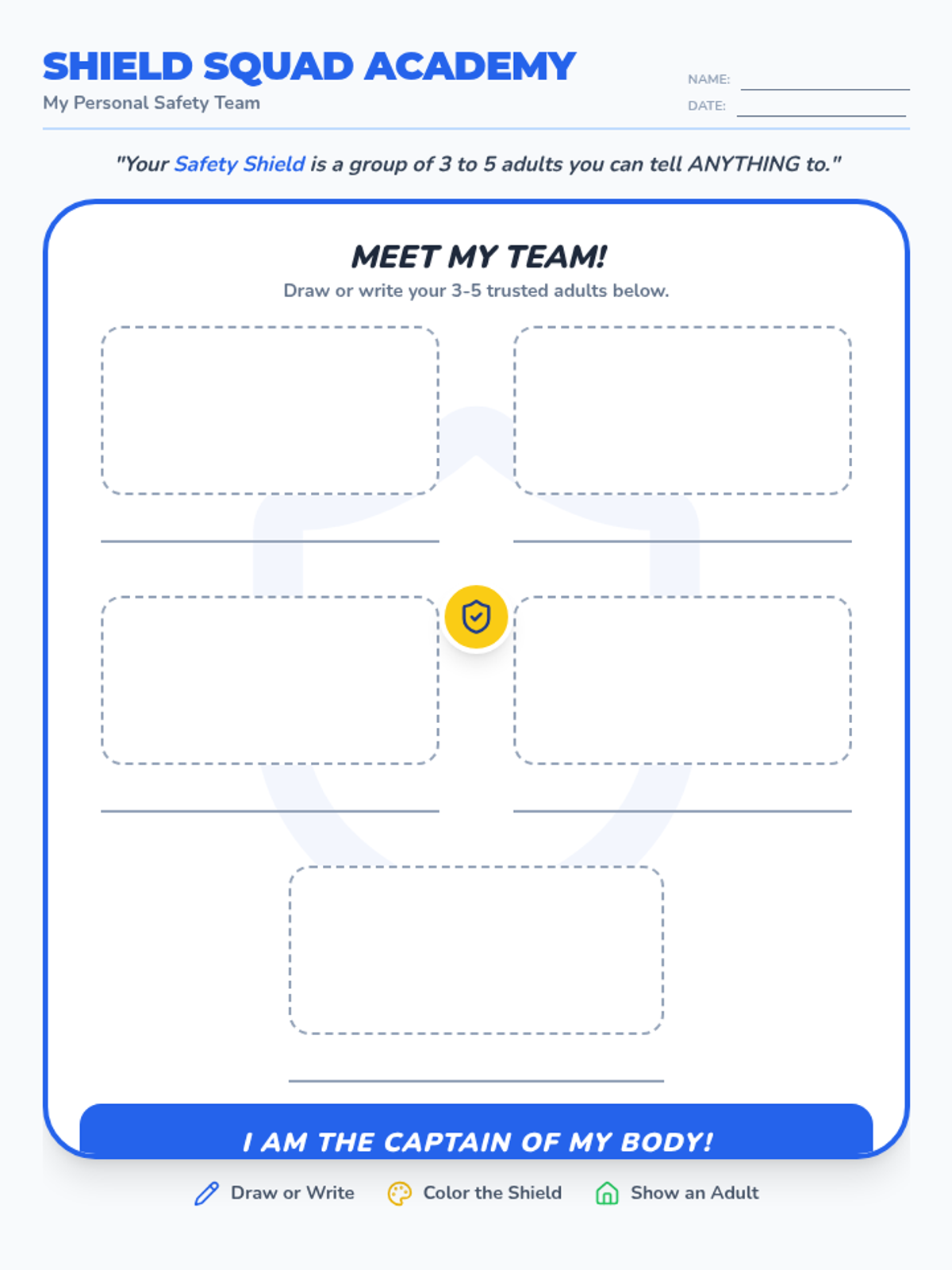
A personal shield worksheet for 2nd graders to draw and name their 3-5 trusted adults. Features a clear visual layout with a hero-themed design to empower students to build their safety team. Revised for better contrast, clear work areas, and proper fit on a single page.
A visually engaging slide deck for 2nd graders that introduces the concept of personal bubbles, the Safety Shield (3-5 trusted adults), and includes interactive sorting scenarios for safe and unsafe situations. Revised for better ink conservation and uniform answer choices.
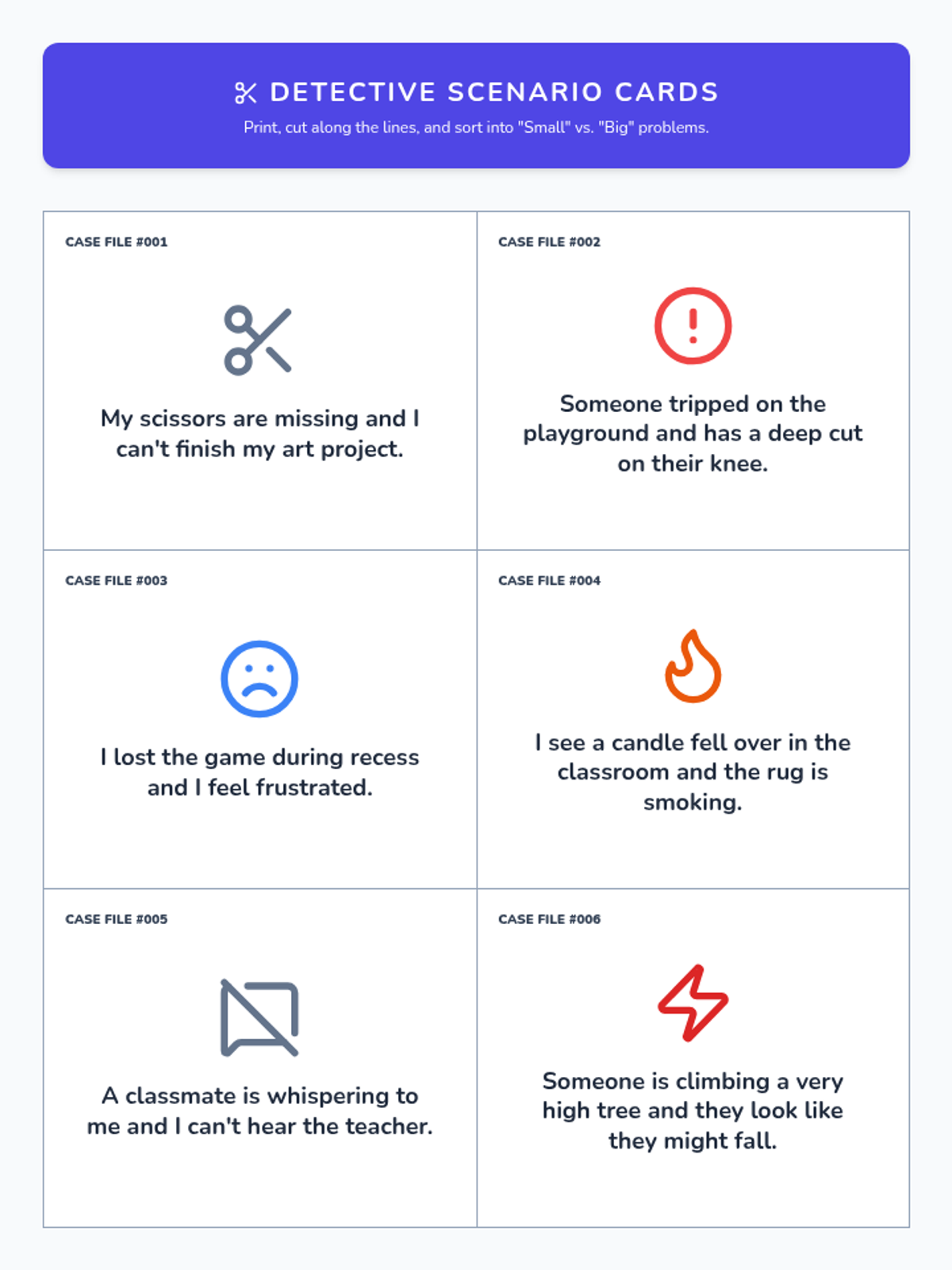
A set of 18 printable scenario cards (3 pages) for a hands-on sorting activity, featuring situations for students to categorize as small or big problems. Layout standardized for easy printing and cutting.
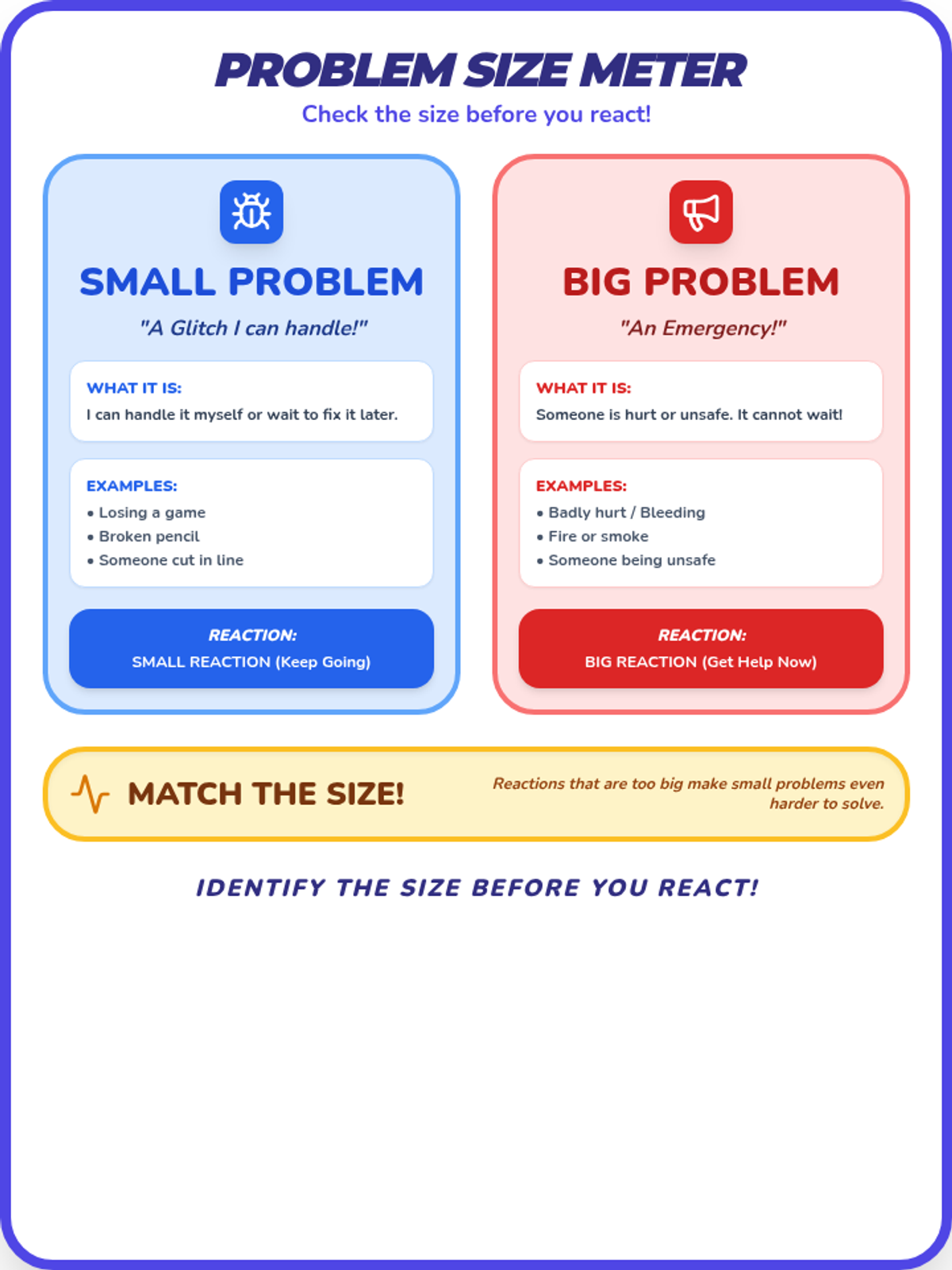
Updated visual anchor chart including a new section on matching "Reaction Size" to "Problem Size" for improved emotional regulation. Layout fixed to fit on a single page.
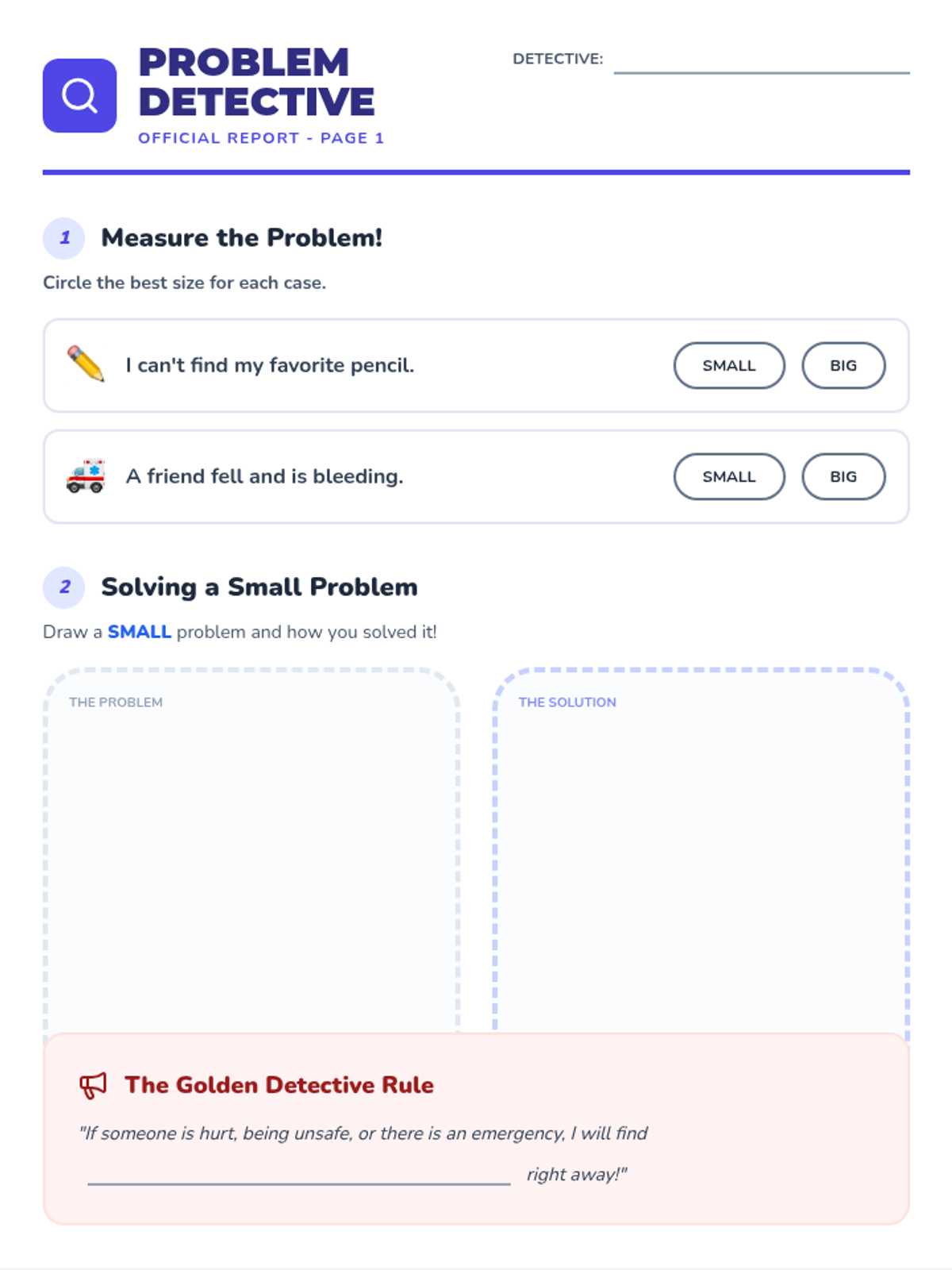
Updated 3-page worksheet for 2nd-4th grade students featuring a total of 12 "find the mismatches" scenarios across social and school situations, and a coping strategy reflection area. Revised for better contrast, standardized header heights, and improved page flow.
Updated slideshow including new slides for the "Reaction Size" concept for 2nd-4th grade students, focusing on matching emotional reactions to problem sizes and avoiding mismatches.
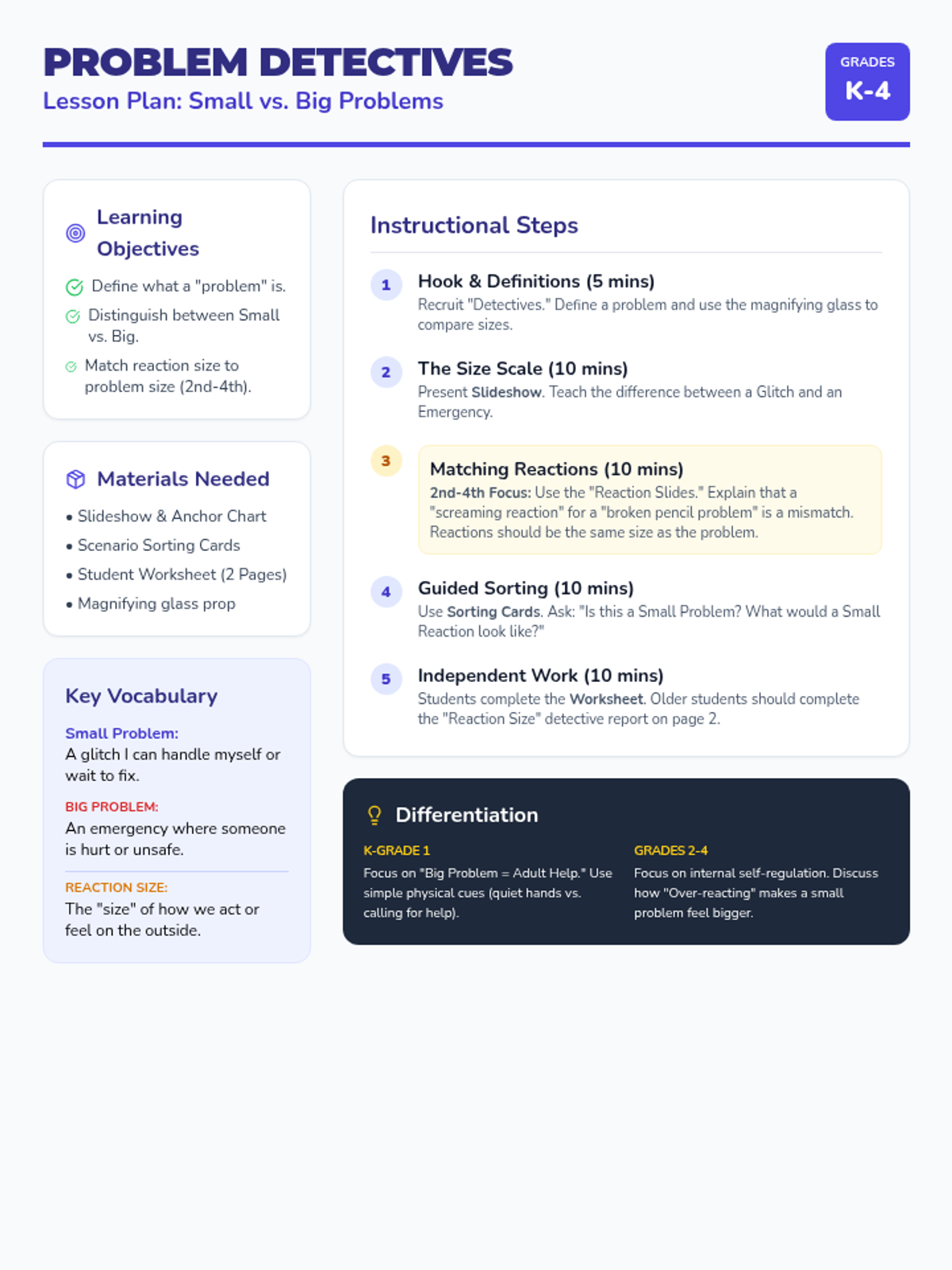
Updated lesson plan with a specific focus on "Reaction Size" matching for 2nd-4th grade students, including updated vocabulary and procedures.
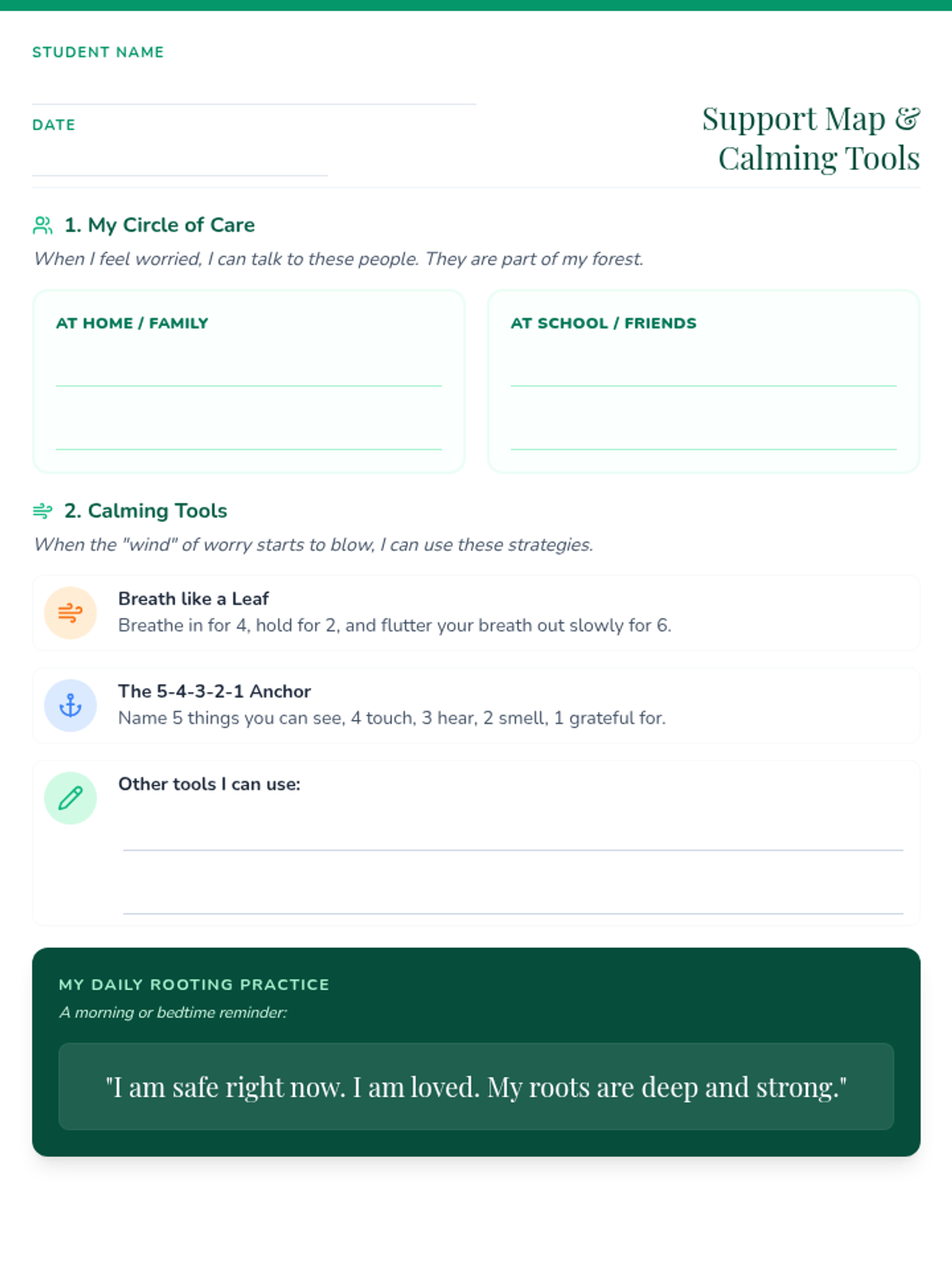
A structured worksheet to help students map their support systems and practice specific anxiety-coping strategies.
A reflective workbook for students to explore their thoughts on life cycles and create expressive art through a "Memory Tree" activity.
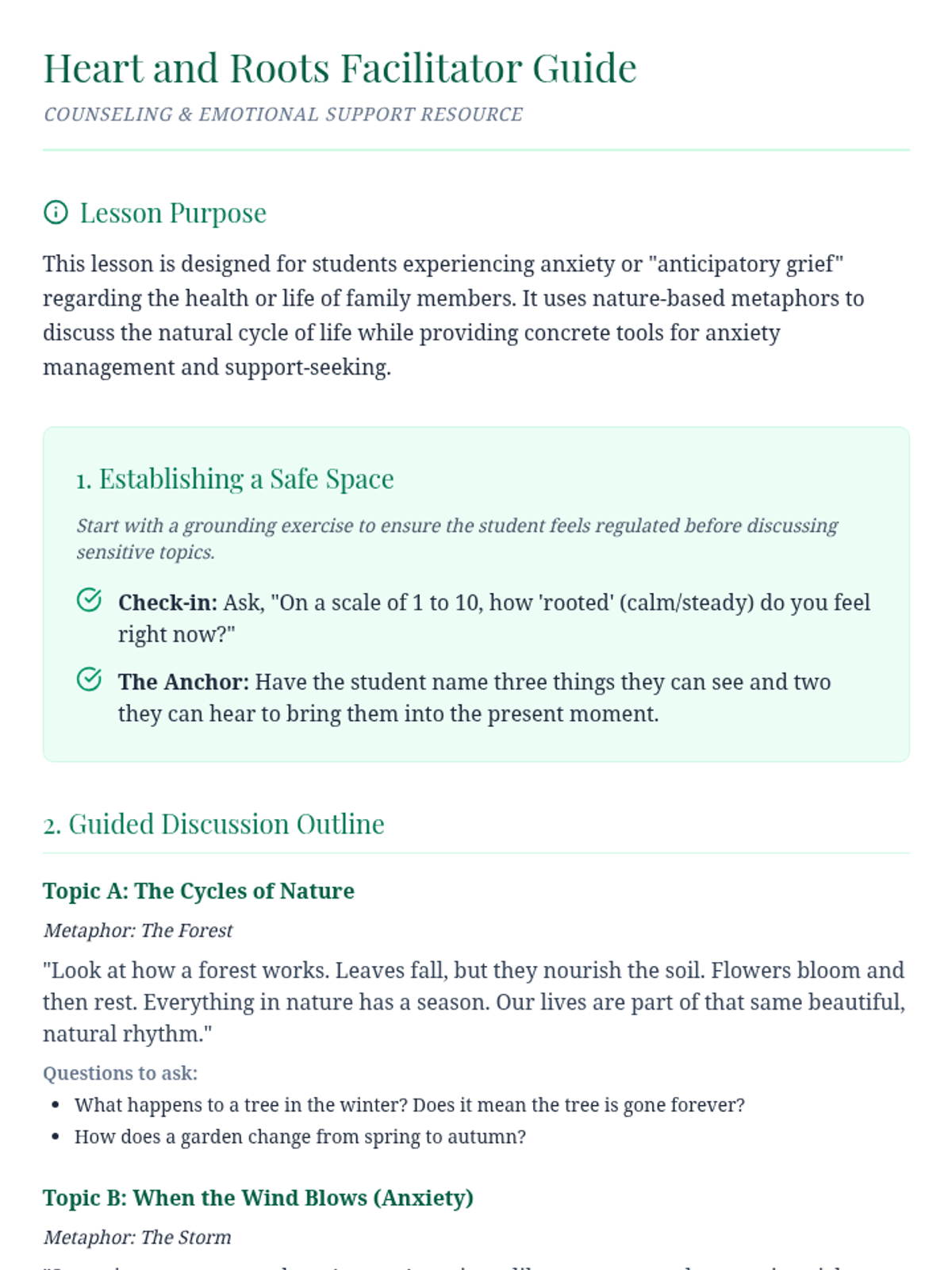
A detailed facilitator guide for teachers or counselors to lead discussions about life cycles, anxiety, and support systems using nature metaphors.
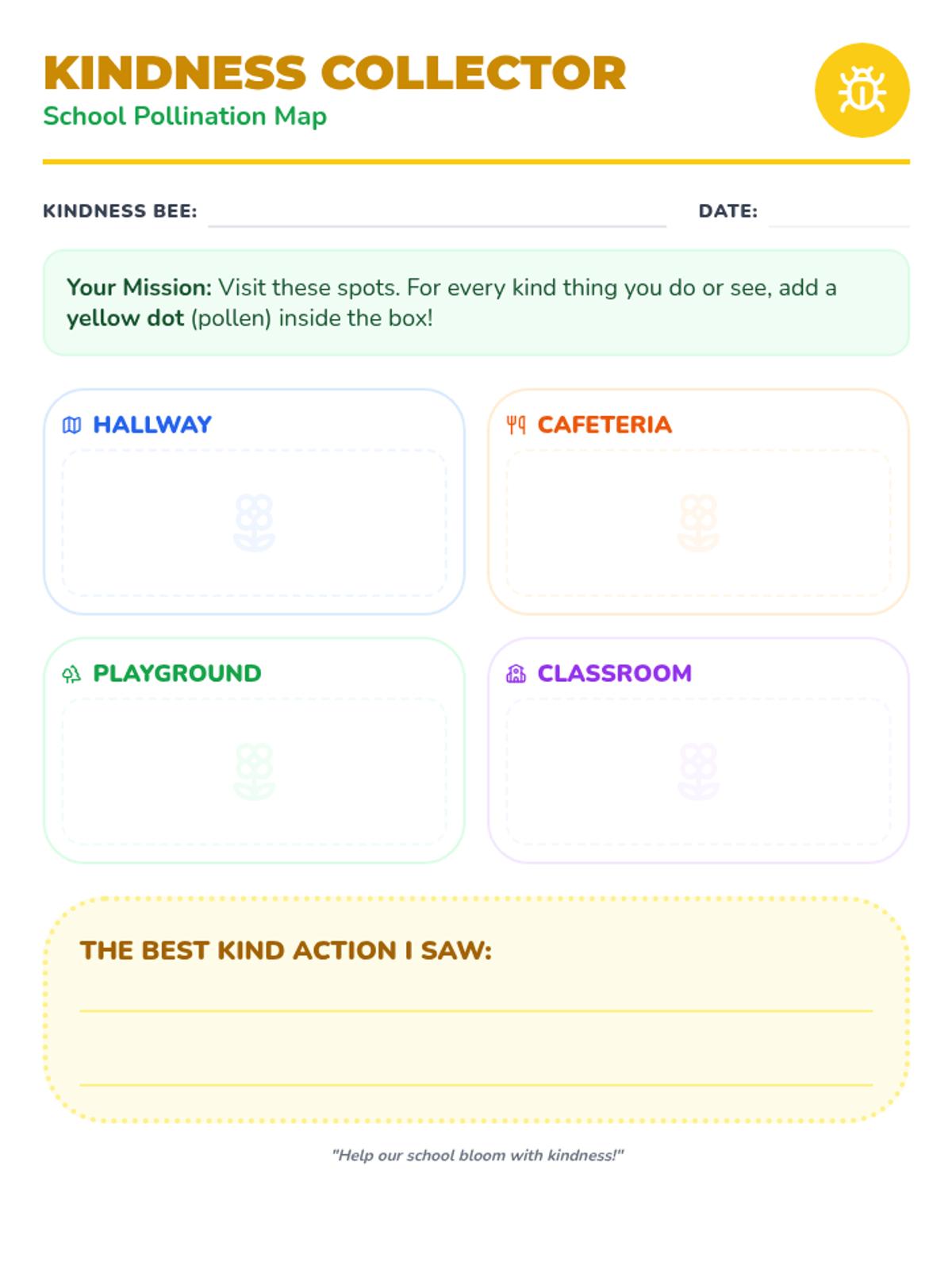
An interactive tracking sheet for the Pollinating Kindness Project. Students use the worksheet to record acts of kindness observed or performed in different school locations, visualized as "pollen" being spread throughout a garden.
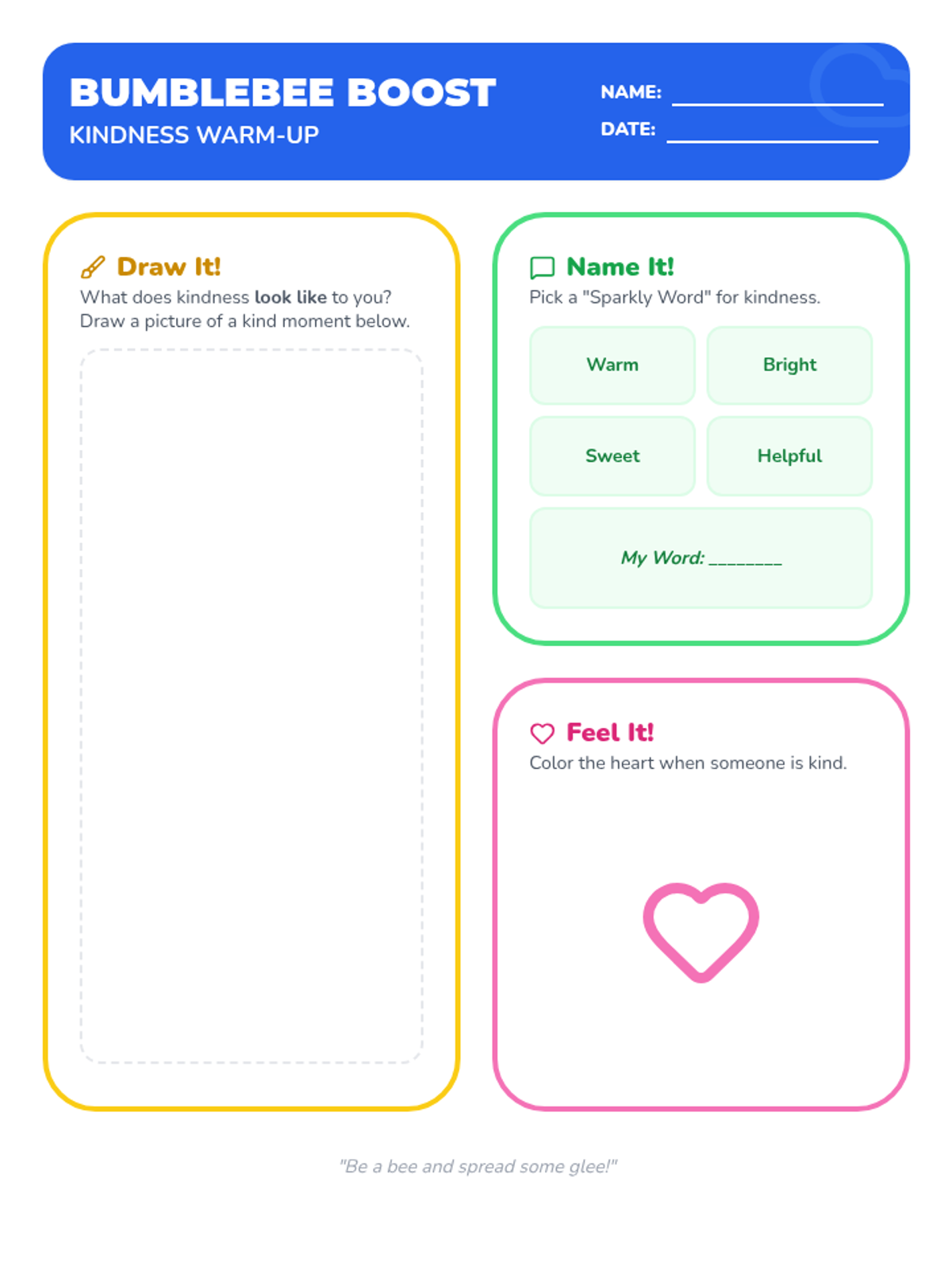
A student warm-up worksheet that uses drawing and word selection to help K-3 students reflect on the emotional impact and visual representation of kindness.
Colorful and engaging slides for the Pollinating Kindness Project that explain the analogy between bees pollinating flowers and students spreading kindness throughout their school.
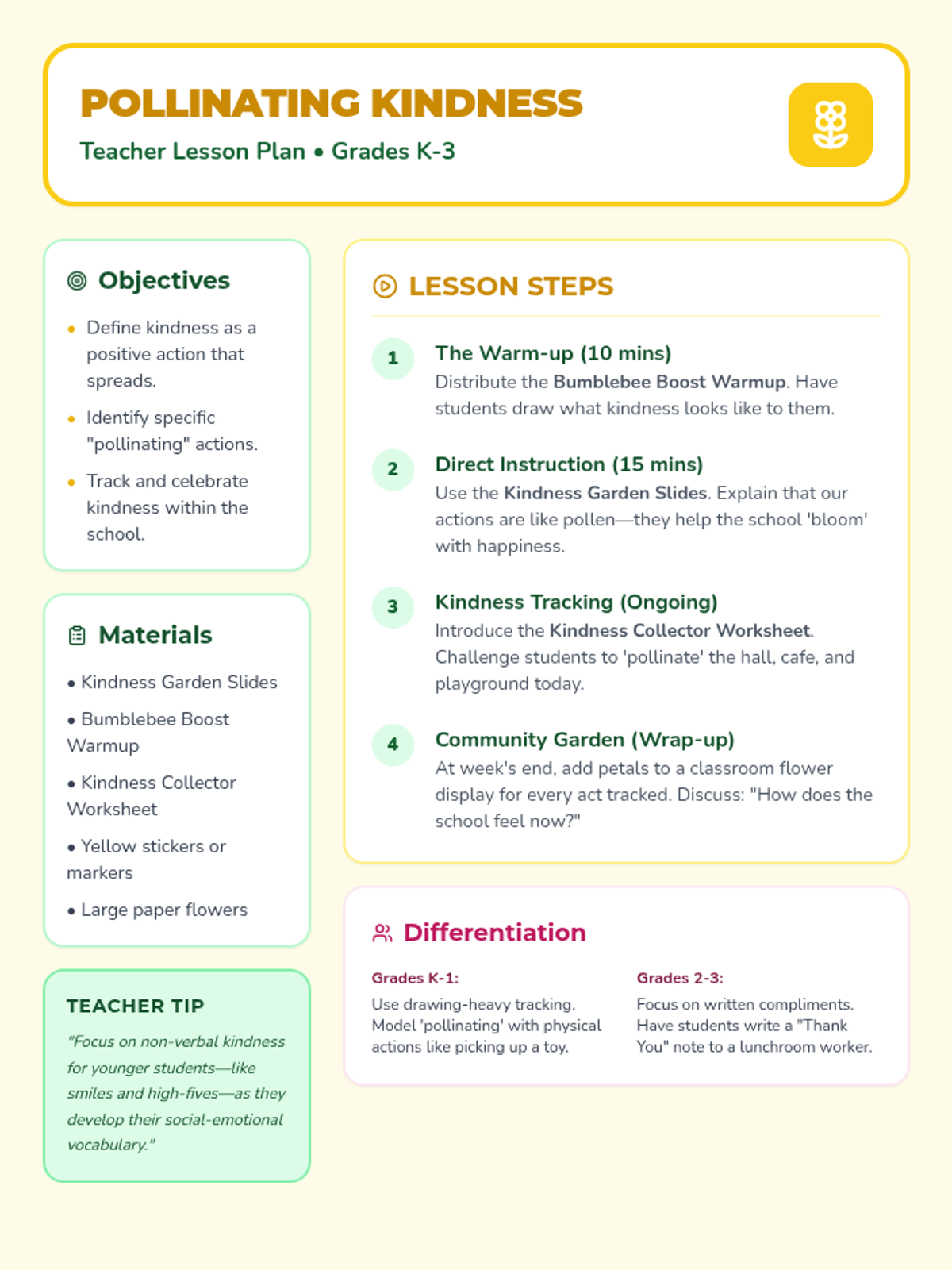
A detailed teacher guide for the Pollinating Kindness Project, featuring a garden-themed analogy, learning objectives, and a step-by-step instructional procedure for K-3 classrooms.
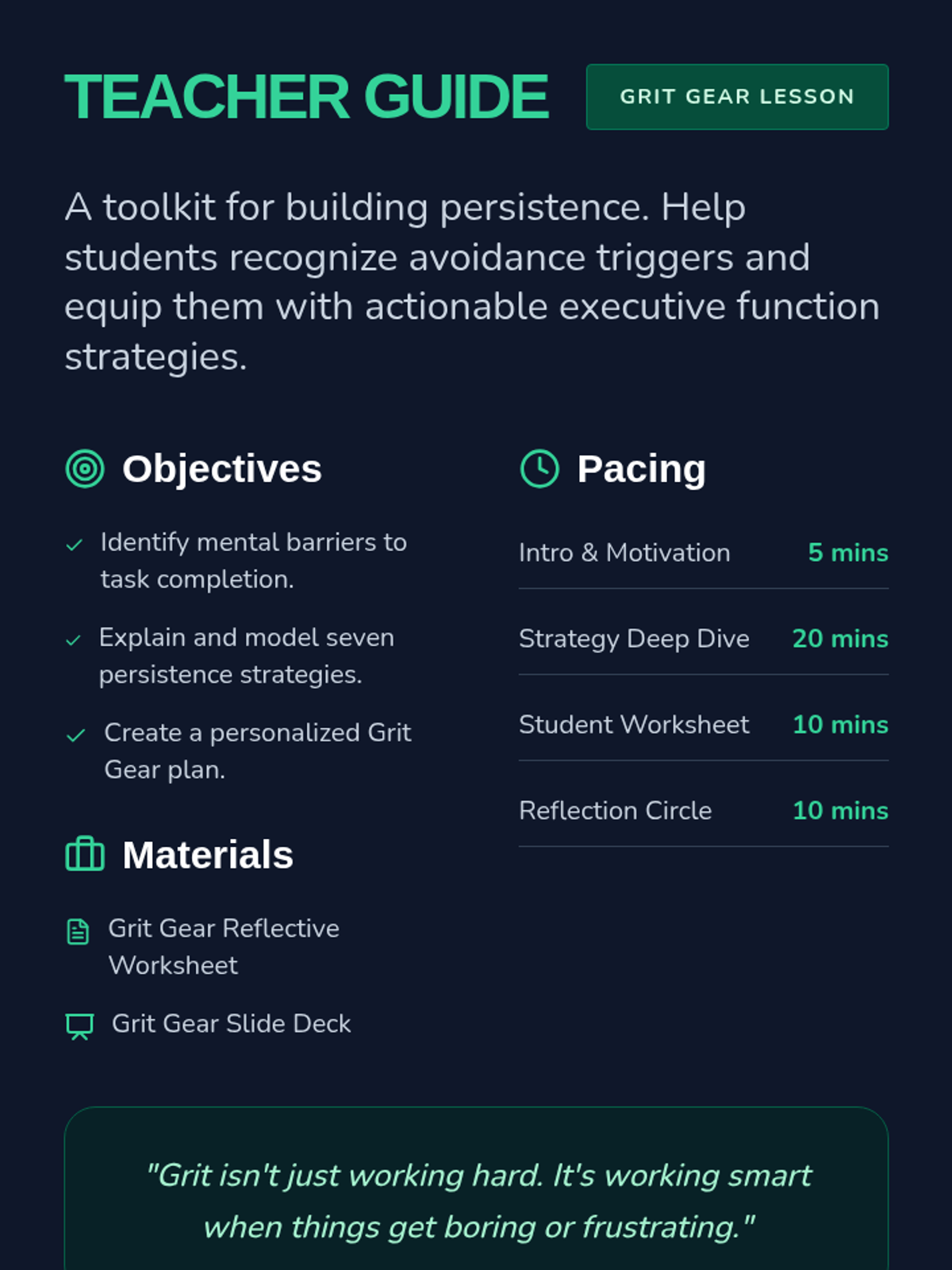
A comprehensive teacher guide for the Grit Gear lesson, including strategies like self-talk, chunking, breathing, and help-seeking.
A visual presentation introducing 'Grit Gear' strategies—self-talk, chunking, breathing, asking for help, and more—to help students overcome difficult or boring tasks.
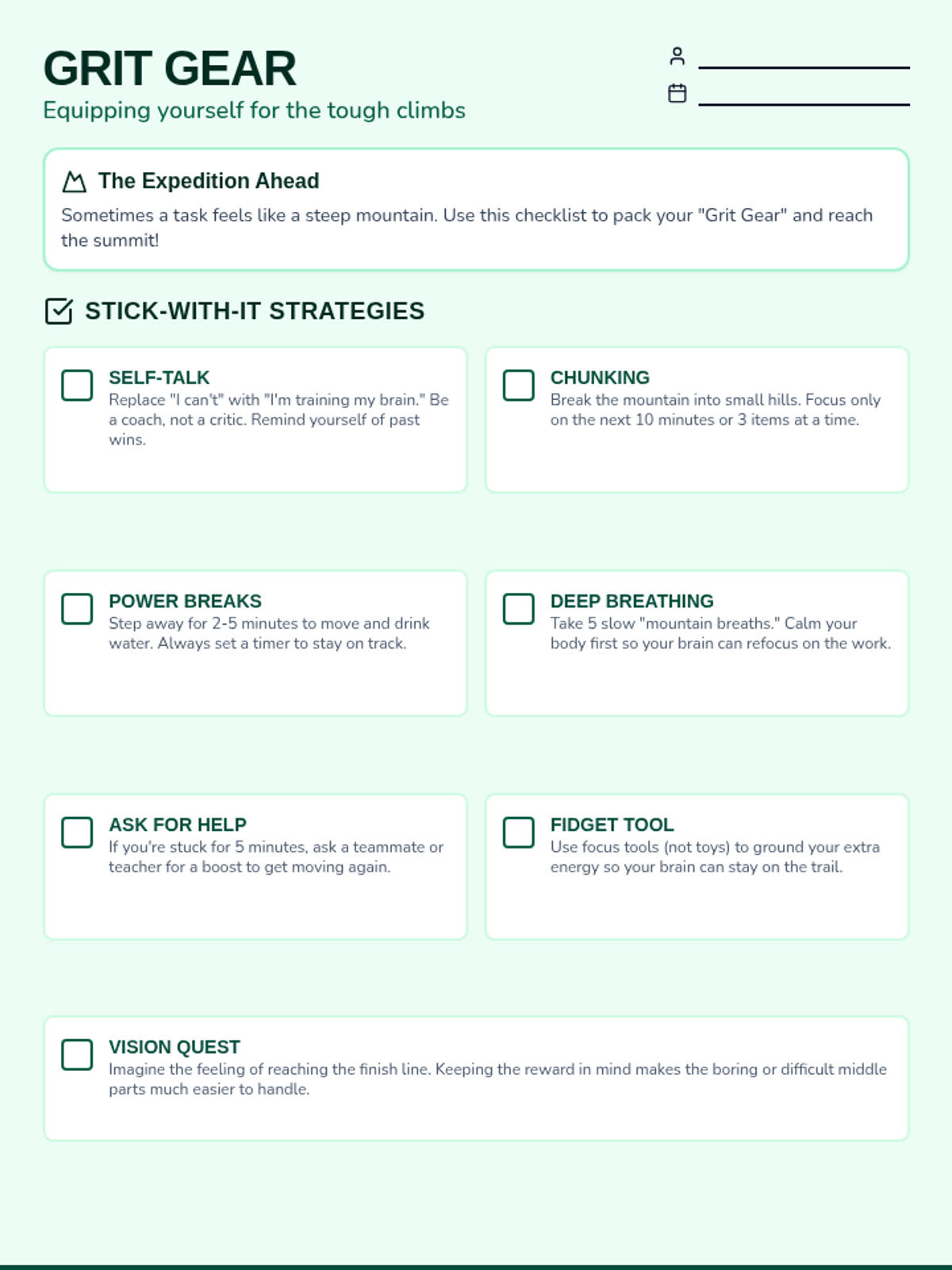
A reflective worksheet for students to identify and plan 'stick-with-it' strategies like self-talk, chunking, and power breaks for challenging tasks.
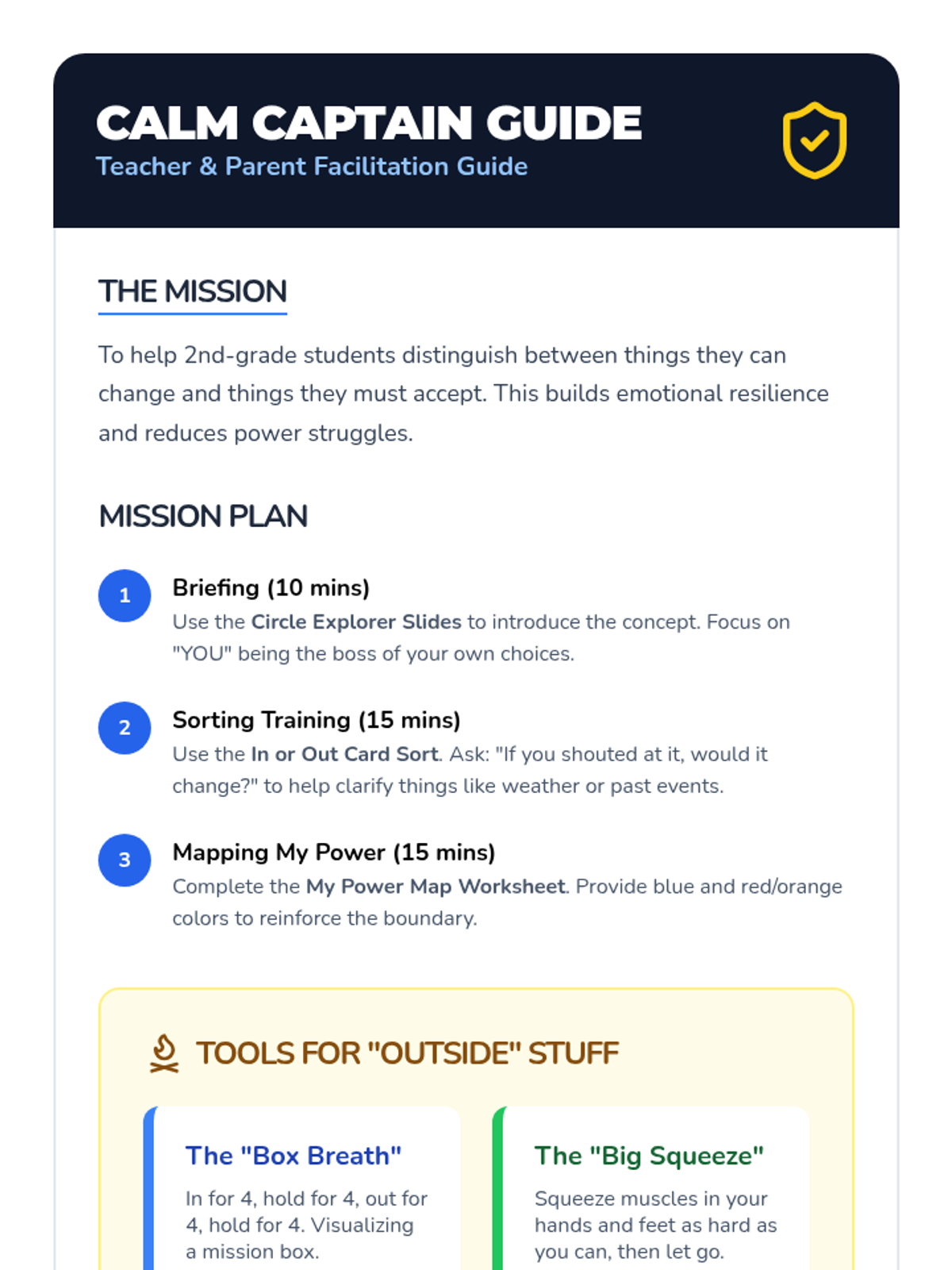
A teacher's facilitation guide containing lesson flow, pacing, and specific coping strategies. Updated with a more robust layout to prevent page breaks and improve text contrast.
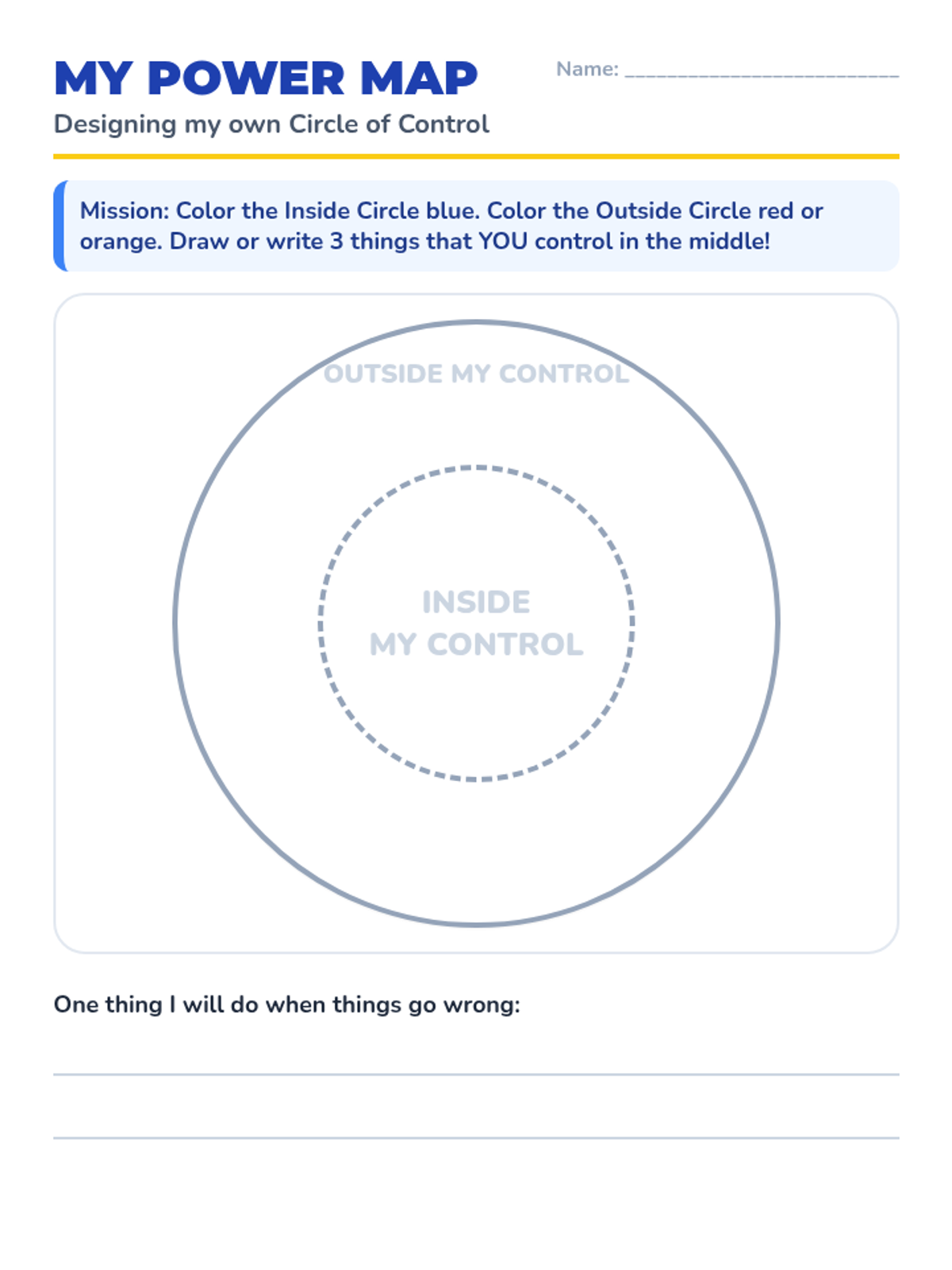
A hands-on worksheet where students color and draw their own Circle of Control. Updated with a clear white drawing area, better contrast for instructions, and improved handwriting space.