A structured discussion guide with specific prompts to help students reflect on the Ant and the Grasshopper story and connect it to teamwork principles.
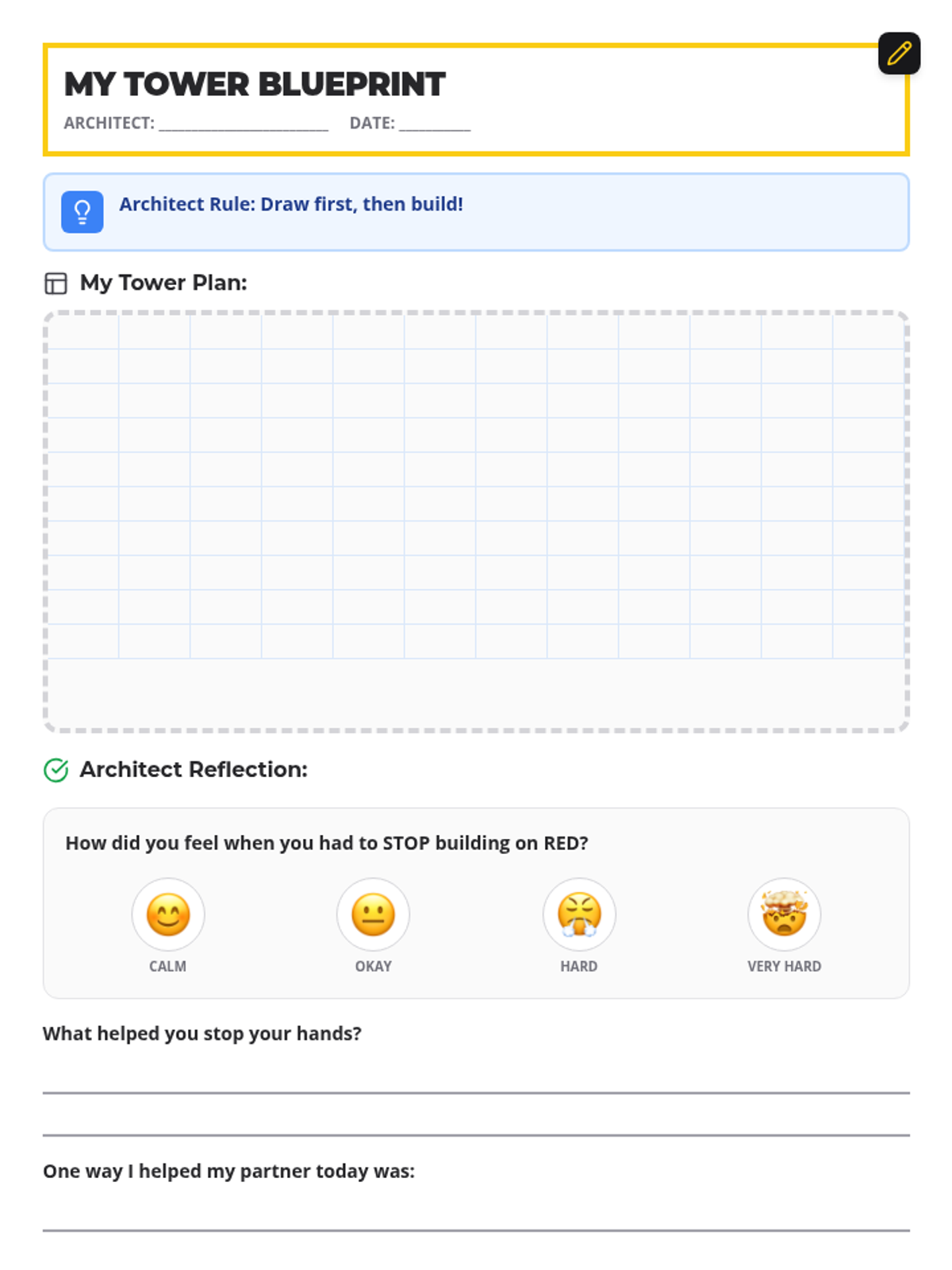
A blueprint-themed worksheet for K-3 students to plan their tower and reflect on their impulse control performance during the 'Pause Power Architects' activity. It features simple visual emotion scales and drawing areas.
A visually engaging slide deck themed around a construction site to guide students through the 'Pause Power Architects' activity. It uses clear visual signals (Green, Yellow, Red) and simple language to teach impulse control.
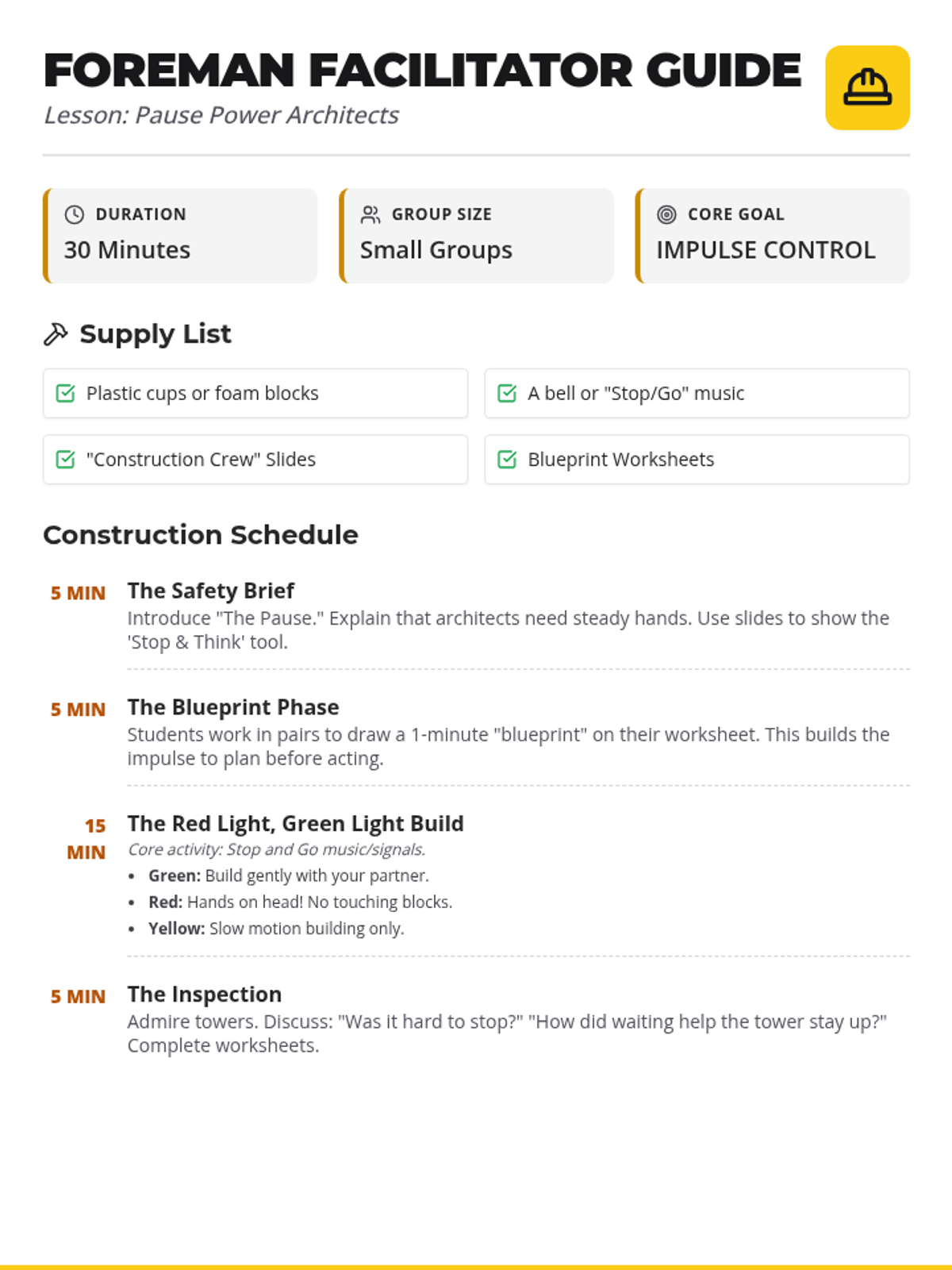
A comprehensive teacher's guide for a 30-minute impulse control activity. It includes a lesson timeline, supply list, and specific therapeutic strategies for supporting students with behavioral and developmental disabilities.
Visual presentation for Lesson 12, focusing on the final 'Master Mechanic' certification ceremony and reflection on the learning journey. High-contrast yellow theme and Habit 7 integration. Revised for single-page layout, significantly larger writing areas (120px+), and fixed alignment for the signature and seal areas.
Visual presentation for Lesson 11, focusing on integrating all previous skills into a final 'Assembly Line' project. Features industrial, heavy-duty design and Habit 6 integration.
Visual presentation for Lesson 10, focusing on evaluating choices and consequences using the 'Choice Circuit' metaphor. Features high-contrast yellow theme and Habit 3 integration.
Visual presentation for Lesson 9, illustrating "The Logic Loom" weaving process for solving "Why" and "How" questions. Includes Habit 2 integration and an investigation case study. Revised for improved heading spacing and text contrast.
Visual presentation for Lesson 8, focusing on empathy and perspective through the 'POV Goggles' metaphor. Features high-contrast cyan theme and Habit 4 integration. Revised for single-page layout, larger writing boxes, and increased text size/contrast.
Visual presentation for Lesson 7, focusing on identifying character emotions through non-verbal signals and body language. Features high-contrast purple theme and Habit 5 integration.
Visual presentation for Lesson 6, teaching students to view feedback as 'Toolbox Upgrades' rather than criticism. Features high-contrast orange industrial design and Habit 6 integration.
Visual presentation for Lesson 5, introducing growth mindset through 'The Blueprint' and the power of 'Yet.' Blueprint-themed industrial design with Habit 4 integration. Revised for single-page layout, larger writing boxes, and increased text size/contrast.
Visual presentation for Lesson 4, focusing on building self-esteem through 'Safety Gear' (strengths) identification. High-contrast green theme with Habit 1 integration. Revised for layout stability on final slide and icon contrast.
Visual presentation for Lesson 3, introducing 'Coolant Systems'—calming strategies for handling stress and mistakes. Arctic-themed industrial design with Habit 3 integration.
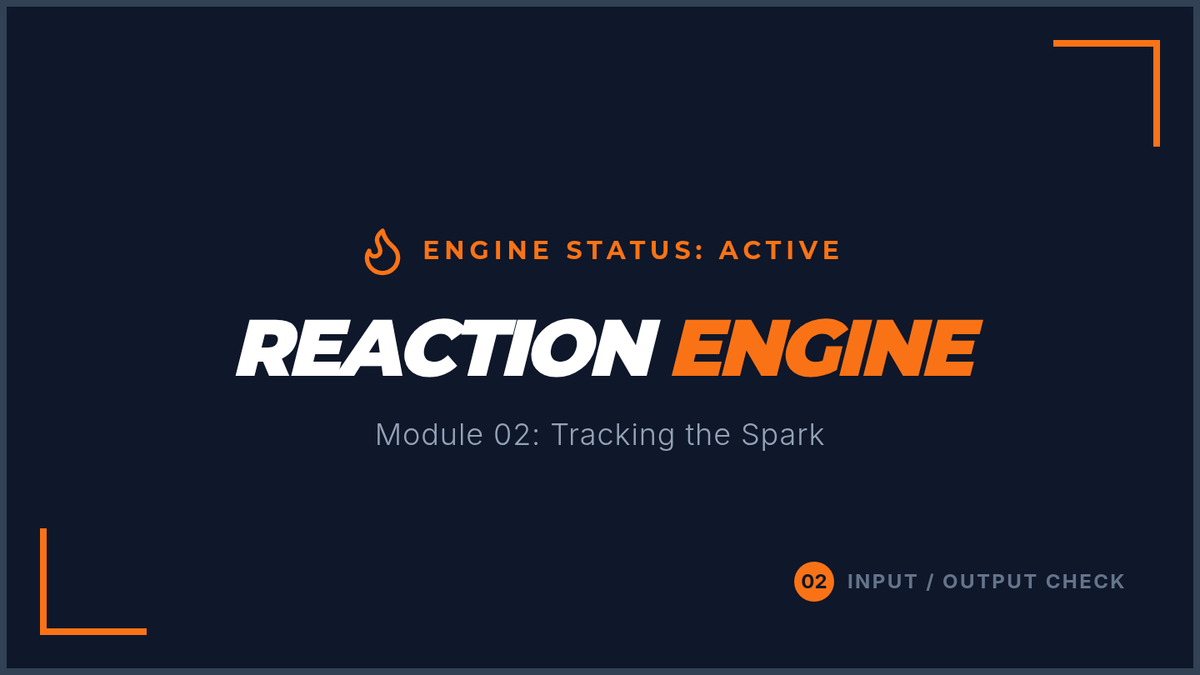
Visual presentation for Lesson 2, focusing on the 'Reaction Engine' and identifying emotional triggers. Features high-contrast industrial design, a reaction gauge visualization, and Habit 2 integration. Revised for icon consistency and heading spacing.
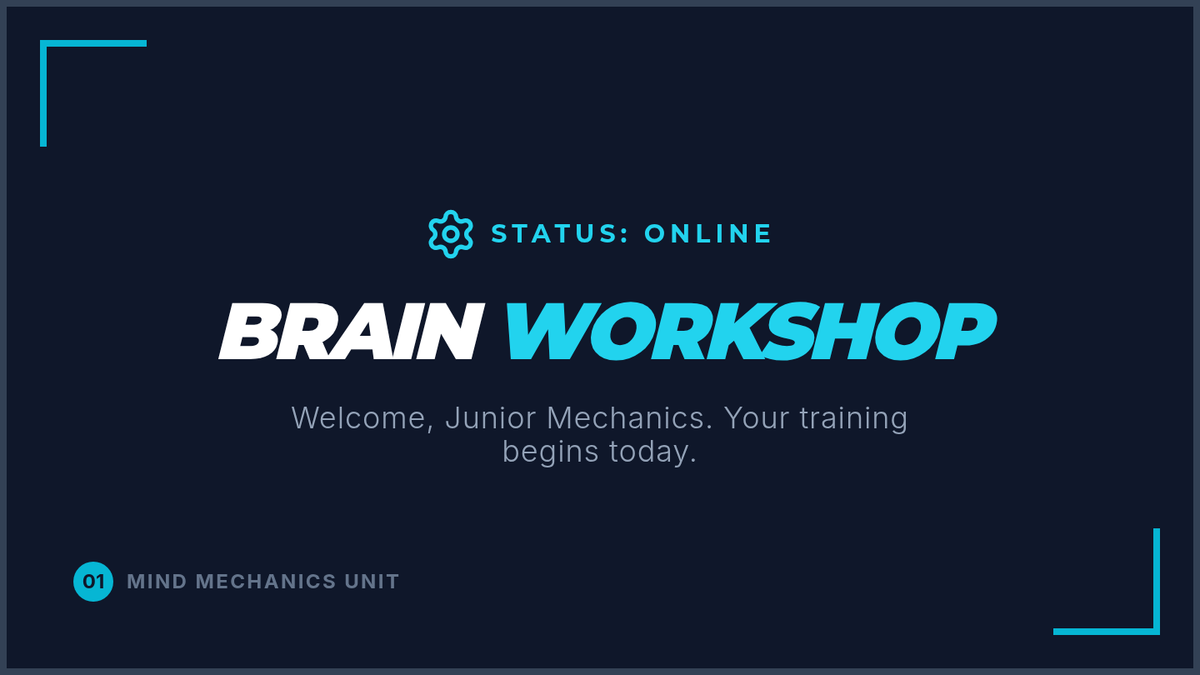
Visual presentation for Lesson 1, introducing the 'Brain Workshop' metaphor. Features high-contrast industrial design, technical components of the mind, and Habit 1 integration. Revised for improved legibility on final slide.
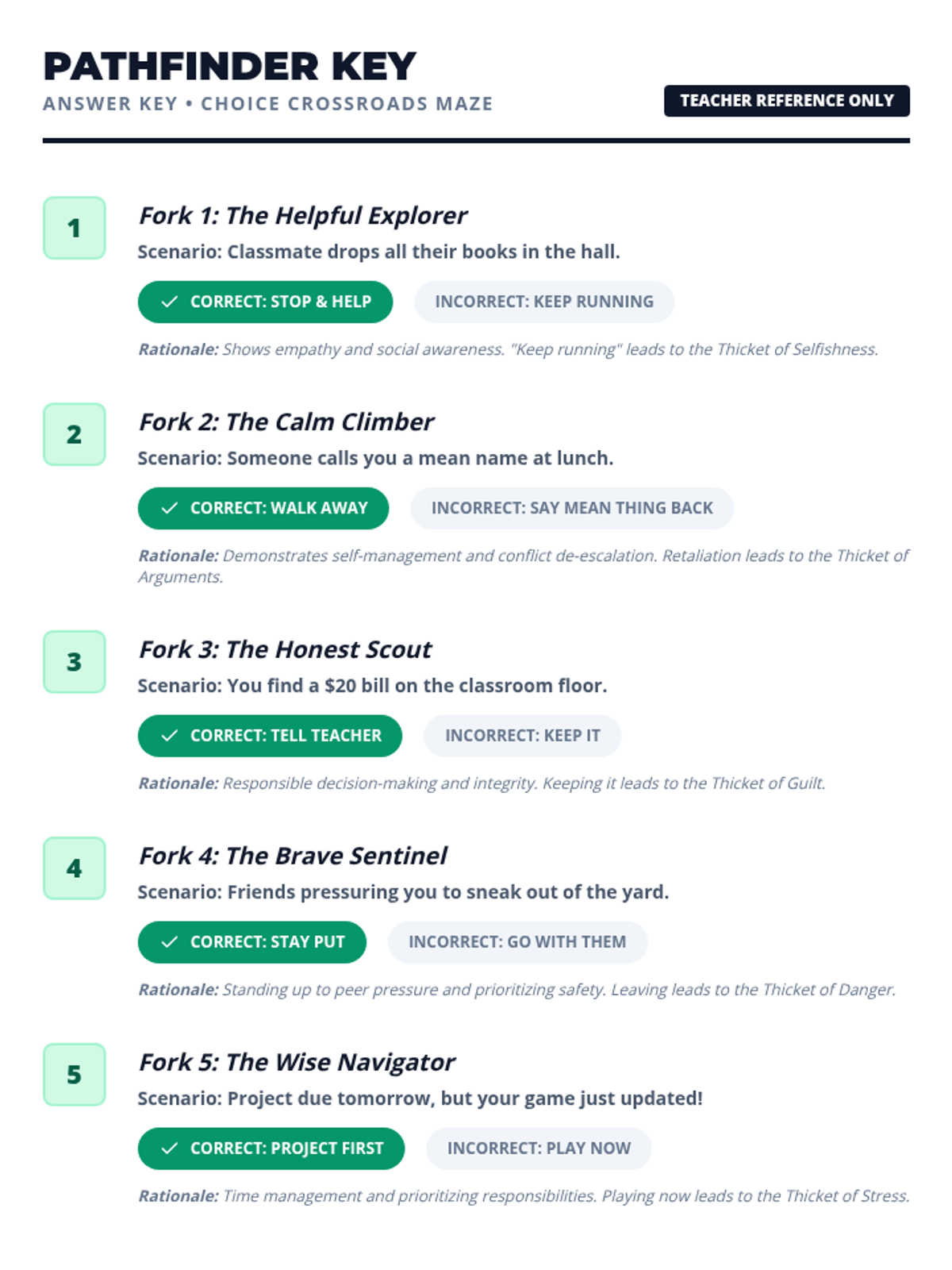
Answer key for the Choice Crossroads Maze, providing correct paths and rationales for each decision point.
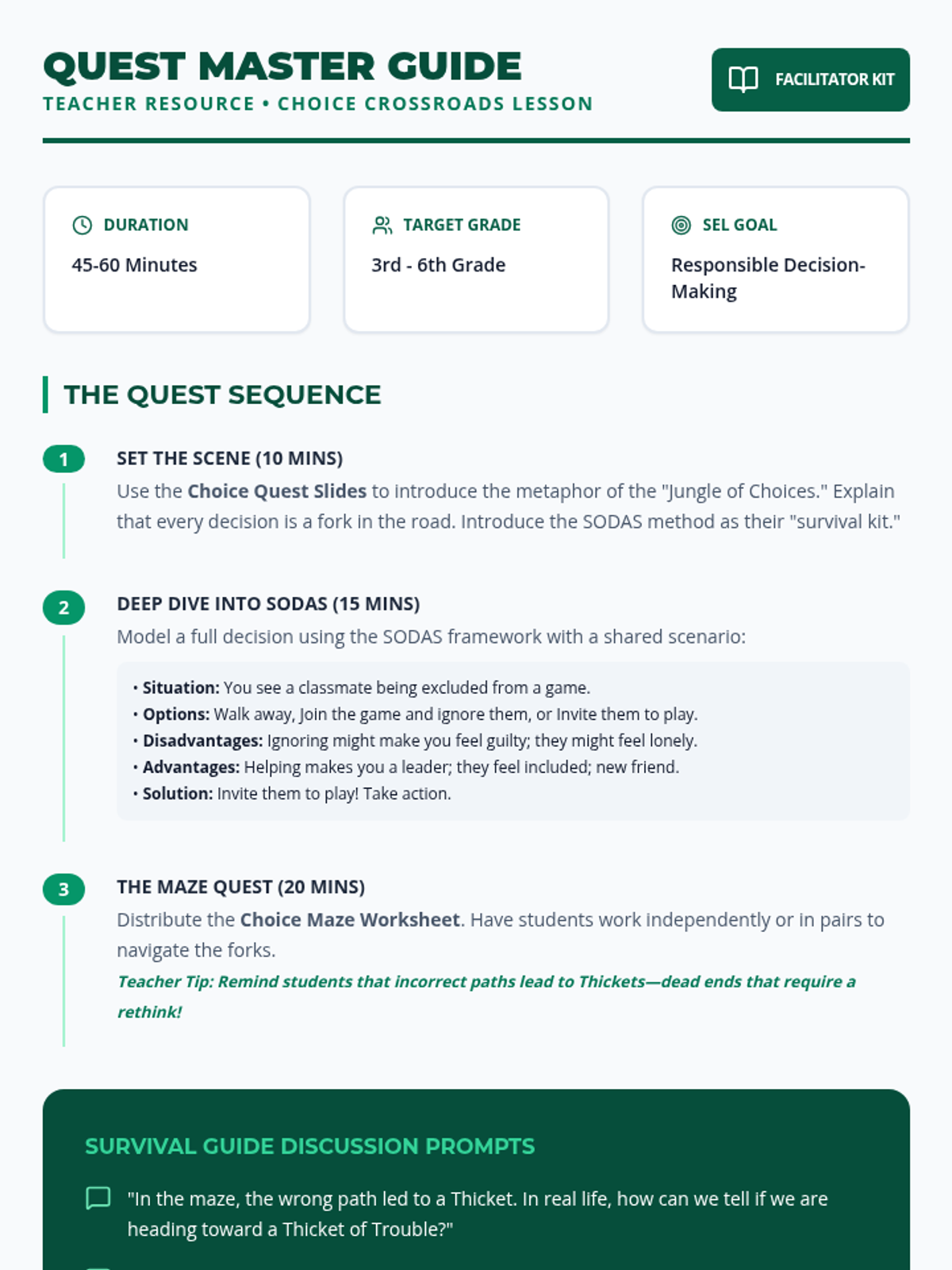
A comprehensive facilitator guide for teachers, providing a step-by-step lesson sequence, discussion prompts, and differentiation strategies for the Choice Crossroads lesson.