A survival-themed quick reference manual for students, featuring tactical "survival hacks" like box breathing, power posing, and pacing tips for state testing. Revised for better layout, icon accuracy, and single-page fit.
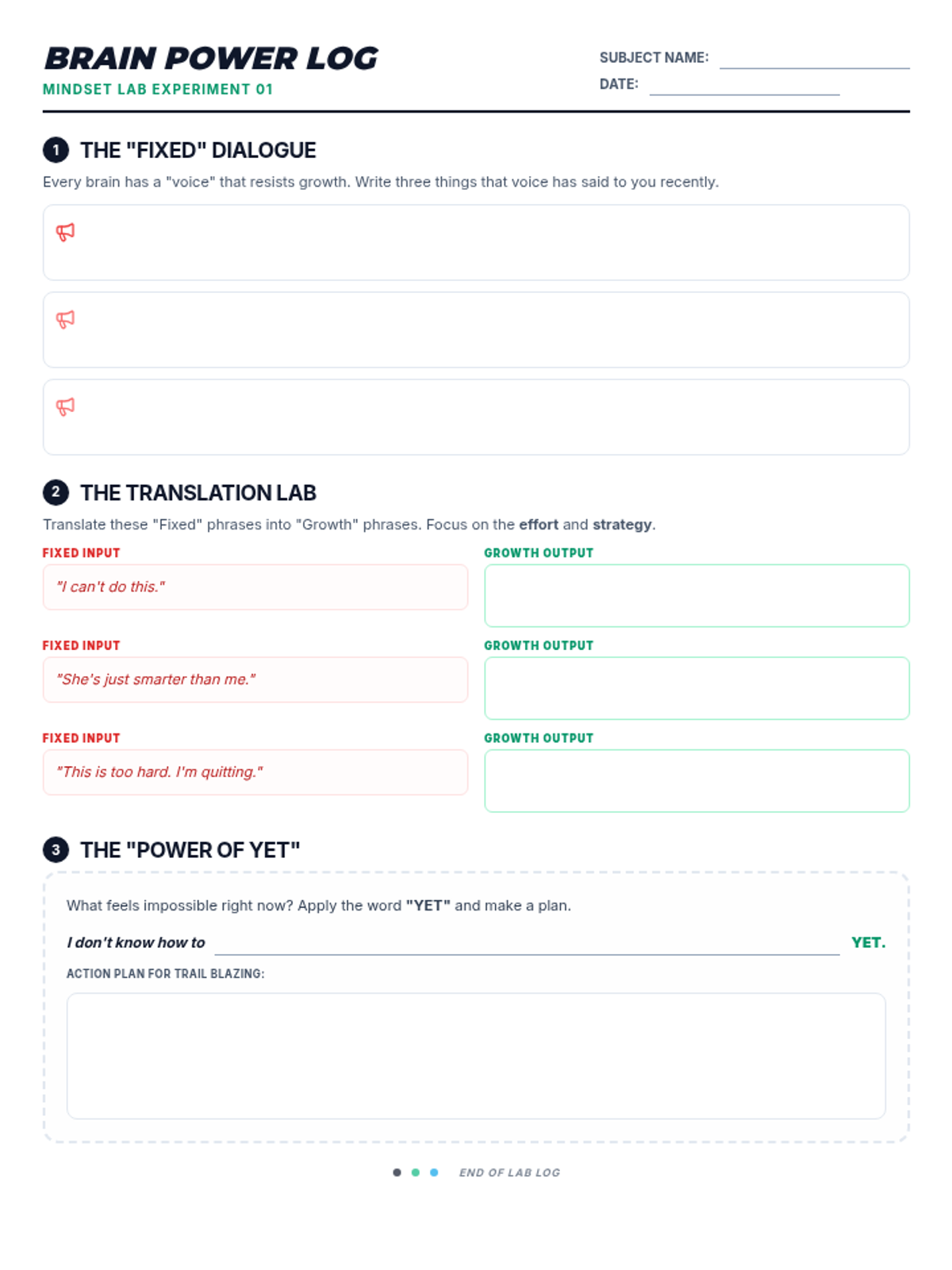
A practical student-facing worksheet to help identify fixed mindset thoughts and practice 'translating' them into growth mindset statements. Revised to fit all content on a single page with expanded work areas and improved contrast.
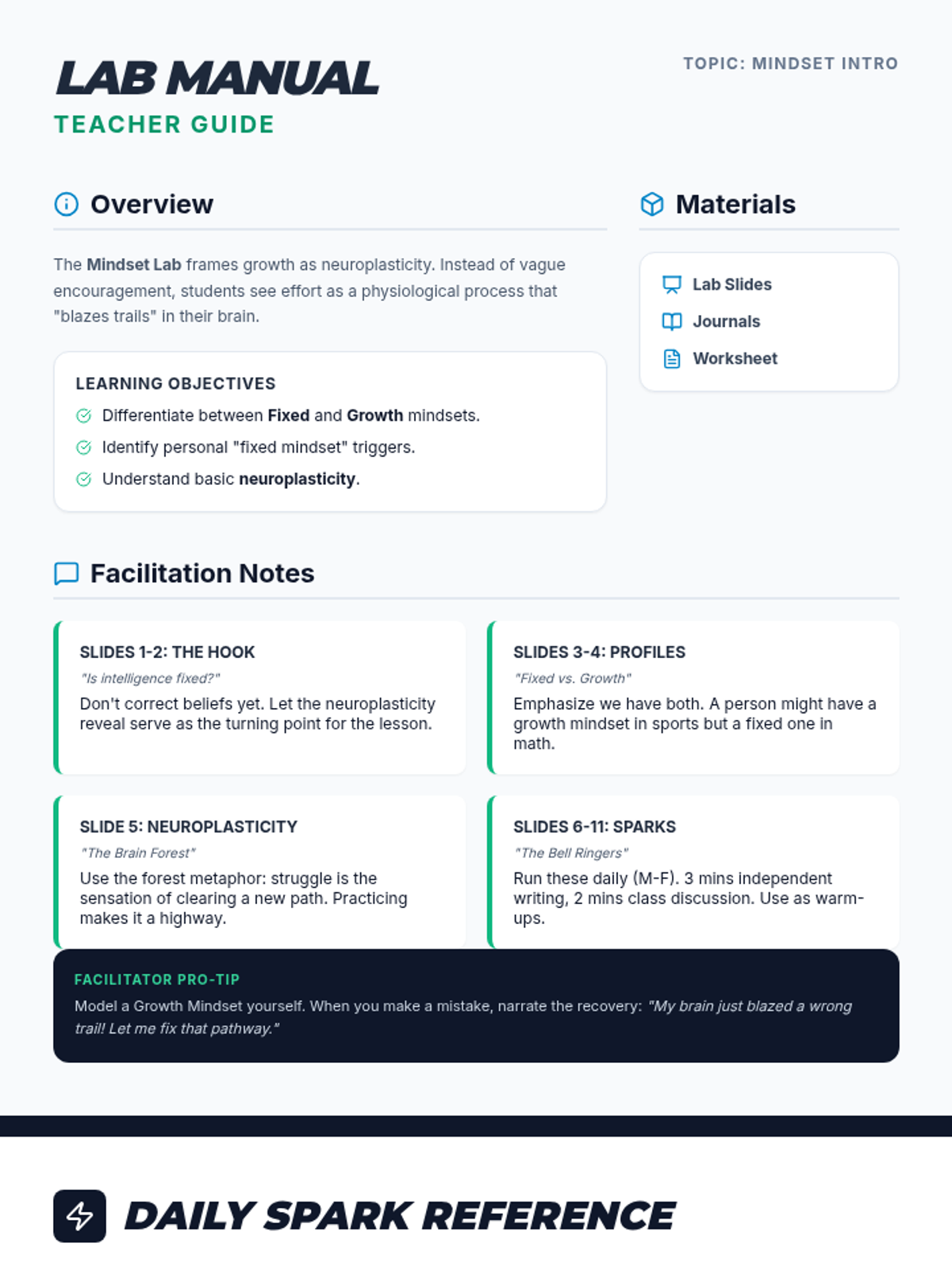
A detailed facilitation guide for teachers to lead the Mindset Lab lesson, revised with optimized page breaks, better text contrast, and a cleaner professional layout. Content consolidated to 2 pages.
A high-energy introductory slide deck for teaching Growth vs. Fixed mindsets, featuring scientific metaphors and five days of bell-ringer discussion prompts. Revised for better contrast and spacing.
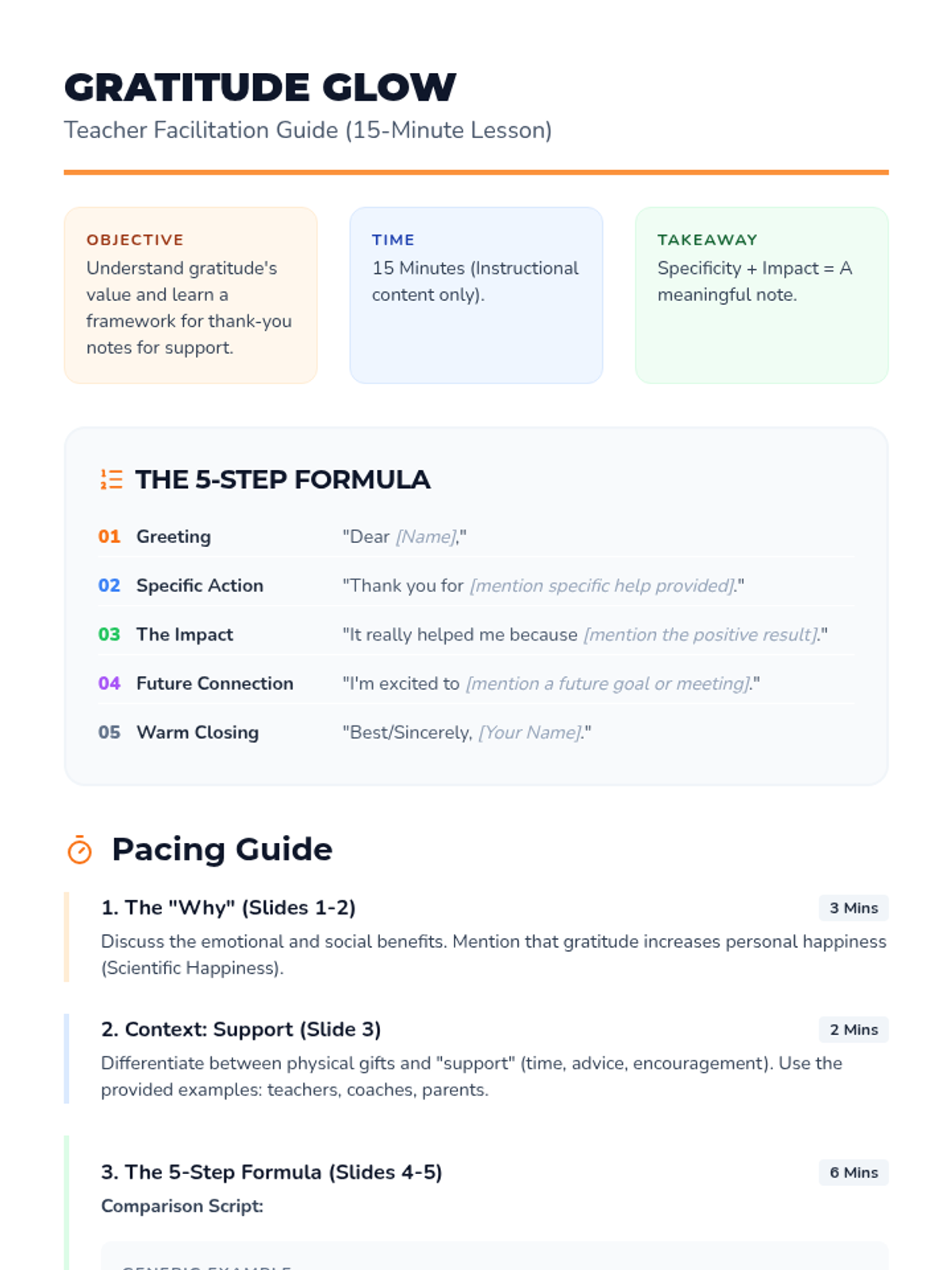
A detailed facilitation guide for teachers to deliver a 15-minute lesson on thank-you notes, including pacing suggestions, talking points, and success criteria.
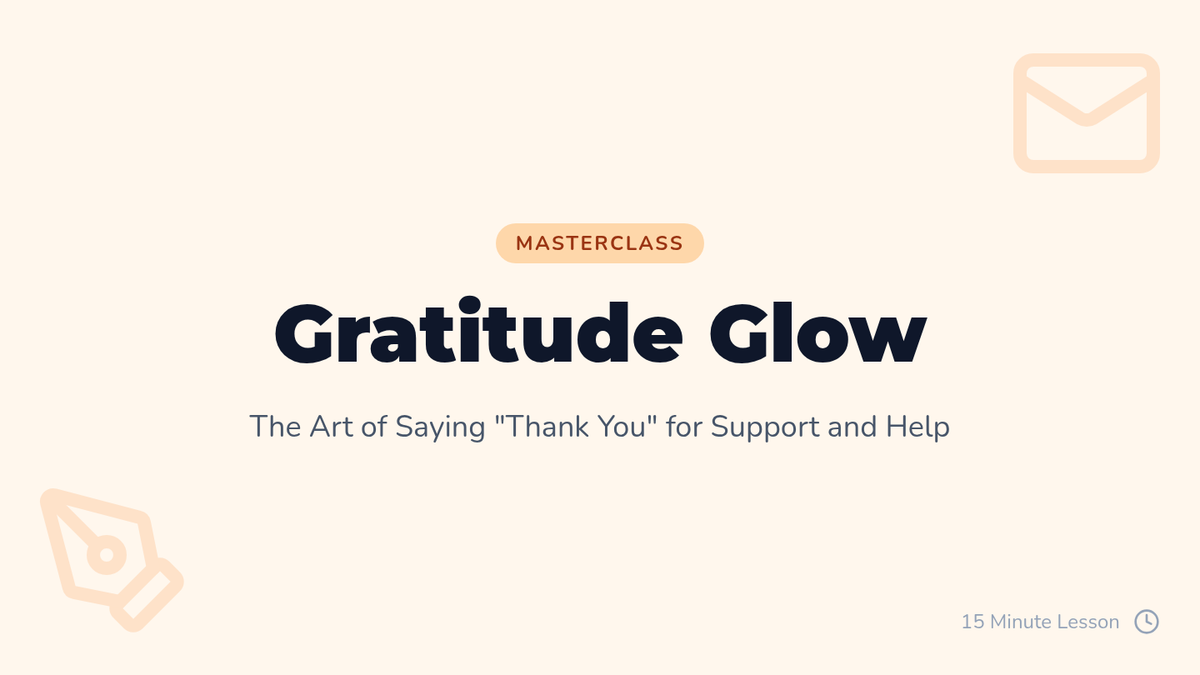
A vibrant and engaging 7-slide presentation designed for 6th graders, teaching the importance of gratitude and a specific 5-step formula for writing meaningful thank-you notes for support and help.
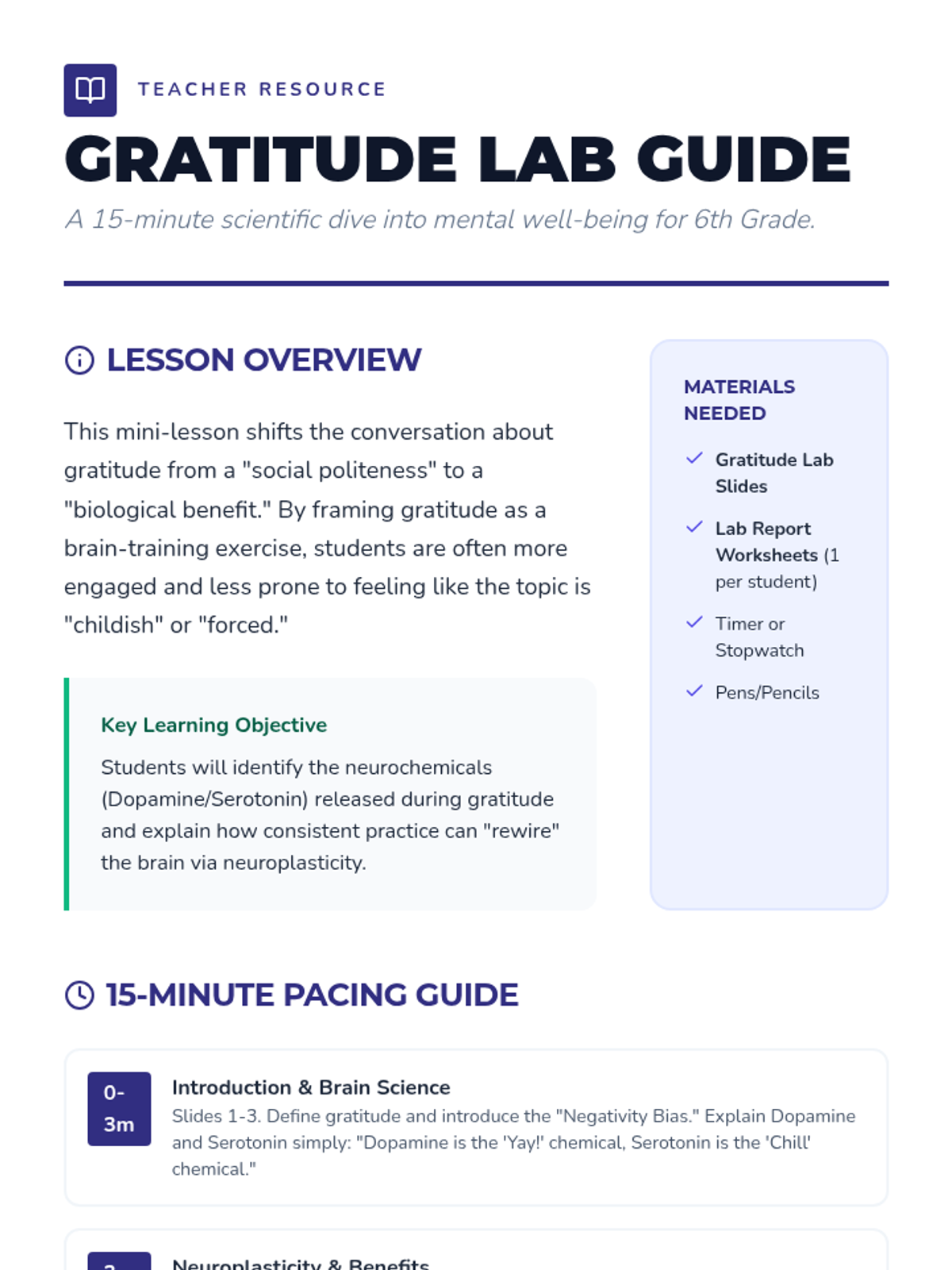
A comprehensive facilitator guide for the Gratitude Lab mini-lesson, providing a 15-minute pacing guide, facilitation tips for middle schoolers, and discussion prompts.
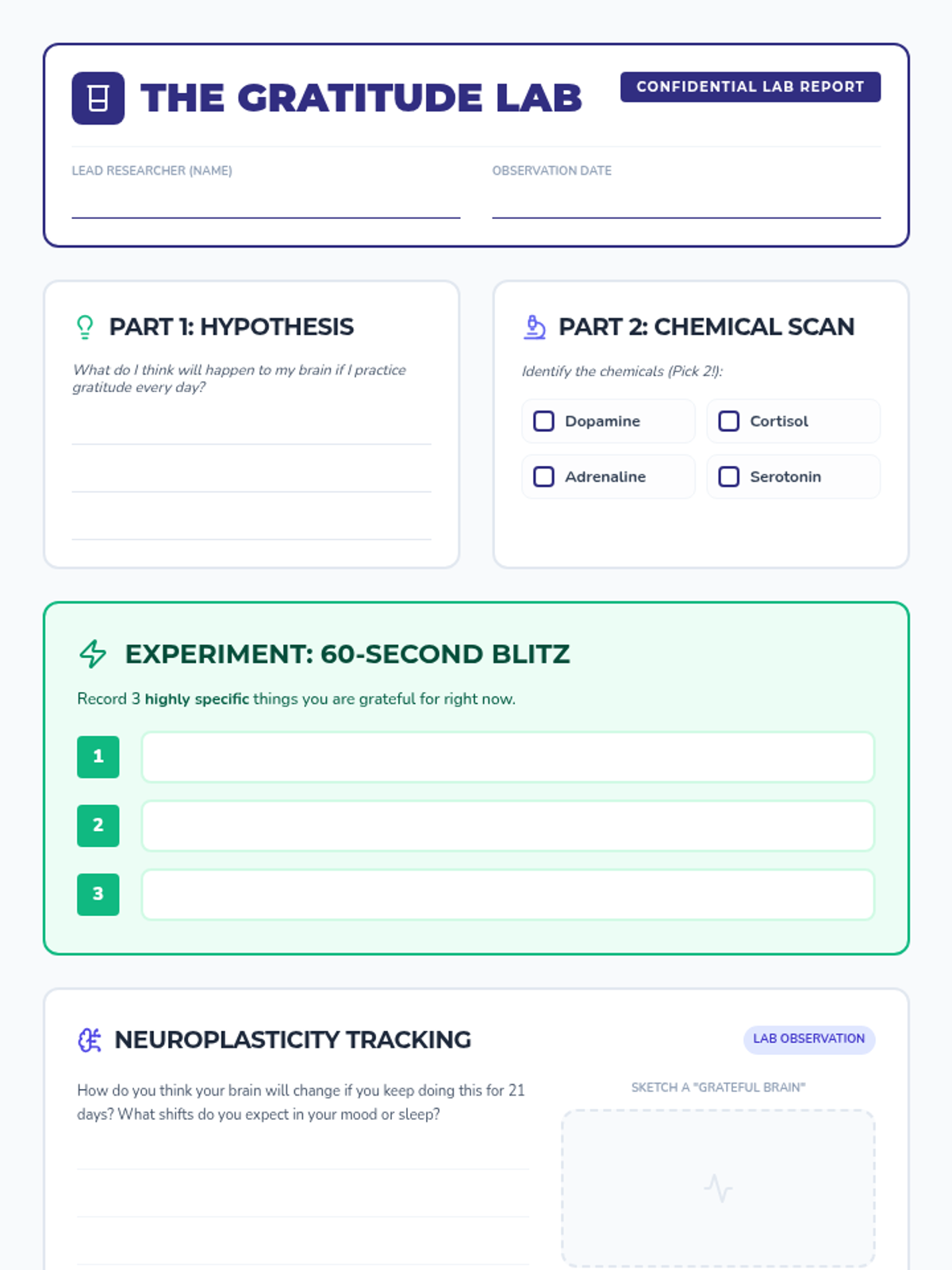
A revised student worksheet designed as a 'Confidential Lab Report'. Fixed layout issues in the header, unified checkbox styling, ensured Part 3 remains on one page, and expanded the sketch area. Final version condensed to fit on a single page for classroom efficiency.
A vibrant and engaging 15-minute slide presentation for 6th graders explaining the neuroscience of gratitude, dopamine/serotonin effects, and mental health benefits using a 'science lab' theme.
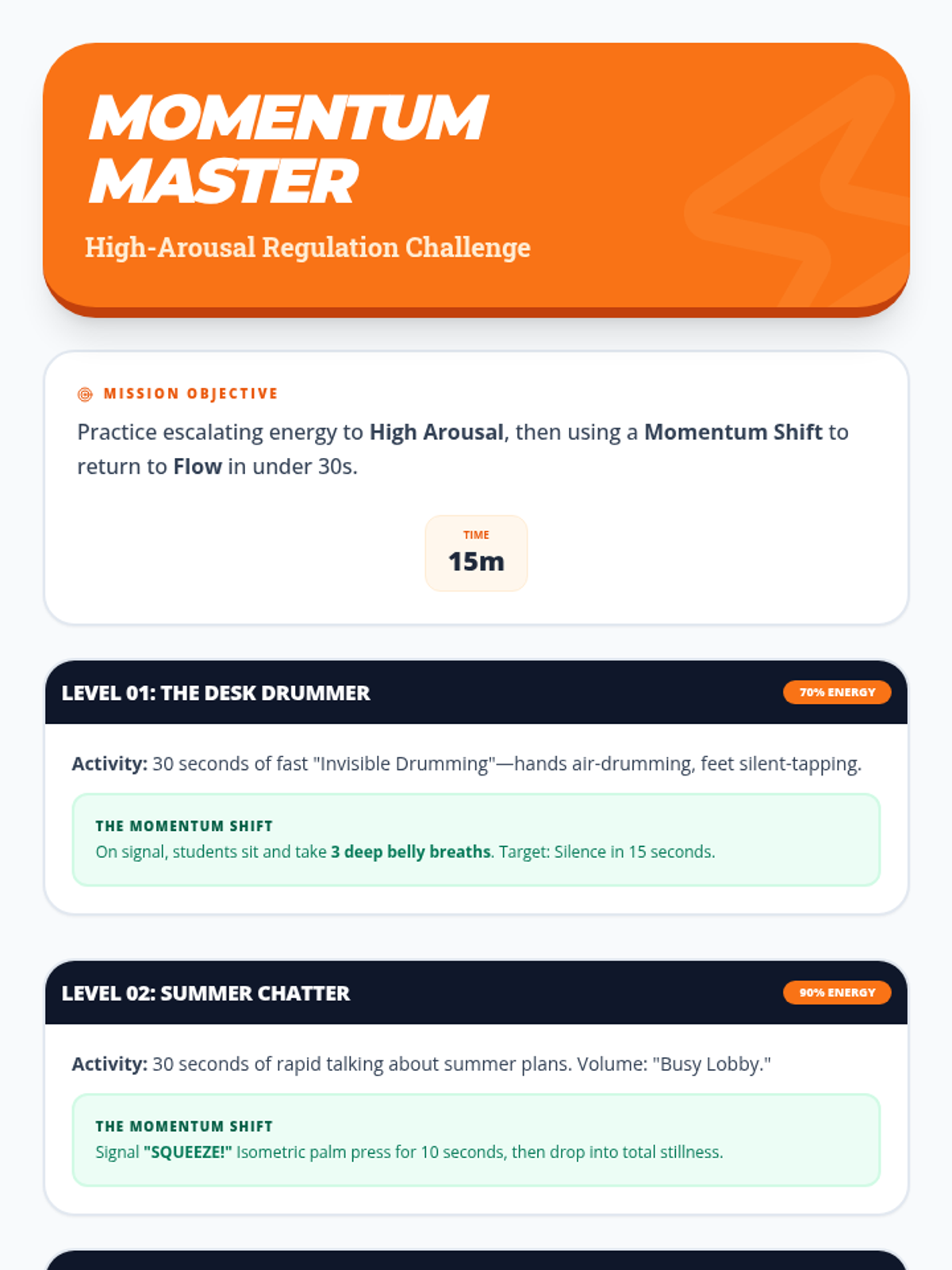
An interactive whole-class game guide that provides structured activities to help students practice escalating their energy and then rapidly using regulation techniques to return to a focused "Flow Zone."
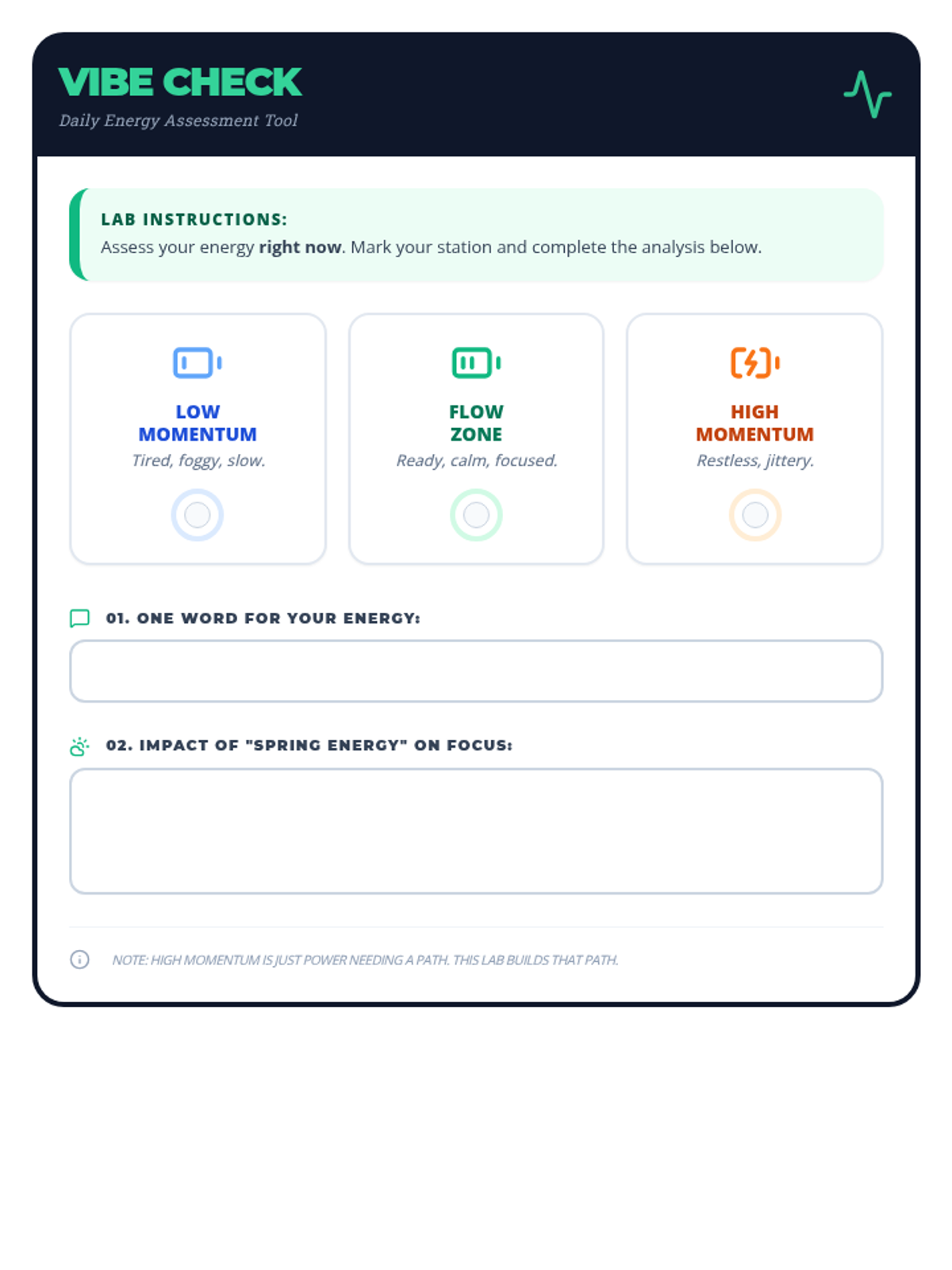
A 10-minute warm-up activity designed to help students self-assess their current energy levels using a three-tier "Vibe Check" system (Low, Flow, or High) and reflect on the impact of "Spring Energy" on their focus.
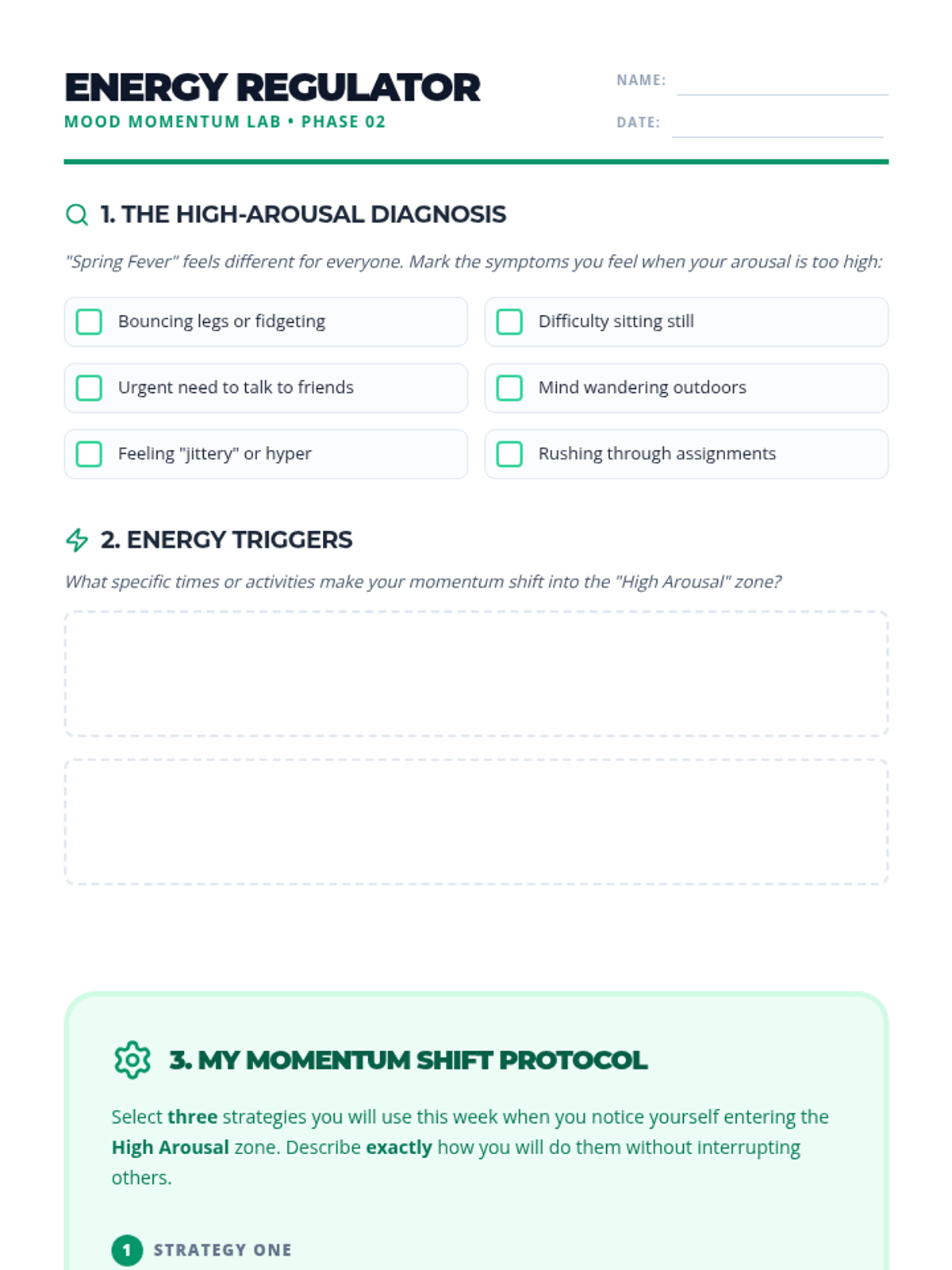
A self-reflection worksheet for students to identify their personal "Spring Fever" symptoms, recognize high-arousal triggers, and commit to specific "Momentum Shift" self-regulation strategies.
An energetic 5-slide presentation for students that defines "Spring Fever" through the lens of emotional arousal, introduces the Momentum Meter, and provides practical "Momentum Shift" techniques for self-regulation.
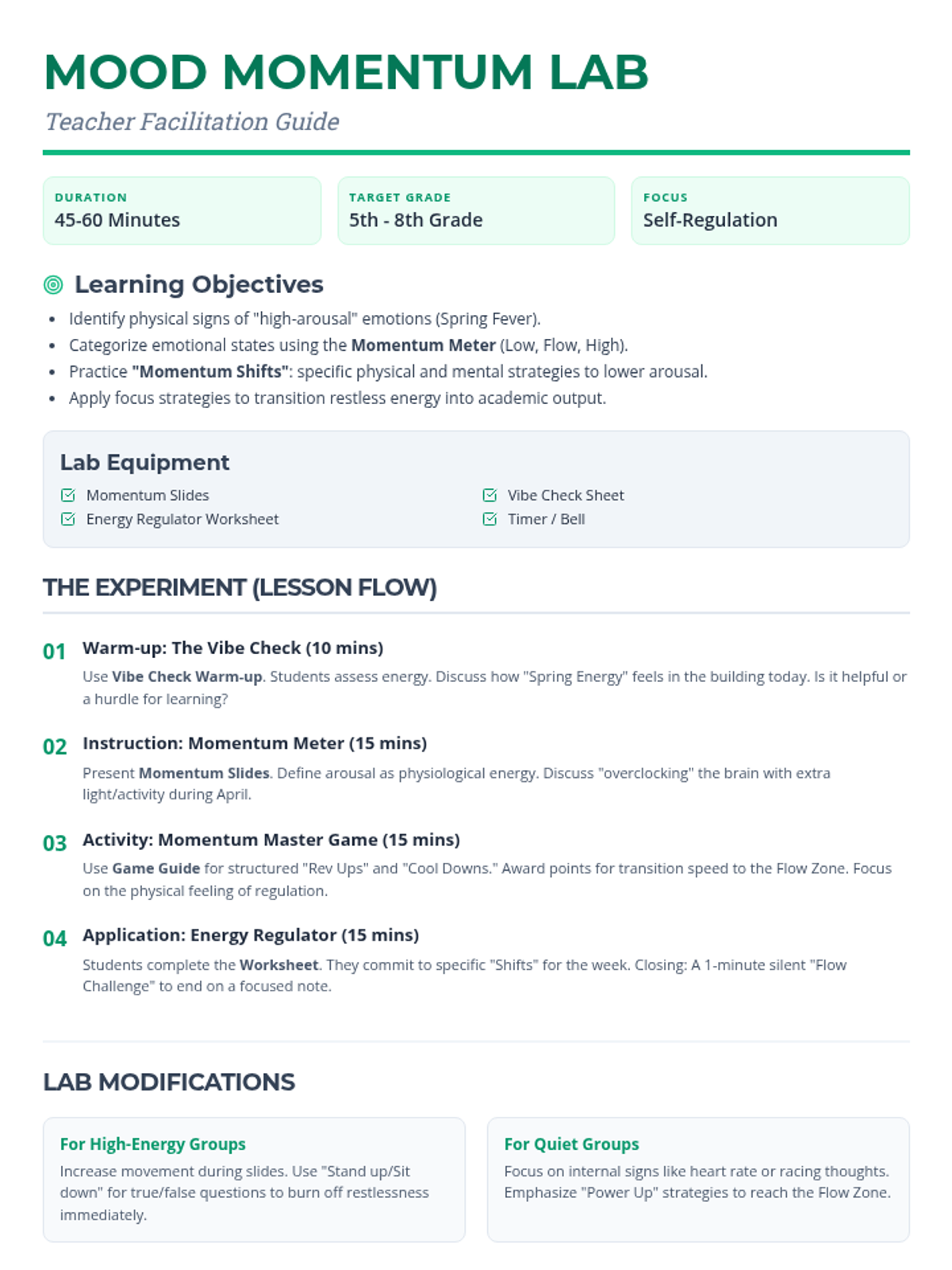
A comprehensive teacher facilitation guide for the Mood Momentum Lab lesson, including learning objectives, a detailed lesson flow, and differentiation strategies for managing classroom energy.
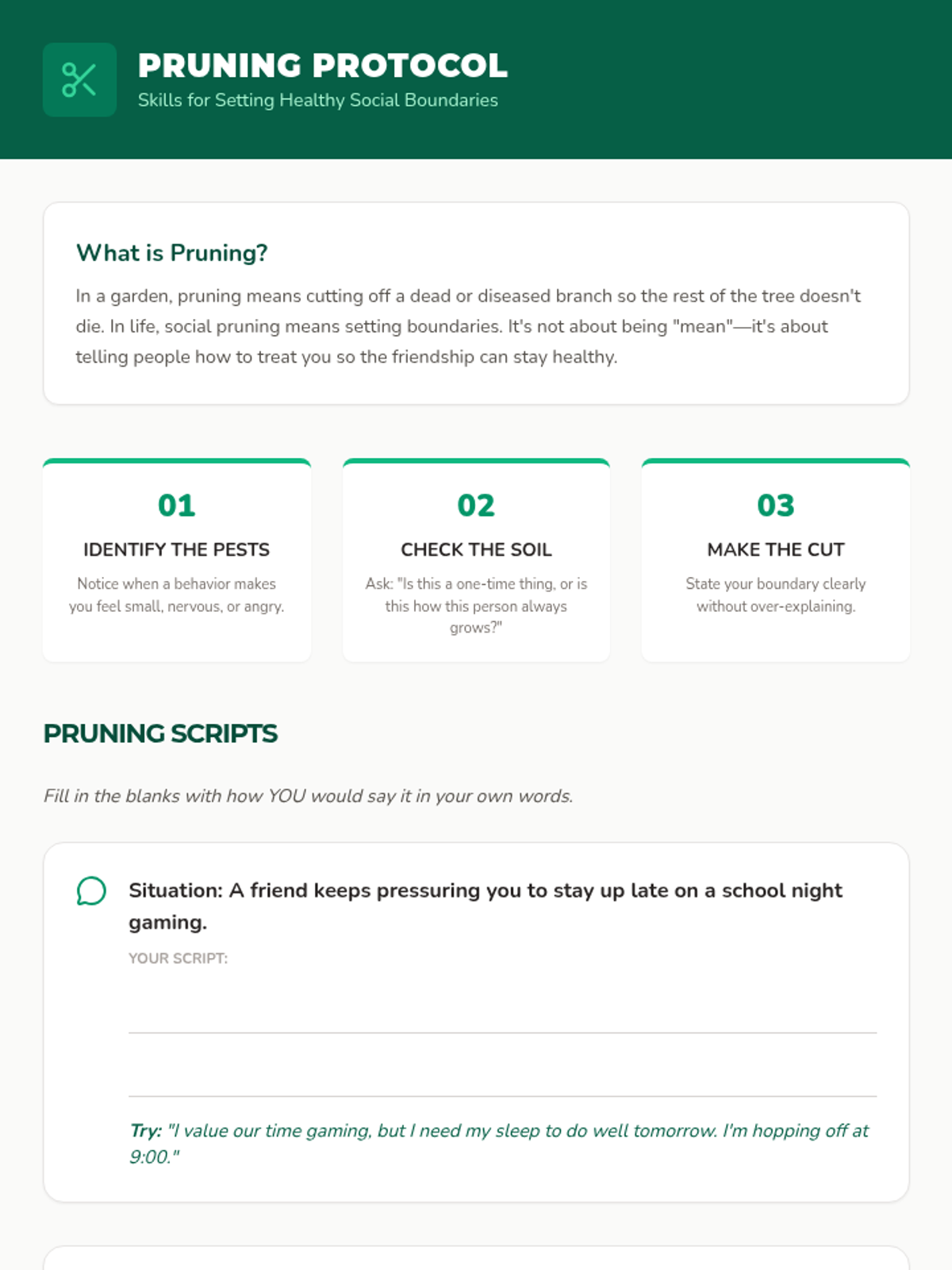
A skill-building handout that provides specific communication scripts and steps for setting social boundaries using the pruning metaphor. Includes multi-line writing spaces and clear examples.
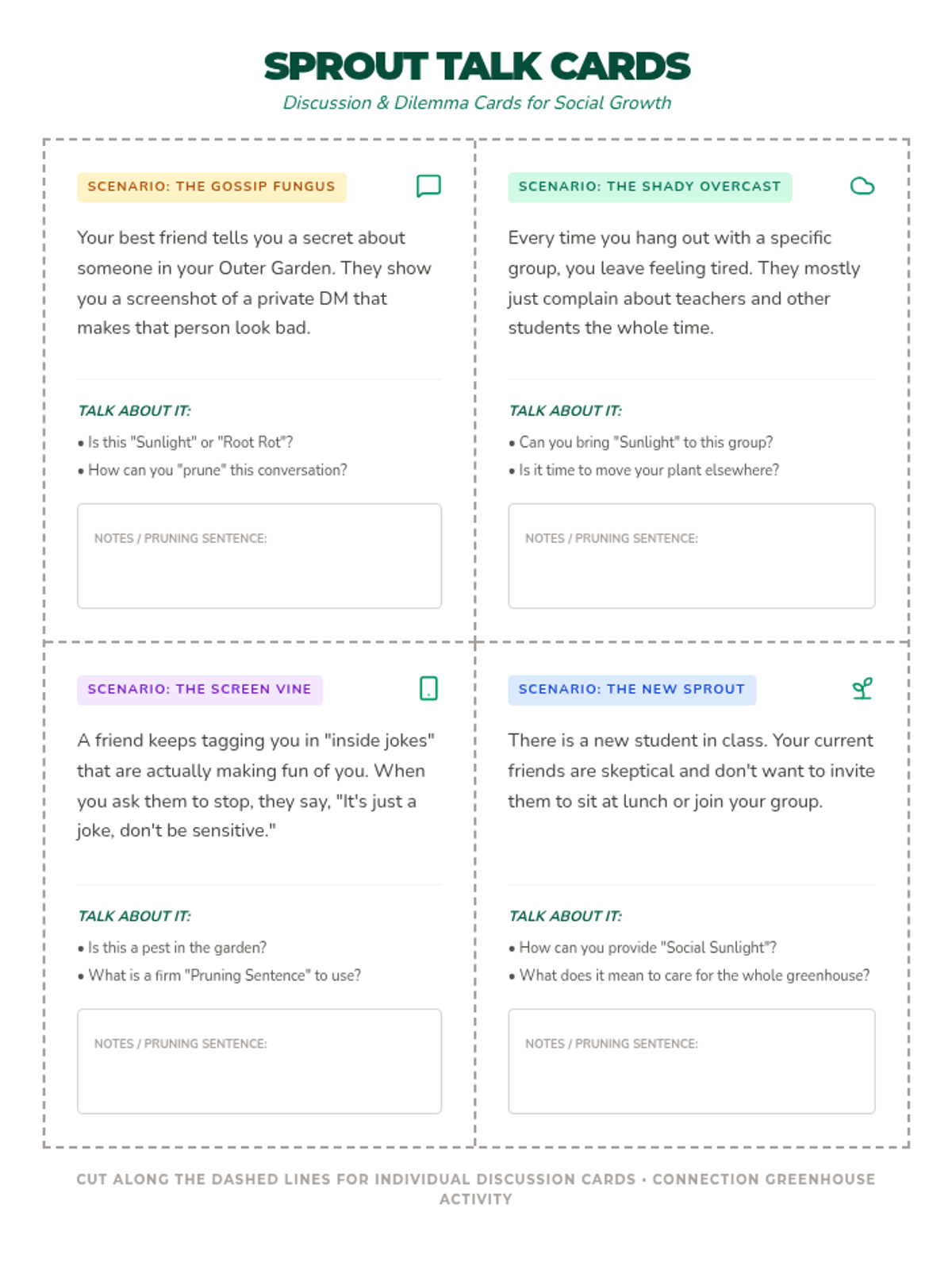
A set of discussion cards featuring social scenarios and dilemmas that help students practice applying greenhouse metaphors to real-life peer situations. Includes cut-line guides and note-taking areas.
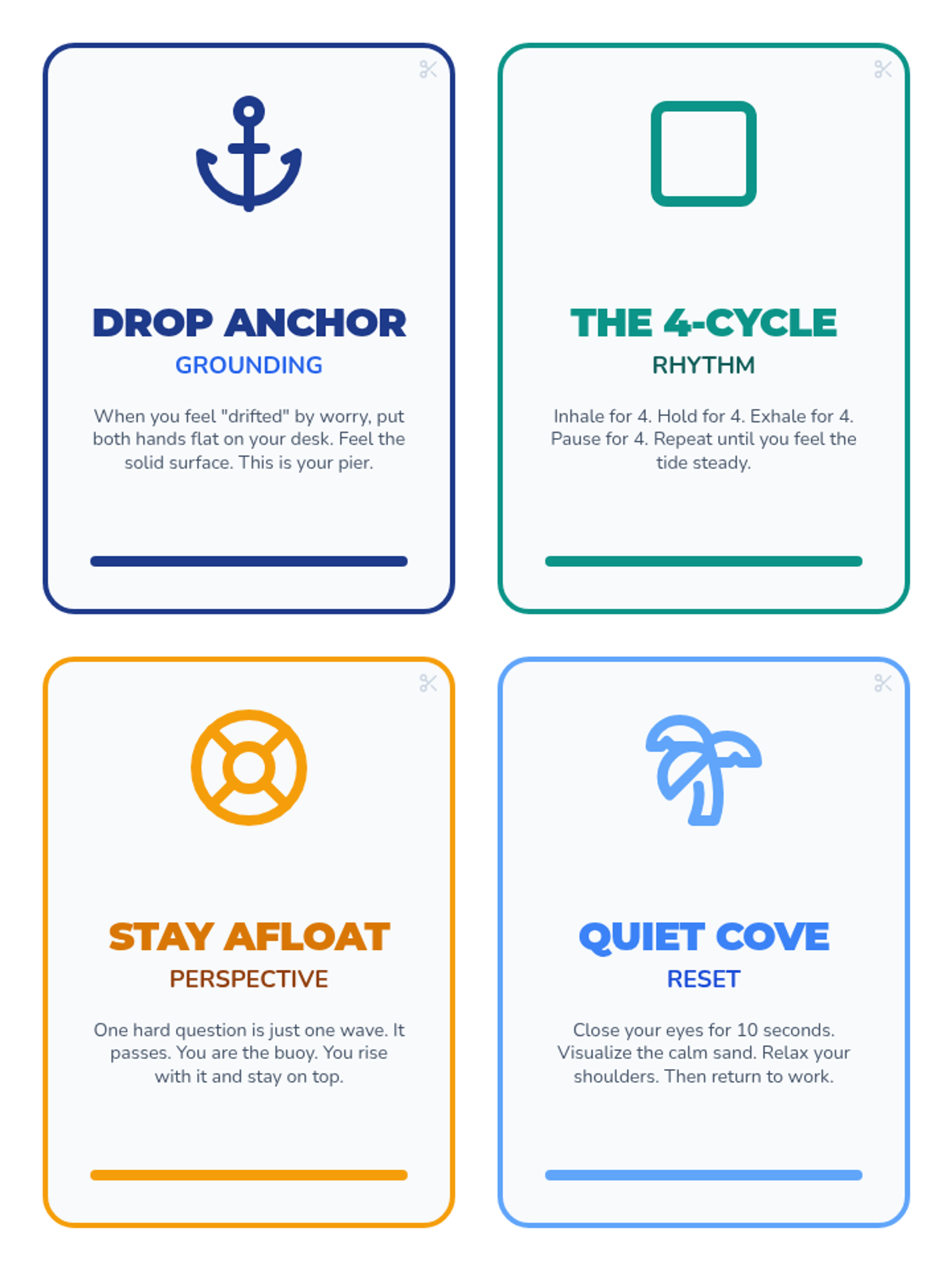
A set of printable 'Breathing Buoy' flashcards designed to be kept on a student's desk or in their folder as portable, visual reminders of the grounding and breathing techniques learned in the lesson.
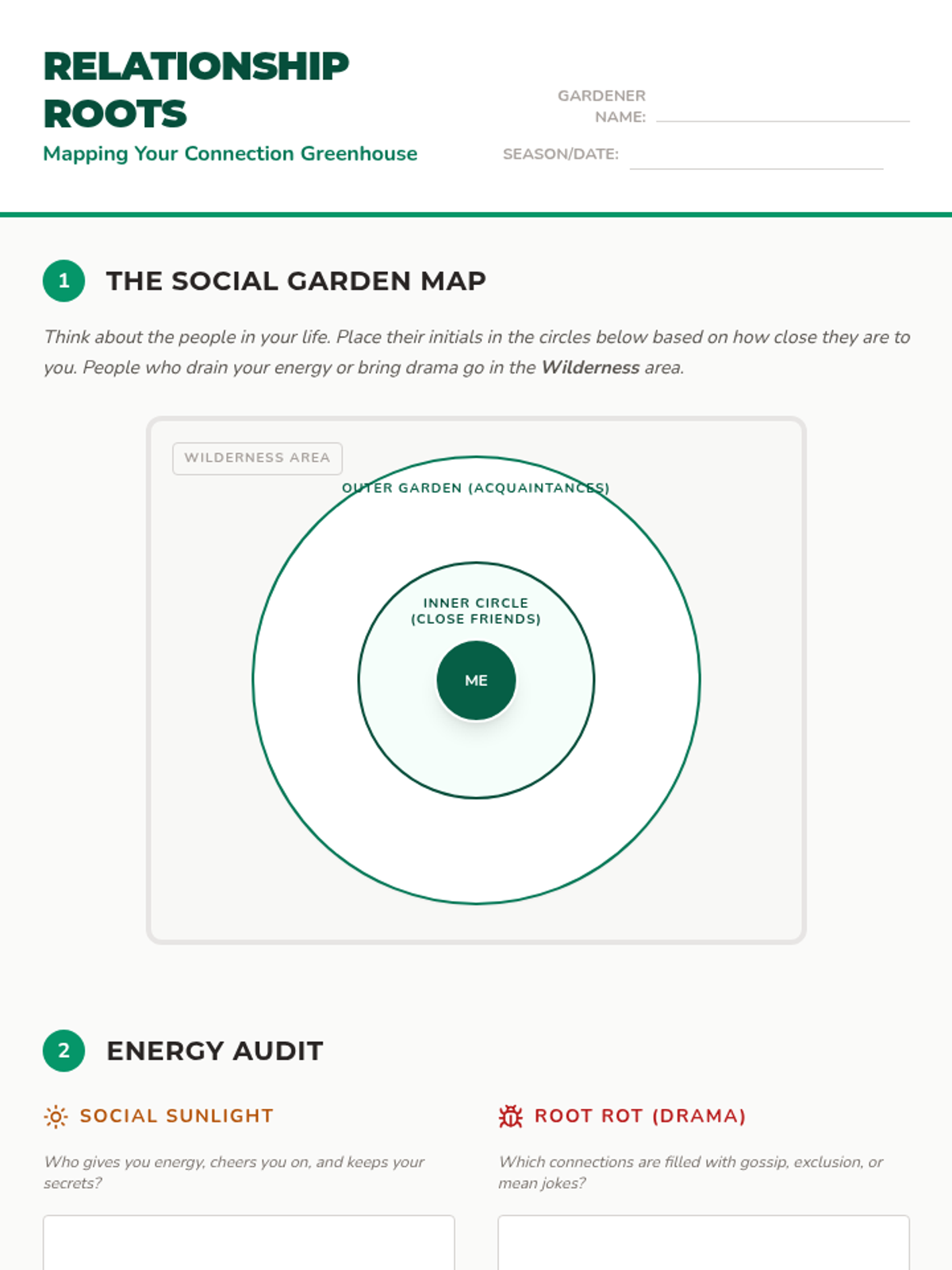
A student worksheet for mapping peer relationships, auditing social energy, and planning healthy boundaries using the greenhouse metaphor.
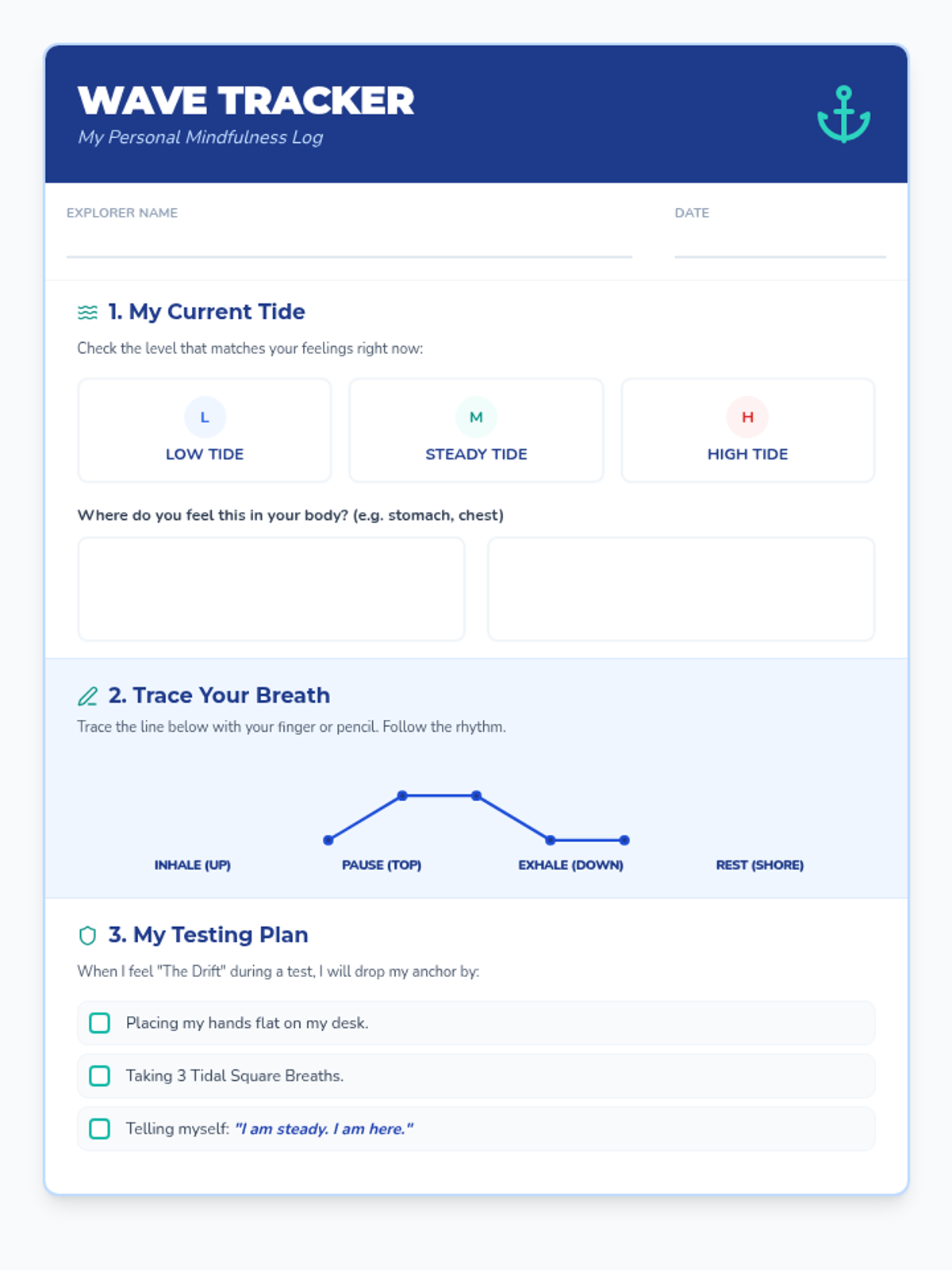
A student worksheet that includes a 'tide tracker' for emotional check-ins, a visual wave-tracing activity for breathing practice, and a personalized plan for grounding during high-stress testing moments.
A visual slide presentation introducing the Connection Greenhouse botanical metaphor for healthy social interactions and boundary setting.
A visual presentation designed for classroom use, featuring high-contrast slides that guide students through the concept of the Tidal Breath Anchor, identifying stress signals, and practicing the box breathing technique.