A worksheet for the STOP skill with a vertical acronym layout and space for personalized application.
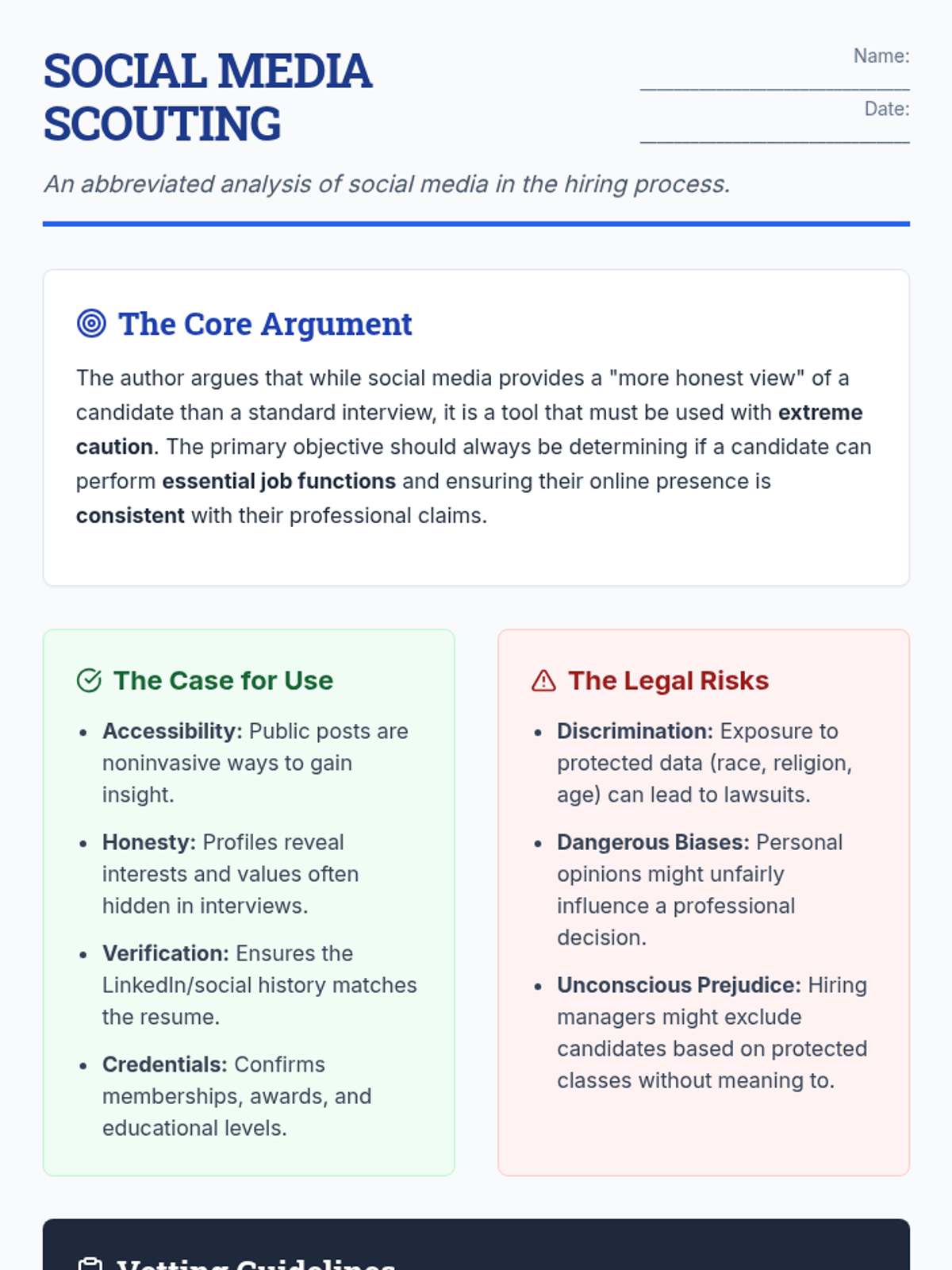
A one-page abbreviated summary of a text regarding the ethics and legalities of using social media to screen job candidates. Includes a core argument breakdown, risks vs. benefits comparison, and a student work area for critical analysis.
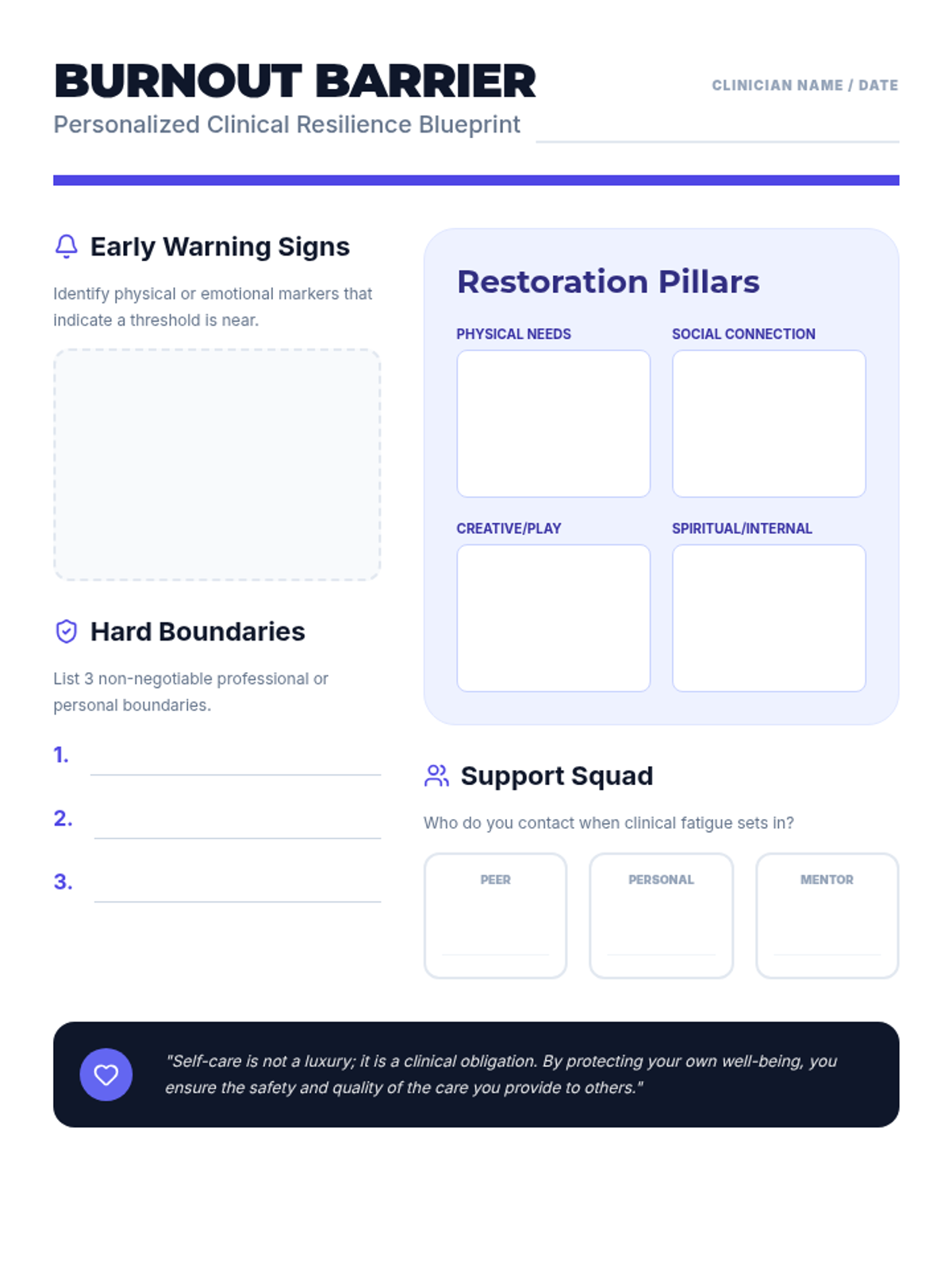
A self-care plan template for clinicians to prevent burnout, featuring sections for early warning signs, boundaries, restoration pillars, and support networks.
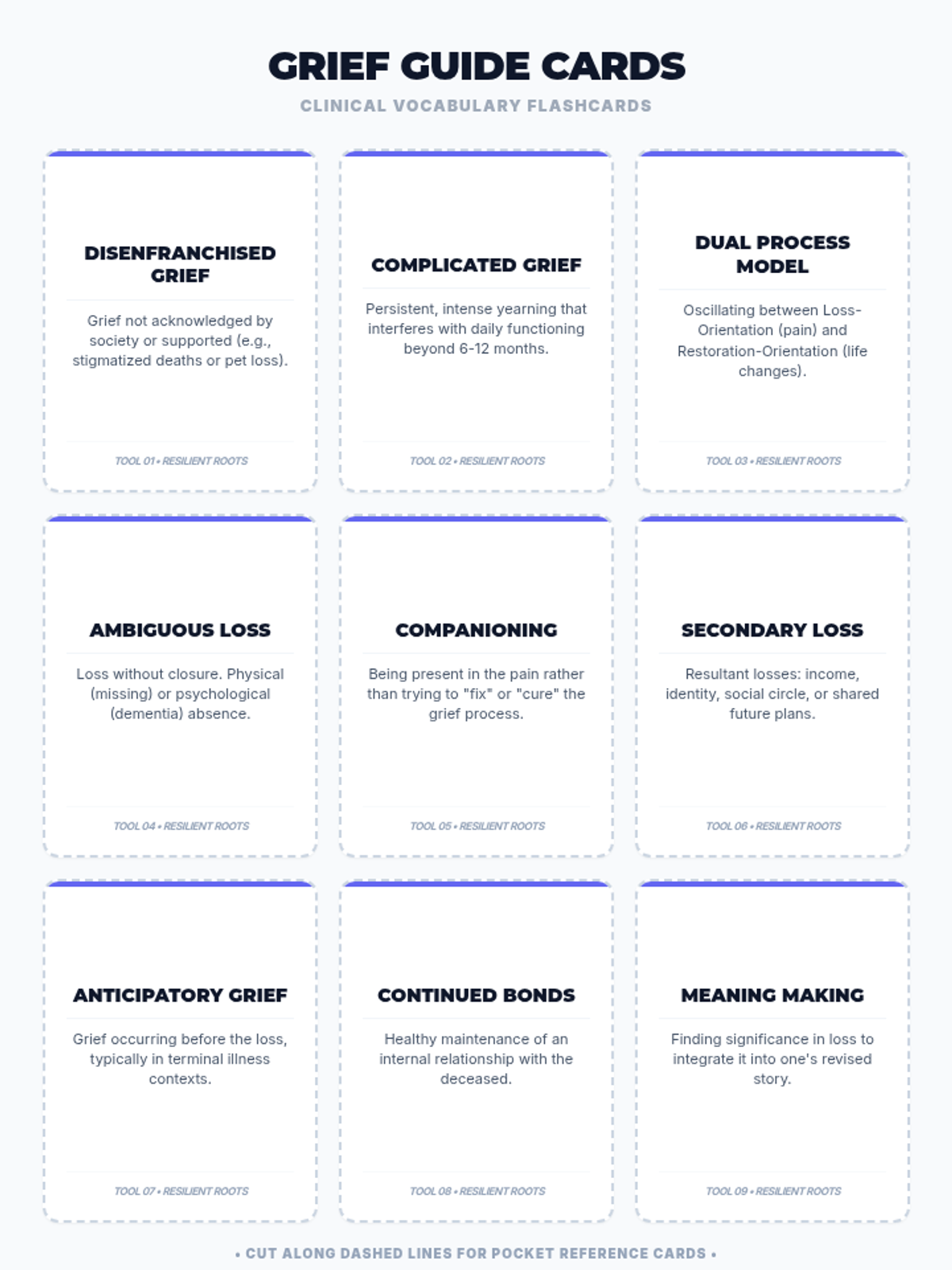
A set of 9 professional vocabulary flashcards for grief and loss counseling, featuring concepts like disenfranchised grief, the dual process model, and ambiguous loss.
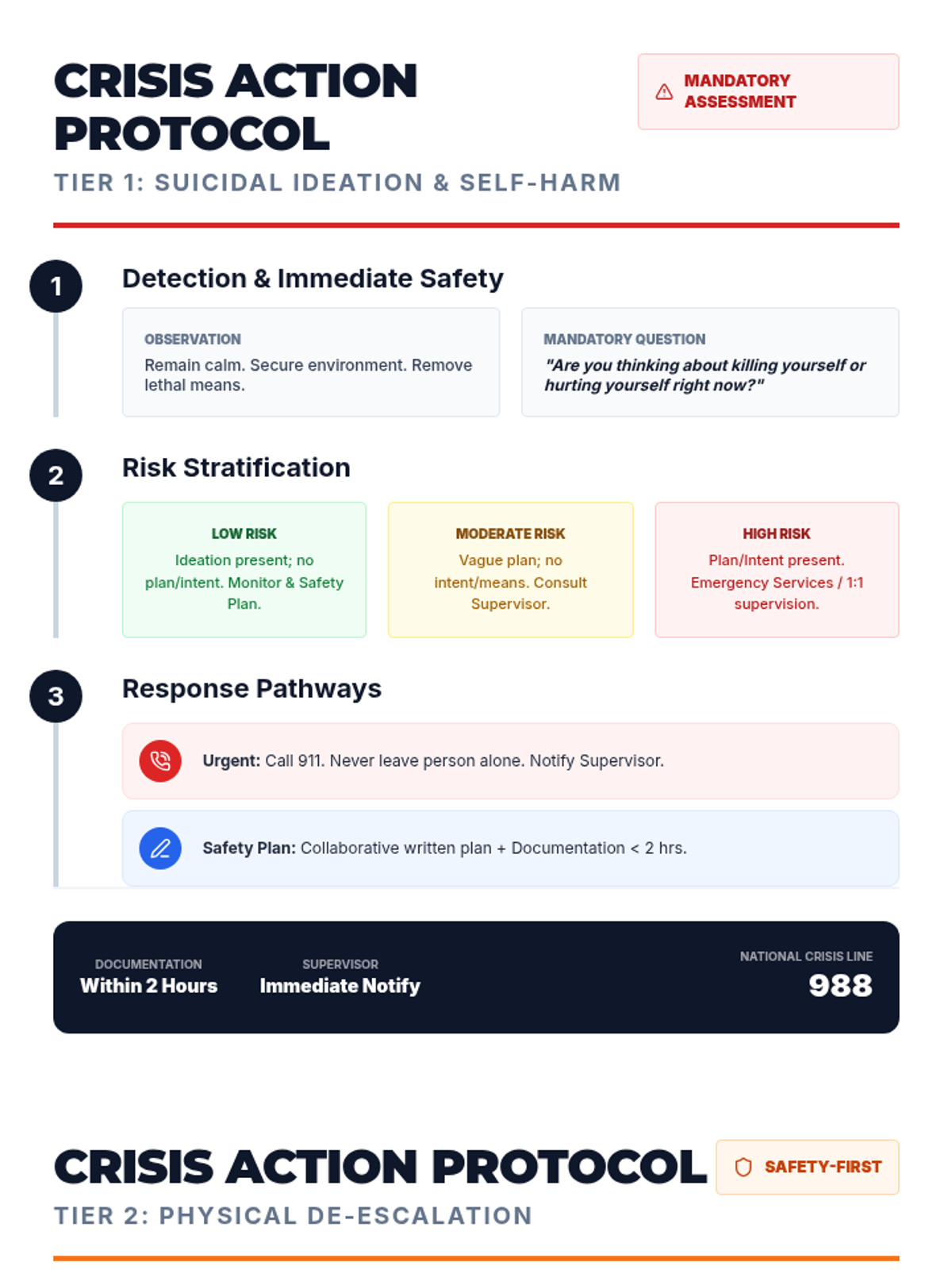
A double-sided staff protocol flowchart for managing suicidal ideation, self-harm, and physical de-escalation in a clinical setting. Includes risk stratification, intervention pathways, and debriefing models.
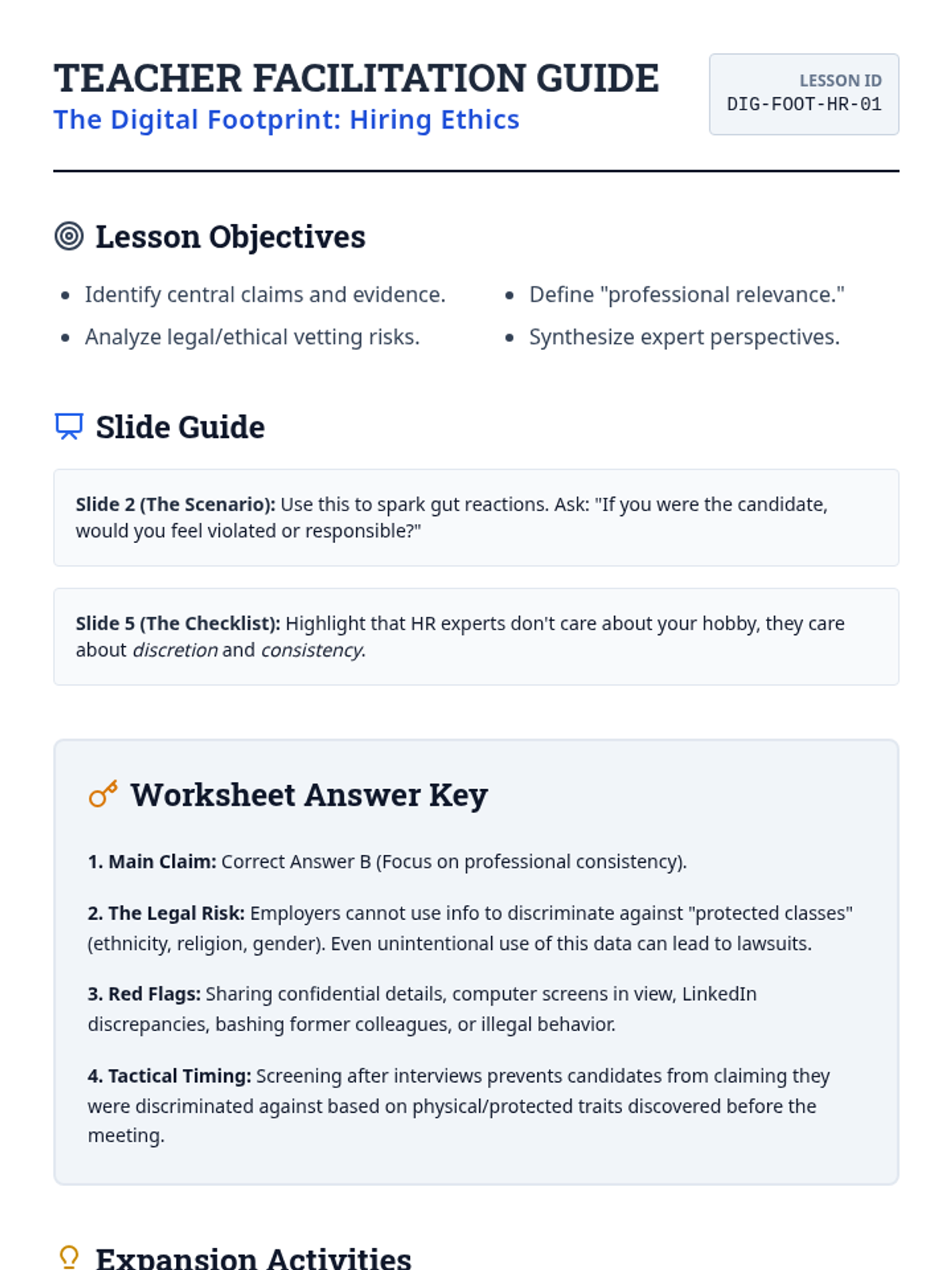
A teacher-facing facilitation guide containing the lesson objectives, worksheet answer key, slide-by-slide teaching tips, and suggestions for classroom expansion activities.
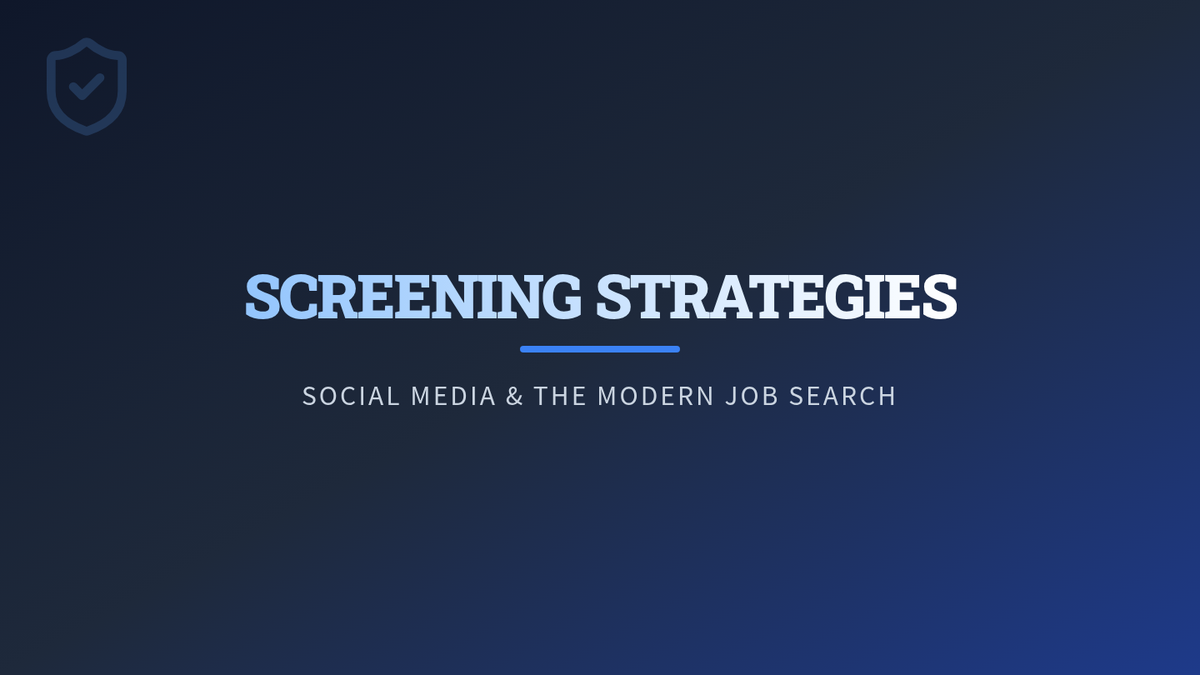
A professional slide deck that outlines the core arguments of the social media vetting debate. It presents the pros and cons, the legal implications, and a concluding discussion prompt to facilitate a classroom debate.
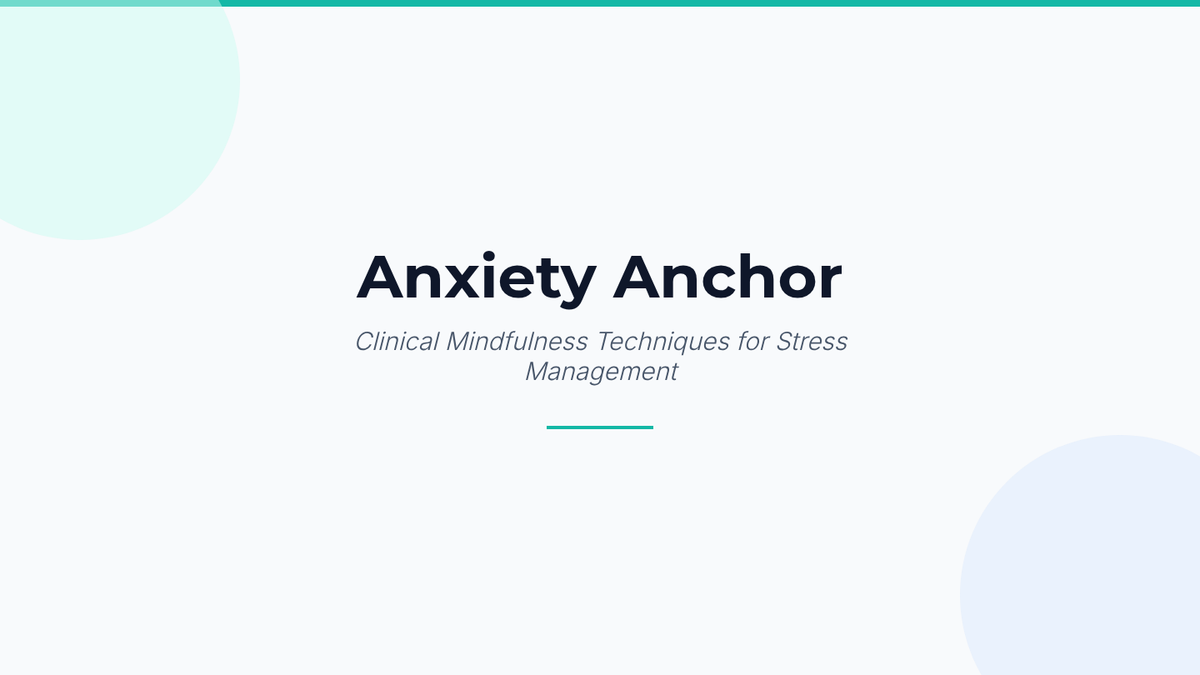
A presentation on mindfulness techniques for clinical anxiety management, featuring box breathing, sensory grounding, and the RAIN protocol for therapists and supervisors.
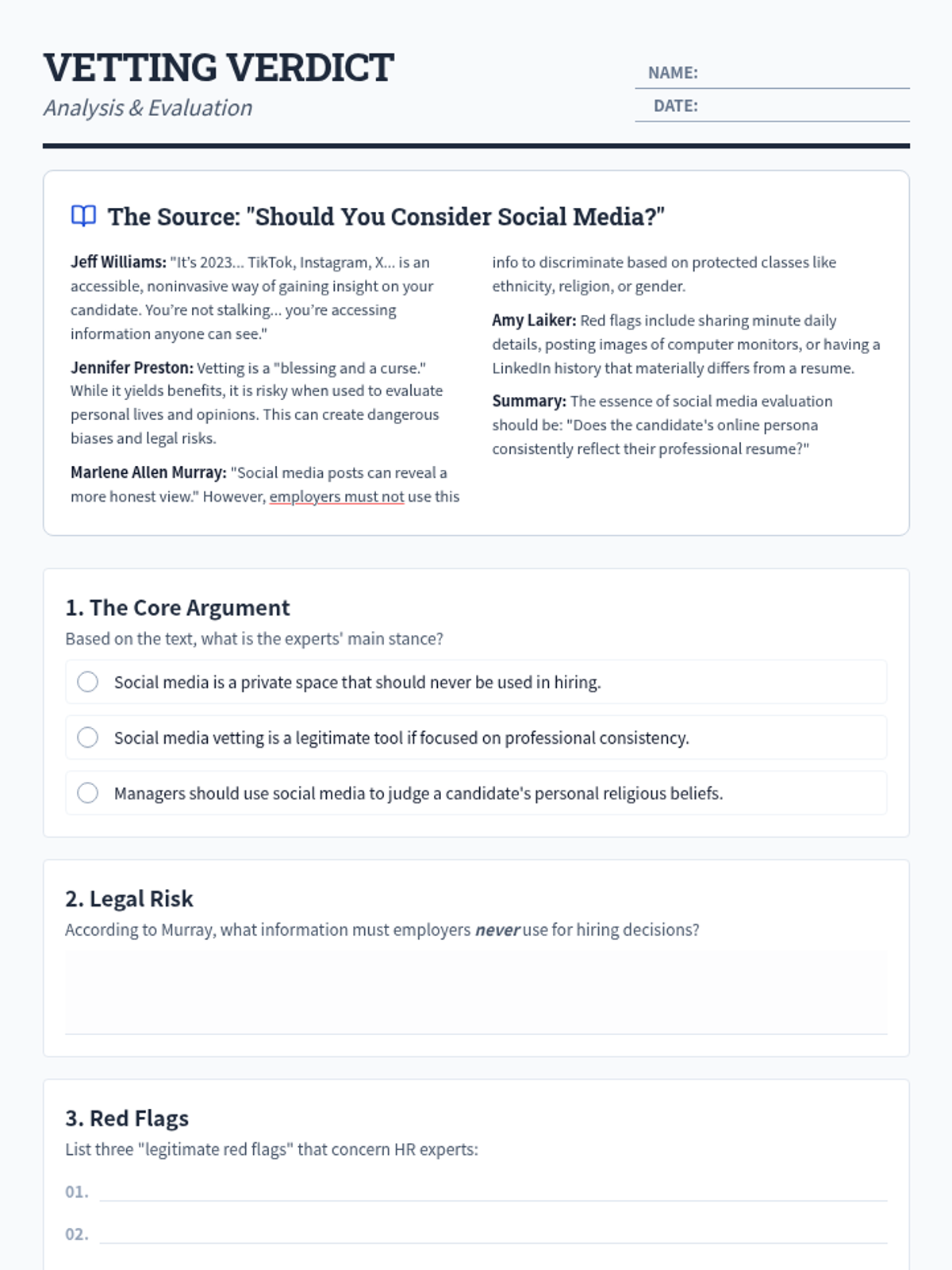
A revised guided analysis worksheet featuring the source text alongside comprehension questions. Includes a dedicated, full-page reflection section for the "Final Verdict" argument, ensuring adequate writing space and clear page breaks.
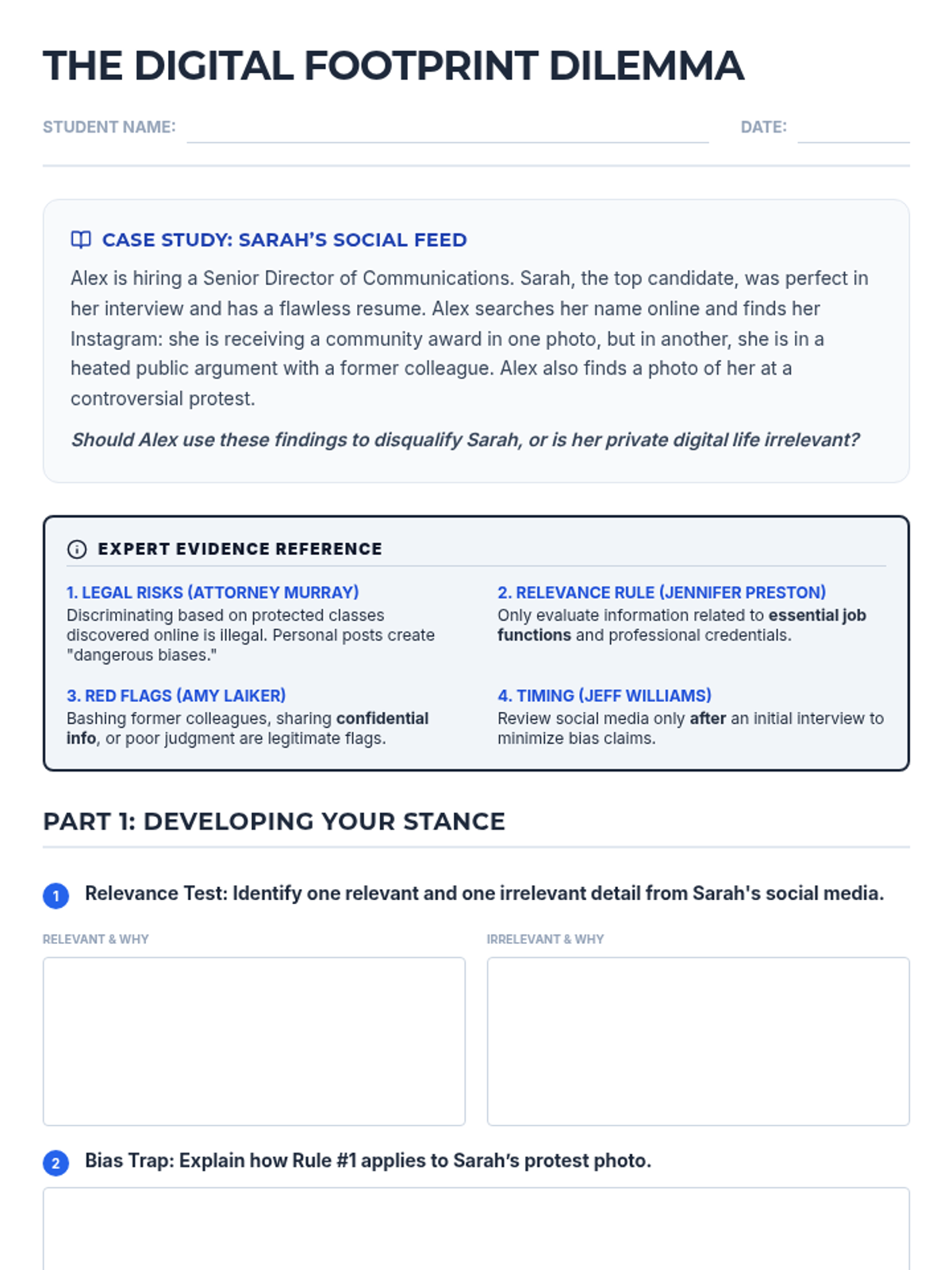
A structured worksheet featuring a narrative case study and guiding questions designed to help students analyze the ethics of social media screening and build a evidence-based argument.
A professional slide deck illustrating the key arguments, risks, and benefits of using social media as a candidate screening tool, based on the Lin Grensing-Pophal text.
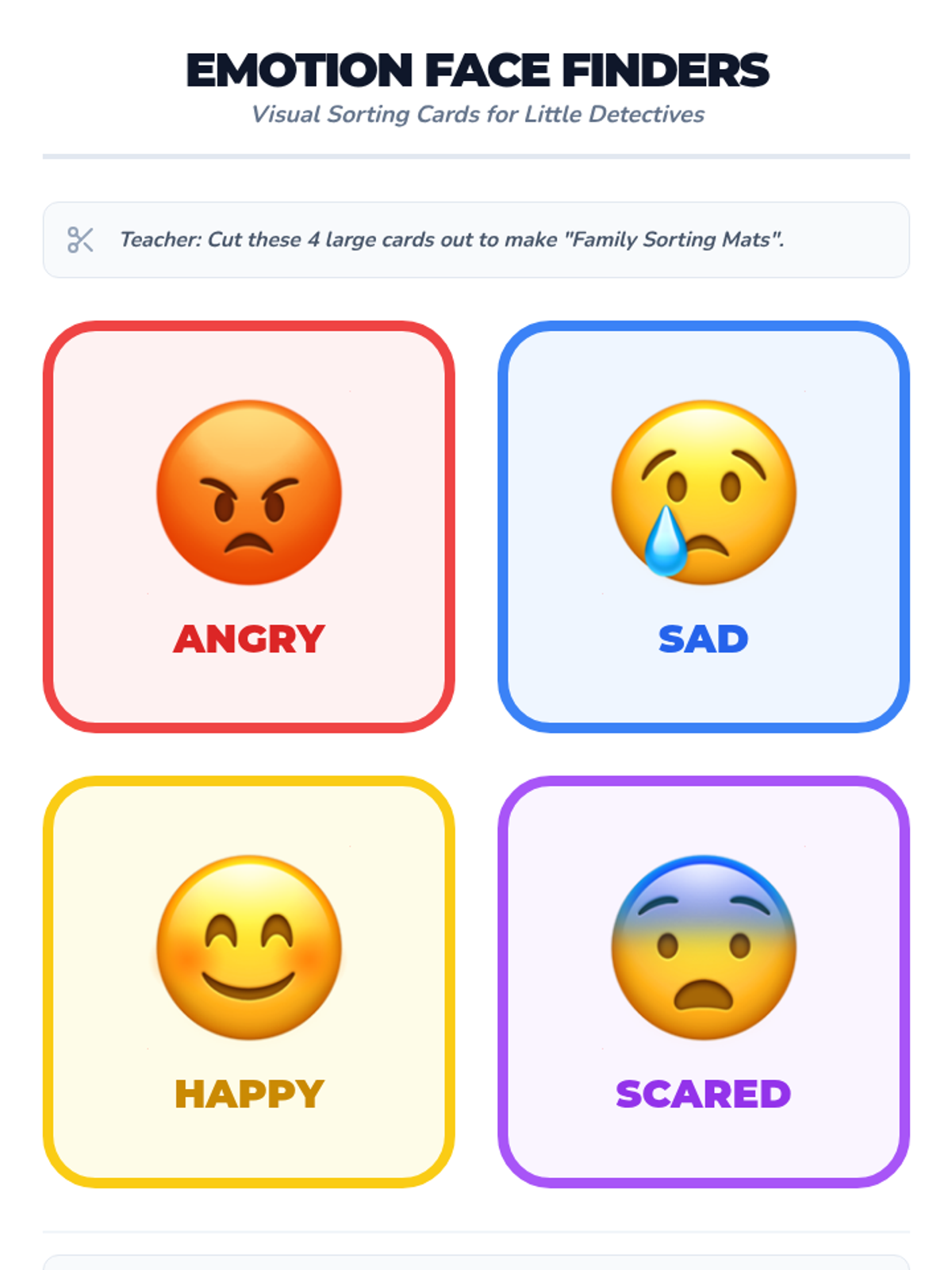
Visual sorting cards and puppet stick templates for Early Years students to identify and categorize emotion families without needing to read or write. Revised with neutral borders and appropriate emojis.
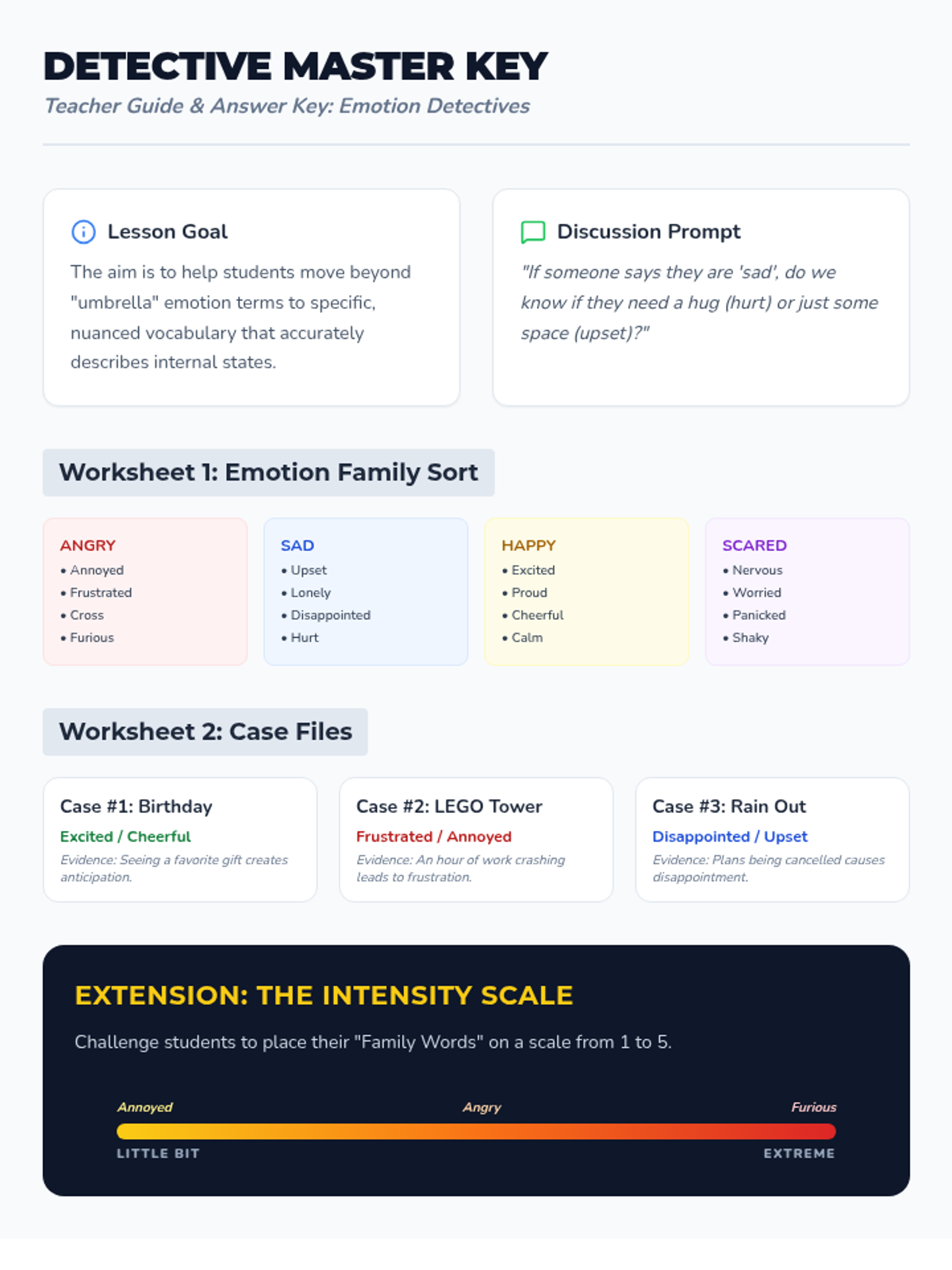
Teacher-facing resource containing the answer key and extension ideas. Revised for improved page layout and visual alignment of the intensity scale.
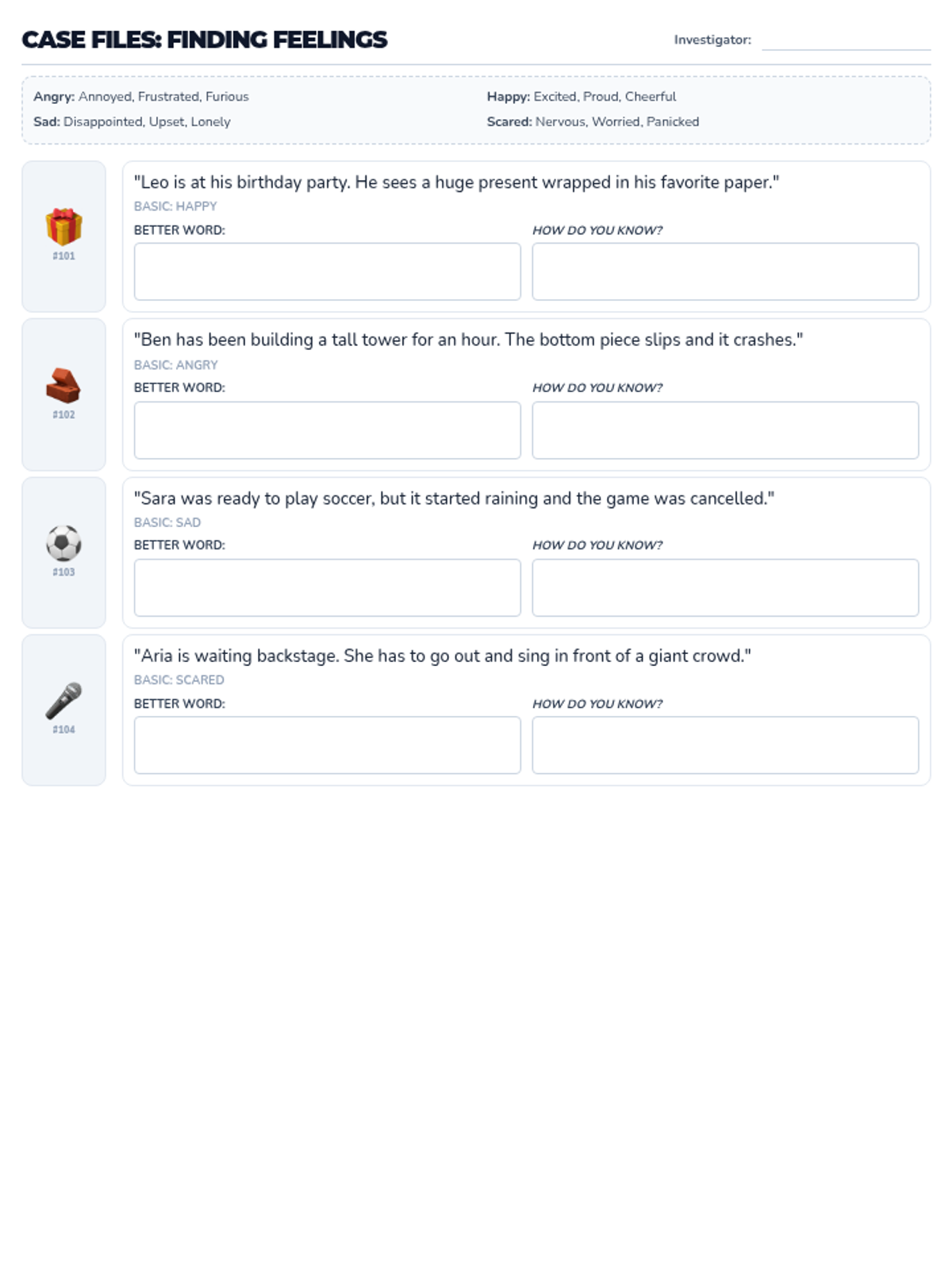
A scenario-based worksheet for P3 students to replace basic emotion words with nuanced vocabulary. Revised with word bank scaffolding and improved layout to fit four cases on a single page.
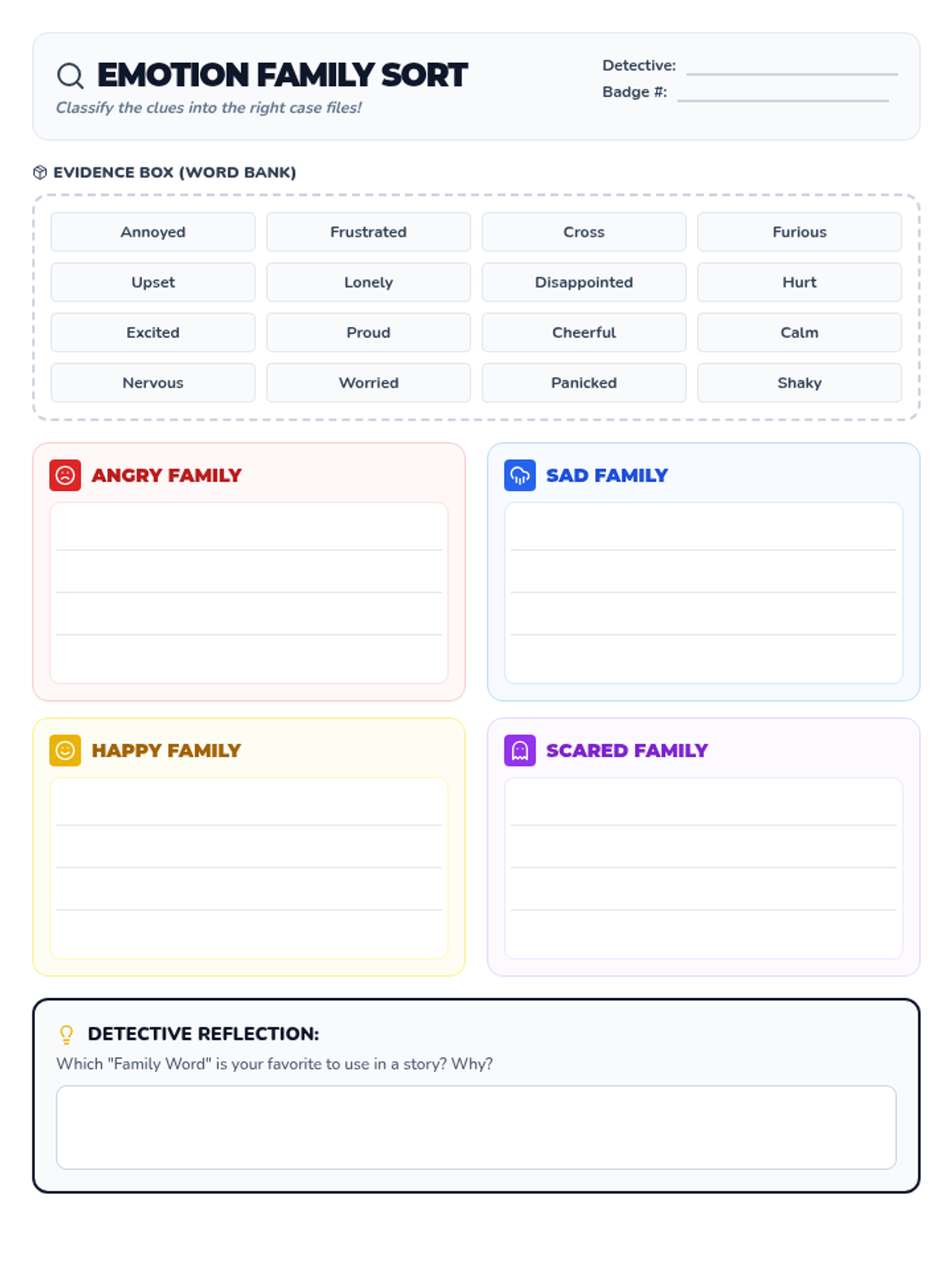
A sorting activity where students categorize nuanced emotion words into four primary emotion families: Angry, Sad, Happy, and Scared. Revised for single-page layout and improved handwriting areas.
Visual presentation for teaching emotion families (Angry, Sad, Happy, Scared) and identifying nuanced vocabulary for different scenarios.
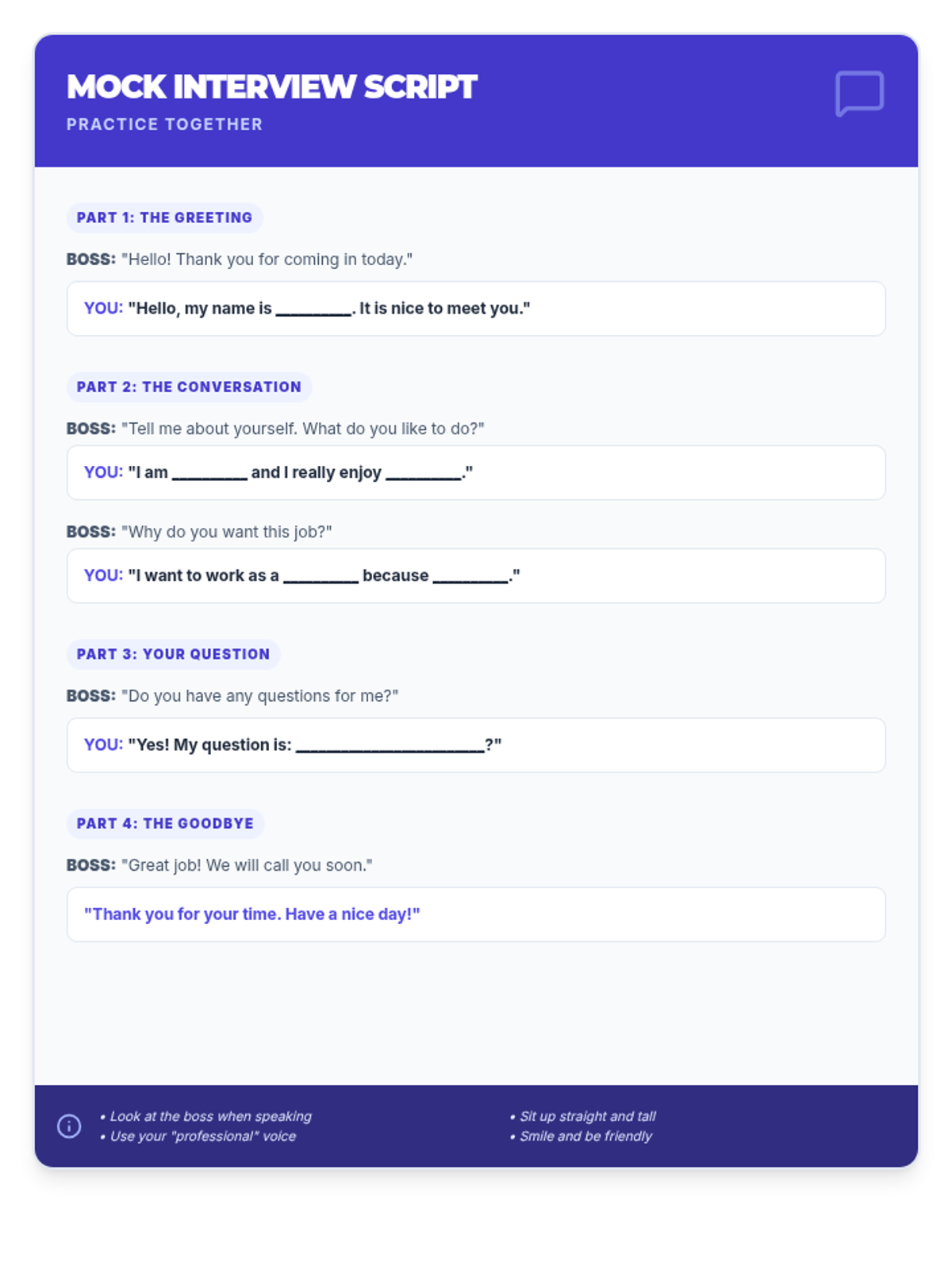
A structured, fill-in-the-blank script to help students practice the flow of a full mock interview, including the greeting, key questions, and closing.
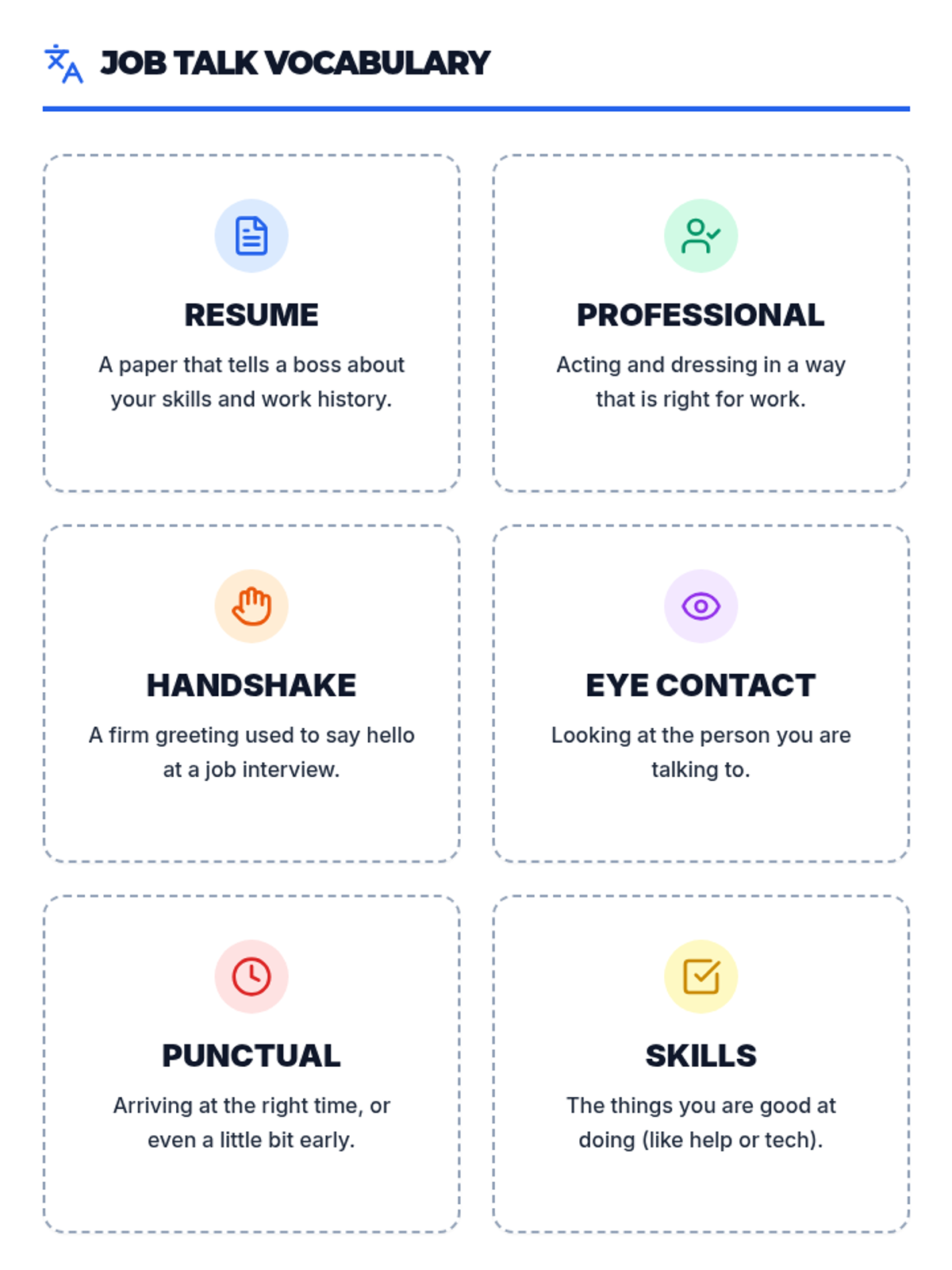
A set of six visual vocabulary cards for key interview terms (Resume, Professional, Handshake, Eye Contact, Punctual, Skills) with simple definitions.
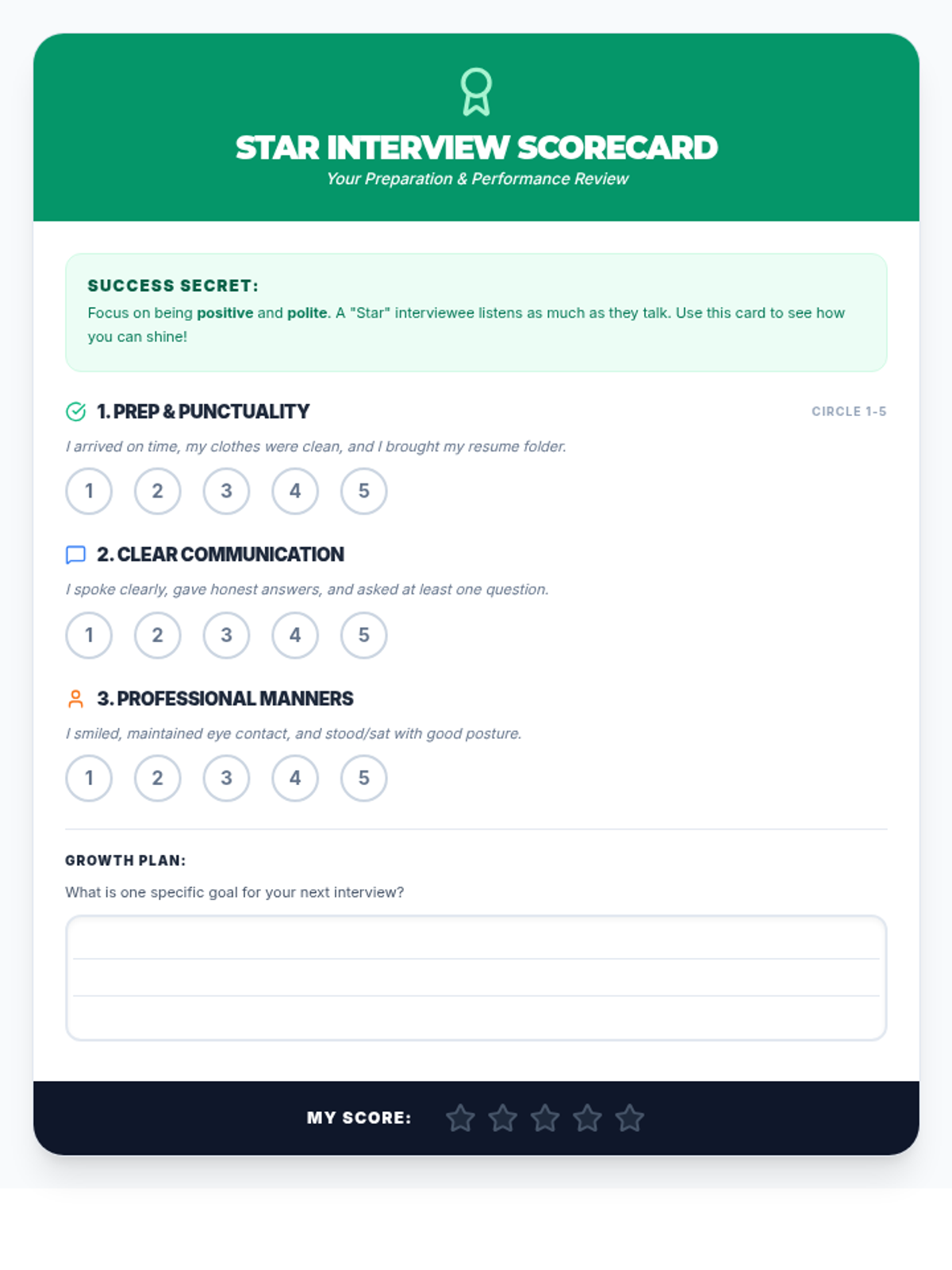
A student-friendly visual rubric for self-assessment or peer feedback after a mock interview, focusing on appearance, communication, and body language.
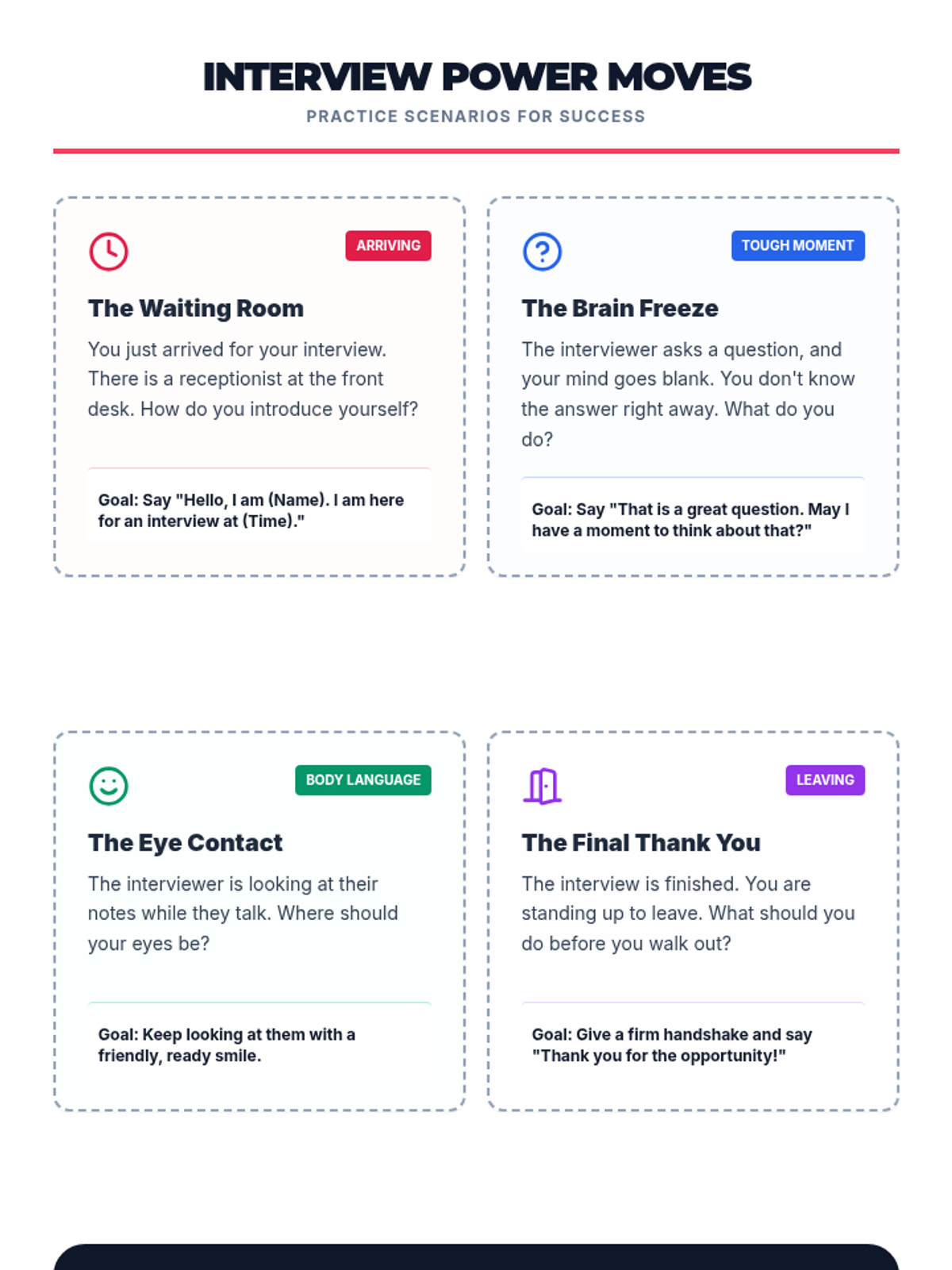
A set of four scenario cards that present common interview challenges (arrival, mistakes, attire, departure) for role-playing and discussion, plus a second page of instructional reading.
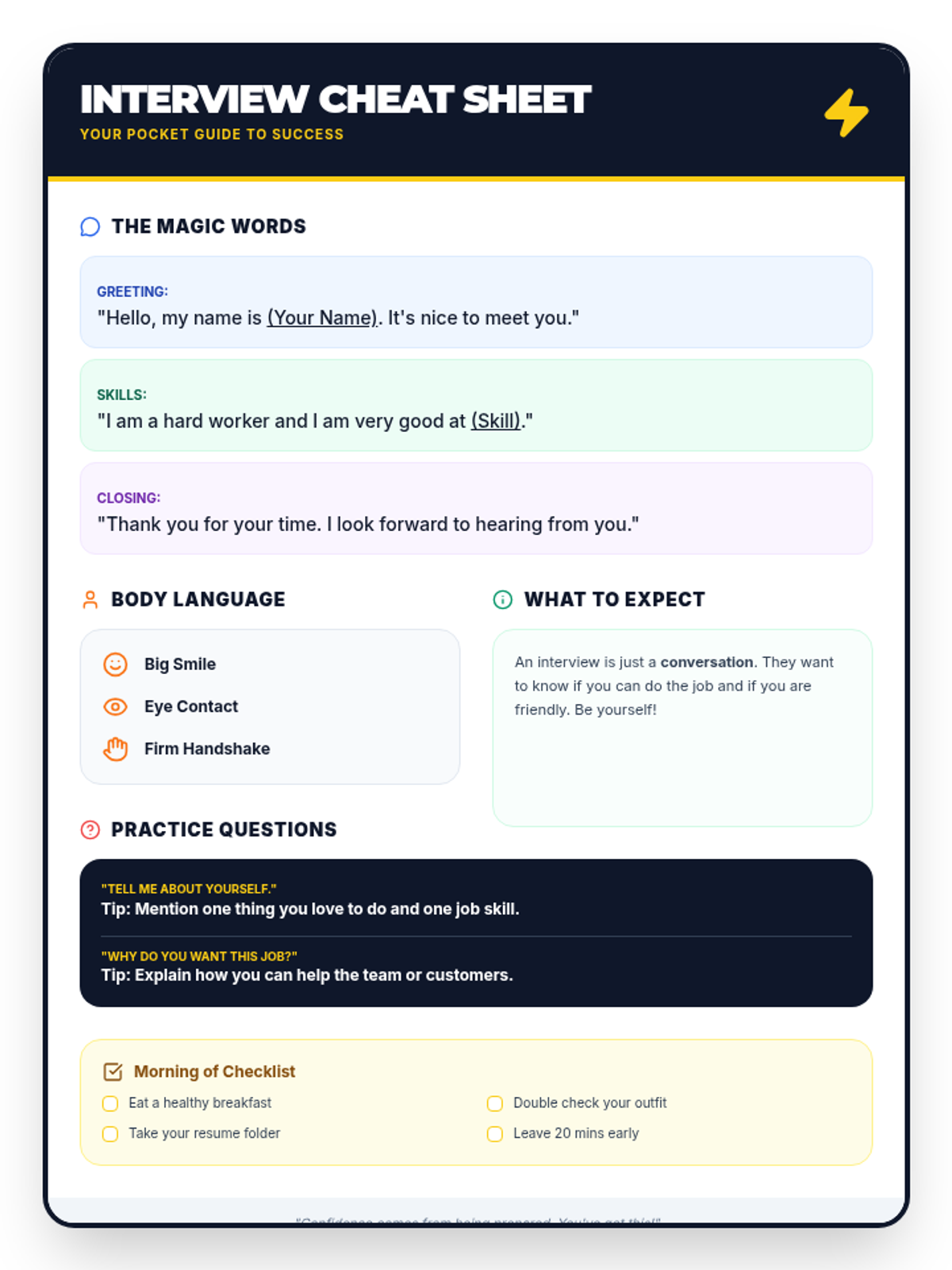
A two-page visual reference guide with sentence starters, body language tips, and a collaborative workspace for job-specific questions.
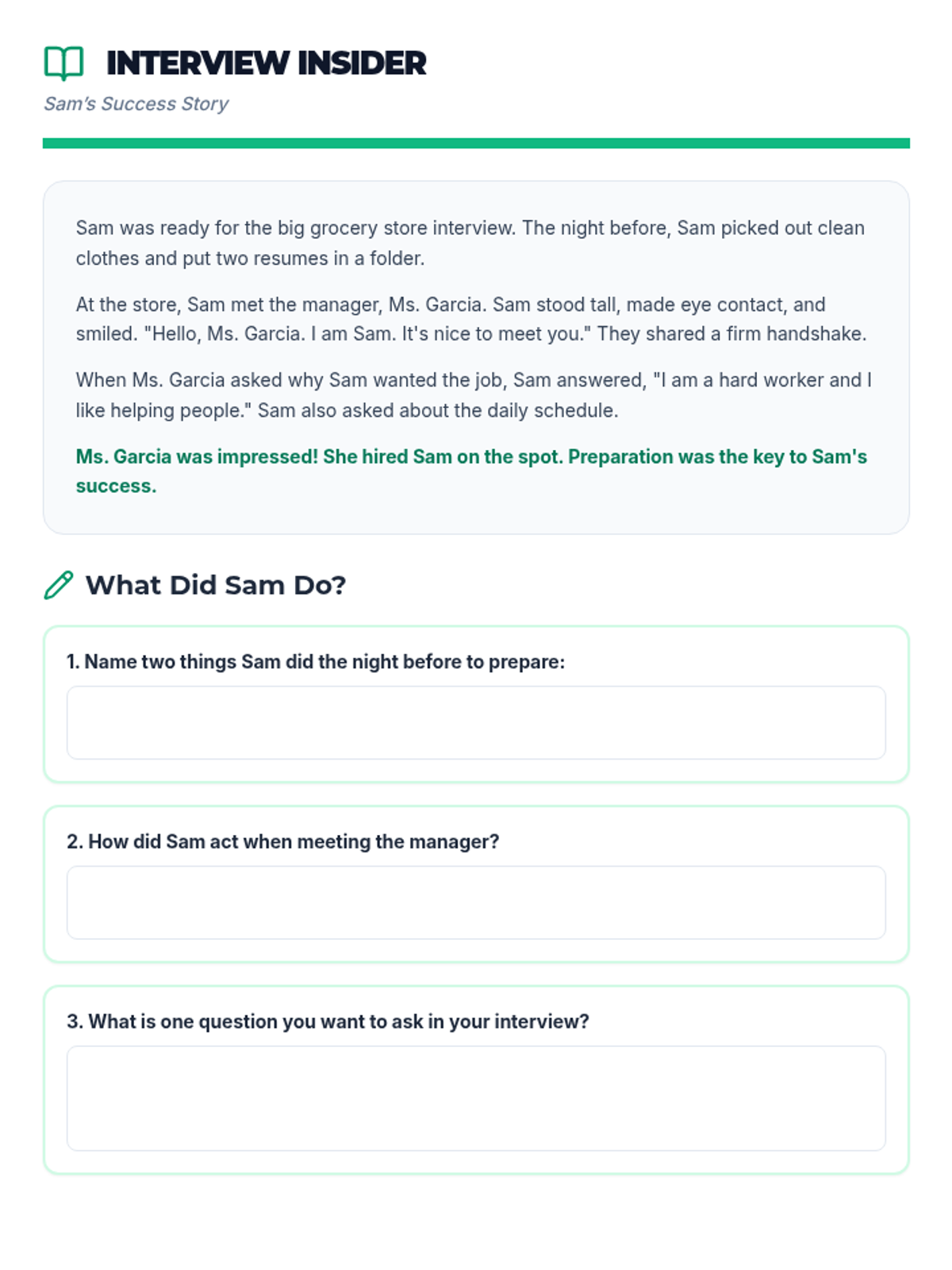
A 1-page reading passage featuring a successful interview story with follow-up reflection questions to help students identify positive interview behaviors.