A student worksheet designed to help high school sophomores brainstorm skills from their daily life (school, home, hobbies) and translate them into professional "resume language" using action verbs.
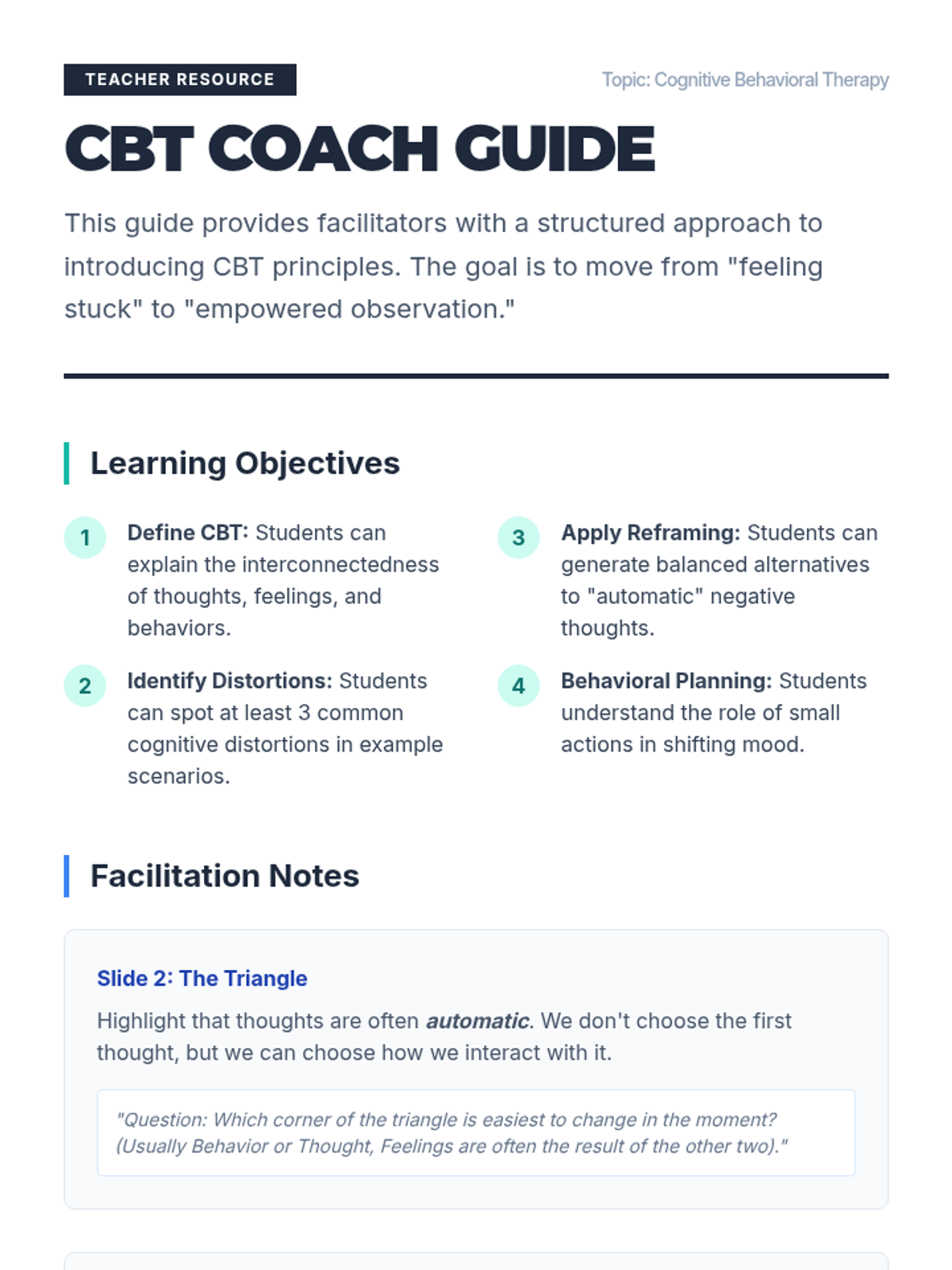
A comprehensive facilitator guide for teaching Cognitive Behavioral Therapy (CBT). It includes learning objectives, slide-by-slide talking points, guidance on addressing common student misconceptions, and an answer key for the Thought Tracker worksheet.
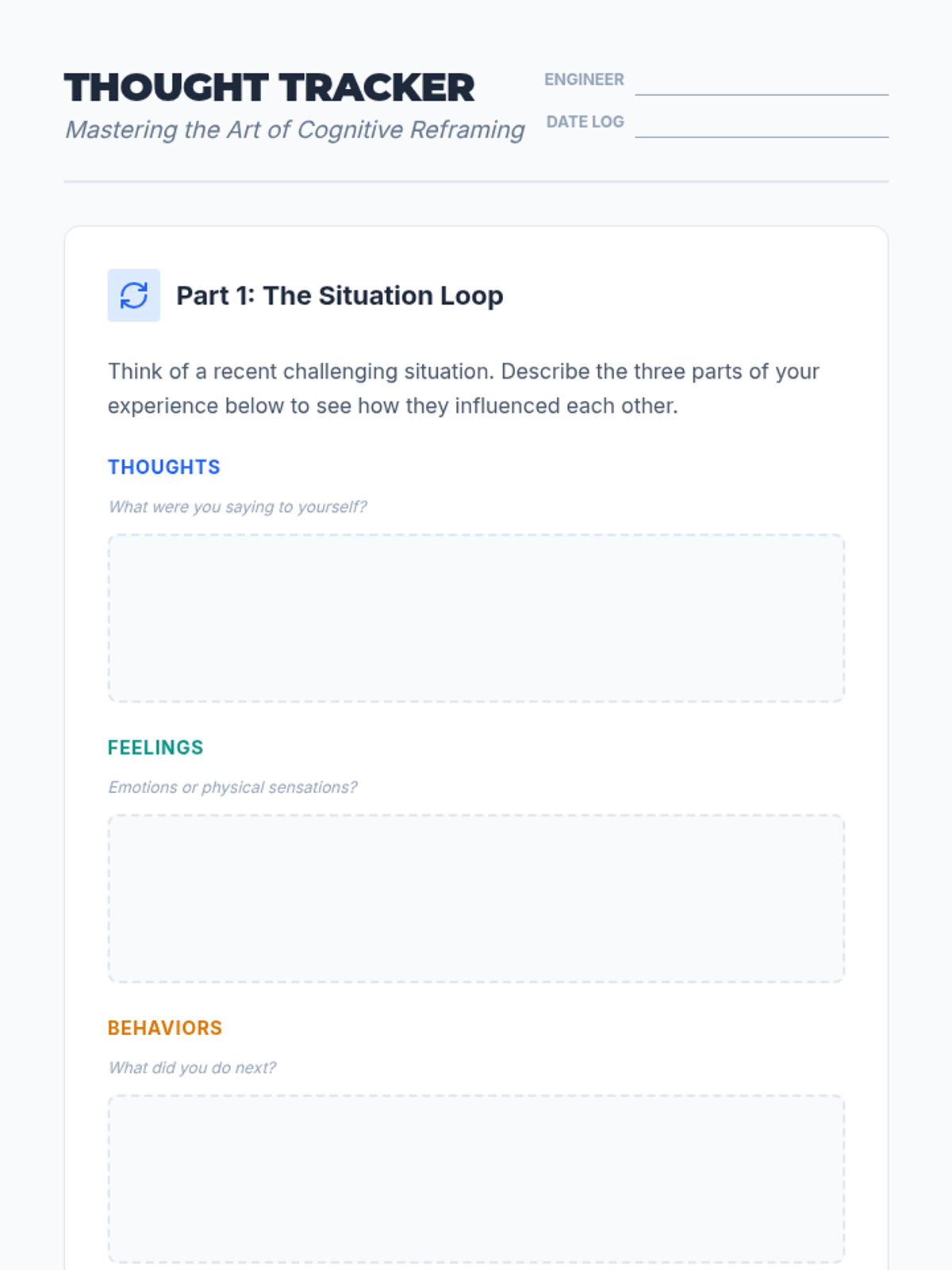
A practical student worksheet for practicing Cognitive Behavioral Therapy skills. It includes sections for mapping the thoughts-feelings-behaviors triangle, identifying common thinking traps, and performing cognitive reframing on challenging thoughts.
A visual slide deck introducing the core components of Cognitive Behavioral Therapy (CBT). It covers the CBT triangle (thoughts, feelings, behaviors), common cognitive distortions, and practical reframing techniques.
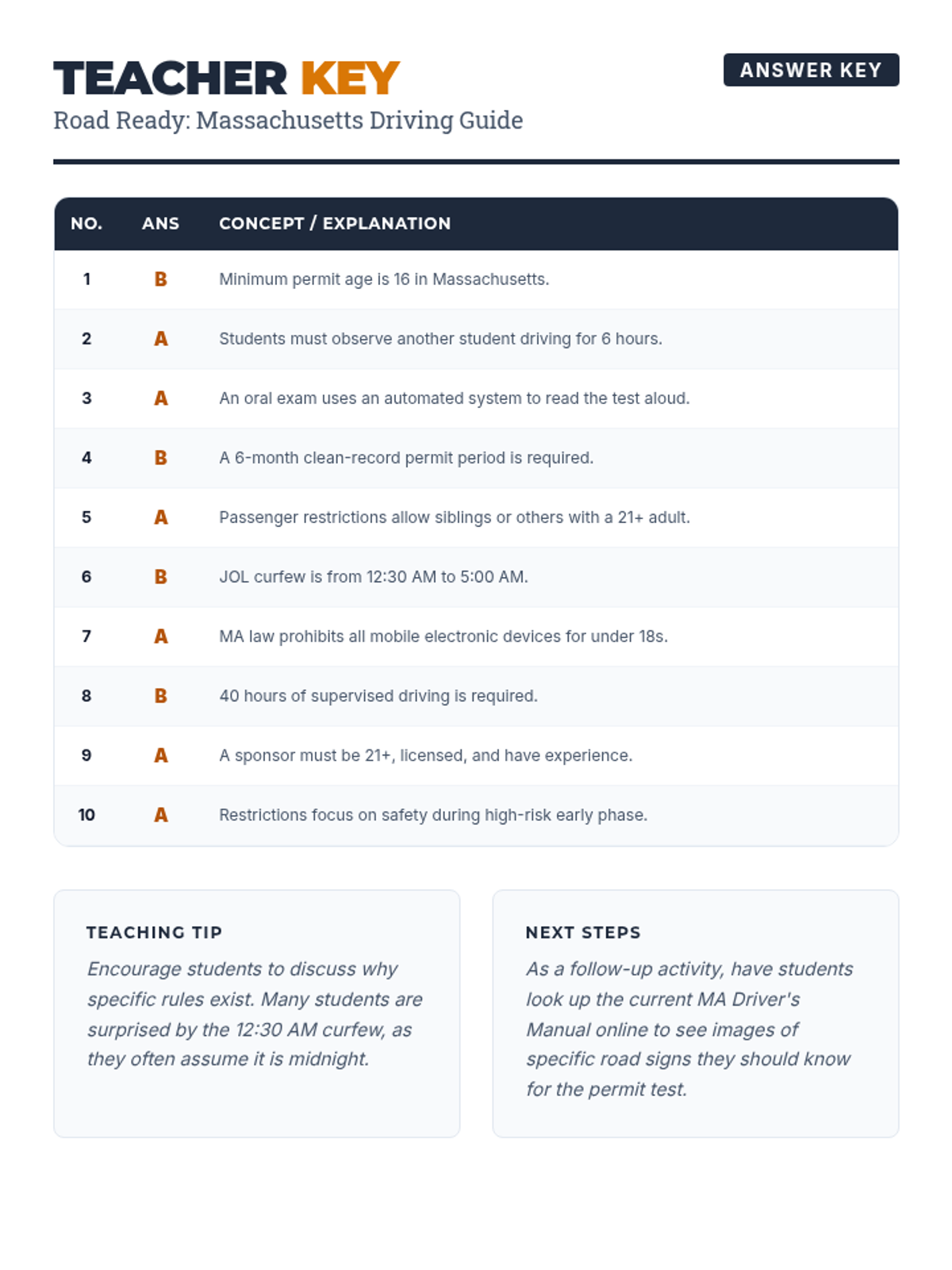
The answer key for the Road Ready Massachusetts article comprehension questions. Revised for better page breaks and precision on mobile device laws.
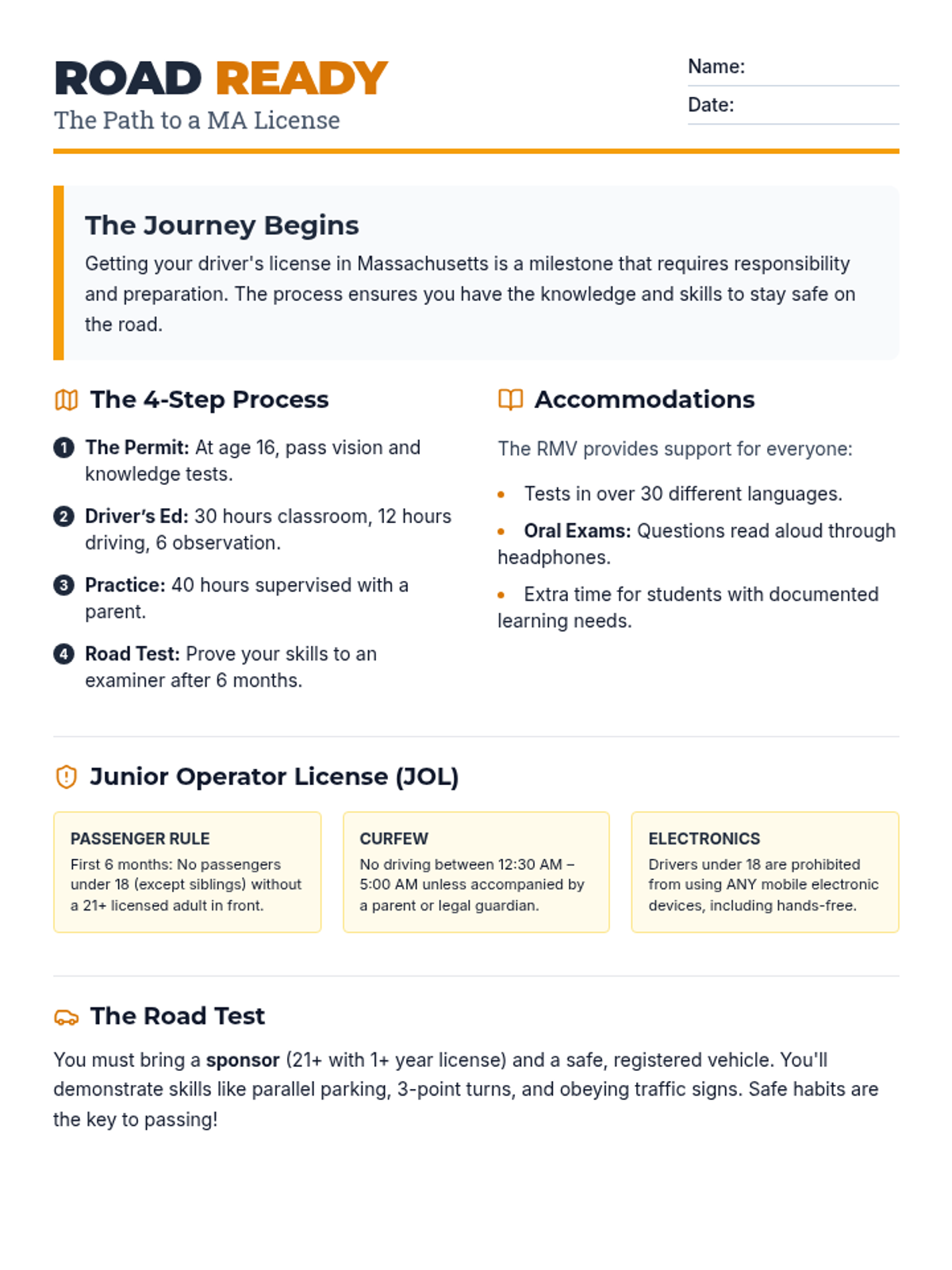
An educational article for middle schoolers explaining the process of getting a driver's license in Massachusetts, including JOL rules and permit accommodations, followed by 10 multiple-choice questions. Revised to ensure article fits on Page 1 and questions on Page 2. Answer key included on Page 3.
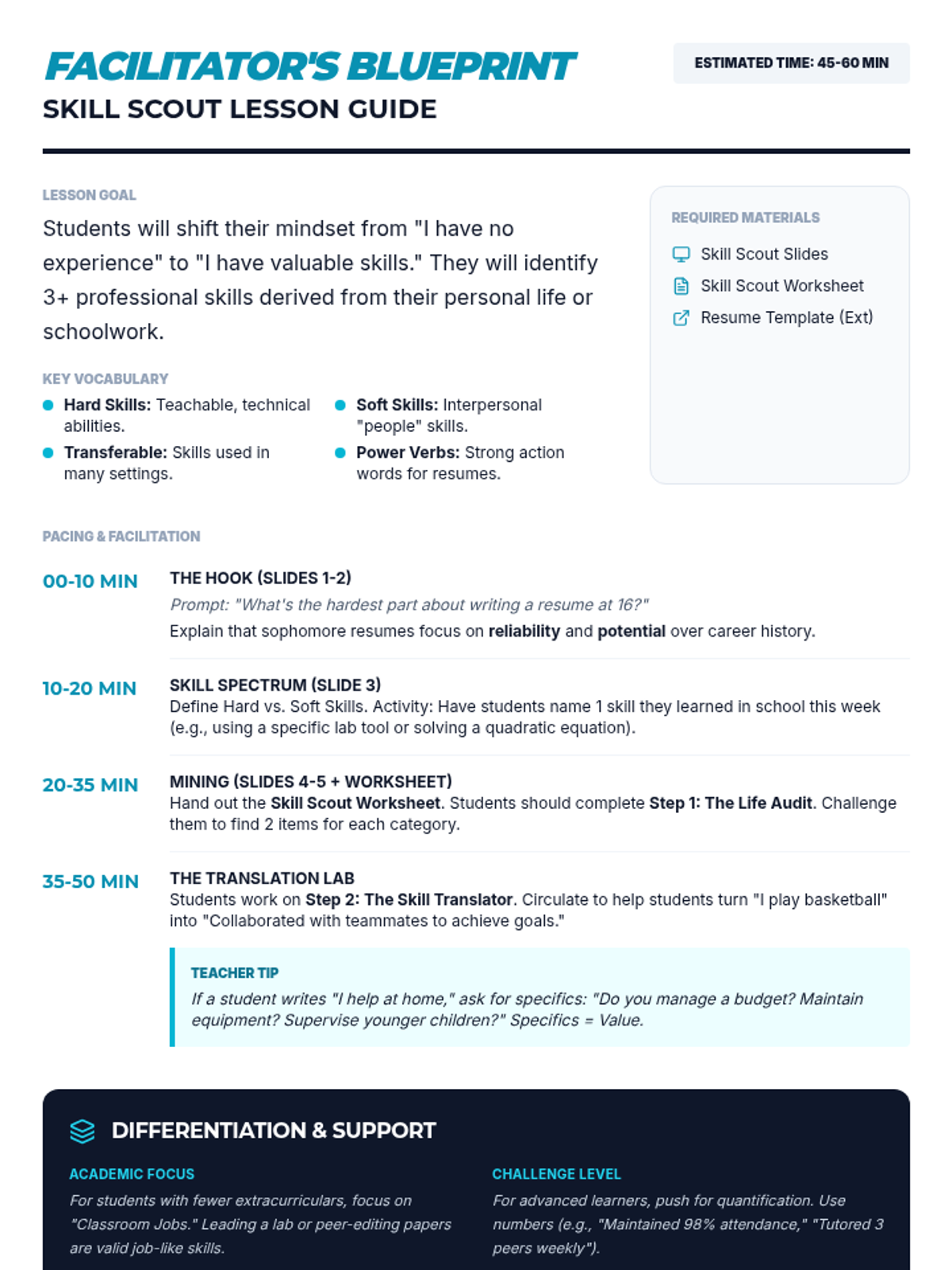
A comprehensive facilitator guide for the Skill Scout lesson, providing pacing, discussion prompts, vocabulary, and differentiation strategies to help teachers guide students through resume skill brainstorming.
A 5-slide presentation designed to introduce high school sophomores to the concept of resume skills, highlighting the difference between hard and soft skills and how to translate everyday activities into professional value.
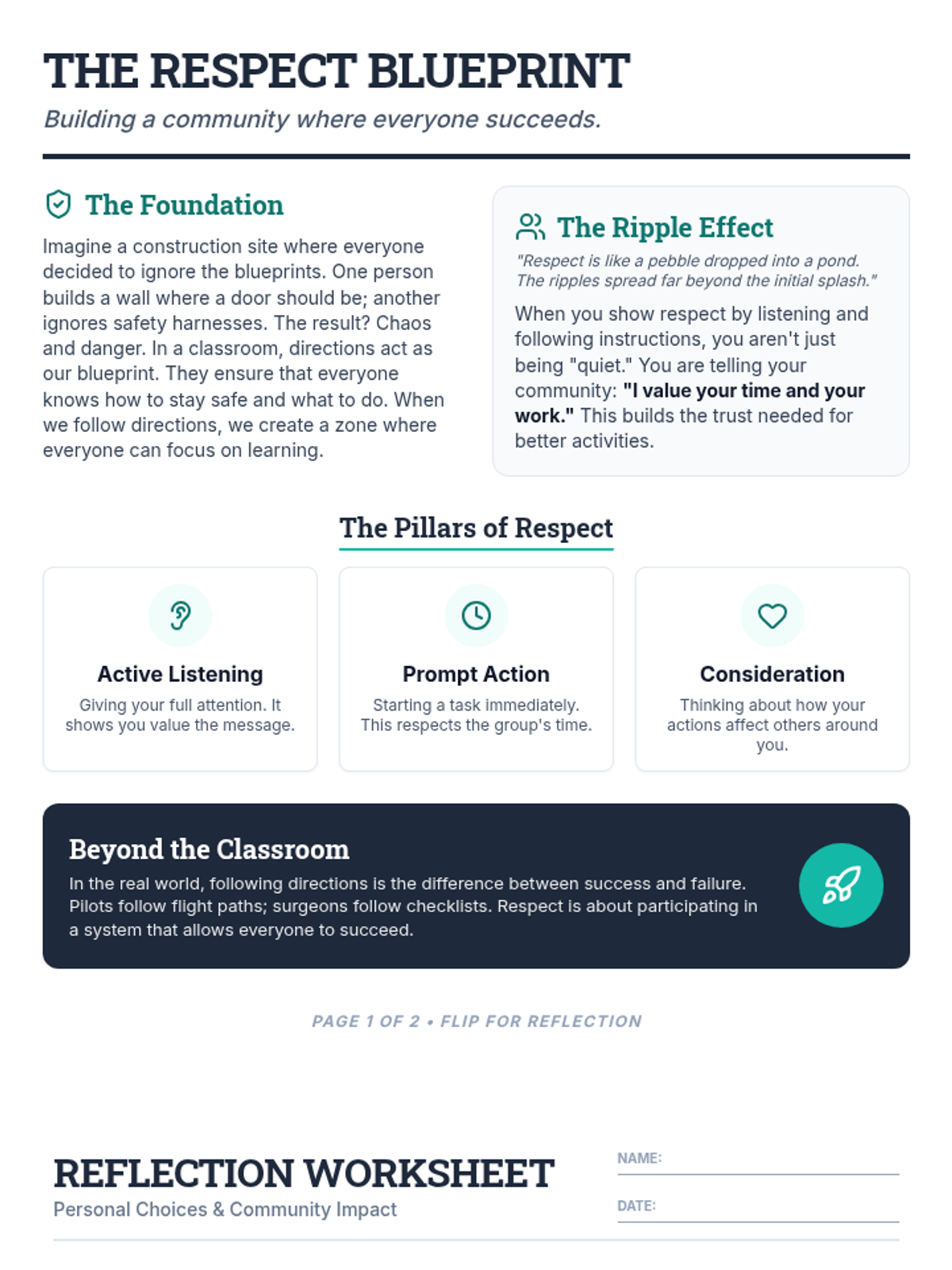
A comprehensive two-page reflection packet including a reading passage on the importance of respect and following directions, followed by open-ended reflection questions and goal-setting areas.
Cheerful and simplified slides for a 2nd grade lunch bunch charades session, featuring large text, clear instructions, and vibrant category markers.
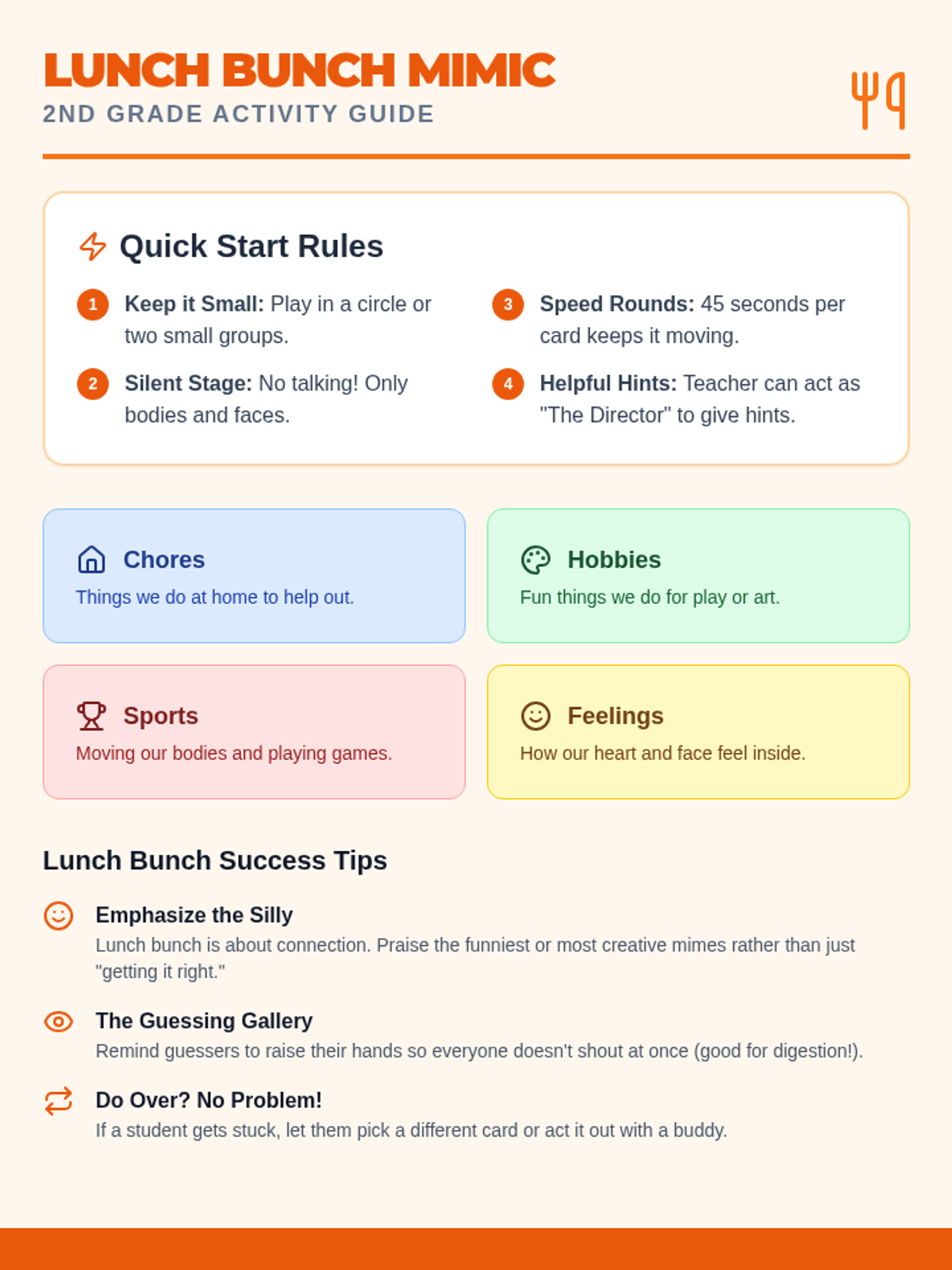
A one-page facilitation guide for running a 2nd grade lunch bunch charades session, focusing on quick start rules, simplified categories, and social-emotional tips.
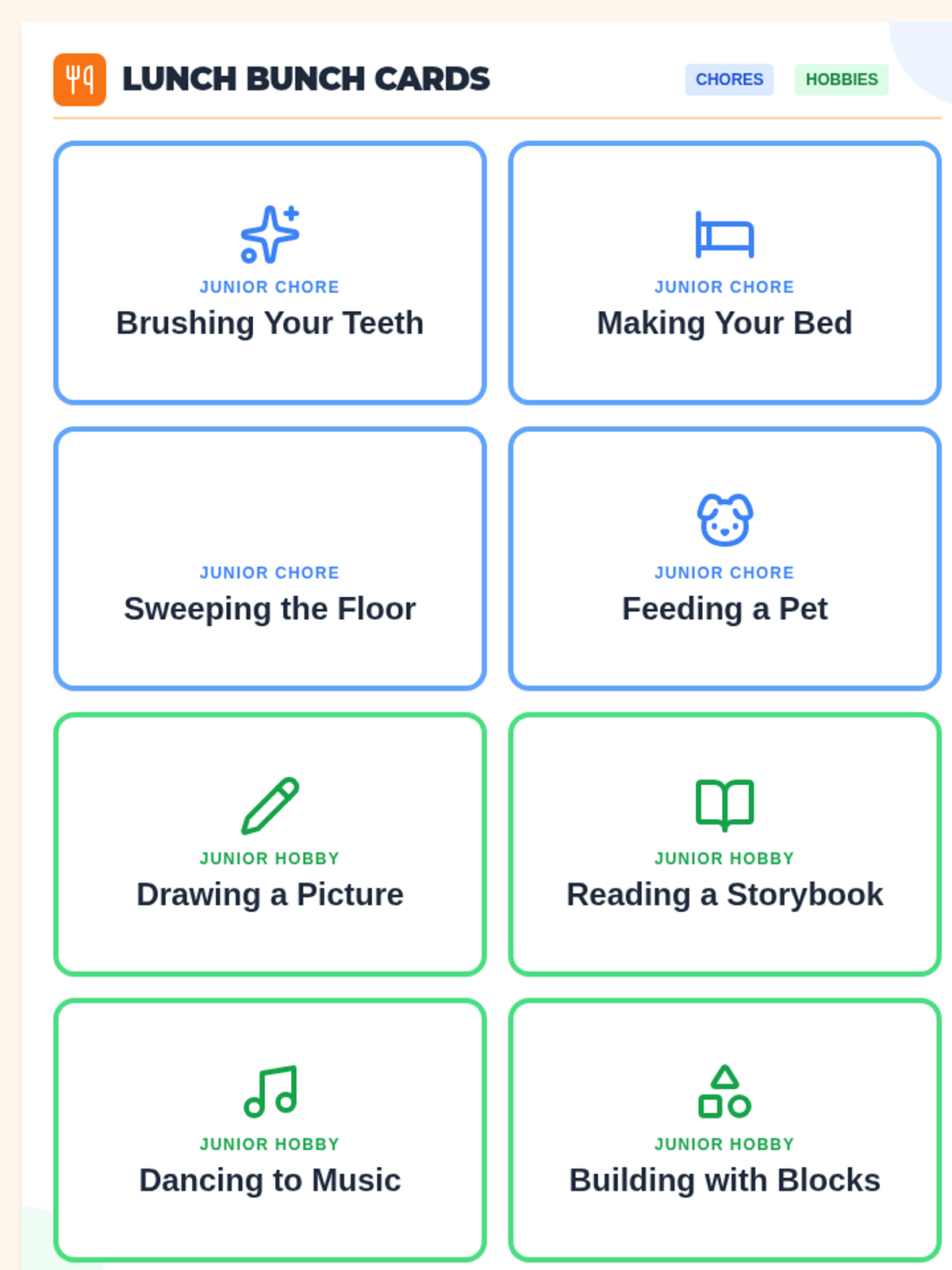
A set of simplified charades cards designed specifically for 2nd grade students, featuring easy-to-act prompts for chores, hobbies, sports, and feelings with large supportive icons.
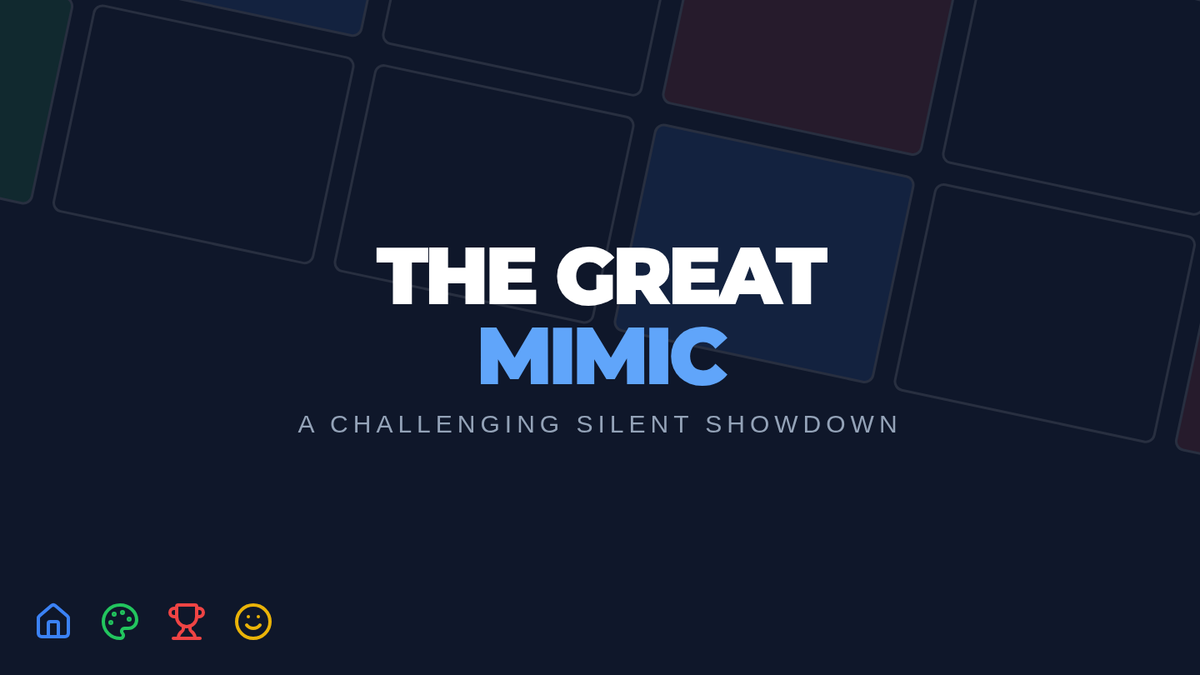
A visually striking slide deck to introduce the charades game, explaining categories, rules, and advanced miming techniques for students.
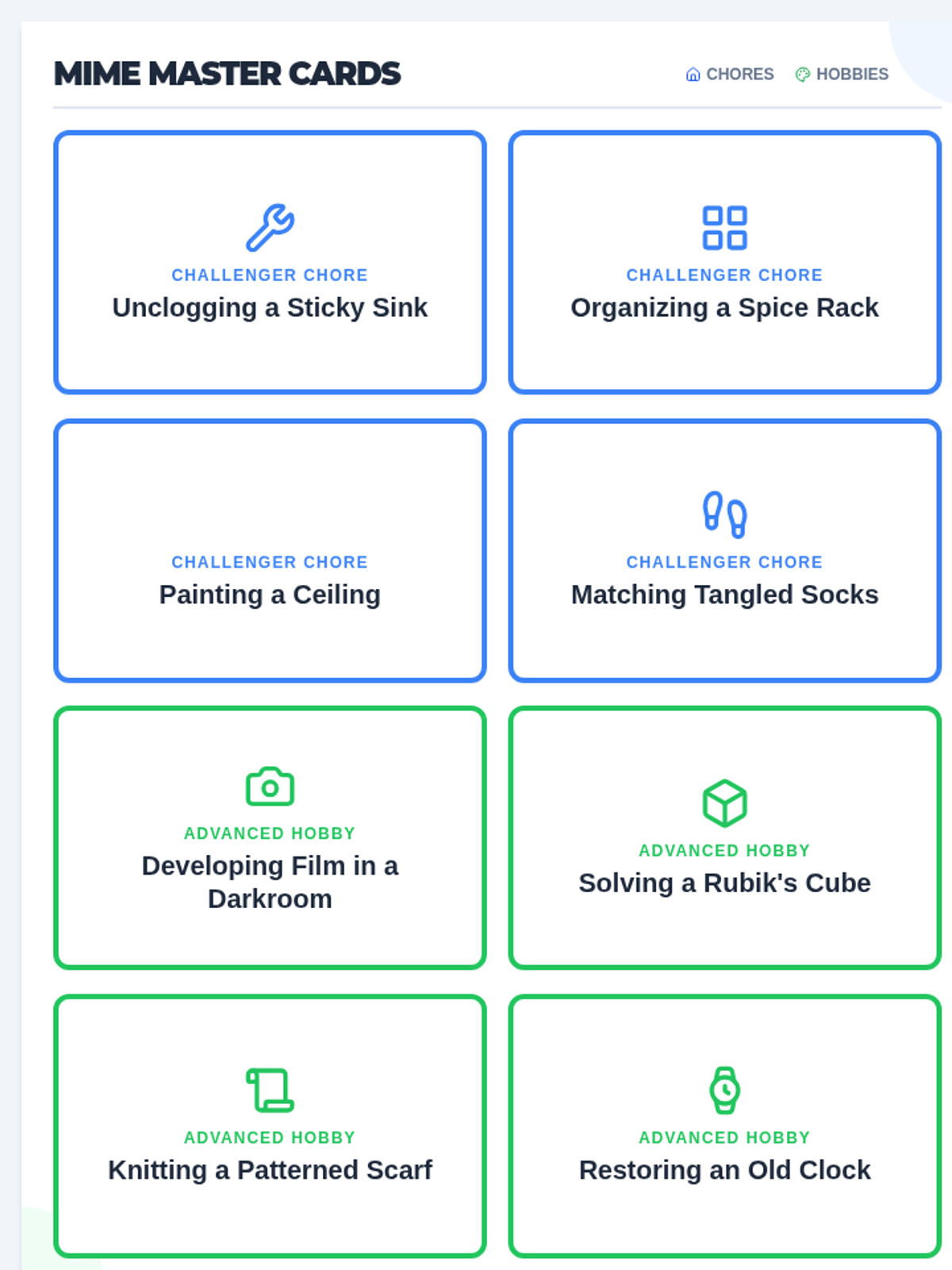
A collection of printable charades cards featuring challenging prompts across four categories: chores, hobbies, sports, and feelings. Each card includes a specific icon to represent the action or emotion.
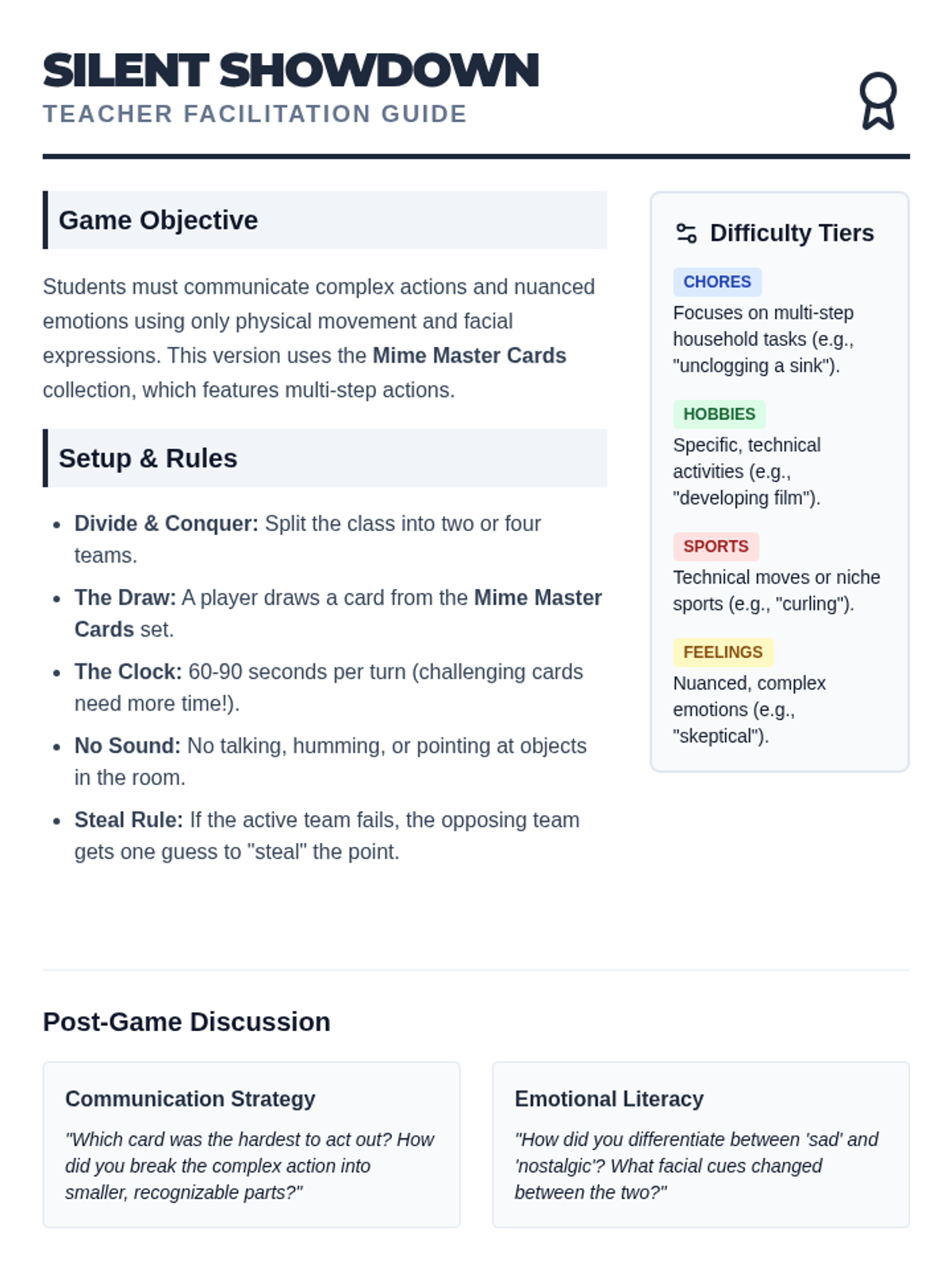
A teacher guide for the charades game, providing rules, setup instructions, focus areas, and discussion prompts to facilitate a successful classroom activity.
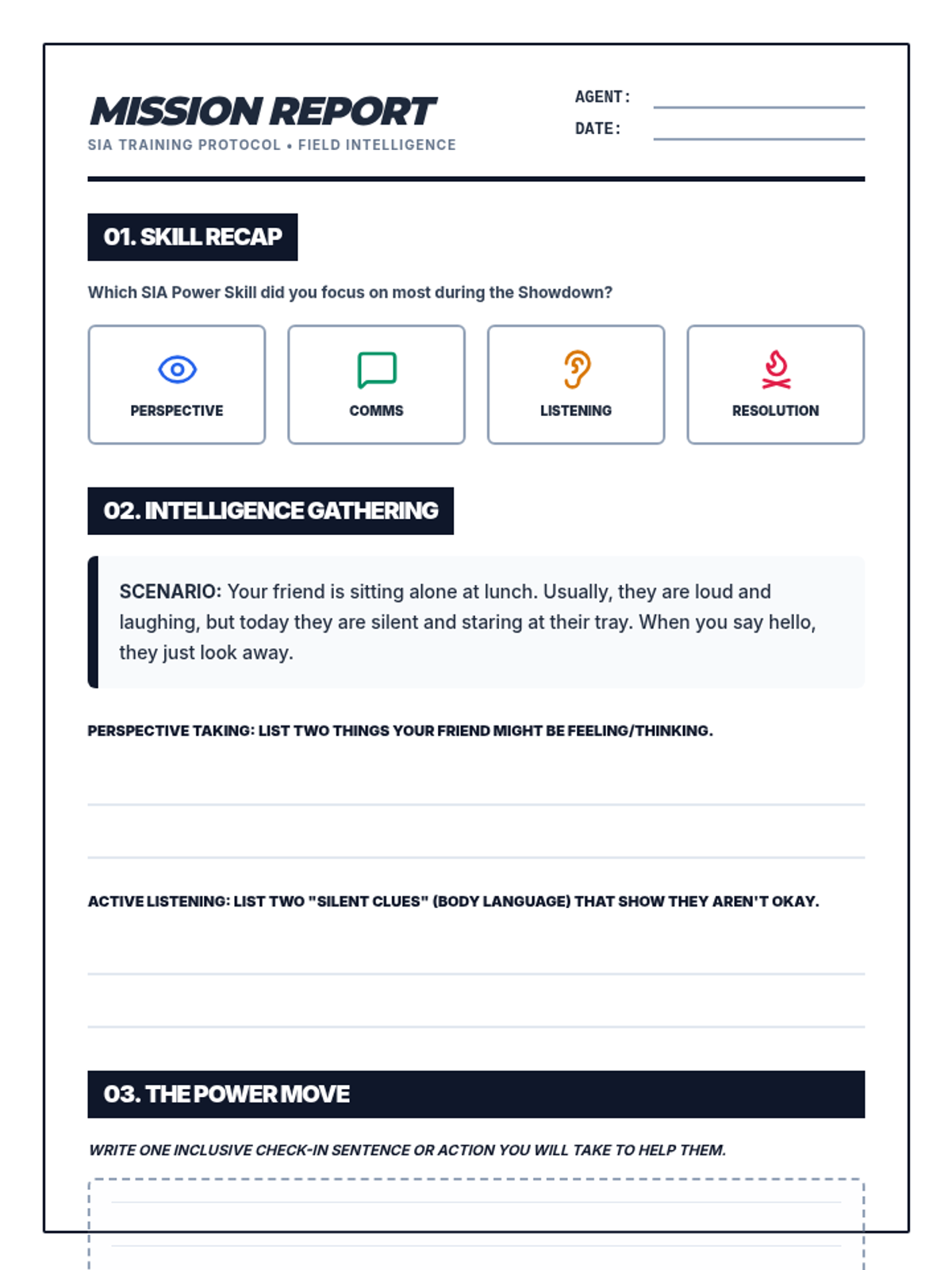
A student reflection worksheet featuring a real-world scenario to apply perspective-taking and communication skills, optimized for a single-page layout.
A dynamic, high-contrast Jeopardy-style slide deck for teaching social skills with scenarios and solutions.
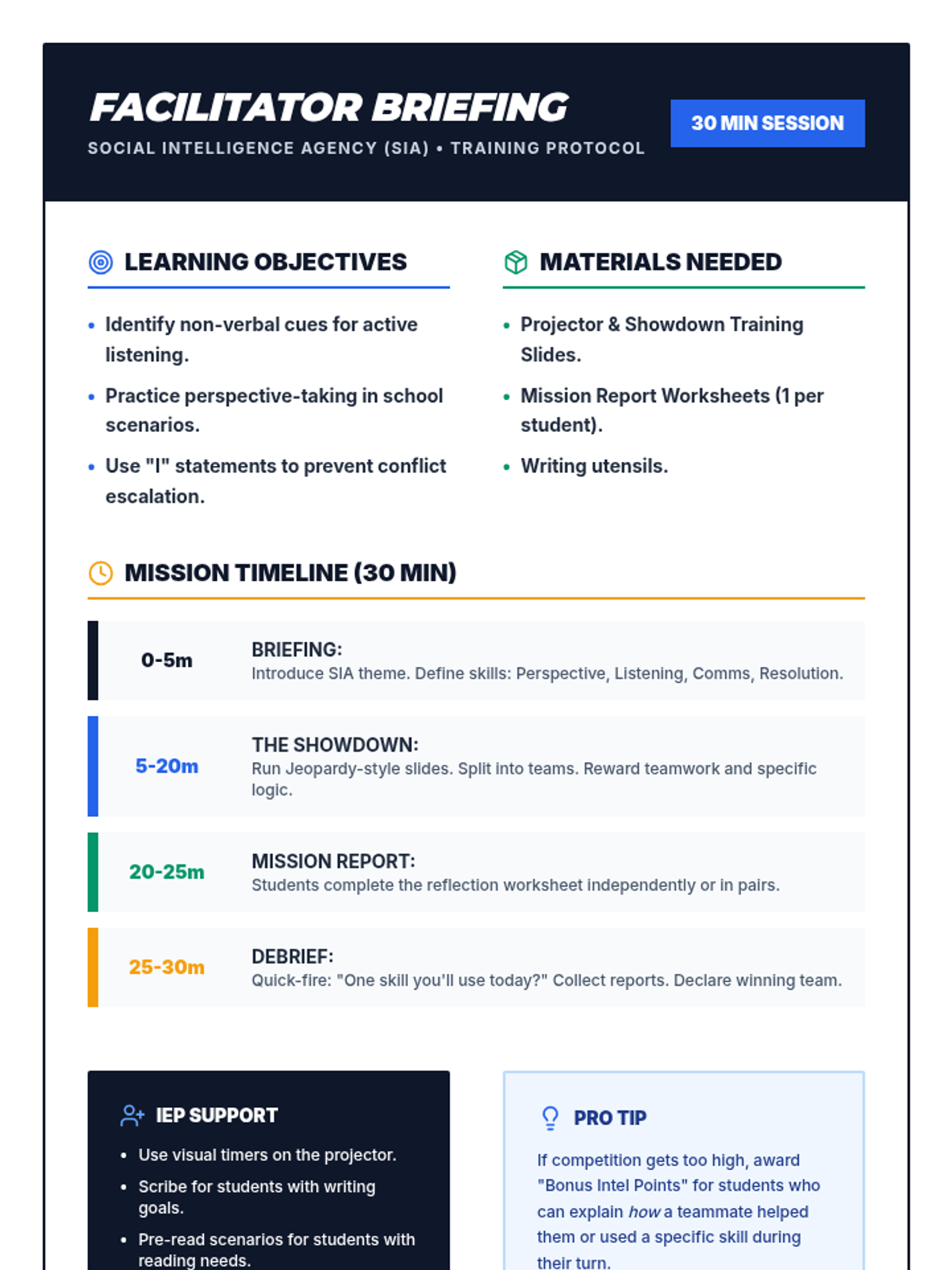
A polished teacher's guide for a 30-minute social skills session, featuring a tight timeline, materials list, and IEP-specific accommodations.
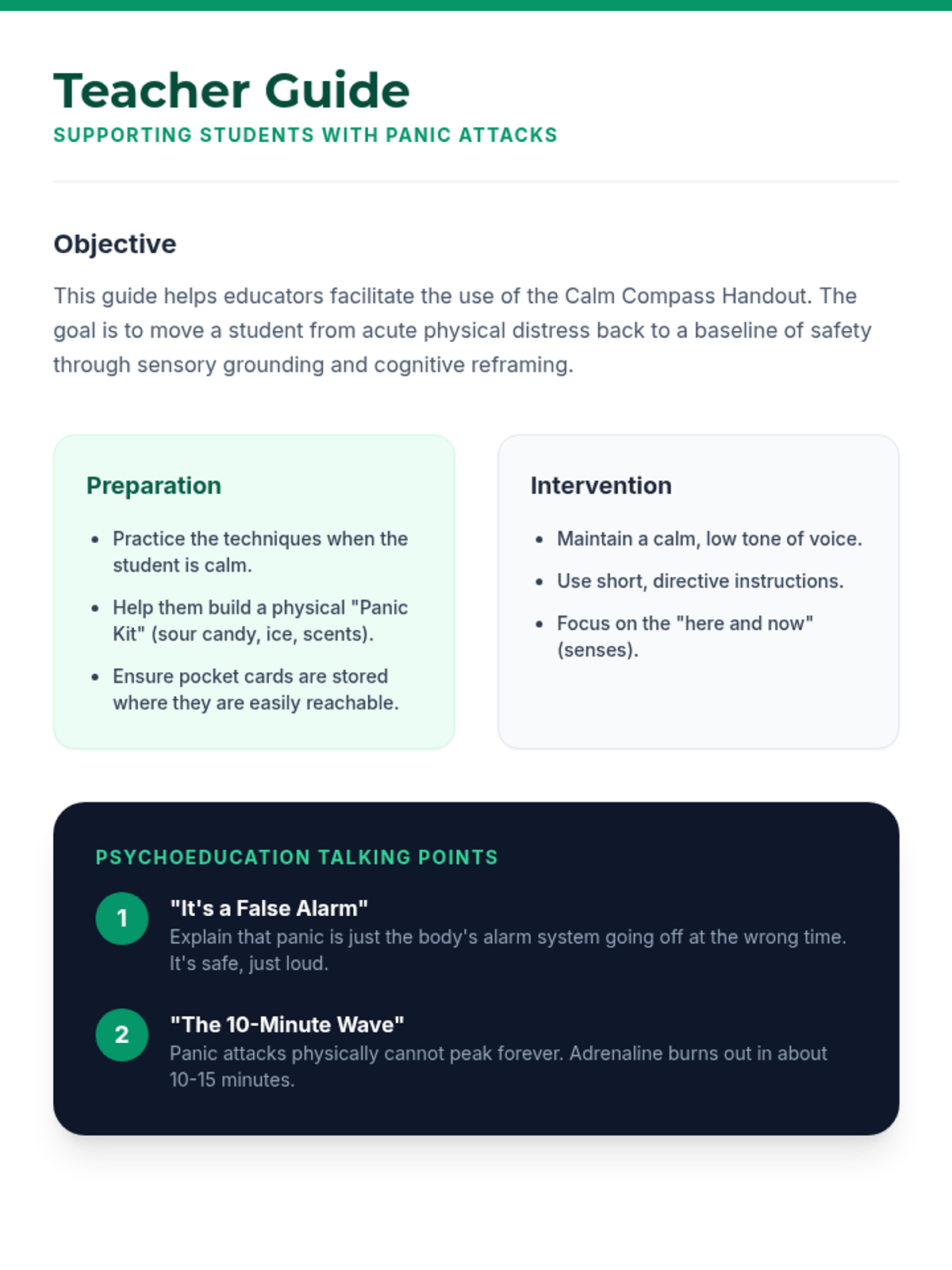
Instructional guide for teachers or counselors on how to use the Calm Compass Handout, featuring implementation strategies, psychoeducation talking points, troubleshooting tips, and a student individualized plan template.
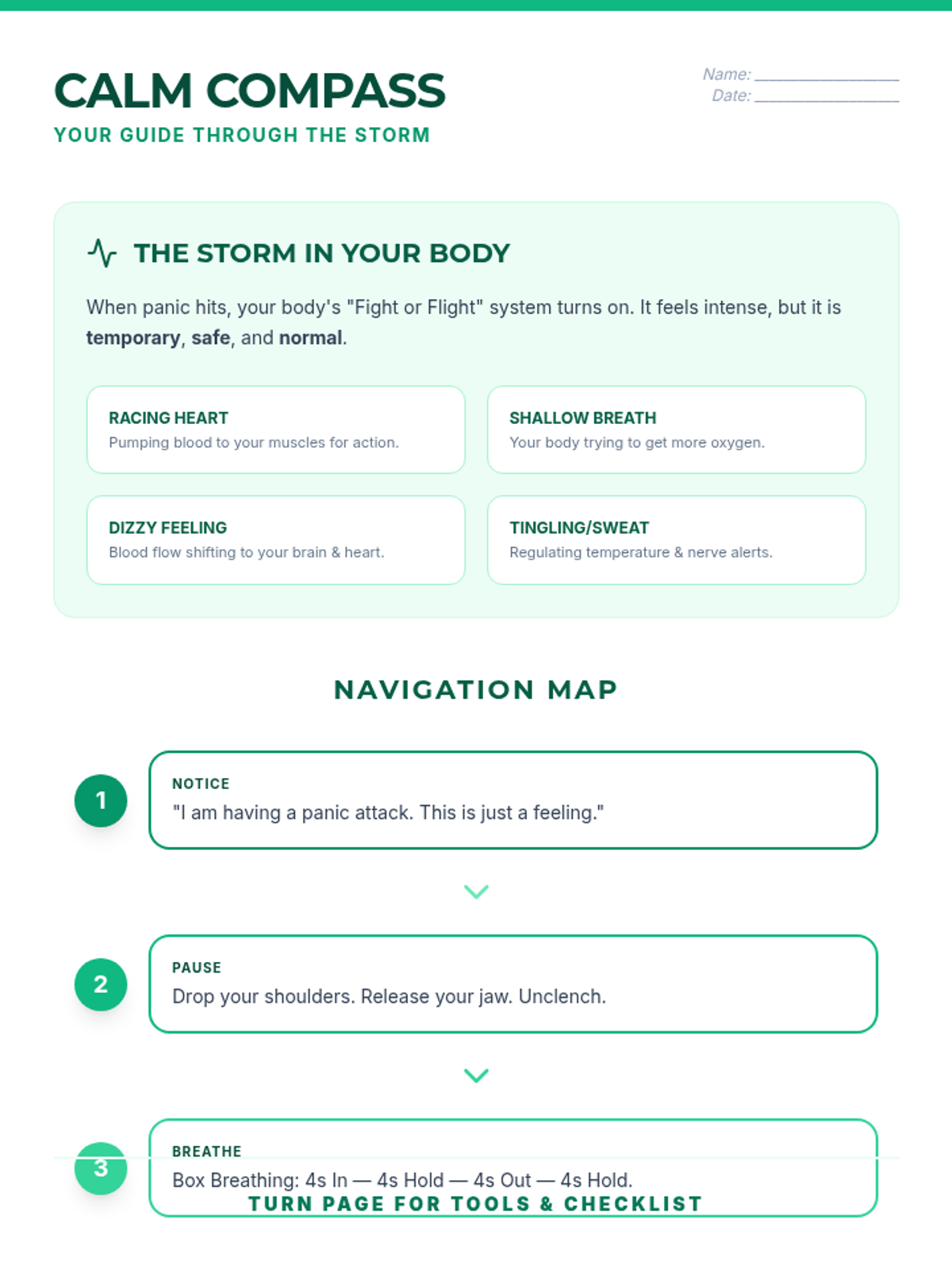
A comprehensive 3-page guide for navigating panic attacks, featuring a visual coping flowchart, physical symptom education, grounding techniques, and a 'Panic Kit' checklist, plus cut-out pocket cards.
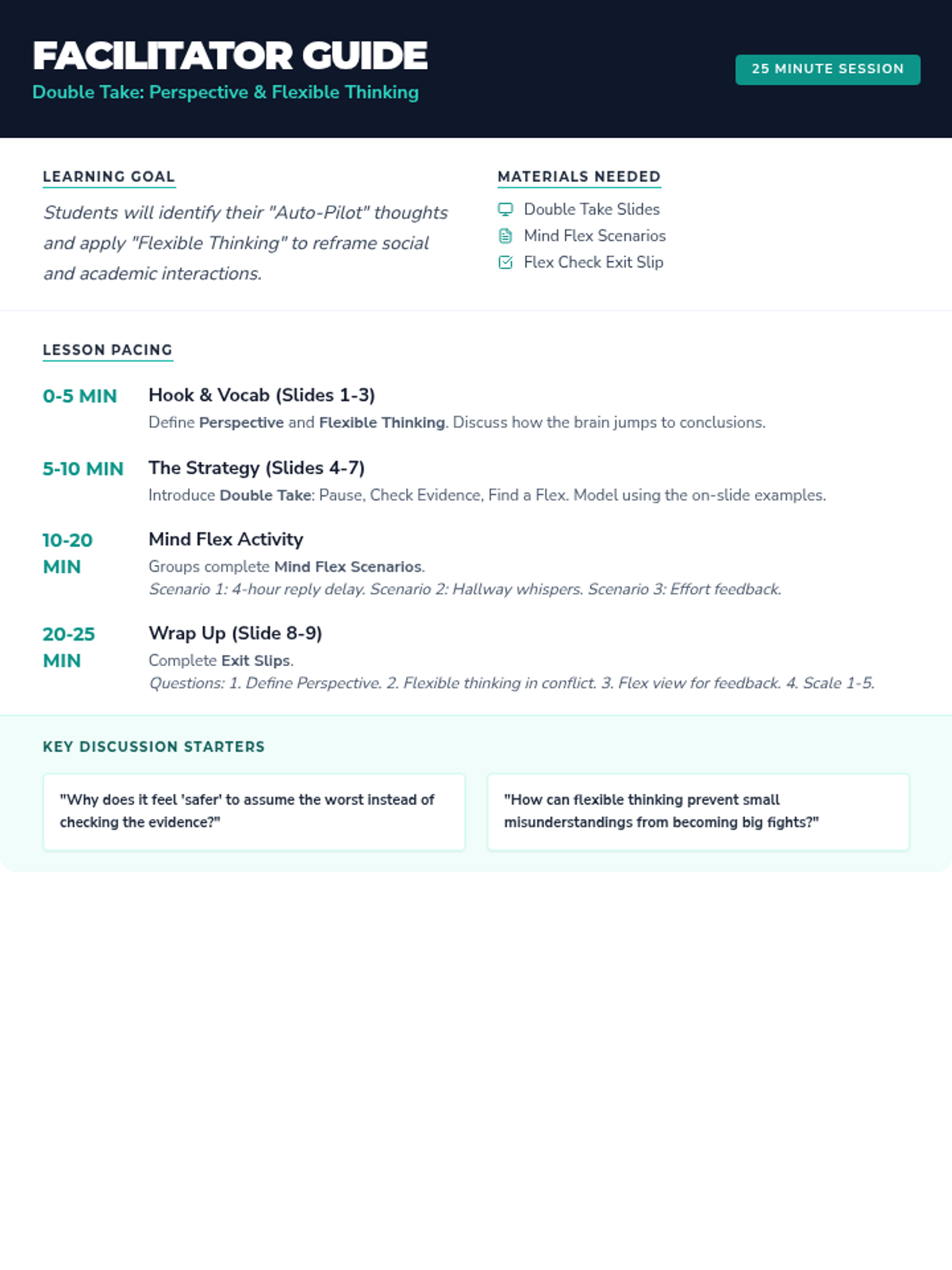
A detailed facilitator guide for a 25-minute counseling session, including learning objectives, pacing, and discussion prompts to ensure a smooth lesson delivery.
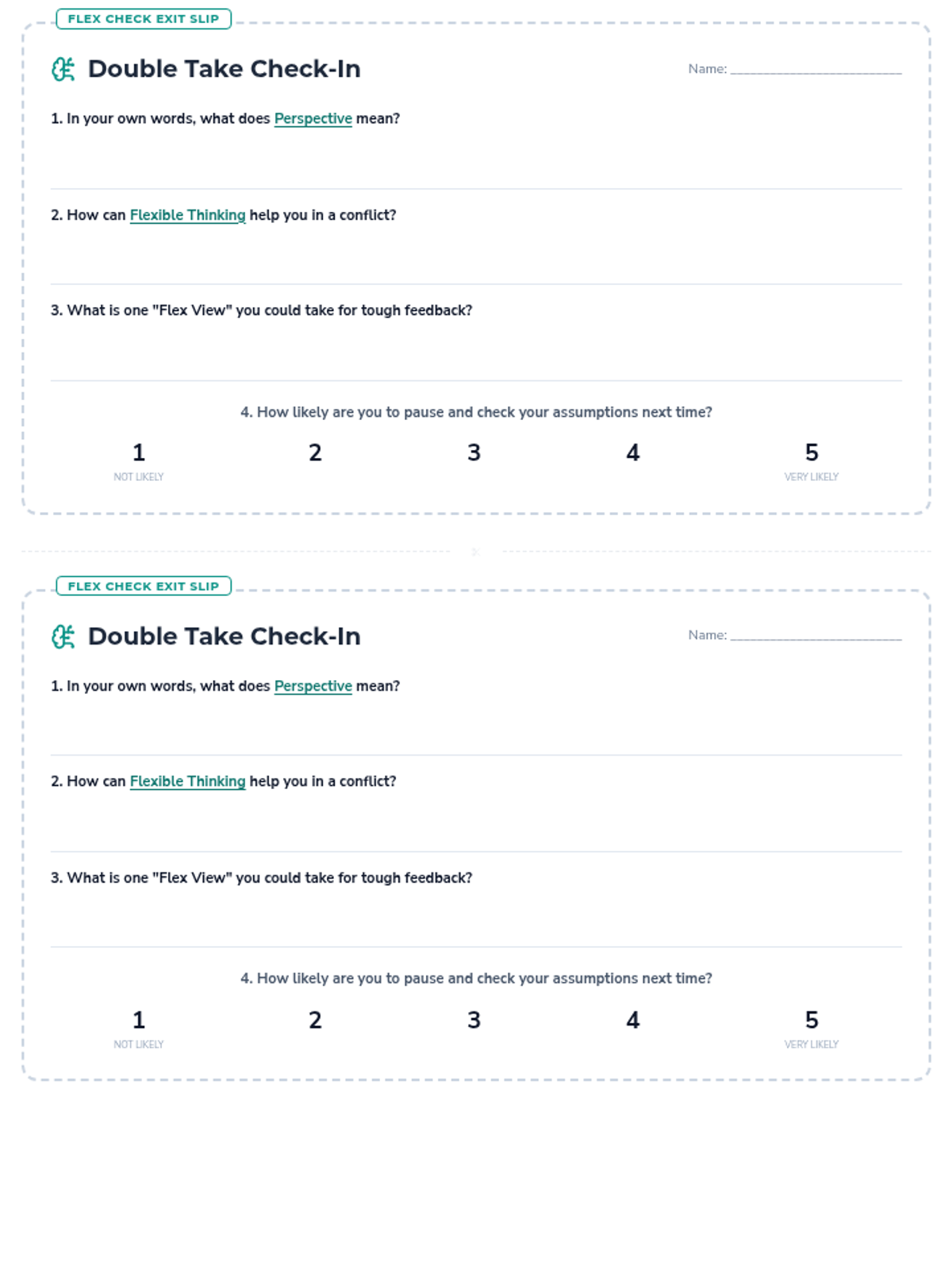
A concise assessment exit slip with four questions to evaluate student understanding of perspective-taking and flexible thinking, formatted as two slips per page.
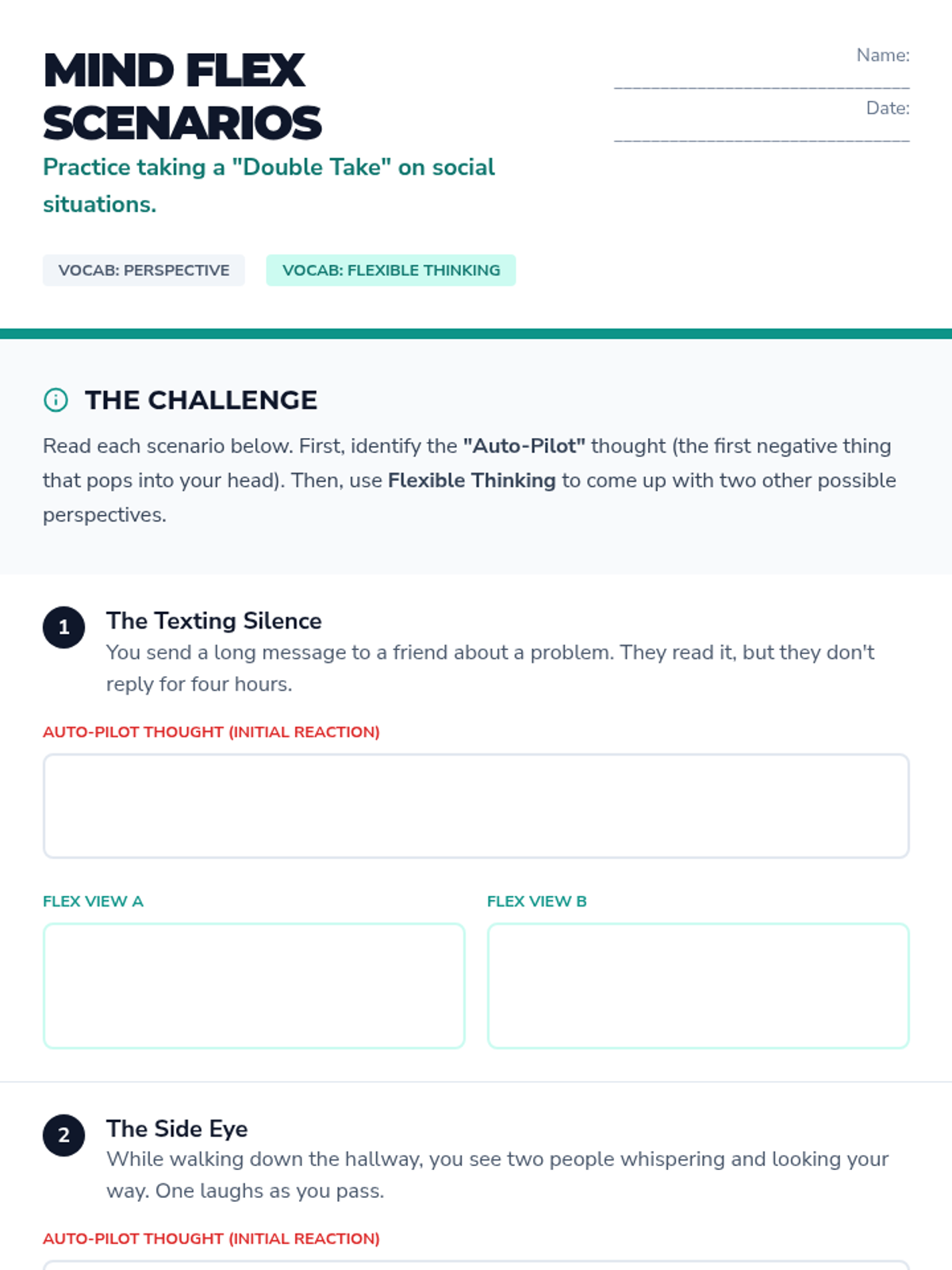
A student activity worksheet featuring three scenarios involving misinterpreting tone and intent, designed for practicing flexible thinking and perspective-taking.
Visual presentation slides for a 25-minute counseling lesson on perspective-taking and flexible thinking, featuring clean typography and modern icons.
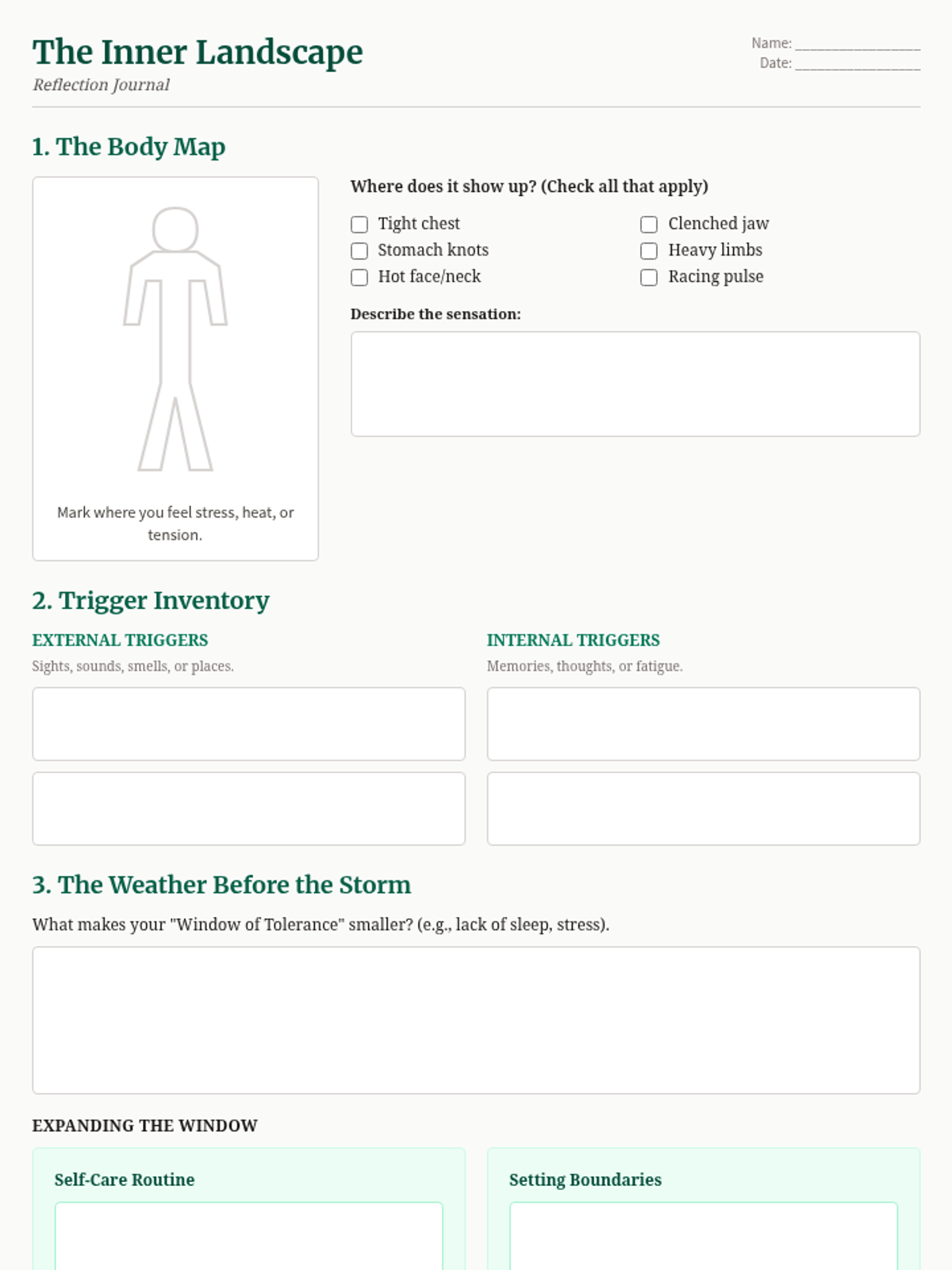
A 2-page reflection journal for students to map their physical sensations, identify triggers, and create a personalized safety plan.
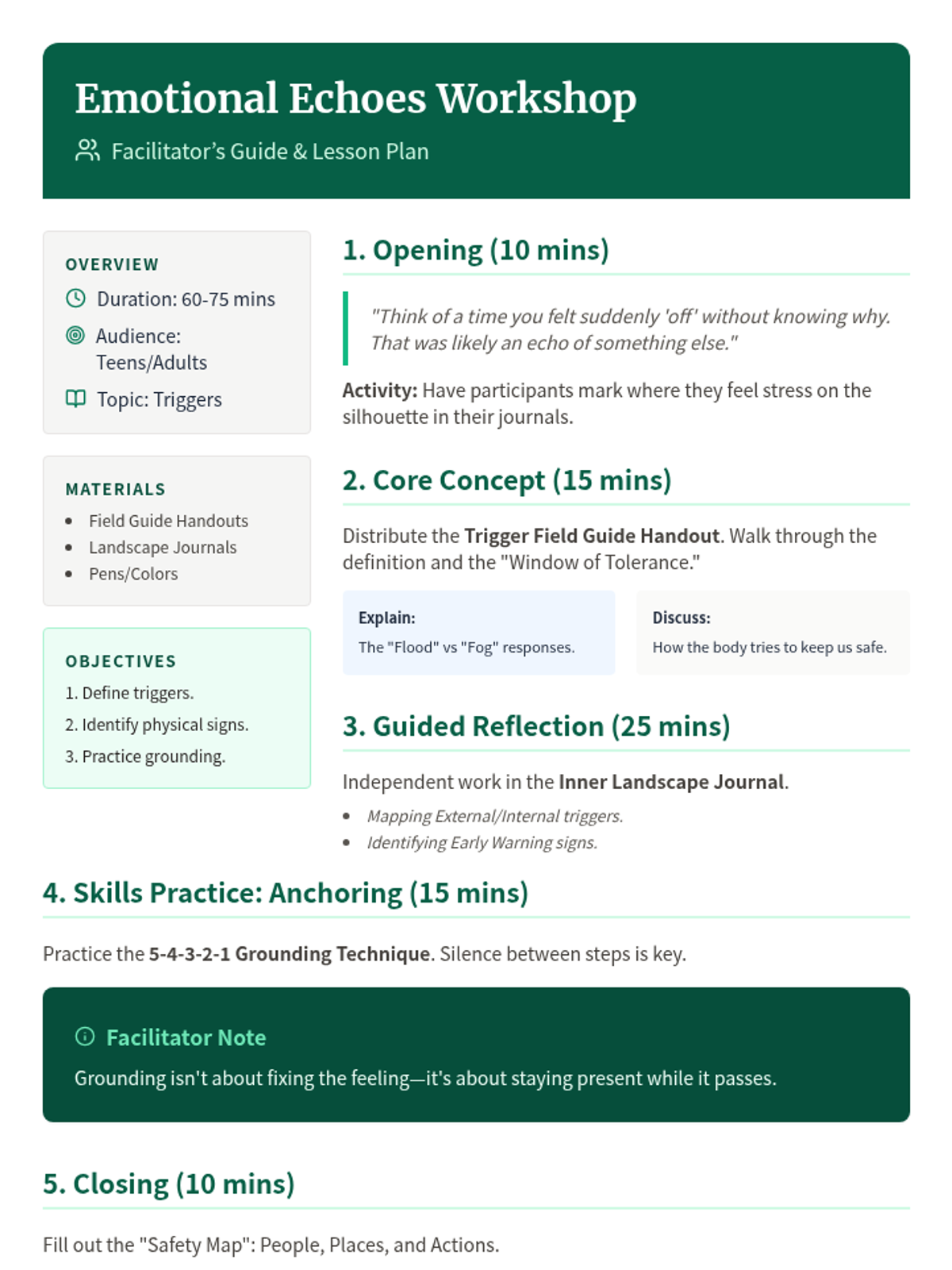
A facilitator's guide for a 60-75 minute workshop on mental health triggers, including scripts, activity breakdowns, and safety considerations.
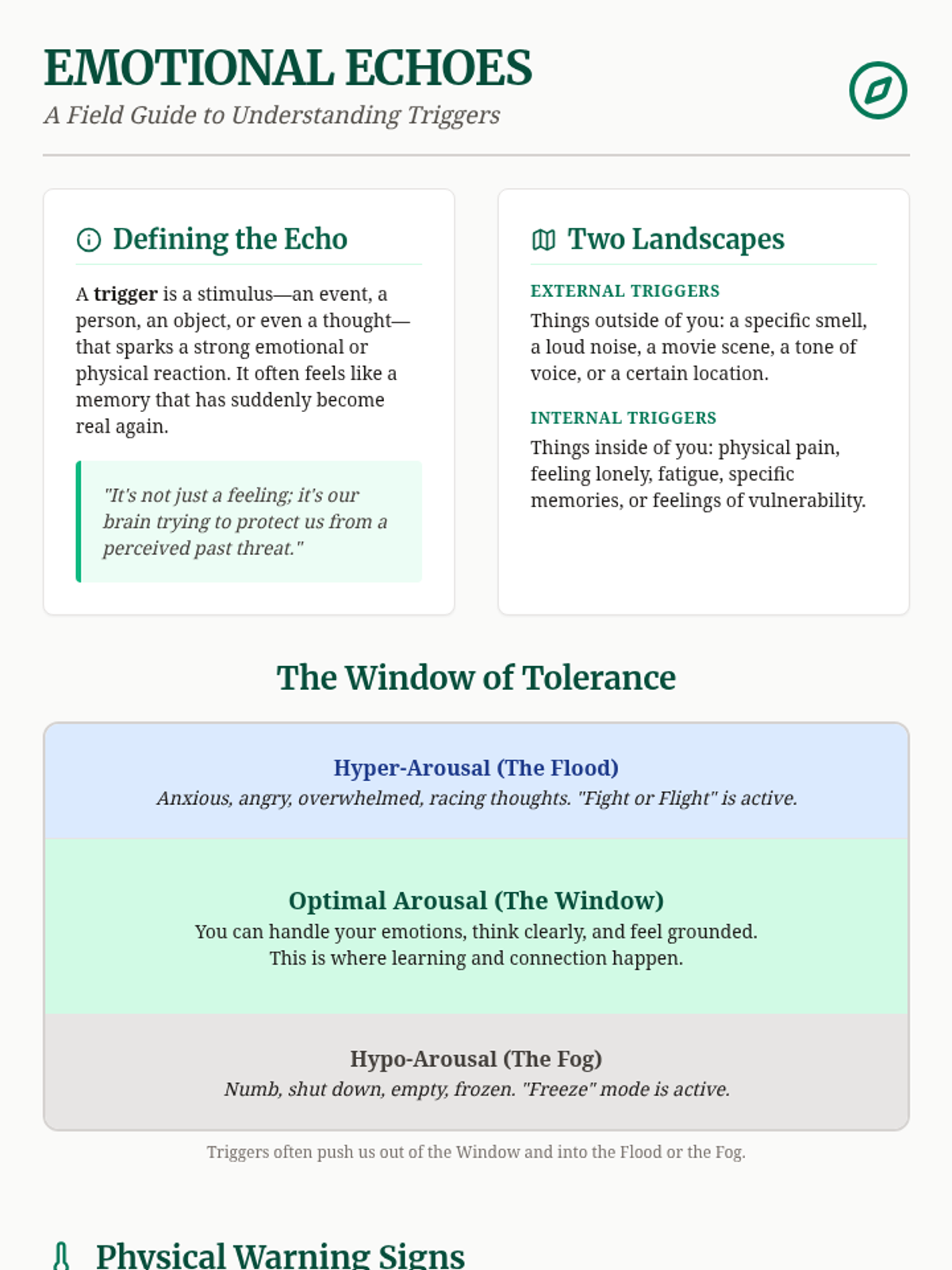
A 2-page informational handout explaining mental health triggers, the Window of Tolerance, physical warning signs, and immediate grounding techniques.
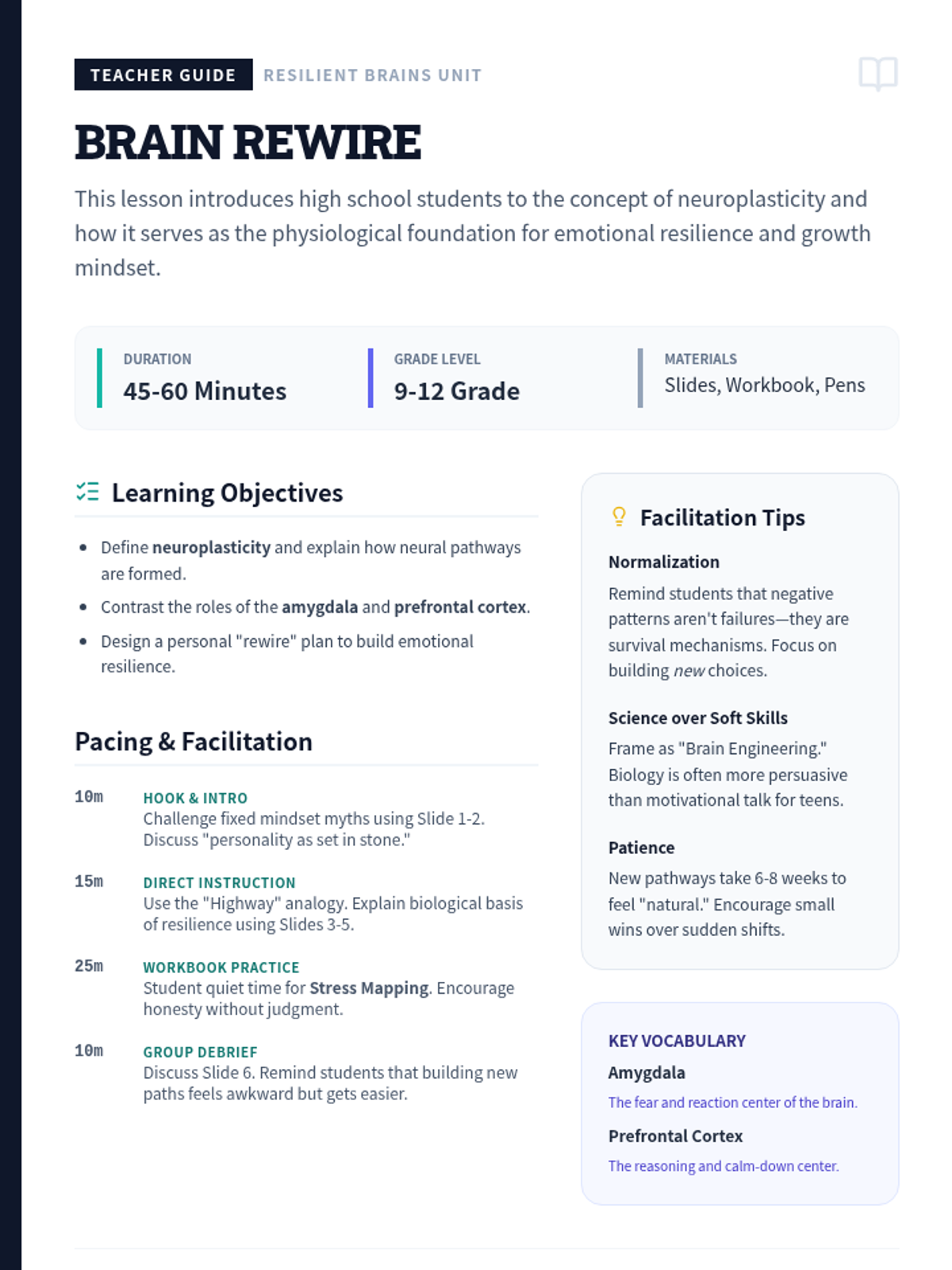
A teacher facilitation guide for the Brain Rewire lesson, providing pacing, learning objectives, discussion prompts, and instructional tips for teaching neuroplasticity and resilience.
An engaging slide deck for high schoolers explaining the neuroscience of neuroplasticity and its link to resilience. Features modern visual design and clear conceptual breakdowns of brain function.
A student self-reflection workbook designed for high schoolers to explore neuroplasticity and build resilience. It includes scientific explanations, personal reflection prompts, and an action-planning section for habit formation.
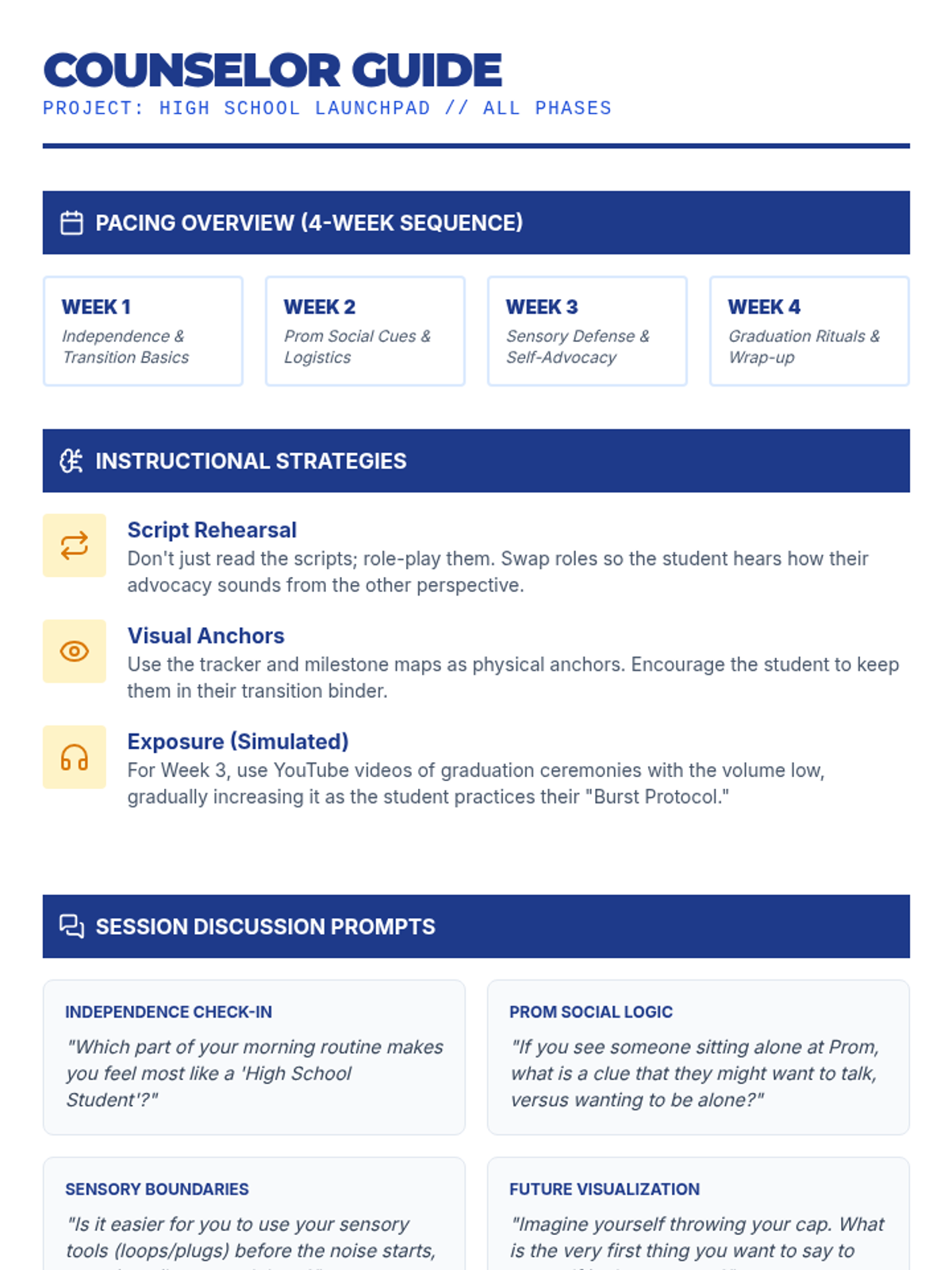
A comprehensive teacher/counselor guide for managing the 4-week High School Launchpad sequence, including pacing, strategies, and discussion prompts.
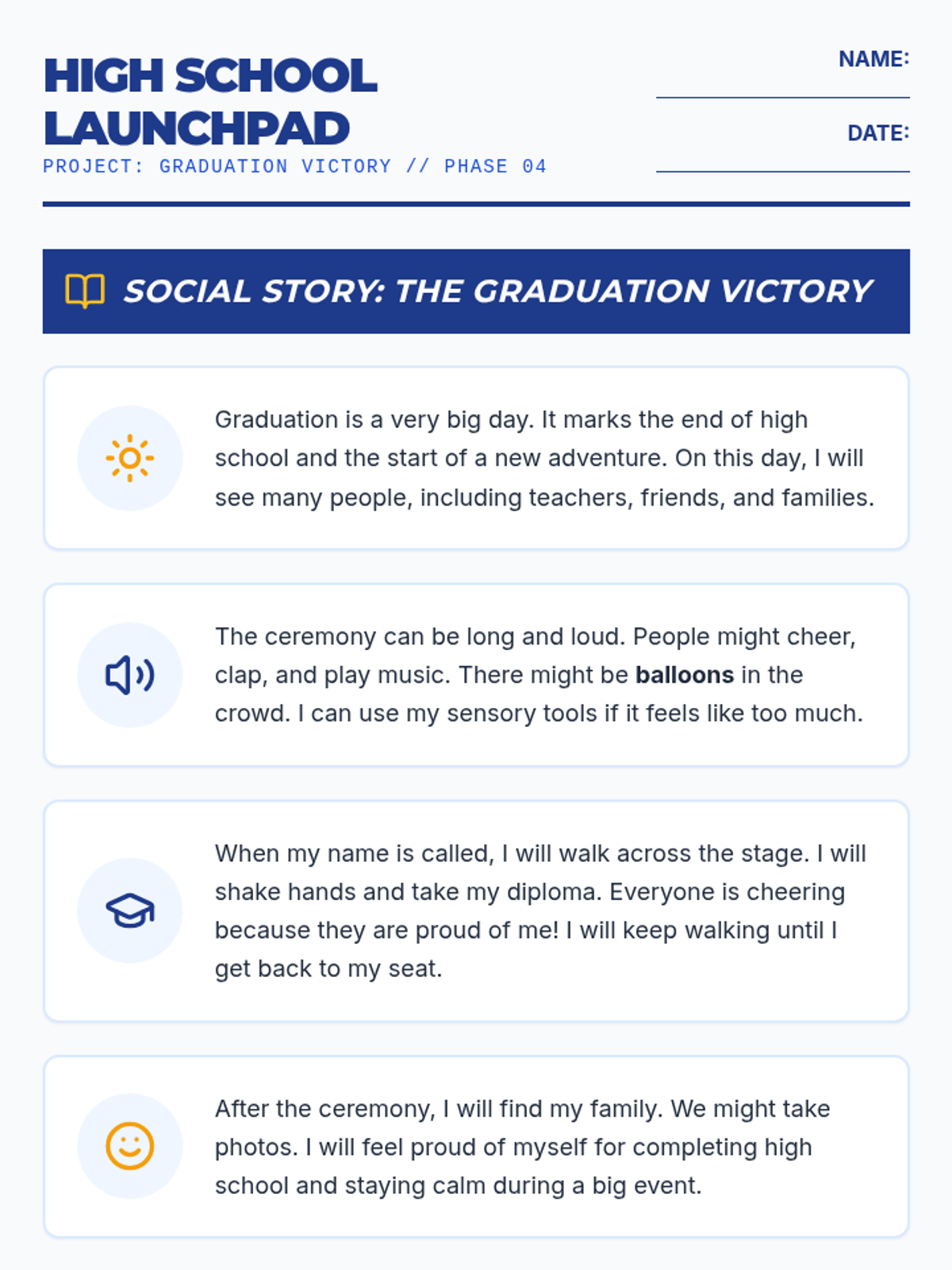
A graduation preparation document featuring a social story for the ceremony and a visual milestone map for the day of graduation.
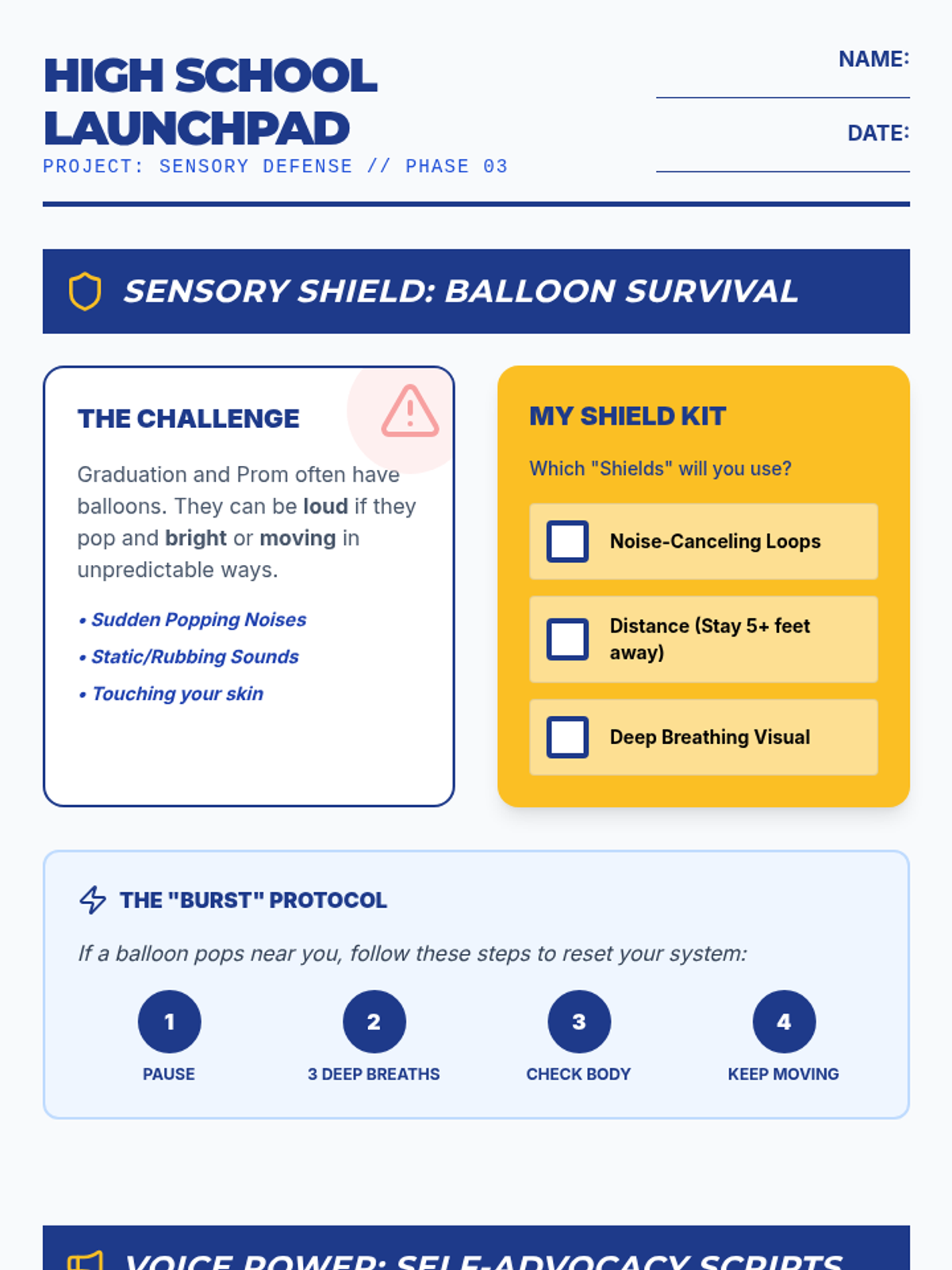
A resource focusing on sensory coping strategies for balloons and loud events, including self-advocacy scripts for students to use during transitions.
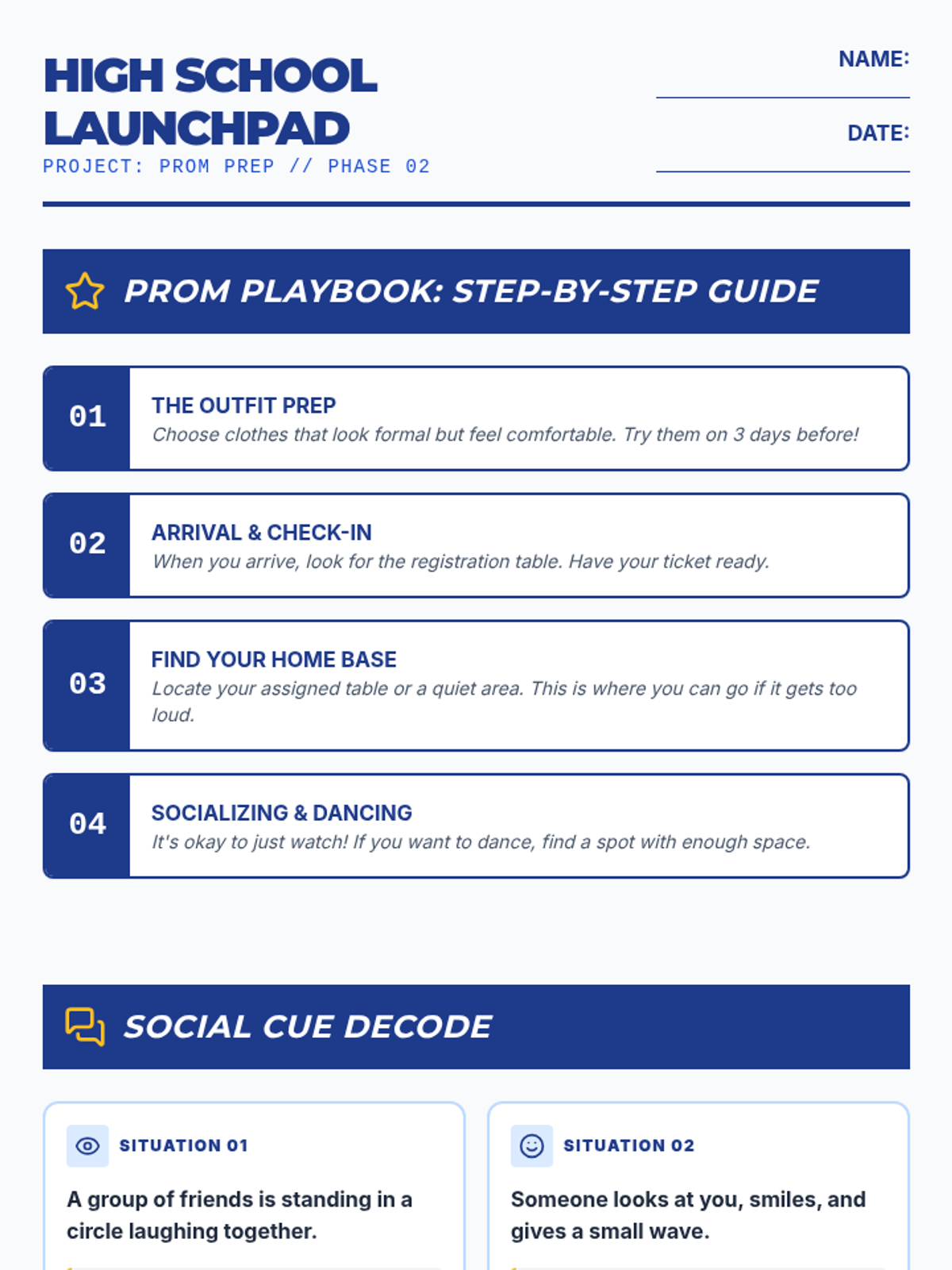
A step-by-step guide for attending Prom, including social cue decoding practice and preparation checklists for students.
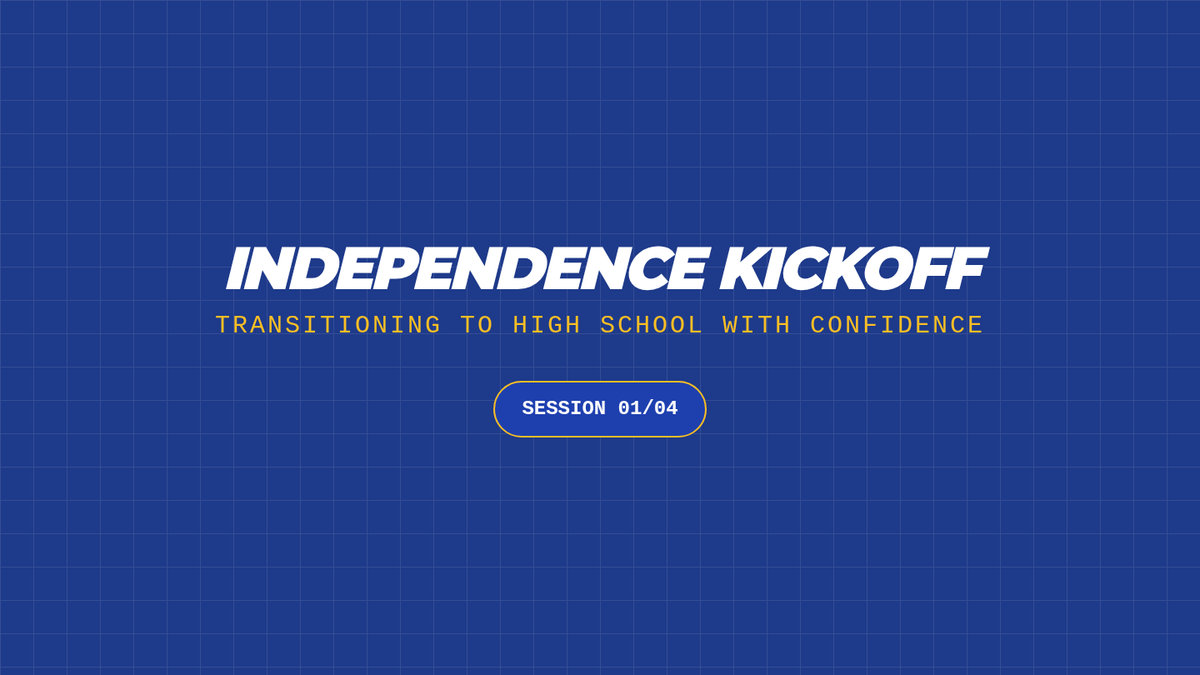
A slide presentation for the first counseling session, focusing on the differences between middle and high school and the importance of building independence.
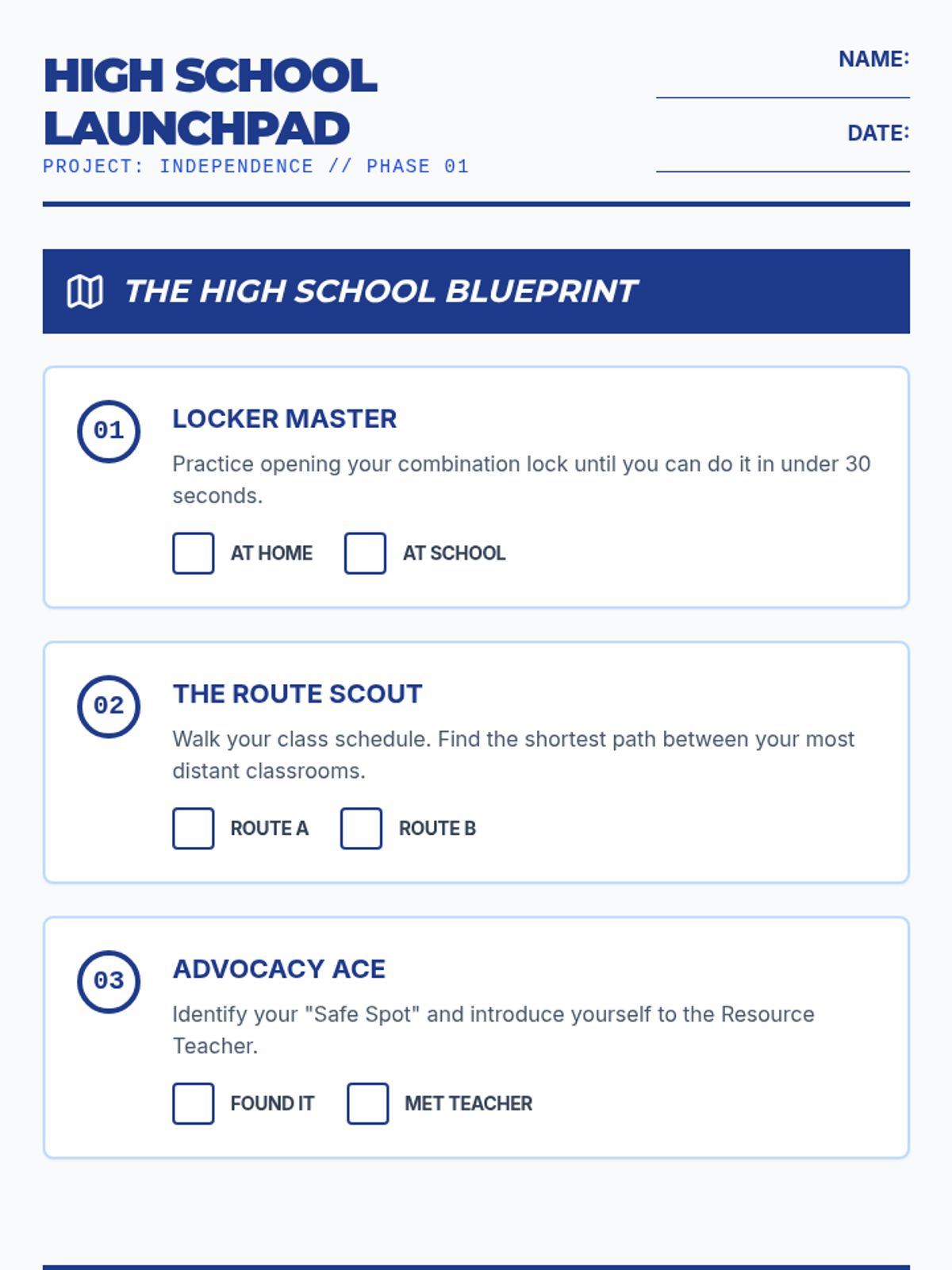
A two-part document containing a visual transition checklist and a daily independence habit tracker to help students prepare for high school.
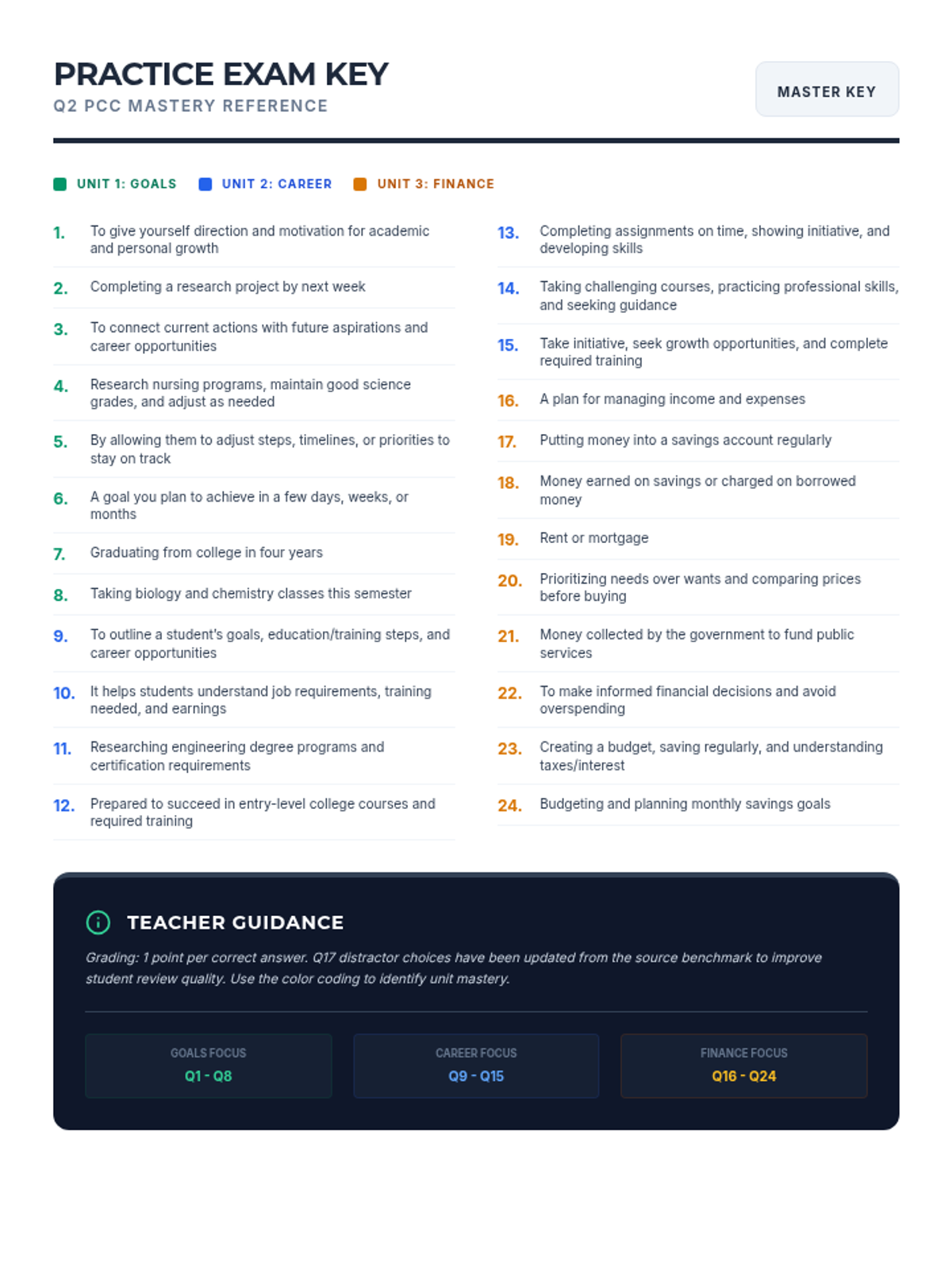
An answer key for the 24-question multiple choice practice test.
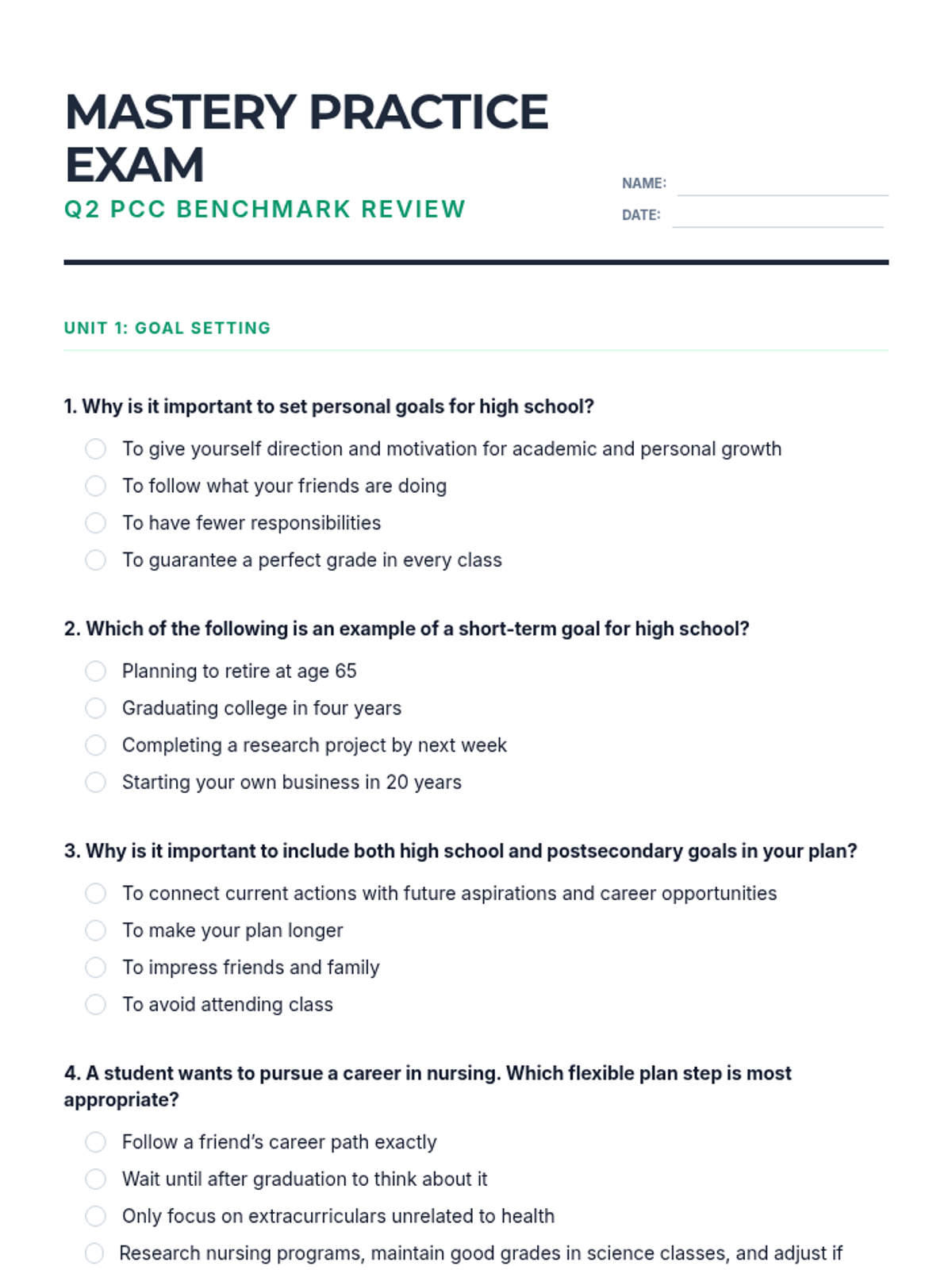
A 24-question multiple choice practice test designed as a study guide for the PCC Q2 Benchmark.
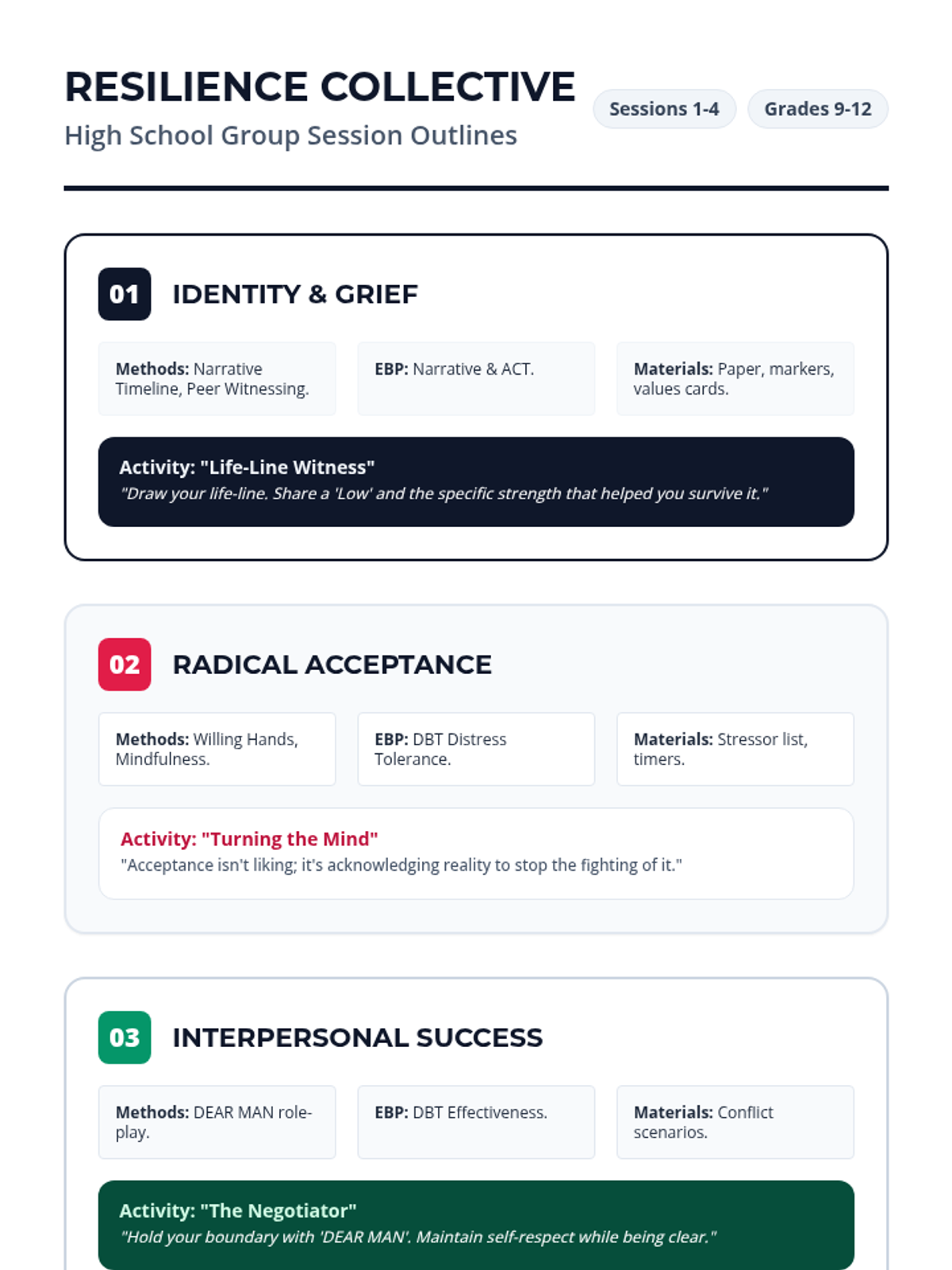
Structured group session outlines for high school students, incorporating advanced ACT and DBT-A concepts like Radical Acceptance and Interpersonal Effectiveness. Emphasizes peer witnessing and identity integration.
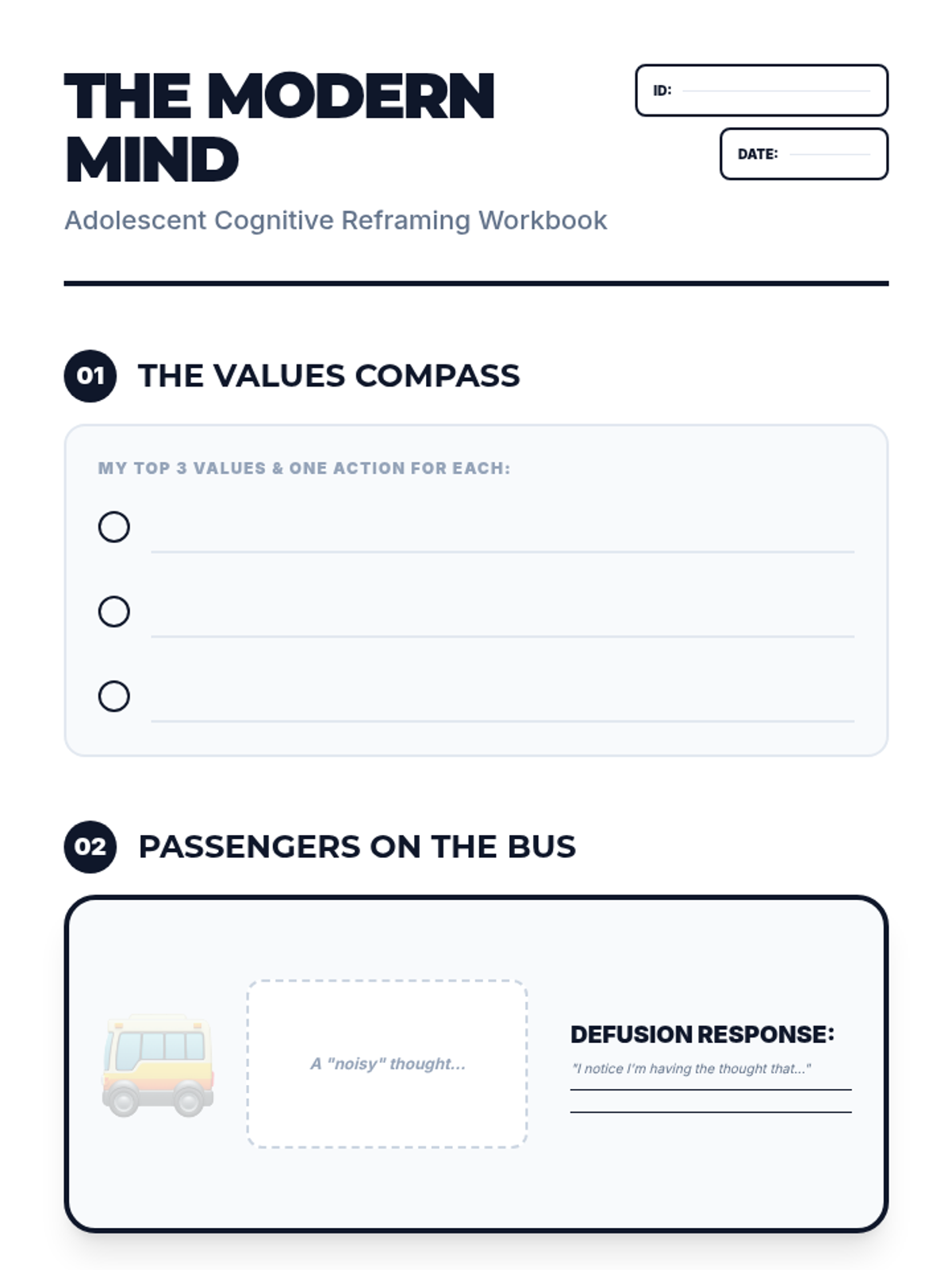
An advanced student workbook for high schoolers, featuring complex therapeutic exercises including Values-Based Mapping (ACT), Cognitive Defusion (ACT), and DEAR MAN interpersonal effectiveness (DBT). Designed for identity-level therapeutic work.
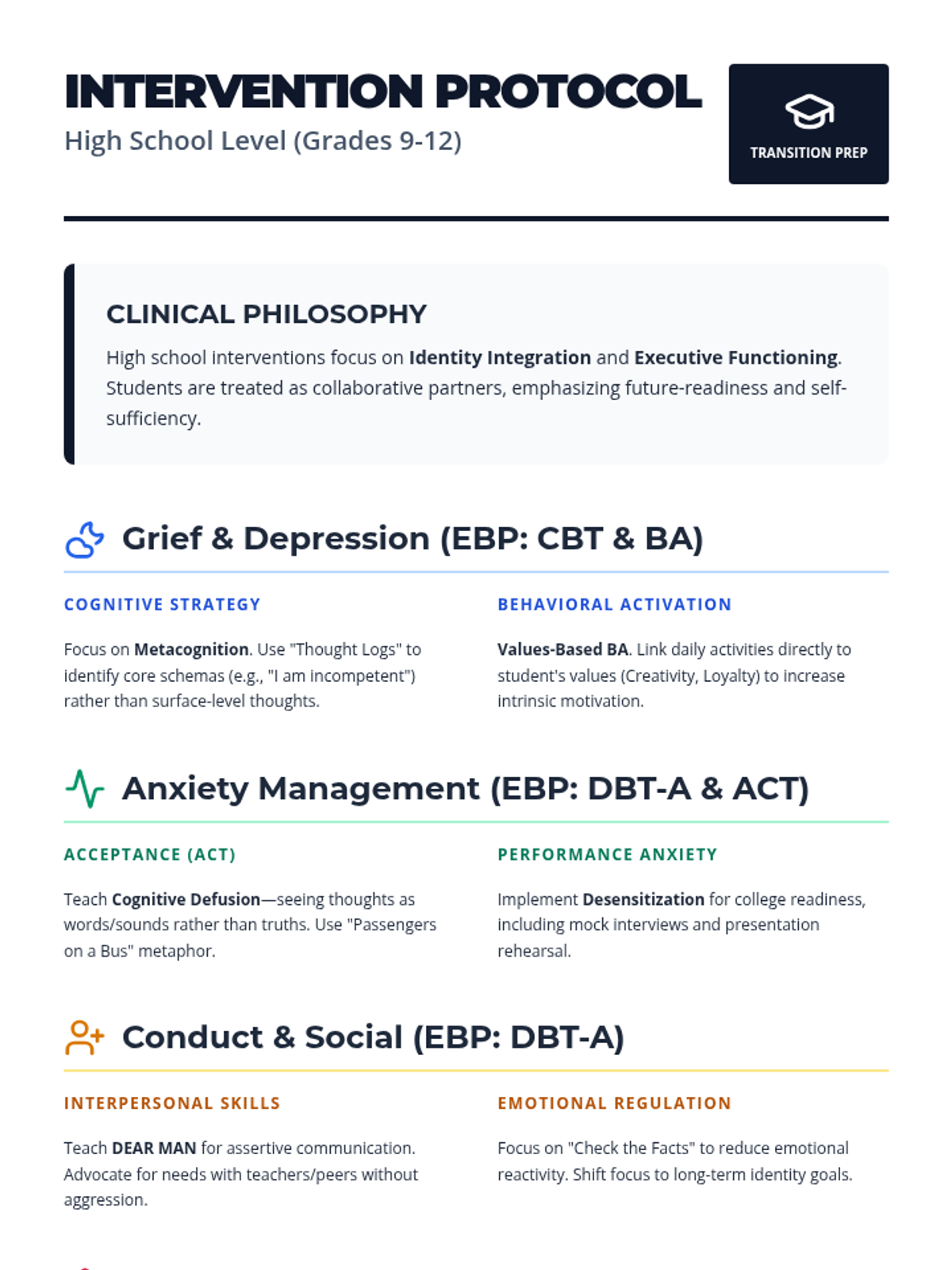
A high-level clinician guide for high school interventions, focusing on ACT, DBT-A, and CAMS protocols. Addresses cognitive complexity, identity integration, and interpersonal effectiveness.
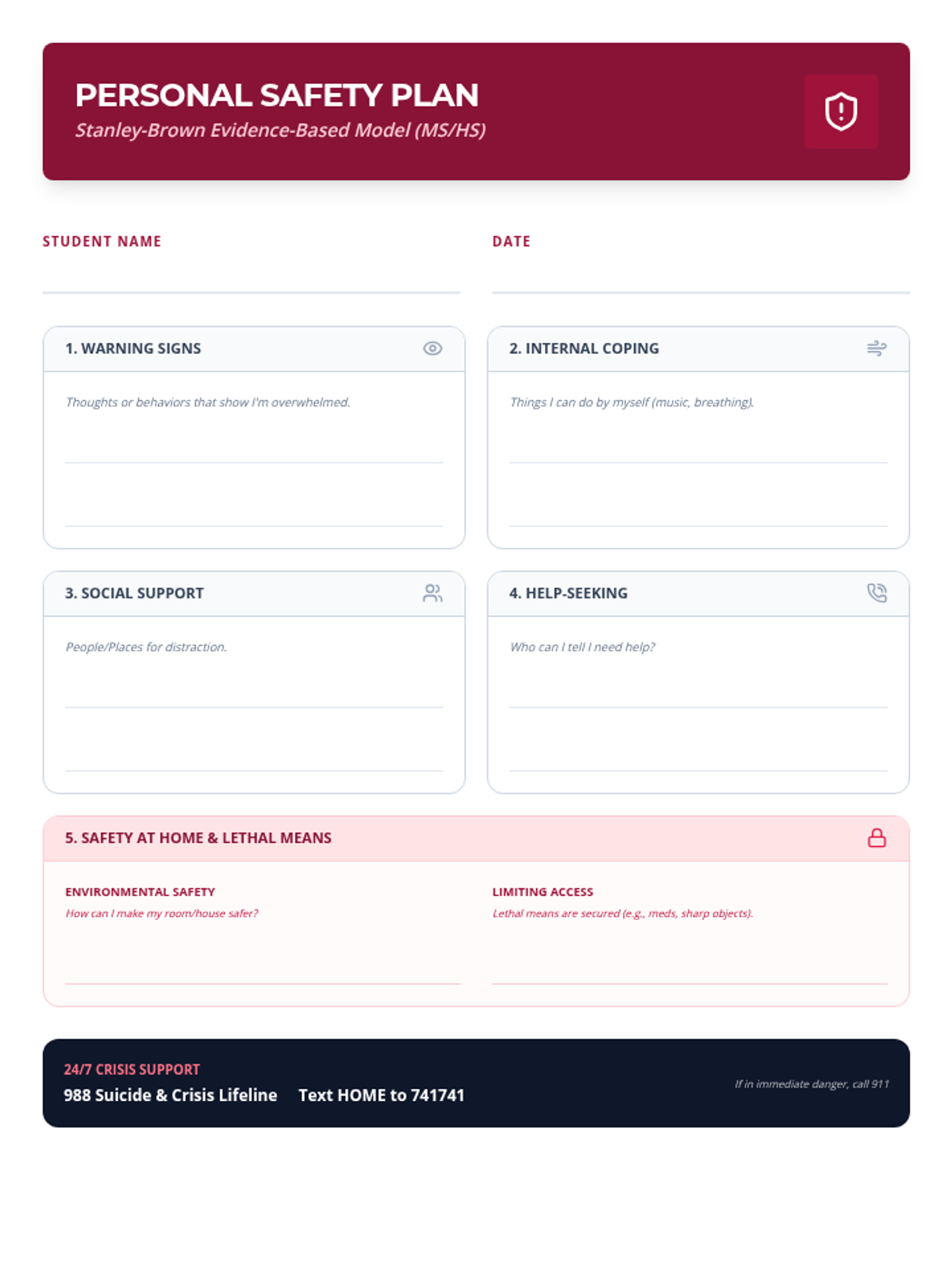
A standardized, evidence-based safety plan template for middle and high school students, following the Stanley-Brown model. Includes steps for warning signs, coping strategies, and emergency contacts.
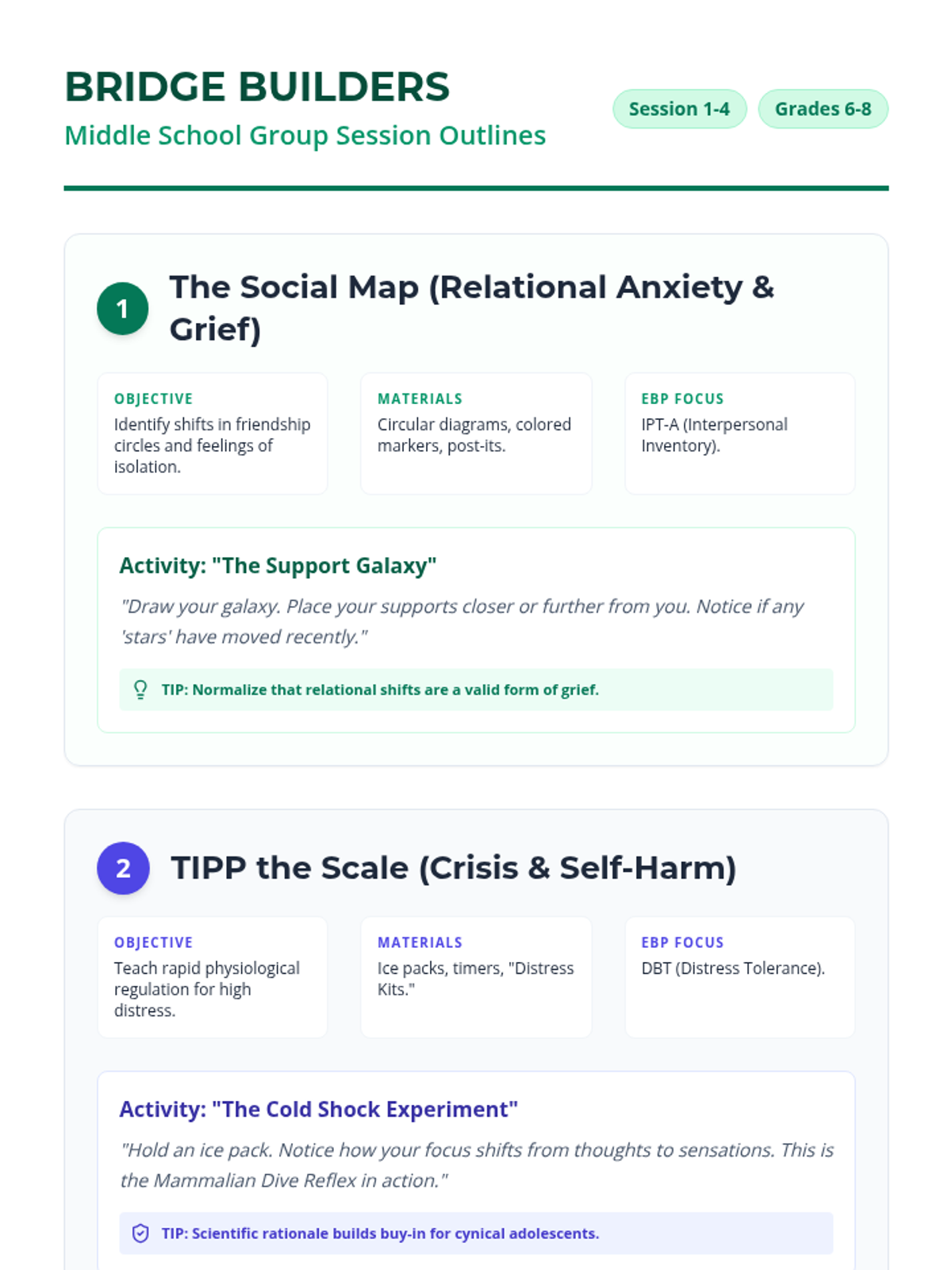
Structured group session outlines for middle school students, utilizing IPT-A, DBT, and Choice Theory to address social anxiety, conduct, and crisis prevention. Includes specific activities like "The Support Galaxy" and "The Cold Shock Experiment."
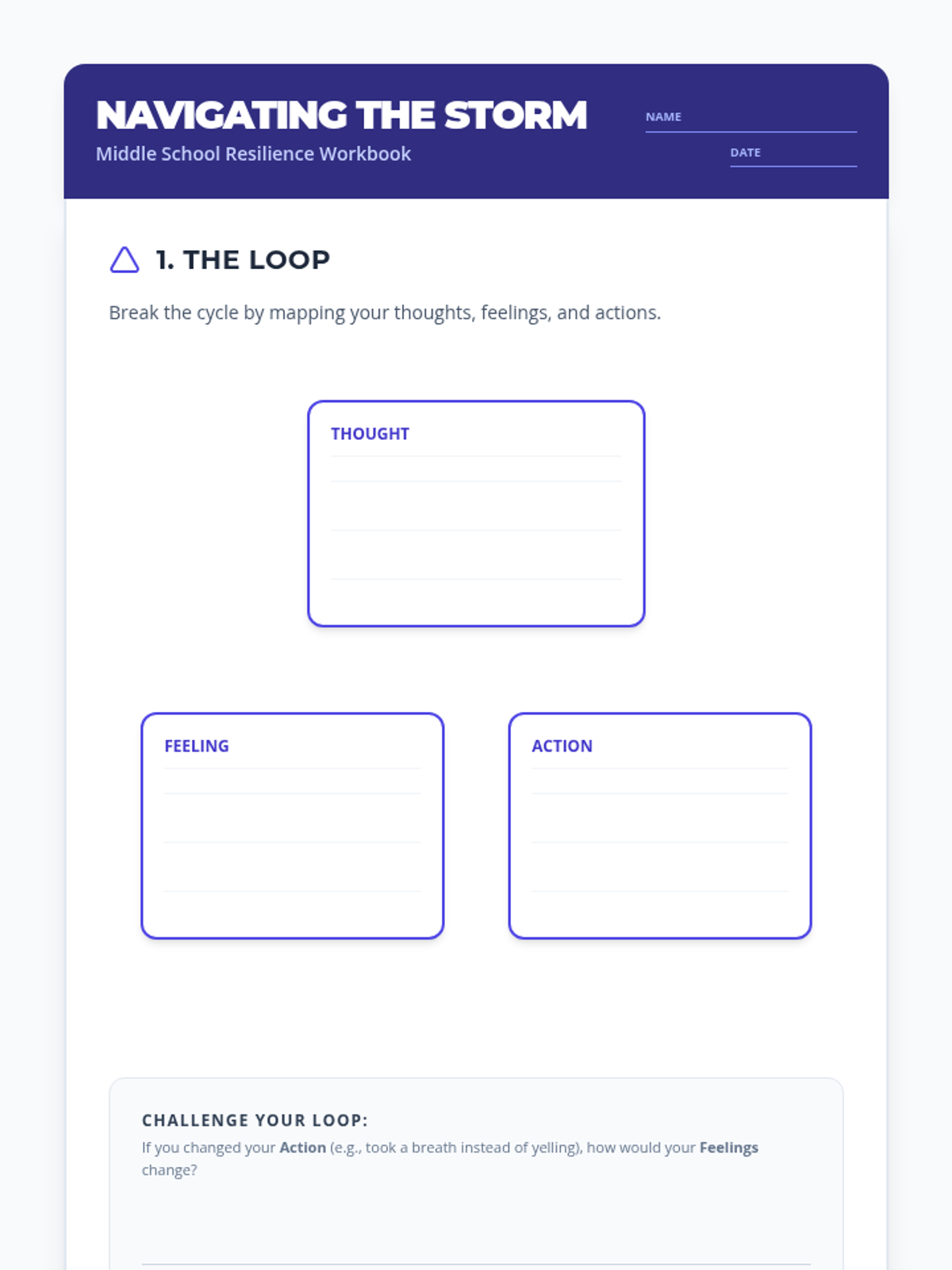
A middle school student workbook focused on CBT concepts like the Cognitive Triangle and Thinking Traps. Designed to help adolescents navigate complex emotions, social anxiety, and behavioral loops with autonomy-focused exercises.
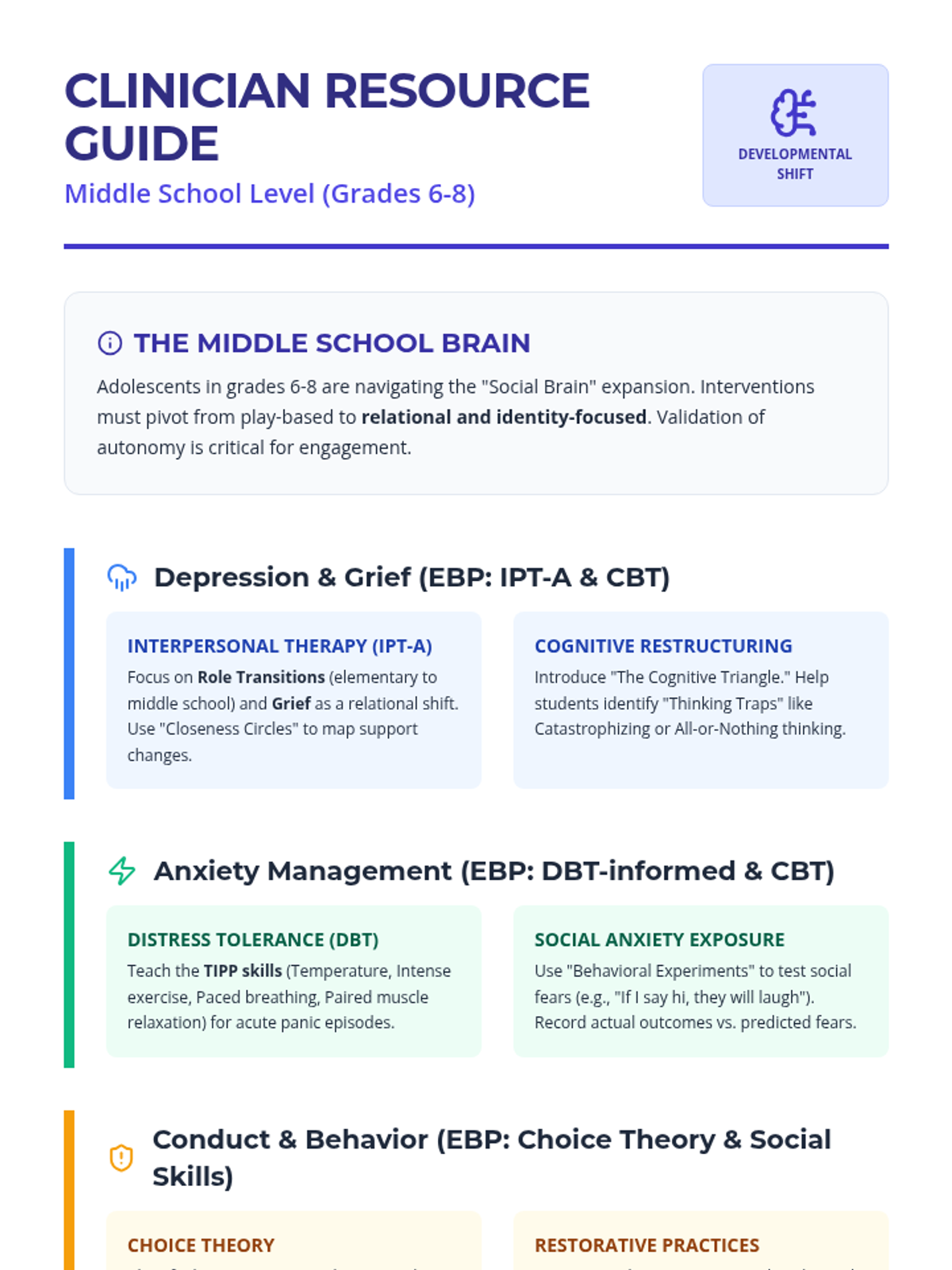
A comprehensive clinician guide for middle school mental health interventions, focusing on IPT-A, CBT, and DBT-informed strategies for grief, anxiety, and conduct, with a focus on the adolescent "Social Brain."
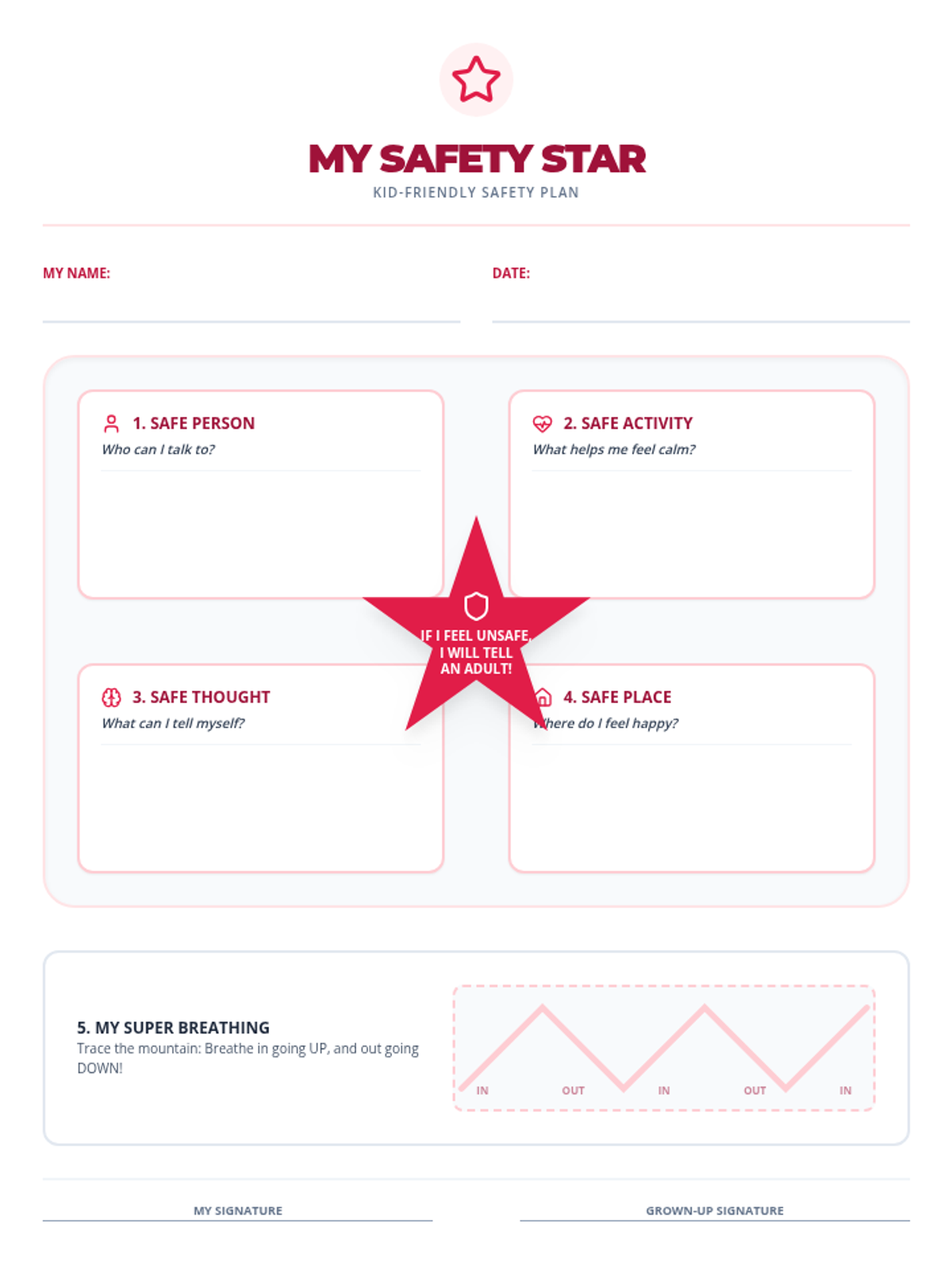
A visual, kid-friendly safety planning template for elementary students, focusing on five key points: Safe Person, Safe Activity, Safe Thought, Safe Place, and Breathing. Includes spaces for signatures and student drawing.
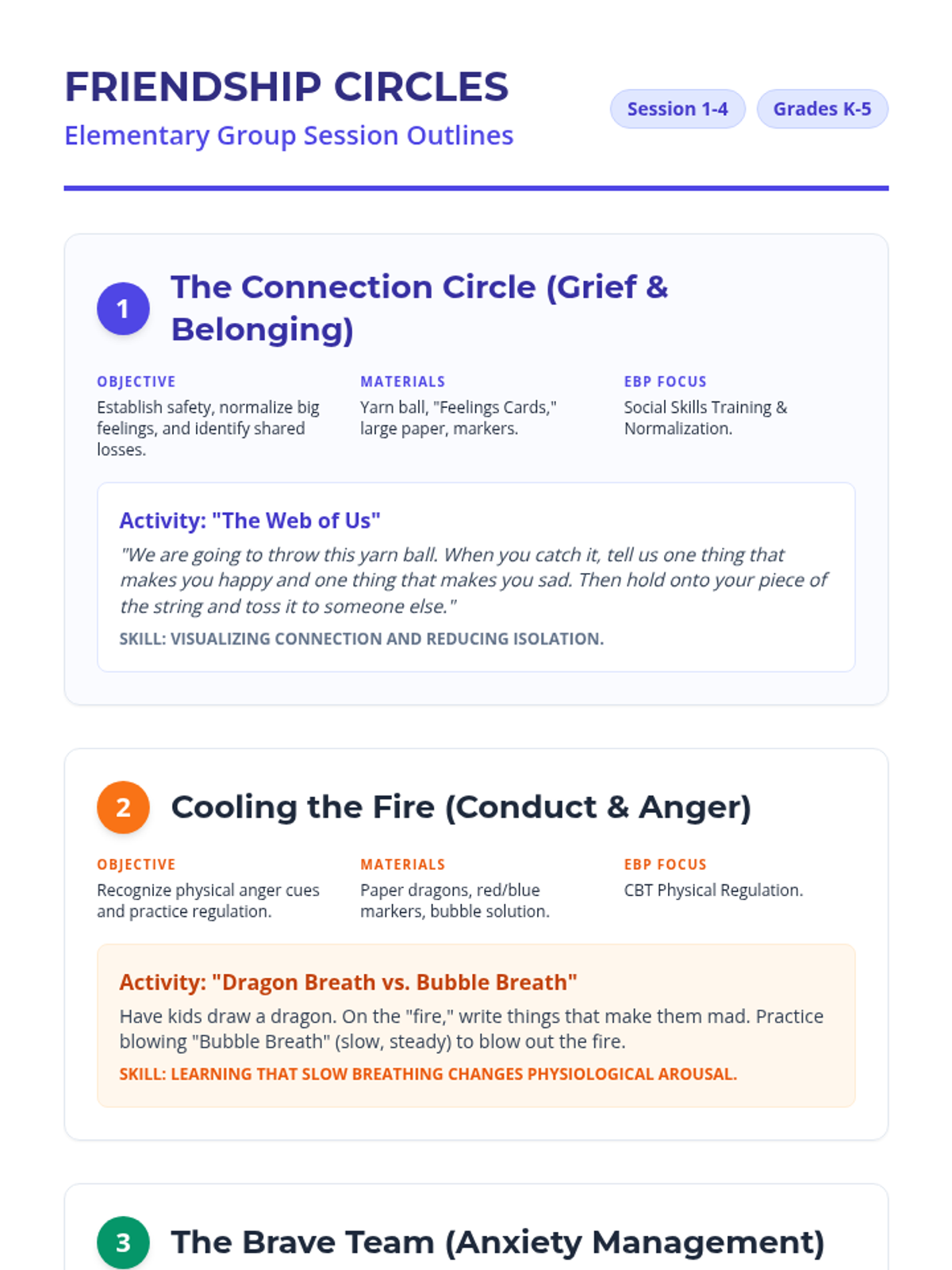
Structured group session outlines for elementary students, covering connection (grief), regulation (conduct), bravery (anxiety), and safety (crisis). Includes objectives, materials, and evidence-based practice focuses.