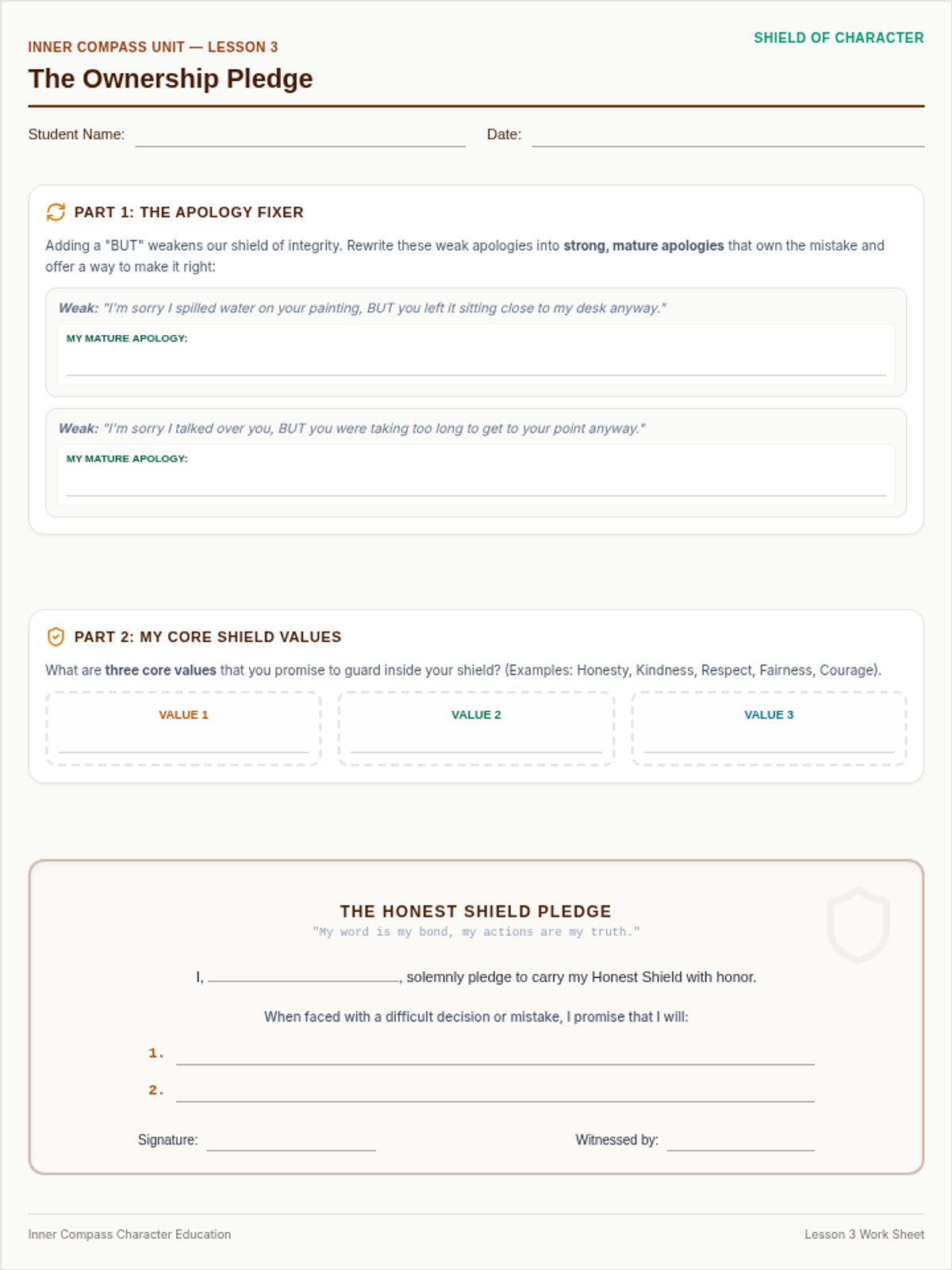
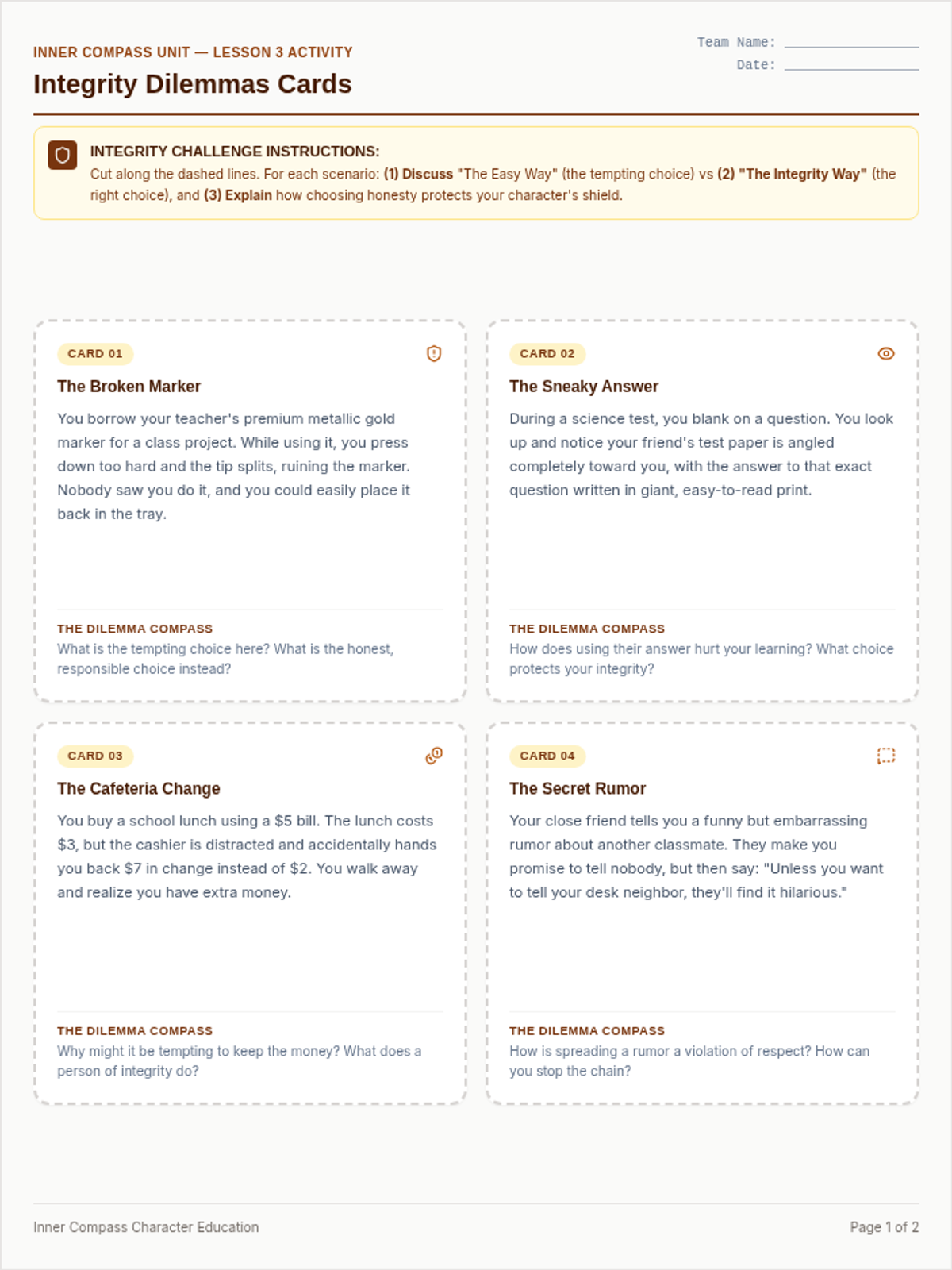
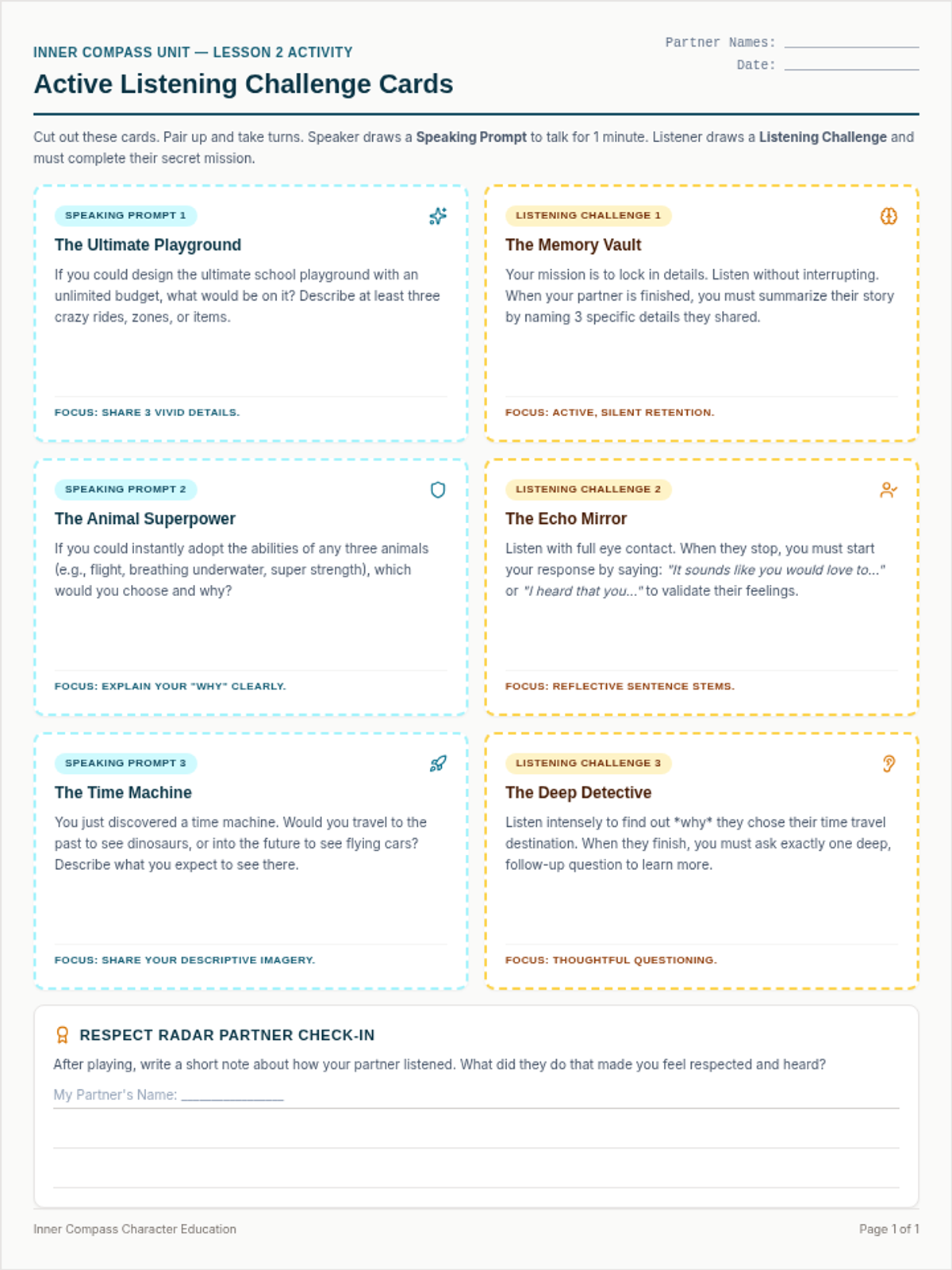
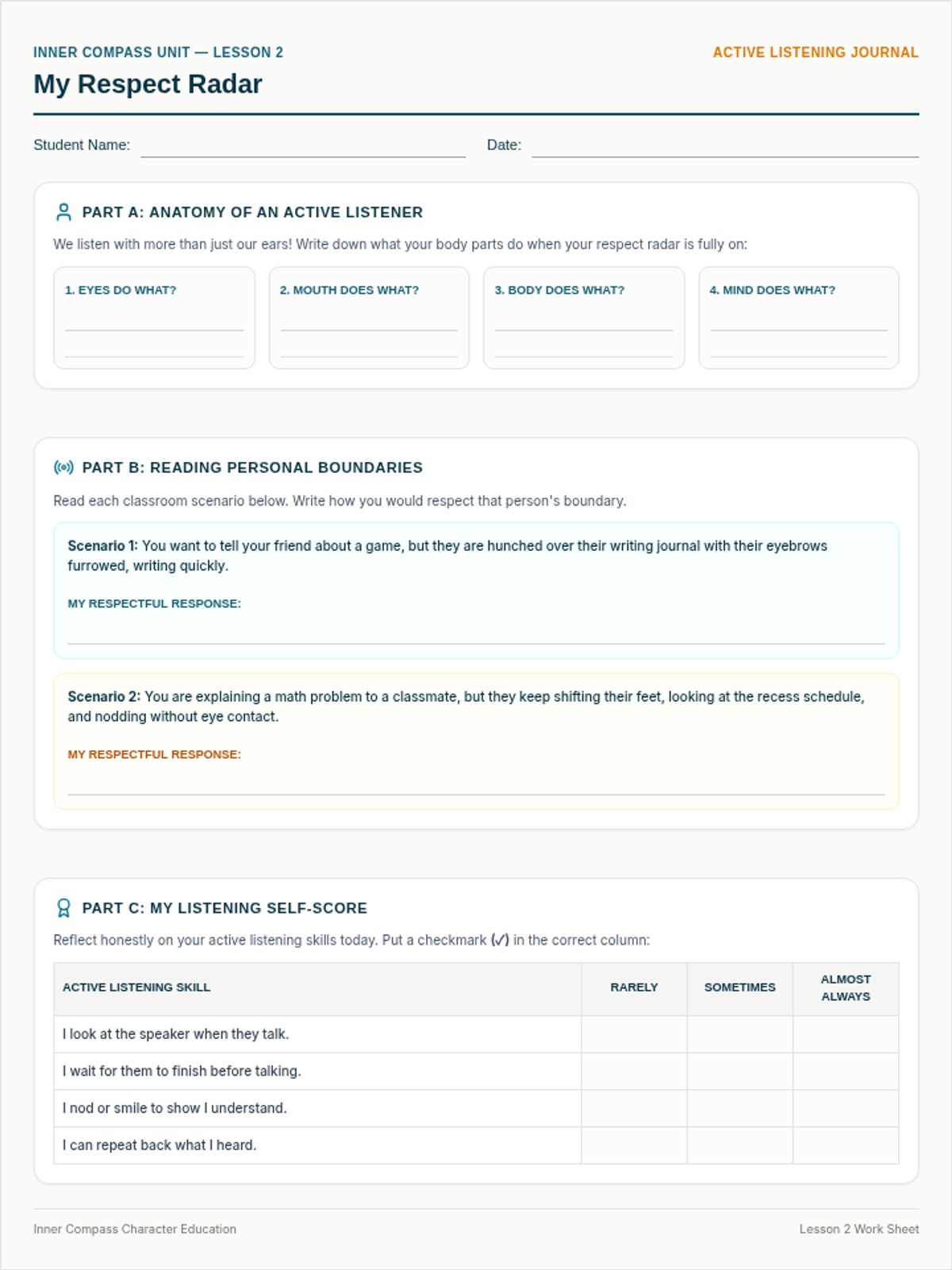
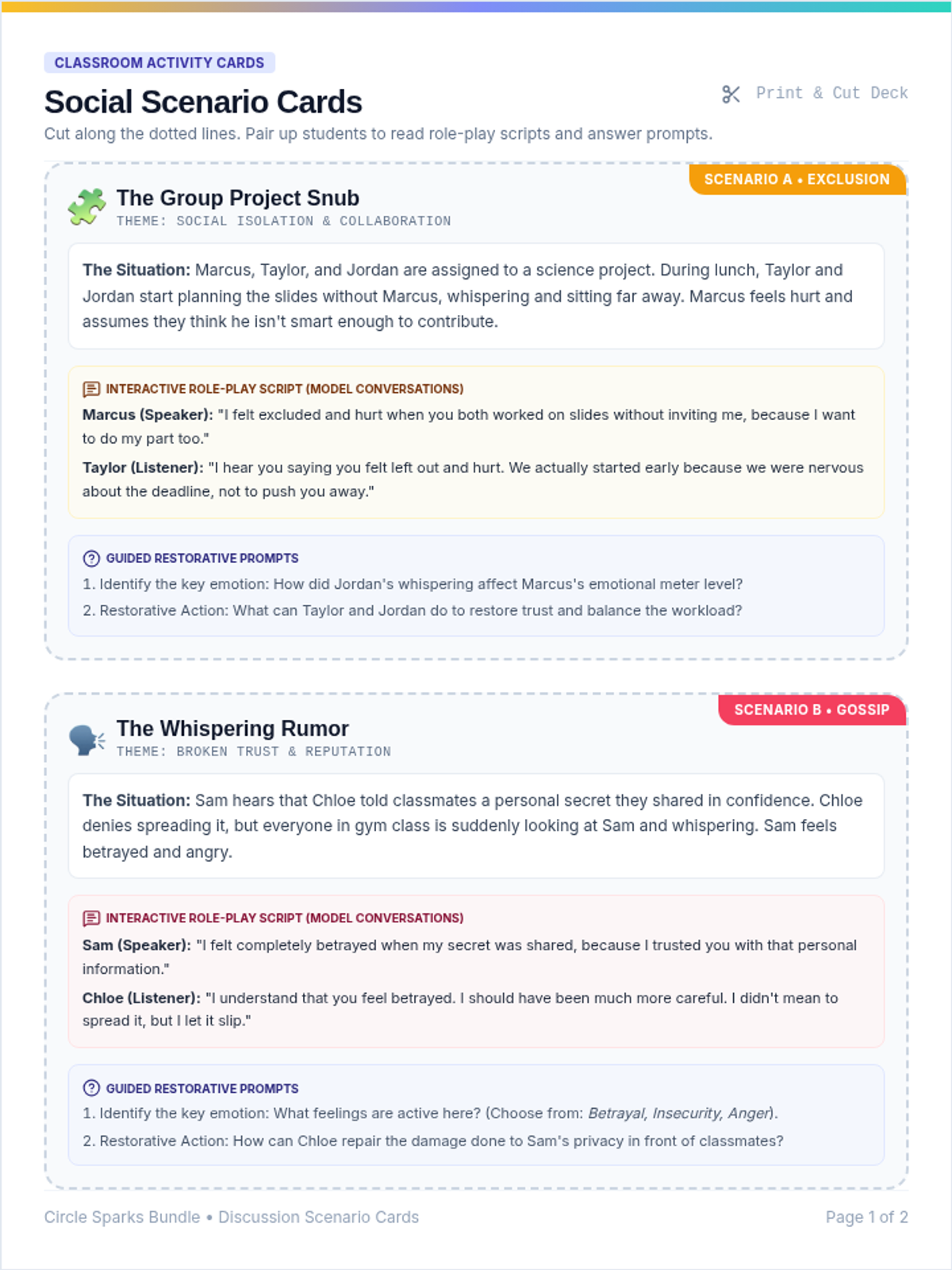
A student worksheet for Lesson 2 focusing on finding silver linings, taking responsibility, and performing reality checks for common social scenarios.
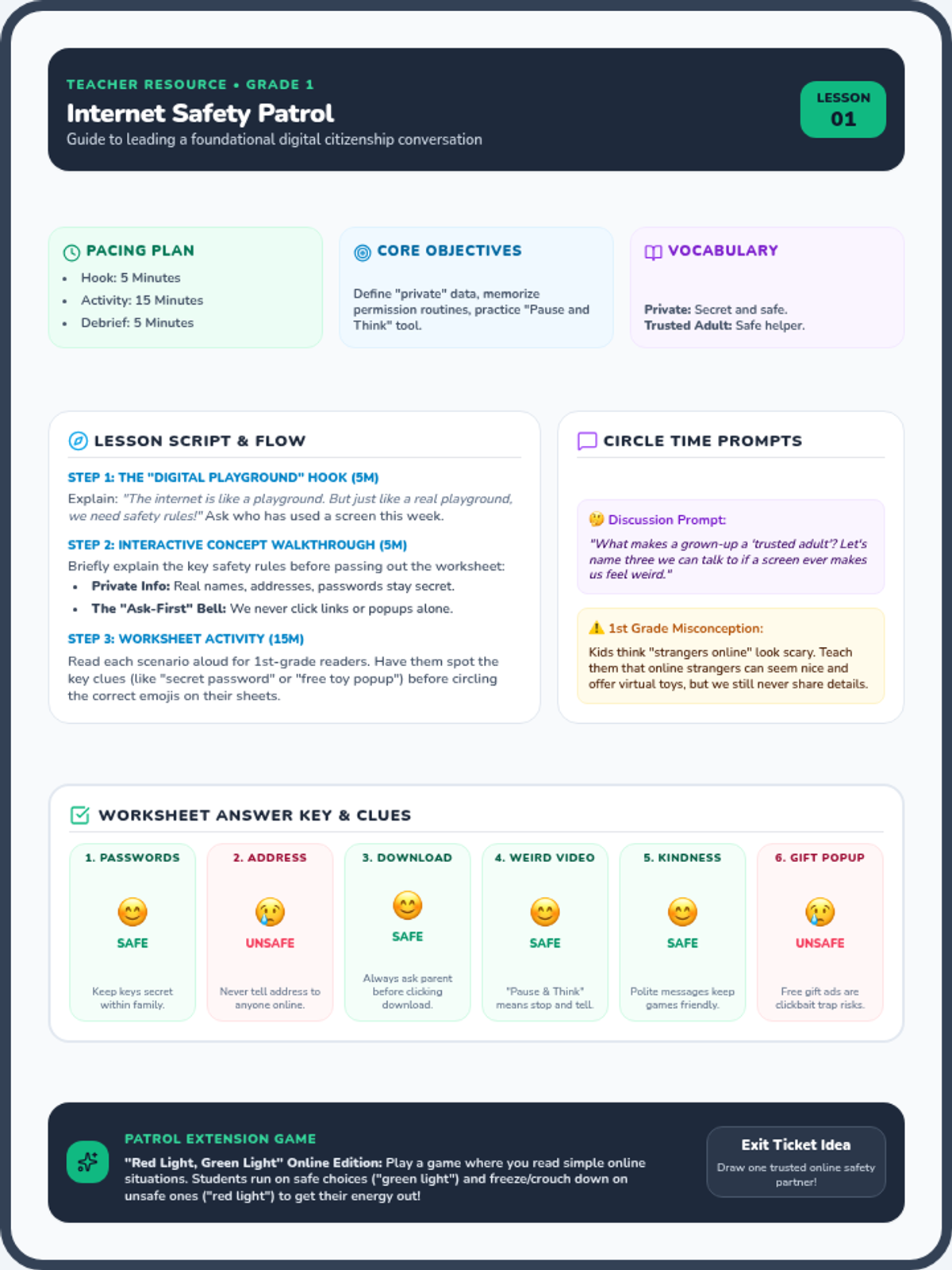
A comprehensive teacher guide for facilitating the 'Managing Brain Alarms' lesson, including learning objectives, discussion prompts, and an answer key for the student worksheet. Updated for better structure and flow.
An engaging slide deck to teach the 'Brain Alarm' concept, differentiating between real problems and anxiety-driven worries while introducing the four-step management plan. Revised for visibility and icon rendering.
A structured student worksheet for practicing the 'Brain Alarm' technique, helping 5th-7th graders differentiate between real problems and anxiety-driven worries while providing a clear coping action plan. Revised for improved layout and contrast.
An optimism reframing worksheet that helps students transform negative "storm cloud" thoughts into hopeful, action-oriented "light" thoughts. It uses the concept of cognitive reframing to build resilience and agency.
A classroom anchor chart detailing the four pillars of the HOPE framework: Relationships, Environments, Engagement, and Emotional Support. Designed to remind students of the positive experiences that build their resilience and hope.
A visual anchor chart for the classroom wall illustrating the Science of Hope (Goals, Agency, Pathways). It uses high-contrast colors and bold icons to serve as a daily reference for students building their resilience and goal-setting skills.
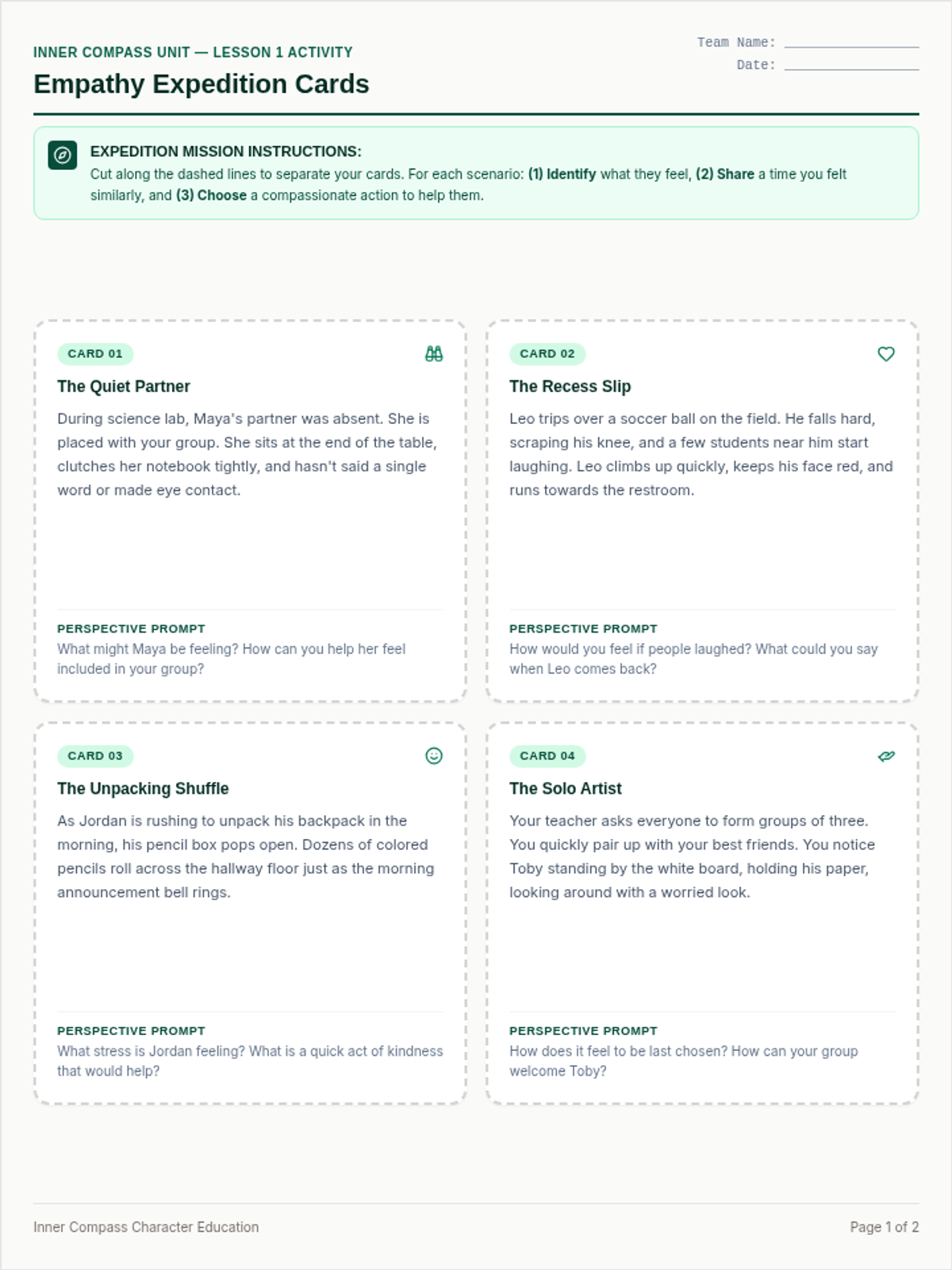
A set of printable discussion cards designed for small group circles. Each card features a prompt related to the Science of Hope or the HOPE framework to foster connection, resilience, and goal-oriented thinking.