A detailed teacher guide for the 30-minute 'Strengths Spotlight' lesson, featuring instructional steps, differentiation strategies, and an asset-based framework for middle schoolers.
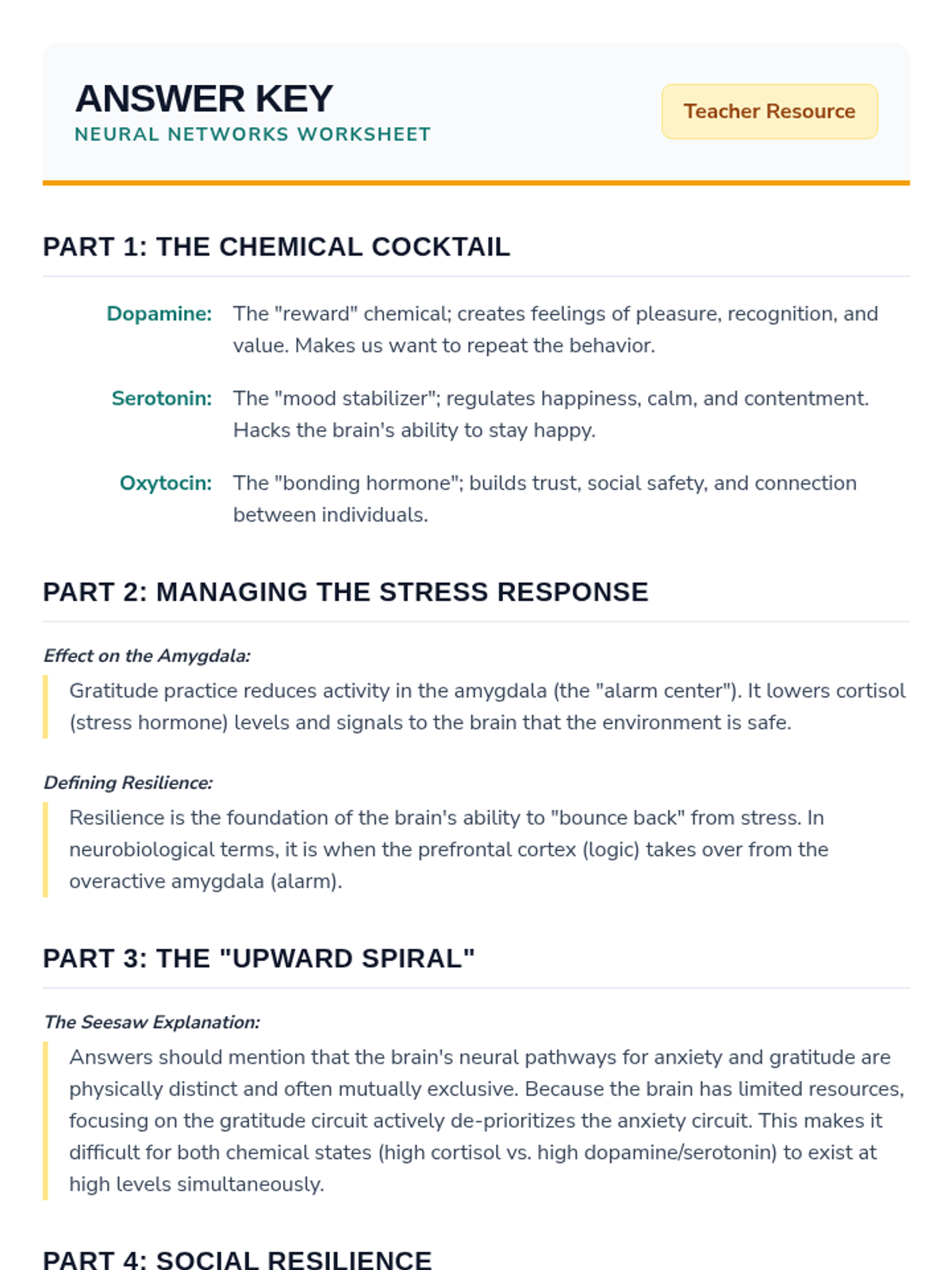
An answer key for the Neural Networks Worksheet, providing clear explanations and expected responses for the chemical matching and analysis questions.
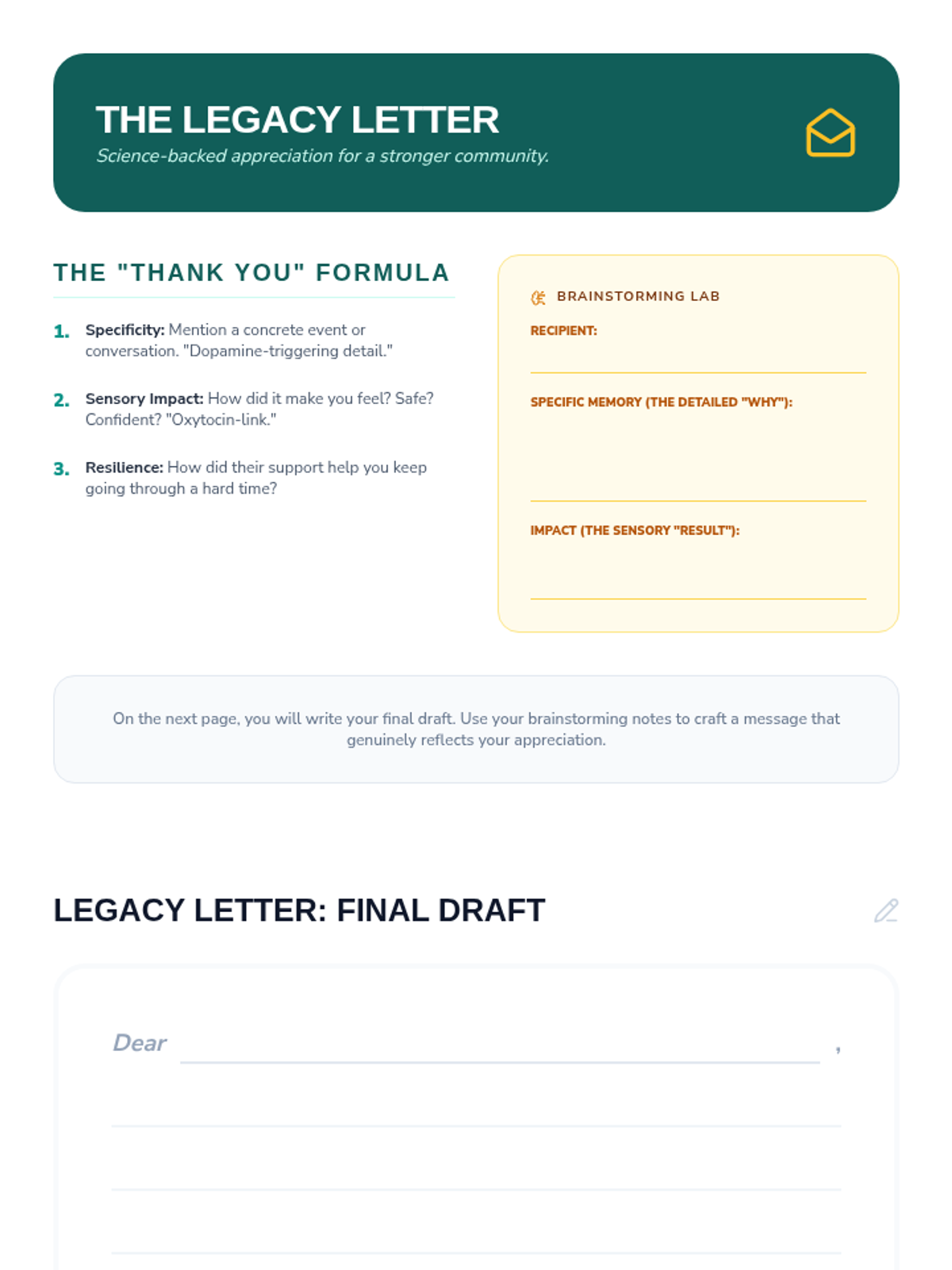
A guided letter-writing activity where students apply their knowledge of neurobiology to write a meaningful thank-you letter to a school staff member.
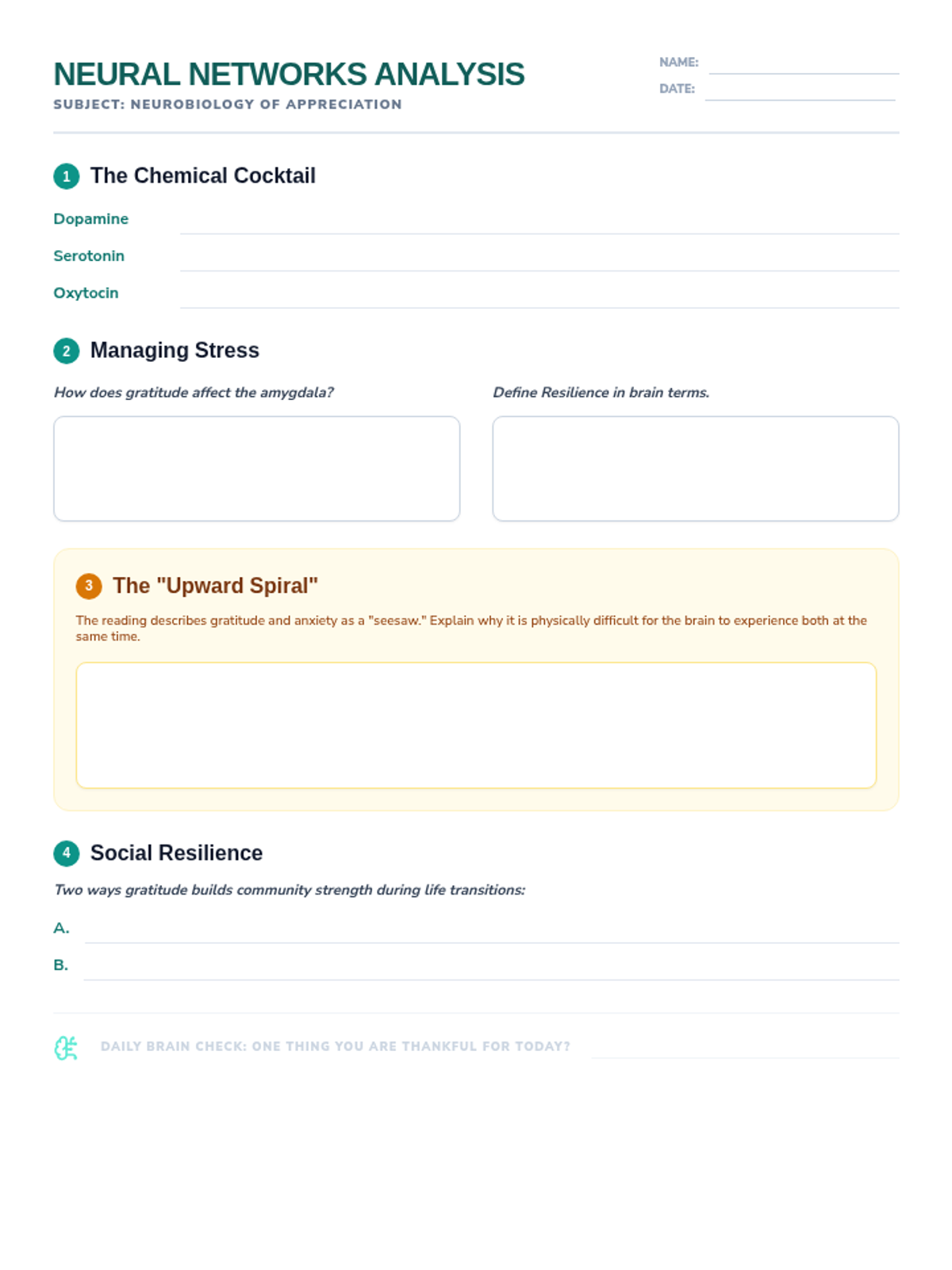
A student worksheet focused on the neurobiology of gratitude, featuring matching exercises, short-answer questions, and critical thinking prompts about neurotransmitters and the stress response.
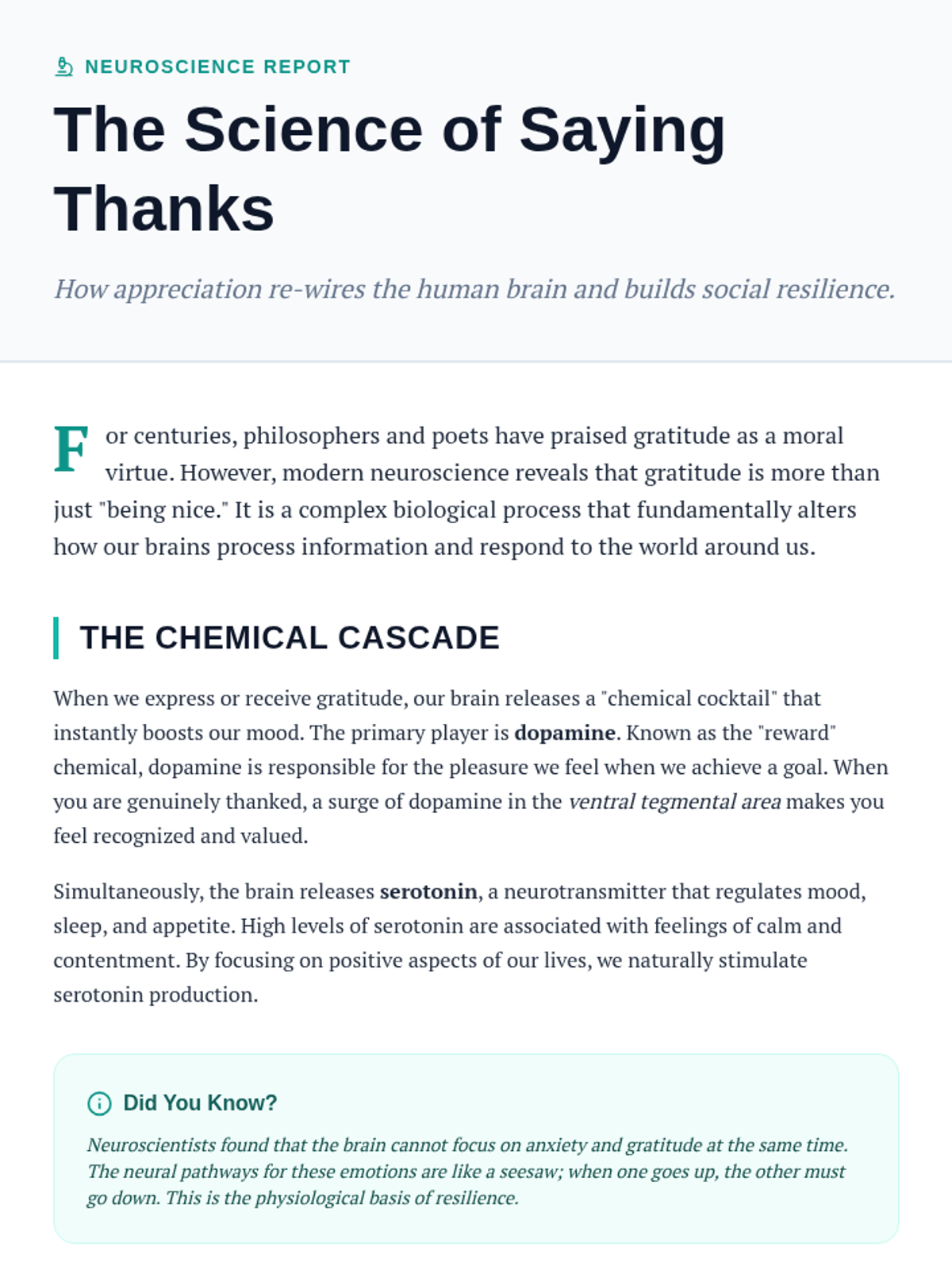
An informative reading passage for students that details the neurobiological effects of gratitude, including the roles of neurotransmitters and the brain's stress response system.
A visually engaging presentation that explains the neurological impact of gratitude, focusing on neurotransmitters, the stress response, and pro-social behavior.
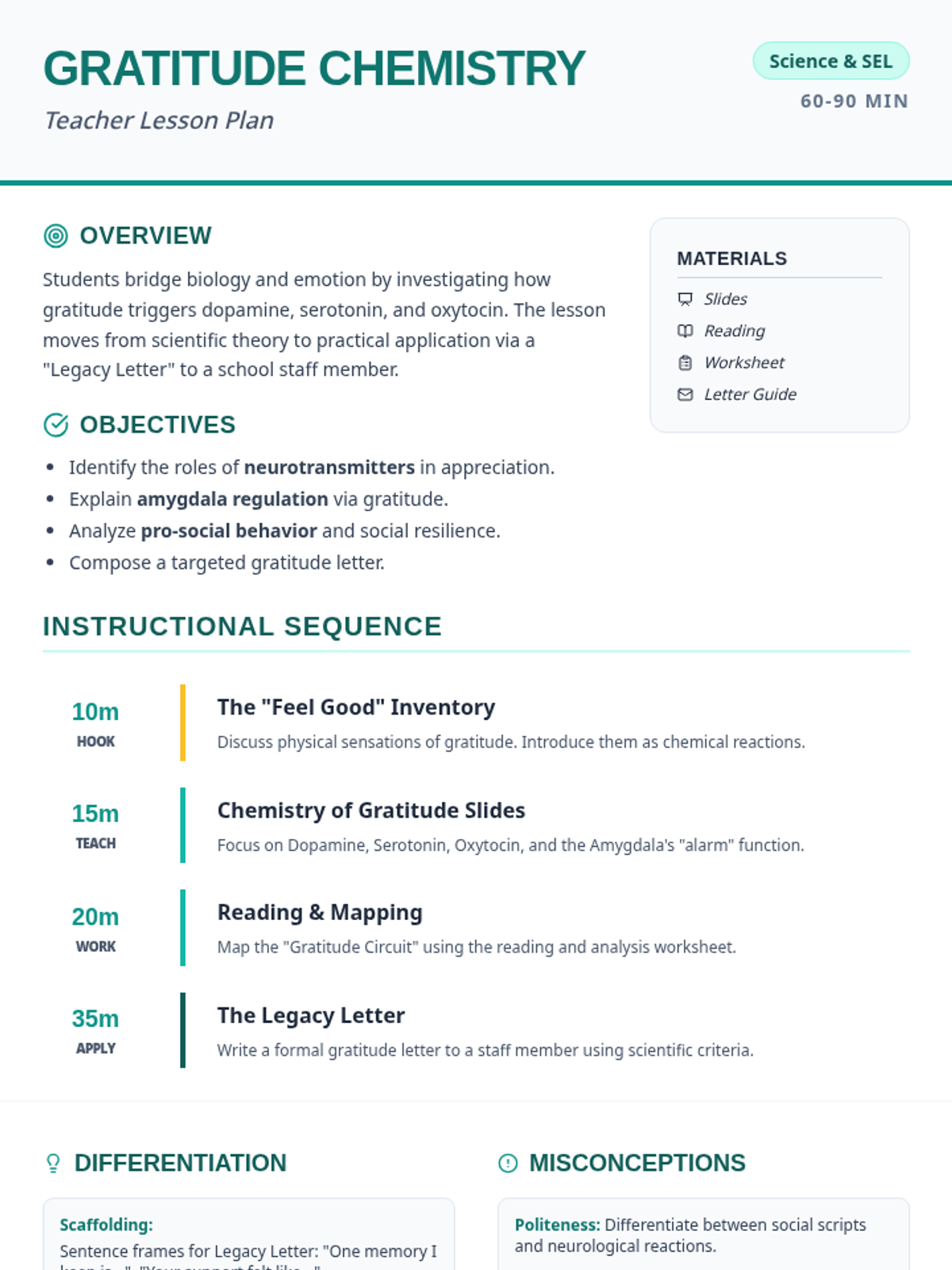
A comprehensive teacher lesson plan for 'Gratitude Chemistry', outlining learning objectives, instructional sequences, and differentiation strategies for teaching the neurobiology of appreciation.
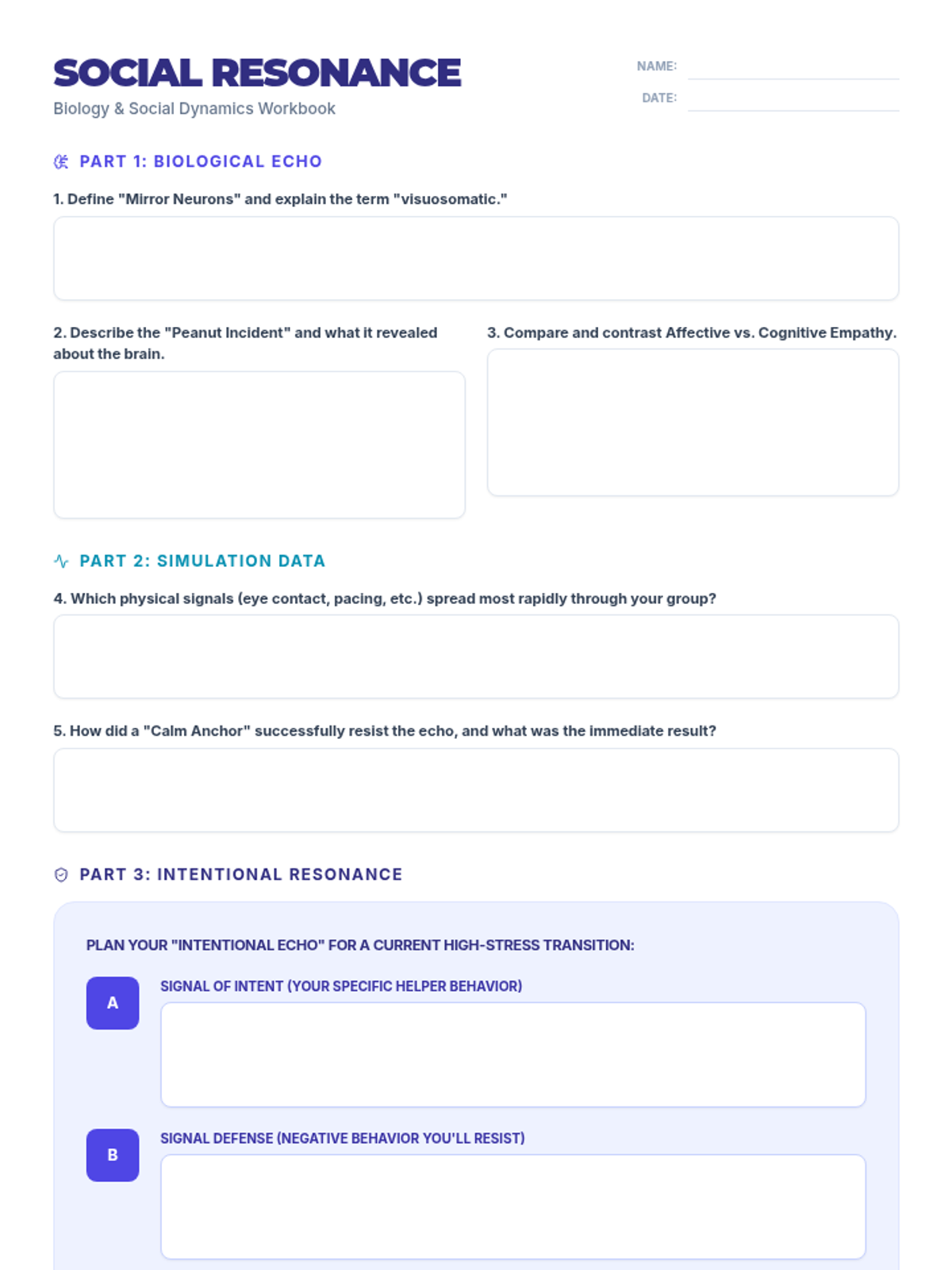
A student worksheet for recording observations from the simulation activity and reflecting on the biological and social concepts of the lesson.
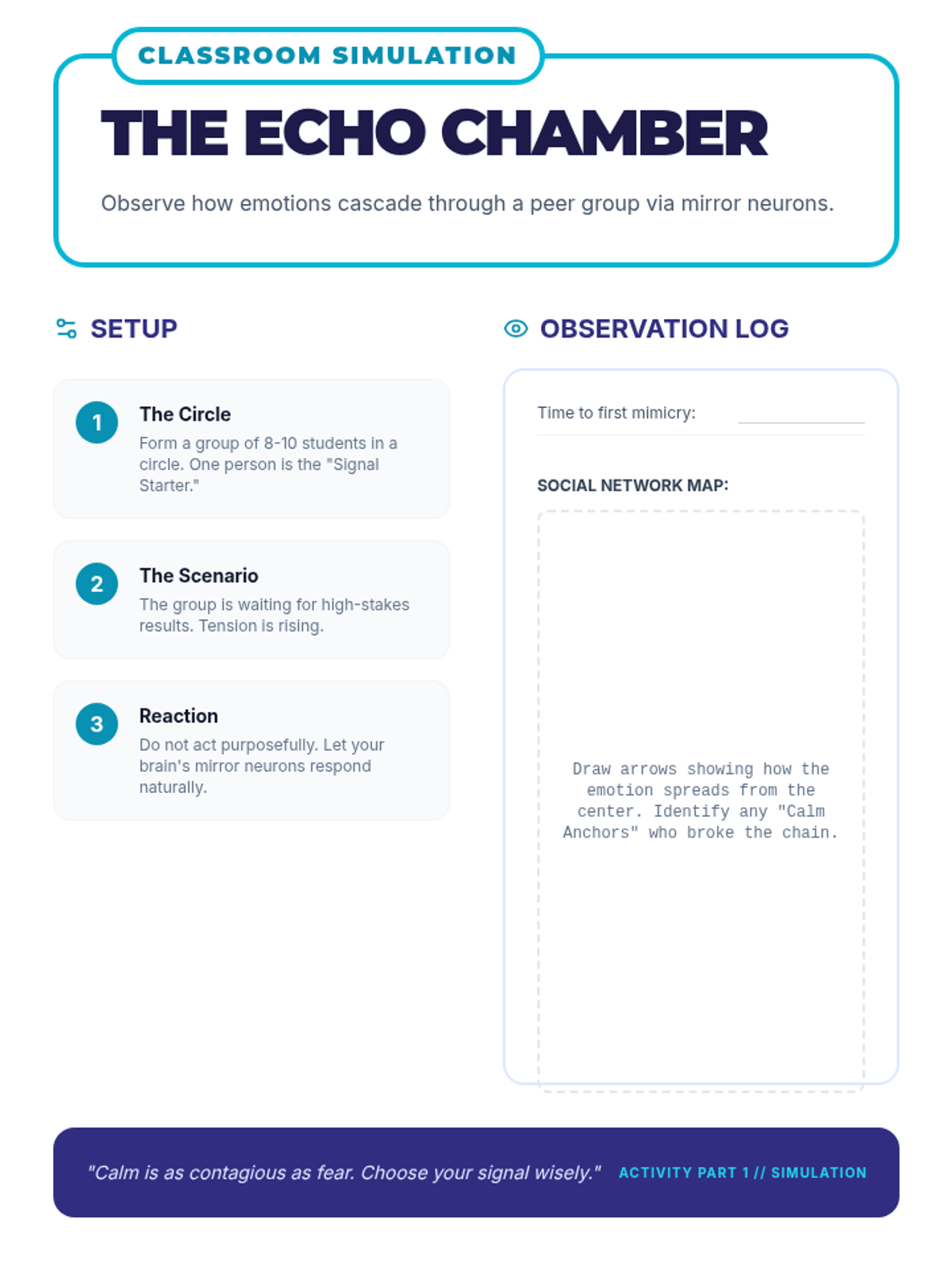
An interactive role-playing activity that simulates emotional contagion in a social group, featuring role cards for different behavioral signals and observer tasks.
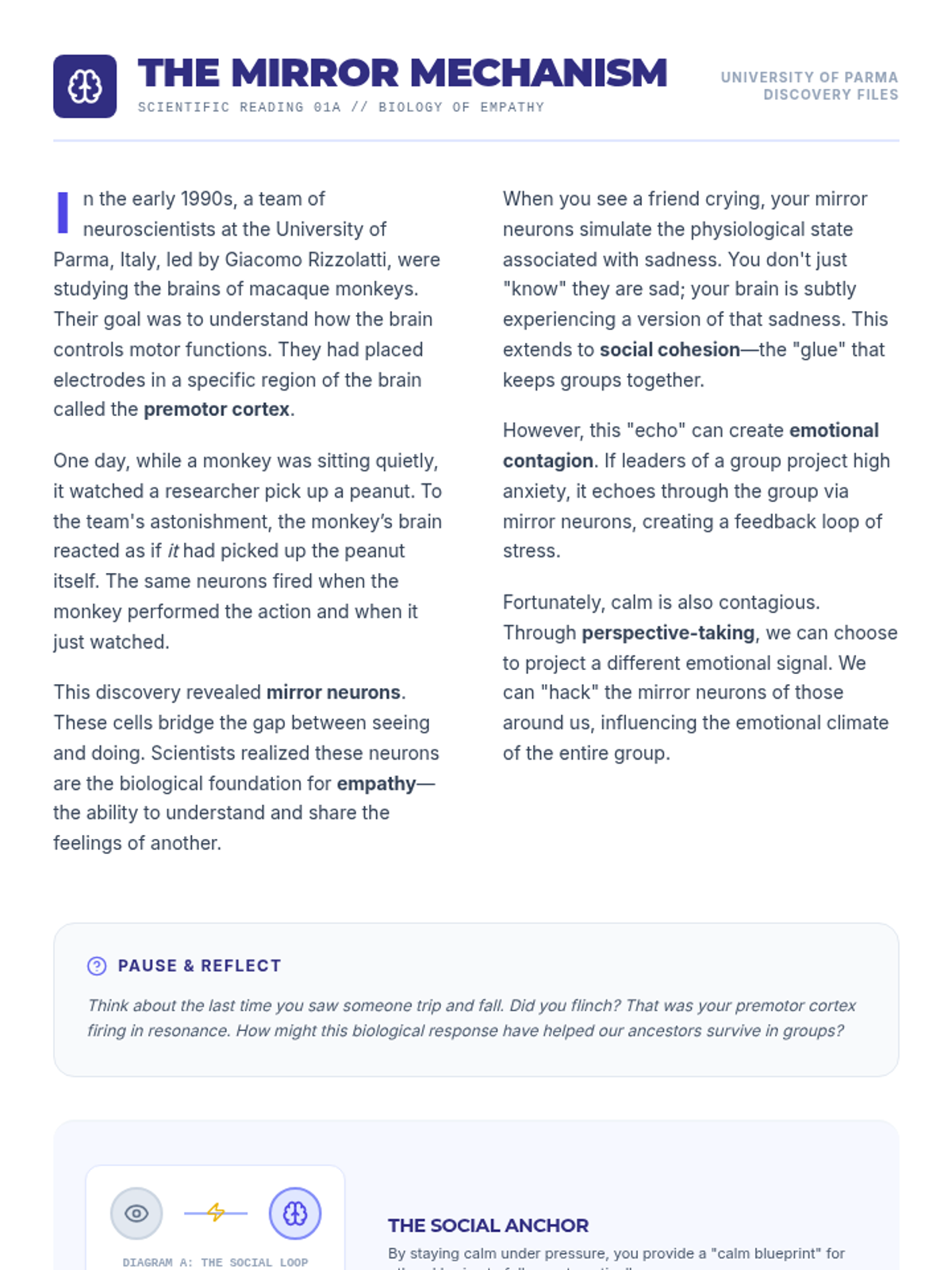
An informational reading passage about the discovery of mirror neurons in macaque monkeys and their role in human empathy and social contagion.
A visually striking presentation that covers the discovery of mirror neurons, the mechanism of emotional contagion, and how behavioral choices influence group dynamics during stress.
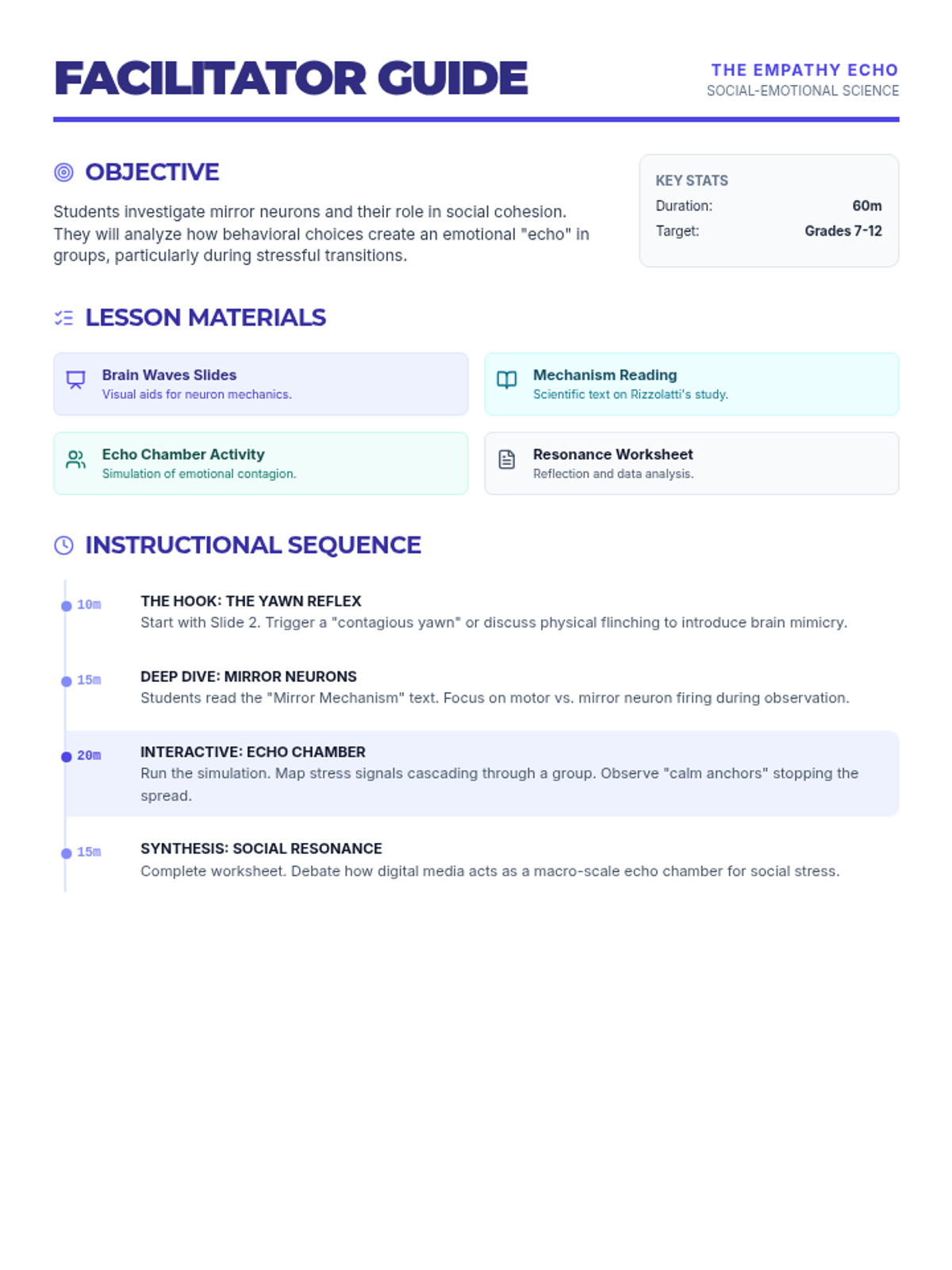
A detailed facilitator guide for teachers, outlining the instructional sequence, biological concepts of mirror neurons, and facilitation tips for classroom activities.
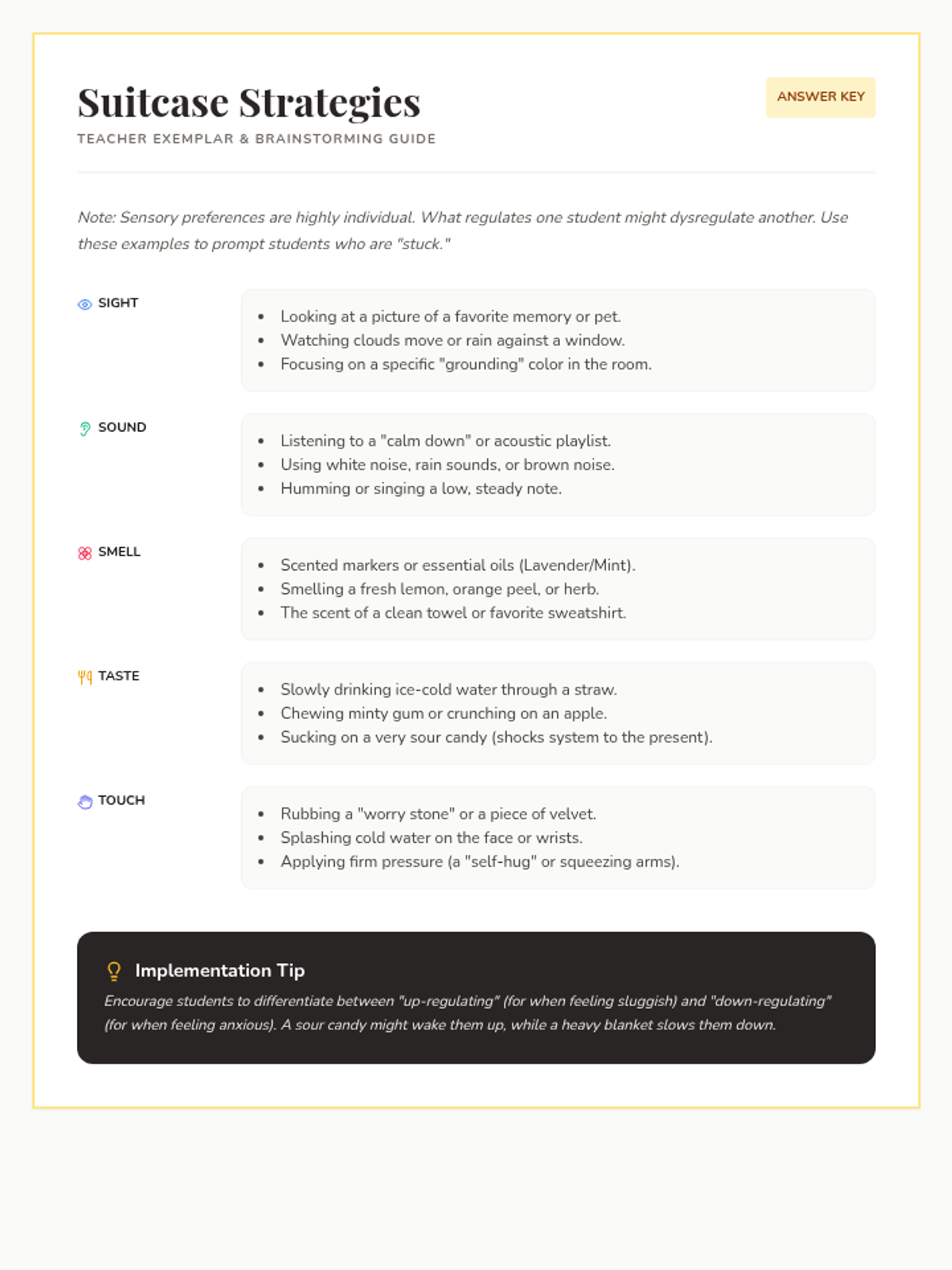
A teacher-facing answer key and brainstorming guide providing specific sensory strategy examples to help students fill out their Sensory Suitcase.
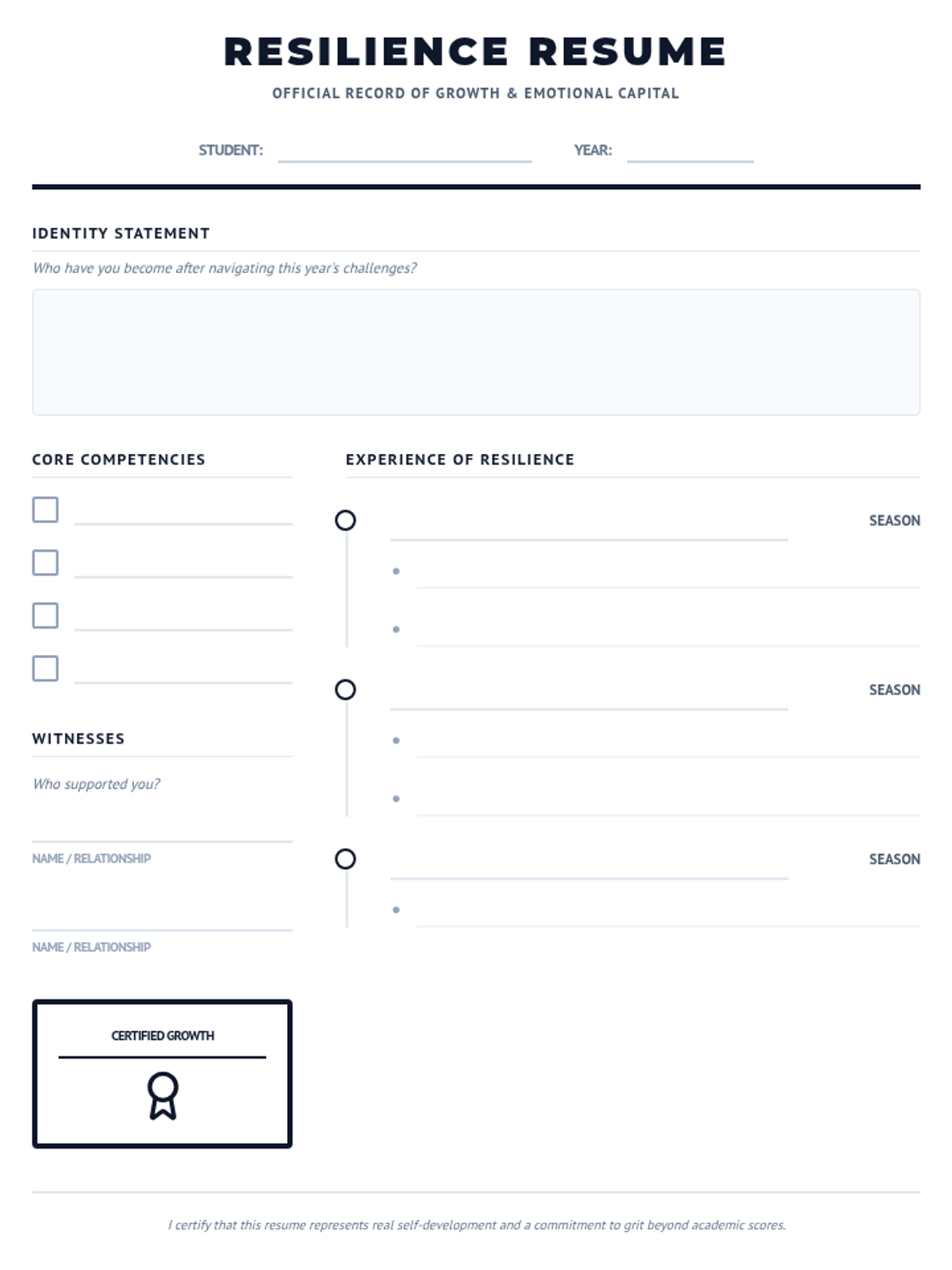
A professional-grade resume template for students to document their emotional and social growth, featuring sections for core competencies, experience of endurance, and personal references.
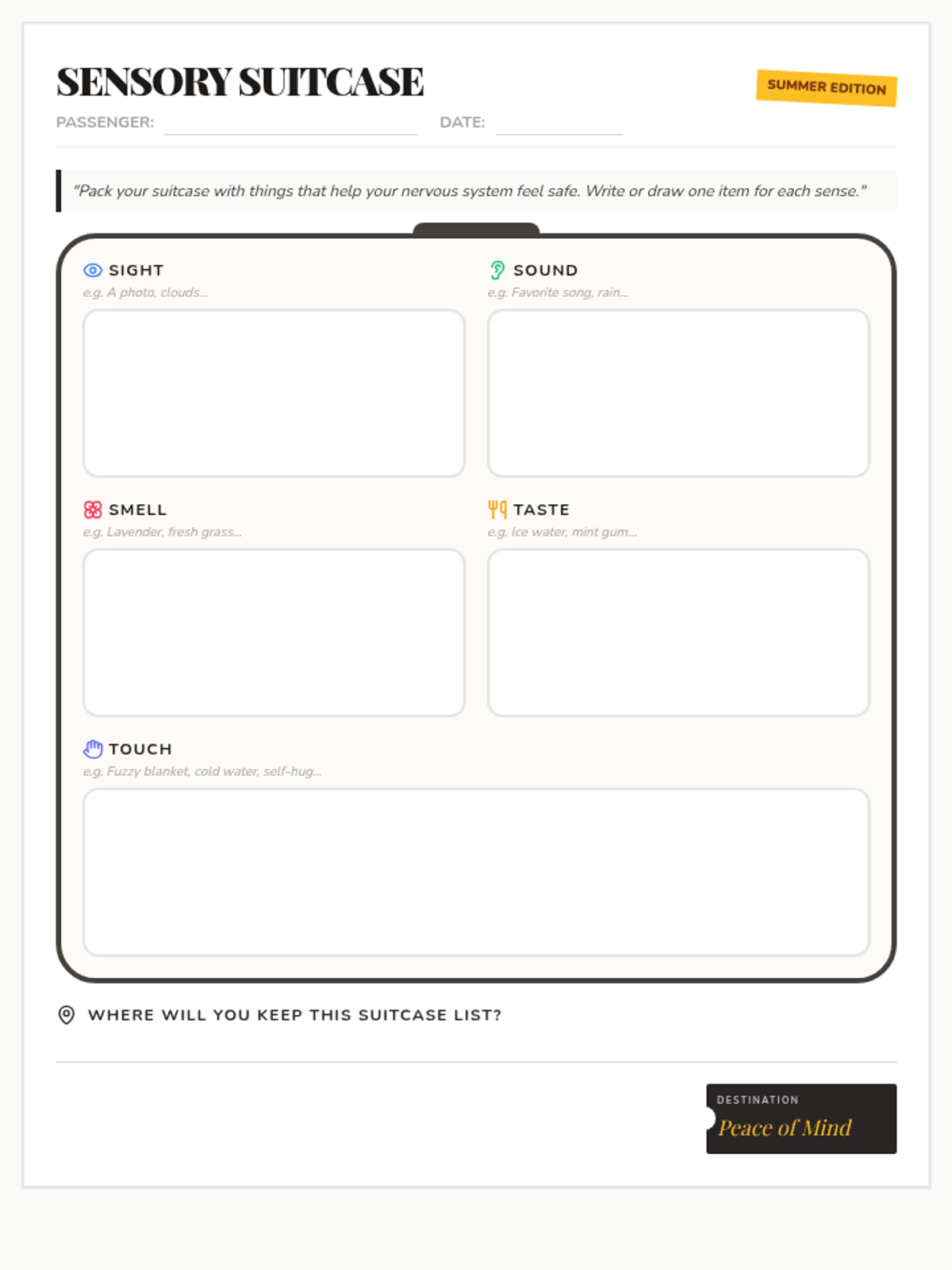
A student worksheet designed as a metaphorical suitcase where students write or draw sensory strategies to help them stay calm and regulated during the summer.
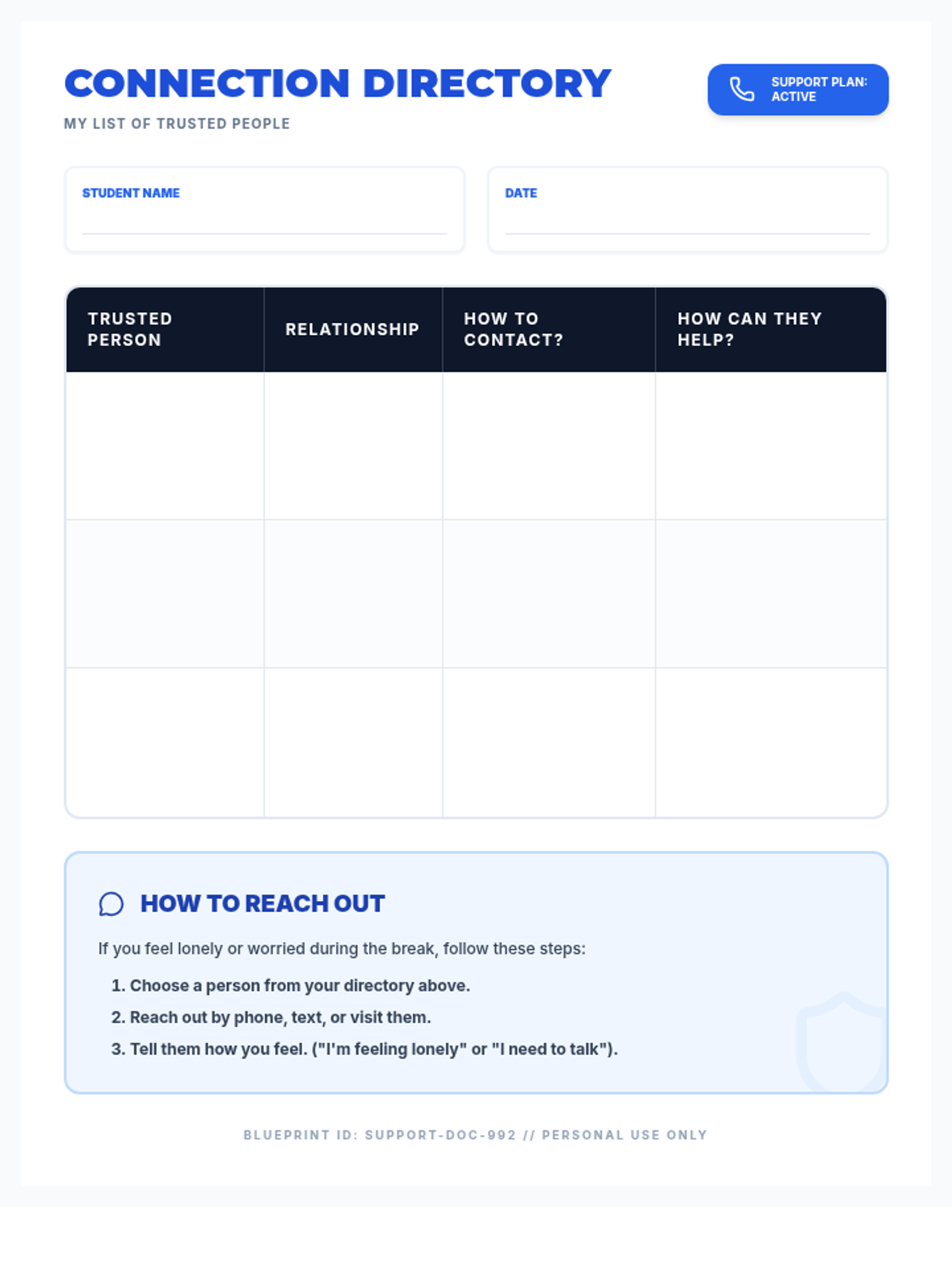
A directory worksheet for students to record names, contact methods, and support roles for their trusted adults, completing the 'Connection Blueprint' intervention.
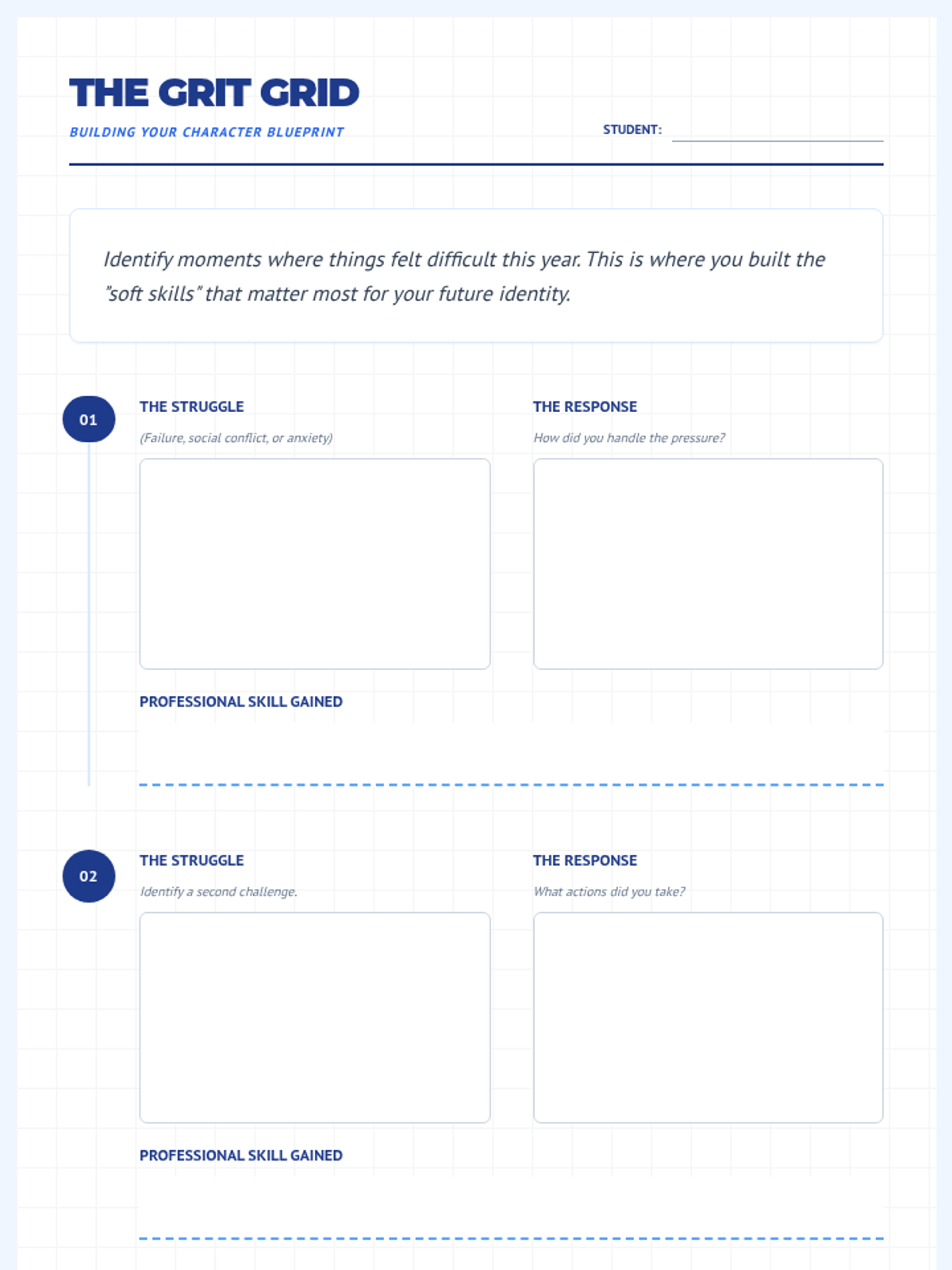
A structured brainstorming worksheet for students to identify specific challenges from their school year and translate them into actionable 'soft skills' for their final project.
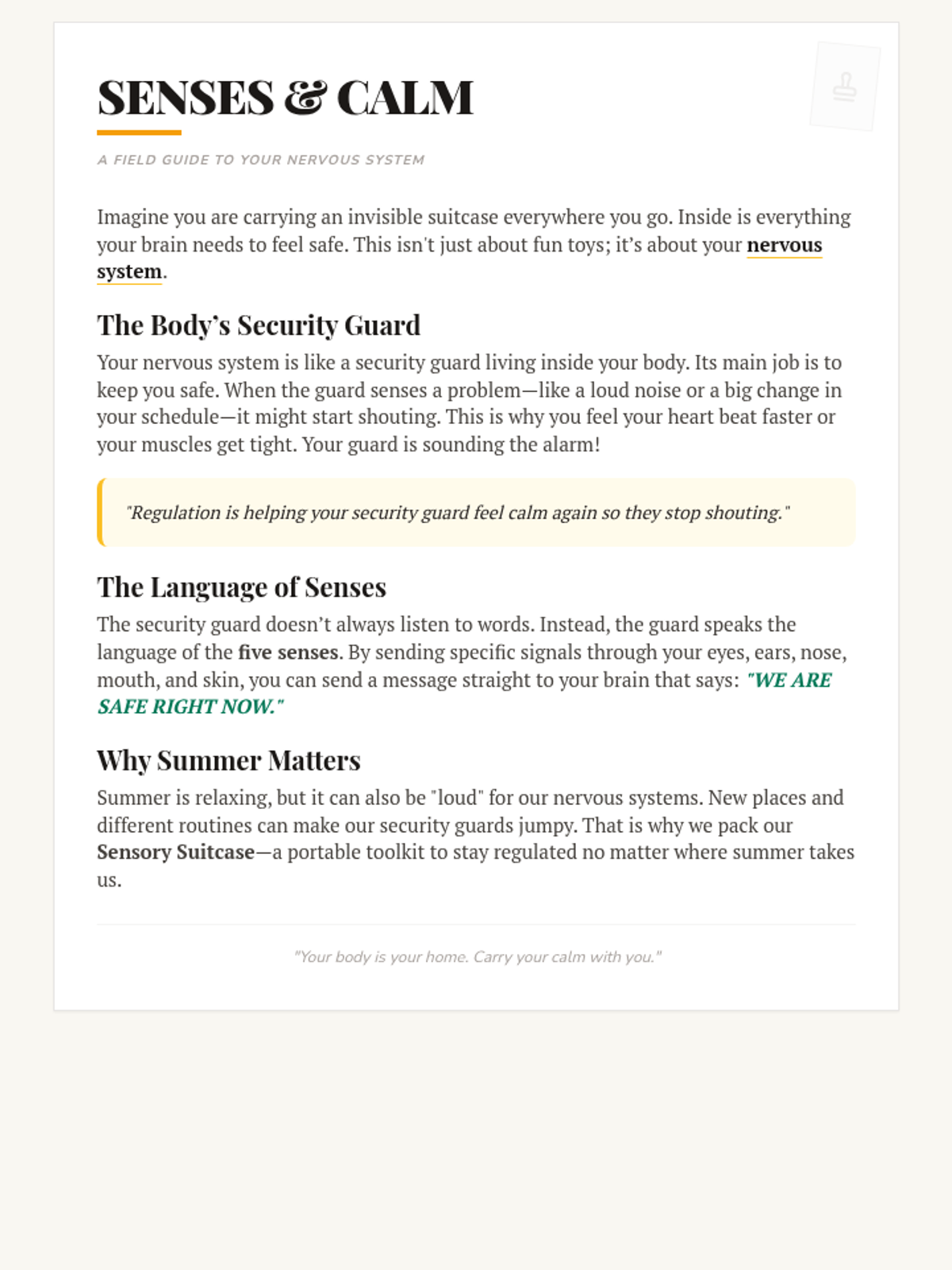
An accessible reading passage for students that explains the concept of the nervous system as a 'security guard' and how sensory inputs can help regulate emotions.
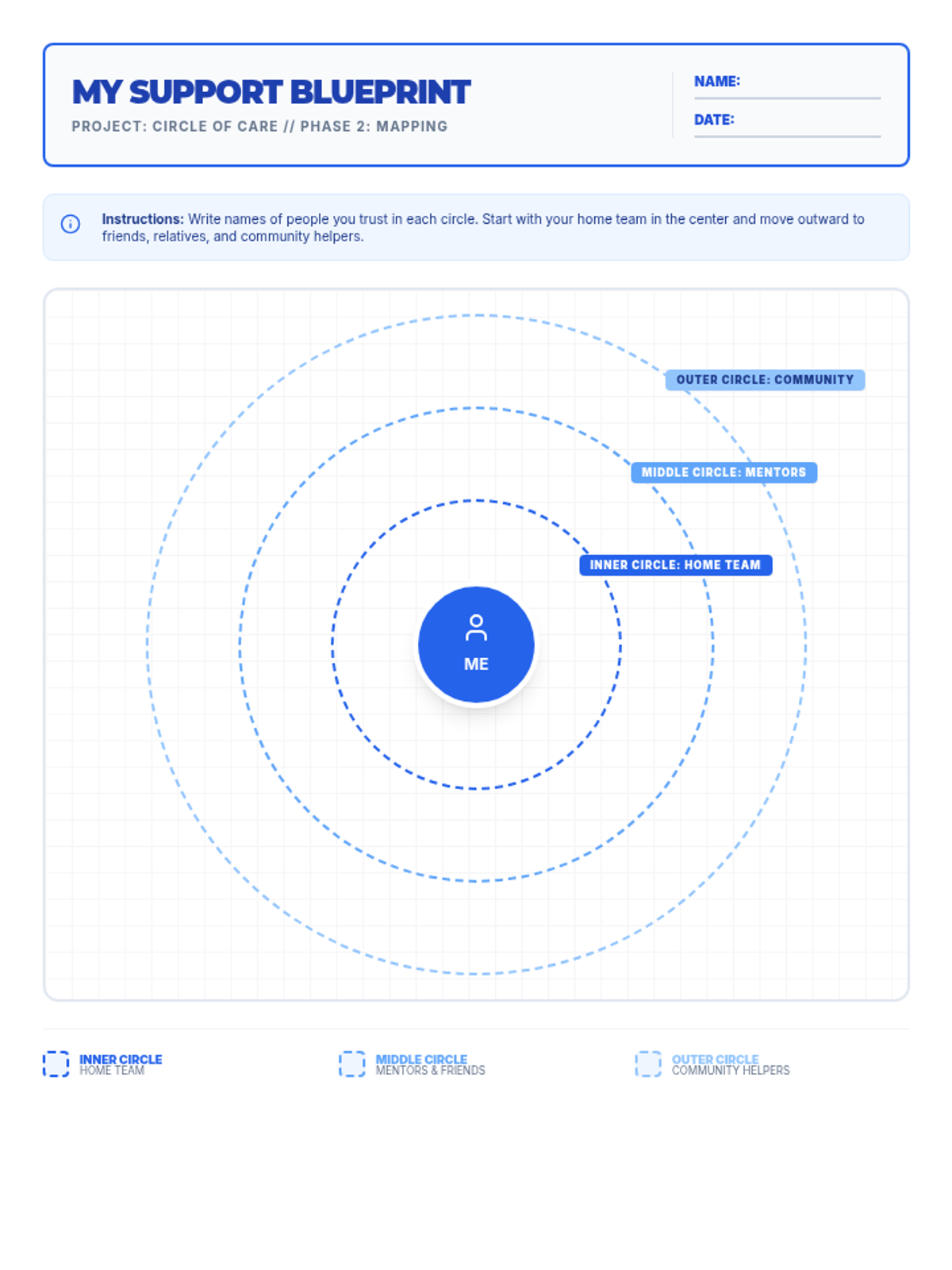
A visual mapping activity for students to identify their support networks using concentric circles, following the 'Connection Blueprint' theme.