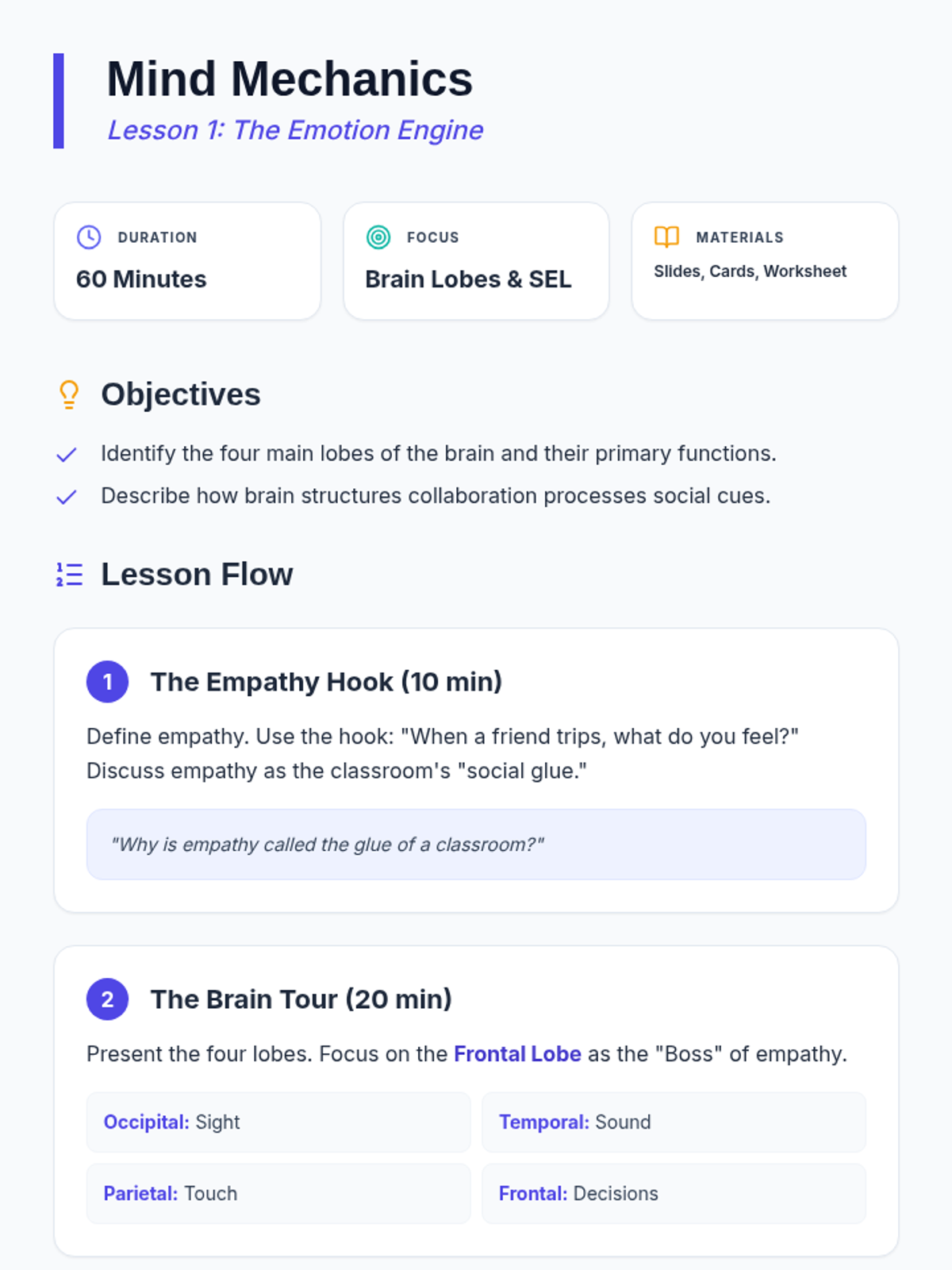
Updated Facilitator guide and student journal page for Session 1: Blueprint Basics. Features improved page breaks, higher-contrast work areas, and standardized layouts for printing.
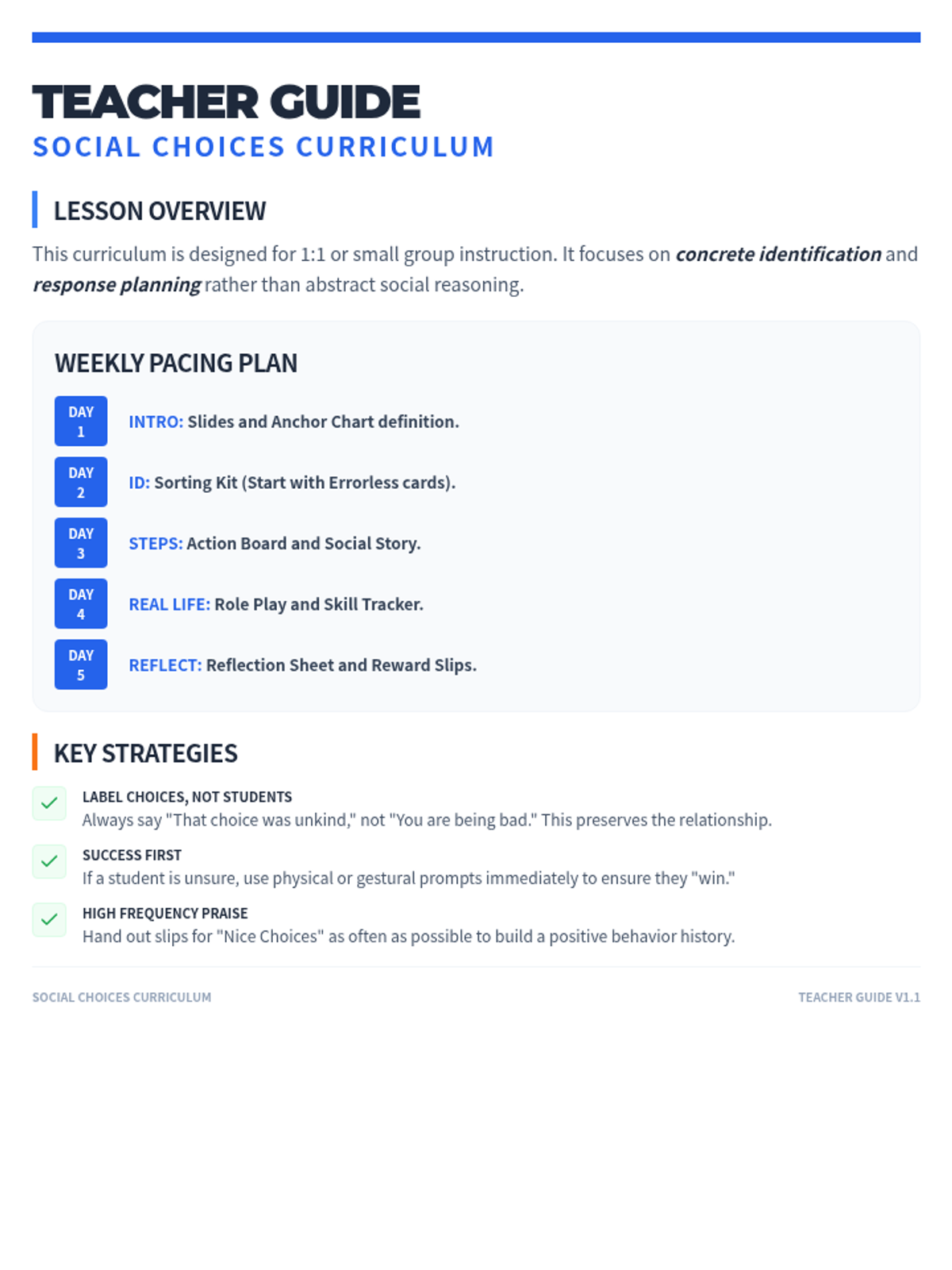
A teacher delivery guide providing a 5-day pacing plan, implementation strategies, and pedagogical tips. Revised to fit on a single page with improved layout.
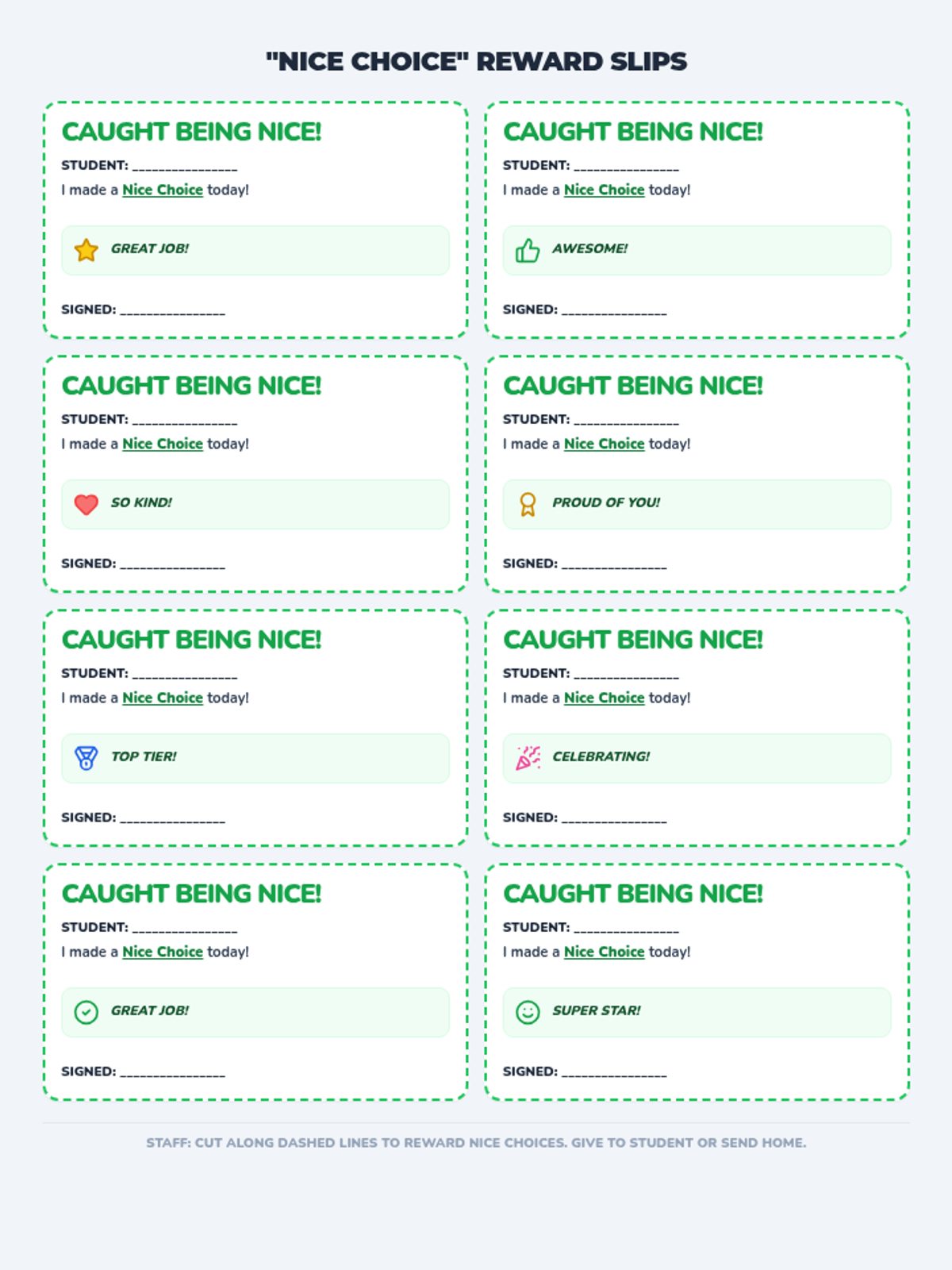
Small, printable reward slips for staff to hand out when they "catch" a student making a nice choice. Revised to include 8 slips per page and a student name field. Revised for print-readiness.
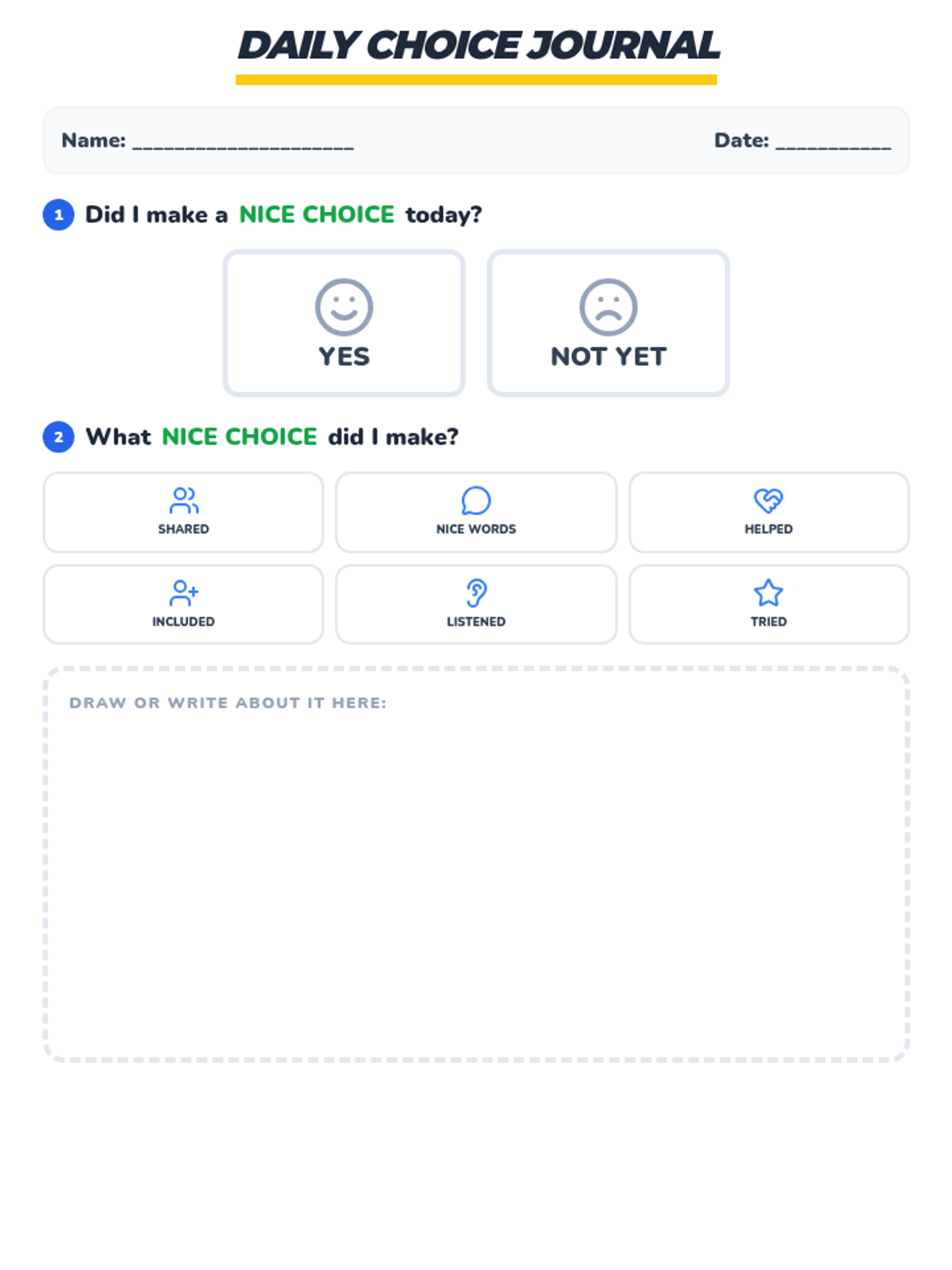
A simple, visually supported daily reflection sheet for students to self-assess their choices. Revised to fit on one page with neutral answer options and robust drawing area.
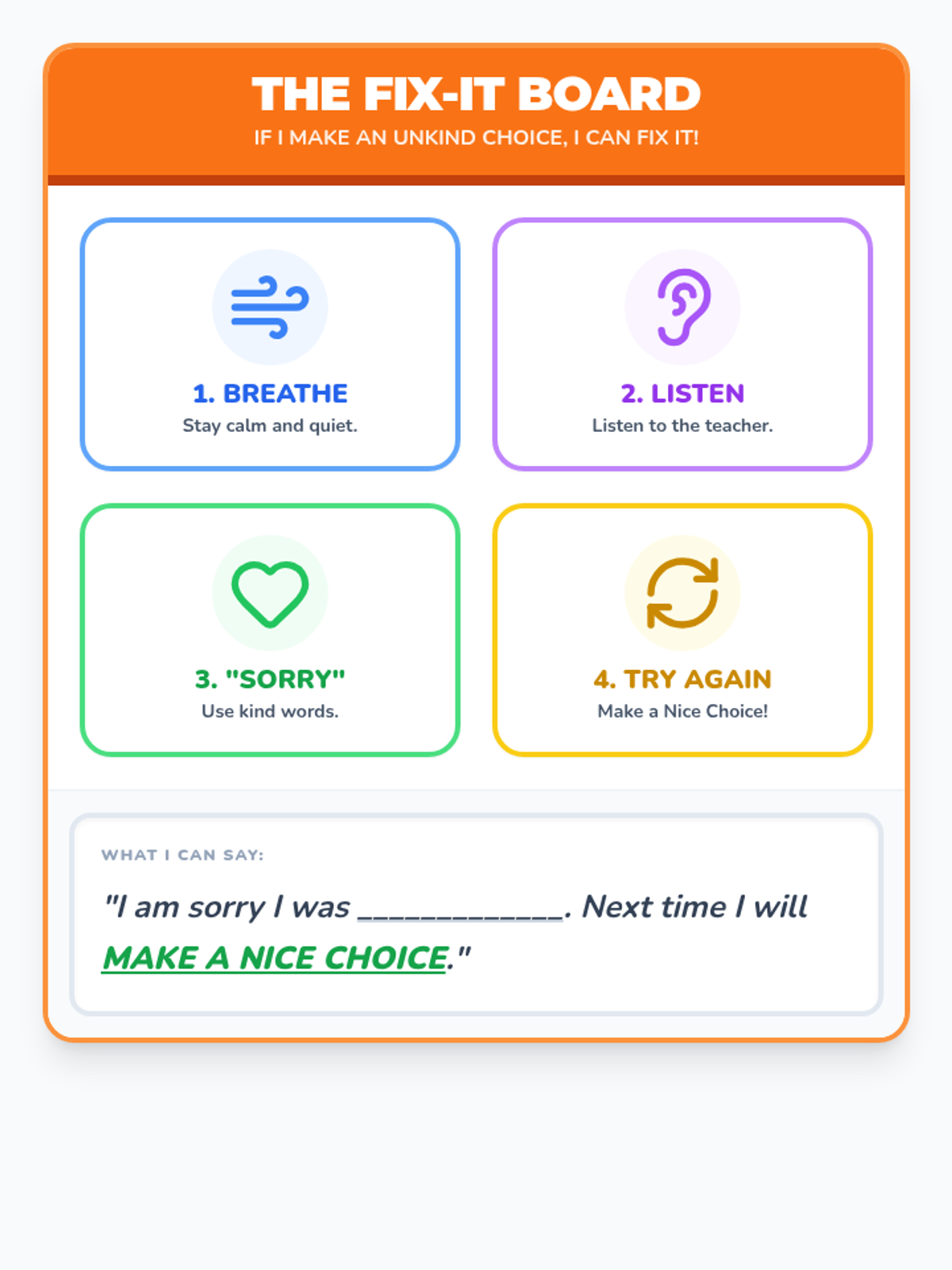
A visual response board for students to use when they have made an unkind choice, guiding them through the steps of calming down, listening, apologizing, and trying again. Revised to fit on a single page.
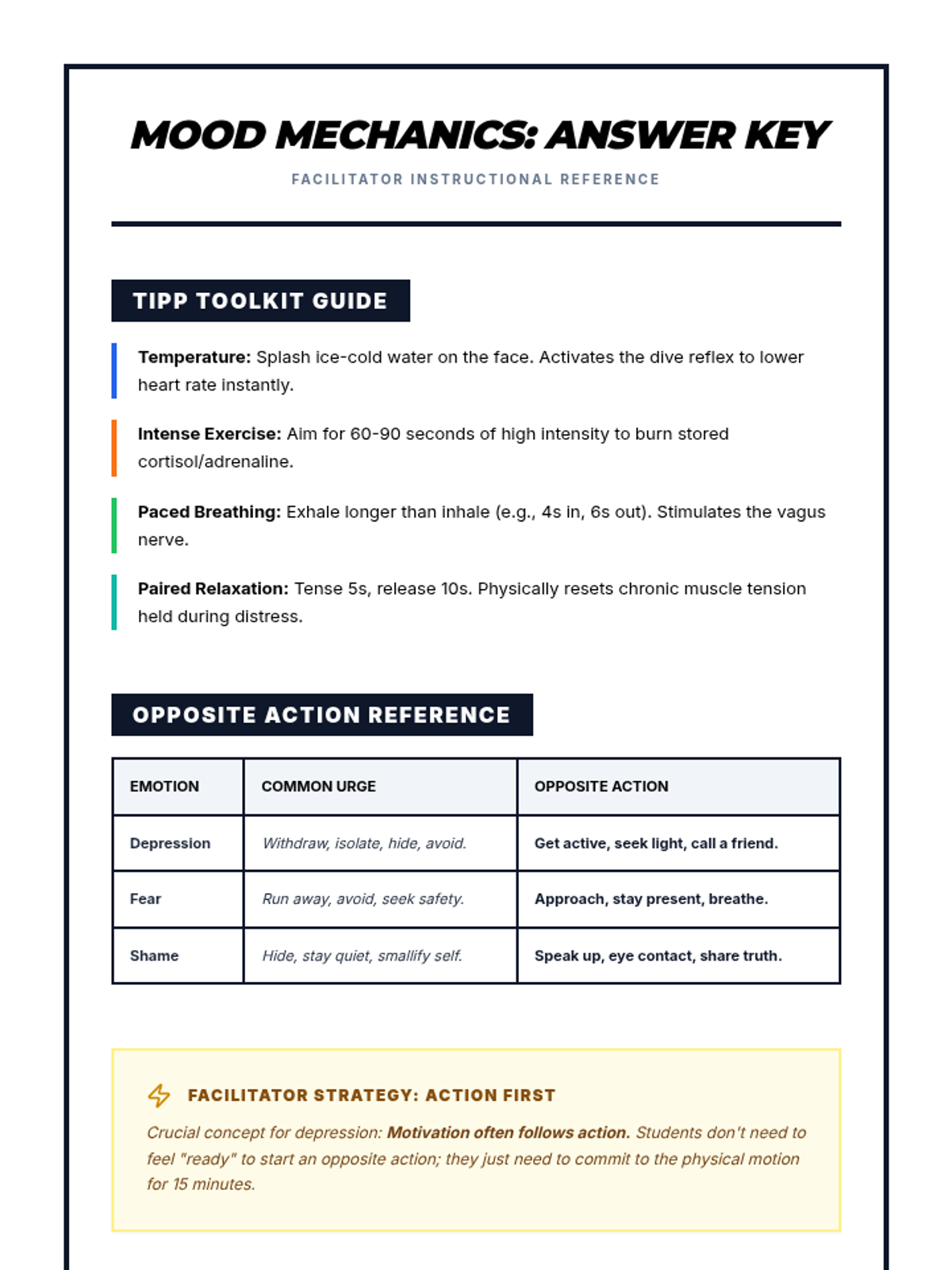
A teacher-facing resource providing example answers and instructional guidance for the TIPP Toolkit and Opposite Action worksheets, with a specific focus on behavioral activation for depression.
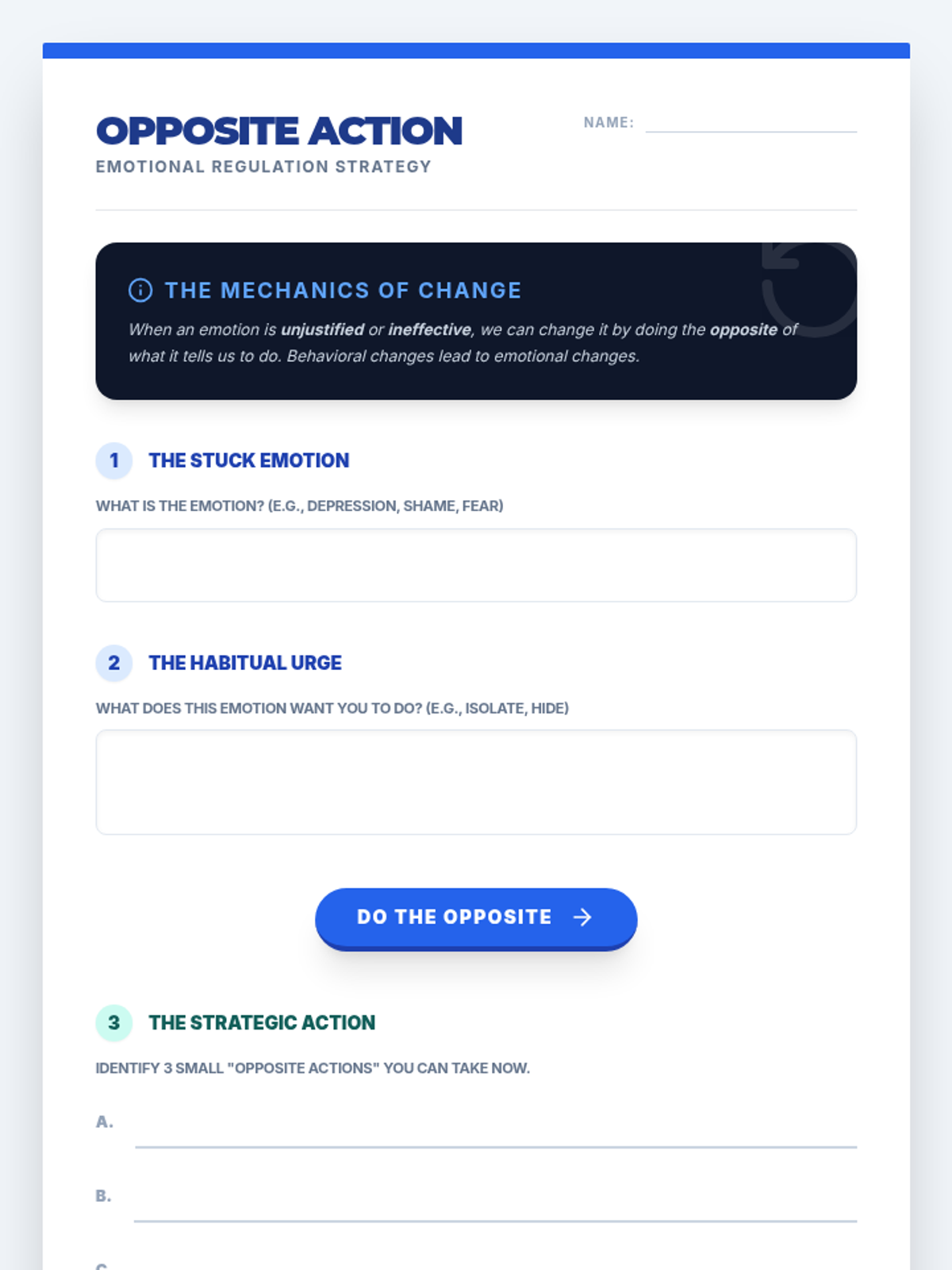
A student worksheet for identifying emotional urges associated with depression and planning 'Opposite Actions' to break negative behavioral cycles, featuring a step-by-step mapping process.
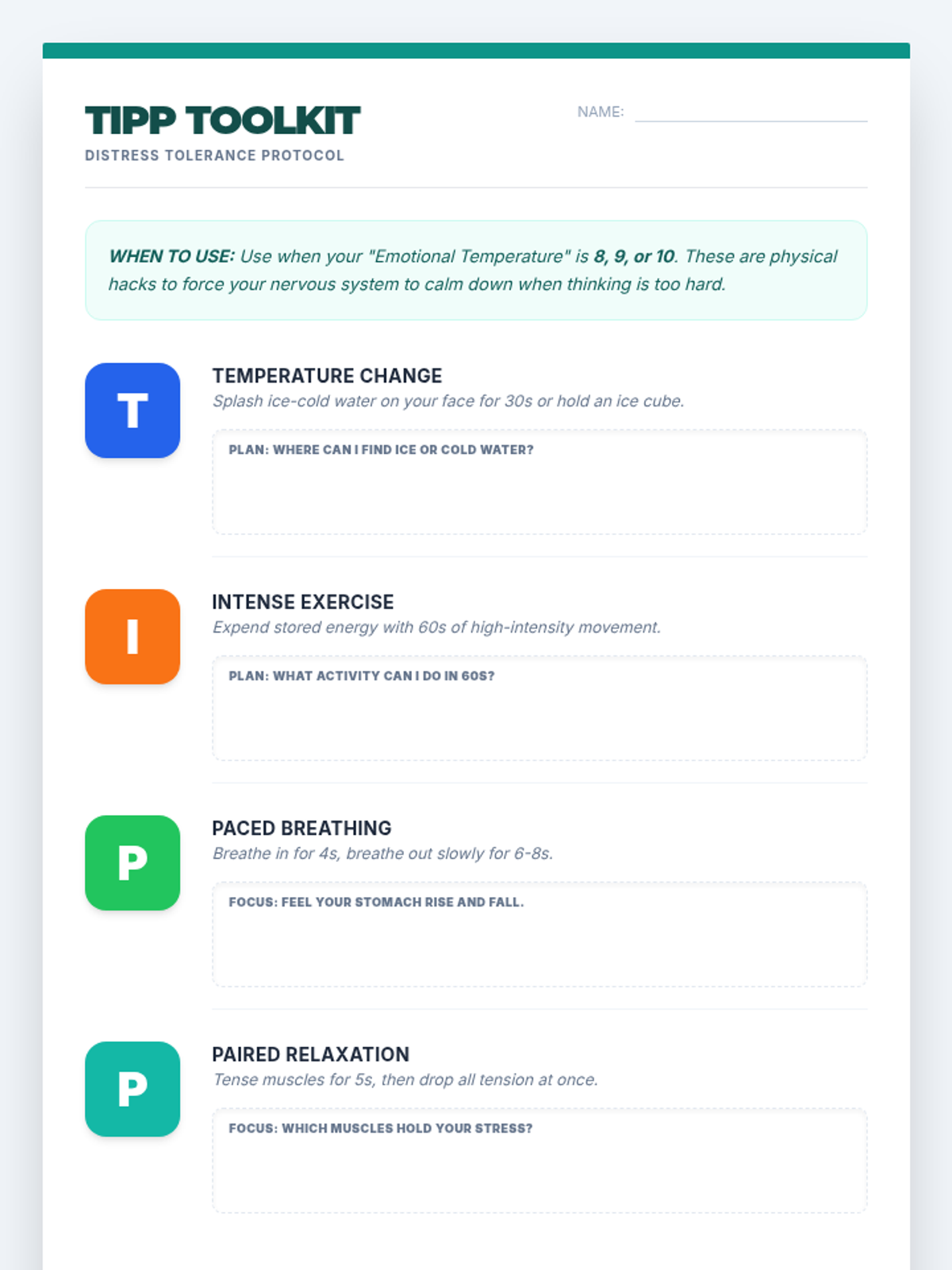
A structured student worksheet for practicing the TIPP (Temperature, Intense exercise, Paced breathing, Paired muscle relaxation) skill set, including planning areas for identifying personalized crisis interventions.
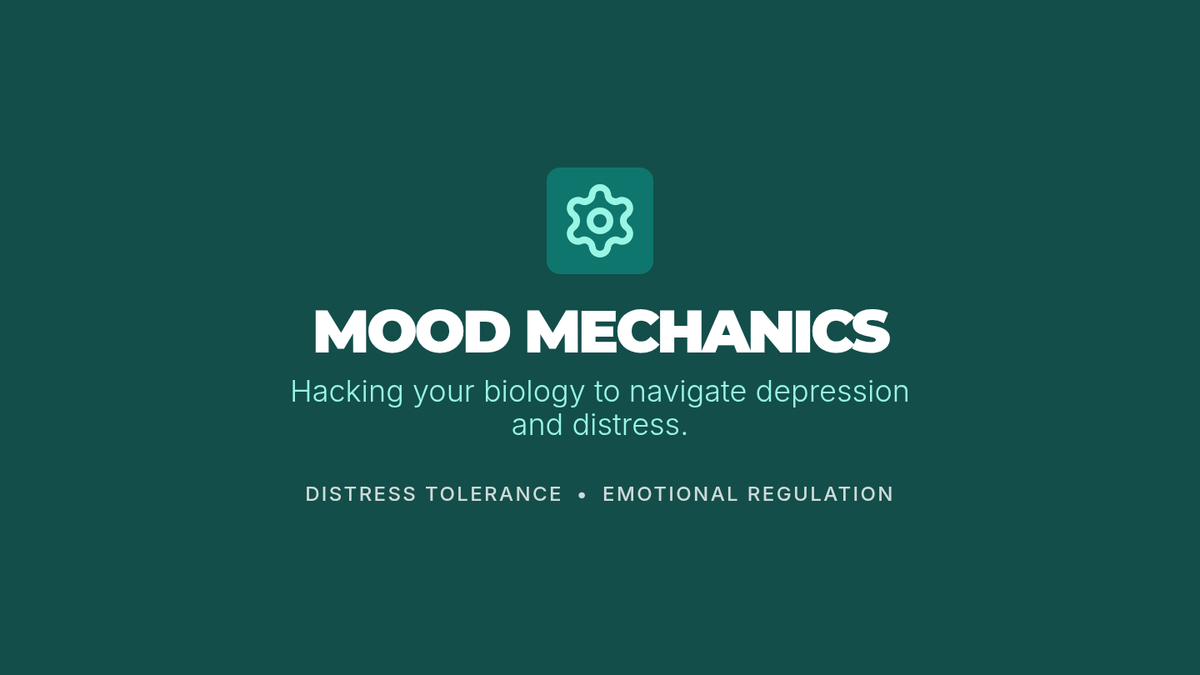
A visually engaging slide deck titled 'Mood Mechanics' that introduces students to Distress Tolerance (TIPP) and Emotional Regulation (Opposite Action) through metaphors of biological 'hacking' and car engine 'redlining'.
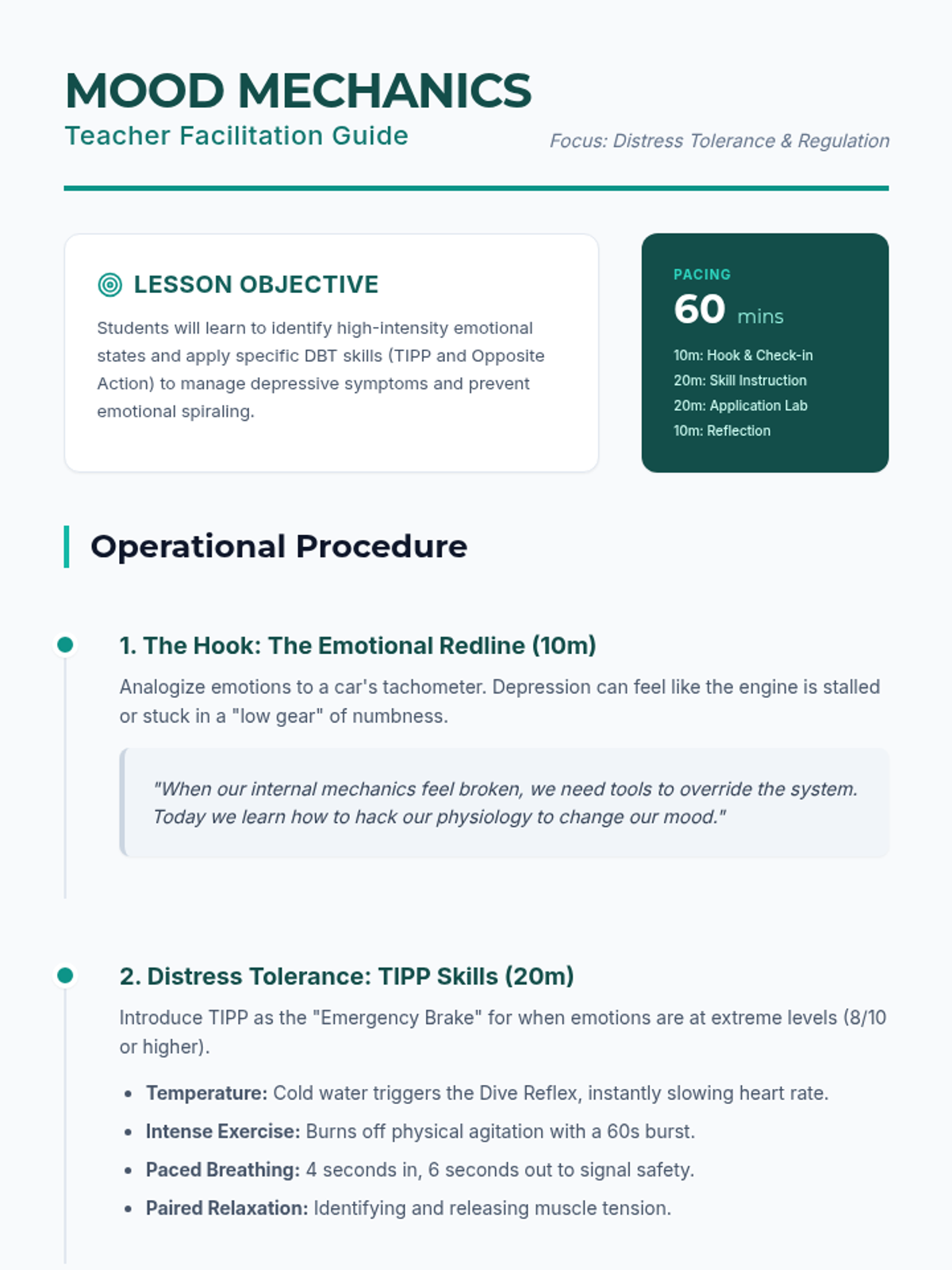
A comprehensive teacher guide for the Mood Mechanics lesson, featuring learning objectives, a detailed instructional sequence, and a toolkit of DBT skills (TIPP and Opposite Action) tailored for managing depression.
A detailed teacher guide for the 'Emotion Engine' lesson, including pacing, instructional steps, discussion prompts, and differentiation strategies.
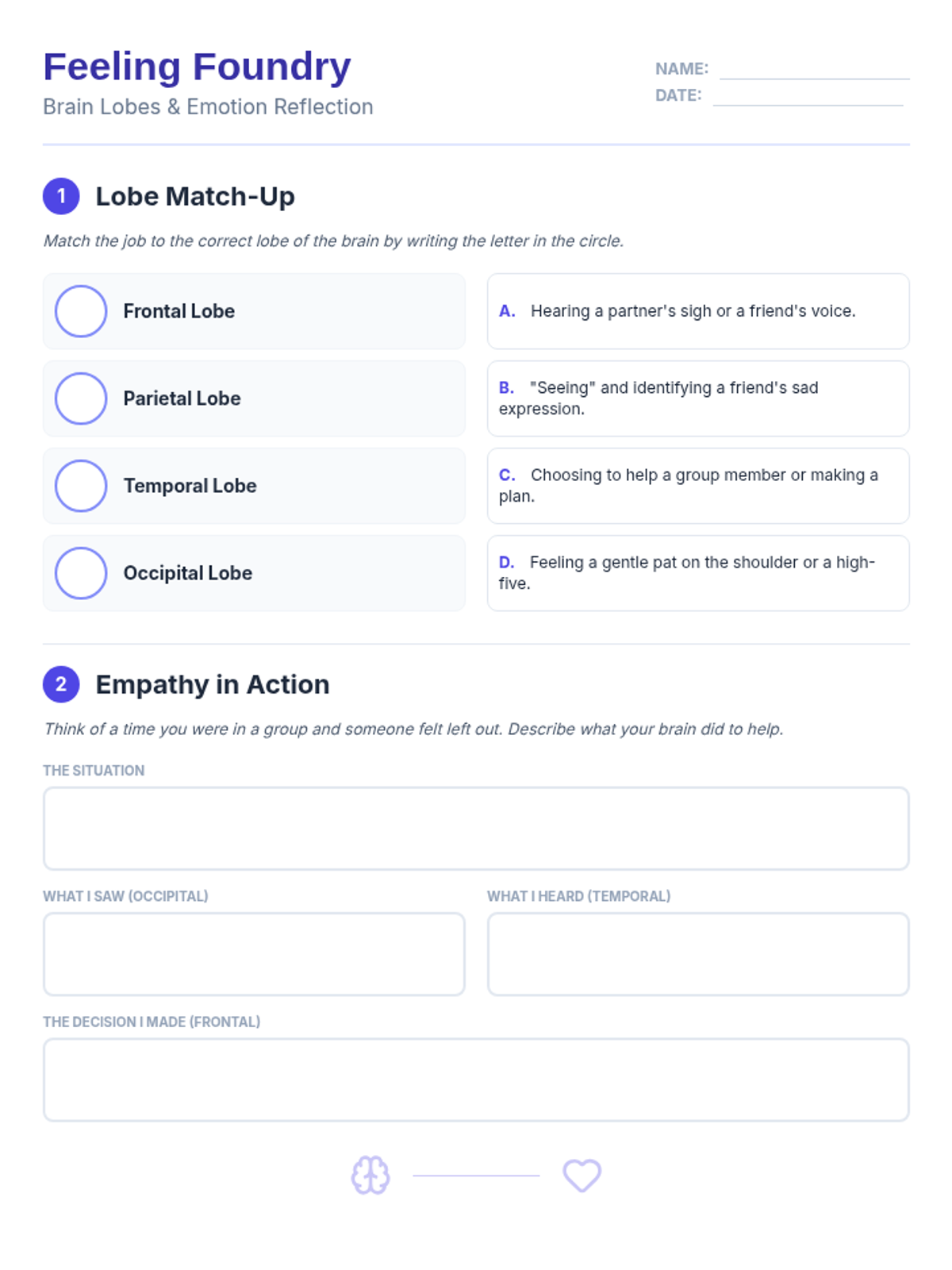
A student worksheet for matching brain lobes to their social-emotional functions and reflecting on a personal experience using empathy.