A comprehensive assessment for the Social Media Safety lesson, covering vocabulary terms, main idea analysis (RI.5.2), and evidence-based responses (RI.5.1).
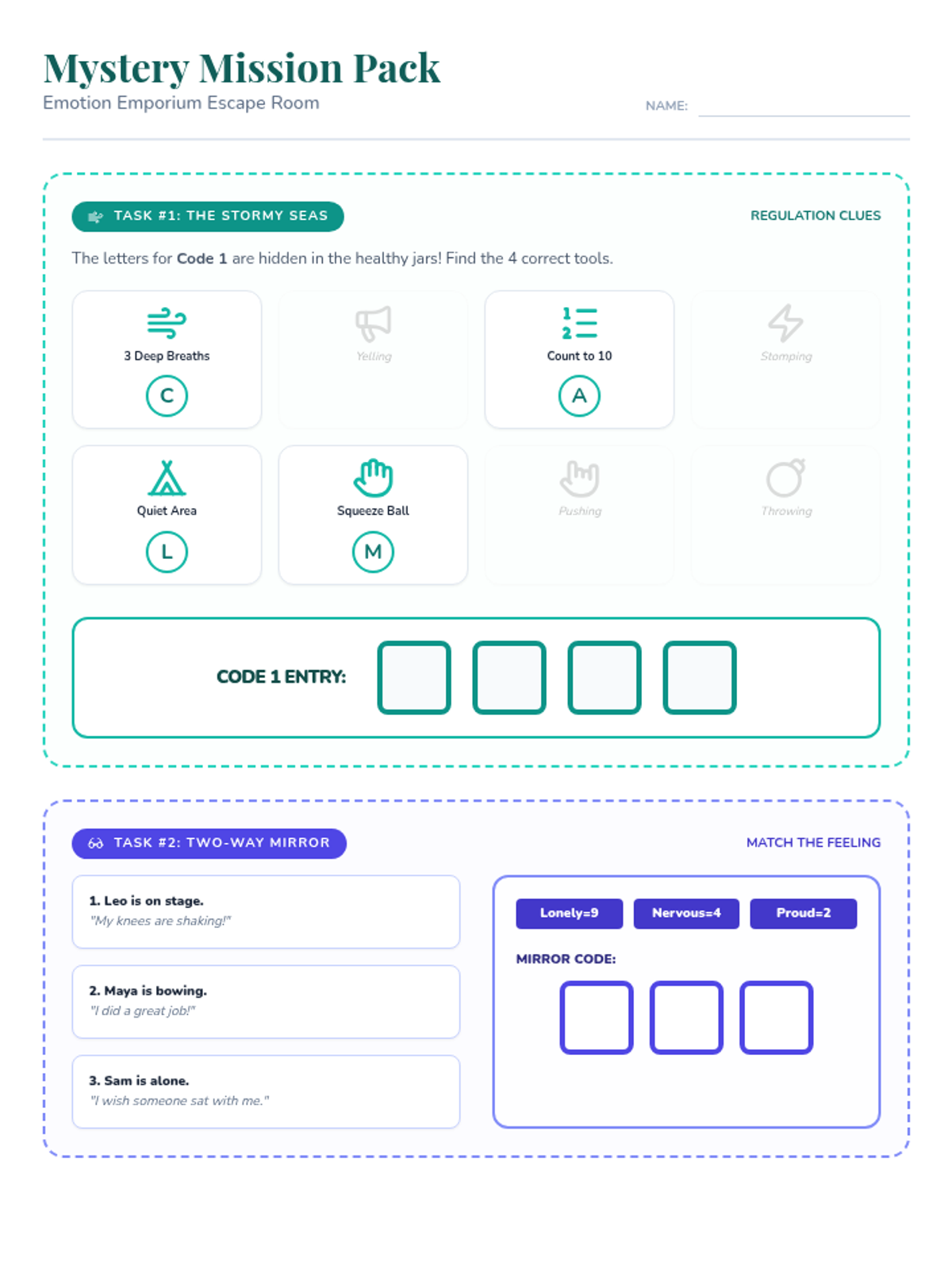
A printable mission pack for students containing visual task cards for the SEL escape room, including self-regulation tool identification, perspective puzzles, and empathy matching.
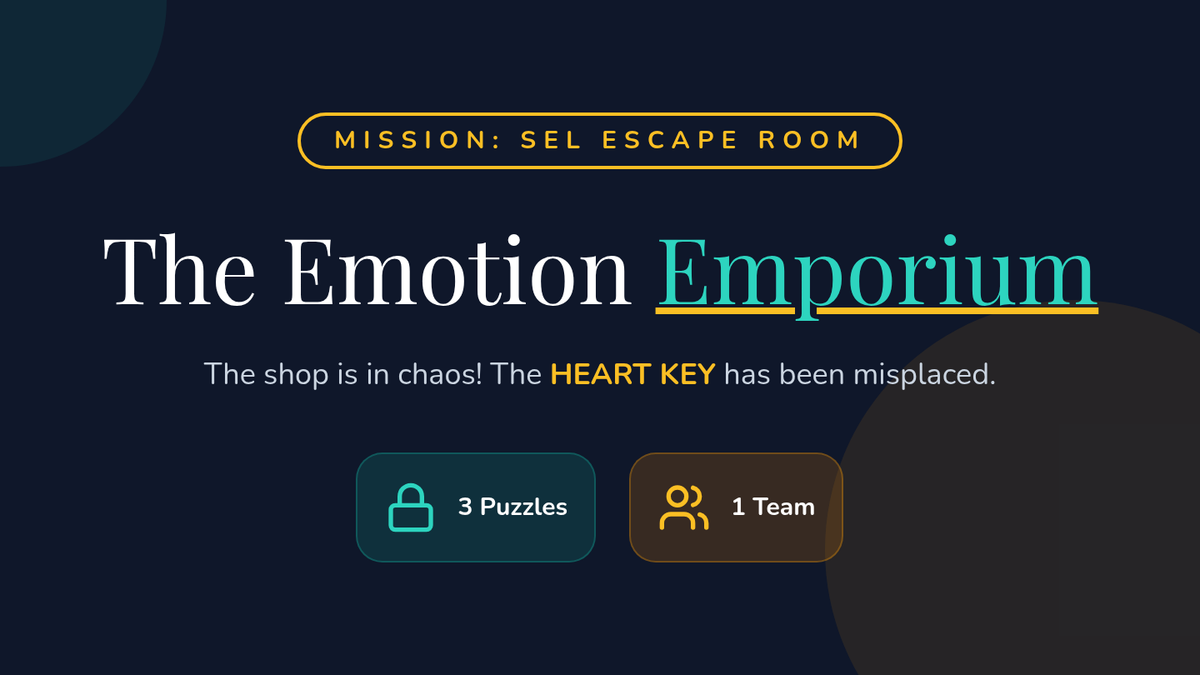
A visually engaging whole-class slide deck to guide students through the Emotion Emporium escape room, featuring challenges for self-regulation, perspective-taking, and empathy.
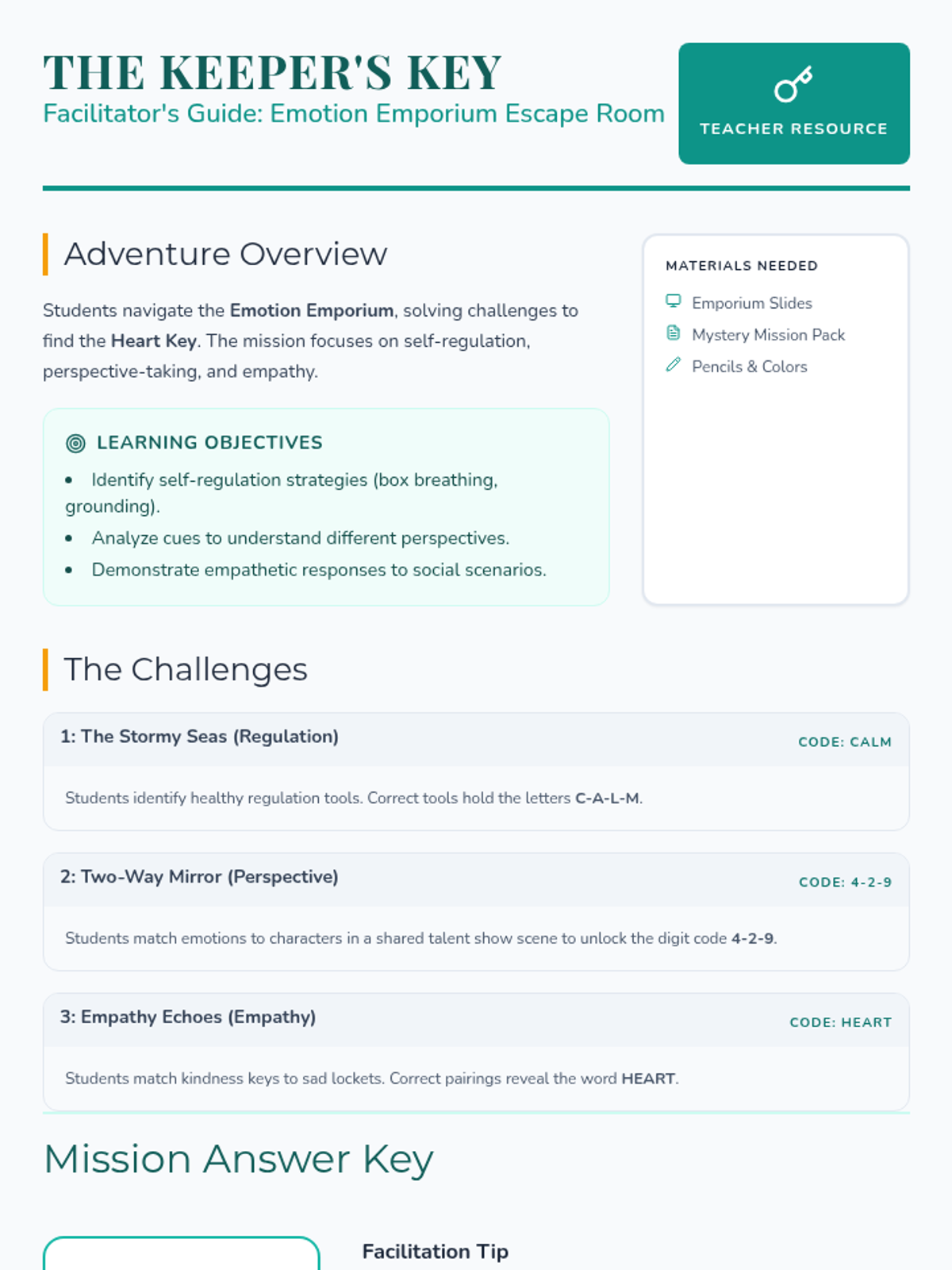
A comprehensive facilitator's guide for the Emotion Emporium SEL escape room, including puzzle breakdowns, secret codes, teaching points, and debrief questions.
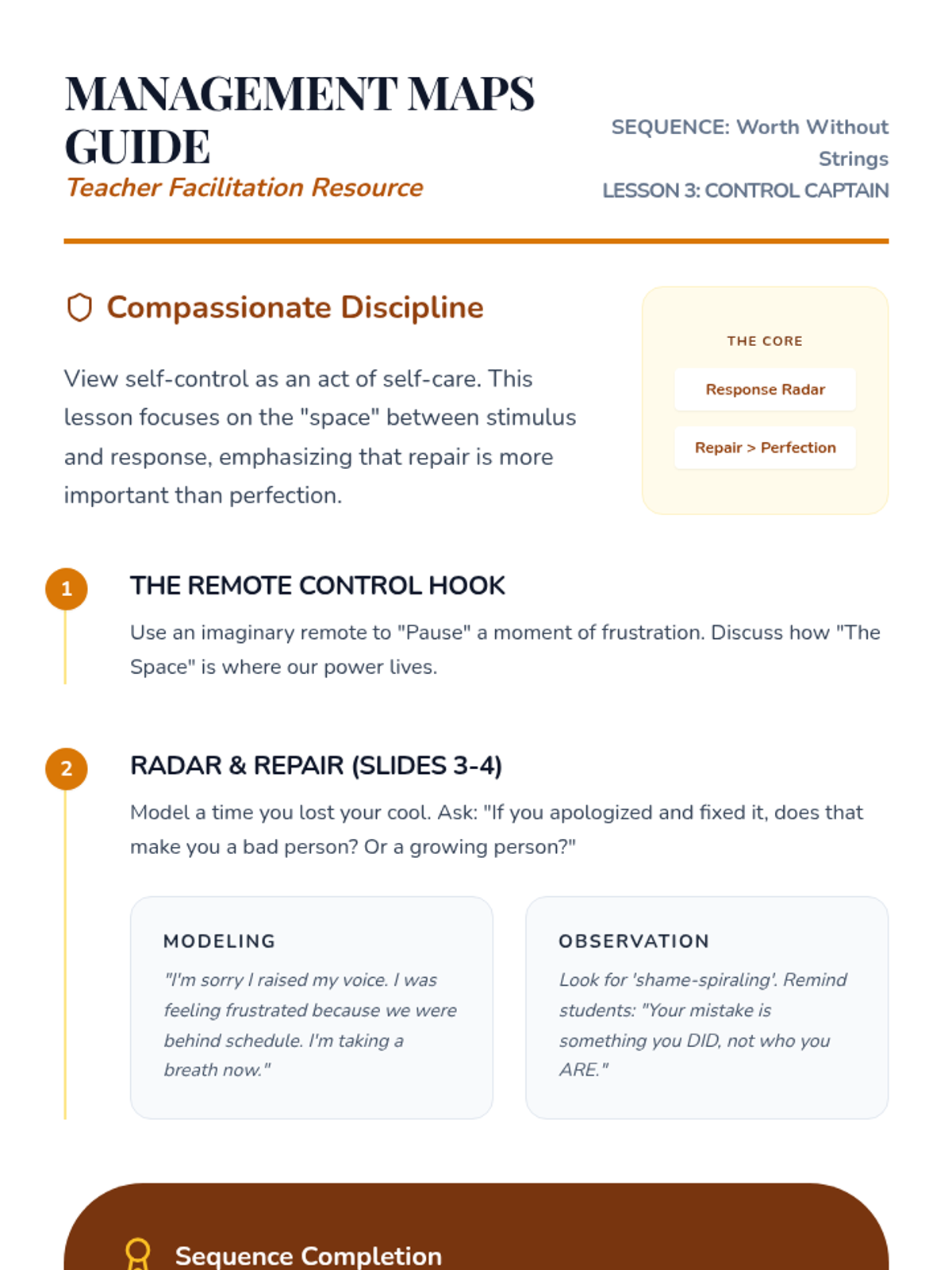
A teacher guide for Lesson 3, providing discussion hooks and the 'Repair Protocol' for teaching self-management with compassion.
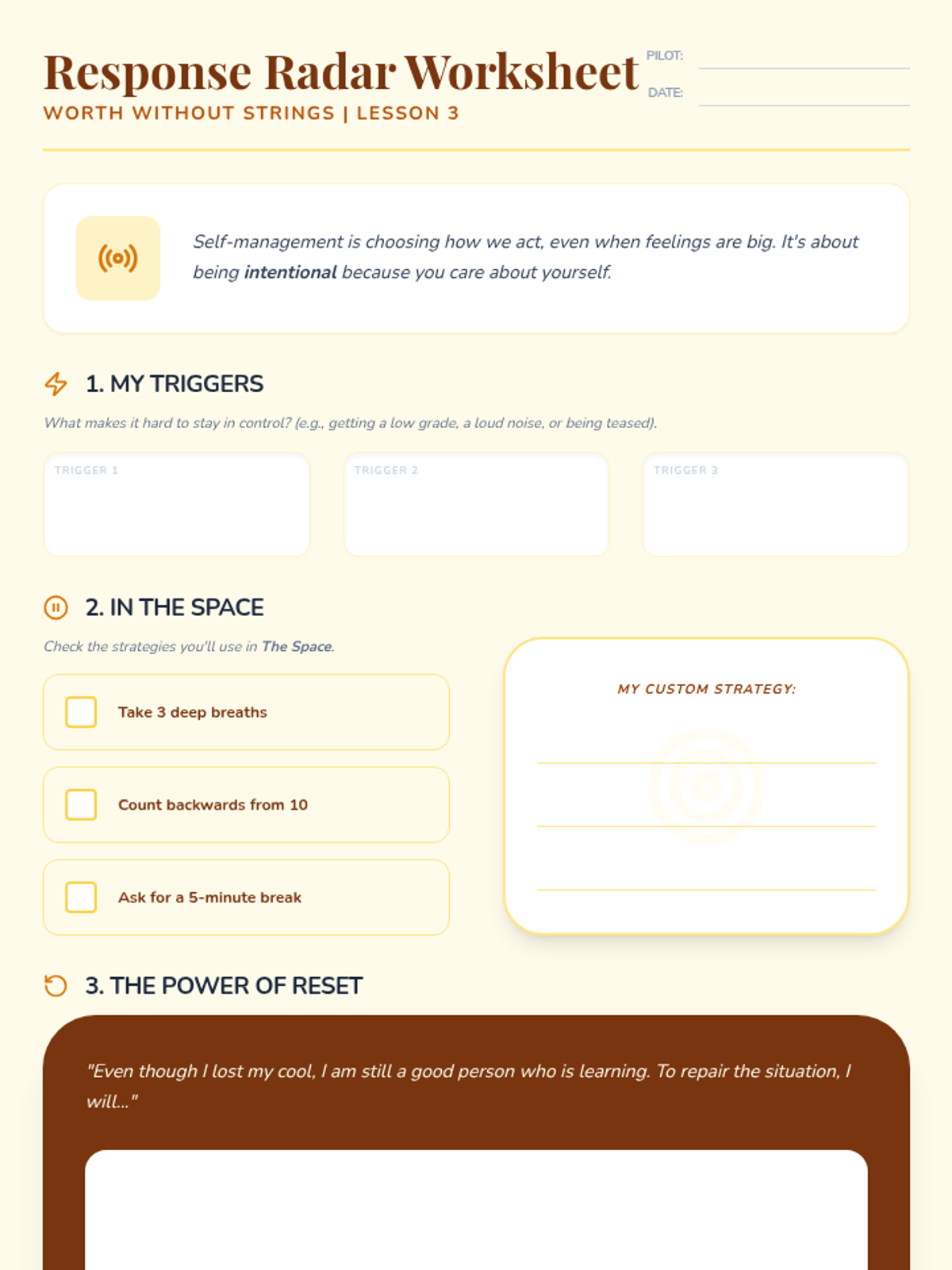
A self-management worksheet for identifying triggers and planning responses, emphasizing the concept of 'The Space' and post-mistake repair.
A slide presentation for the 'Control Captain' lesson, focusing on the 'Response Radar' and reframing self-control as self-care.
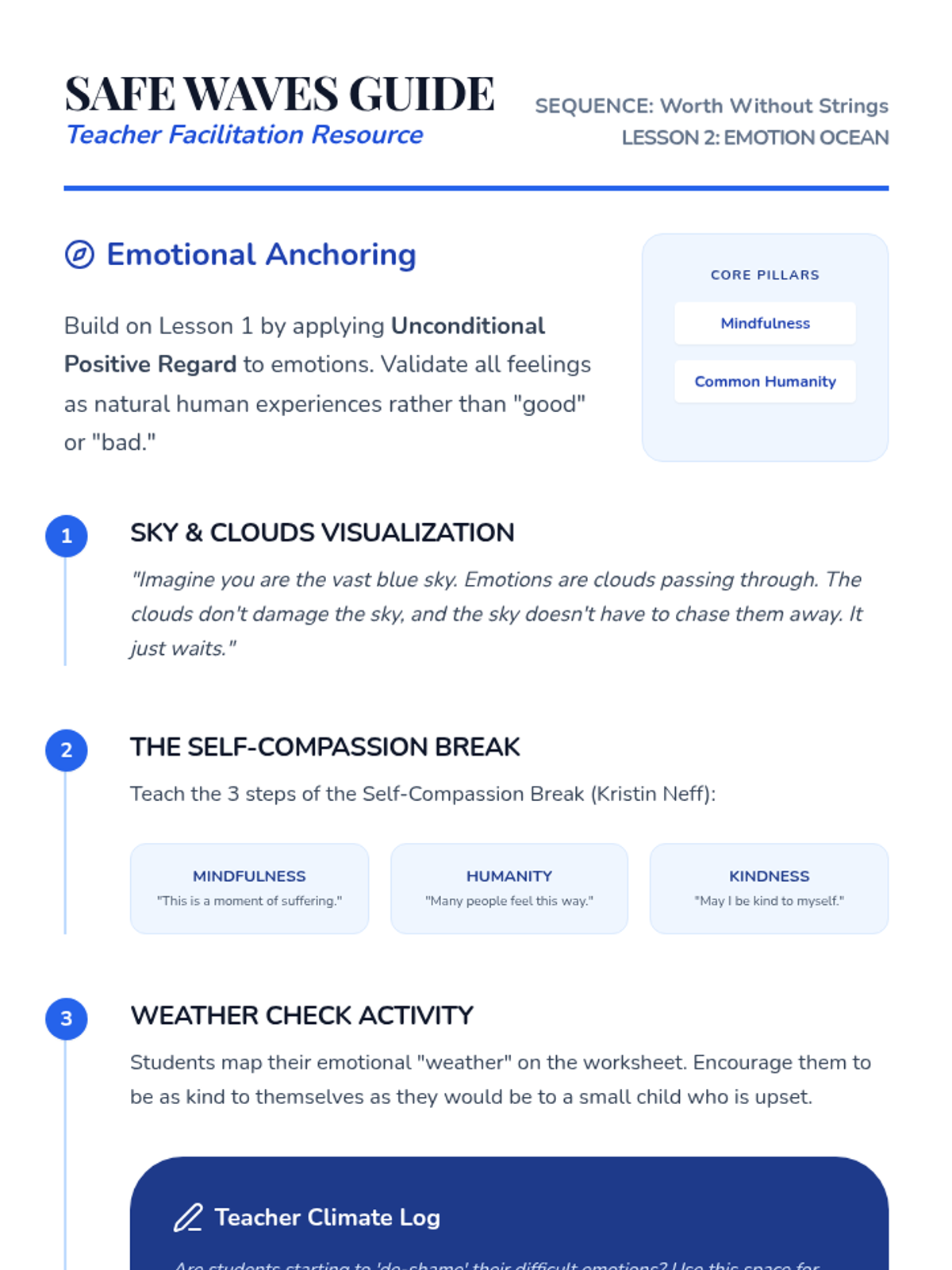
A facilitation guide for teachers on Lesson 2, focusing on the sky/cloud metaphor and teaching the Self-Compassion Break.
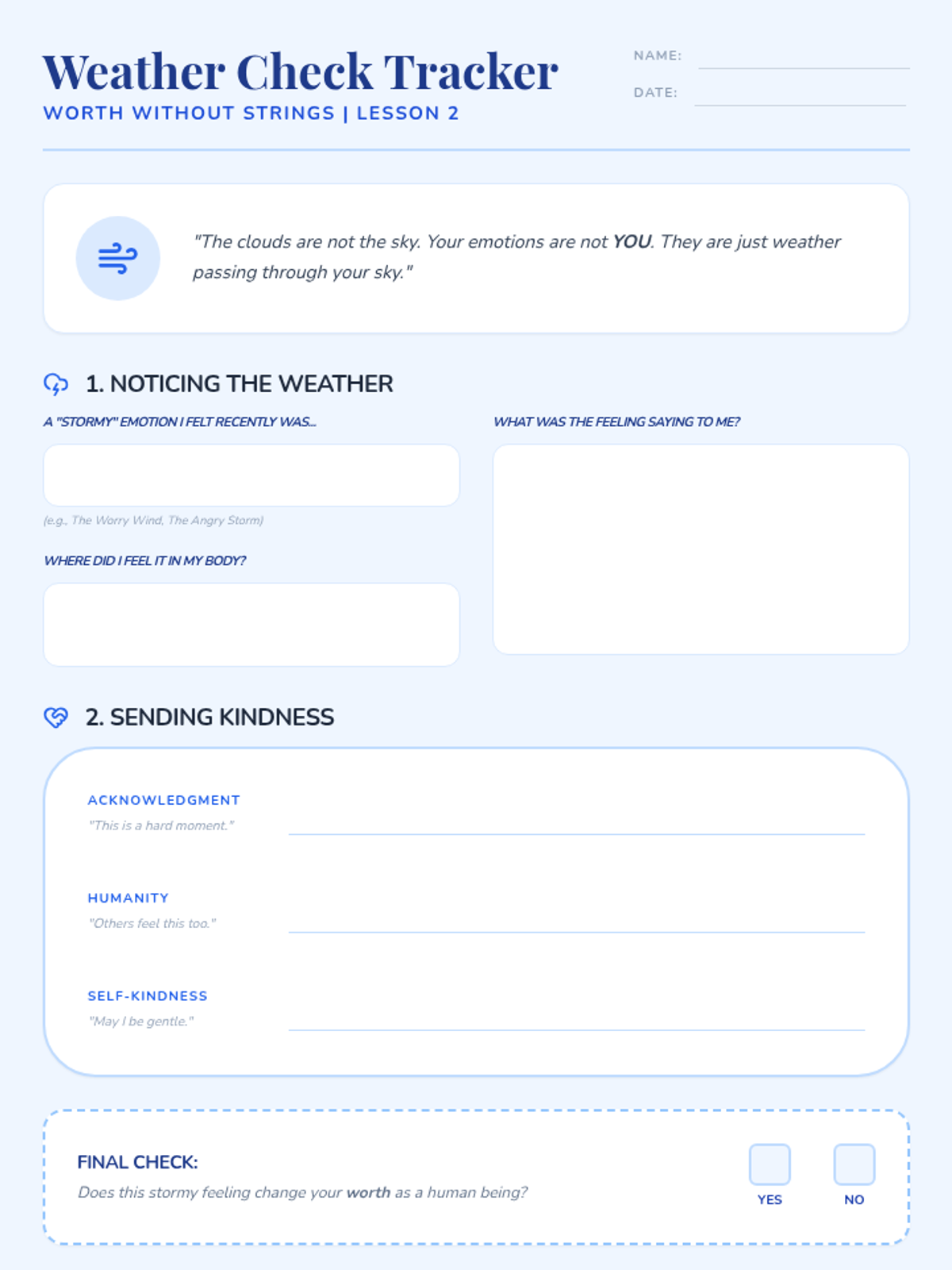
A reflective worksheet for tracking emotional 'weather' and practicing self-compassion scripts, styled with soft blue tones and oceanic motifs.
A slide presentation for the 'Emotion Ocean' lesson, using weather metaphors to teach emotional regulation and self-compassion.
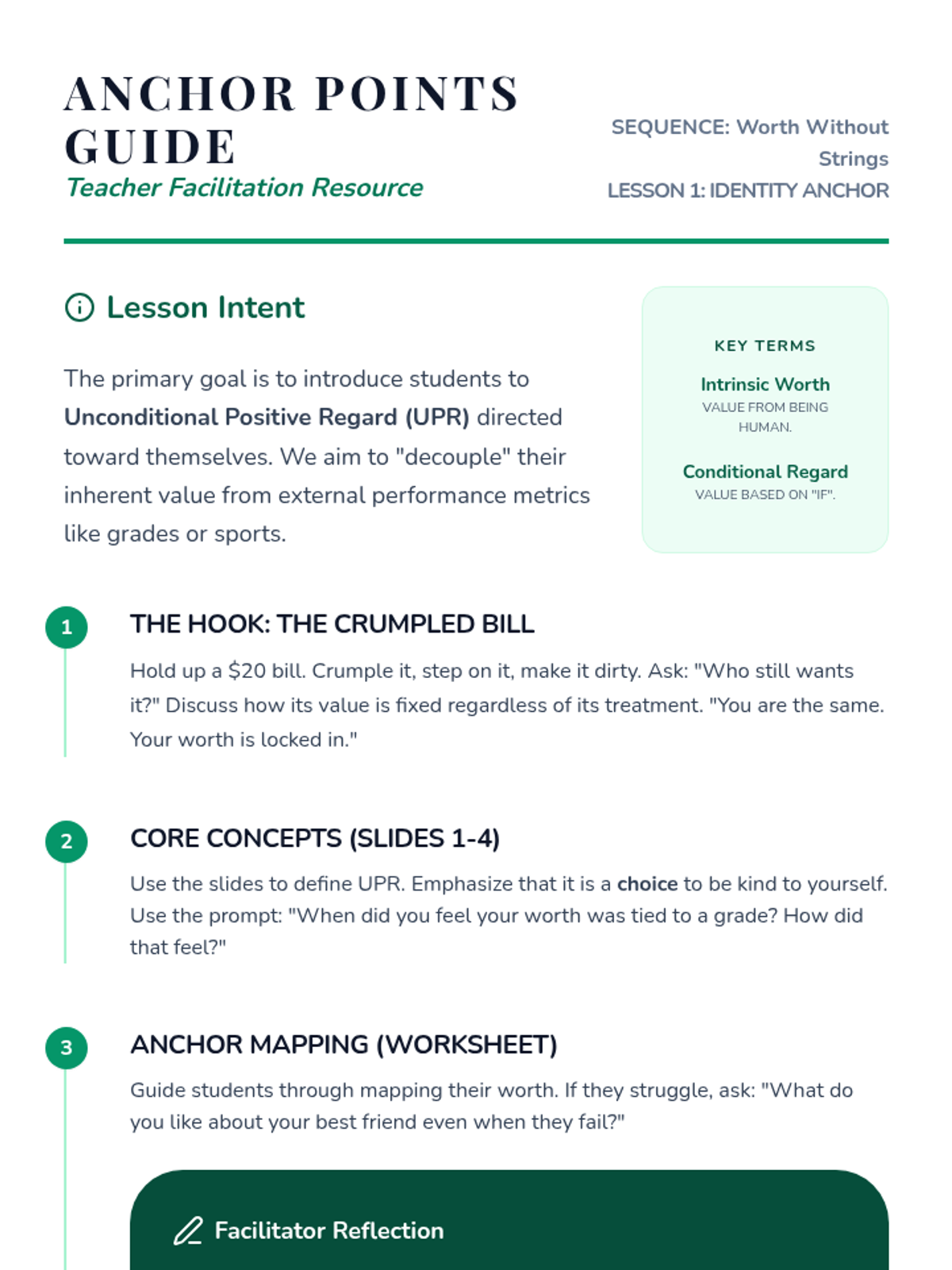
A facilitation guide for teachers to deliver the Identity Anchor lesson, featuring discussion prompts, a 'hook' activity, and support strategies.
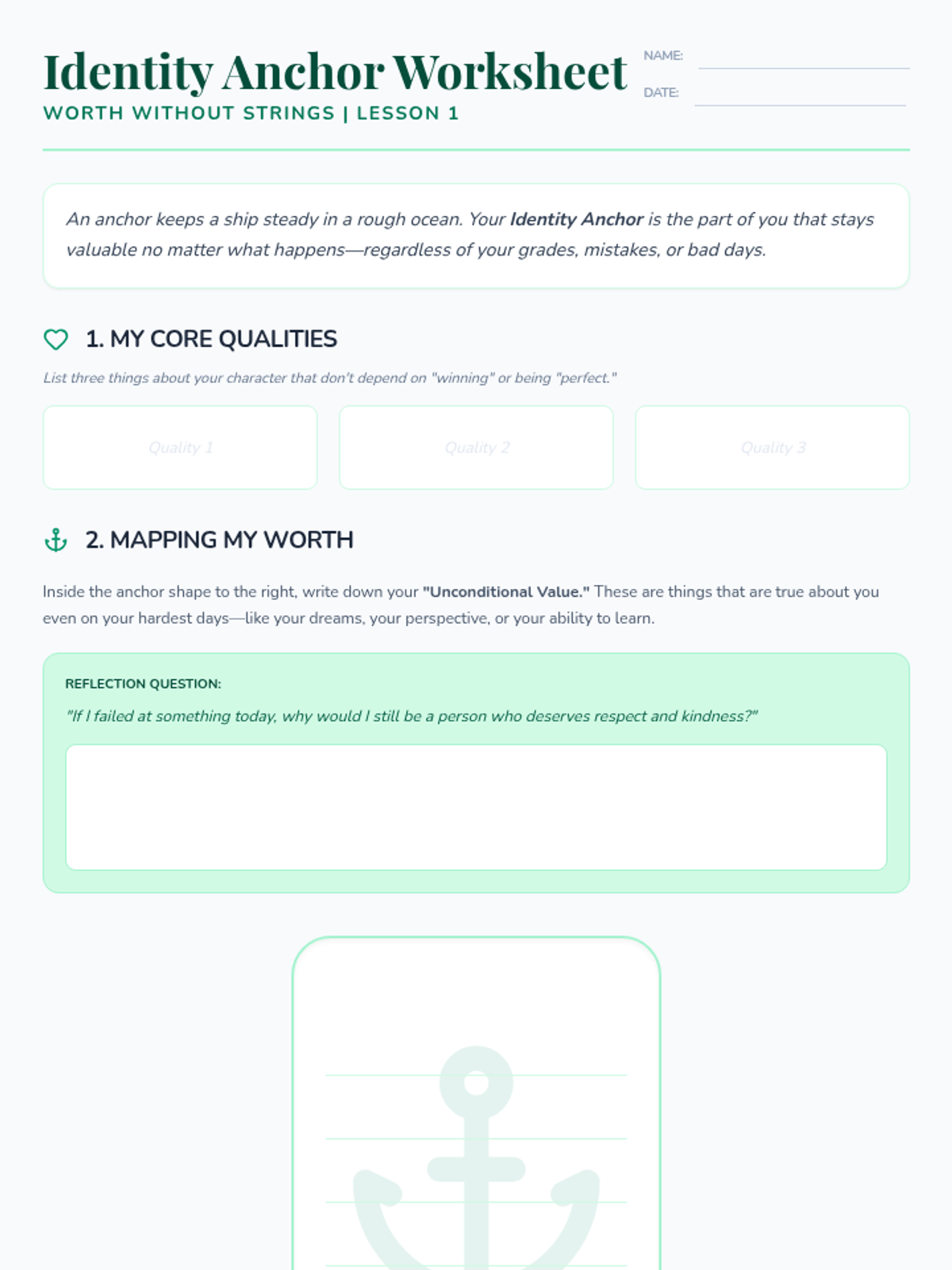
A student worksheet for identifying intrinsic worth and core qualities, designed with a clean botanical aesthetic and ample space for reflection.
An introductory slide deck for the 'Identity Anchor' lesson, explaining the concepts of intrinsic worth and unconditional positive regard through a 'Botanical Sketchbook' aesthetic.
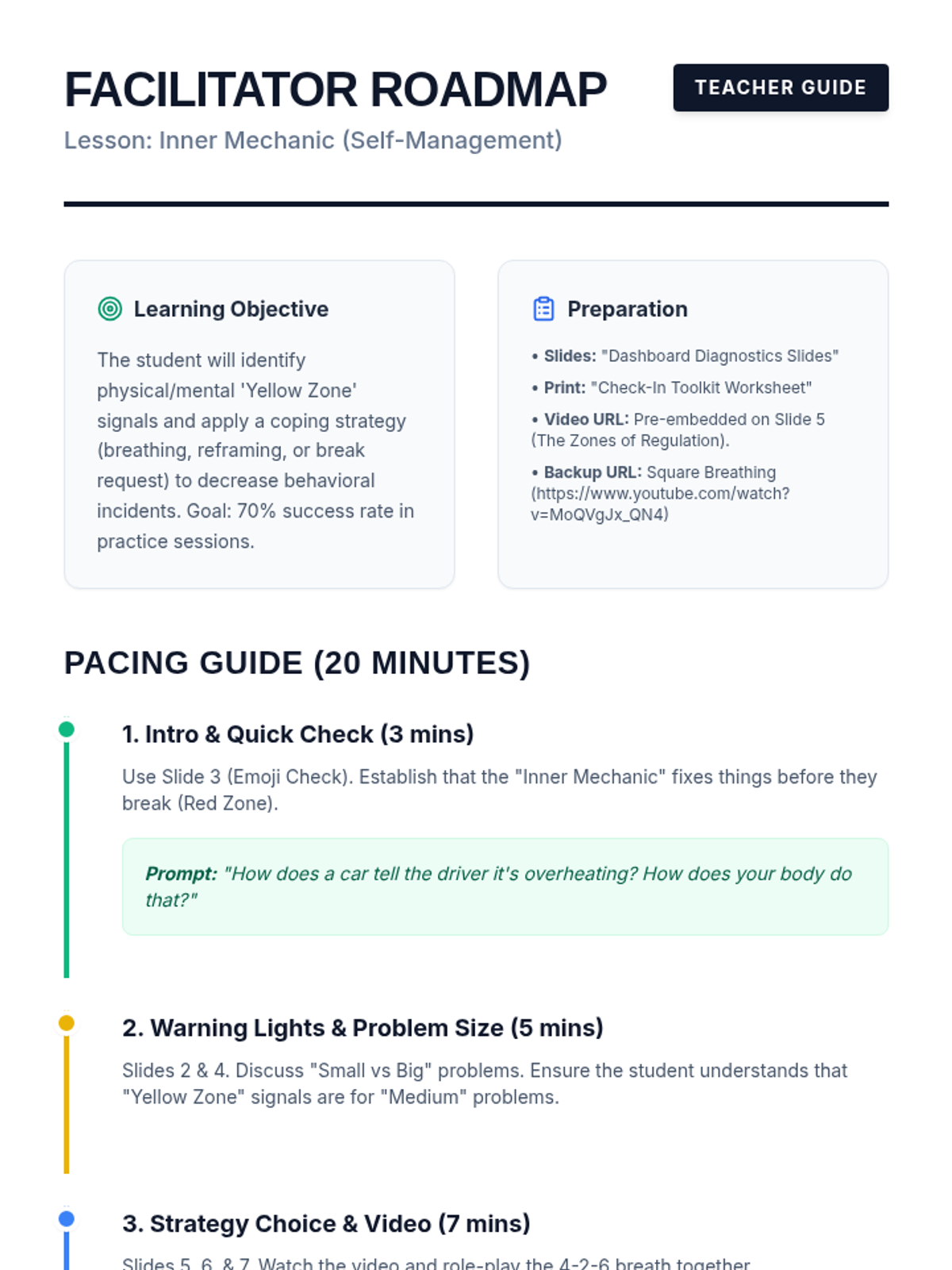
A facilitator guide providing a step-by-step roadmap for teaching the Inner Mechanic lesson. Includes pacing, discussion prompts, preparation tips, and troubleshooting advice. Fixed page breaks and simplified instructions.
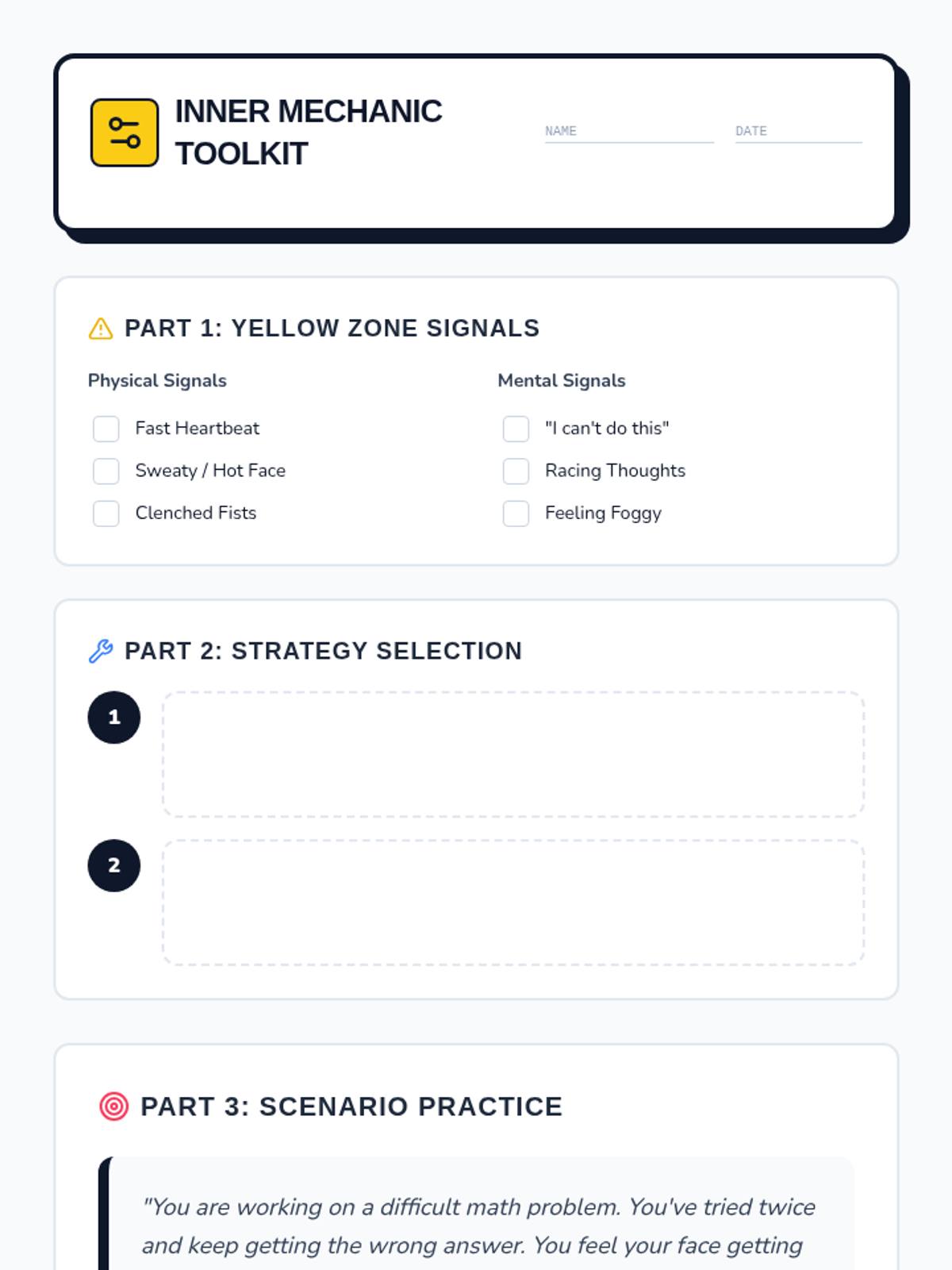
A student-facing toolkit worksheet designed to help students map out their Yellow Zone signals, select preferred coping strategies, and practice applying them to a challenging classroom scenario. Optimized for a 2-page print format.
A slide deck for teaching self-regulation using a 'Dashboard Diagnostics' theme. Includes sections on identifying Yellow Zone signals, 'Size of the Problem', and a visual choice board of coping strategies. Updated with improved contrast and an embedded video.
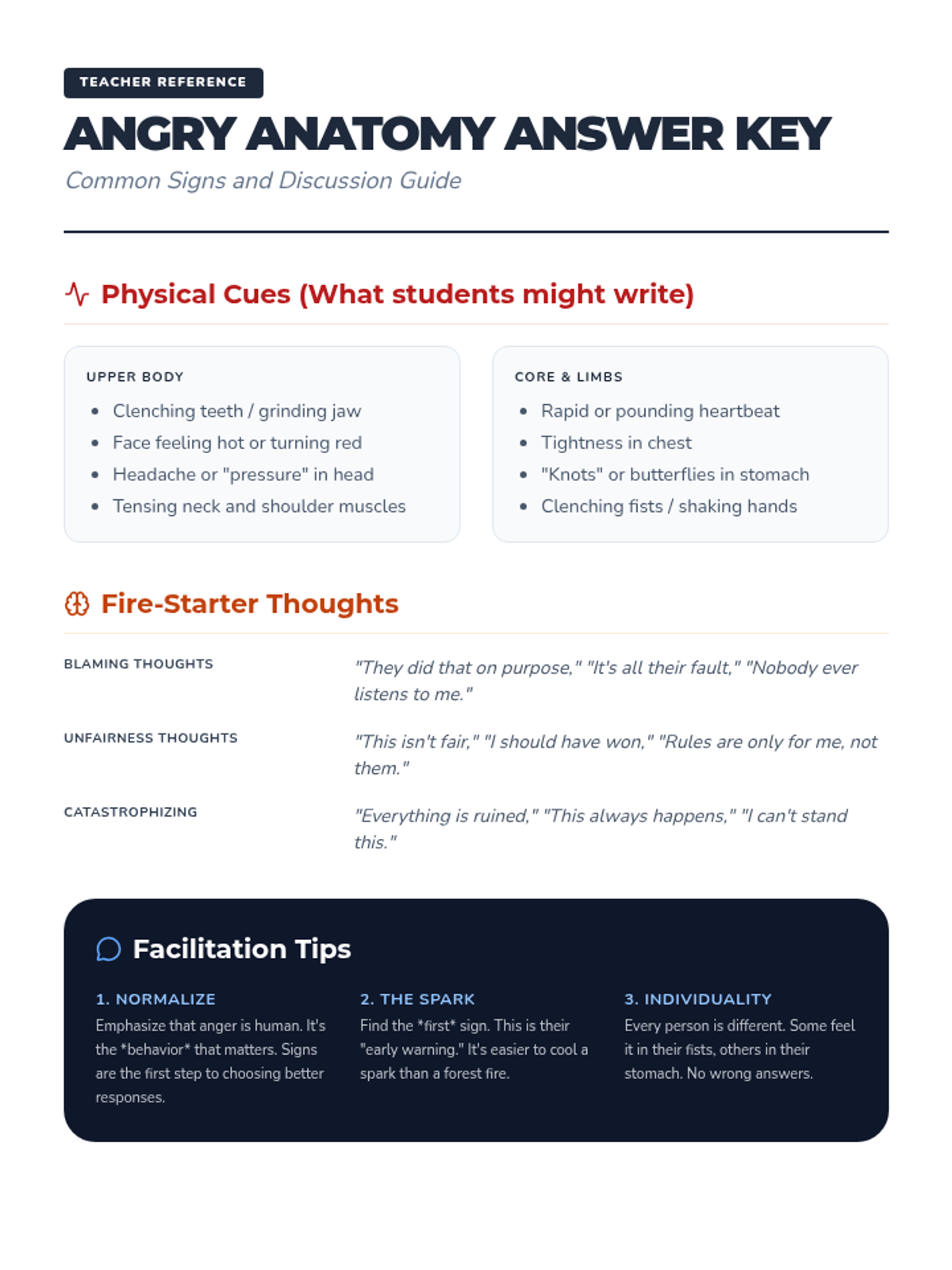
An answer key and teacher guide for the Angry Anatomy worksheet, featuring common student responses and discussion prompts.
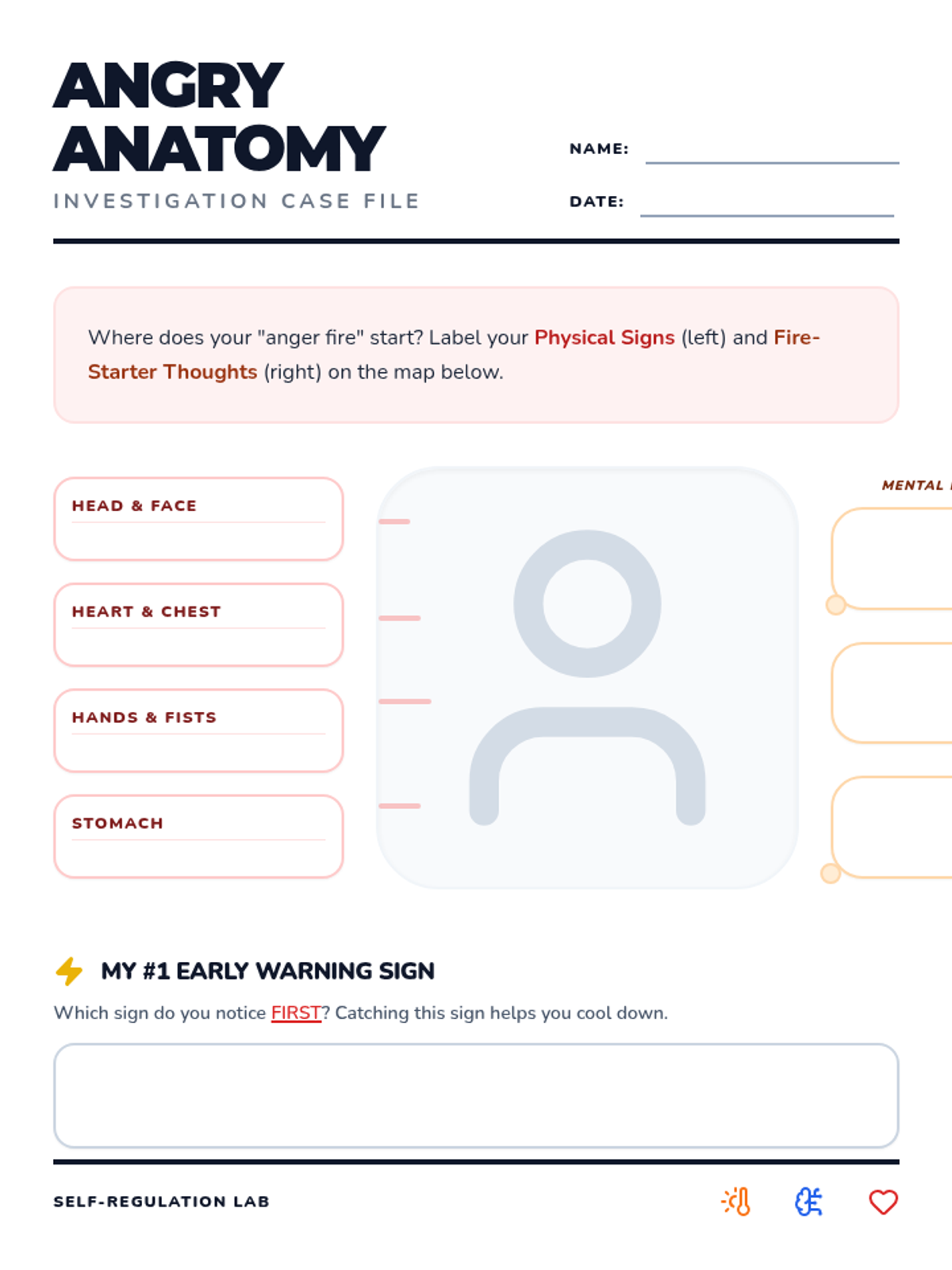
A body map graphic organizer for students to identify and label their physical anger cues and internal thought patterns.
A slide deck explaining the physical and mental signs of anger to prepare students for the Body Map activity.
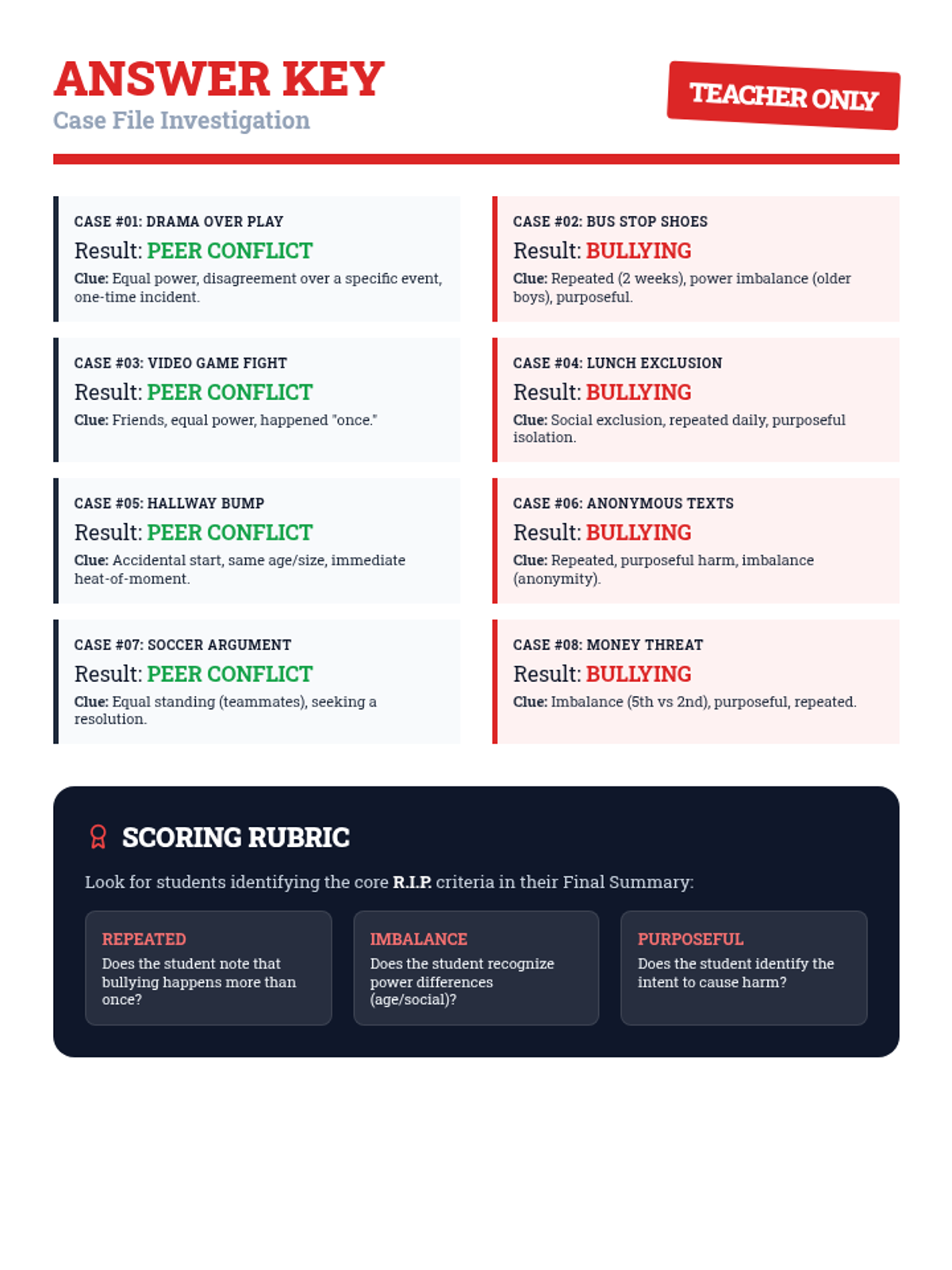
An answer key for the Case File Worksheet, providing the correct categorization for each scenario along with the specific clues related to the RIP criteria.
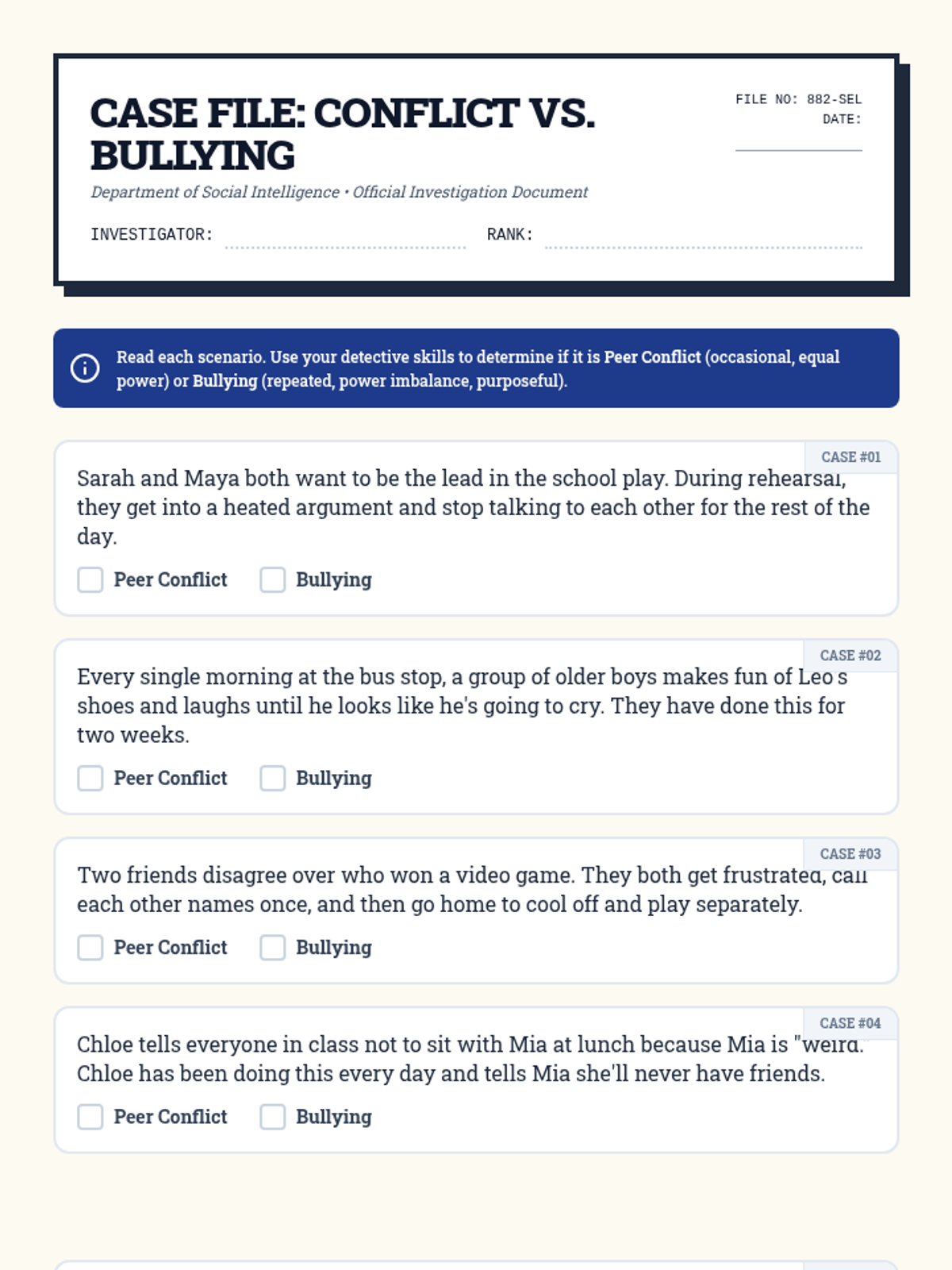
A student worksheet designed as a 'Case File' where investigators read 8 scenarios and use the RIP criteria to distinguish between peer conflict and bullying.
A 4-slide presentation introducing the definitions of peer conflict and bullying, featuring the 'RIP' criteria (Repeated, Imbalance of power, Purposeful).
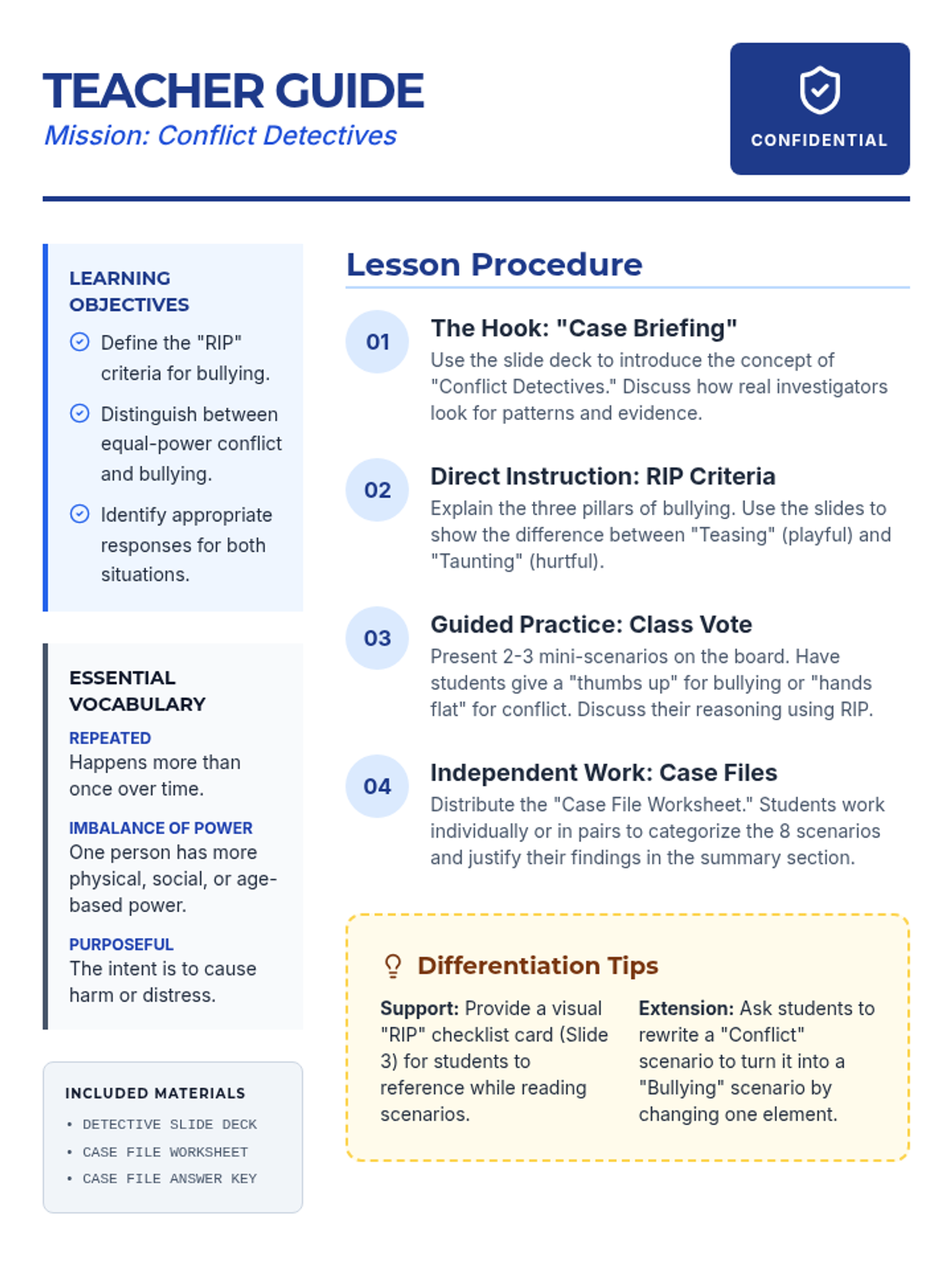
A teacher's guide for the Conflict Detectives lesson, including learning objectives, essential vocabulary, and a step-by-step instructional procedure.