A visual anchor chart for K-4th graders defining respect through 'Looks Like' and 'Sounds Like' columns. Includes a teacher reference poster and a student activity sheet for drawing and writing personal respect goals.
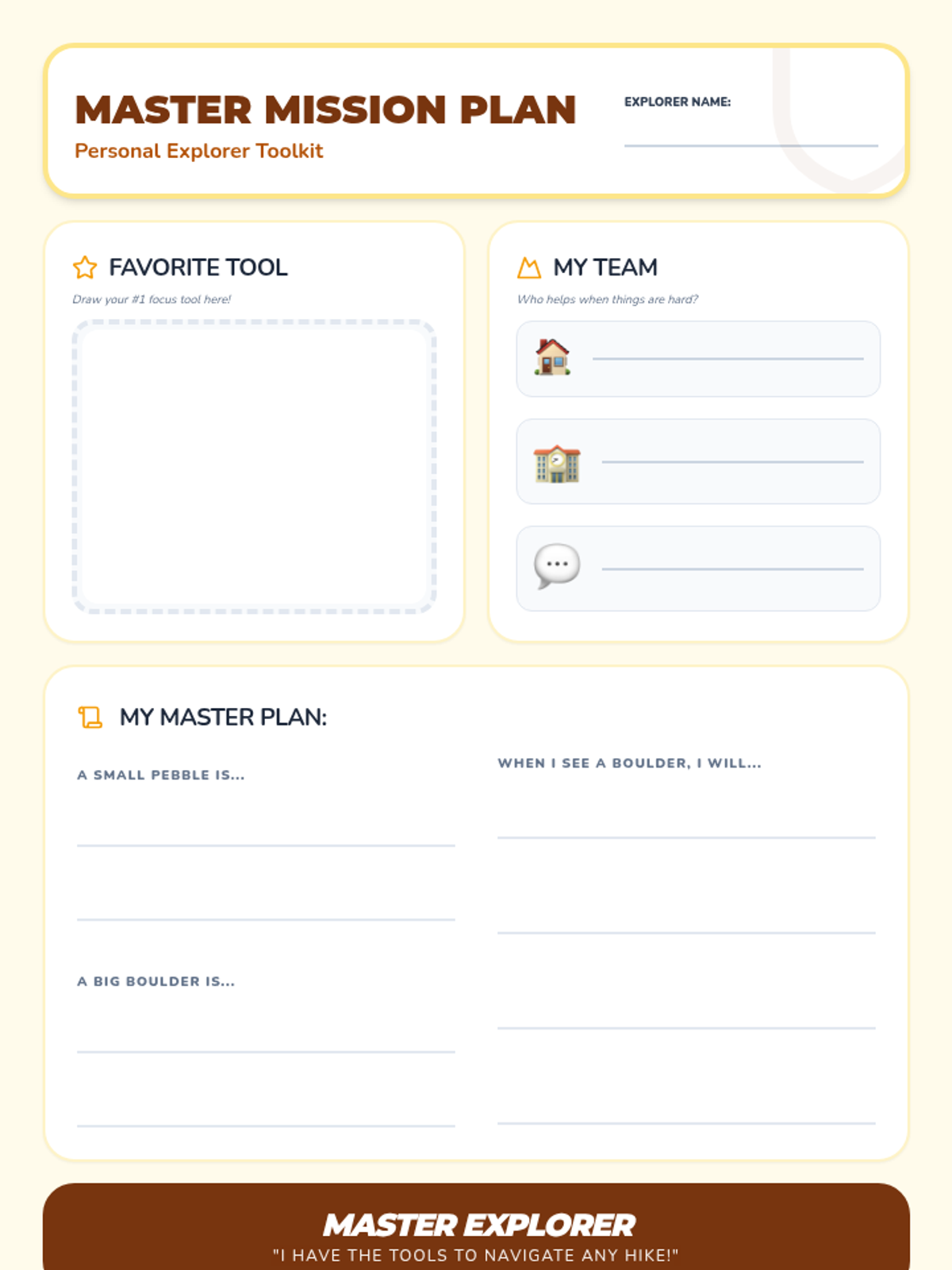
The culminating student worksheet for the Inner Explorer program. Functions as a personal 'Mission Plan', allowing students to document their favorite regulation tool, list their support team, and write out specific scenarios for tool application. Features a celebratory 'Master Explorer' design.
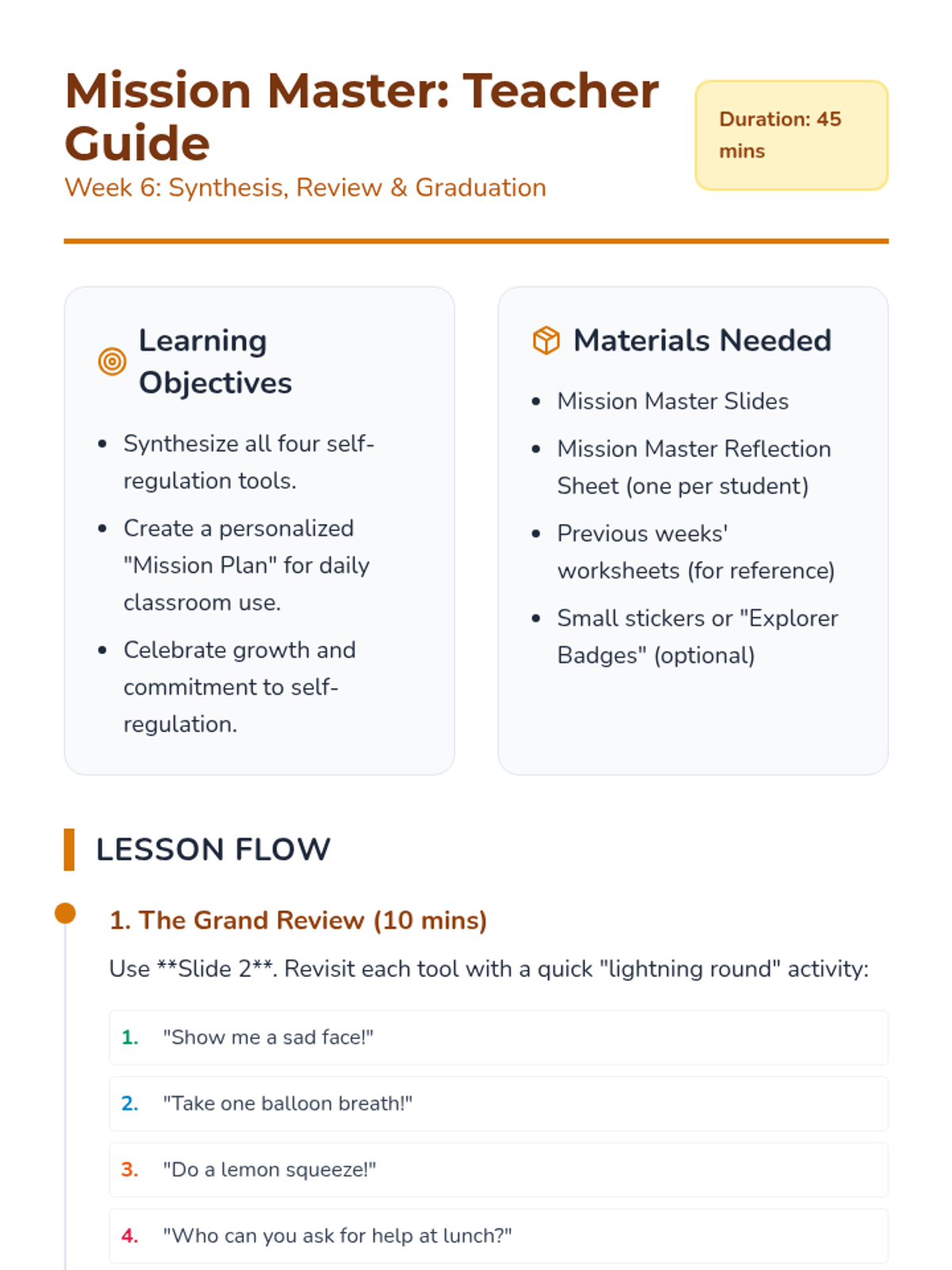
The final teacher's guide for the Inner Explorer program. Focuses on synthesizing the six weeks of learning, guiding students through the creation of their personalized mission plans, and conducting a celebration ceremony to recognize student achievement in self-regulation.
A celebratory and comprehensive review slide deck for the final week of the Inner Explorer program. Summarizes the four key tools learned (Feelings, Breath, Movement, Team), guides students in creating a personalized toolkit, and celebrates their growth as self-regulated learners.
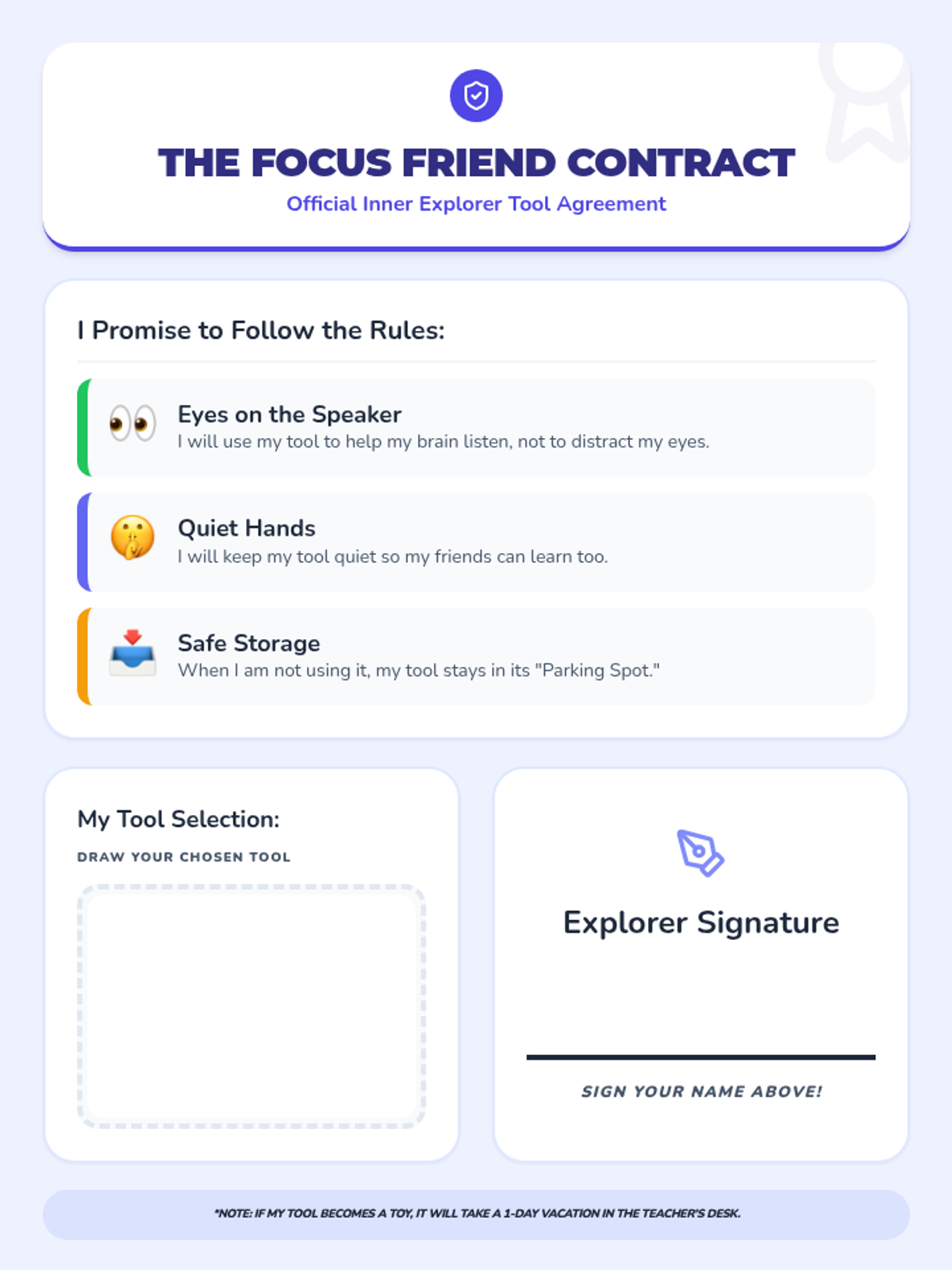
A formal behavioral contract for students using sensory tools (fidgets). Outlines three key rules (Eyes on Speaker, Quiet Hands, Safe Storage), includes a space for students to draw their selected tool, and provides a signature line to foster a sense of responsibility and ownership.
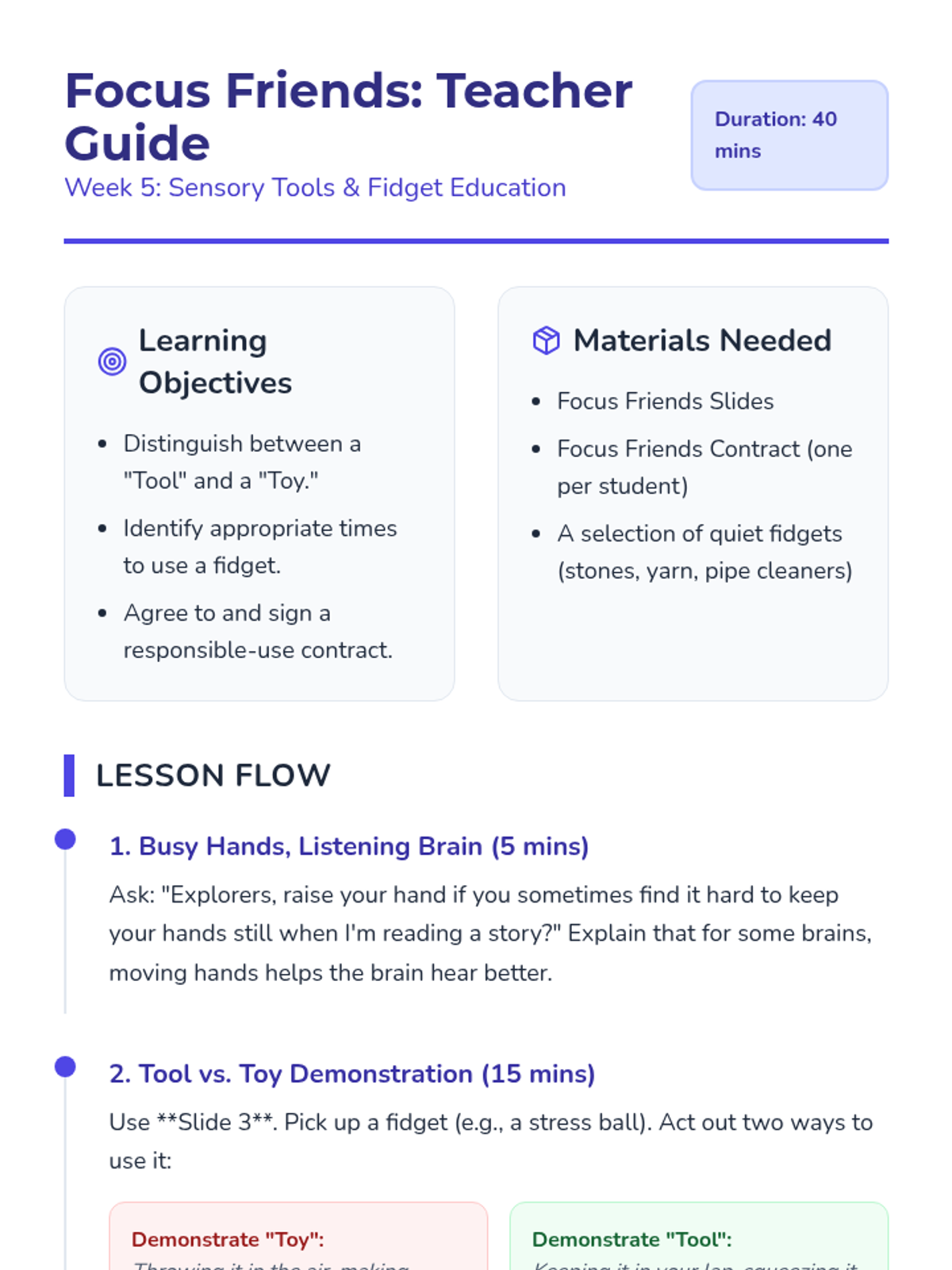
A teacher's guide for introducing fidget tools in the first-grade classroom. Includes a clear 'Tool vs. Toy' demonstration script, behavioral expectations for fidget use, and a classroom management strategy for storing and retrieving sensory tools.
A slide deck for teaching first graders how to use fidgets (Focus Friends) responsibly. Explains the difference between a tool and a toy, provides clear rules for engagement (Eyes Up, Keep it Quiet, Desk Home), and builds anticipation for signing a focus contract.
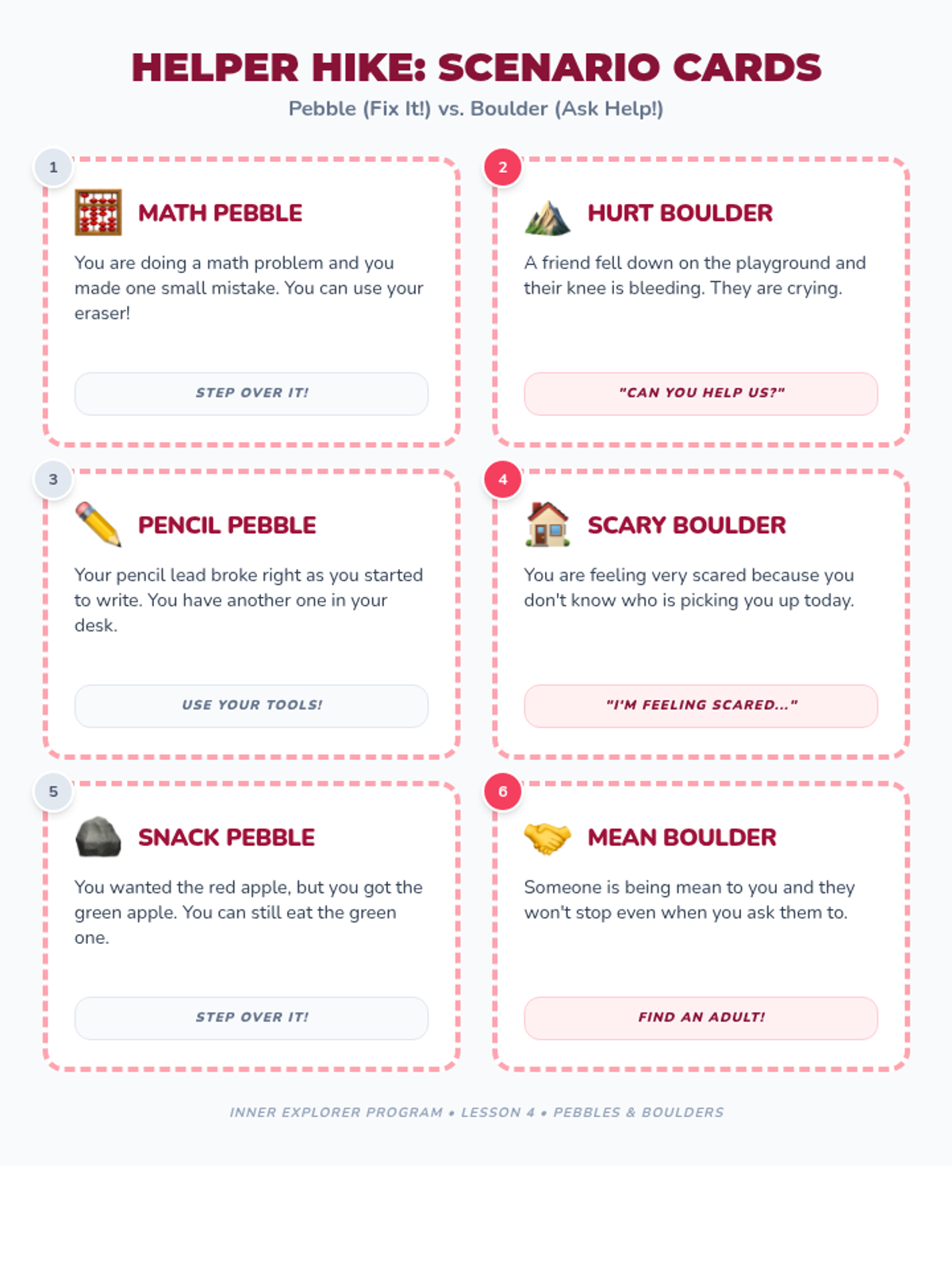
A set of six printable scenario cards for first-grade role-playing. Each card presents a relatable classroom or playground challenge (e.g., hard math, lost jacket, hurt feelings) and provides a simple script to help students practice asking for assistance from an adult.
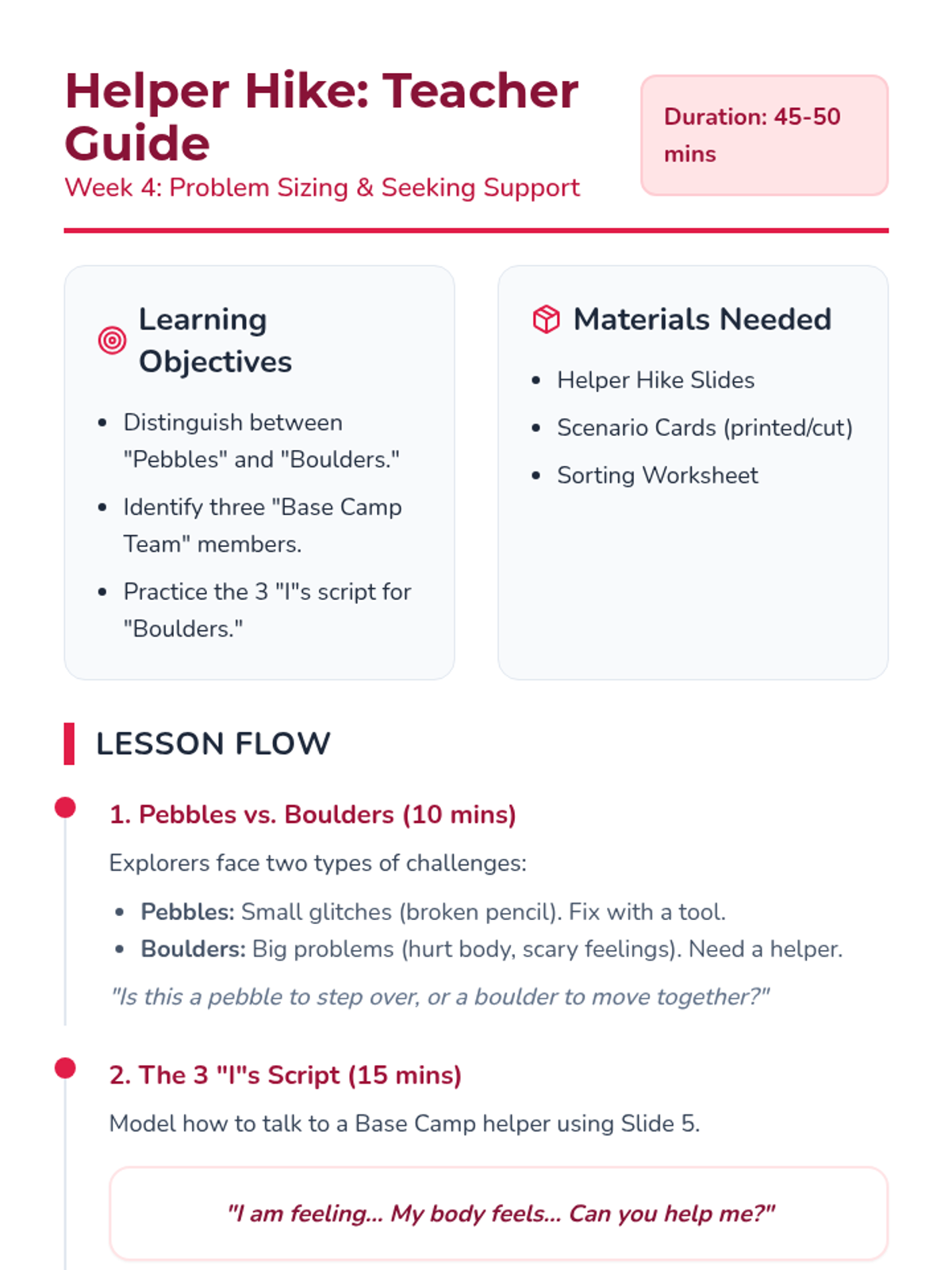
A professional teacher's guide for Lesson 4, focused on help-seeking behaviors. It outlines how to frame asking for help as a strength, provides a three-step communication script for students, and includes instructions for a role-playing activity using scenario cards.
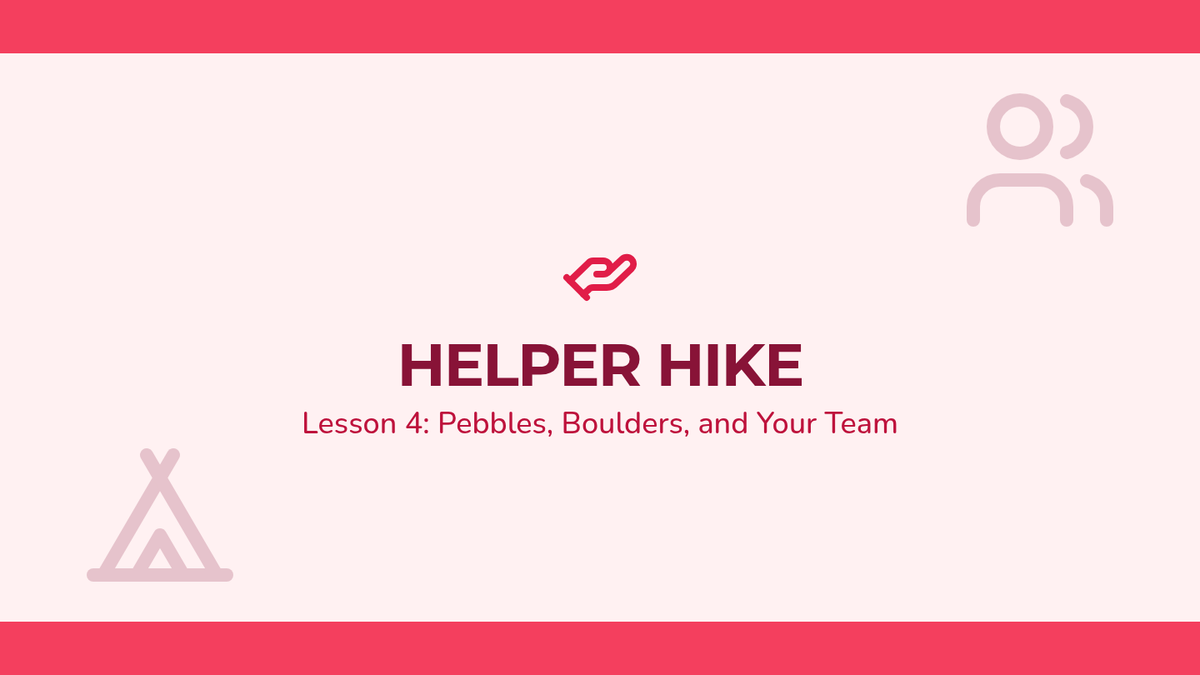
A social-emotional slide deck for first graders about the importance of asking for help. Introduces the 'Base Camp Team' (trusted adults), teaches a three-step process for communicating needs ('Identify, Indicate, Invite'), and prepares students for a role-playing activity.
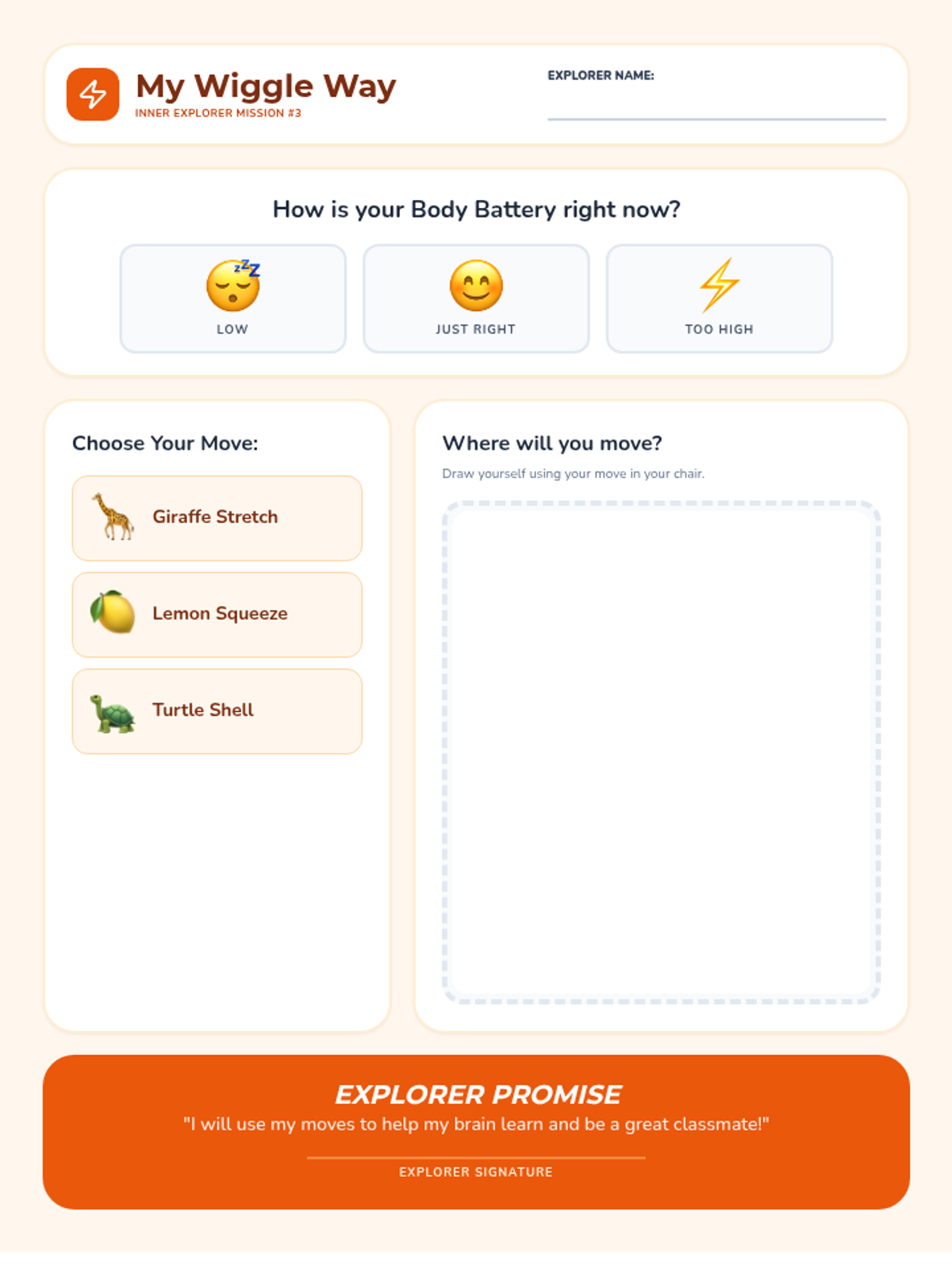
A student activity sheet for the 'Wiggle Way' movement lesson. Includes a 'Body Battery' check-in, a selection menu of three classroom-friendly movements, a drawing space for personalized application, and an 'Explorer Promise' to reinforce responsible use of movement tools.
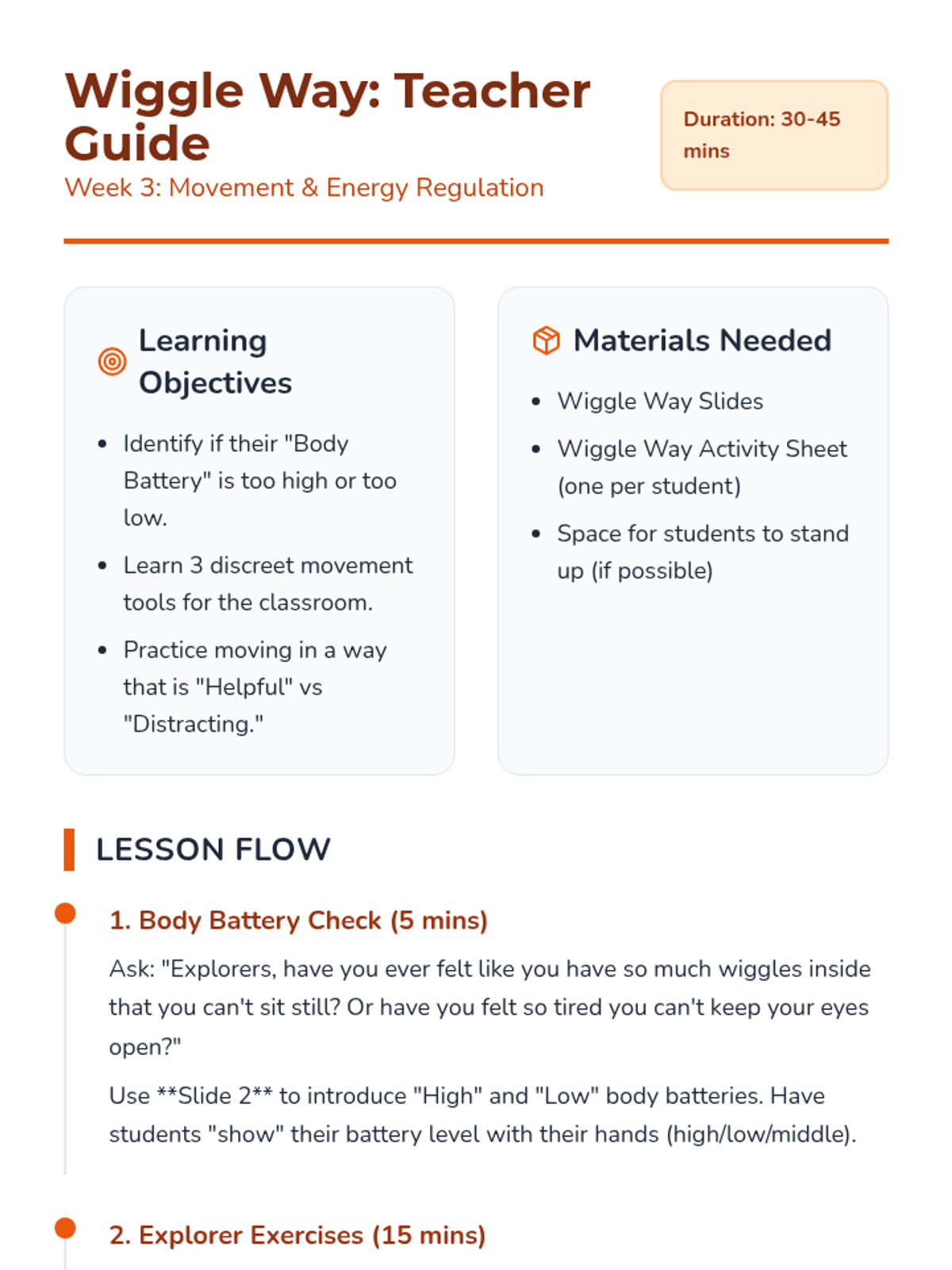
A teacher guide for the 'Wiggle Way' movement lesson. Includes a 'Body Battery' conceptual framework, instructions for teaching three specific classroom-appropriate movements, and a discussion guide for distinguishing between helpful movement and distraction.
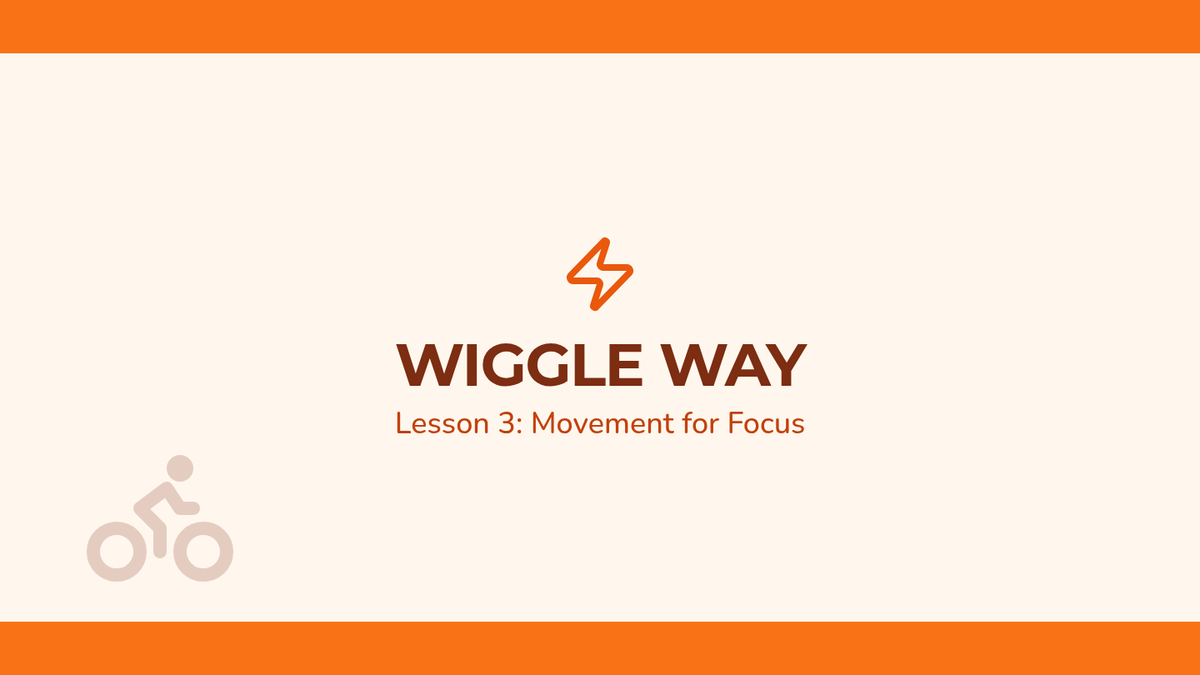
An energetic slide deck for first graders about using movement as a focus tool. Introduces the concept of 'Body Battery', teaches three specific desk-friendly stretches ('Giraffe Stretch', 'Lemon Squeeze', 'Turtle Shell'), and establishes rules for using movement effectively in the classroom.
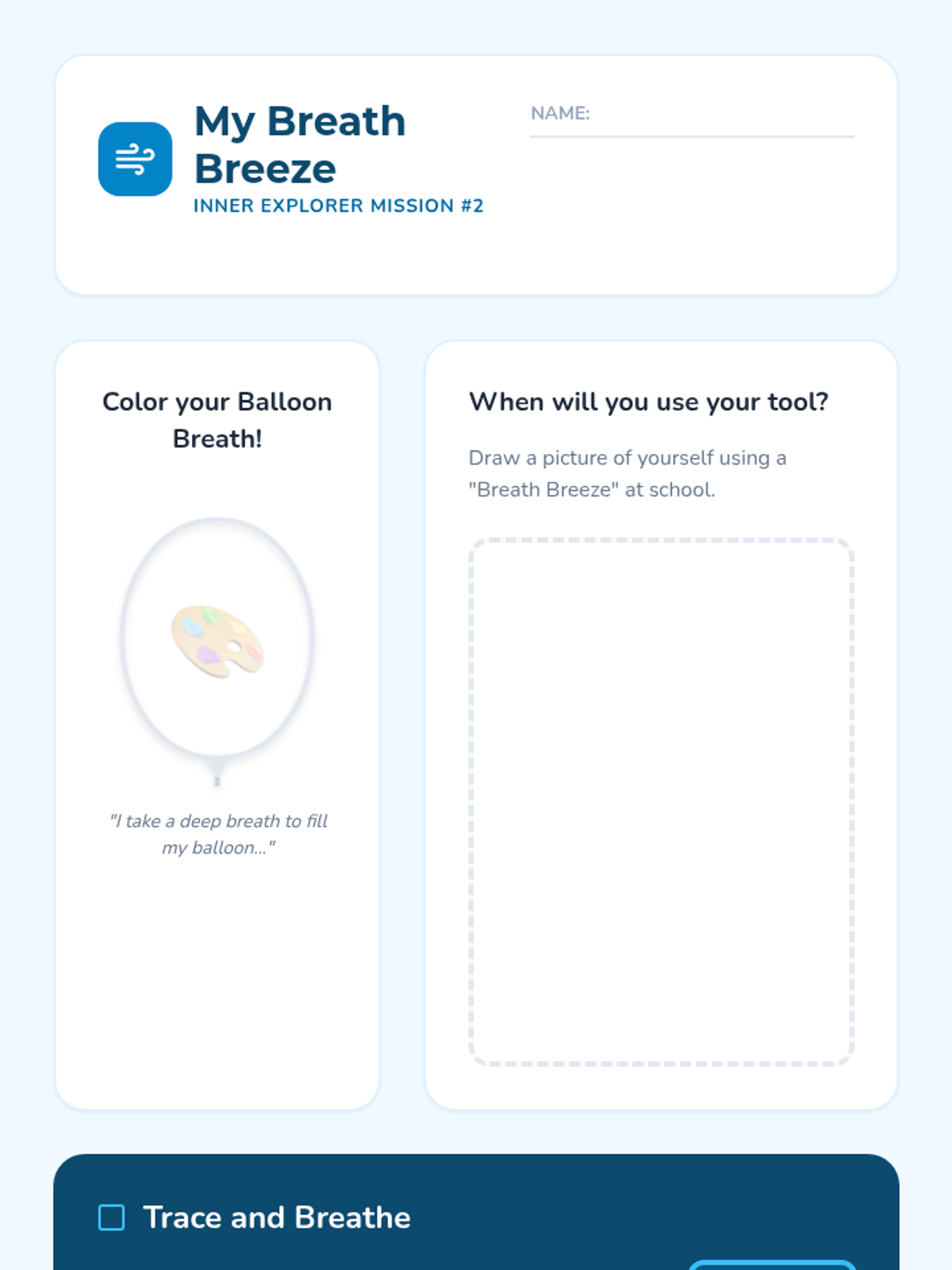
A student activity sheet for practicing breathing techniques. Features a large balloon outline for coloring (representing Balloon Breathing), a creative drawing space for situational application, and a tactile 'Trace and Breathe' square for practicing Square Breathing.
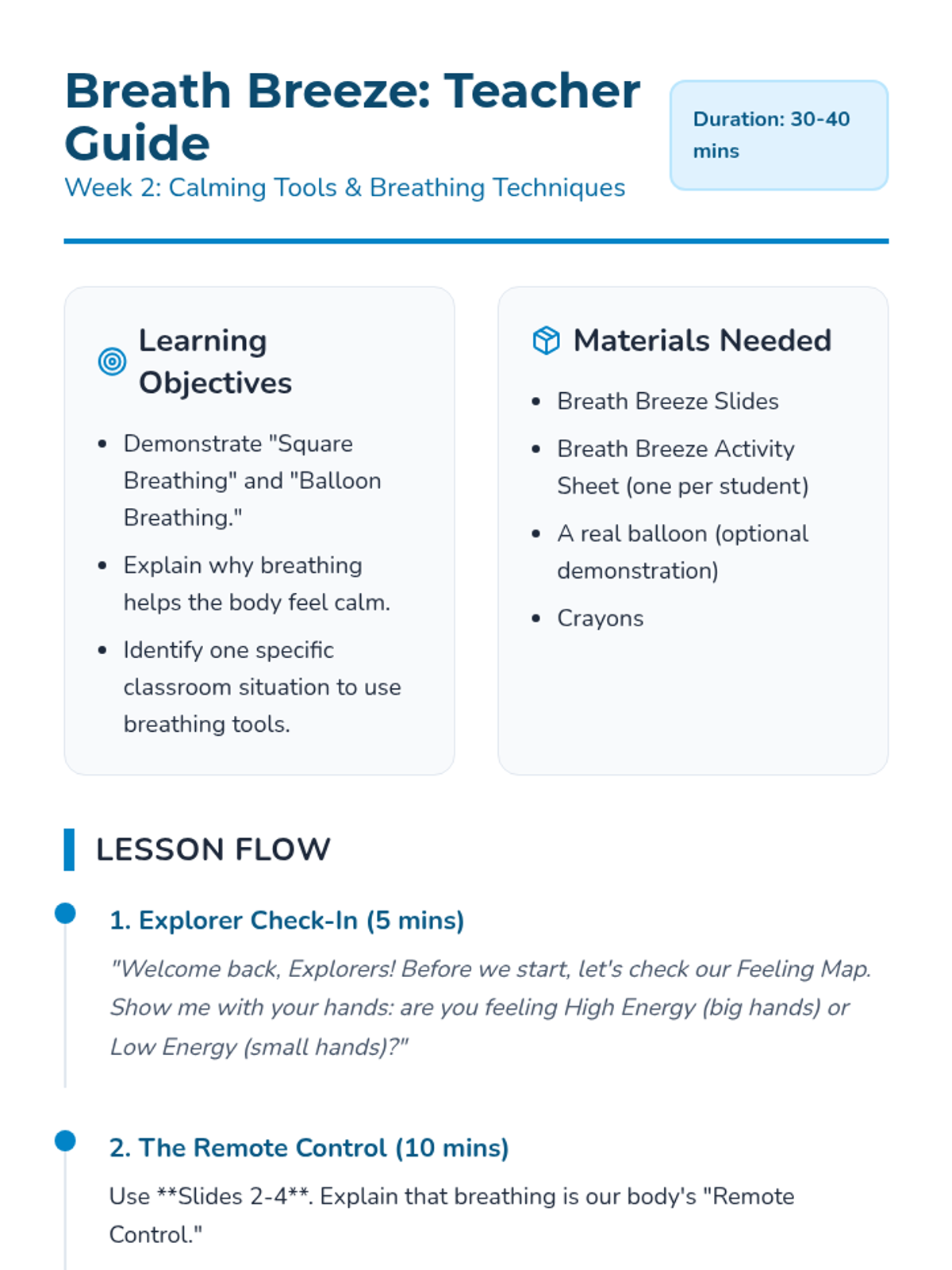
A lesson plan for teachers to lead the 'Breath Breeze' session. Provides structured activities for teaching 'Balloon' and 'Square' breathing, includes discussion prompts about the physiological benefits of breathing, and offers tips for classroom implementation.
An instructional slide deck for first graders focusing on breathing techniques as a self-regulation tool. Teaches 'Square Breathing' and 'Balloon Breathing' with simple visuals and identifies specific classroom moments when these tools are most effective.
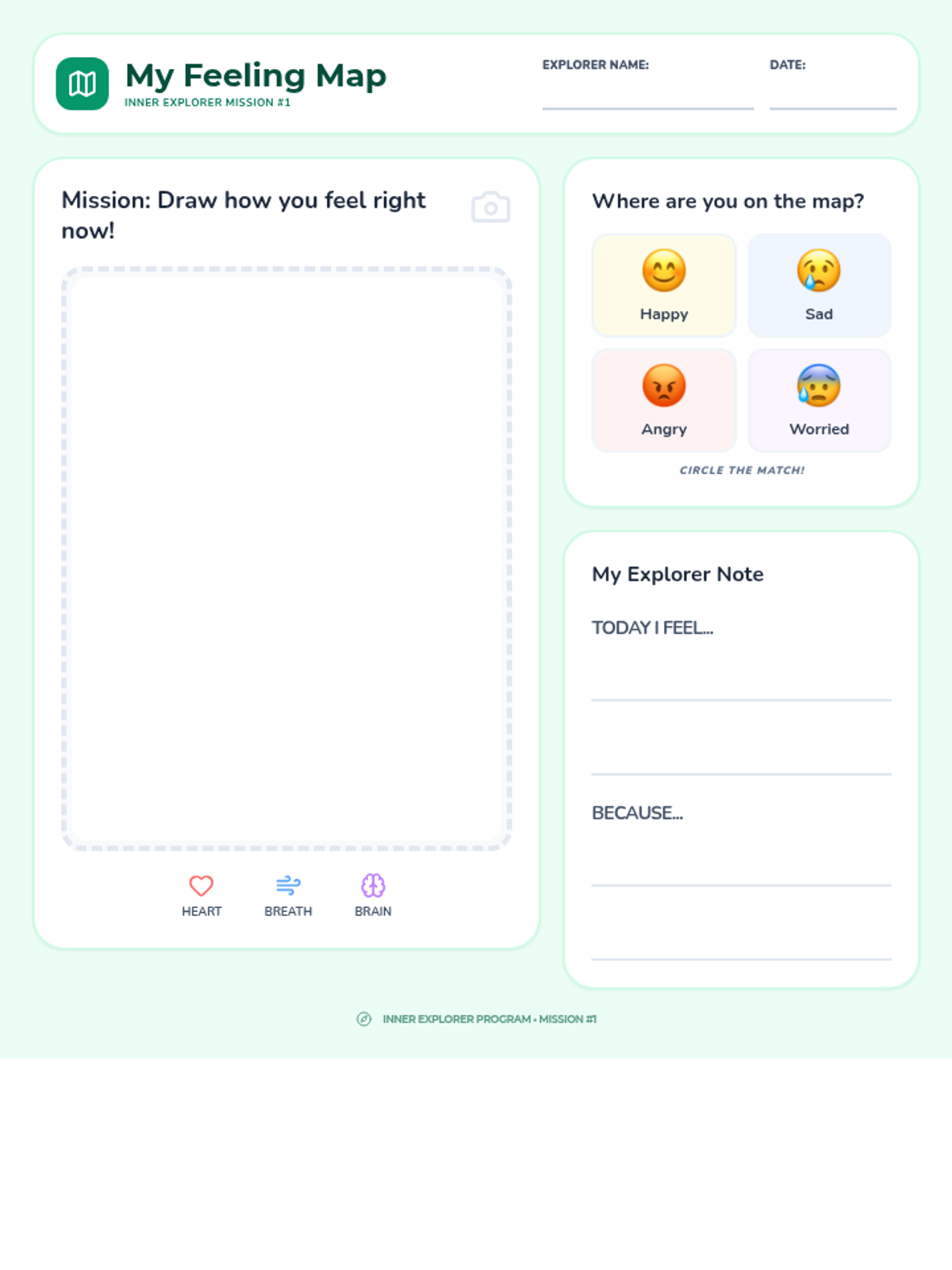
An interactive worksheet for first graders to draw and identify their current emotions. Includes a creative drawing area, emoji-based emotion selection, and a simple sentence-starter section to help students articulate why they feel a certain way.
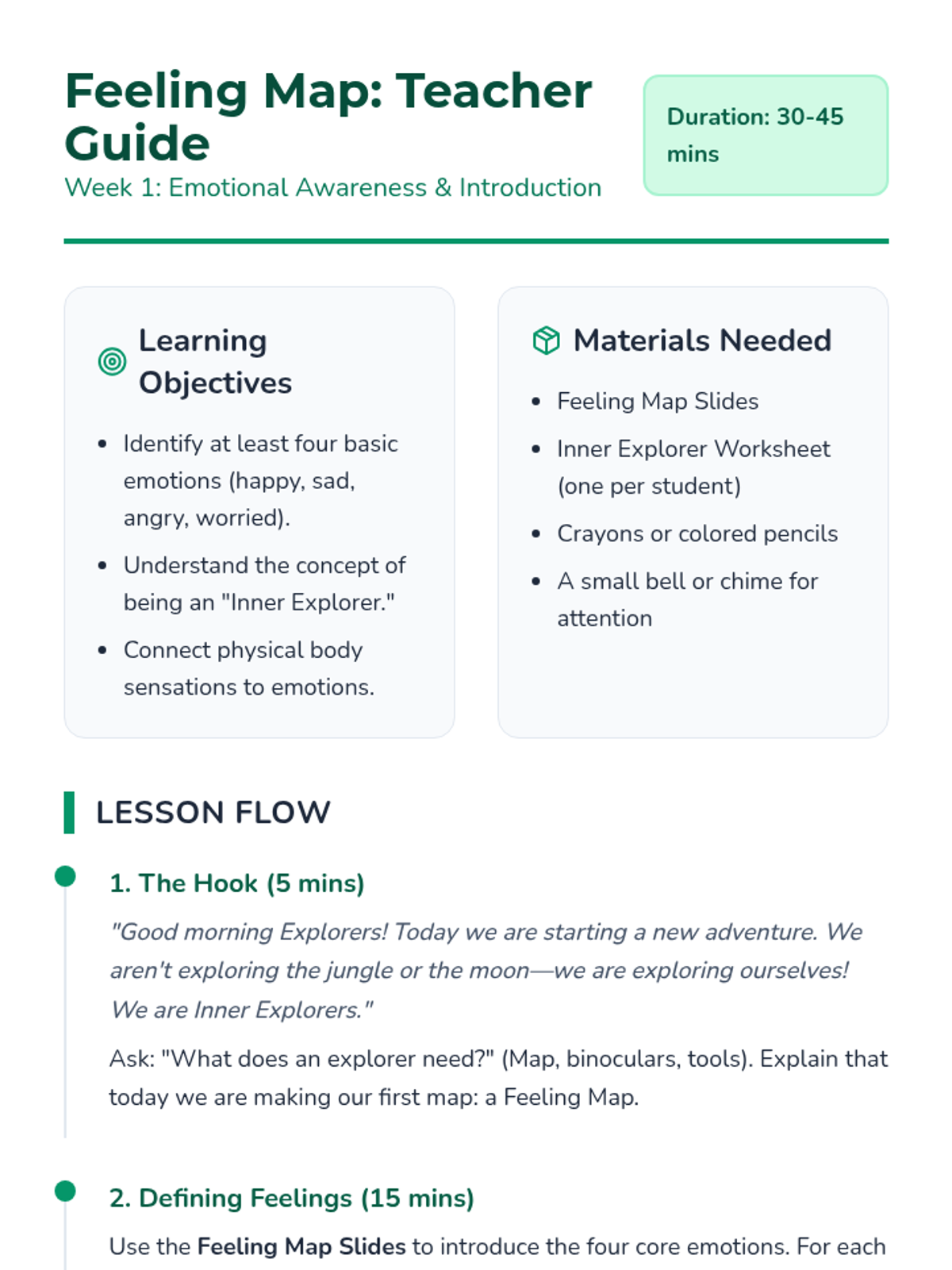
A comprehensive teacher's guide for the first week of the Inner Explorer program. Includes learning objectives, a step-by-step instructional script, materials list, and differentiation strategies to support all learners in identifying basic emotions.