An elegant, deeply reflective open-ended reflection guide for counseling supervisees to evaluate clinical growth, supervisory relationship safety, and offer future program advocacy.
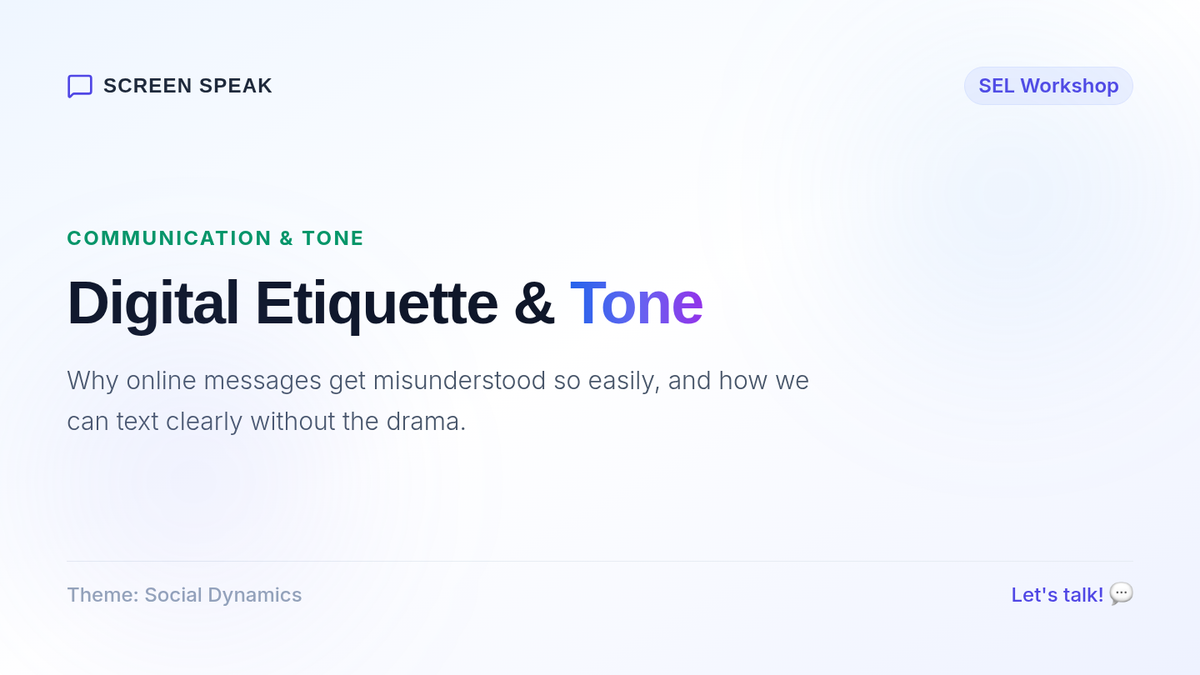
Interactive slideshow presentation for 'Screen Speak'. Outlines digital traps, the Tone Triangle, text-analysis challenges, and the THINK etiquette check. Features a high-fidelity, dark-mode social dashboard design optimized for teen engagement.
A highly visual, smartphone-inspired student workbook containing warm-up tracking, breakout scenario rewrites, the THINK checklist, and an interactive emoji exit ticket for teens.
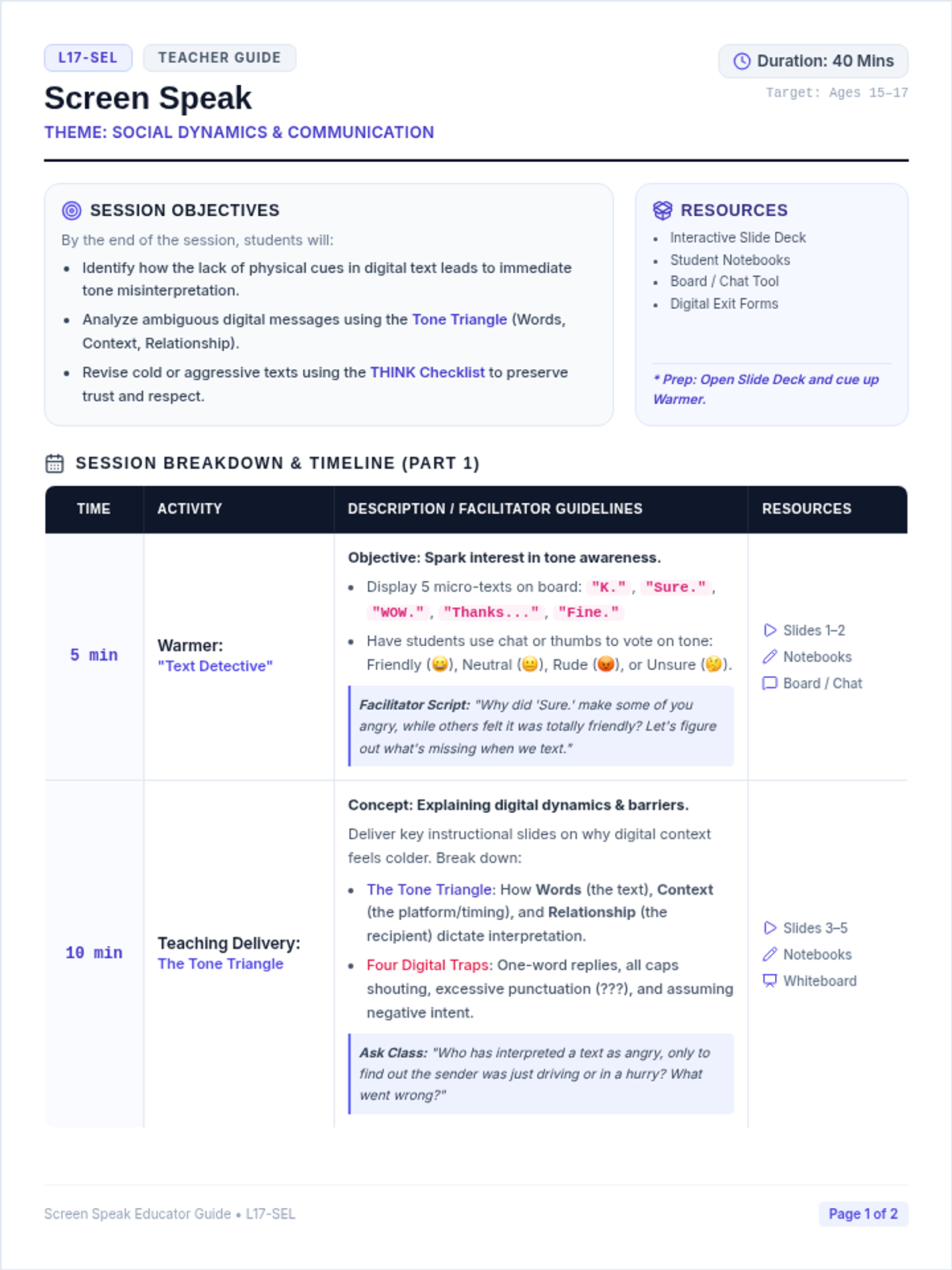
An educator's facilitation guide for 'Screen Speak'. Includes detailed lesson plans, step-by-step instructions for warm-ups, direct instruction scripts, breakout group coordination, discussion prompts, and an answer/discussion key for scenarios.
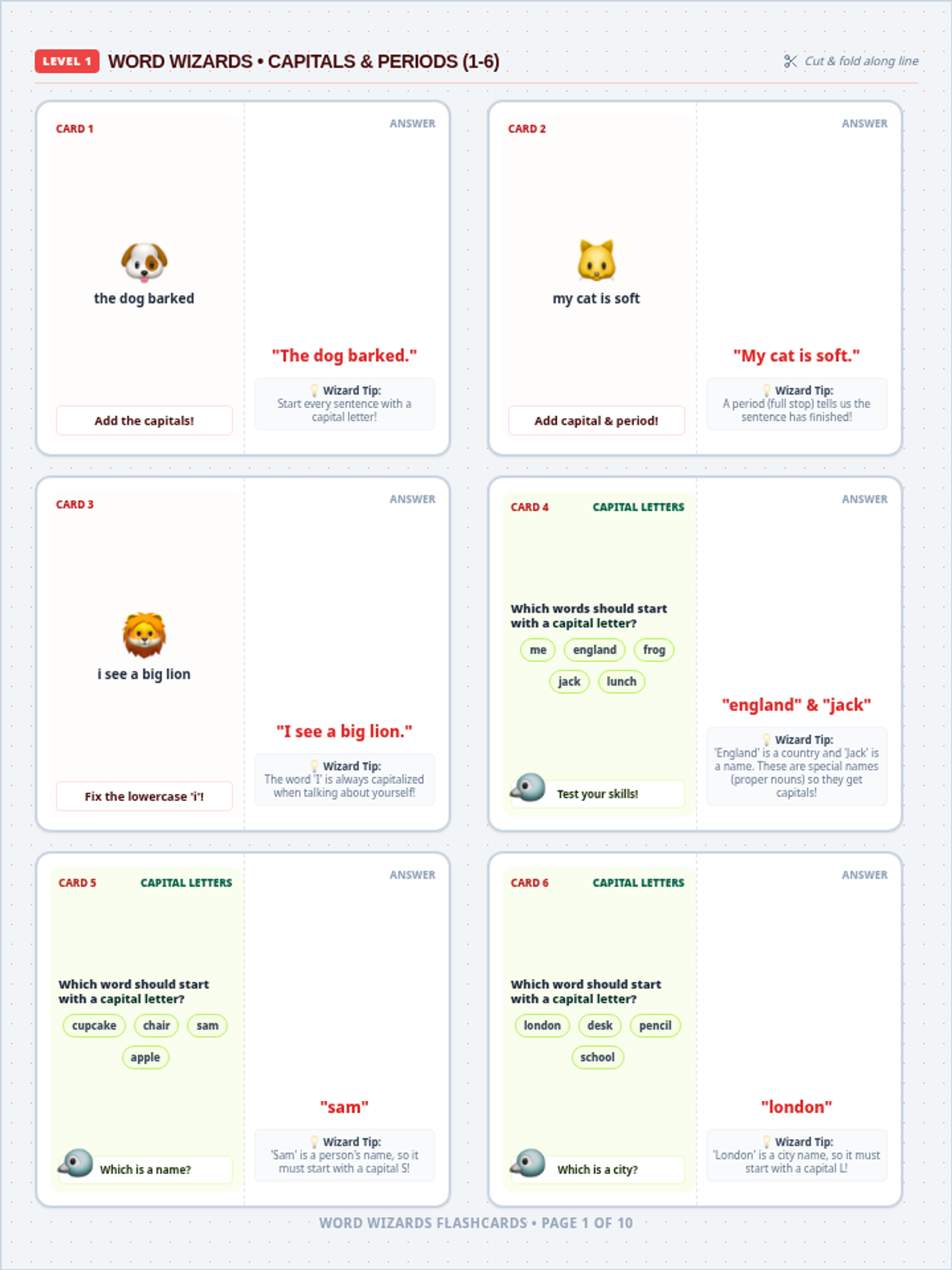
A premium mega-deck of 55 carefully-levelled printable grammar, punctuation, and spelling flashcards (10 pages, 6 cards per page). Features clean layout cards with visual 'Who, What, Why' cues, spelling/grammar tips on the backs, and progressive levels perfect for 5-7 year olds.
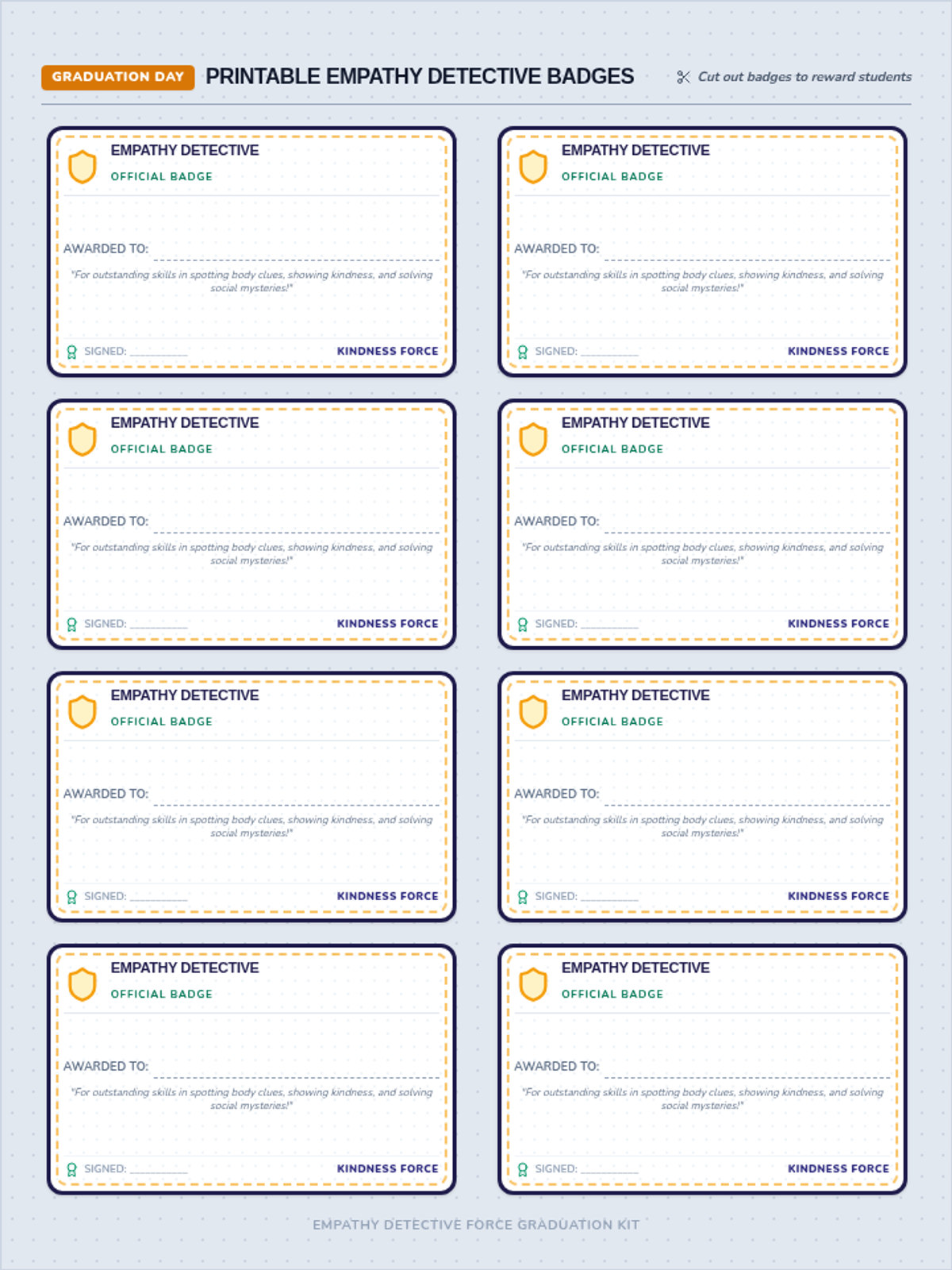
A printable sheet of 8 'Official Empathy Detective' badges and pocket awards (1 page). Features leather-like stitch borders, golden star shields, and signed lines, perfect as a tangible reward for students completing their weeklong SEL training.
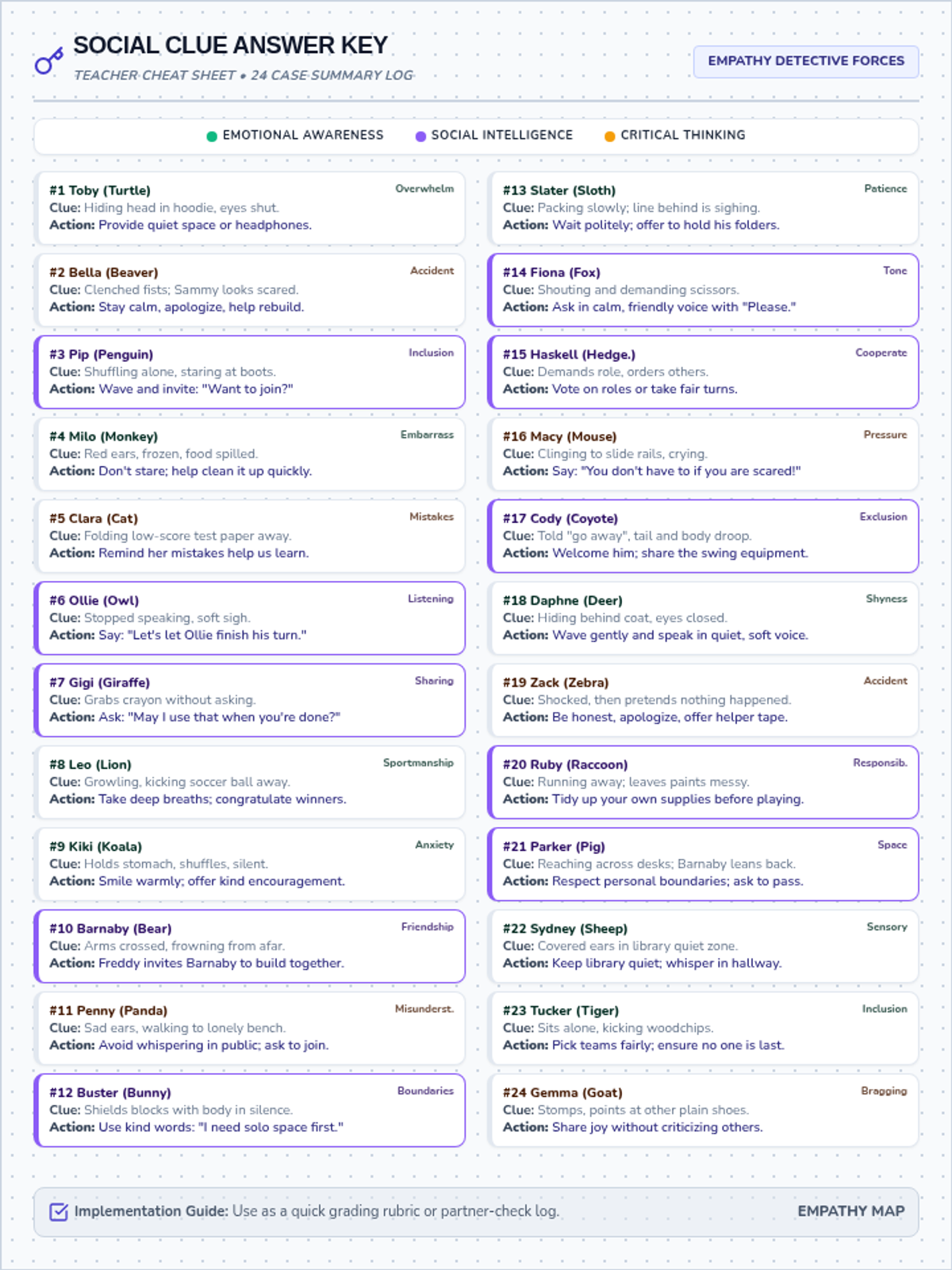
A comprehensive 1-page teacher reference sheet and answer key summarizing all 24 social mystery cards. Displays Card Number, Character, Core SEL Domain, Observed Body Clues, and Recommended Empathy Actions in a compact, highly organized 2-column dashboard layout.
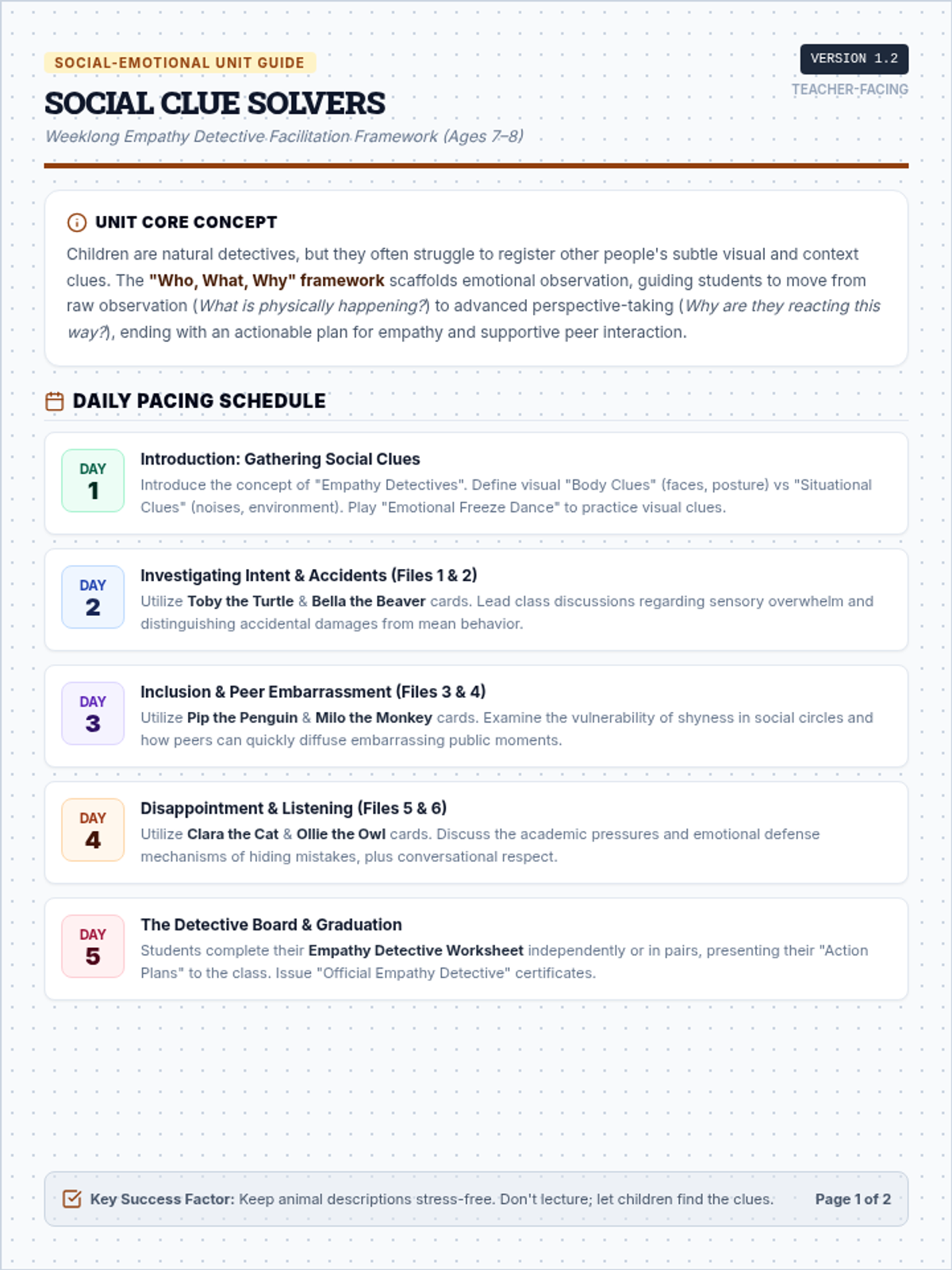
A comprehensive 2-page teacher facilitation and pacing guide detailing a weeklong social-emotional learning unit. Outlines daily classroom activities, active questioning frameworks using the 'Who, What, Why' methodology, common student misconceptions, and targeted differentiation ideas.
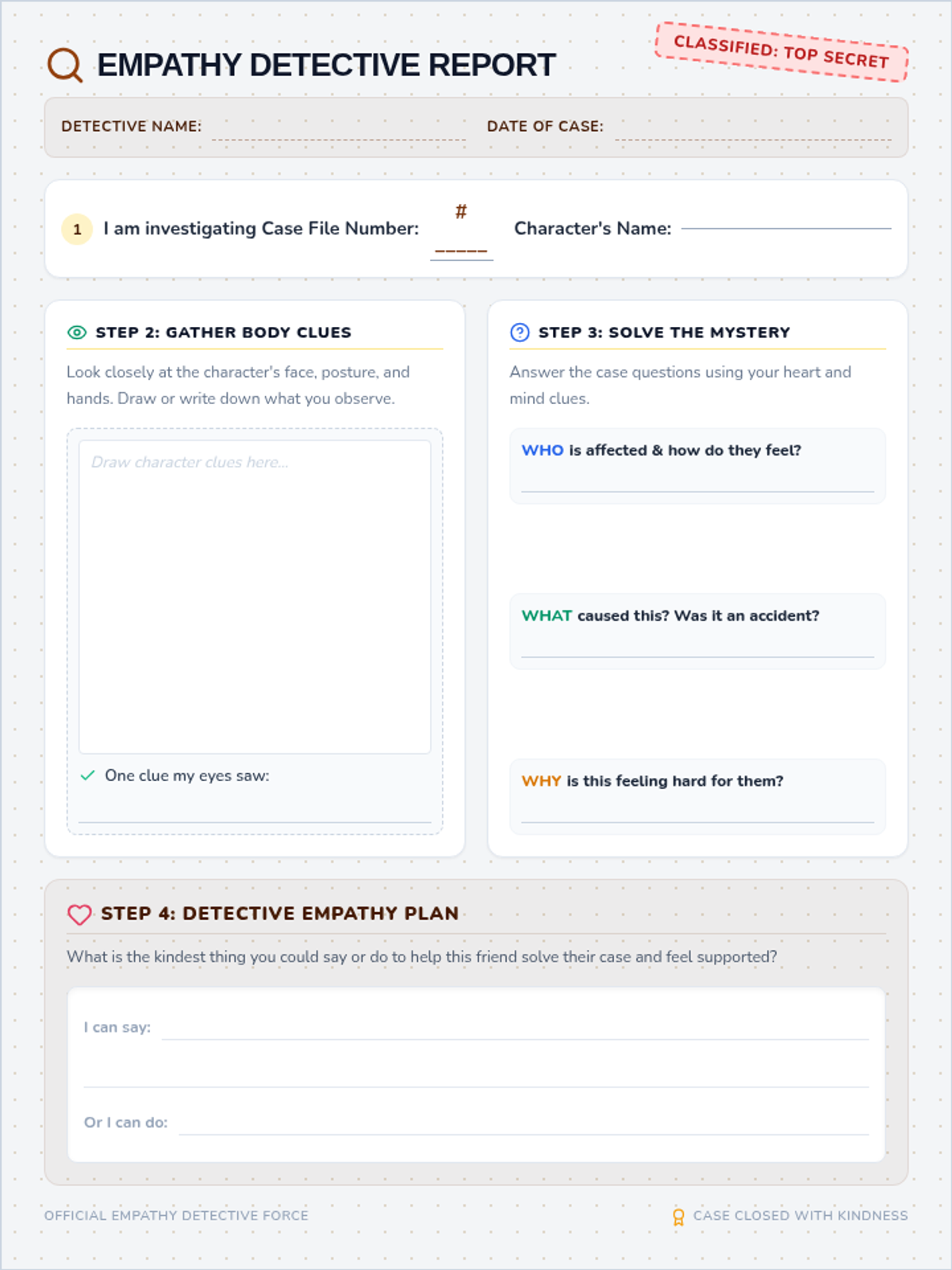
An interactive student worksheet where children step into the role of an 'Empathy Detective' to analyze a selected social scenario. Features structured sections for gathering visual clues, identifying character feelings (Who, What, Why), and drawing/writing a kind empathy action plan.
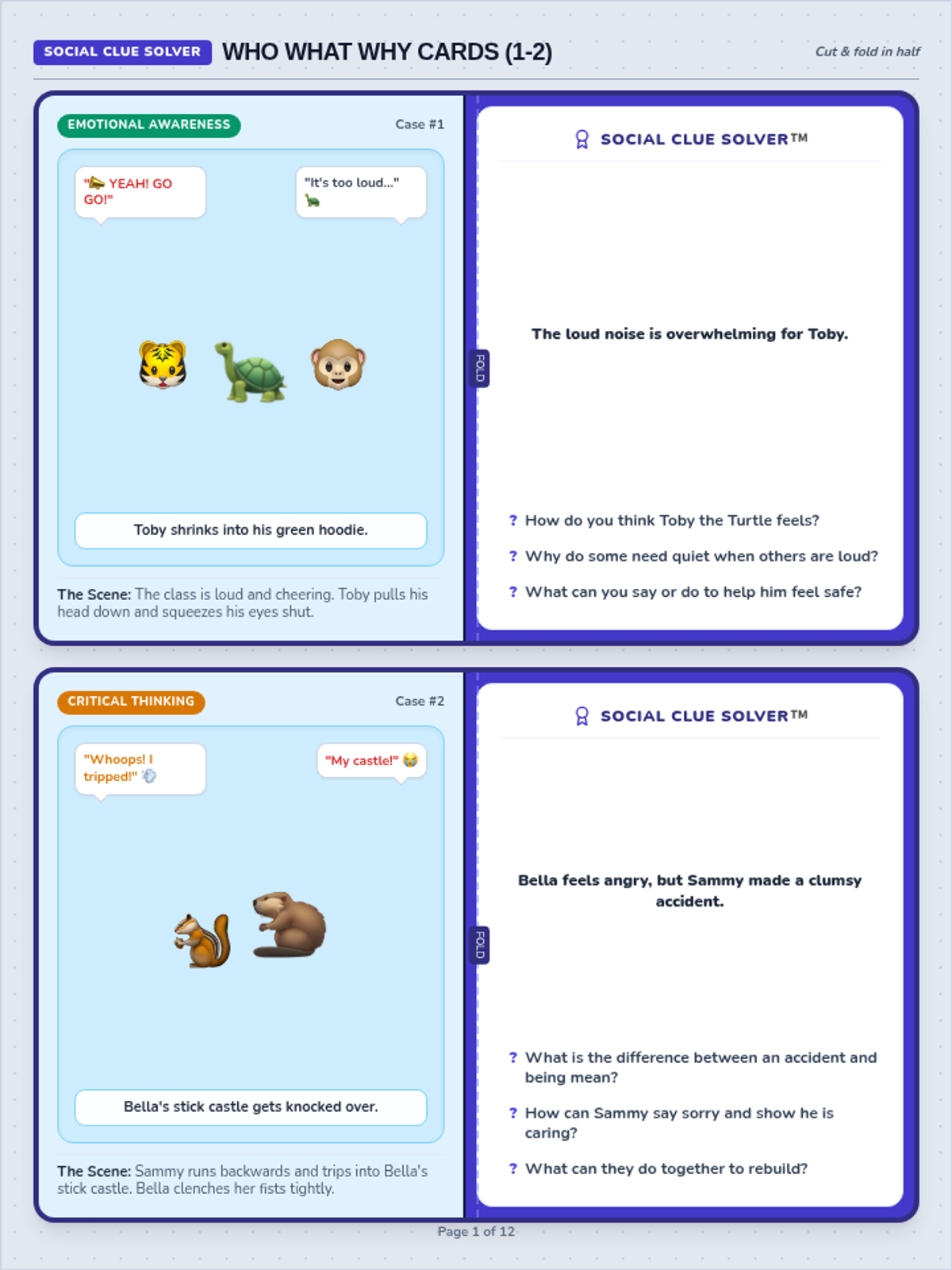
A premium mega-set of 24 printable, double-sided foldable conversation cards (12 pages, 2 cards per page) with 'Clever Fox' branding removed, replaced with a neutral 'Social Clue Solver' theme. Features custom CSS speech bubbles, colorful animal scenes, and detailed discussion prompts.
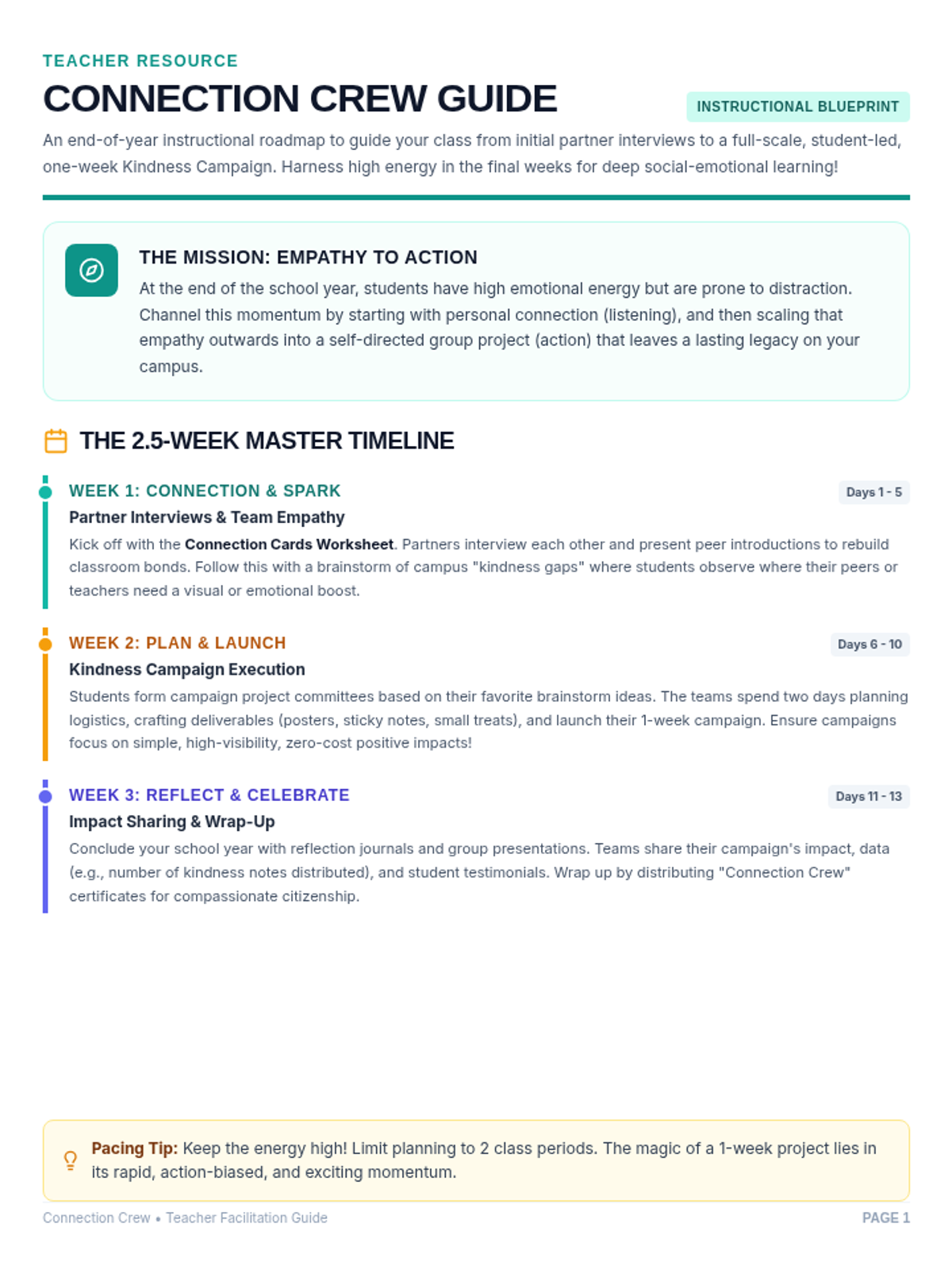
A comprehensive 2-page teacher facilitation guide outlining a 2.5-week pacing roadmap, step-by-step interview instructions, and curated blueprints for student-led 1-week kindness campaigns.
A printable double-sided student resource featuring 20 cut-out interview prompt cards color-coded by category, paired with a structured Partner Profile worksheet and introduction script generator.
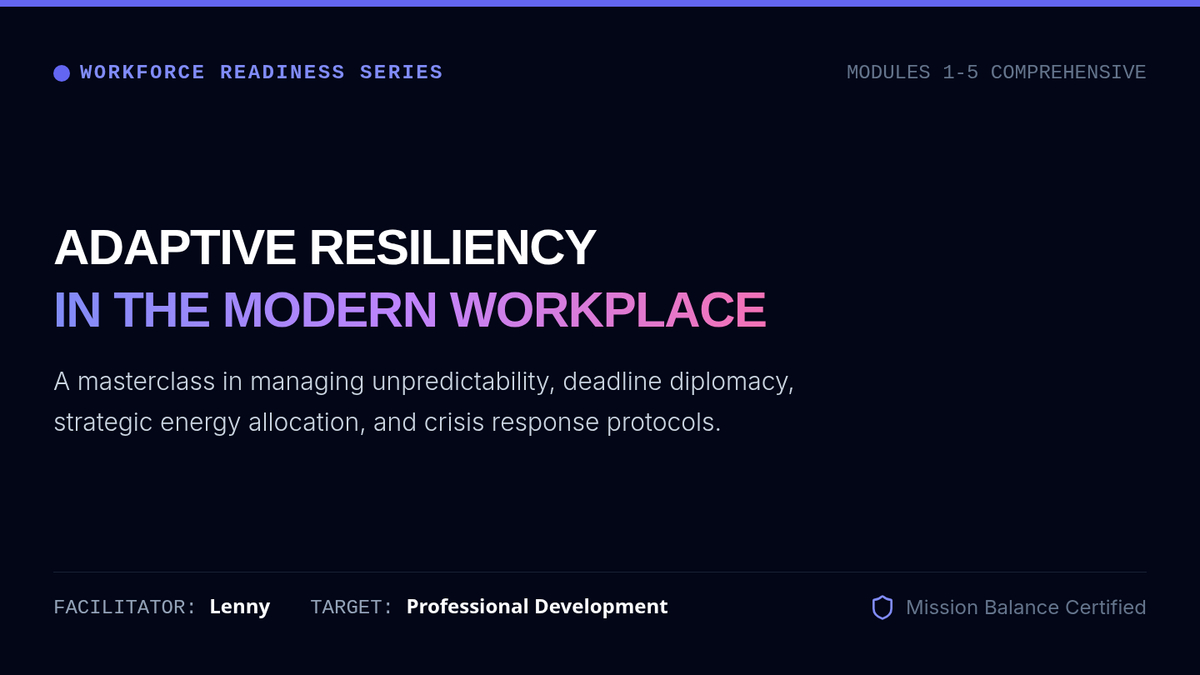
A highly-polished master slide deck designed for adult professional training in adaptive resiliency. Covers the 4 core pillars: The Chaos Factor, Deadline Diplomacy, Energy Allocation, and Red Alert Crisis Triage, formatted cleanly for 16:9 presentations with strict adherence to a 24px minimum font size.
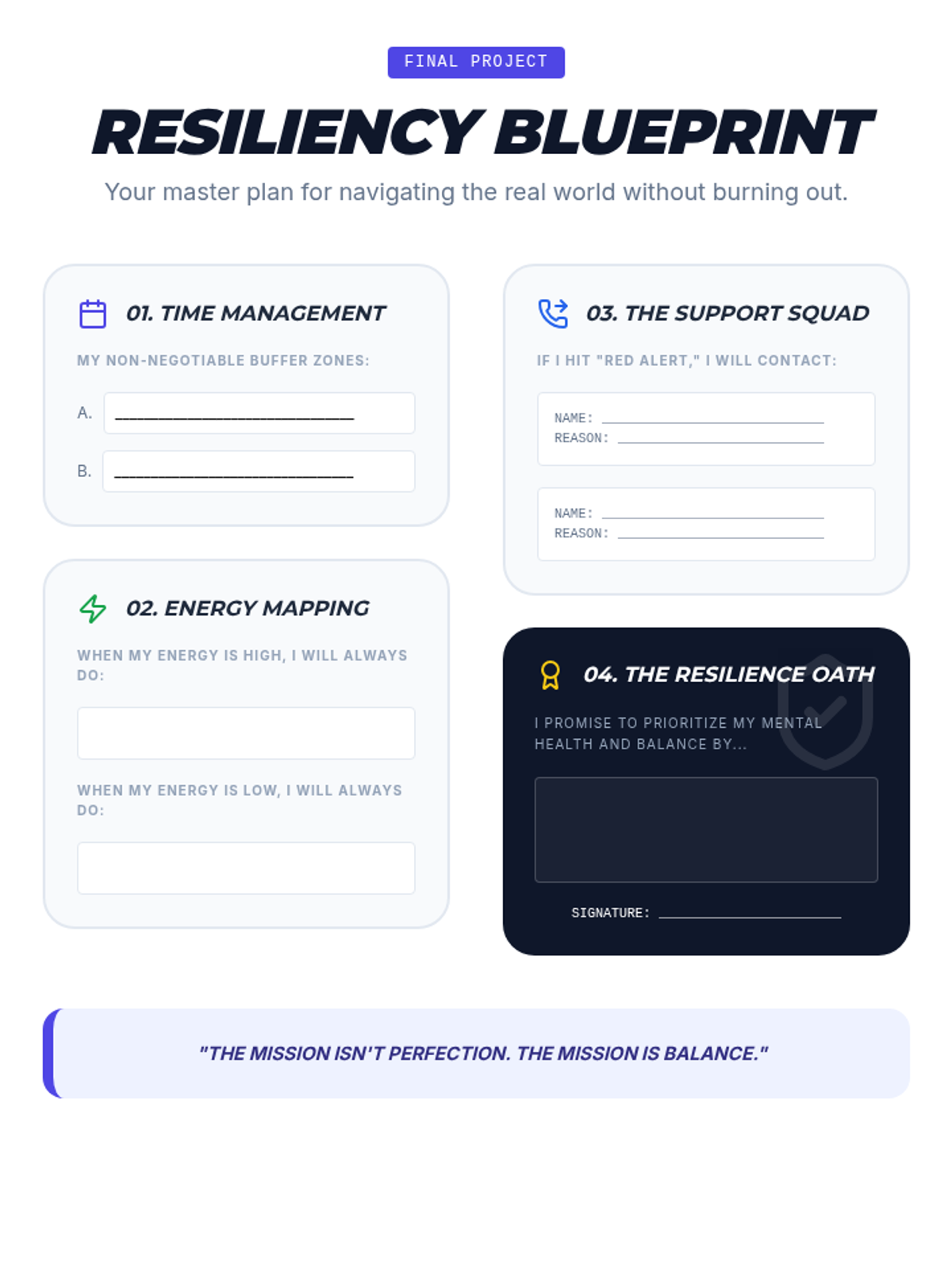
A summative project document where students synthesize everything they have learned into a personal 'Resiliency Blueprint' for real-world application.
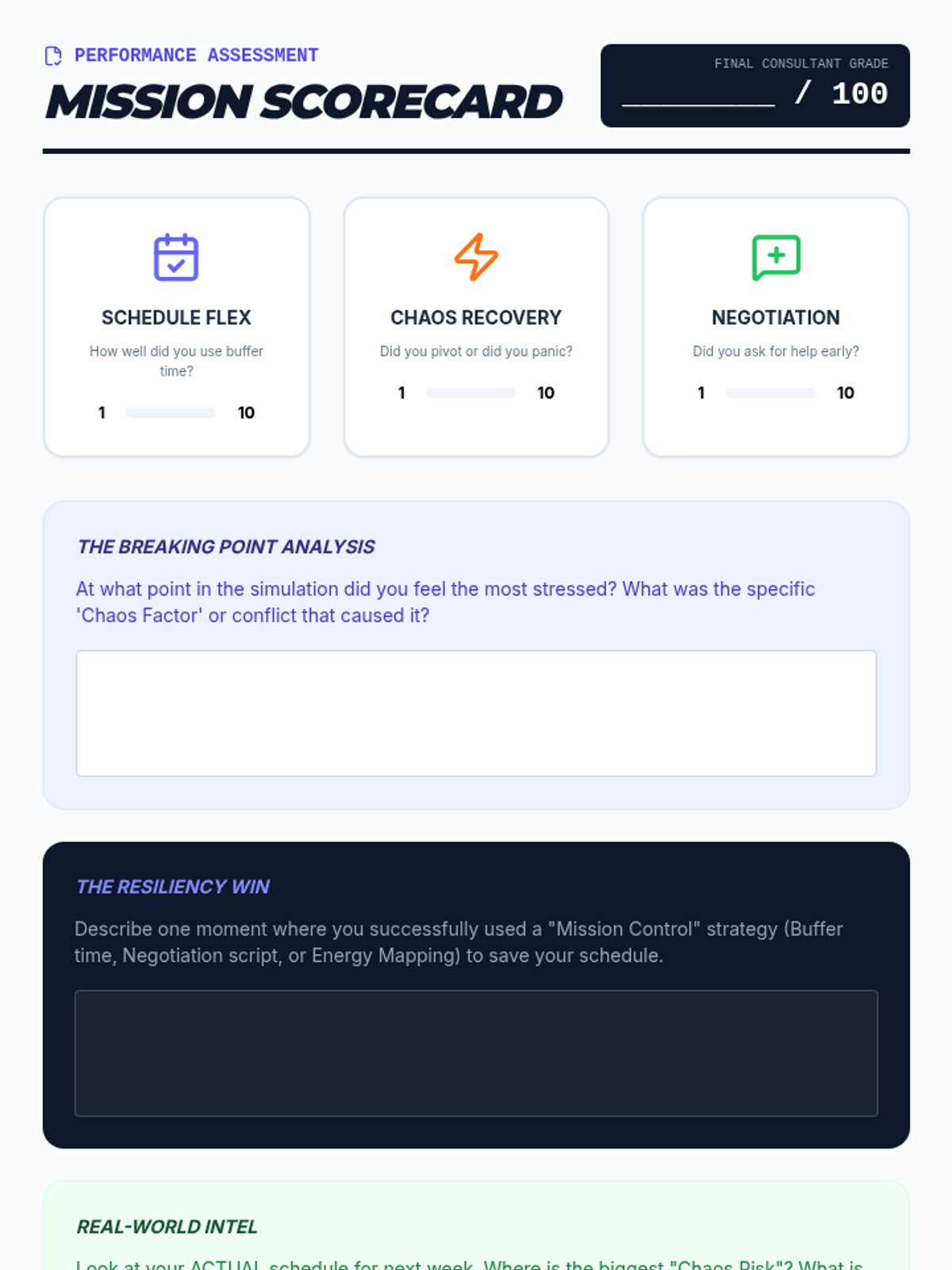
A final self-assessment 'Scorecard' for the Mission Balance sequence, allowing students to rate their performance and reflect on their growth in schedule management and resiliency.
Final presentation for the Mission Balance sequence, reviewing core concepts of chaos management, negotiation, and energy management, and introducing the final scorecard activity.
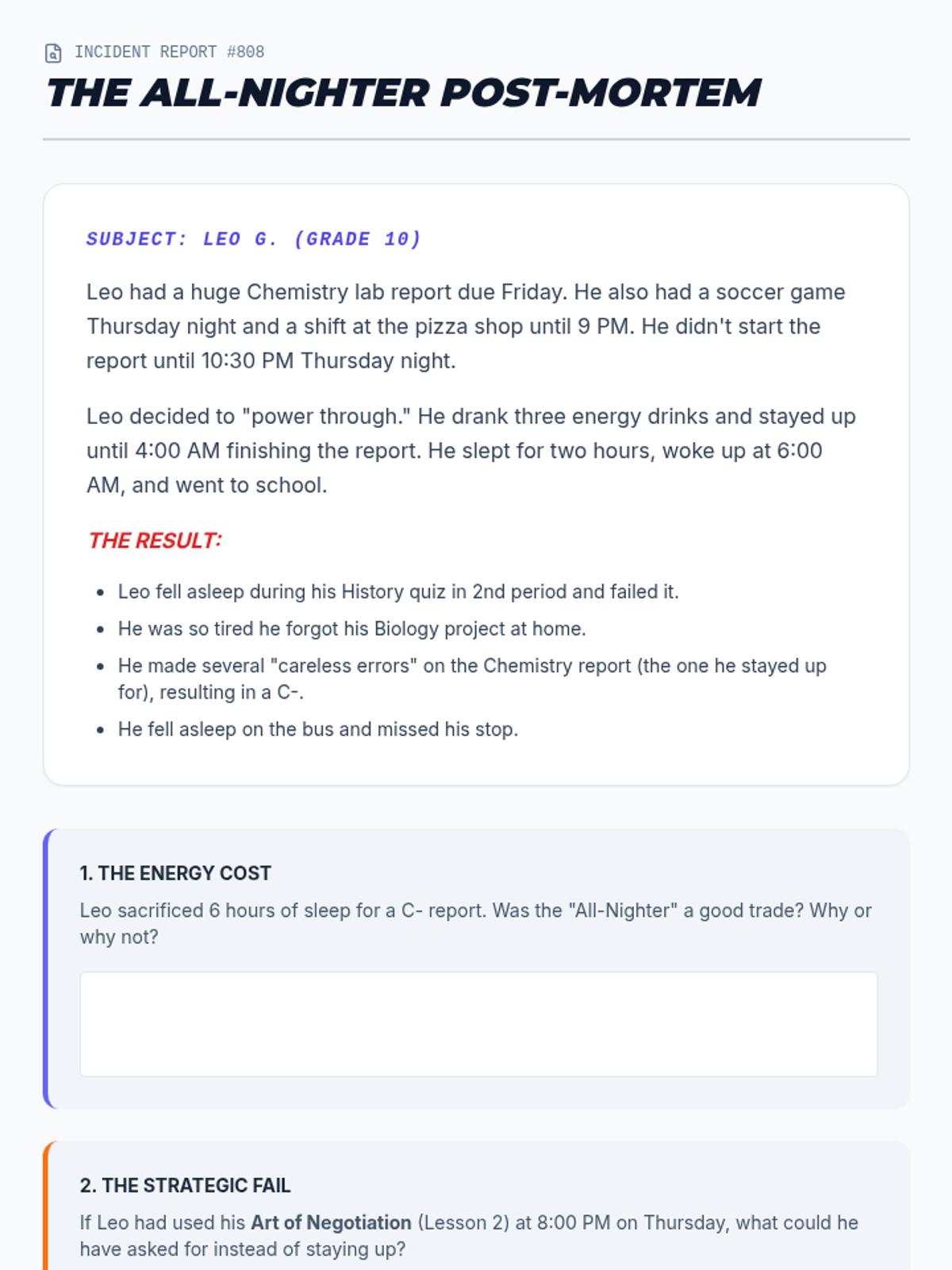
A case study analysis of a student's 'all-nighter' experience, prompting students to evaluate the consequences and identify alternative strategies from the sequence.
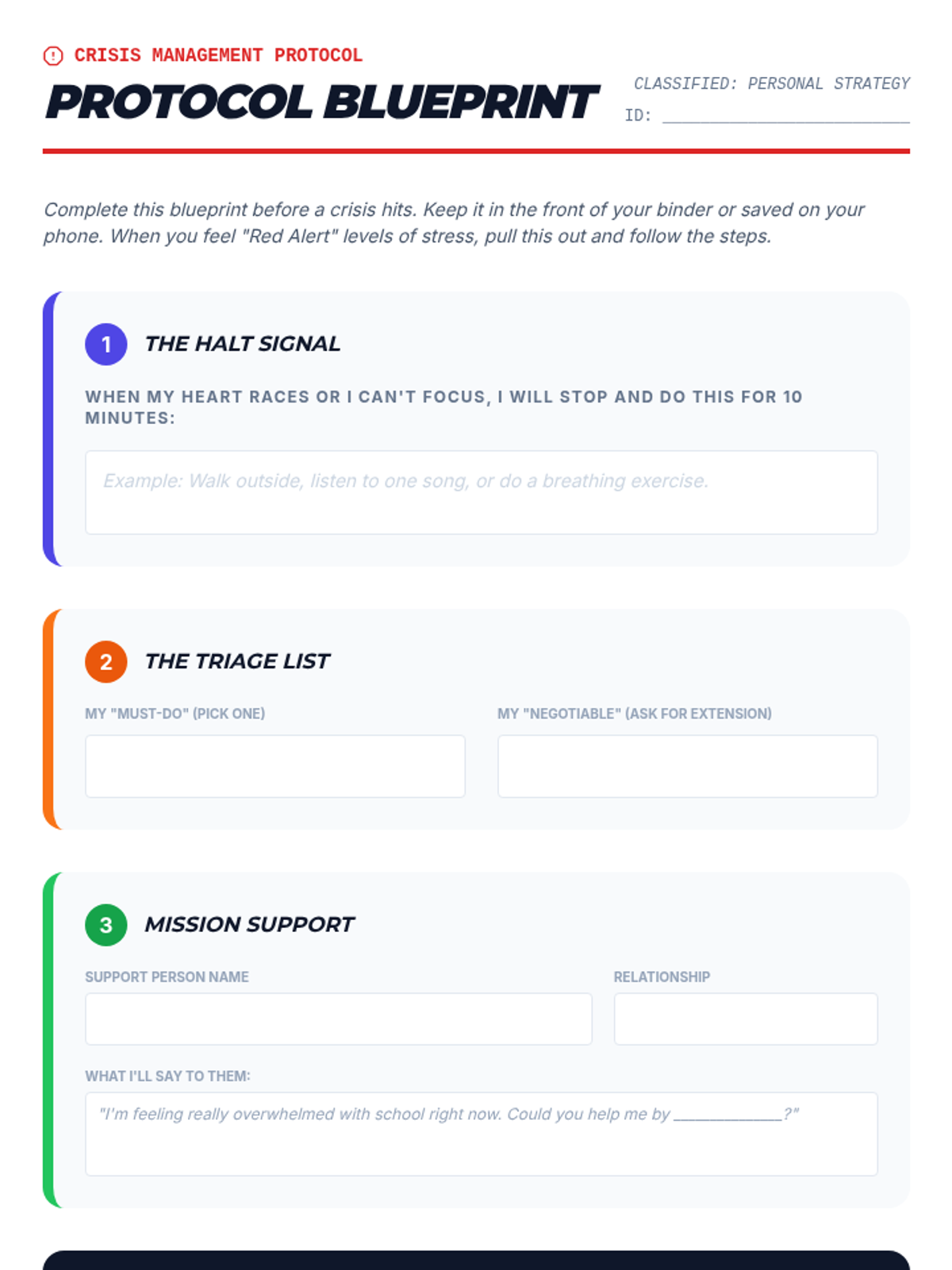
A personal crisis management worksheet where students document their specific 'Red Alert' protocols, including triage strategies, support contacts, and recovery plans.
Lesson 4 slides on crisis management protocols, teaching students how to identify burnout, prioritize tasks during 'Red Alert' scenarios, and activate support systems.
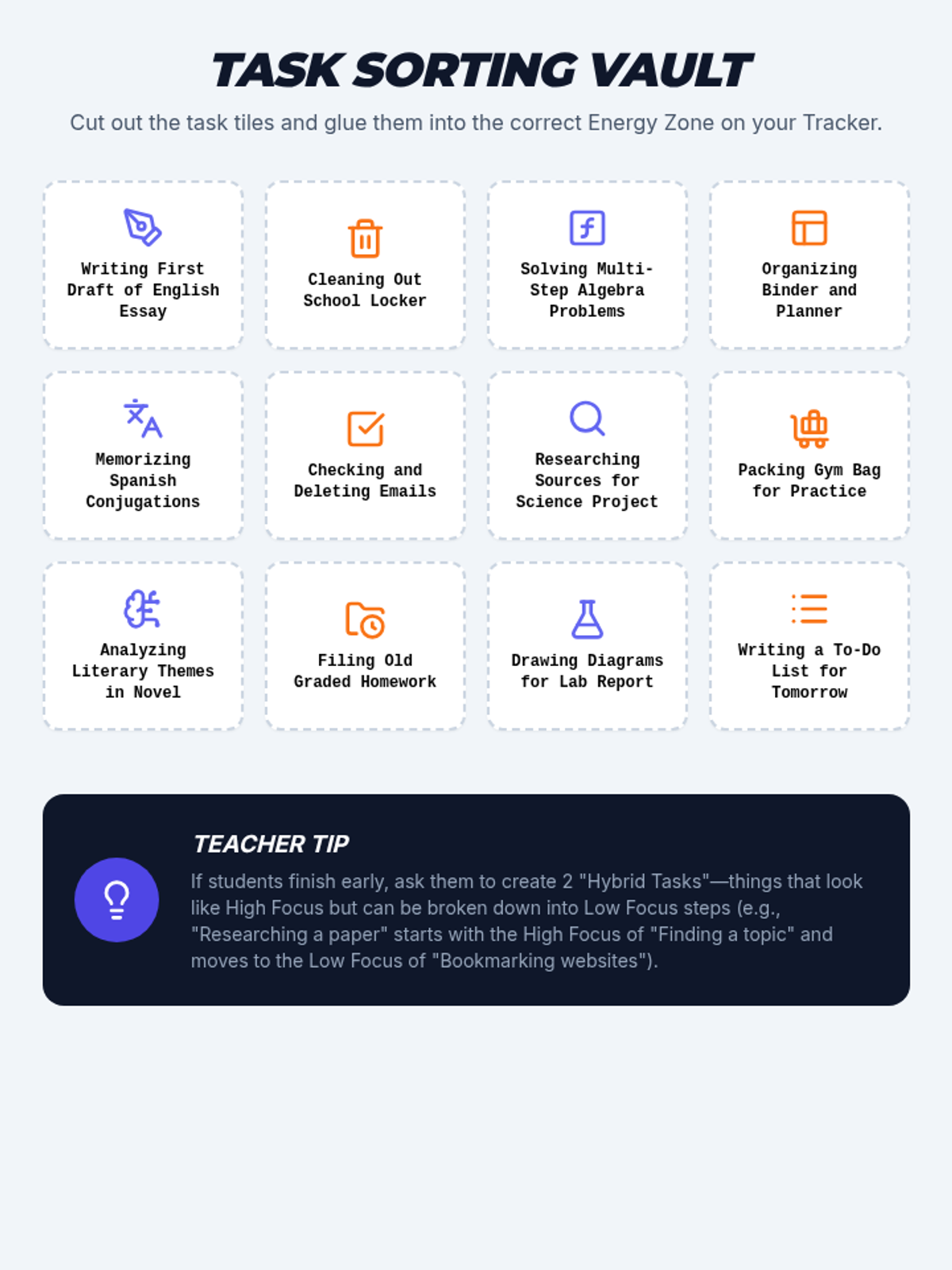
A cut-and-paste sorting activity for students to categorize common school and life tasks as either 'High Focus' or 'Low Focus' energy requirements.