A reflective 1-page exit ticket designed for 4th graders to evaluate their understanding of the 'remote control' regulation model. Features a multiple-choice scenario and a personalized action-plan writing field.
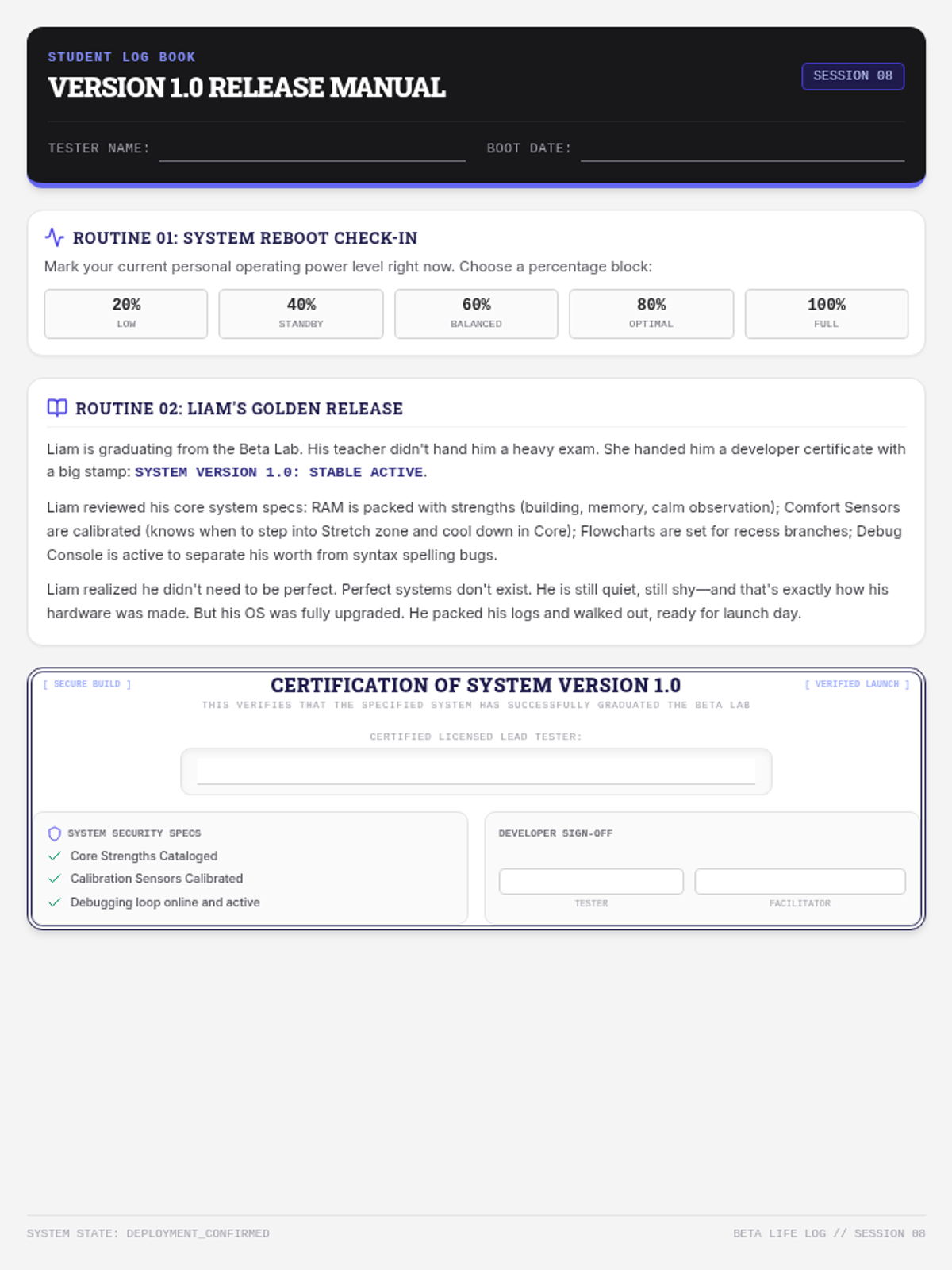
This student-facing spec sheet serves as the primary workspace for Session 8. It contains a predictable energy level check-in, Liam's story on graduating from the Beta Lab, and a beautiful certificate layout for the final signoff.
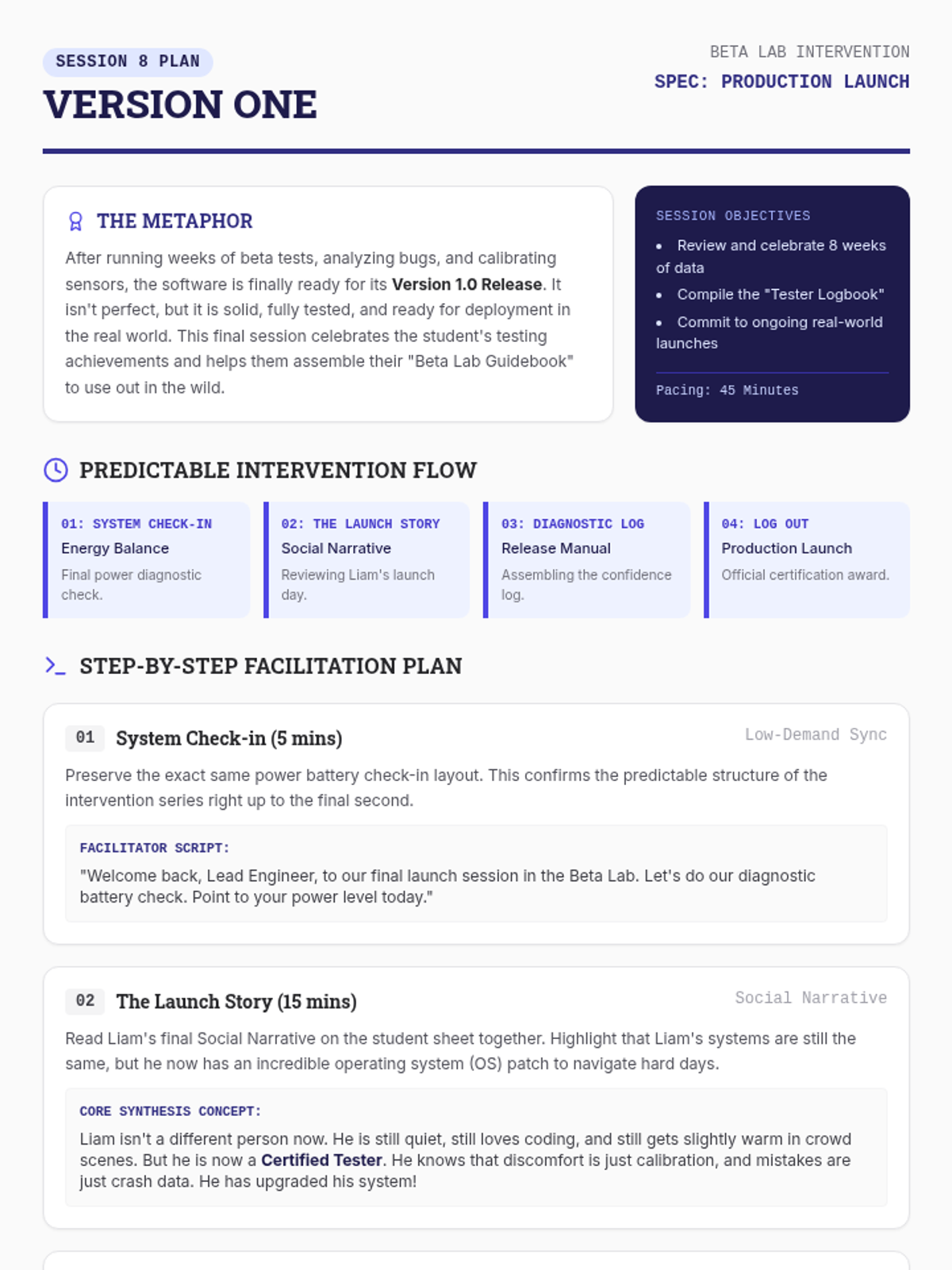
This facilitation guide provides the step-by-step lesson plan and engagement tips for Session 8, synthesizing the 8-week journey and guiding the teacher in organizing a quiet, professional celebration of the student's testing achievements.
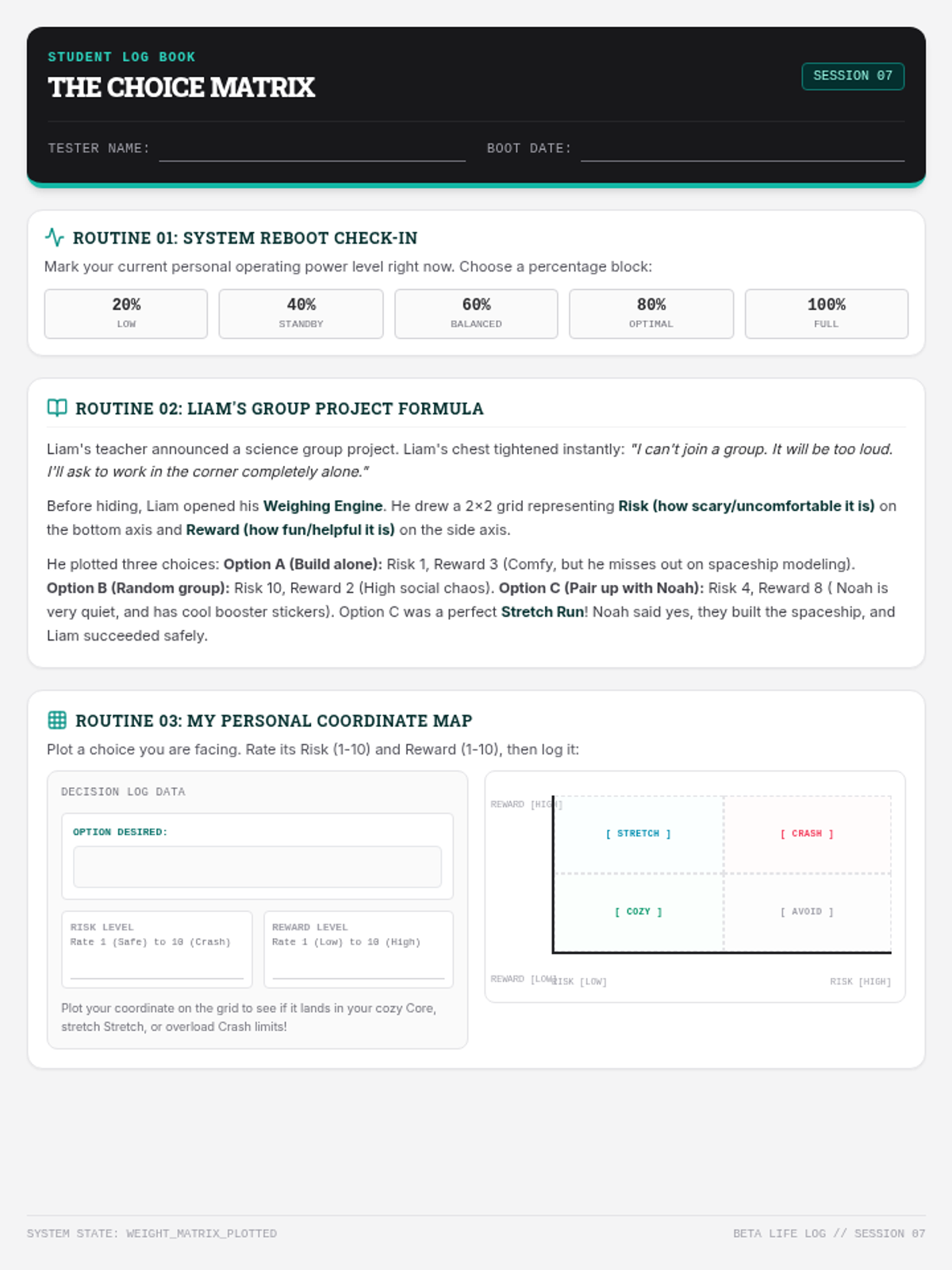
This student-facing spec sheet serves as the primary workspace for Session 7. It contains a predictable energy level check-in, Liam's story on using coordinates to analyze a scary science group assignment, and a structured 2x2 plotting grid.
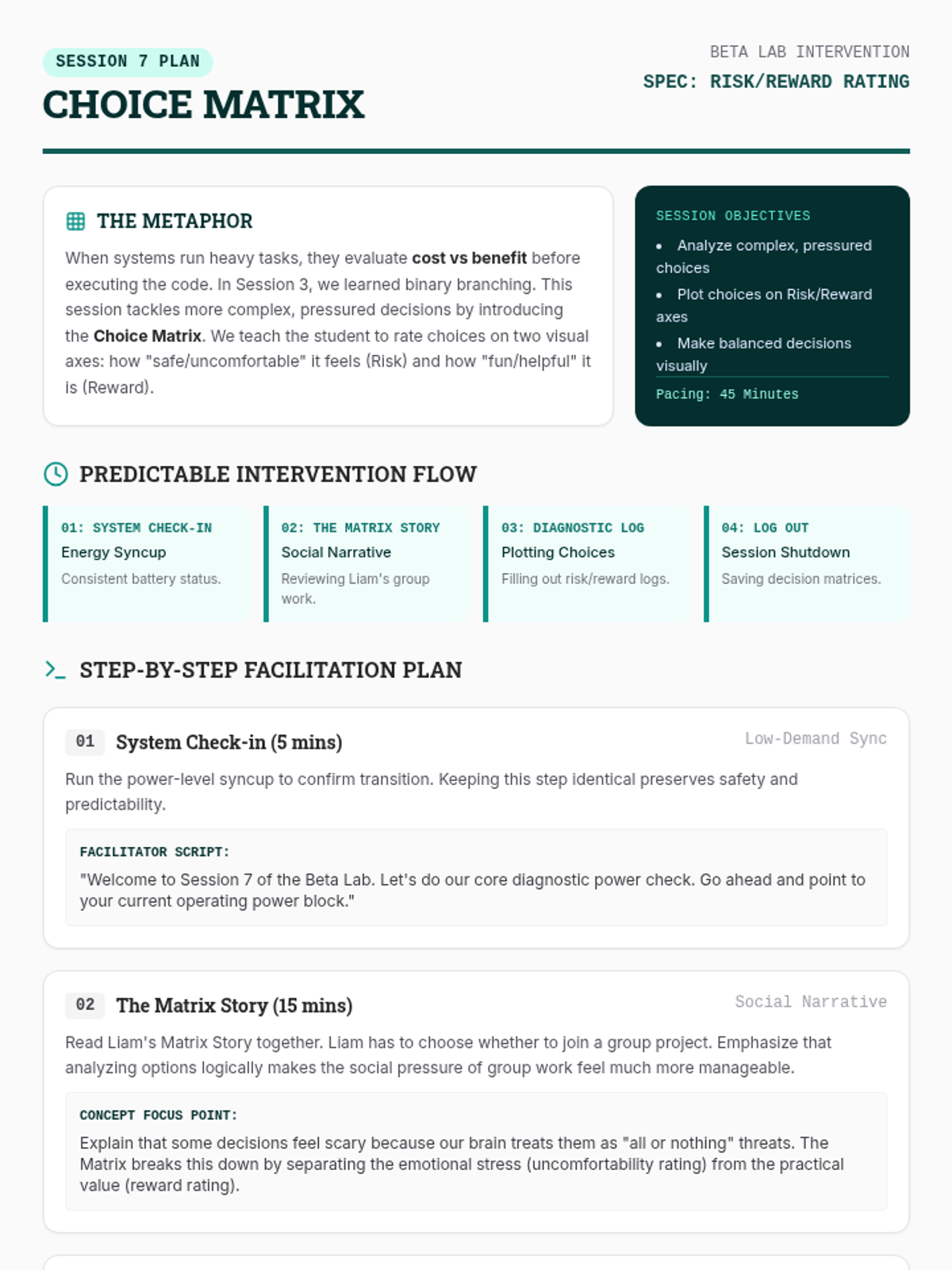
This facilitation guide provides the step-by-step lesson plan and engagement tips for Session 7, teaching the student how to use a visual Risk/Reward rating matrix to analyze complex choices.
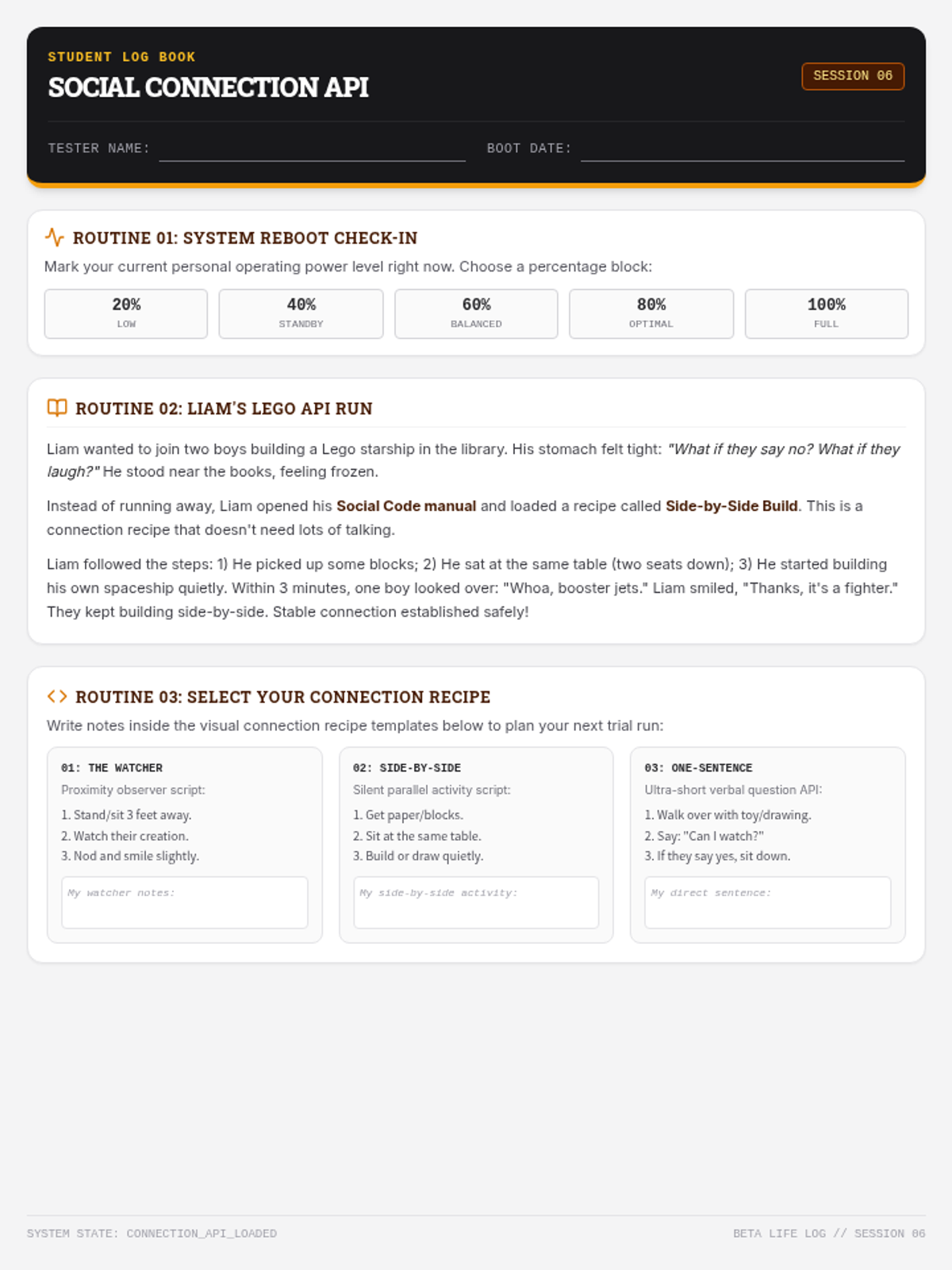
This student-facing spec sheet serves as the primary workspace for Session 6. It contains a predictable energy level check-in, Liam's story on parallel play lego connection, and three visual recipes for peer connection.
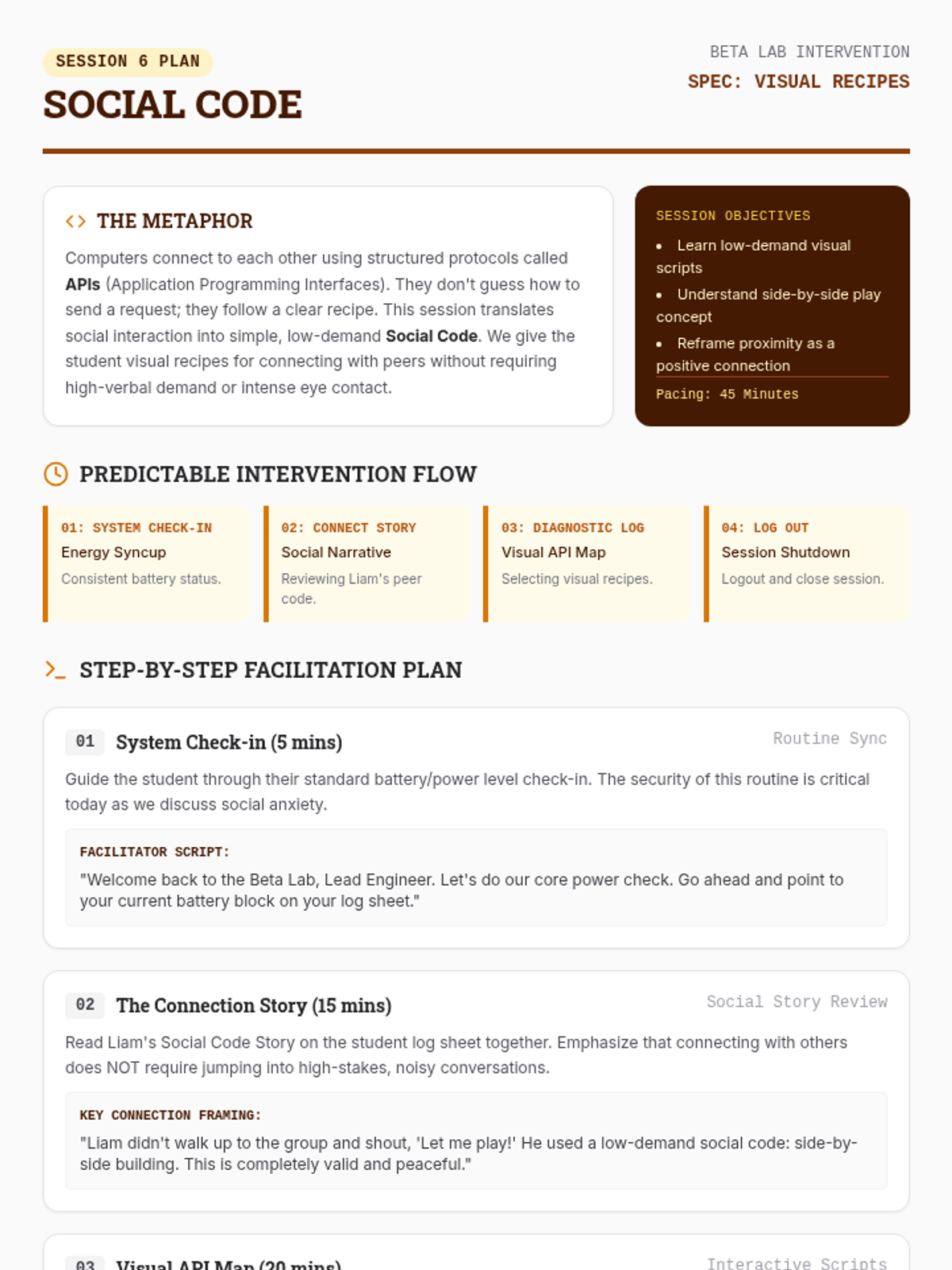
This facilitation guide provides the step-by-step lesson plan and engagement tips for Session 6, introducing low-demand social scripts and structured visual recipes for peer connection.
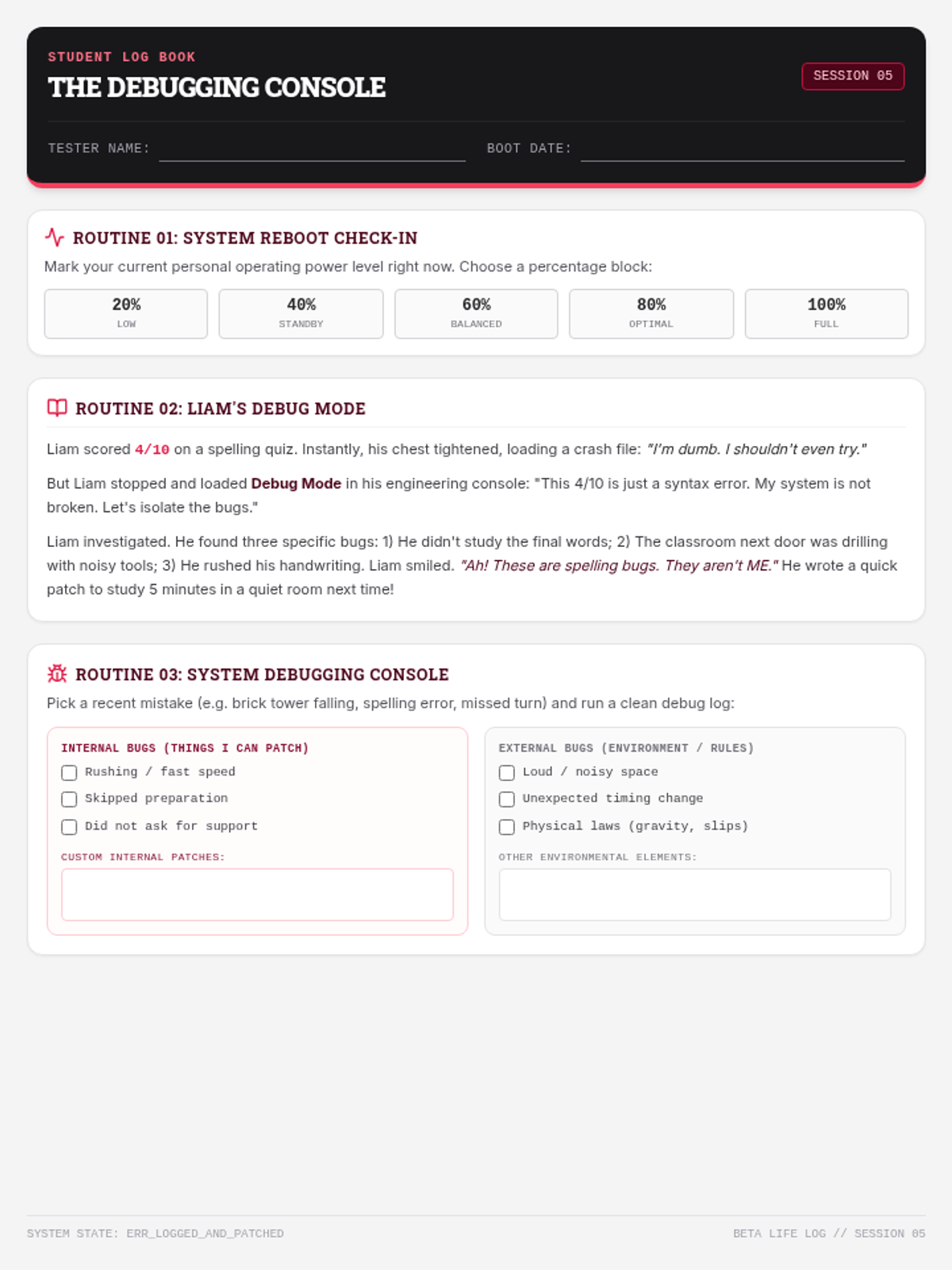
This student-facing spec sheet serves as the primary workspace for Session 5. It contains a predictable energy level check-in, Liam's story on debug mode, and an interactive sorting console for isolating internal vs. external error sources.
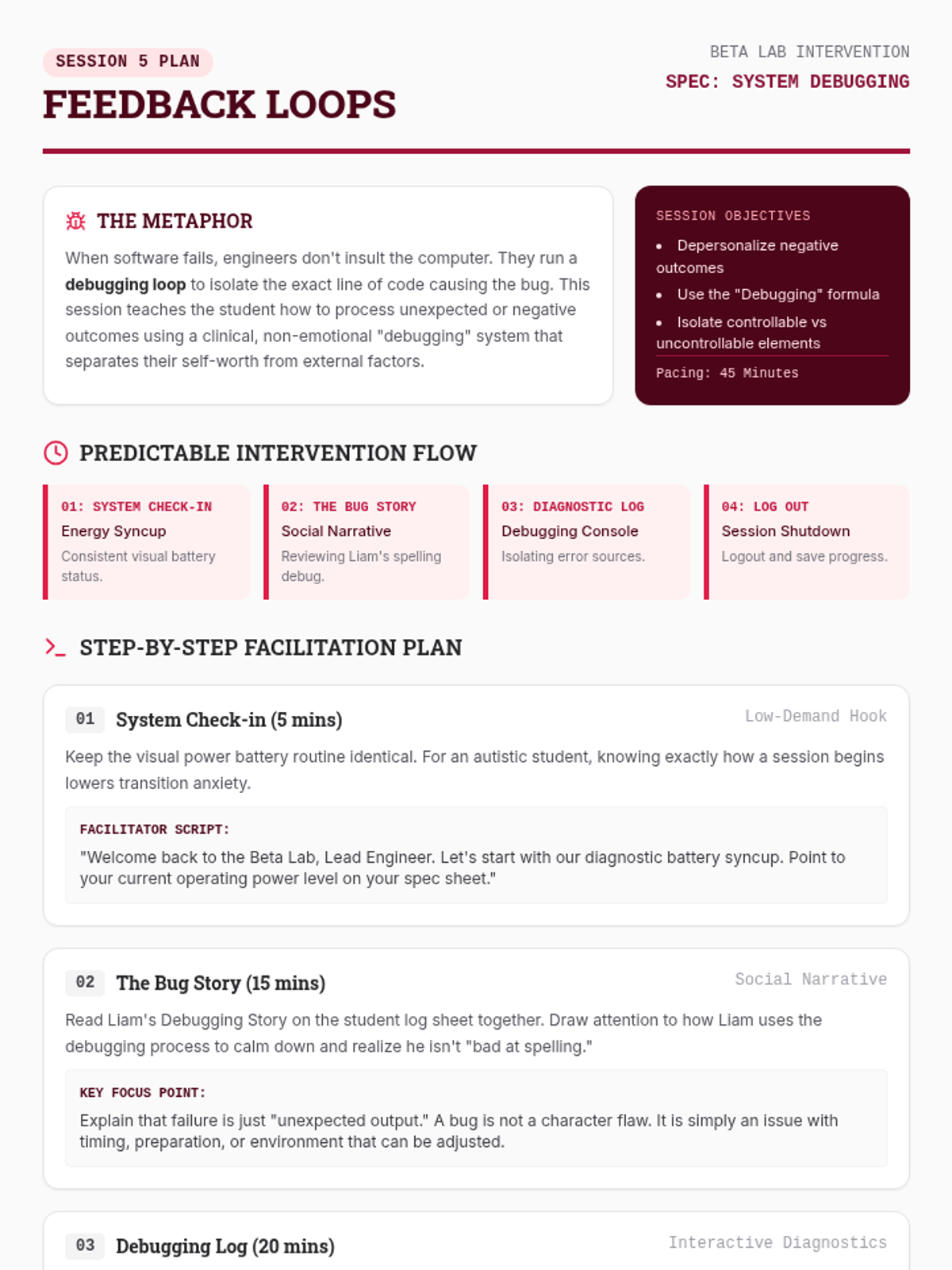
This facilitation guide provides the step-by-step lesson plan and engagement tips for Session 5, focusing on a structured, objective 'debugging' framework to help students analyze mistakes without personal shame.
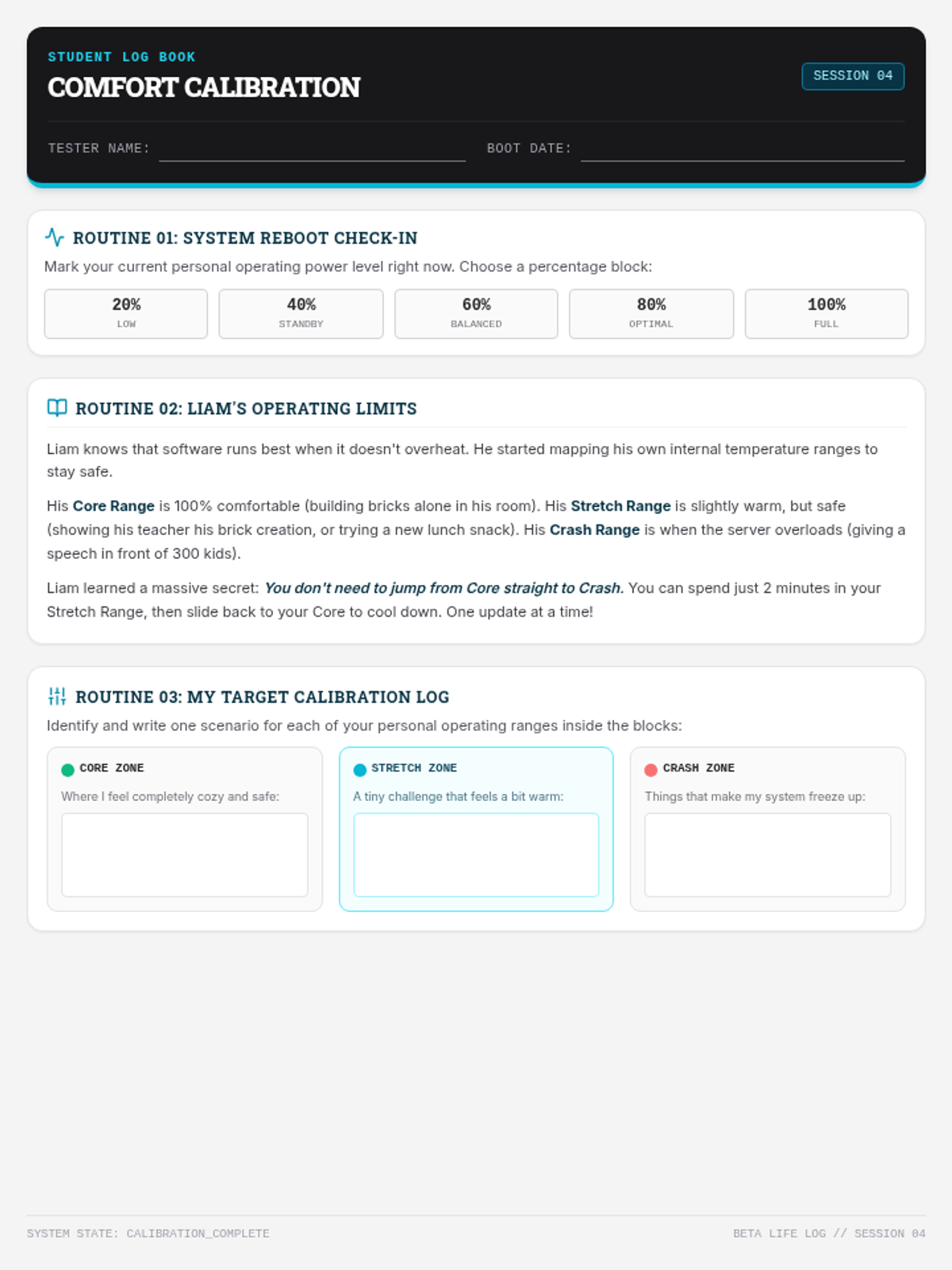
This student-facing spec sheet serves as the primary workspace for Session 4. It contains a predictable energy level check-in, Liam's story on comfort zones (Core, Stretch, and Crash), and a structured 3-tier calibration log.
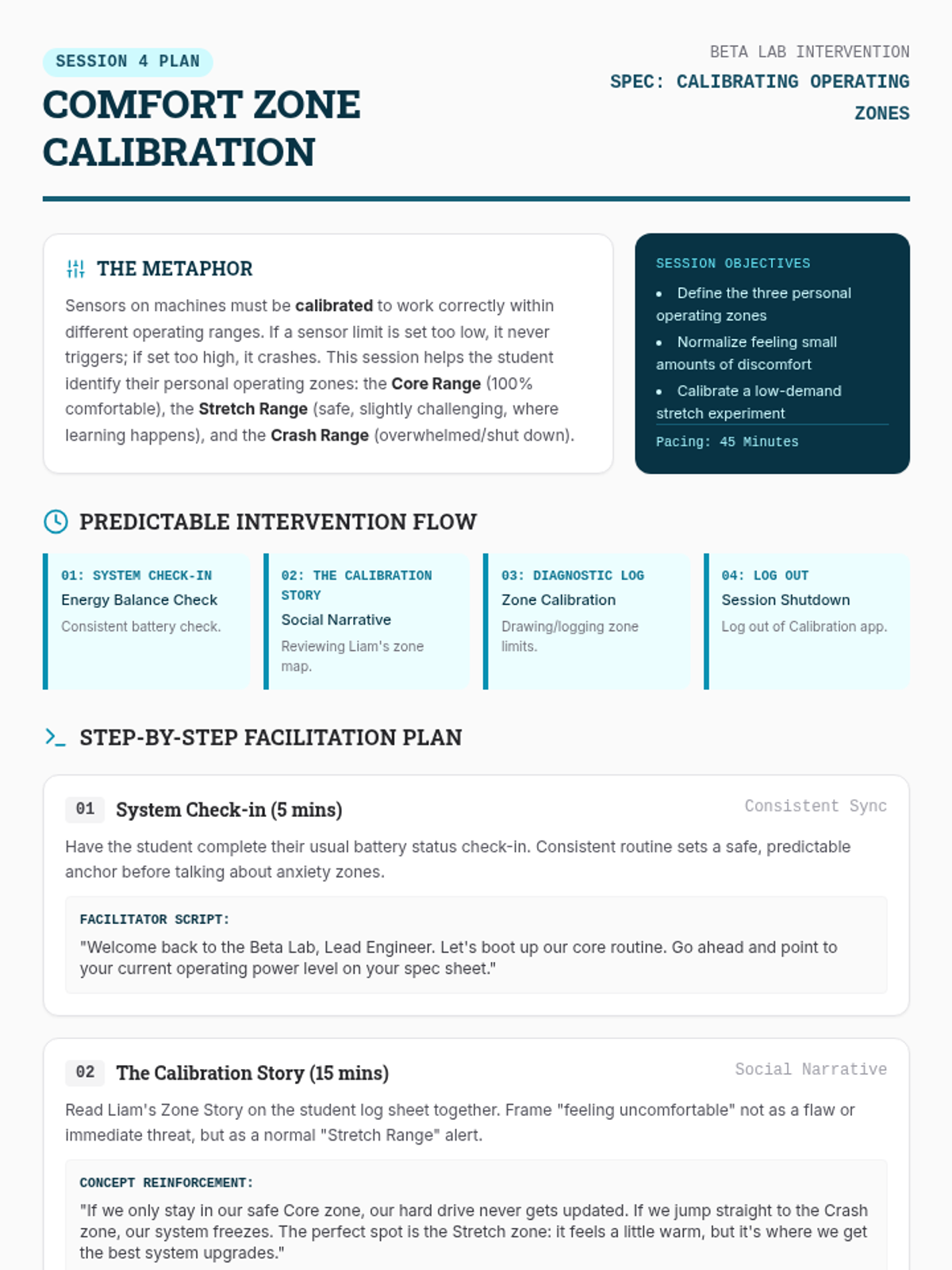
This facilitation guide provides the step-by-step lesson plan and engagement tips for Session 4, focusing on helping the student map their comfortable operating zones (Core, Stretch, and Crash) to make gradated risk-taking feel structured and safe.
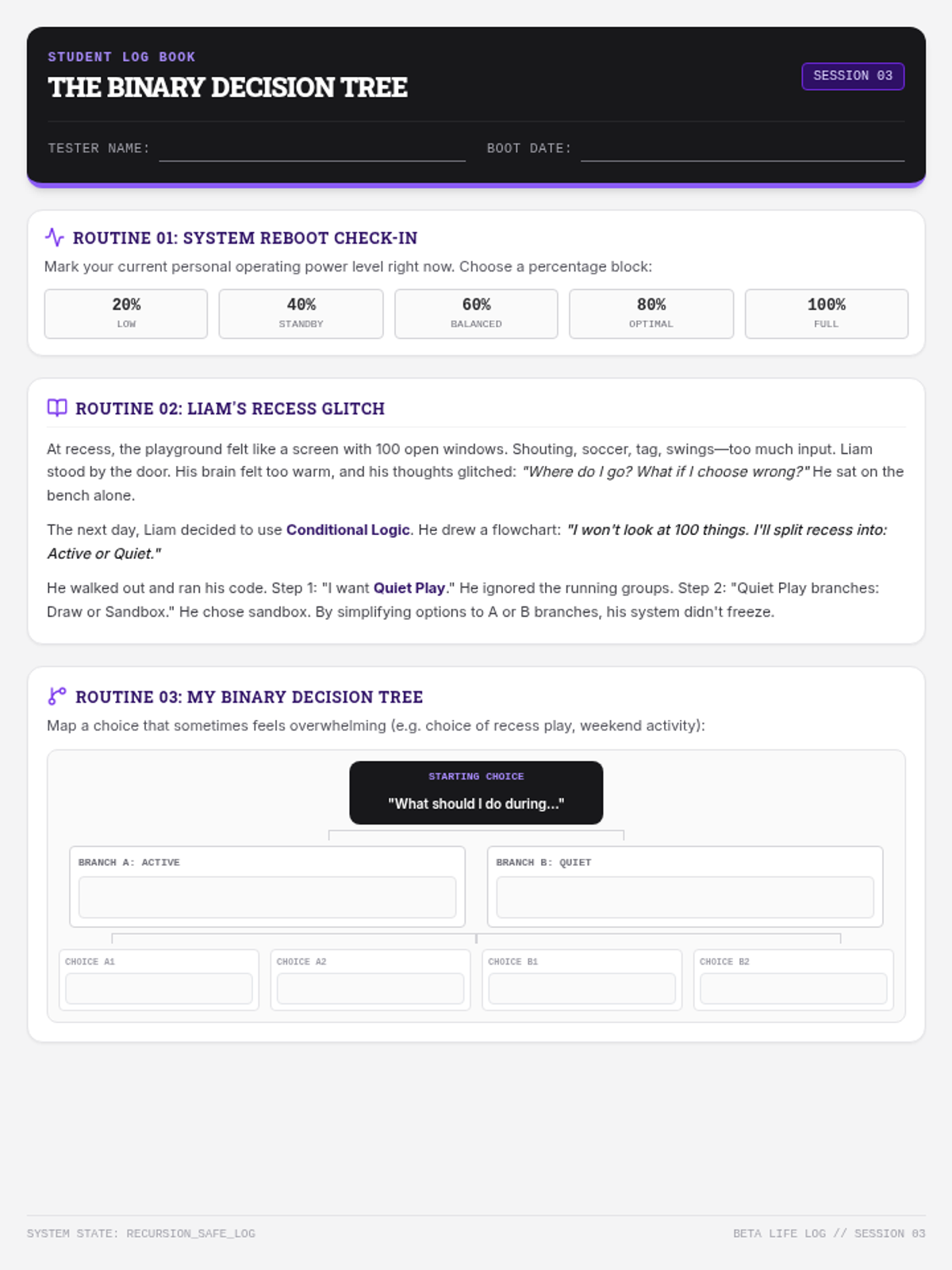
This student-facing spec sheet serves as the primary workspace for Session 3. It contains a predictable energy level check-in, Liam's story on choice overload at recess, and a structured flowchart for practicing binary choice branch logic.
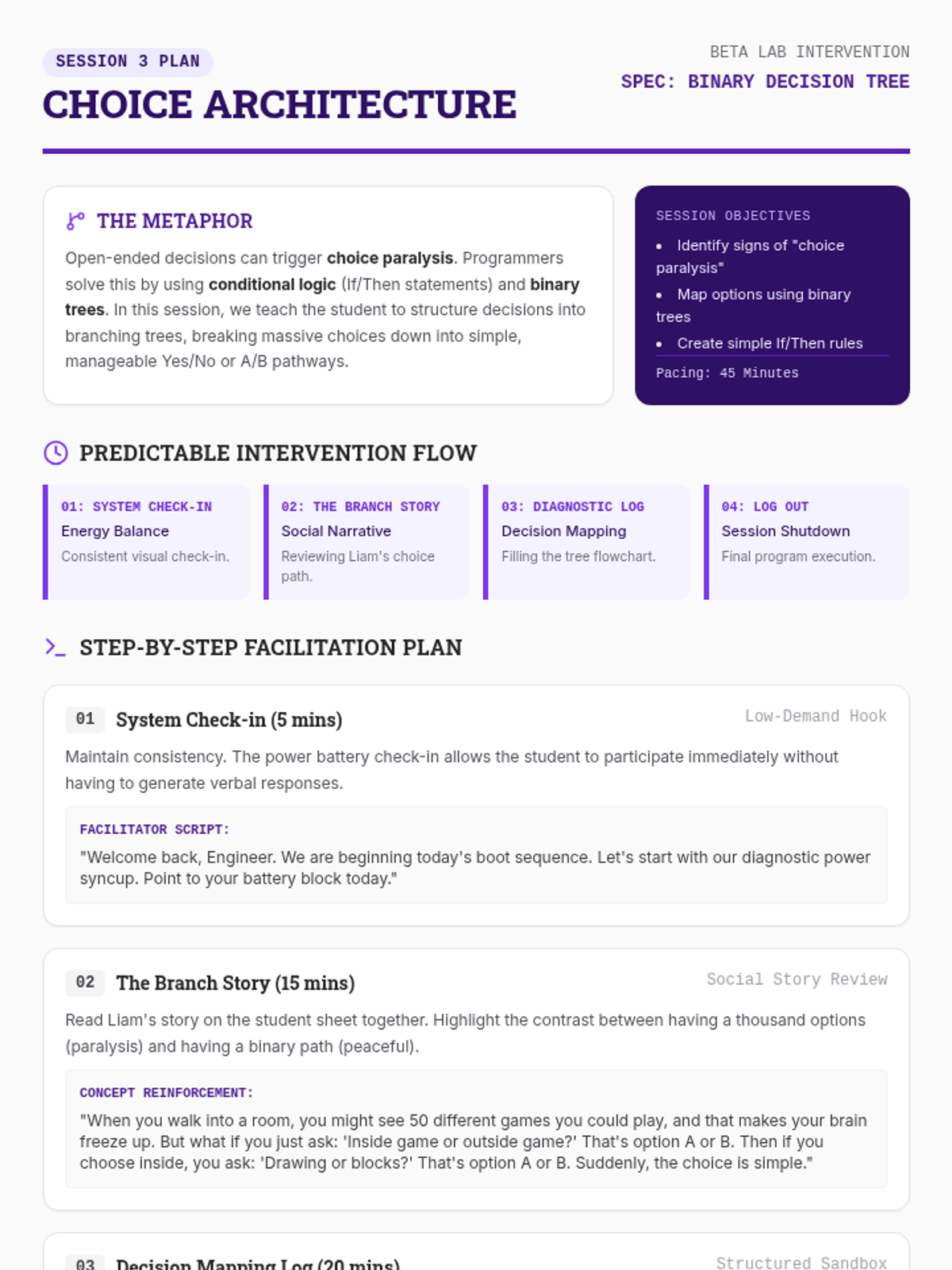
This facilitation guide provides the step-by-step lesson plan and engagement tips for Session 3, introducing branching choice architecture to simplify decisions and lower cognitive load for the student.
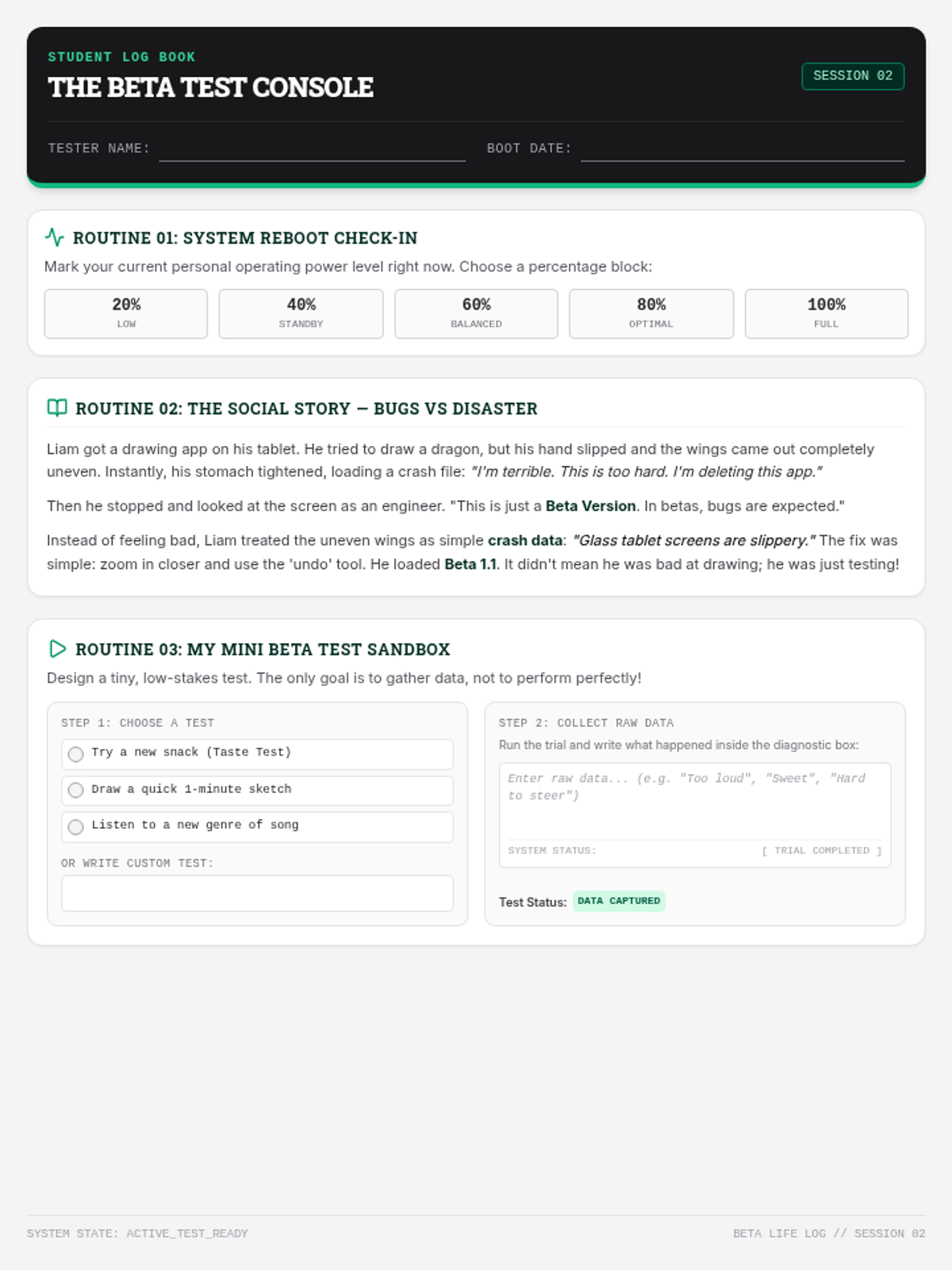
This student-facing spec sheet serves as the primary workspace for Session 2. It contains a predictable energy level check-in, Liam's beta story on reframing failure as simple crash data, and a structured sandbox for designing and running a tiny beta test.
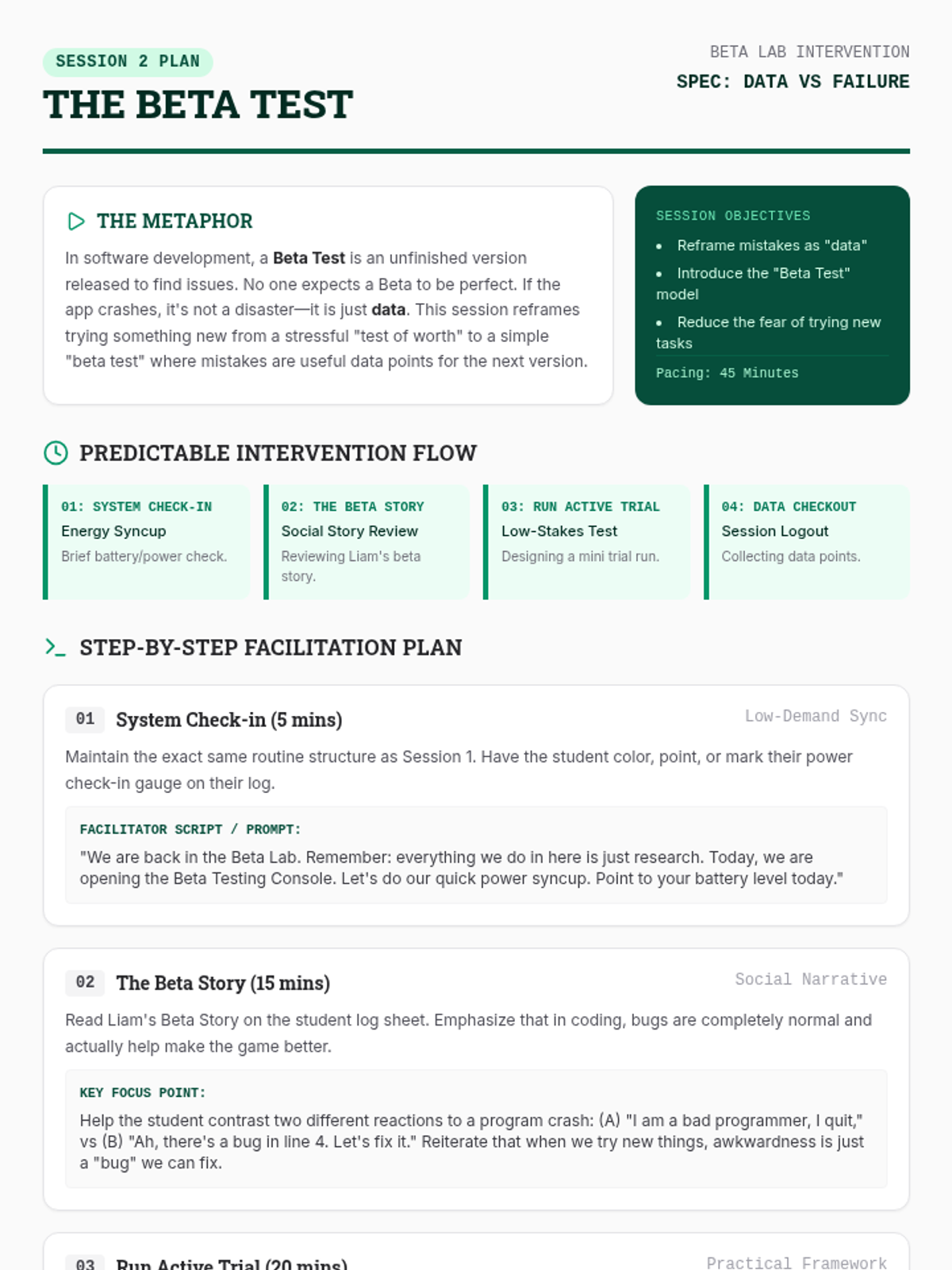
This facilitation guide provides the step-by-step lesson plan and engagement tips for Session 2, helping teachers reframe mistakes as data and guiding the student to outline a low-stakes 'beta test' in their environment.
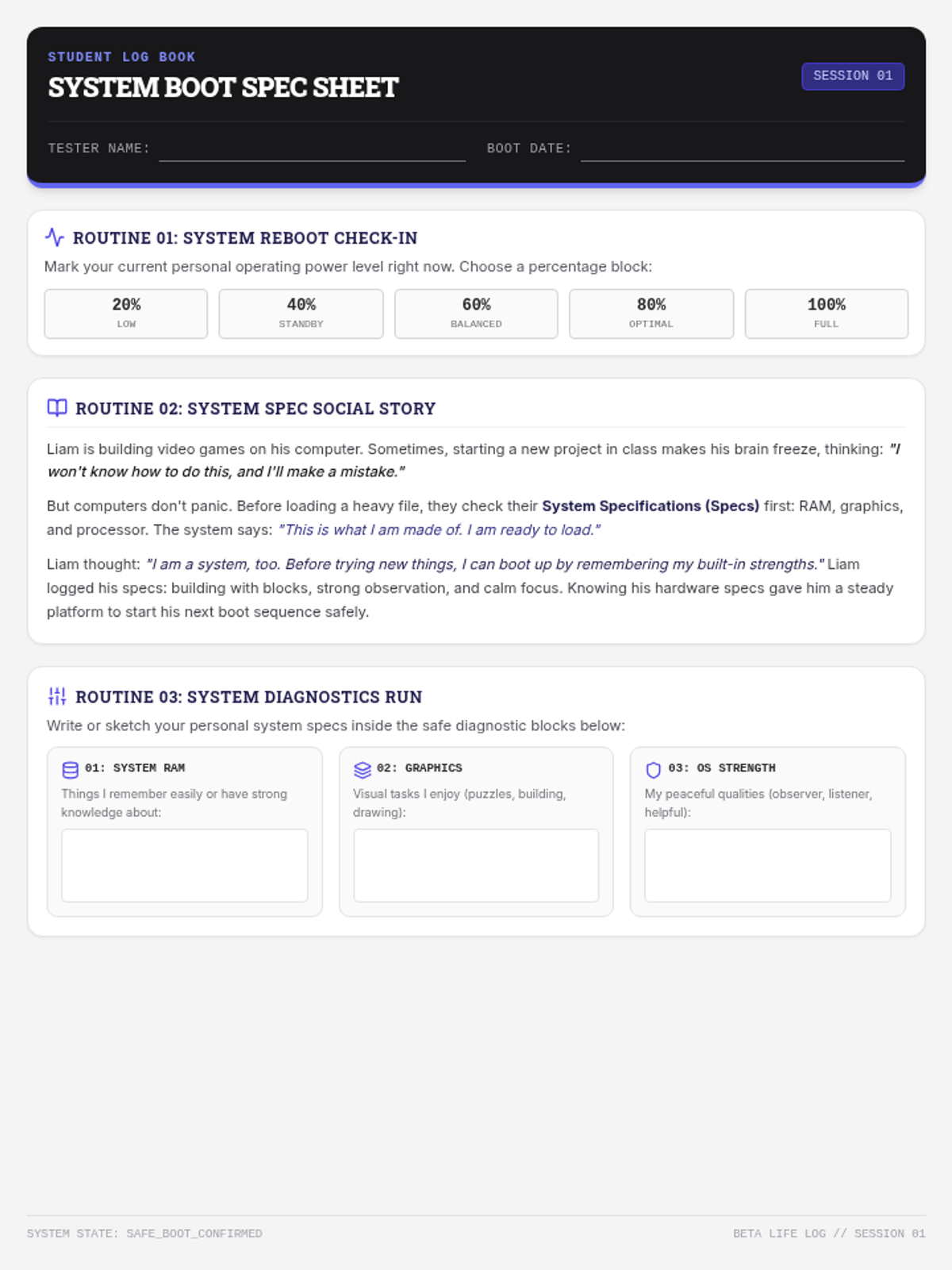
This student-facing spec sheet serves as the primary workspace for Session 1. It contains a predictable energy level check-in, a step-by-step social story reframing strengths as 'system specs', and structured modules for logging personal strengths.
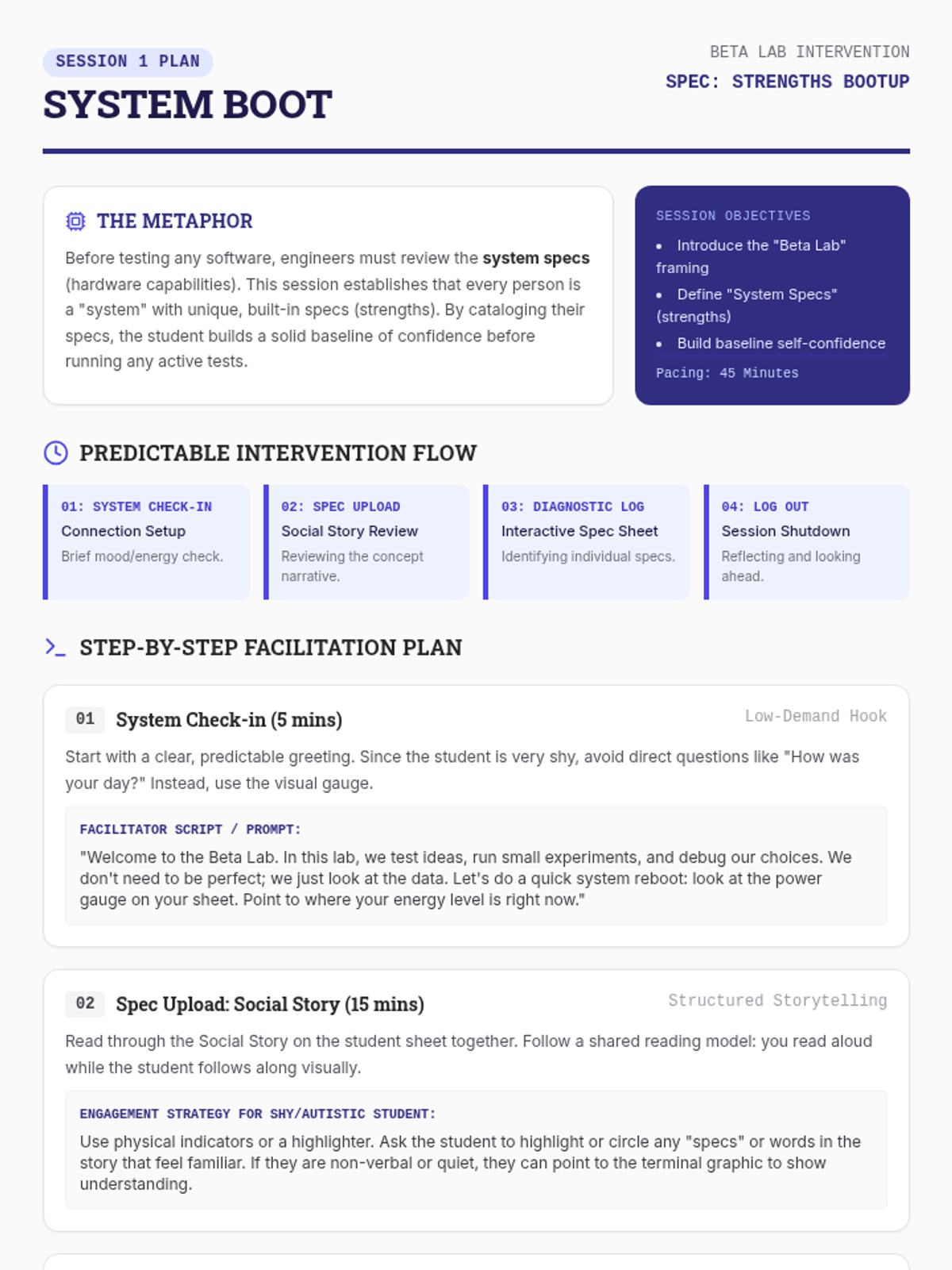
This facilitation guide provides the step-by-step lesson plan and engagement tips for Session 1, introducing the 'Beta Lab' engineering metaphor and helping the student identify their 'system specs' (personal strengths) in a predictable and supportive environment.
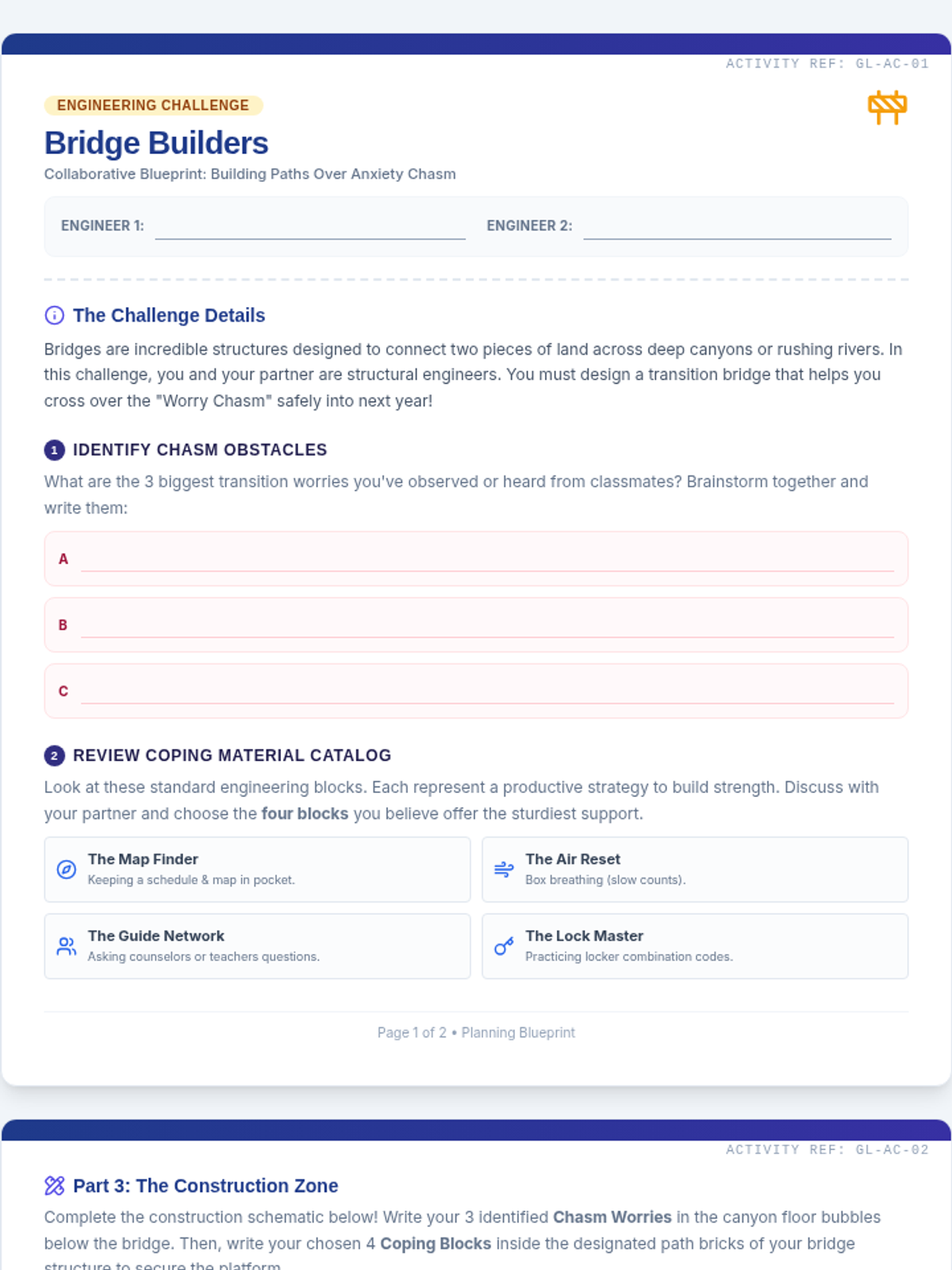
A high-quality collaborative planning and activity sheet for students to identify 3 distinct transition worries and physically/conceptually map out 4 structural coping strategy stones to cross the "Worry Chasm".
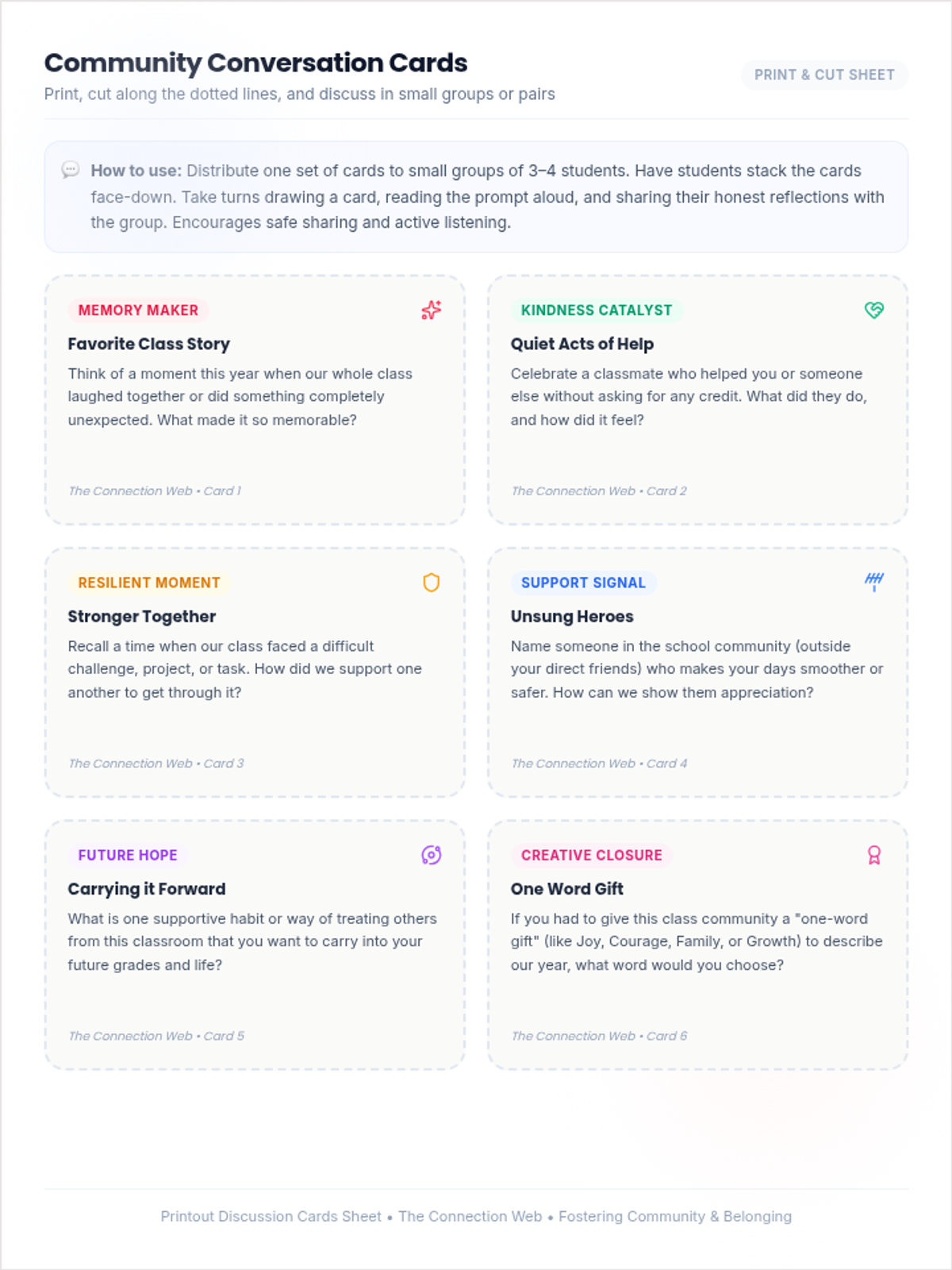
A printable sheet containing 6 beautifully designed, cut-ready 'Community Conversation Cards' with deep, scaffolded discussion prompts for small-group reflection and relationship building.
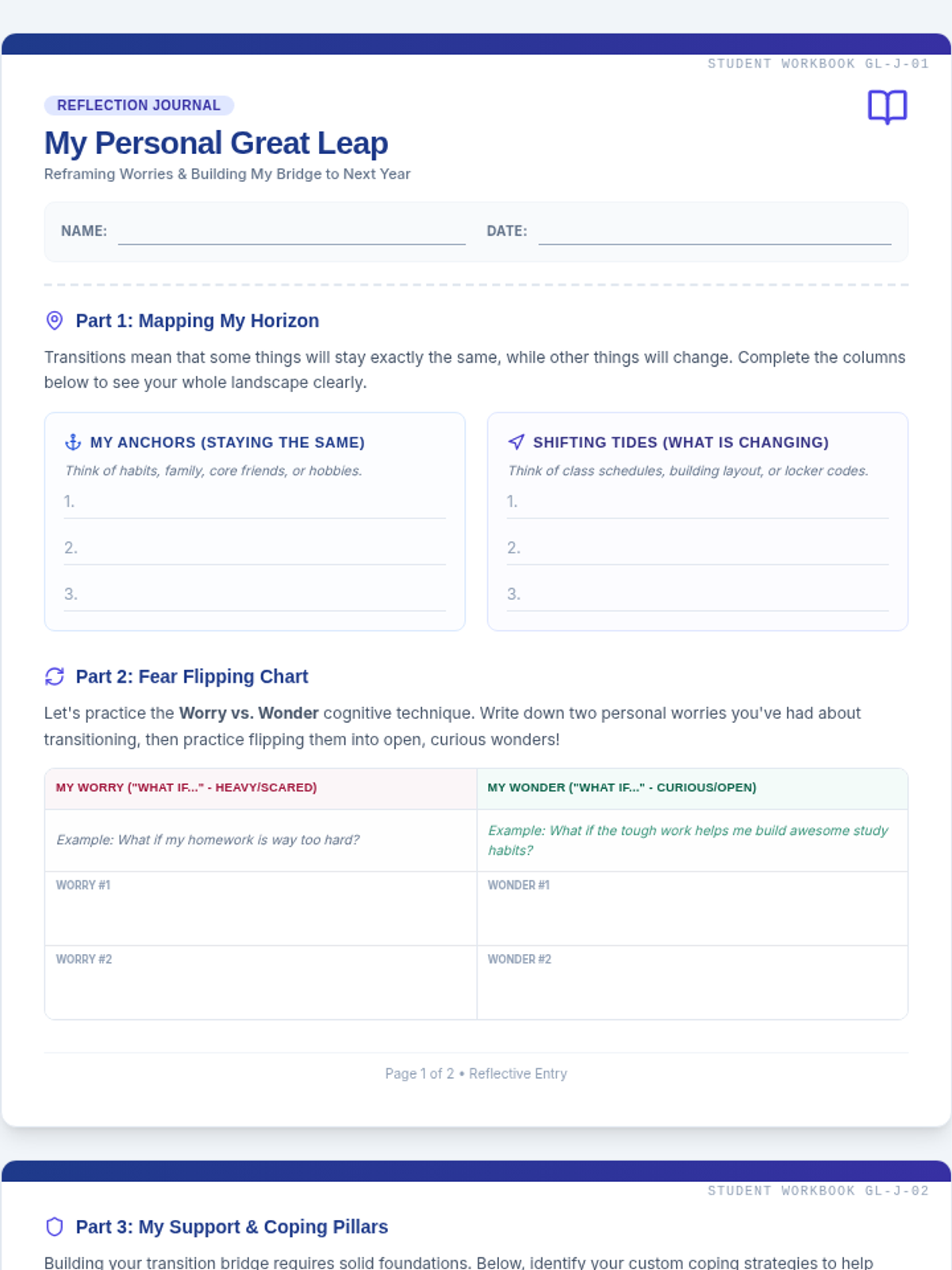
A high-quality, personal reflection journal for upper elementary students to identify transitions, practice cognitive reframing (Worry vs. Wonder), identify support networks, list physical coping action steps, and write a letter to their future self.
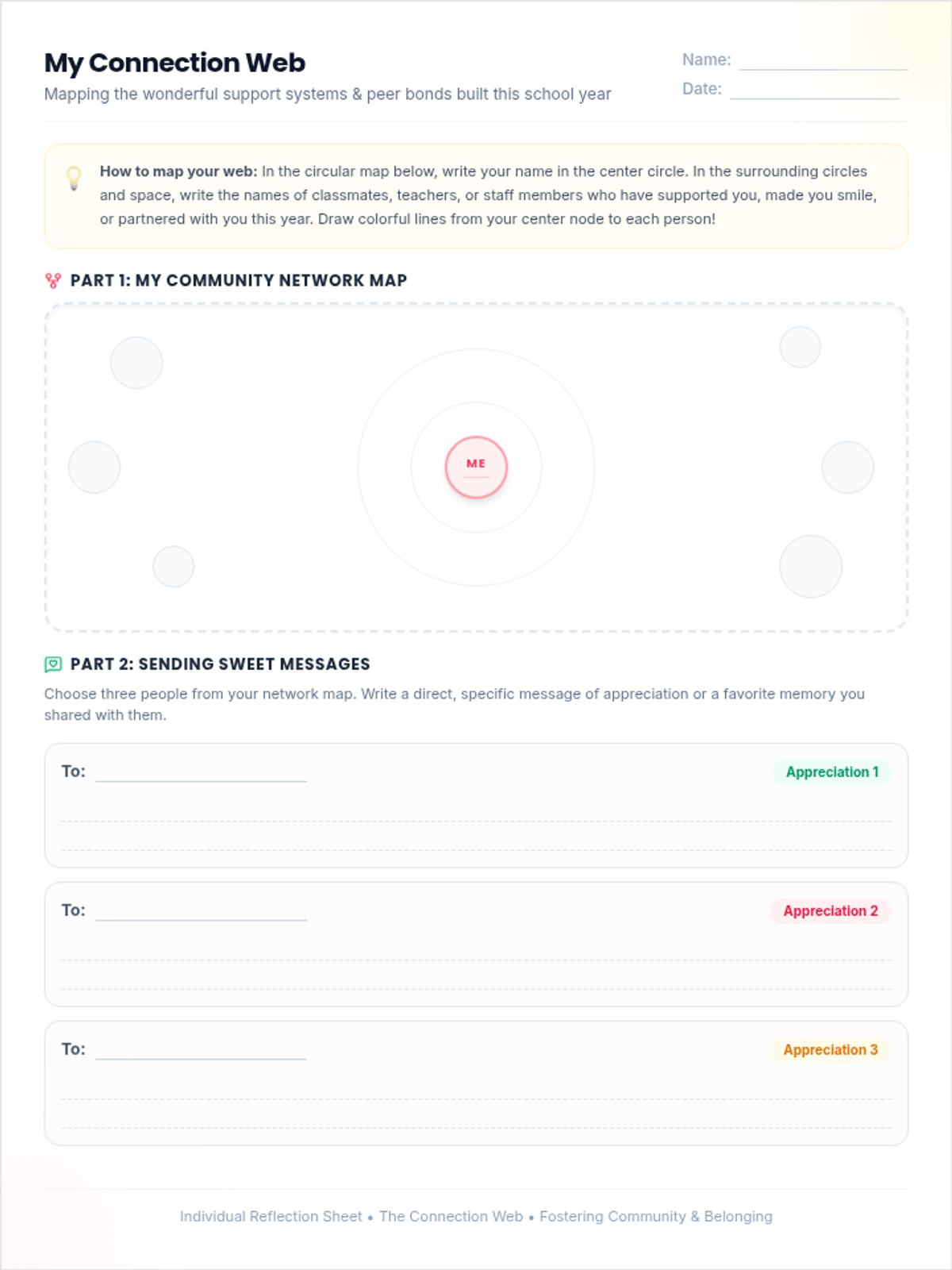
A beautiful, print-ready student activity sheet with an blank 360px visual 'community network' mapping space and 3 structured appreciation cards for students to express gratitude and map their class support network.
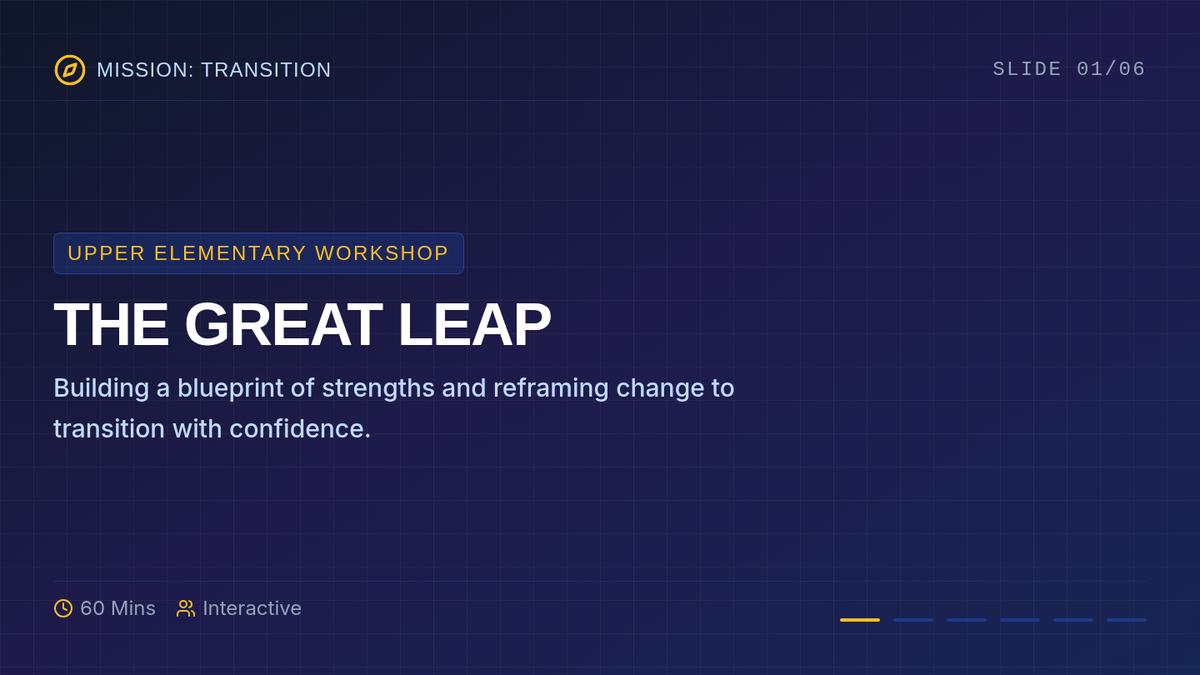
A visually stunning and interactive presentation slide deck that teachers can present to upper elementary students, focusing on mapping the coming transition horizon, exploring the concept of Worry vs. Wonder, practicing cognitive reframing, and constructing coping strategies.
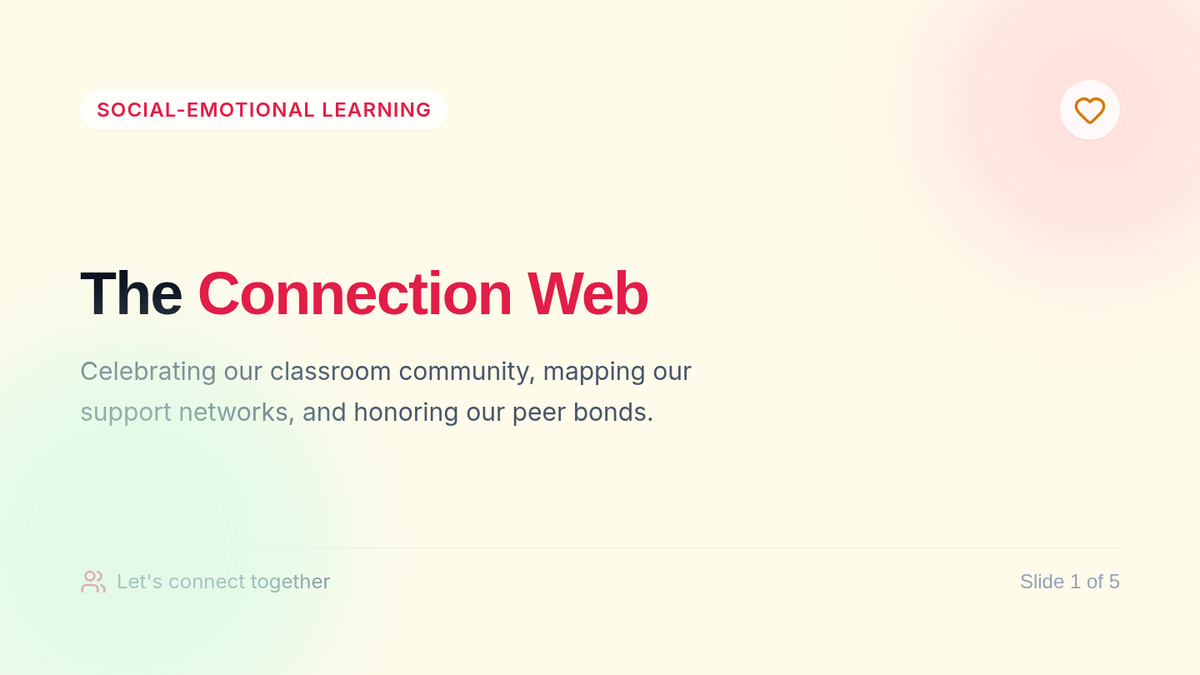
A highly engaging, visually rich 5-slide presentation designed for class projection. It guides students step-by-step through the 'Ripple Effect' warm-up, rules for weaving the yarn web, group reflection prompts, and transition instructions to individual work.
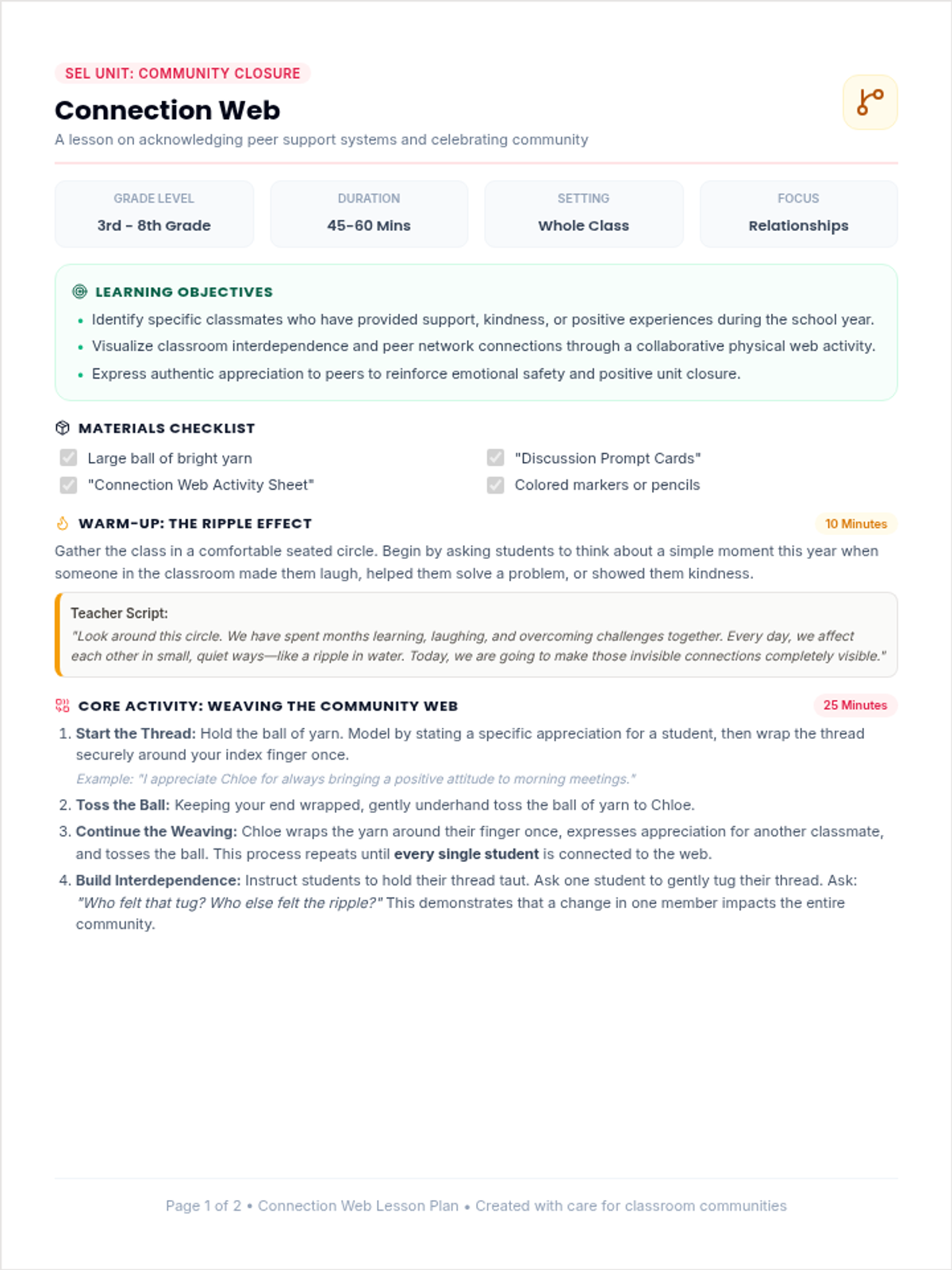
A comprehensive 2-page print-ready lesson plan guiding teachers through the 'Connection Web' SEL closure activity. It features step-by-step facilitation prompts, structured scripts, proactive support strategies, and clear learning objectives to celebrate peer bonds.
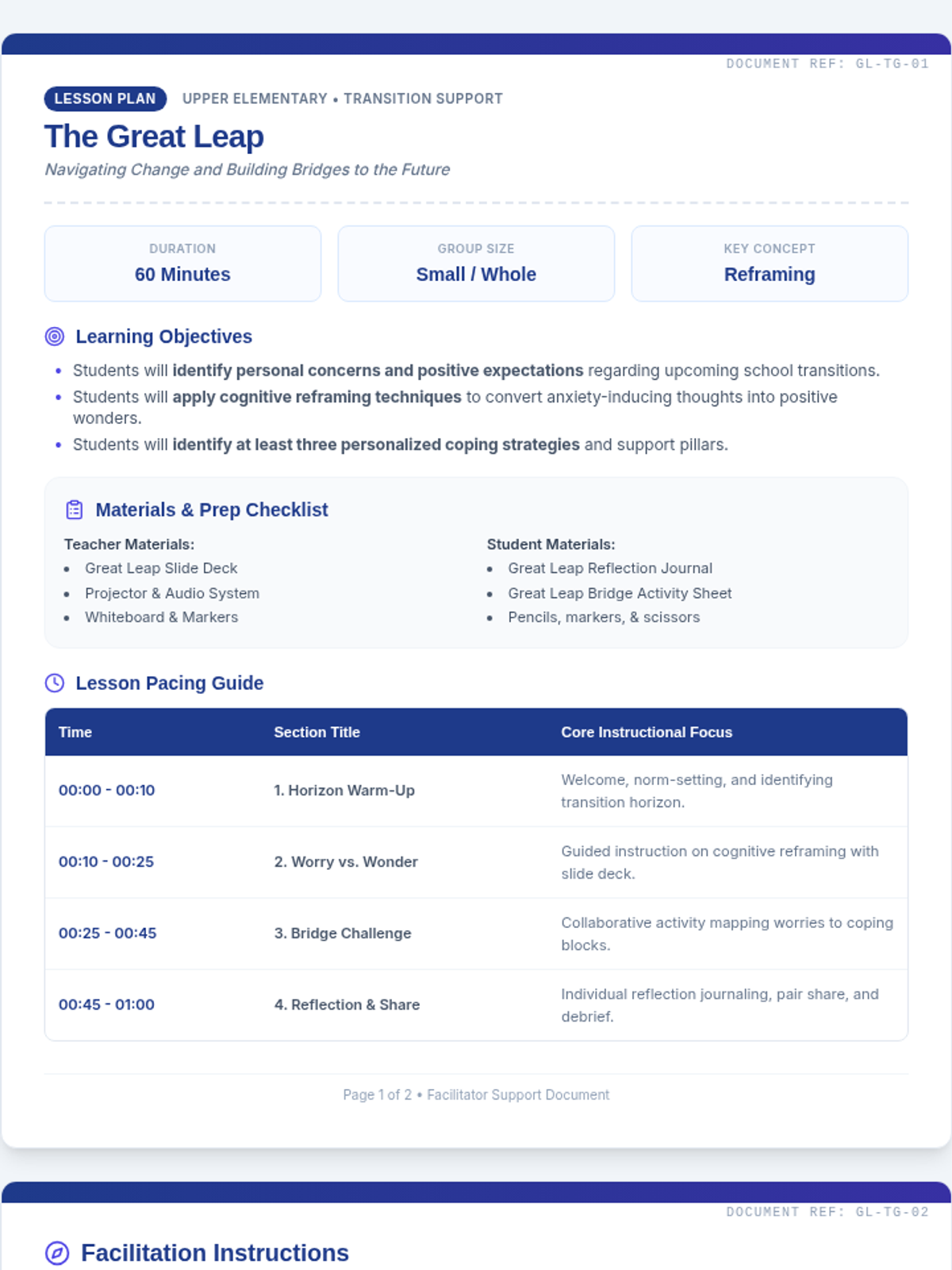
A complete, high-quality facilitation guide for teachers leading "The Great Leap" transition lesson, detailing learning objectives, pacing guides, phase-by-phase script elements, common misconceptions, and differentiation strategies.
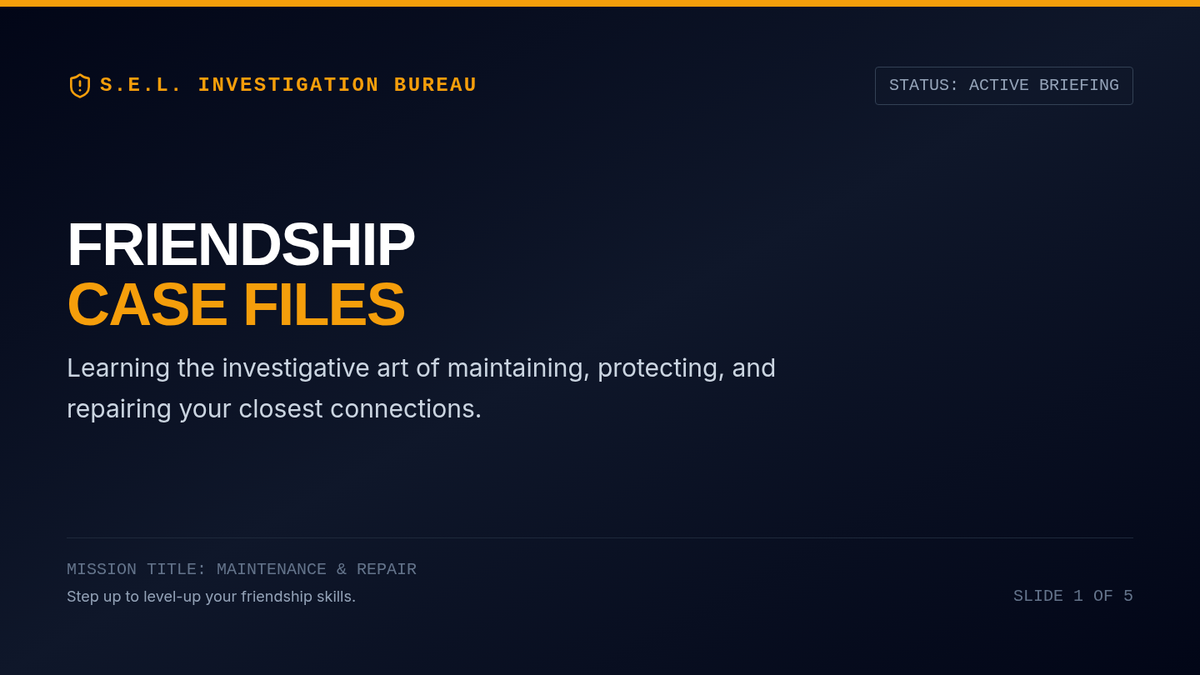
An engaging 5-slide introductory presentation styled as a detective agency briefing. Sets up the "Friendship Maintenance" analogy, outlines core friendship pillars, provides a practice case, and assigns the classroom mission. Minimum font sizes set to 24px+ for legibility.
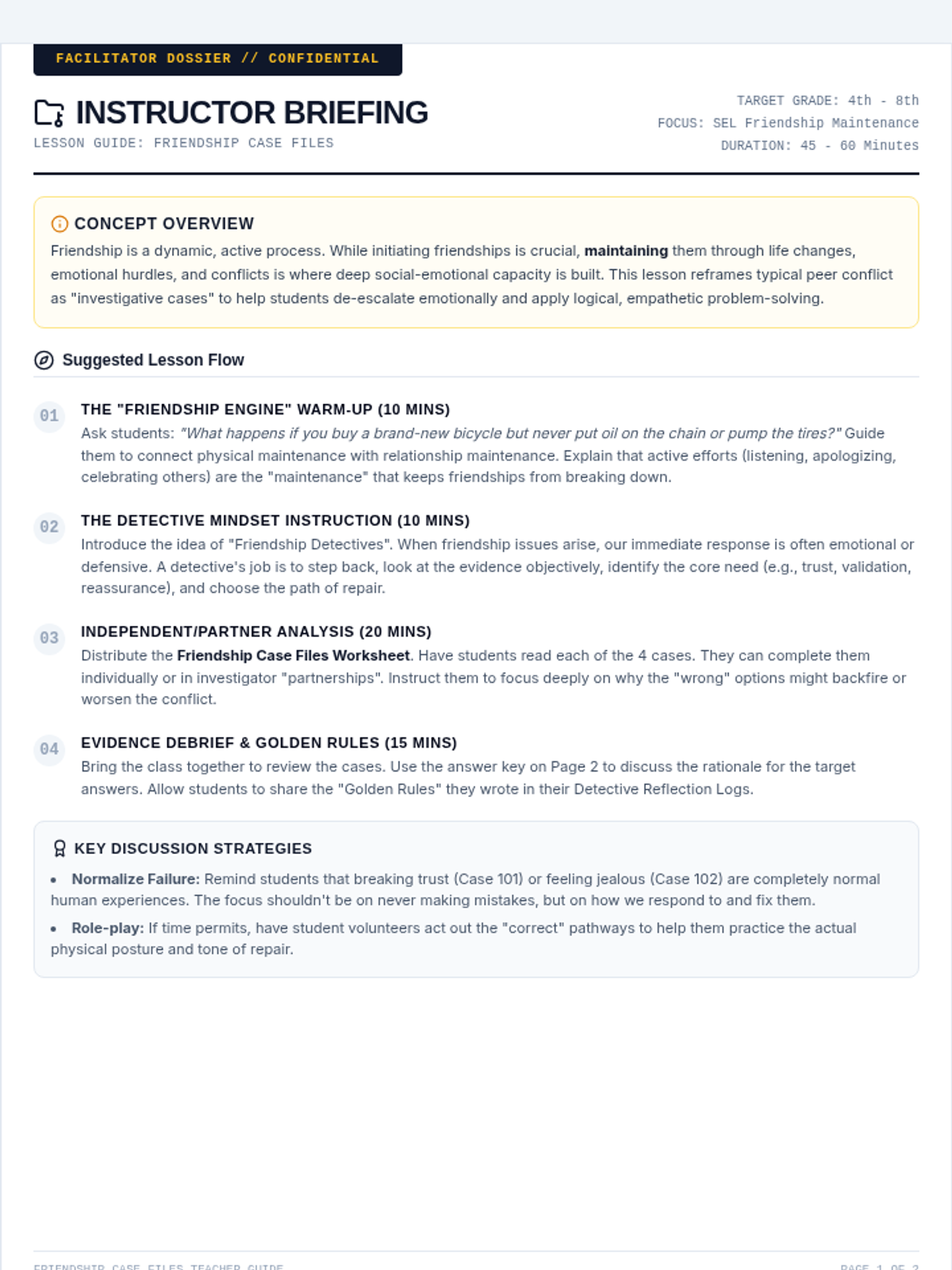
A comprehensive 2-page print-ready Teacher Guide & Answer Key designed with a professional investigator dossier theme. It includes a suggested lesson flow, facilitation best practices, detailed rationales for each option, and reflection guidelines.
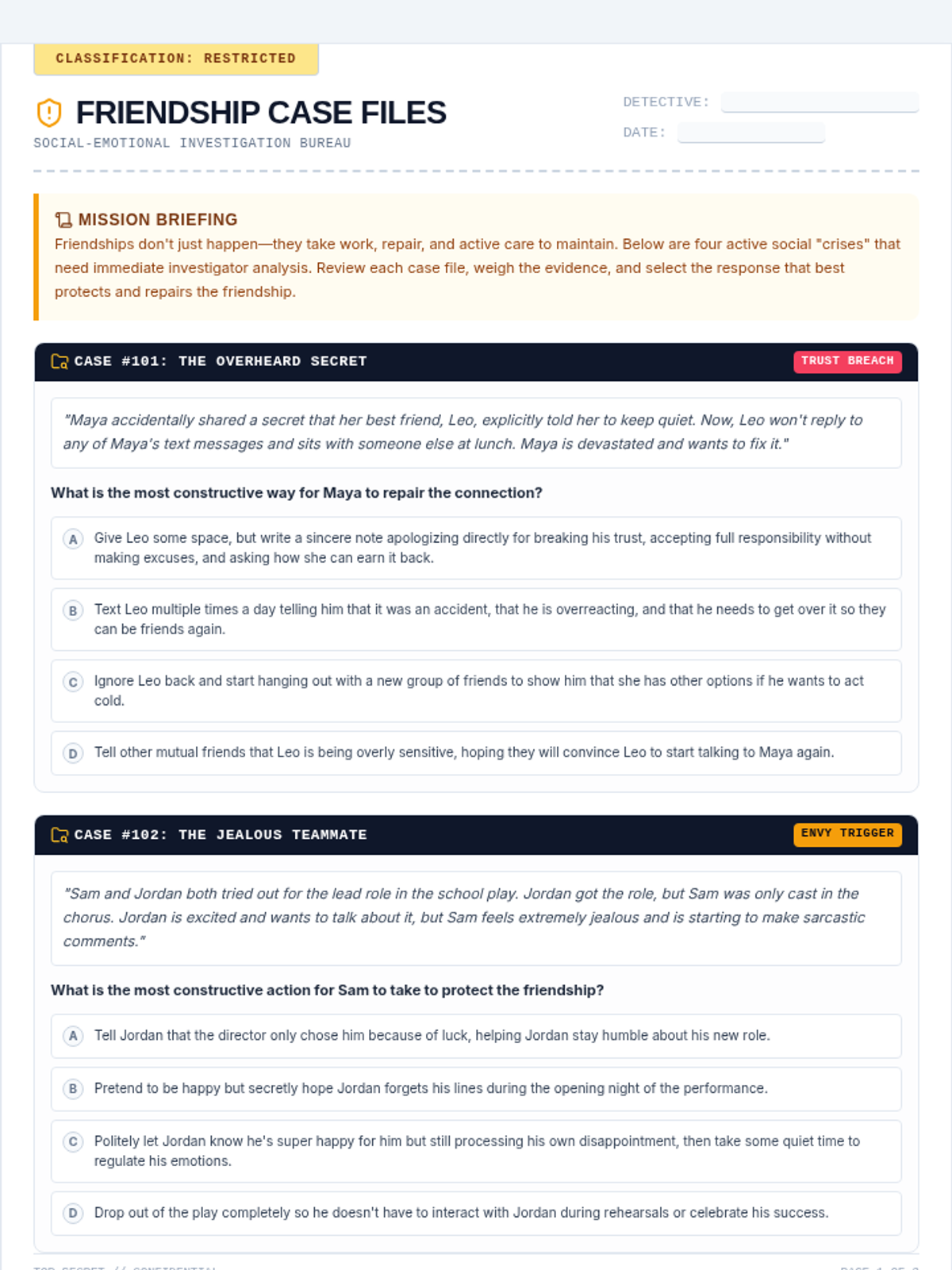
A high-quality 2-page student worksheet containing 4 interactive, beautifully formatted social-emotional learning friendship "case files". Features clean typewriter style, specific scenario evidence, and uniform multiple-choice answers for class evaluation.