A career exploration worksheet that guides students through researching the reality of glamorized celebrity jobs, focusing on success rates, career longevity, and hidden expenses.
A condensed one-page parent support guide for Week 7: Working Memory. Features the 'Mental Scratchpad' concept, at-home transfer strategies like the 'Echo Check,' and specific YouTube resources for parents and kids. Layout is optimized for single-page printing. Vocabulary refined for non-militaristic theme.
Independent mastery worksheet for Working Memory. Page 1 features a high-complexity 'Spy Lab' visual scene for students to study. Page 2 contains an audit sheet with basic recall questions and complex 'manipulation' questions (e.g., mental movement, rotation, math integration) to challenge the limits of their working memory. Layout ensures no page breaks within sections. Vocabulary refined to replace militaristic terms.
Secret Agent-themed 'Briefcase Recall' activity for small group work. Page 1 provides the data for the 'Informant' to read (4 unique mission scenarios). Page 2 is the 'Agent Data Log' where students record recall after a physical distraction task. Focuses on auditory working memory and data holding under stress. Vocabulary refined to replace militaristic terms.
A high-impact 16:9 slide deck for Week 7: Working Memory. Features a non-violent 'Secret Agent' theme, defines the skill as the 'Mental Scratchpad' or 'RAM,' highlights common glitches, and introduces three 'Agent Hacks': Echo, Snap, and Chunk. Standard text minimums strictly followed.
A four-page comprehensive teacher facilitation guide for the 'Mental Scratchpad' mission (Working Memory). Features a non-violent 'Secret Agent' theme, timed instructional flow, activity briefings, and classroom transfer routines. Vocabulary refined to replace militaristic terms.
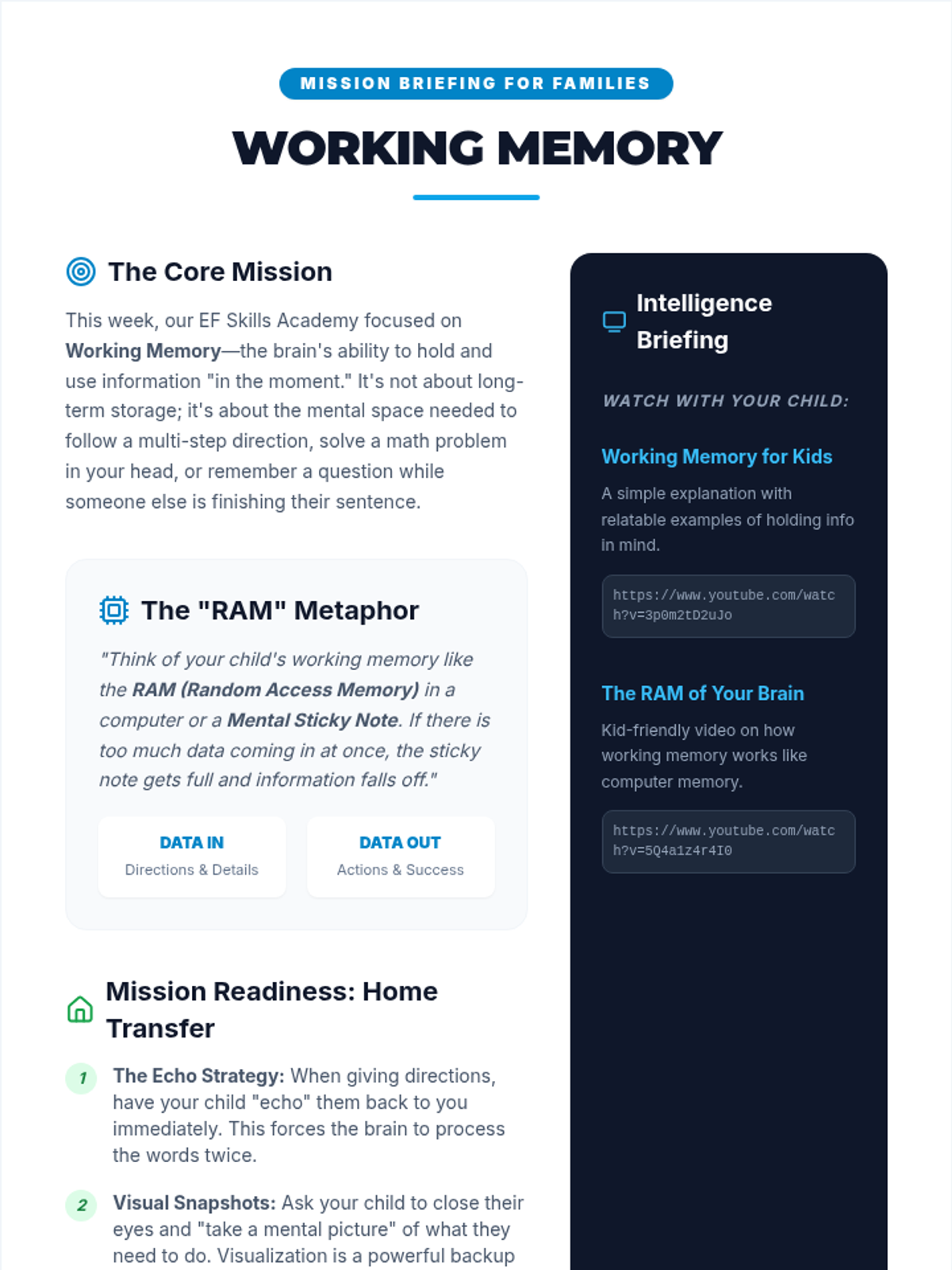
A condensed one-page parent guide for Week 7: Working Memory. Explains the 'Mental Sticky Note' concept, lists home transfer tips like 'Echo Instructions,' and provides specific YouTube video resources.
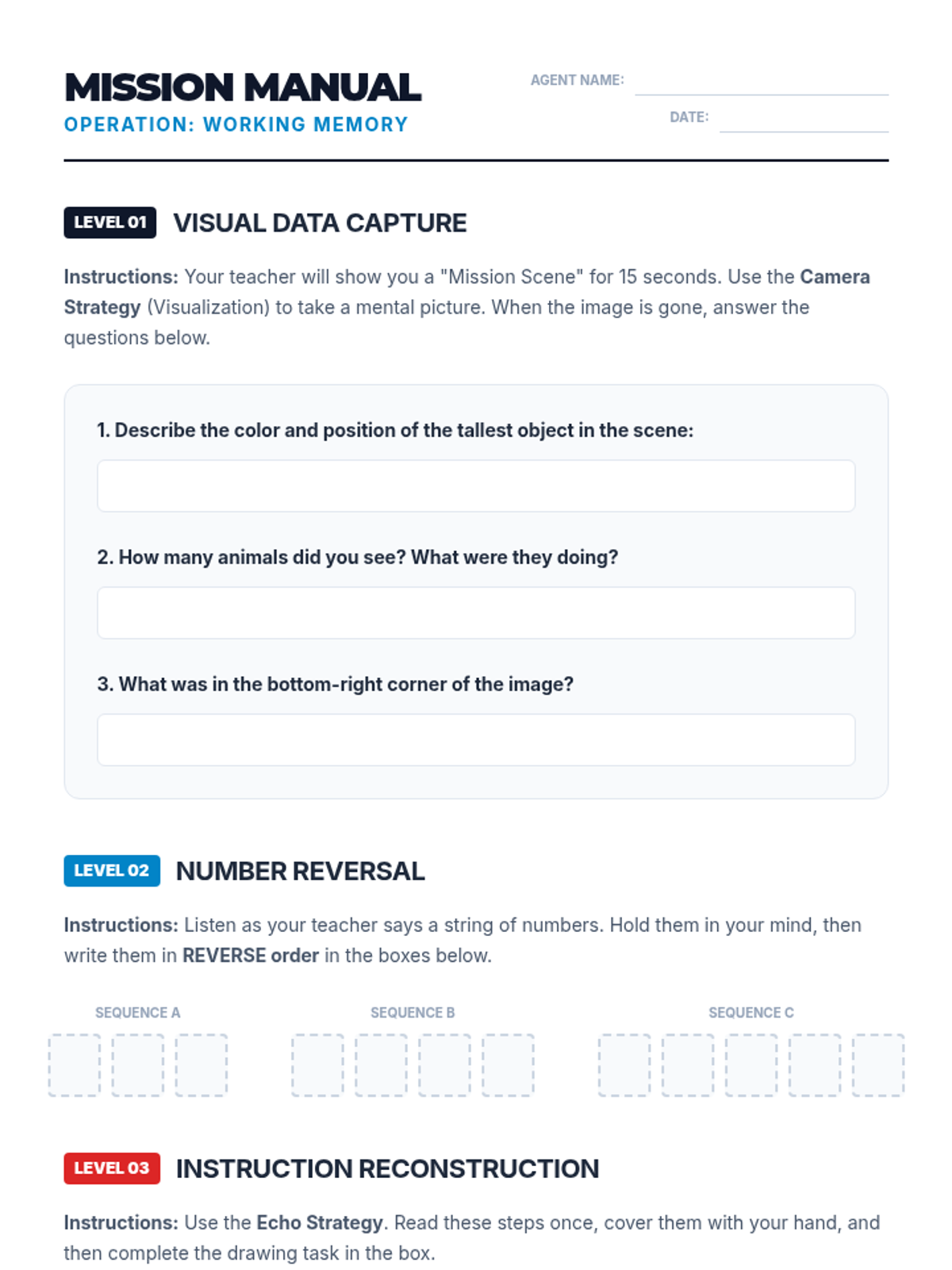
A student activity sheet featuring three levels of working memory challenges: visual data capture, number reversal, and instruction reconstruction. Uses a 'Mission Manual' theme with clear work areas.
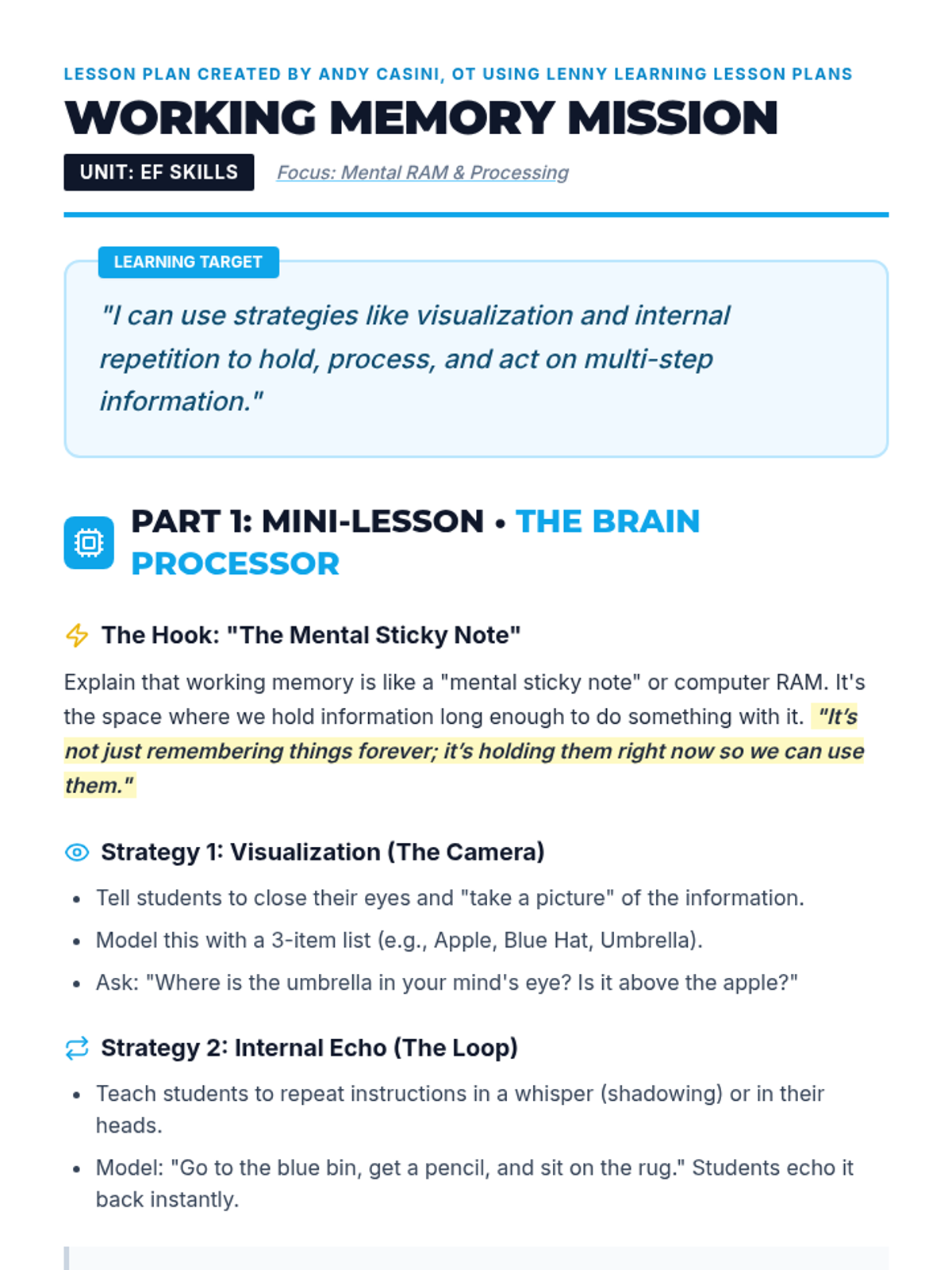
A professional three-page lesson plan for Working Memory, featuring a 'Mental RAM' theme, clear learning targets, instructional steps for mini-lessons, small group missions, and classroom transfer routines. Designed with strict page-break awareness.
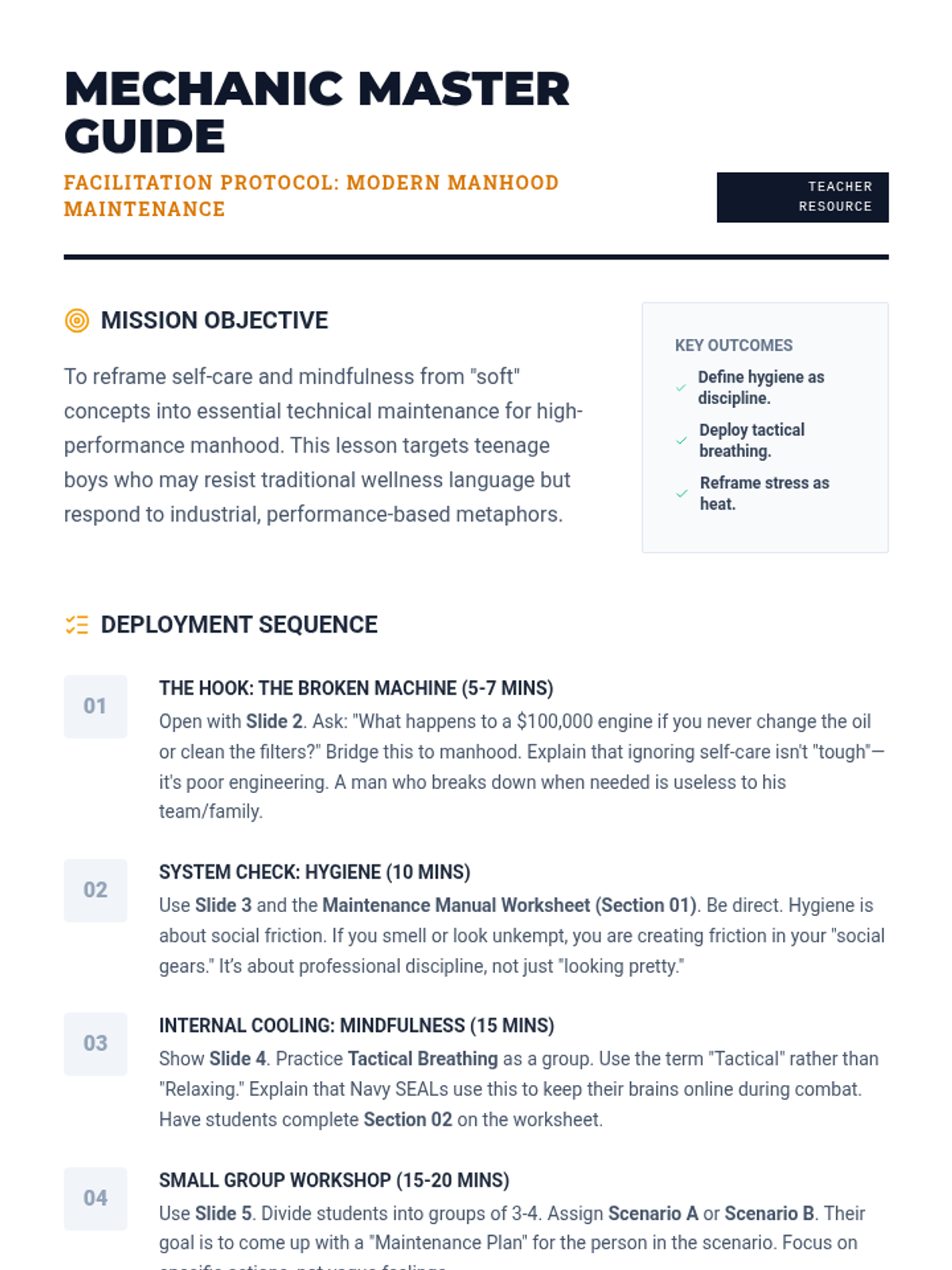
A comprehensive 1-page facilitator's guide for the 'Modern Mechanic' lesson. It provides a structured lesson flow, timing suggestions, key talking points for reframing manhood concepts, and debriefing questions for the small group activity.
A high-impact 6-slide presentation that reframes self-care and mindfulness for teenage boys using an industrial 'Modern Mechanic' theme. It covers hygiene, tactical breathing, and small-group scenarios.
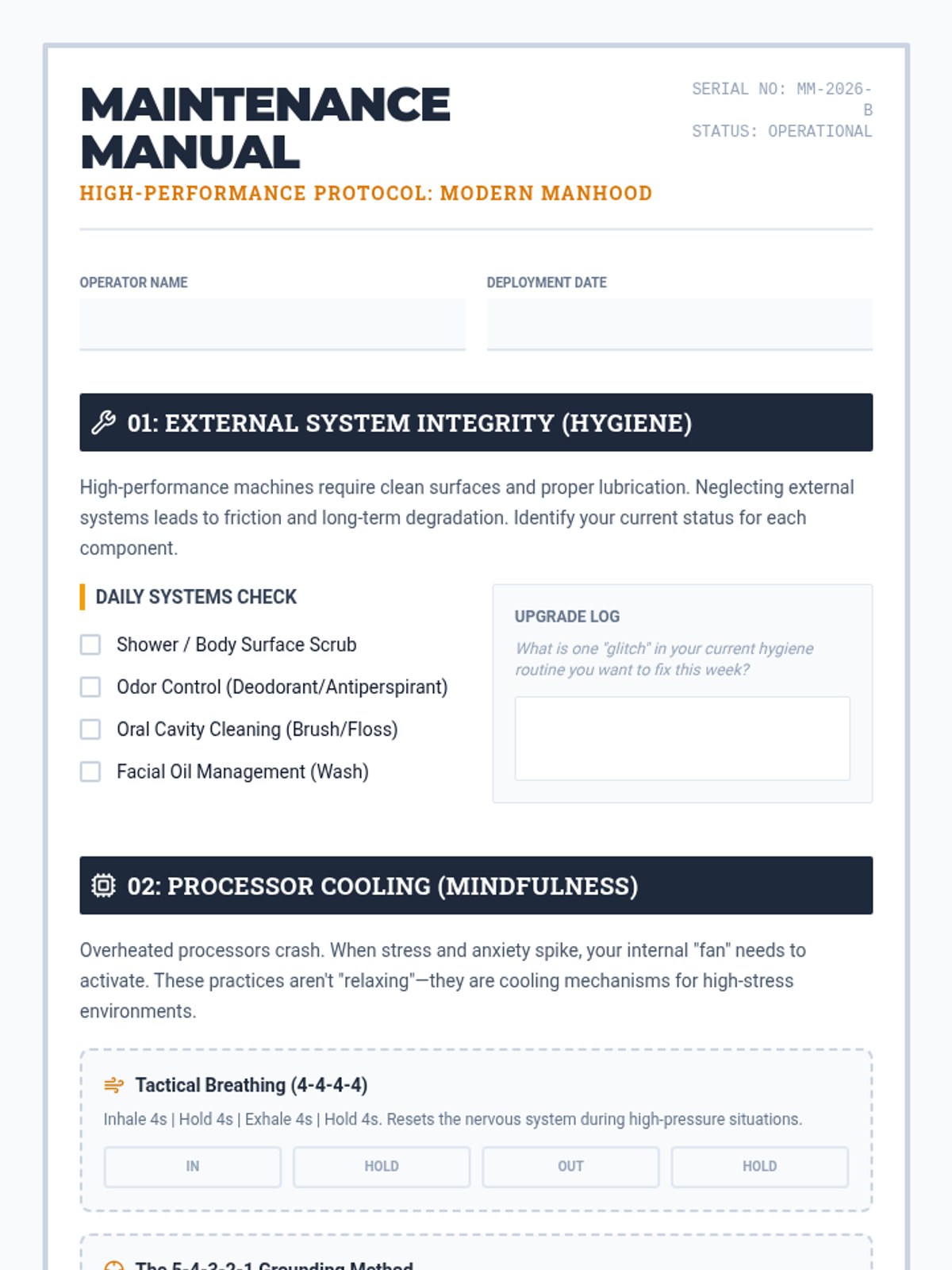
A 2-page student worksheet designed as a 'Maintenance Manual' that reframes hygiene, mindfulness, and self-care as essential technical maintenance for teenage boys. It includes checkboxes for daily routines, grounding exercises, and a personal commitment plan.
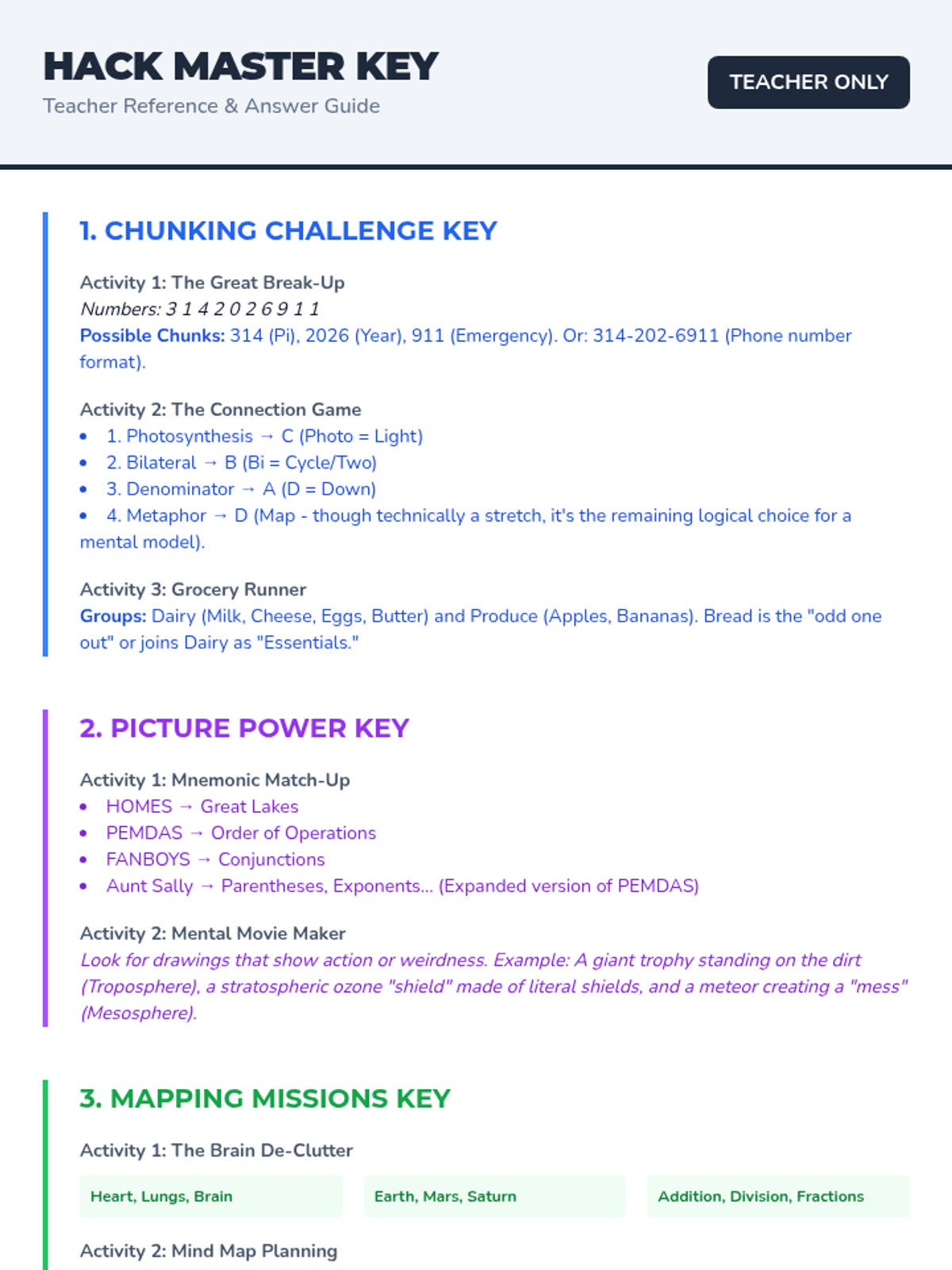
A teacher's answer key and reference guide for the Brain Hacks worksheet series, providing suggested answers and instructional tips for implementing the memory strategies.
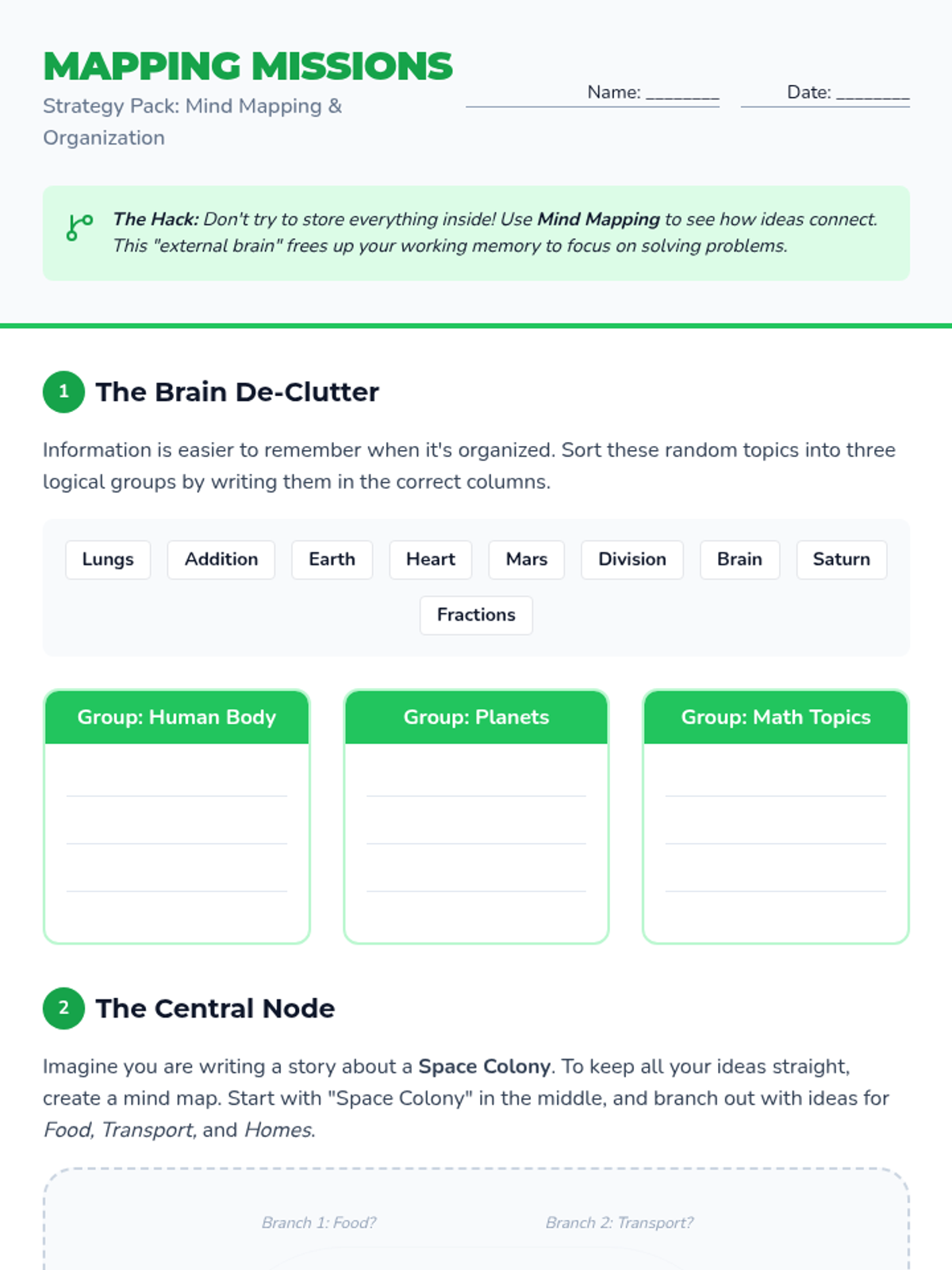
A student worksheet for Mind Mapping and Organizational strategies, including a categorization activity and a mind map template for project planning.
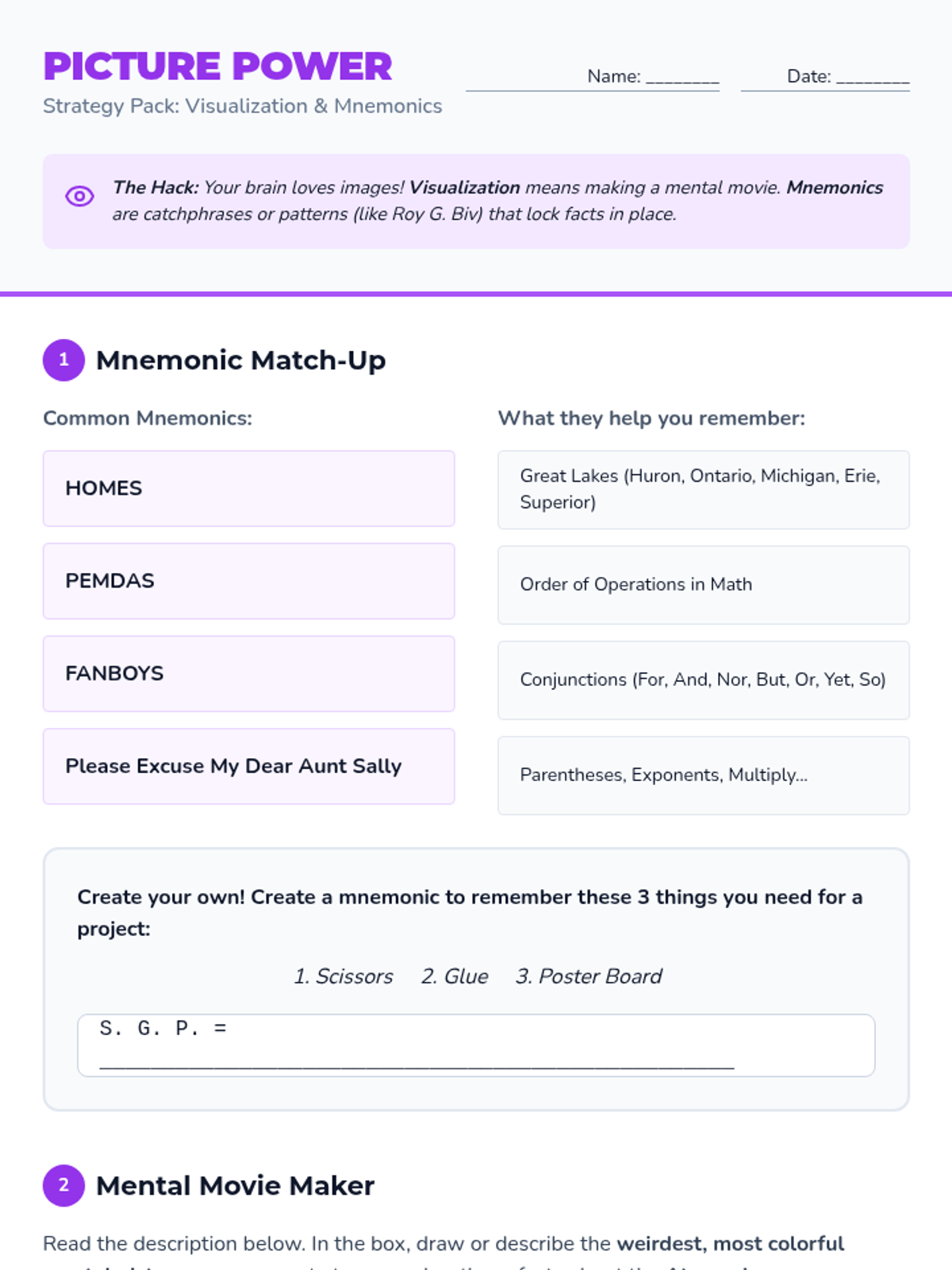
A student worksheet for Visualization and Mnemonic strategies, providing matching exercises for famous mnemonics and a graphic organizer for creating mental imagery to remember science facts.
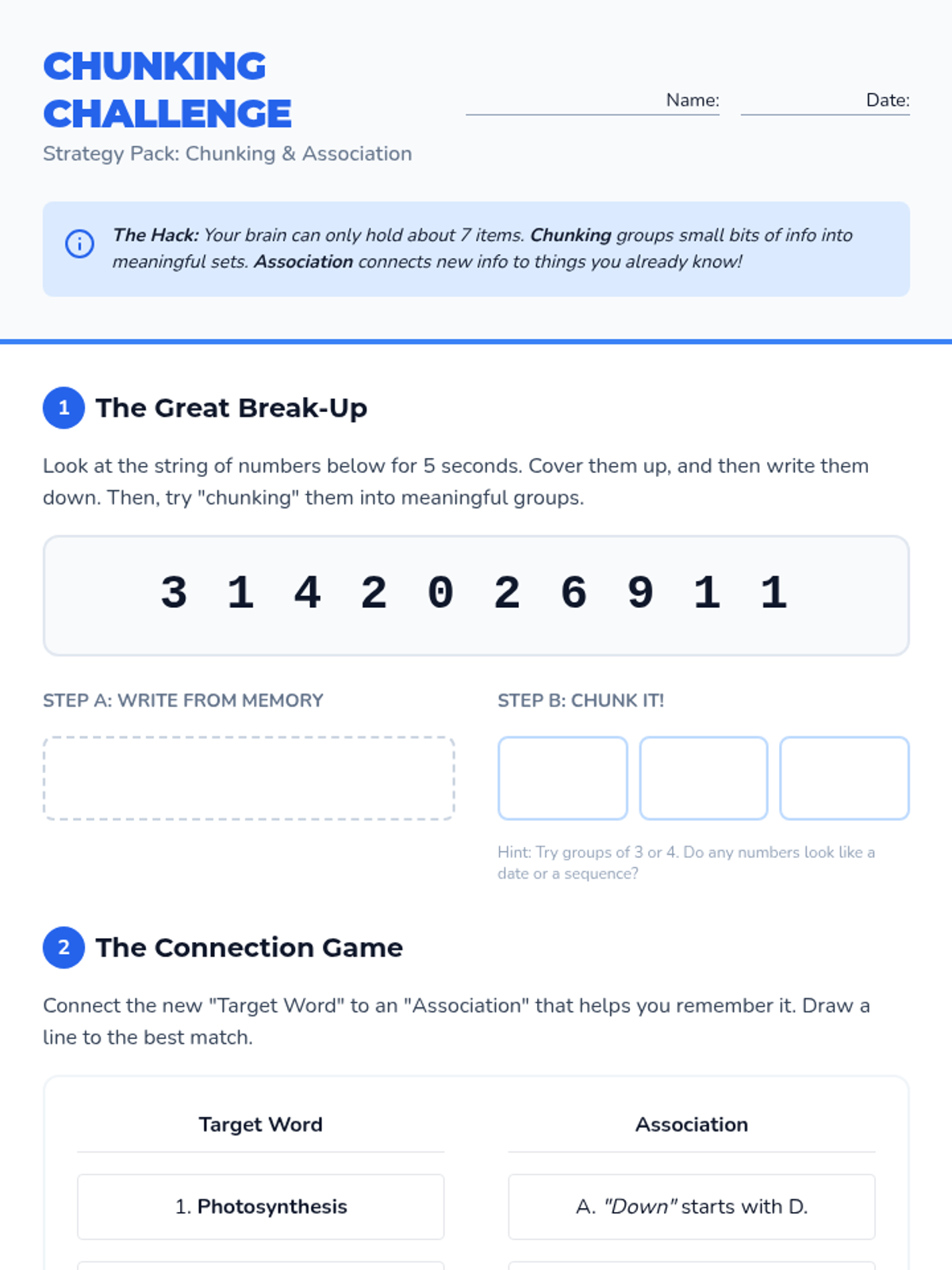
A student worksheet focused on Chunking and Association strategies, featuring number memorization challenges, word-association matching, and a real-world shopping list scenario.
An engaging slide deck designed to introduce 6th graders to working memory concepts and three specific "brain hacks": chunking/association, visualization/mnemonics, and mind mapping.
A vibrant slide presentation to accompany the 'Bloom and Focus' lesson, introducing students to time management and stress reduction strategies.
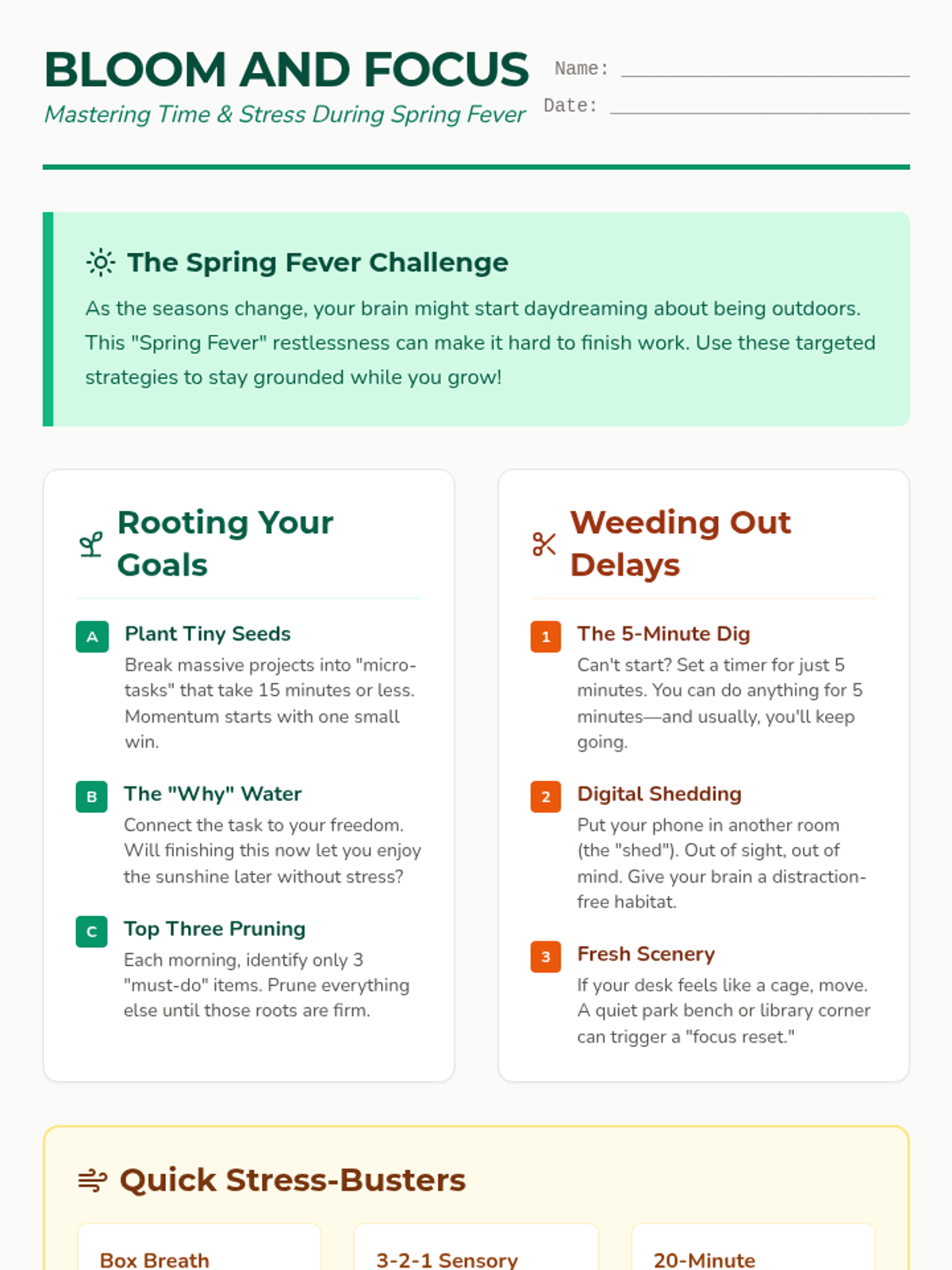
A revised student handout with improved spacing for action planning and a clearer instructional layout for managing spring fever distractions.
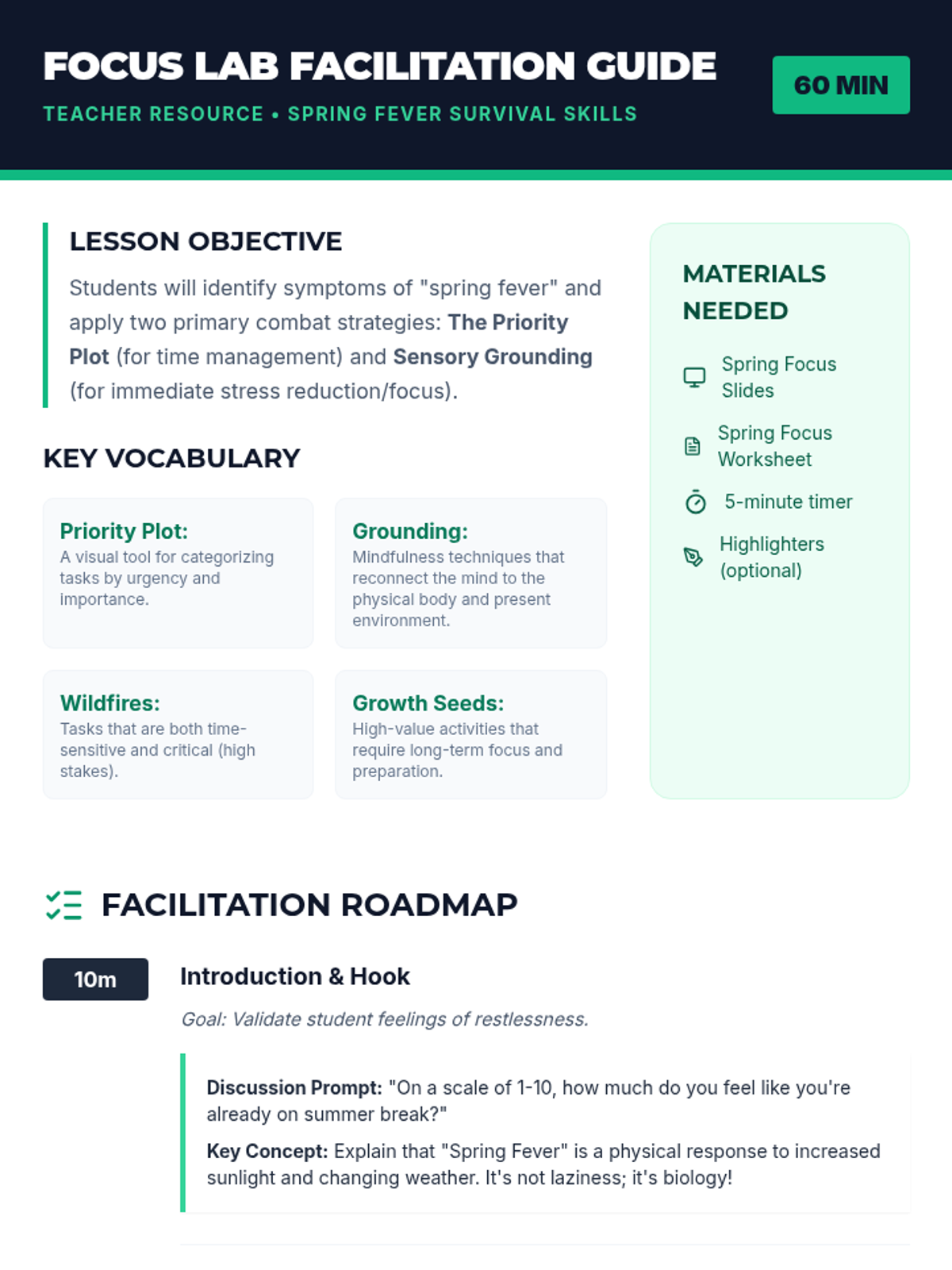
A comprehensive teacher facilitation guide for the 'Spring Focus Lab' lesson, featuring a 60-minute pacing guide, discussion prompts, differentiation strategies, and extension activities.
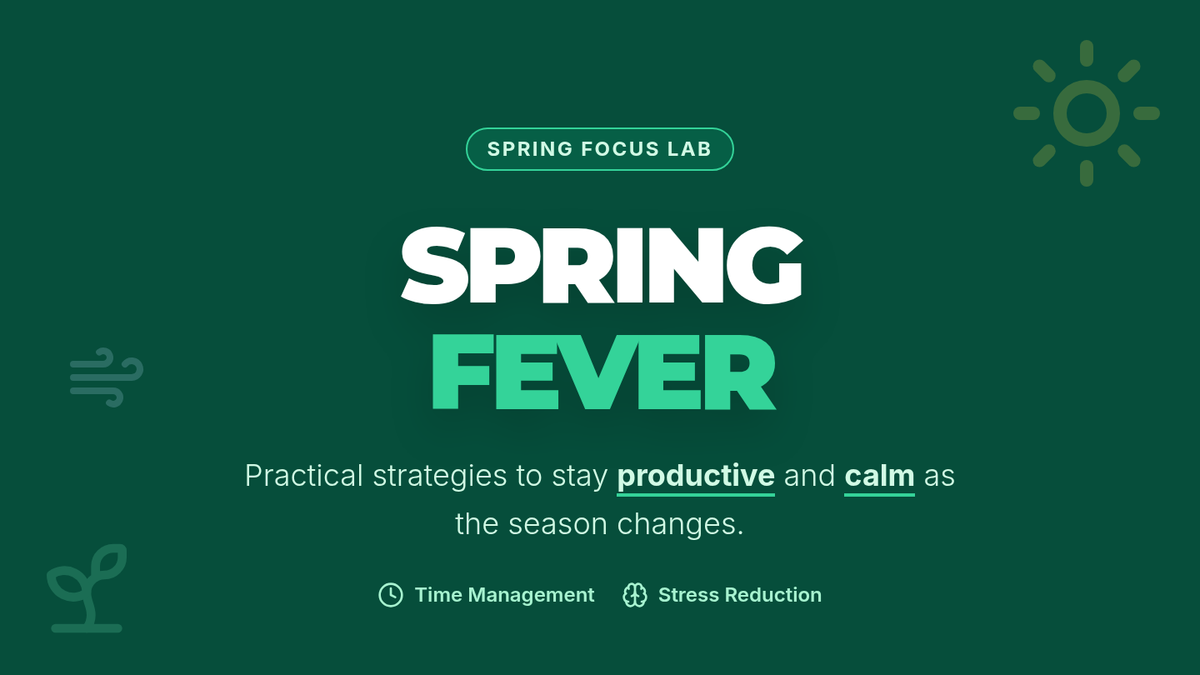
A high-energy presentation deck designed to introduce students to the concepts of 'spring fever', priority management using the 'Priority Plot', and sensory grounding techniques.
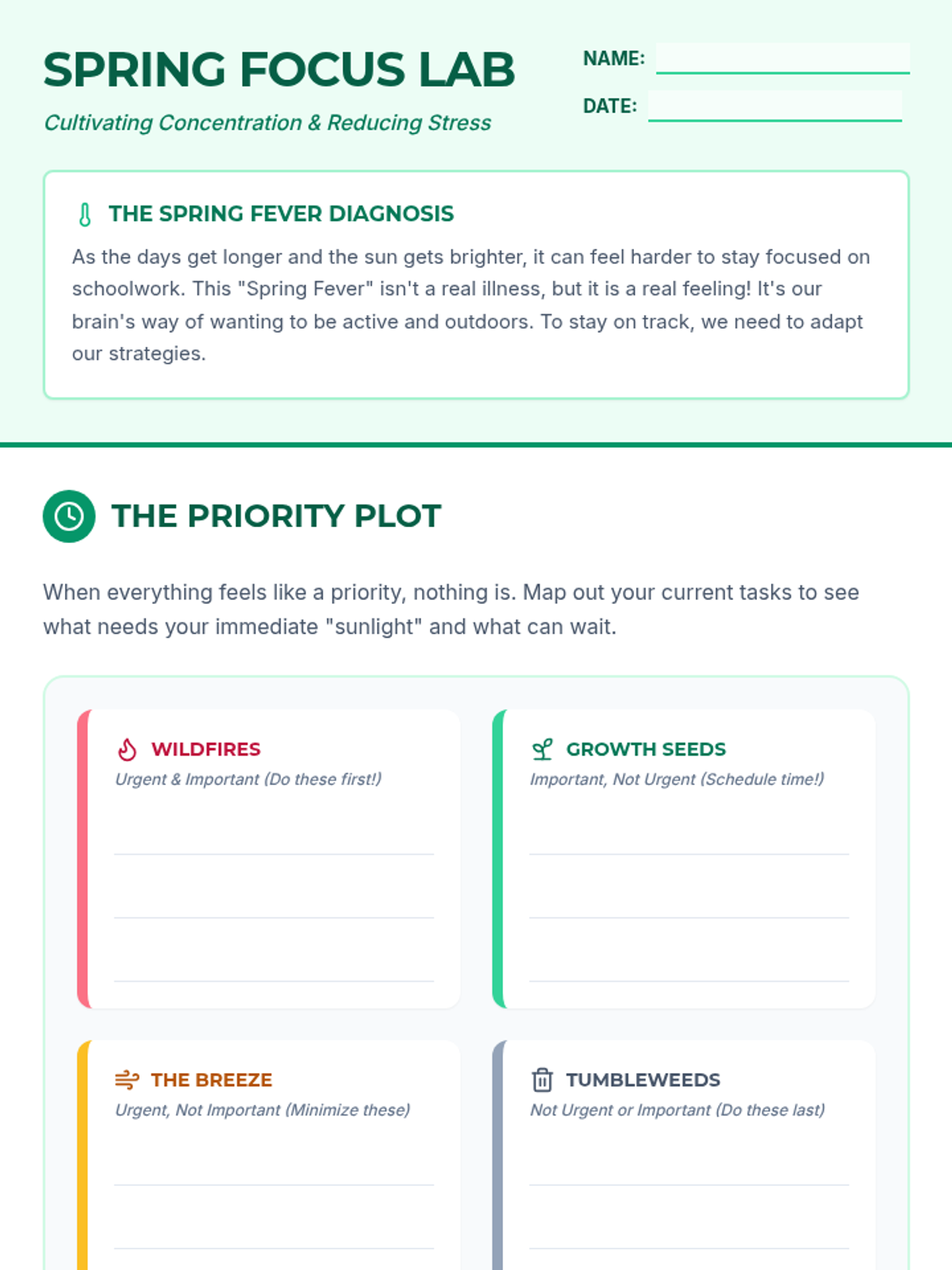
A revised two-page worksheet to help students manage 'spring fever' with enhanced writing space for time management grids and stress-reduction techniques like box breathing and 5-4-3-2-1 grounding.
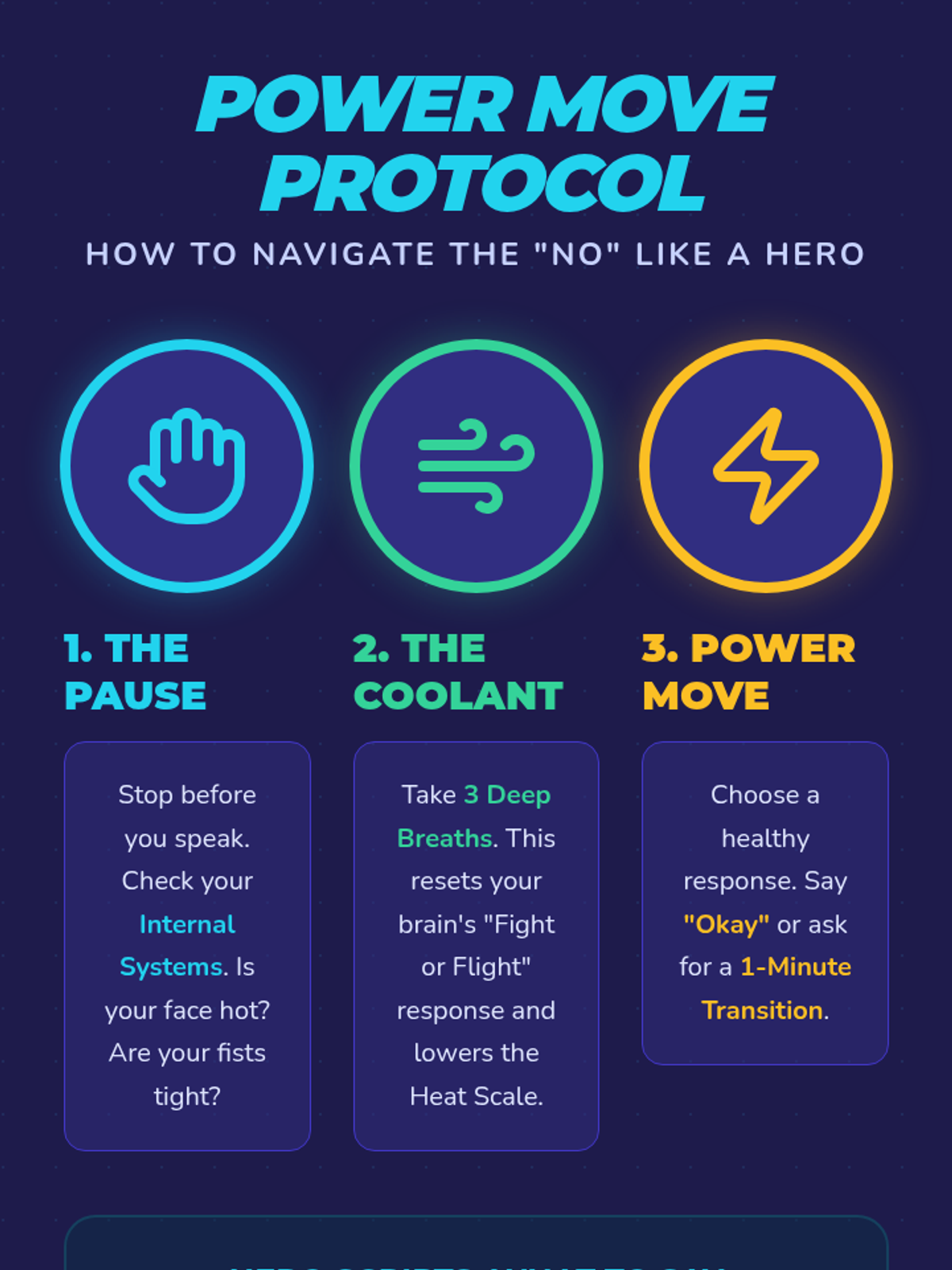
A visual anchor chart for students illustrating the 'Power Move Protocol'—a three-step process for responding to rules and frustration with pausing, breathing, and chosen healthy responses.
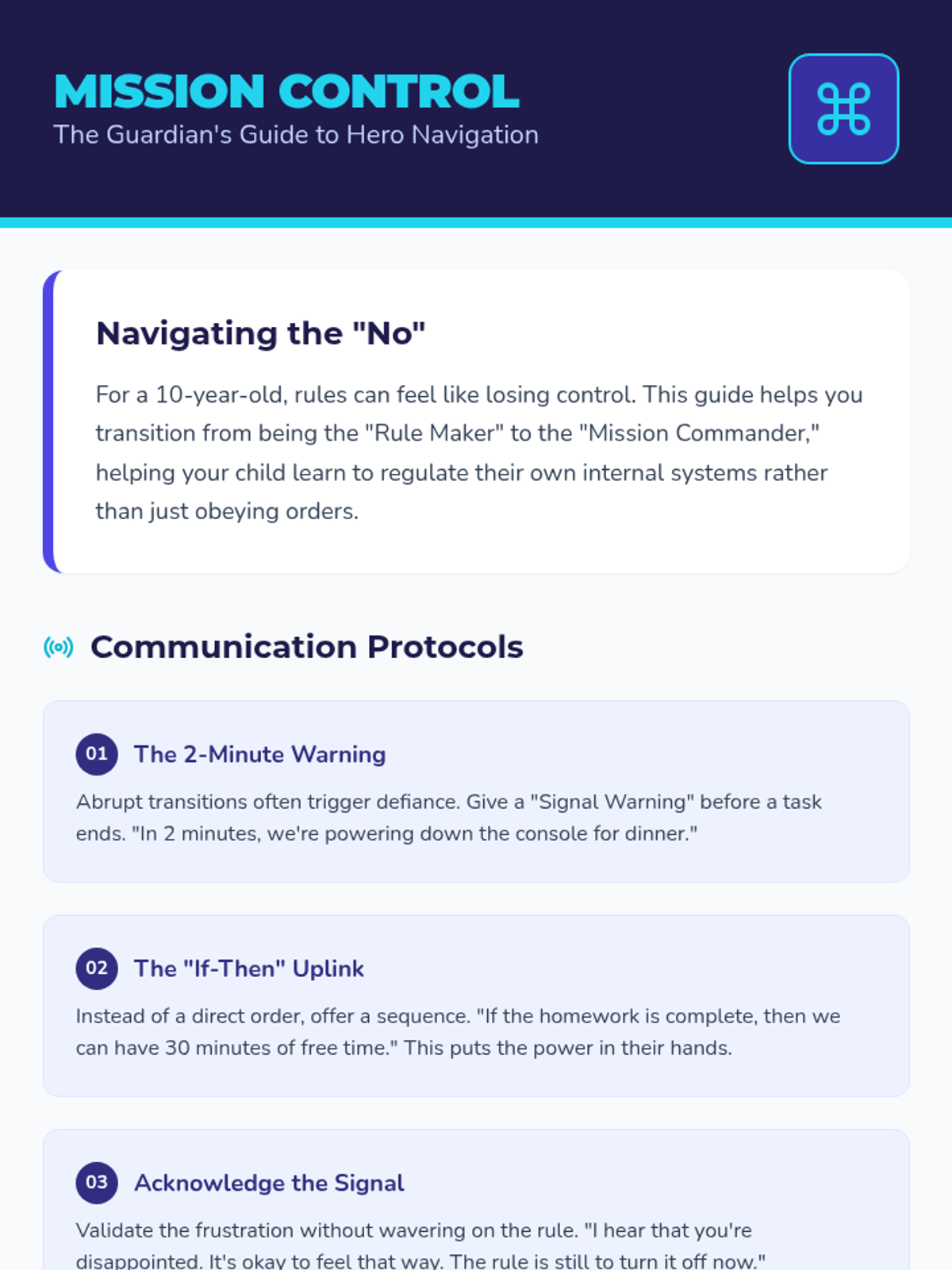
A parent/guardian activity guide for managing home rules and defiance. Includes communication scripts, de-escalation strategies, and tips for post-conflict reflection.
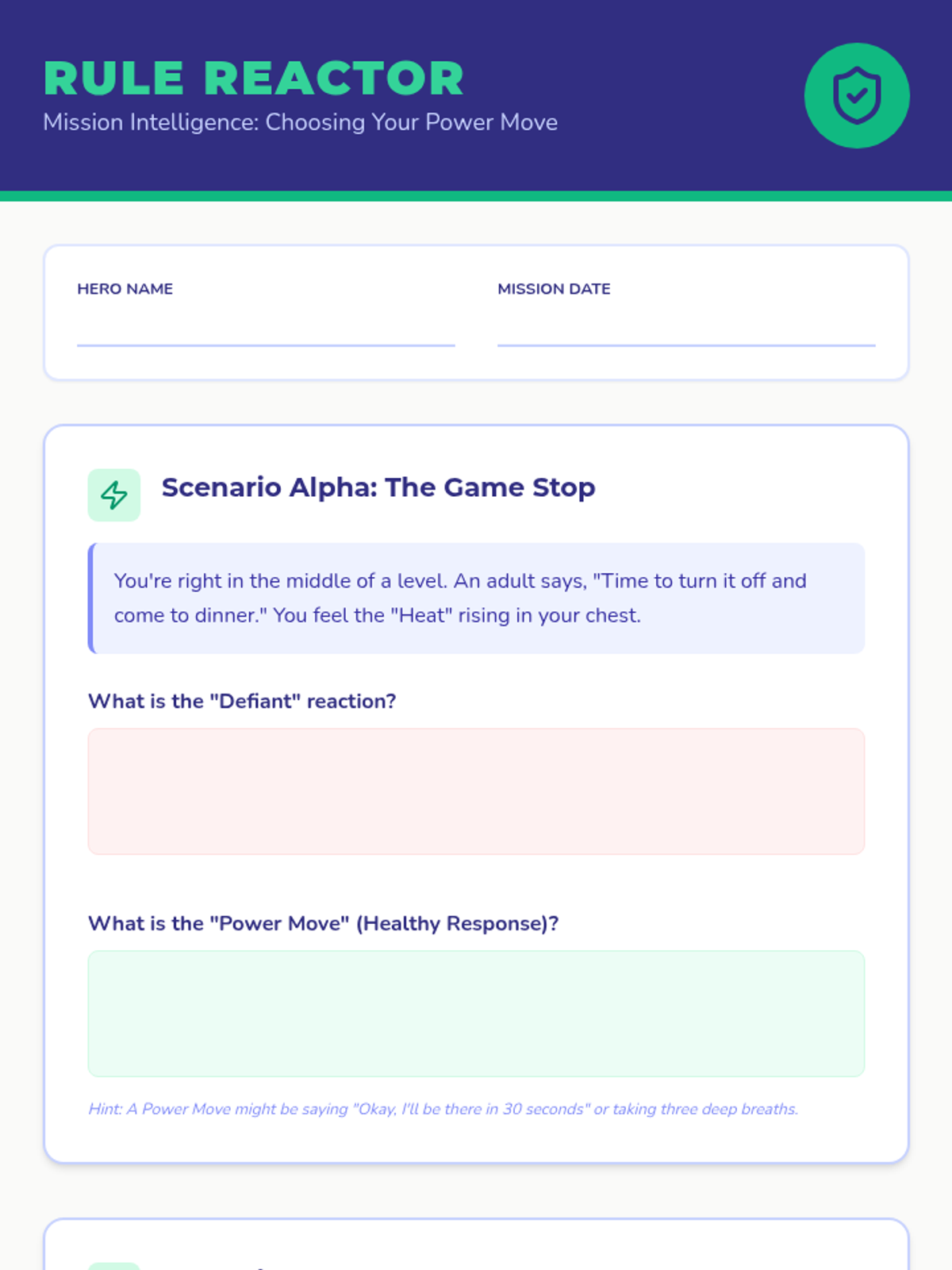
A scenario-based student worksheet where learners practice choosing healthy responses (Power Moves) to common frustrations like rules, consequences, and sibling disagreements.
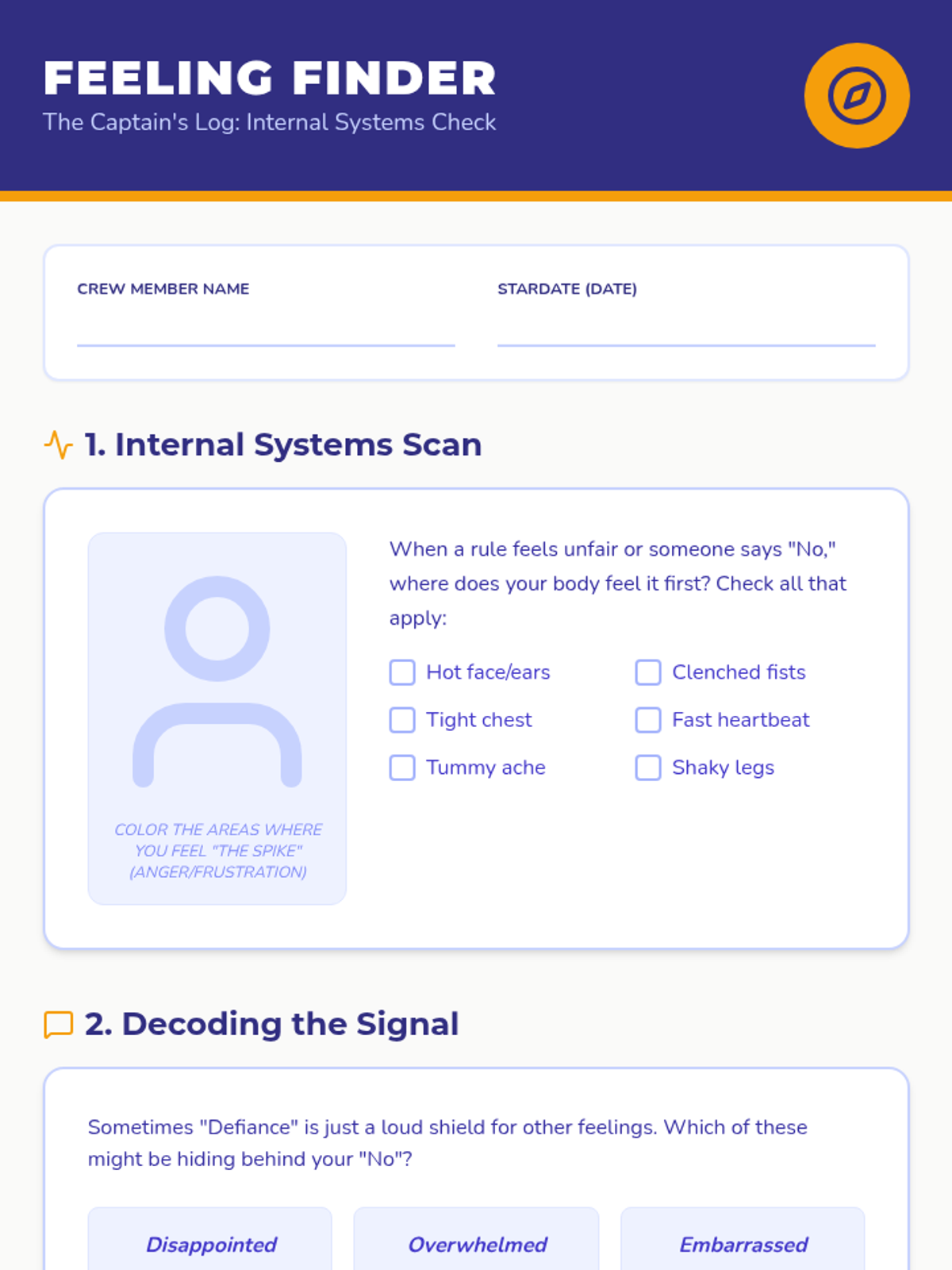
A student worksheet focused on identifying physical sensations and naming underlying emotions when facing rules or frustration. Includes a body scan, emotion decoding, and an energy meter.
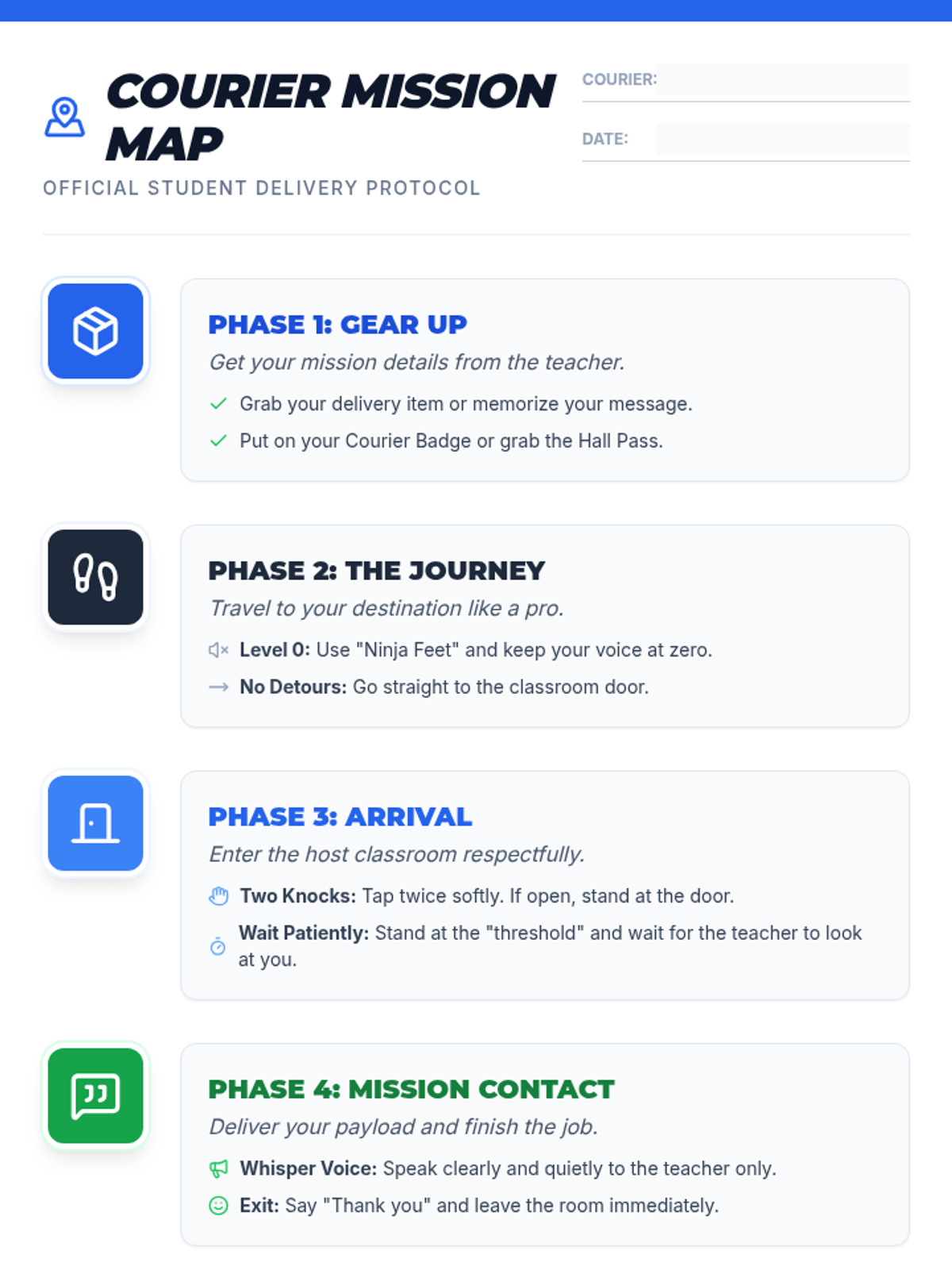
A student-facing visual checklist and flowchart designed with a "mission" theme to guide students through the steps of a classroom visit. Highlights quiet movement, patient waiting, and respectful communication.
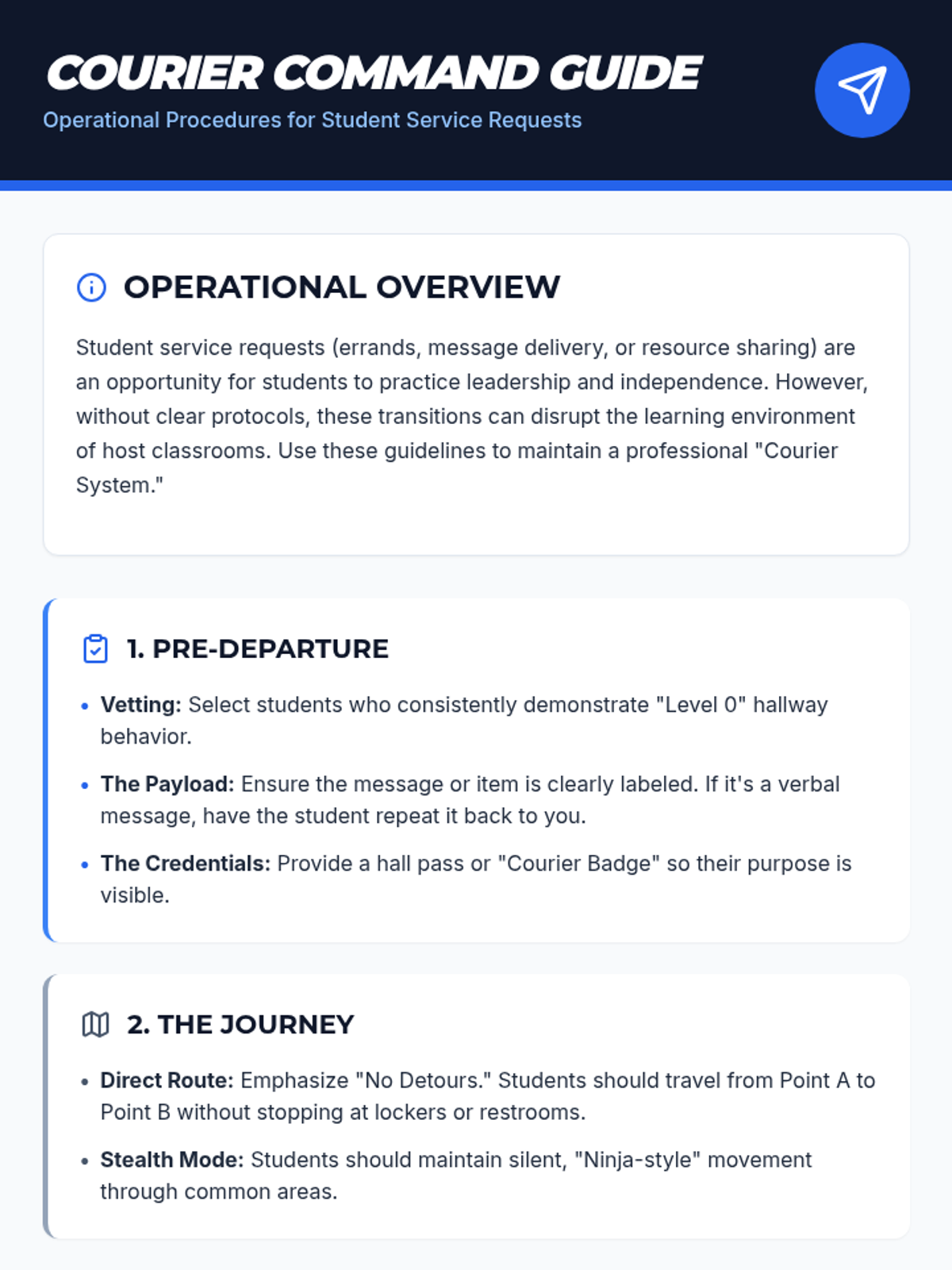
A teacher-facing instructional guide outlining the procedural expectations for student service requests and classroom visits. Includes pre-departure checks, arrival protocols, and troubleshooting tips.
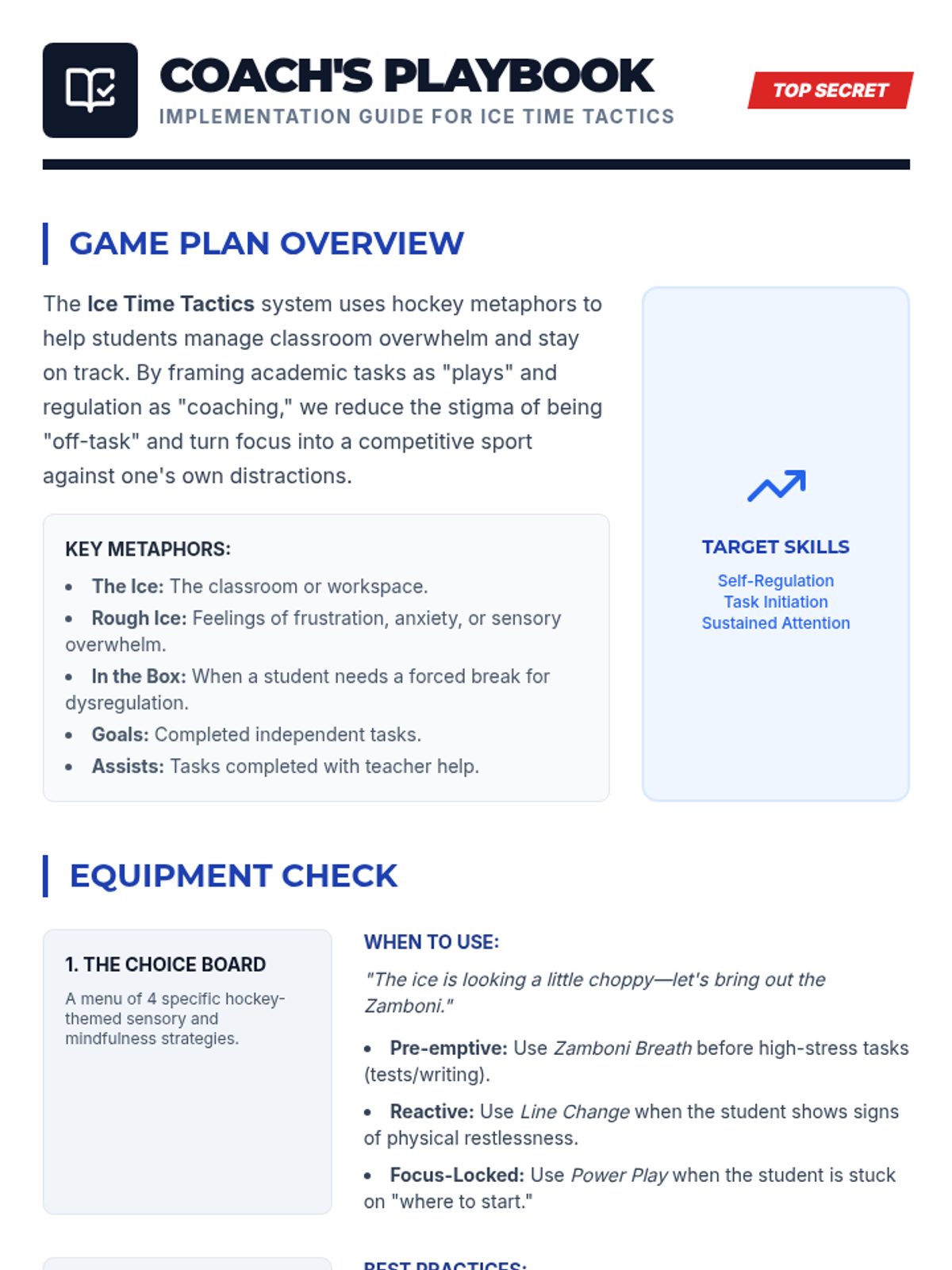
A comprehensive teacher guide for implementing the Ice Time Tactics system, featuring metaphors, scripted prompts, and instructional strategies.
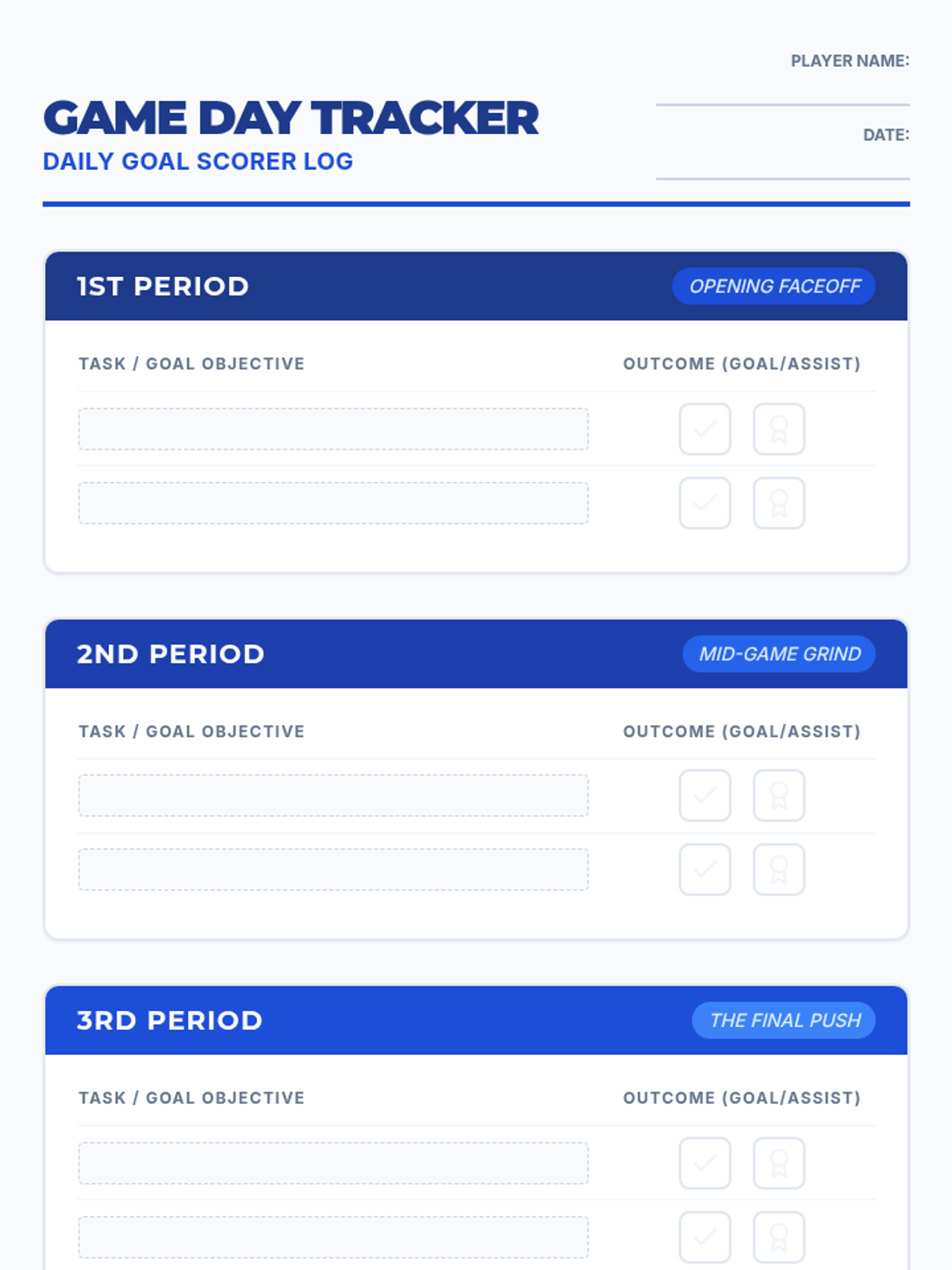
A daily tracking sheet for students to log their classroom tasks as 'goals' or 'assists' across three periods of the school day.
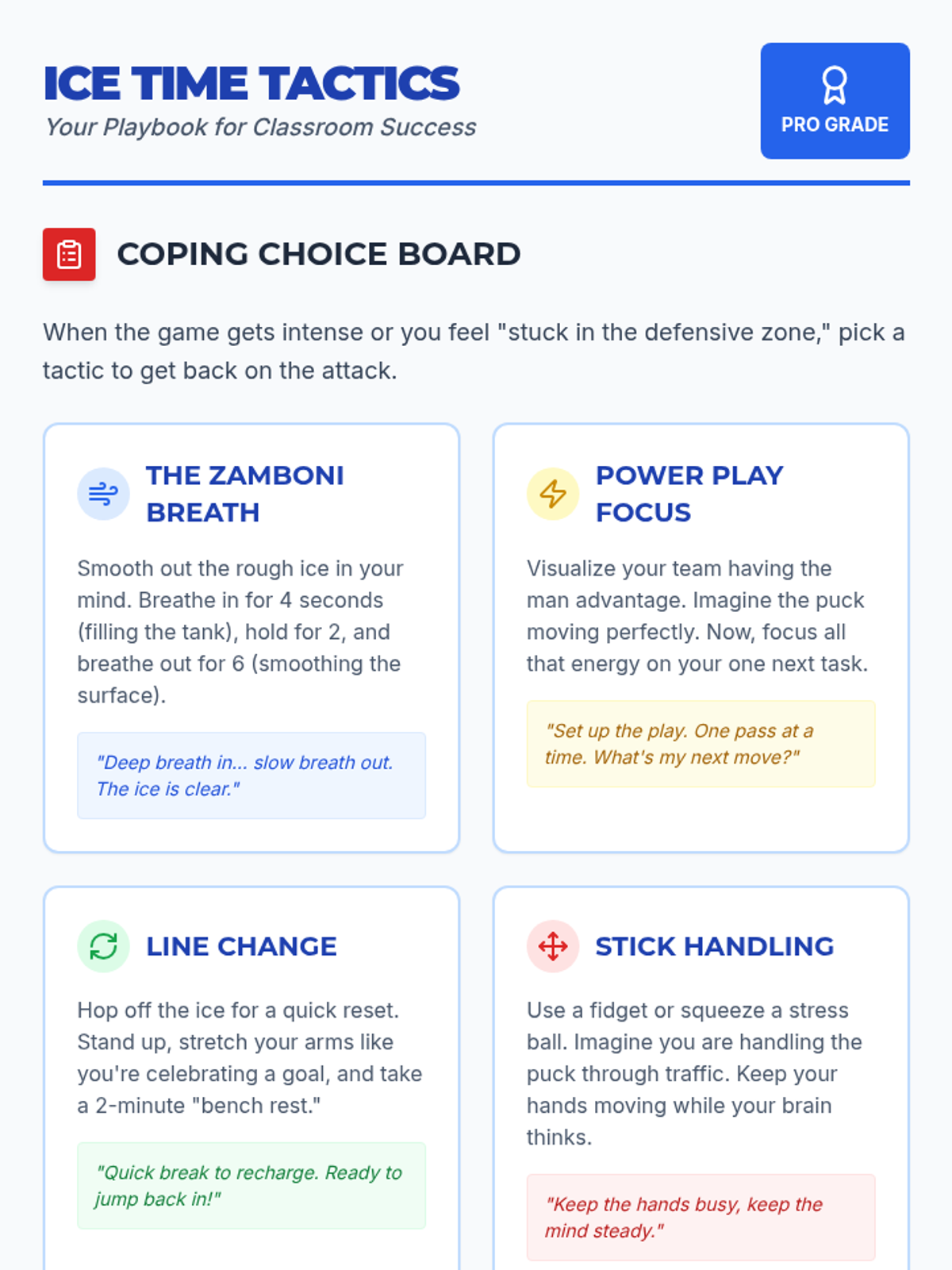
A visual choice board featuring hockey-themed coping strategies like 'The Zamboni Breath' and 'Power Play Focus' to help students self-regulate in the classroom.
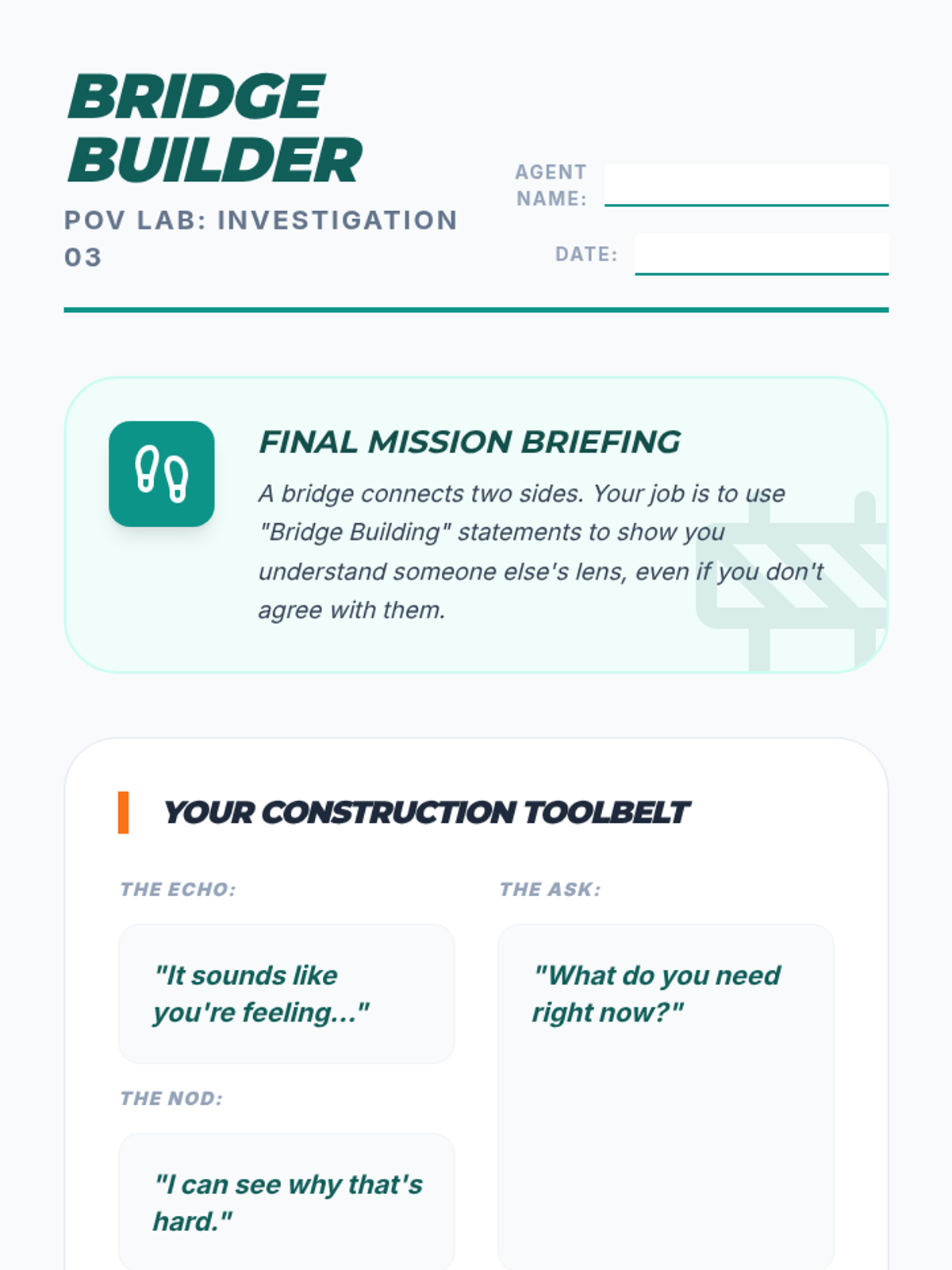
A final student worksheet for Lesson 3 of the POV Lab, guiding students to apply bridge-building communication strategies to a specific peer conflict scenario. Updated for better handwriting legibility in student work areas.
A 6-slide visual presentation for Lesson 3 of the POV Lab, teaching students how to use empathy as a 'bridge' to connect perspectives and resolve conflicts.
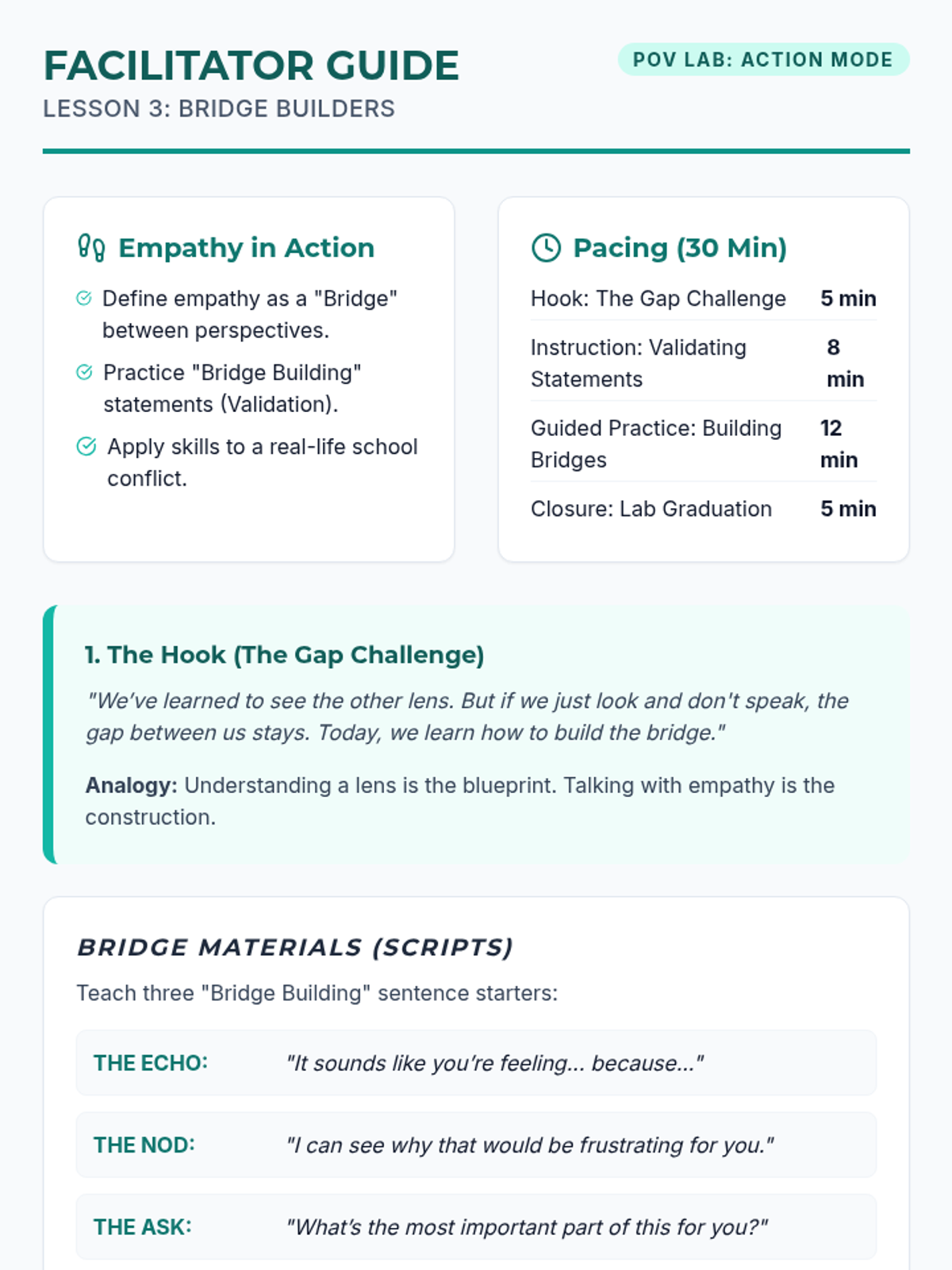
A facilitator guide for Lesson 3 of the POV Lab, teaching students how to transition from understanding a perspective to responding with empathy and providing guidance on navigating defensiveness.
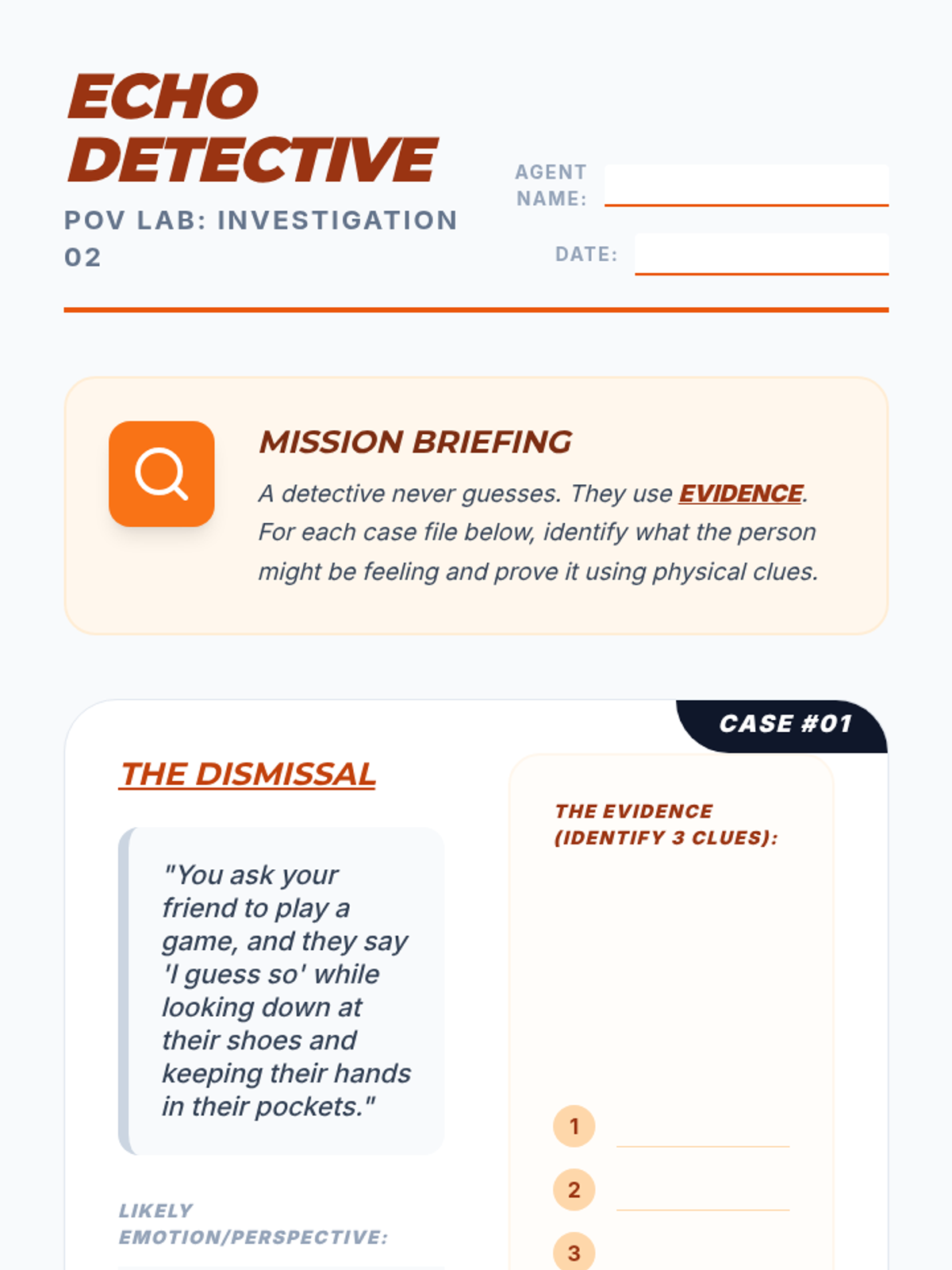
A student worksheet for Lesson 2 of the POV Lab, where students practice identifying emotions in specific social scenarios using physical evidence and body language clues. Updated for better handwriting legibility.