An engaging student worksheet using a nautical theme to teach the 5-4-3-2-1 grounding technique and simple reality testing strategies. Includes sections for identifying safe people and positive self-talk.
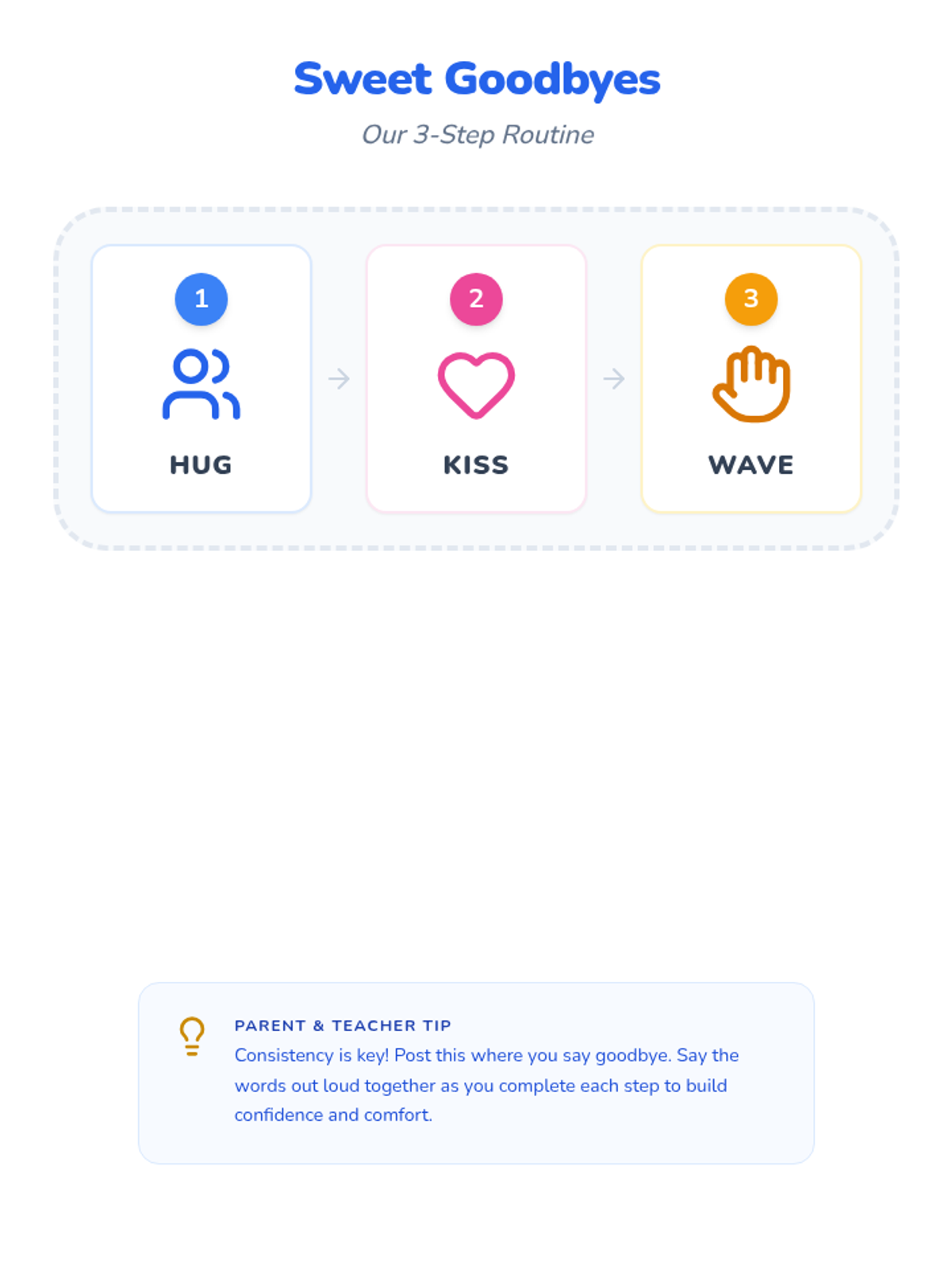
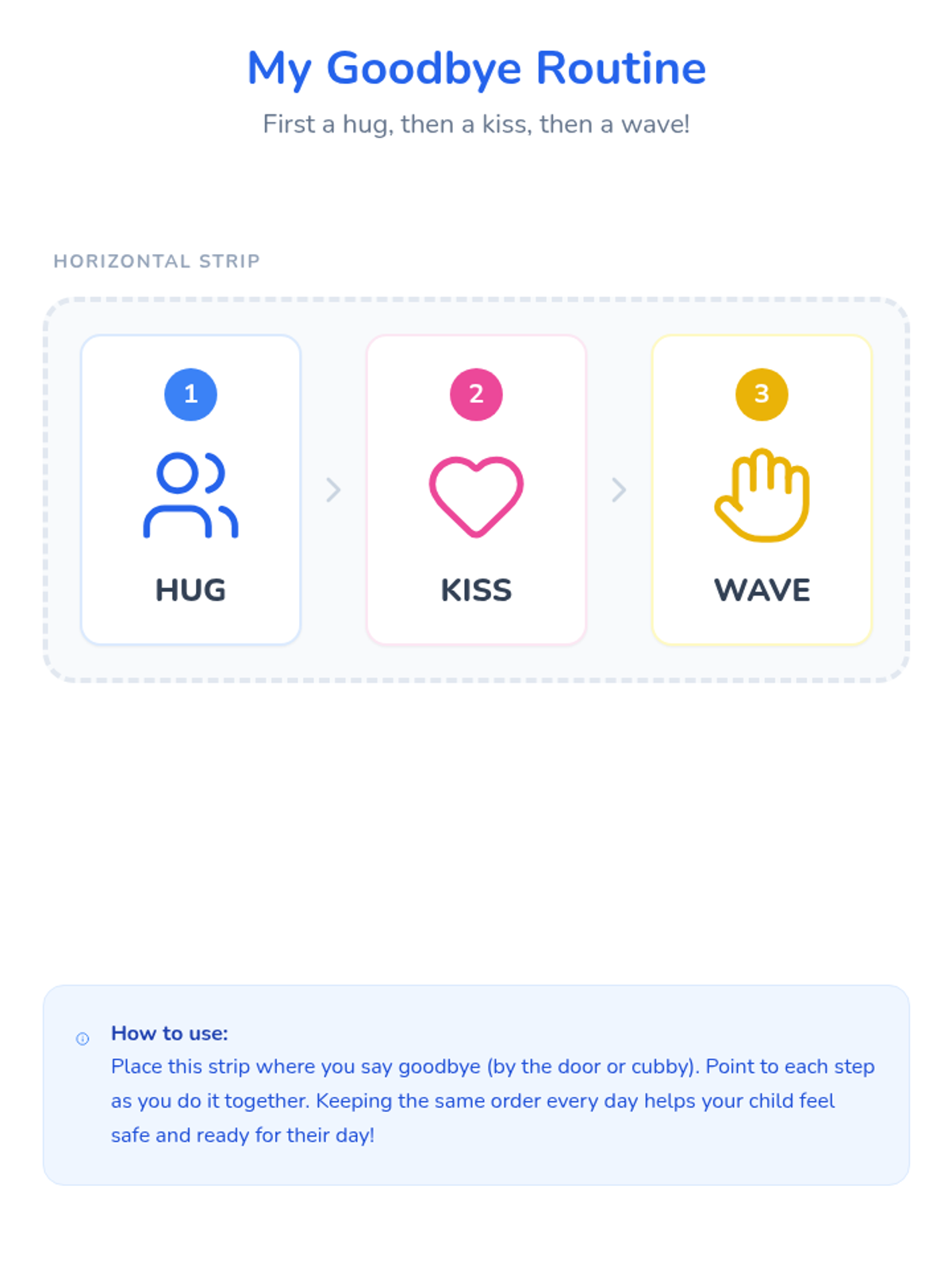
A visual guide for a 3-step goodbye routine (hug, kiss, wave). Features a horizontal display version and a vertical door-hanger version with a hole-punch guide. Uses clear icons and bold, high-contrast text.
A clean, high-contrast visual strip featuring a 3-step goodbye routine (hug, kiss, wave) in both horizontal and vertical formats. Uses friendly line-style icons and bold text for early learners. Revised for better icon clarity and print layout.
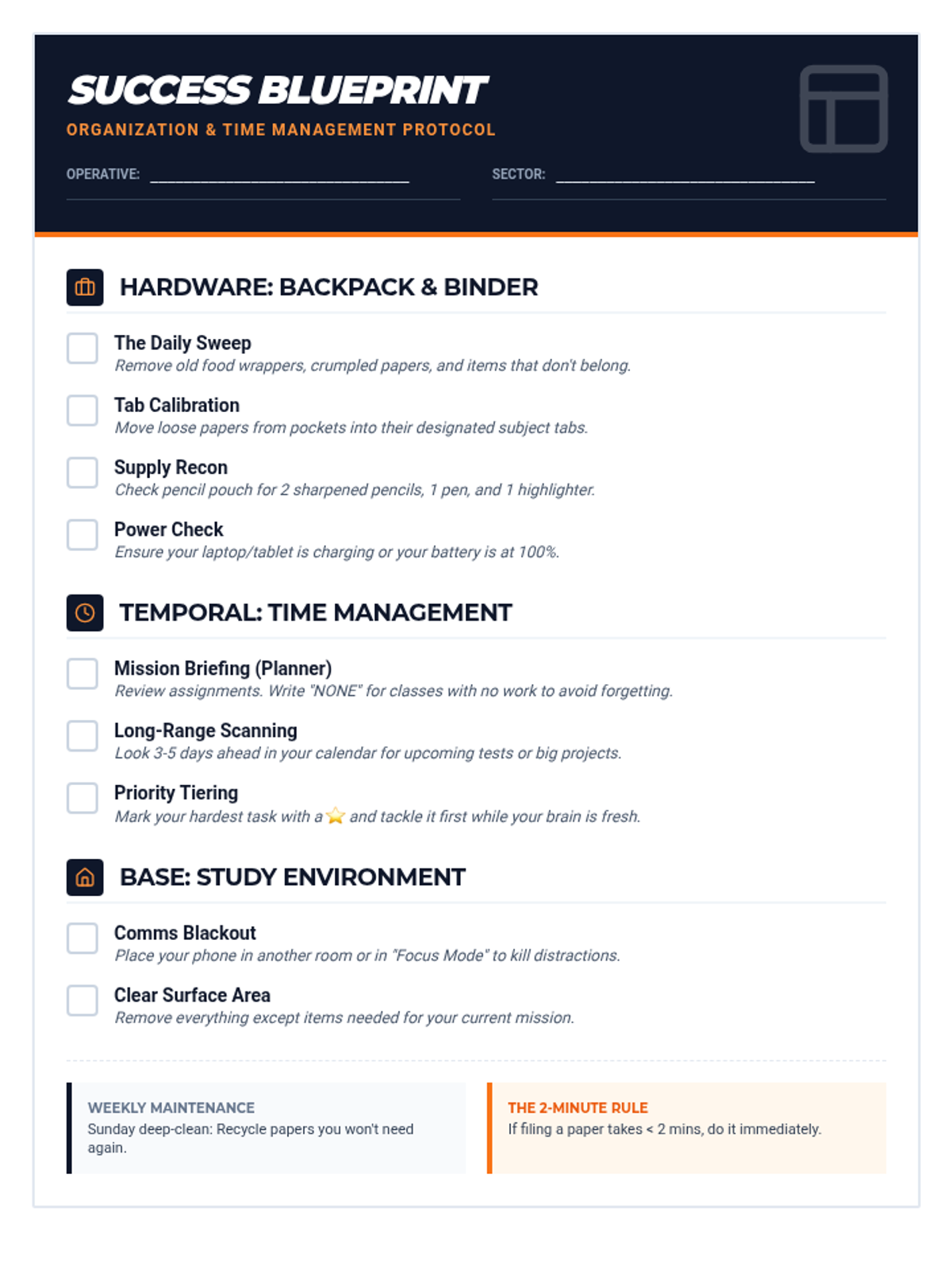
A blueprint-themed study skills checklist for middle schoolers, designed as a binder or backpack insert. It focuses on hardware organization, time management strategies, and study environment optimization with actionable tasks.
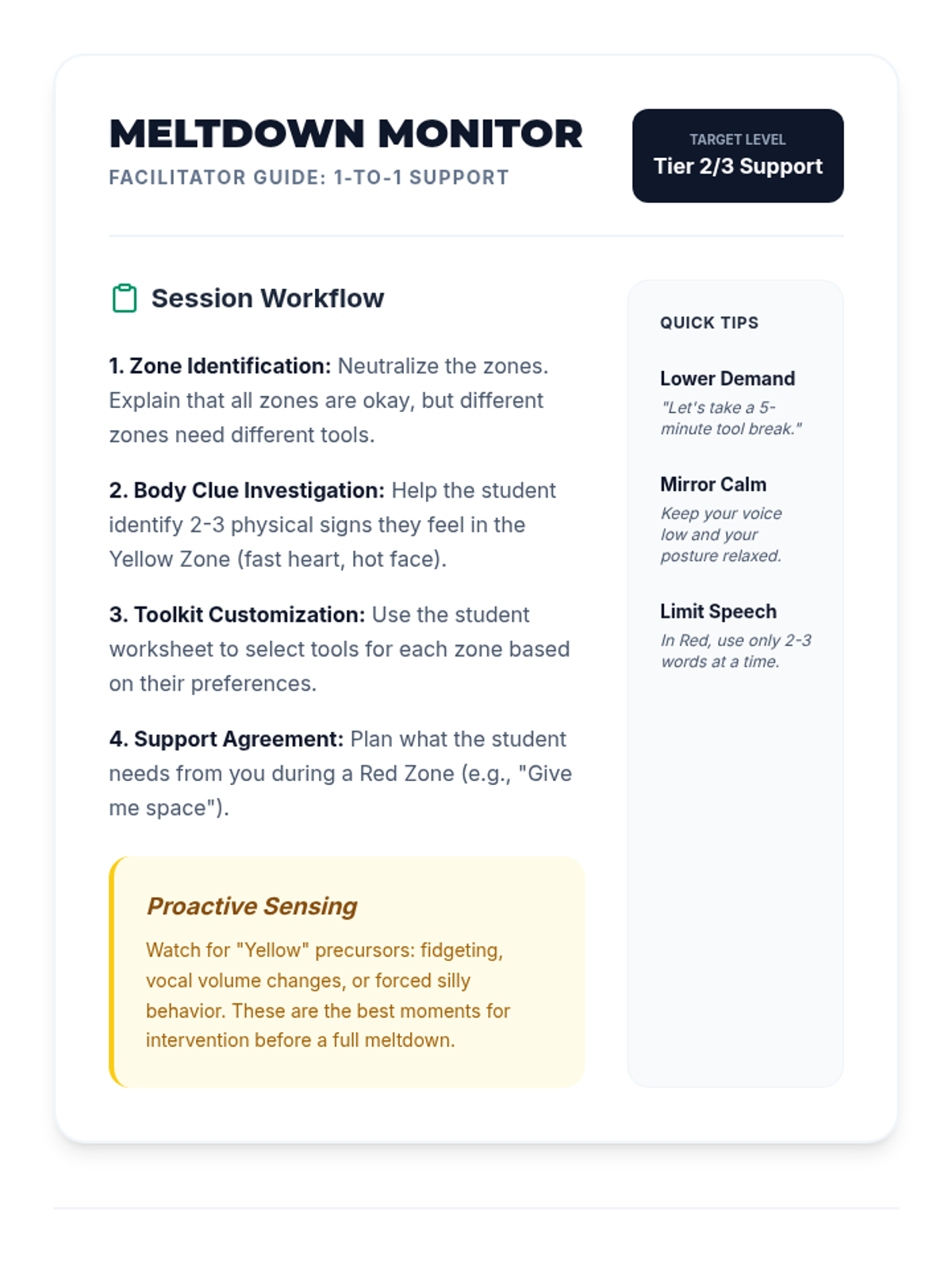
A comprehensive guide for teachers or facilitators, providing session structures, de-escalation scripts, and co-regulation strategies for 1-to-1 work.
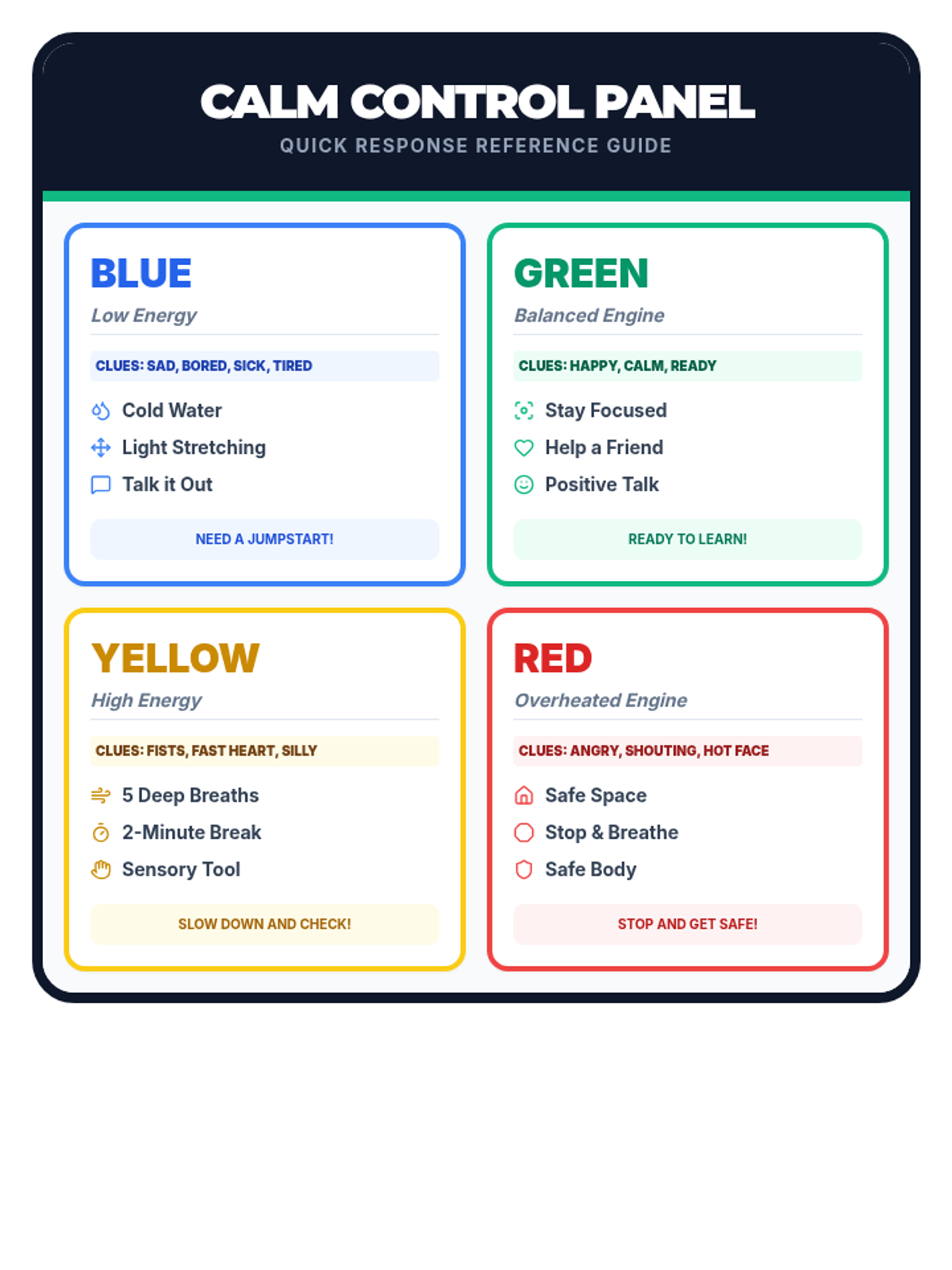
A high-impact visual poster summarizing the four zones and primary coping strategies for easy classroom or desk-side reference.
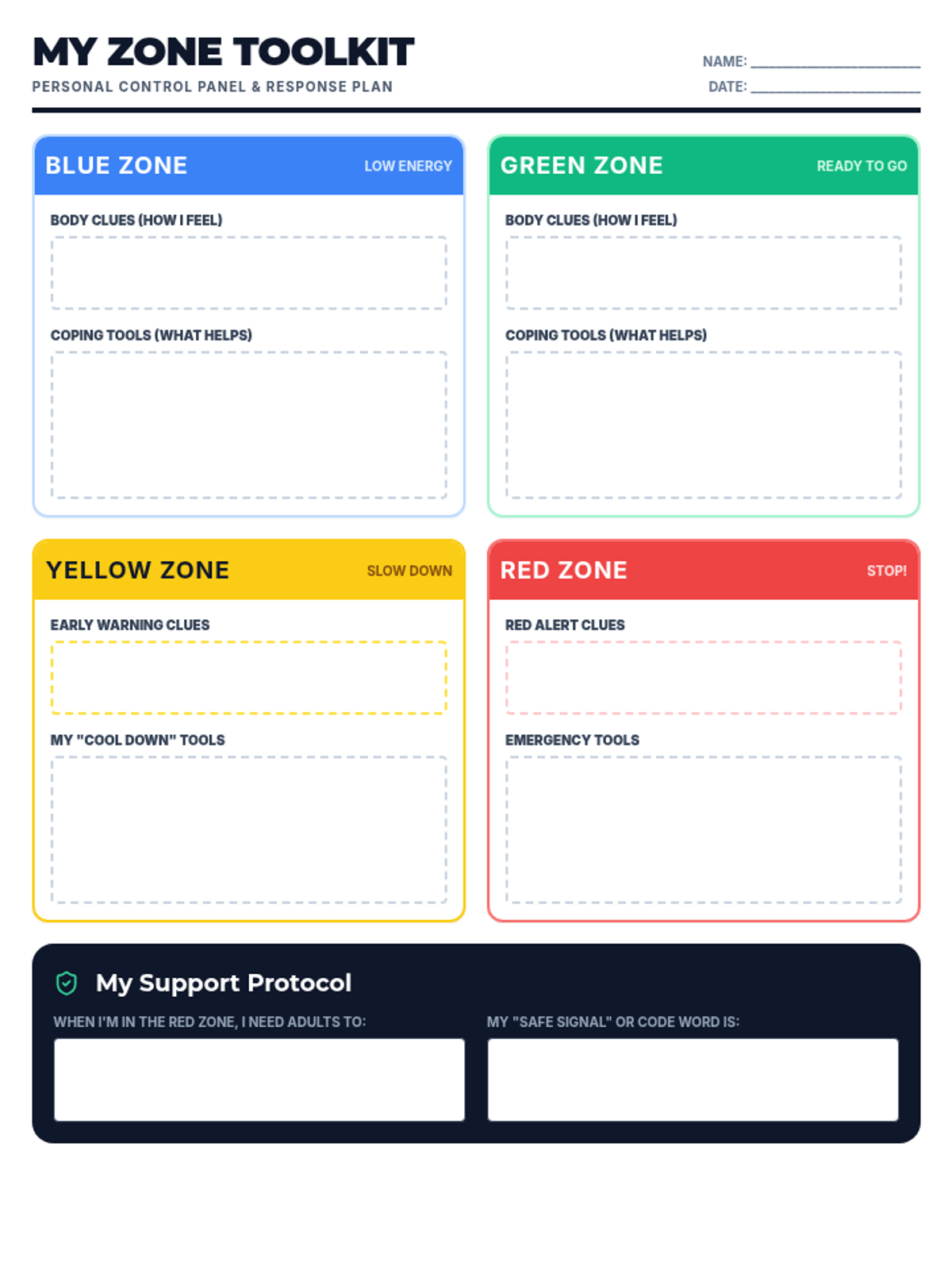
A personalized activity sheet for students to document their unique body clues and select coping tools for each of the four emotional zones.
A visual presentation explaining the four zones, body clues for sensing meltdowns, and specific coping tools for each phase.
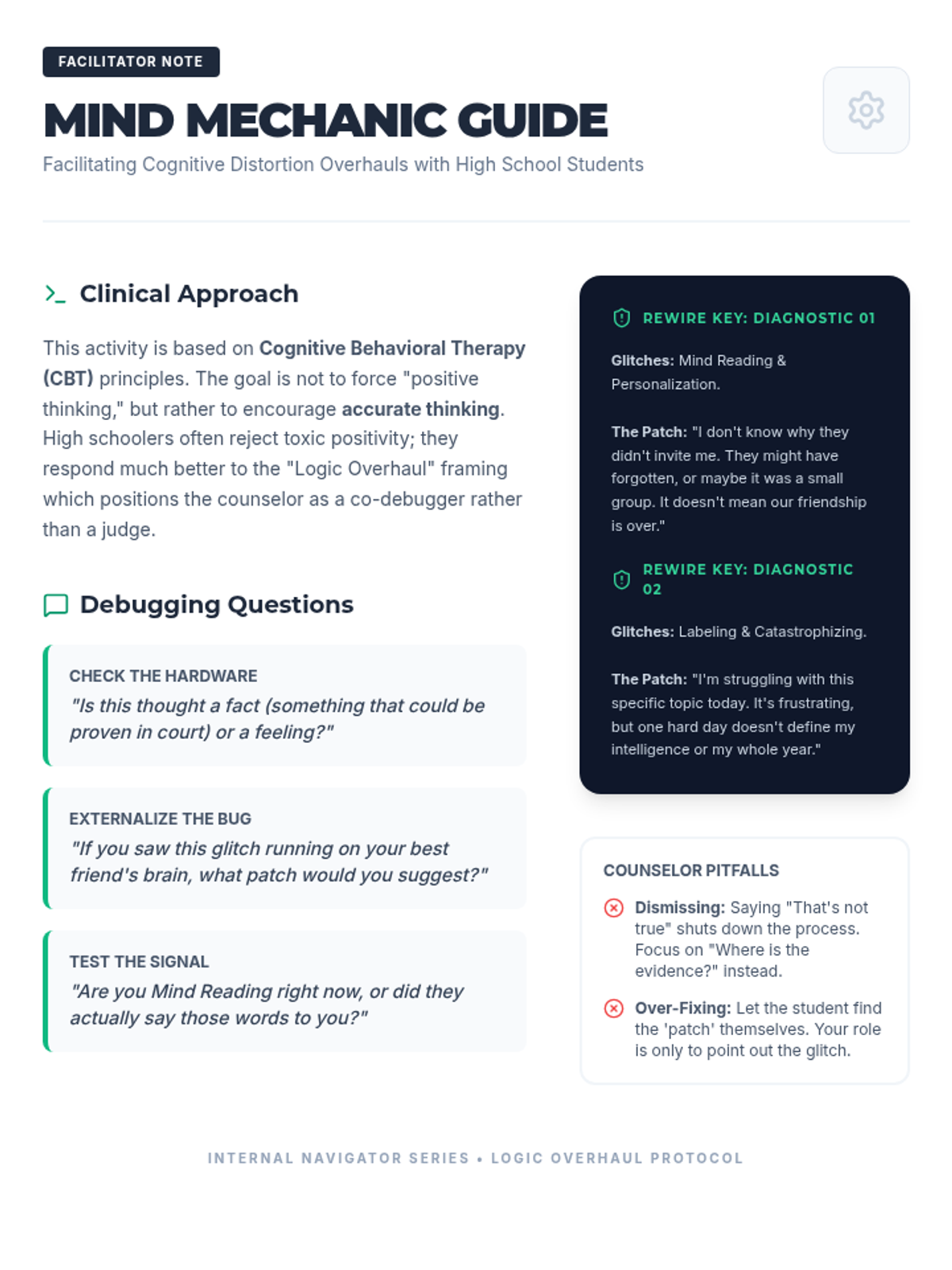
A facilitator's guide for counselors using the 'Logic Overhaul' lesson. Includes facilitation strategies based on CBT, probing questions to challenge distortions, and an answer key for the student worksheet.
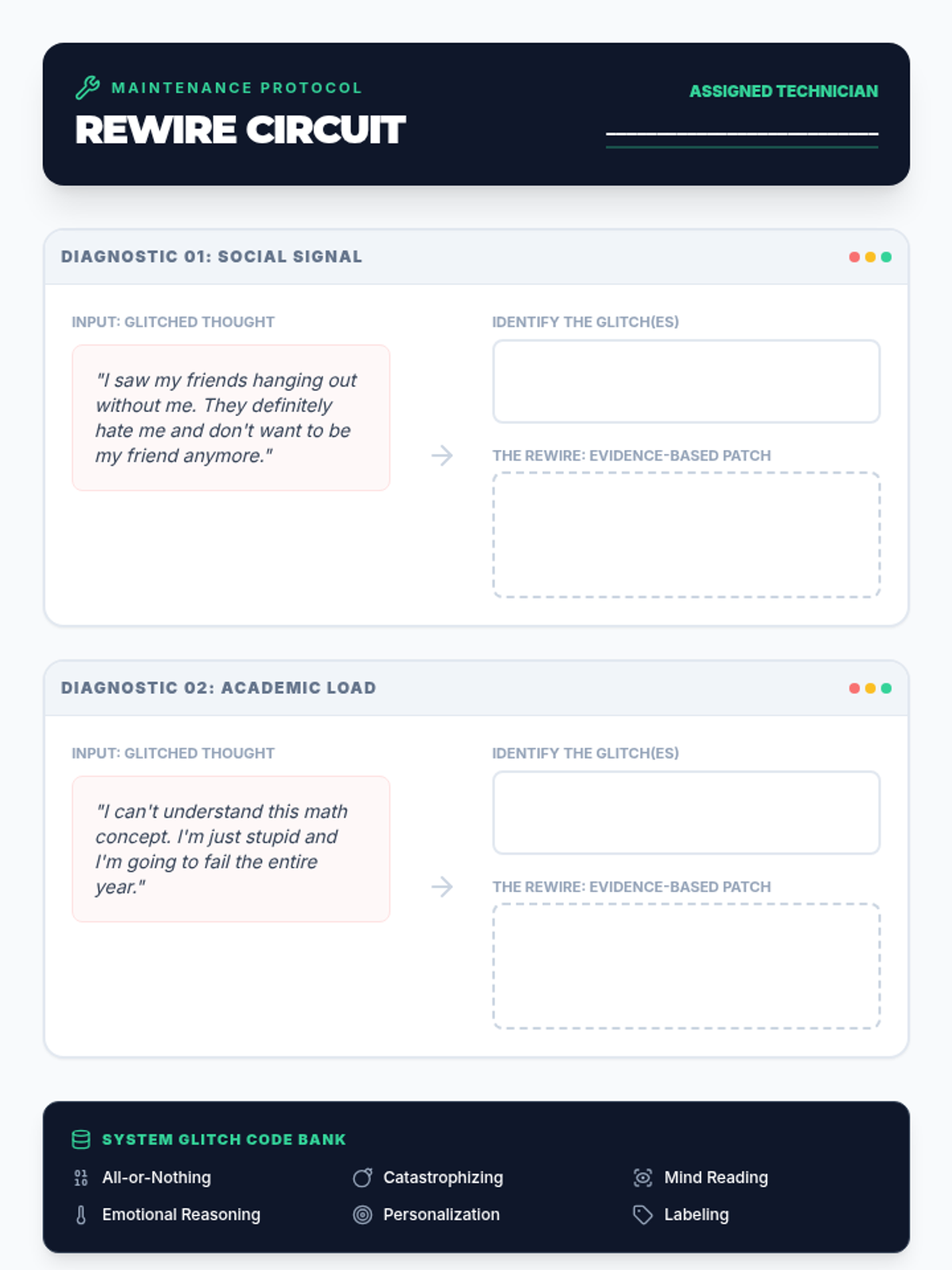
An interactive worksheet where high school students practice identifying cognitive distortions in scenarios and 'rewiring' them into balanced, evidence-based thoughts. Features a technical 'circuit repair' aesthetic.
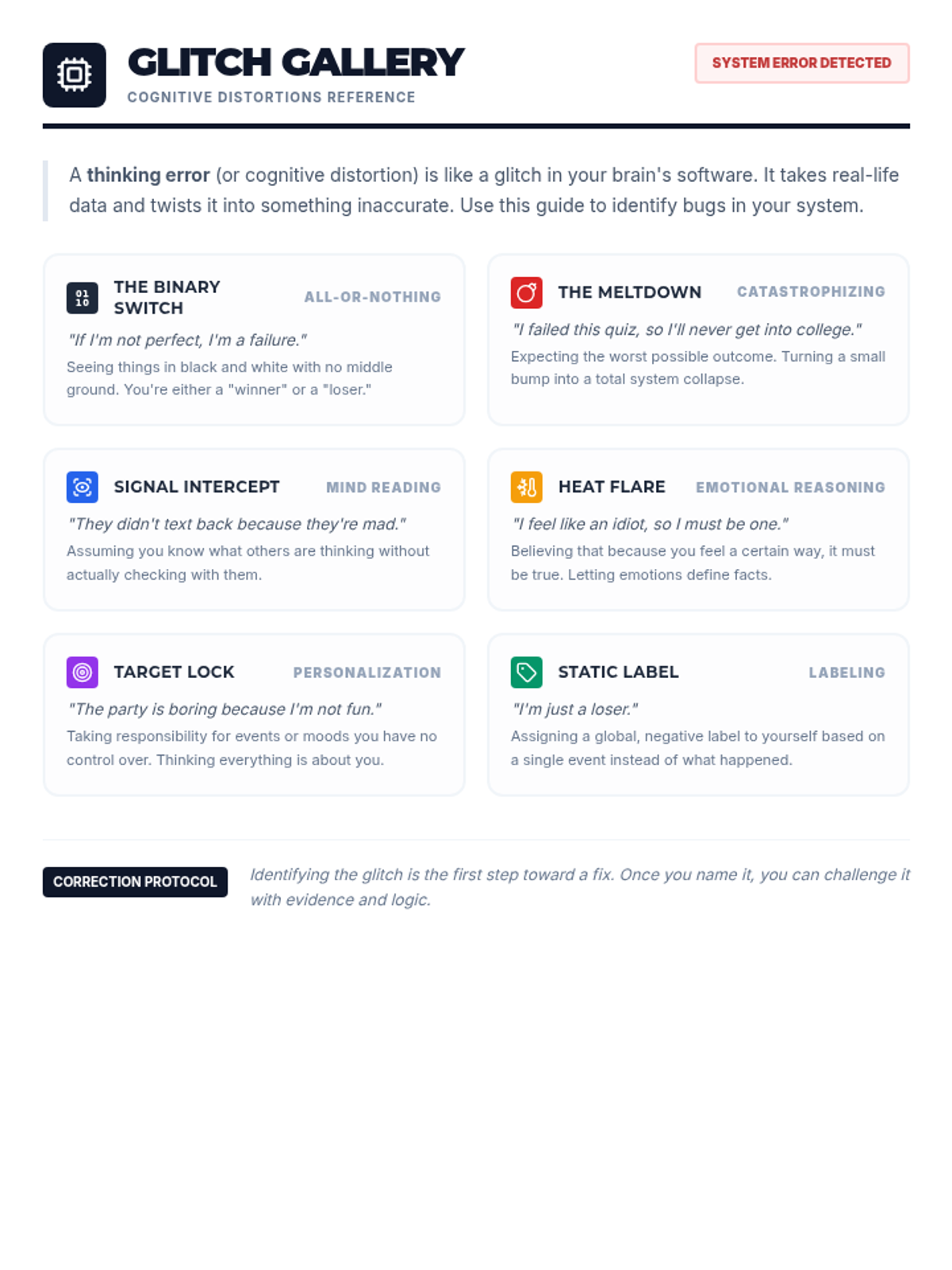
A visually engaging reference sheet for high school students that defines common cognitive distortions (thinking errors) using a 'digital system glitch' theme. Features clear examples and icons for each error.
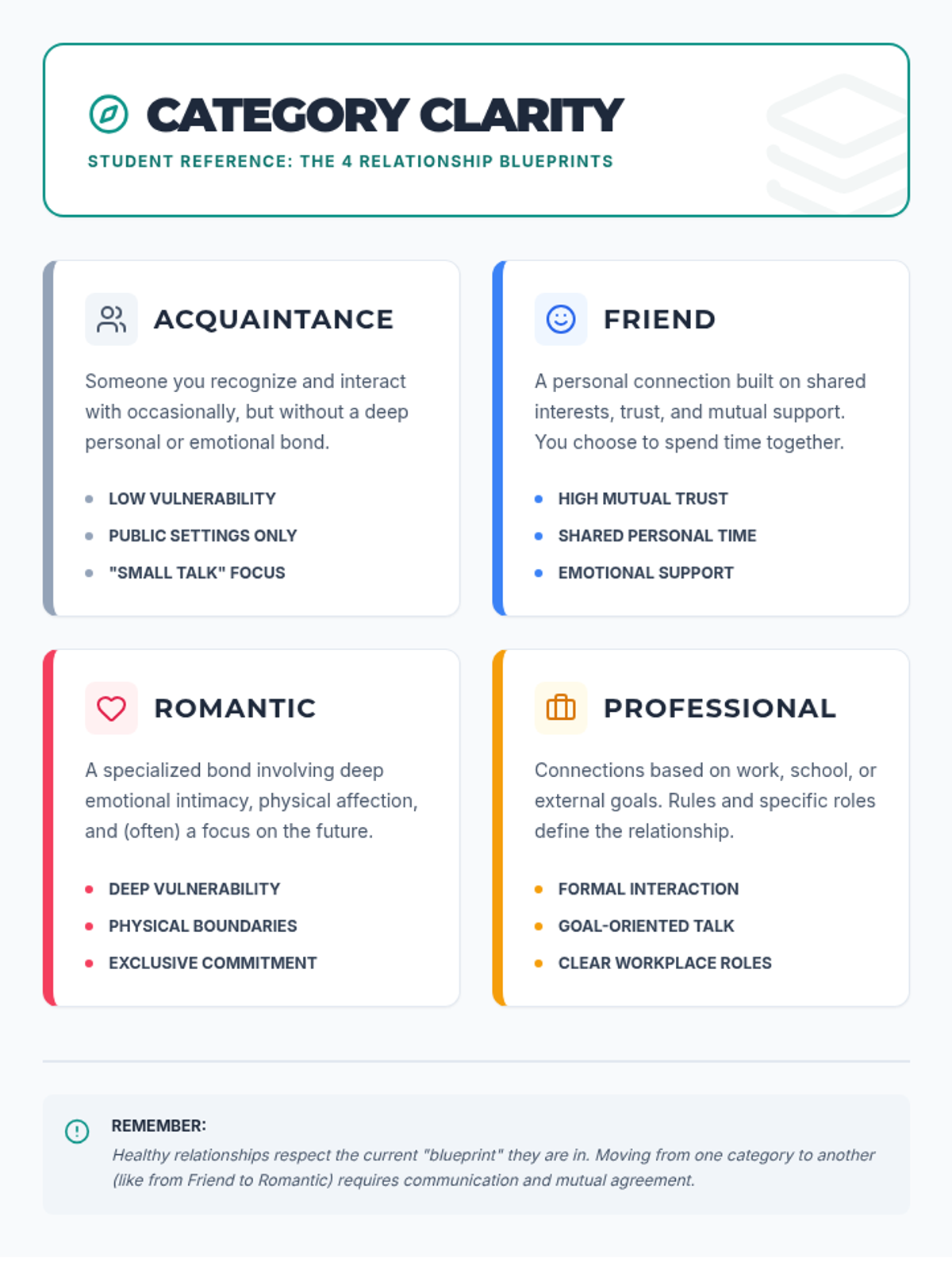
A student reference sheet that defines the four relationship categories (Acquaintance, Friend, Romantic, Professional) with key traits and boundary markers to help with the card sort activity.
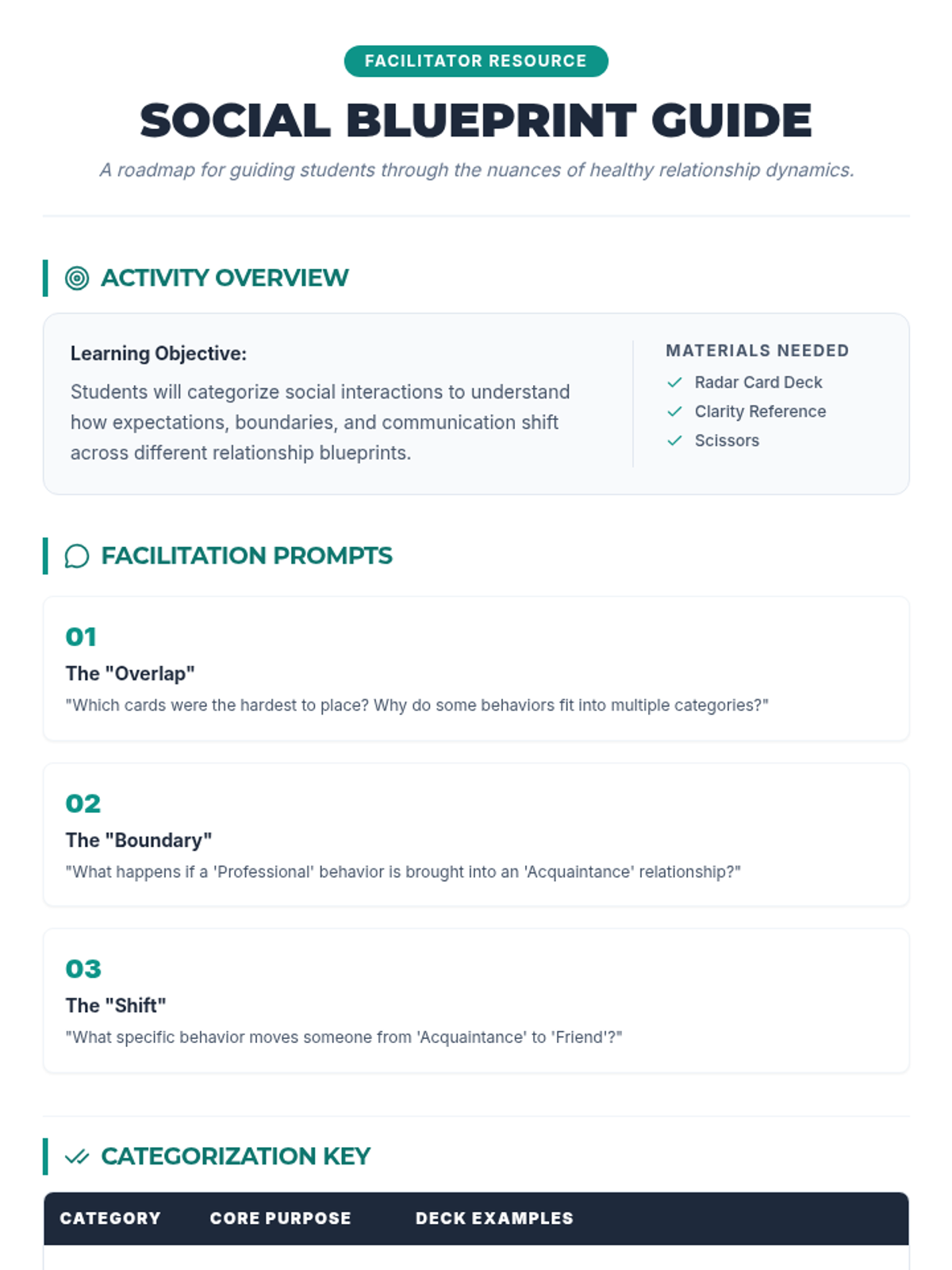
A comprehensive teacher guide for facilitating the relationship card sort activity. Includes learning objectives, discussion prompts, and a categorization key to help guide high school students through the lesson.