Final slides for the sequence, teaching students the "Ready Reset" ritual. This ensures students can effectively transition from movement breaks back to academic tasks.
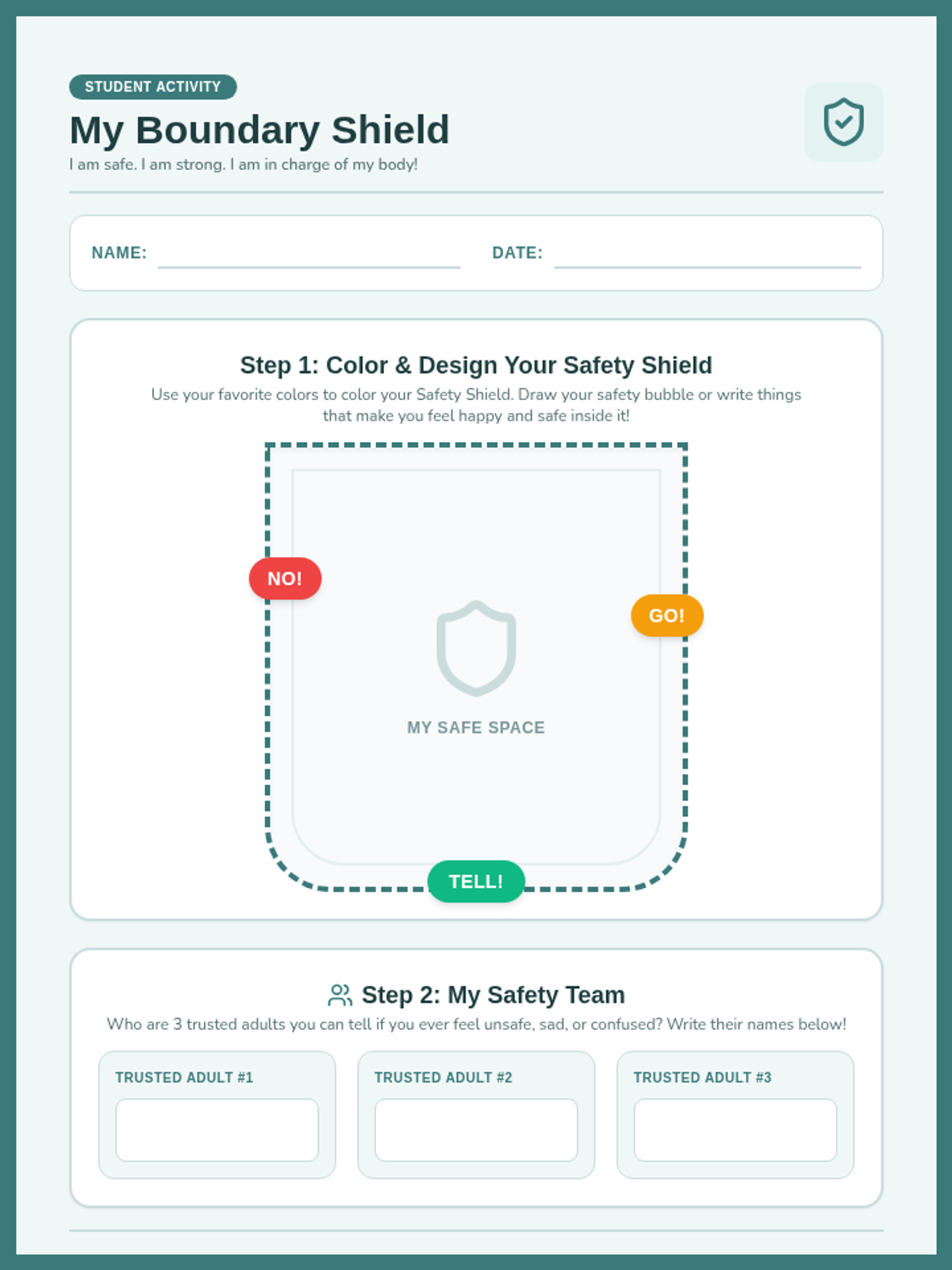
A student worksheet where children design their own Boundary Shield, trace body safety rules, and list three trusted adults who make up their personal safety team.
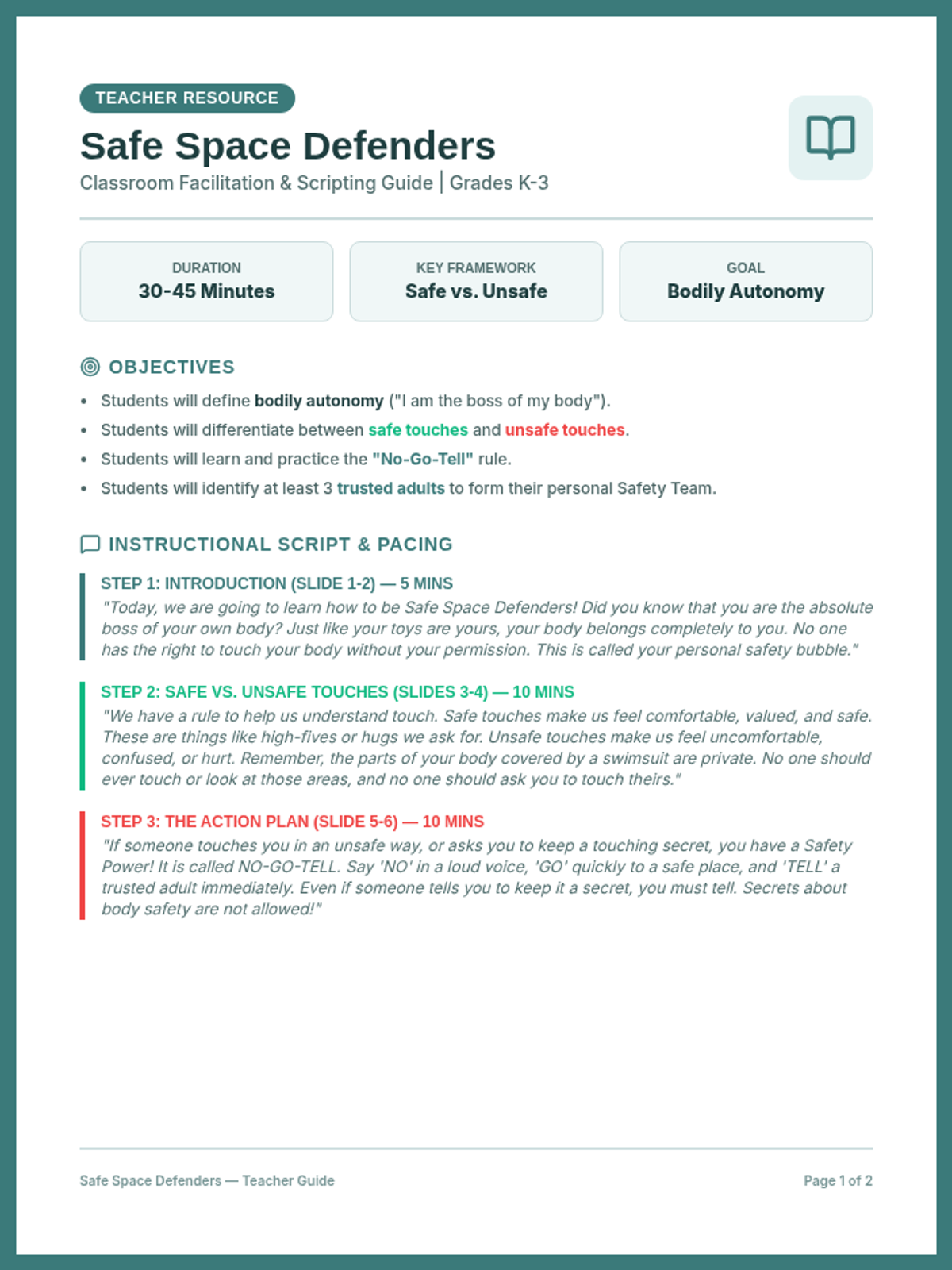
A detailed instructional guide for educators delivering the Safe Space Defenders lesson. It includes direct teaching scripts, discussion prompts, handling child disclosure protocols, and guidance for classroom activities.
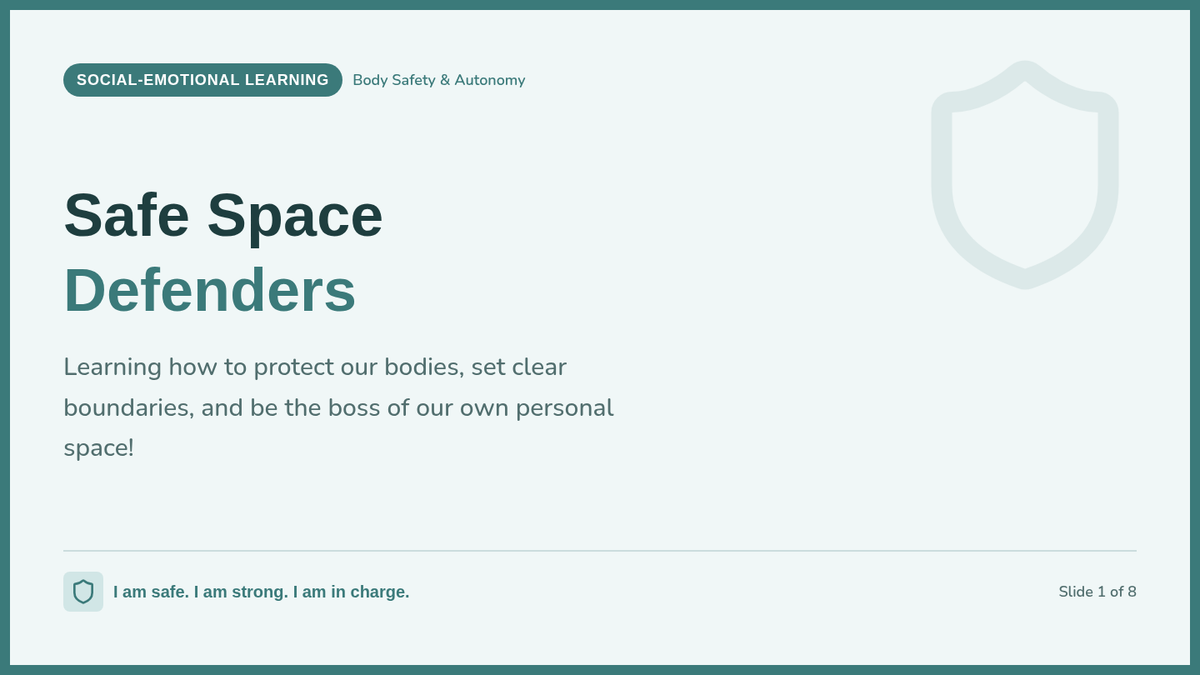
A visually engaging, age-appropriate slide presentation designed for teacher-led instruction. It introduces body safety rules, safe vs. unsafe touches, the 'No-Go-Tell' strategy, and scenarios for classroom discussion.
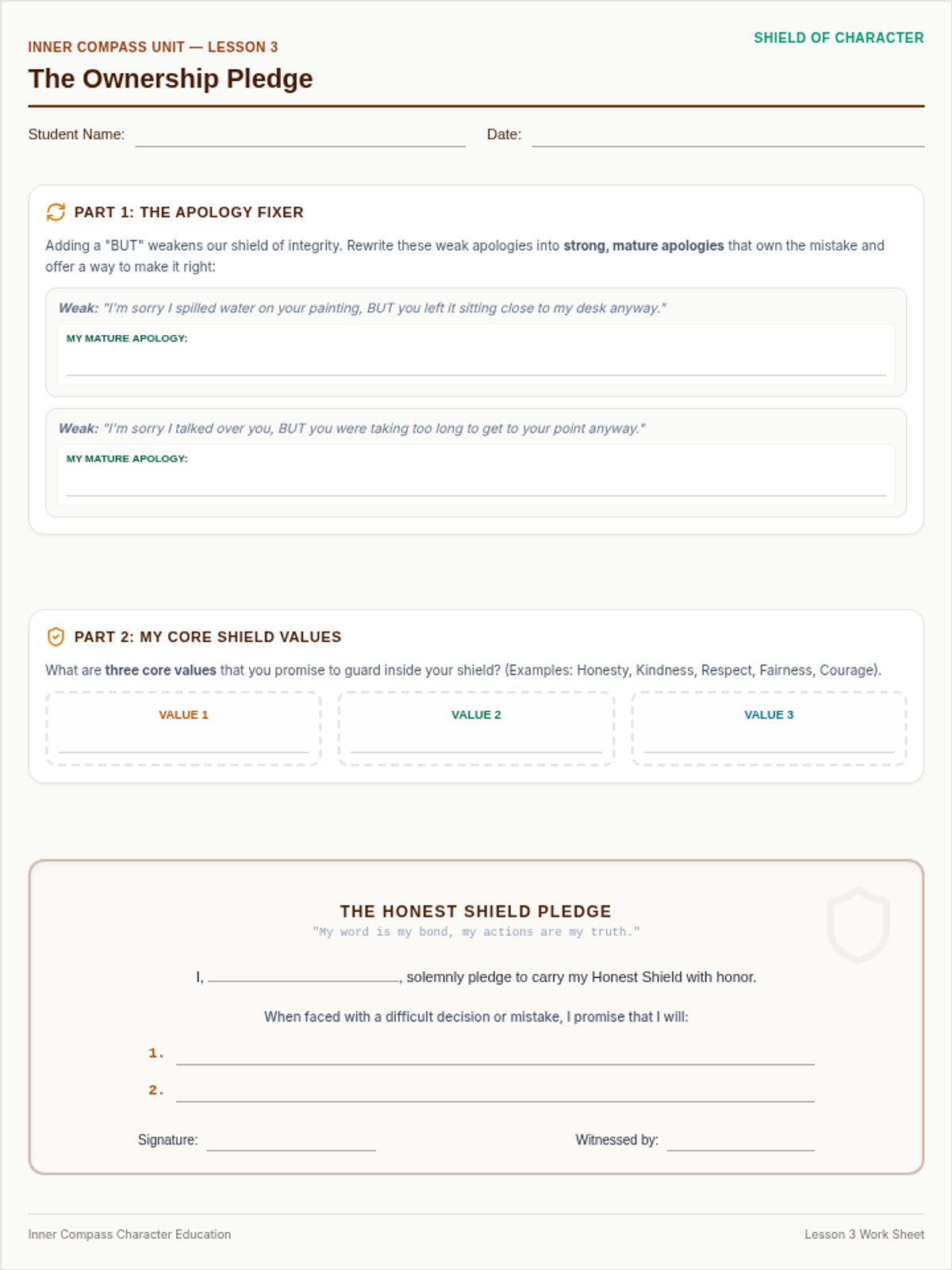
A reflection and goal-setting worksheet where students practice constructing mature apologies without excuses and design their own personal Integrity Pledge.
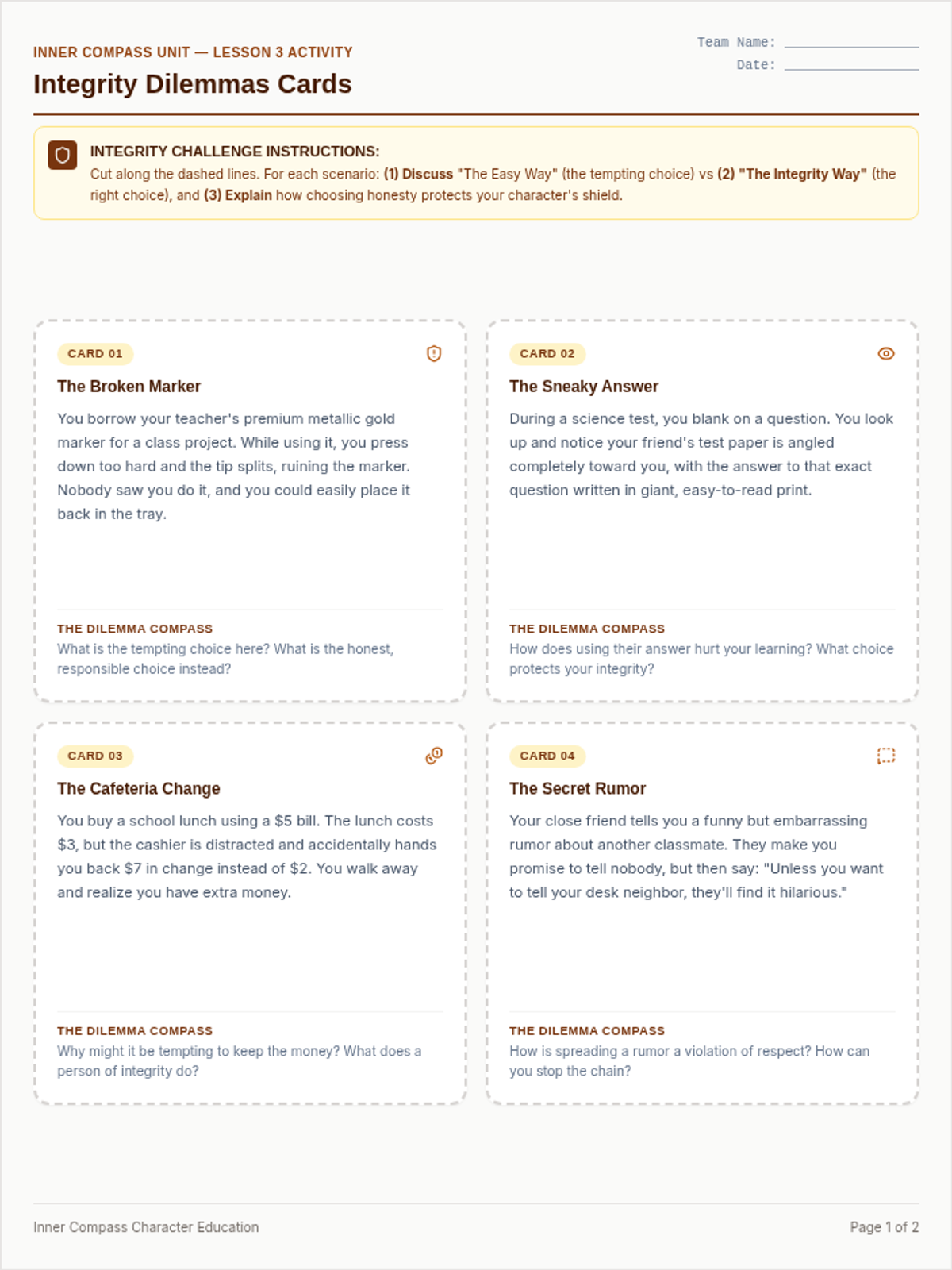
A collection of printable scenario cards for an integrity-focused decision-making activity. Students analyze challenging situations and discuss the difference between 'The Easy Way' and 'The Integrity Way'.
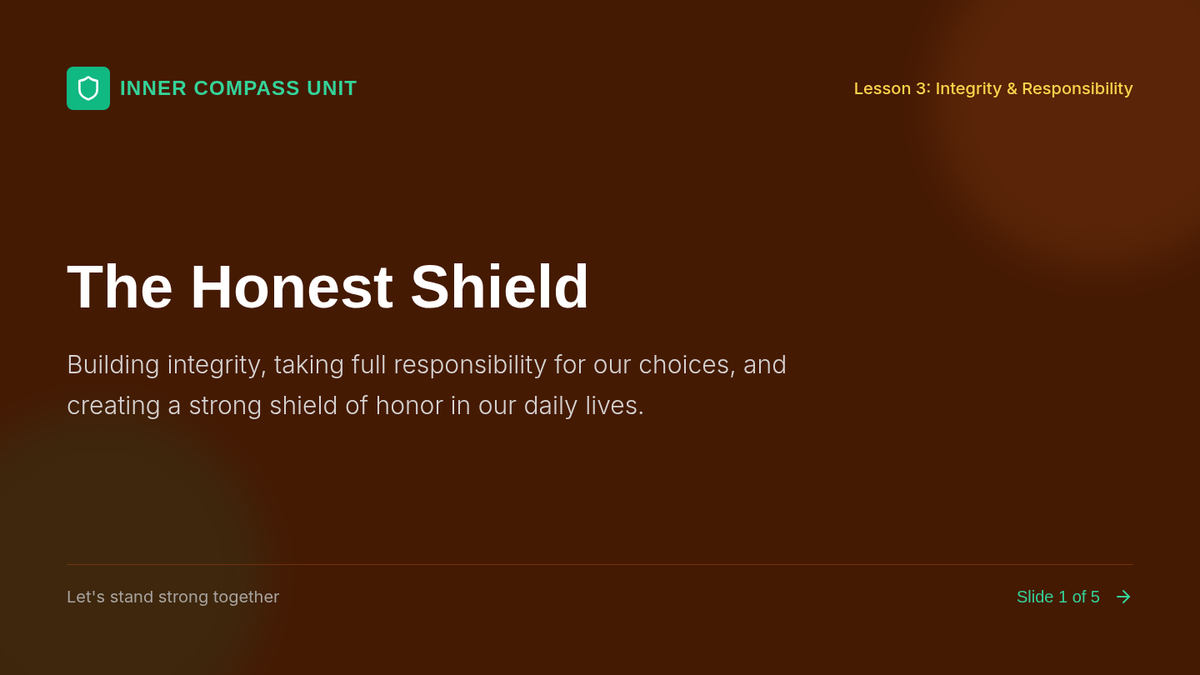
An interactive slide presentation to guide classroom discussions on responsibility, honesty, and integrity. Designed for the 'The Honest Shield' lesson with a scout/shield theme.
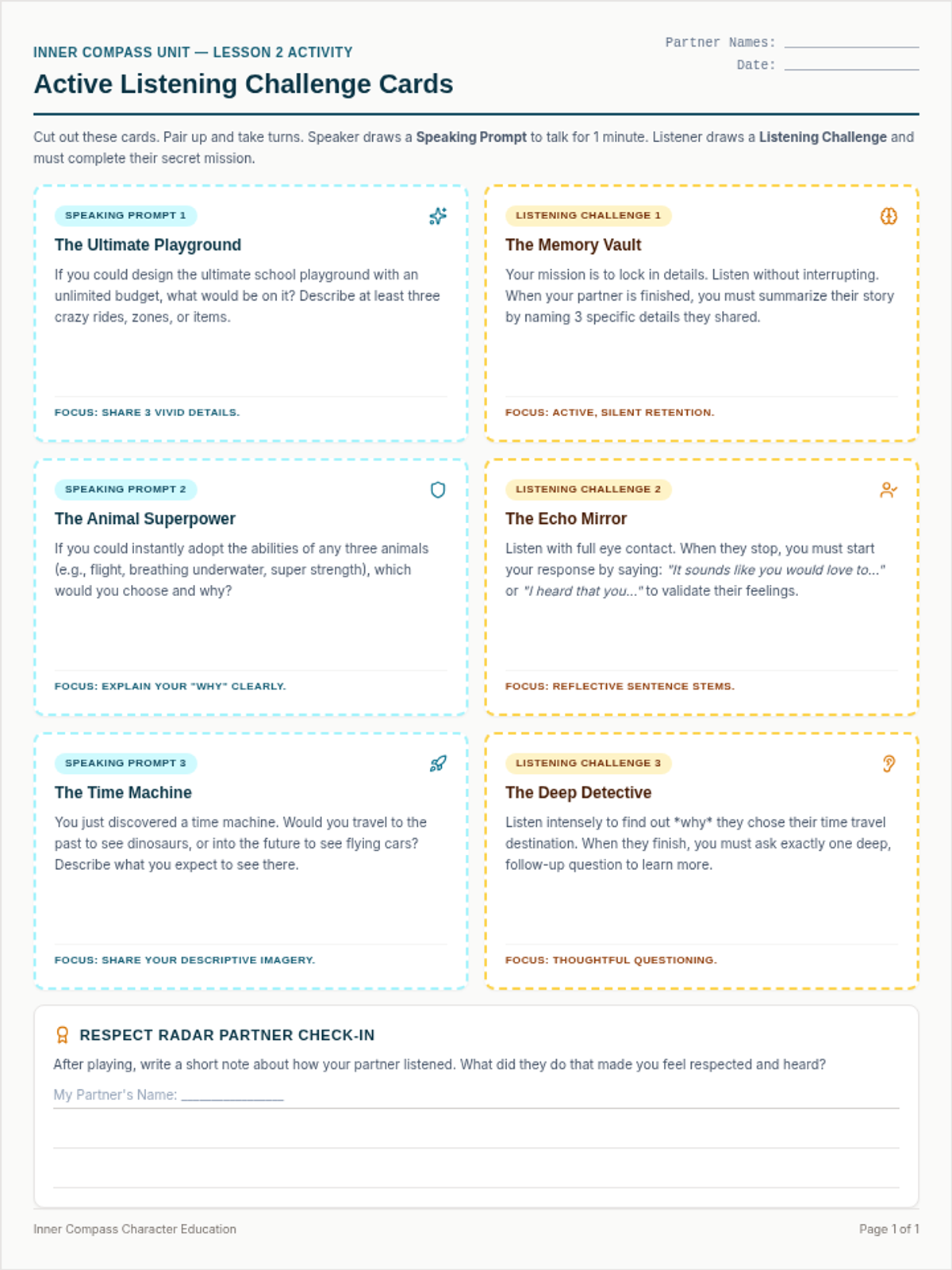
A collection of printable challenge cards for a peer active-listening activity. Partners trade off speaking and listening roles to practice specific respect habits.
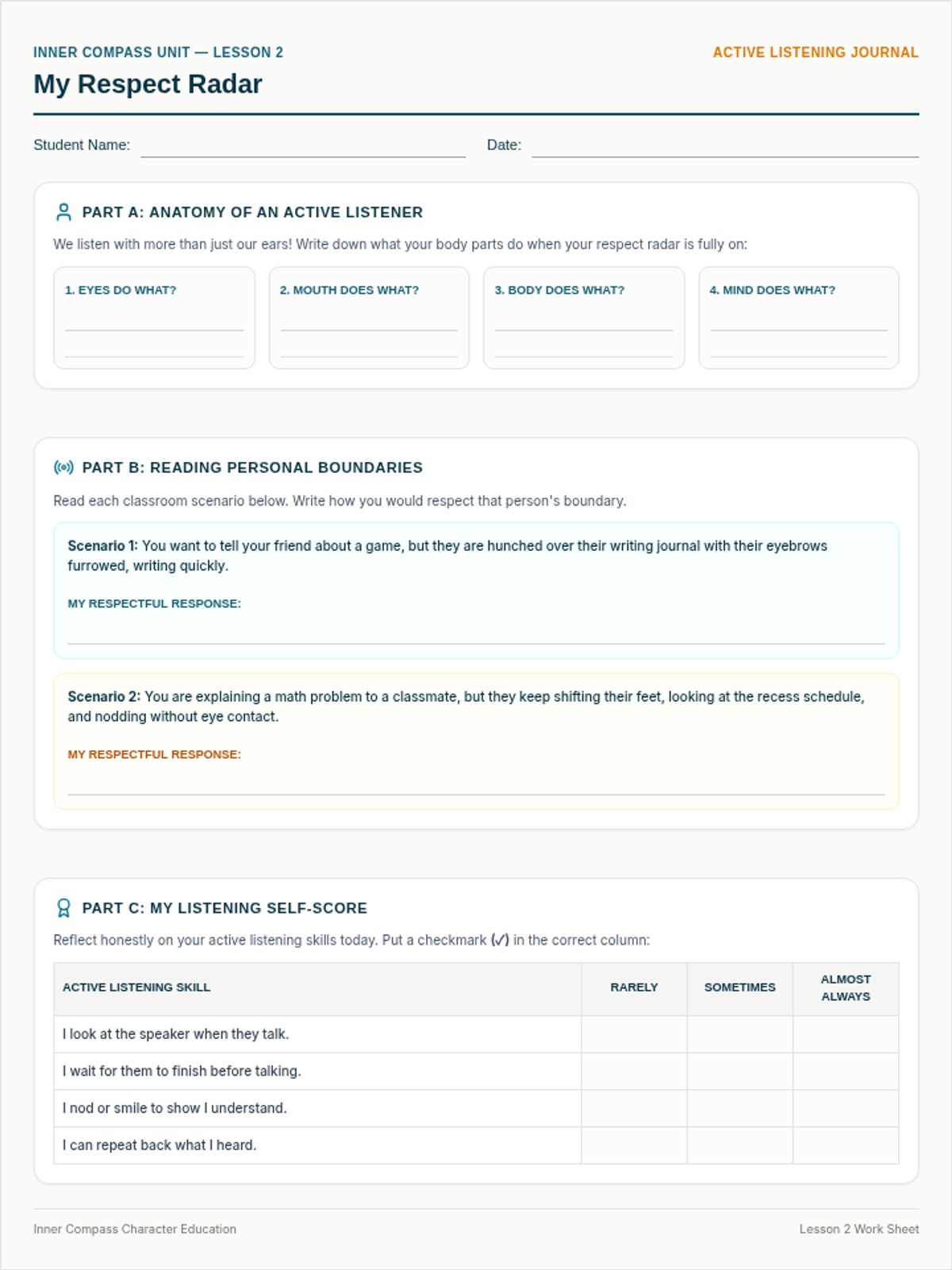
An active listening activity sheet and reflection workspace where students self-assess their communication habits and practice reading classroom boundaries.
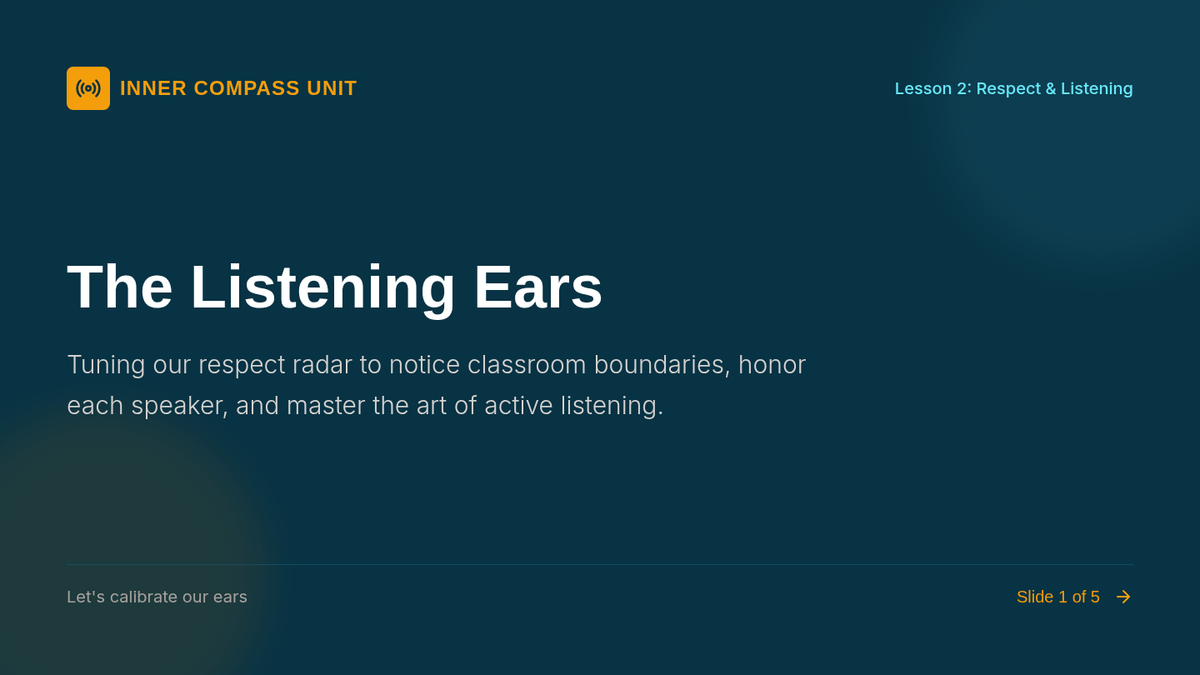
An interactive slide presentation to guide classroom discussions on respect, active listening, and boundaries. Designed for the 'The Listening Ears' lesson with a radar/navigator theme.
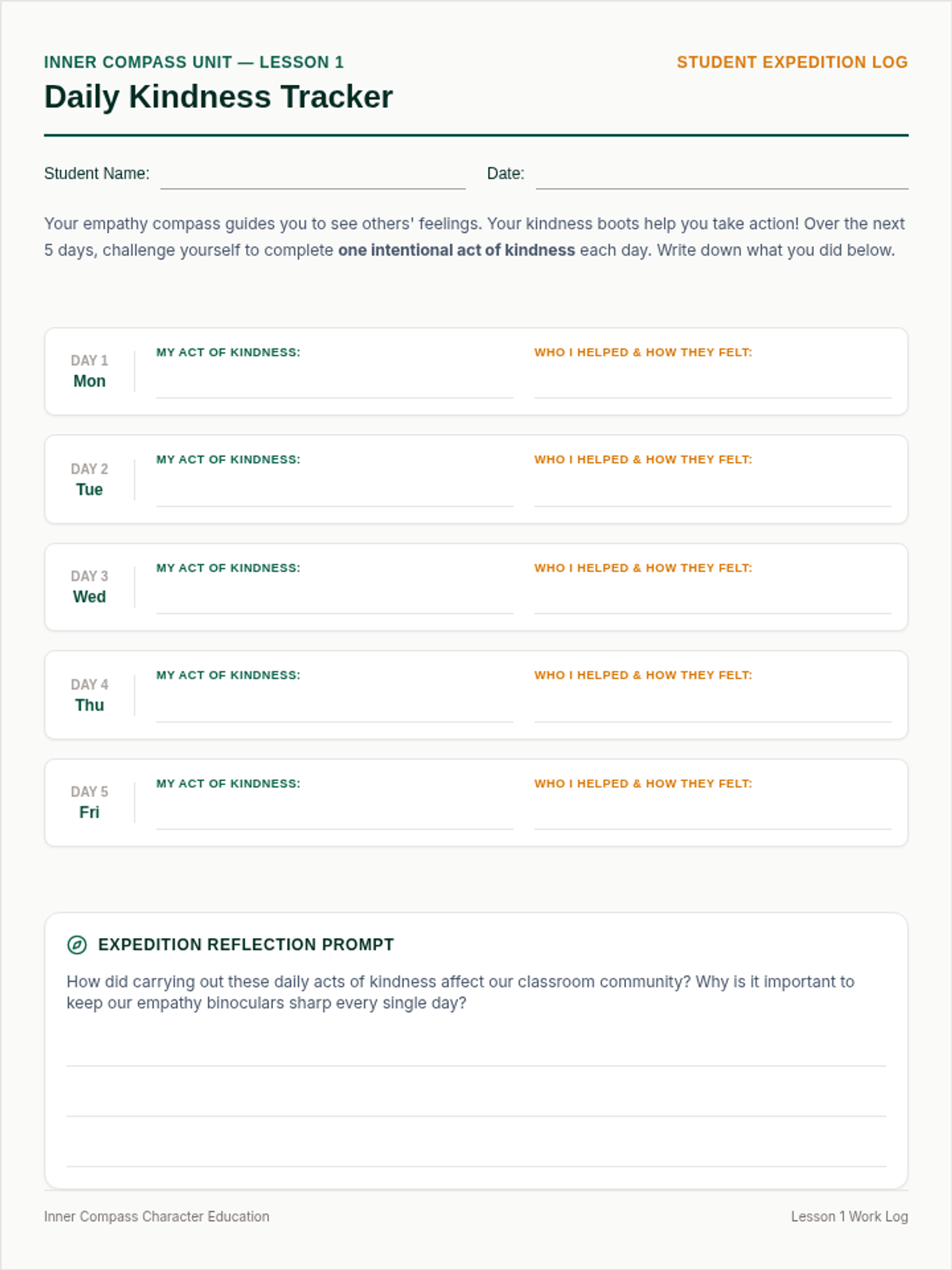
A 5-day daily reflection and practice log where students track their intentional acts of kindness and write brief self-reflections.
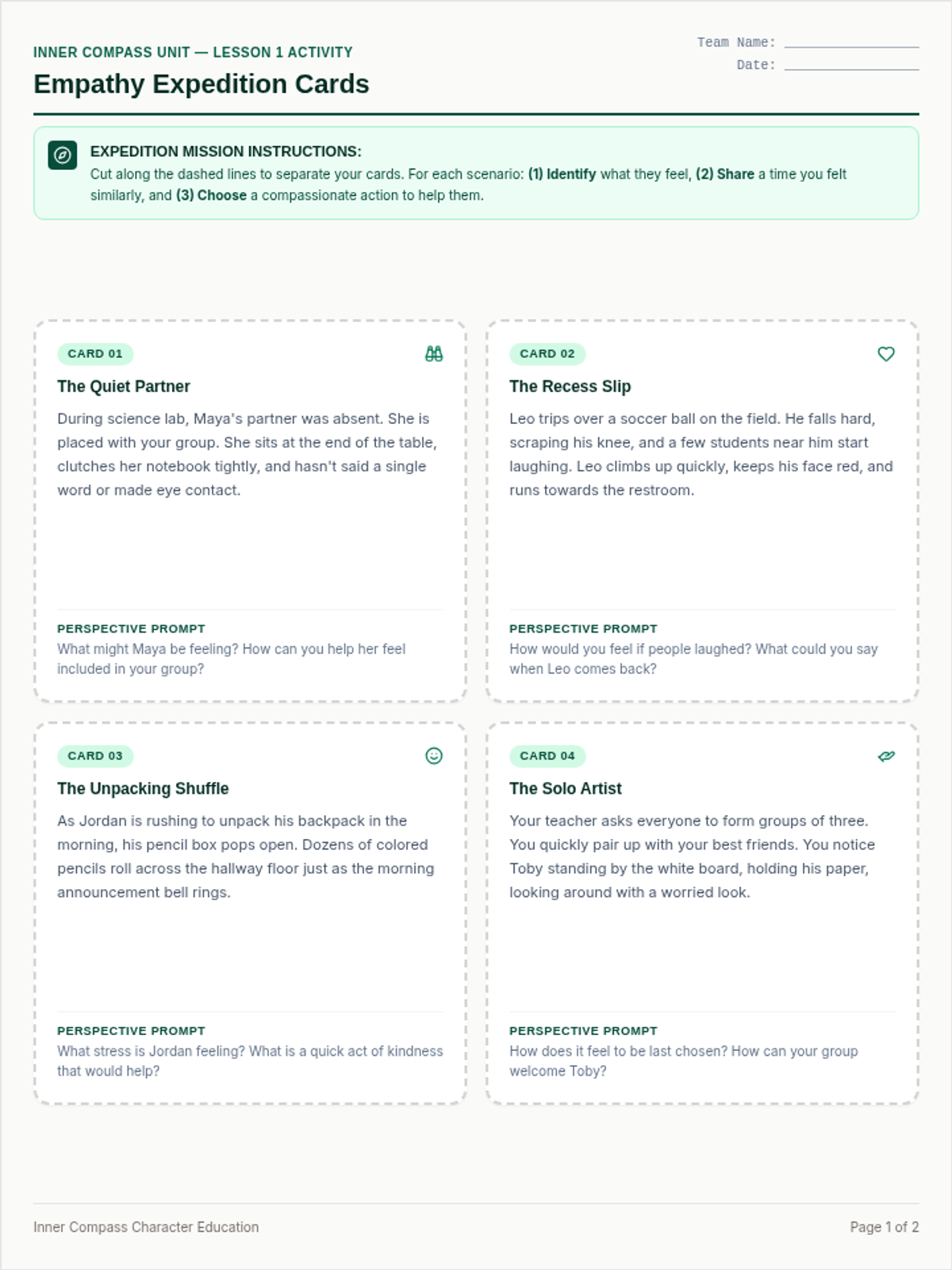
A collection of printable scenario cards for a cooperative empathy activity. Students analyze real school situations, discuss characters' emotions, and outline small acts of kindness.
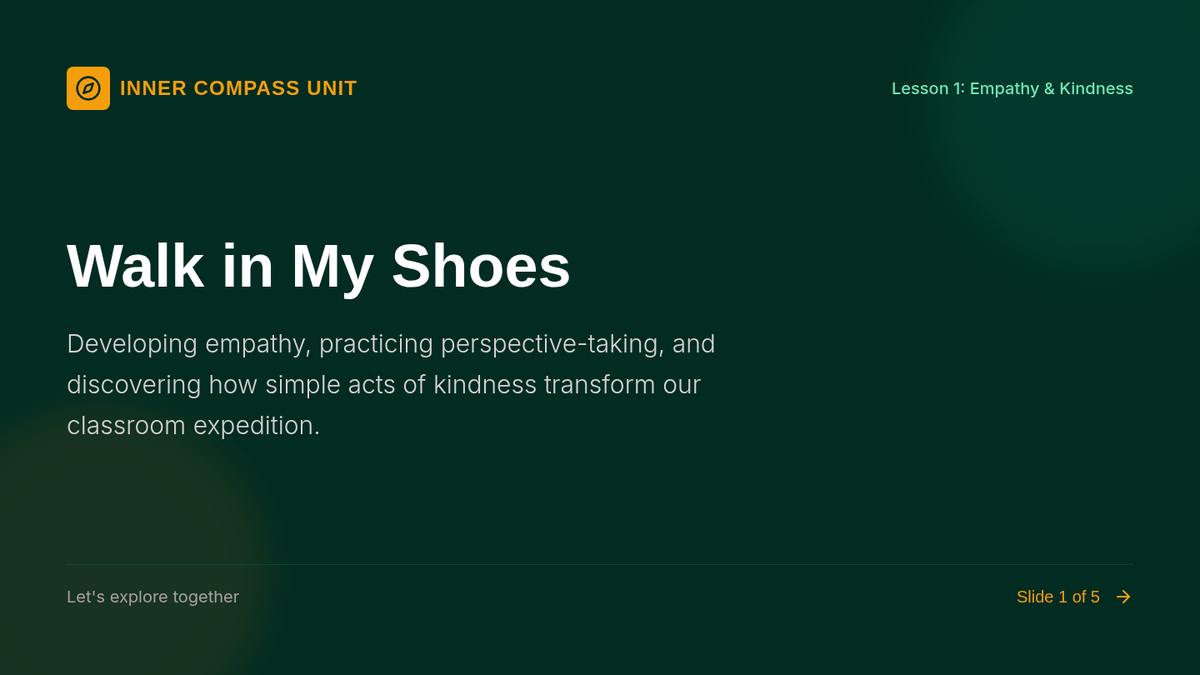
An interactive slide presentation to guide classroom discussions on empathy, perspective-taking, and active kindness. Designed for the 'Walk in My Shoes' lesson with an explorer theme.
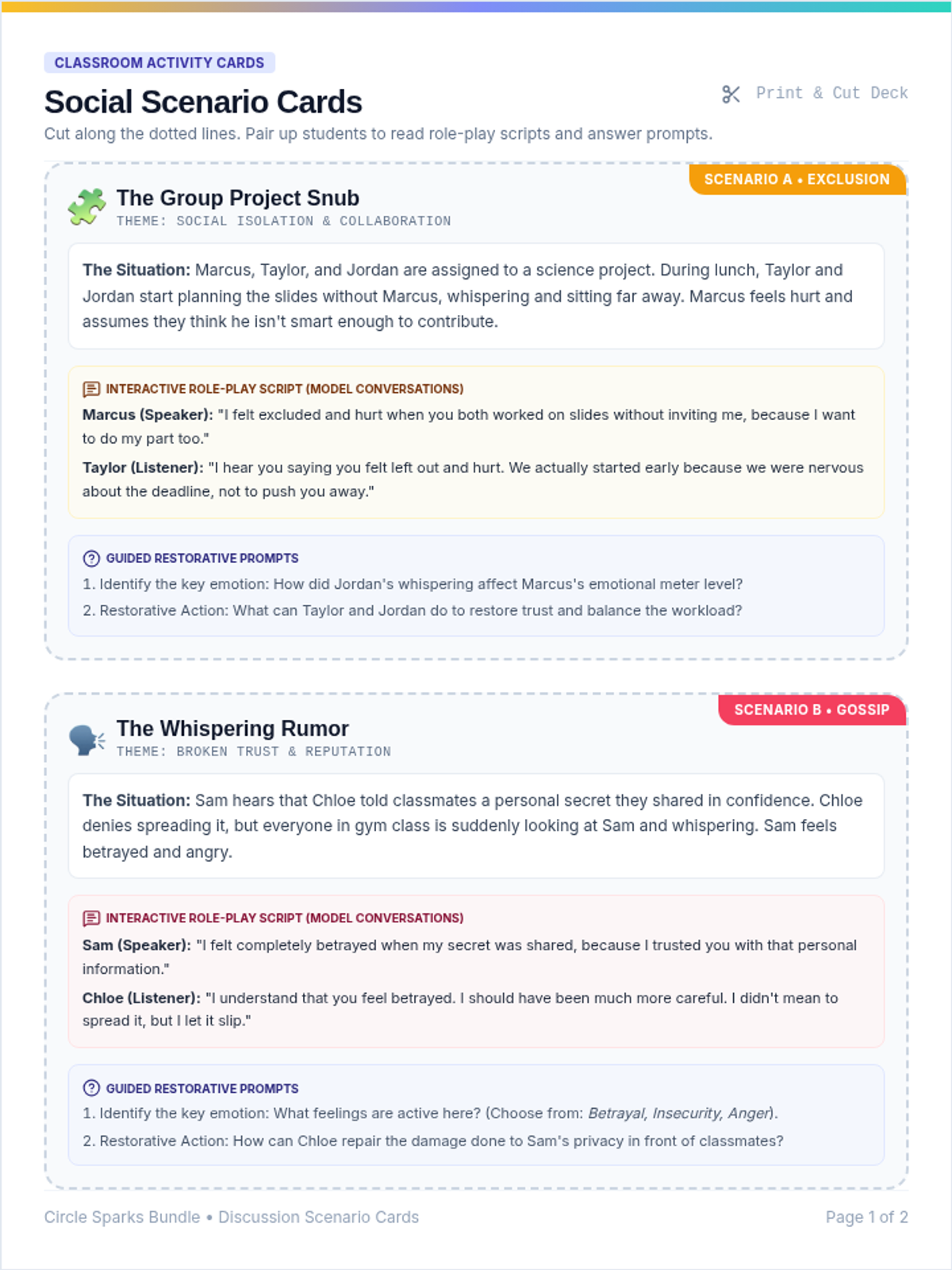
Four highly detailed, cut-out Social Scenario Cards featuring real-world middle school peer conflicts. Each card includes a realistic peer scenario, an interactive role-play script modeling mediation, and guided reflection questions targeting social-emotional vocabulary.
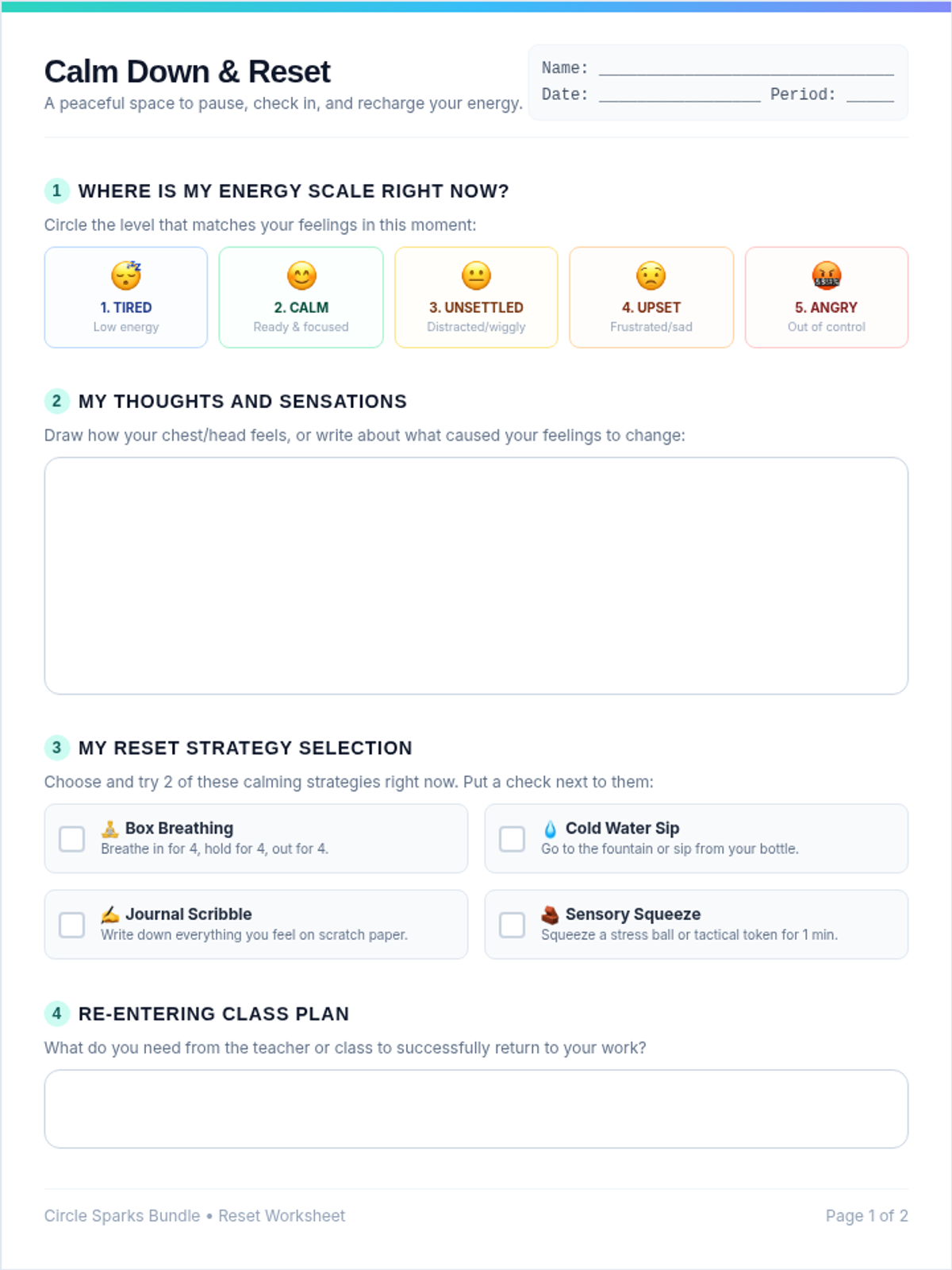
A 2-page, self-paced student reflection tool. Page 1 is a Calm Down & Reset Sheet that guides students to identify feelings and select a calming strategy. Page 2 is a Restorative Think Sheet focusing on taking ownership of choices, analyzing peer impact, and planning repair.
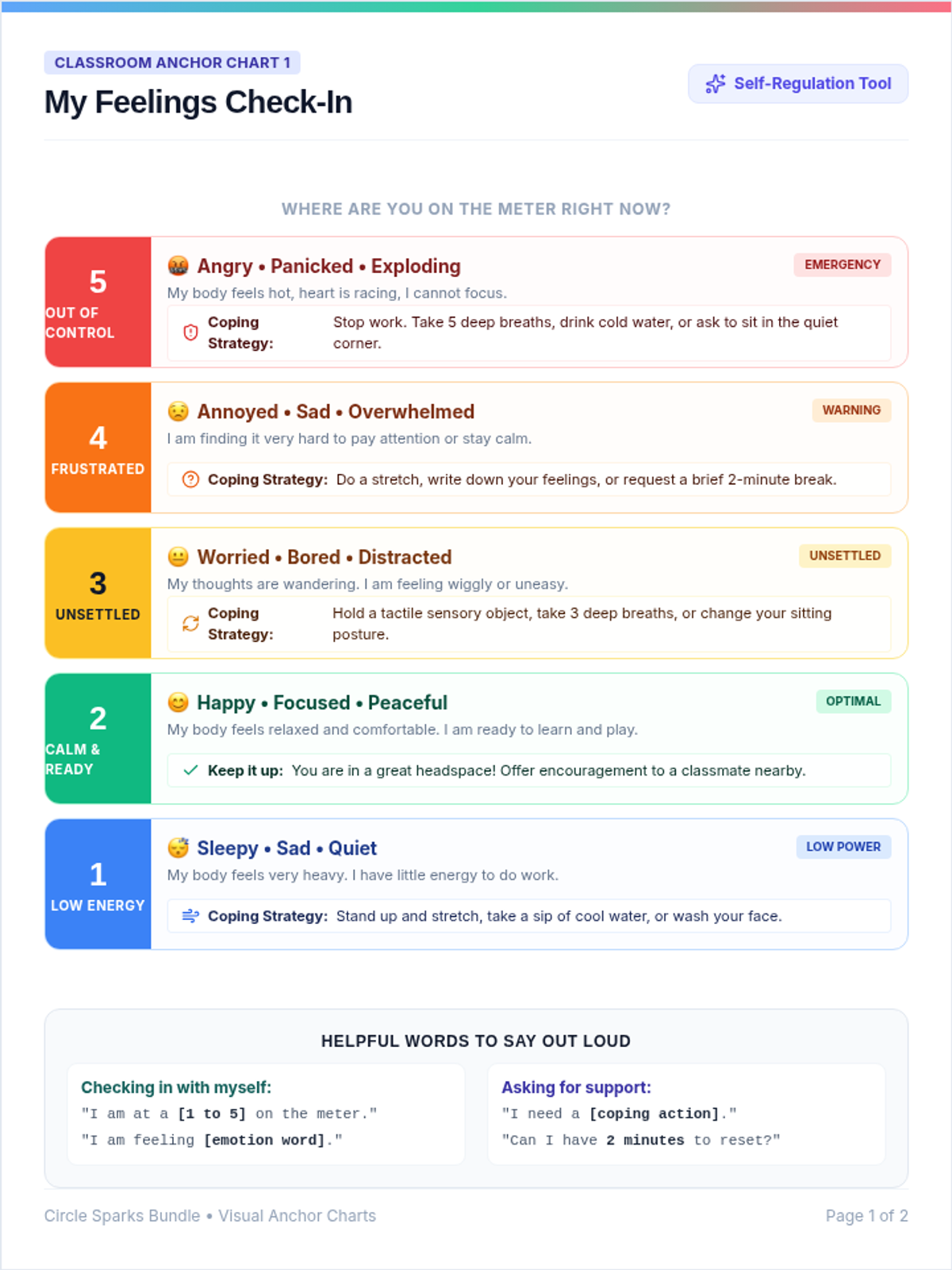
Two complete, highly visual classroom anchor charts. Page 1 contains a 1-5 Emotional Regulation Scale with emoji supports and coping actions. Page 2 provides a step-by-step Conflict Resolution Flowchart with verbal sentence stems for student mediation.
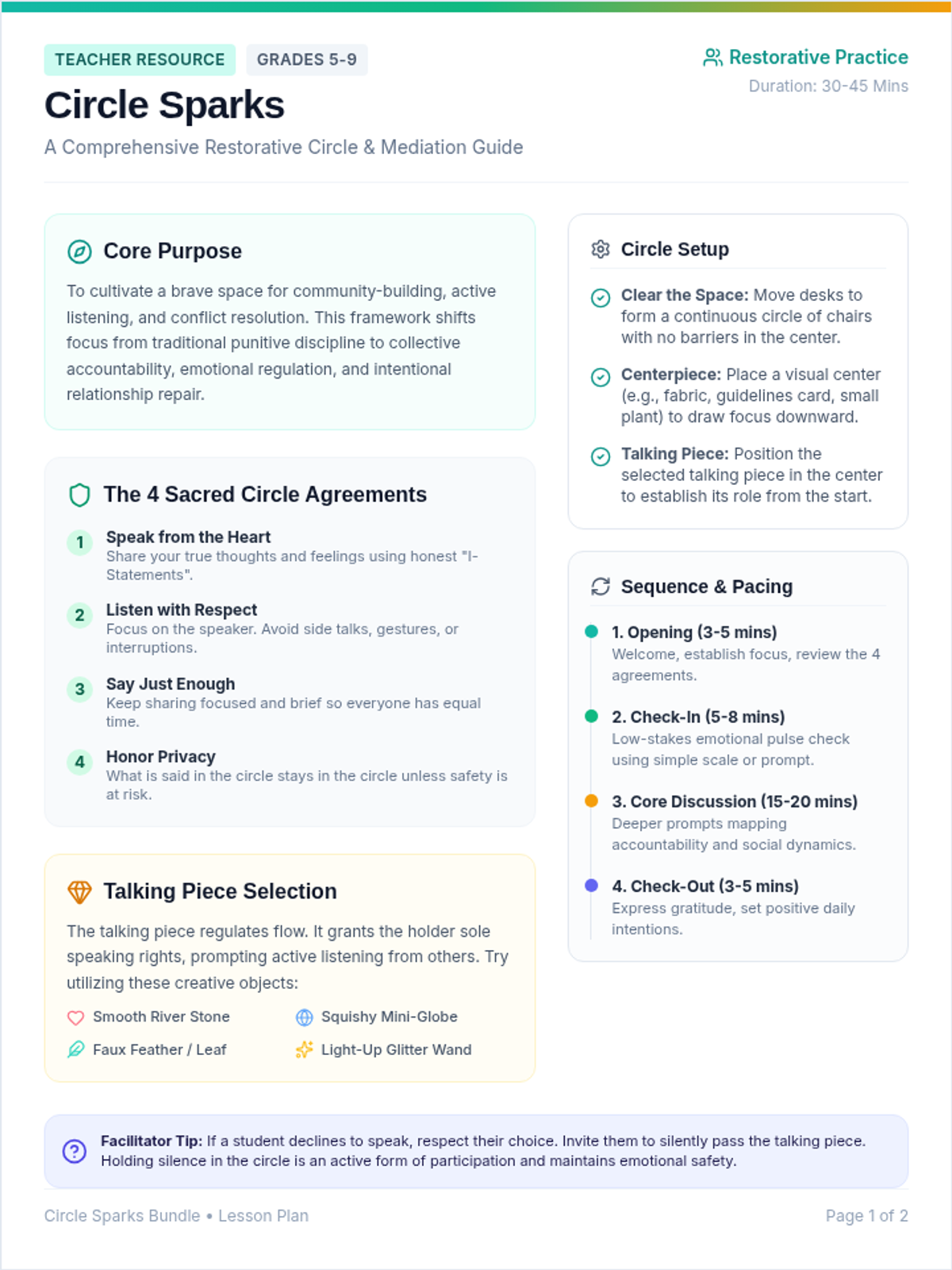
A complete, step-by-step teacher guide and facilitation lesson plan for hosting Restorative Circles. Includes circle guidelines, innovative talking piece ideas, a comprehensive sequential prompt bank (check-in, core, check-out), and restorative questioning scripts.
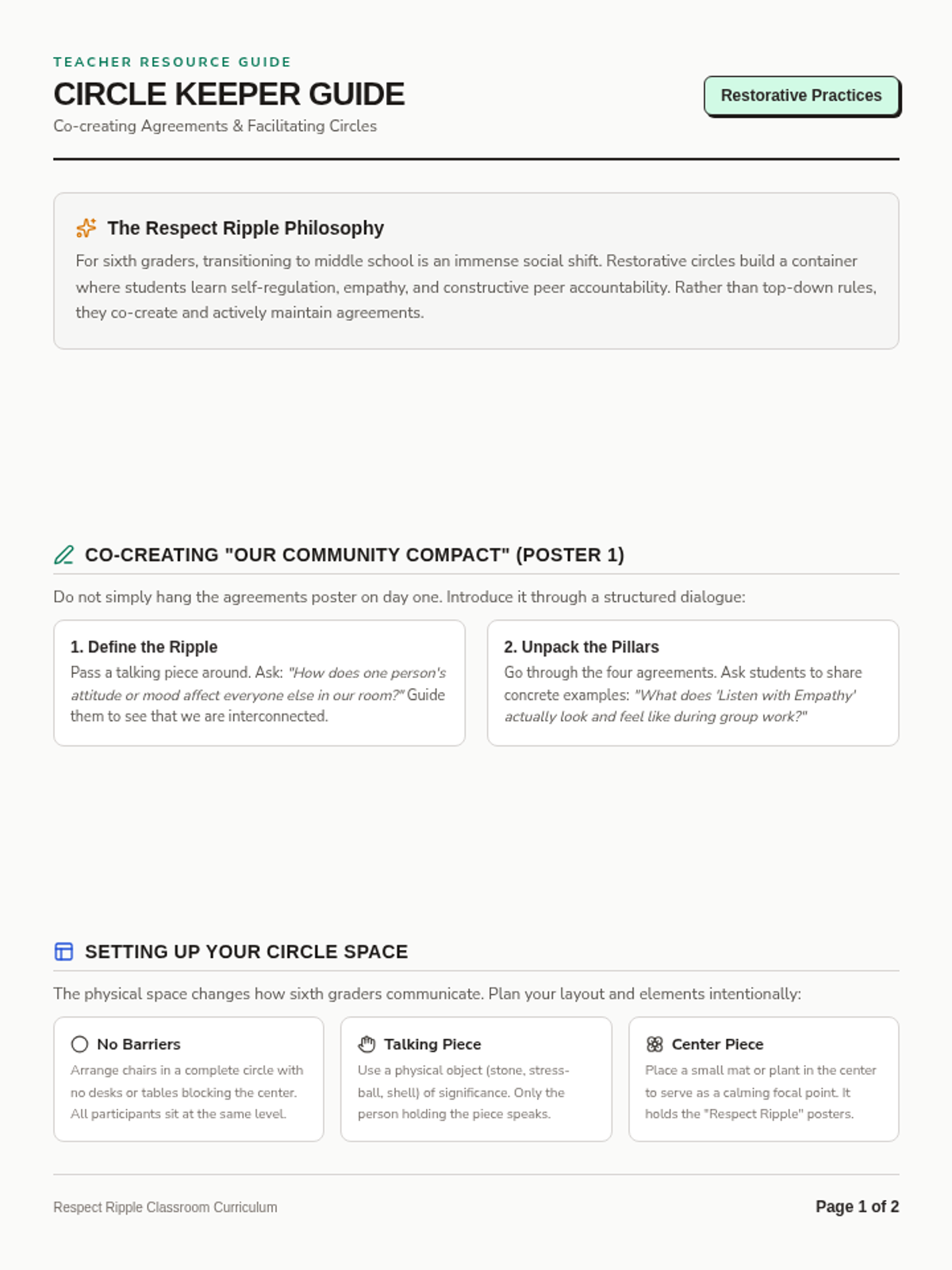
A comprehensive teacher facilitation guide for hosting restorative circles, co-creating community agreements with students, and using restorative dialogue prompts in the classroom.
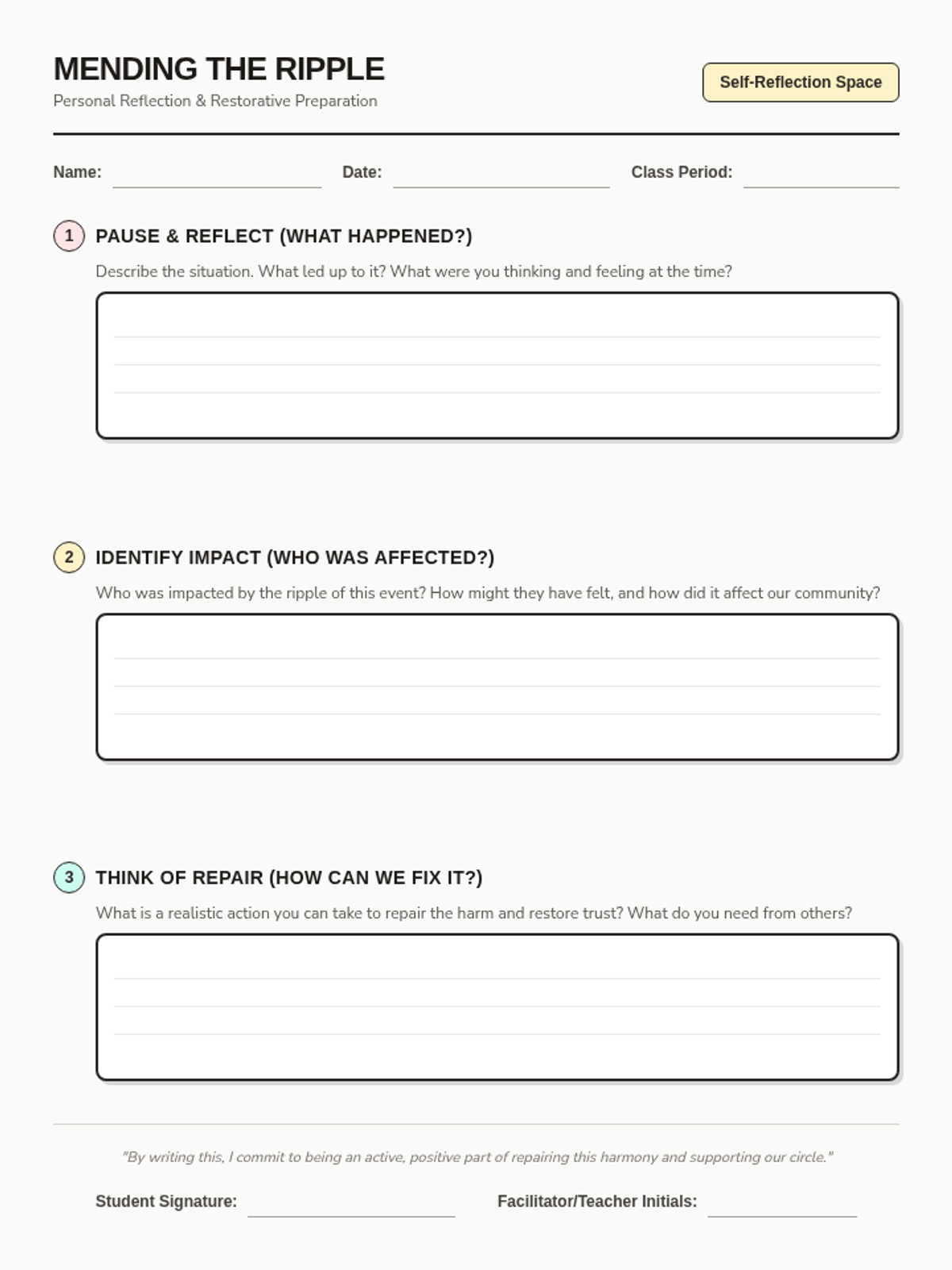
A student reflection worksheet to help students think through conflicts or incidents, identify the impact, and plan constructive ways to make things right before restorative dialogue.
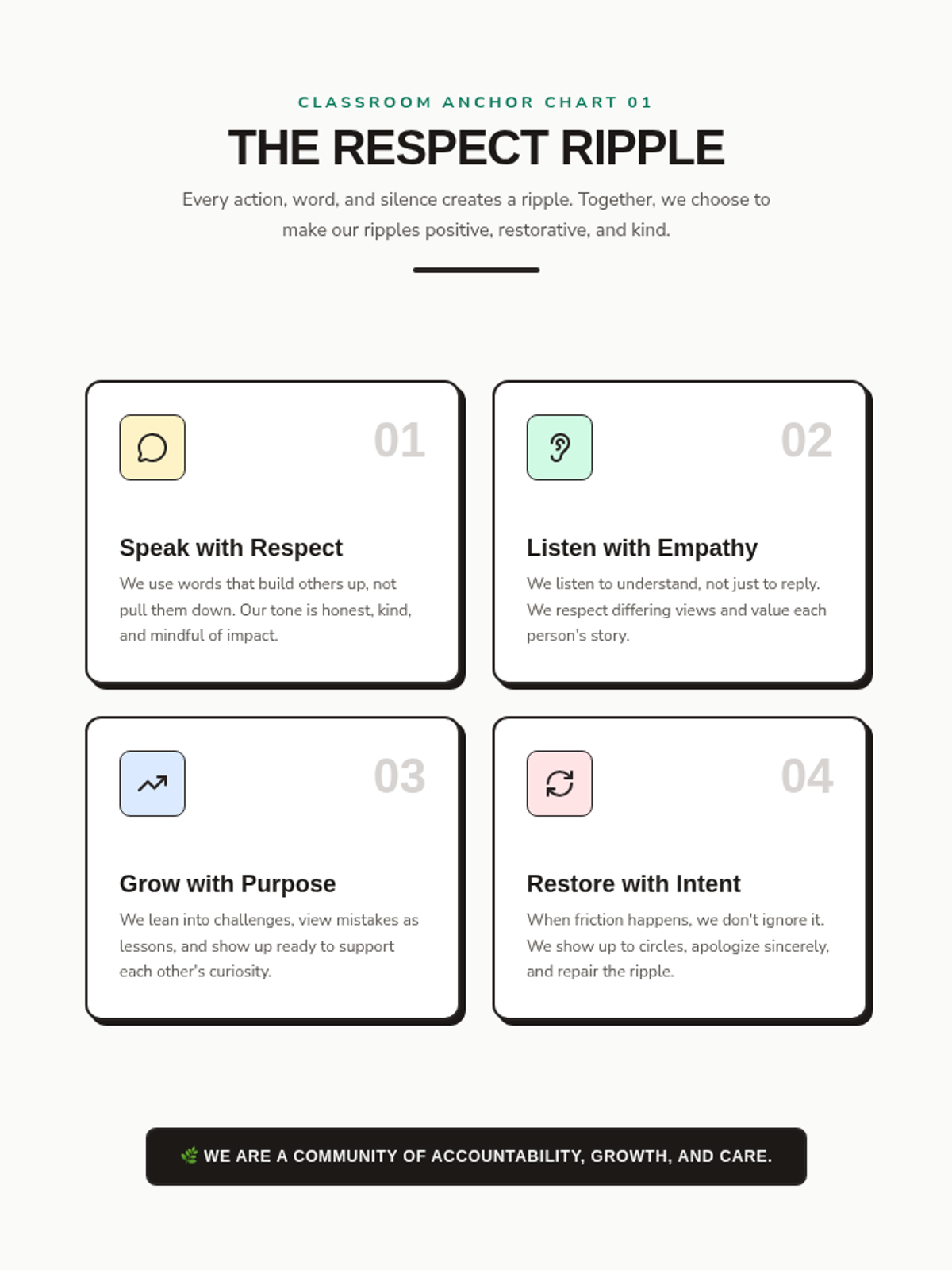
A set of three beautifully designed visual anchor charts (posters) for classroom walls, focusing on Community Agreements, Restorative Dialogue, and the Path to Repairing Harm. Staged in 8.5x11 format with bold, modern typography and clean organic borders.
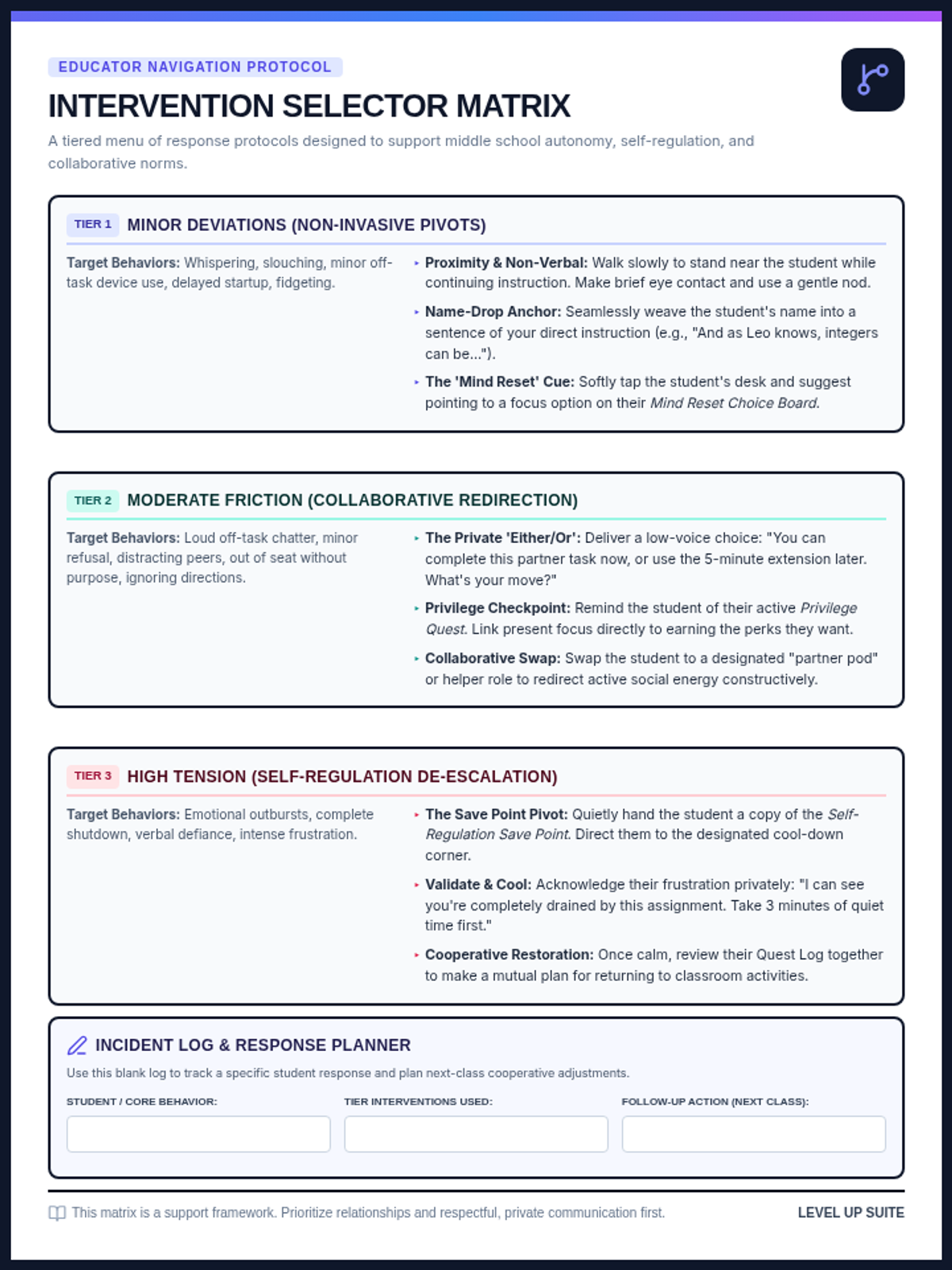
A professional intervention matrix and response selector for middle school teachers. It aligns classroom management norms with tiered behavioral support strategies, helping teachers select non-invasive interventions, self-regulation pivots, and cooperative reflections.
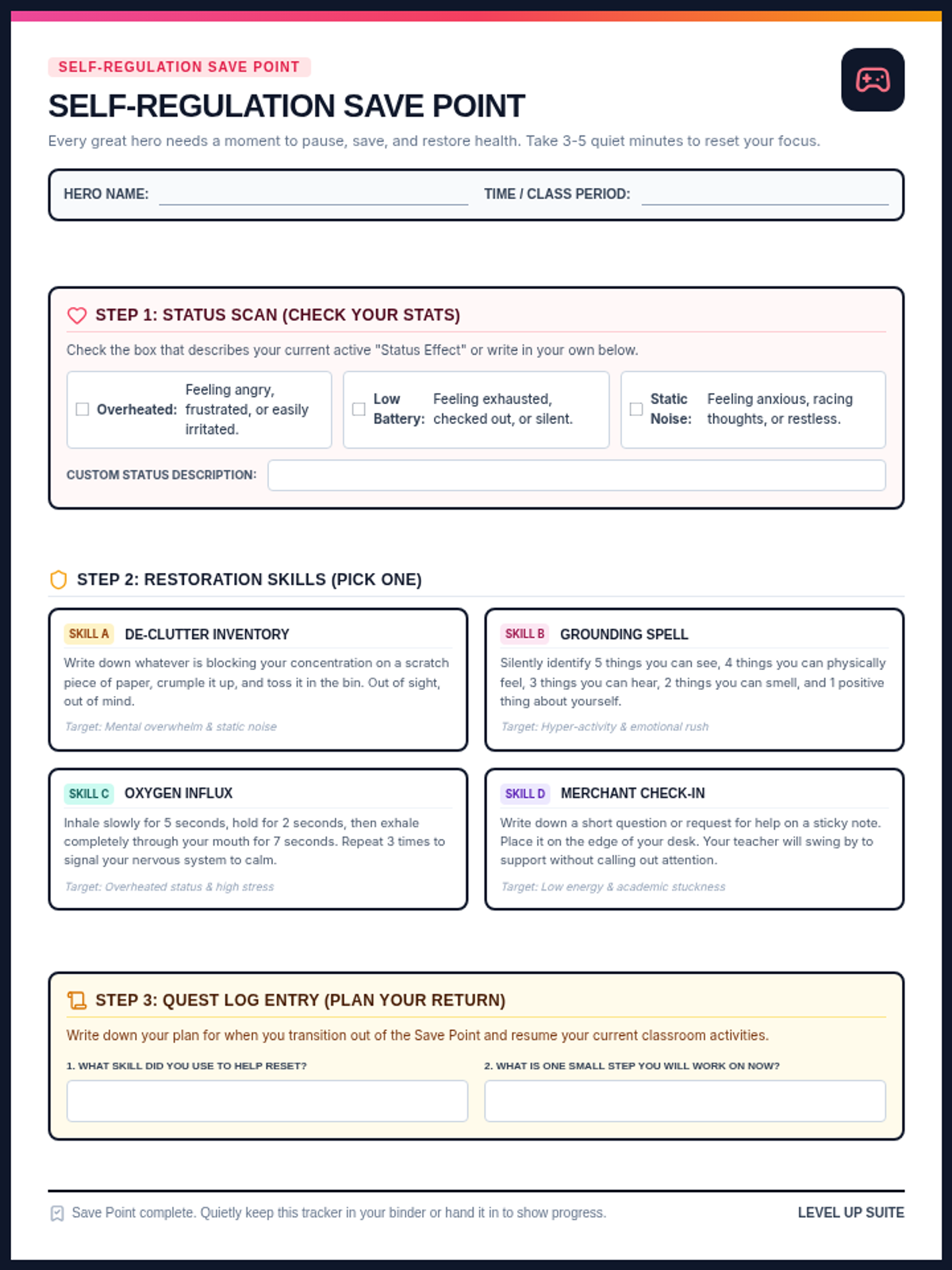
A de-escalation and self-regulation guide designed for middle schoolers, themed as an RPG 'Save Point.' It guides students through checking their emotional energy, selecting restorative coping strategies, and logging a small action step to return to class activities.
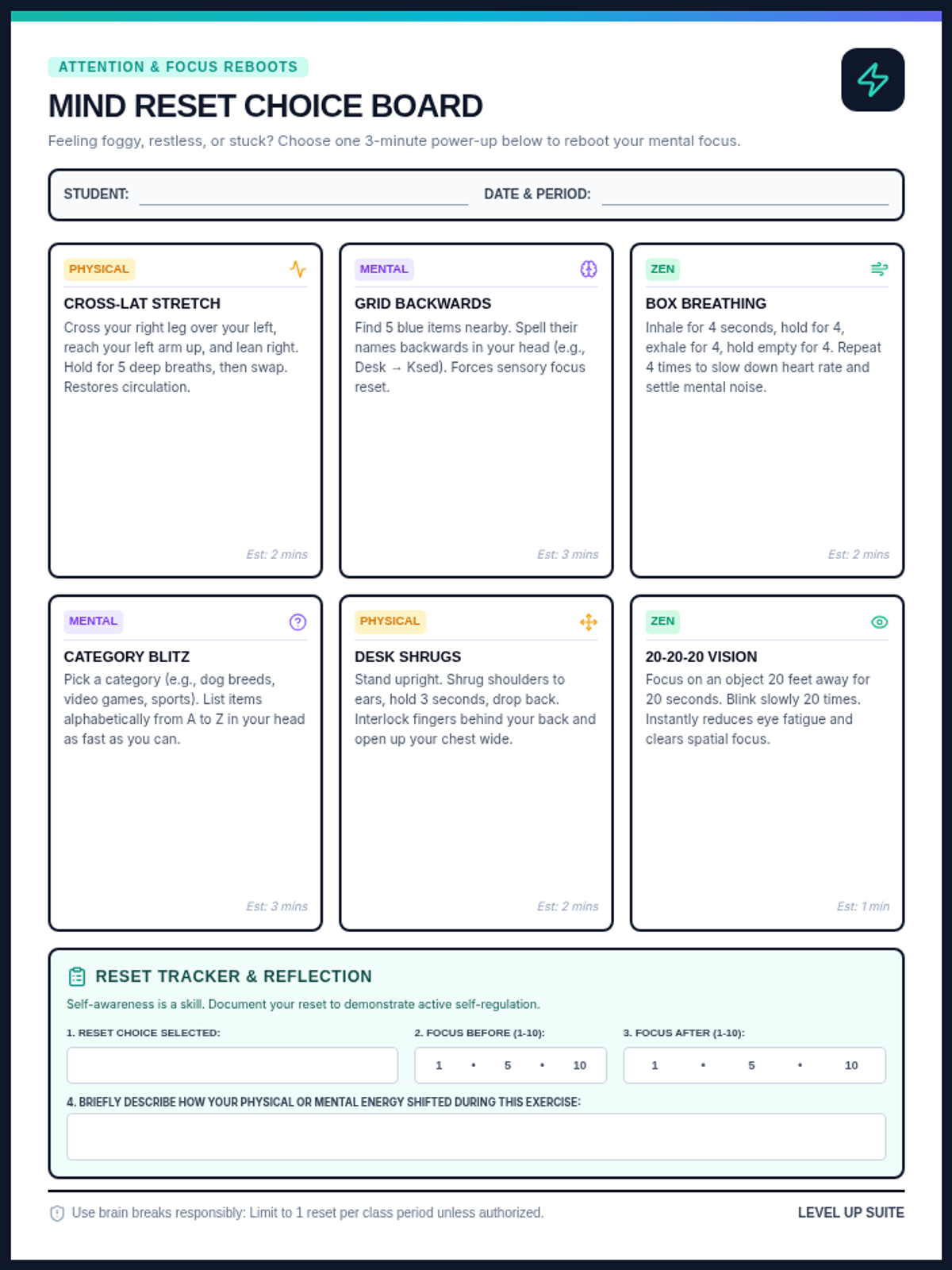
A choice board of short, structured brain breaks and focus activities designed to help middle schoolers reset their attention. It features physical movement, logic puzzles, and centering strategies styled like arcade-style power-ups.