Student response sheet for the Wealth Quest scavenger hunt. Includes a 40-row tracking table for recording station sequences and answers, along with reflection questions to solidify learning.
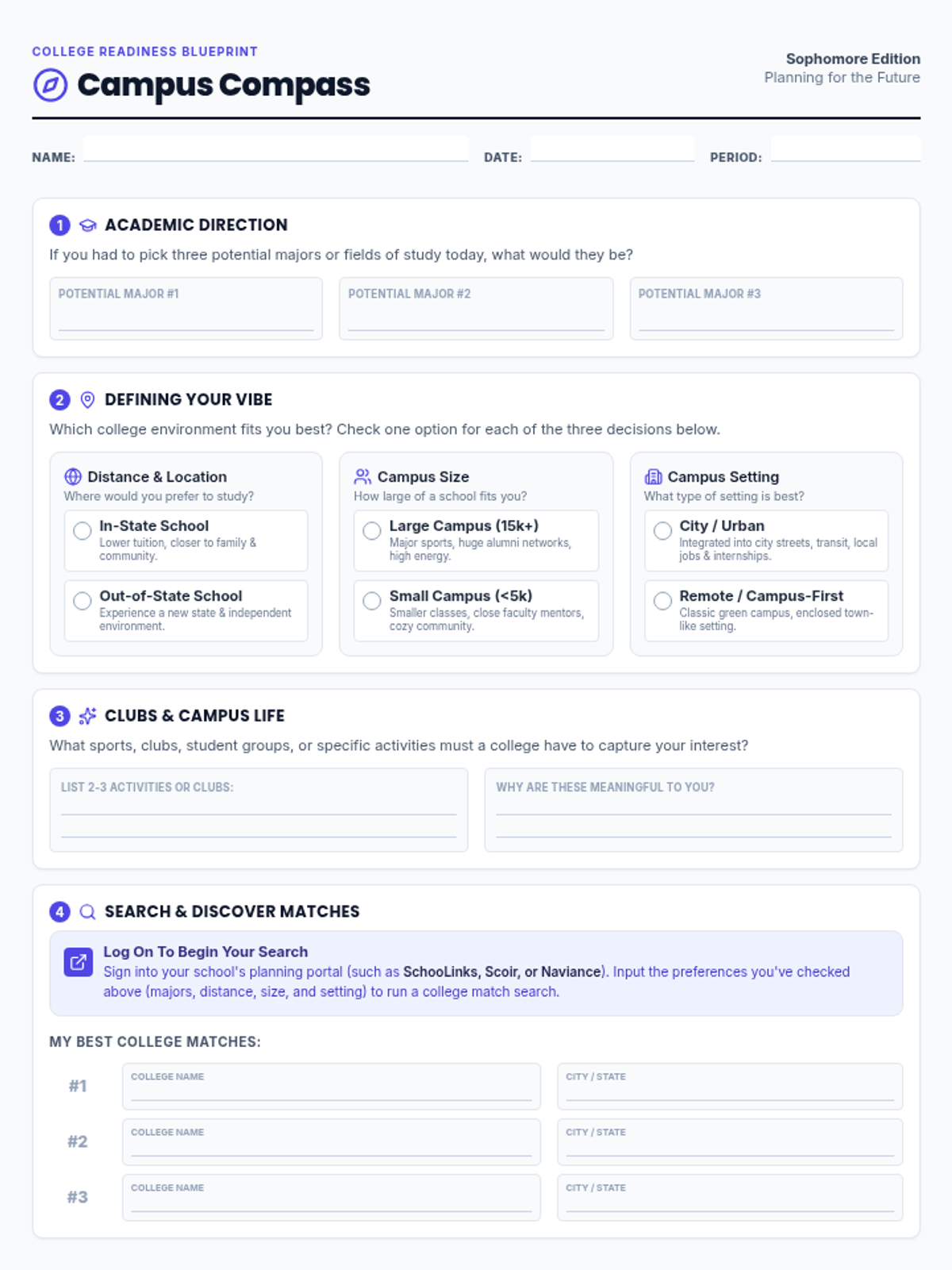
A beautifully designed, one-page college planning worksheet for high school sophomores. It guides students to reflect on their academic interests, campus preferences (in-state vs out-of-state, big vs small, urban vs remote), extracurricular options, and includes an actionable search guide to find matching colleges.
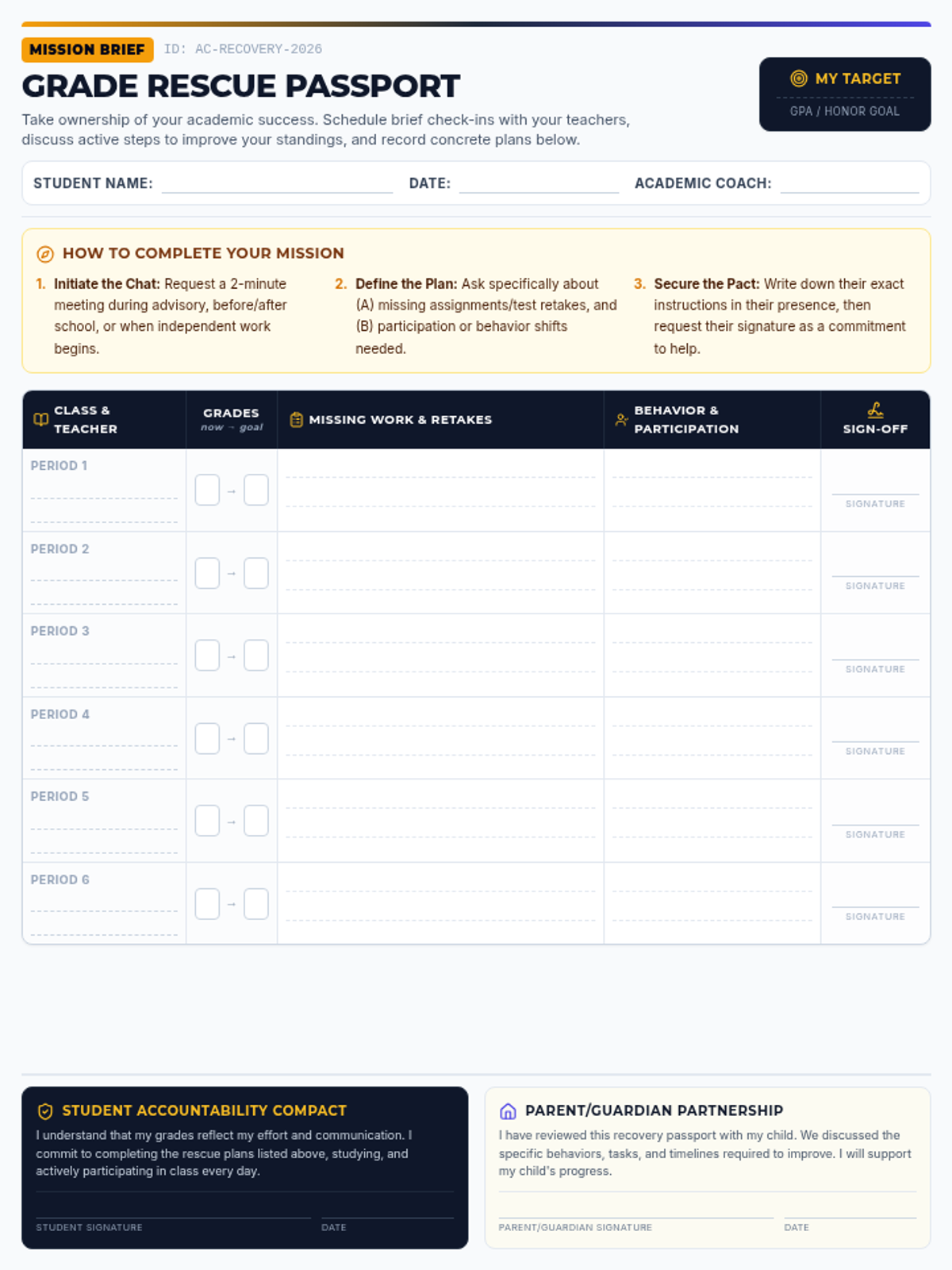
A 1-page check-in document designed as an academic passport. It enables students to consult with teachers across 6 class periods to map out concrete strategies for behavior, participation, missing assignments, and test retakes. Includes student and parent signature compacts.
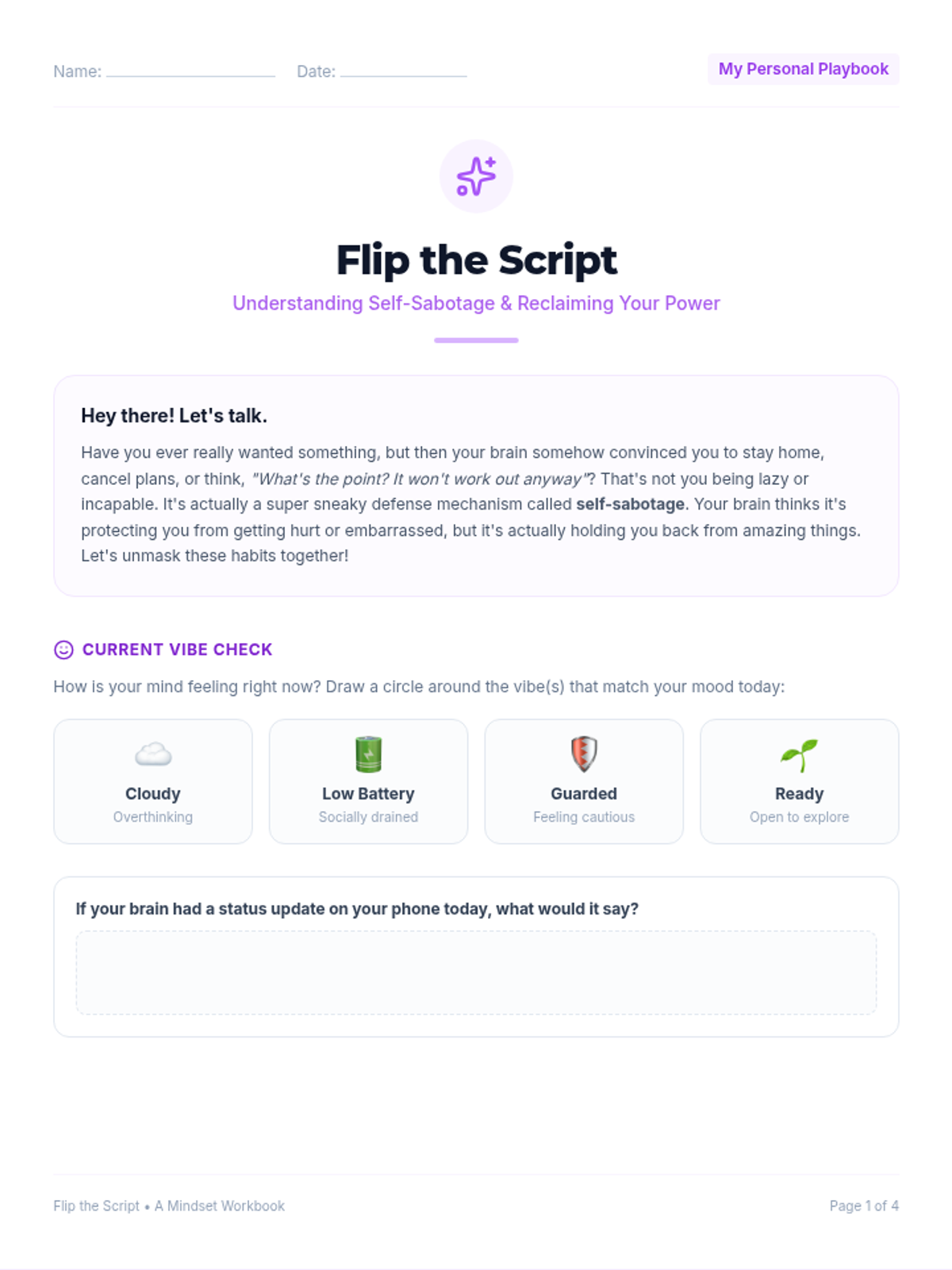
An aesthetic, 4-page student-facing workbook styled like a modern self-care journal. It teaches 14-year-old girls about self-sabotaging behavior, introduces 'Mind Bodyguards', provides interactive CBT reframing worksheets, and helps build behavioral exposure steps.
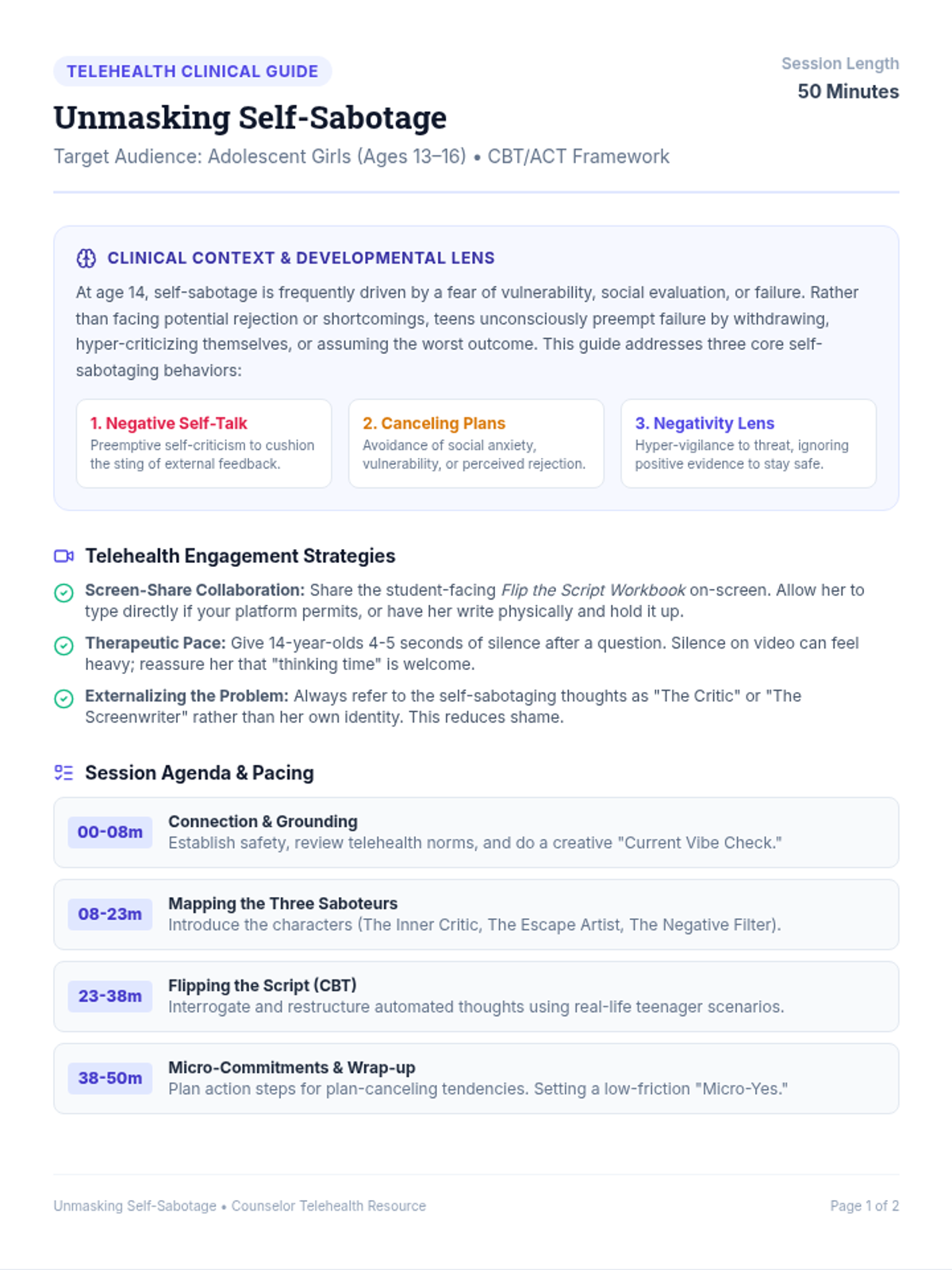
A comprehensive counselor clinical lesson plan for conducting interactive telehealth sessions with 14-year-old girls experiencing self-sabotage, featuring diagnostic pacing, CBT-based scripts, and engagement strategies.
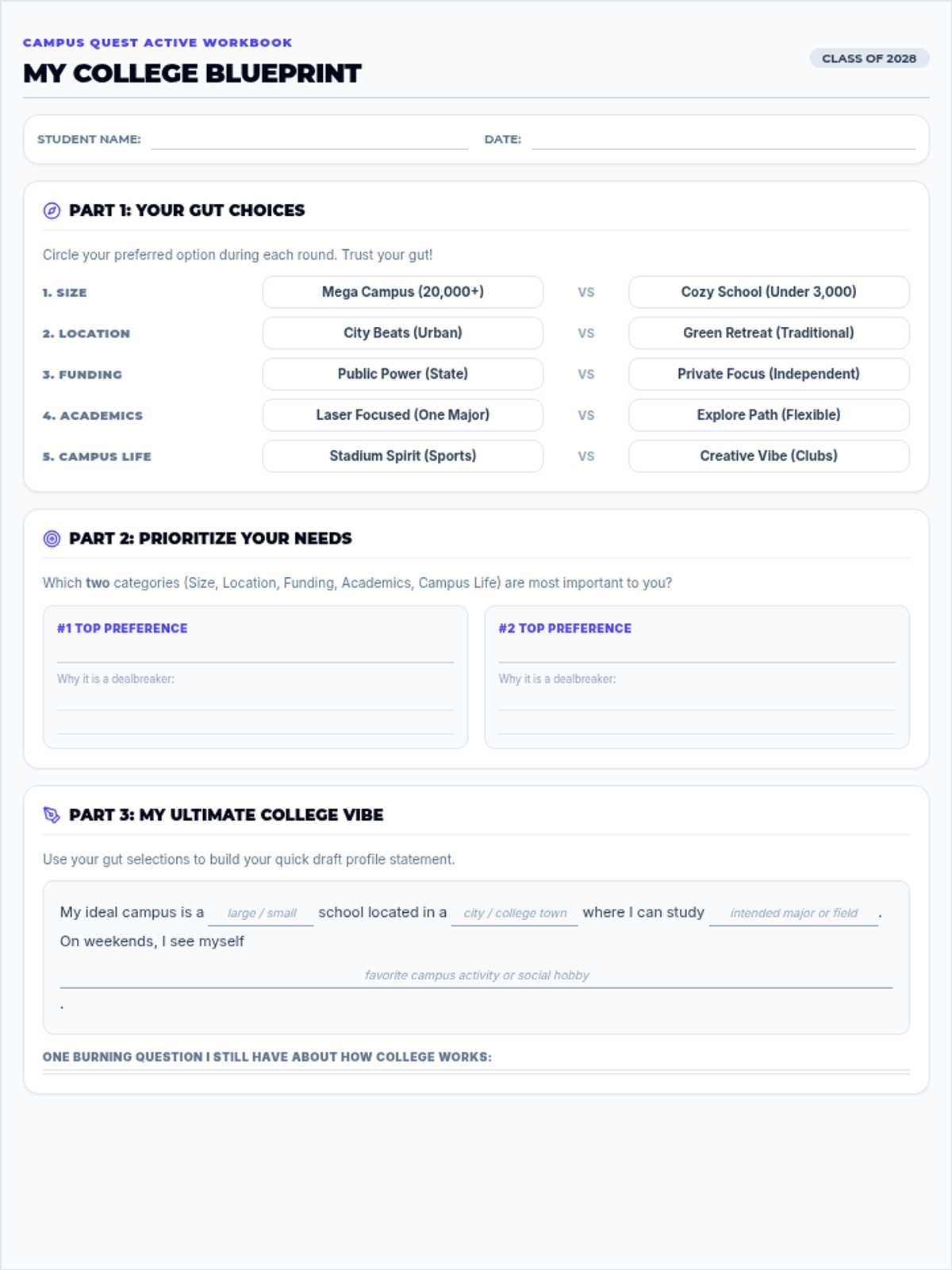
A clean, easy-to-print student reflection profile card where sophomores record their choices, prioritize factor criteria, and build a personalized draft 'College Vibe' statement.
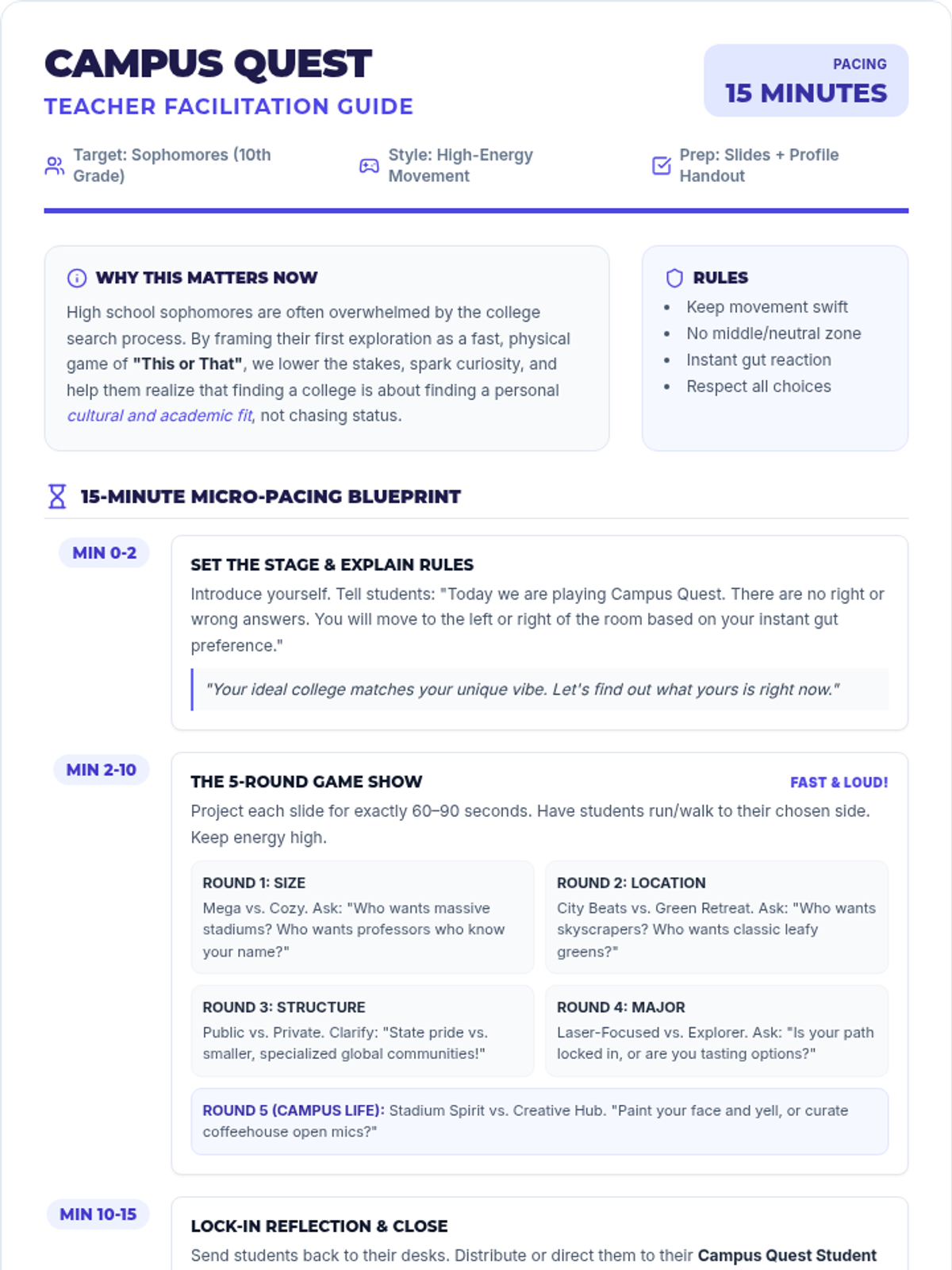
A concise, high-impact facilitation guide outlining setup, rules, pacing tips, and discussion prompts to run the 15-minute 'Campus Quest' lesson with high school sophomores.
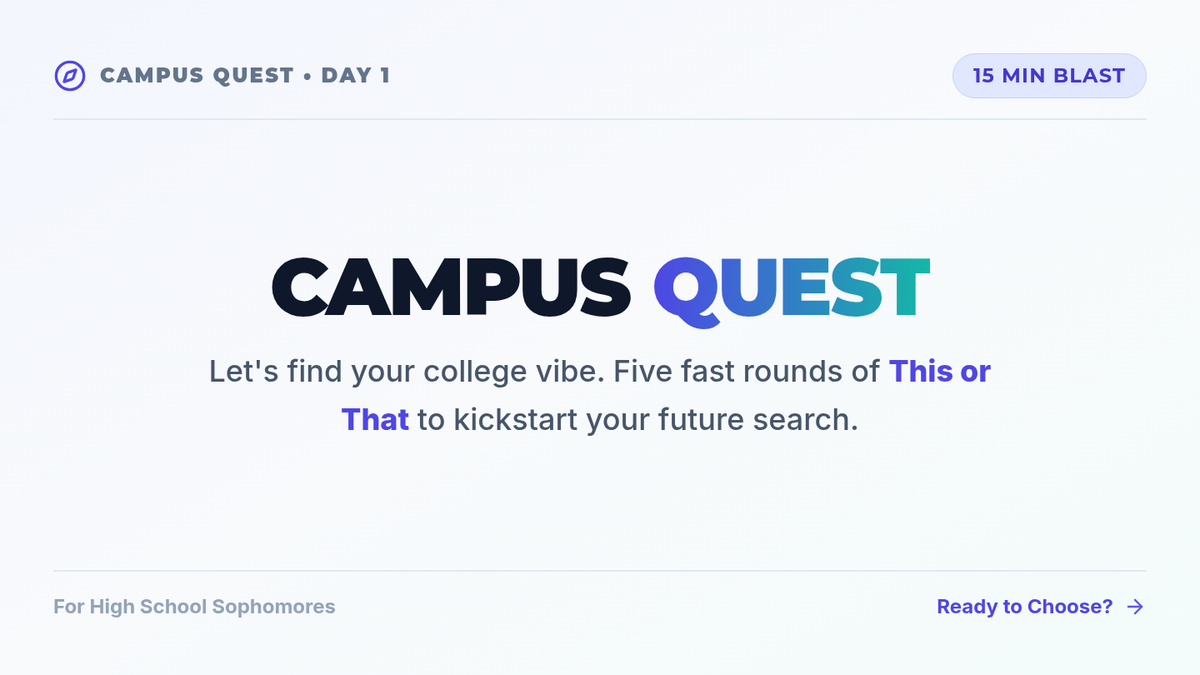
A modern 10-slide high-impact presentation with two brand-new deep-dive slides discussing the core structural and financial differences between state public universities and private colleges, and a dedicated explanatory slide outlining what a major is with diverse, concrete examples.
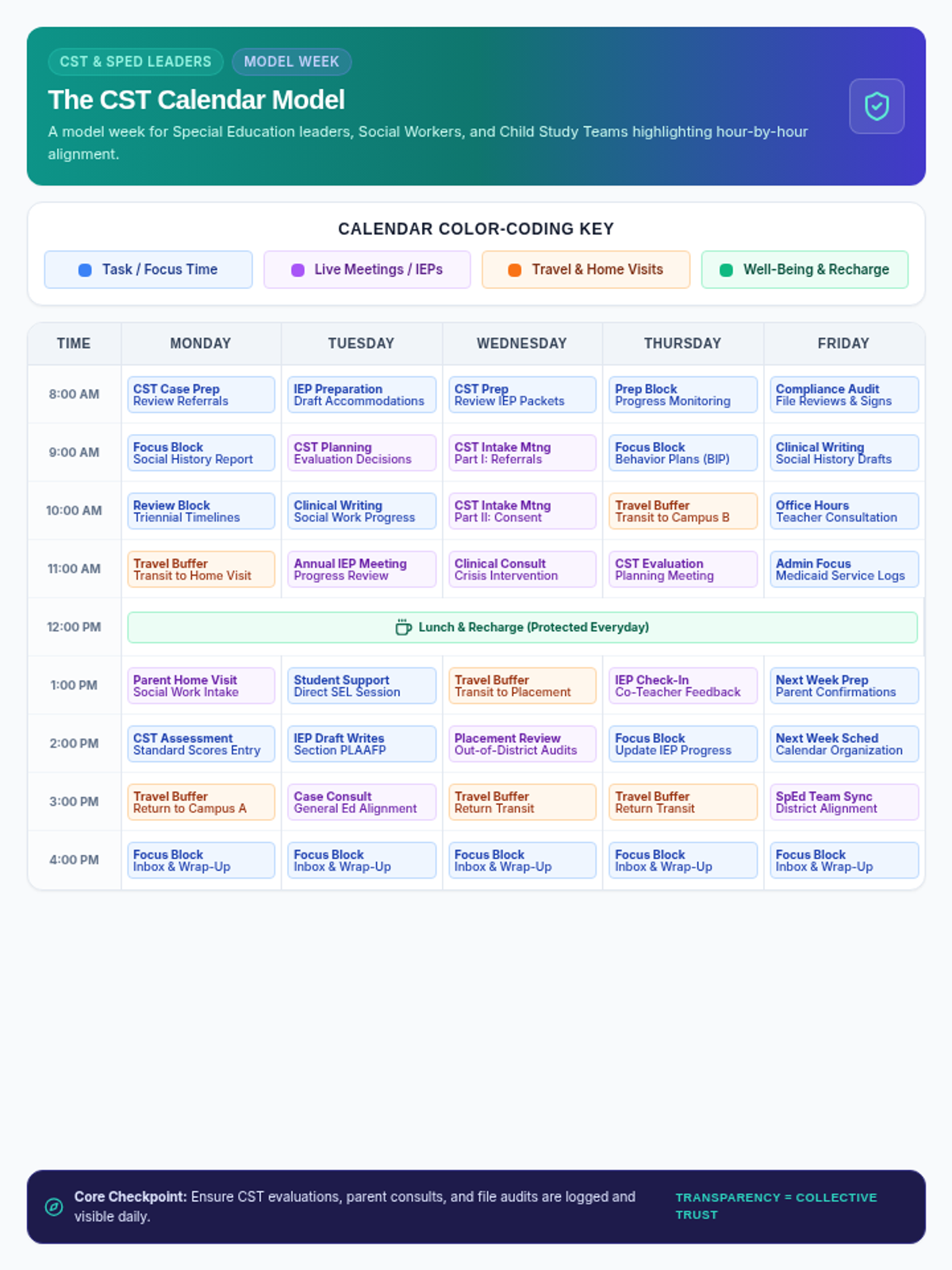
A visual Monday-through-Friday example calendar mapping task time, travel buffer, live meetings, and well-being blocks to model correct hour-by-hour scheduling.
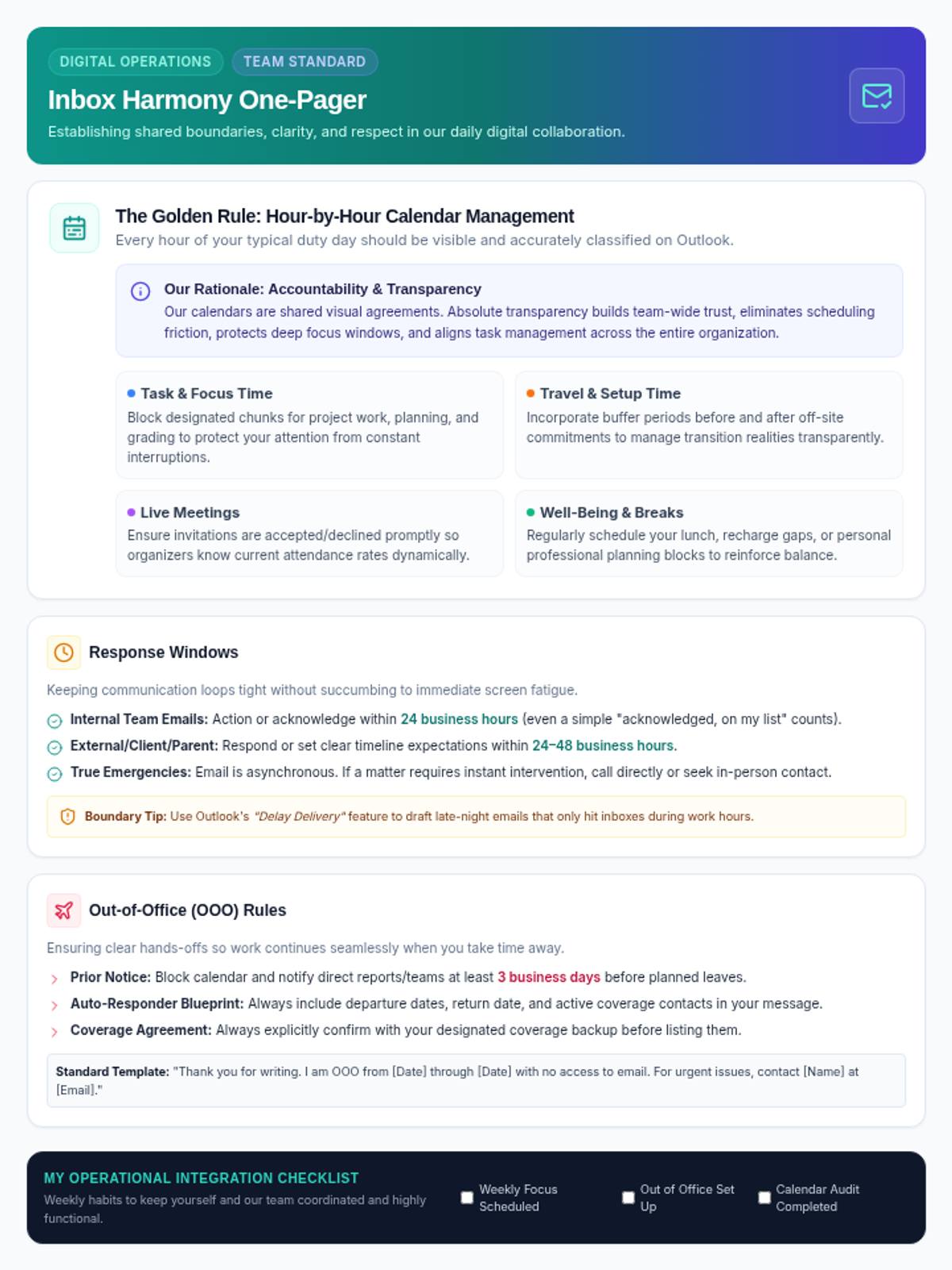
A modern and collaborative Outlook norms one-pager reference sheet that details calendar organization, responsiveness windows, and out-of-office guidelines.
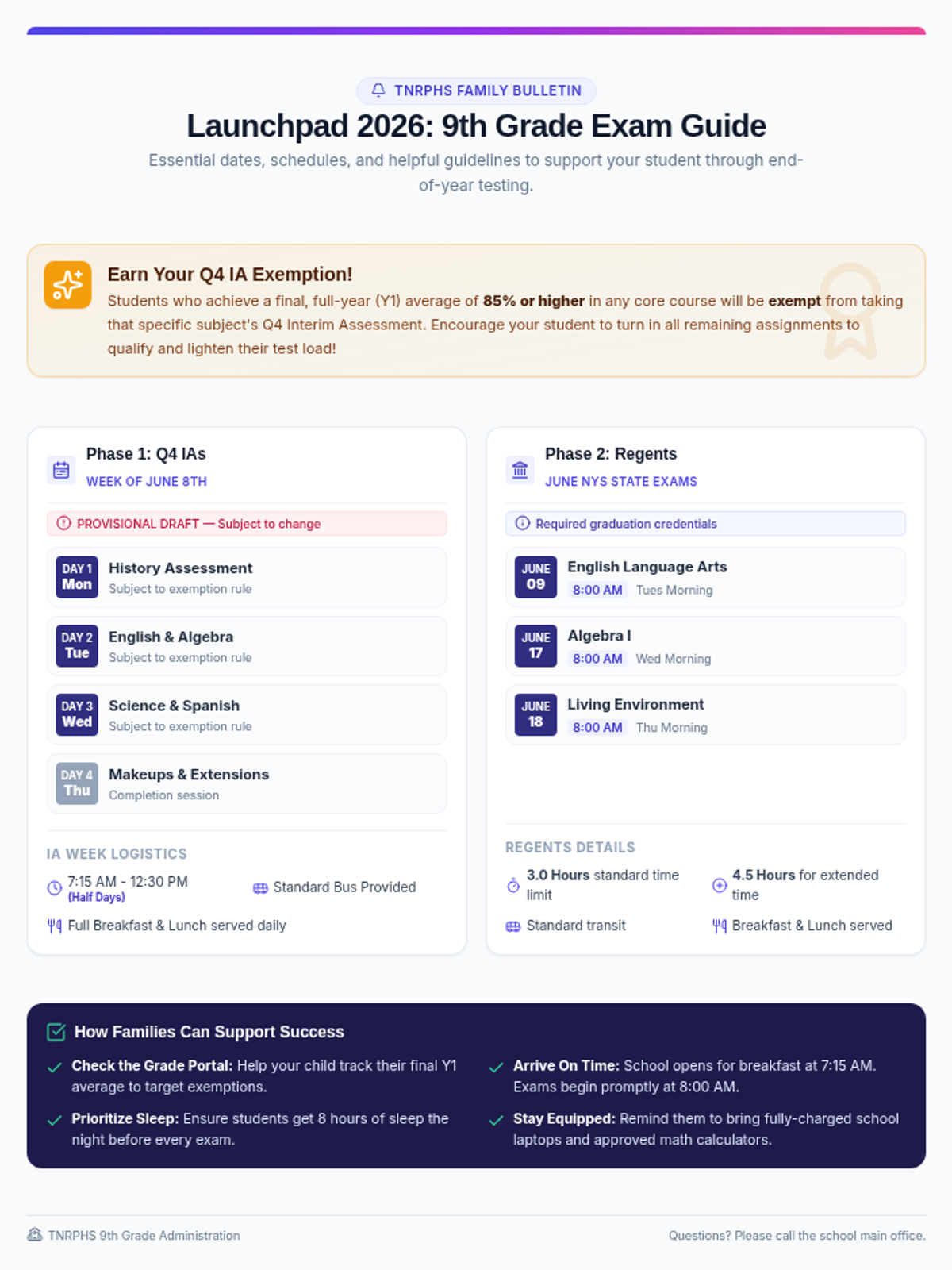
An informative infographic flyer for 9th-grade families outlining the Q4 Interim Assessments and Regents Exam schedules, including the 85% exemption incentive and daily logistics.
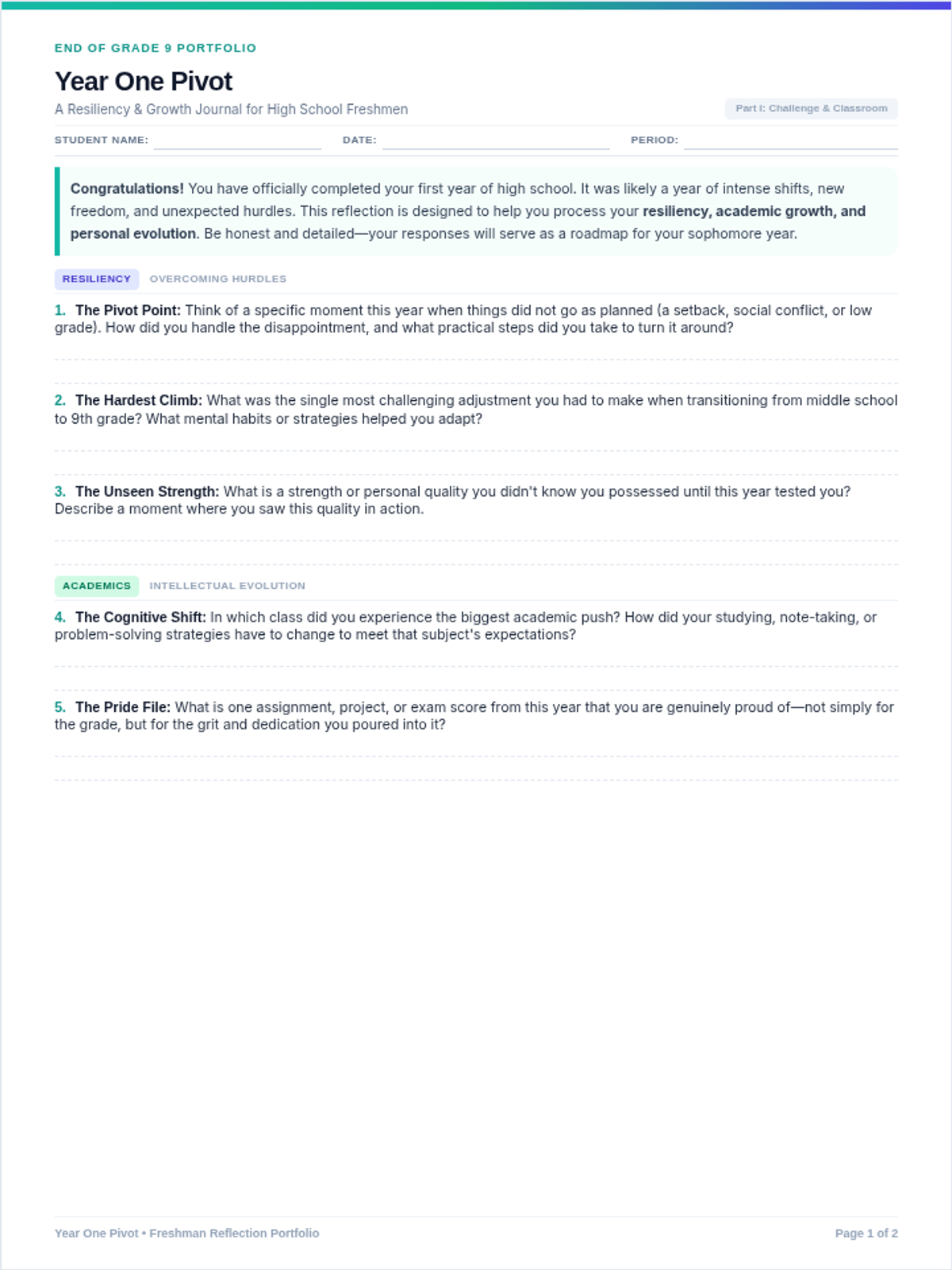
A beautifully structured 2-page print-ready reflection journal worksheet for 9th graders to evaluate their freshman year. Features 10 powerful questions organized around resiliency, academic growth, and social-emotional development with clean, writing lines for their personal reflections.
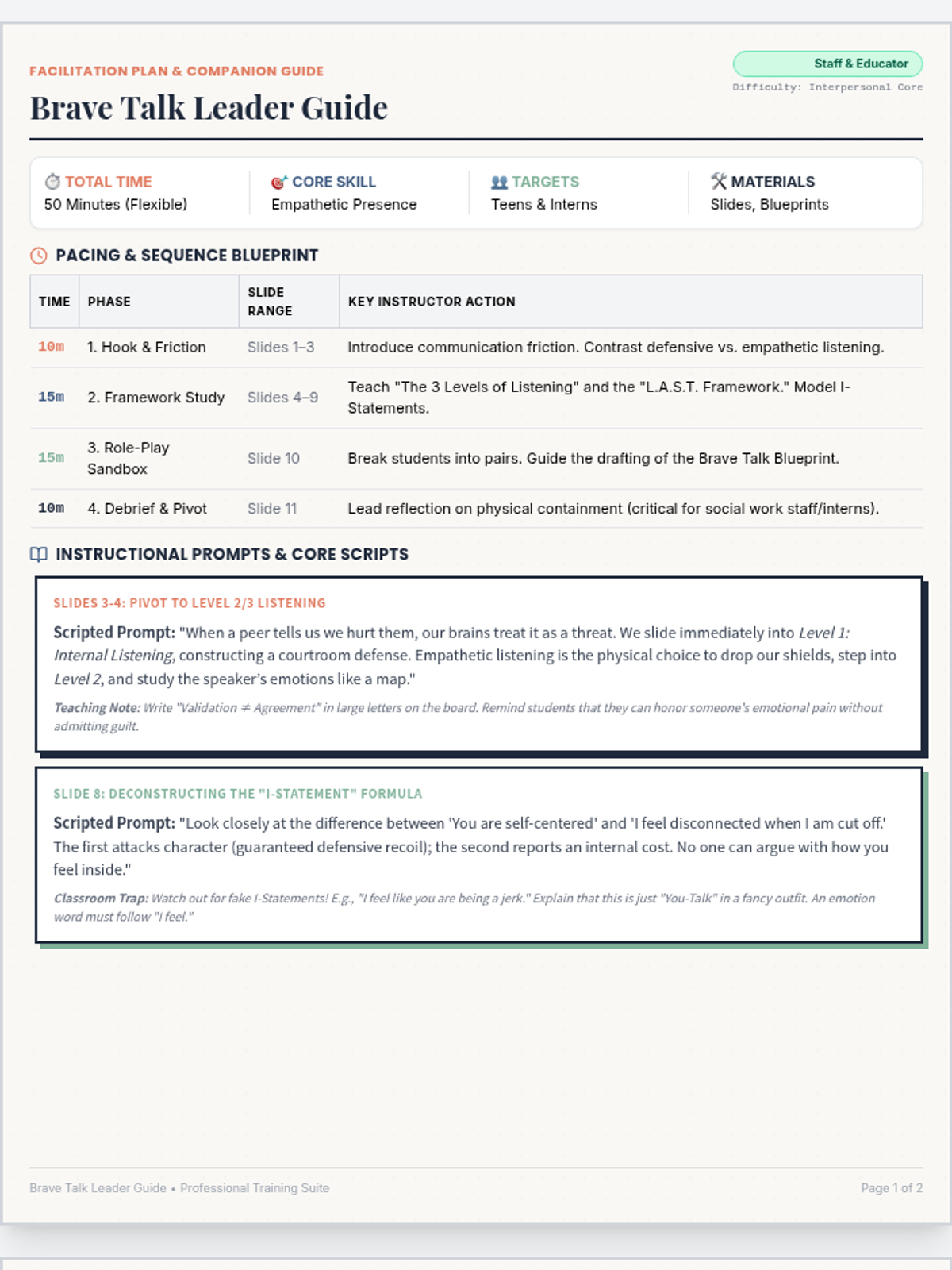
A professional 2-page companion and facilitation guide for teachers and supervising social workers. Includes slide-by-slide prompt scripts, targeted role-play guidelines, developmental debriefing structures, and boundaries supervision protocols.
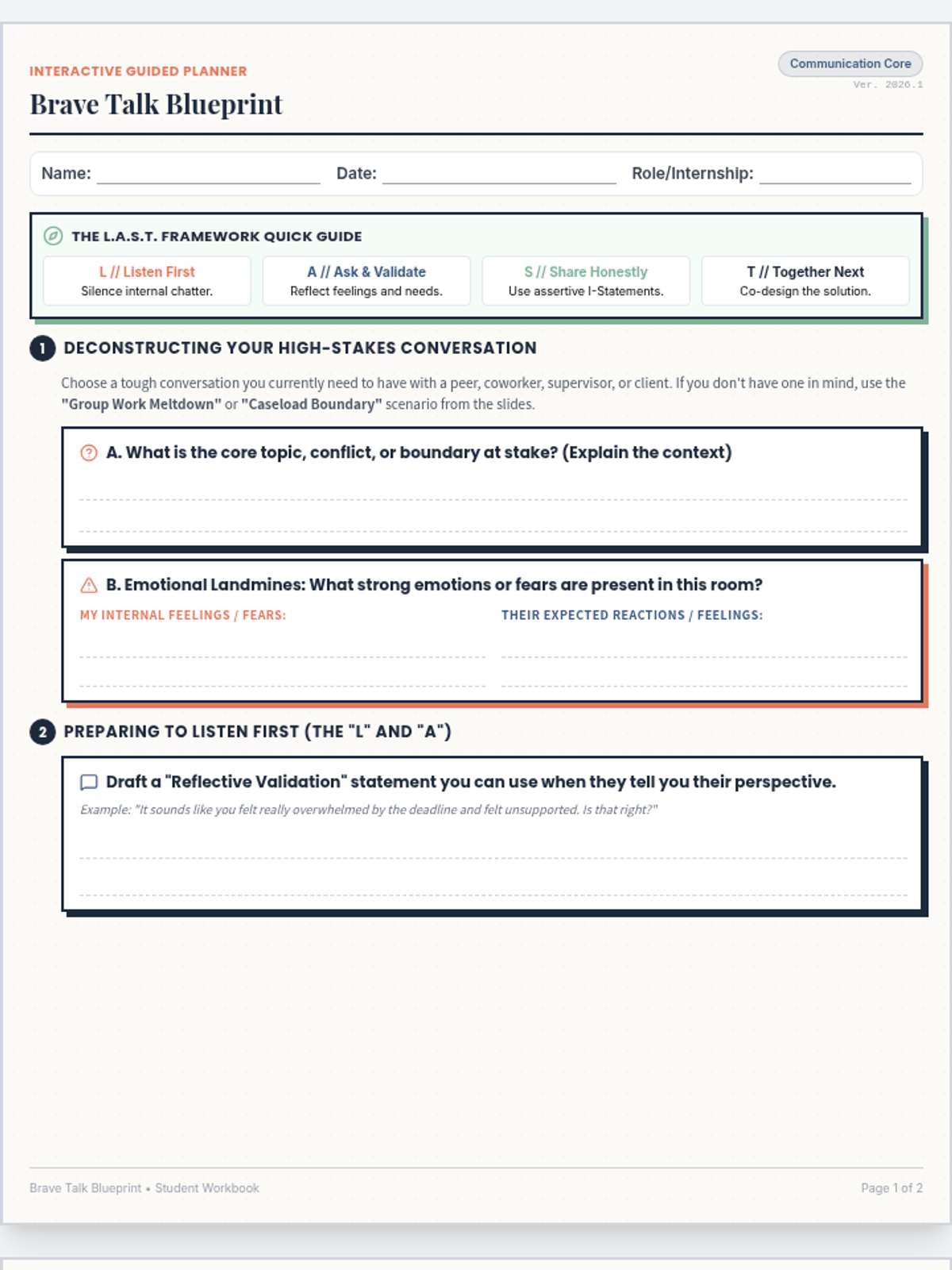
A double-sided blueprint worksheet for students and interns to deconstruct difficult conversations. It features a complete planning sandbox for crafting I-statements, planning reflective listening responses, and analyzing personal default communication pitfalls.
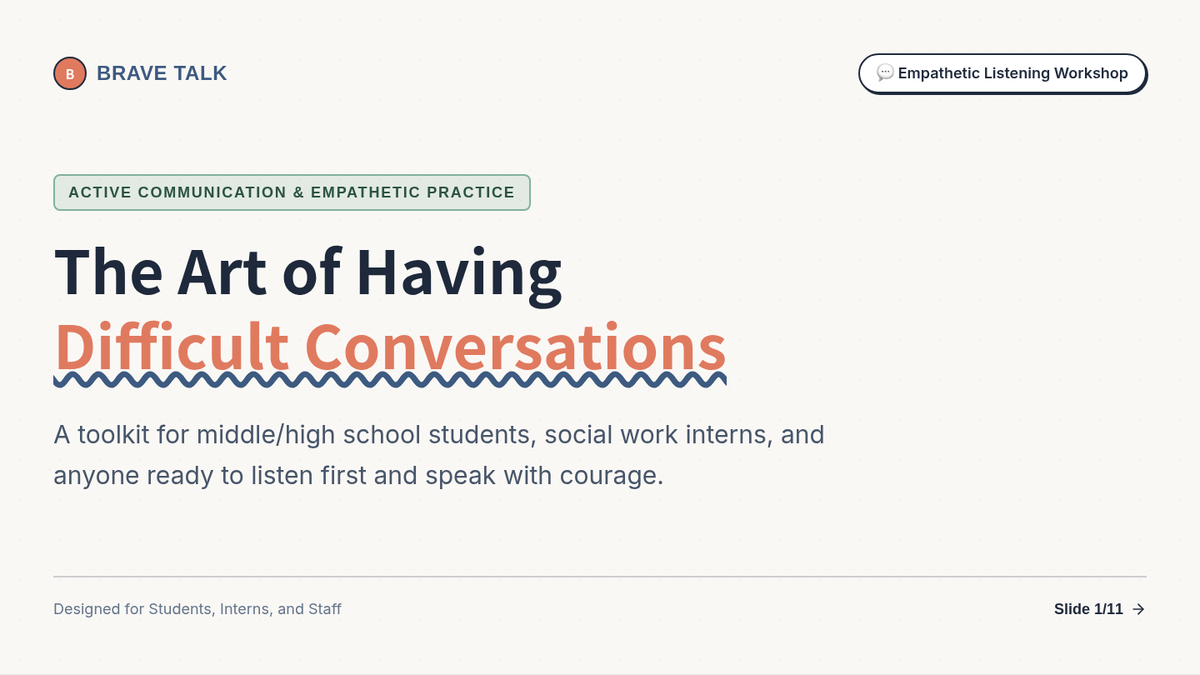
A beautifully designed, print-ready, and displayable 11-slide presentation on teaching difficult conversations using empathetic listening and the L.A.S.T. Framework. Features custom layout systems tailored for students and social work training.
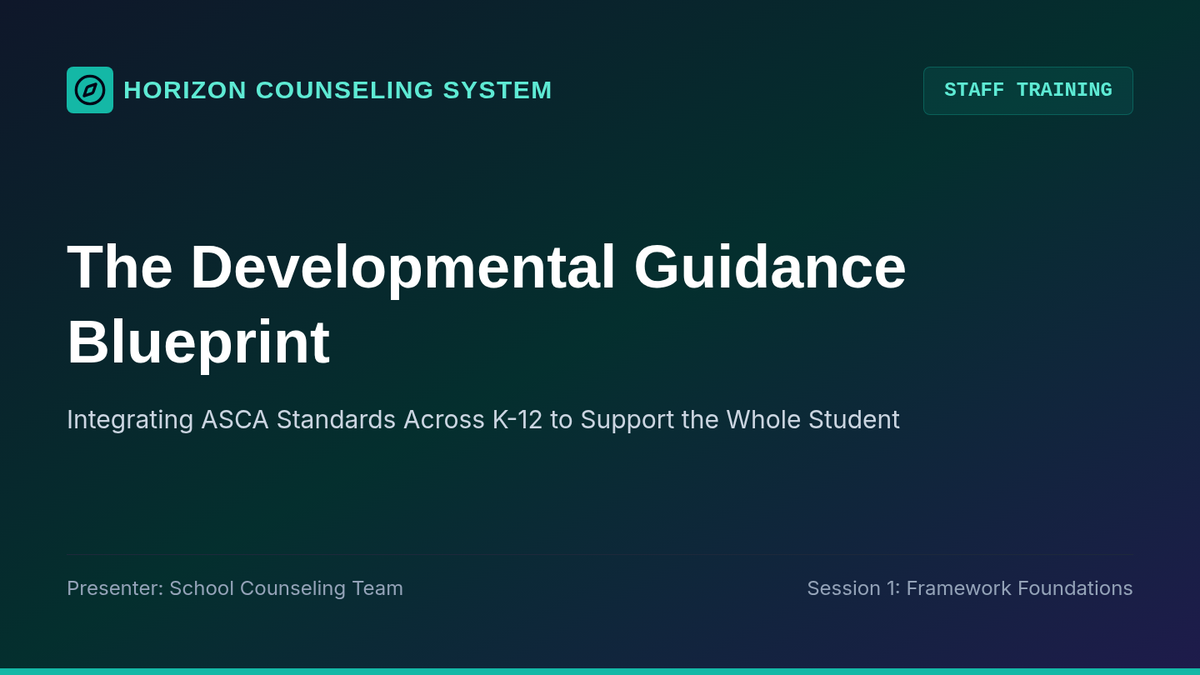
School Counselor-led staff development slide deck presenting the K-12 Developmental Guidance matrix, ASCA domains, grade-band milestones, and counselor referral protocols.
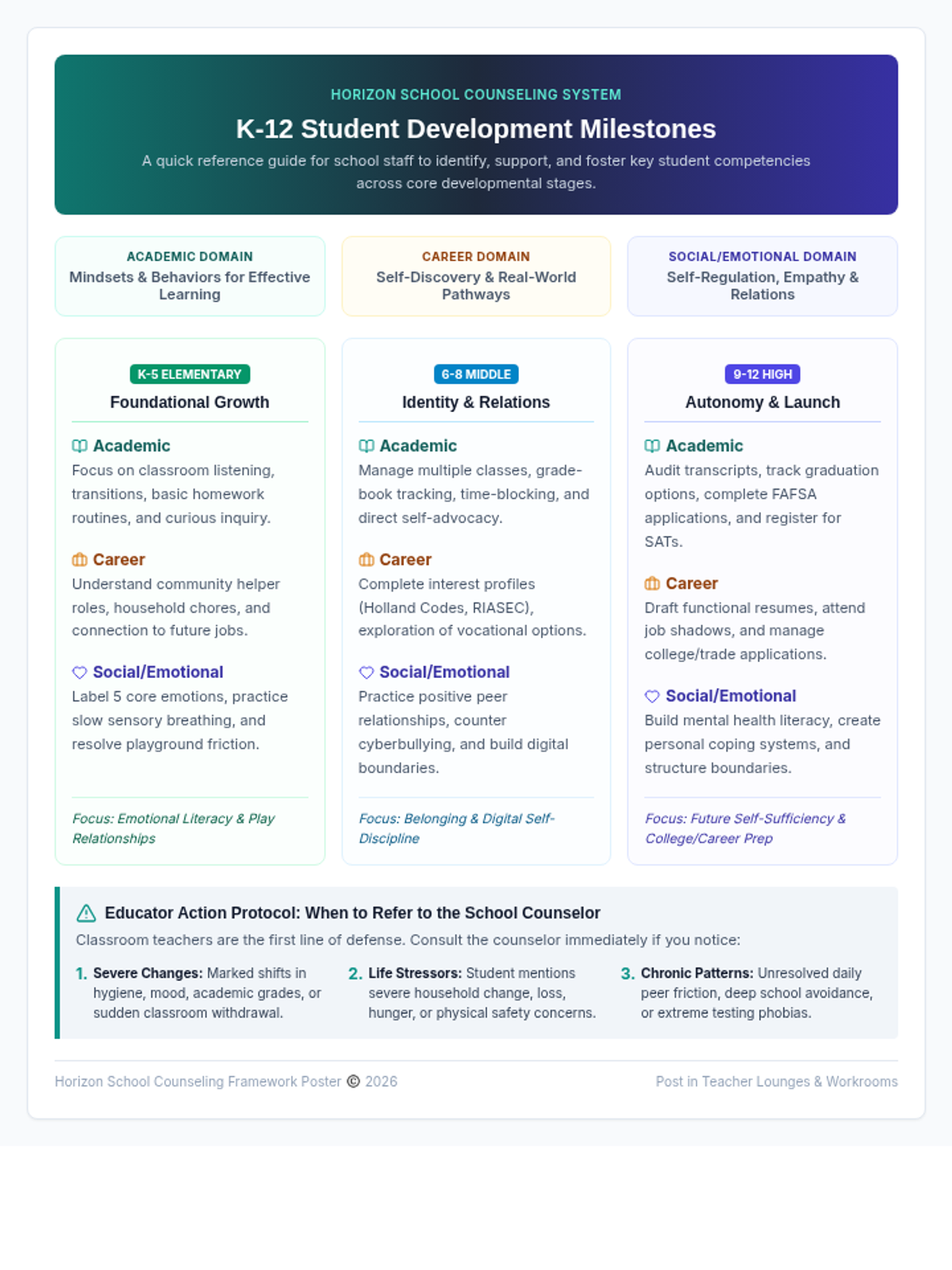
One-page reference poster for staff and classrooms summarizing student development milestones across grade bands (K-5, 6-8, 9-12) and providing direct referral guidelines.
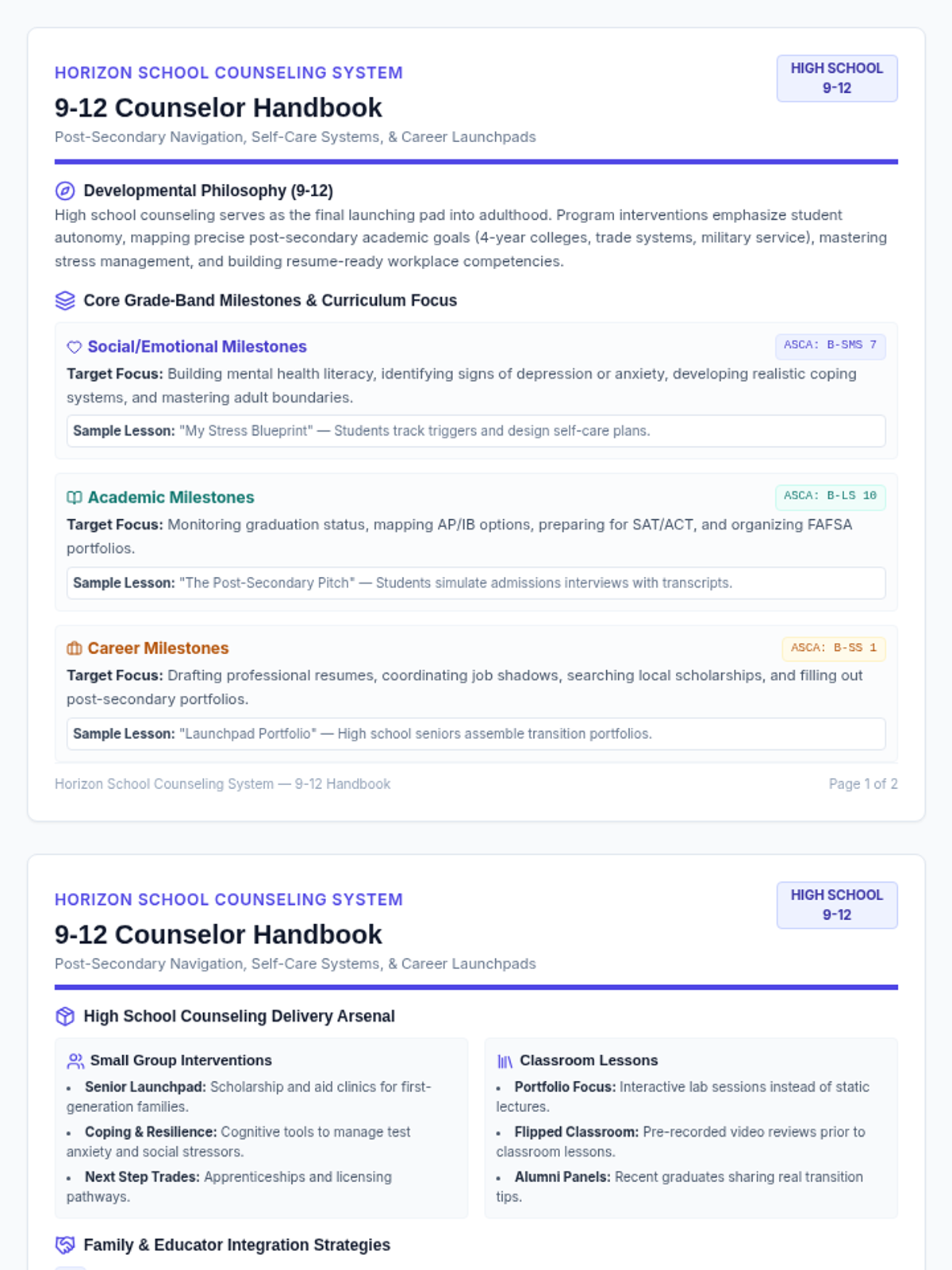
High School (9-12) Counselor Handbook outlining post-secondary options, graduation plans, mental health and self-care systems, scholarship guidelines, and teacher/parent integration strategies.
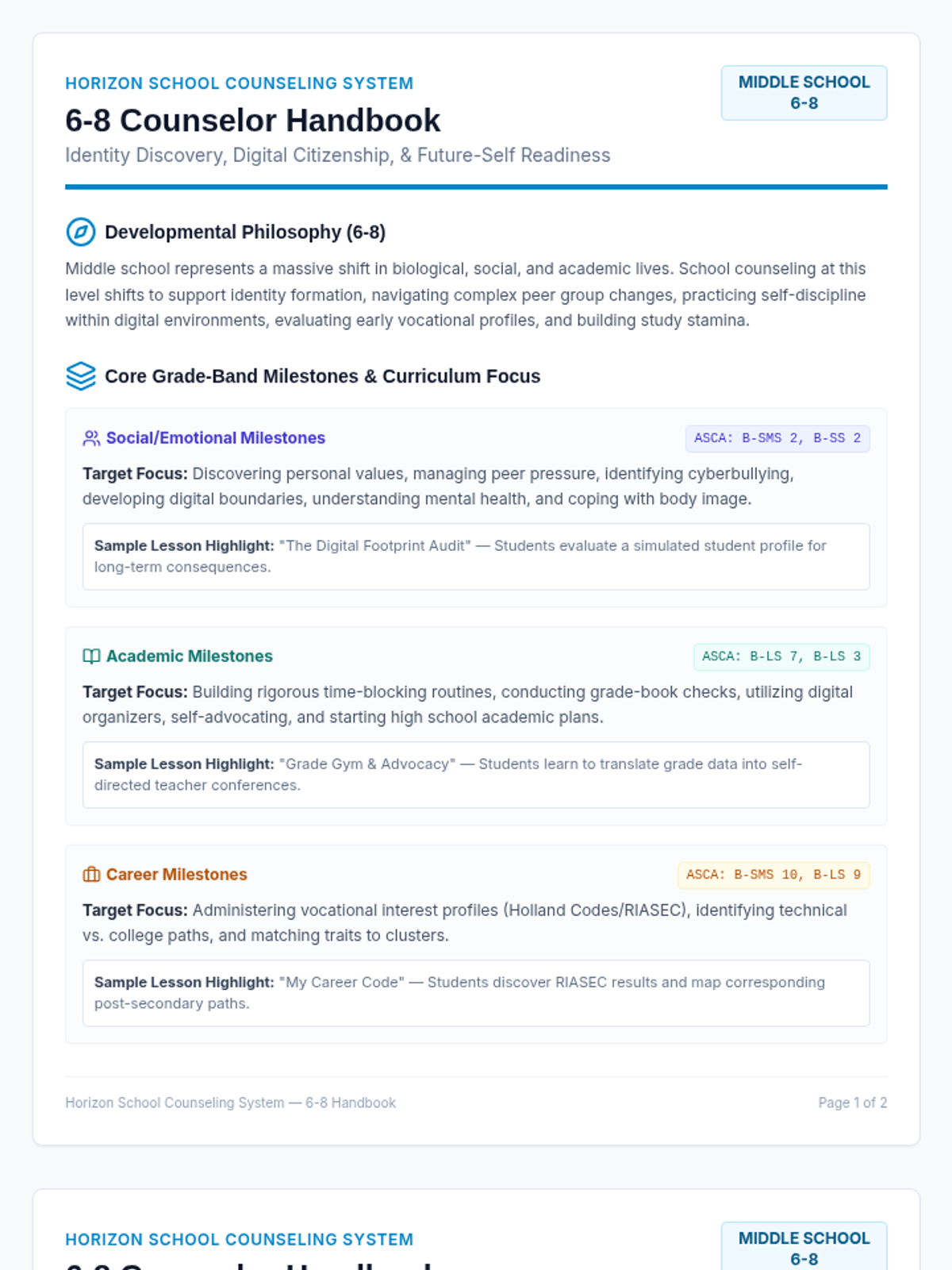
Middle School (6-8) Counselor Handbook detailing adolescent development, guidance benchmarks for identity and peer pressure, O*NET-aligned career exploration programs, and targeted group-counseling frameworks.
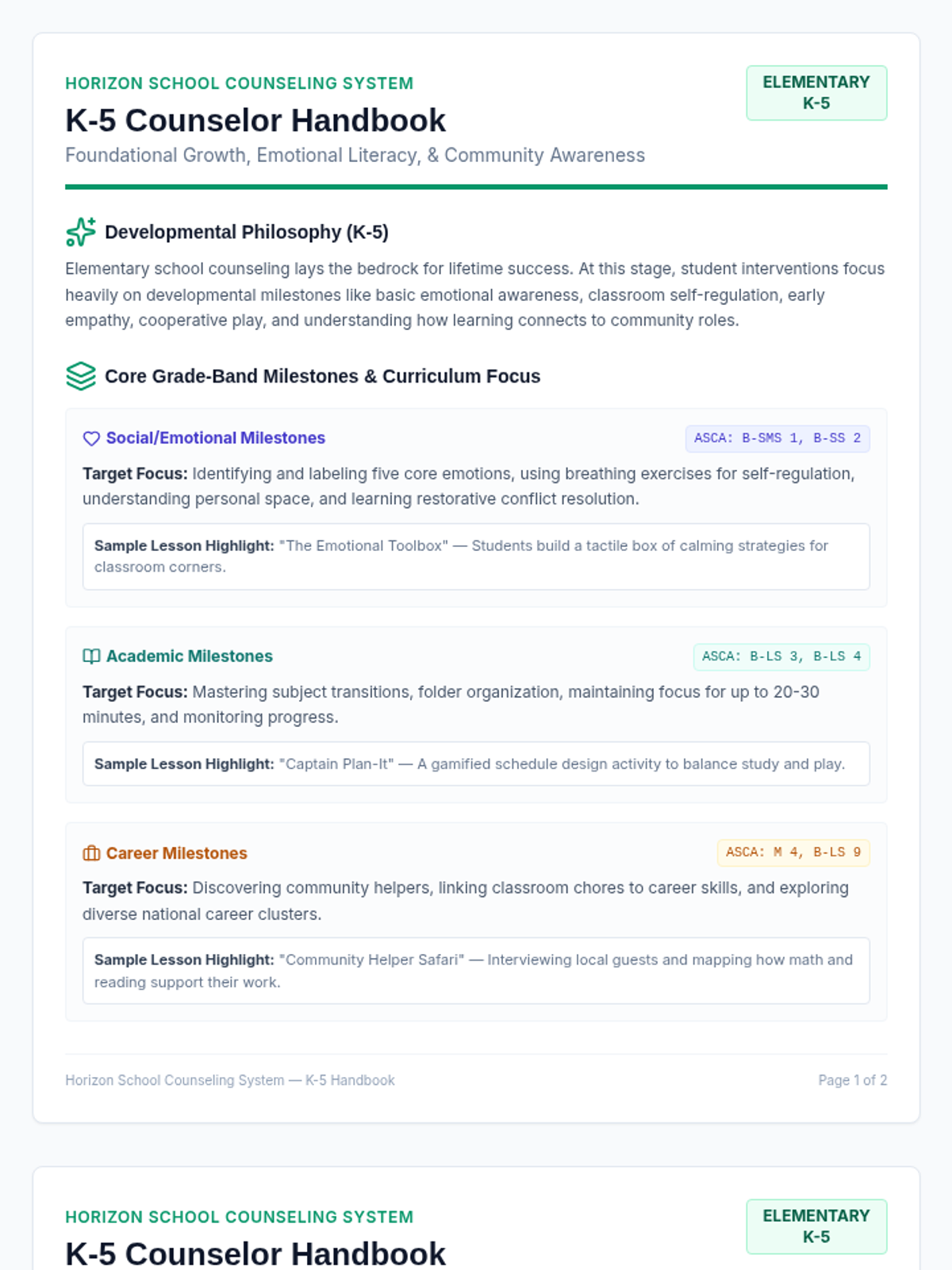
Elementary (K-5) Counselor Handbook outlining developmental milestones, core counseling focus areas across Academic, Career, and Social/Emotional domains, sample classroom lesson ideas, group counseling themes, and parent/teacher integration strategies.
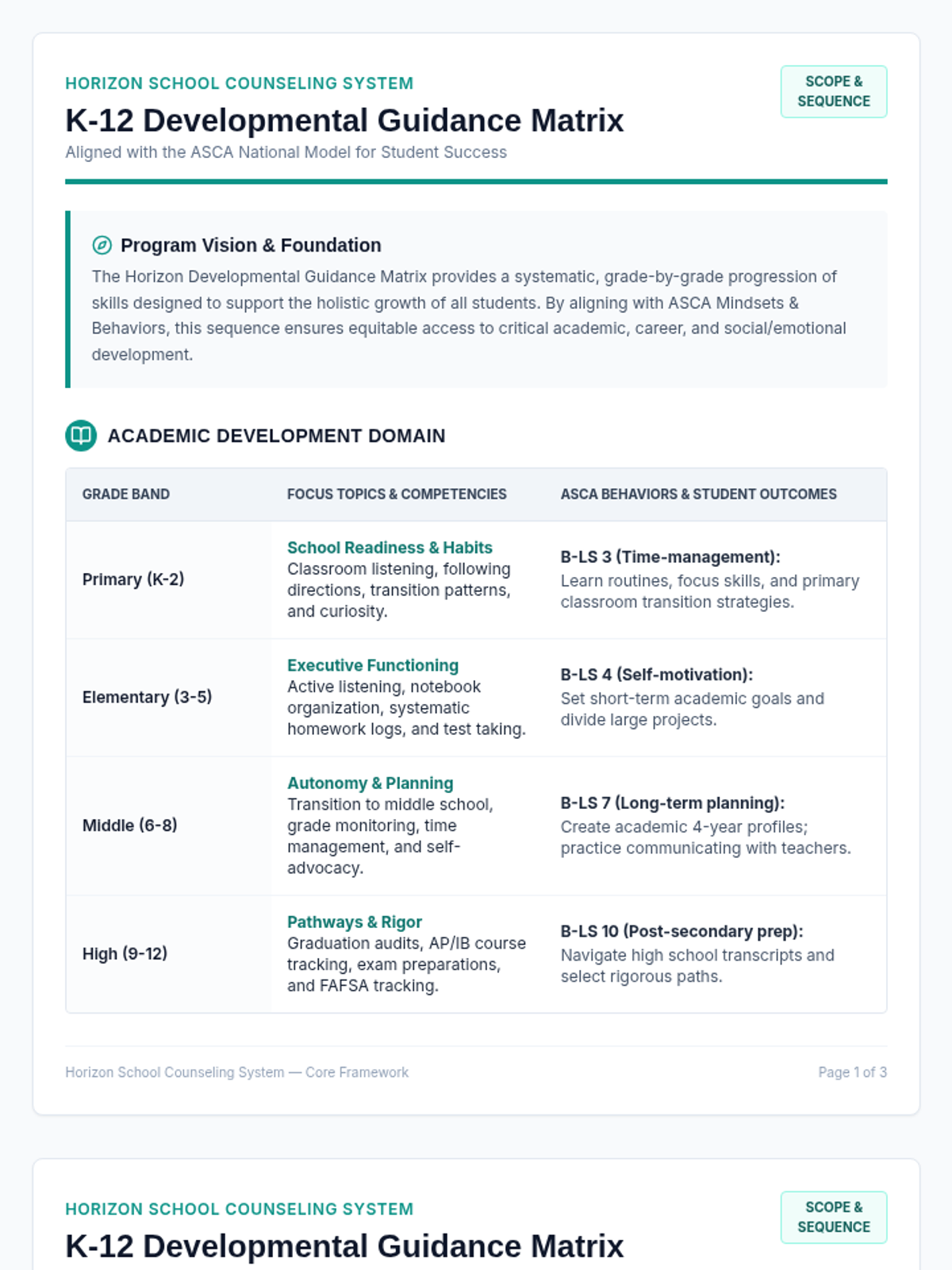
The master K-12 Developmental Guidance Scope & Sequence matrix mapping core competencies across Academic, Career, and Social/Emotional domains aligned with the ASCA National Model. Includes key programmatic delivery guidelines and implementation benchmarks for educators.
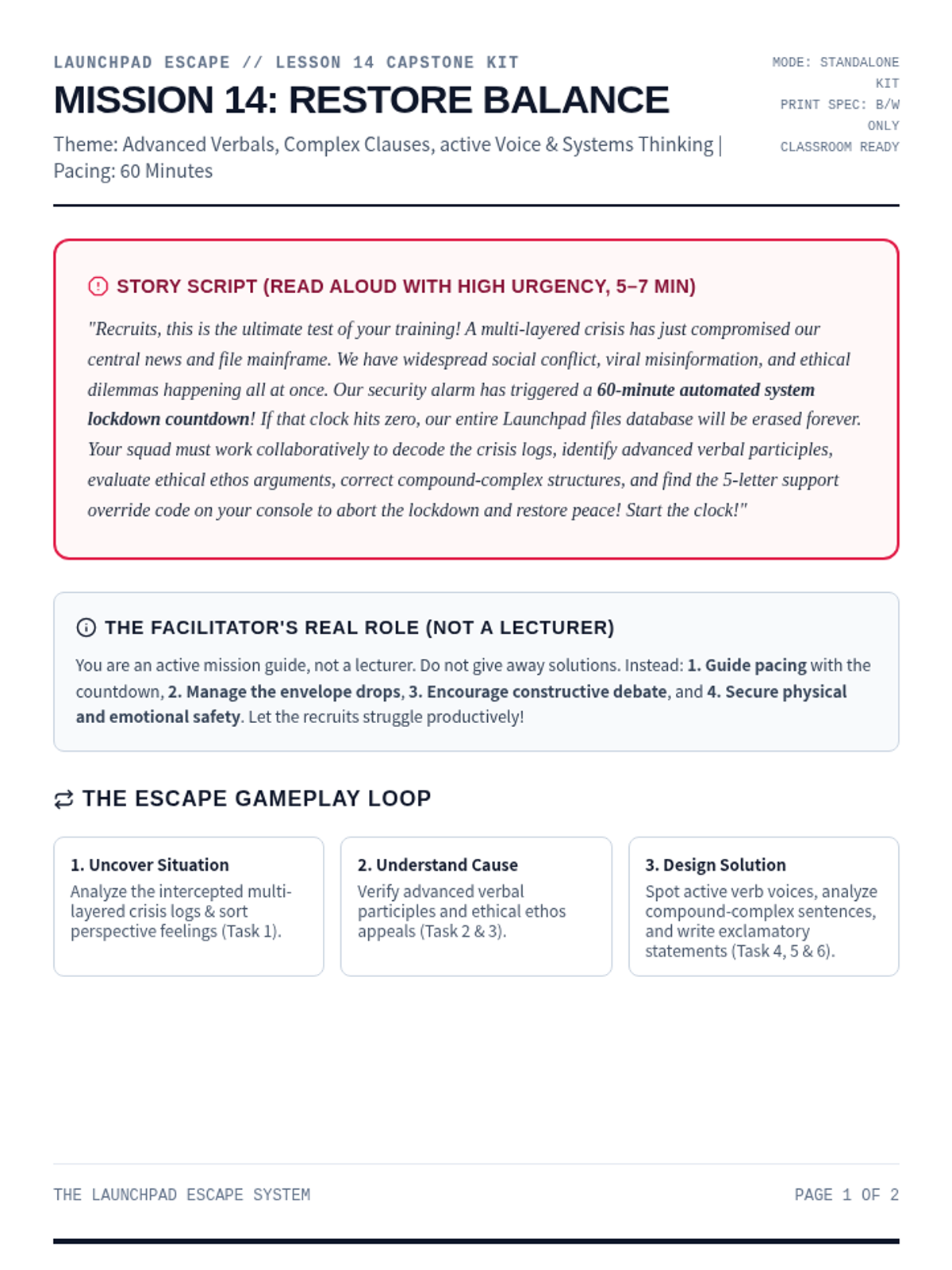
A comprehensive printable facilitator guide for Mission 14: The Capstone Mission. Contains story script, setup checklists, progressive clue mechanics, persuasive appeals endings, and debrief questions.
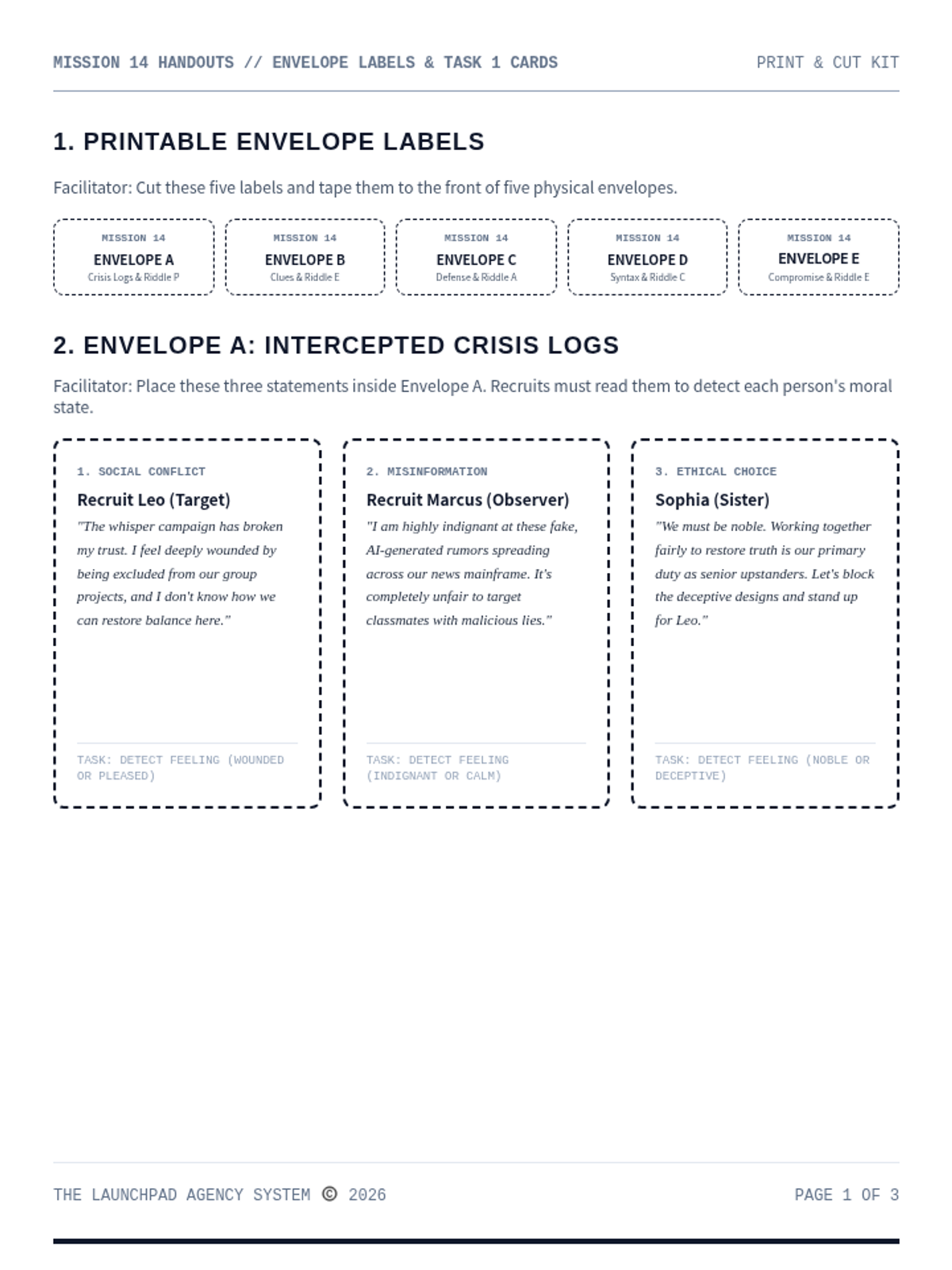
A print-and-cut materials handout kit for Mission 14: The Capstone Mission. Contains envelope labels, printed posts, source cards, and timeline charts.
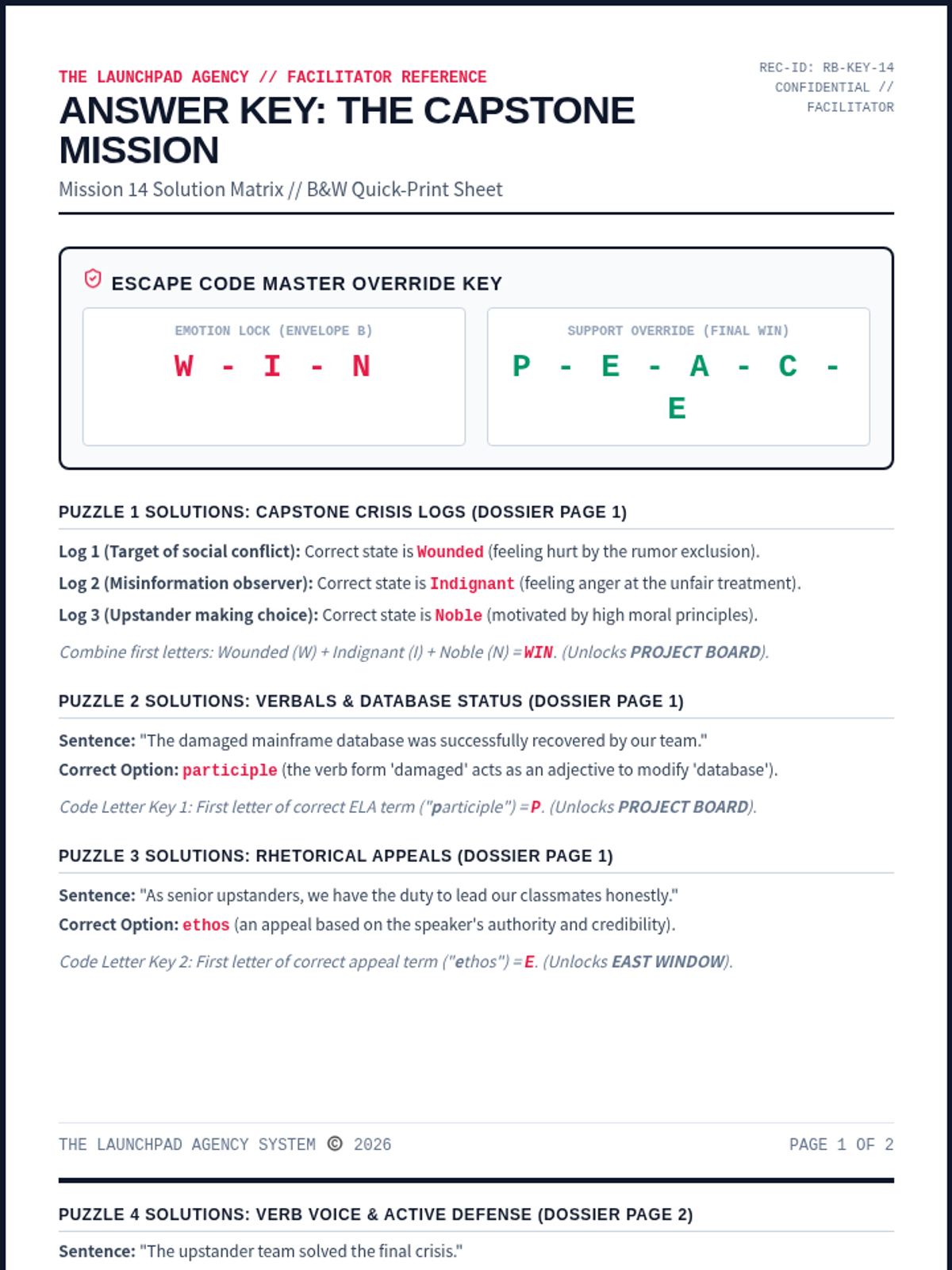
A dedicated facilitator answer key for Mission 14: The Capstone Mission. Contains complete solutions for all ELA/coordinate puzzles, ciphers, and floor map paths, along with rubrics and setup tips.
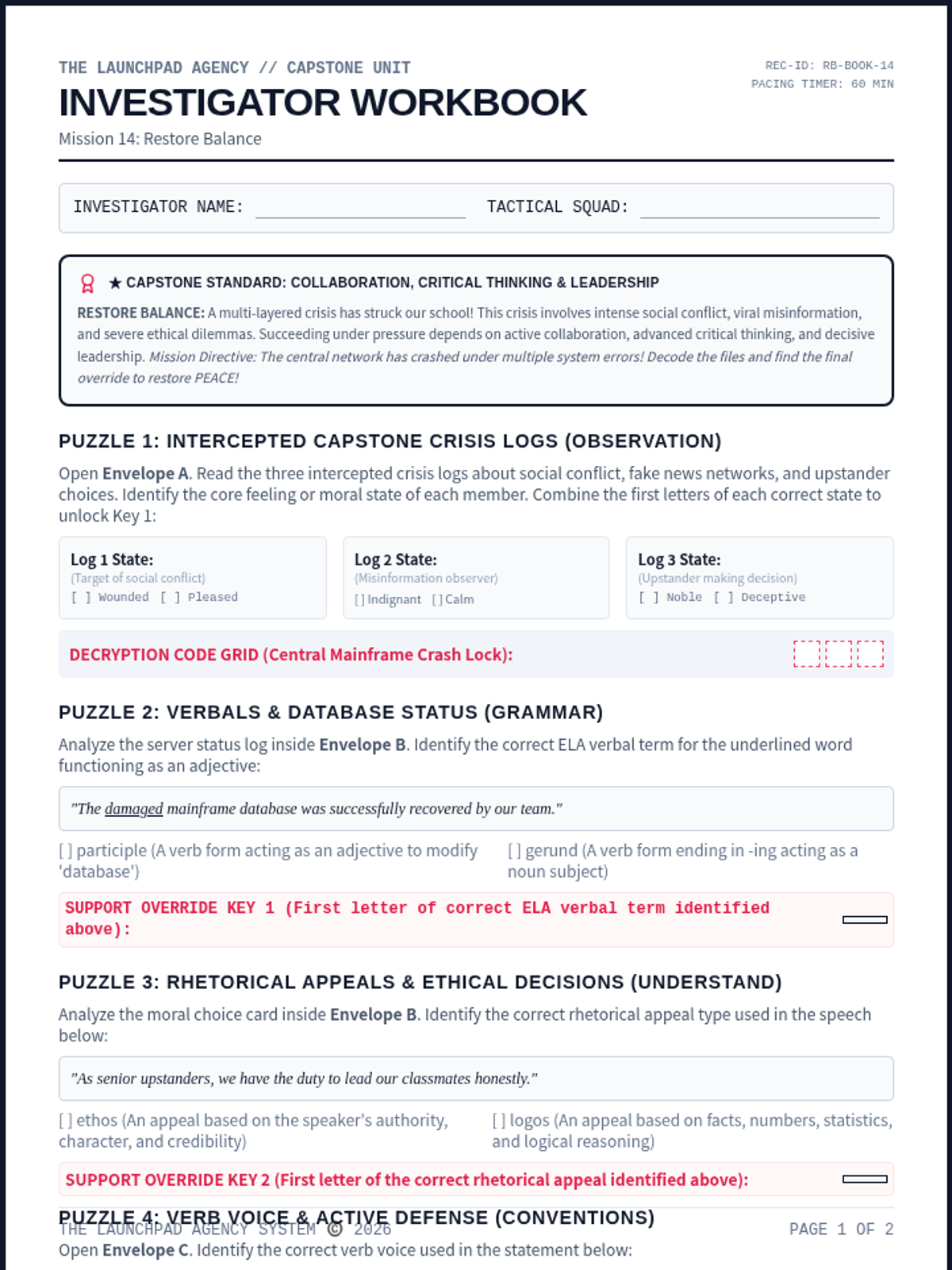
An immersive student-facing escape worksheet. Recruits examine complex social conflict evidence, trace misinformation networks, resolve major ethical dilemmas, and decode the final override.
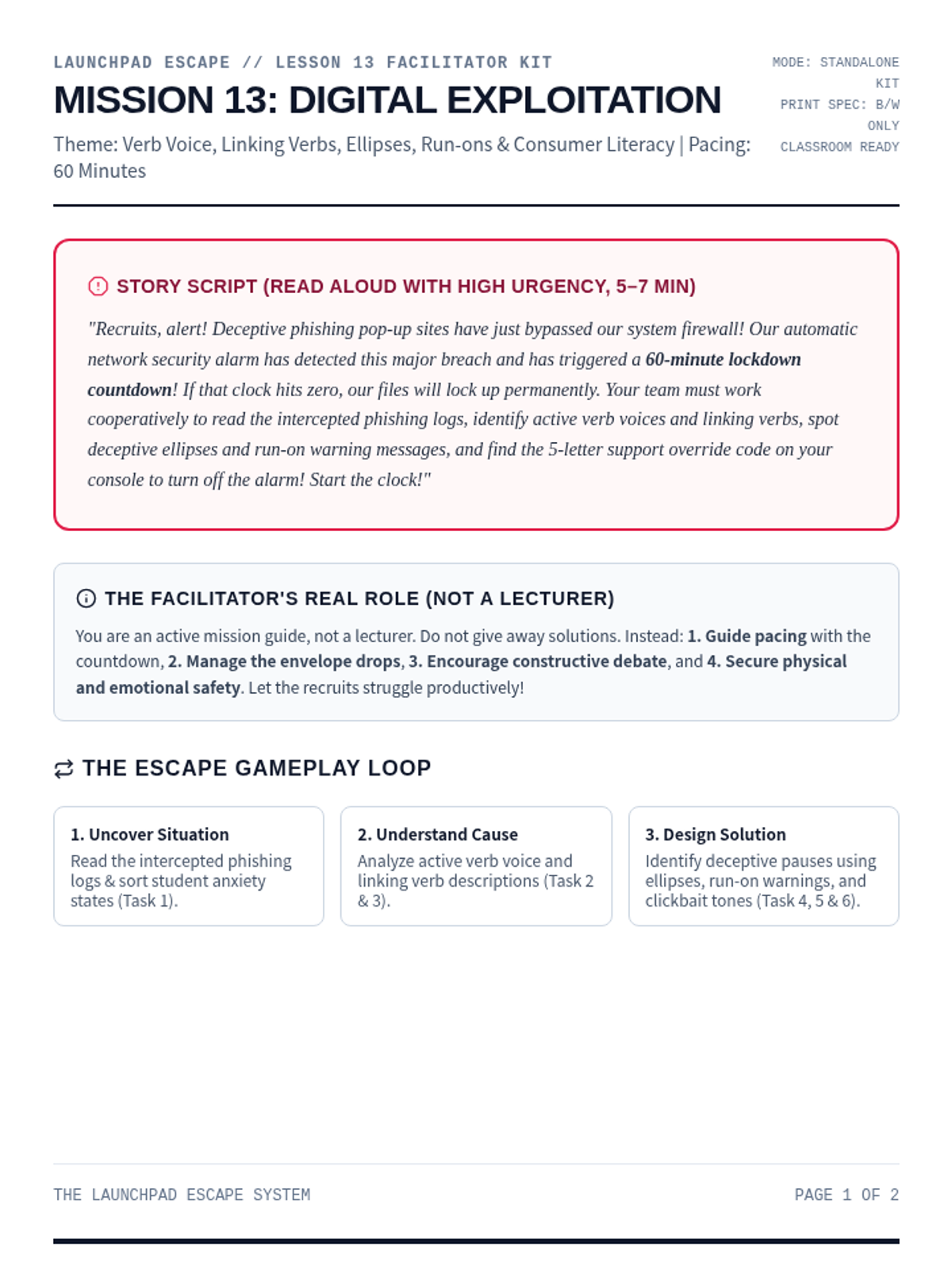
A comprehensive printable facilitator guide for Mission 13: Digital Exploitation. Contains story script, setup checklists, progressive clue mechanics, persuasive appeals endings, and debrief questions.
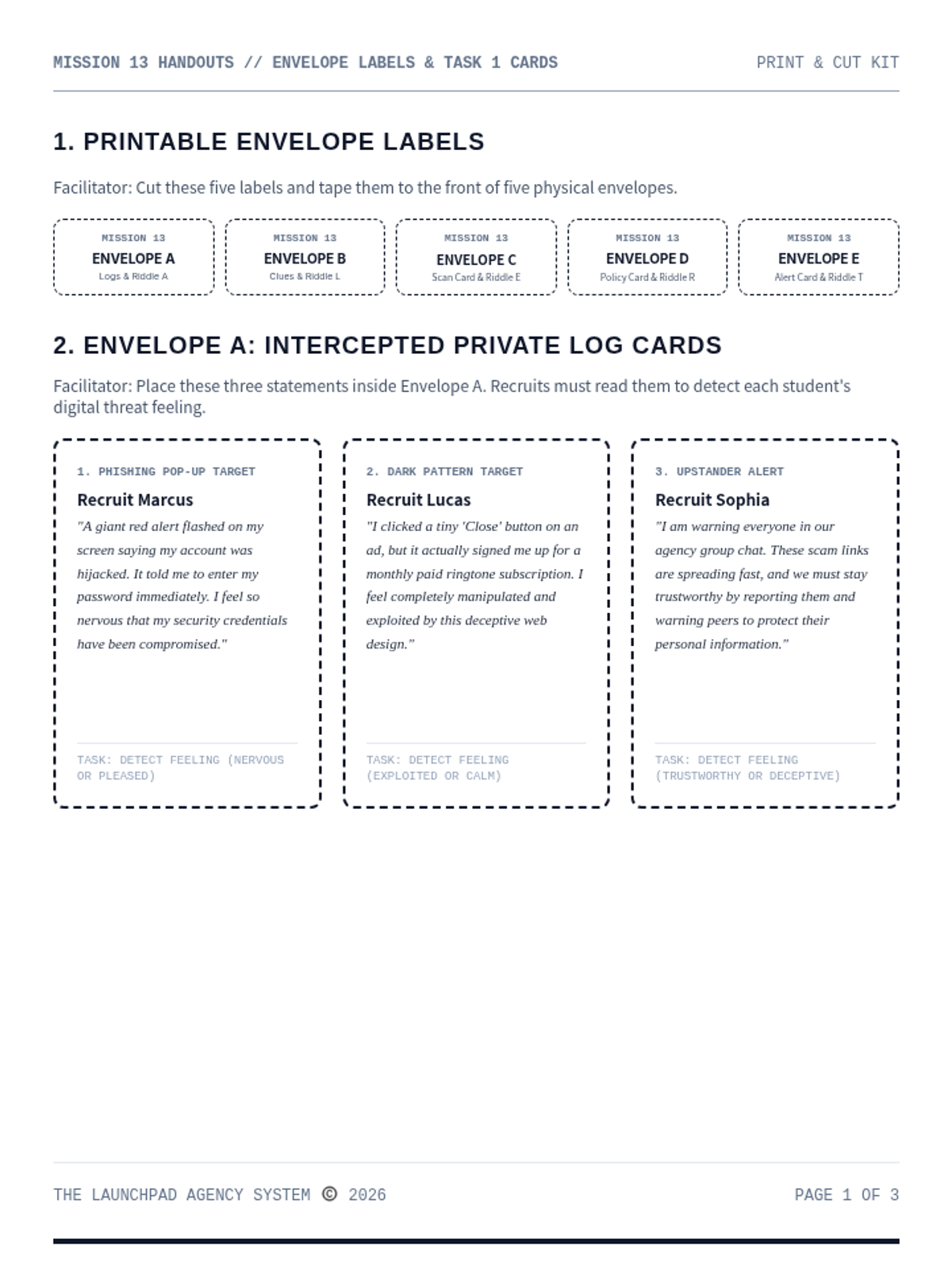
A print-and-cut materials handout kit for Mission 13: Digital Exploitation. Contains envelope labels, student statements, word files, and printable landmark riddle cards.
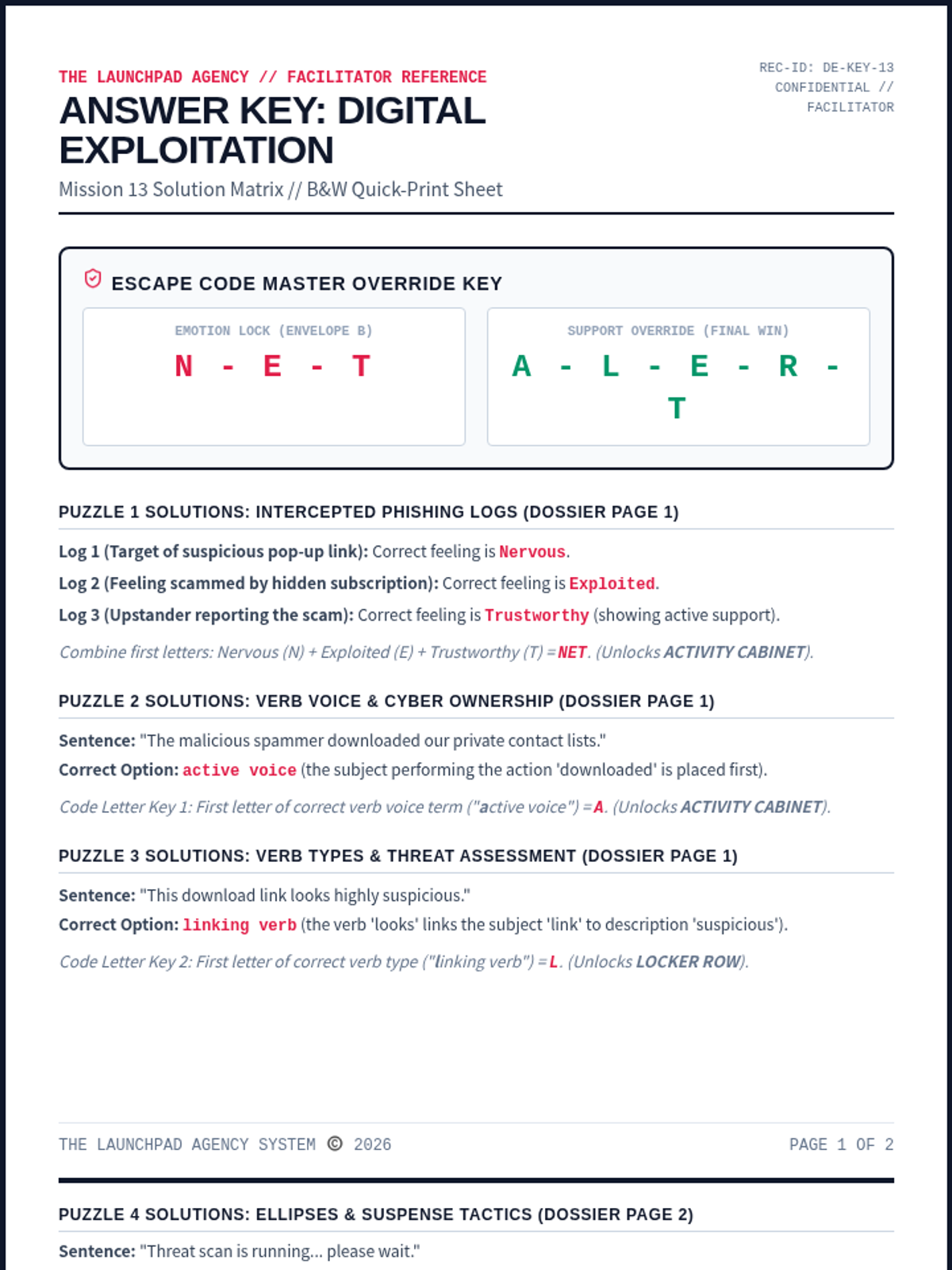
A dedicated facilitator answer key for Mission 13: Digital Exploitation. Contains complete solutions for all ELA/coordinate puzzles, ciphers, and floor map paths, along with rubrics and setup tips.
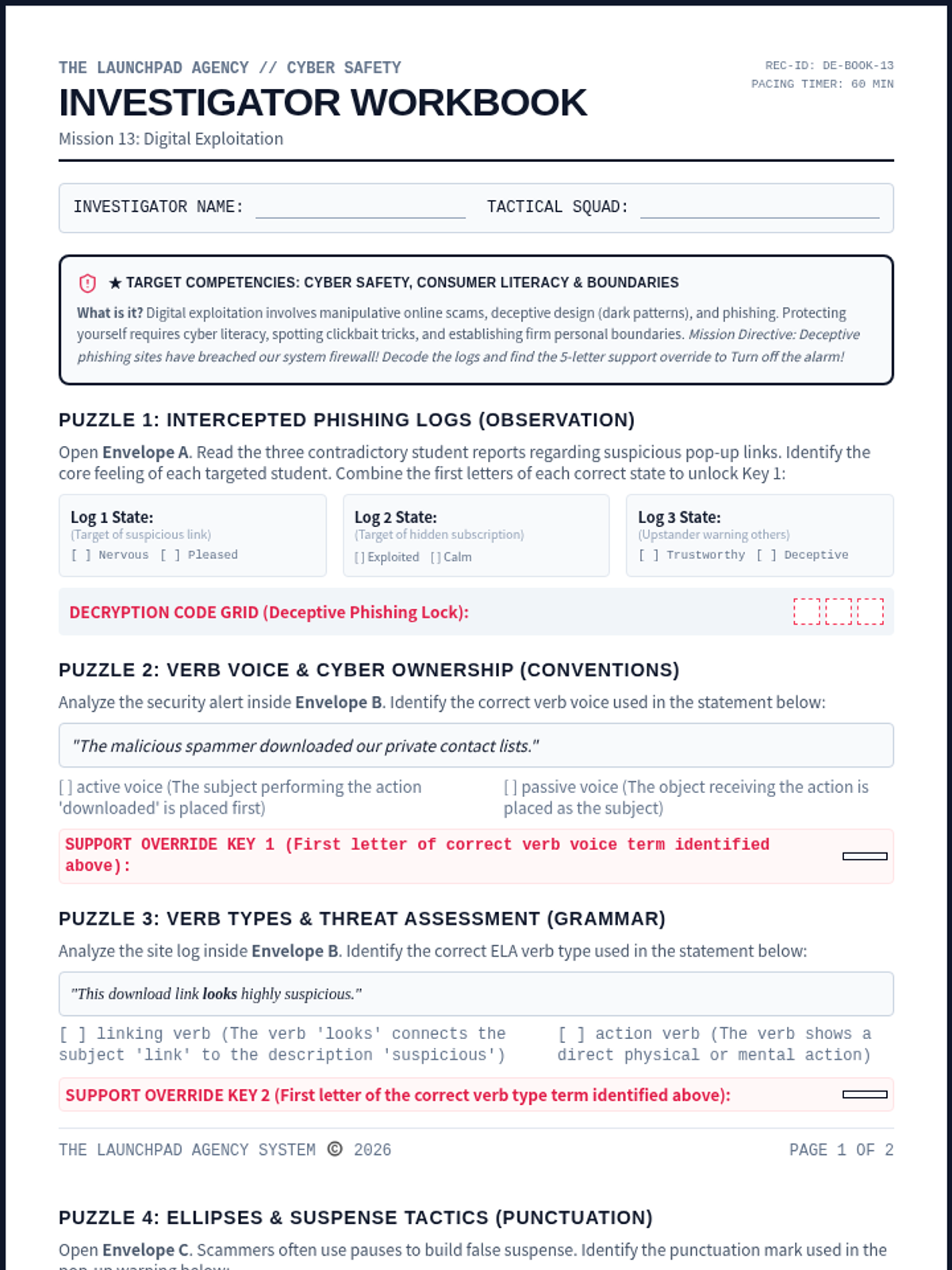
An immersive student-facing escape worksheet. Recruits identify online scams, recognize manipulative dark patterns, and protect personal data. Recruits analyze active verb voices, linking verbs, ellipses punctuation, and deceptive tones to decode the final alert.