A set of visual sharing cards and sentence starters designed for K-2 students to facilitate the 'Look, Lean, Listen, Learn' partner protocol. Features large text, friendly icons, and simple prompts.
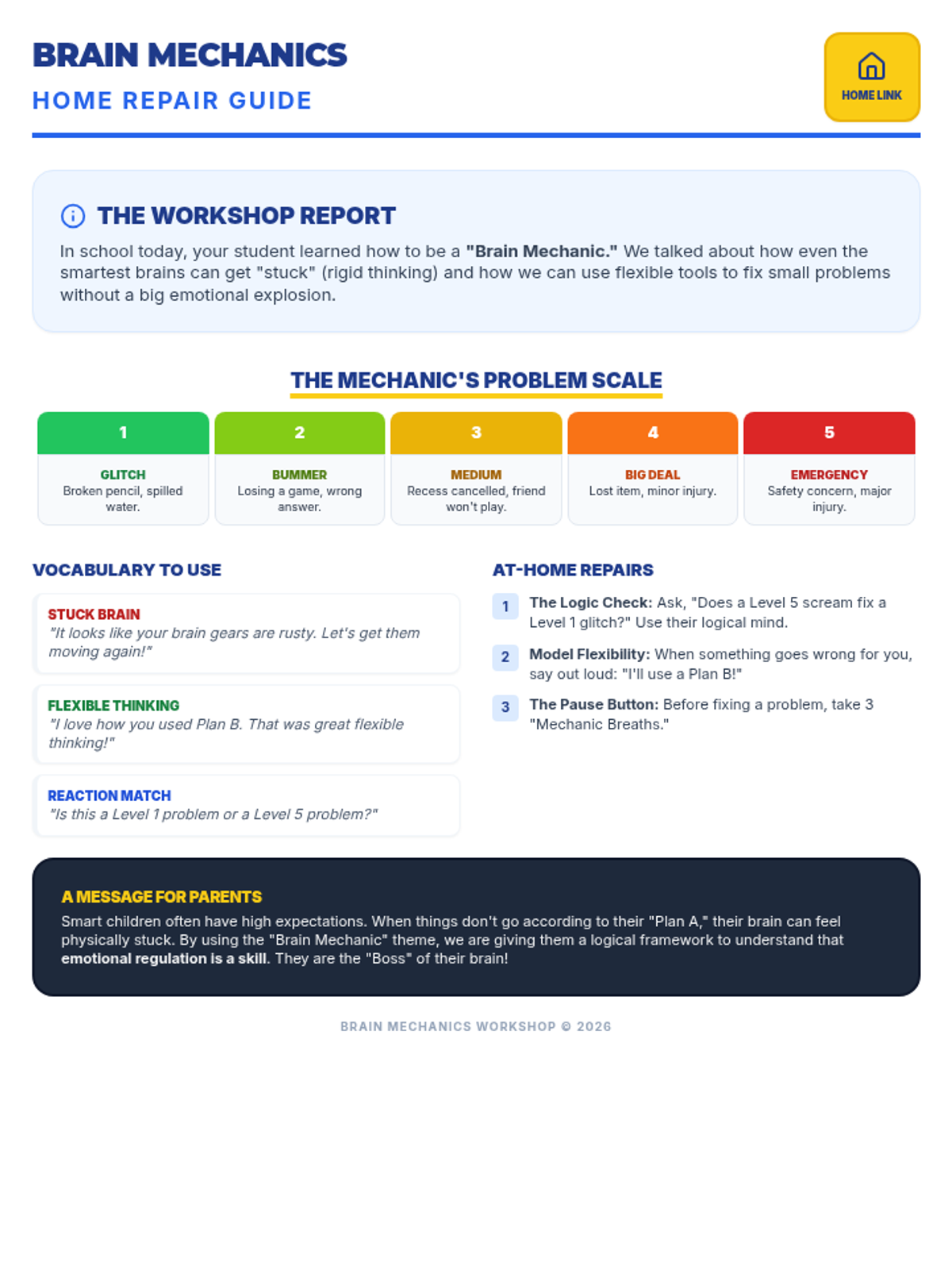
A parent handout for the 'Brain Mechanics' lesson, summarizing key vocabulary, the 1-5 problem scale, and at-home reinforcement strategies for managing stuck thinking and emotional regulation.
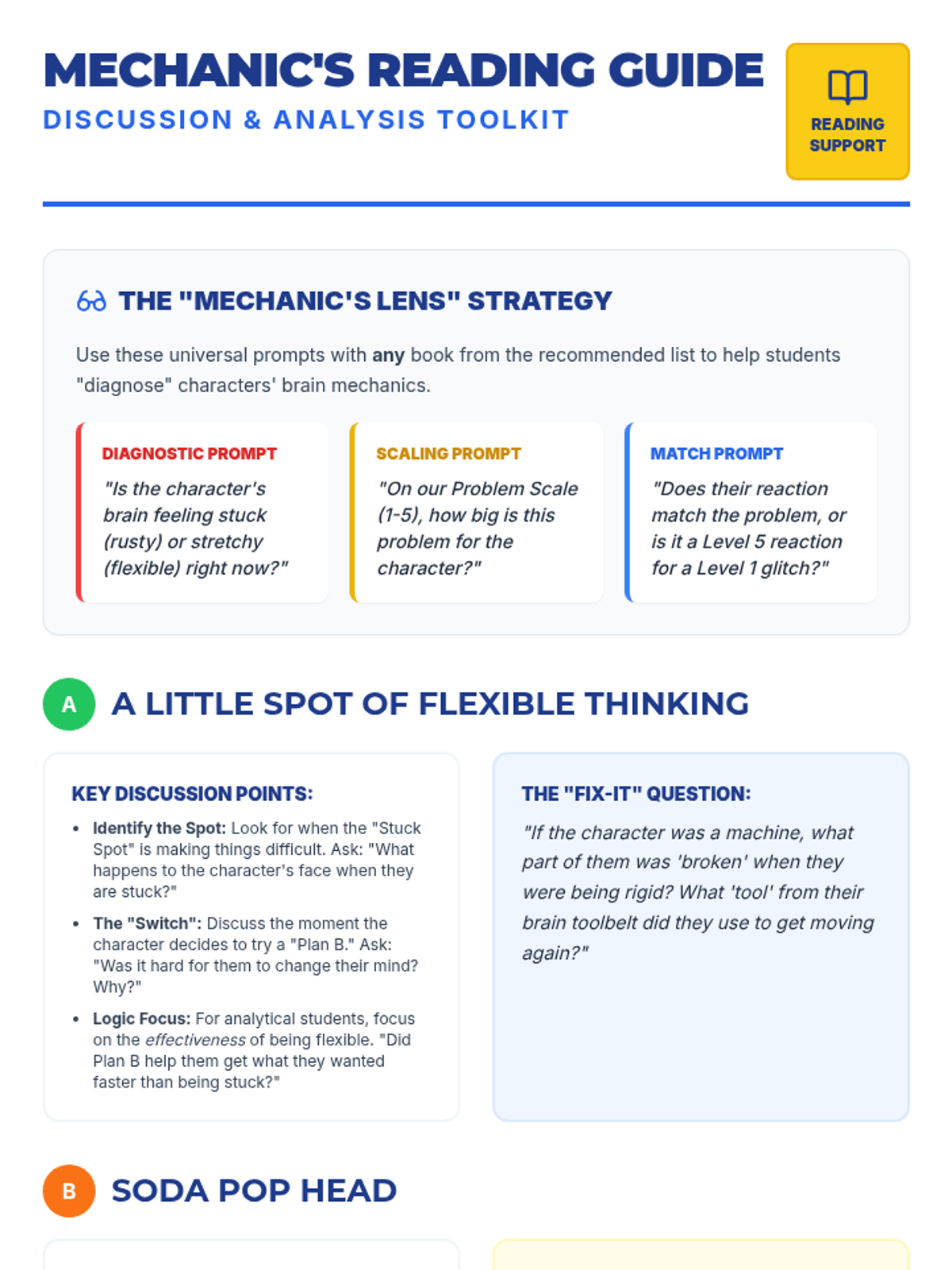
A teacher-facing reading guide for the 'Brain Mechanics' lesson, providing discussion prompts and analysis strategies for recommended books like 'A Little Spot of Flexible Thinking' and 'Soda Pop Head'.
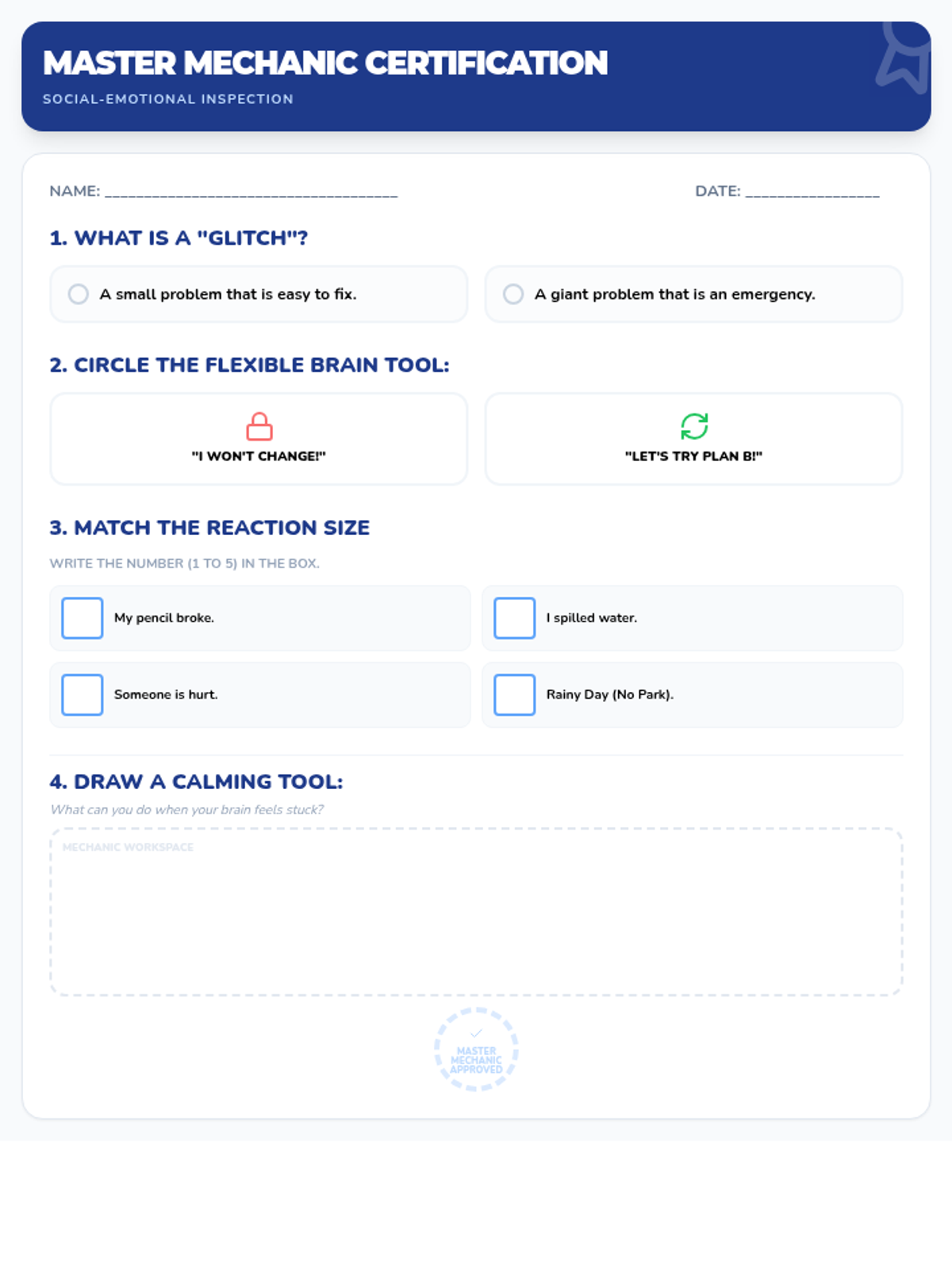
A student assessment for the Brain Mechanics lesson, styled as a 'Master Mechanic Certification' to check for understanding of problem sizes and flexible thinking.
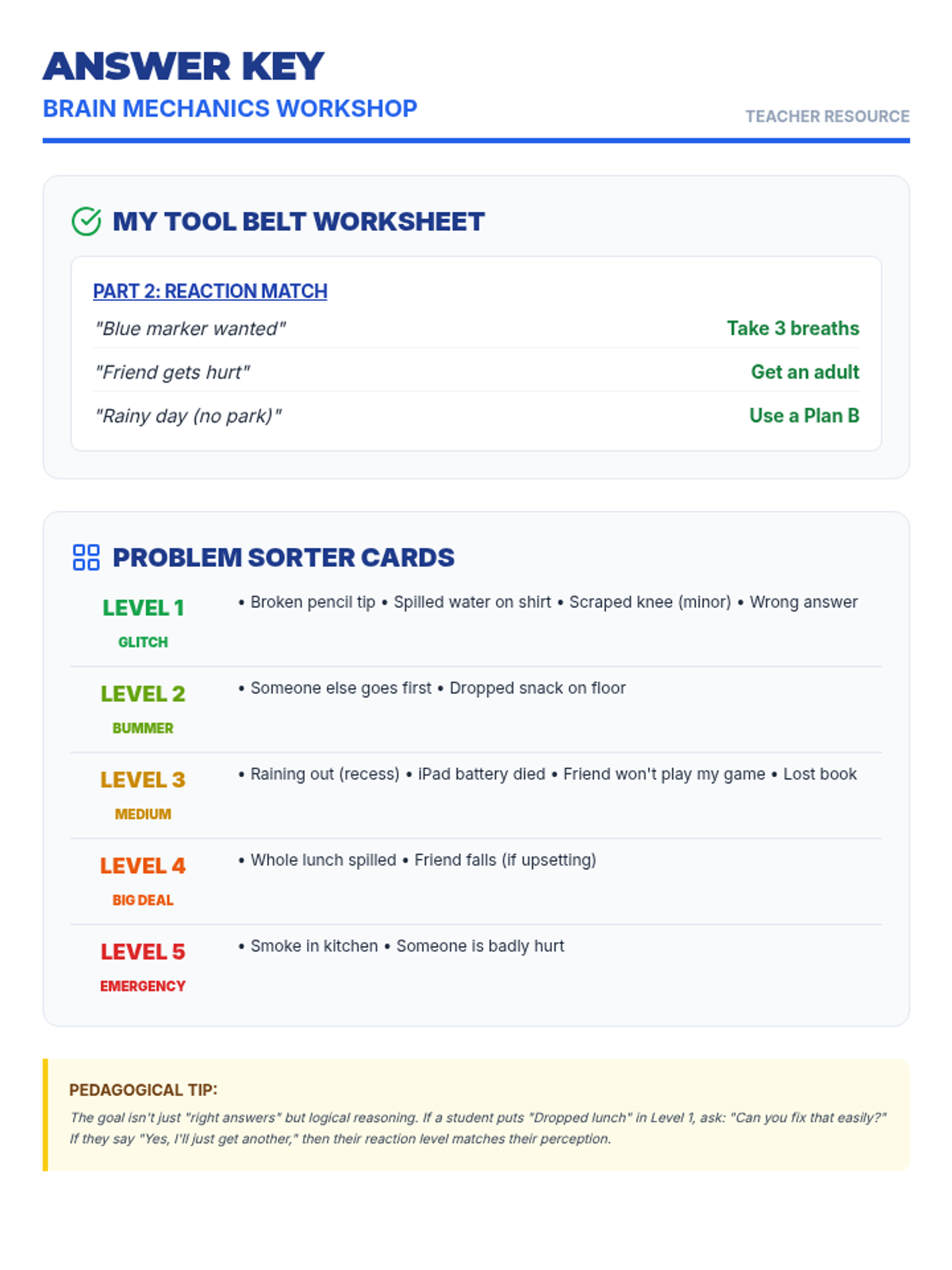
An answer key for the Brain Mechanics lesson, providing suggested categorizations for the sorting activity and correct matches for the student worksheet.
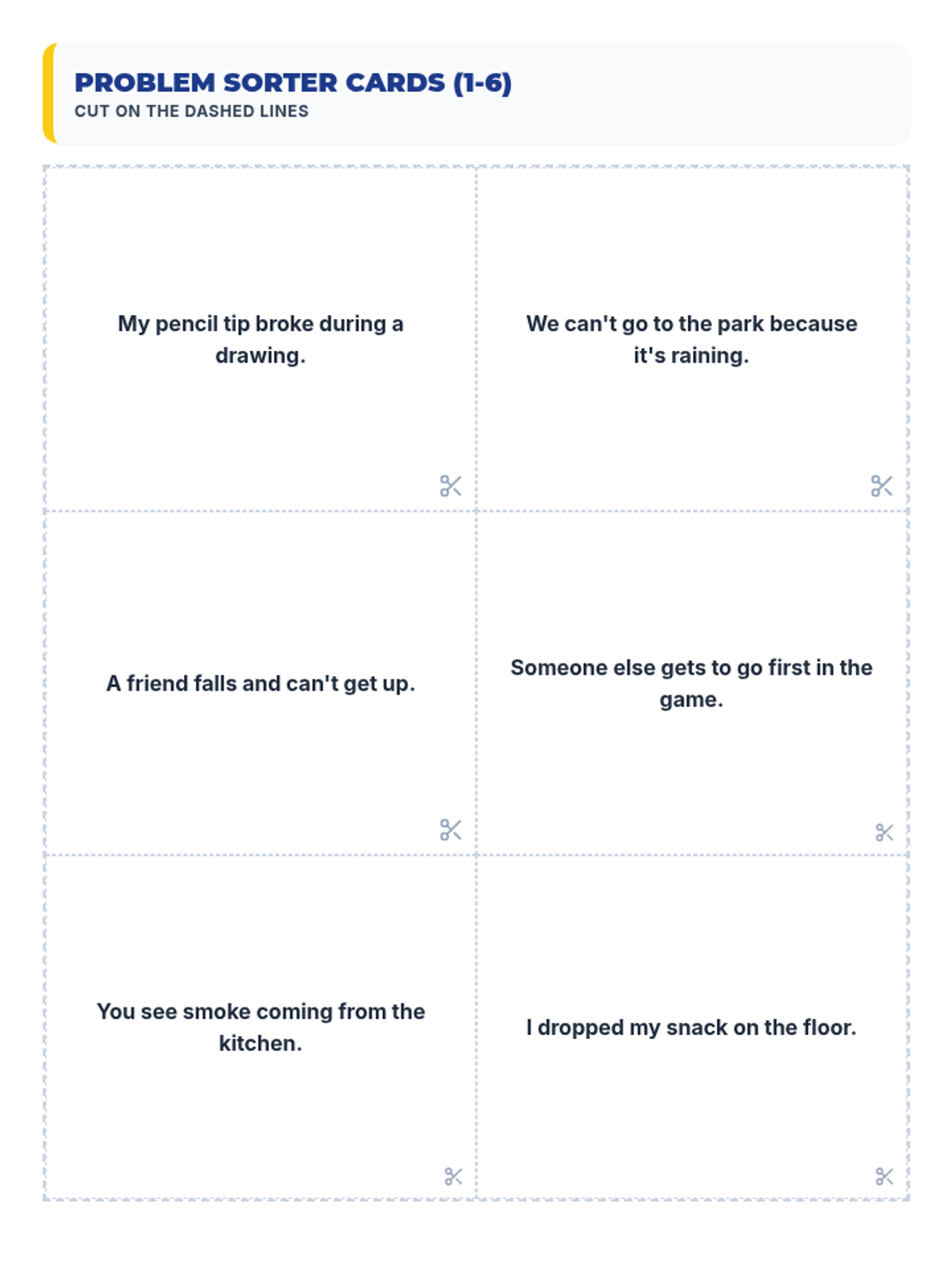
Scenario cards for a hands-on sorting activity where students categorize different problems based on their severity using the 'Brain Mechanics' framework. Includes a 1-5 scale sorting mat.
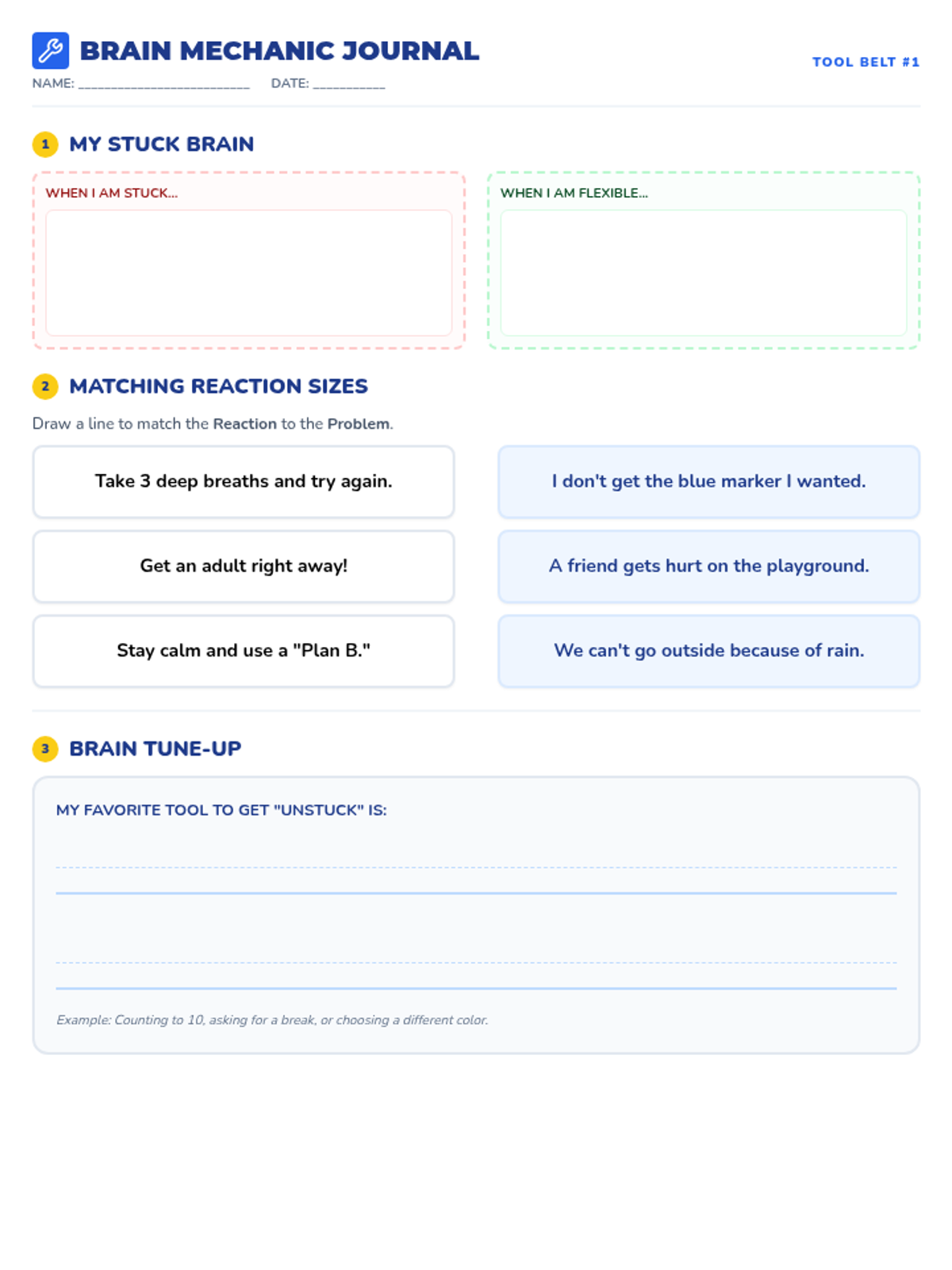
A student worksheet for the 'Brain Mechanics' lesson, featuring drawing areas for self-reflection on 'stuck' thinking and matching exercises for problem/reaction levels.
An engaging slide deck for the 'Brain Mechanics' lesson, illustrating concepts of stuck vs. flexible thinking and matching problem sizes to reaction levels.
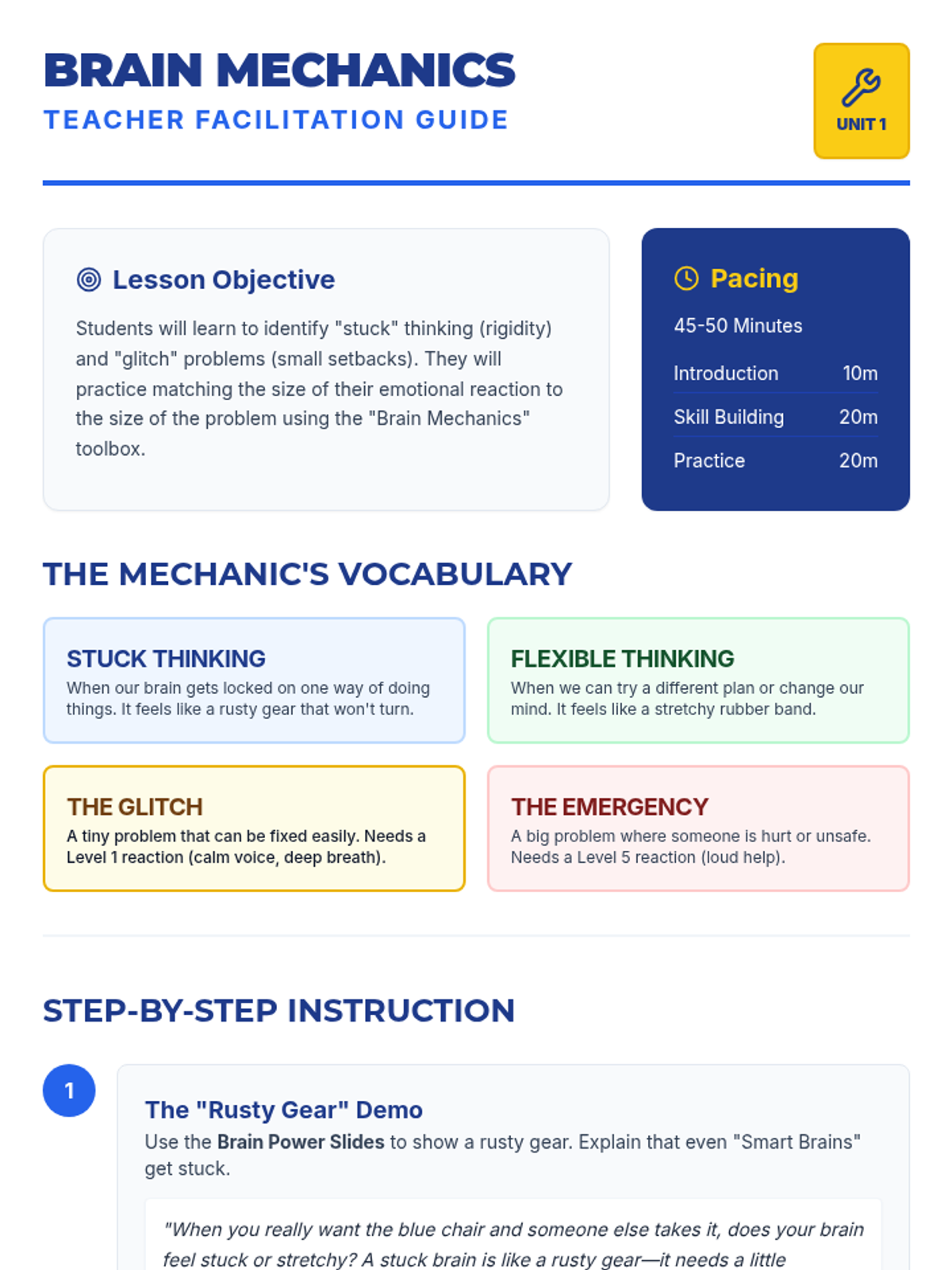
A comprehensive teacher's guide for the 'Brain Mechanics' lesson, featuring instructional steps, vocabulary definitions, and strategies for managing 'stuck' thinking and problem-reaction sizing. Now includes a curated list of recommended books for the lesson.
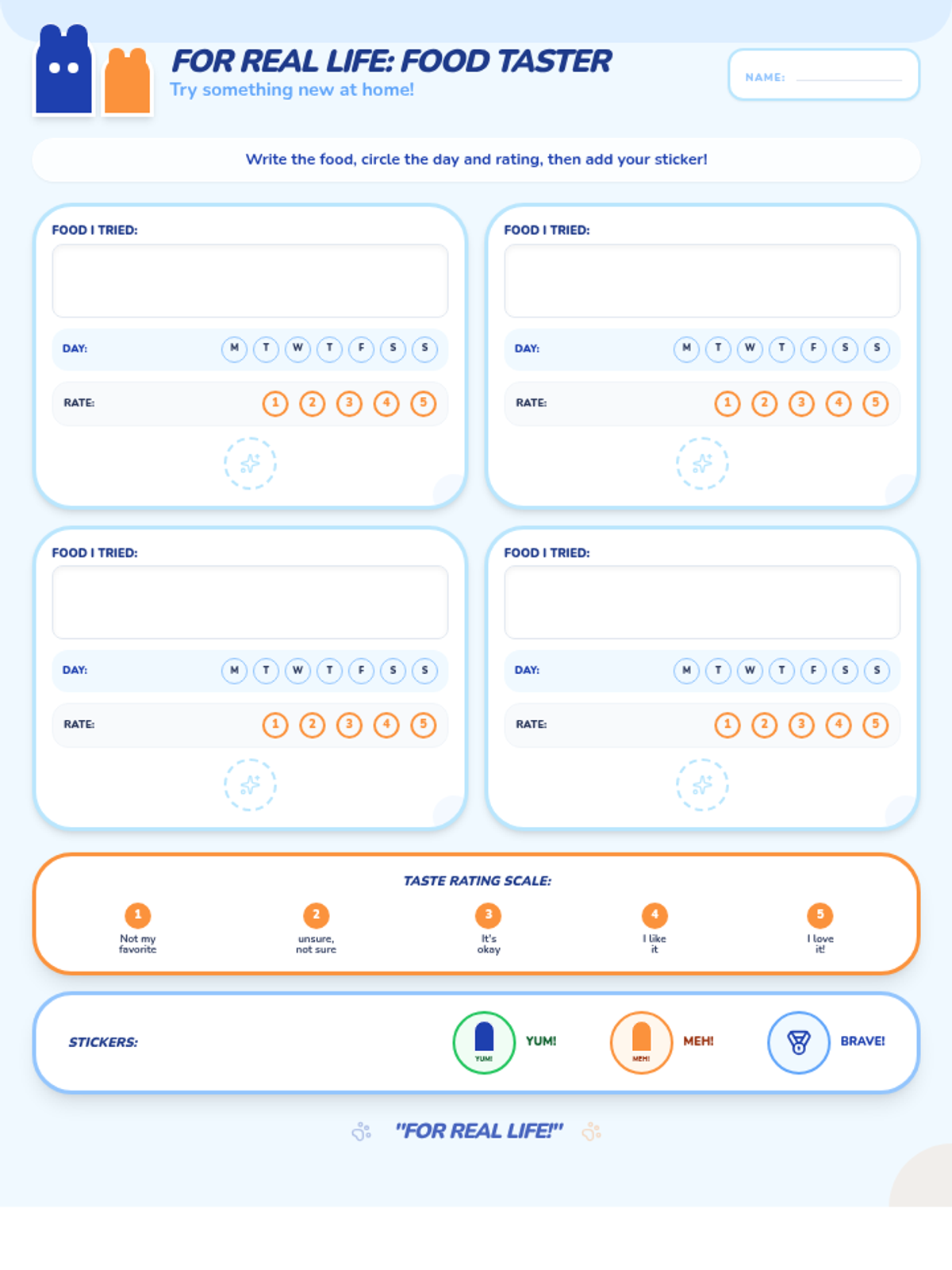
A Bluey-themed food taster sticker chart for home use. Students can write the food they tried, circle the day of the week, and rate the food on a 1-5 scale. Includes a horizontal rating legend and sticker-style icons. Updated #2 rating description.
A slide deck for introducing preschoolers to the concept of play choices. It defines what a choice is, explains that friends have their own choice voice, and provides actionable options for when a friend chooses to play with something or someone else.
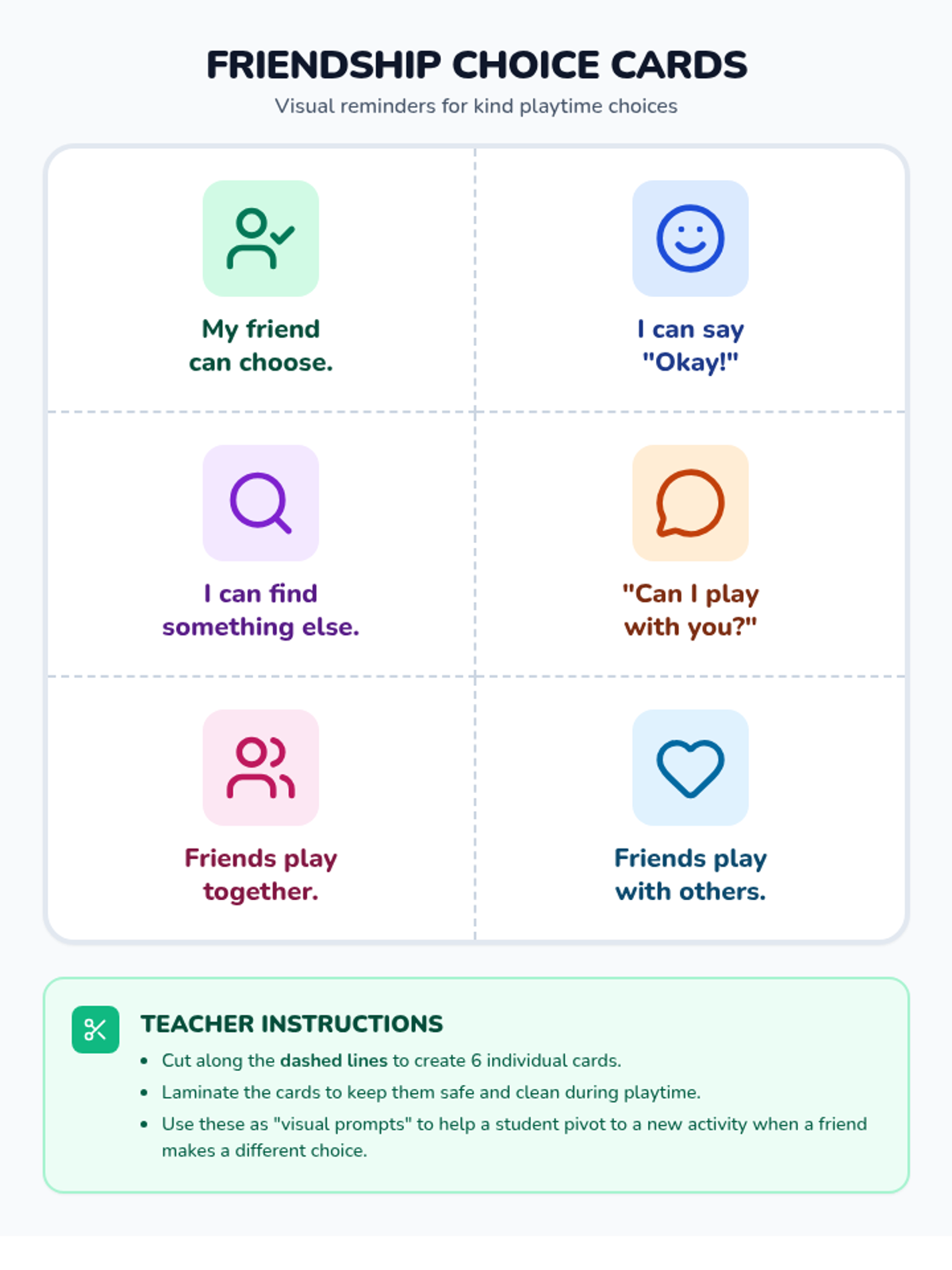
A set of 6 printable visual support cards for preschoolers to help them navigate social situations where friends make independent choices. Each card features a clear icon and a short, positive phrase.
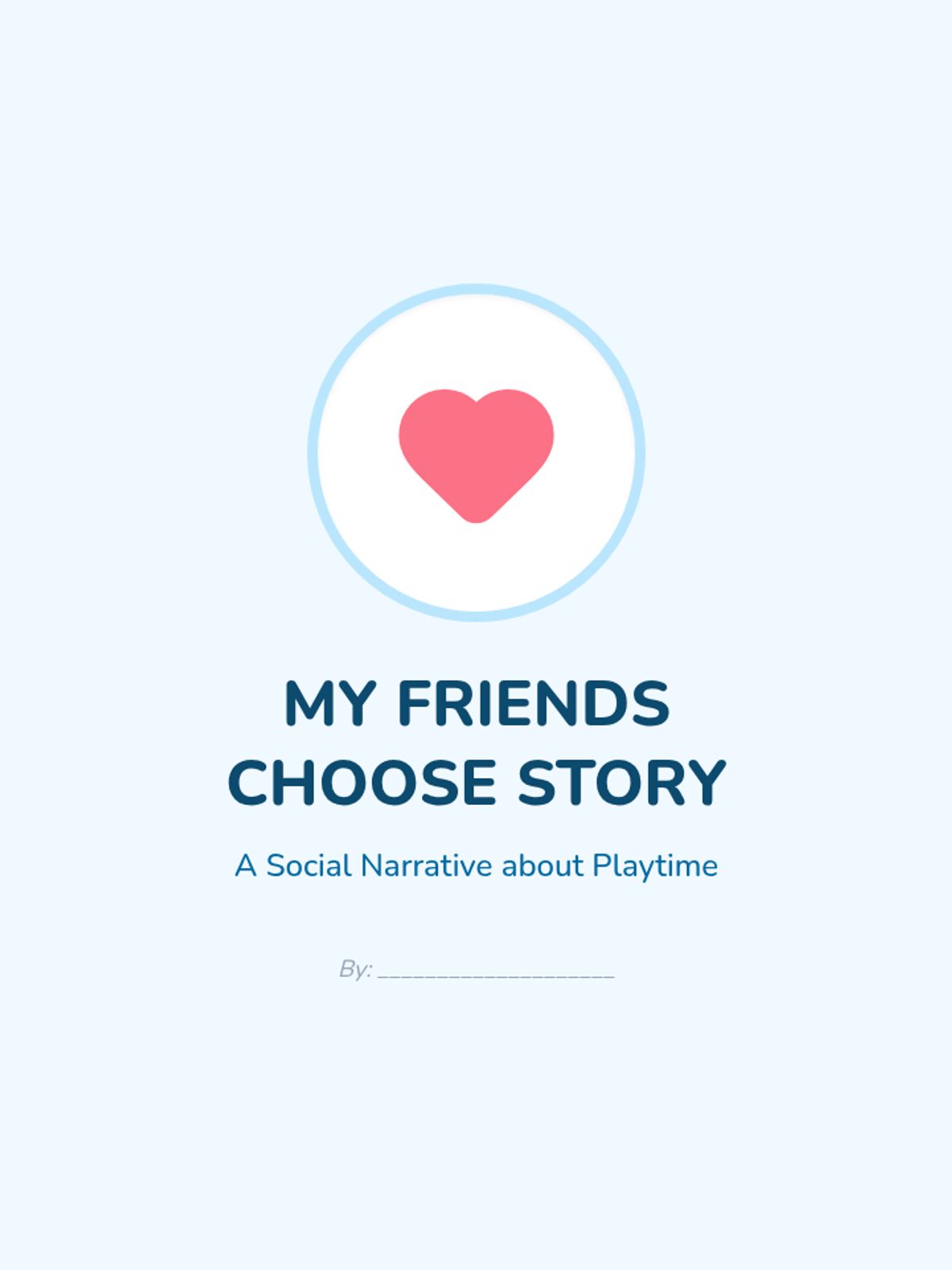
A simple, illustrated social narrative for preschoolers about allowing friends to make their own choices during play. It covers friends choosing different toys and playing with other people.
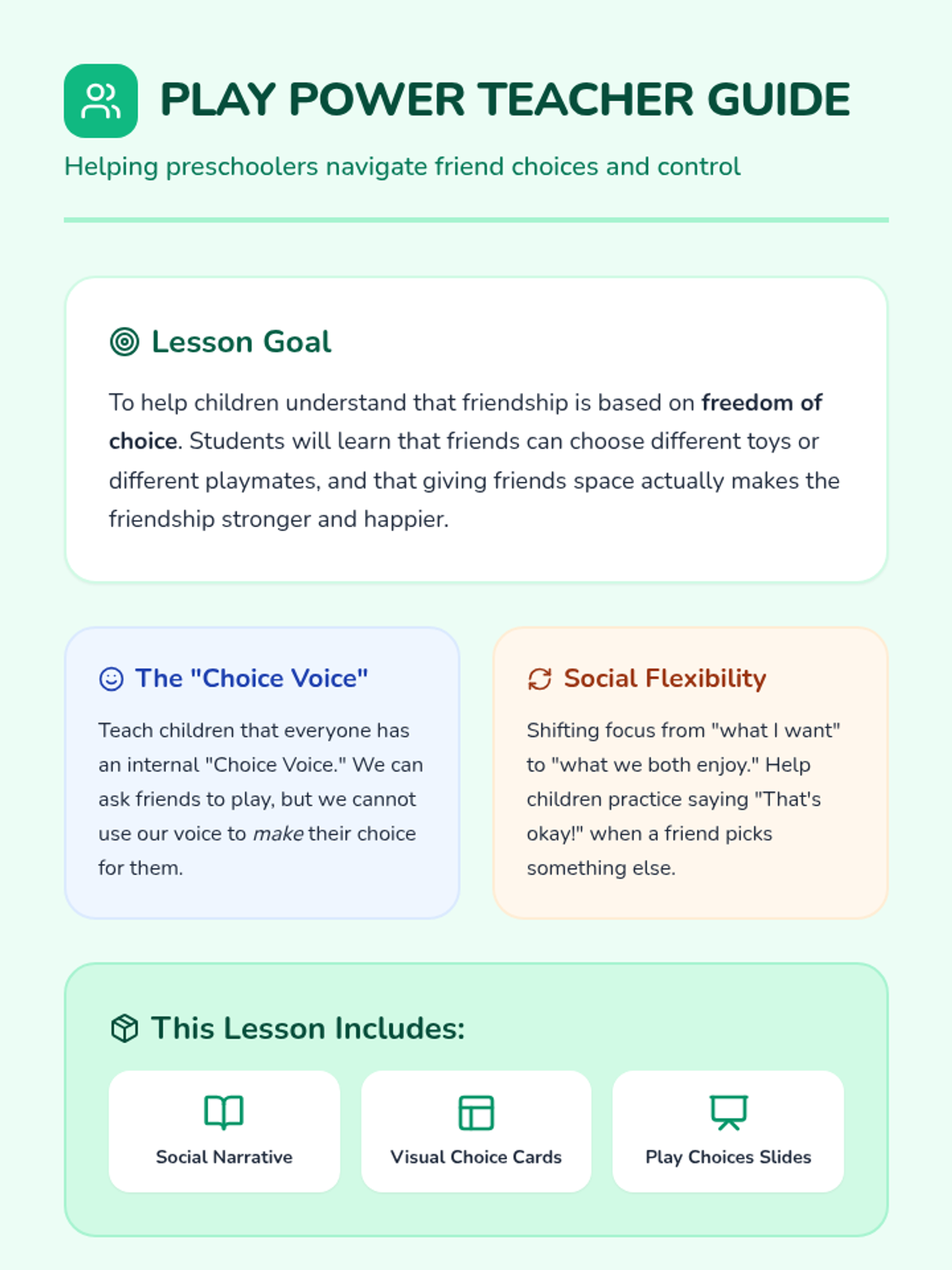
A comprehensive facilitator guide for teachers or parents to help preschoolers understand the concept of free choice in friendships. Includes teaching strategies, circle time prompts, and core concepts like the 'Choice Voice'.