A detailed, step-by-step template for drafting an individualized crisis response plan for a specific student, including triggers, roles, and communication strategies.
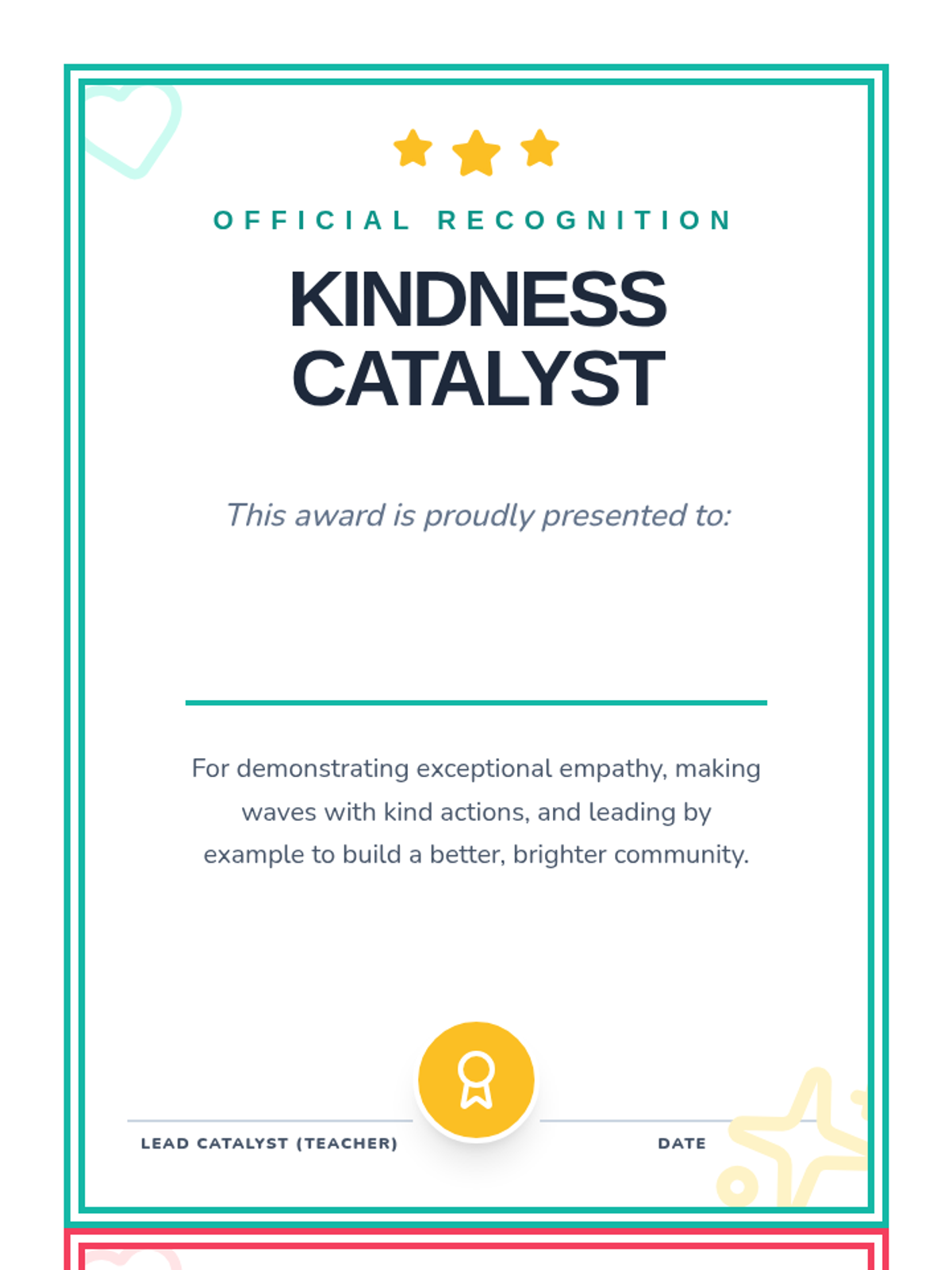
Formal certificates to recognize students for completing the Kindness Catalyst unit and demonstrating positive classroom behavior.
Final presentation slides for Lesson 3, focusing on building long-term habits and empowering students to be leaders of kindness in their school.
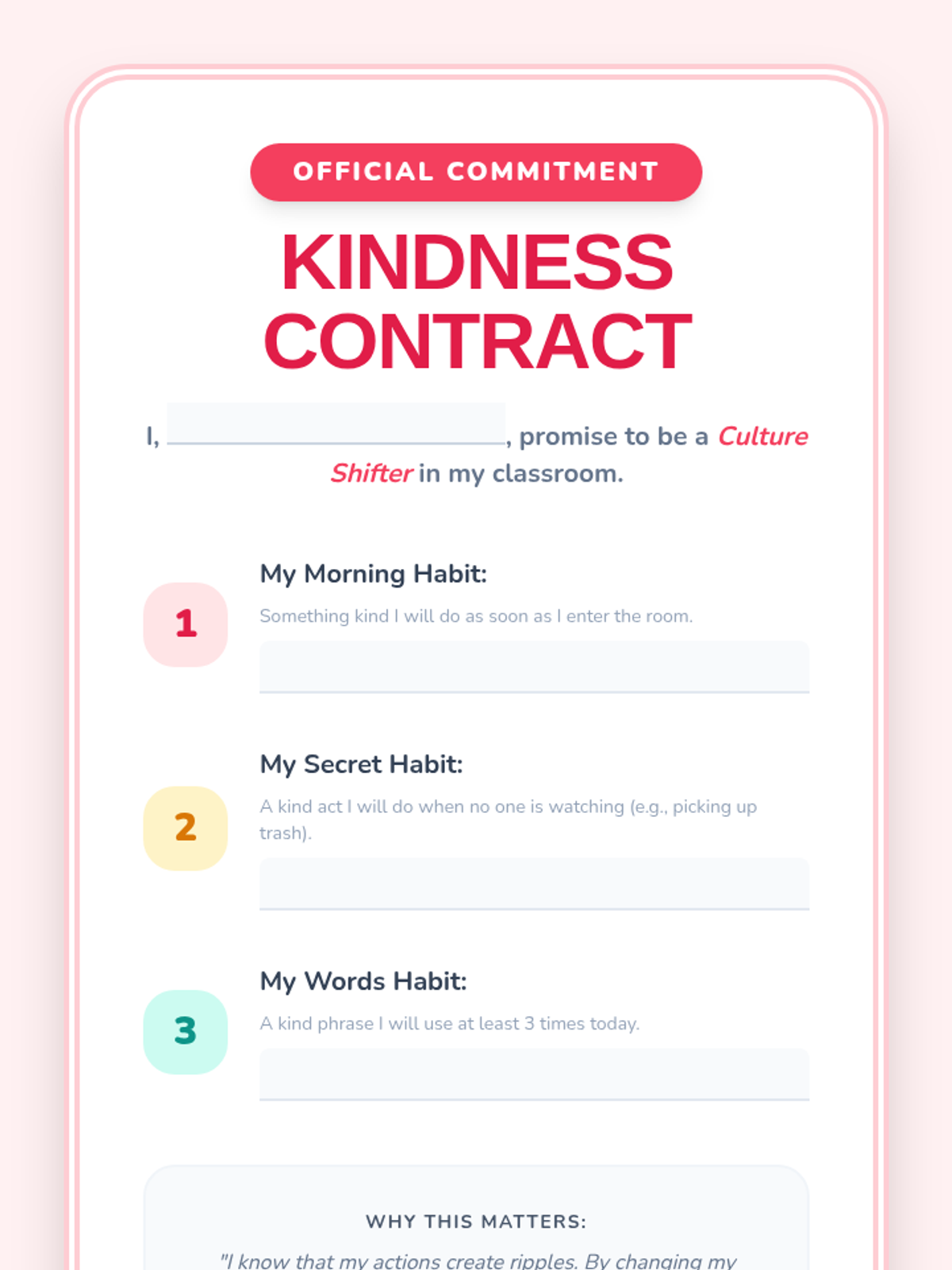
A formal commitment sheet for students to pledge specific kindness habits, reinforcing the long-term goals of the unit.
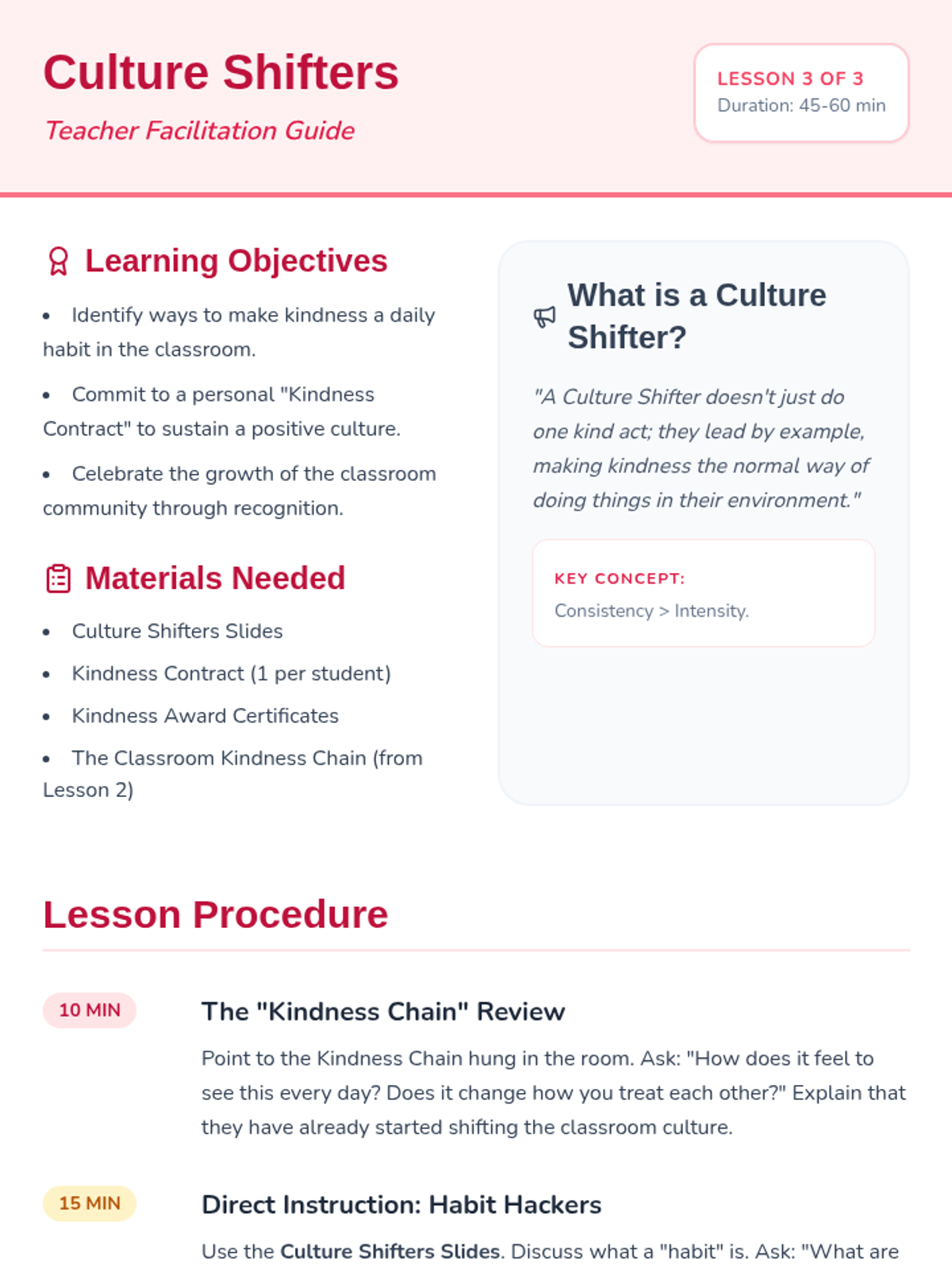
A detailed teacher guide for Lesson 3, focusing on long-term habits and providing strategies for sustaining a classroom culture of kindness.
Instructional slides for Lesson 2, illustrating the "ripple effect" through visual metaphors and real-world examples of kindness chain reactions.
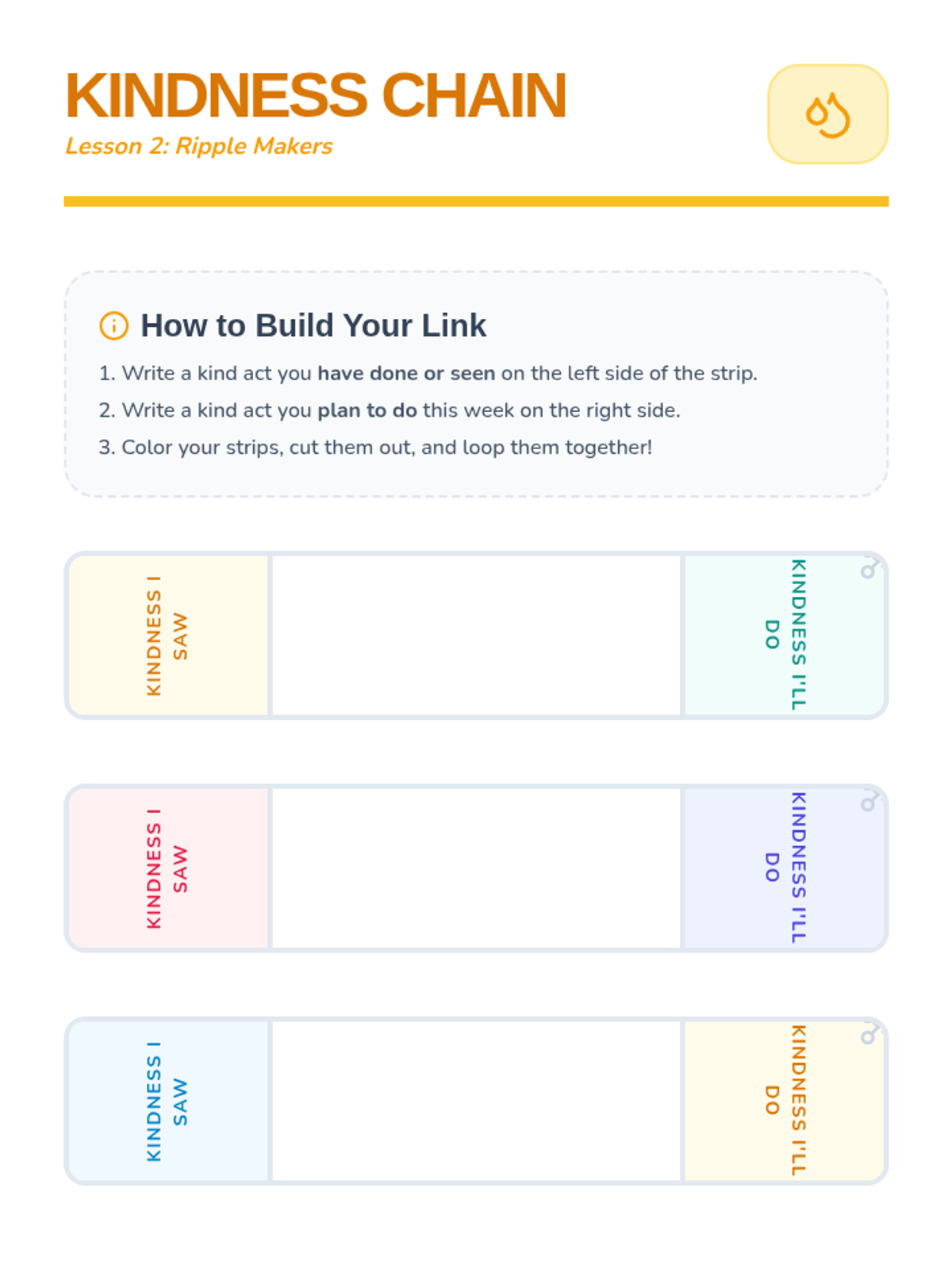
A creative activity sheet where students write about acts of kindness to create physical paper links for a classroom kindness chain.
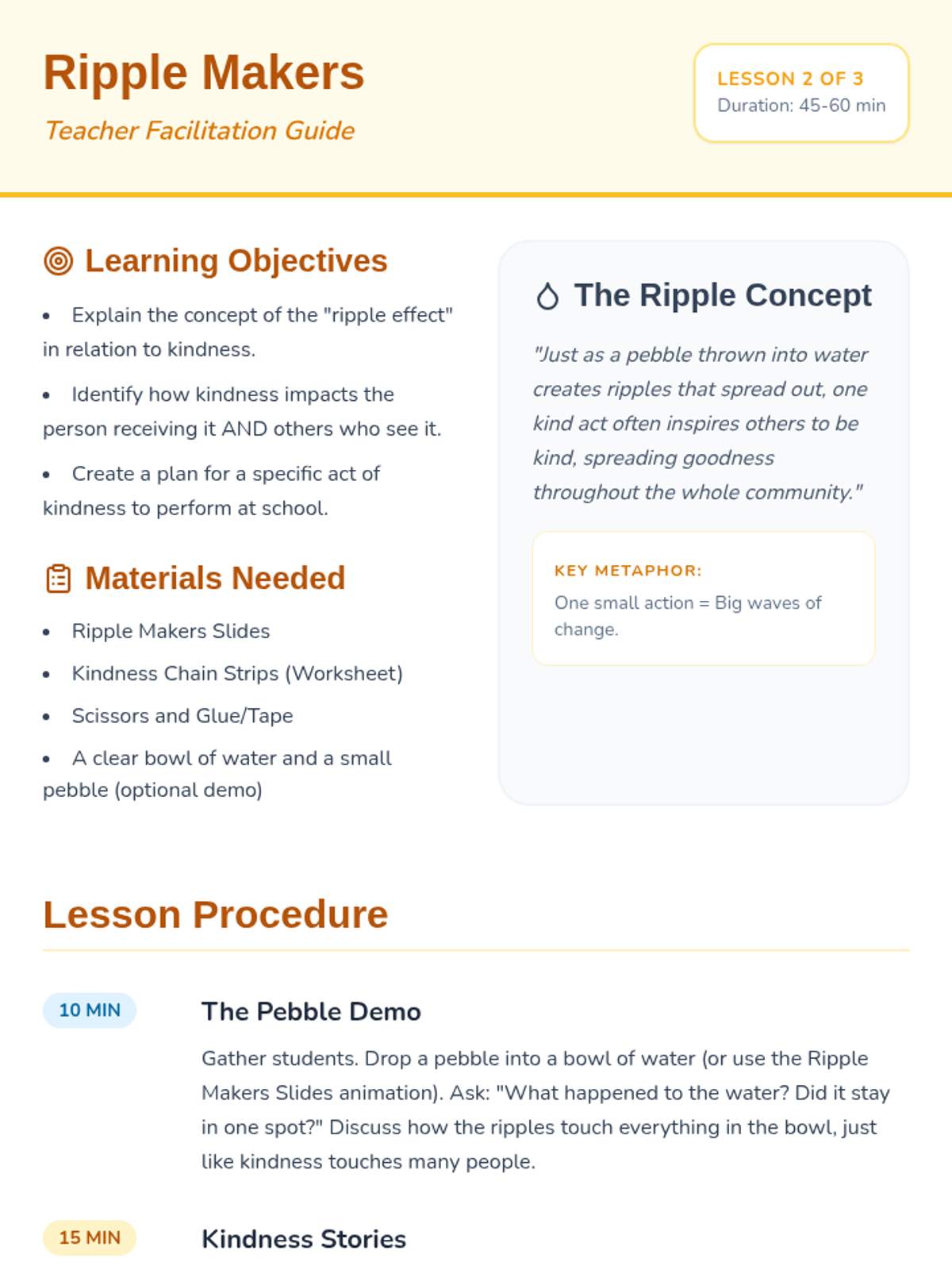
A detailed teacher guide for Lesson 2, focusing on the "ripple effect" of kindness and providing instructions for the Kindness Chain activity.
An engaging slide presentation for Lesson 1, introducing the concept of kindness through interactive discussion, definitions, and a "Kind or Not?" game.
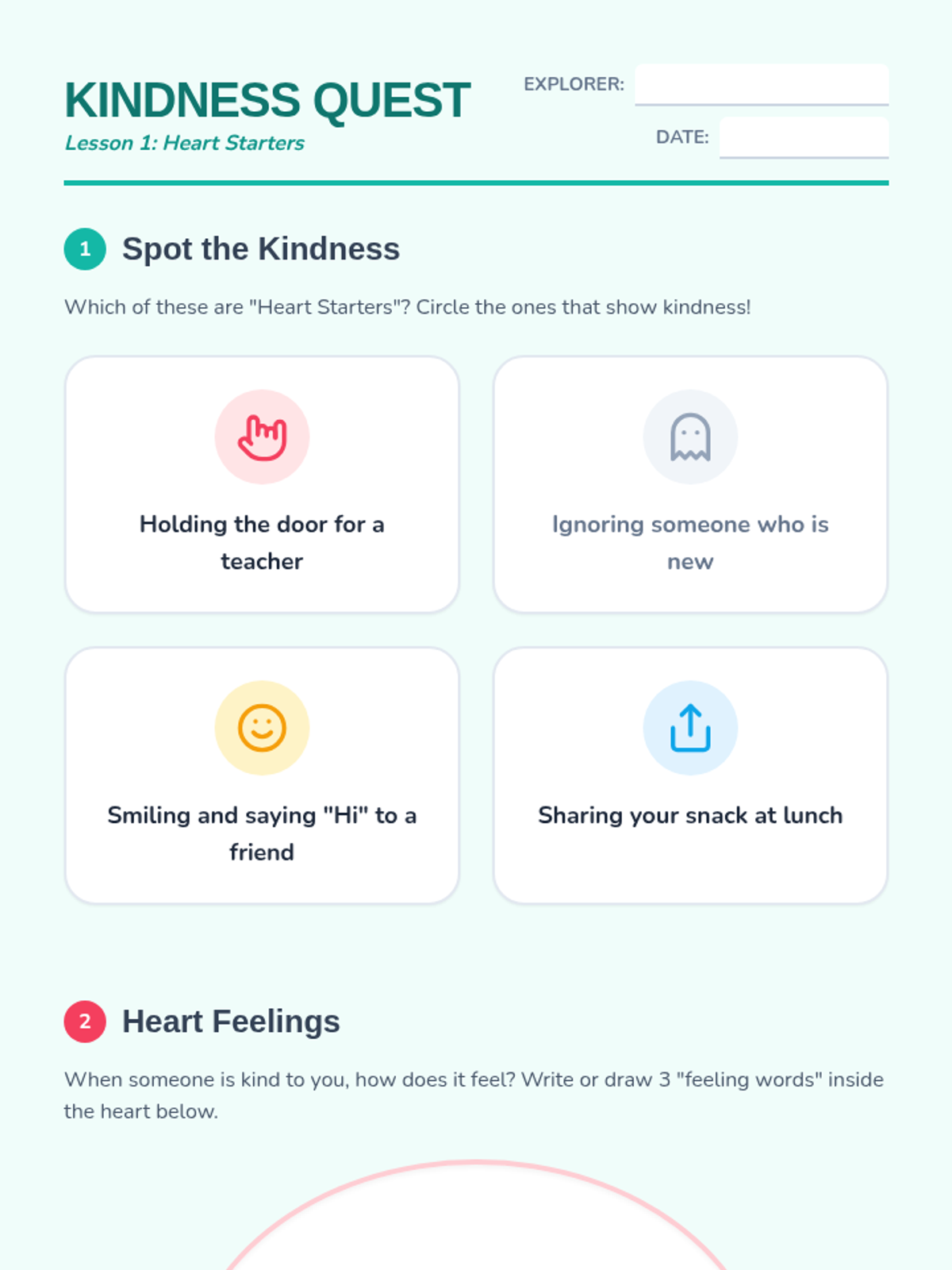
A student worksheet for identifying kind acts, reflecting on emotions, and creatively illustrating a personal act of kindness.
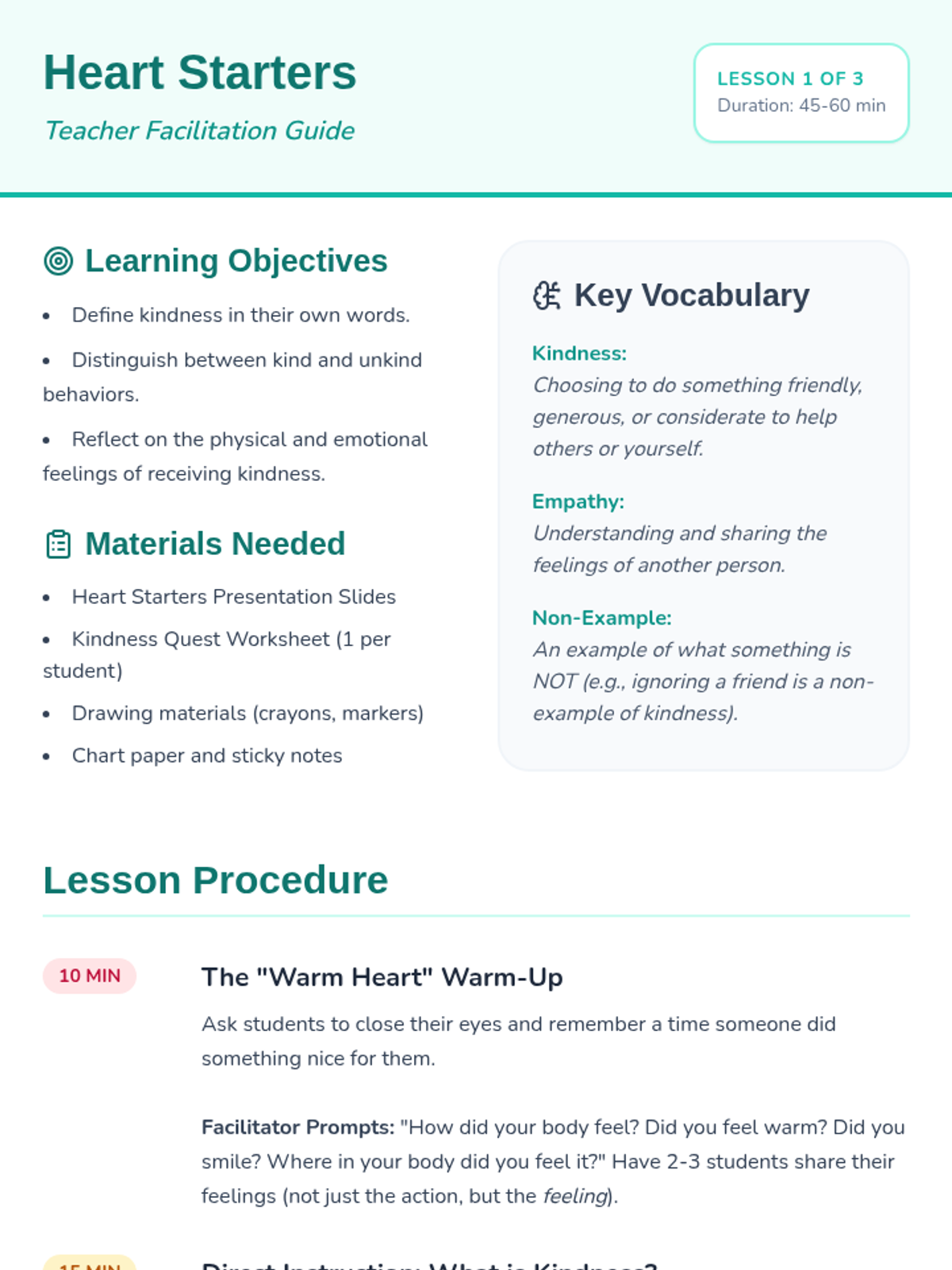
A comprehensive facilitation guide for the Heart Starters lesson, including learning objectives, a detailed lesson procedure with timing, and differentiation strategies.
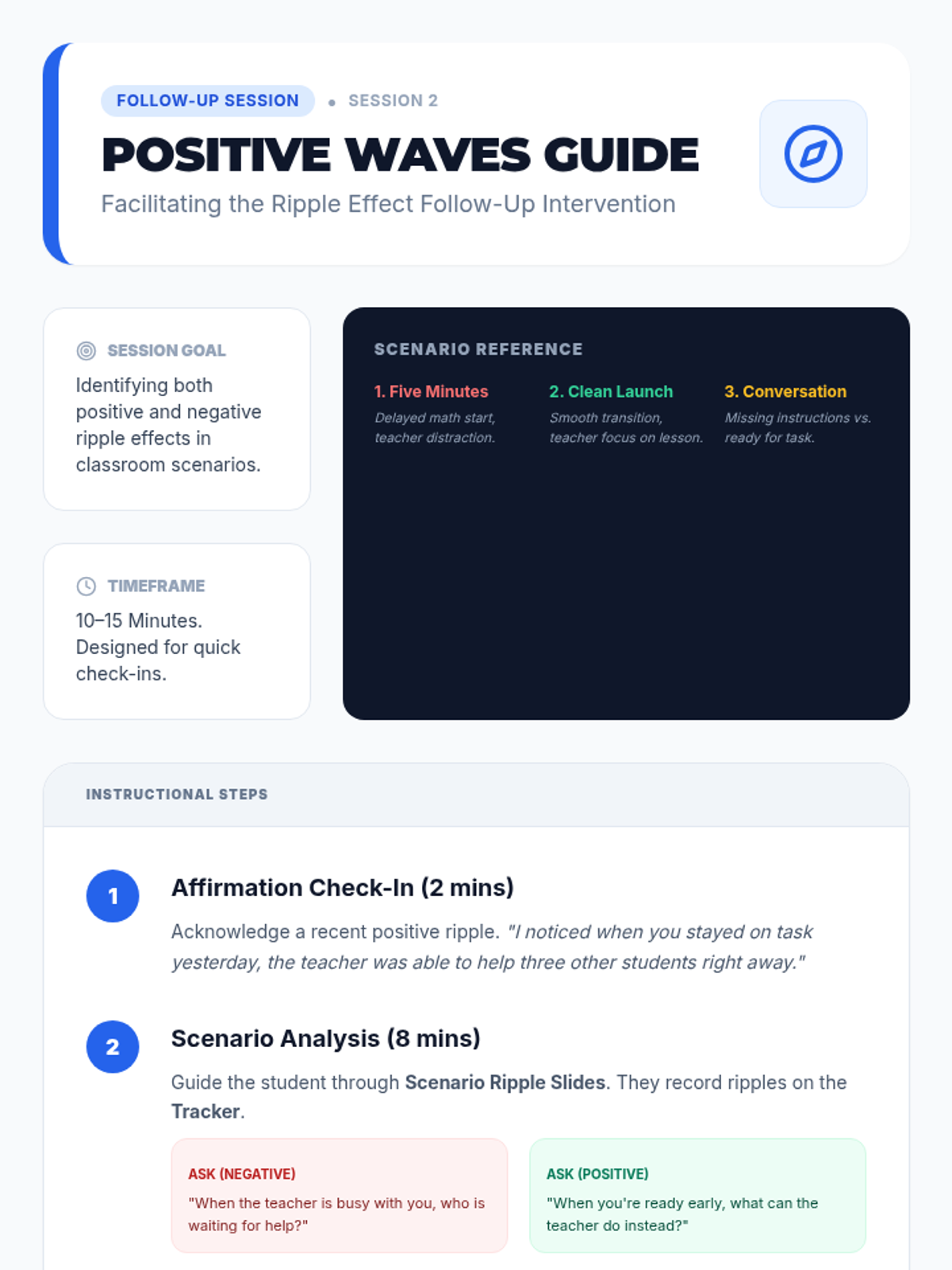
A facilitator guide for the second session of the Ripple Effect intervention, providing step-by-step instructions for the slides and student tracker. Updated to fix layout issues and include scenario references.
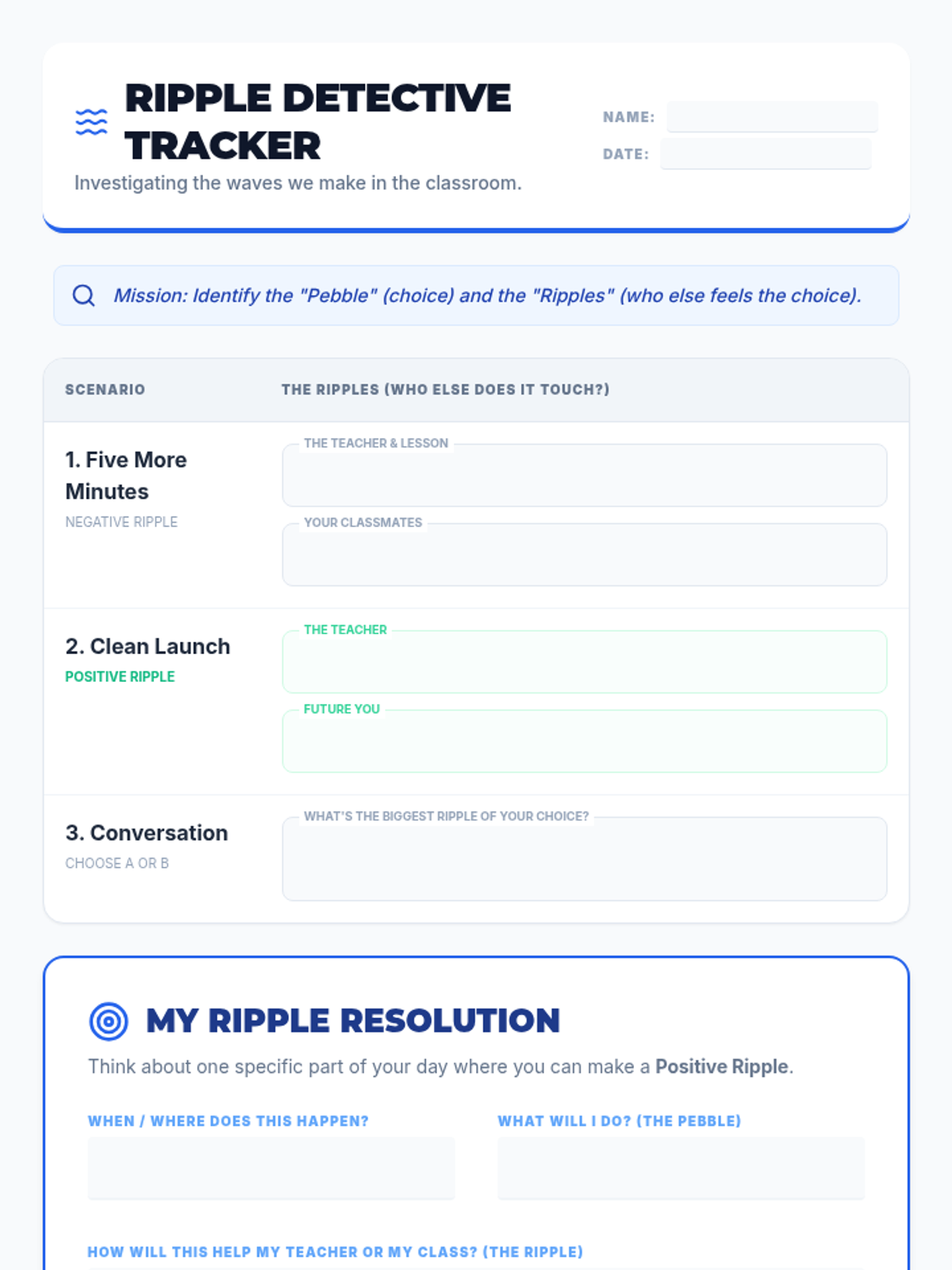
A structured student worksheet designed to accompany the Scenario Ripple Slides. Students track the "pebbles" and "ripples" for classroom scenarios and set a personal ripple resolution. Updated to fit on one page and ensure handwriting legibility.
A 6-slide presentation featuring scenarios to help students identify positive and negative ripple effects of their choices in the classroom. Includes interactive scenarios and a goal-setting concluding slide. Updated to fix text overflow and visibility issues.
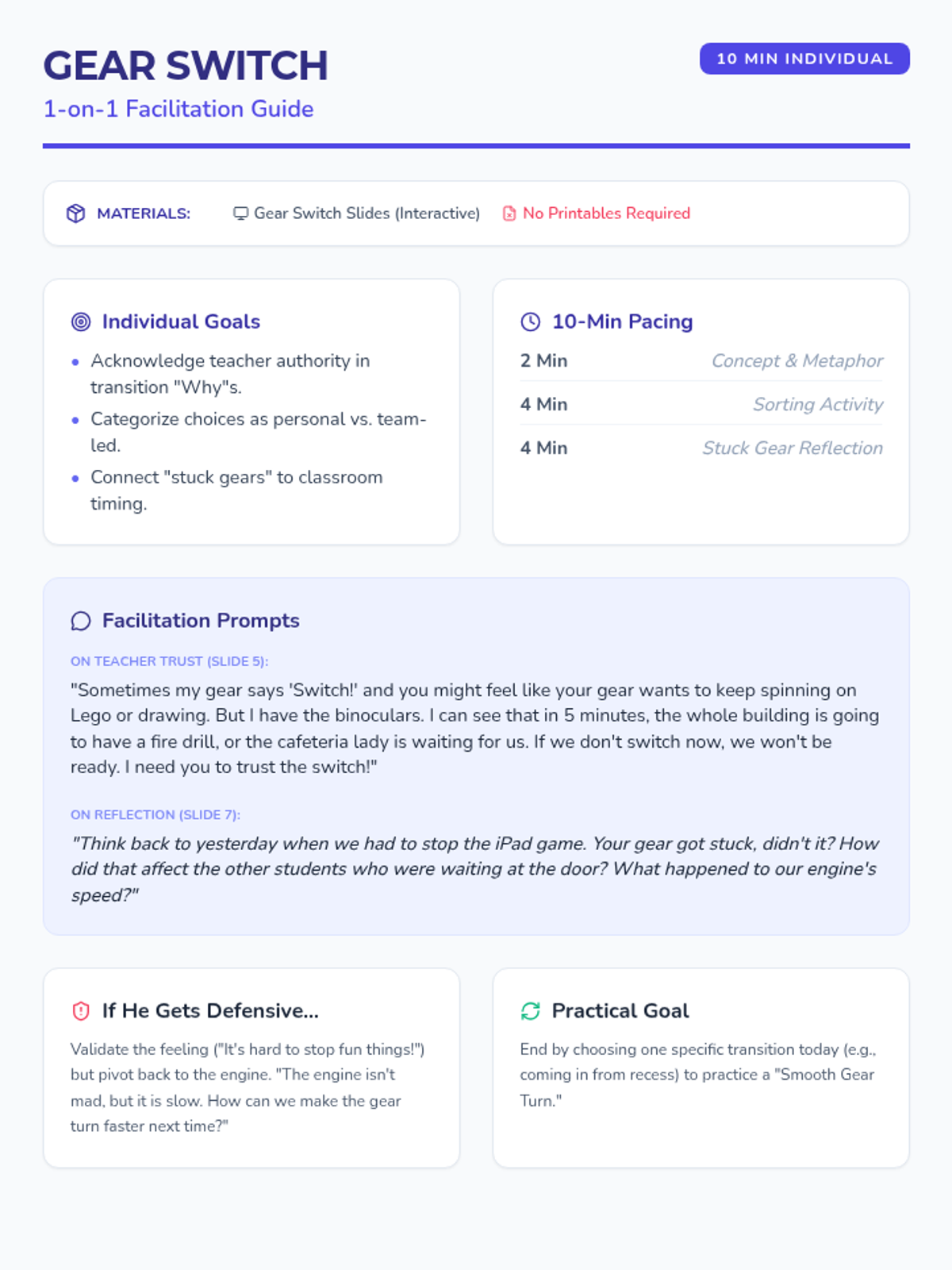
A specialized facilitation guide for a one-on-one SEL session. Focuses on teacher authority (third-person), trust in transitions, the "Safety Brake" exception, and individual reflection on behavioral "stuck gears" that slow down group progress. Includes pacing for expanded slides.
A digital slide presentation featuring a "Gear Switch" social story for one-on-one use. It uses a third-person perspective to explain the teacher's role in guiding transitions, includes interactive sorting tasks, separate question/answer slides for safety/fairness and group impact, and facilitates a deep reflection on personal challenges with switching tasks. No student work areas are included on the final slide to focus on verbal discussion.
Lengthened the blank bubble on the title slide to w-[600px] to accommodate long URL placements, while keeping it entirely free of text and symbols. All other slide content, including references and citations, remains intact.
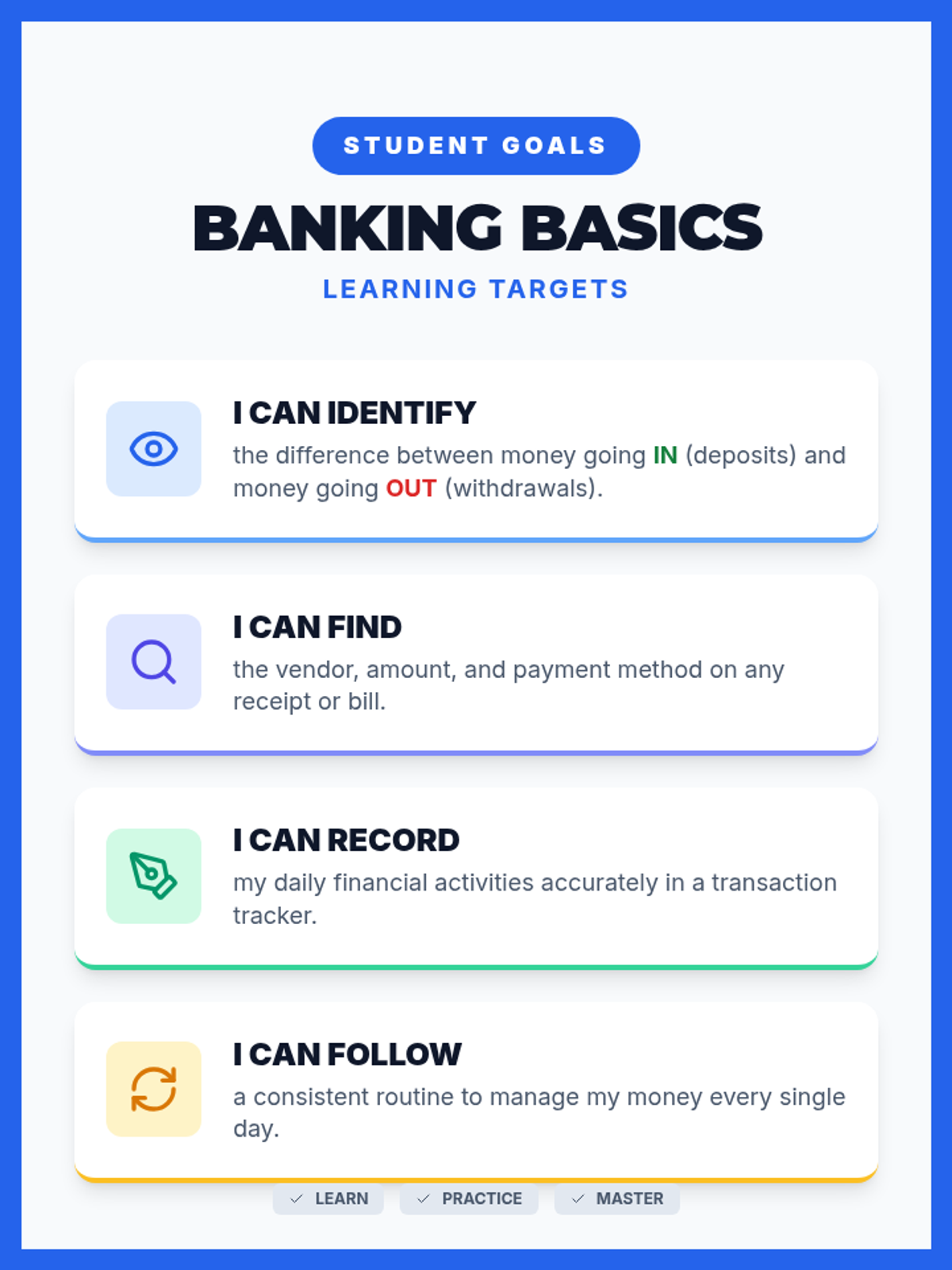
A high-contrast, student-facing anchor chart featuring 'I can' statements that define the learning objectives for the banking basics lesson.
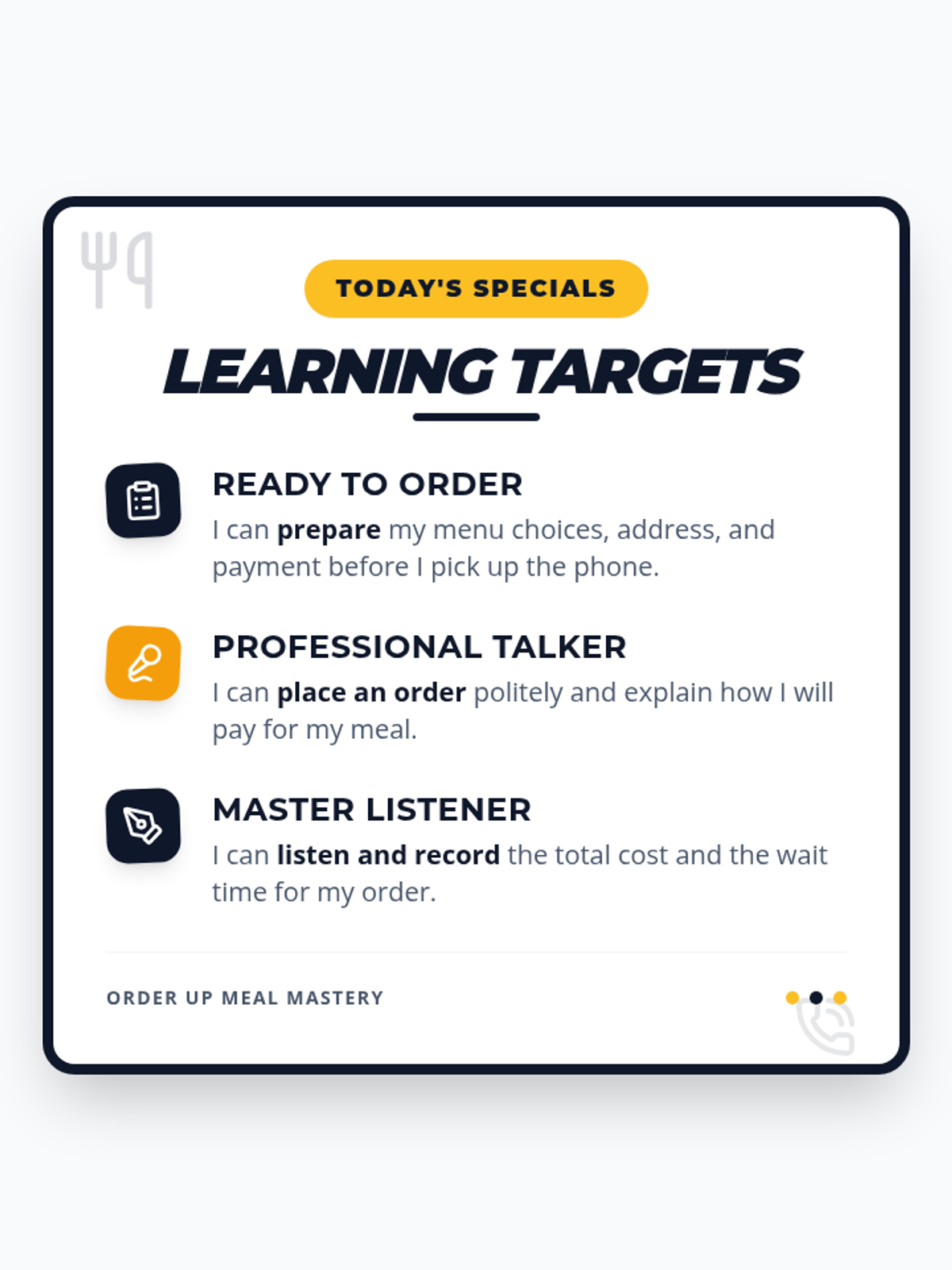
A student-facing 'I Can' statement poster designed for the Order Up lesson, featuring clear learning targets in a diner-inspired visual style.
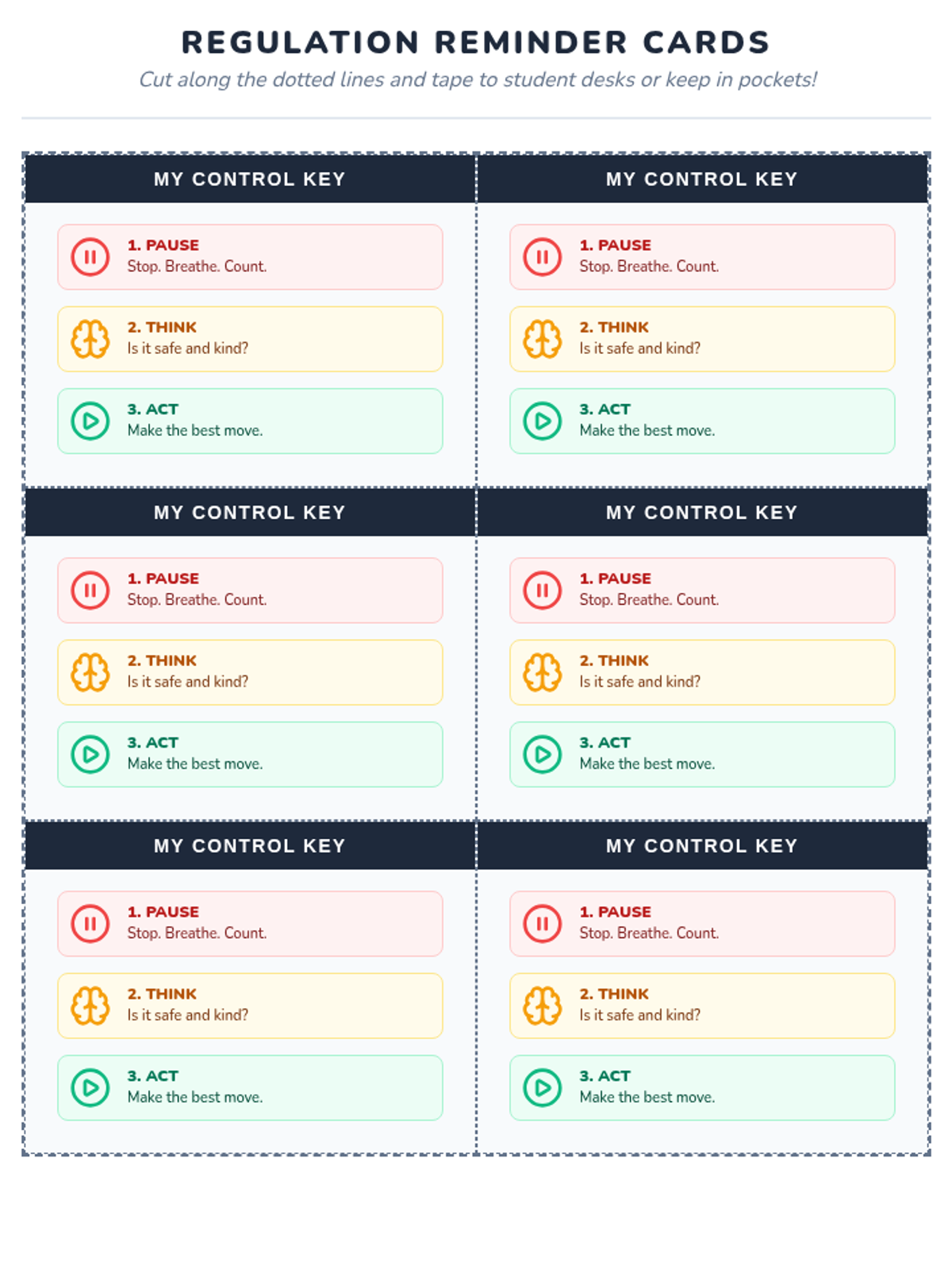
Printable mini-cards (6 per page) that students can keep at their desks or in their pockets as a quick visual reference for the Pause-Think-Act strategy. Includes cut lines for easy preparation.
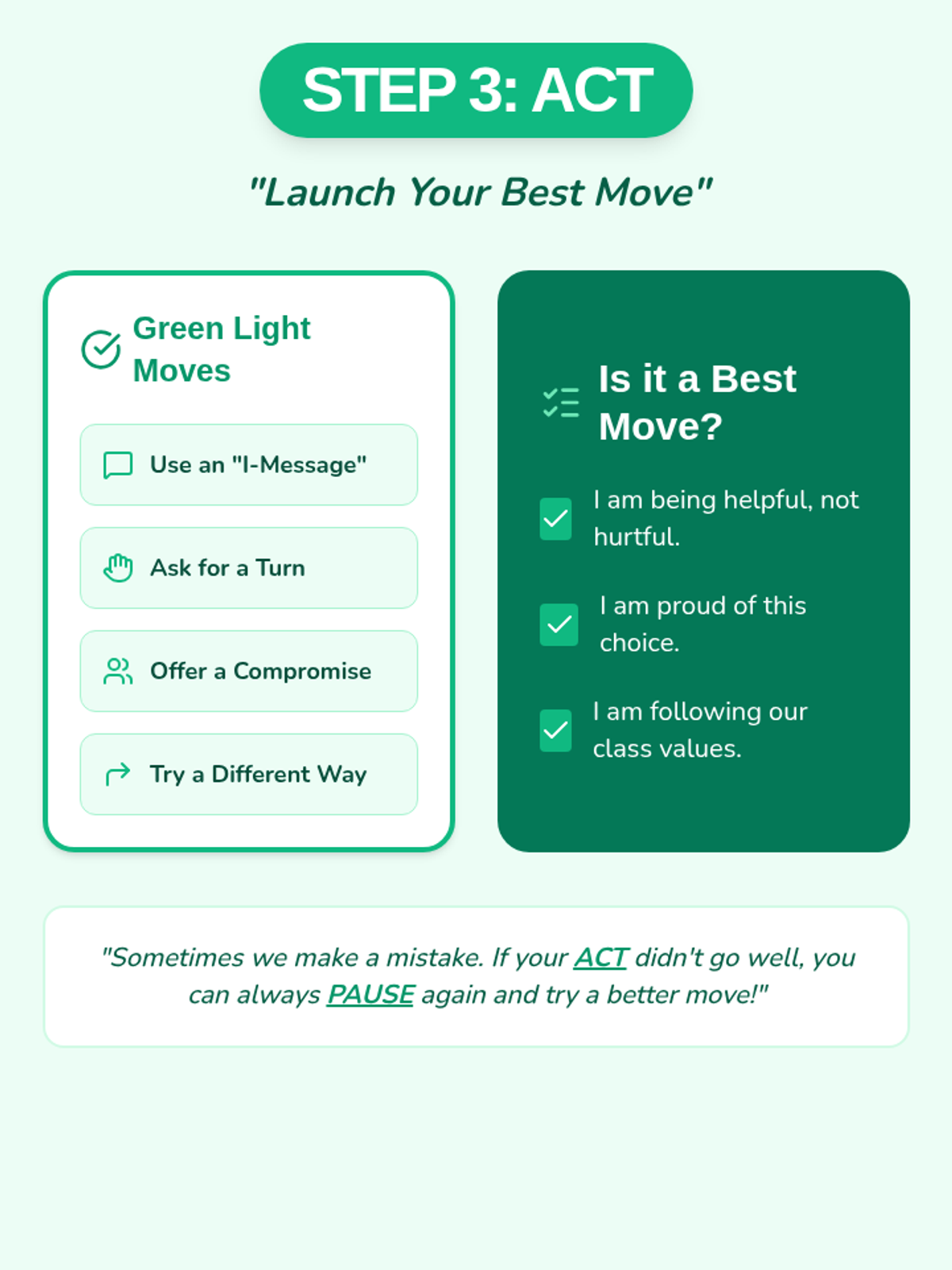
A visual guide for the "Act" step, listing specific "Green Light Moves" and a checklist for students to ensure their actions are helpful and productive.
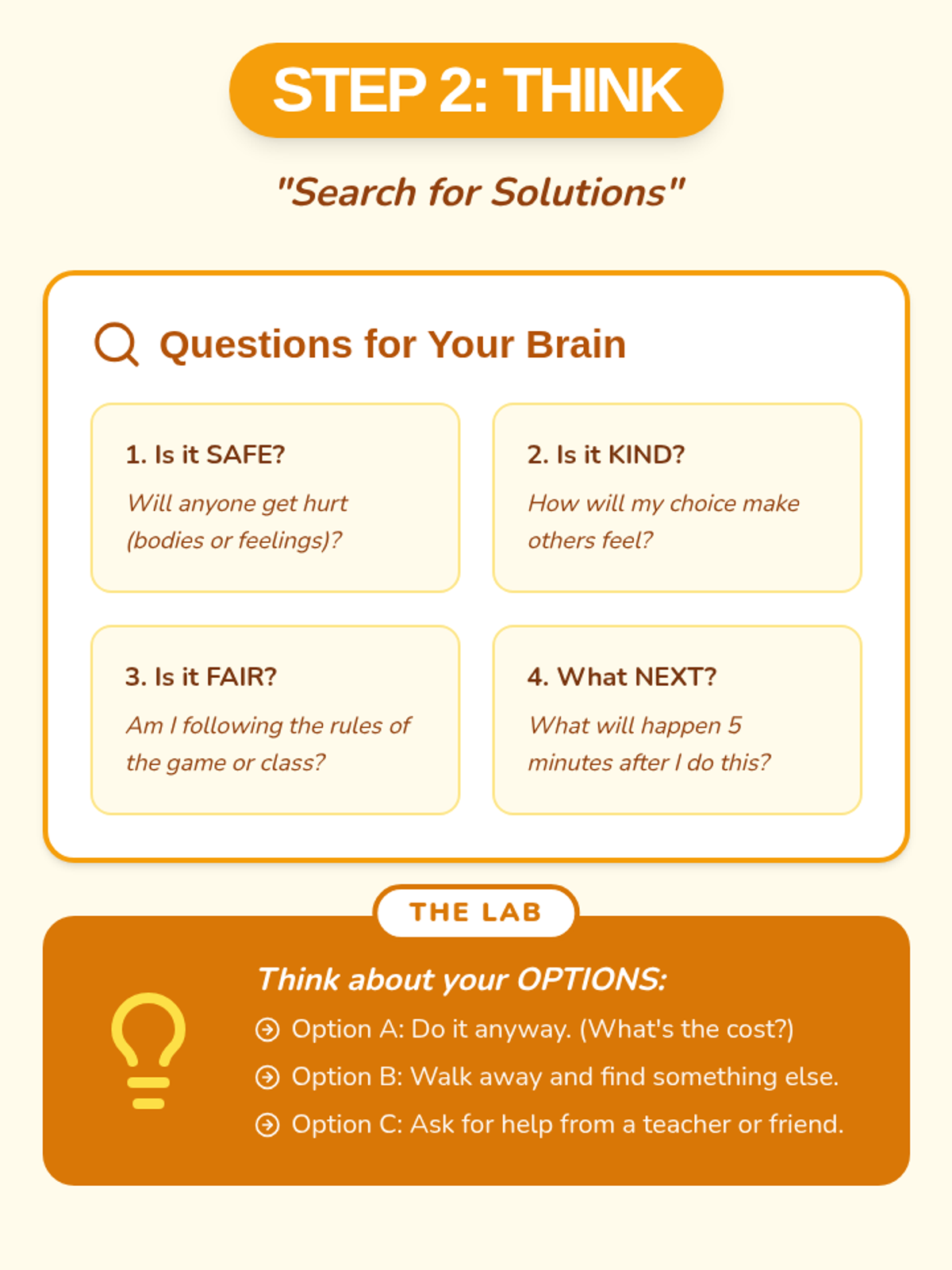
A focused anchor chart for the "Think" step, providing students with a set of self-reflection questions and a framework for evaluating different response options.
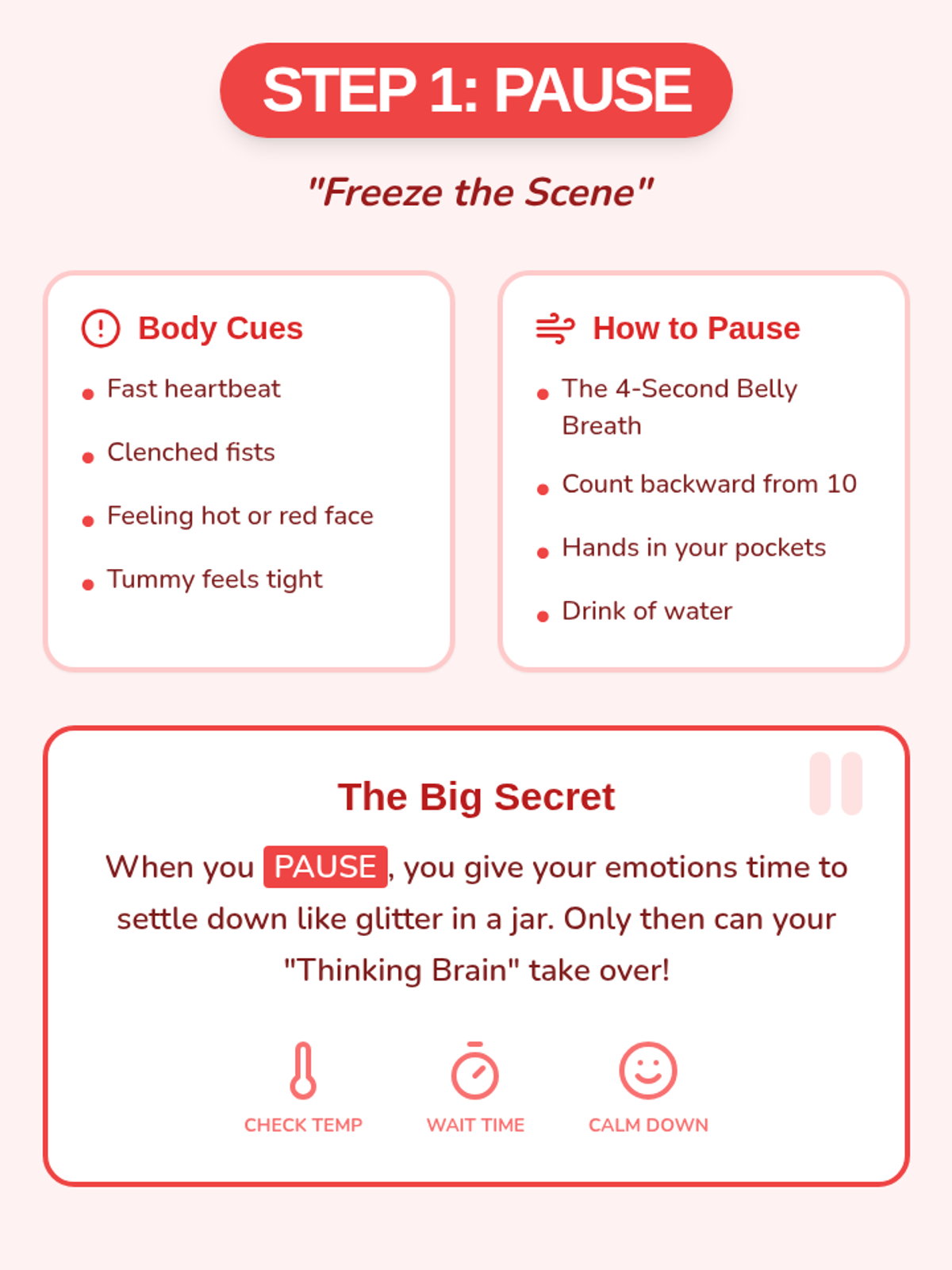
A detailed anchor chart focusing on the "Pause" step, teaching students how to recognize physical emotional cues and providing specific strategies for self-calming.
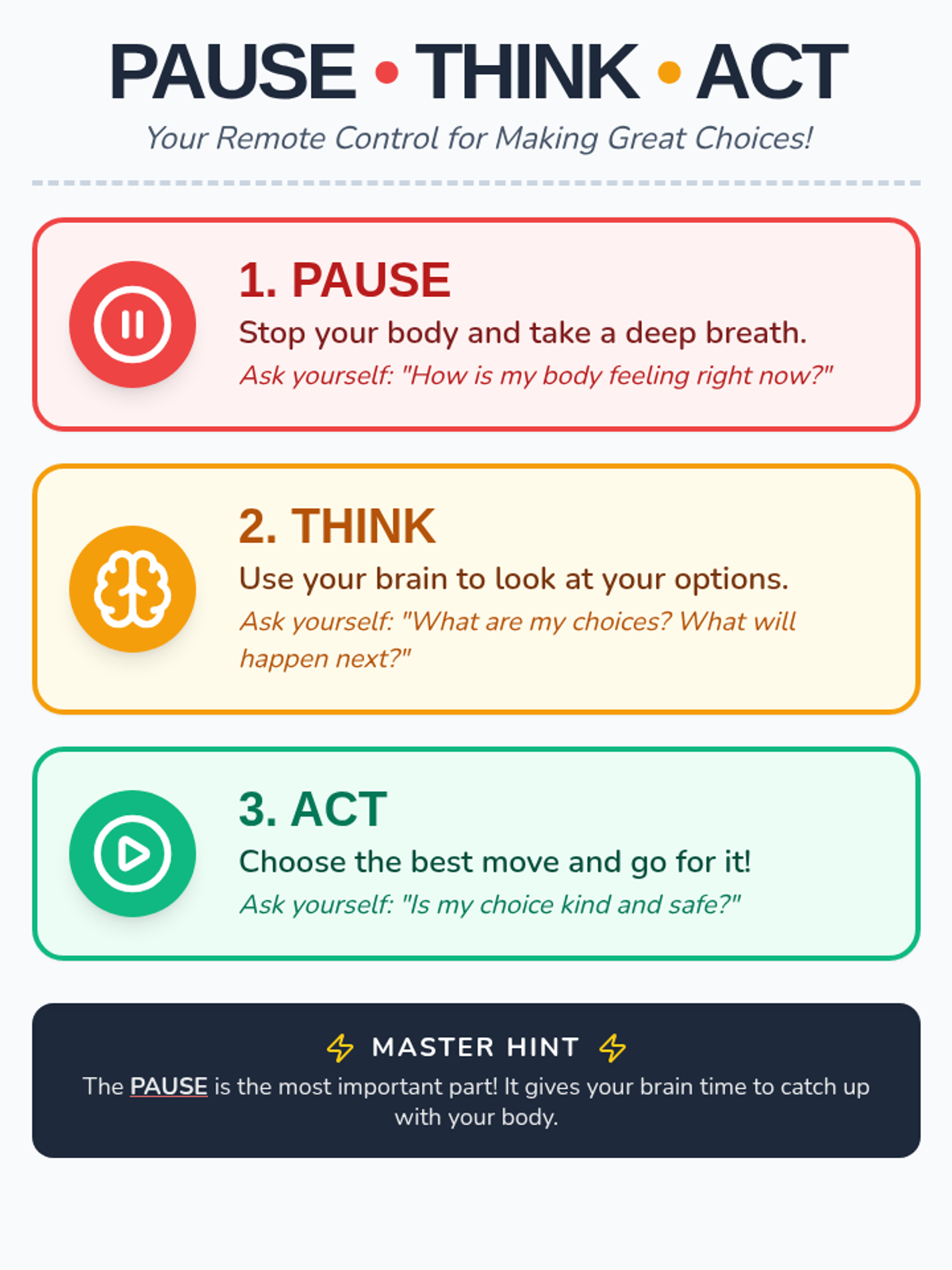
A vibrant, high-contrast overview poster that introduces the three-step Pause-Think-Act strategy with clear icons and actionable questions for elementary students.
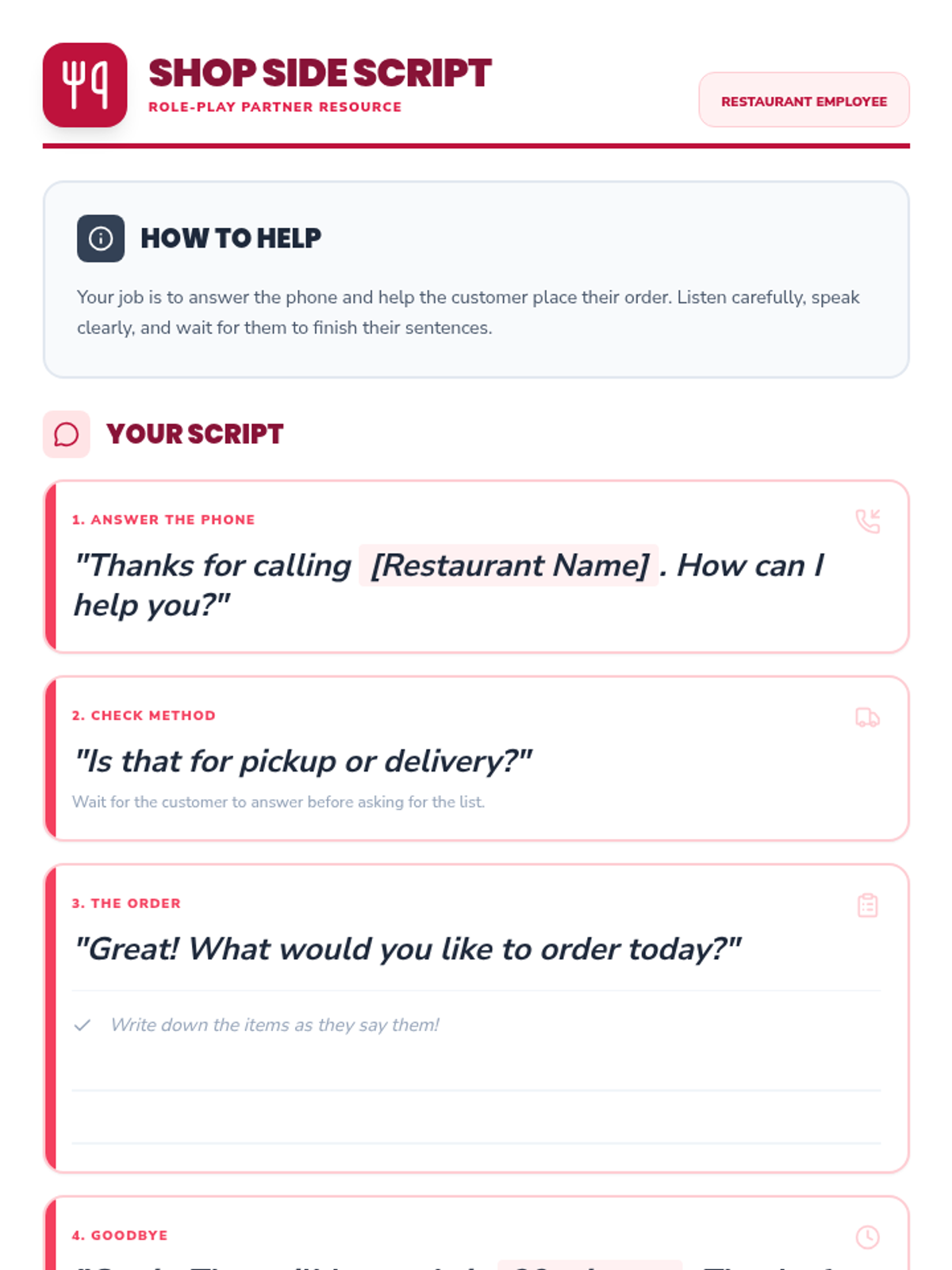
A role-play script for the restaurant employee side of the phone call, featuring blank restaurant name fields and a new conditional section for requesting contact information based on the order method. Optimized for a single page.
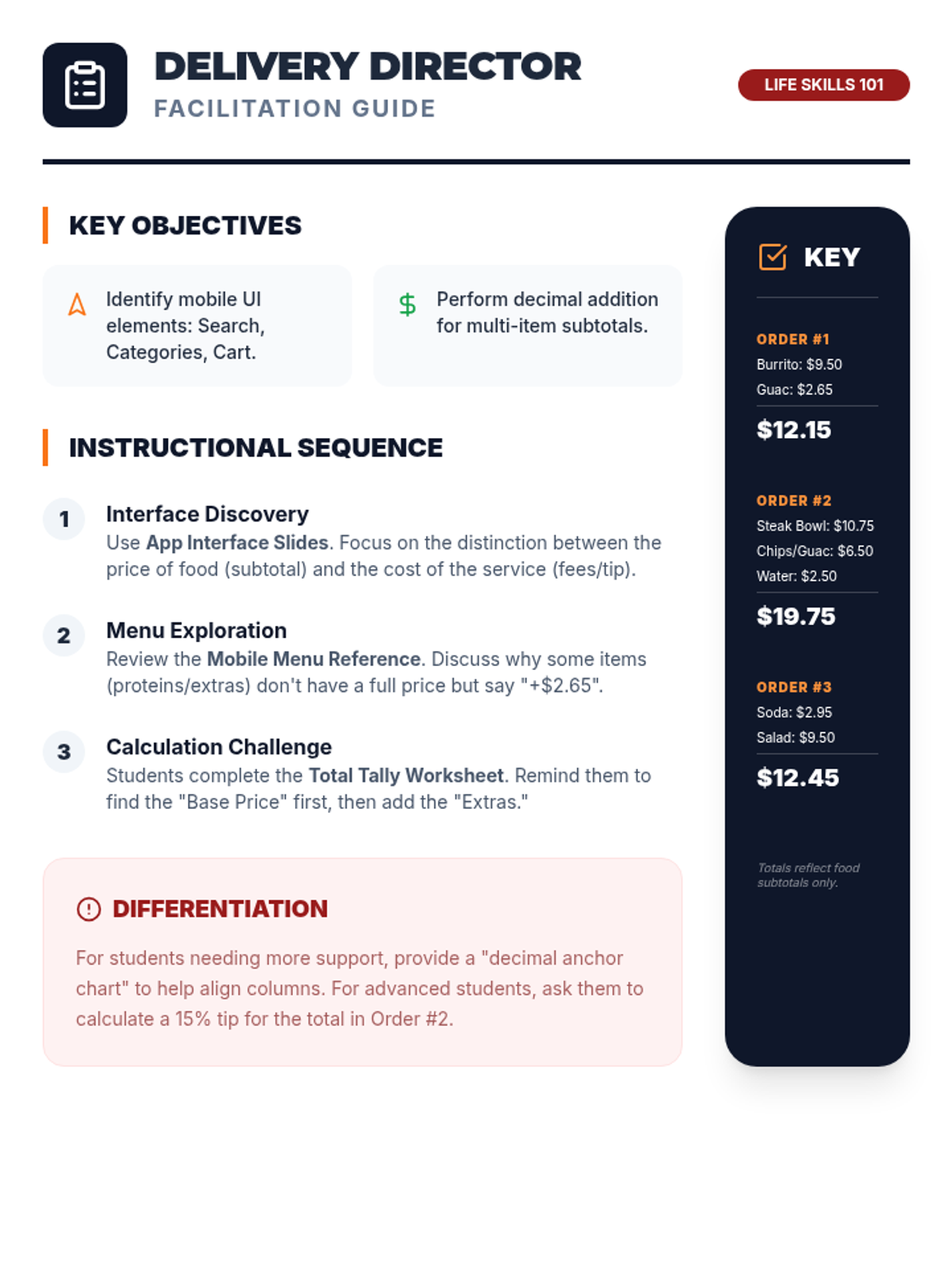
Teacher guide for the App Appetite lesson. Includes learning objectives, a detailed classroom activity flow, and a complete answer key for the Total Tally Worksheet.
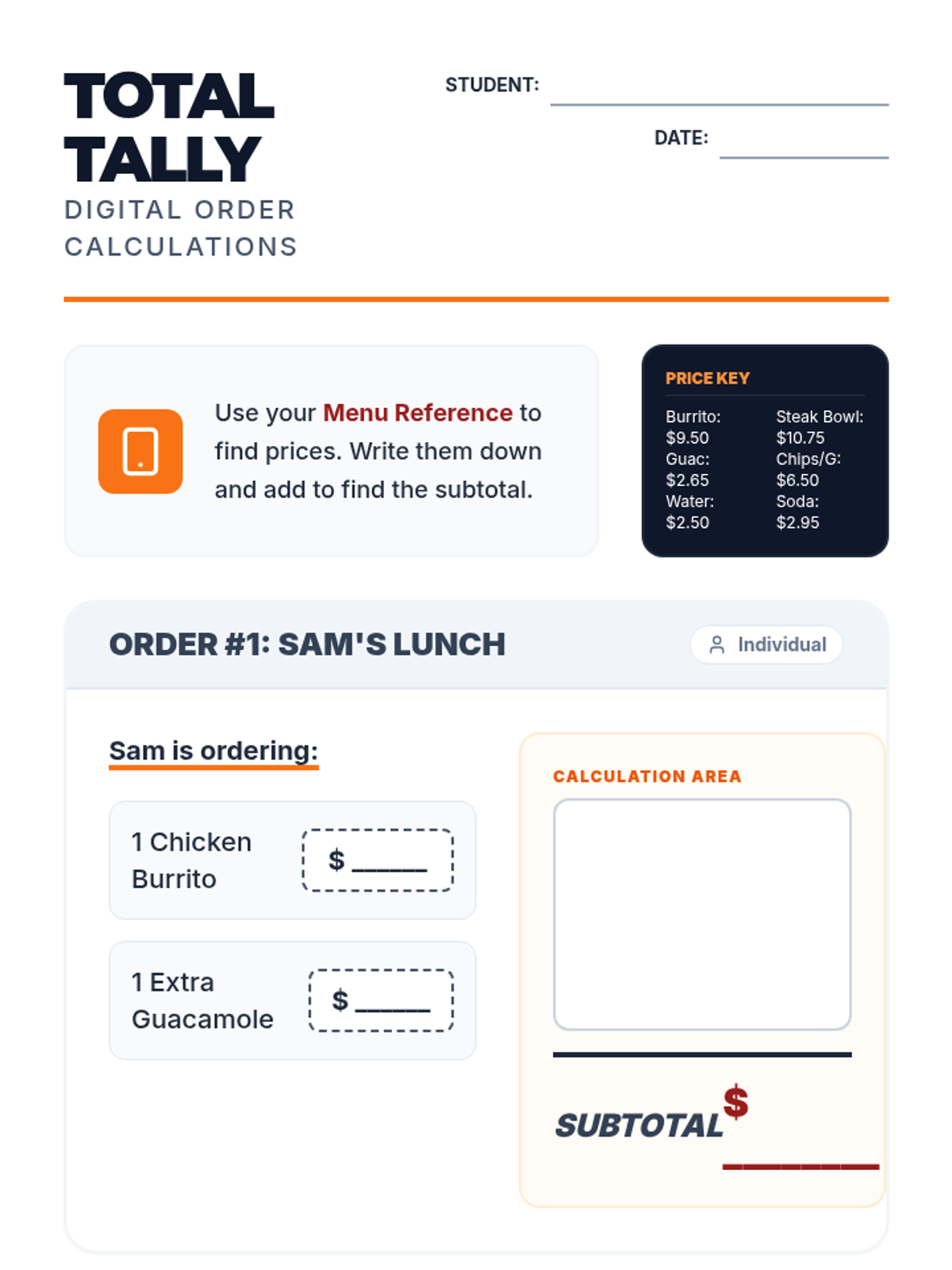
A math worksheet where students calculate order subtotals based on specific scenarios. Students must find the correct prices from the Menu Reference and perform multi-item addition with clear work areas.
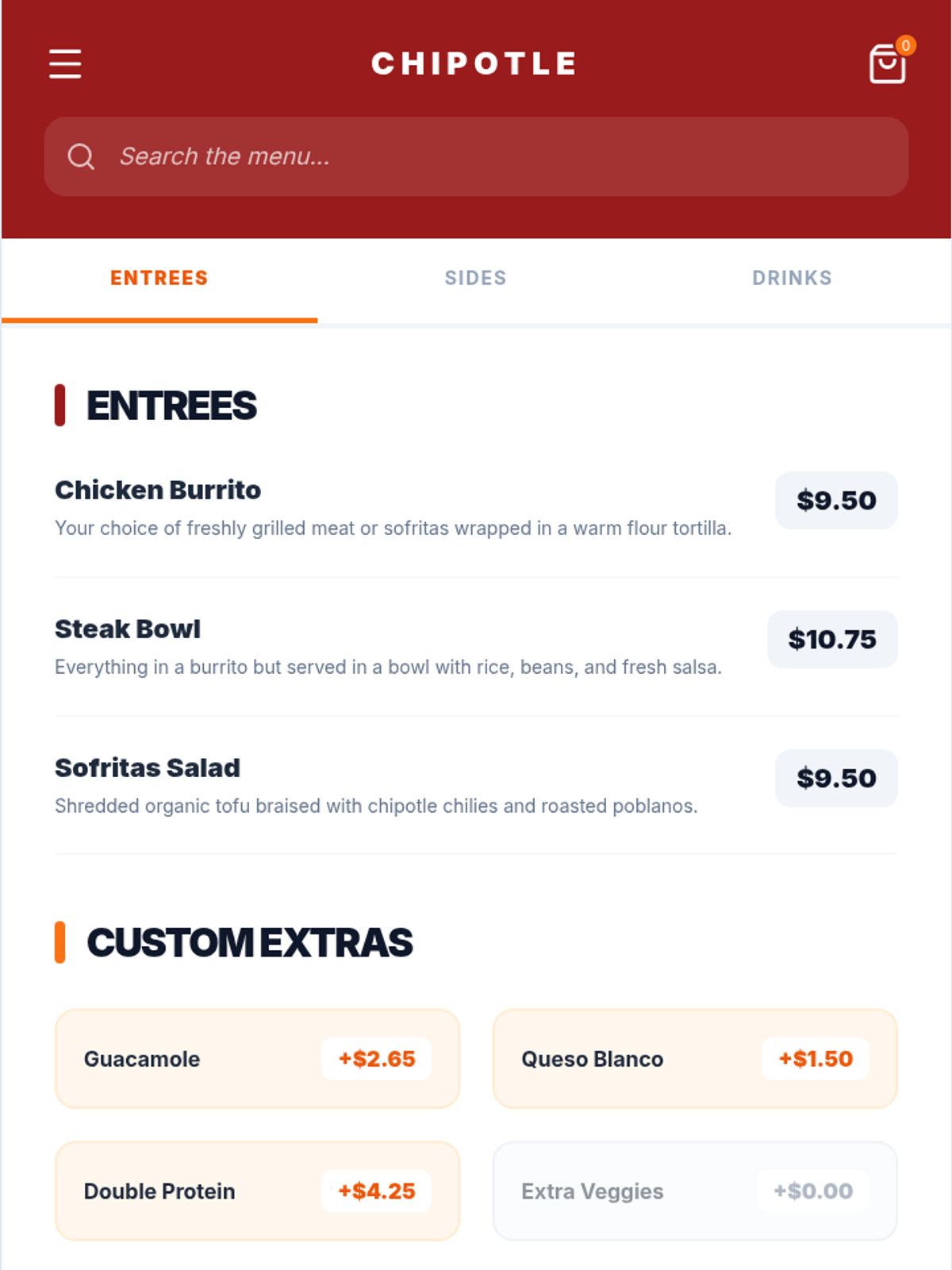
A reference sheet styled as a mobile app menu for Chipotle. It includes prices for various entrees, extra add-ons like guacamole, and sides and drinks to be used for calculation exercises.
A slide deck introducing the visual elements of a mobile delivery app for Chipotle. It guides students through searching for a restaurant, navigating the menu categories, and understanding the checkout fee breakdown.
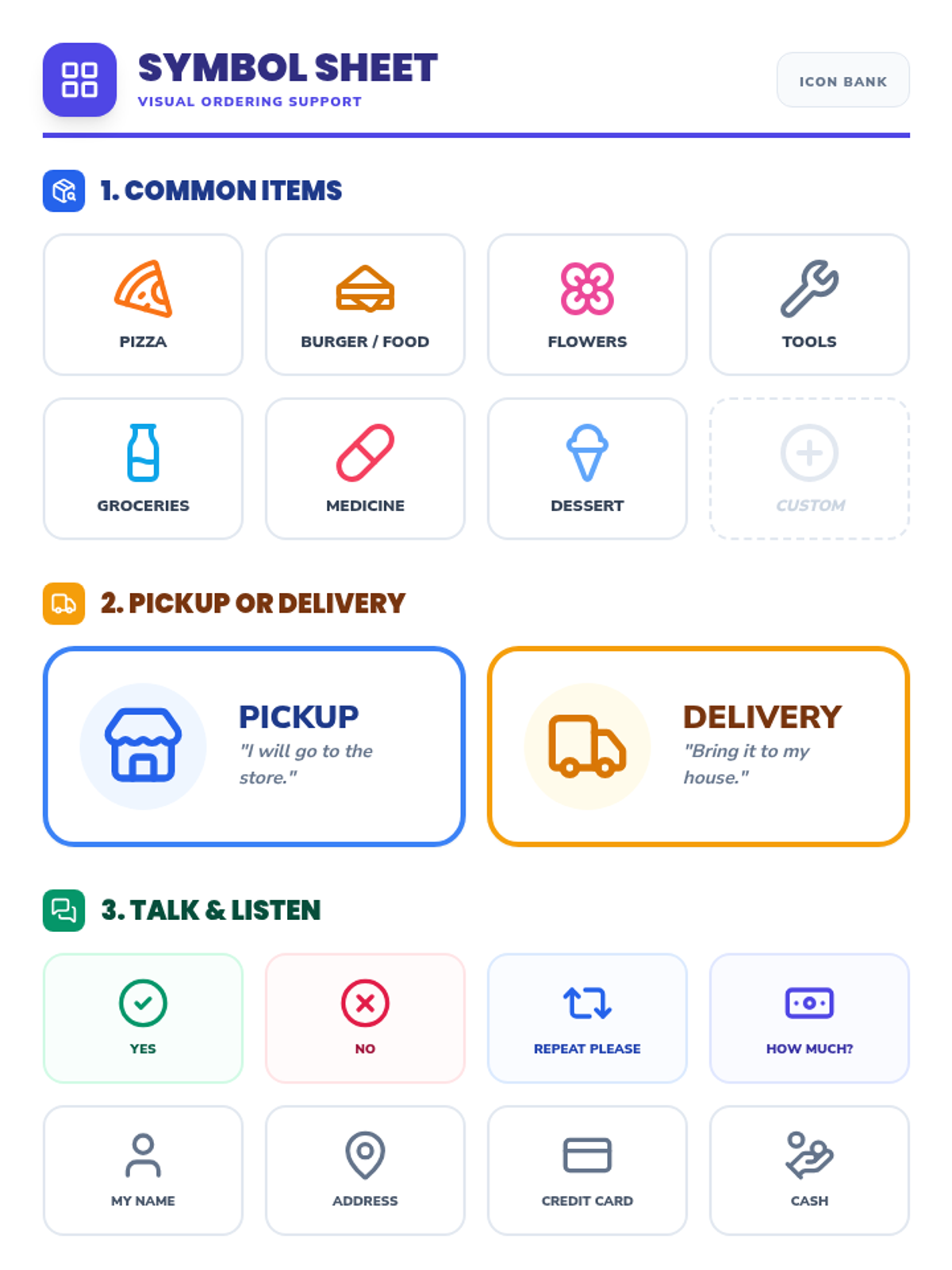
A comprehensive symbol sheet featuring a wide range of icons for common items, actions, and social responses to support students in making choices and communicating during a phone order. Now includes writing lines for identifying order items.
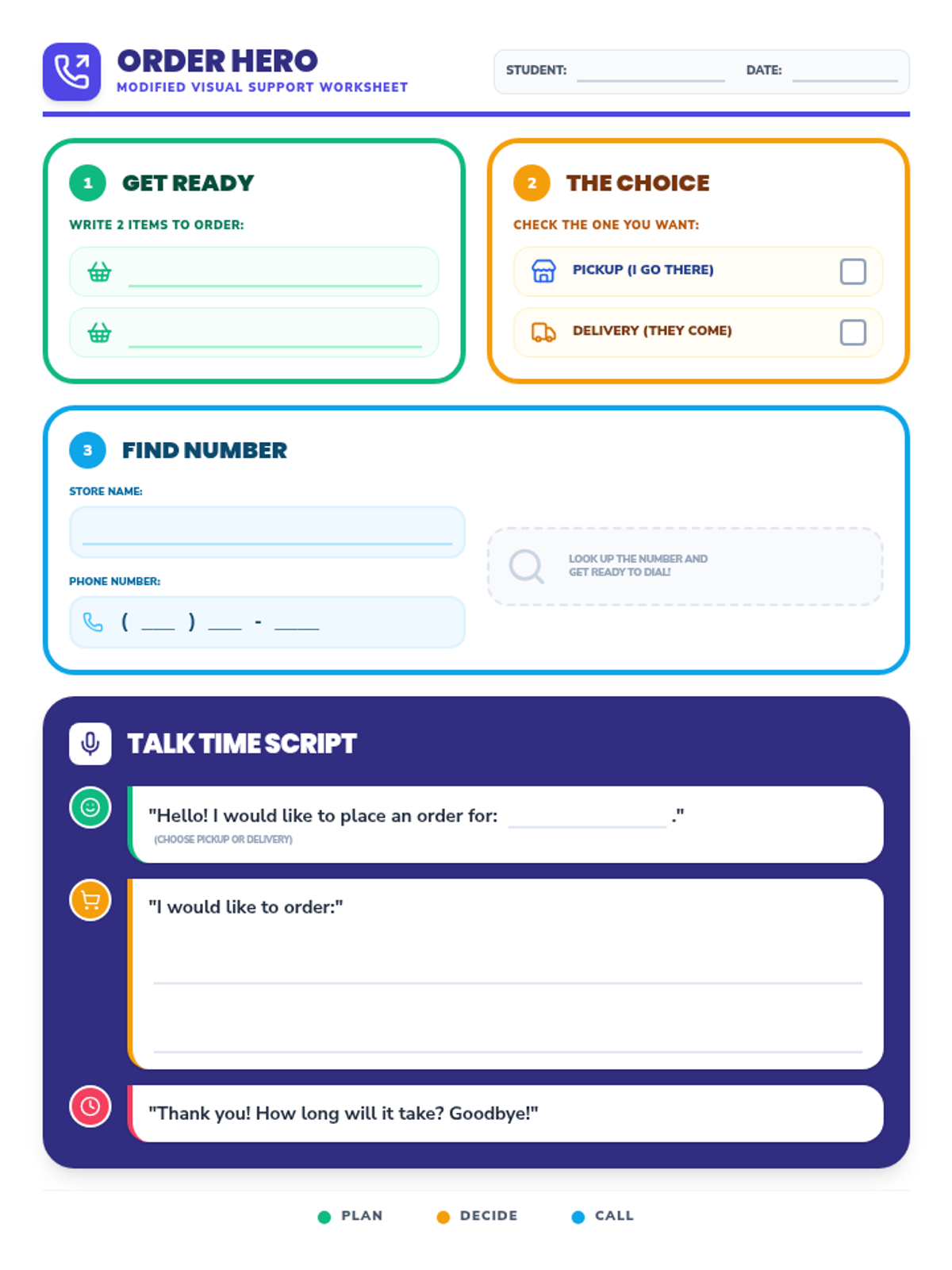
A modified worksheet that balances the structured steps of the original with the high-contrast visual cues of the call cards. Features color-coded sections for items, delivery/pickup choices, and a script with large writing areas.
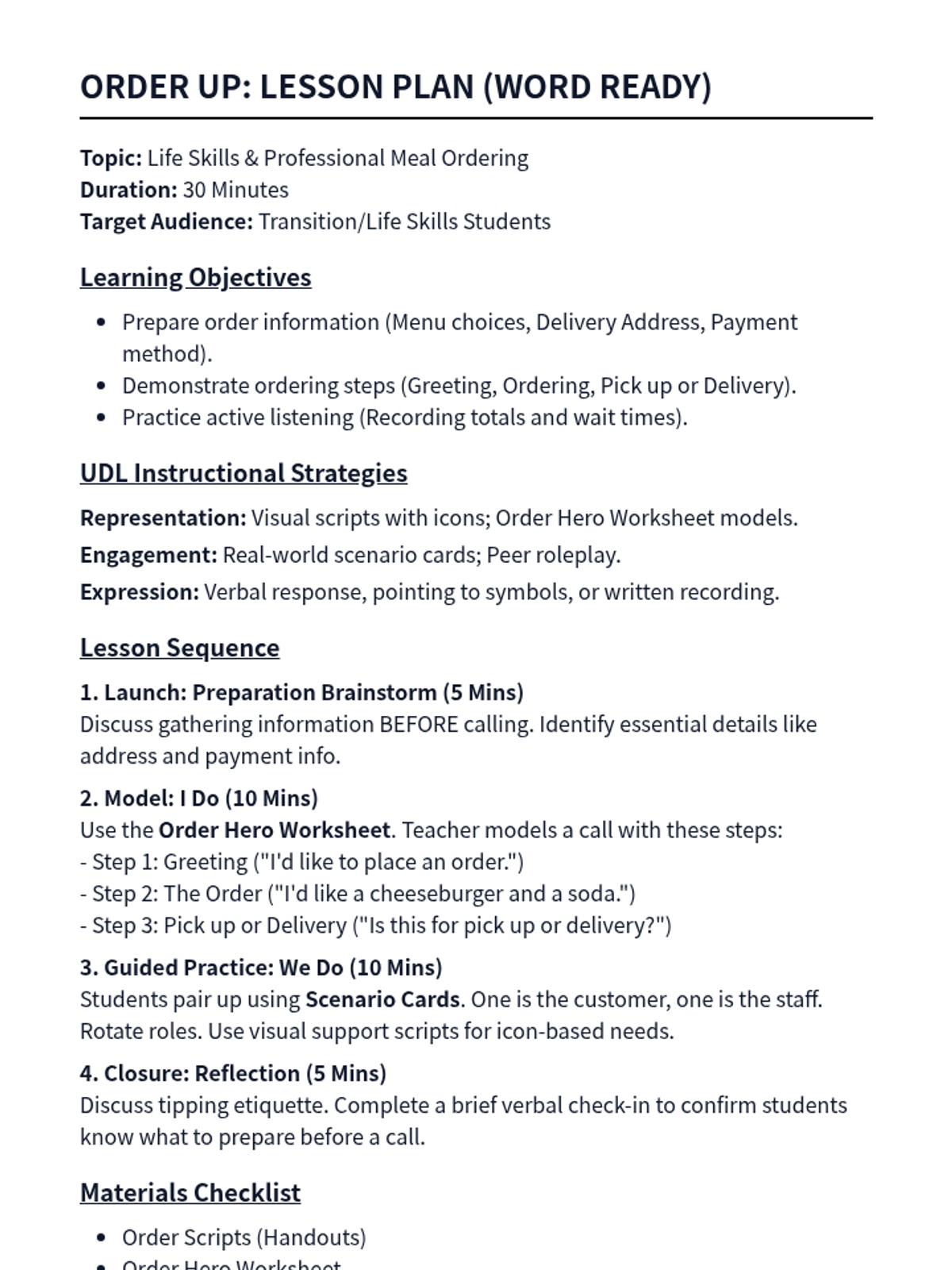
A simplified, plain-text version of the 'Order Up' lesson plan, designed for easy copying and pasting into a Word document or other text editor. Features a clean hierarchy without complex layout elements. Updated to include 'Various Menus' in materials.
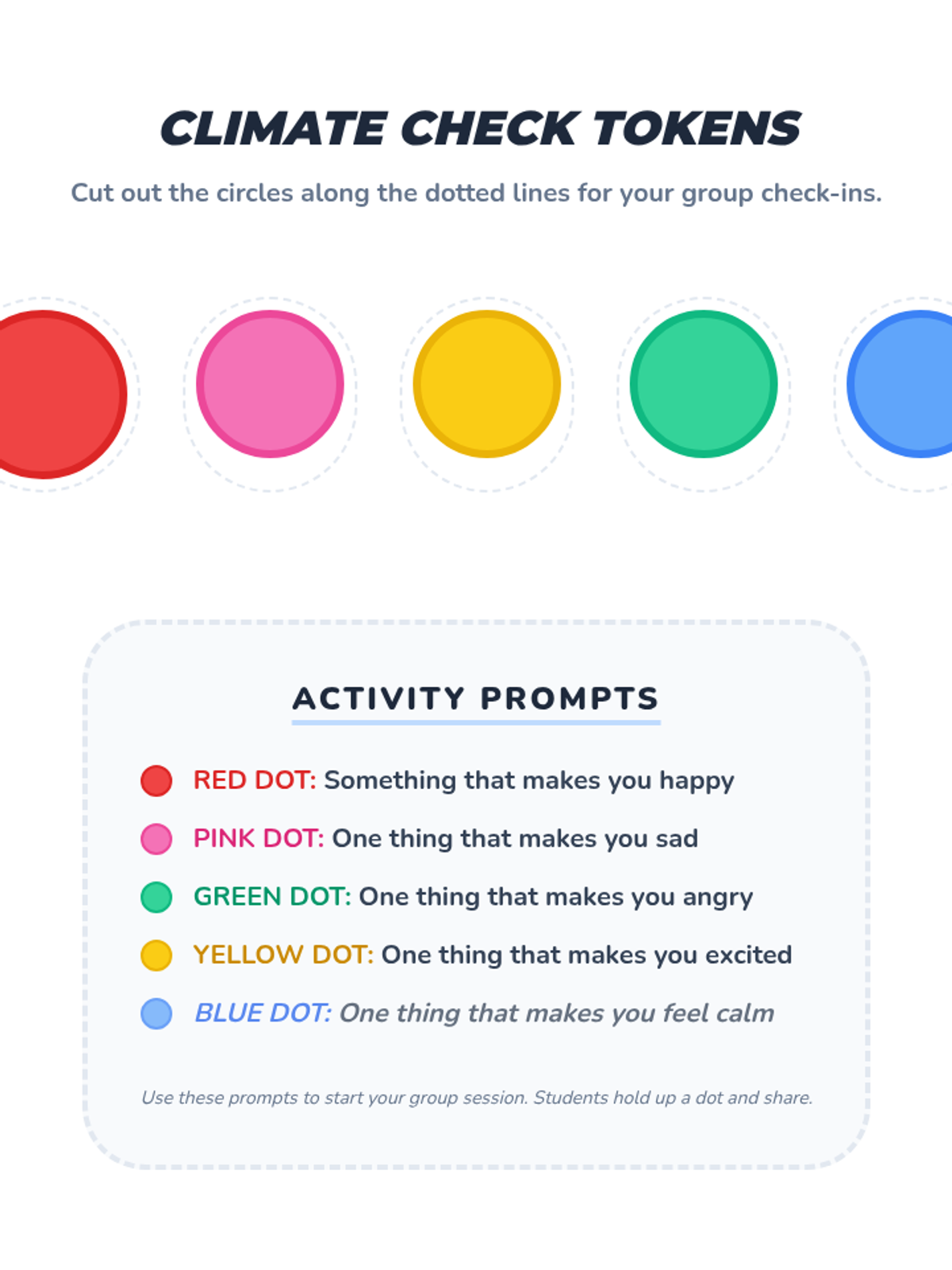
A printable sheet featuring five large, plain colored tokens (red, pink, yellow, green, and blue) with specific activity prompts in the footer. The red dot prompt focuses on happiness, while the pink dot prompt focuses on sadness for group discussion.