Student worksheet featuring a body outline for mapping physical sensations associated with specific emotional memories, including sensory inventory and vocabulary sections.
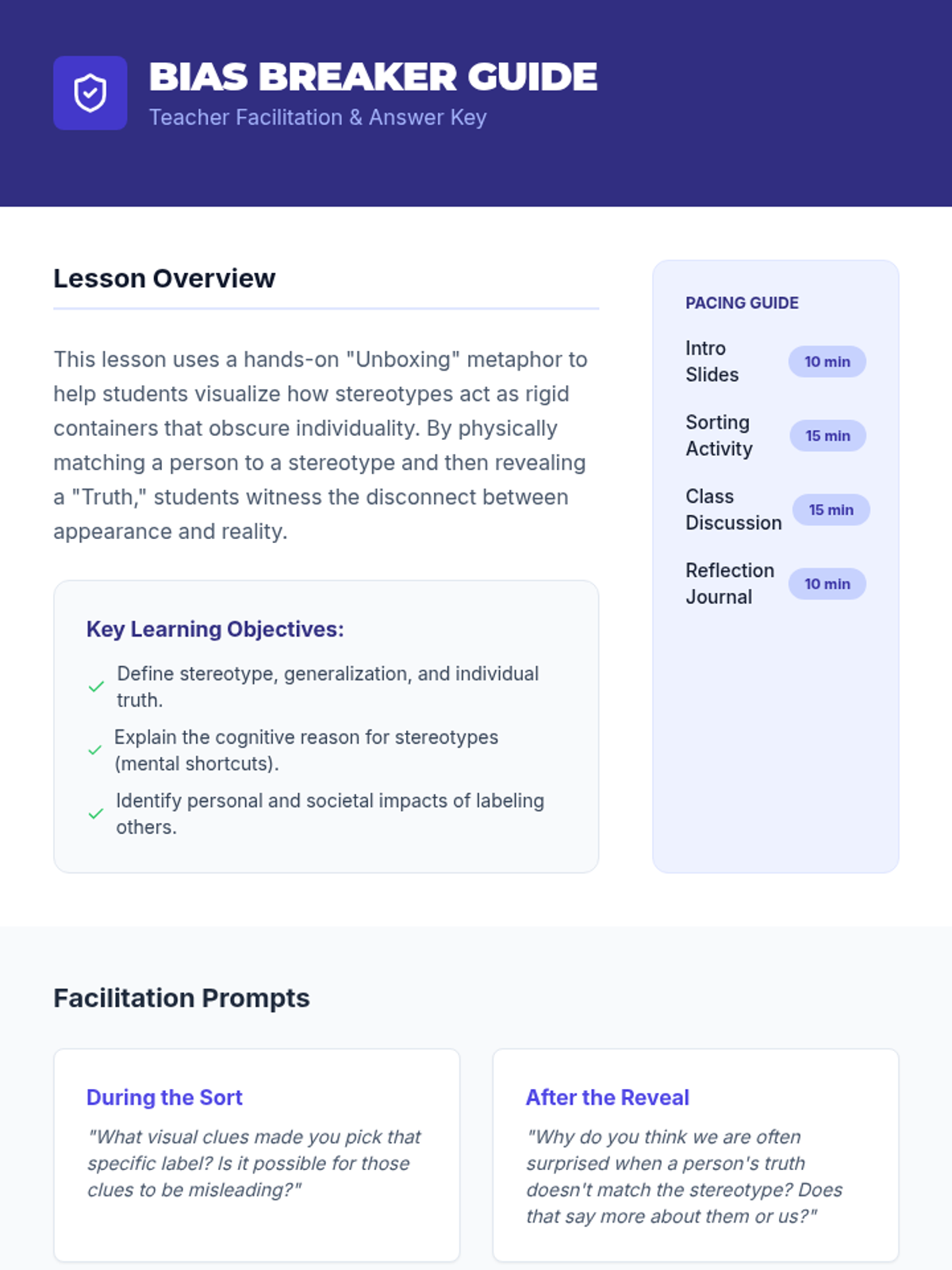
A comprehensive teacher's guide providing instructional strategies, pacing recommendations, guided discussion prompts, and a master answer key for the Unbox the Label sorting activity. Includes insights into cognitive shortcuts and the 'single story' concept.
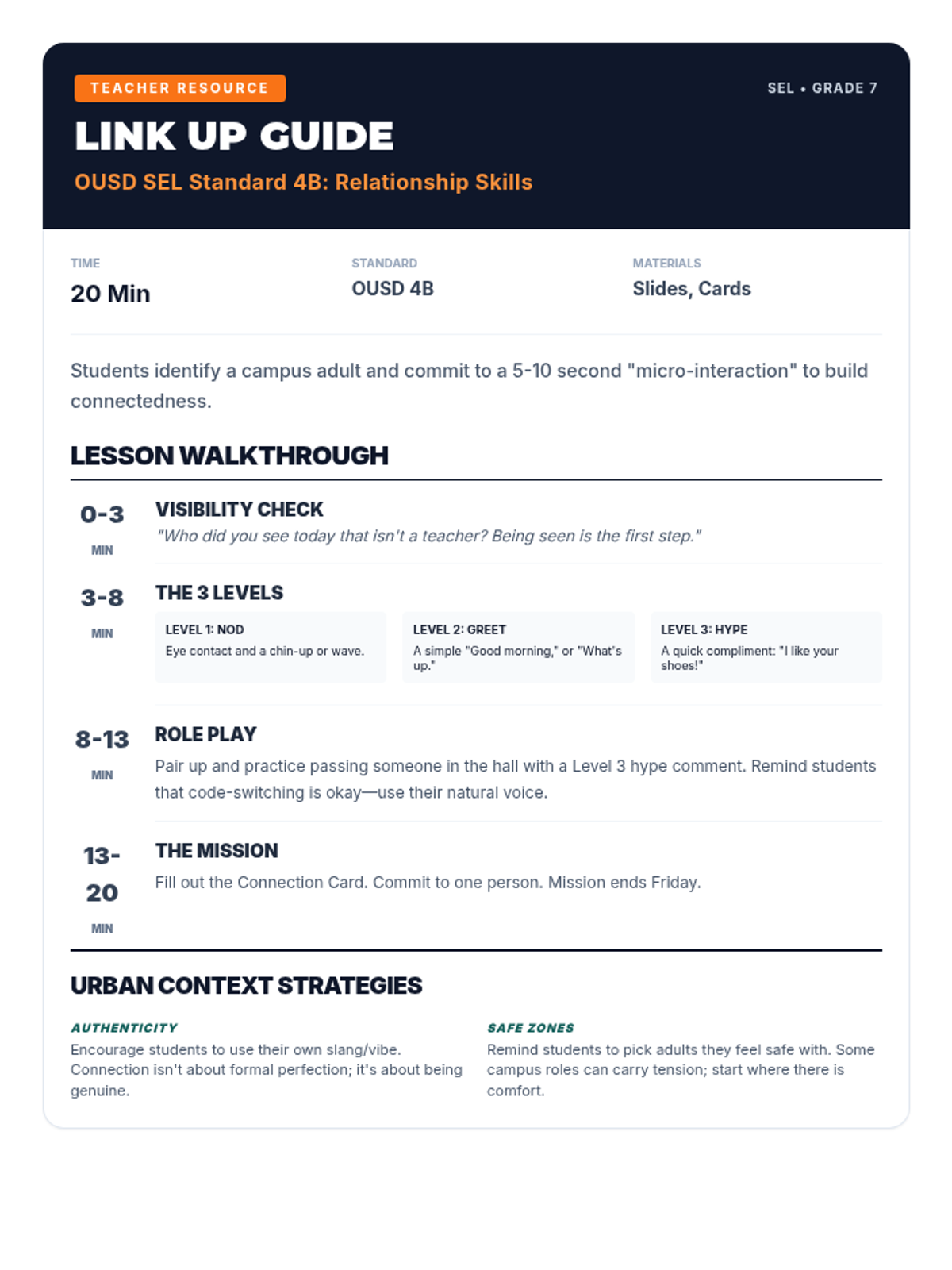
A detailed teacher's guide for the 'Link Up' SEL lesson. Revised to prevent awkward page breaks and ensure clear section grouping.
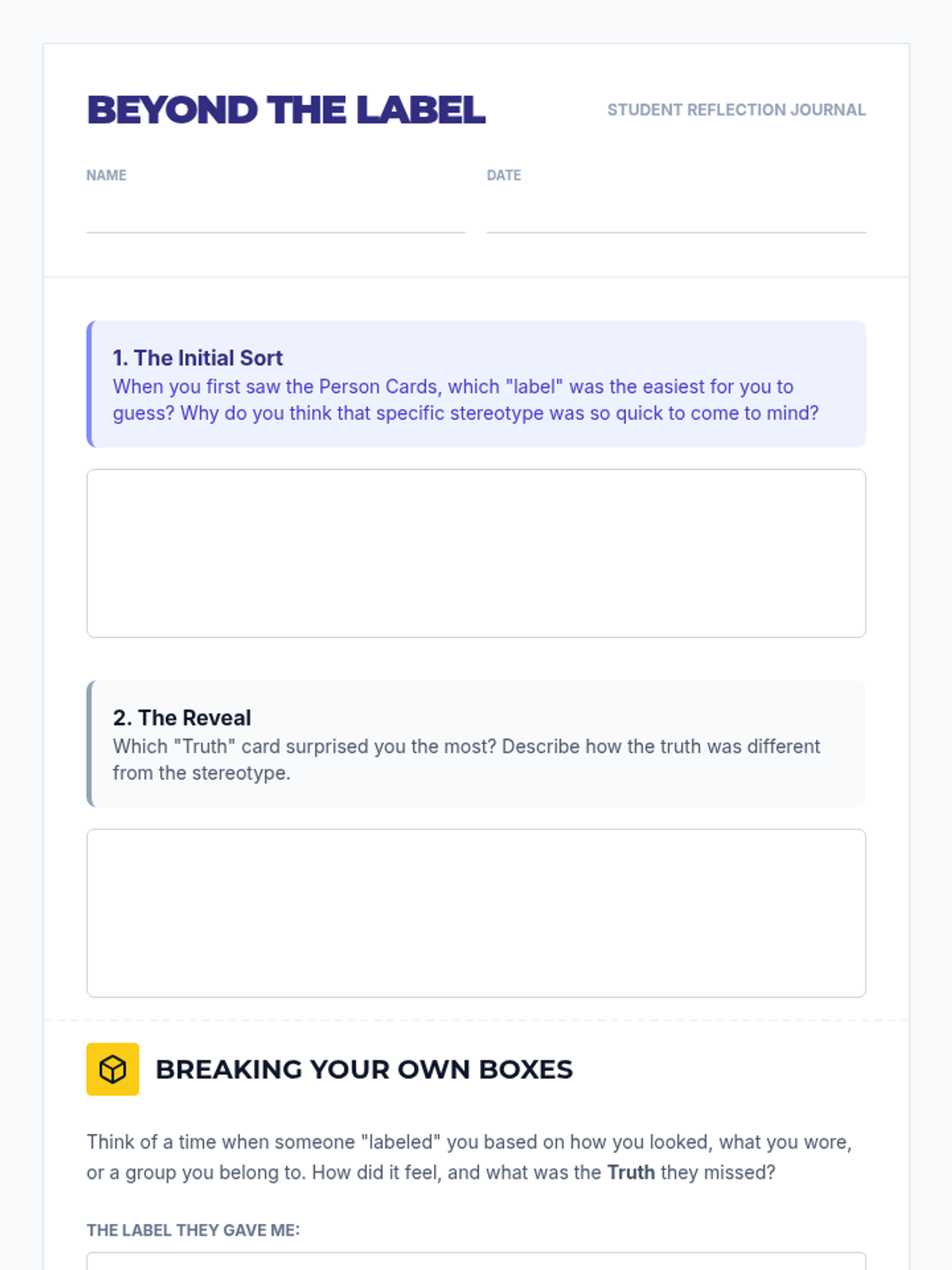
A reflective journal worksheet for students to process the visual sorting activity. It includes guided questions on their initial reactions, a space to analyze the 'Truth' reveals, and a personal application section for exploring their own experiences with labels.
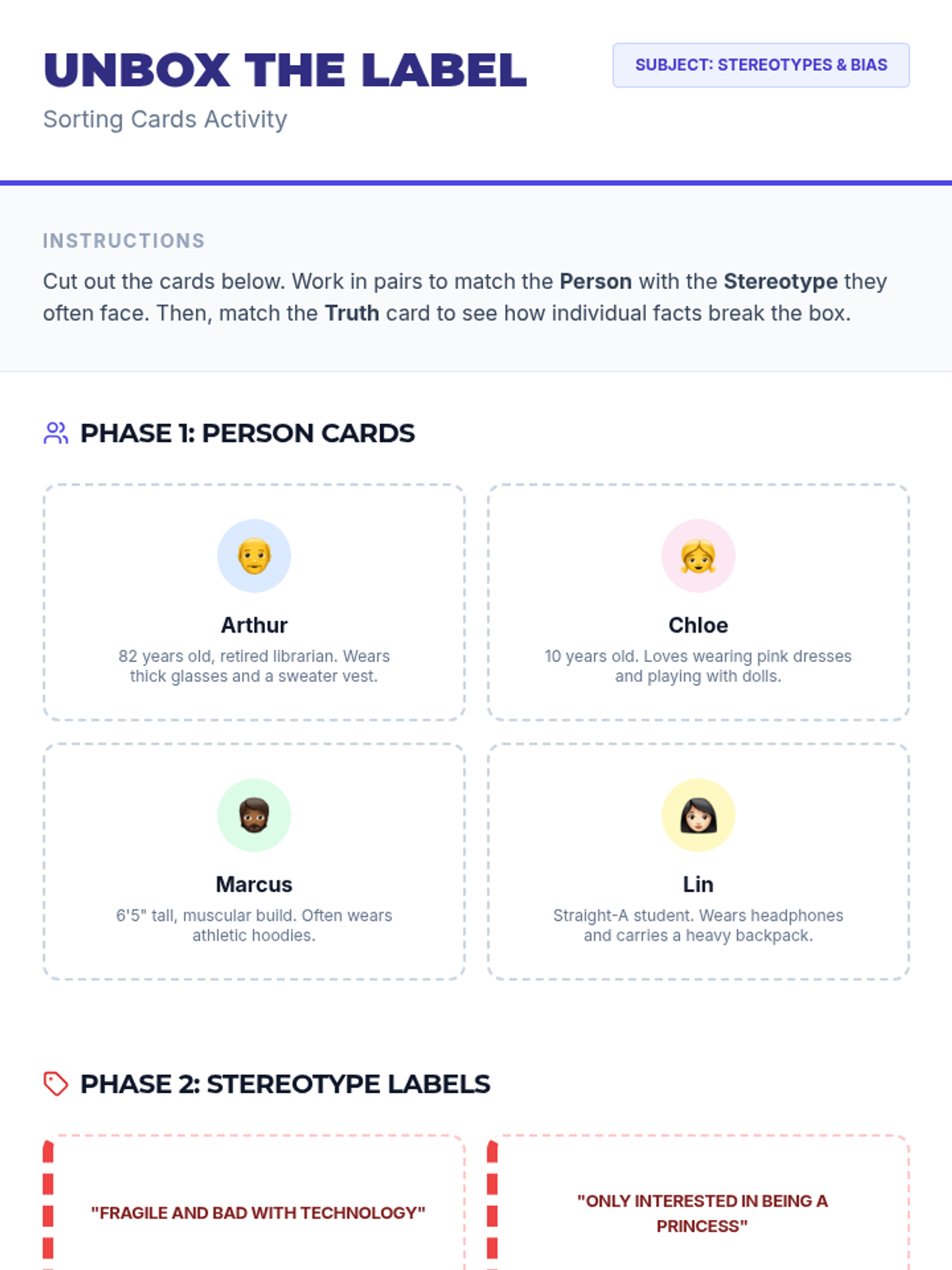
A hands-on activity sheet featuring 12 cut-out cards (Person, Stereotype, and Truth) designed to help students visually sort and challenge common biases. Each set of cards provides a narrative that defies simple categorization.
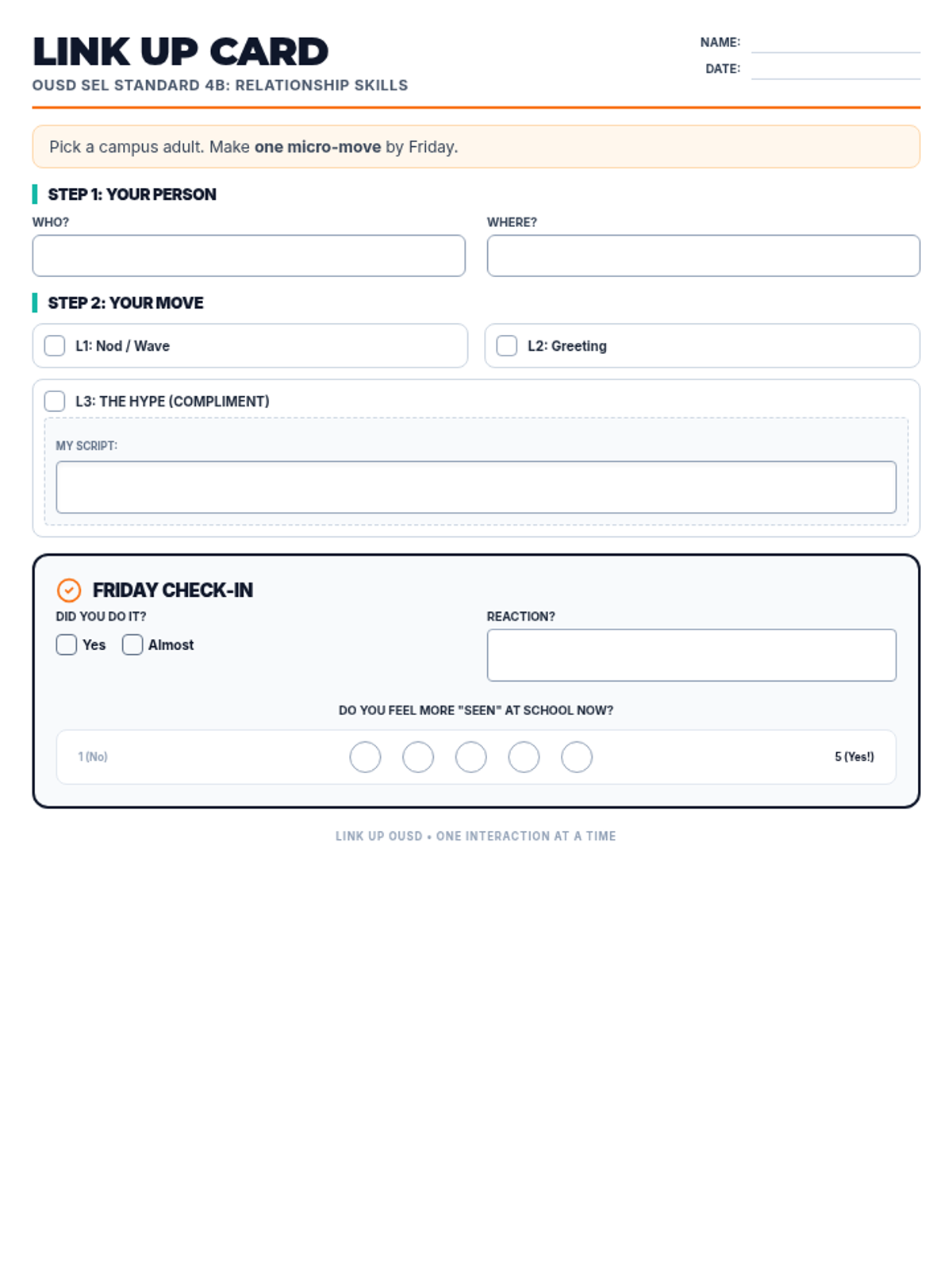
A student-facing handout for the 'Link Up' SEL lesson. Revised to prevent page breaks, increase contrast, and provide better handwriting areas in the reflection section.
A visual presentation introducing the concept of stereotypes, the brain's use of shortcuts, and the harmful effects of labeling people. Includes clear definitions and instructions for the hands-on sorting activity.
A 5-slide visual presentation for a 20-minute Tier 1 SEL lesson on school connectedness. Revised to ensure text alignment and project-safe margins.
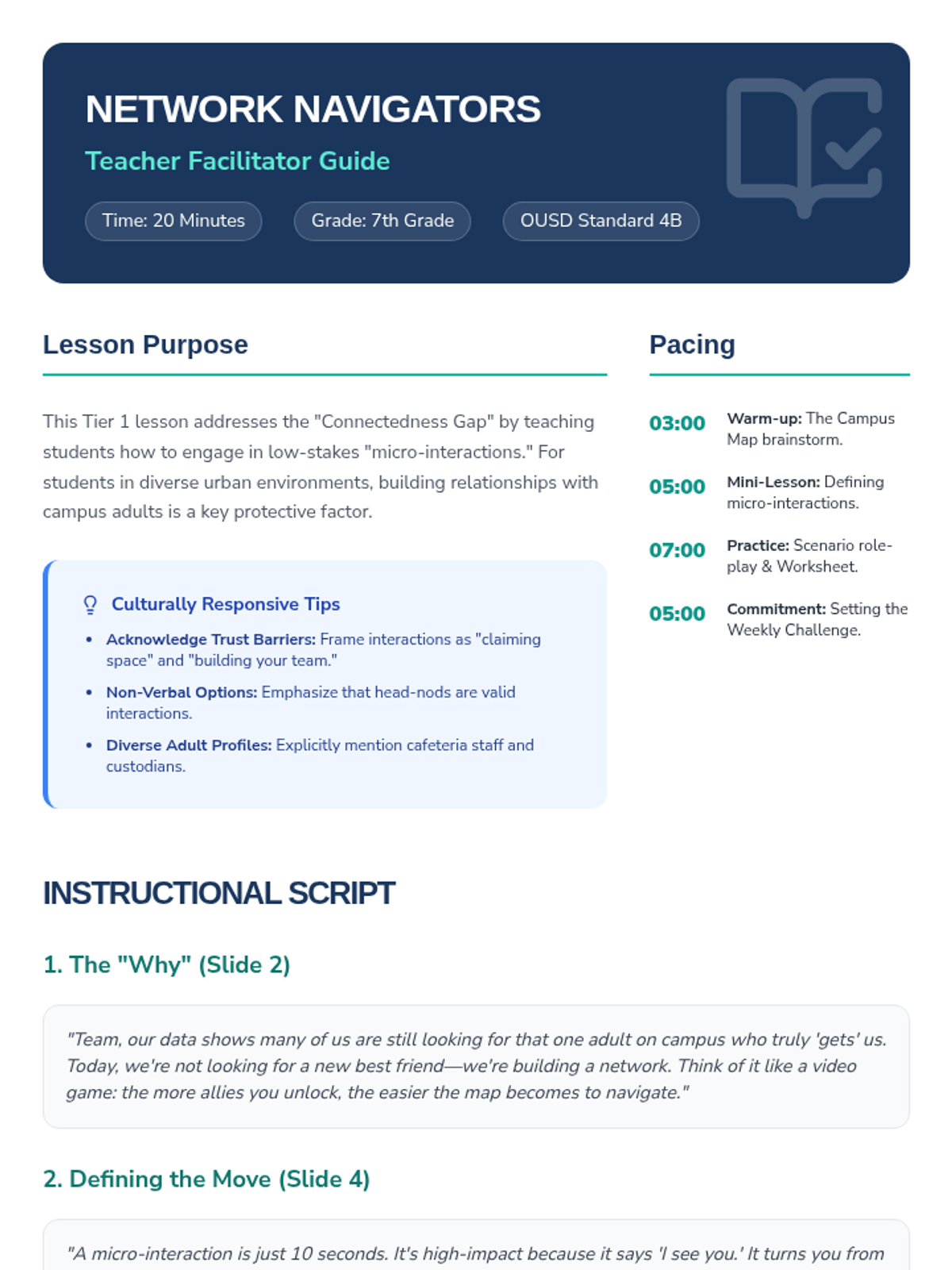
A teacher facilitator guide for the Network Navigators SEL lesson, revised to include the practice scenario script, fit better on pages, and include all materials in the checklist.
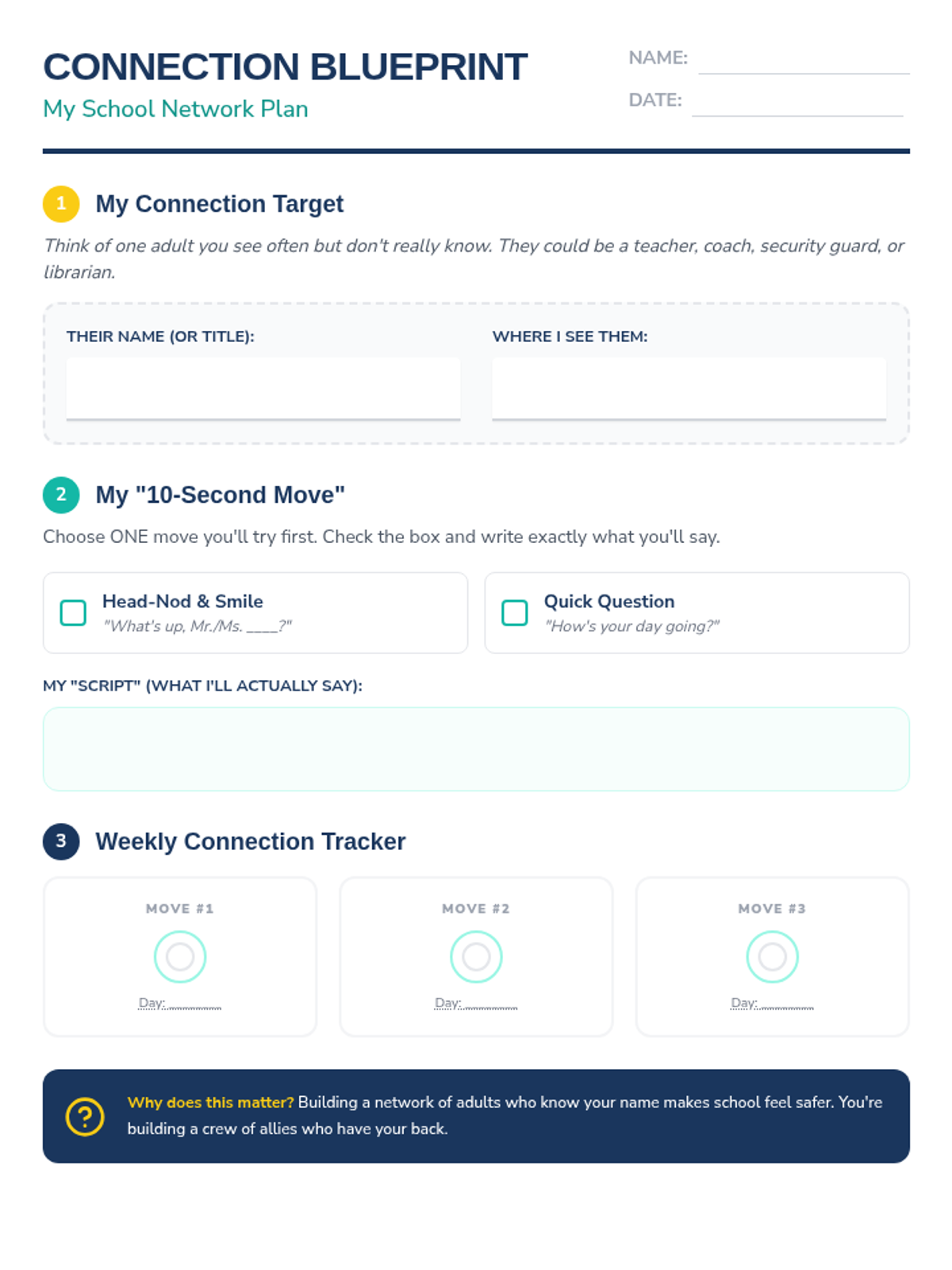
A student worksheet to help 7th graders plan their "micro-interactions" with campus adults, including a space to identify a target adult and track their connection challenge. Revised to fit on one page and improve input area sizing.
A slide deck for a 20-minute SEL lesson on school connectedness. Includes a 3-minute warm-up, an explanation of "micro-interactions," role-play prompts, and a weekly challenge. Revised to improve slide 6 layout.
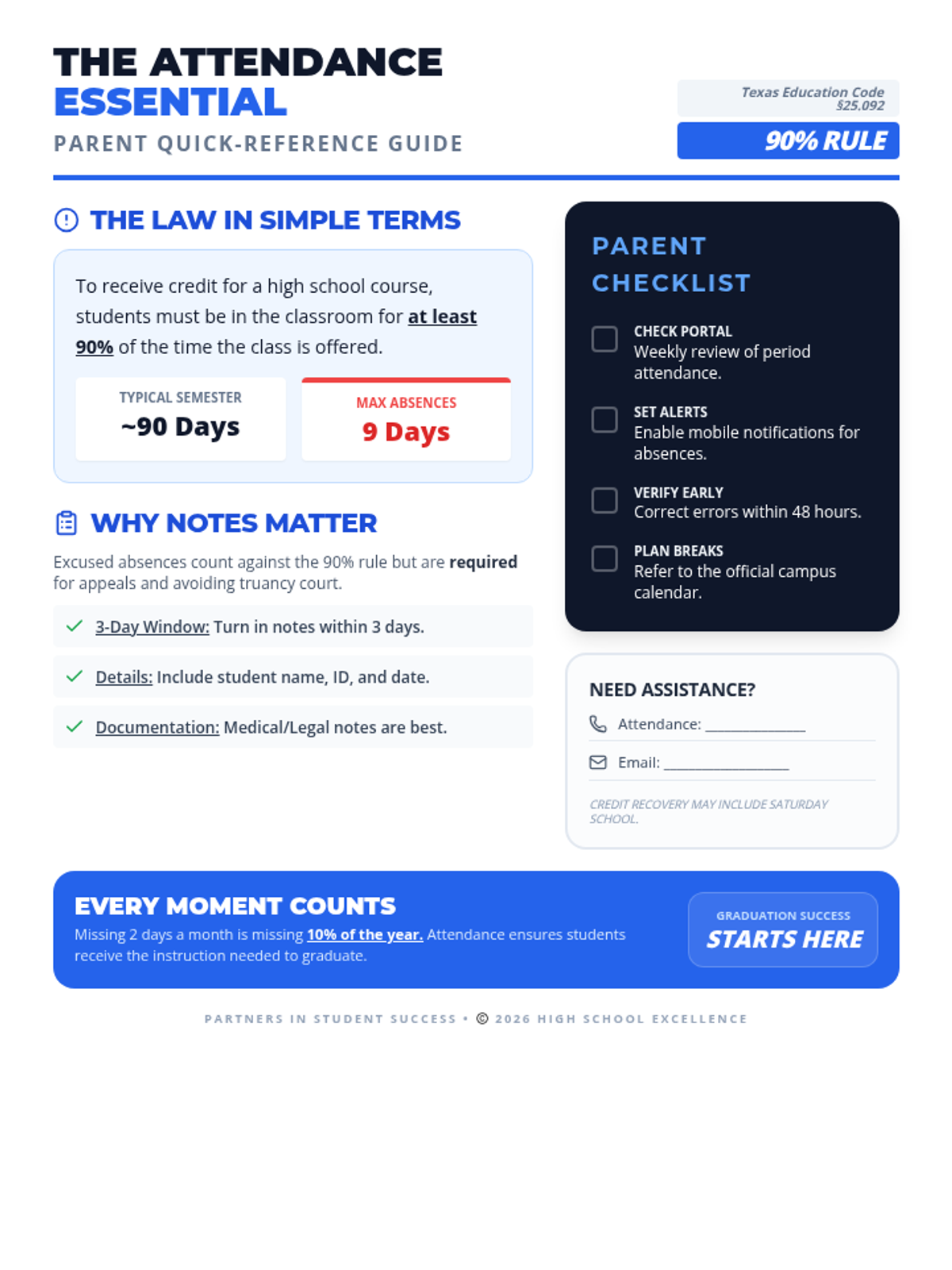
A concise reference sheet for parents summarizing the Texas 90% attendance rule, including key calculations, parent action steps, and contact information.
A professional 12-slide presentation designed for high school parents, explaining the importance of attendance and the specific requirements of the Texas 90% rule for course credit.
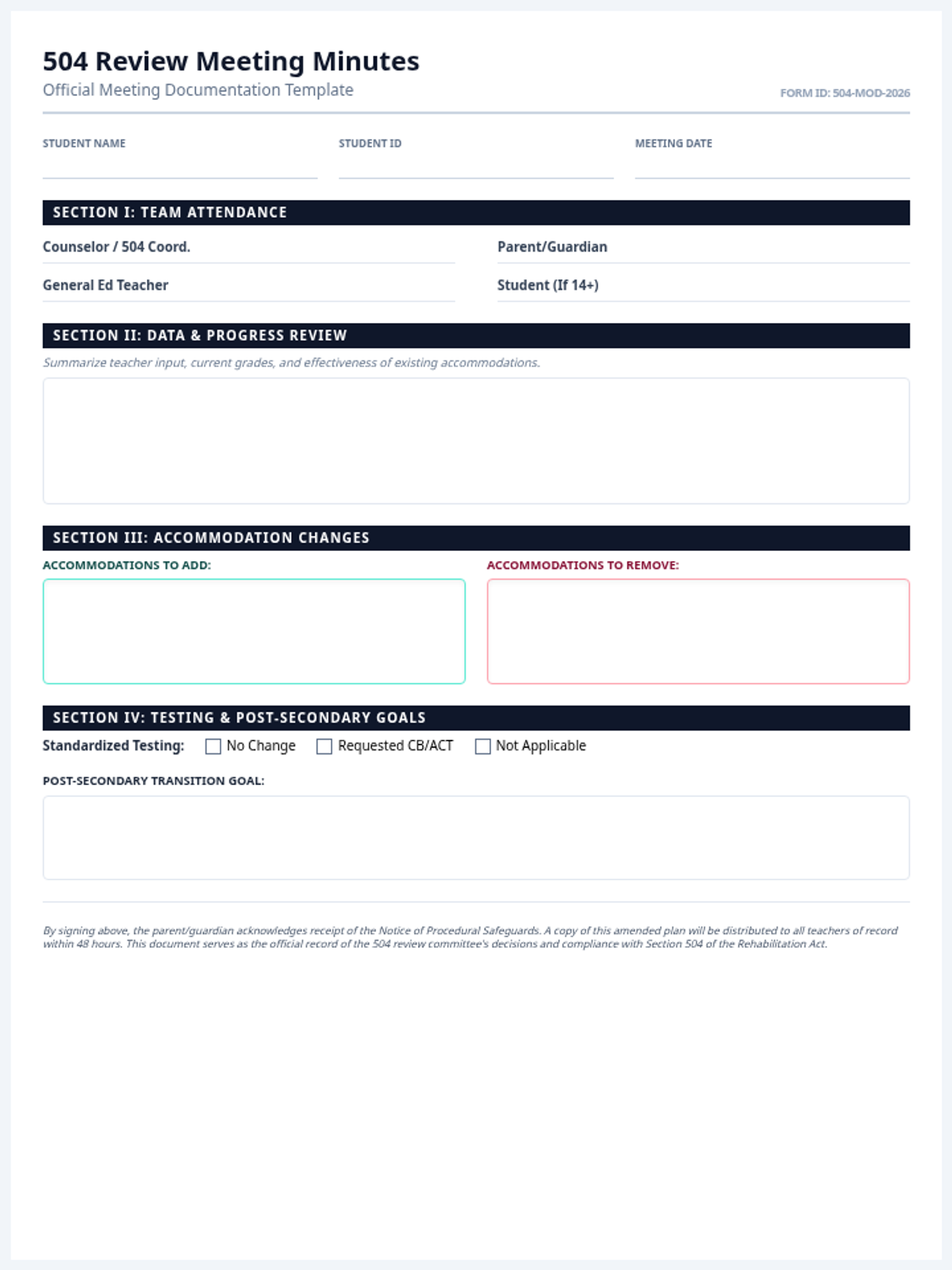
A formal, high-quality meeting minutes template for documenting 504 review meetings, including sections for attendance, data review, accommodation modifications, and transition goals. Optimized for single-page printing and grayscale legibility.
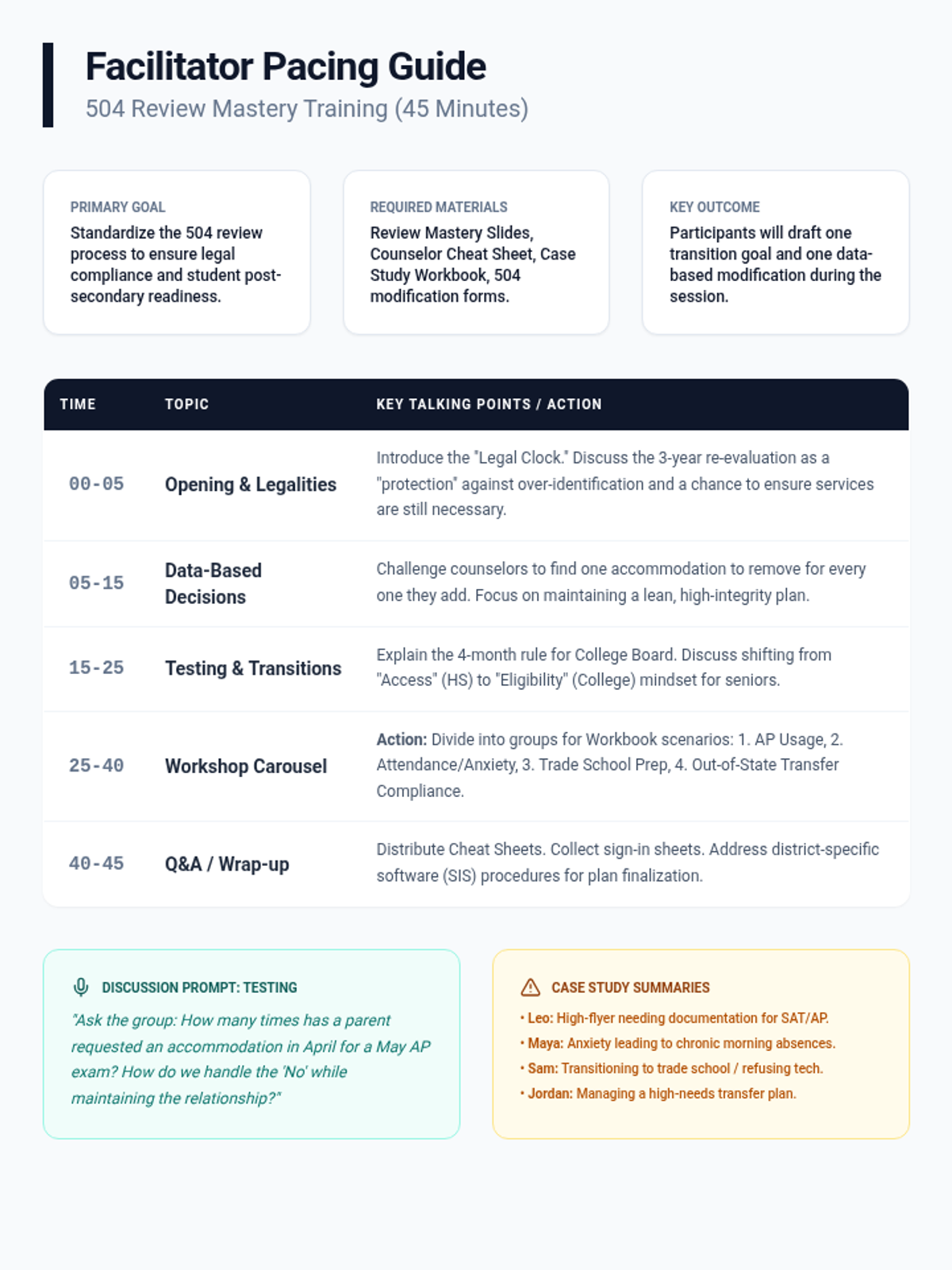
A detailed 45-minute facilitator pacing guide for trainers, providing timed modules, talking points, and interactive workshop prompts for the 504 training session. Consolidated to one page.
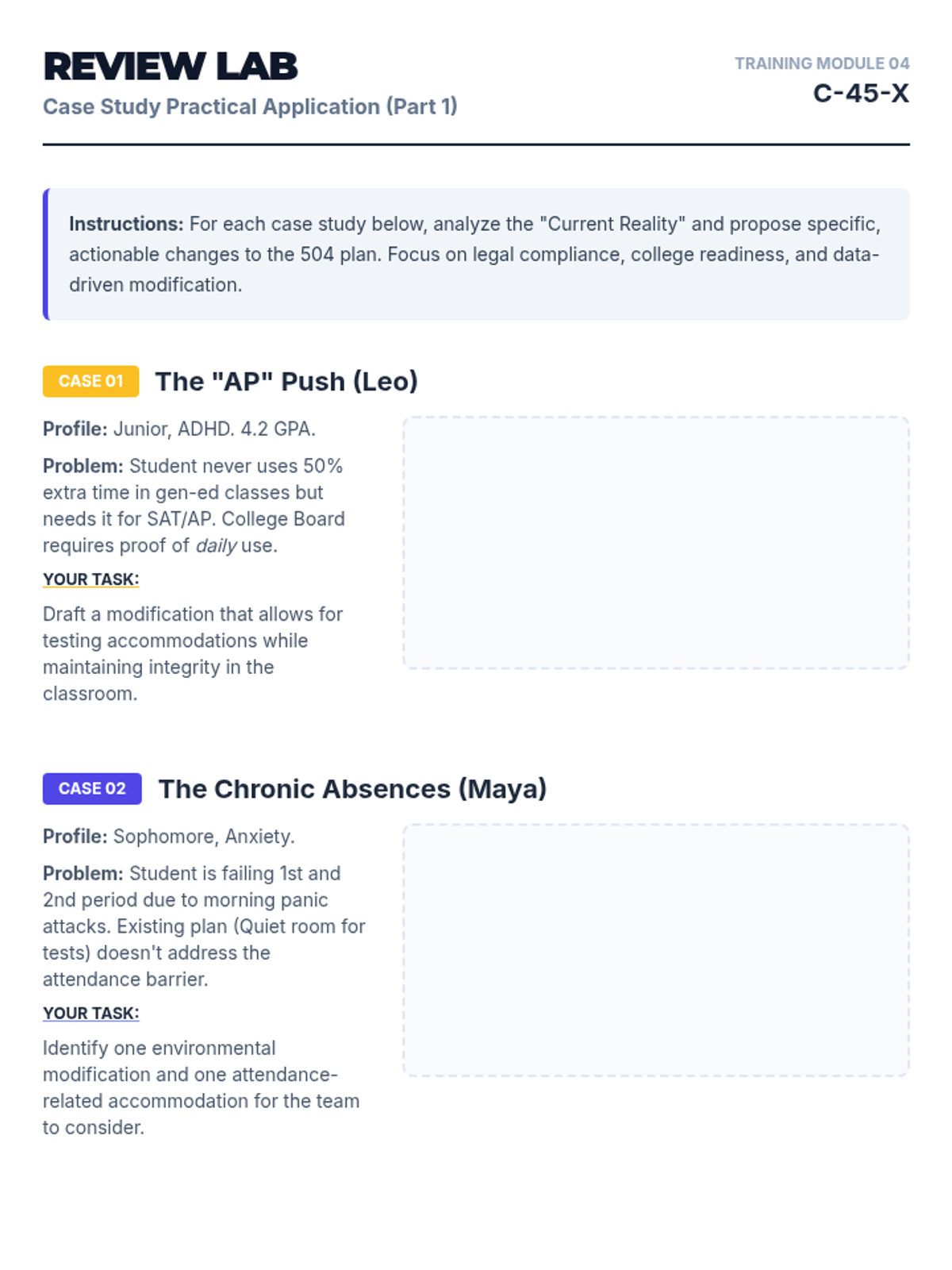
A hands-on worksheet featuring four specific high school 504 case studies, designed for counselors to practice drafting modifications, transition goals, and compliance responses. Increased workspace provided.
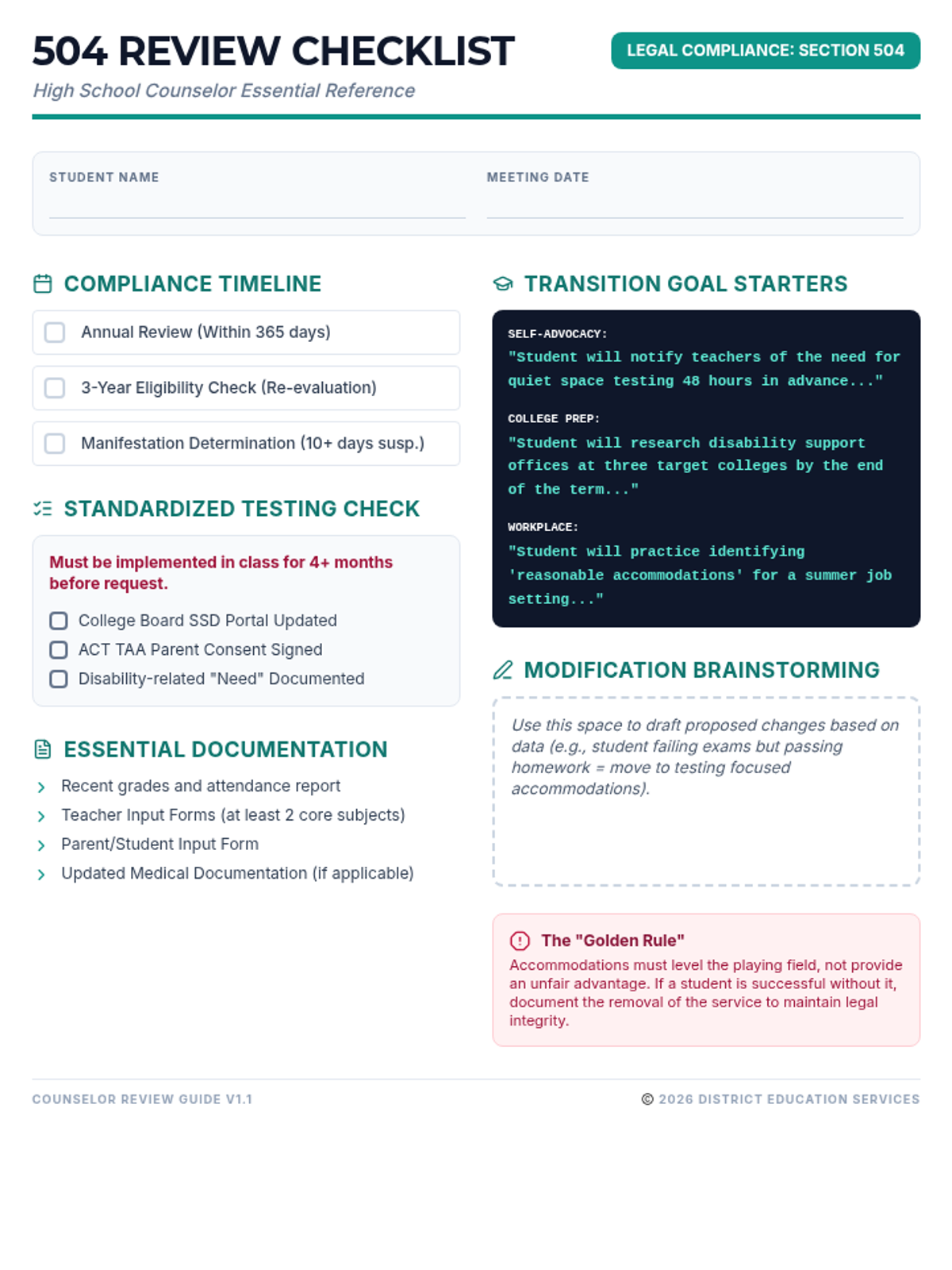
A practical one-page reference sheet for high school counselors, featuring a compliance timeline, standardized testing requirements, and post-secondary transition goal templates. Revised for improved contrast and legibility.
A 11-slide presentation for high school counselors on leading 504 review meetings, covering legal timelines, standardized testing, post-secondary transitions, and four interactive case studies.
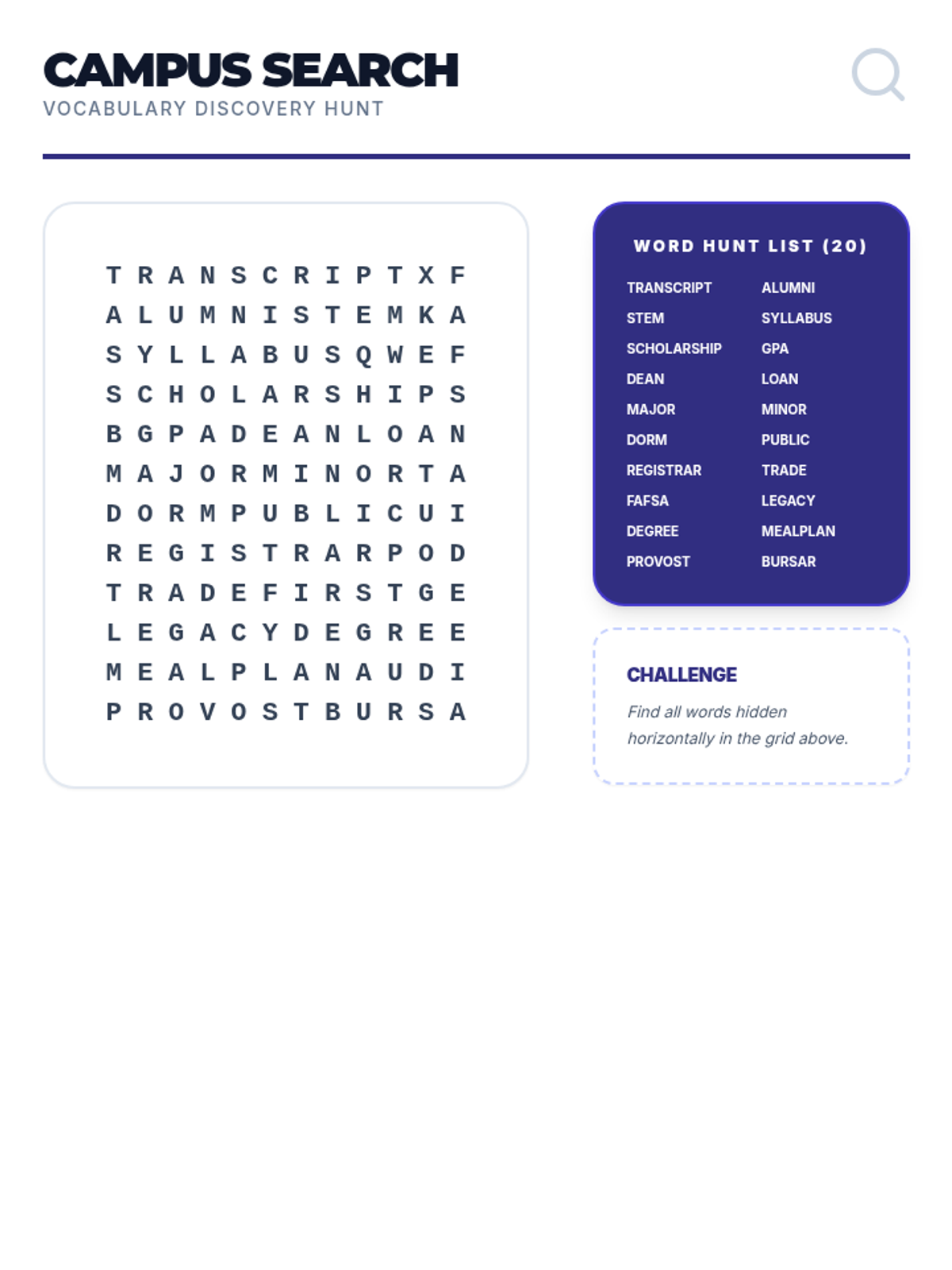
A large 12x12 word search puzzle featuring 20 key vocabulary terms from the Campus Quest unit, designed for 8th-grade engagement. Updated to fix grid alignment and characters. Grid strictly constrained to 12 columns.
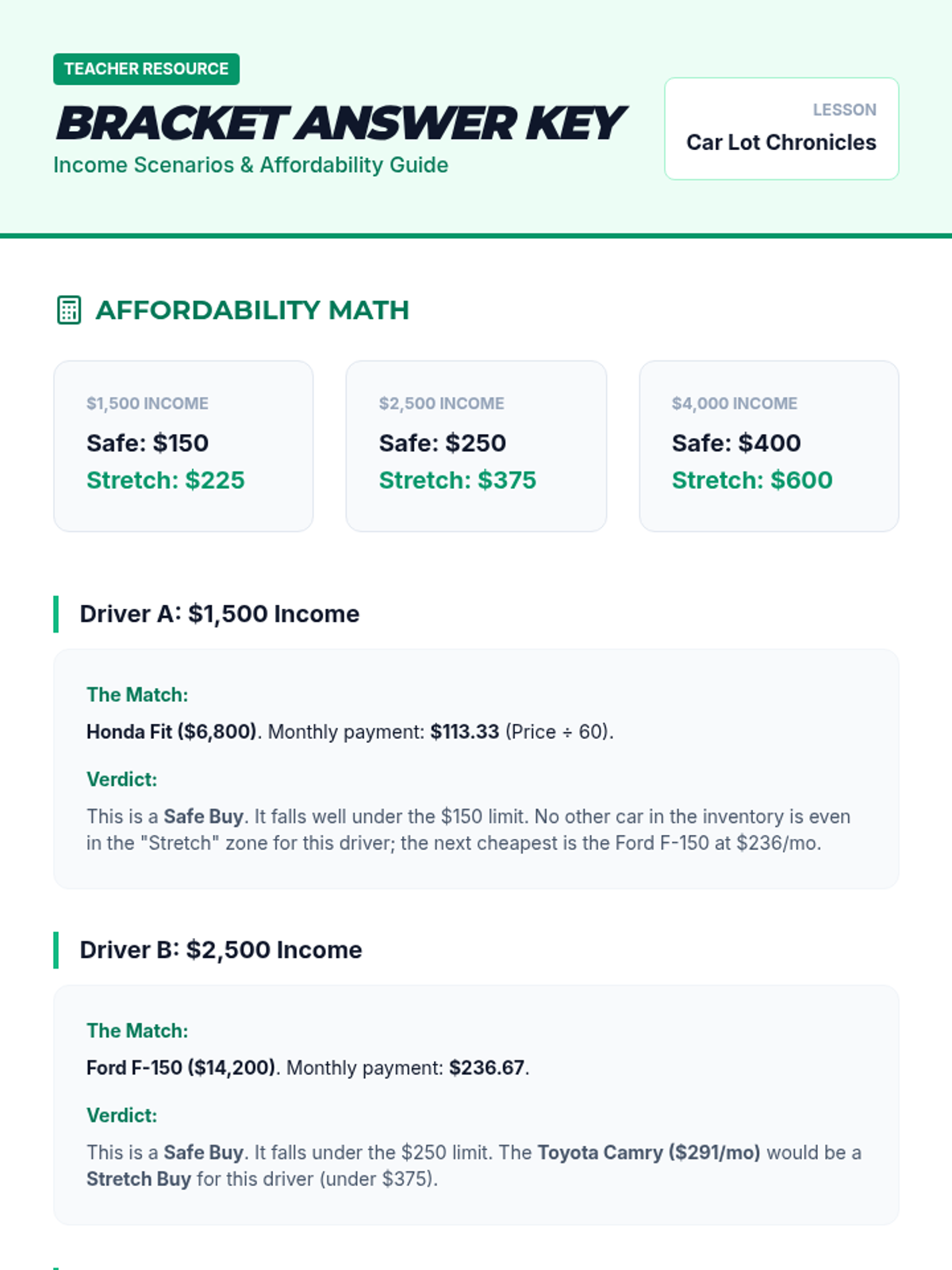
Teacher's answer key for the Budget Bracket worksheet, providing the math for each income level and matching each driver to the car inventory.
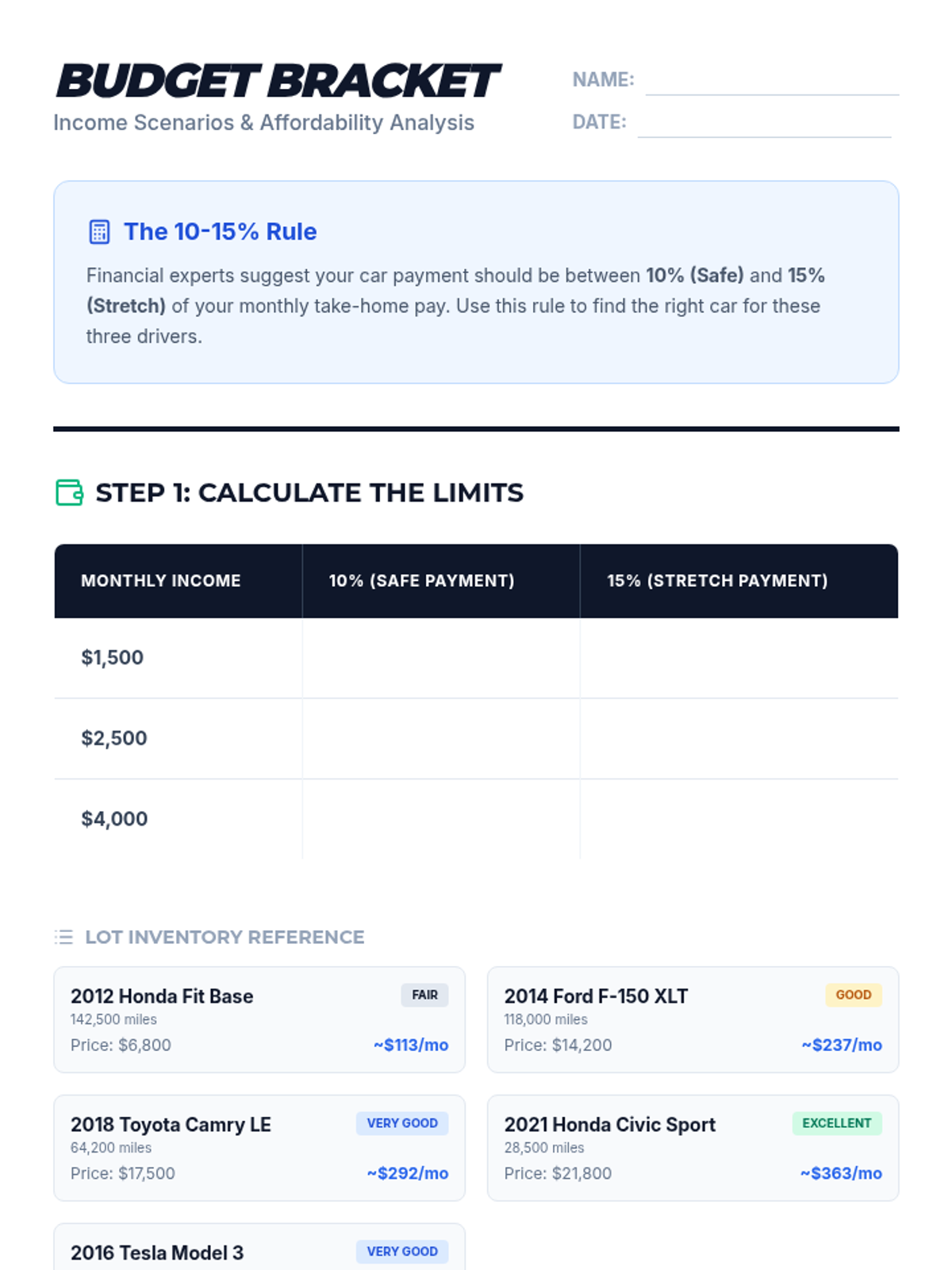
A budget-focused worksheet where students calculate car payment limits based on $1,500, $2,500, and $4,000 monthly income and match them to available car inventory. Revised with inventory reference and better layout.
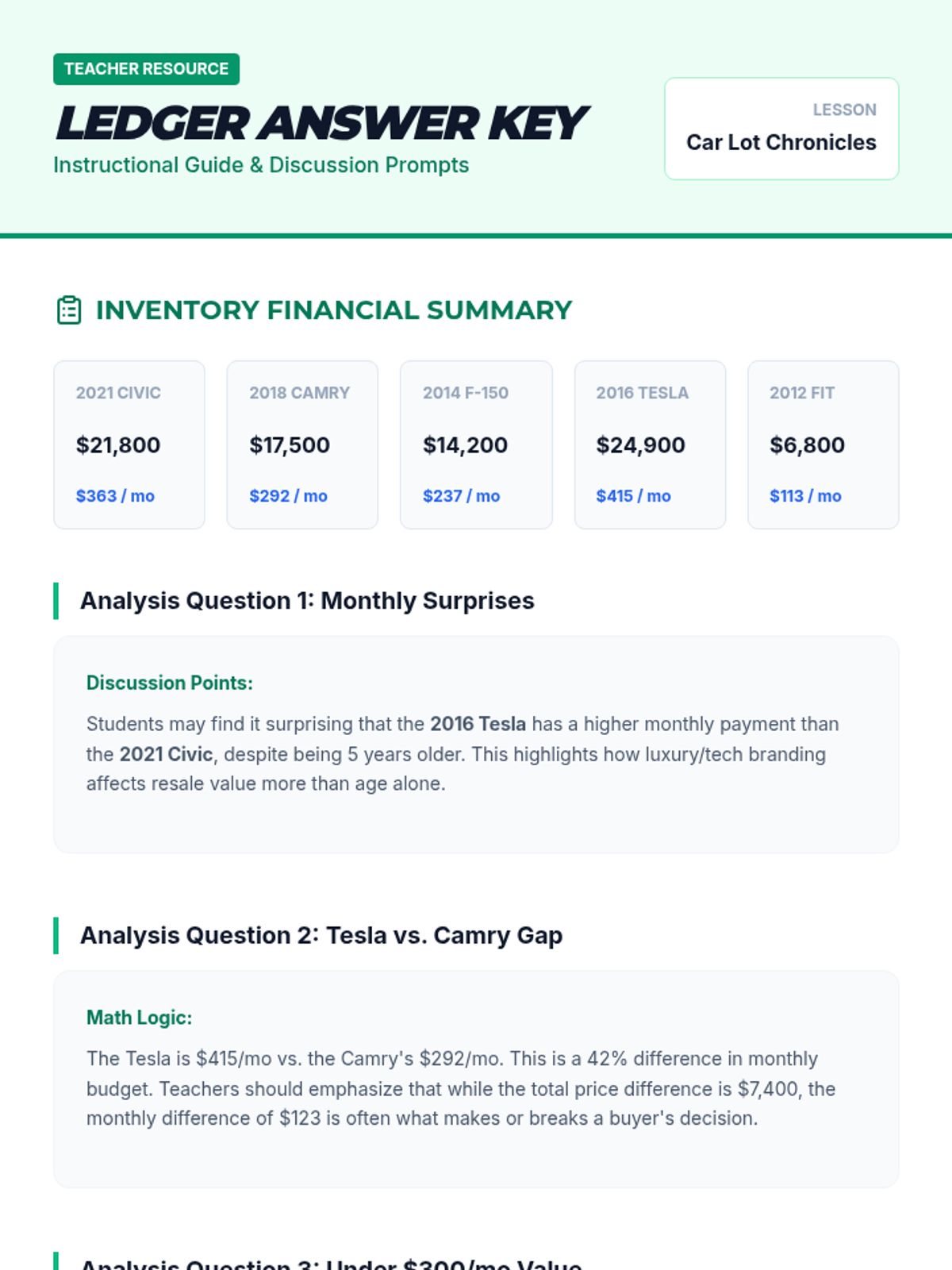
A teacher's guide and answer key for the Dealership Ledger worksheet. Includes specific financial analysis of the car inventory, including total prices and monthly payment comparisons. Revised for markdown consistency.
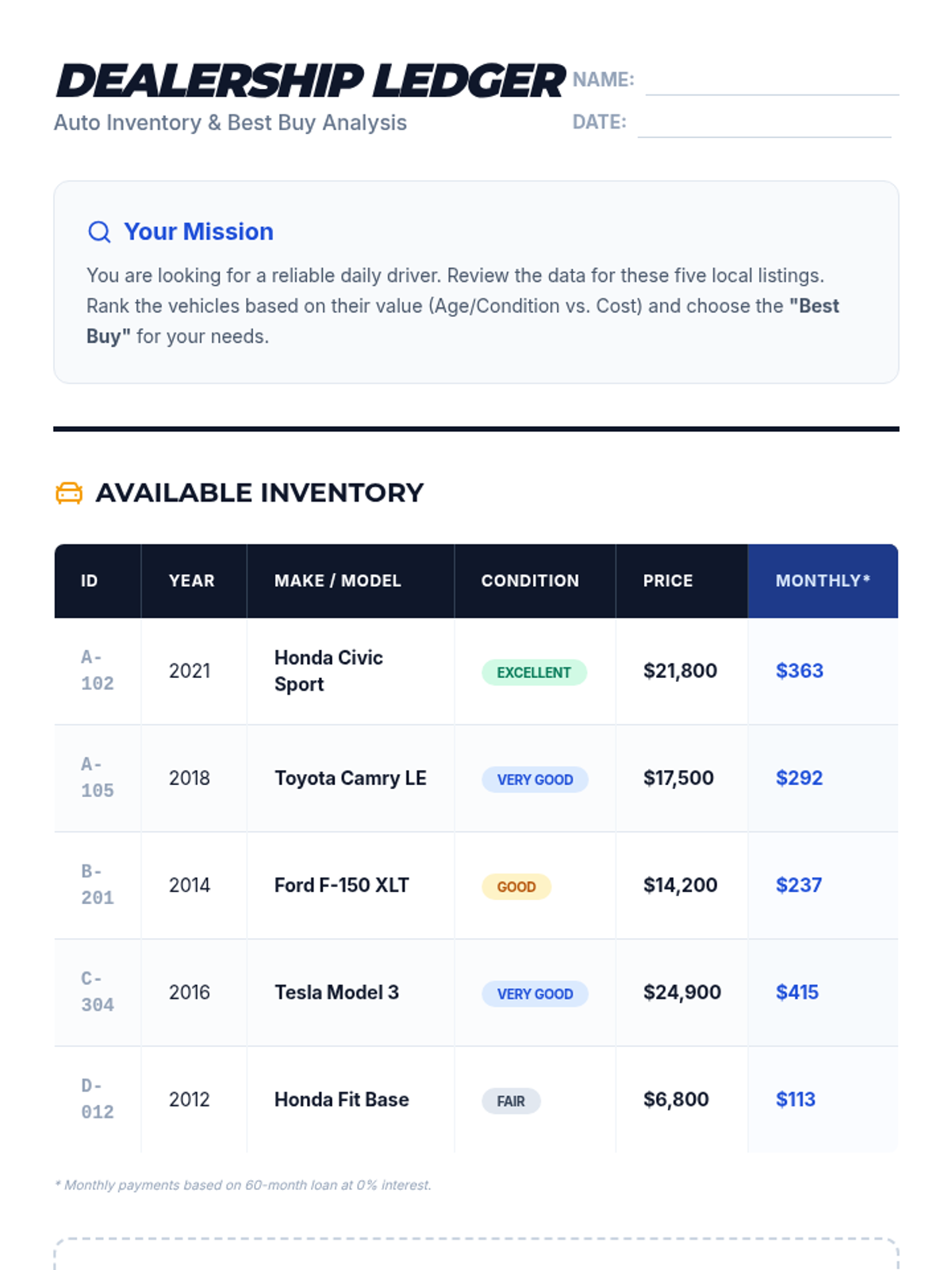
A comparison worksheet featuring an inventory table of 5 cars with both total price and monthly payment estimates. Students analyze the financial data to select and justify a 'Best Buy' vehicle. Revised with better spacing and work areas.
An introductory slide deck for the Car Lot Chronicles lesson, covering car depreciation, the 'Big Three' factors of car buying, the affordability rule, and featuring the inventory list with both total price and monthly payment estimates.
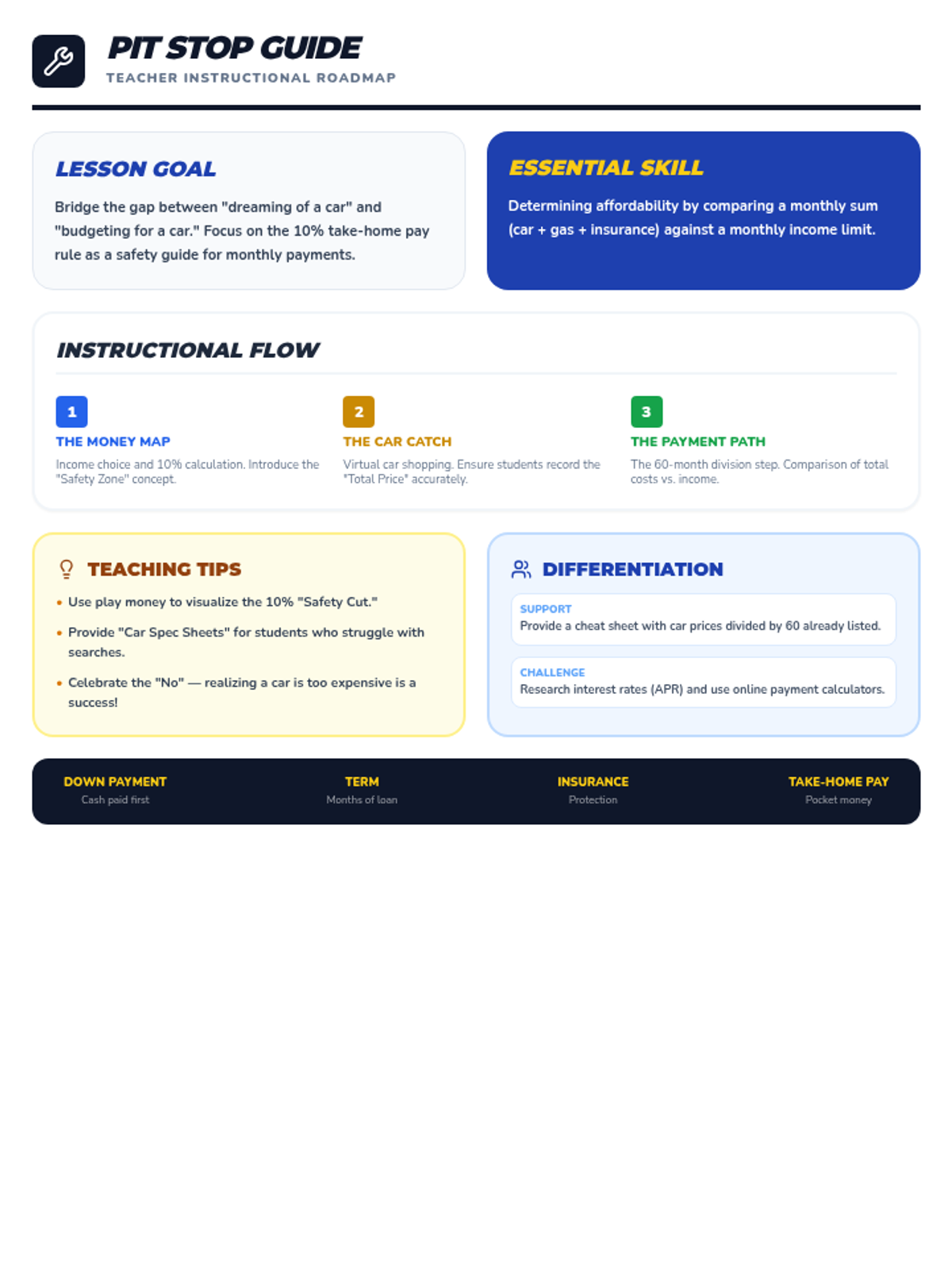
A teacher guide for the car-buying project. Consistently formatted to fit on a single page with clear instructional pathways and differentiation strategies. Revised for improved color contrast and font sizing.
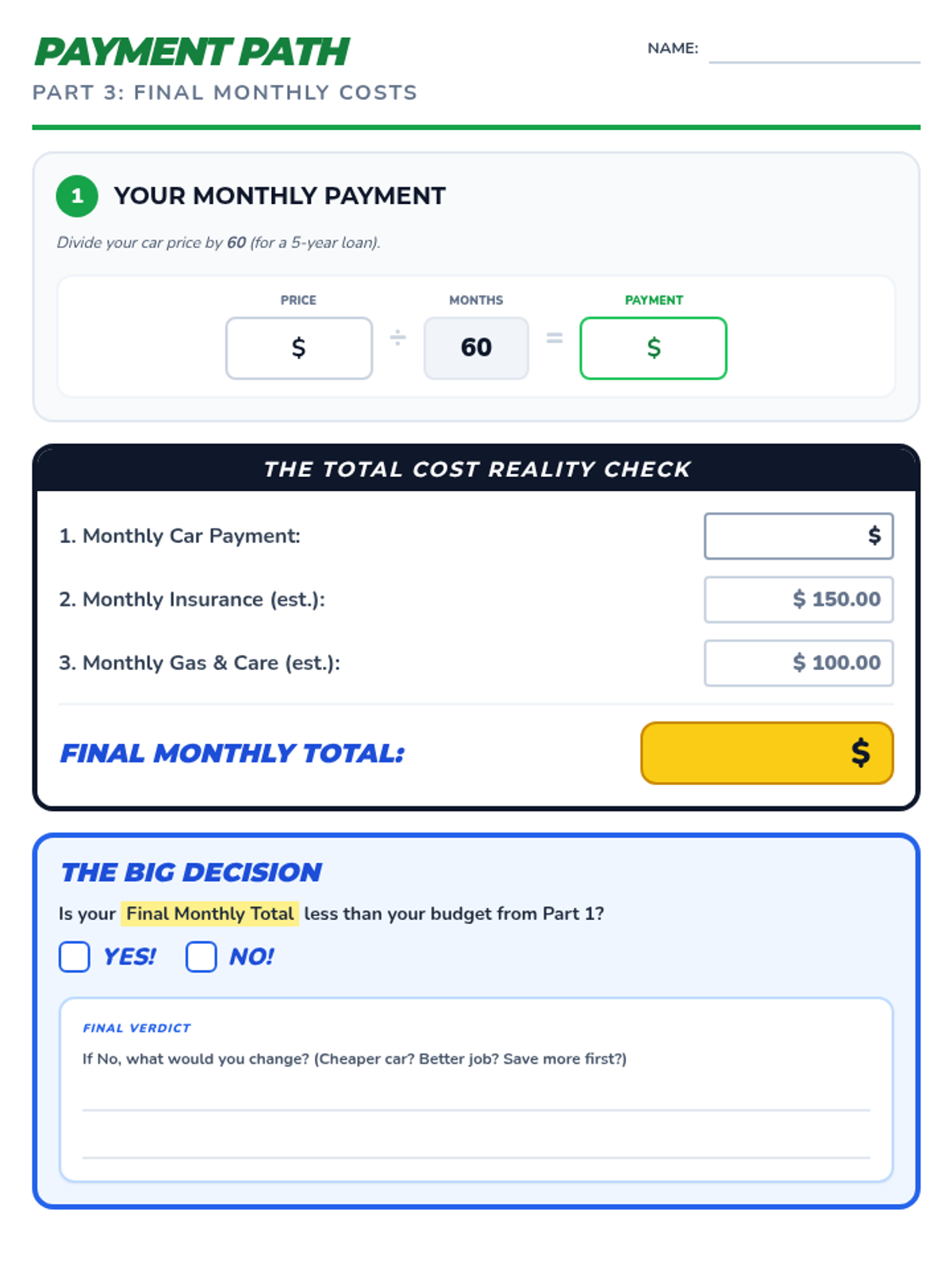
A worksheet for calculating the final monthly cost of car ownership. Updated for uniform table styling, improved contrast, and optimized single-page layout.
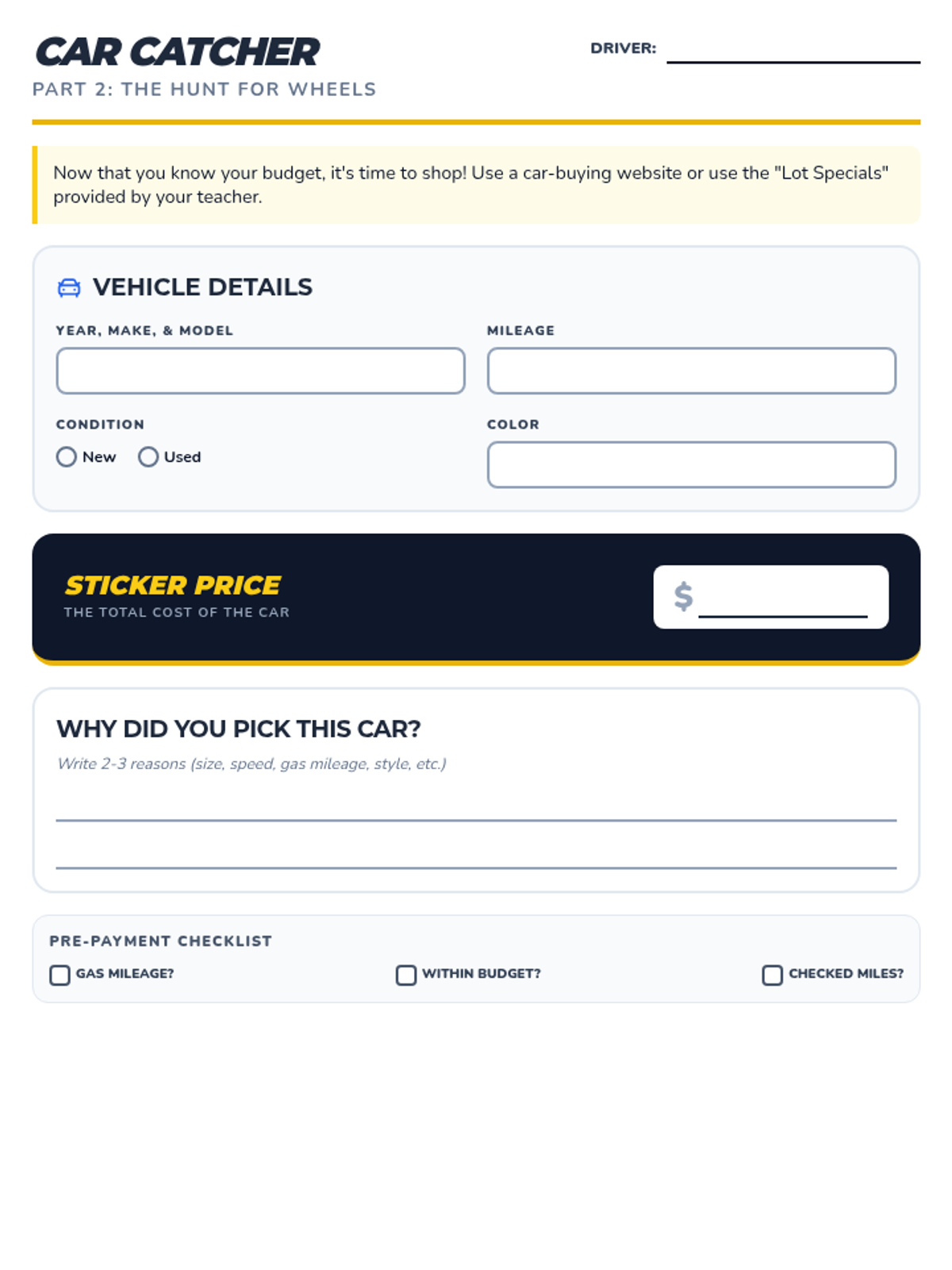
A car-shopping worksheet where students record details for a vehicle. Optimized for a single-page layout with dark response lines and improved visibility of student work areas.
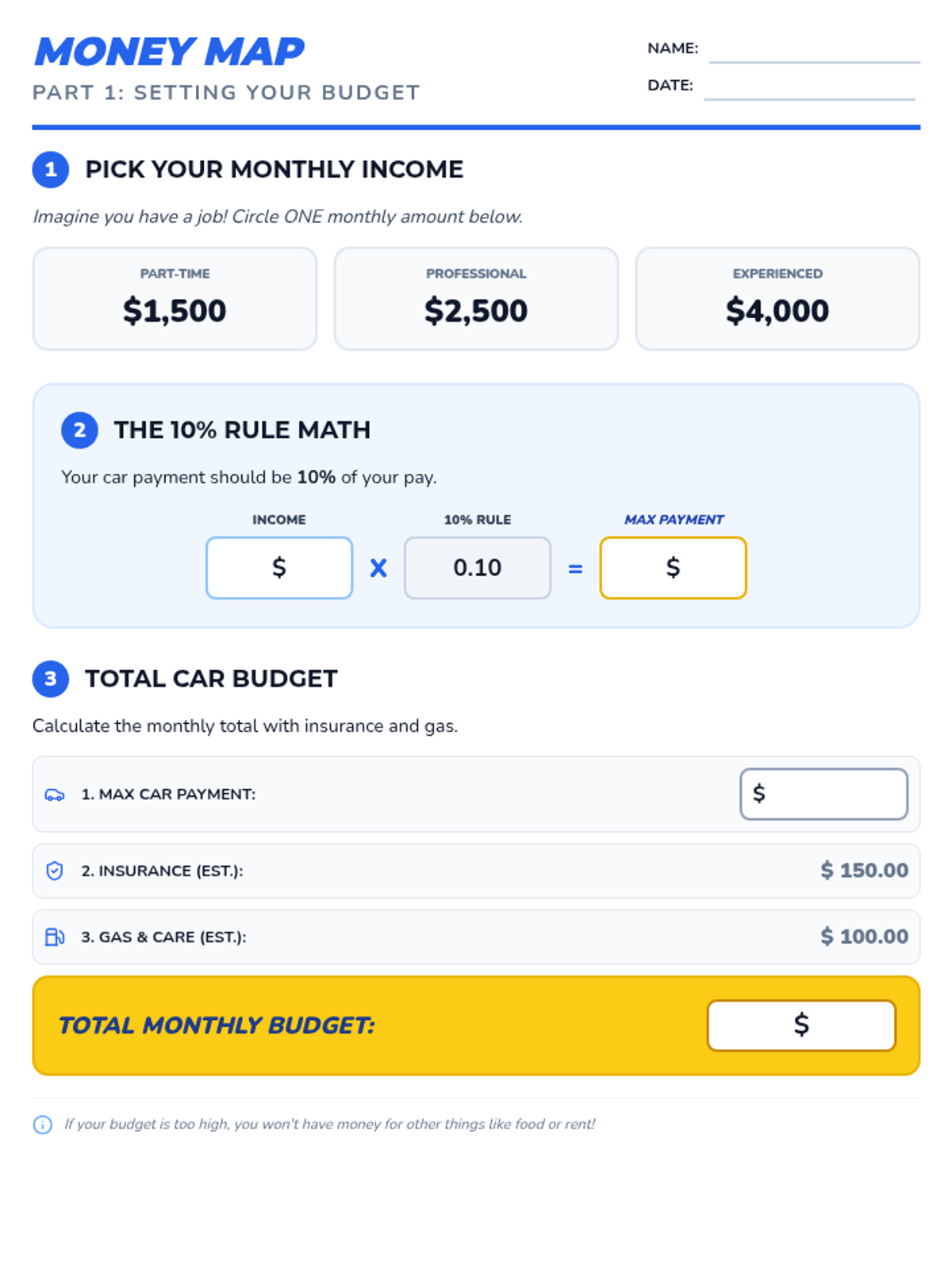
A student-facing worksheet for calculating a monthly car budget based on hypothetical income levels and the 10% rule. Updated to fit strictly on one page with high-contrast elements.
A 6-slide presentation introducing students to the concepts of car budgeting, monthly costs, the 10% rule, and the goals of the car-buying project.
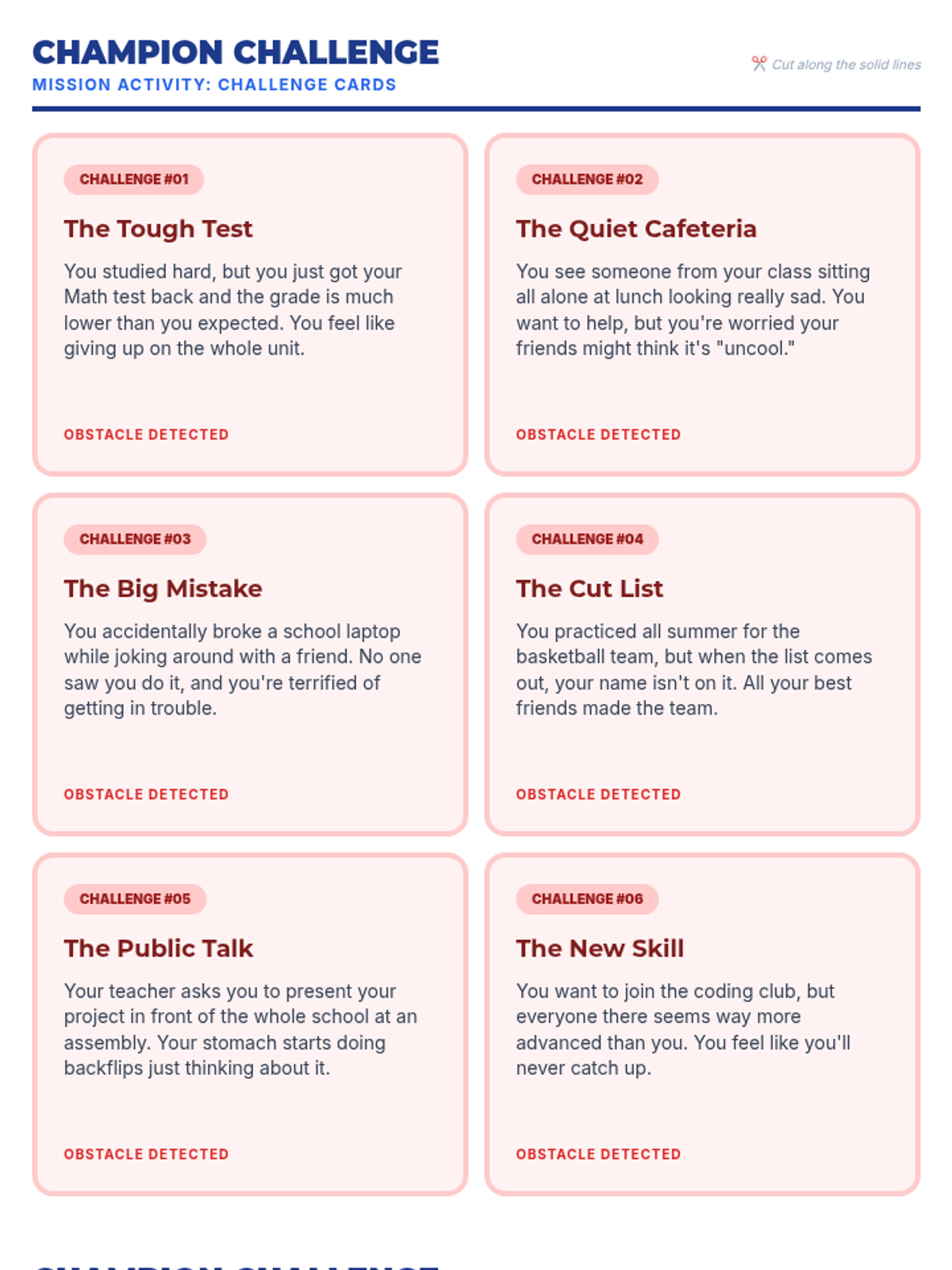
A two-page printable card game featuring 6 common 6th-grade challenges and 6 corresponding strength cards. Designed to help students practice applying strengths and growth mindset to real-world scenarios. Features improved layout for printing.
A series of three classroom posters focusing on inclusion, the central quote of Wonder, and discussion norms for a brave classroom environment.
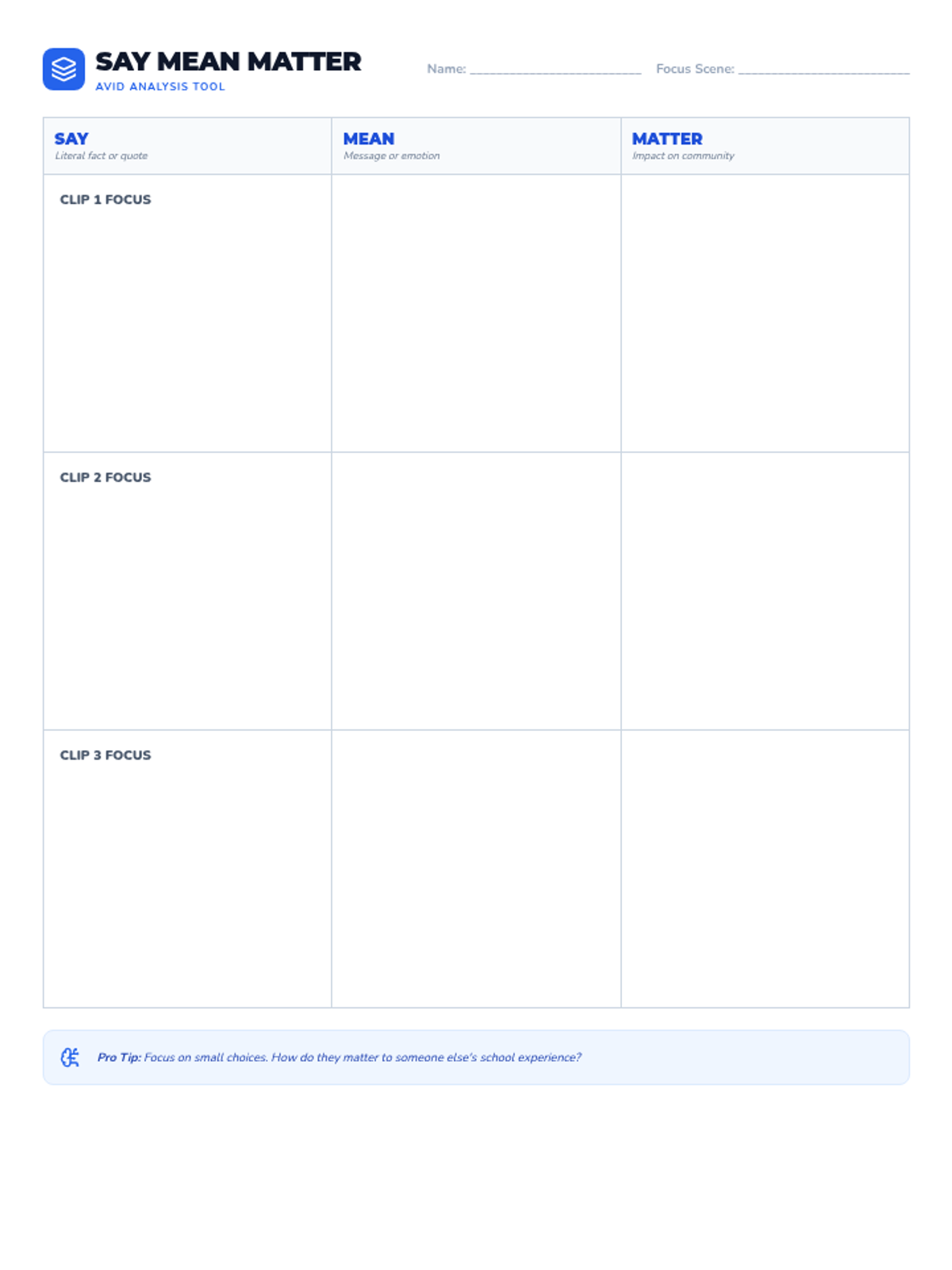
An AVID-style Say-Mean-Matter graphic organizer designed for students to analyze movie scenes and their deeper implications on character and community.
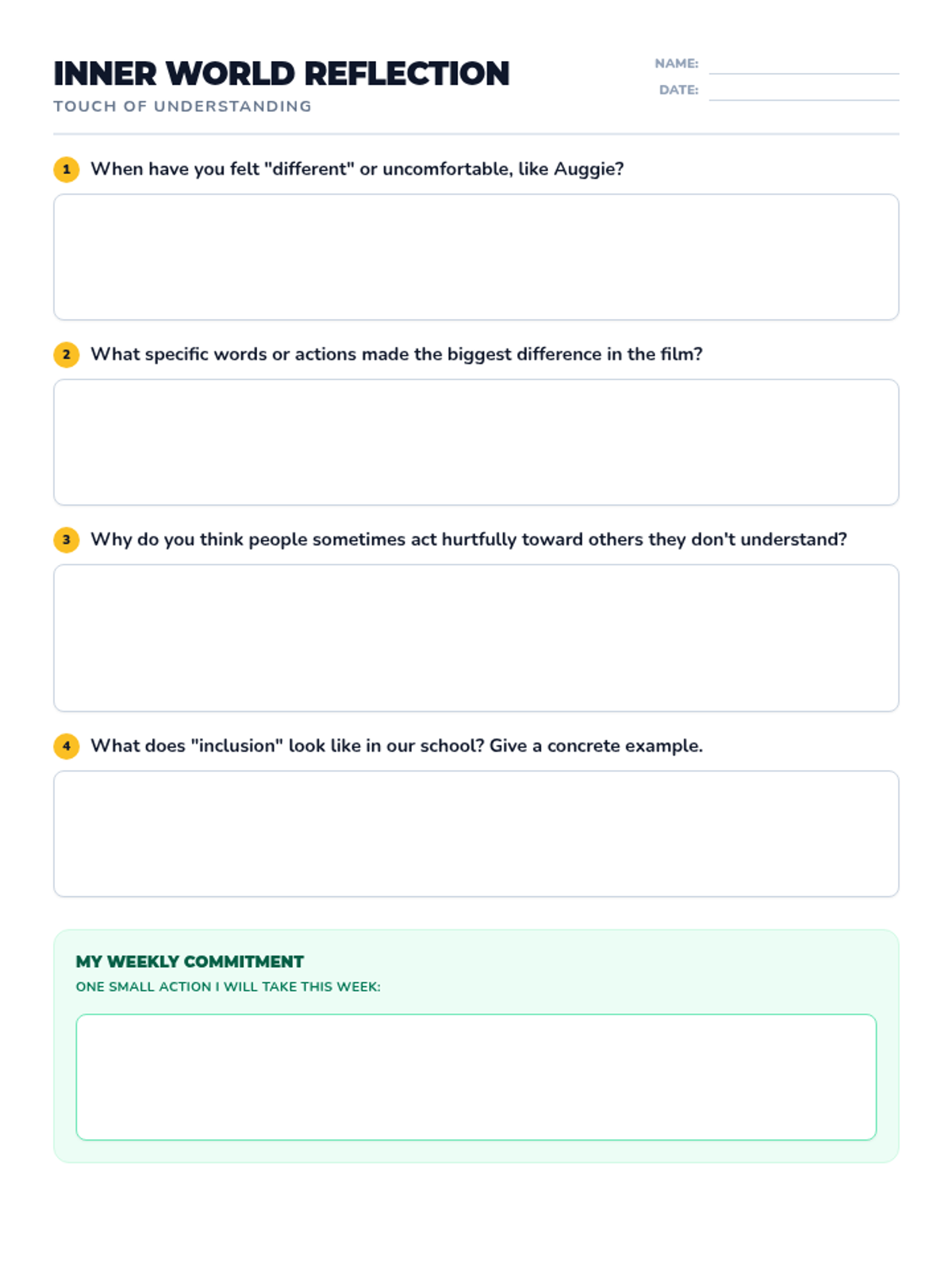
A student reflection worksheet for the Wonder empathy workshop, encouraging honest personal connection to the film's themes of feeling different and choosing kindness.