A student activity sheet for creating a personal grounding map, featuring sections for the 5-4-3-2-1 technique and a creative drawing area for their 'mental garden'. (Revised for layout and handwriting clarity)
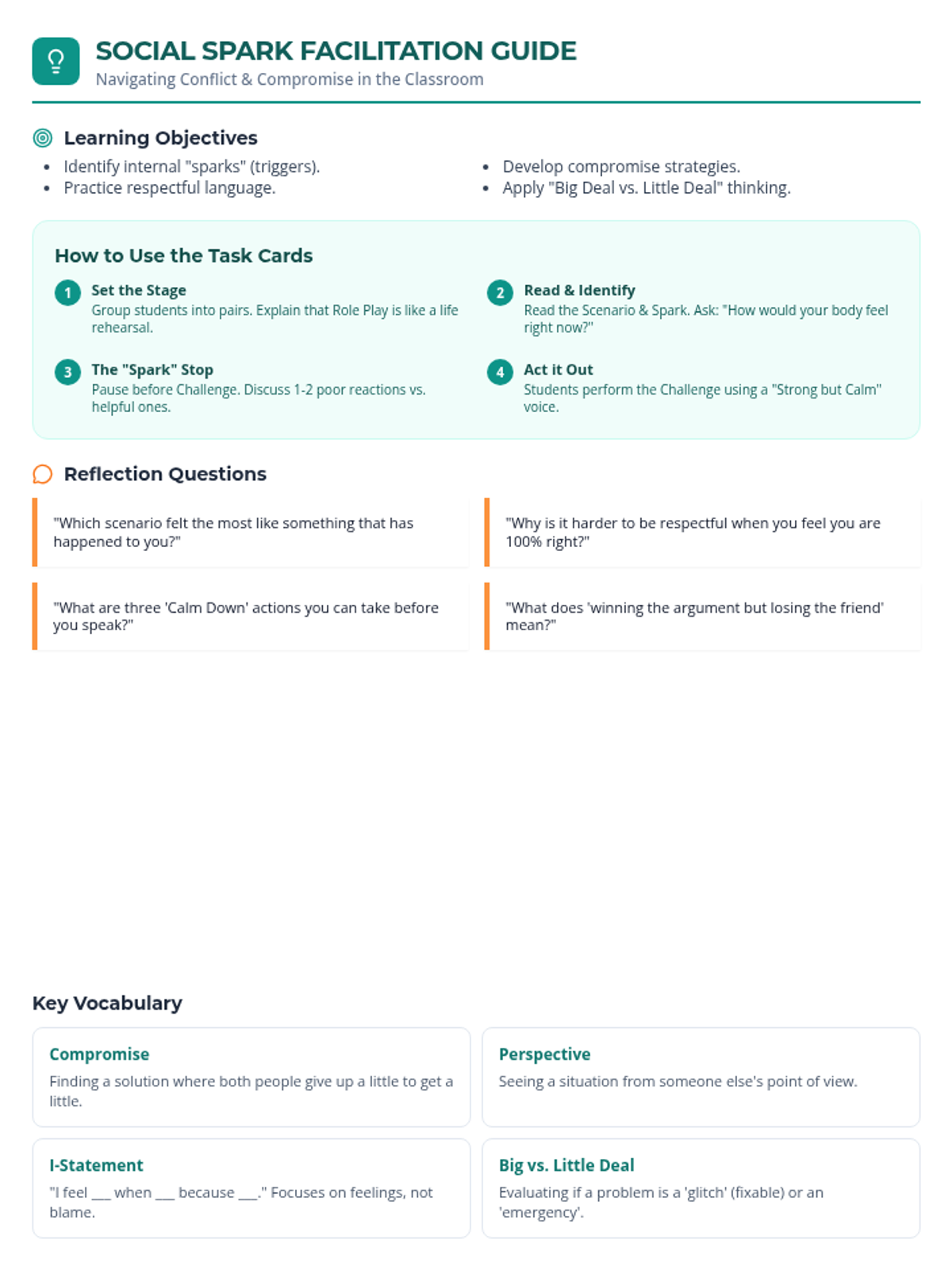
A facilitation guide for teachers to lead the Social Spark role-play activities. It includes learning objectives, a 4-step role-play framework, reflection questions, and key social-emotional vocabulary definitions. Revised to fit on a single page.
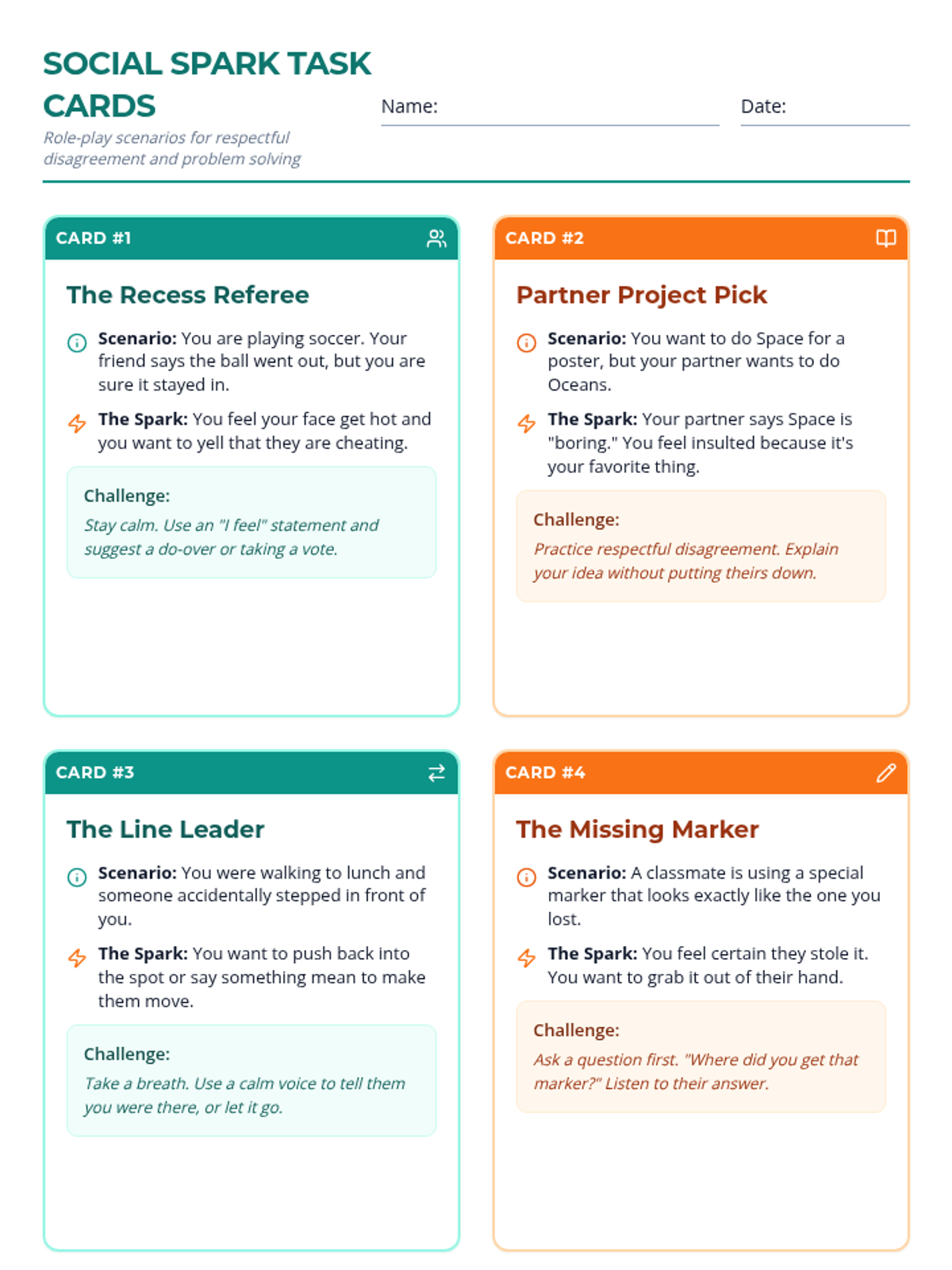
A set of 8 illustrated task cards featuring common school-based social scenarios. Each card includes a scenario, a conflict point (the 'spark'), and a challenge for students to role-play respectful disagreement and problem-solving. Revised for better page layout.
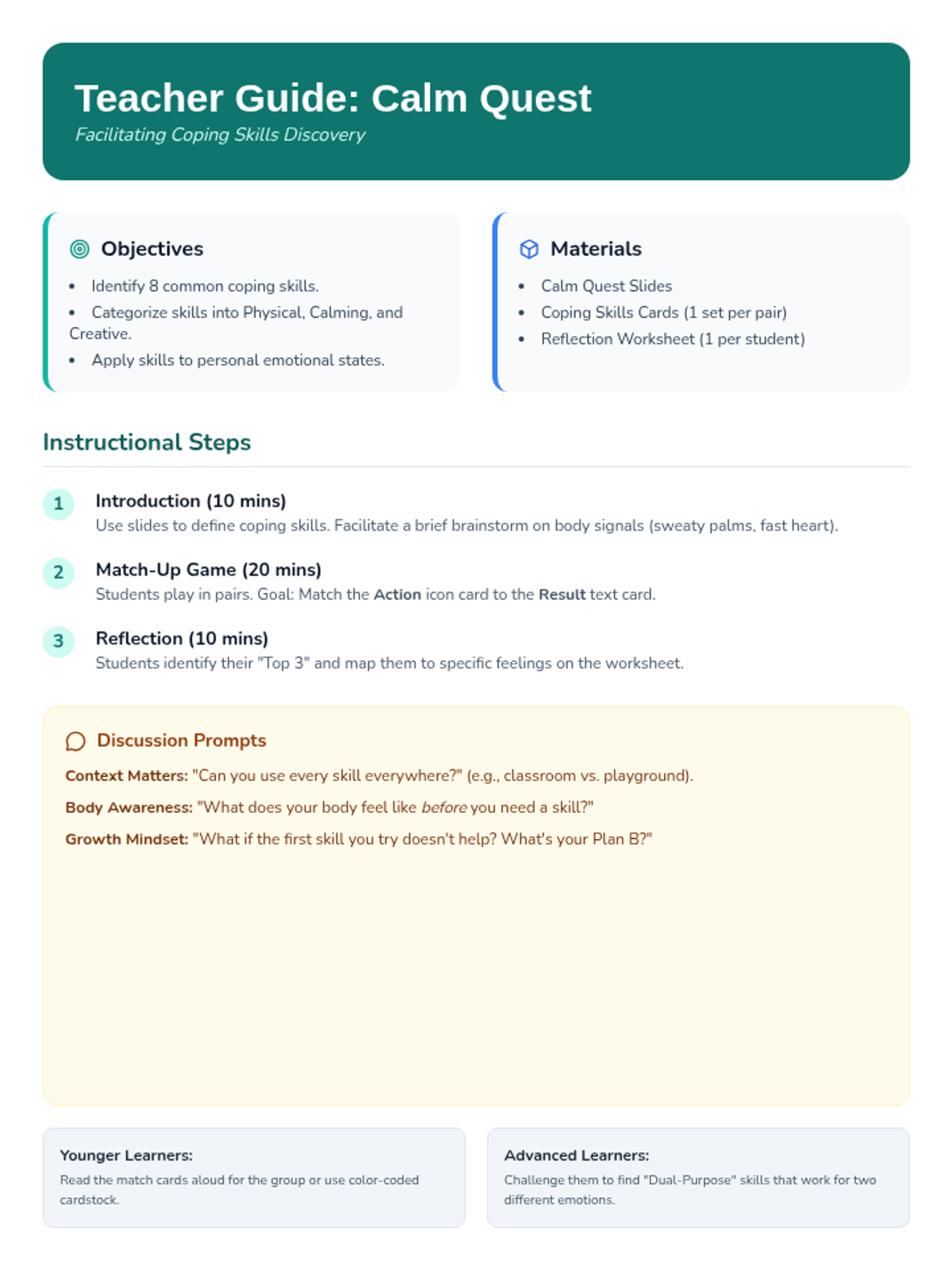
A teacher's facilitation guide for the Calm Quest lesson, including learning objectives, a step-by-step instructional plan, discussion prompts, and differentiation strategies. Optimized for a clean single-page layout.
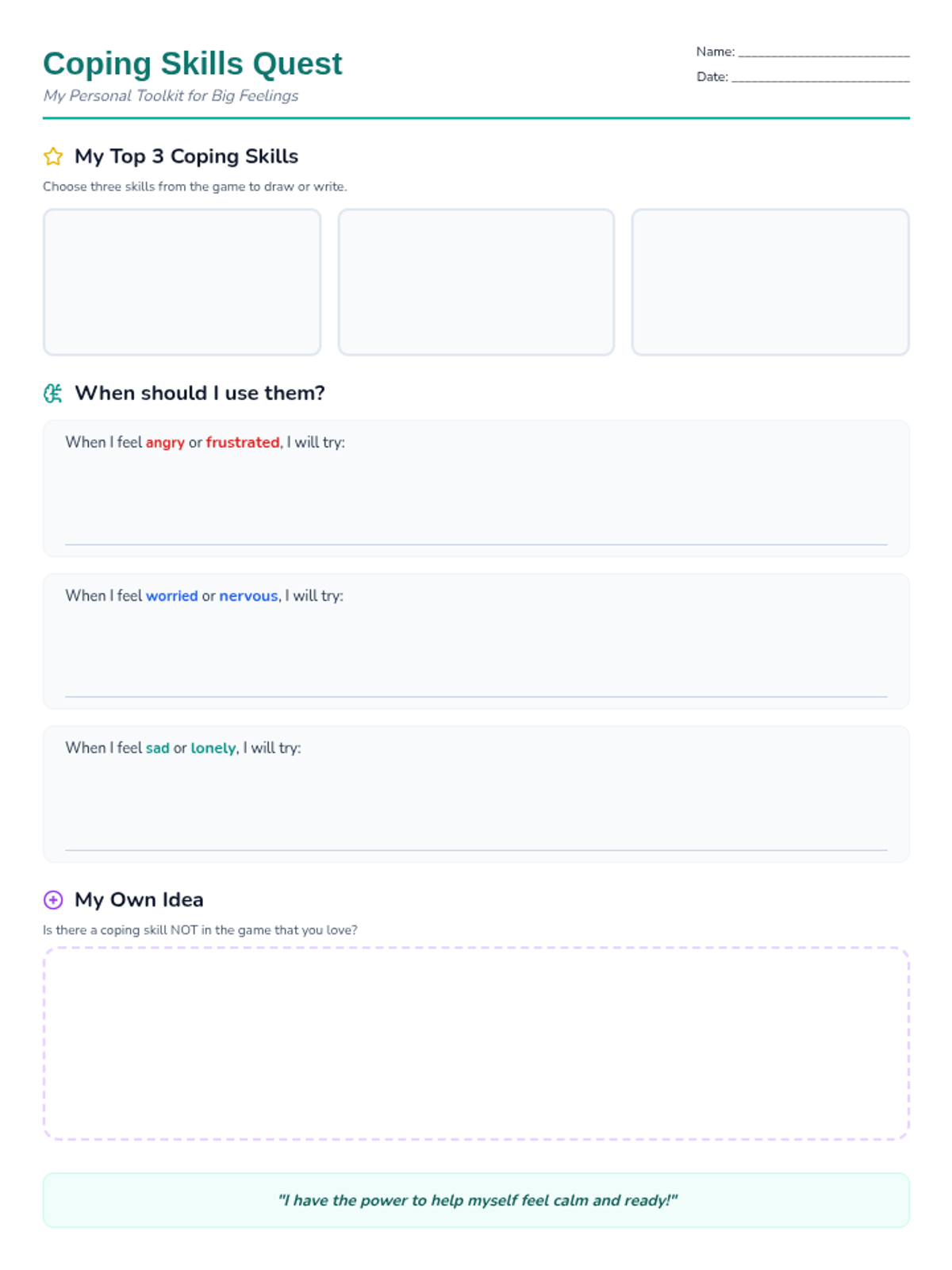
A reflection worksheet for students to identify their favorite coping skills, plan when to use them for specific emotions, and contribute their own unique ideas to their toolkit. Optimized for single-page printing.
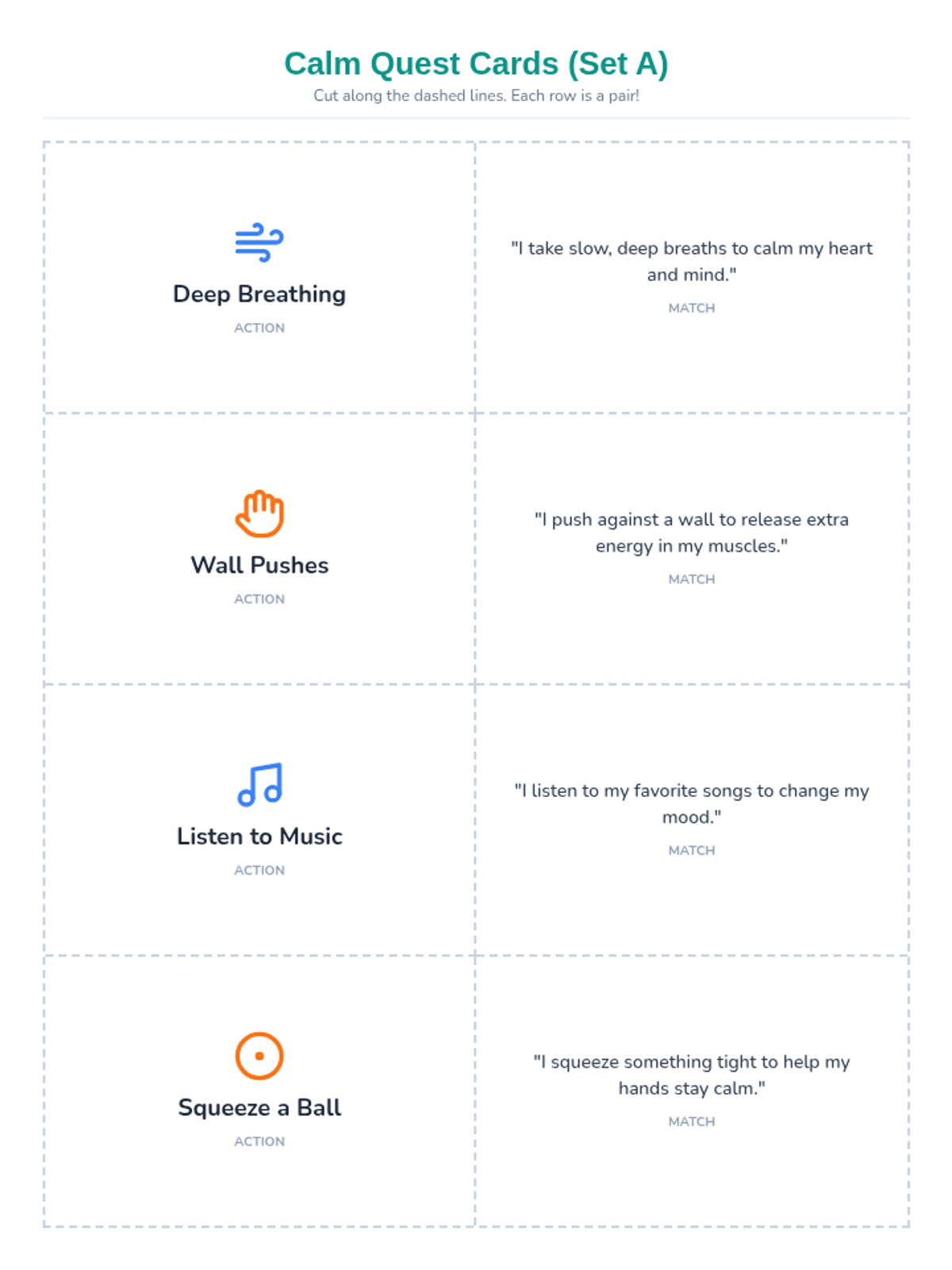
A set of printable matching cards featuring 8 different coping skills across four categories. Each pair consists of an 'Action Card' with an icon and title, and a 'Match Card' explaining the purpose of the skill. Uniform backgrounds prevent visual telegraphing.
Educational slides designed to introduce students to the concept of coping skills, categorizing them into Physical, Calming, Creative, and Distraction, and explaining how to play the Calm Quest matching game.
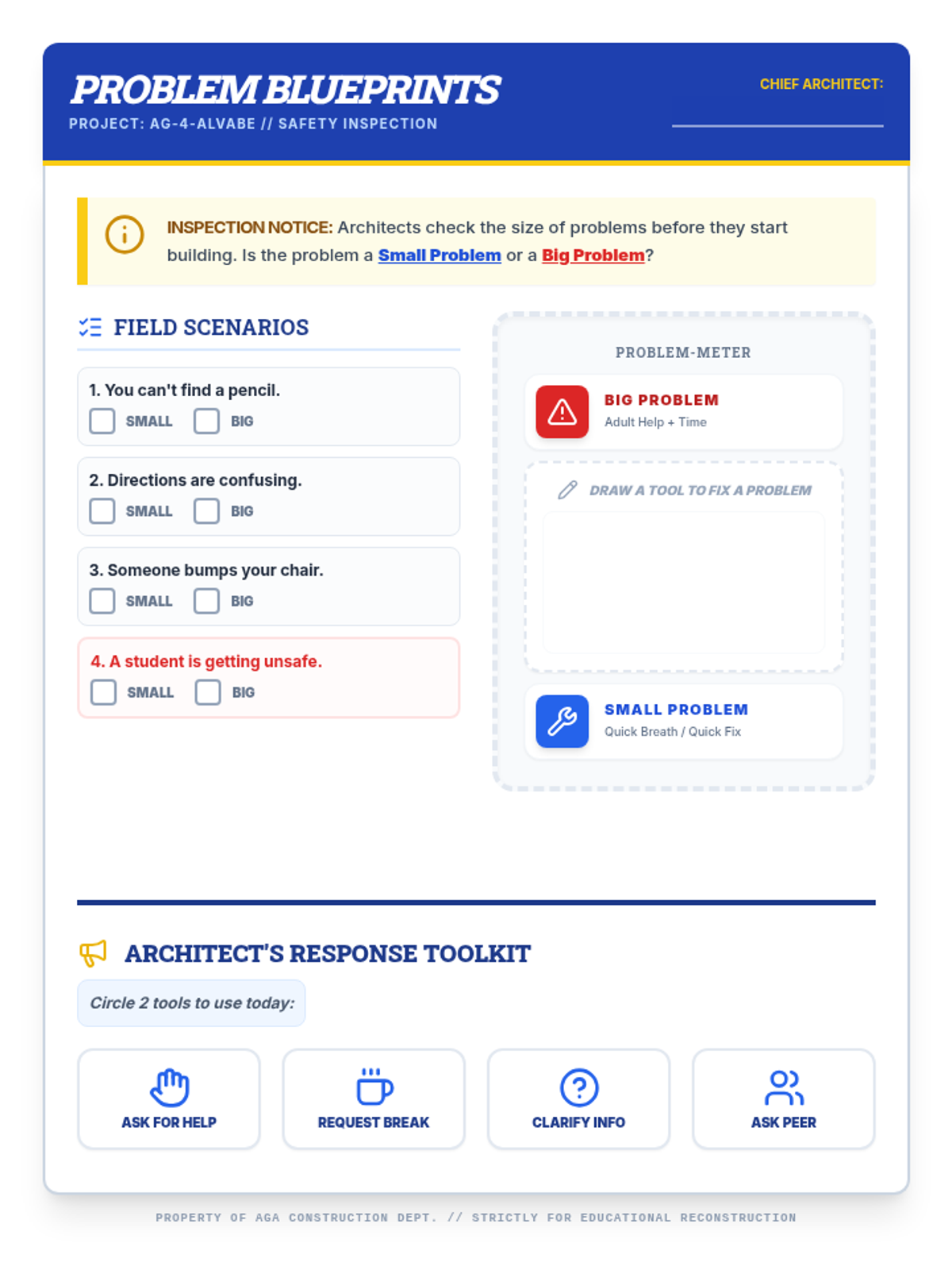
A two-page student resource featuring a construction-themed problem scaling worksheet and a printable page of 'desk strips' for staff to use as visual cues for self-advocacy. Background set to white for ink efficiency.
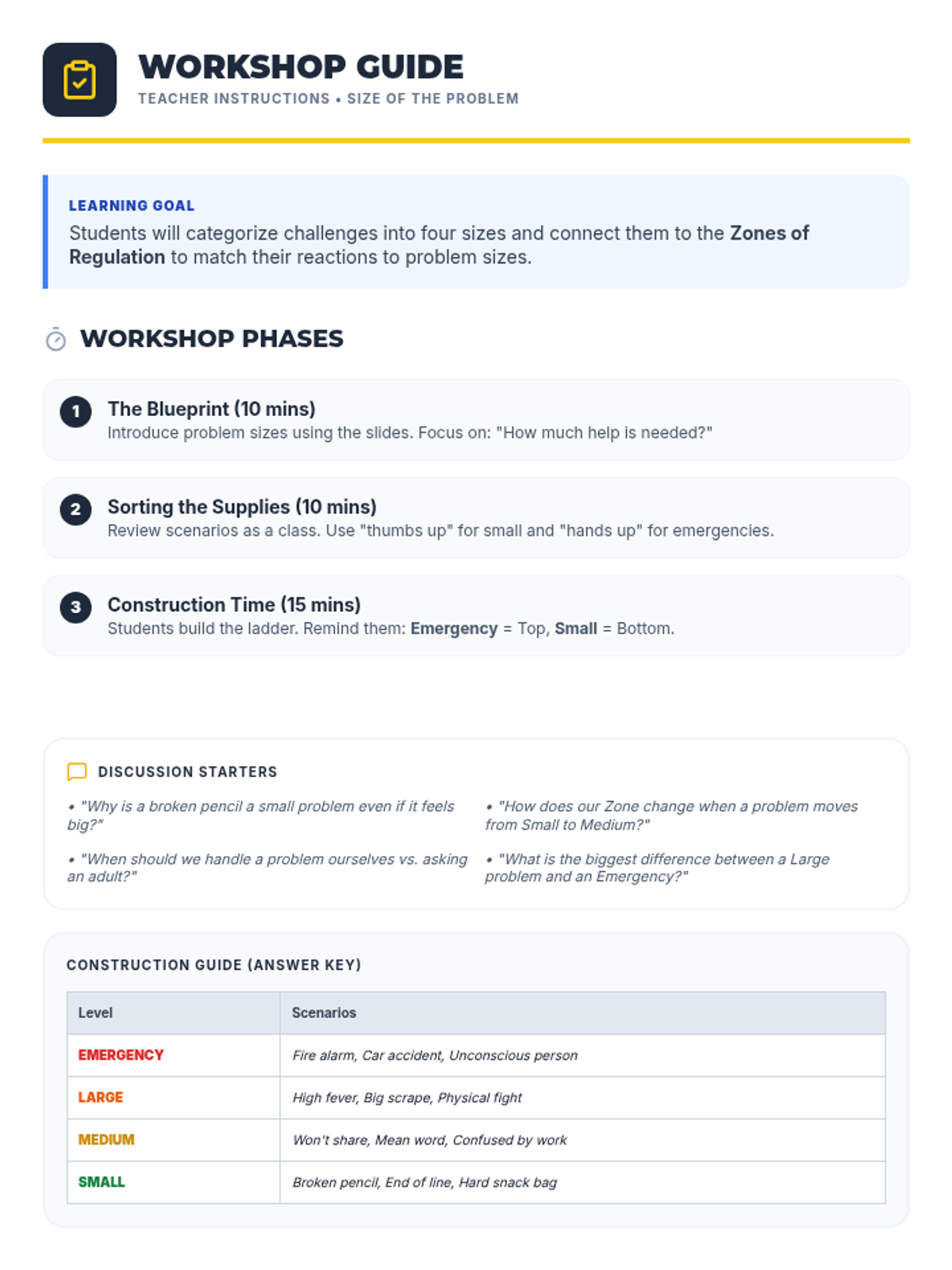
Detailed teacher facilitation guide for the Problem Solvers Workshop, featuring lesson pacing, discussion prompts, and a scenario sorting answer key for the ladder craft.
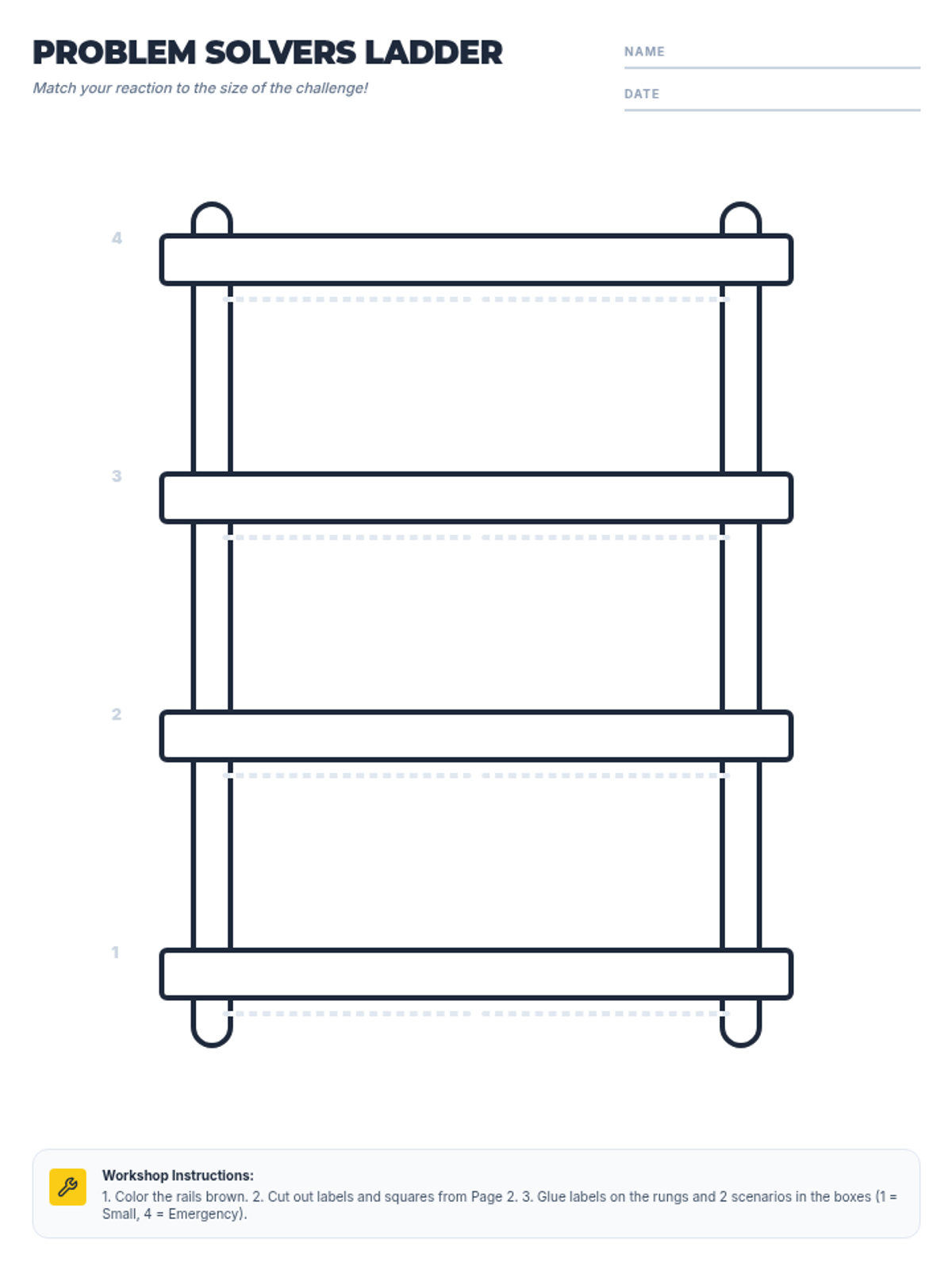
A two-page printable craft activity where students build a 'Problem Ladder'. They cut and sort problem scenarios and labels into Small, Medium, Large, and Emergency categories, reinforced with Zones of Regulation color coding.