A comprehensive teacher guide for counselors leading a small group session on sibling relationships, including pacing, scripts, and conflict resolution frameworks.
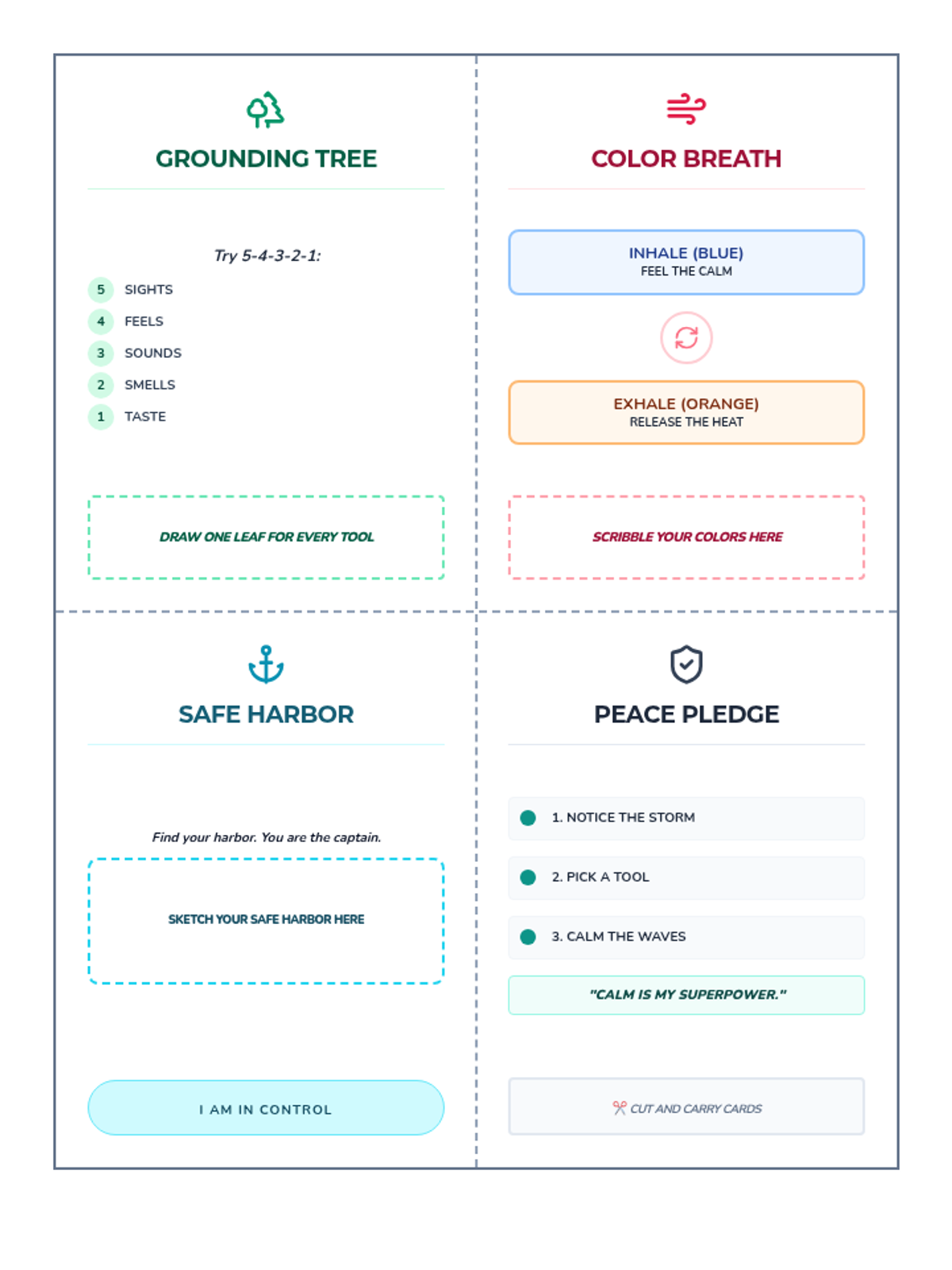
Four pocket-sized 'Pocket Peace Cards' that students can color, cut out, and carry to remind them of grounding, breathing, and visualization techniques for independent regulation.
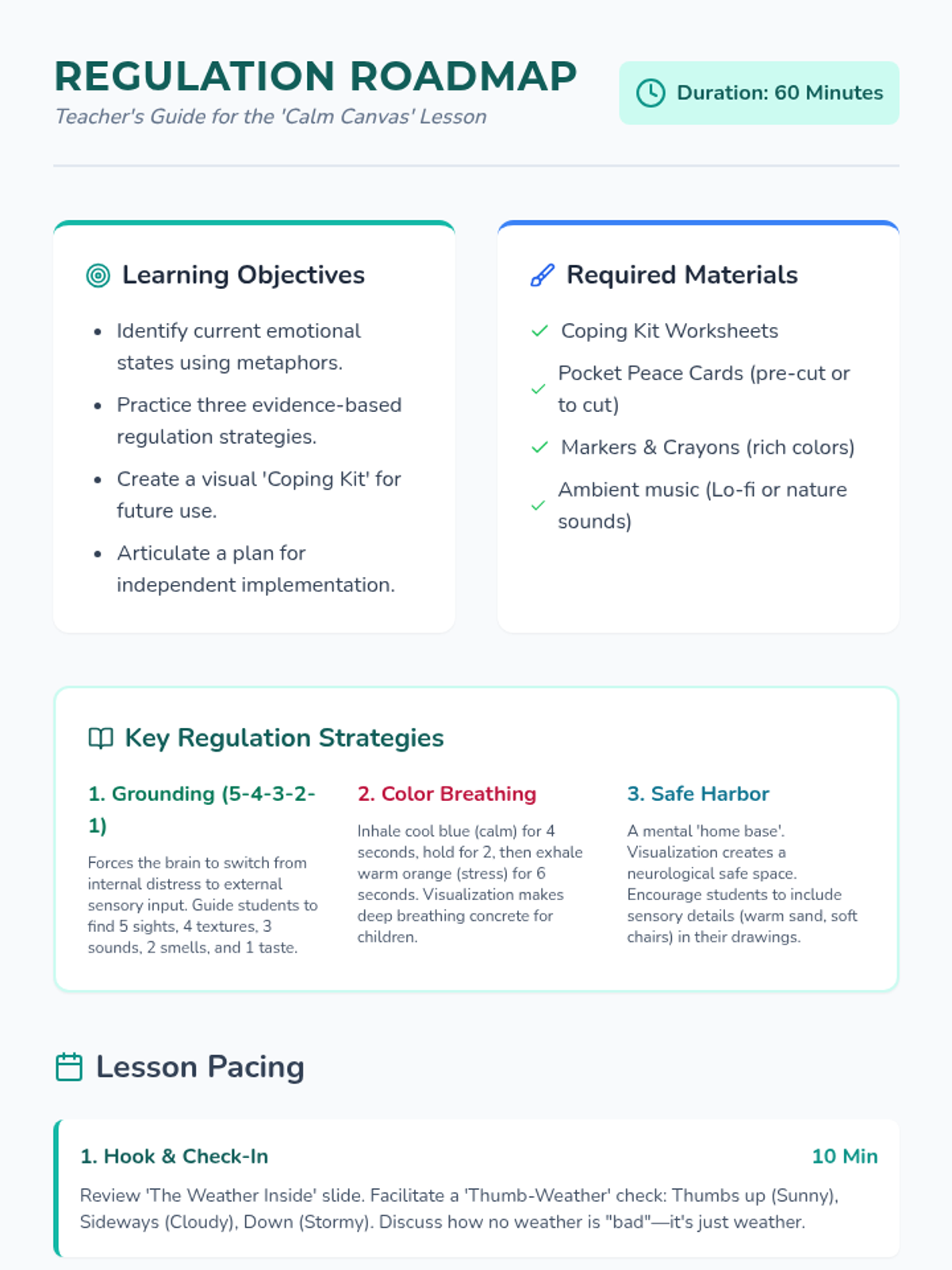
A teacher-facing lesson plan providing pacing, instructional strategies, and differentiation tips for implementing the Calm Canvas art and regulation lesson.
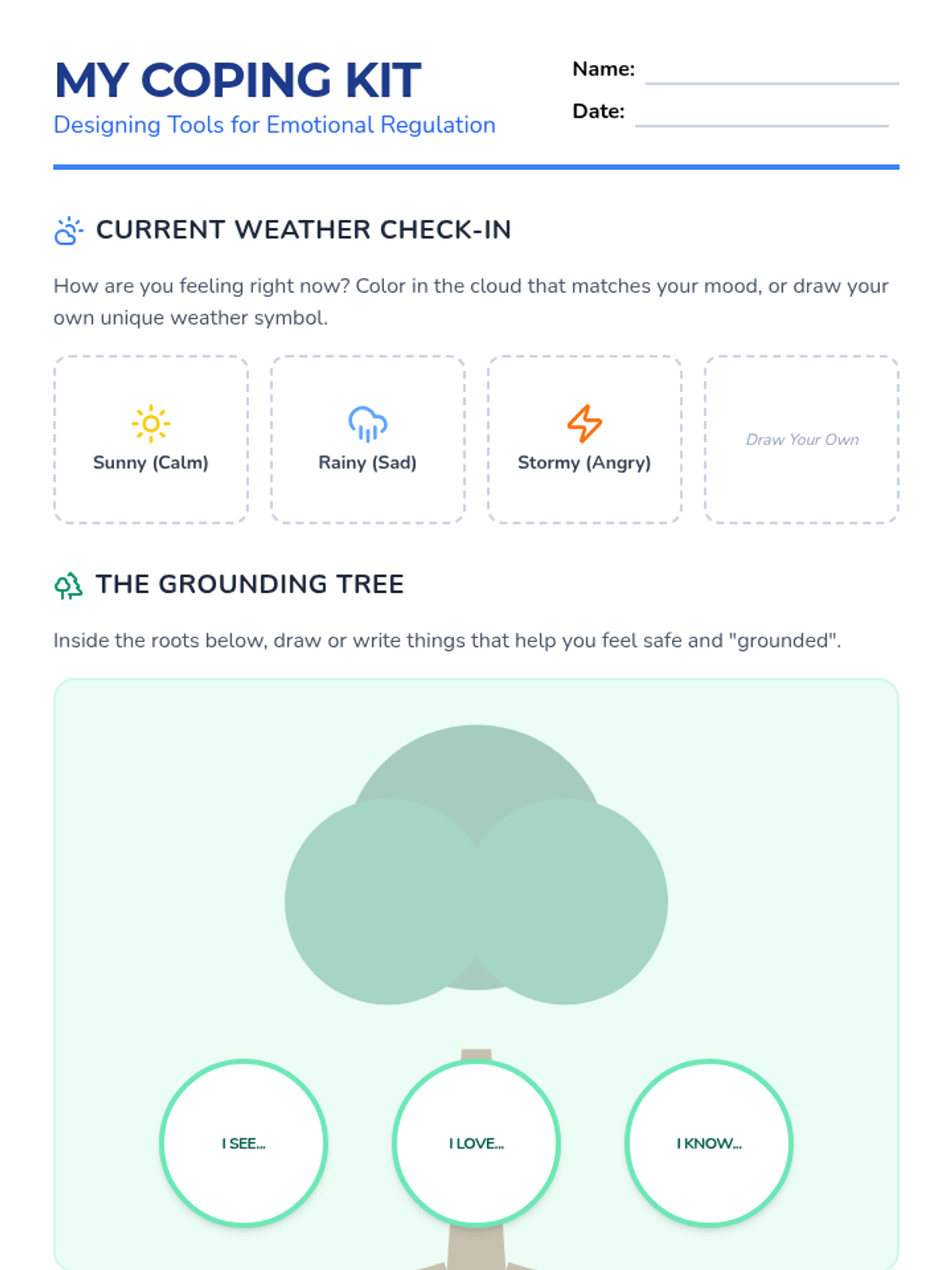
A two-page student worksheet that guides students through identifying their emotions and creatively drawing their own 'Coping Kit', featuring a 'Grounding Tree' and a 'Safe Harbor' visualization space.
A visual slide deck that introduces emotional regulation concepts through the metaphor of weather and 'The Safe Harbor', teaching three specific art-linked coping strategies.
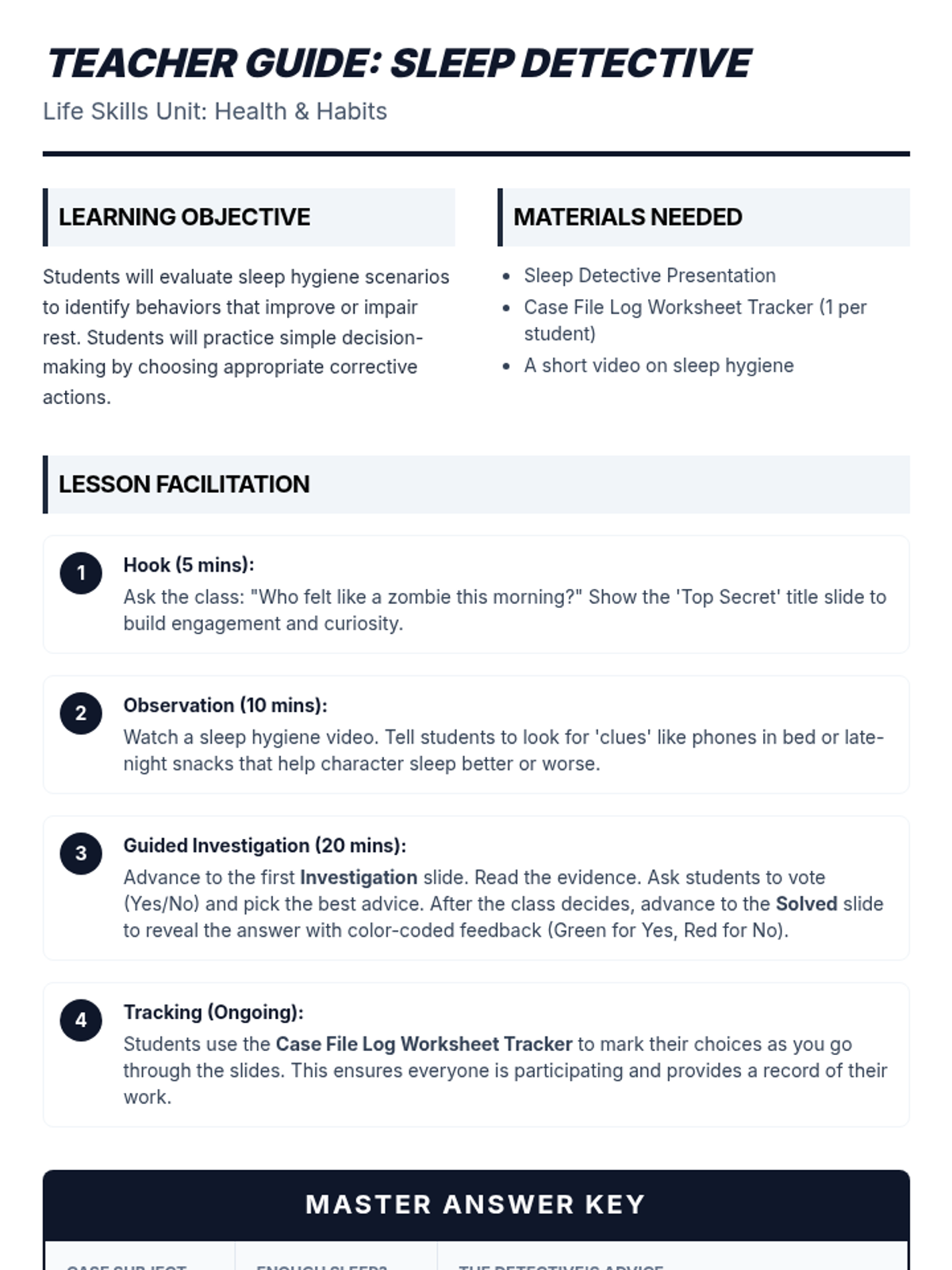
A comprehensive teacher guide for the Sleep Detective lesson. Includes lesson pacing, objective-based facilitation steps, and a consolidated master answer key for all 5 cases. Updated to reflect the interactive slide reveal structure.
A highly visual, interactive-style slide deck designed for use on a whiteboard. Each of the 5 cases features an 'Investigation' slide with selectable choices followed by a 'Solved' slide that reveals the correct answers with high-contrast color coding (Green for Yes, Red for No). Minimal text and large font sizes ensure accessibility for life skills students. Layout is strictly contained to prevent overflow.
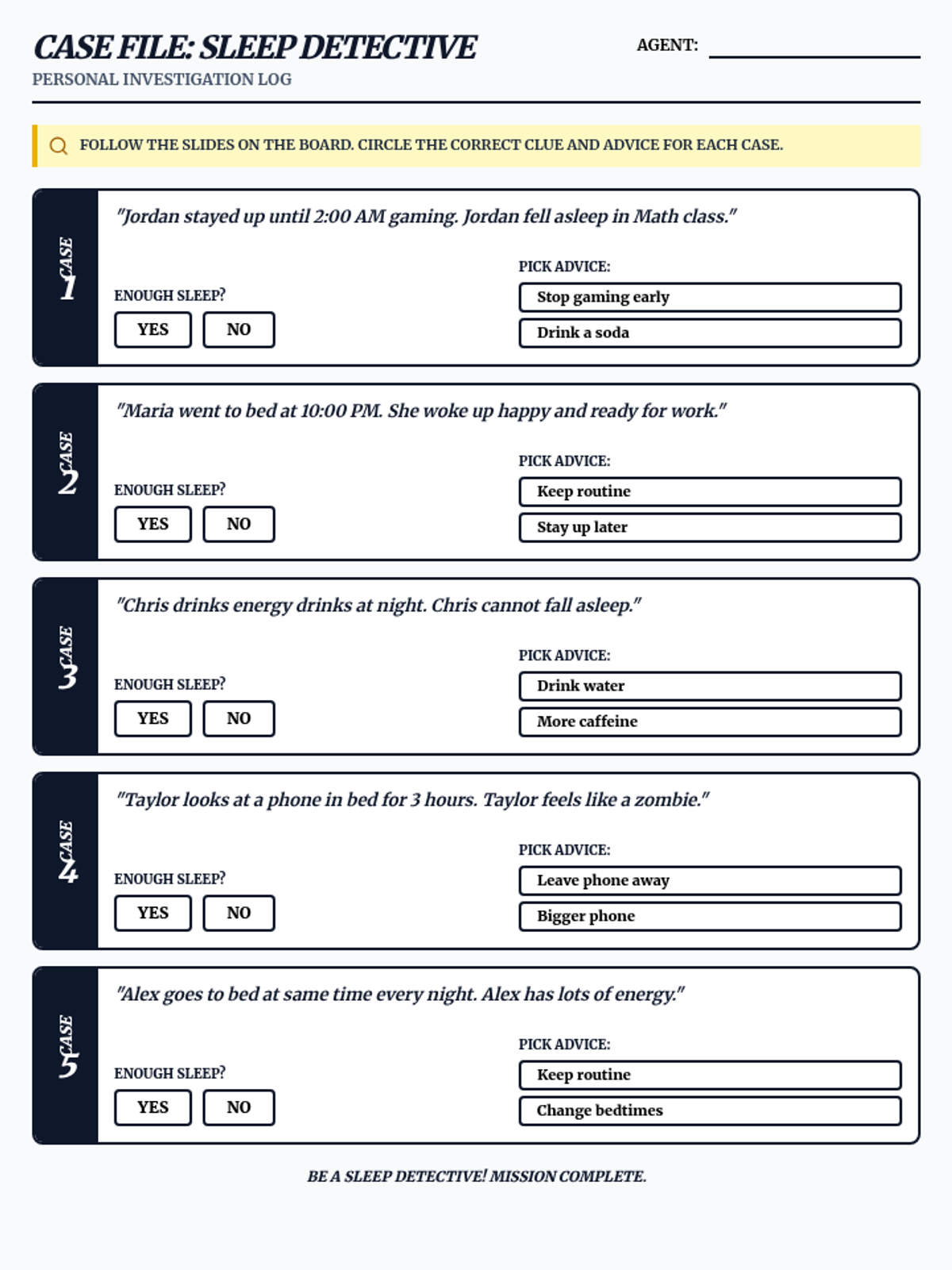
A simplified 1-page tracking sheet for students to use while following the Sleep Detective slideshow. Each case corresponds to the slides, providing a space to mark Yes/No and select advice. Designed for minimal writing and high visual clarity. Layout is optimized to fit all 5 cases on a single page with high-contrast text.
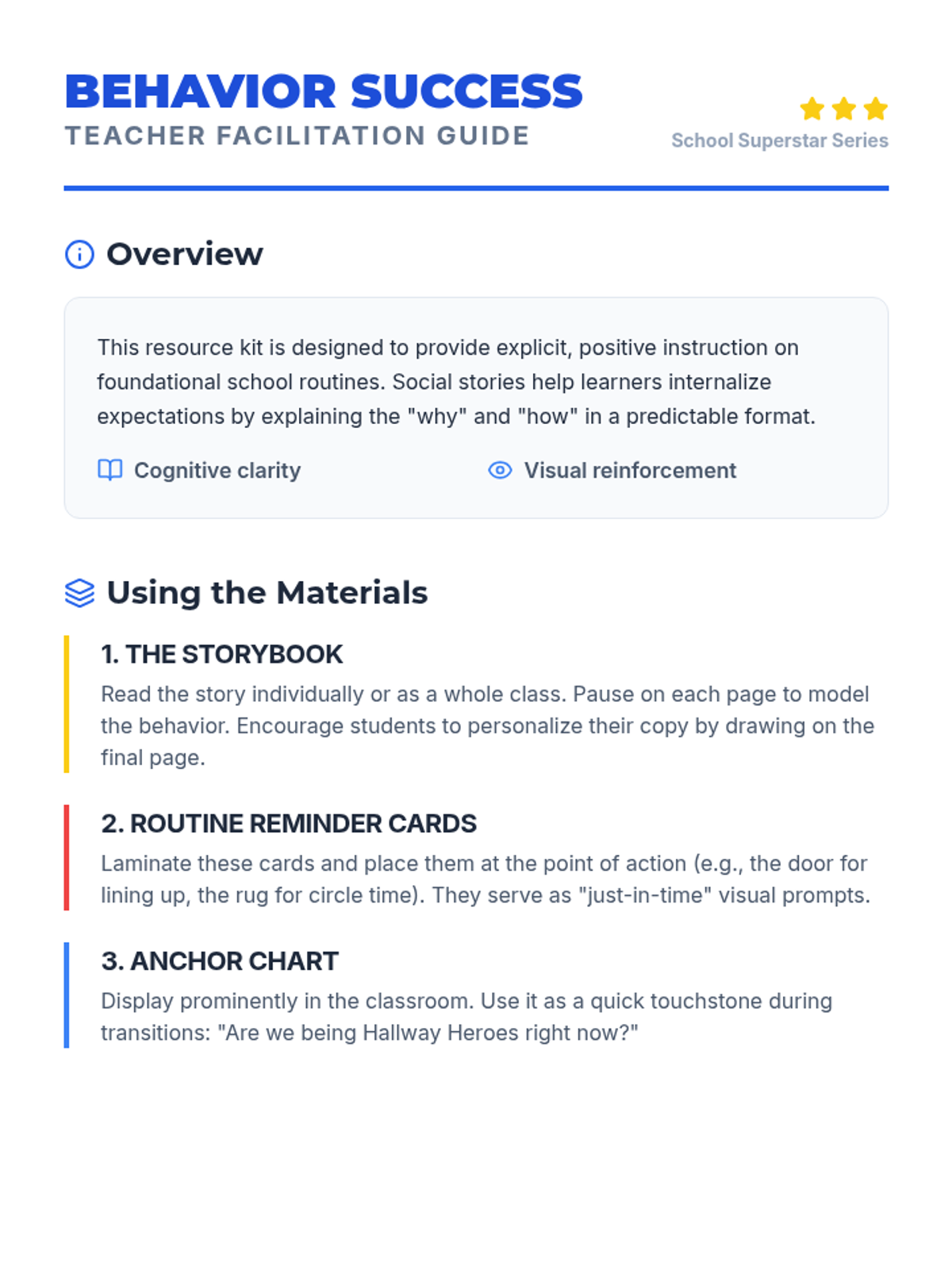
A teacher-facing facilitation guide providing instructional strategies, pacing suggestions, and practical tips for implementing the School Superstar social story and visual aids in the classroom.
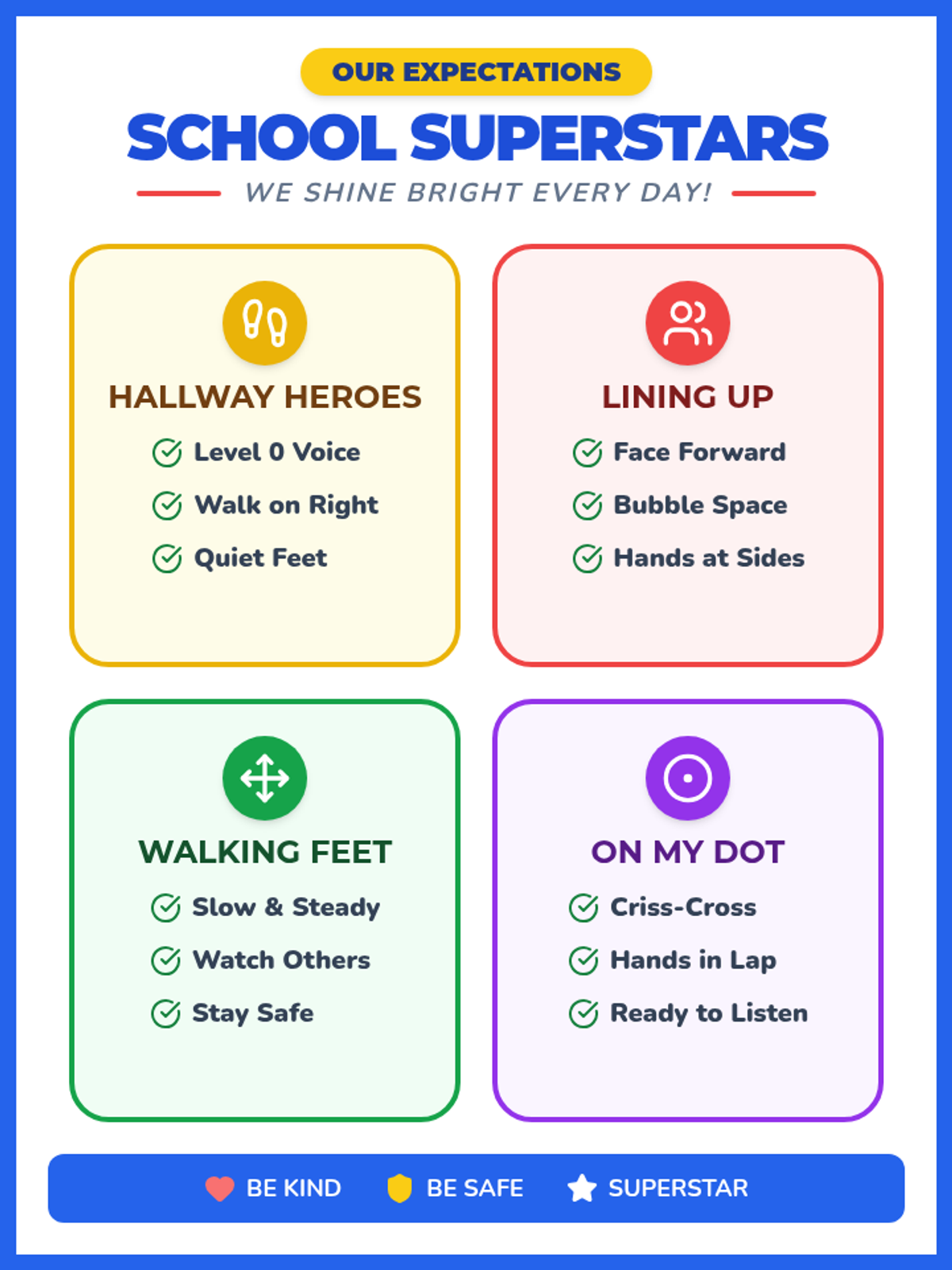
A high-impact, single-page anchor chart summarizing the four key behavioral expectations: Hallway Hero, Lining Up, Walking Feet, and Circle Time Dot. Uses clear icons, vibrant colors, and simplified bullet points for classroom display.
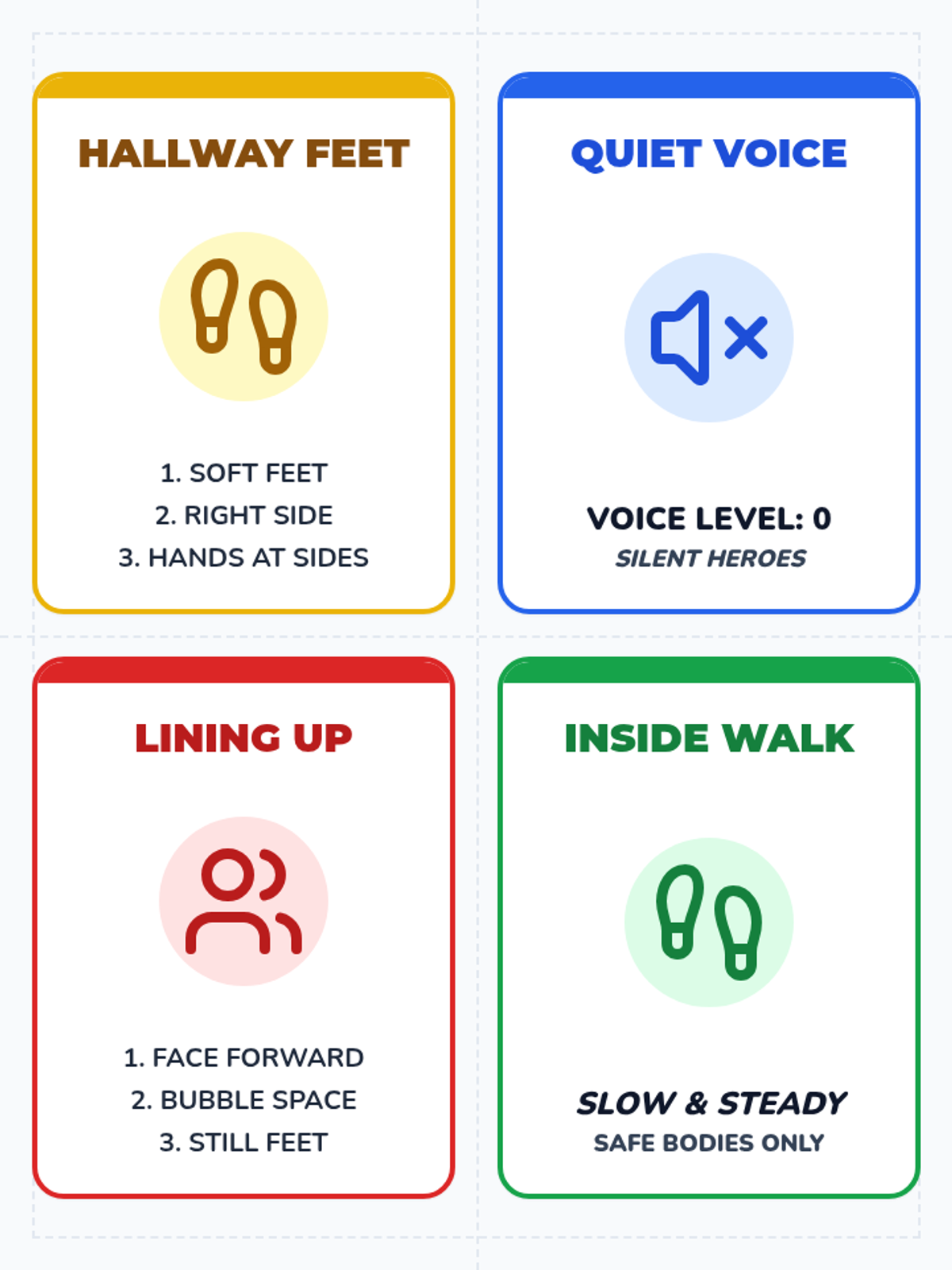
A 2-page set of printable visual sequence cards (8 cards total) that provide quick-reference reminders for hallway behavior, voice levels, lining up, walking feet, circle time posture, and self-reflection. Designed to be cut out and laminated for classroom use.
A 7-page social story document designed to teach young students the expected behaviors for hallway walking, lining up, classroom safety, and circle time participation. It features engaging illustrations (emojis/icons), clear step-by-step instructions, and a personalized cover and drawing page.
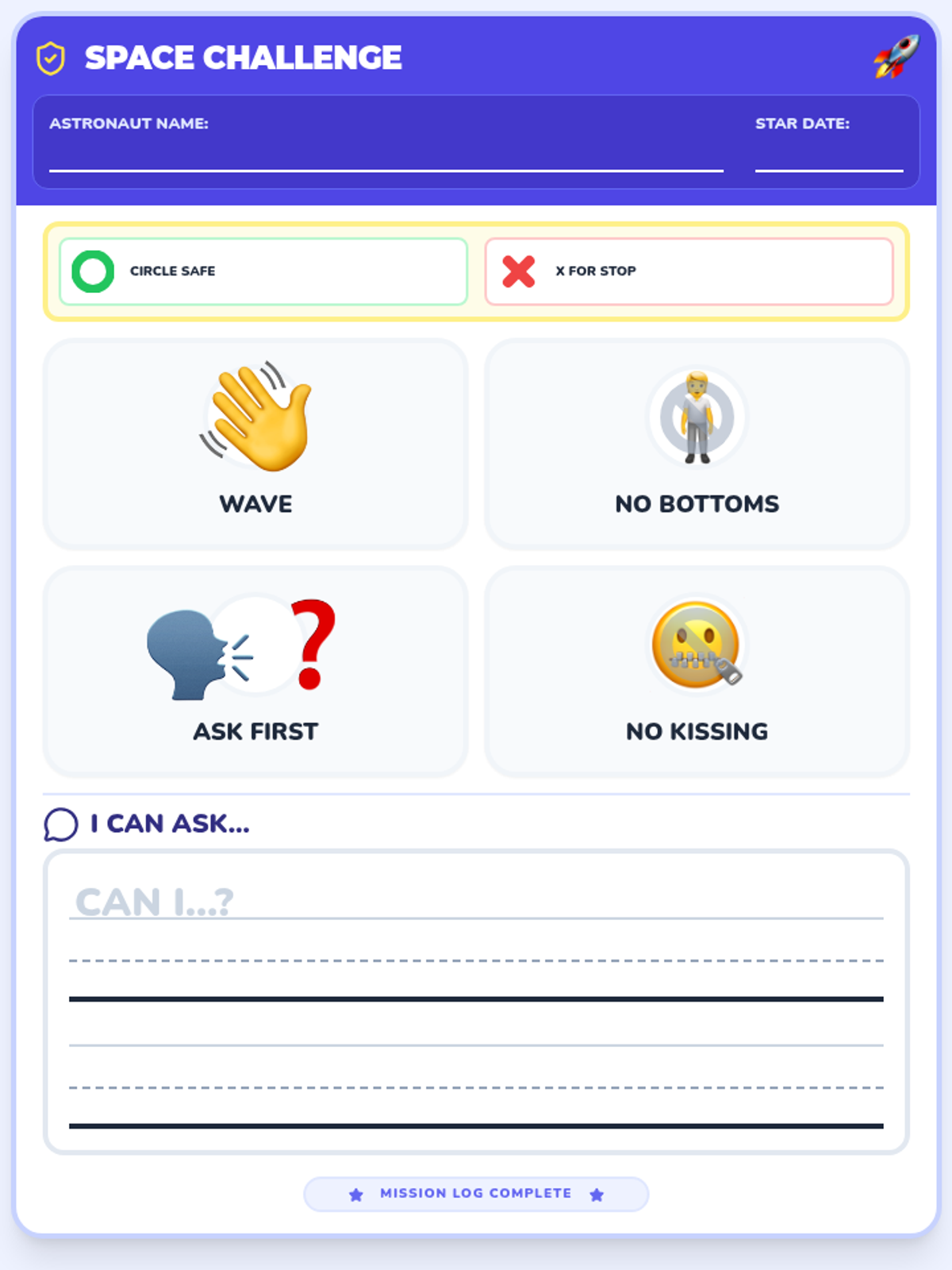
A highly visual activity worksheet using icons for instructions (Circle/X) and literal icons to reinforce safe and unsafe space choices. Includes high-contrast writing lines and fits on a single page. Replaces telegraphed red icons with neutral ones for actual assessment.
A social story booklet using simple sentences and large, consistent visual symbols (checkmarks, stop signs, emojis) to teach personal space and boundaries. Replaces peach emoji with literal icons.
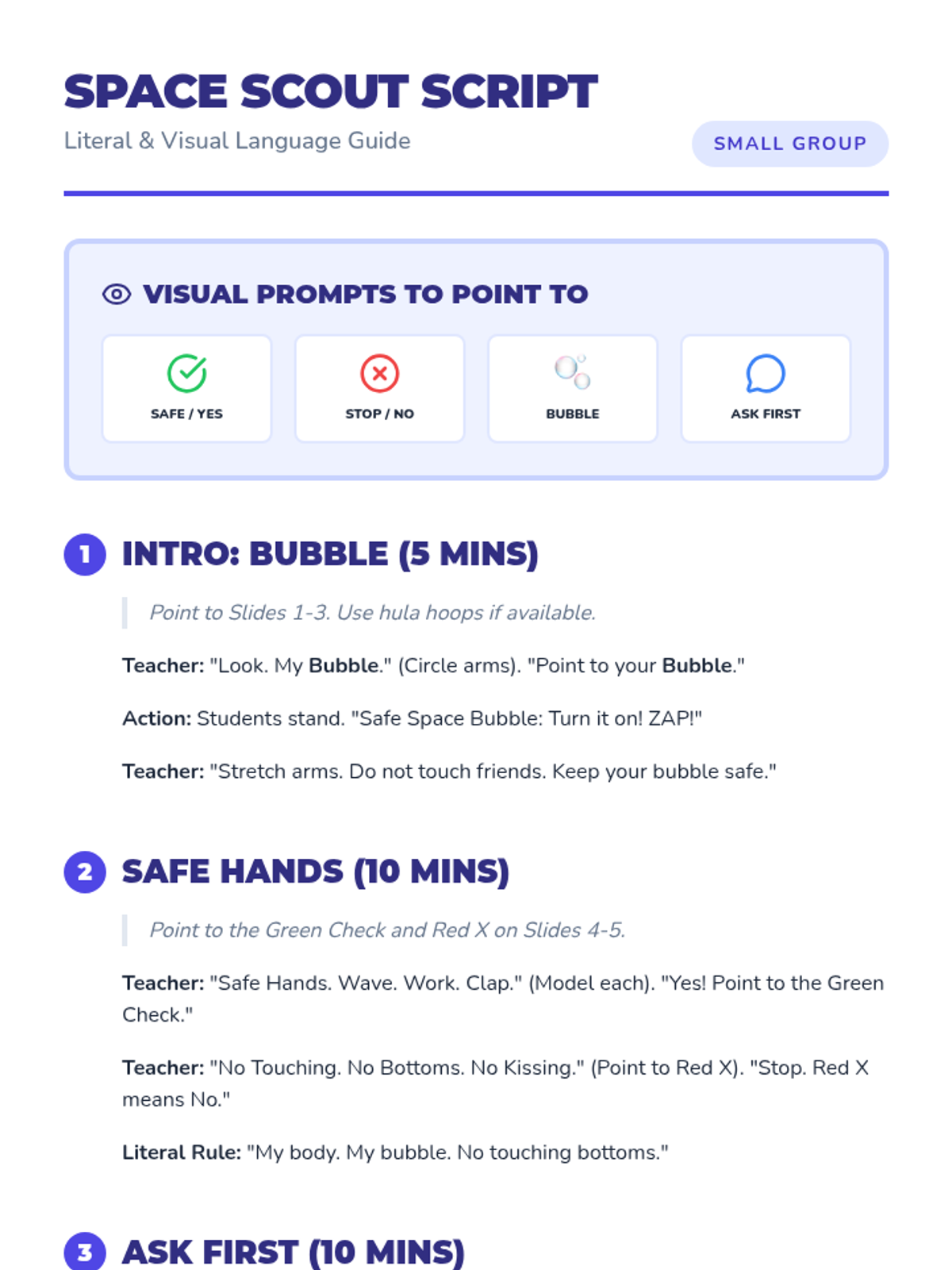
A simplified teacher script for a 30-minute small group lesson. Includes a visual prompt key and direct instructions on using the visual symbols from the slides and booklets.
A visual slide deck for 1st graders using a space theme to teach personal space. Uses very simple language and high-contrast visuals, including consistent 'Safe' and 'Stop' symbols. Replaces abstract emojis with literal icons.
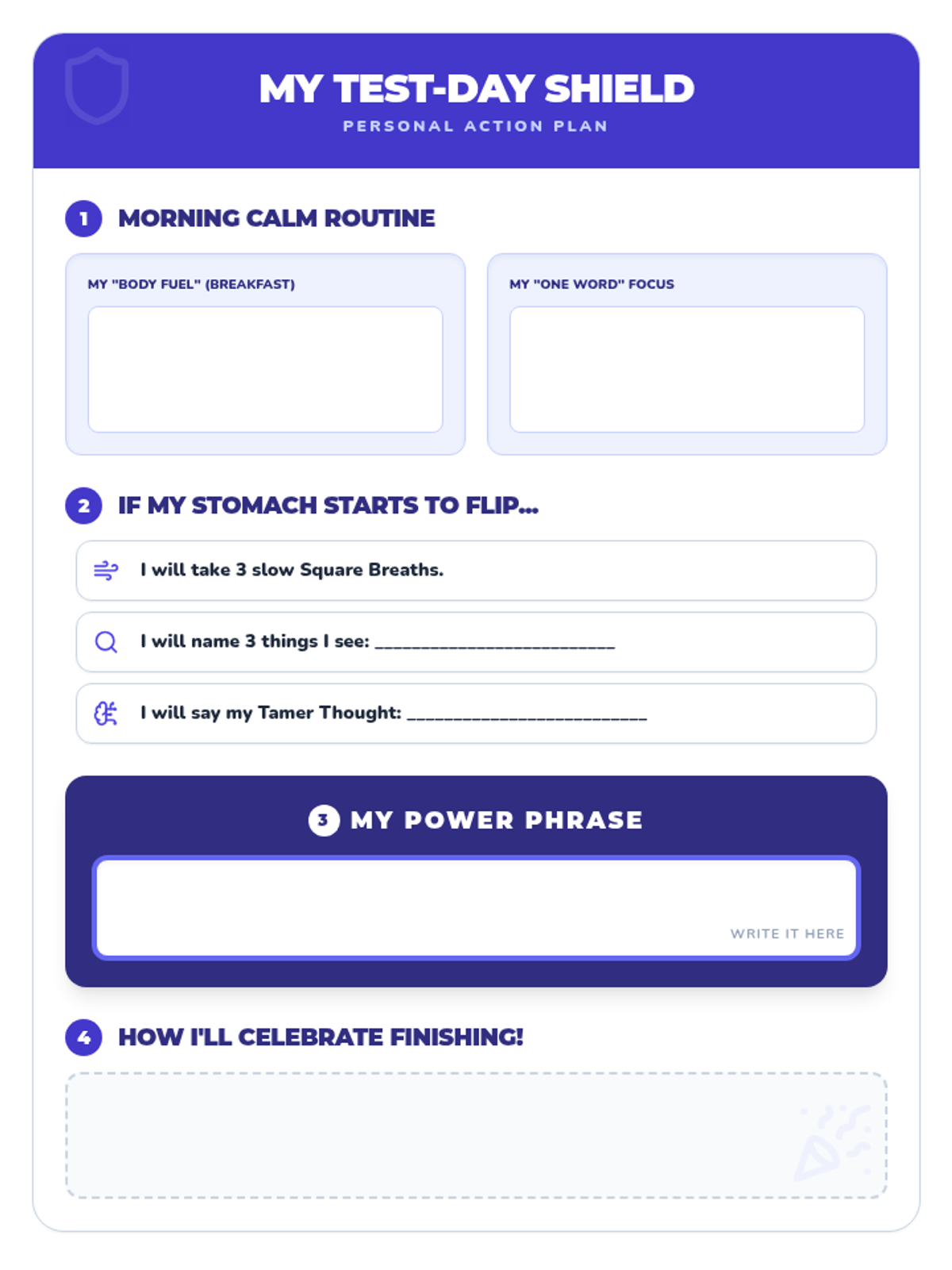
A summary action plan for students to keep in their folders or on their desks, outlining their specific routine and coping strategies for test days.
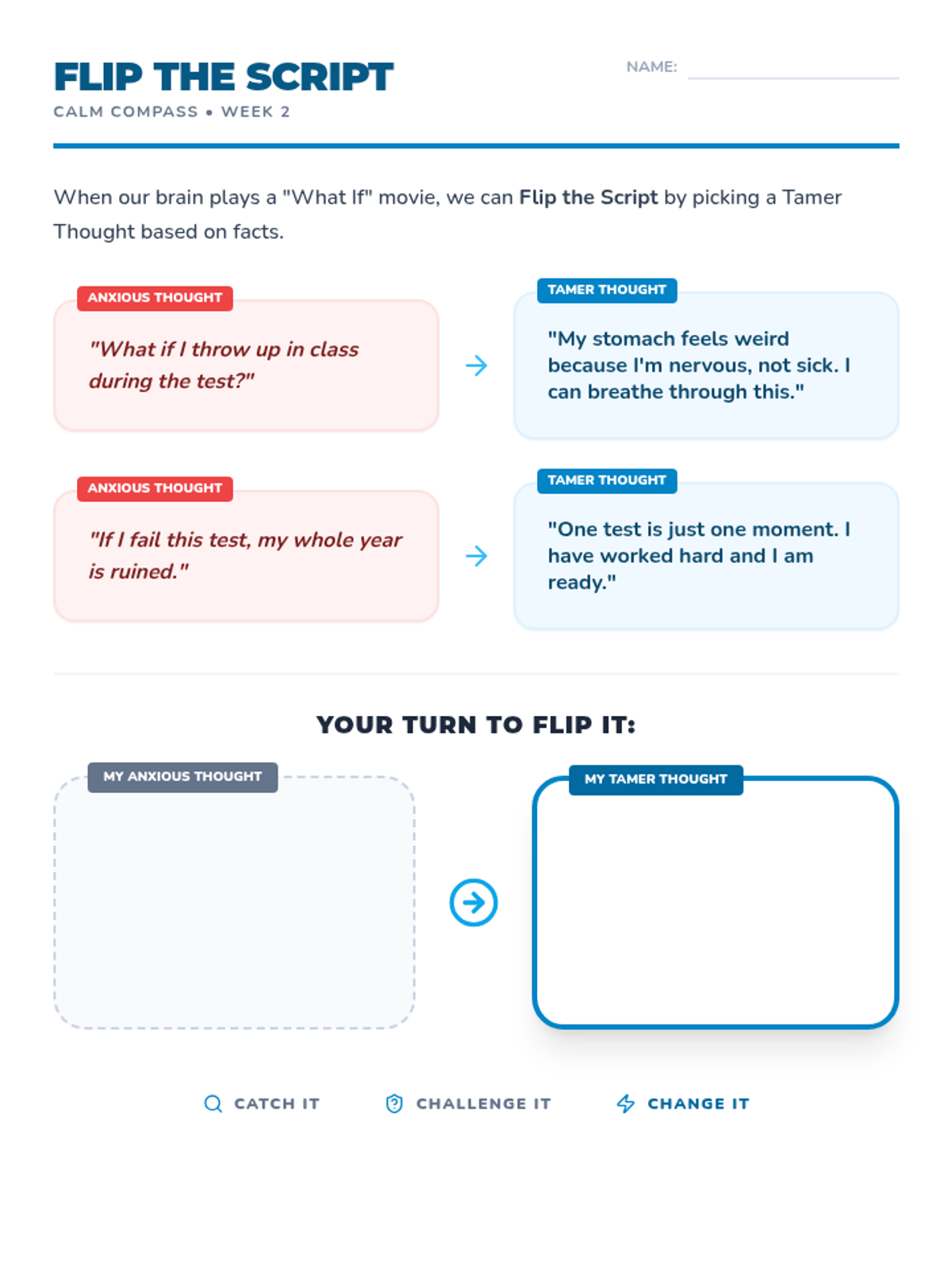
An activity sheet for cognitive reframing, helping students identify anxious 'what if' thoughts and replace them with helpful, evidence-based thoughts.
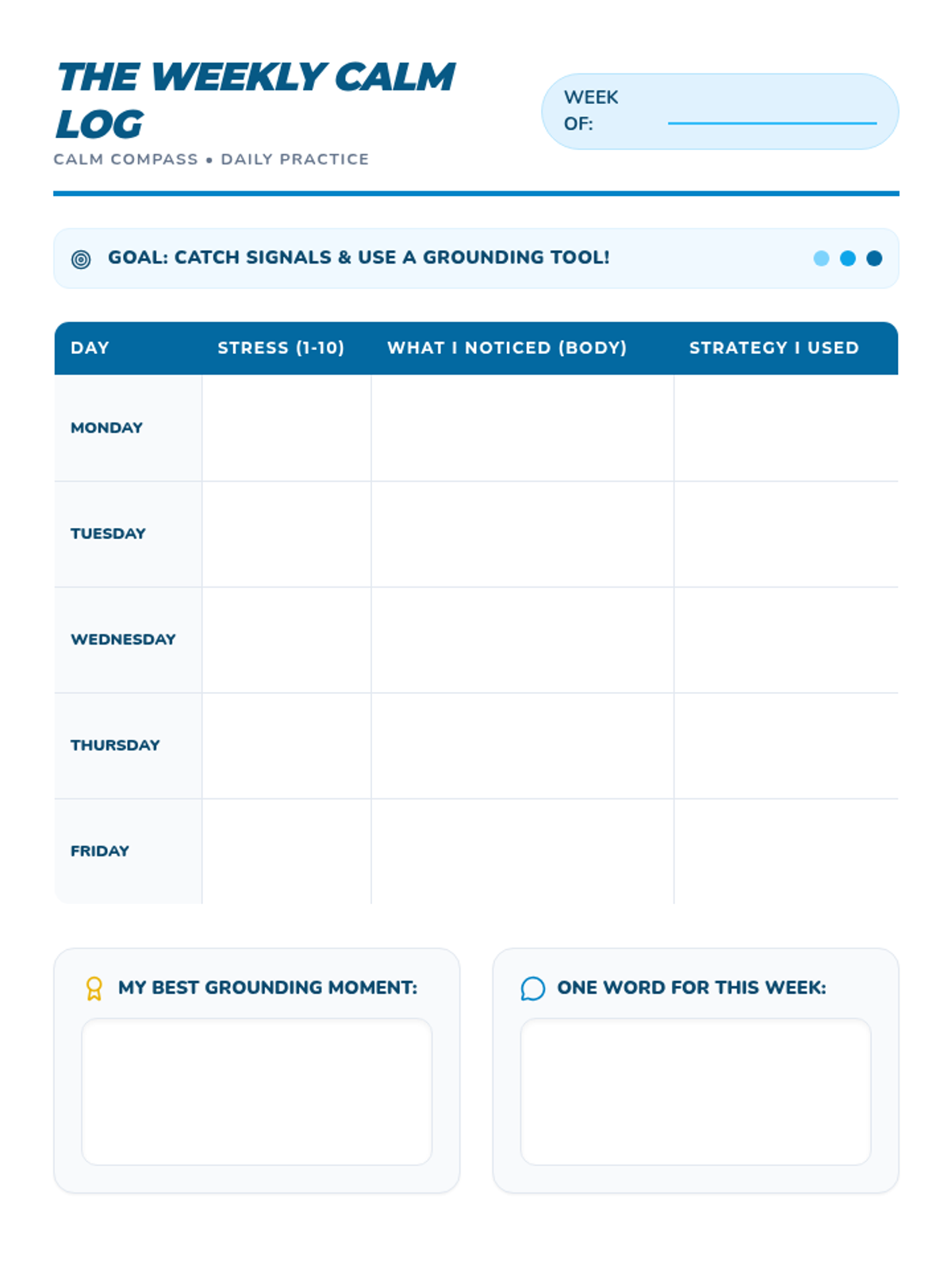
A weekly check-in log for students to track their anxiety levels, physical symptoms, and the coping strategies they utilized throughout the week.
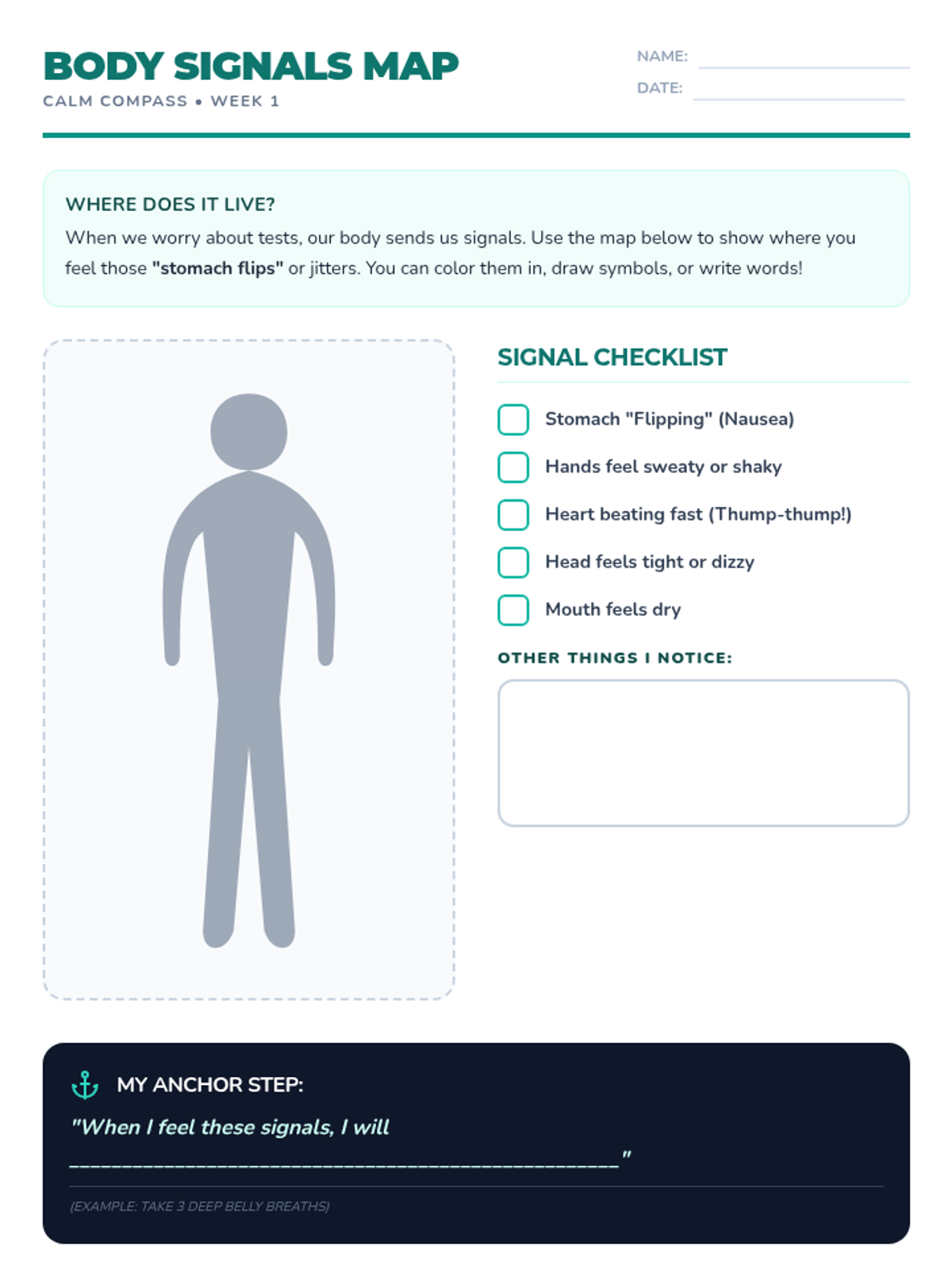
A printable worksheet featuring a body map for students to identify and visualize where they feel physical symptoms of anxiety.