Updated the Pathway Explorer Handout to include a specific annotation for the Bi-Lingual Pathway, clarifying that requirements will be met through online programs or concurrent classes. The layout remains optimized for a single-page reference.
Final celebration slides for the Gallery Walk, including reflection questions and club closure.
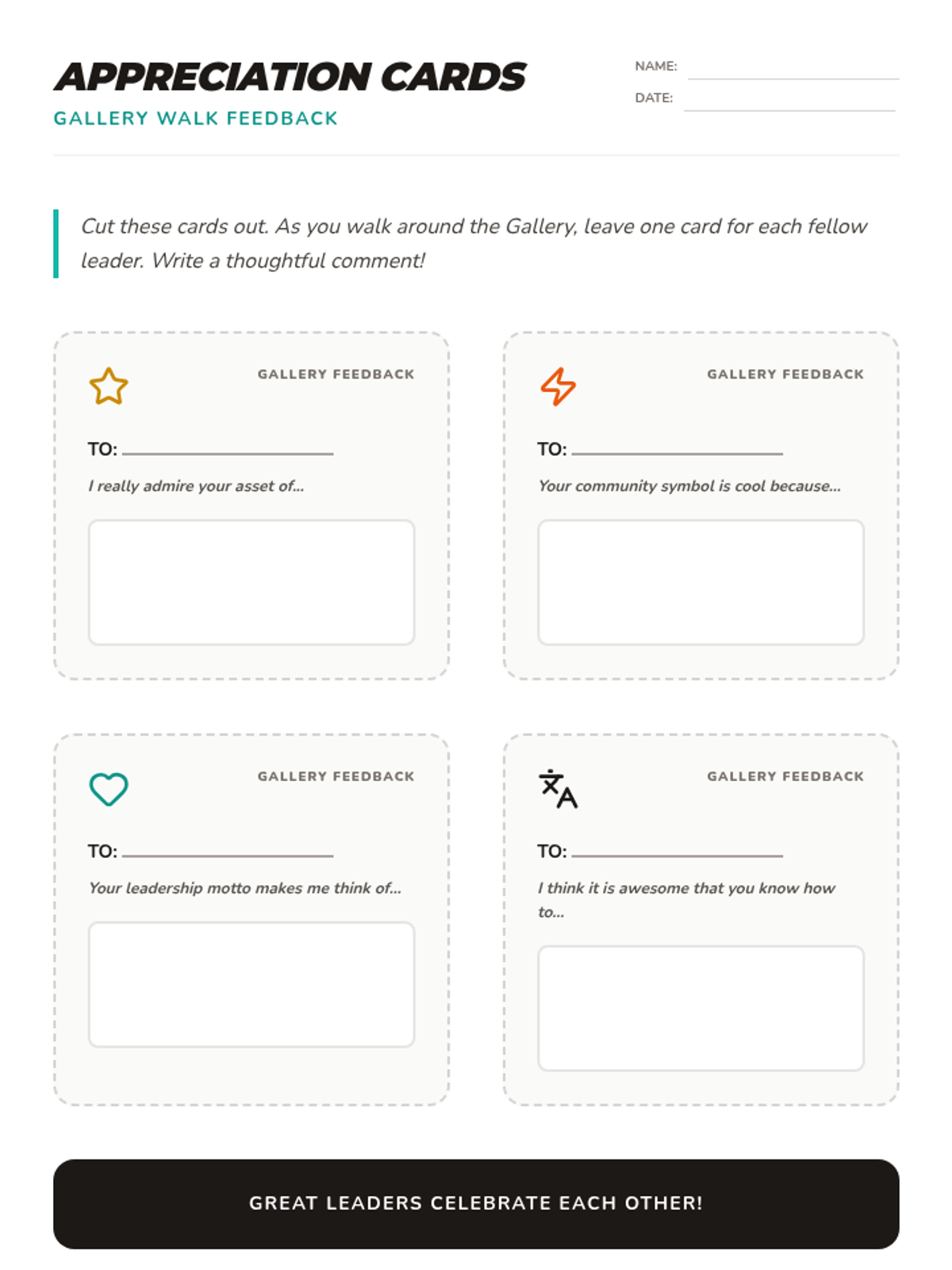
A set of printable feedback cards for students to use during the Gallery Walk to celebrate their peers' work.
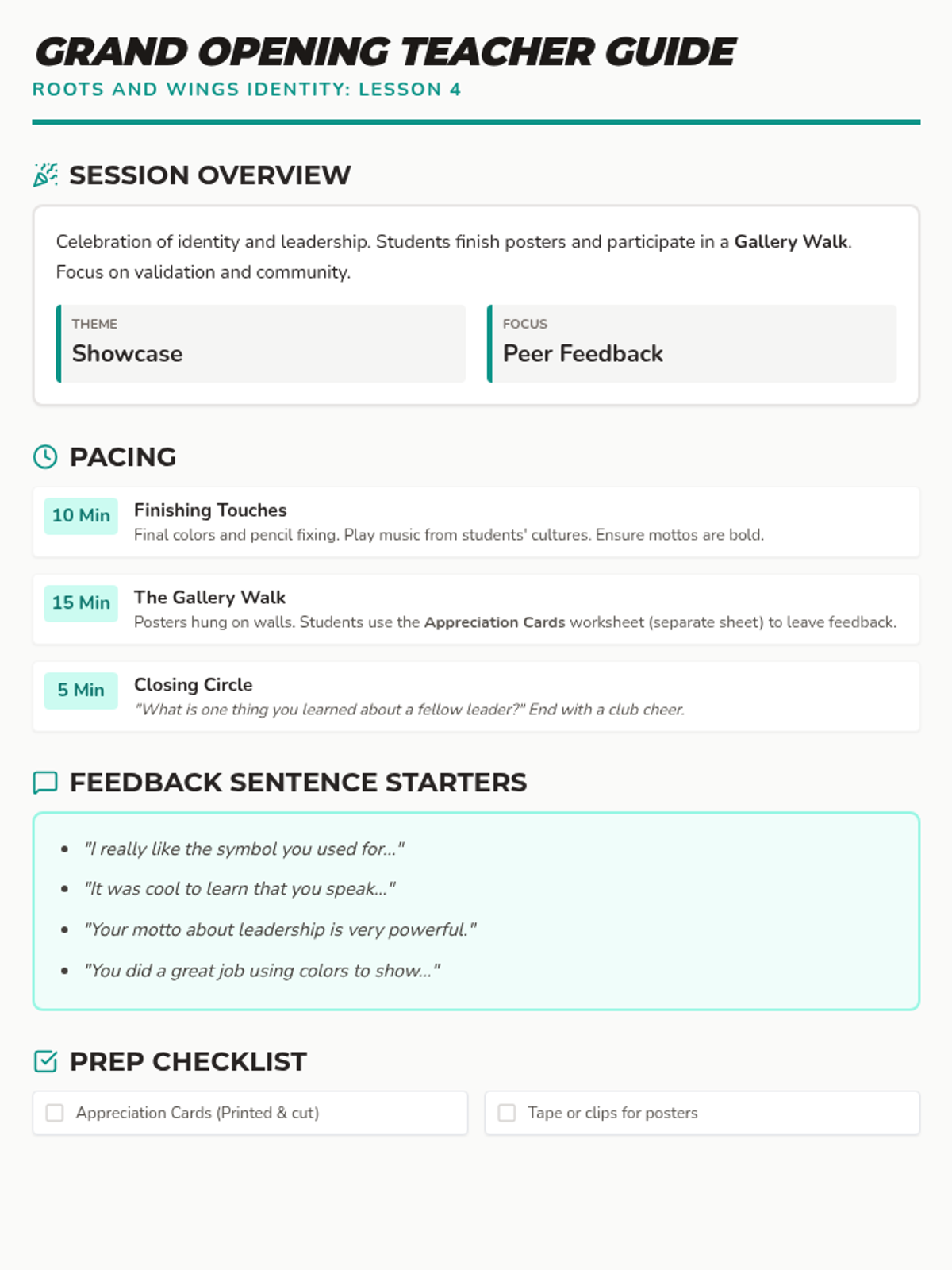
A guide for the final celebration and gallery walk, including instructions for positive peer feedback and reflection.
Slides for the design phase of the project, focusing on visual contrast, balance, and incorporating multiple languages as art.
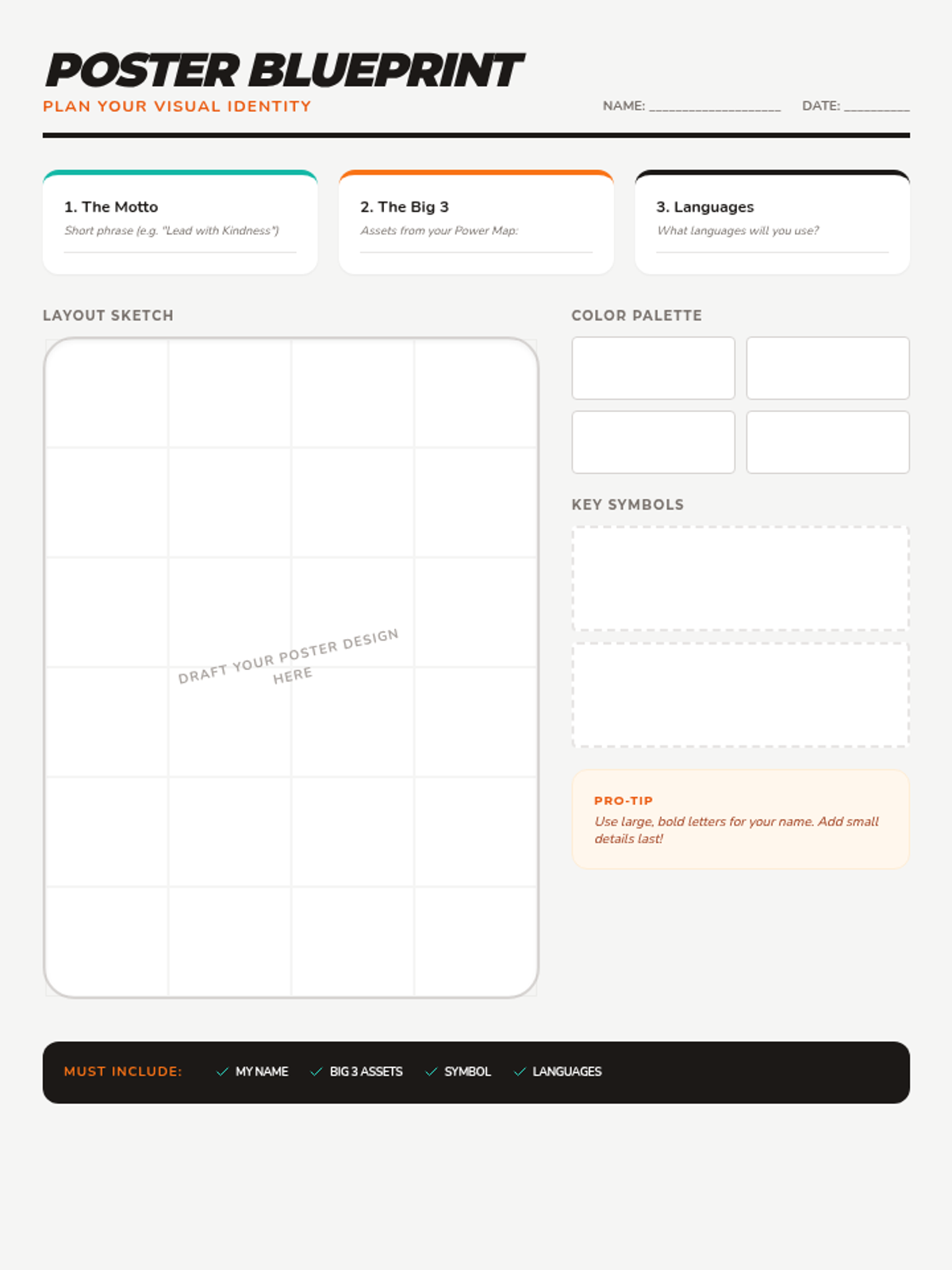
A planning sheet for students to draft the layout, color palette, and symbols for their final visual identity poster.
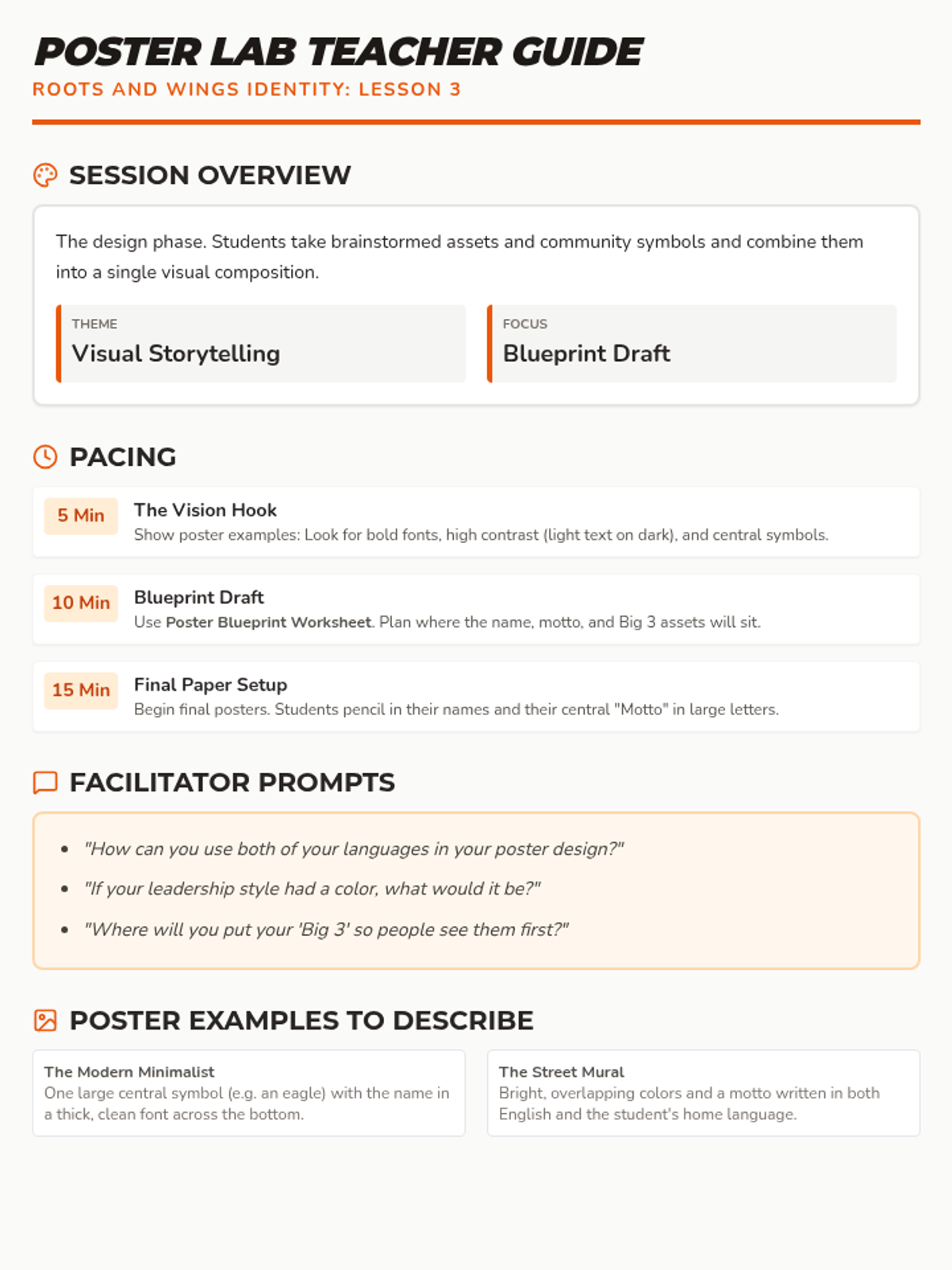
A guide for the design phase of the poster project, helping students synthesize their assets and symbols into a visual layout.
Visual presentation for the second meeting, exploring community wealth and cultural navigation skills.
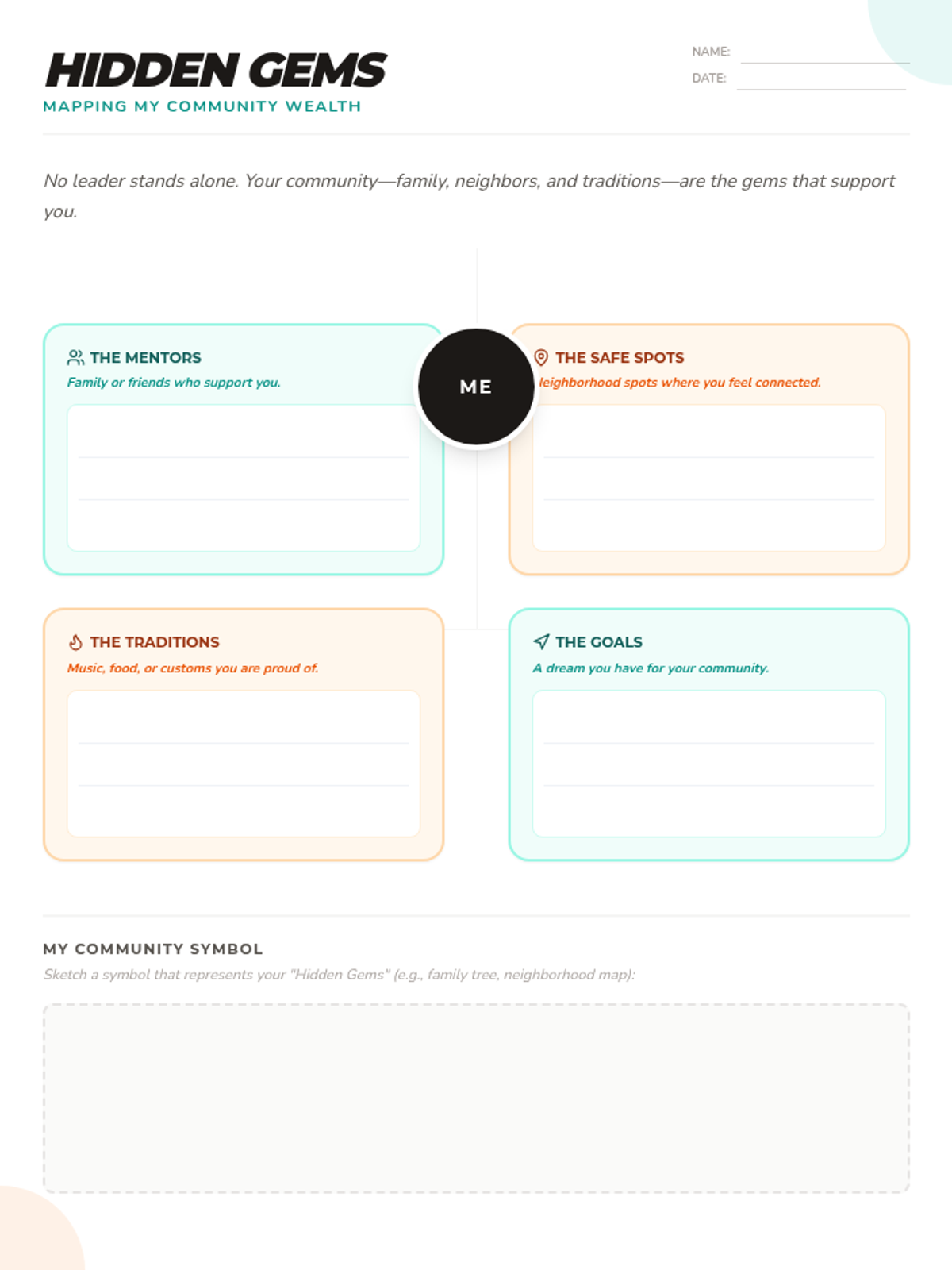
A visual map for students to identify the mentors, places, and traditions that contribute to their personal cultural wealth.
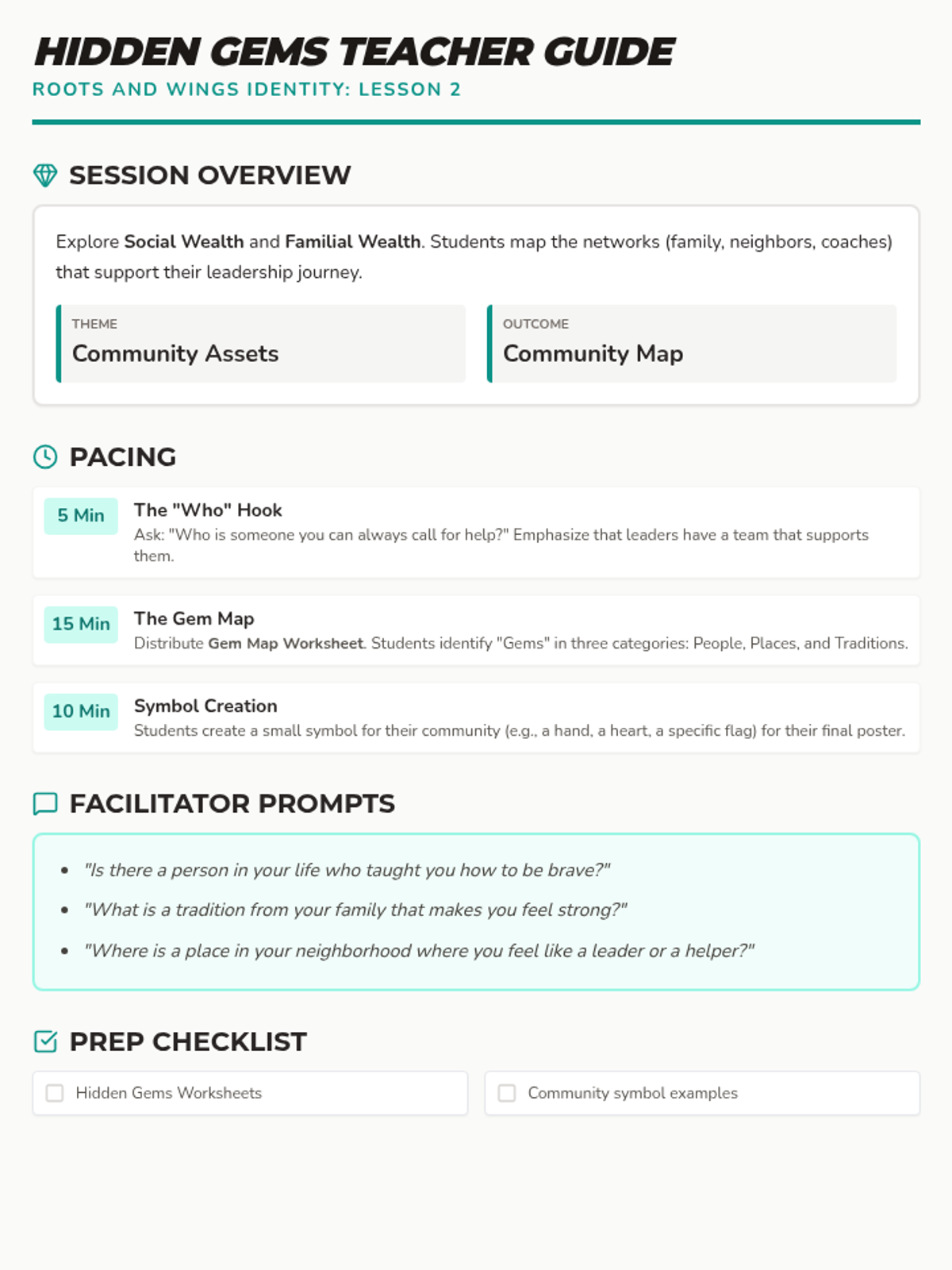
A facilitation guide for the second meeting of the club, focusing on social and familial wealth within the students' communities.
Visual presentation for the first meeting of the Roots and Wings sequence, introducing students to the concept of asset-based leadership.
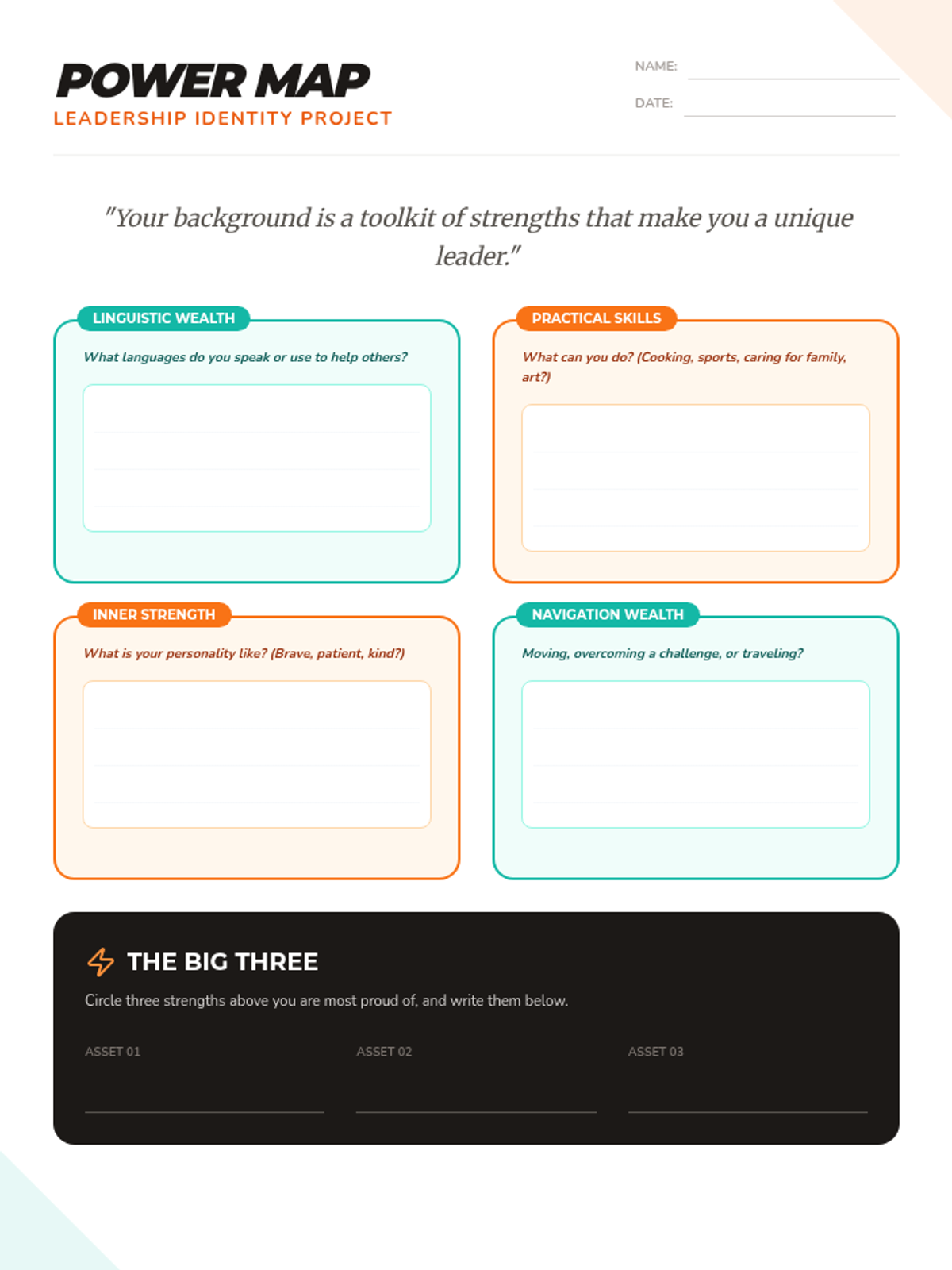
A graphic organizer for students to map out their linguistic, practical, character, and experiential assets.
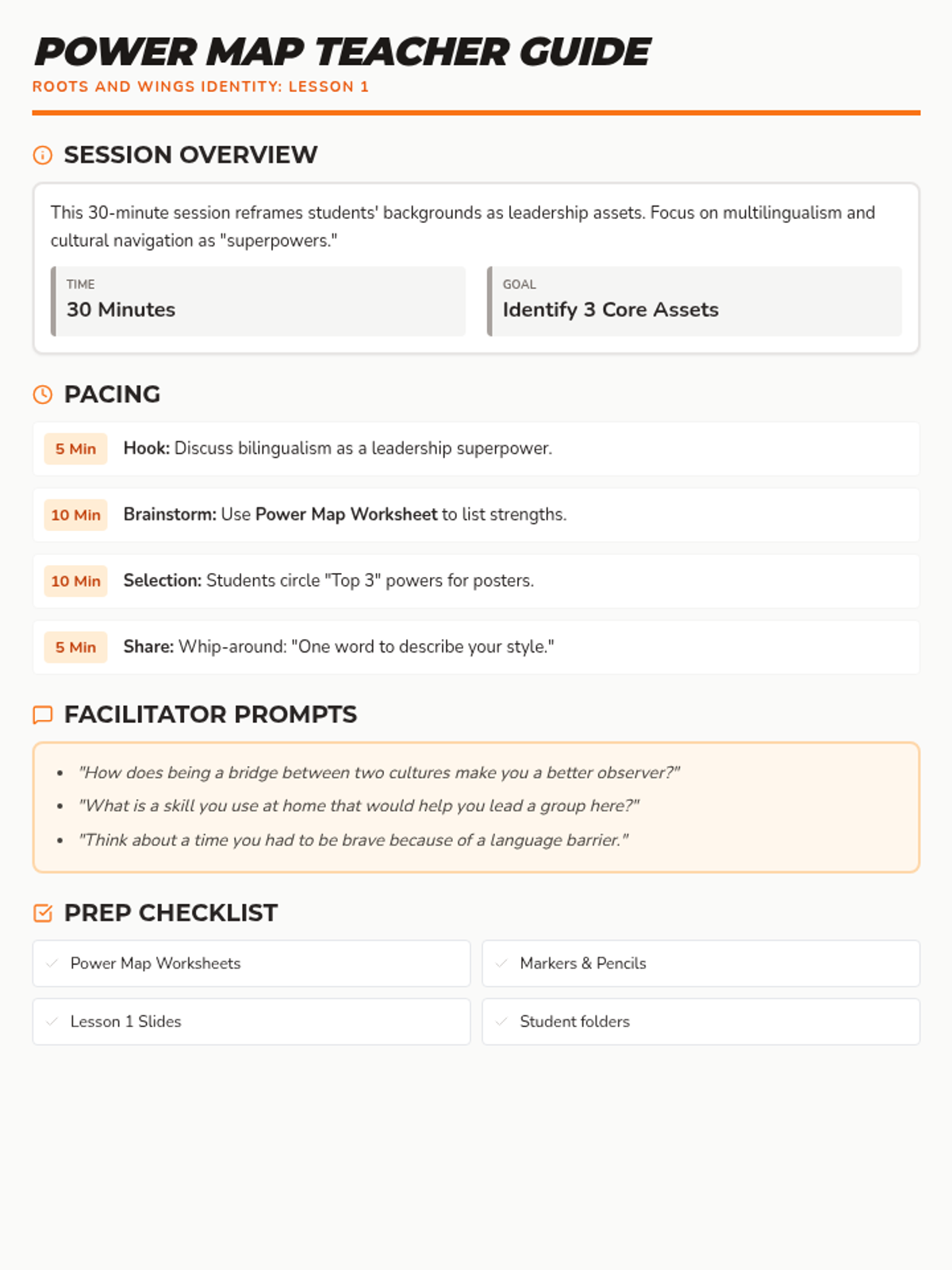
A detailed guide for club facilitators to run the first 30-minute meeting of the Roots and Wings sequence, focusing on identifying student assets.
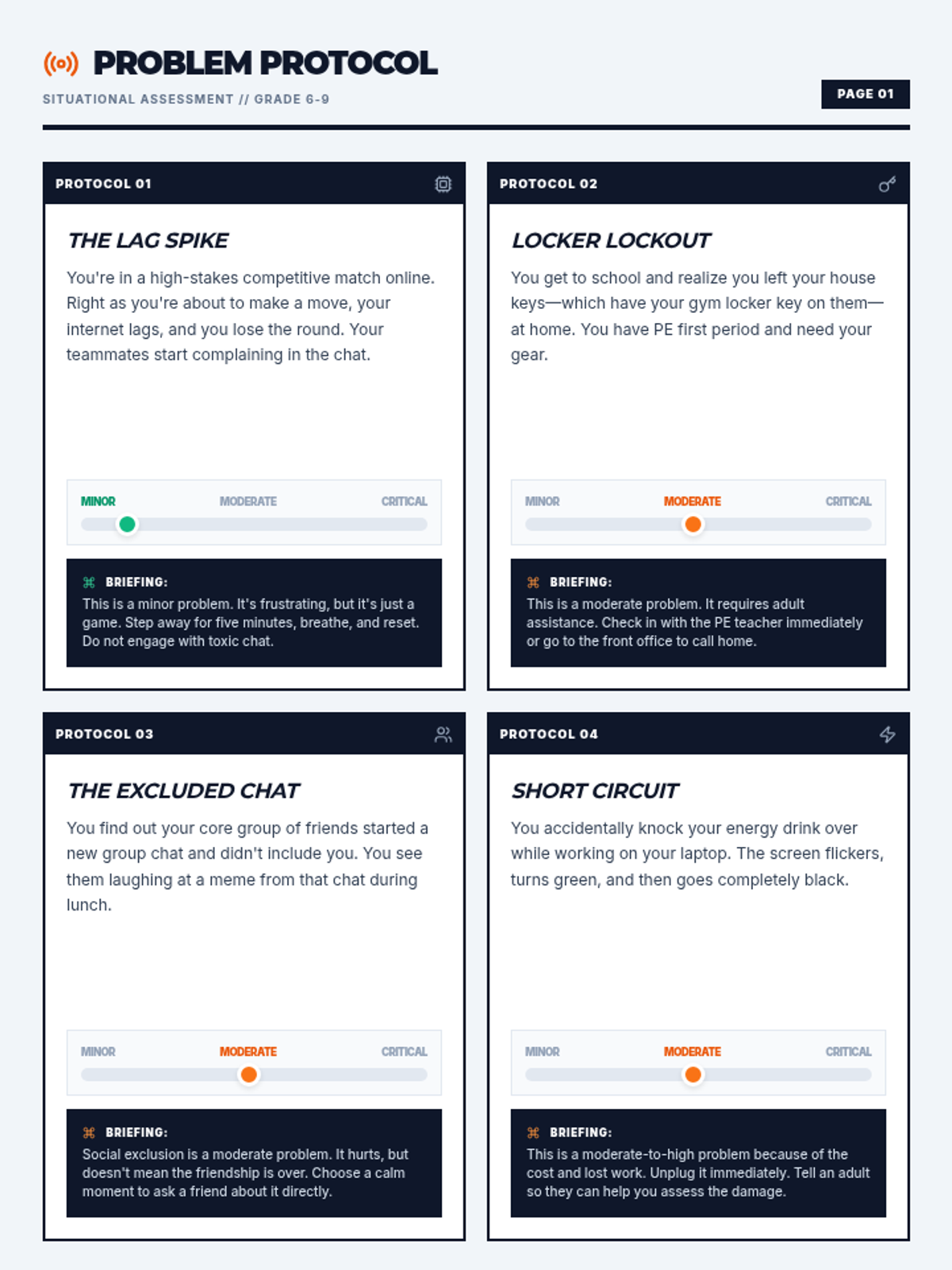
Updated set of 10 scenario cards tailored for older boys (grades 6-9), focusing on social dynamics, technology, sports, and safety. The design uses a technical 'Problem Protocol' theme with a sleek industrial aesthetic, featuring clear situational assessments and teacher-facilitated briefings.
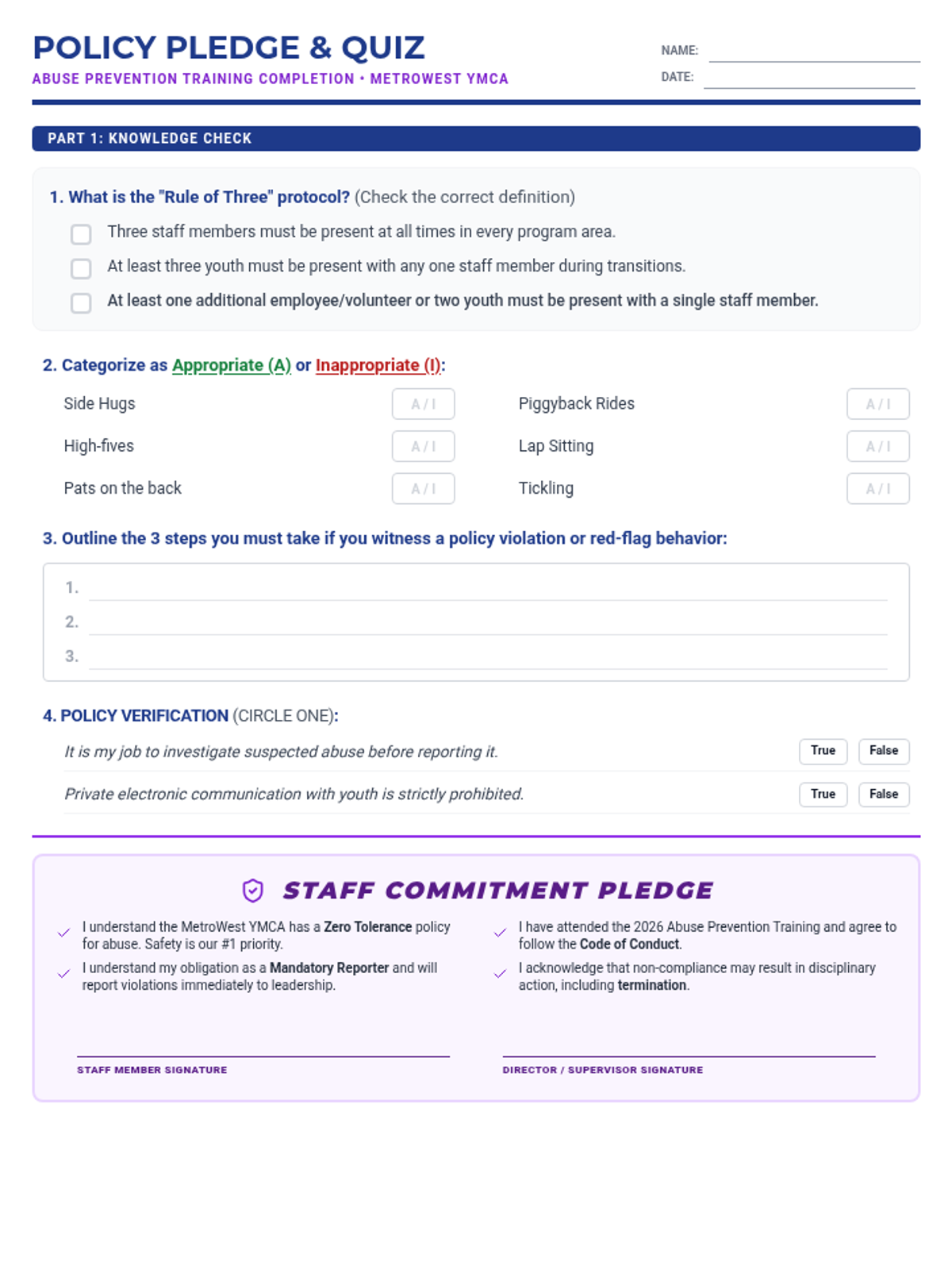
A combined assessment and commitment form for staff members to complete after training. It includes a knowledge check on the Rule of Three, interaction boundaries, and reporting duties, alongside a formal pledge to uphold the YMCA's abuse prevention policies.
A visual slide deck for the Safety First training session, covering the YMCA's zero-tolerance policy, the Rule of Three, physical and verbal boundaries, high-risk area monitoring, and reporting procedures.
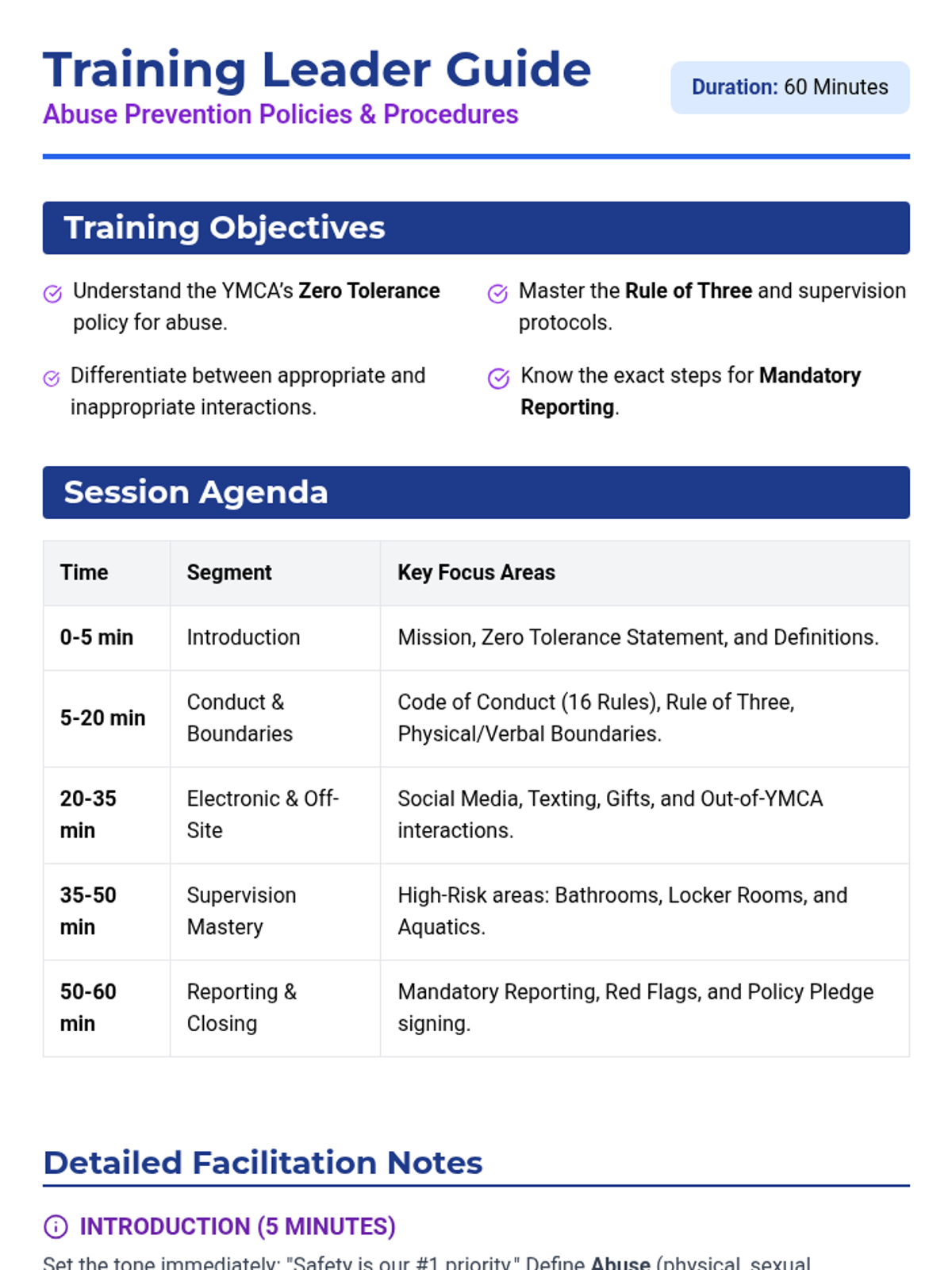
A comprehensive facilitator's guide for the abuse prevention training, including an agenda, detailed talking points, and a preparation checklist for the session leader.
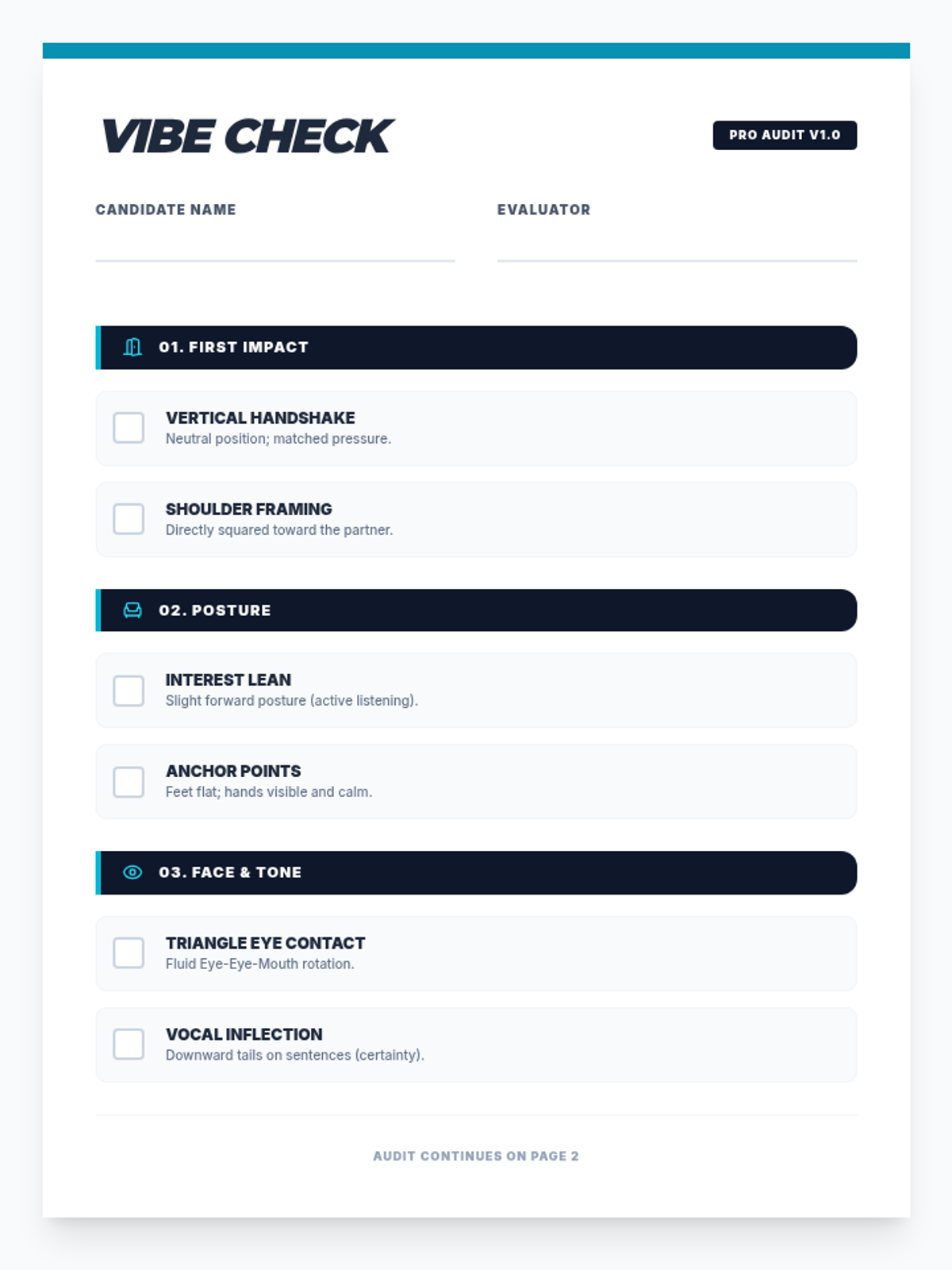
A checklist for students to evaluate professional non-verbal communication during mock interviews, covering handshakes, posture, and facial expressions.
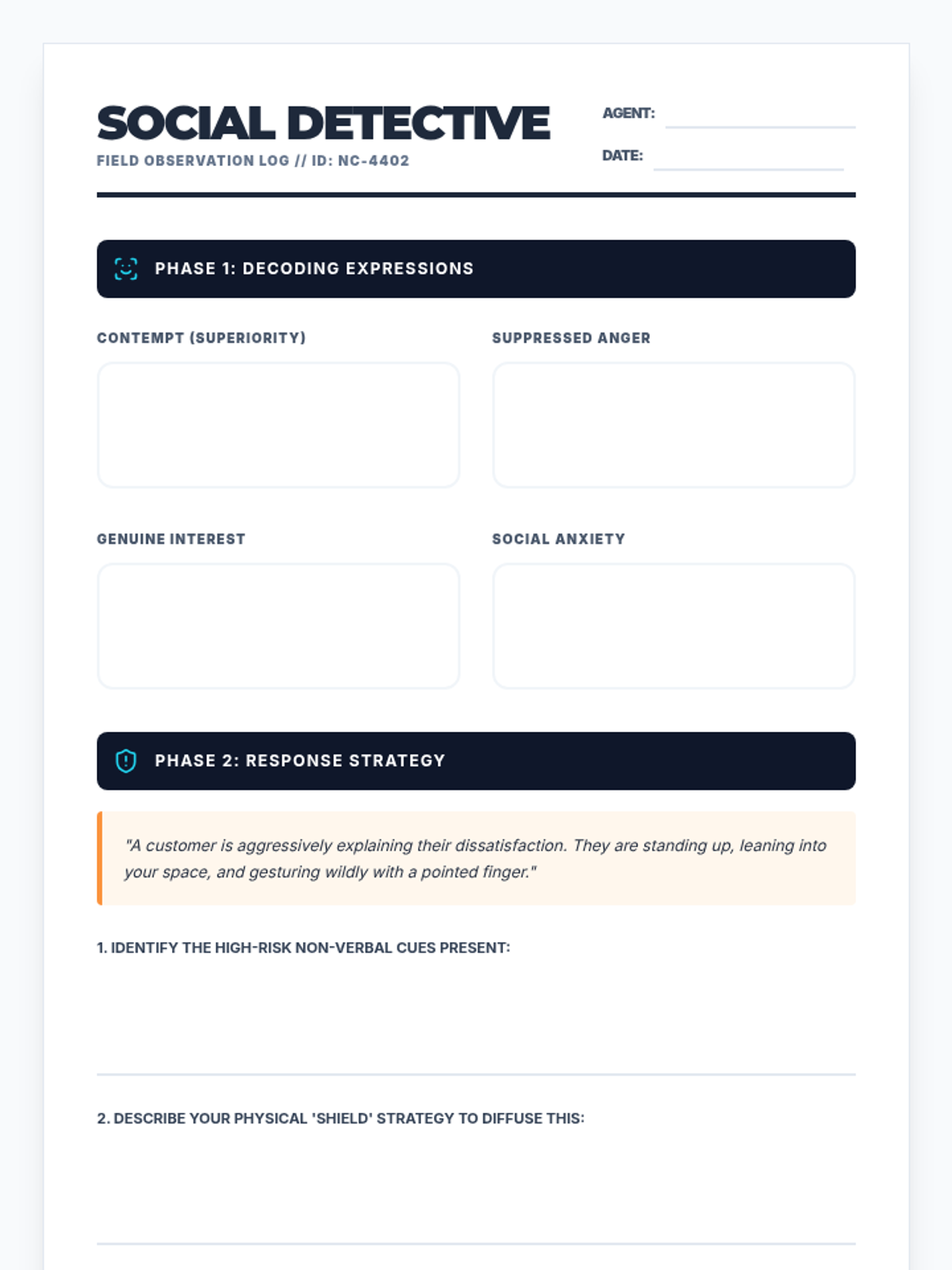
A student worksheet designed as a 'Field Observation Log' for role-playing exercises and scenario analysis in non-verbal communication.
Instructional slides for the 'Silent Signals' lesson, featuring visual breakdowns of the 93% rule, interpersonal rapport techniques, professional interview cues, and de-escalation strategies.
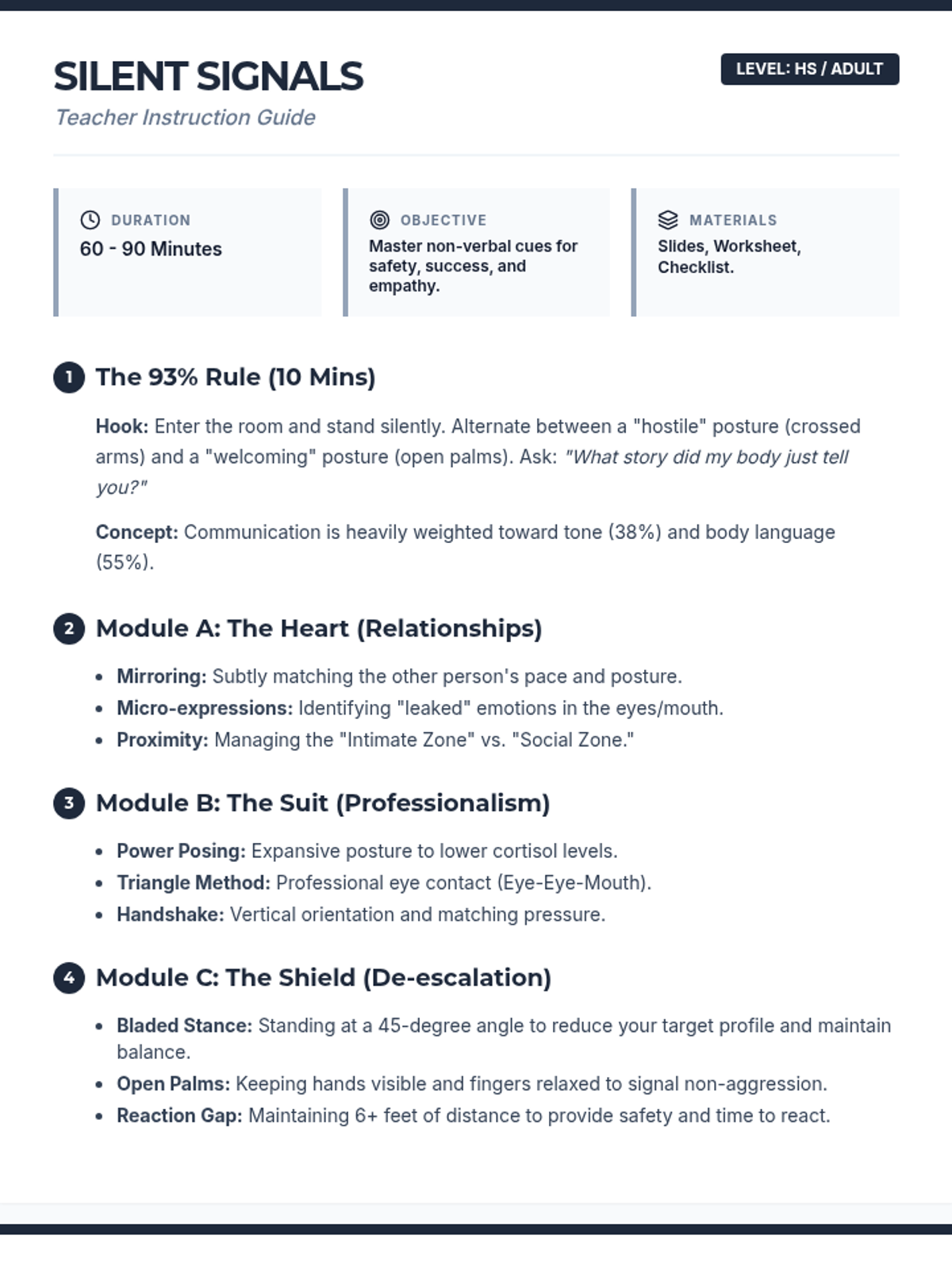
A detailed teacher facilitation guide for the 'Silent Signals' lesson, including lesson objectives, timing, key concepts for three modules, and practical classroom exercises.
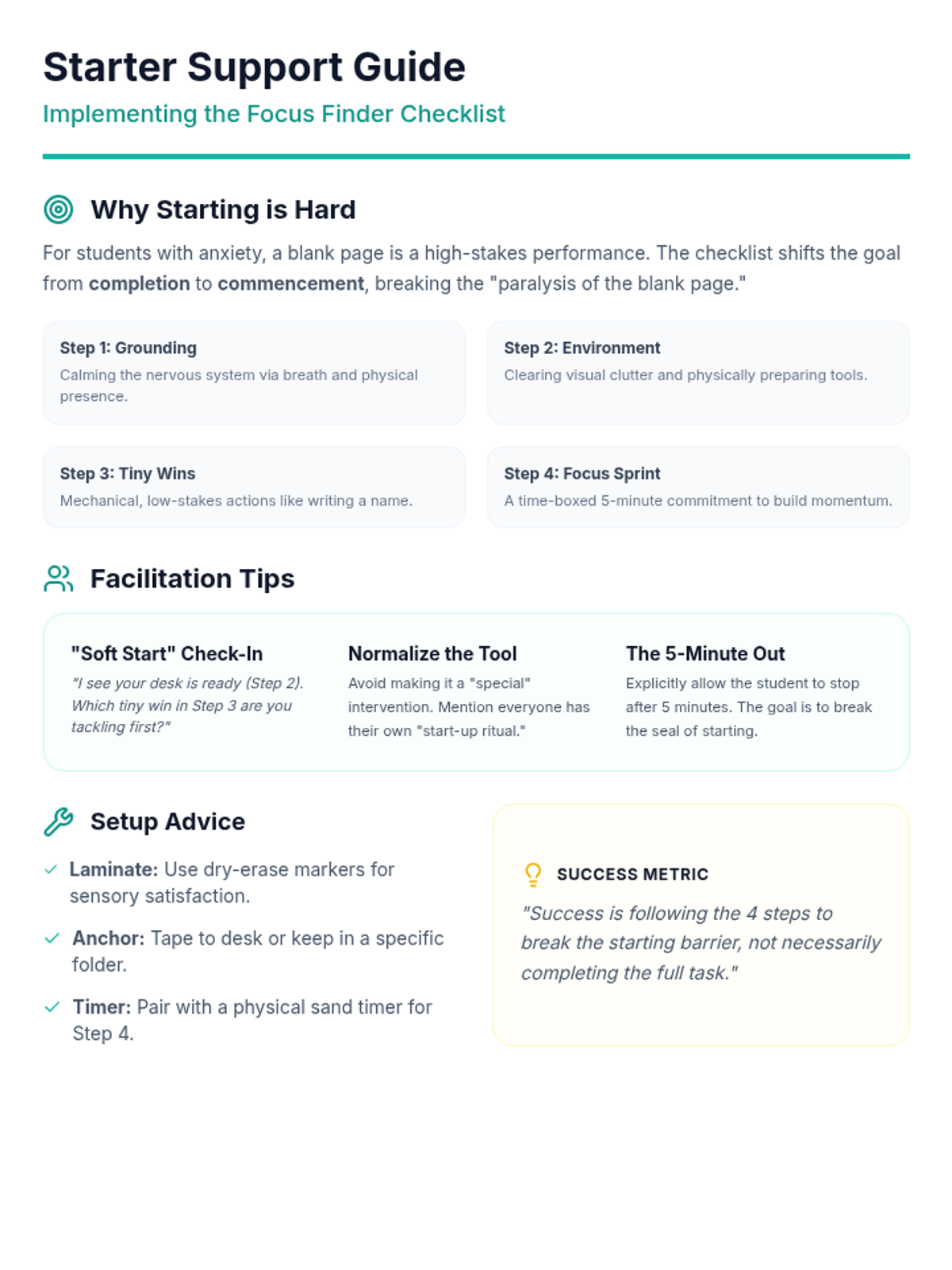
A teacher-facing guide providing psychological context and practical implementation strategies for using the Focus Finder Checklist with students who struggle with work-avoidance due to anxiety.
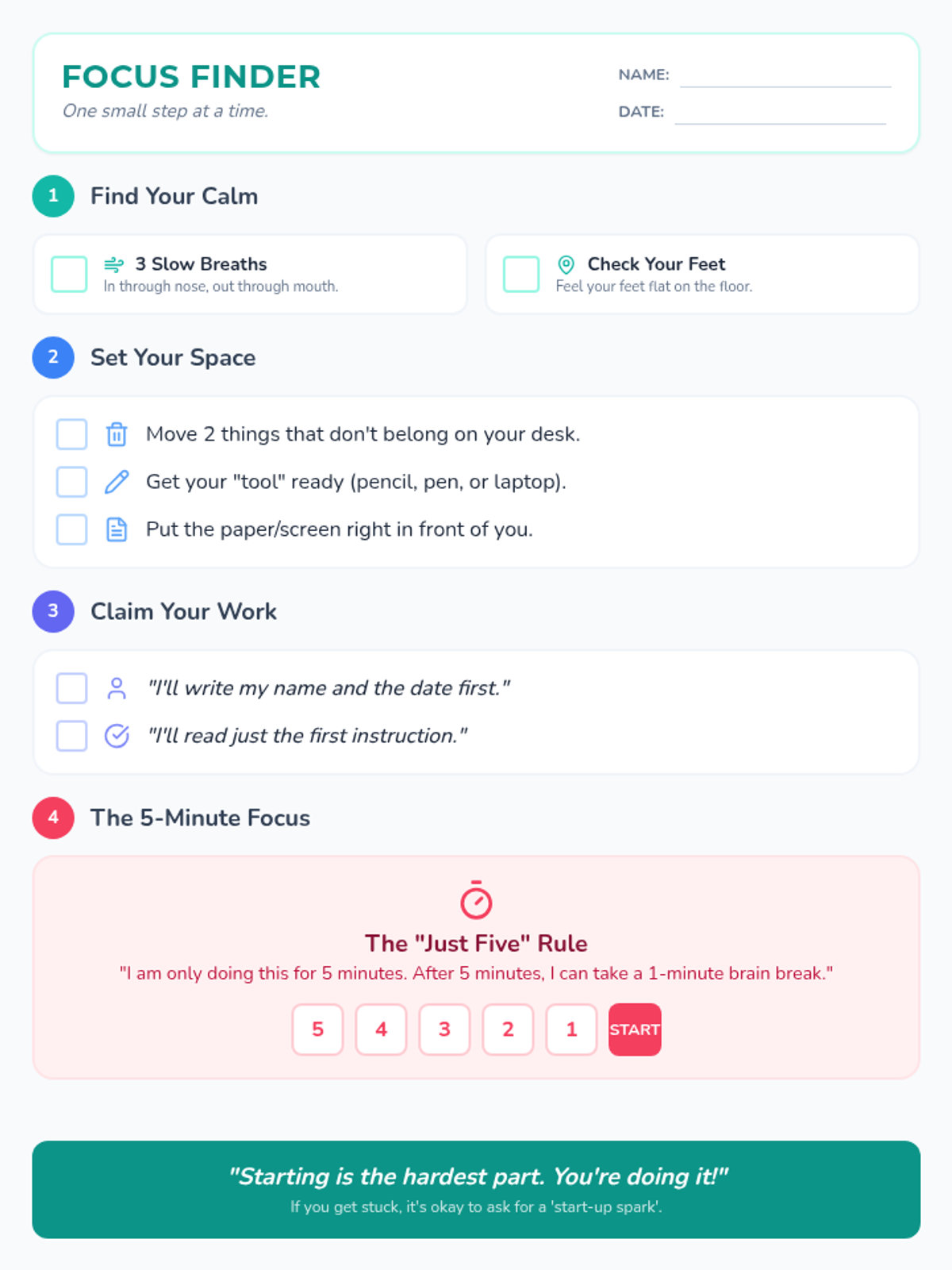
A calming, step-by-step visual checklist designed to help students with anxiety overcome the paralysis of starting a task. It uses grounding techniques, environment setup, and micro-goals to build momentum.
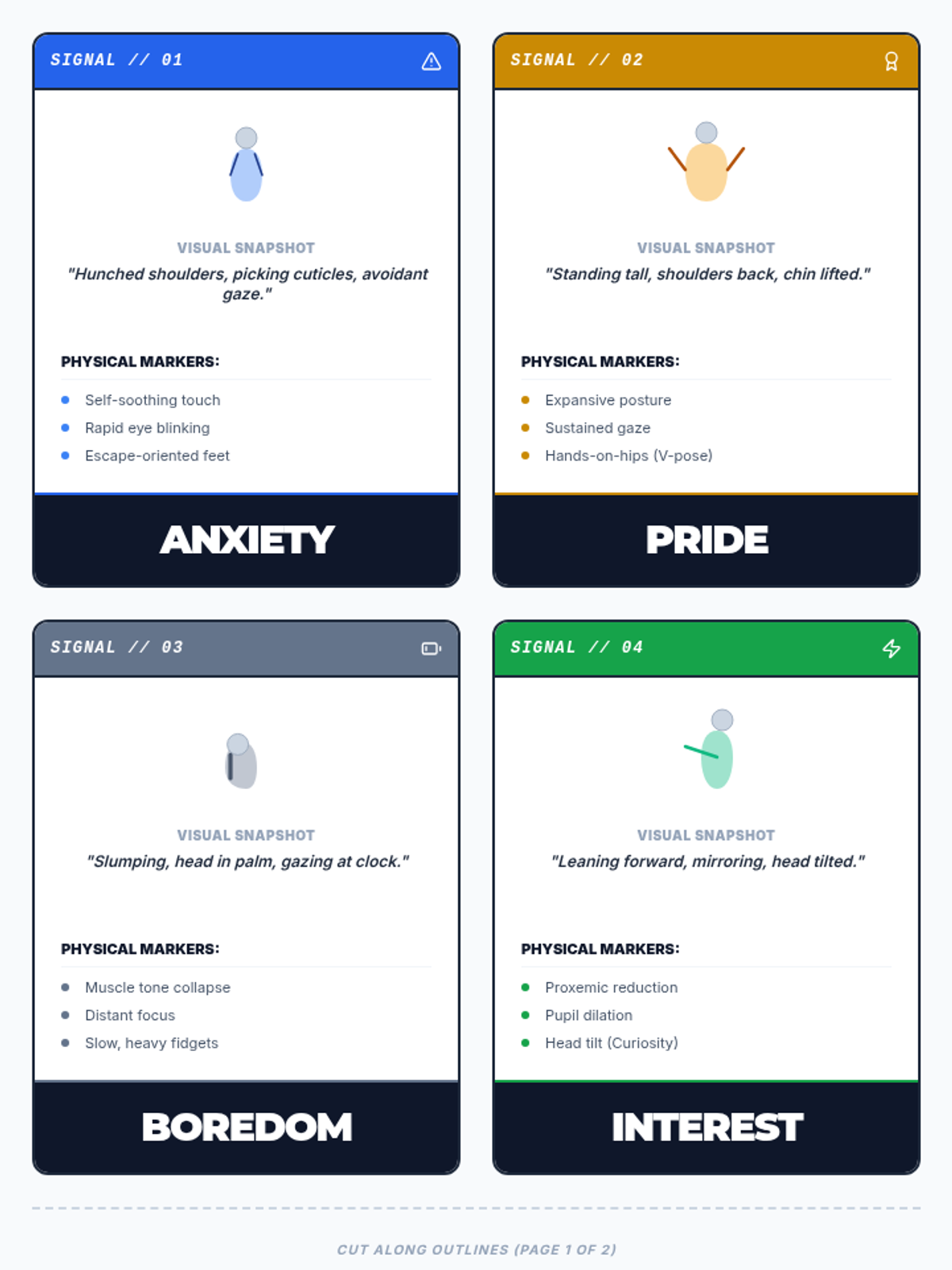
Printable flashcards summarizing key nonverbal markers for complex emotions and social cues. Each card lists physical behaviors, a visual scene description, and a bold label on the bottom. Optimized for a single-page printout with no shadows for easy cutting. High contrast and accessible font sizes.
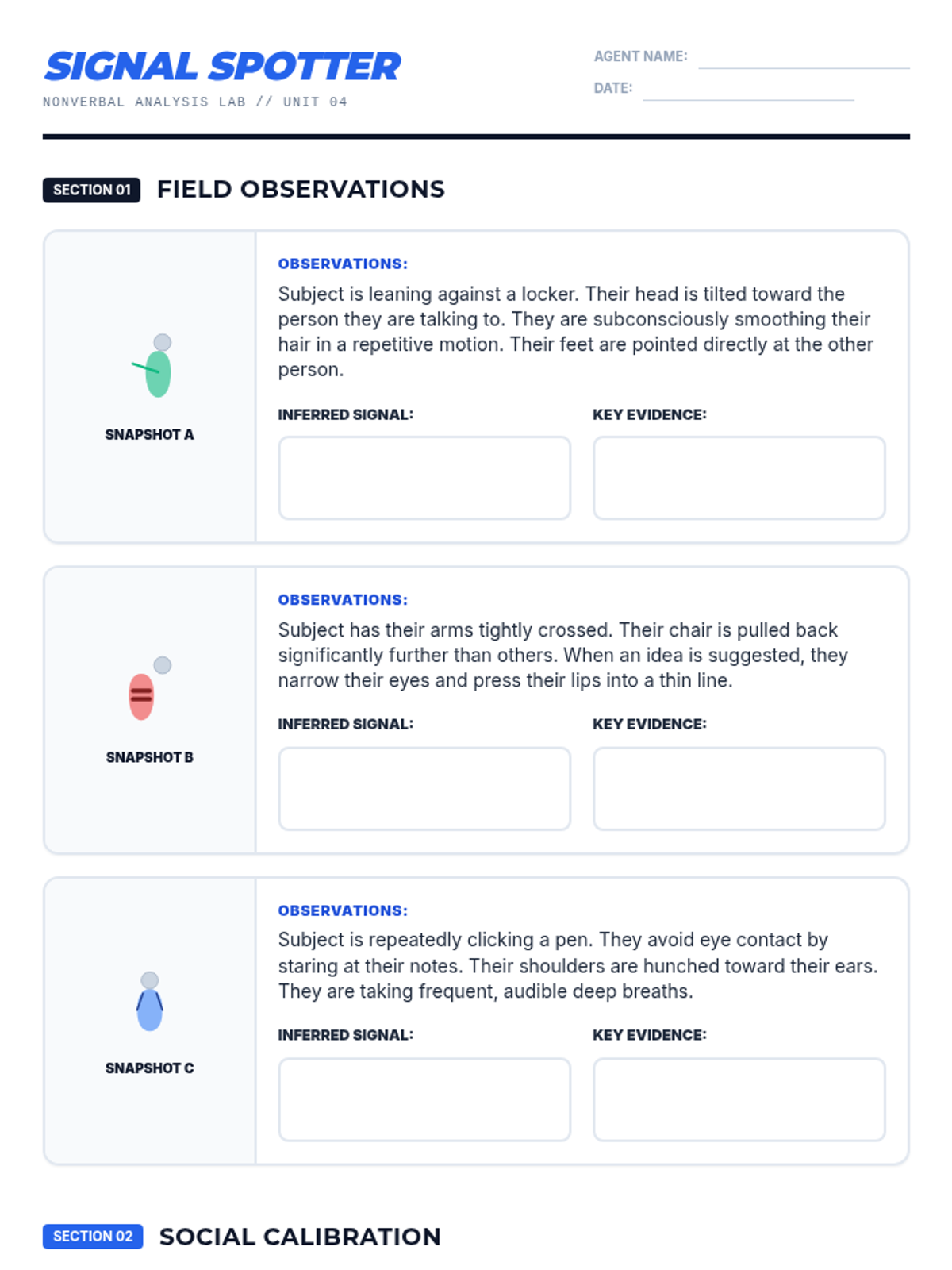
A student identification worksheet where students analyze "Visual Snapshots" (descriptive scenarios) to identify nonverbal signals like anxiety, interest, and disagreement. It now features high-quality SVG silhouettes for analysis and expanded work areas. Tightened for efficient printing.
A comprehensive slide deck for high school students analyzing nonverbal communication. It now features high-quality SVG illustrations of people demonstrating anxiety, pride, boredom, interest, and resistance to satisfy the user's request for visual representations. Layout optimized for clarity and high contrast.
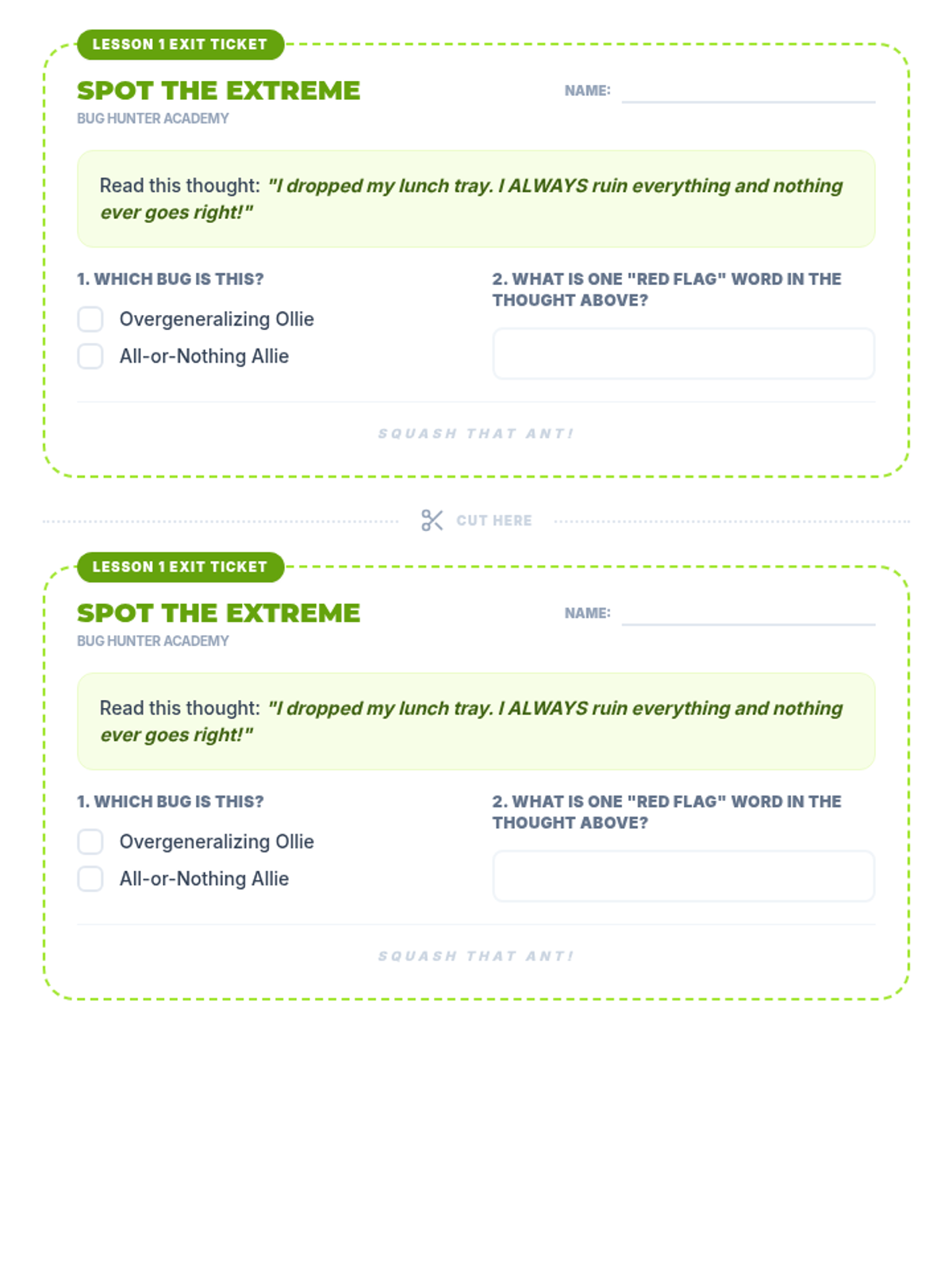
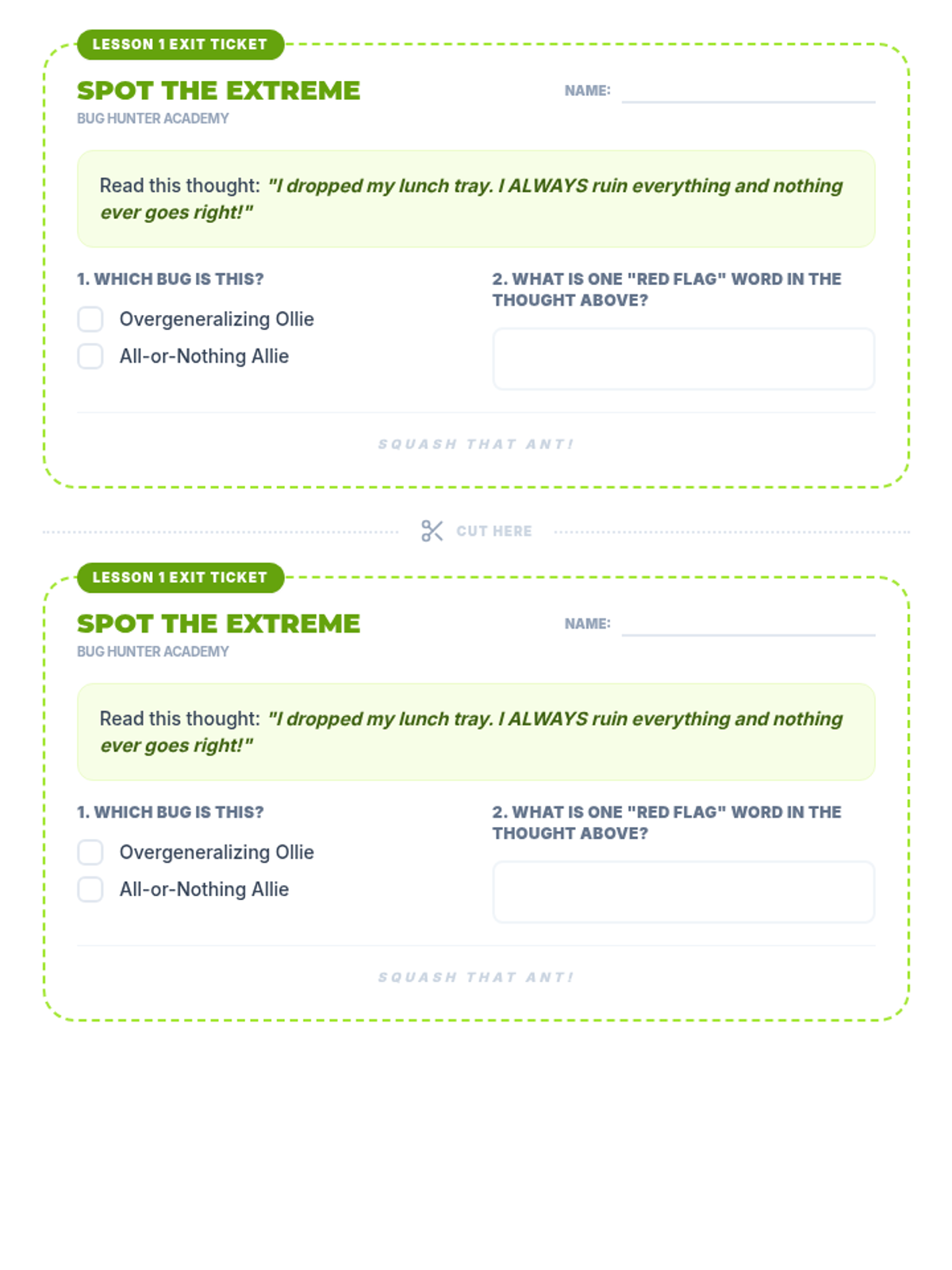
A quick exit ticket for Lesson 1 where students identify an 'Extreme Thinker' bug and its red flag words from a scenario. Designed as two per page for easy printing.
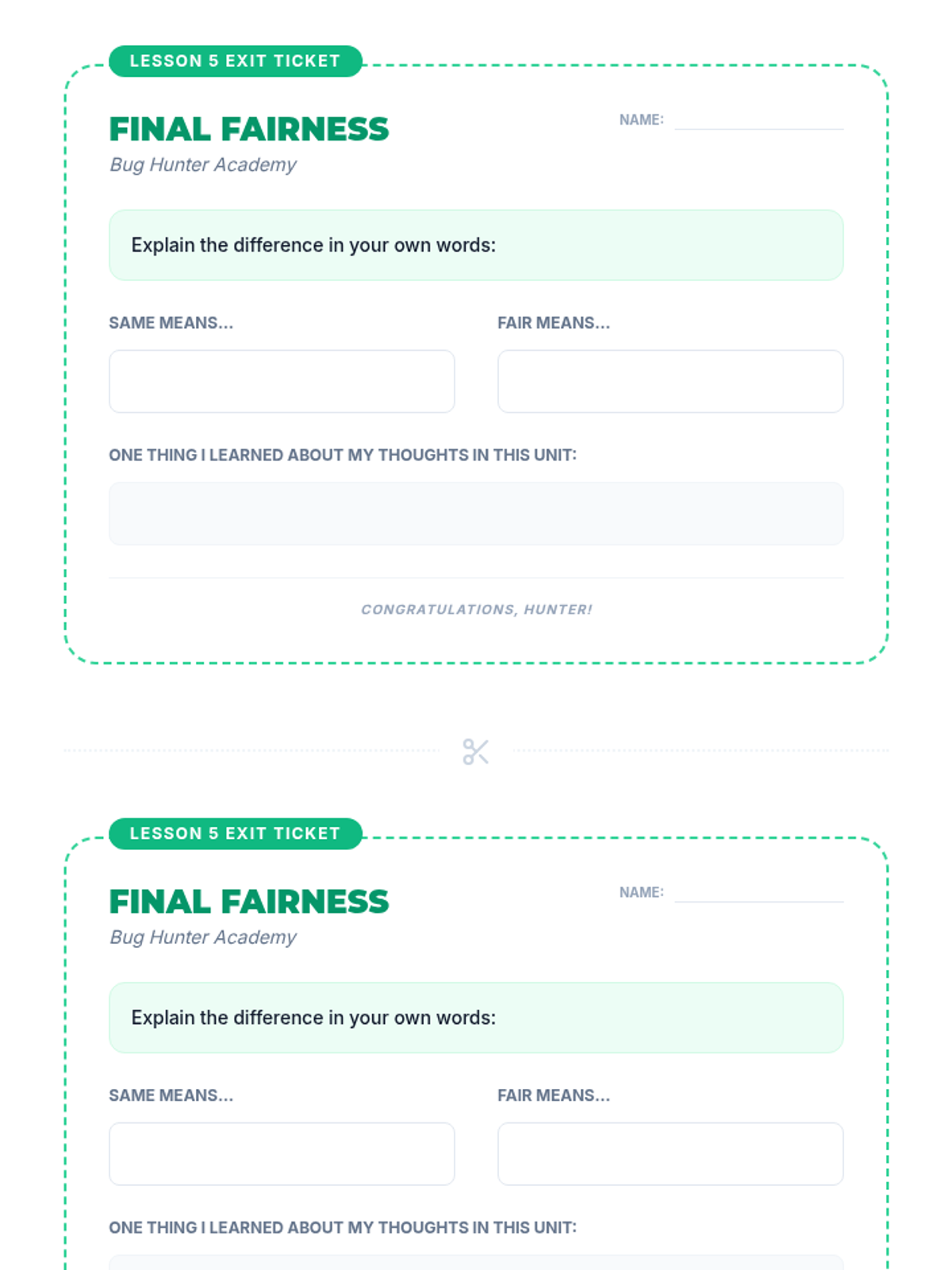
The final exit ticket for Lesson 5 focusing on Not Fair Frank's 'Fair vs. Same' concept and a general unit reflection. Provided as two per page.
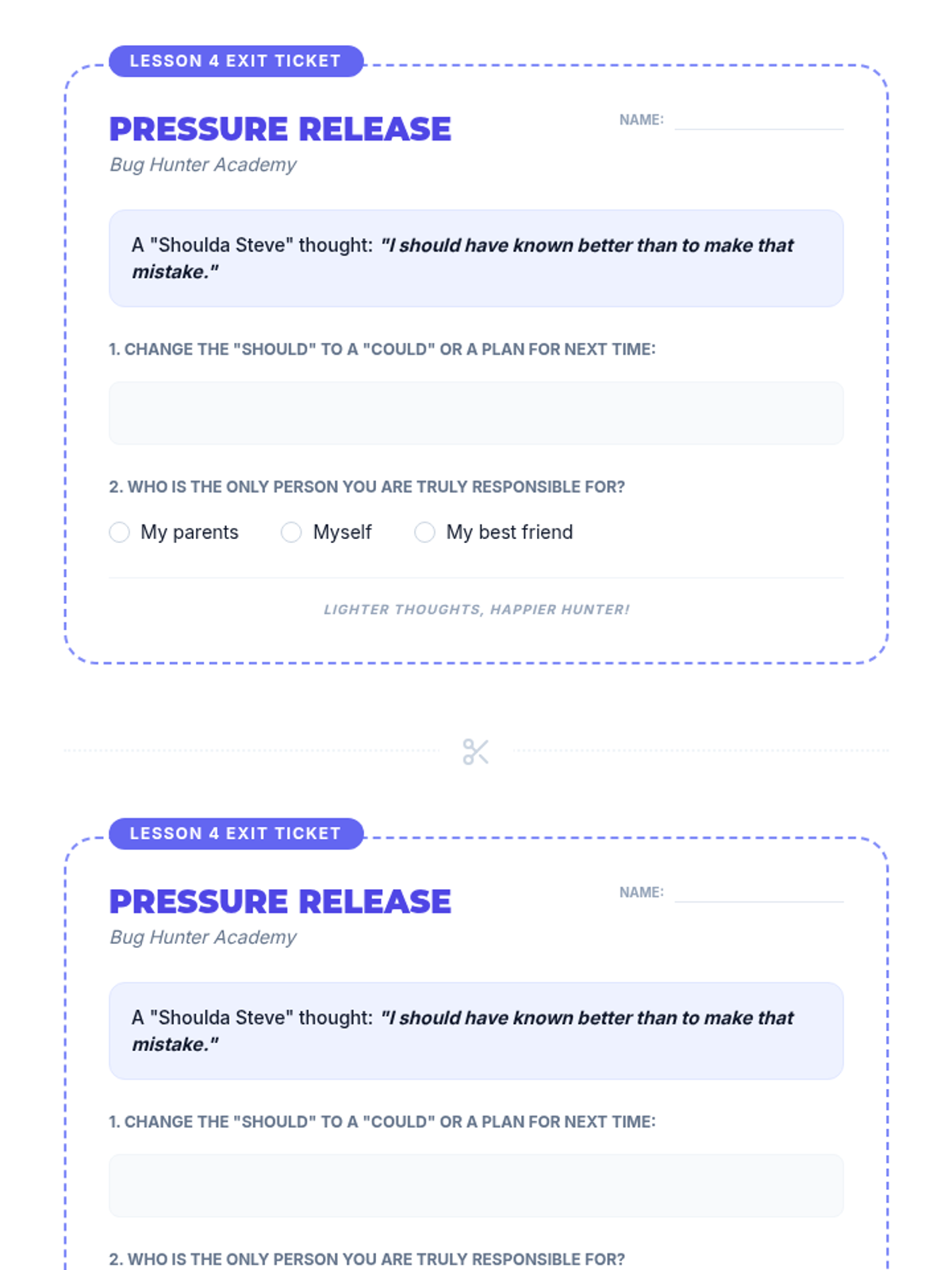
An exit ticket for Lesson 4 focusing on swapping 'should' statements and identifying the circle of control. Provided as two per page.
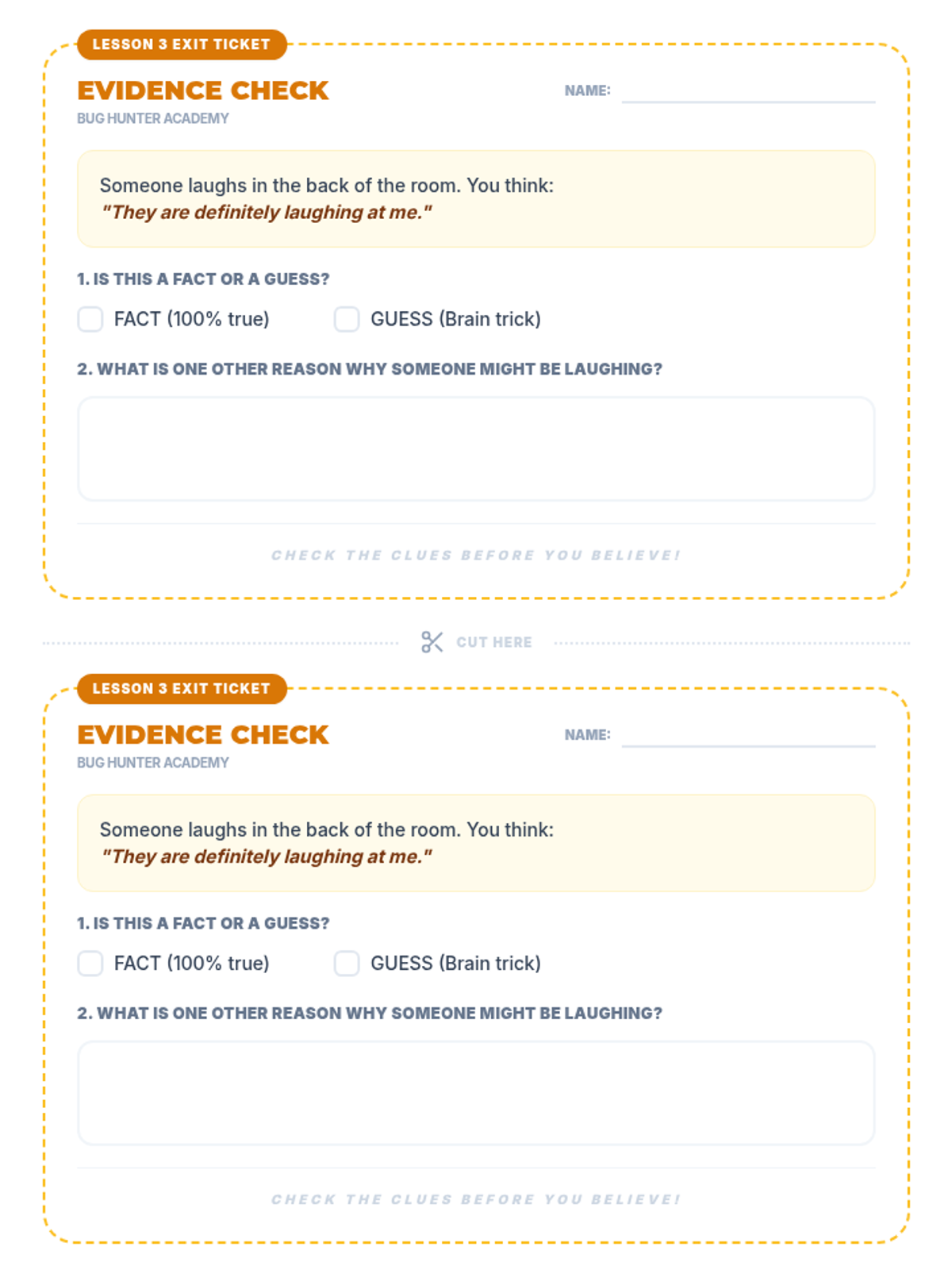
A revised exit ticket for Lesson 3 focusing on distinguishing between facts and Marty/Jazz-style guesses. Provided as two per page with adequate writing space.
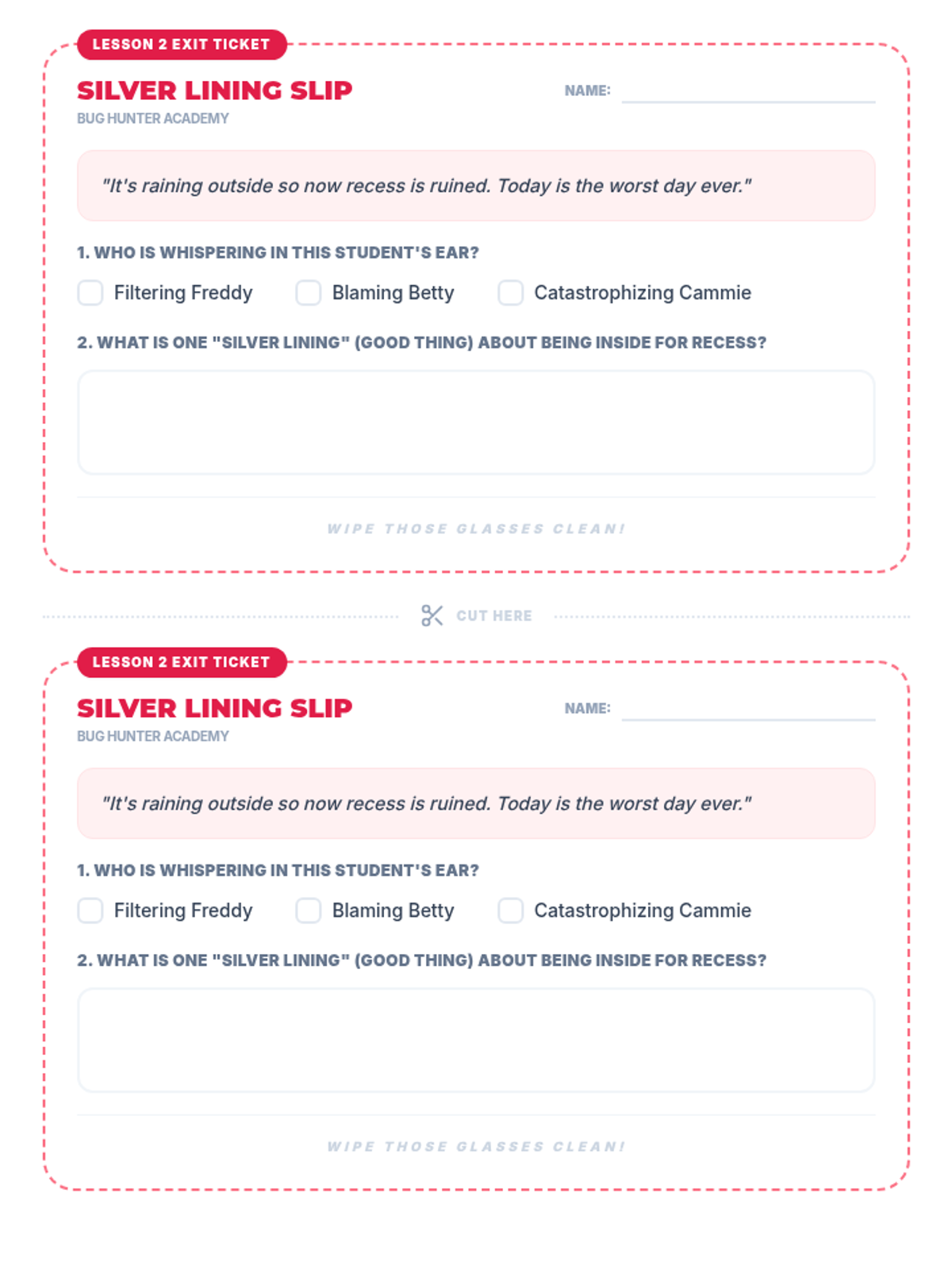
A revised exit ticket for Lesson 2 focusing on Filtering Freddy and finding a silver lining in a negative situation. Provided as two per page with improved layout.
A revised quick exit ticket for Lesson 1 where students identify an 'Extreme Thinker' bug and its red flag words from a scenario. Designed as two per page for easy printing.
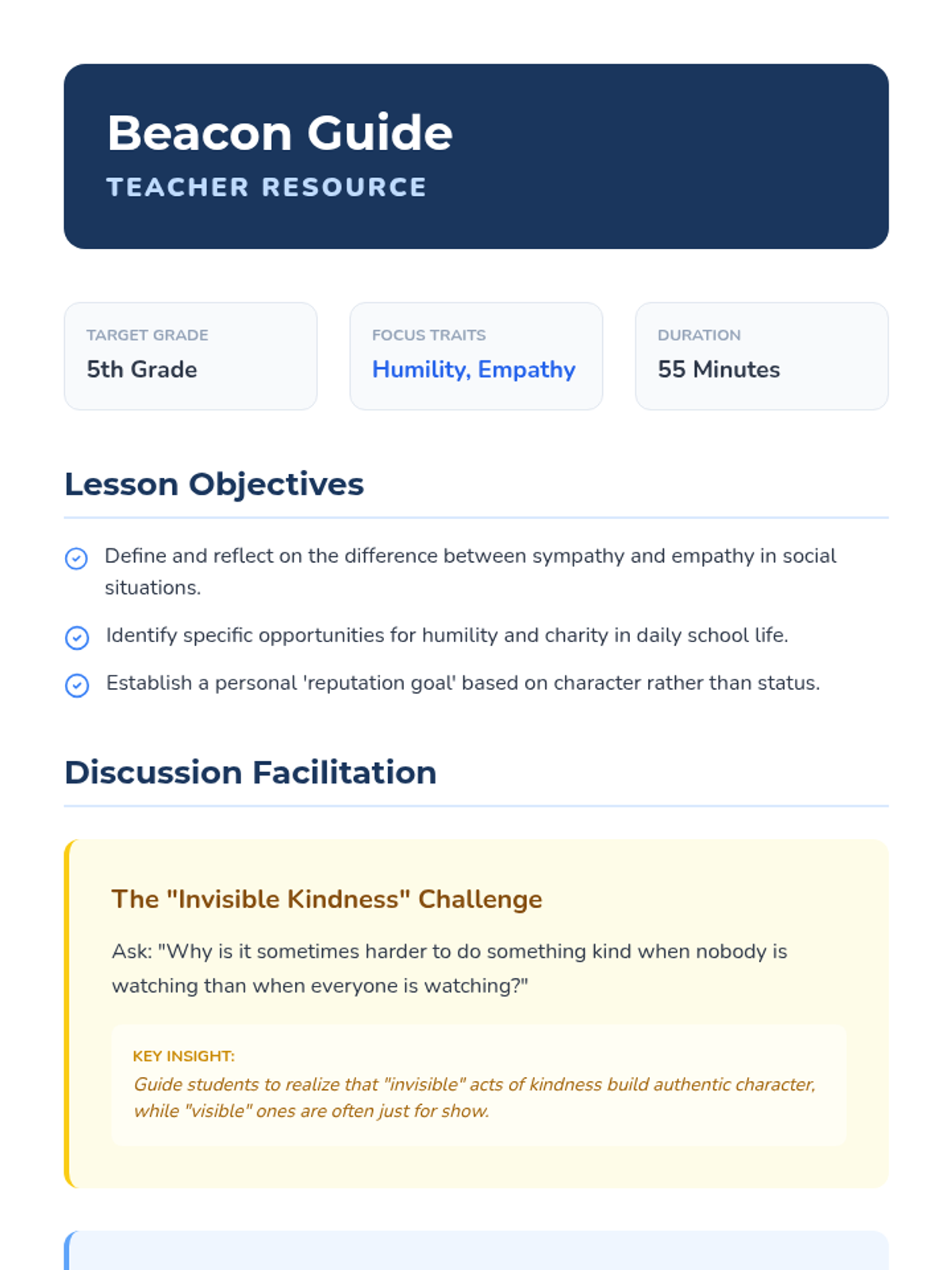
A comprehensive teacher resource for delivering 'The Kind Beacon' lesson. It includes pacing guides, discussion prompts for empathy and humility, and extensions for continuing character education in the classroom.
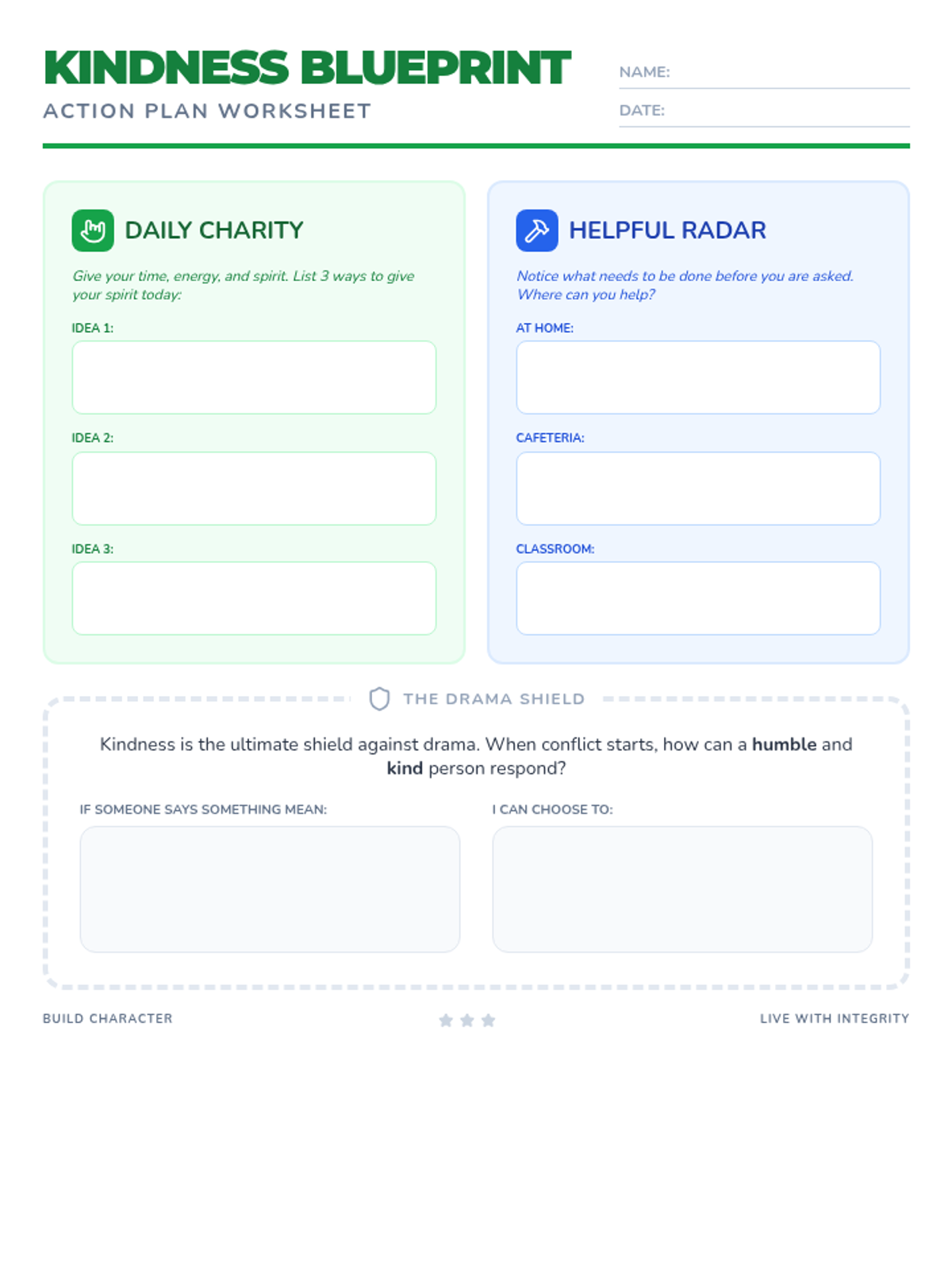
A single-page action plan worksheet for 5th graders to practice daily charity and helpfulness. Optimized to fit on a single 8.5"x11" sheet with a 'Drama Shield' reflection section.
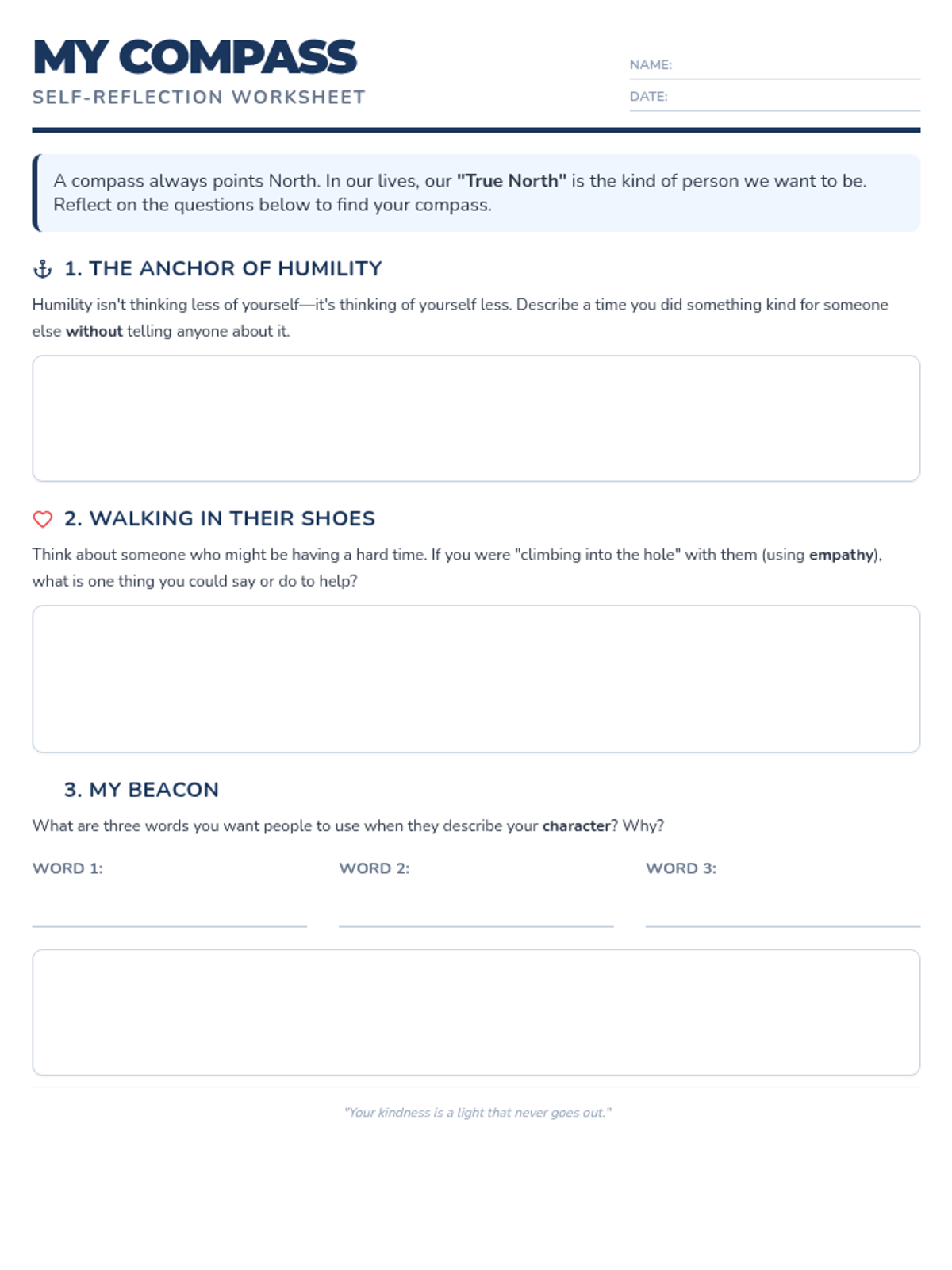
A single-page reflective writing worksheet for 5th graders to consider their personal character goals using a compass metaphor. Optimized to fit on a single 8.5"x11" sheet.
A 6-slide presentation designed for 5th graders to explore kindness, empathy, and character. It uses a 'Light the Way' nautical theme to help students visualize their reputation as a beacon for others.
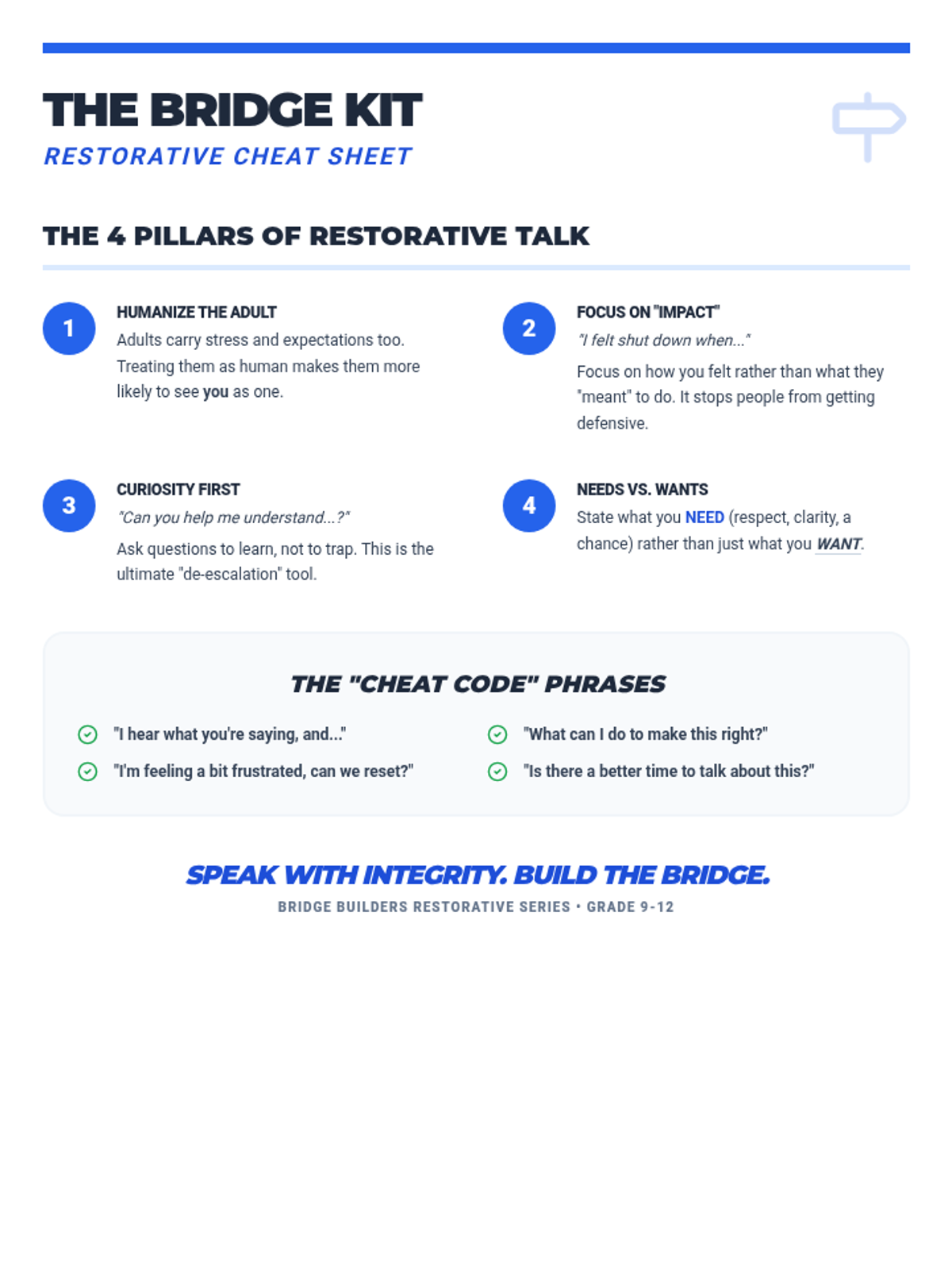
A quick-reference tip sheet for high school students, summarizing the four pillars of restorative communication and providing de-escalation "power phrases" for talking to adults.
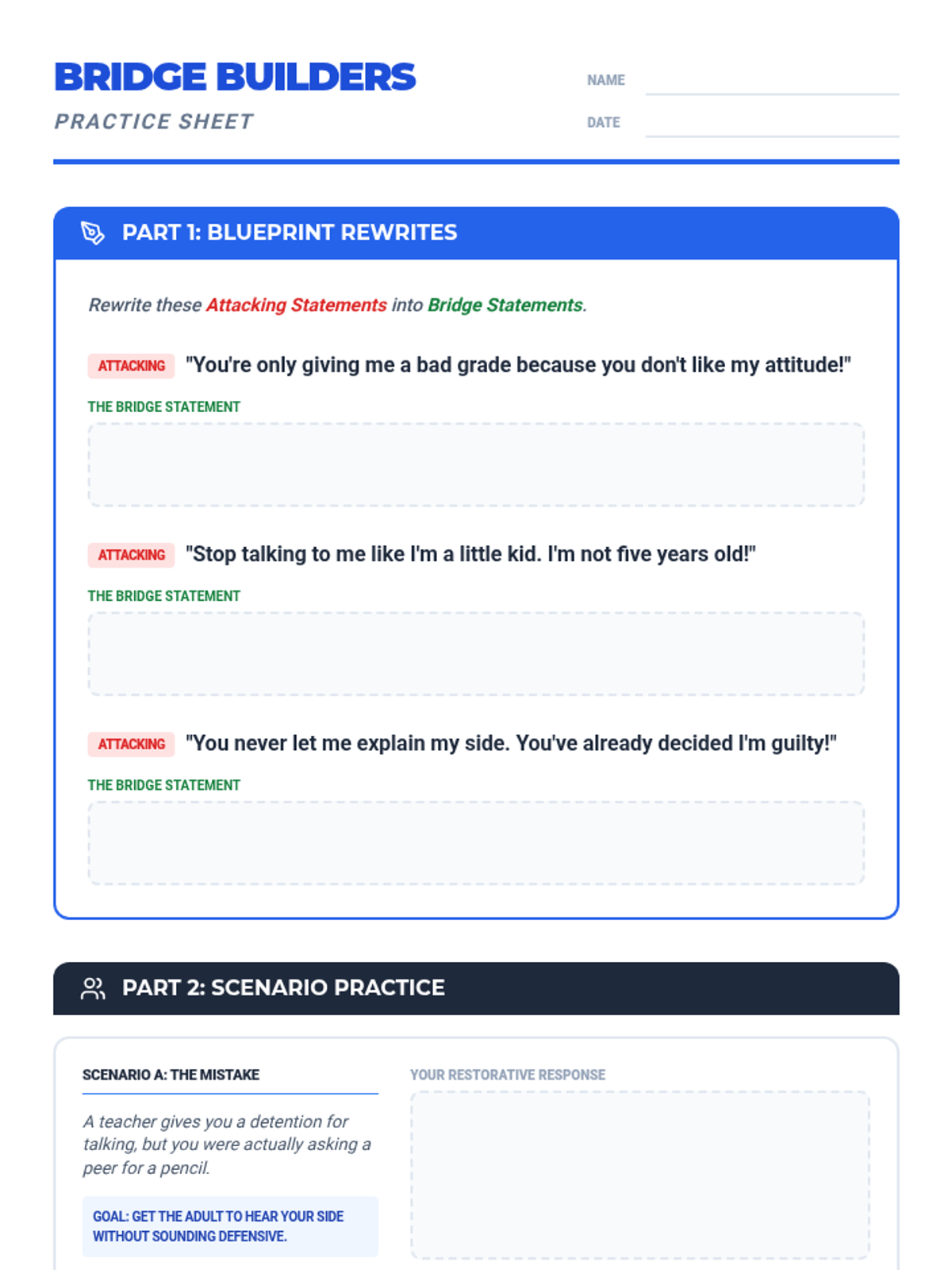
A student worksheet designed to help high schoolers practice restorative communication through statement rewriting and scenario-based roleplay.
A visual slide deck to accompany the Bridge Builders lesson, illustrating power dynamics, restorative communication pillars, and de-escalation techniques for students.
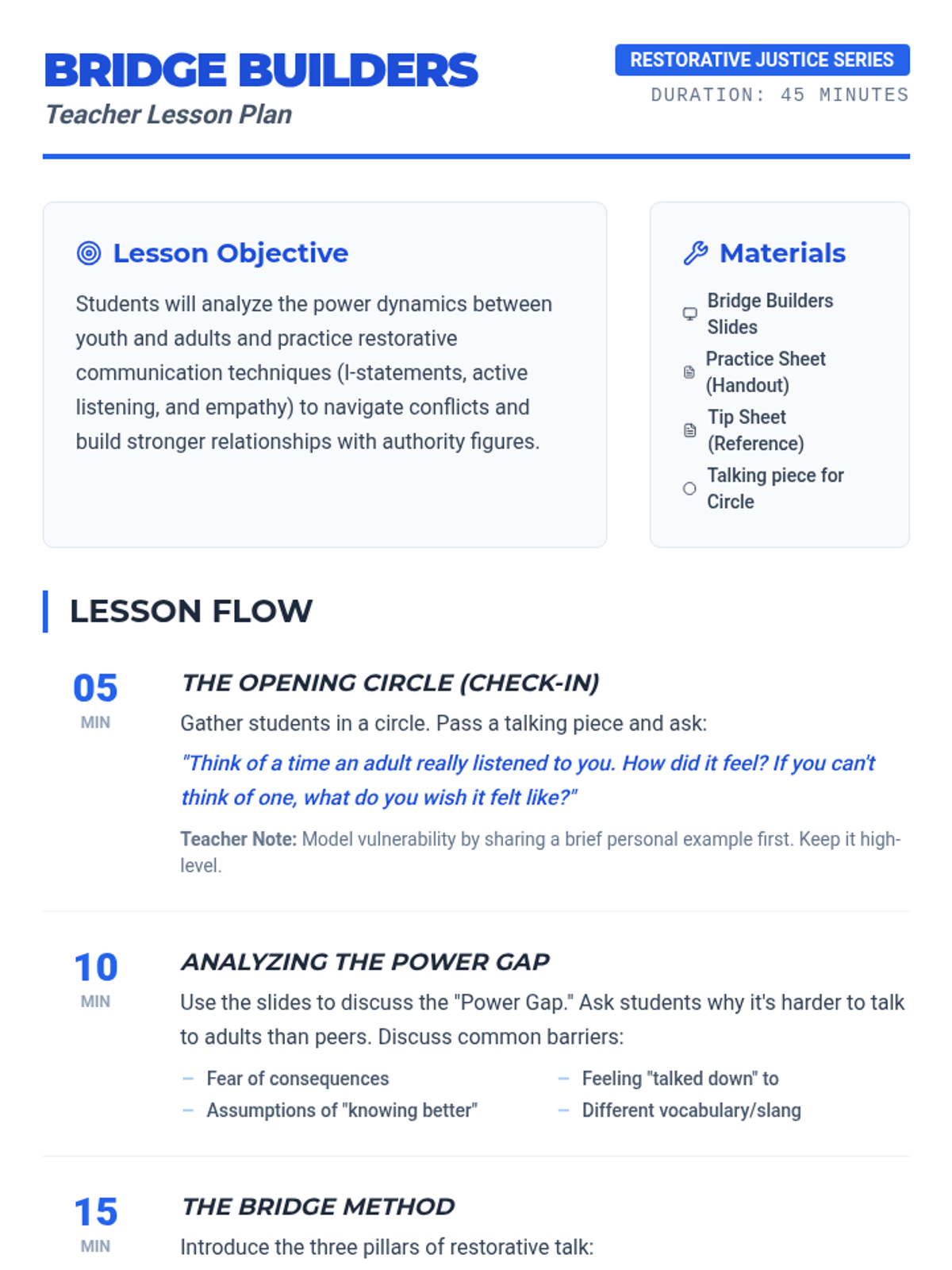
A structured teacher guide for a 45-minute restorative justice lesson on communication between high school students and adults, including pacing, prompts, and instructional notes.
A visual presentation for instruction on professional email writing, covering the anatomy of an email, professional tone, and specific real-world scenarios for life skills students.
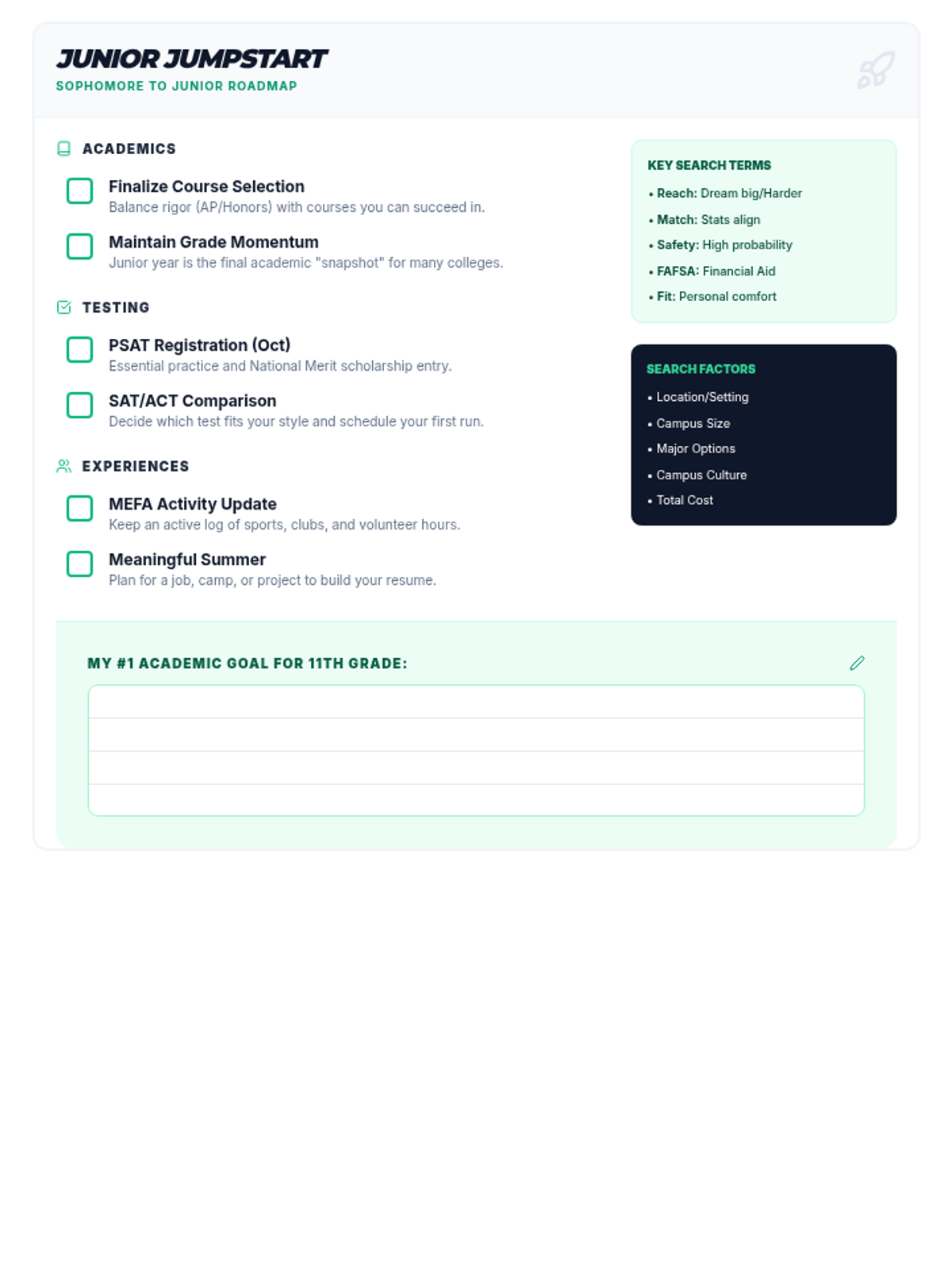
A transition planning checklist for 10th-grade students to prepare for the academic and testing requirements of their junior year.
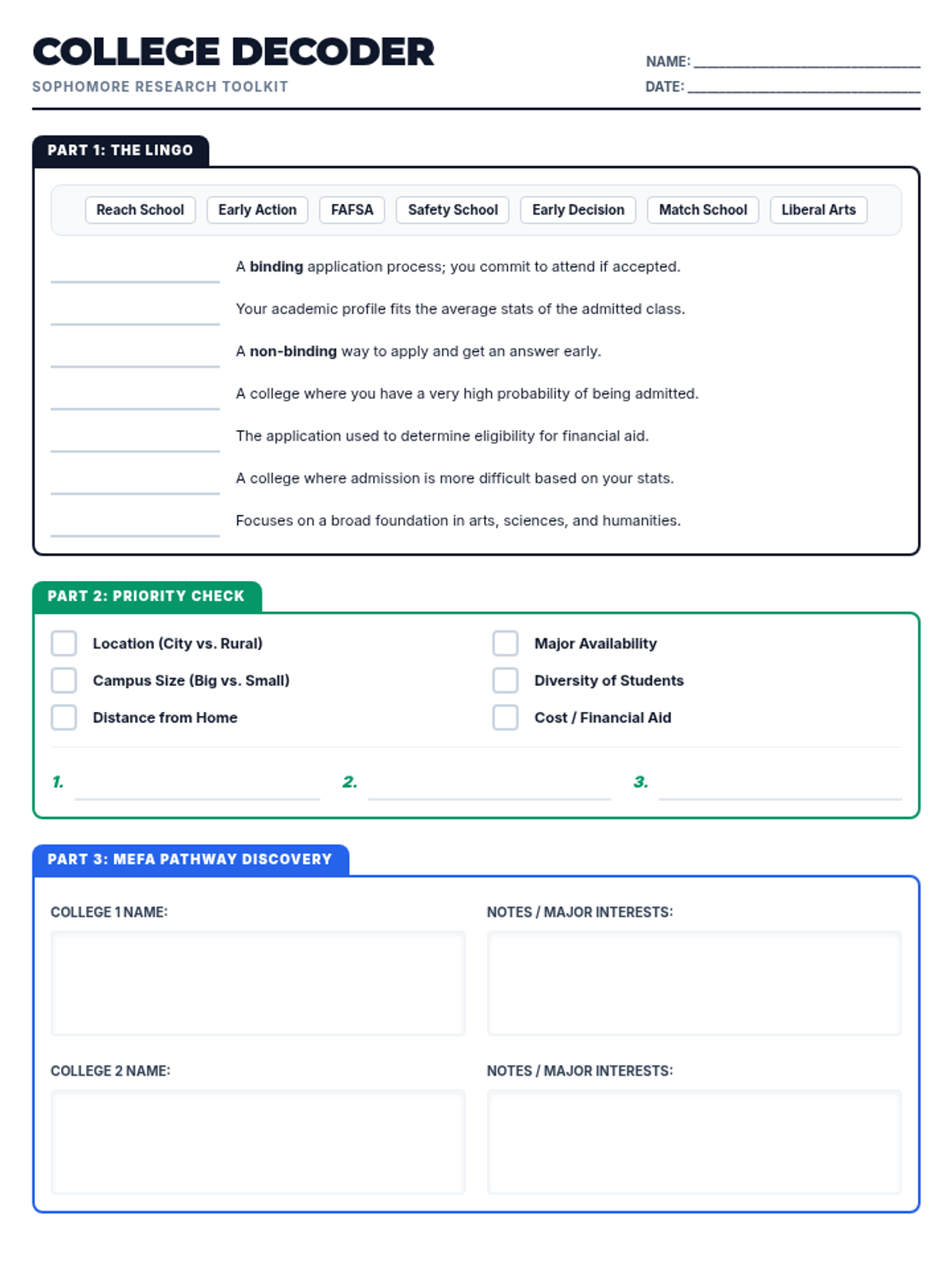
A student-facing worksheet used to master college search vocabulary, identify personal selection priorities, and record findings from the MEFA Pathway research session.
A visually engaging presentation for 10th graders covering college search terminology, factors for choosing a school, and the roadmap to junior year, integrated with MEFA Pathway instructions.
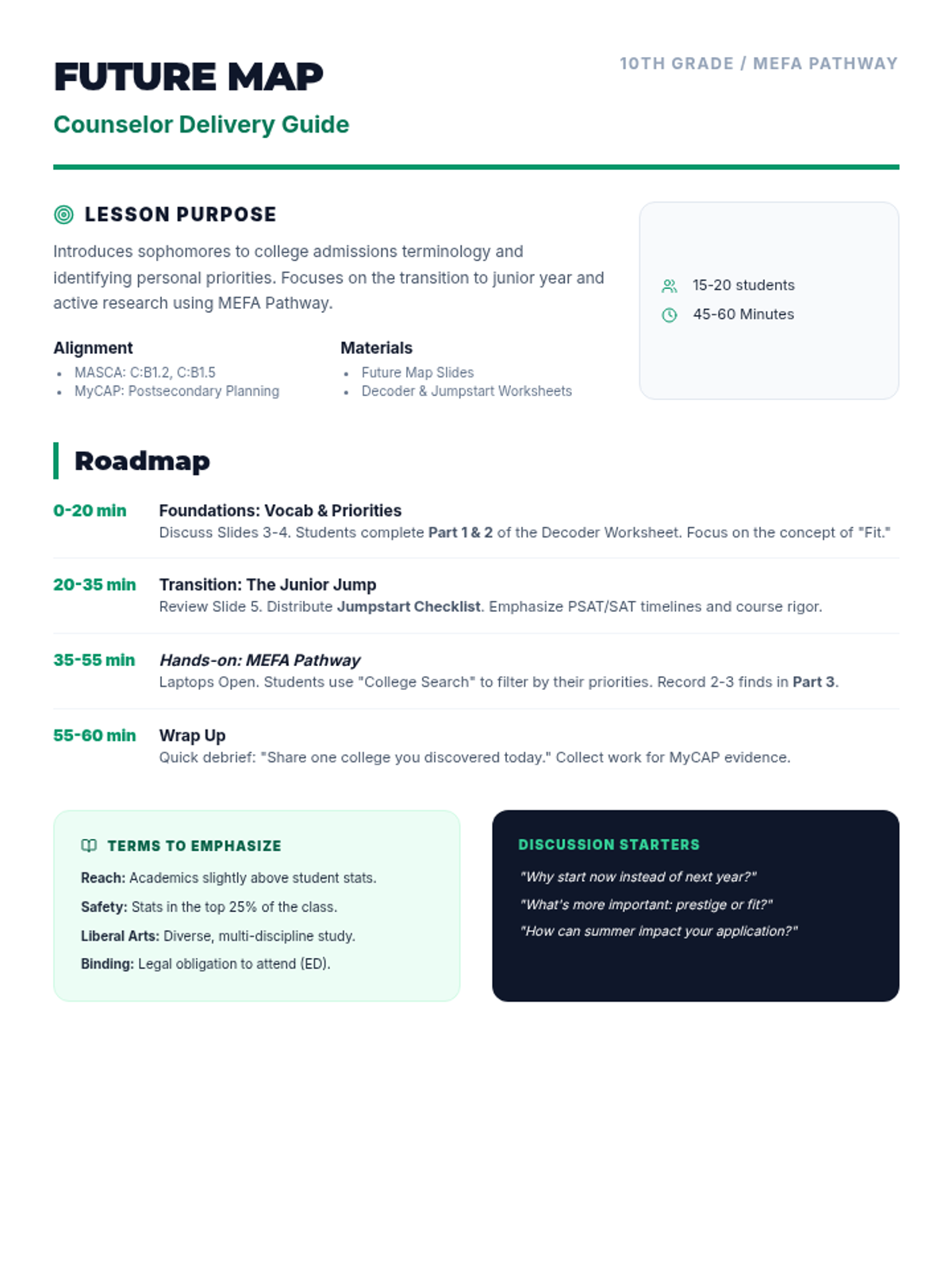
A facilitator guide for school counselors to deliver a college planning lesson to 10th-grade students, featuring pacing, standards alignment, and discussion prompts.