Graphic organizer for students to map out potential responses to body image disruptions using the Three Paths of Resilience model. Includes three specific hypothetical scenarios for analysis. Empty work areas provided for student handwriting.
A visually striking slide deck titled 'Iron Character' designed for a large-group SEL lesson, featuring interactive prompts, discussion frameworks, and structured activity instructions.
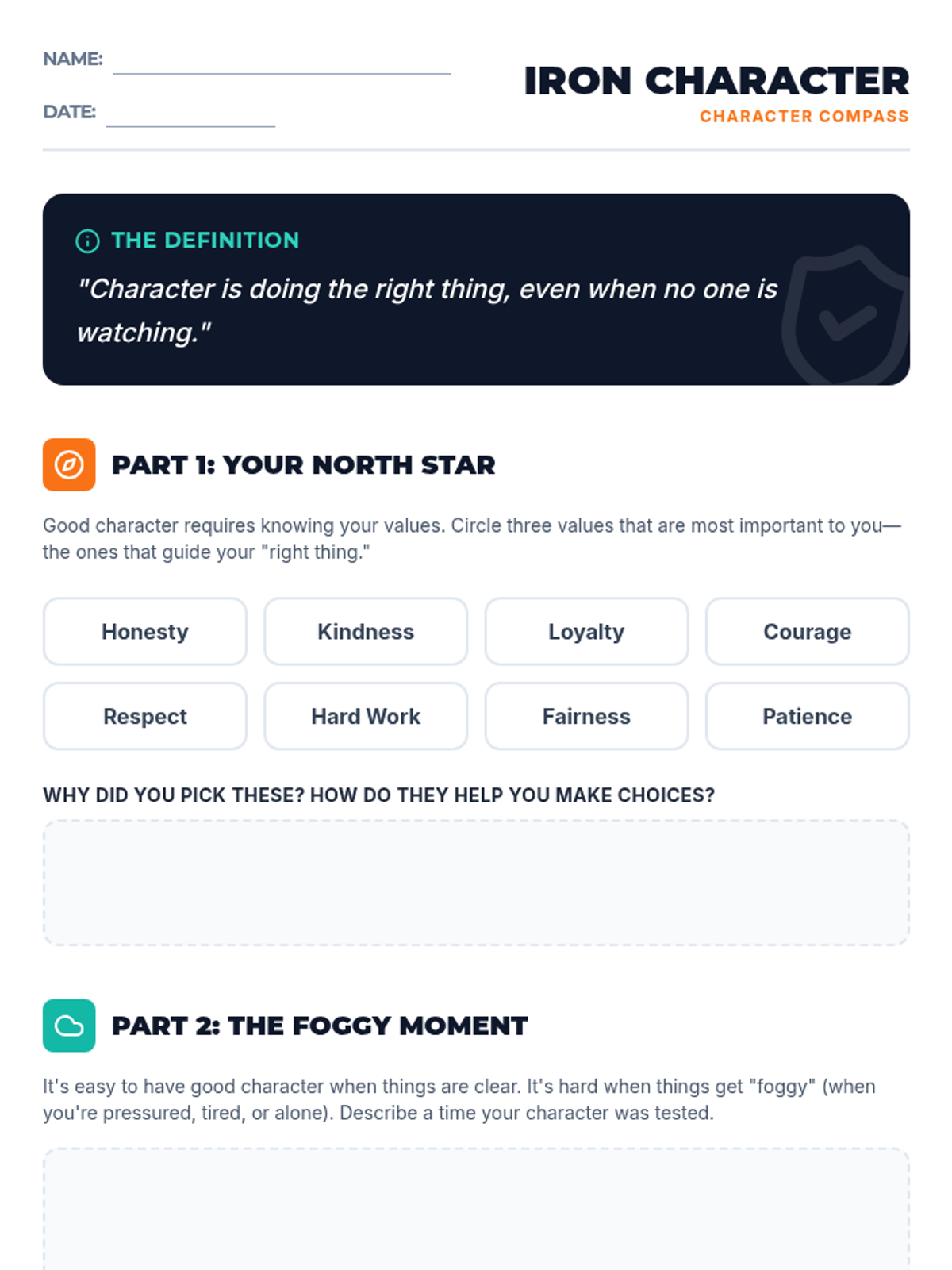
A reflective student handout titled 'Character Compass' that guides students through identifying their core values, reflecting on ethical challenges, and planning personal growth.
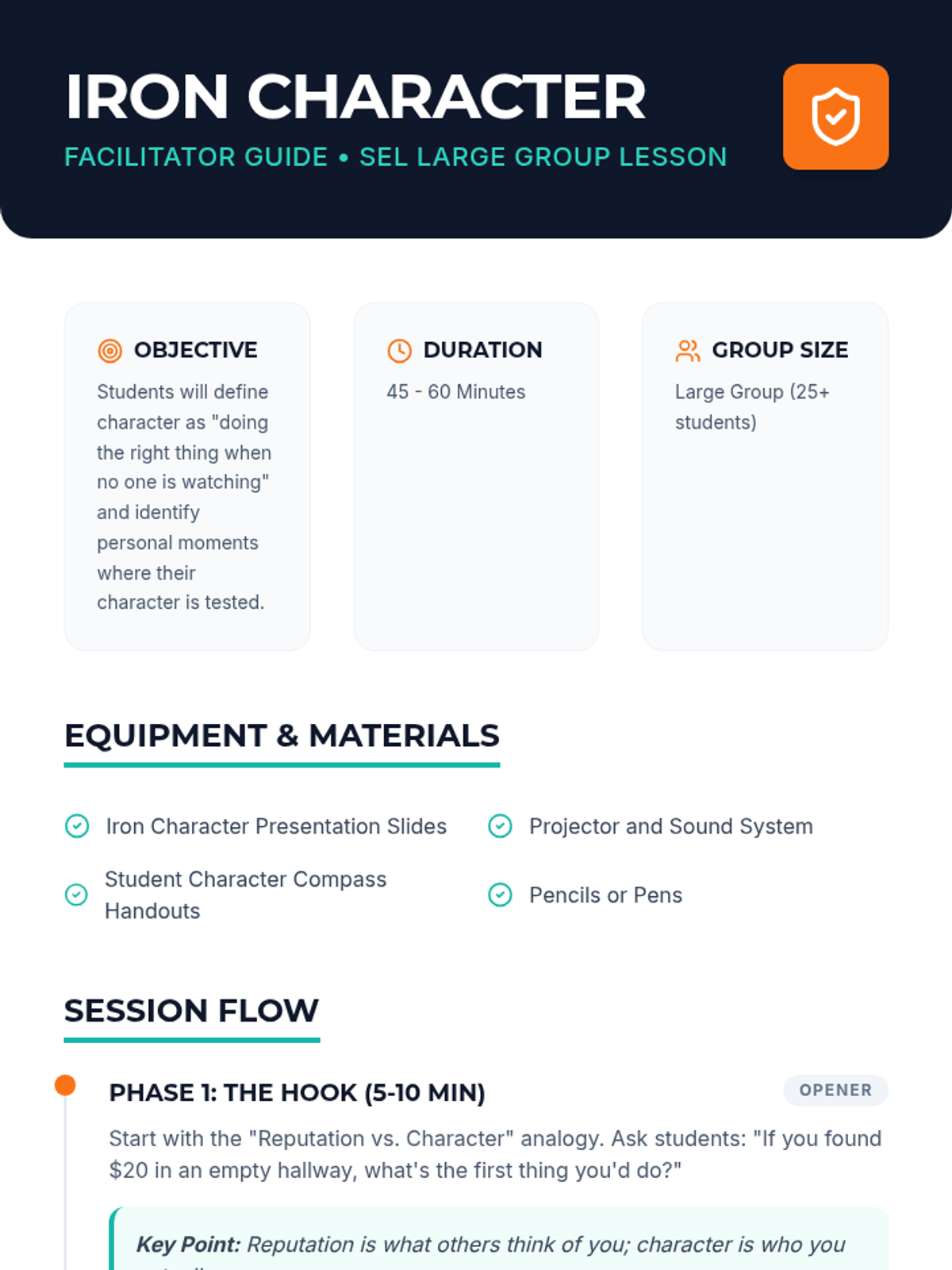
A comprehensive facilitator guide for a large-group SEL lesson on character, featuring session objectives, a minute-by-minute breakdown, and management tips for large groups.
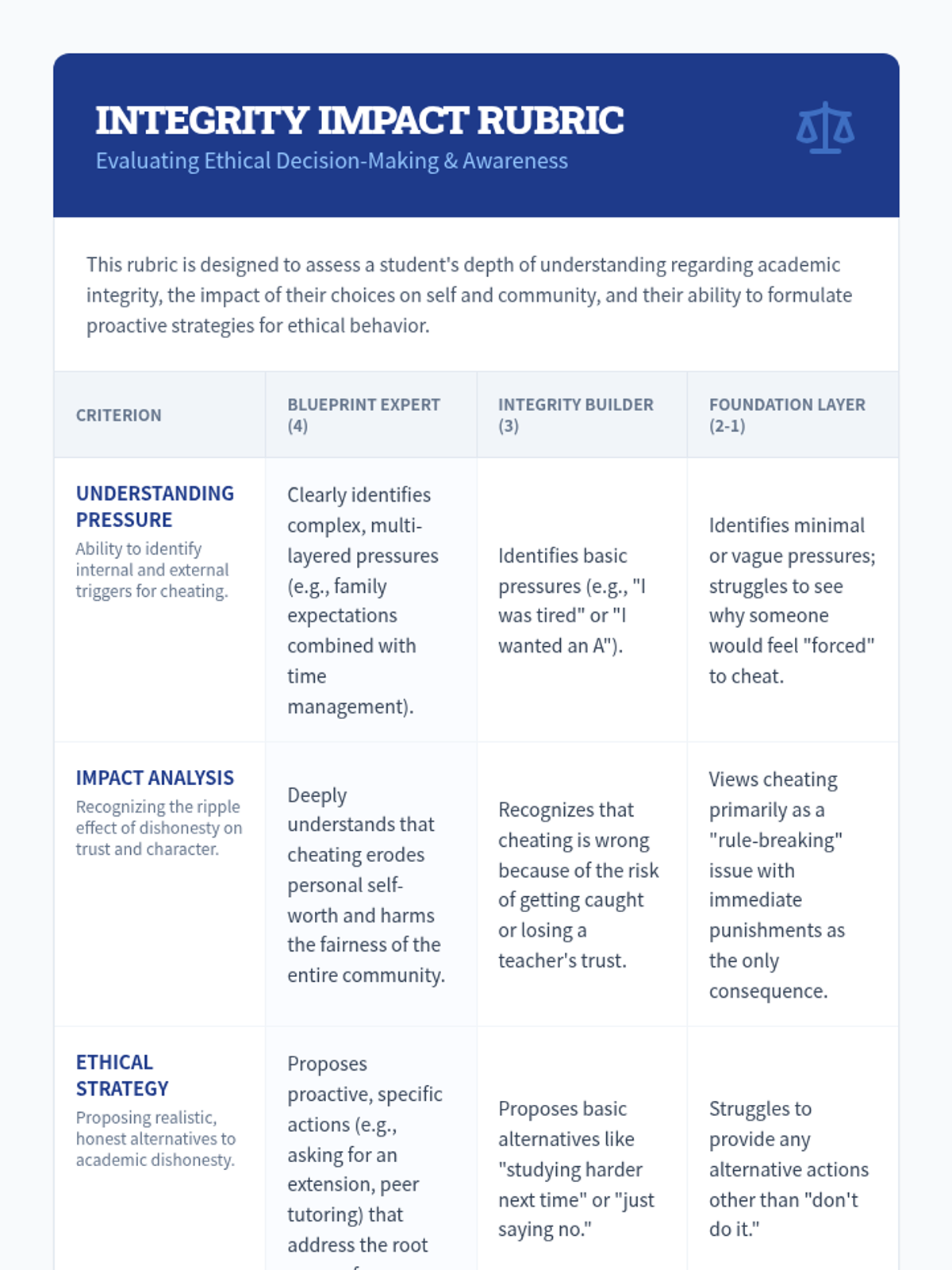
An assessment rubric for evaluating student understanding of academic integrity, focusing on four key criteria: understanding pressure, impact analysis, ethical strategy, and self-reflection.
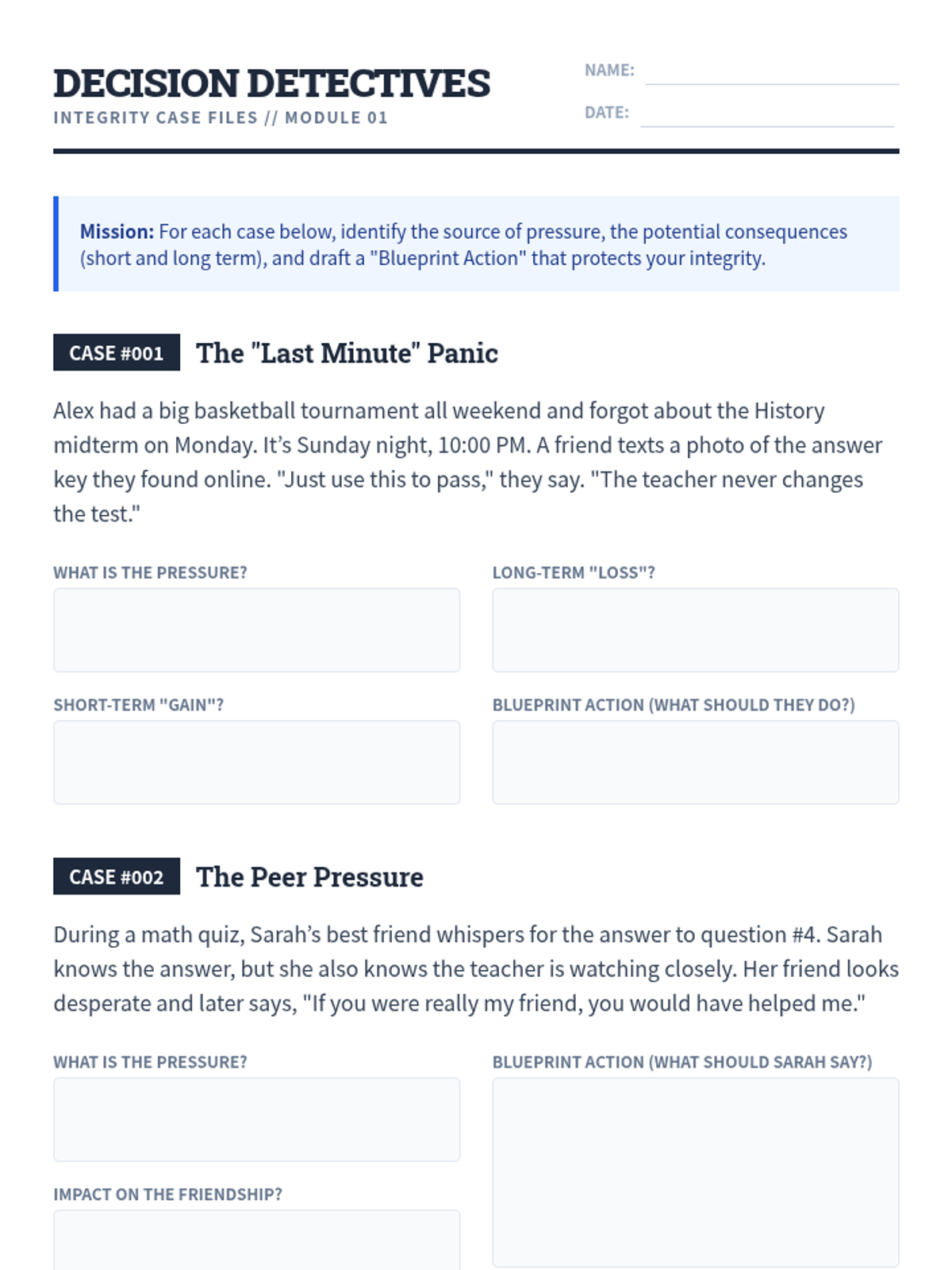
An interactive student activity featuring three realistic scenarios (Case Files) where students must analyze the pressures to cheat and develop ethical 'Blueprint Actions.' Includes a personal reflection section.
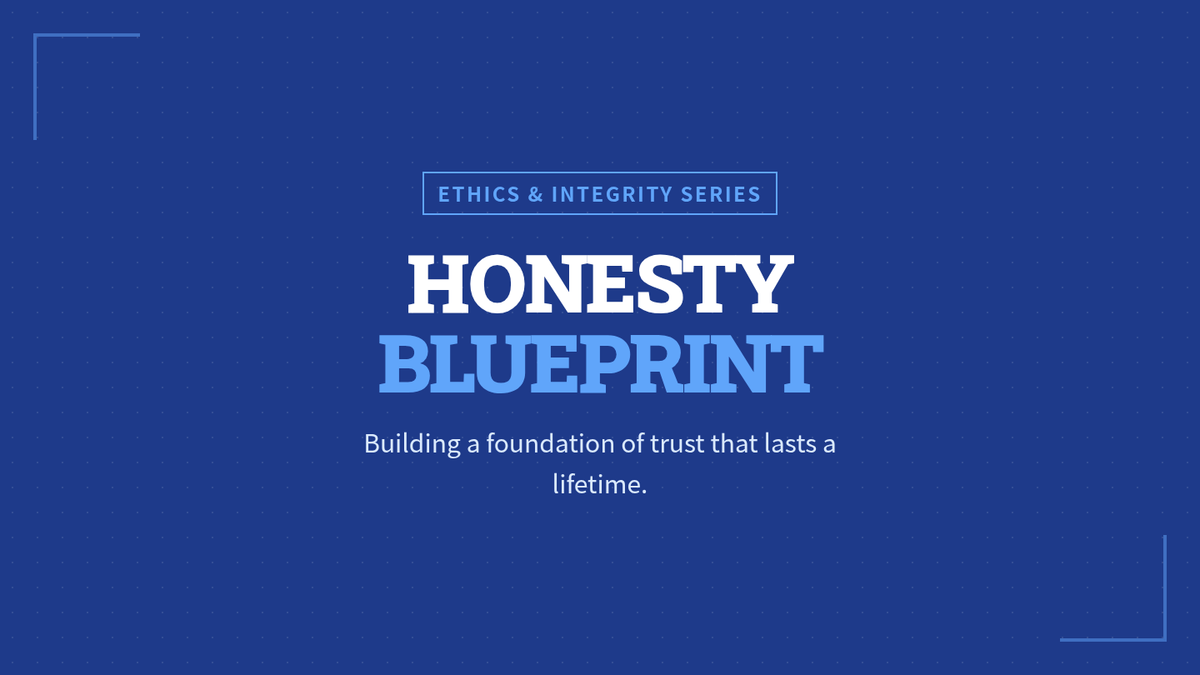
A visual presentation for the 'Honesty Blueprint' lesson, covering the definition of integrity, the 'Pressure Cooker' of why students cheat, and the long-term impact of dishonesty on trust and character.
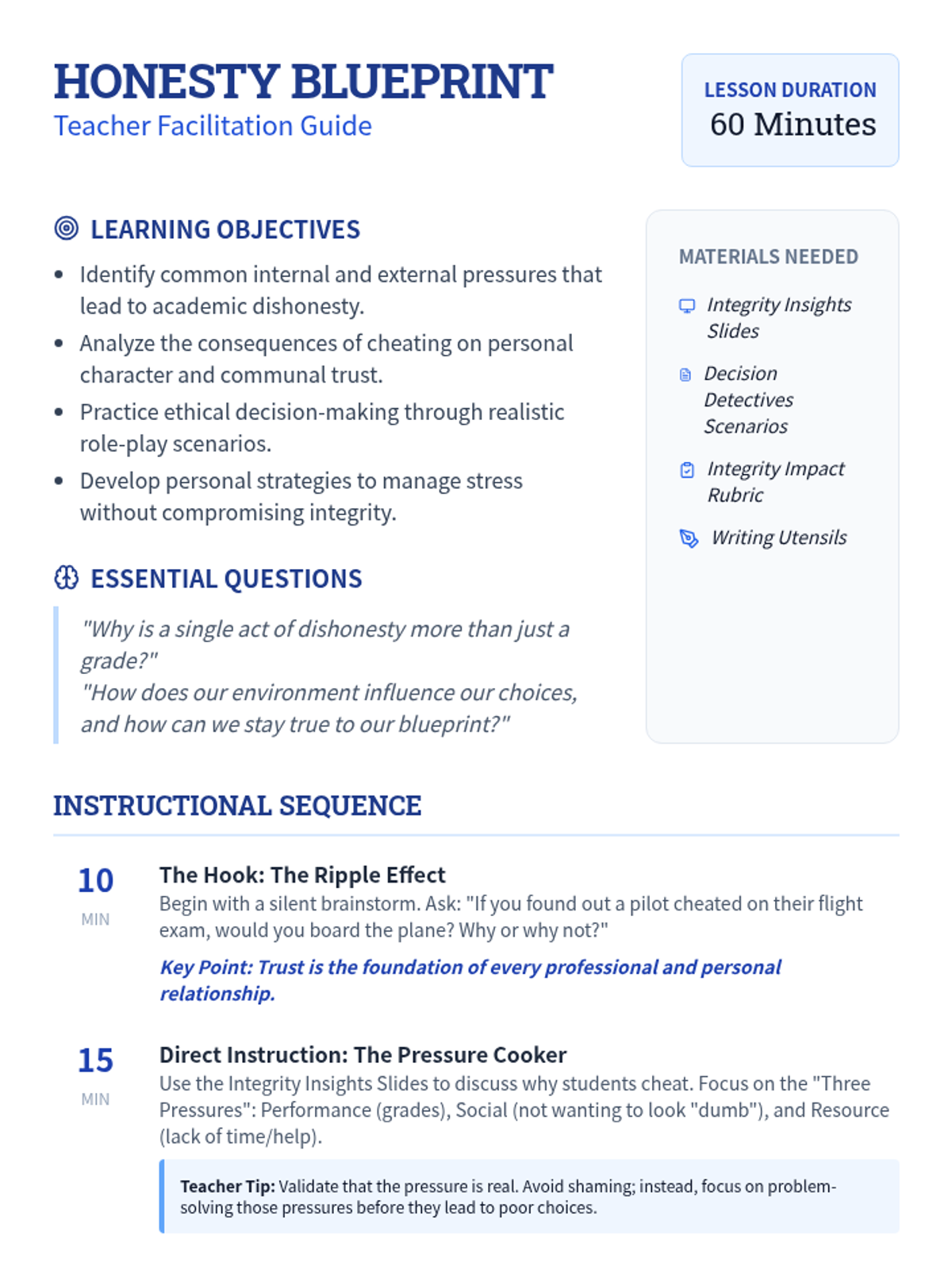
A comprehensive teacher facilitation guide for the 'Honesty Blueprint' lesson, featuring learning objectives, a minute-by-minute instructional sequence, and pedagogical insights into why students cheat.
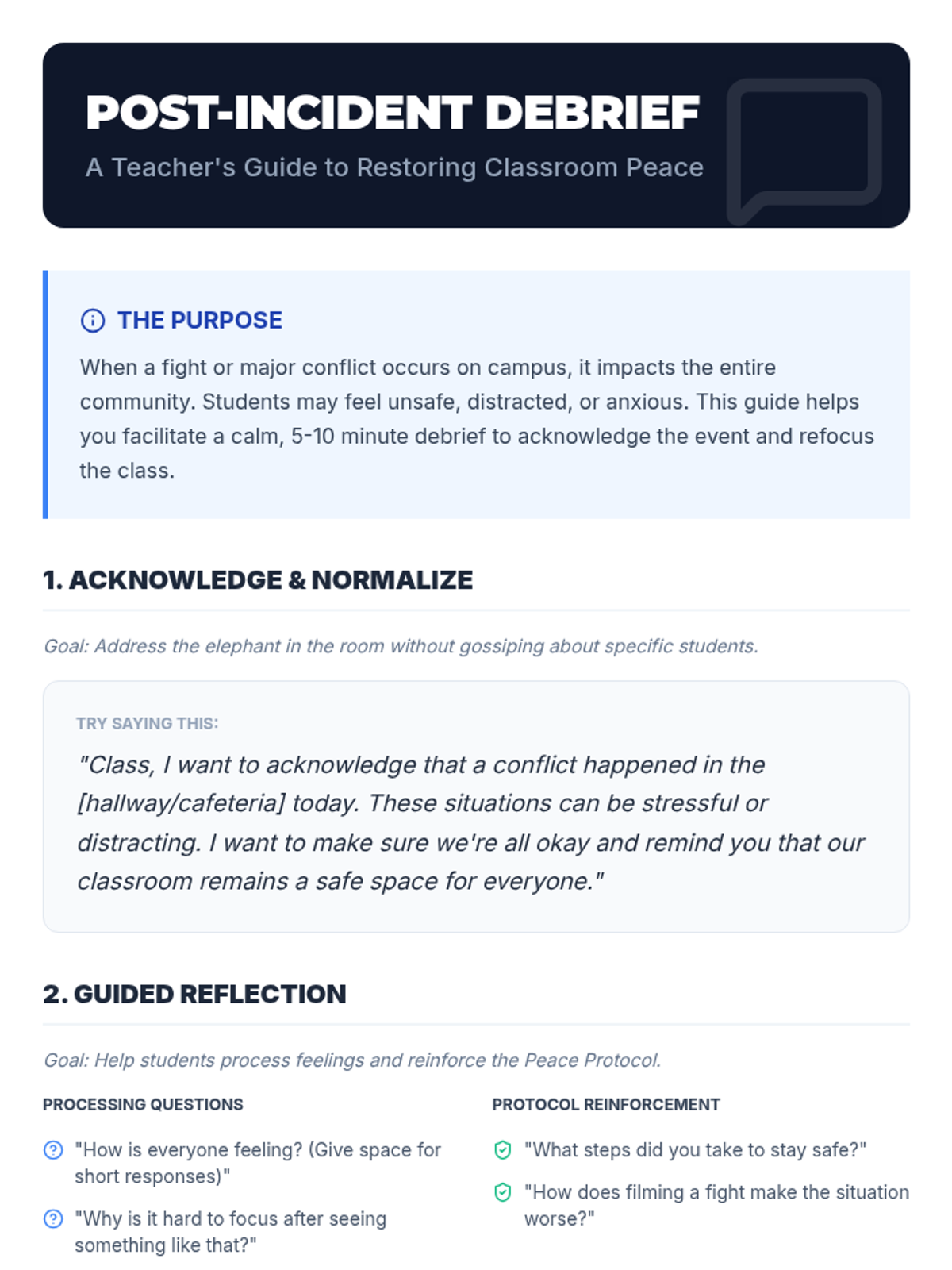
A professional guide for teachers on how to facilitate classroom discussions and debriefs following a school incident, focusing on de-escalation and restoring a sense of safety.
A visual presentation for students and staff outlining the Peace Protocol, emphasizing roles during an incident and the restorative process afterward.
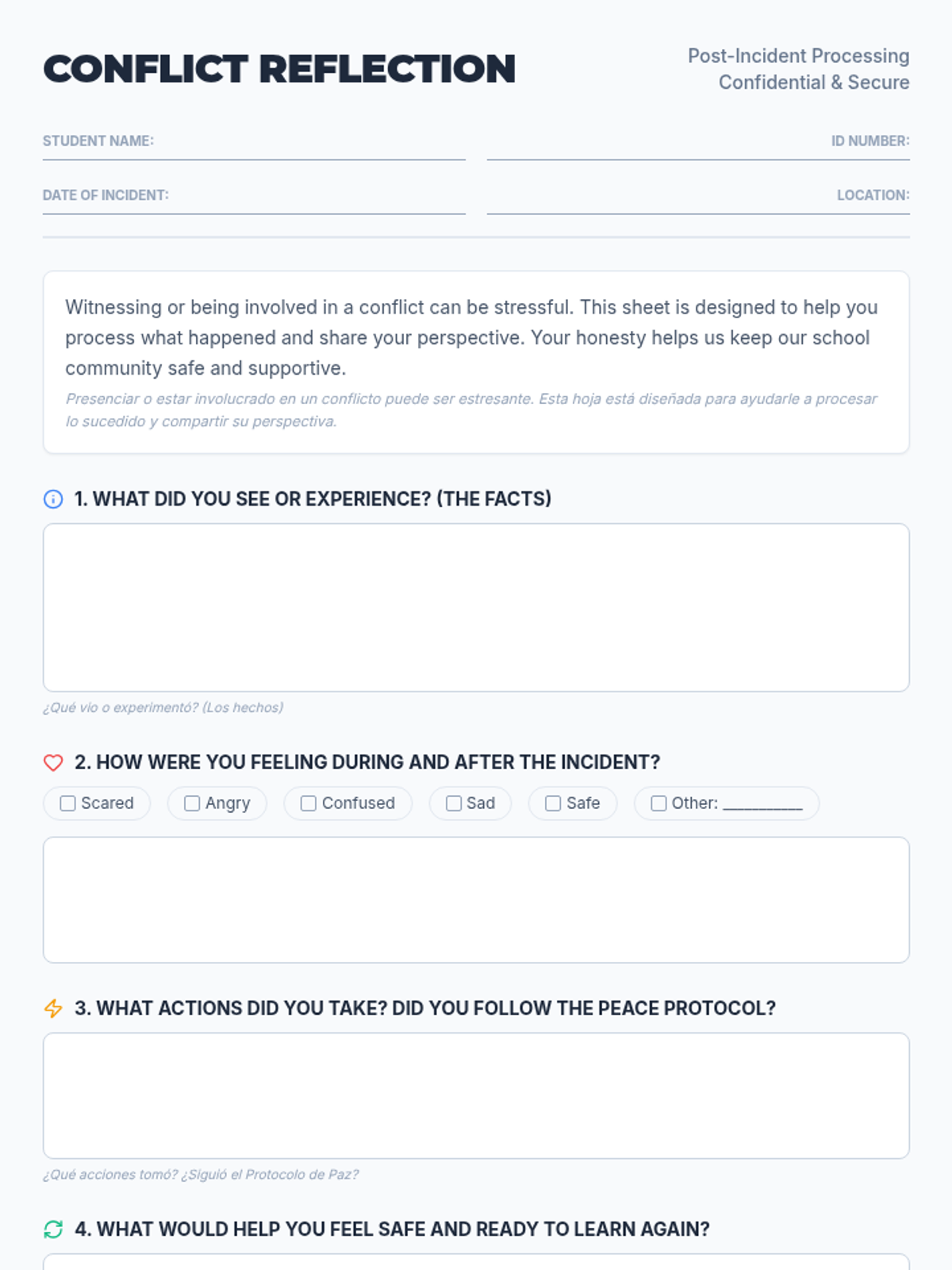
A student-facing reflection sheet to be completed after witnessing or being involved in a conflict, designed to process emotions and gather factual accounts.
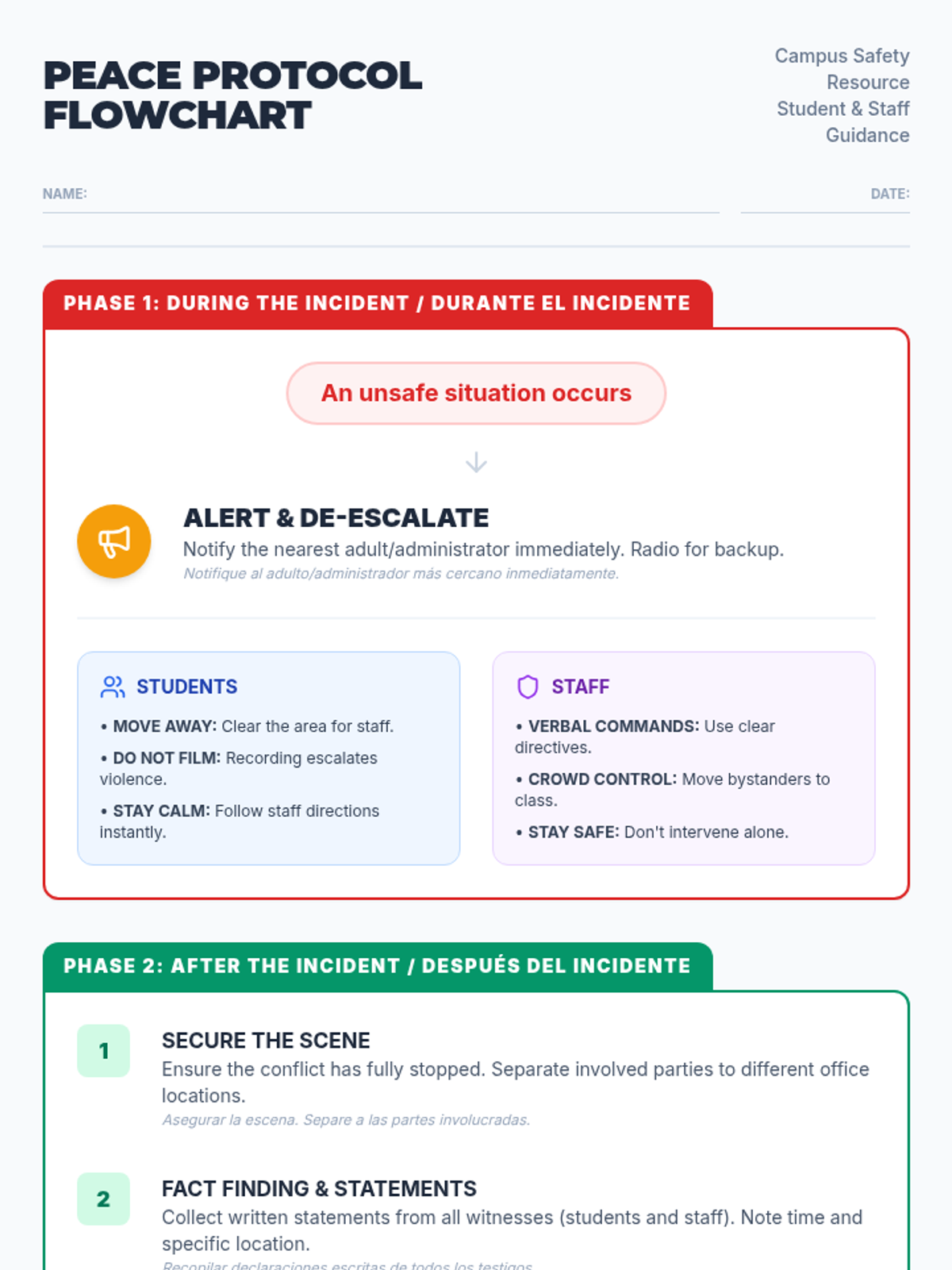
A comprehensive flowchart outlining the necessary steps for students and staff to take during and after a school conflict, featuring multilingual support and clear visual cues.
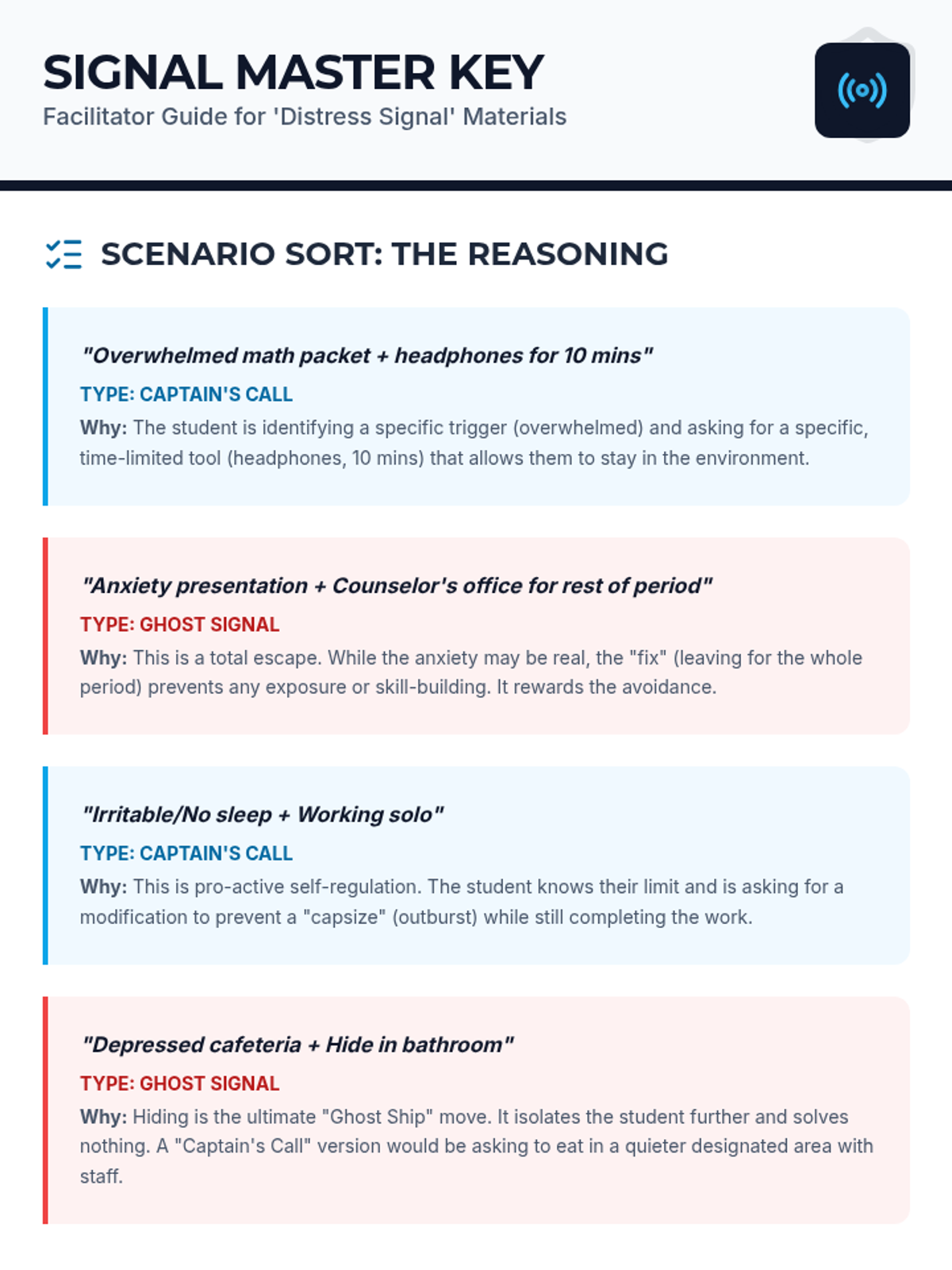
A facilitator's guide for the Distress Signal materials. Includes scenario answers, scripts for responding to avoidance (Ghost Signals), and discussion points for reinforcing self-advocacy (Captain's Calls).
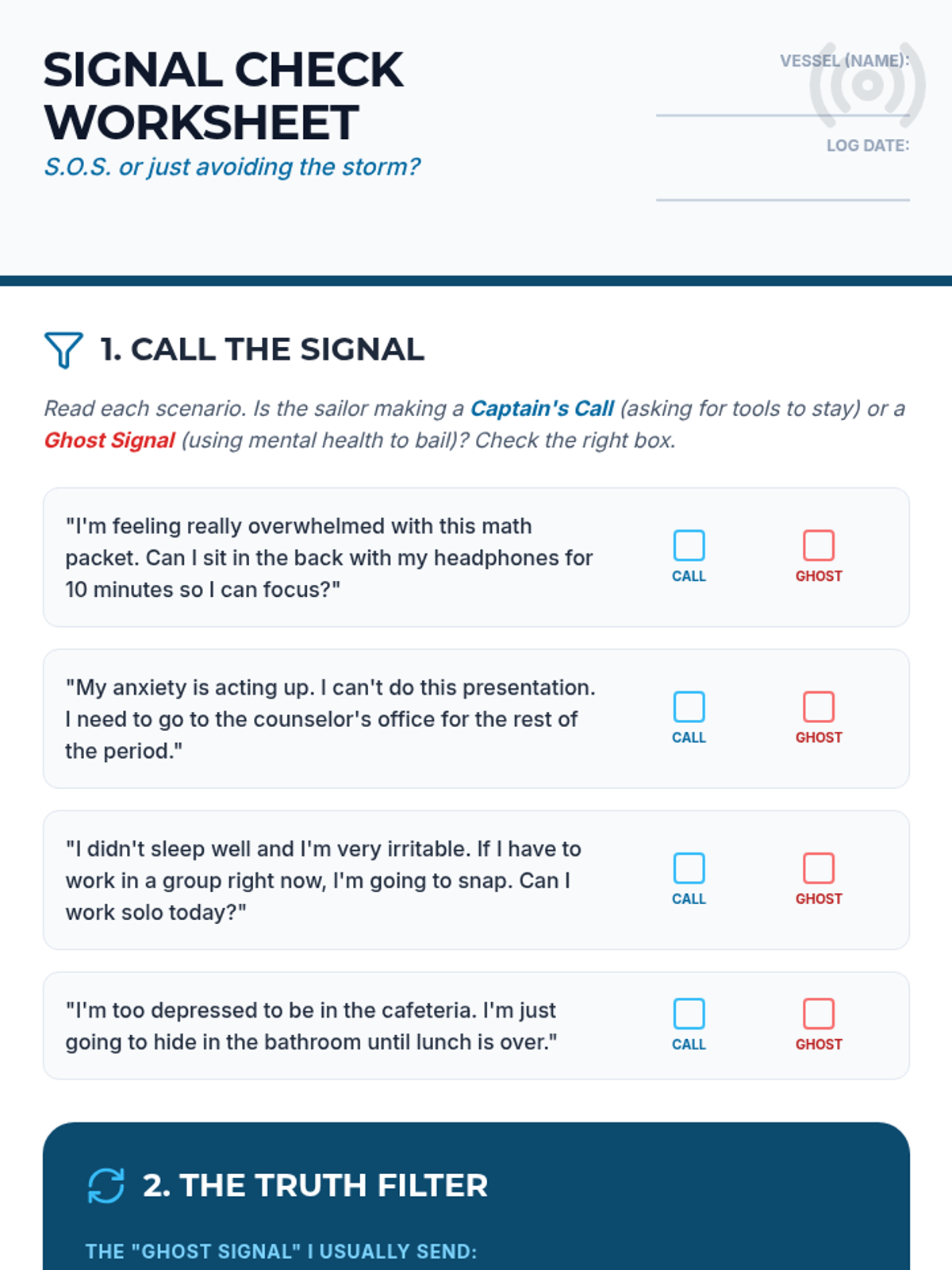
A student worksheet for distinguishing between using mental health as an excuse (Ghost Signal) and legitimate self-advocacy (Captain's Call). Includes scenario sorting and a reflection on 'cheap prizes' vs. long-term costs.
A witty, high-impact slide deck for therapeutic sessions. It teaches students to distinguish between 'The Ghost Signal' (using mental health as a cop-out for work avoidance) and 'The Captain's Call' (legitimately asking for tools and support to stay engaged).