A 'Course Correction' exit ticket designed for student reflection at the end of the Navigator lesson. It includes space for a specific system commitment and a confidence self-assessment.
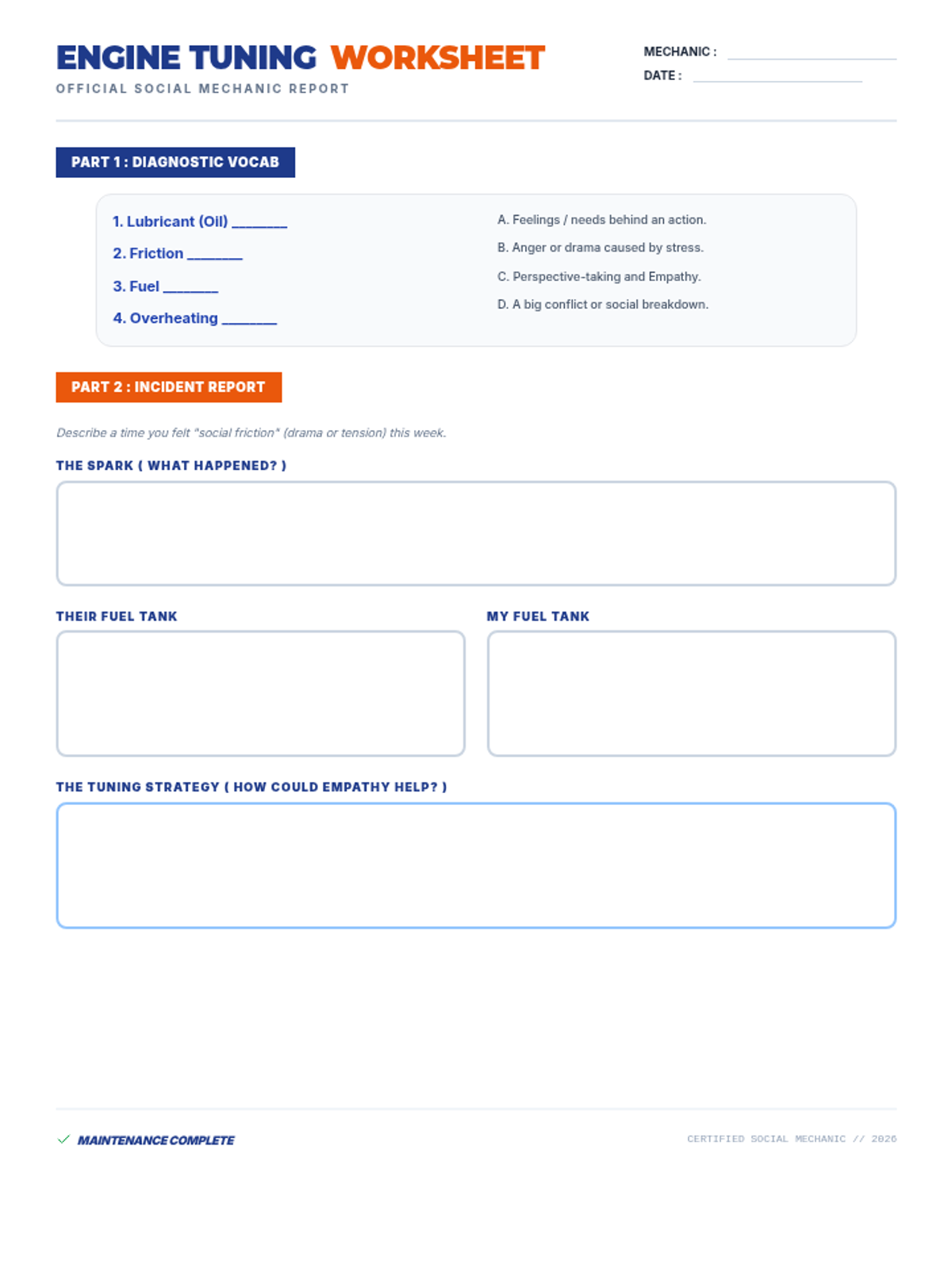
A student worksheet for individual reflection and application of the 'Empathy Engine' metaphor, featuring vocabulary matching and a personal incident report to practice perspective-taking.
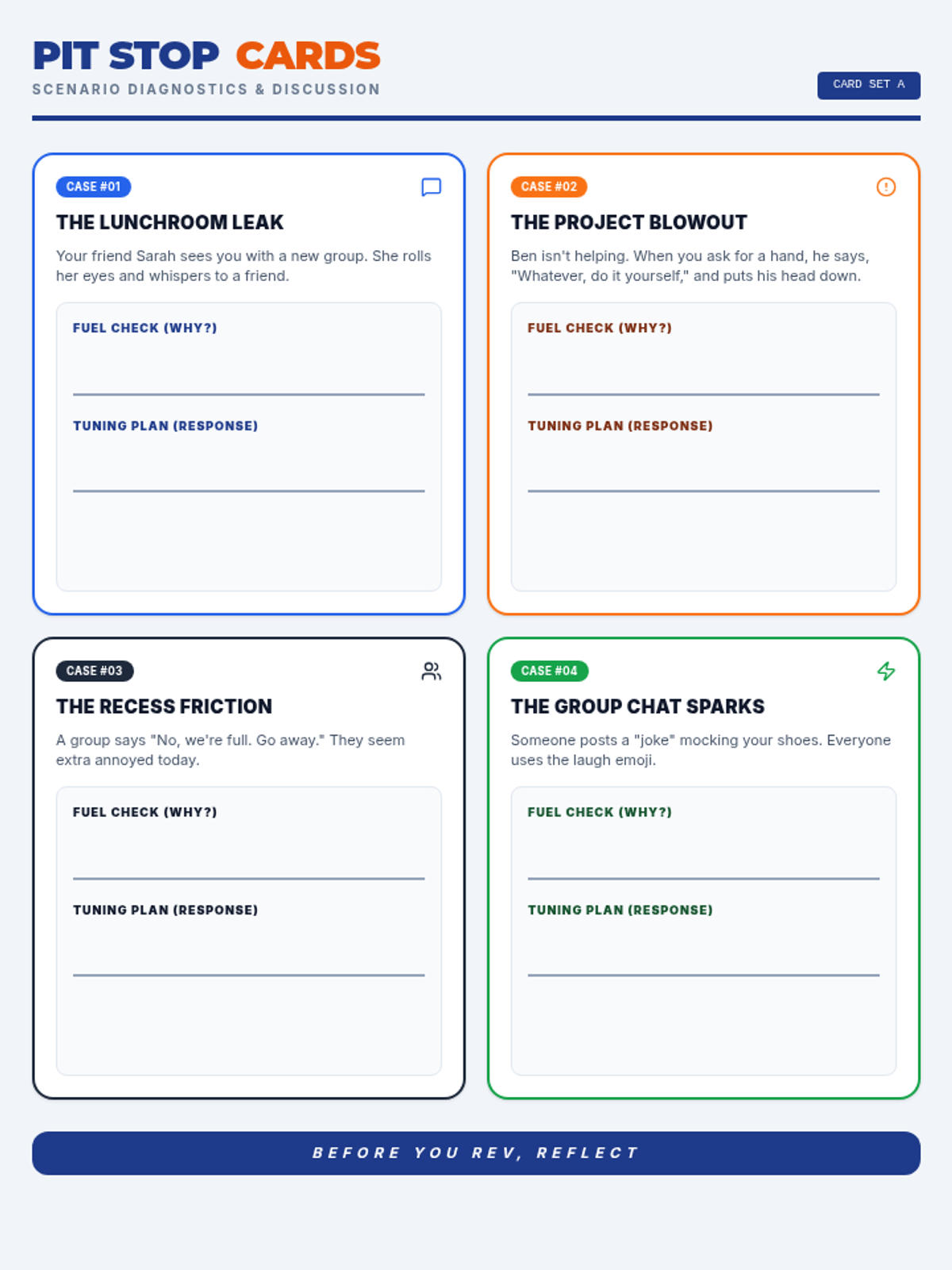
A set of four scenario cards designed for group discussion, prompting students to diagnose social friction in common peer conflicts and propose empathetic solutions.
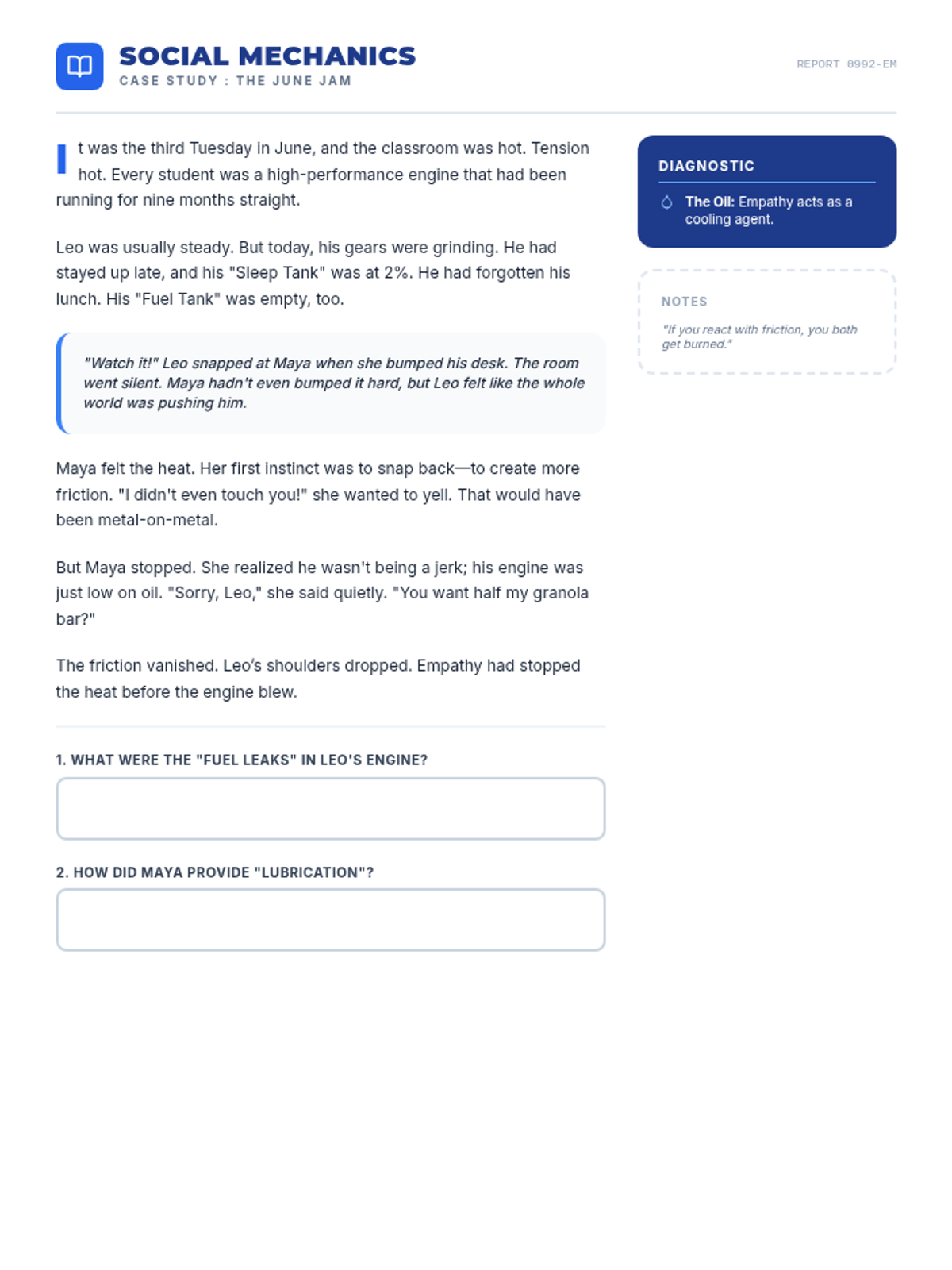
A student-facing reading passage titled 'Social Mechanics' that uses a narrative scenario to illustrate the concept of social friction and how empathy can de-escalate peer conflict.
A visual slide deck that introduces the 'Empathy Engine' metaphor, explaining social friction, the role of empathy as lubrication, and providing a diagnostic checklist for students to analyze peer behavior.
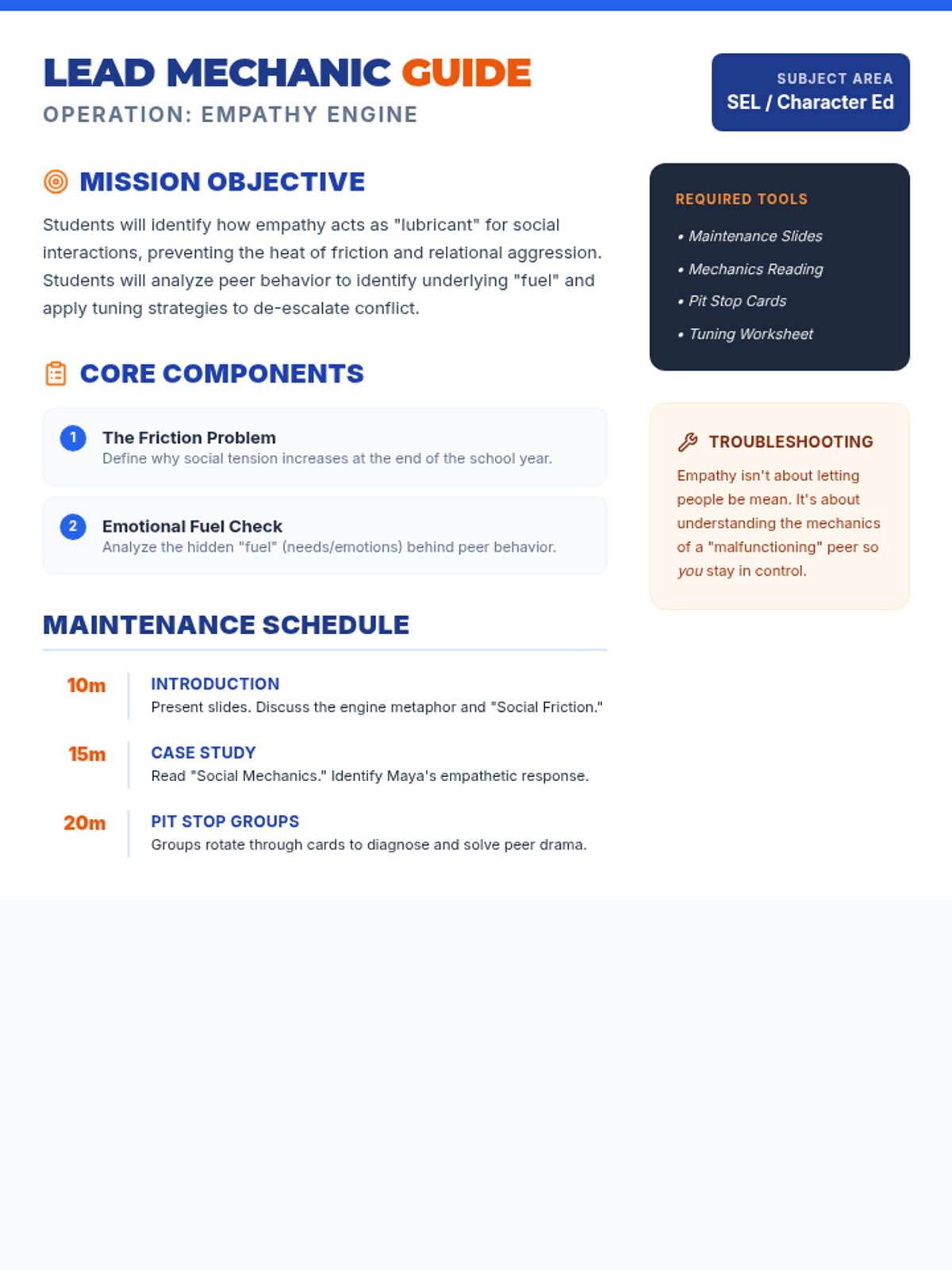
A comprehensive teacher guide for the Empathy Engine lesson, outlining learning objectives, terminology using the mechanical metaphor, and a step-by-step instructional procedure to address end-of-year social friction.
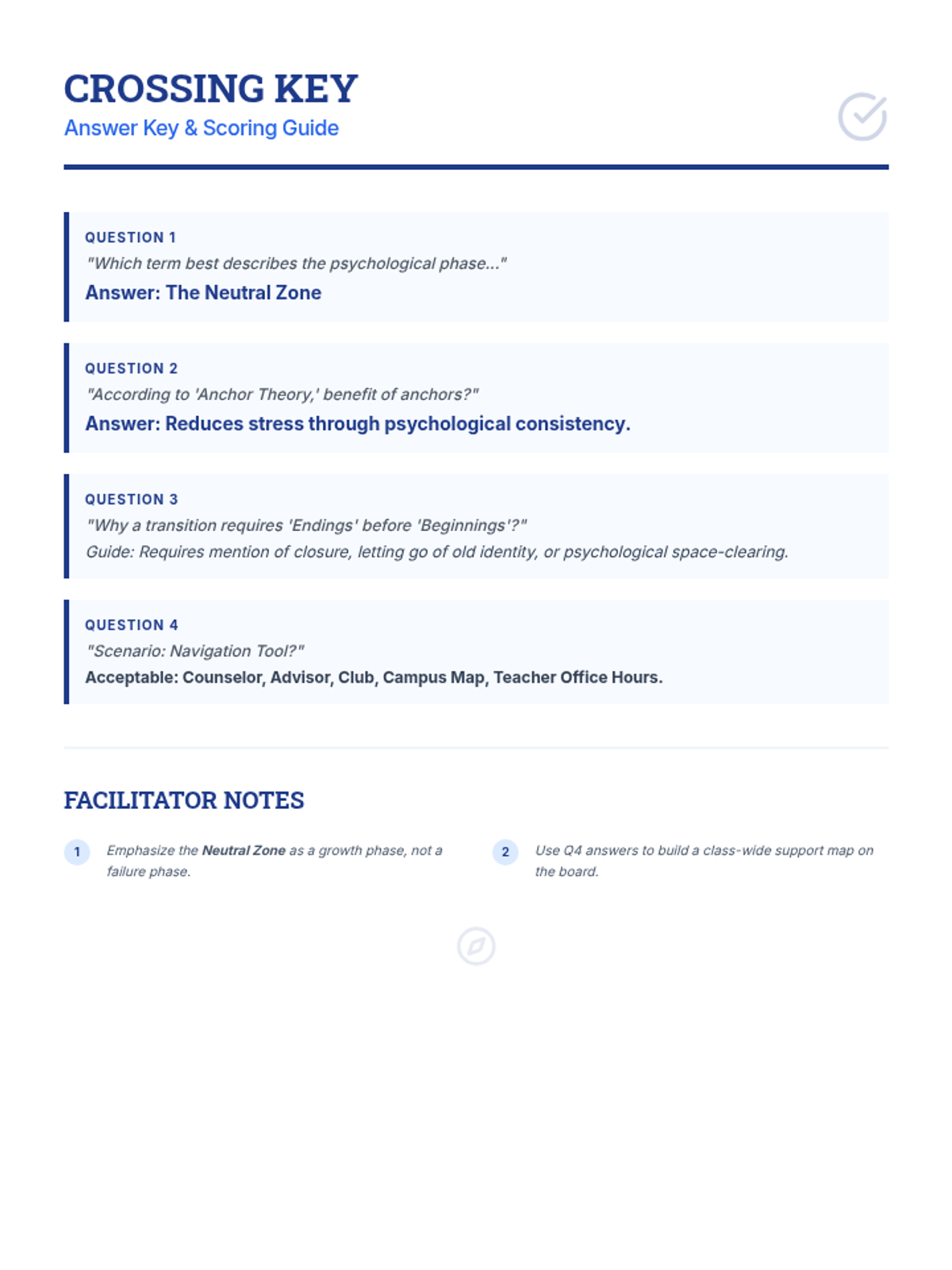
An answer key and facilitator guide for the Final Crossing quiz, including rationales for correct answers and sample open-ended responses.
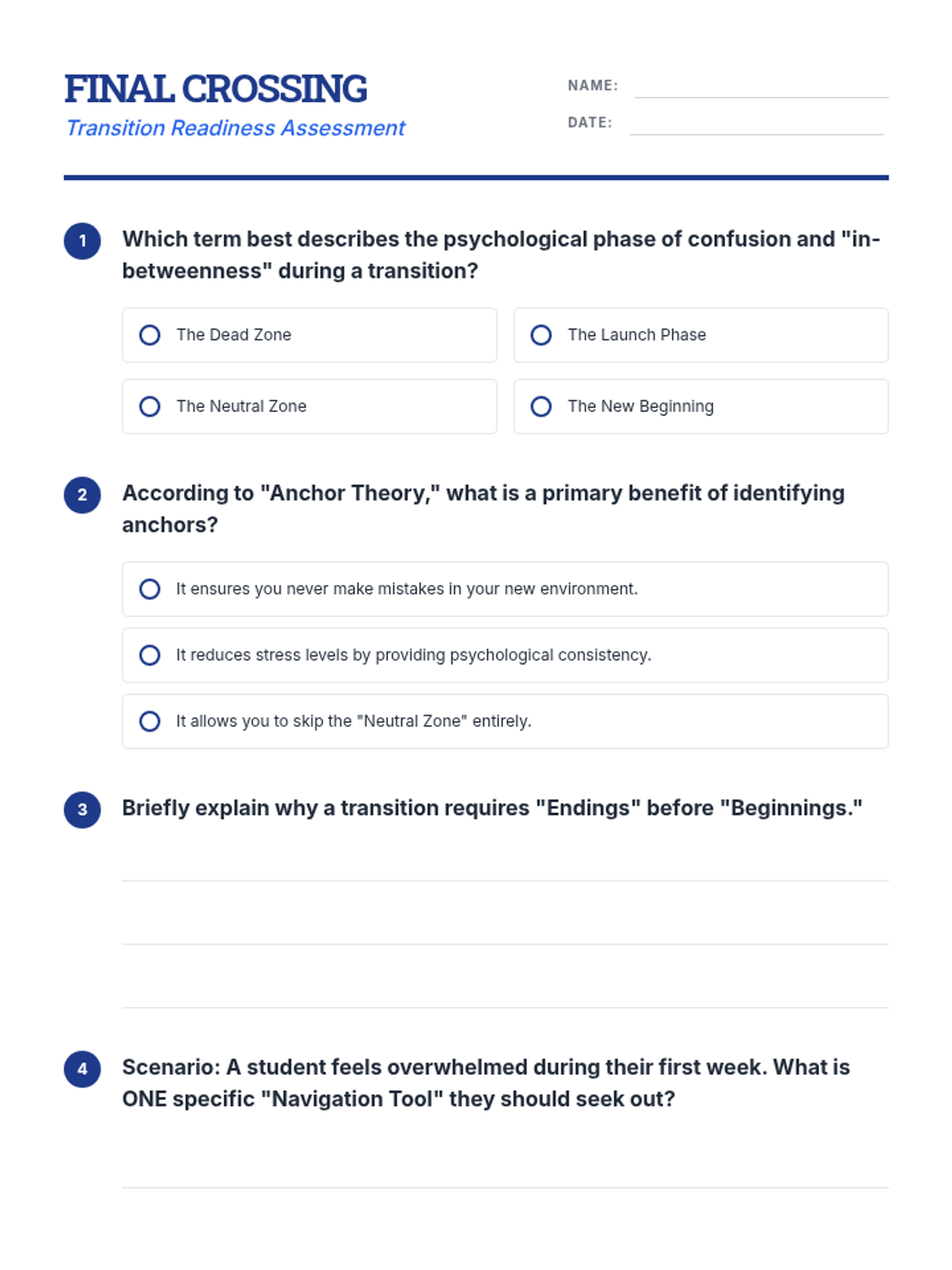
A summative assessment for students to verify their understanding of transition psychology, including the 'Neutral Zone' and the importance of anchors.
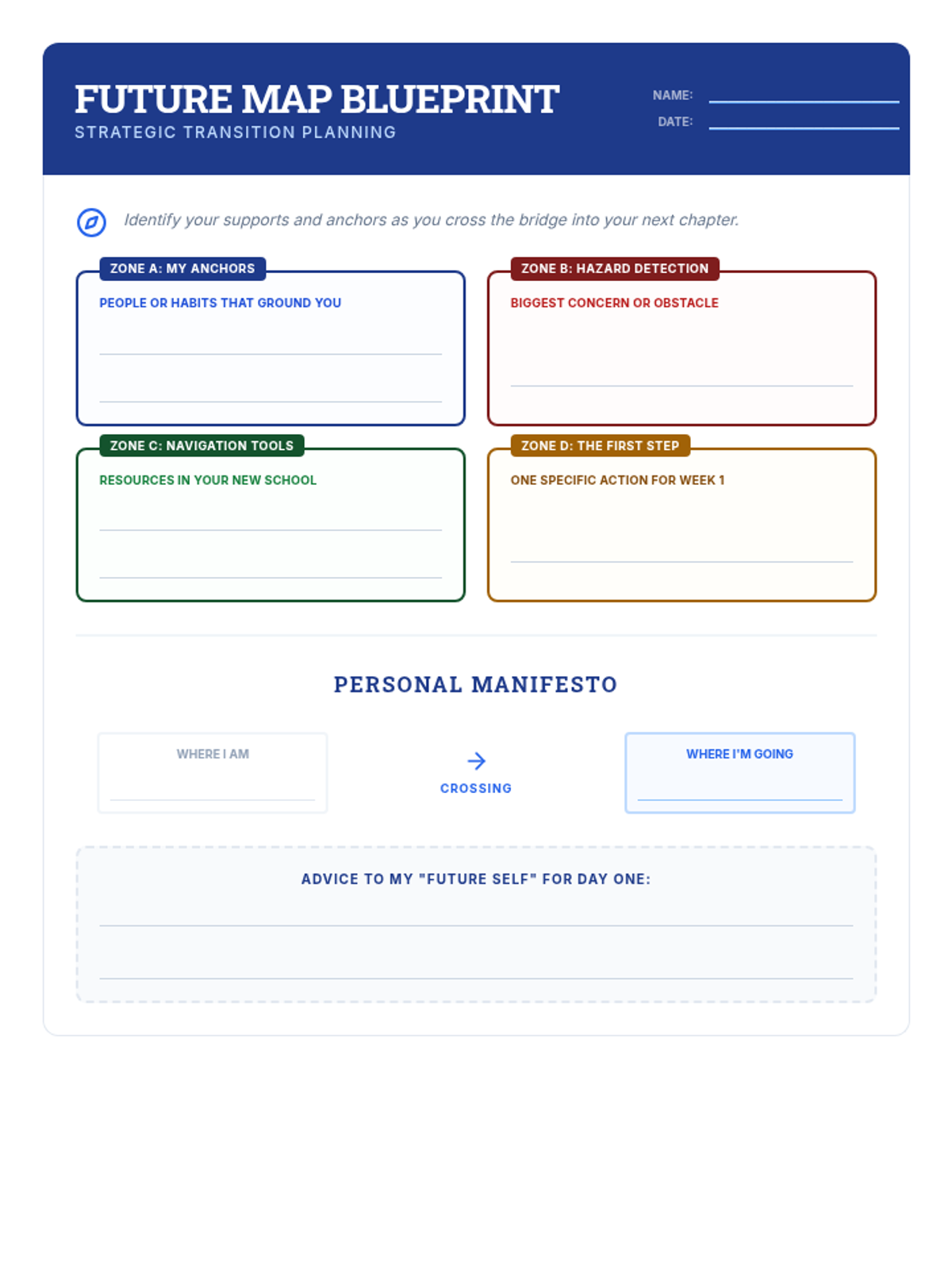
A structured 'Future Map' worksheet where students identify their personal anchors, detect potential hazards, list new resources, and write a manifesto for their academic transition.
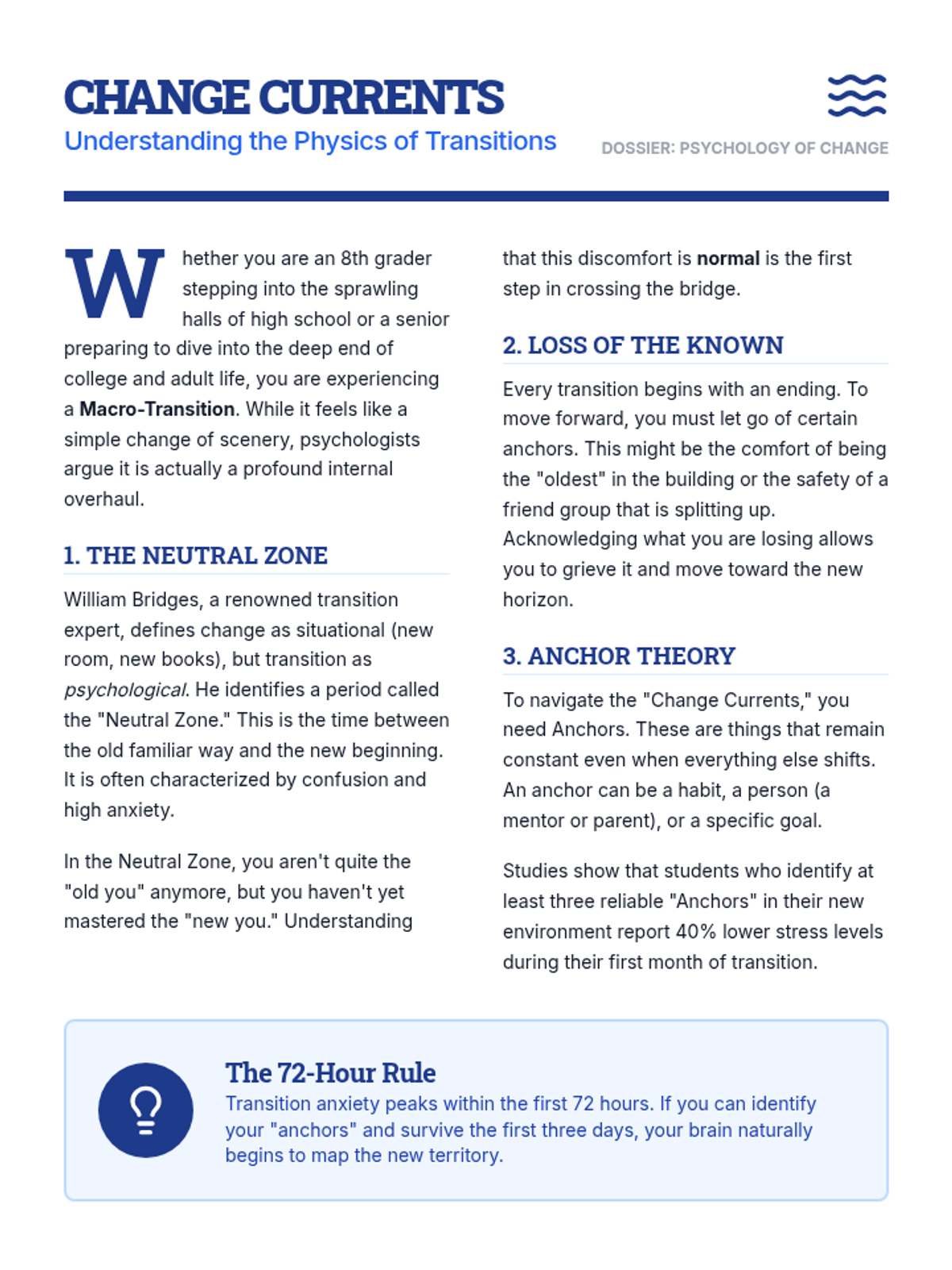
An informational text for students explaining the psychology of transitions, including the 'Neutral Zone' and 'Anchor Theory', followed by comprehension and reflection questions.
A visual presentation to guide students through the emotional and practical phases of academic transitions, featuring the 'Change Cycle' diagram and prompts for identifying personal anchors.
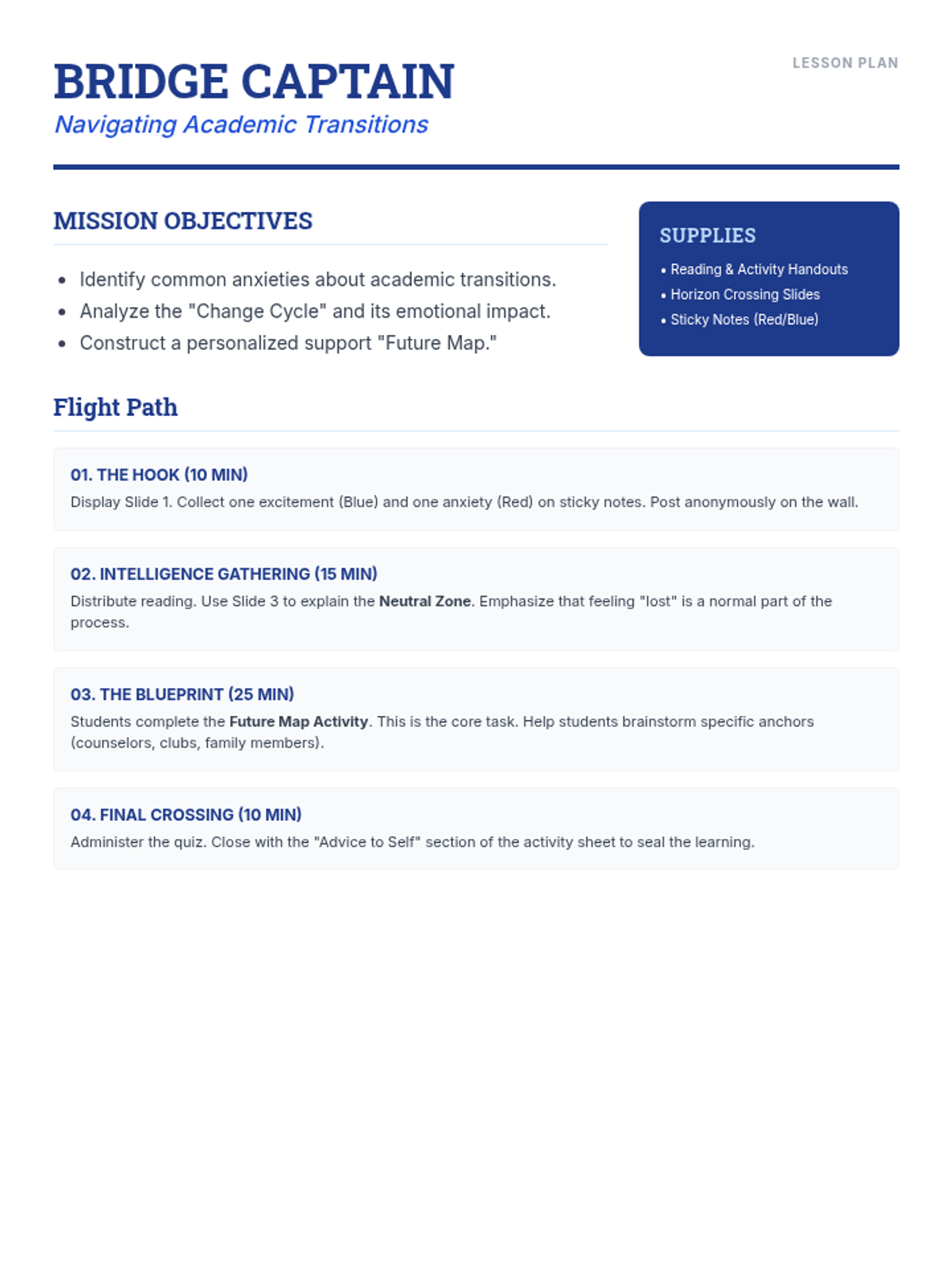
A facilitator guide for teachers to lead students through academic transitions, featuring a step-by-step flight path, supply lists, and grade-specific differentiation strategies for 8th and 12th graders.
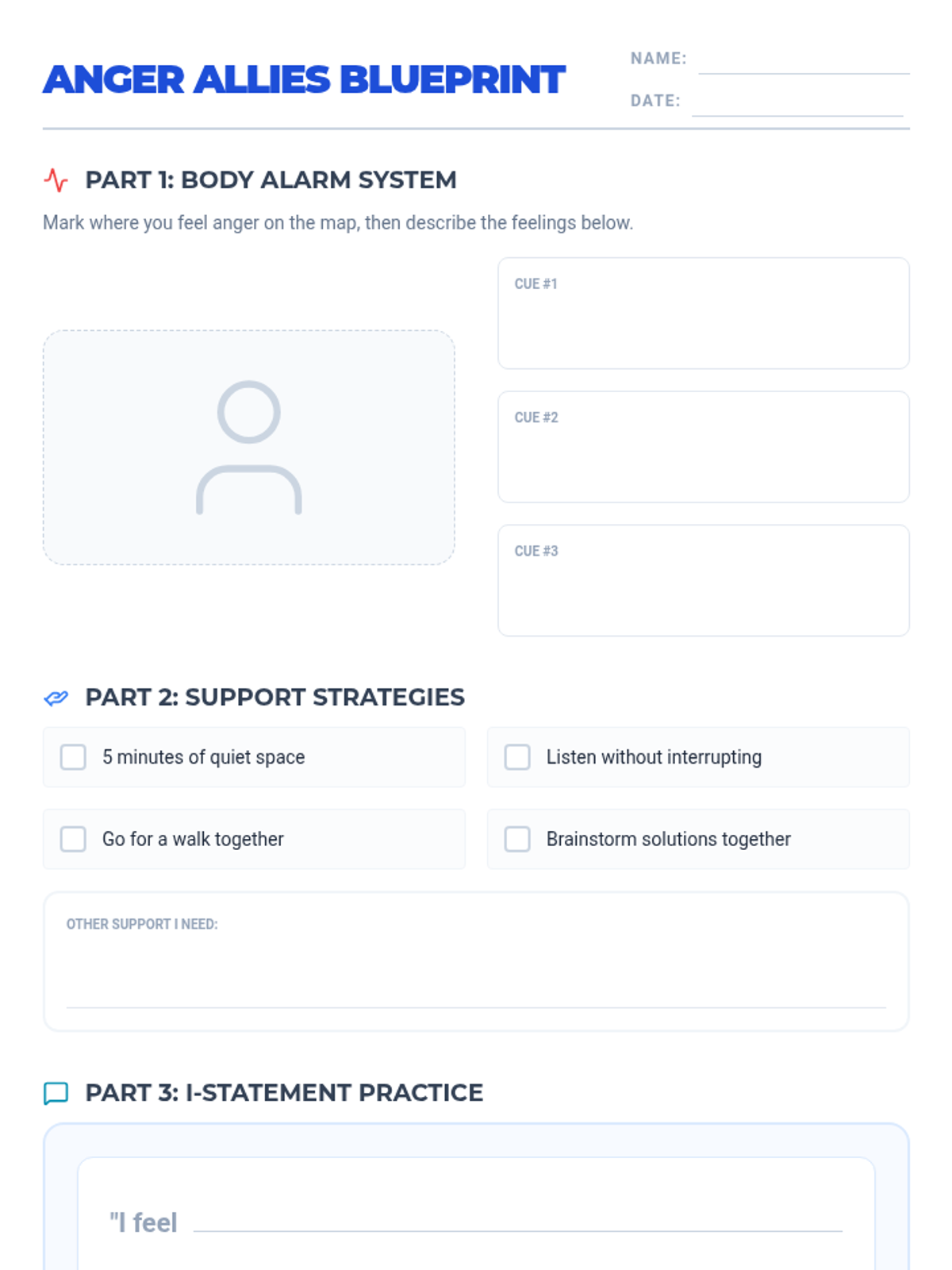
A student worksheet for identifying personal anger cues, selecting parent support strategies, and practicing I-statements. Revised to fit on a single page with improved layout and icons.
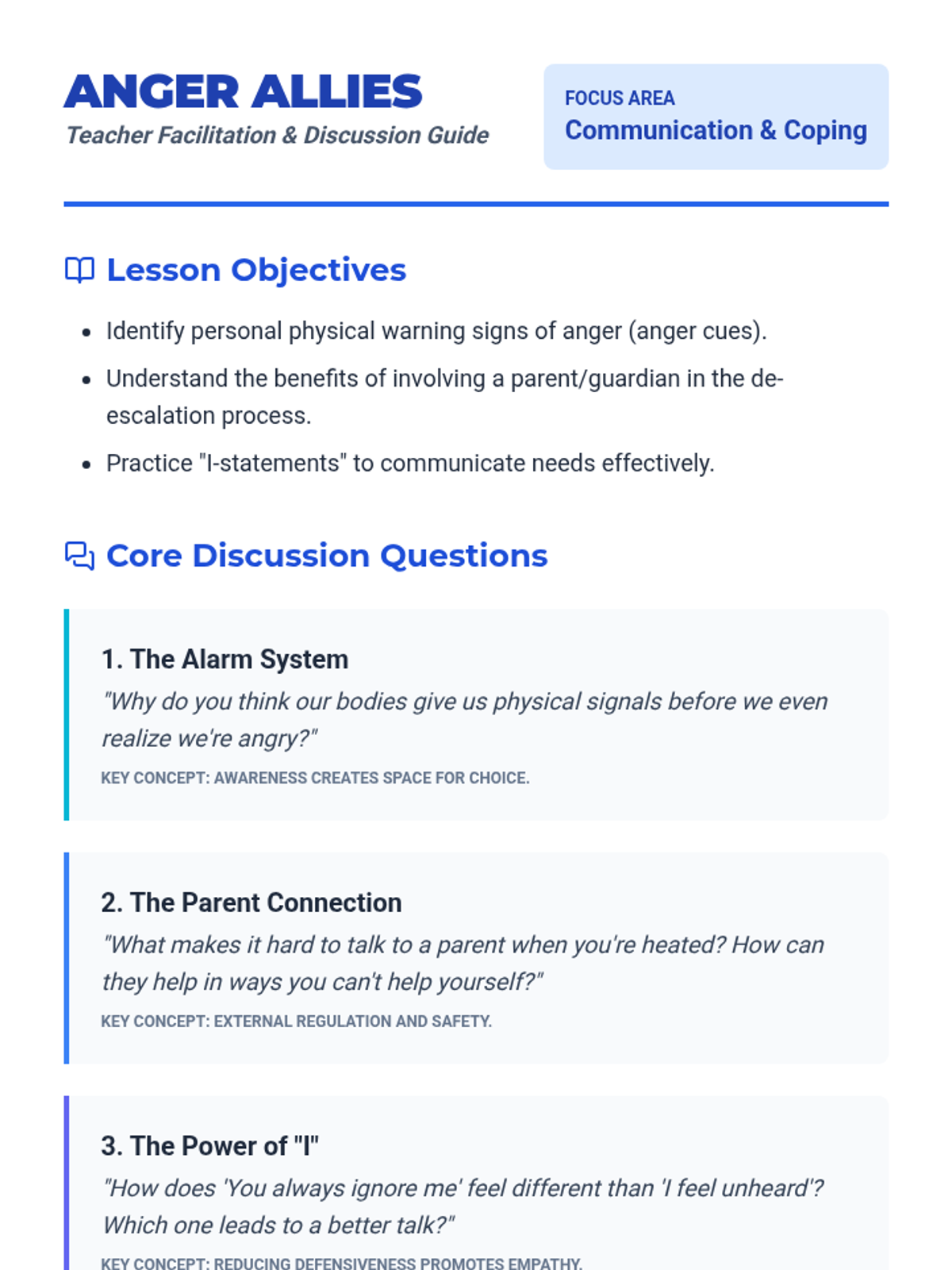
A comprehensive teacher guide with core discussion questions, roleplay scenarios, and facilitation tips for the Anger Allies lesson. Revised to fix layout, page breaks, and improve note-taking area legibility.
A vibrant slide deck for teaching students how to identify physical anger cues and communicate their needs to parents using I-statements.
A slide deck focusing on interview attire, distinguishing between business casual and professional dress, with grooming tips and scenario-based examples.
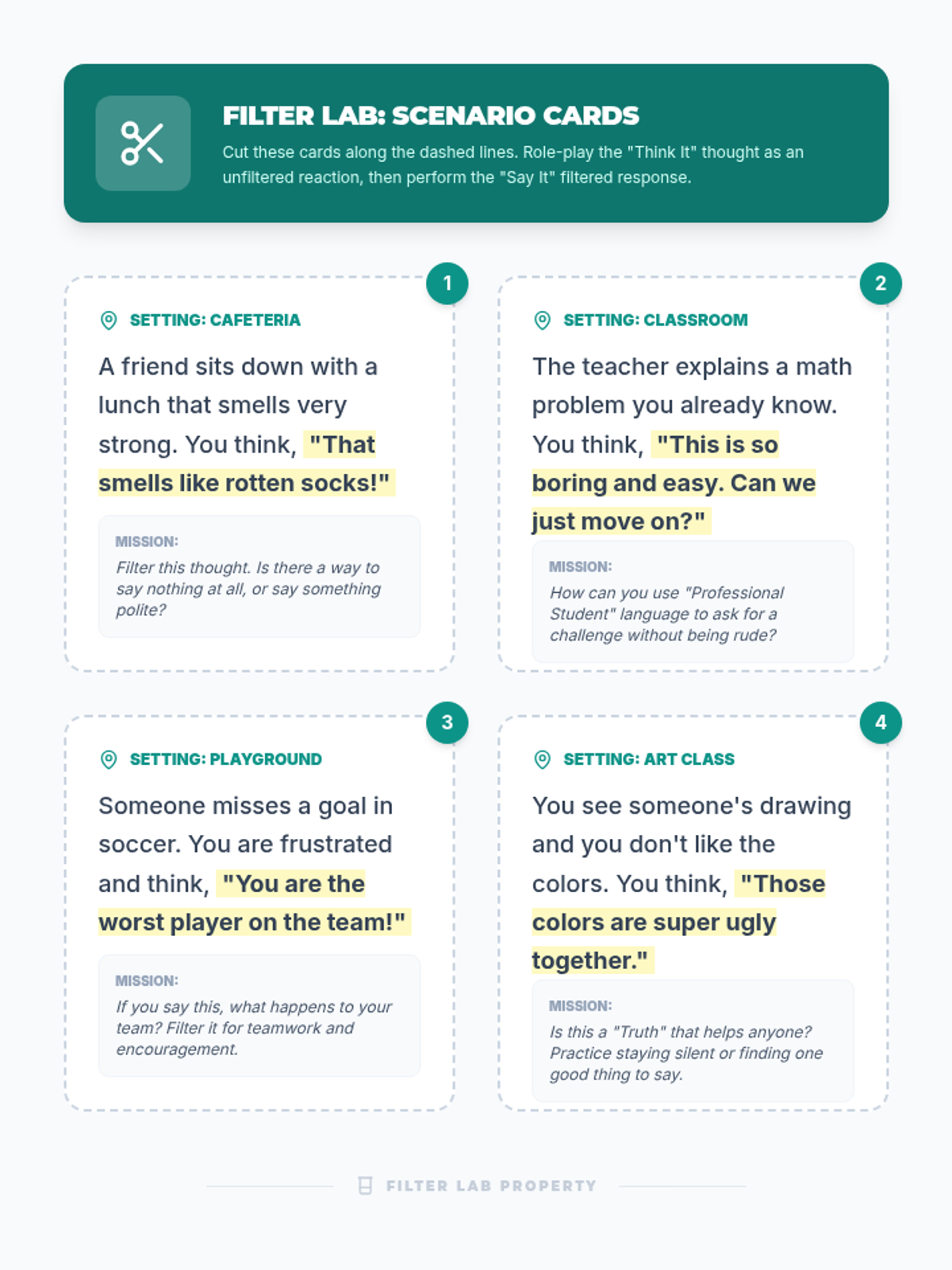
Cut-out scenario cards for role-playing appropriate language. Each card presents a social setting and an unfiltered thought for students to analyze and transform into a respectful response.