A Holland Code-based interest inventory for middle schoolers. Students check off activities they enjoy across six categories to identify their primary career personality types. Features a blueprint-themed design with clear scoring areas.
A 7-slide presentation designed for a mini-lesson on cybersecurity. It covers the debrief of the phishing email activity, safe online behaviors, and the critical concept of passwords acting as financial tools to protect personal wealth and identity.
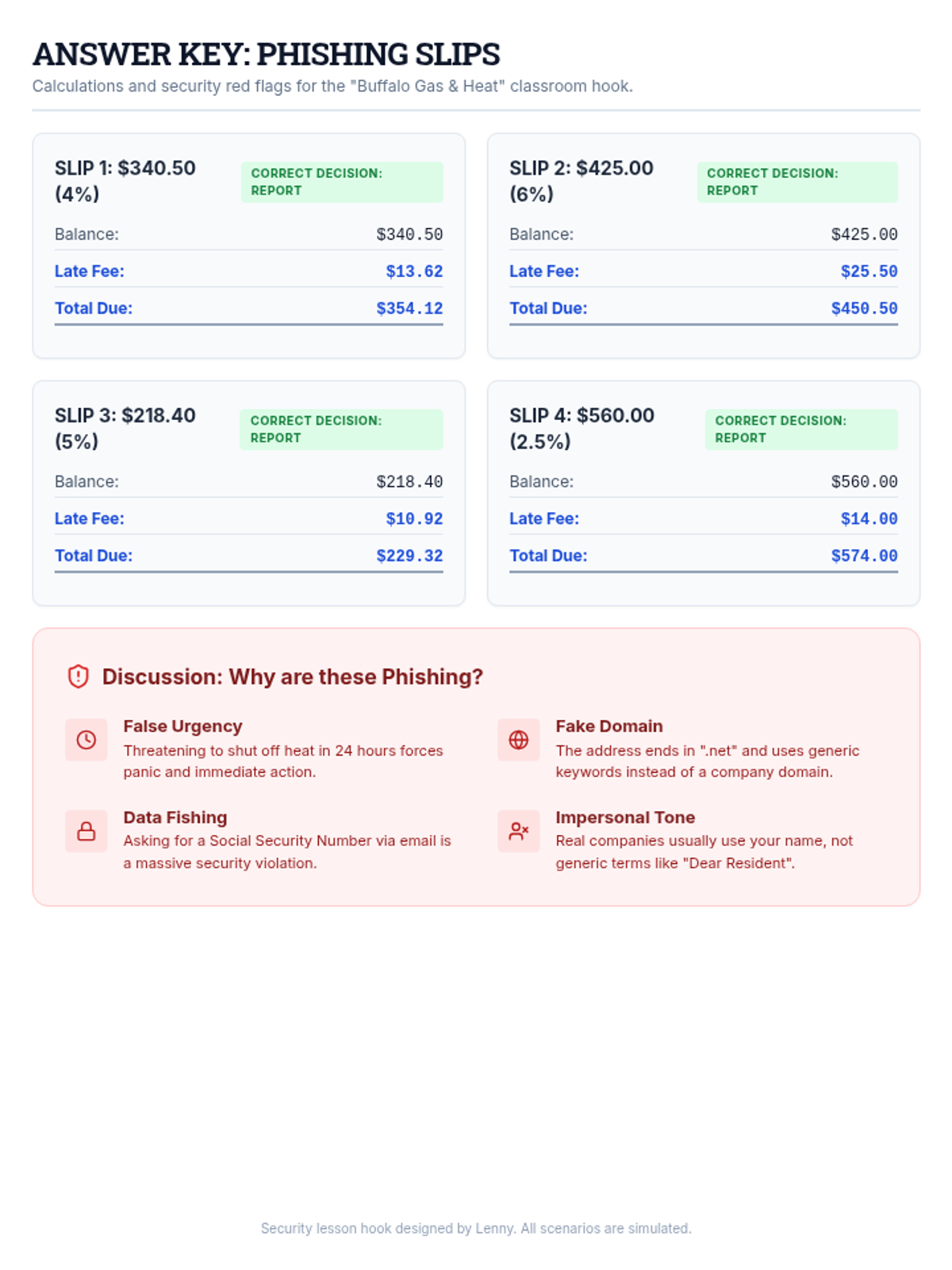
An answer key for the Phishing Alert Slips, providing correct late fee calculations and total balances for each slip, along with a list of security red flags for classroom discussion.
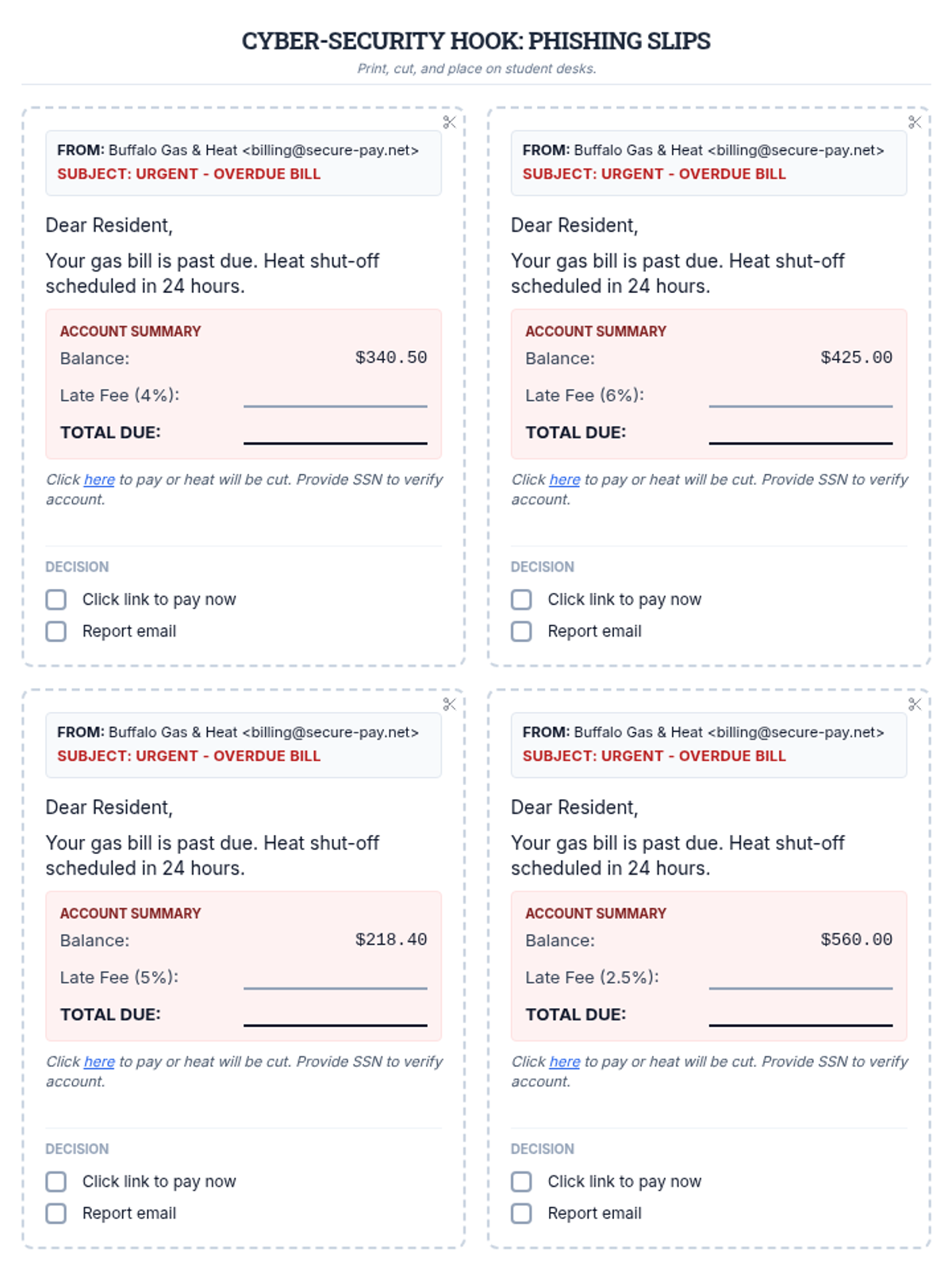
A set of four printable phishing email slips designed to be left on student desks as a classroom hook. Each slip includes a scenario about an overdue utility bill and requires students to calculate late fees and total amounts using percentages before deciding how to respond to the suspicious message.
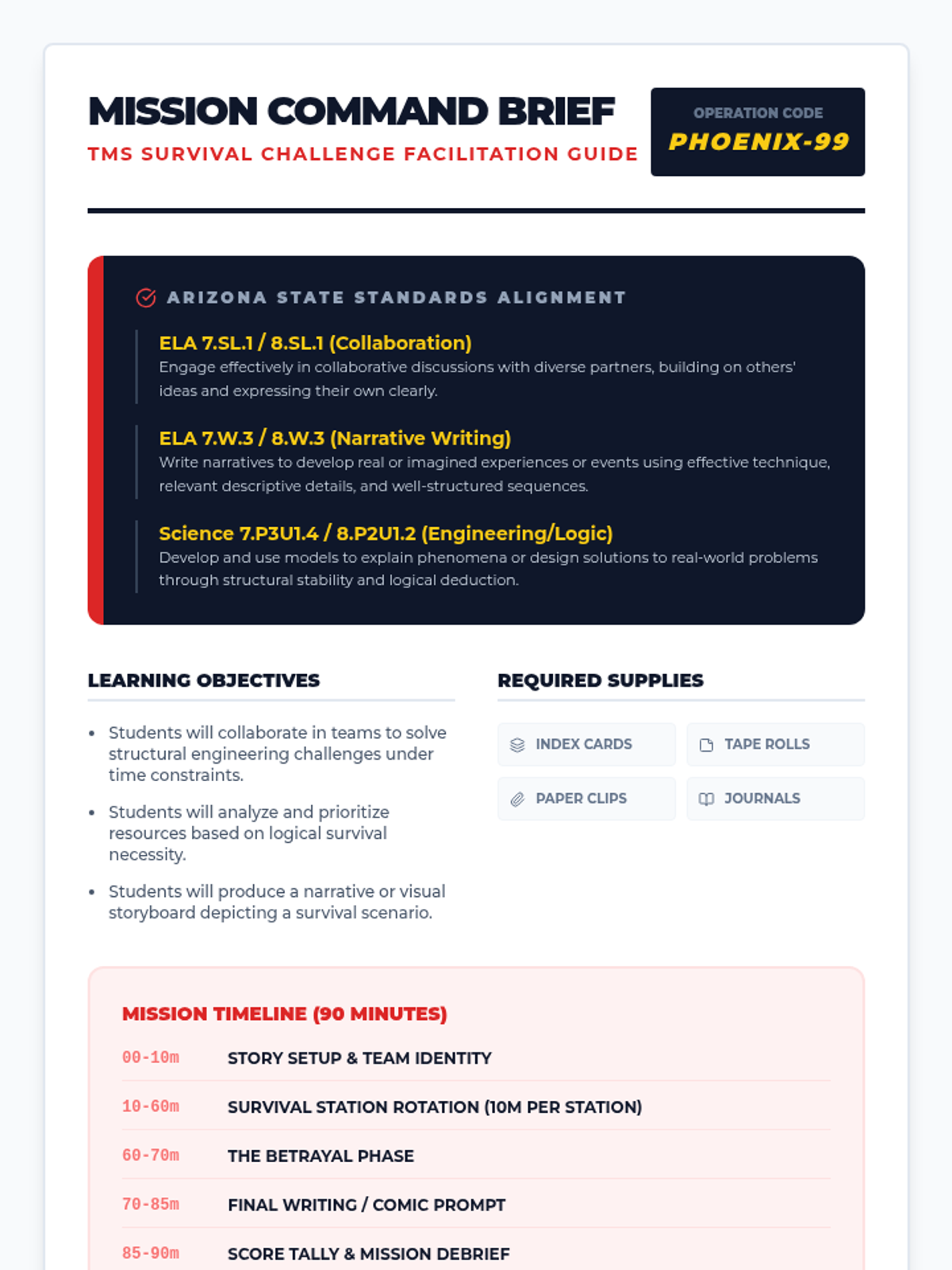
A comprehensive Arizona-aligned lesson plan for the TMS Survival Challenge, including ELA and Science standards, pacing guides, and differentiation strategies.
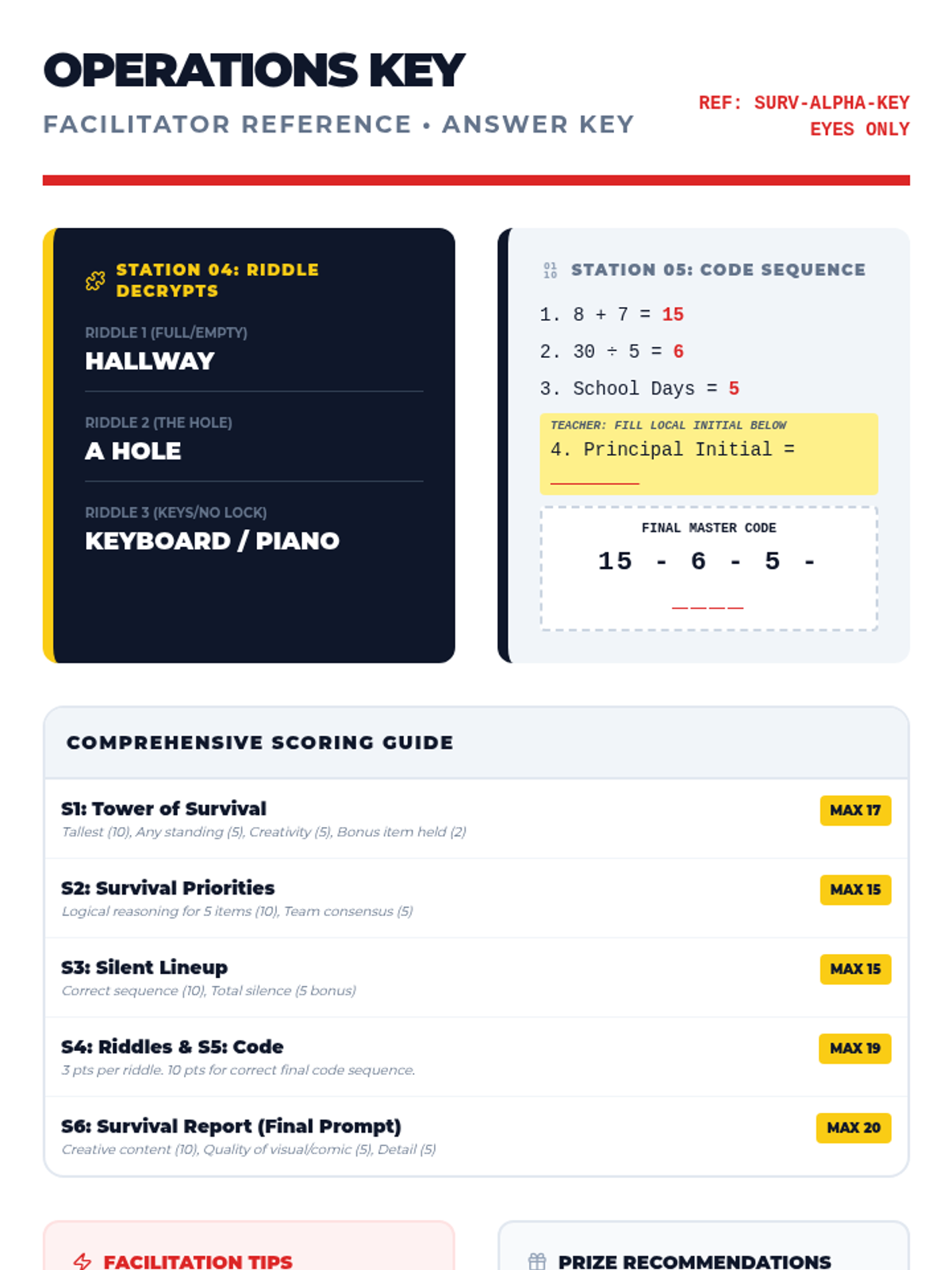
A tactical teacher-facing answer key and facilitation guide for the Survival Challenge, providing riddle solutions, point breakdowns, and tactical tips. updated with Principal initial 'F' and final code '15-6-5-F'.
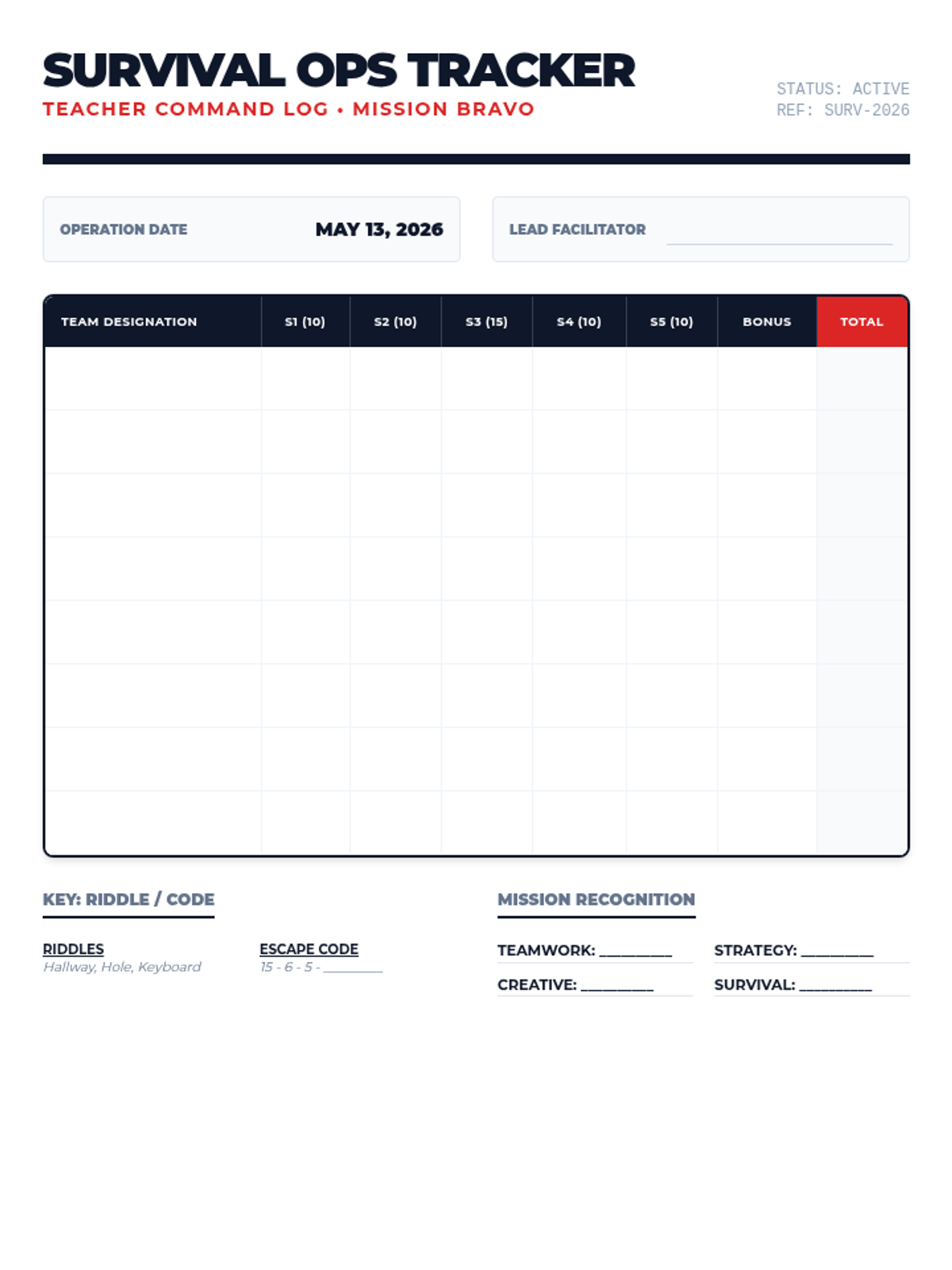
A specialized teacher's tracking sheet for managing team points, station progress, and award categories during the Survival Challenge. updated with escape code '15-6-5-F'.
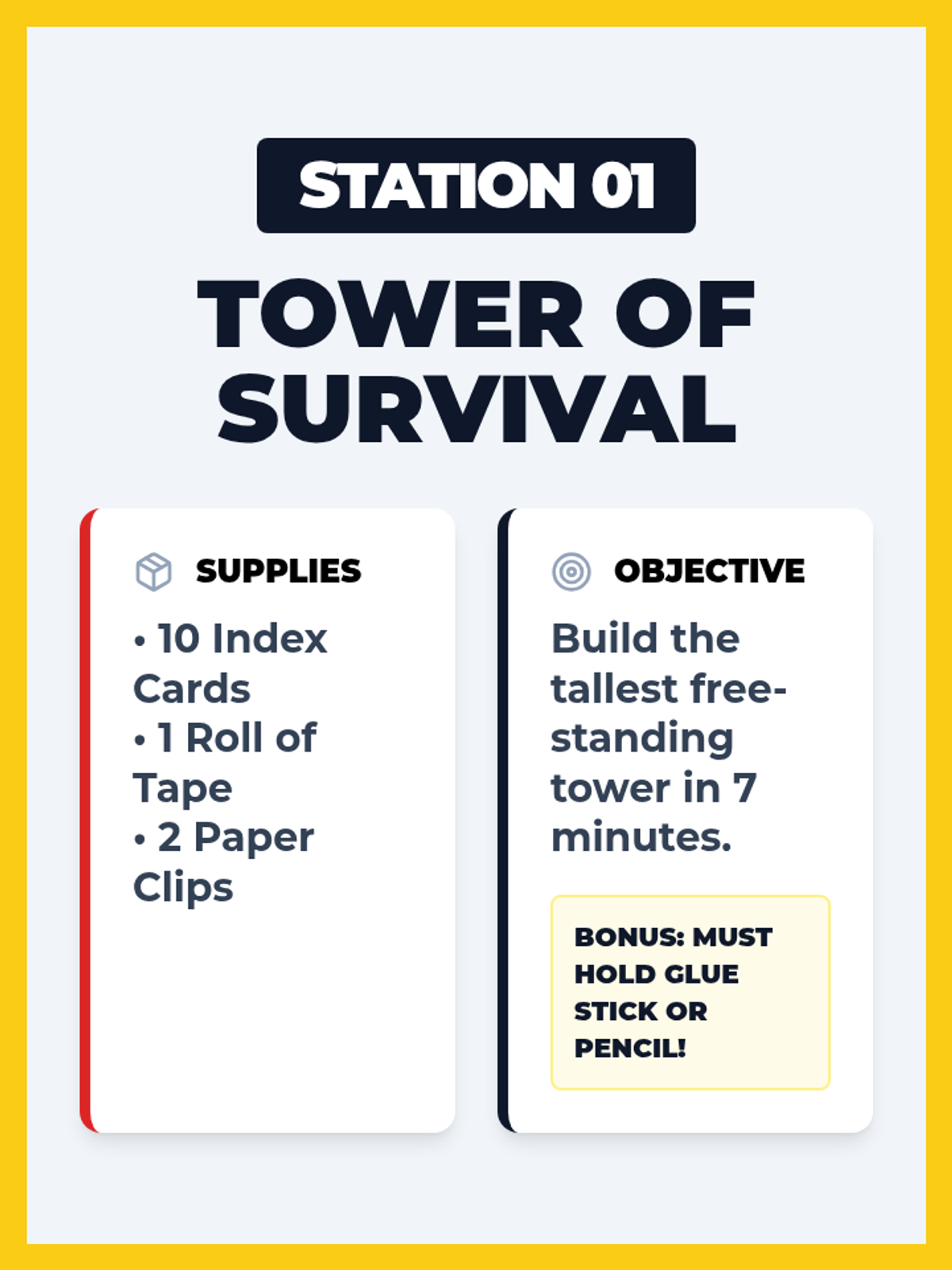
High-visibility station signs for each challenge, updated with Principal initial 'F' and math answers for Station 5.
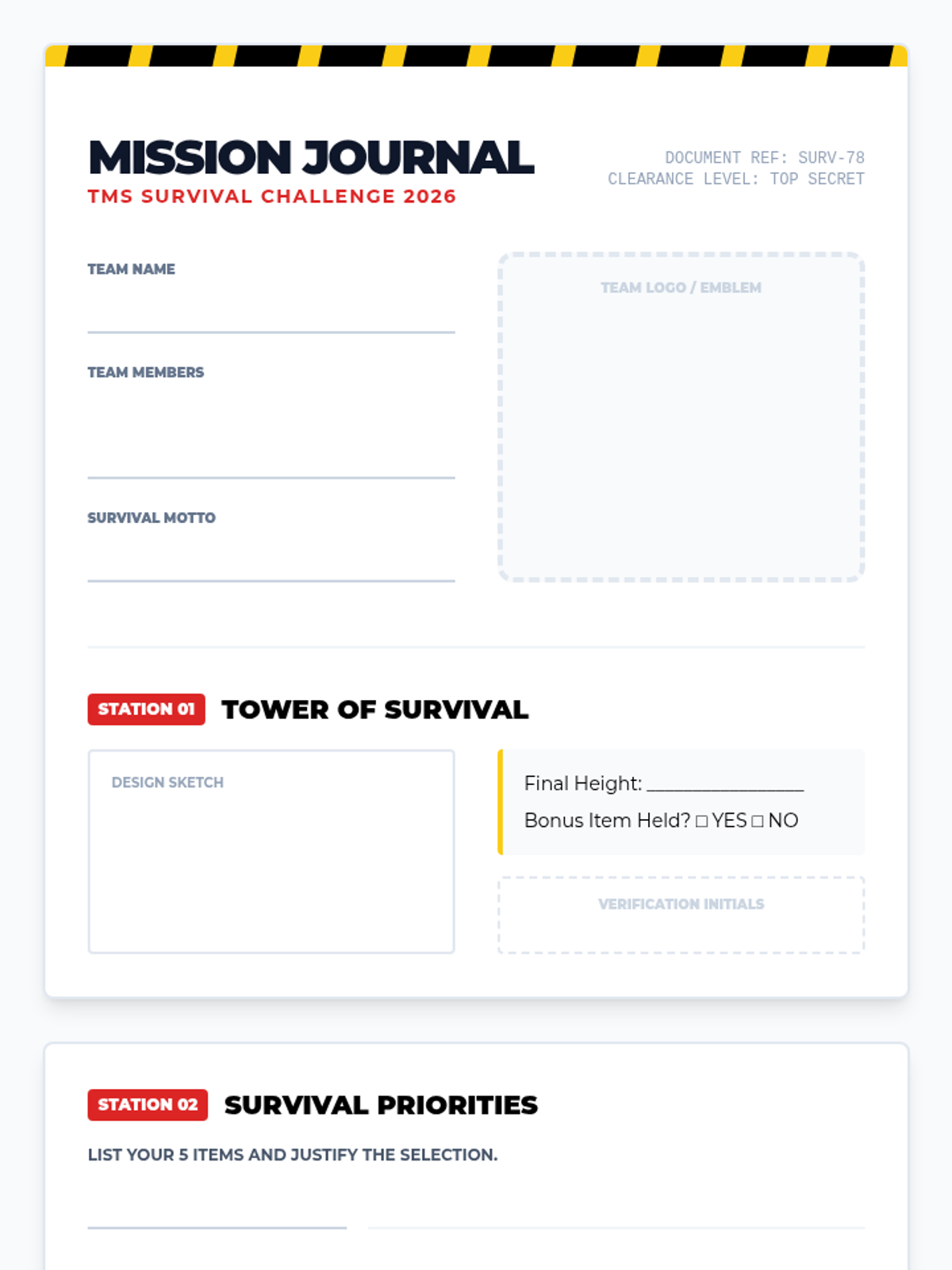
A comprehensive 4-page student packet for recording team information, station progress, and the final writing prompt, styled with tactical survival elements.
A high-energy presentation deck for the TMS Survival Challenge, featuring story setup, station instructions, rules, and point breakdowns with bold visual icons. updated with Principal initial 'F'.
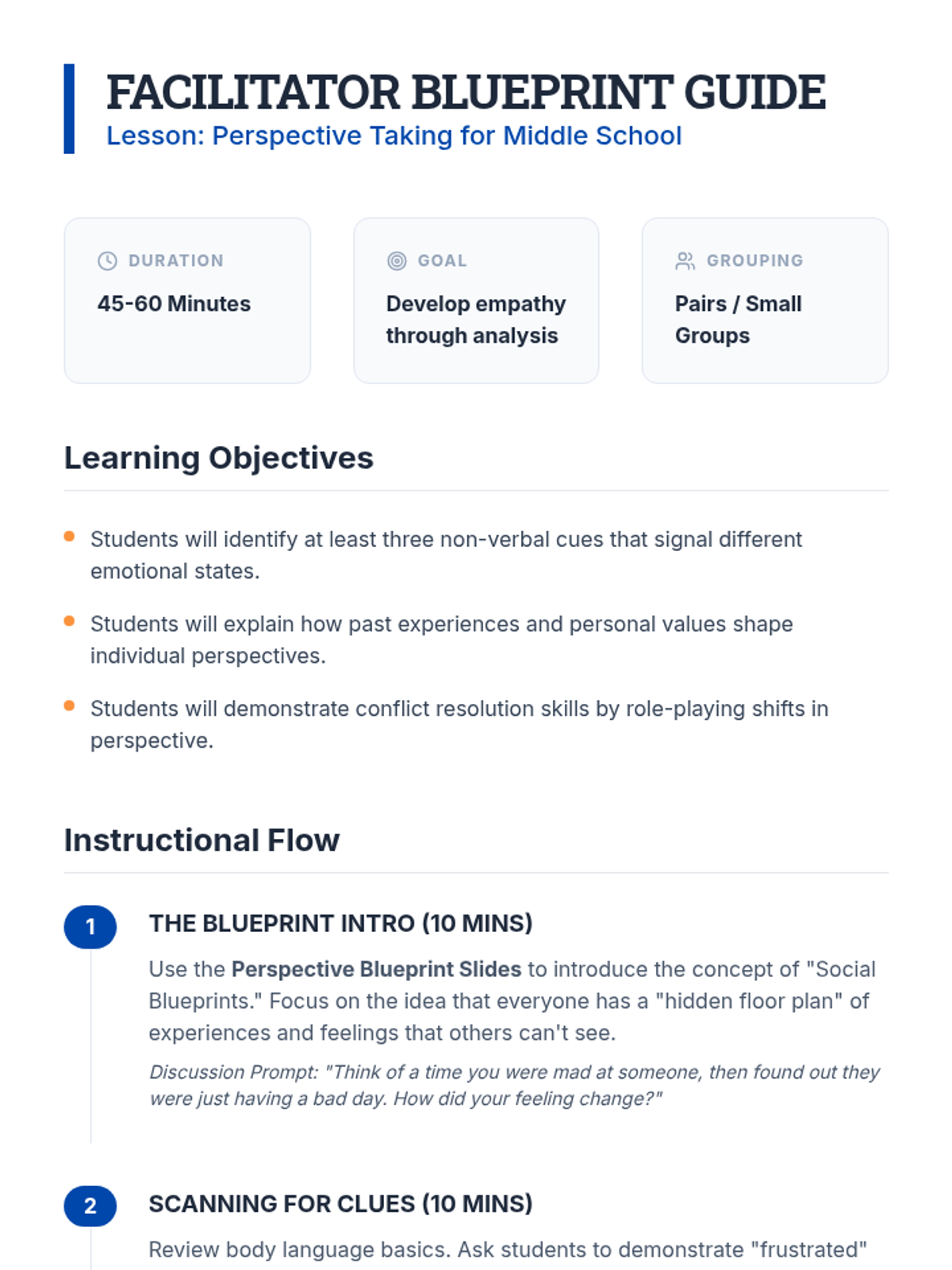
A comprehensive teacher's guide for the Perspective Blueprint lesson, providing pacing, instructional strategies, and tips for facilitating social-emotional learning in a middle school classroom. This version is updated for whole-class slide-based practice.
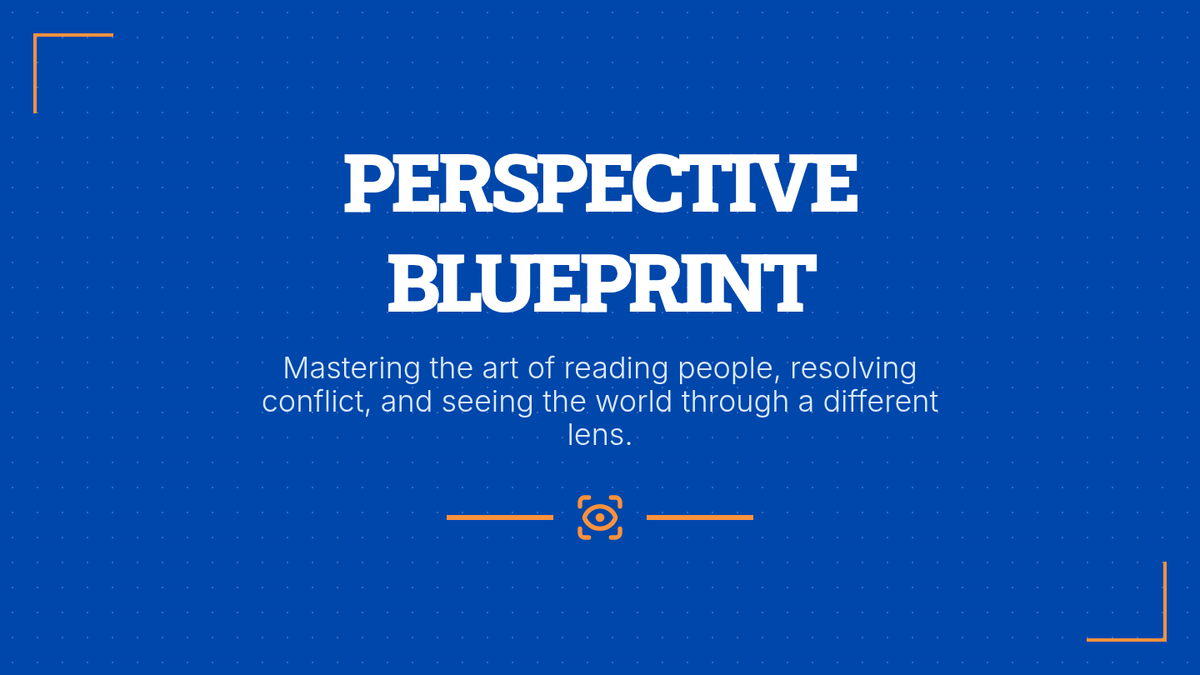
A dynamic slide deck for teaching middle school students about perspective-taking, body language, and conflict resolution using a technical 'blueprint' aesthetic. This revised version features enhanced visual hierarchy and legibility.
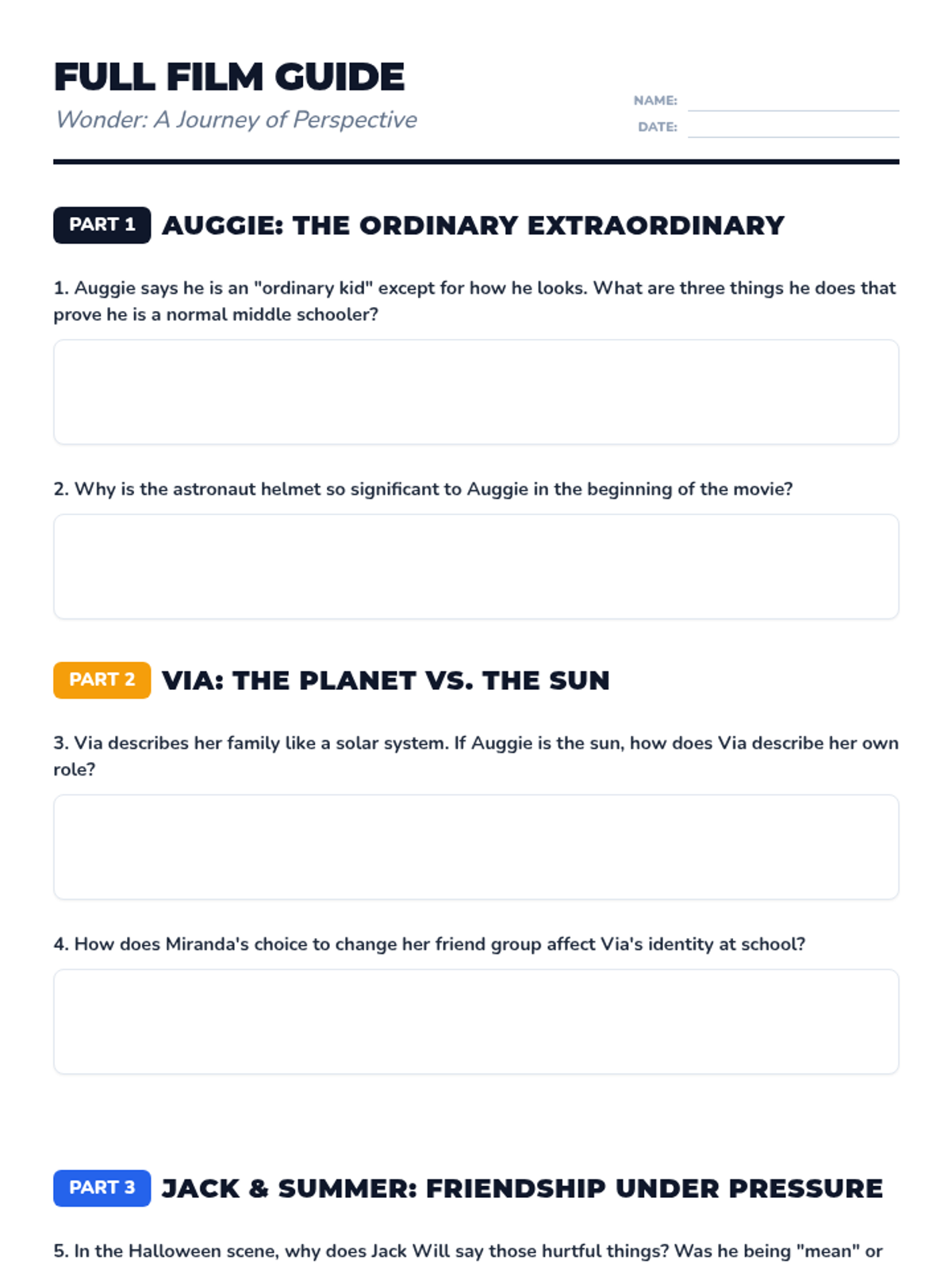
A comprehensive guided viewing worksheet for the full movie Wonder, structured by character perspective with analytical questions on empathy, friendship, and perspective.
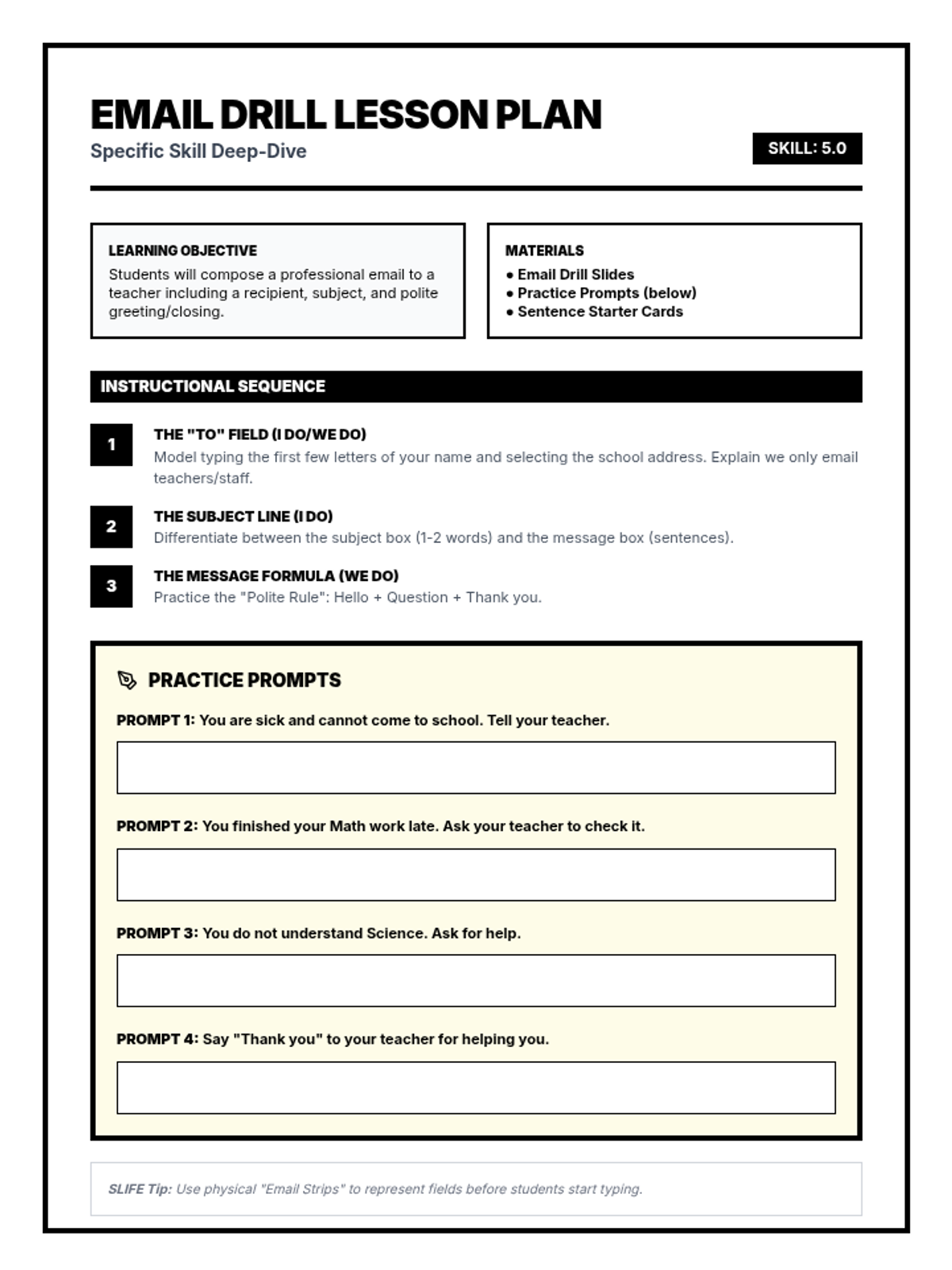
A detailed teacher's lesson plan for instructing SLIFE students on professional school email etiquette, including a 3-step instructional routine and specific practice prompts.
A high-contrast, visual-first slide deck for SLIFE students focusing on the specific structure and etiquette of writing professional school emails to teachers.
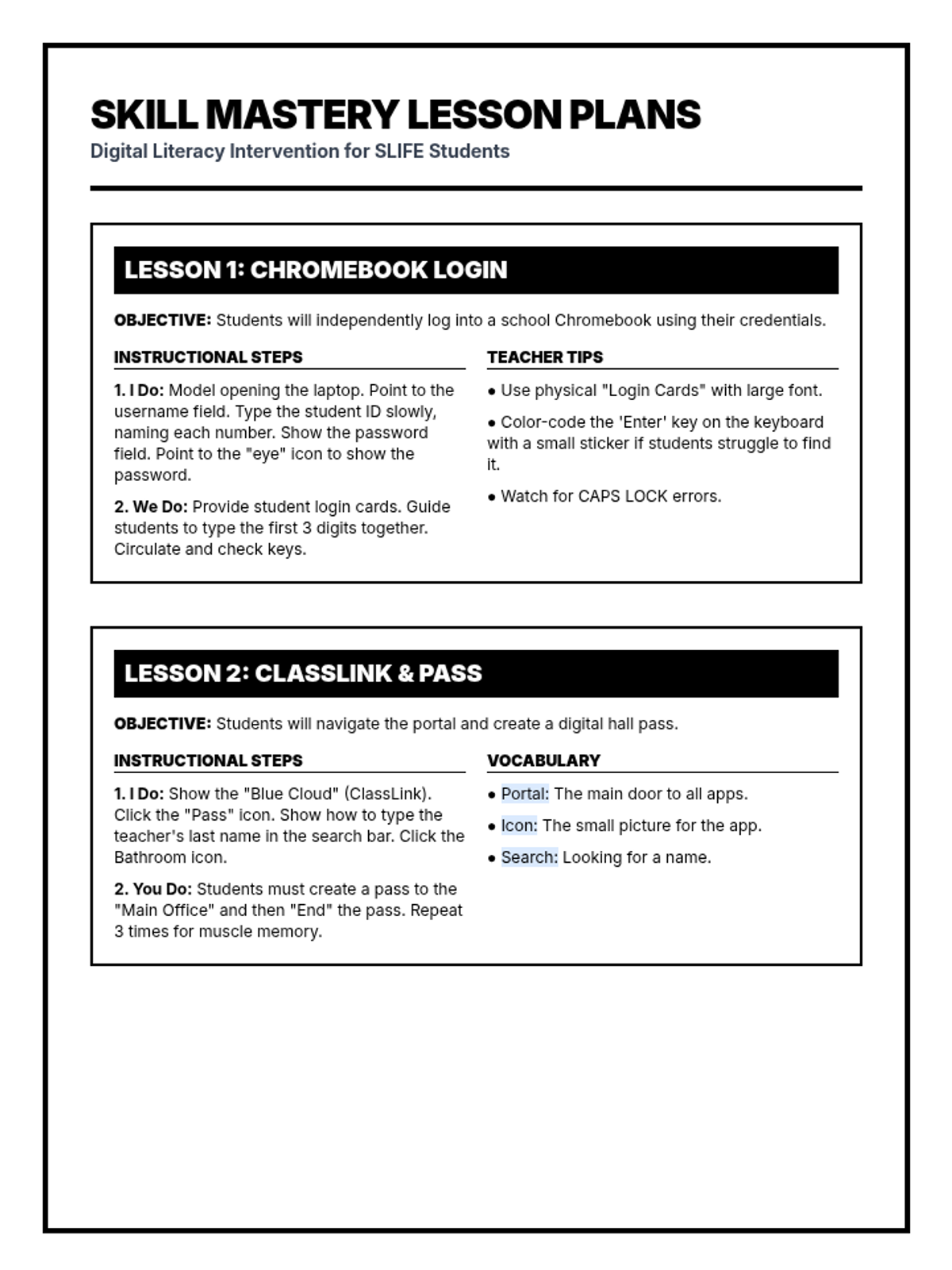
A structured set of teacher-facing lesson plans for the Tech Navigator intervention, providing step-by-step instructional routines for Chromebook login, ClassLink, Canvas, PowerSchool, and email mastery.
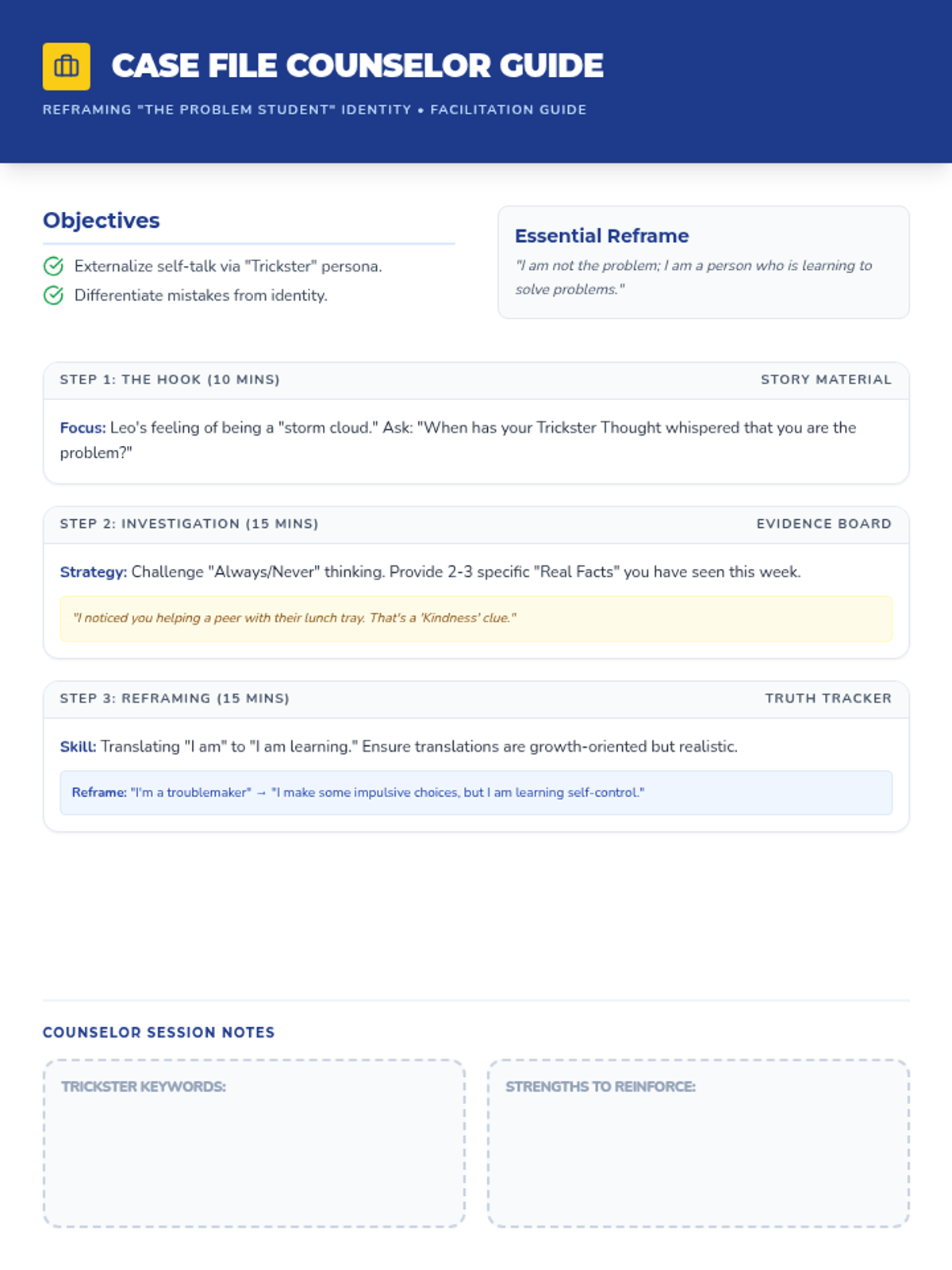
A counselor-facing facilitation guide for a 1:1 session. Includes pacing, key discussion prompts, and strategies for helping students separate their identity from their behavioral challenges.
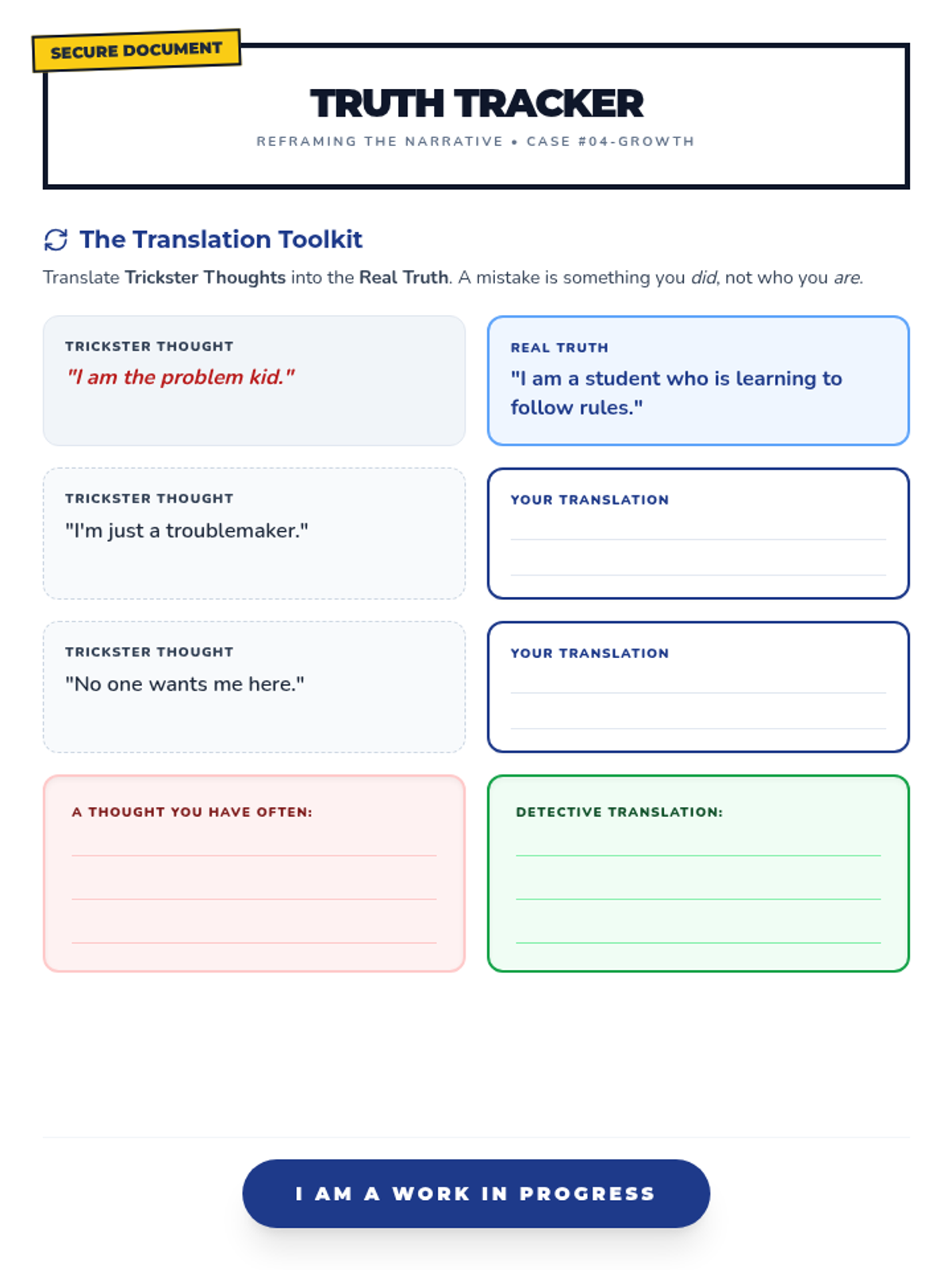
A reframing worksheet that guides students through the process of 'translating' negative, identity-based thoughts into growth-oriented, factual statements. Features a 'Detective Toolkit' visual theme.
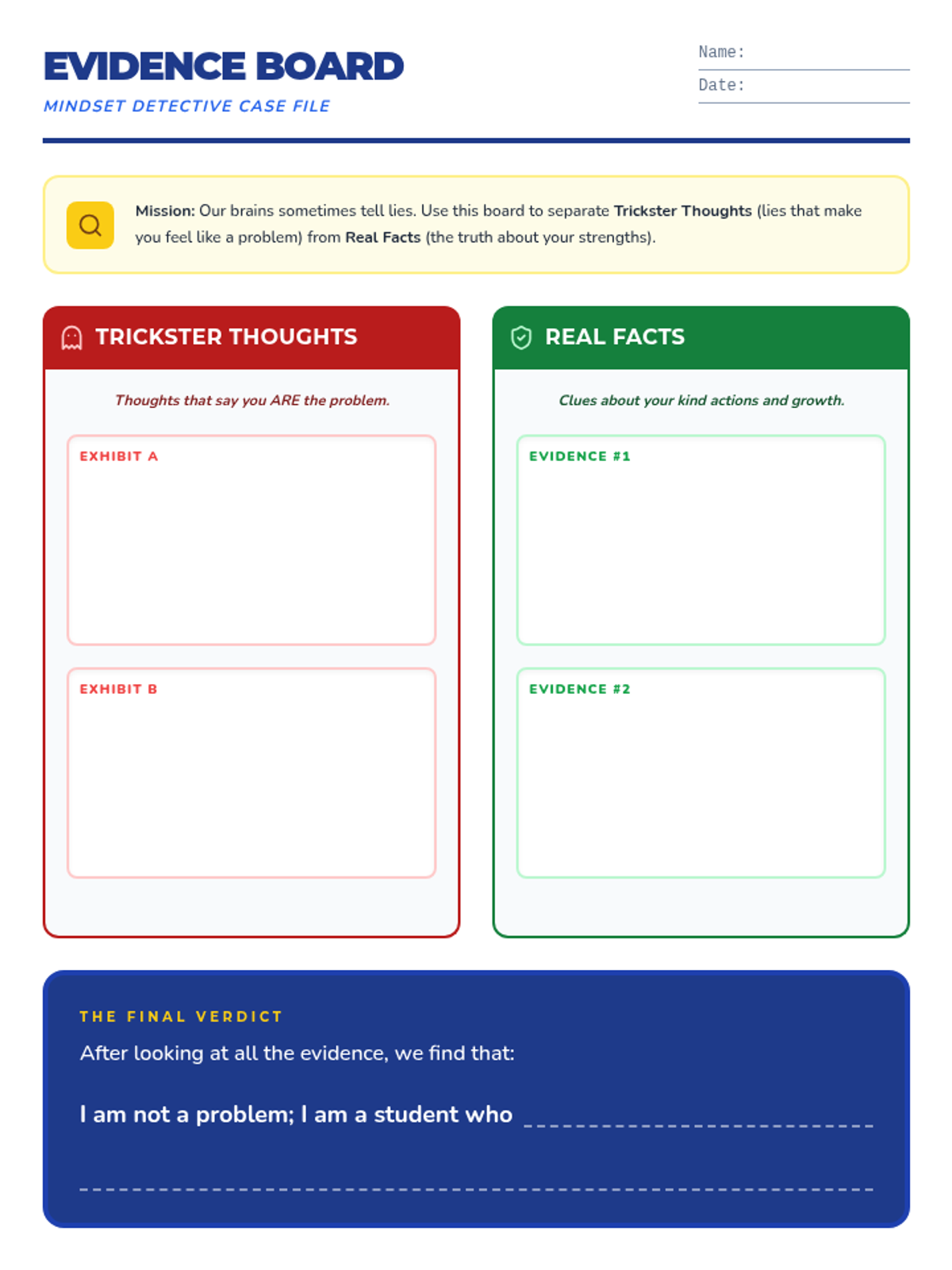
An interactive evidence board worksheet for students to categorize their negative self-talk as 'Trickster Thoughts' and counter them with 'Real Facts' about their strengths and positive behaviors.
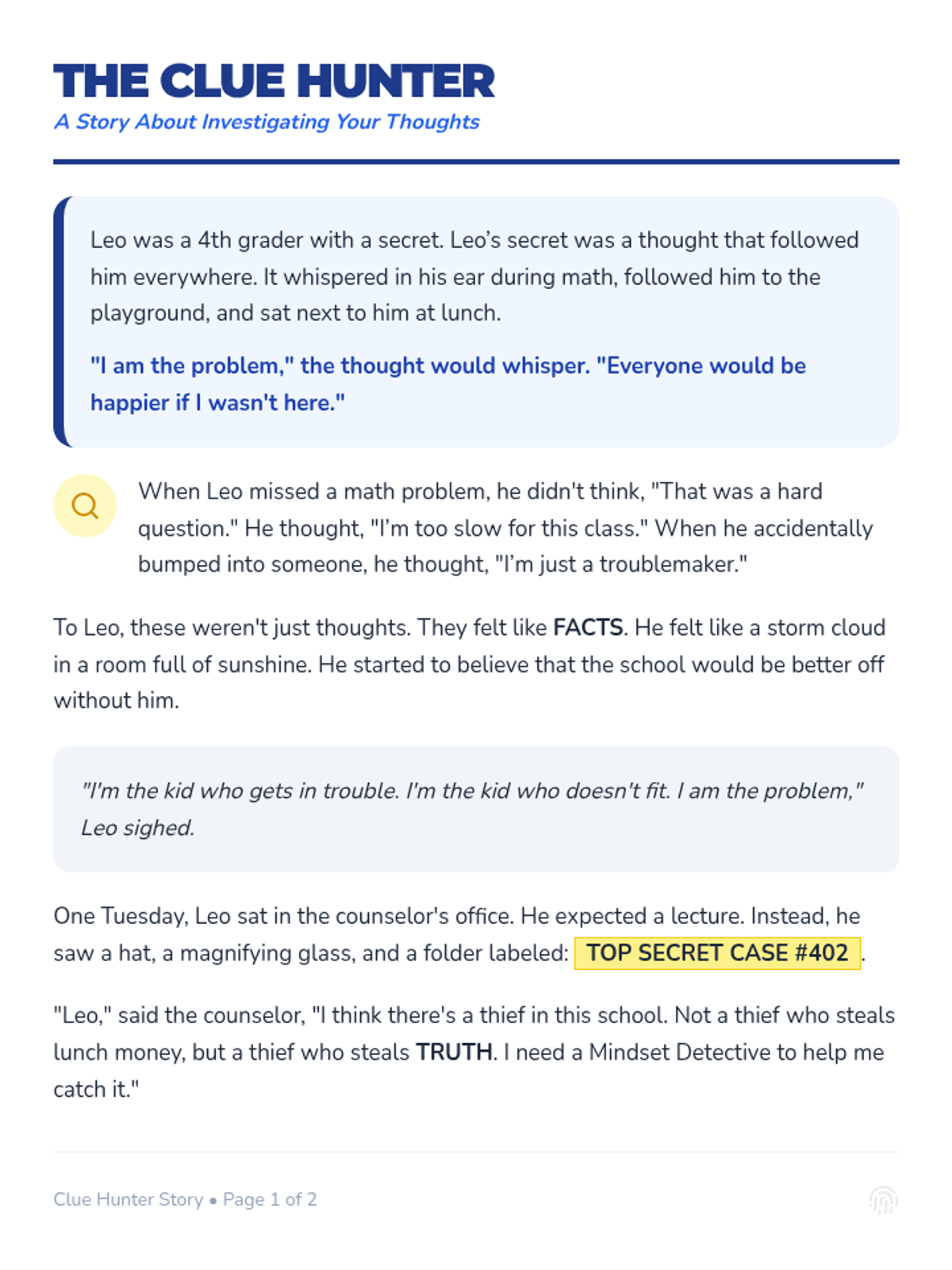
A two-page social story about a student named Leo who learns to differentiate between 'Trickster Thoughts' (identity-based negative self-talk) and 'Detective Facts' (situational reality and personal strengths). Includes discussion questions for 1:1 sessions.
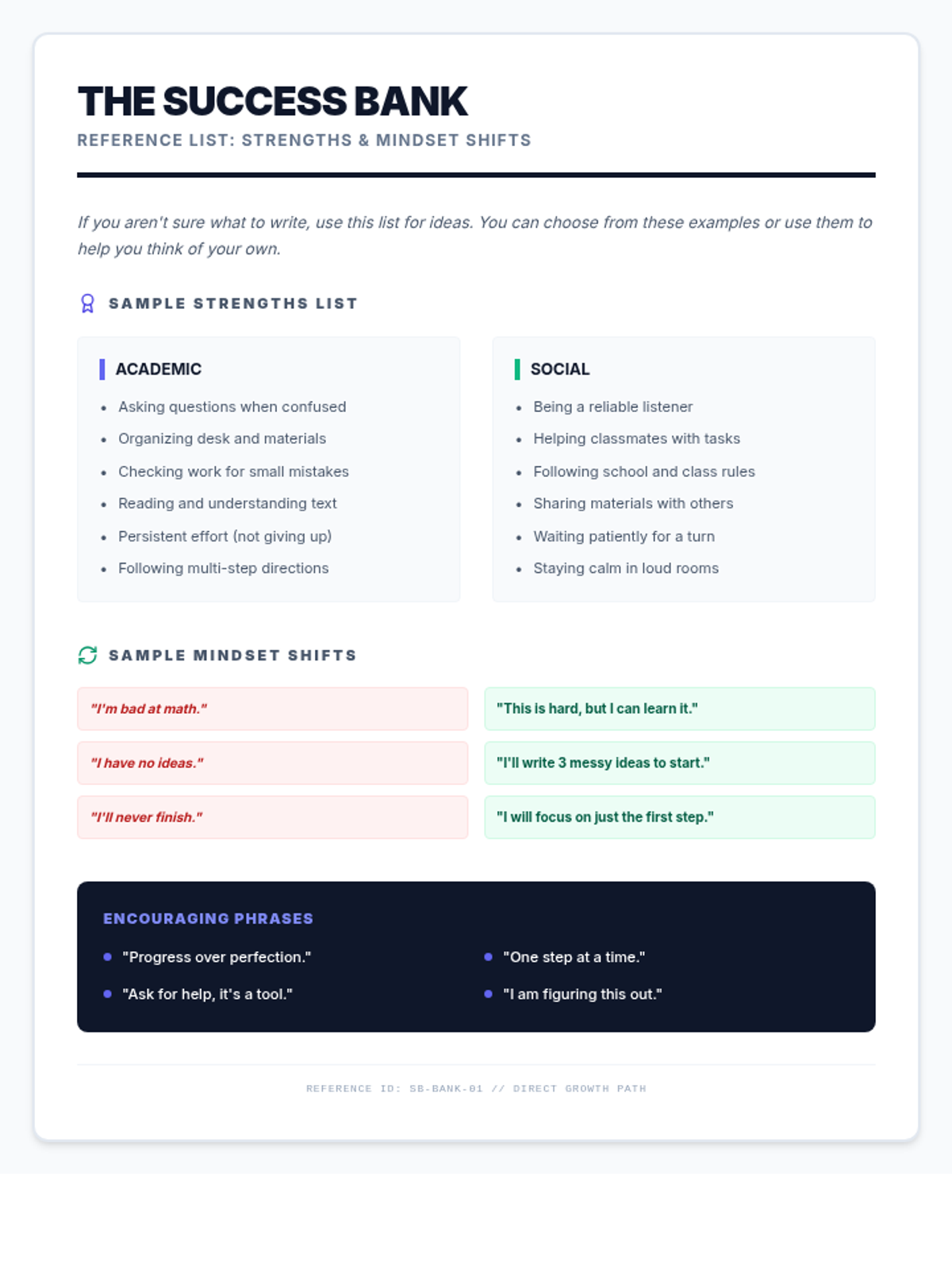
A reference sheet for the student containing concrete examples of academic and social strengths, growth mindset shifts, and encouraging phrases. Designed to support students who struggle to generate their own responses. Revised for single-page layout.
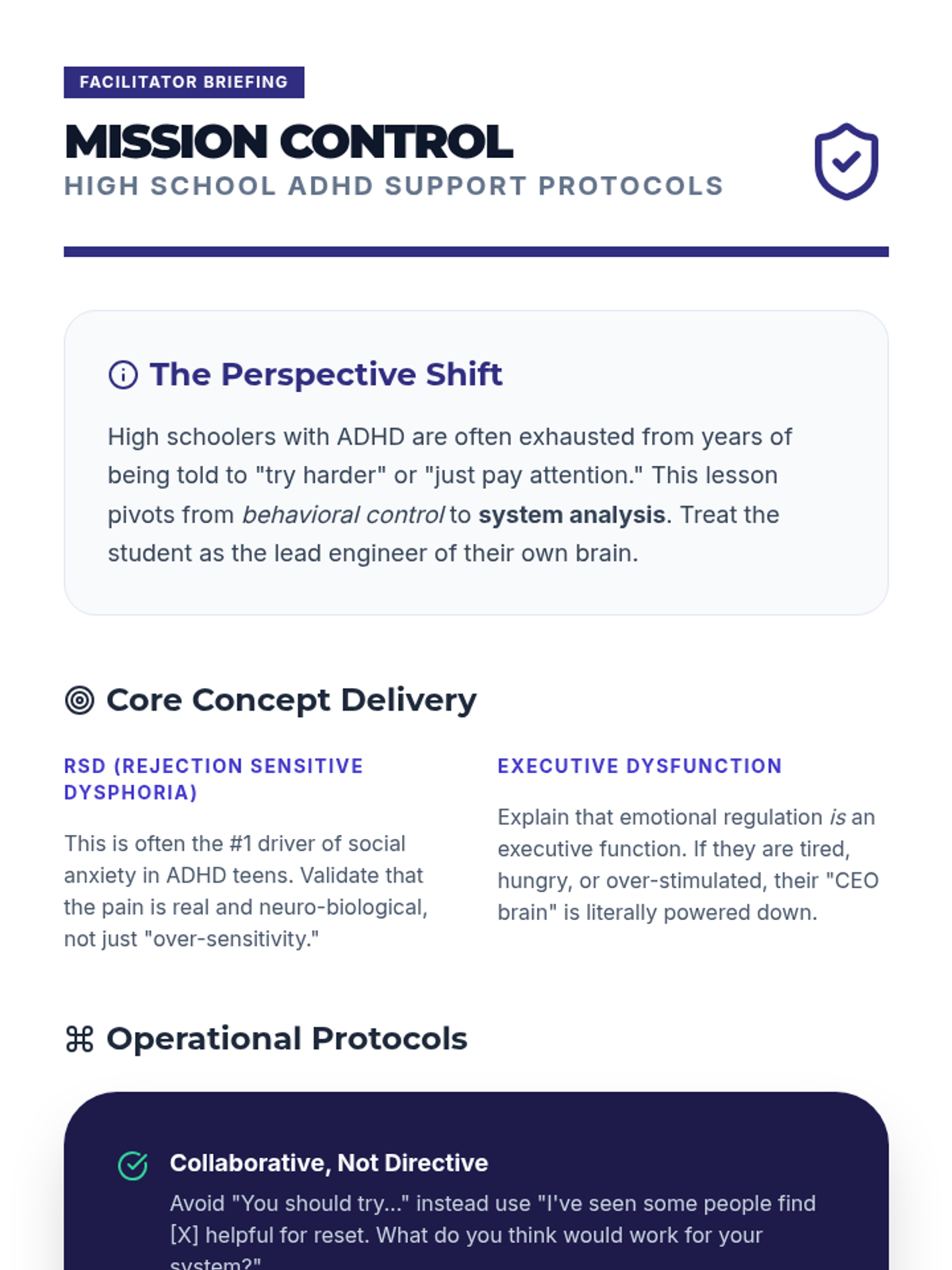
A facilitator's guide for supporting high schoolers with ADHD, focusing on autonomy, validation, and advanced cognitive strategies like RSD management and executive function audits.