A randomized 3x4 bingo board (Version 2) featuring 12 different emotions for variety during classroom play.
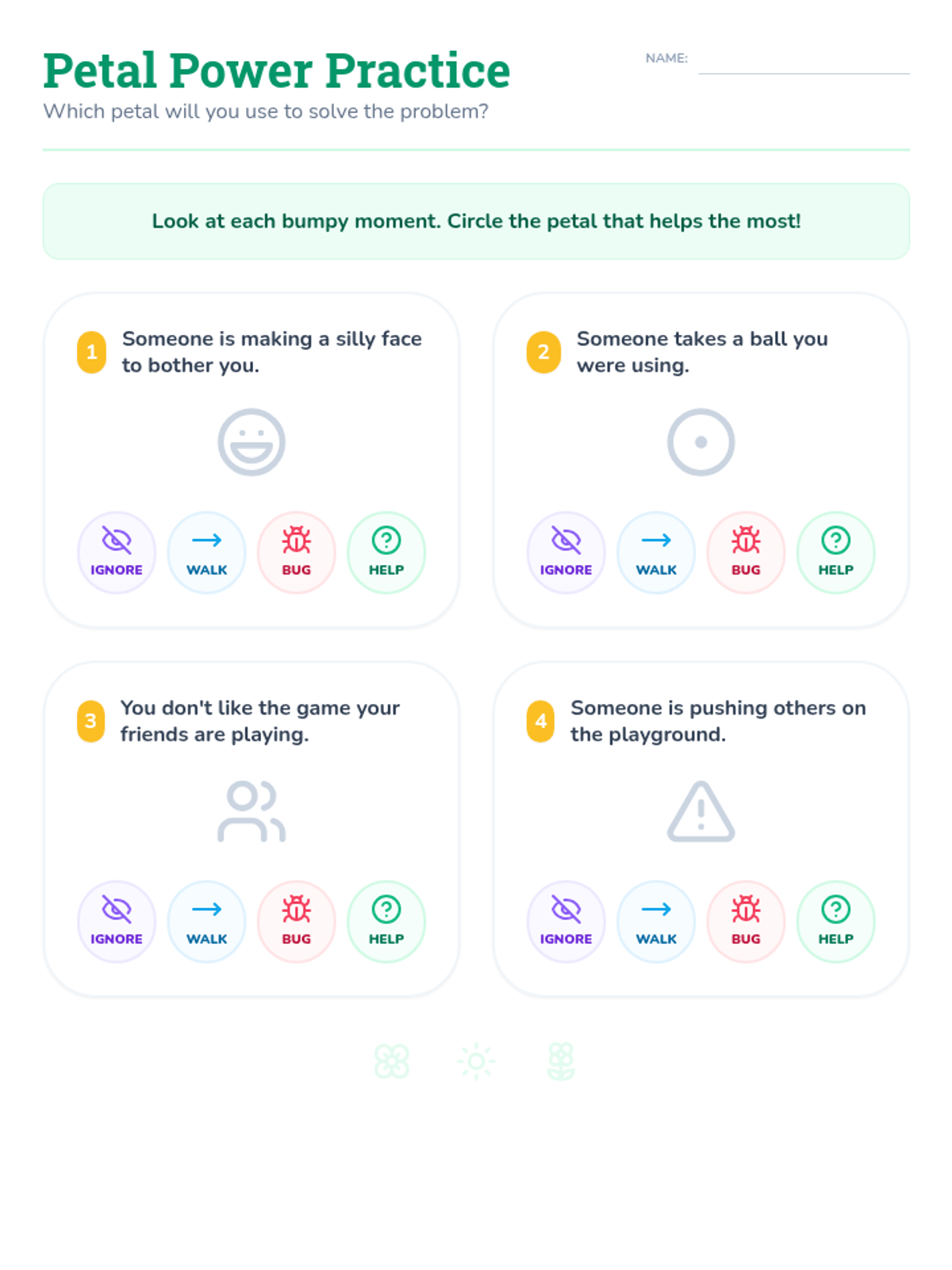
A scenario-based worksheet where students identify the best Peace Petal strategy to solve common recess conflicts.
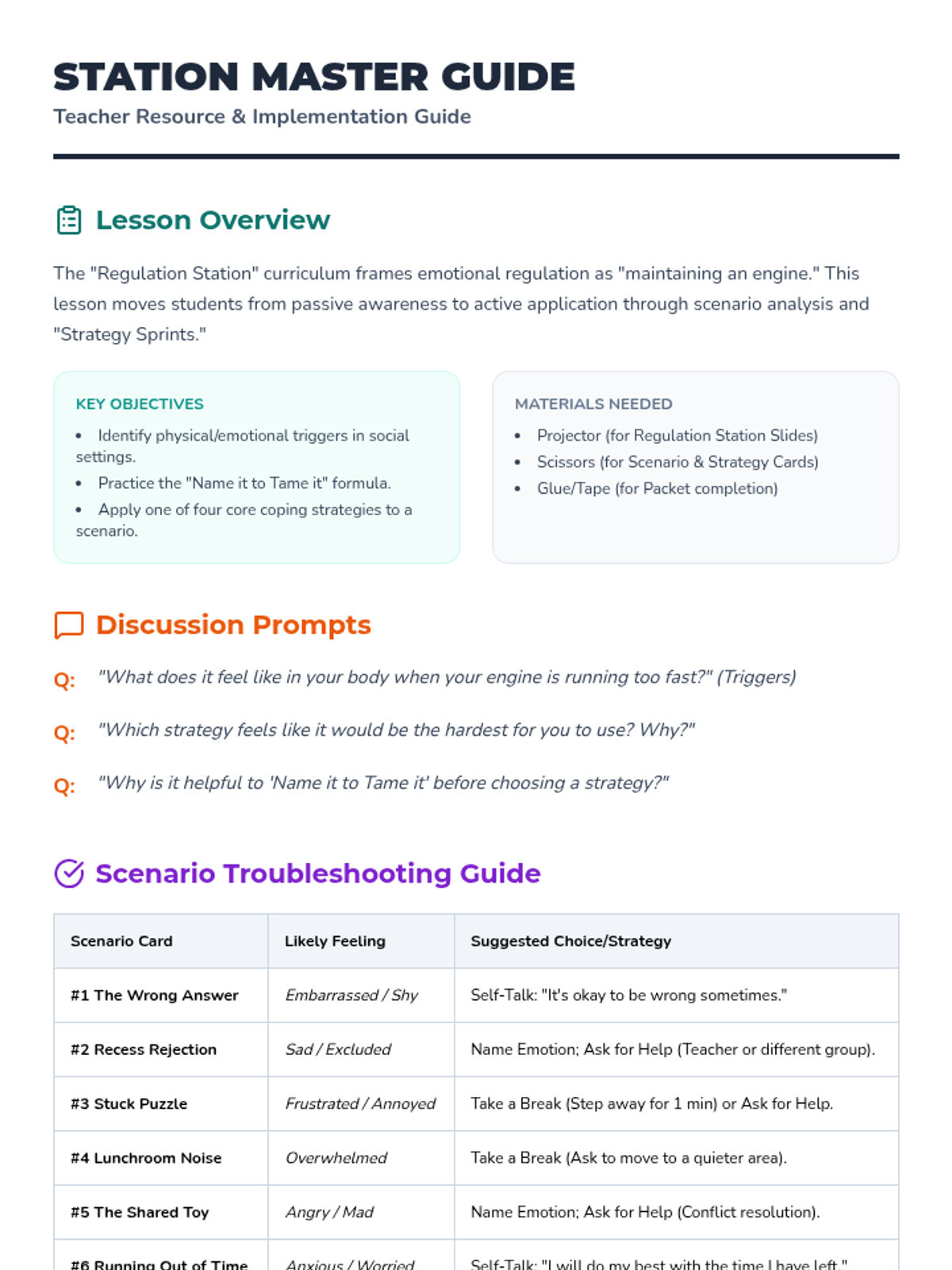
A teacher-facing guide for the Regulation Station unit, revised for better layout and a complete scenario troubleshooting table.
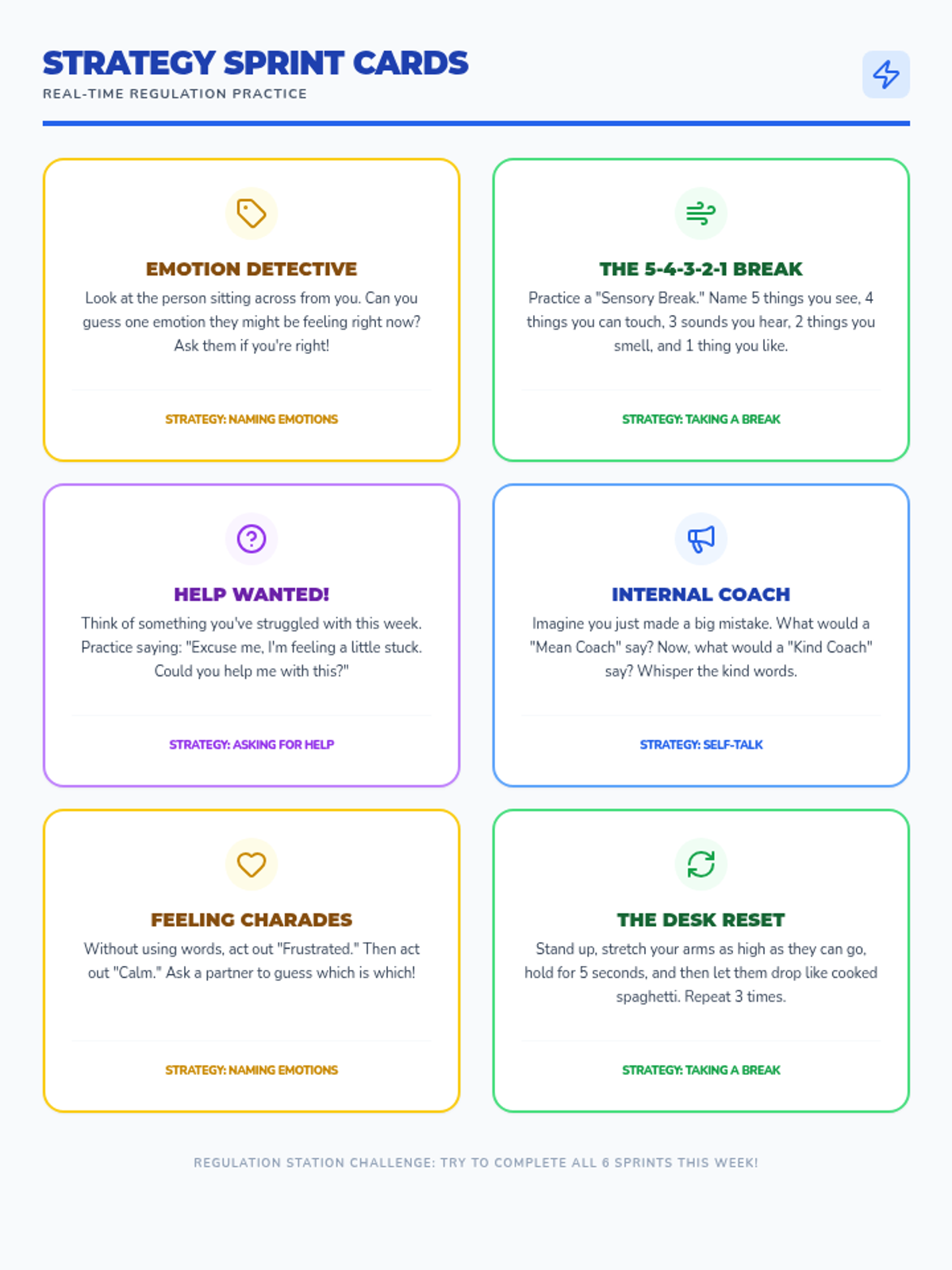
Printable task cards for coping strategy practice, revised to ensure all 6 cards fit on a single page for easy cutting.
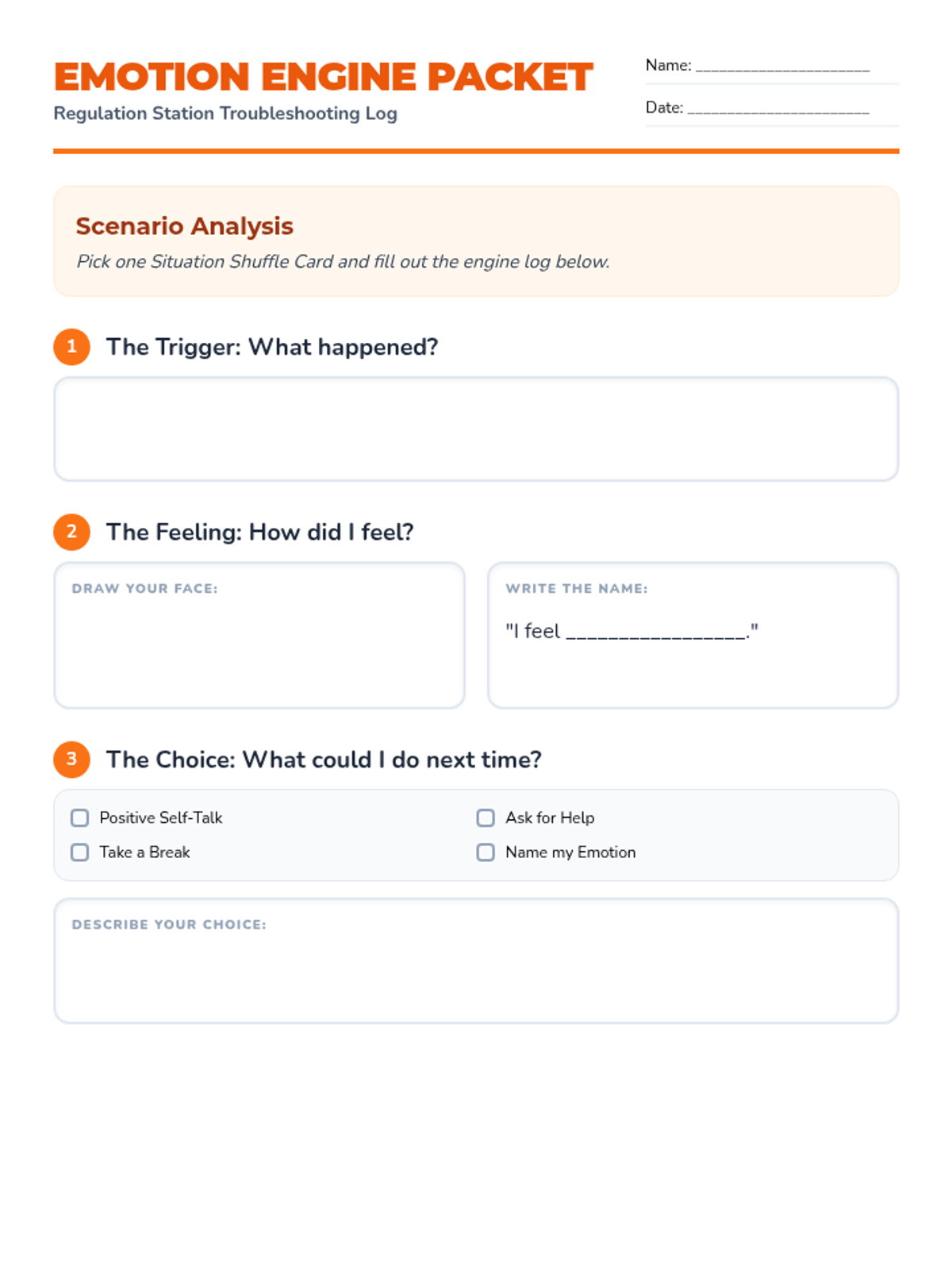
A two-page graphic organizer packet for student scenario analysis, revised to ensure all sections fit properly and provide adequate workspace.
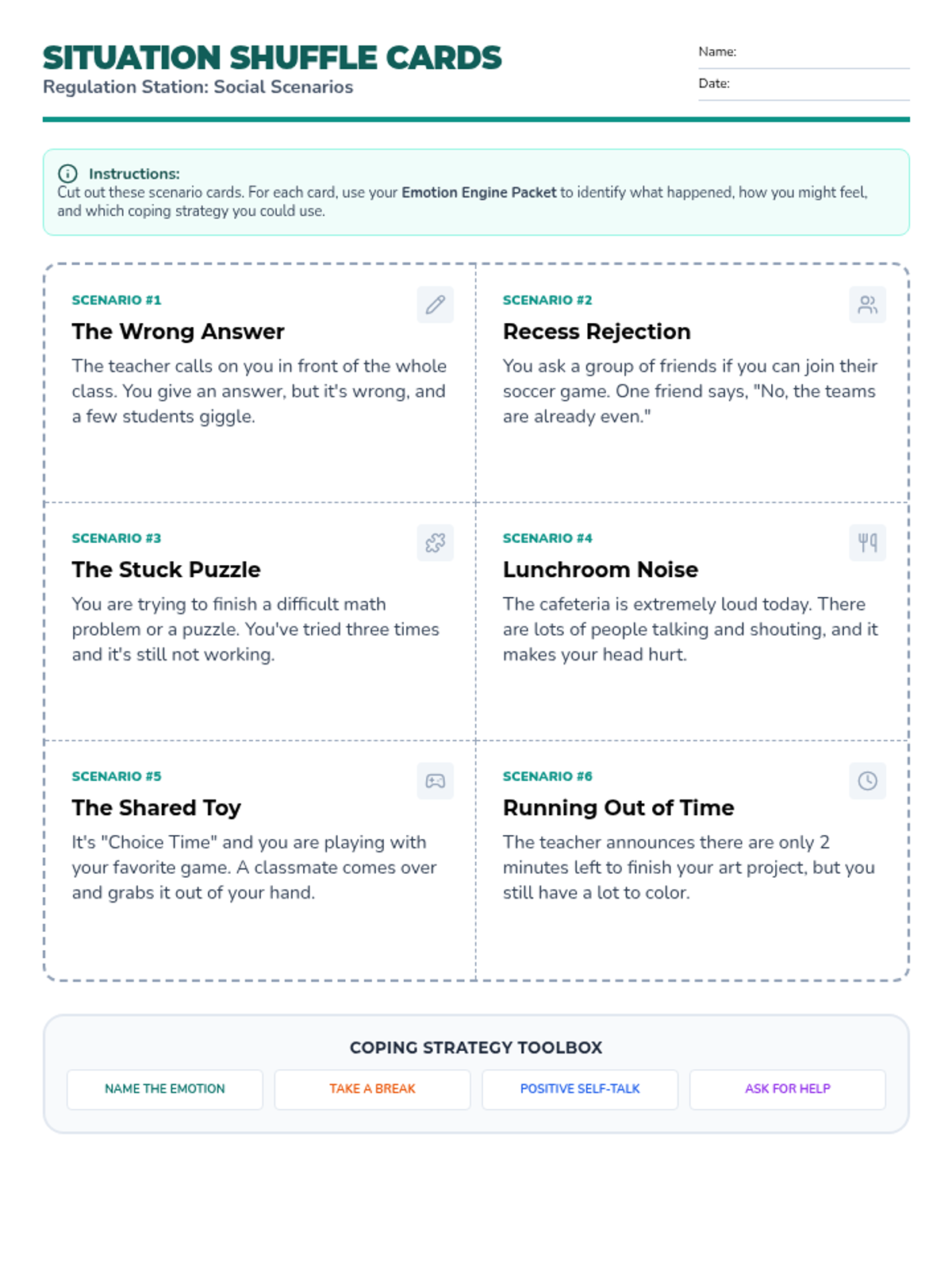
A printable set of six social scenario cards for students to analyze triggers, feelings, and coping strategies, revised for better fit and usability.
A visual slide deck introducing four key coping strategies: naming emotions, taking breaks, positive self-talk, and asking for help, featuring a "Regulation Station" theme.
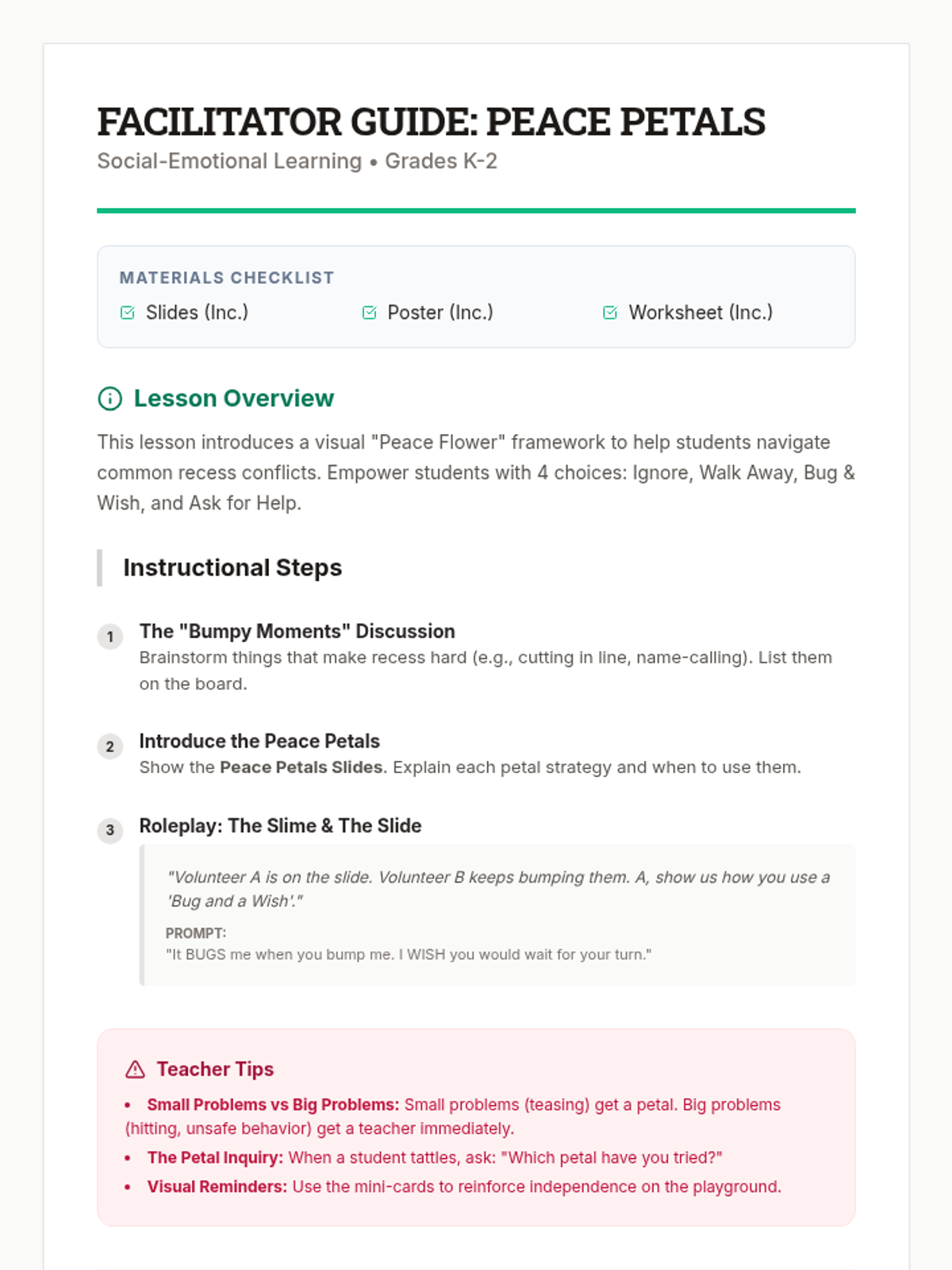
A teacher-facing facilitator guide with pacing notes, roleplay scenarios, and instructional strategies for teaching the 'Peace Petals' framework.
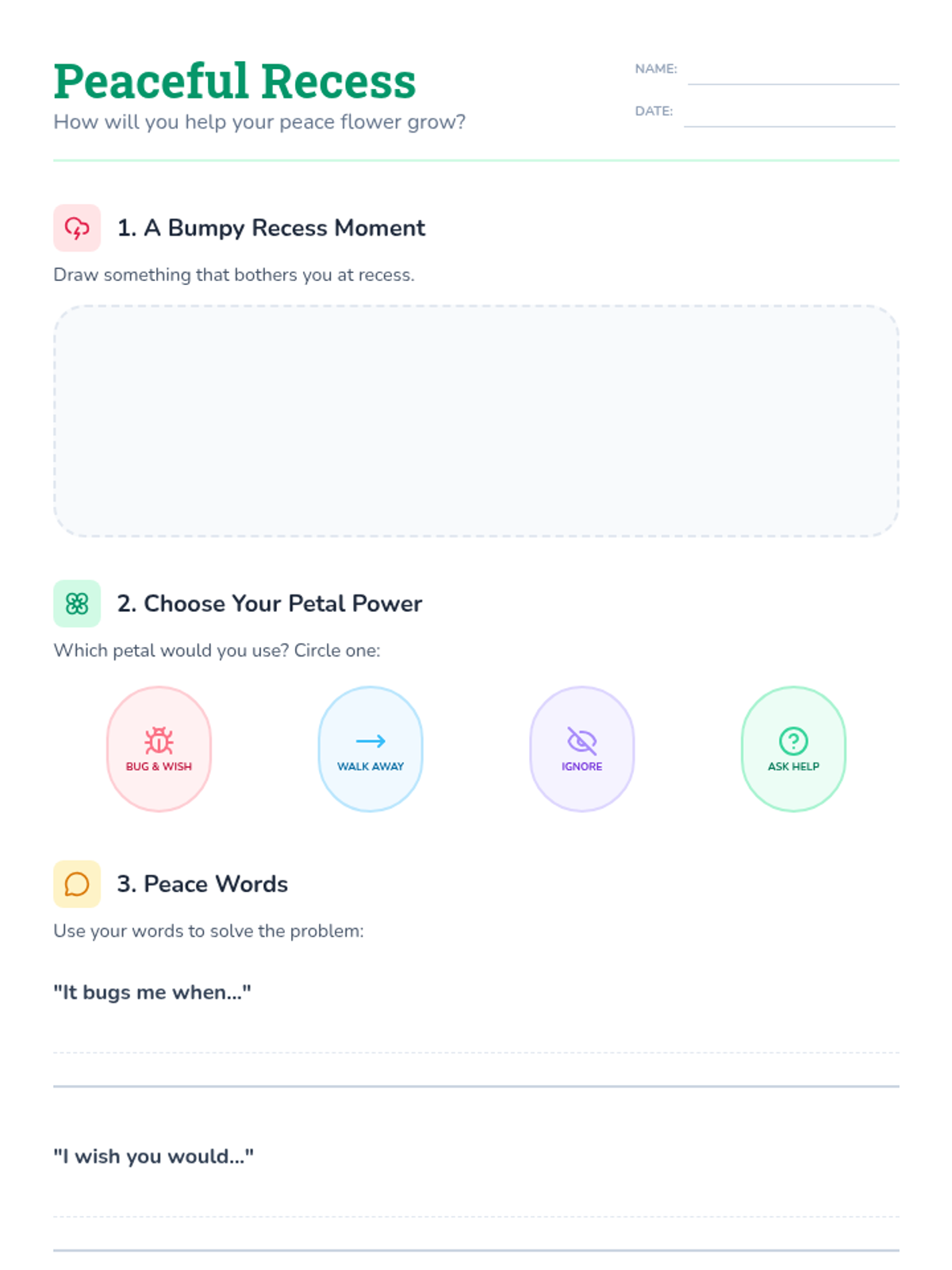
A conflict resolution worksheet for young students to practice identifying recess problems and choosing a 'Peace Petal' strategy to solve them.
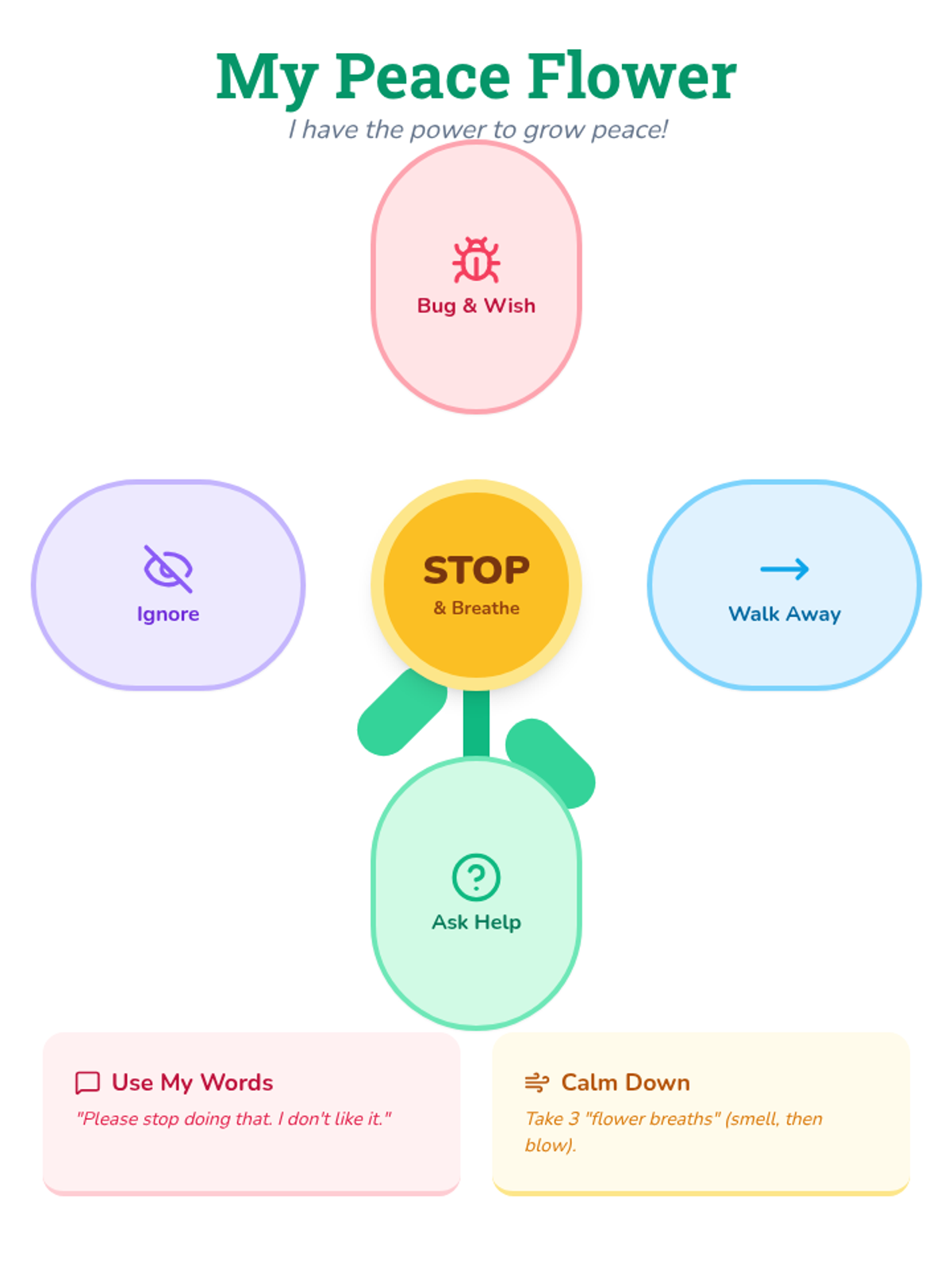
A visual classroom poster and individual desk reminder cards featuring the 'Peace Flower' conflict resolution steps for elementary students.
A visual and engaging slide deck introducing the 'Peace Petals' conflict resolution framework for elementary students, specifically focusing on recess interactions.
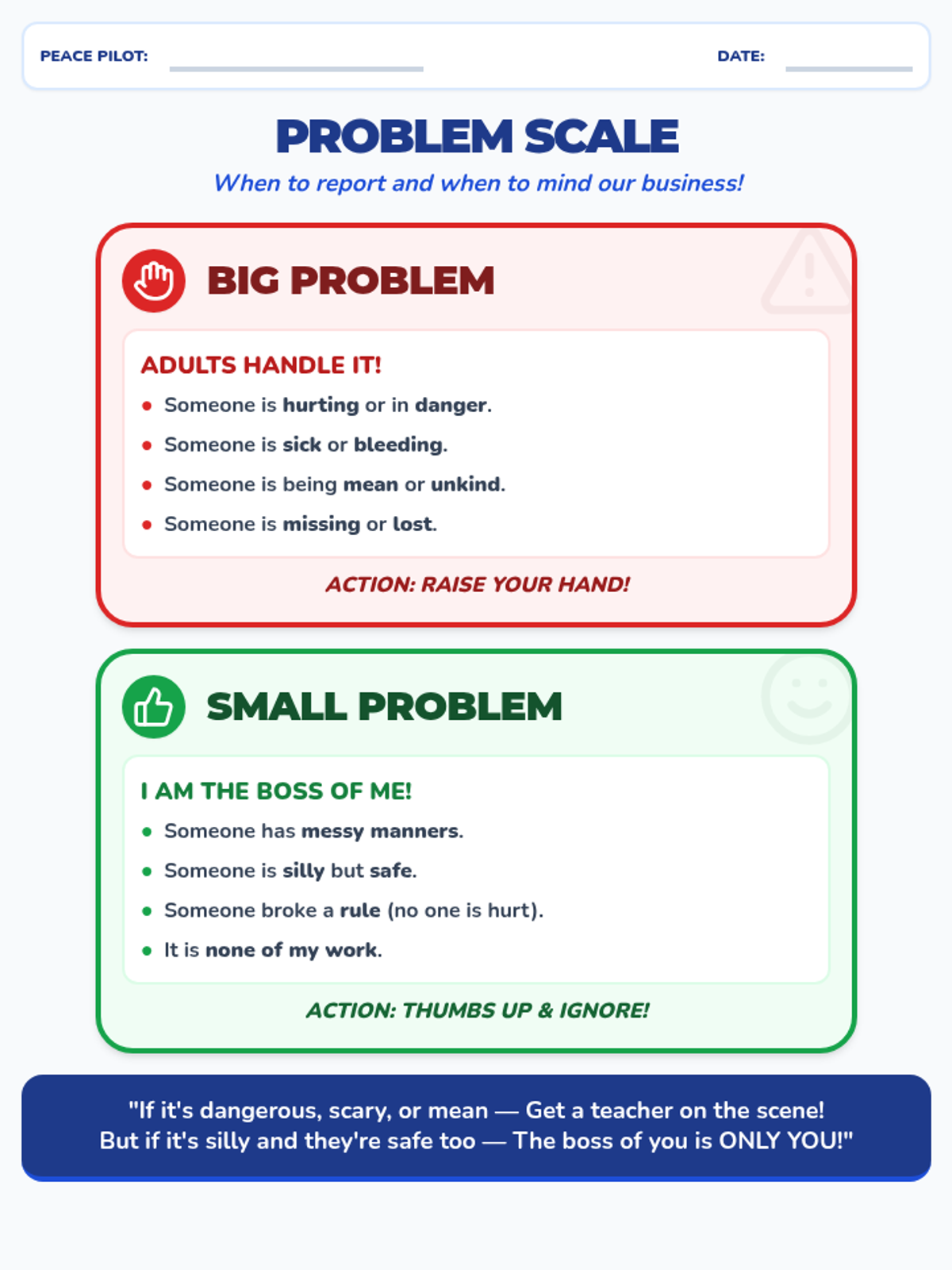
A visual reference sheet for kindergarteners defining the difference between 'Big Problems' that need adult help and 'Small Problems' where students should mind their own business.
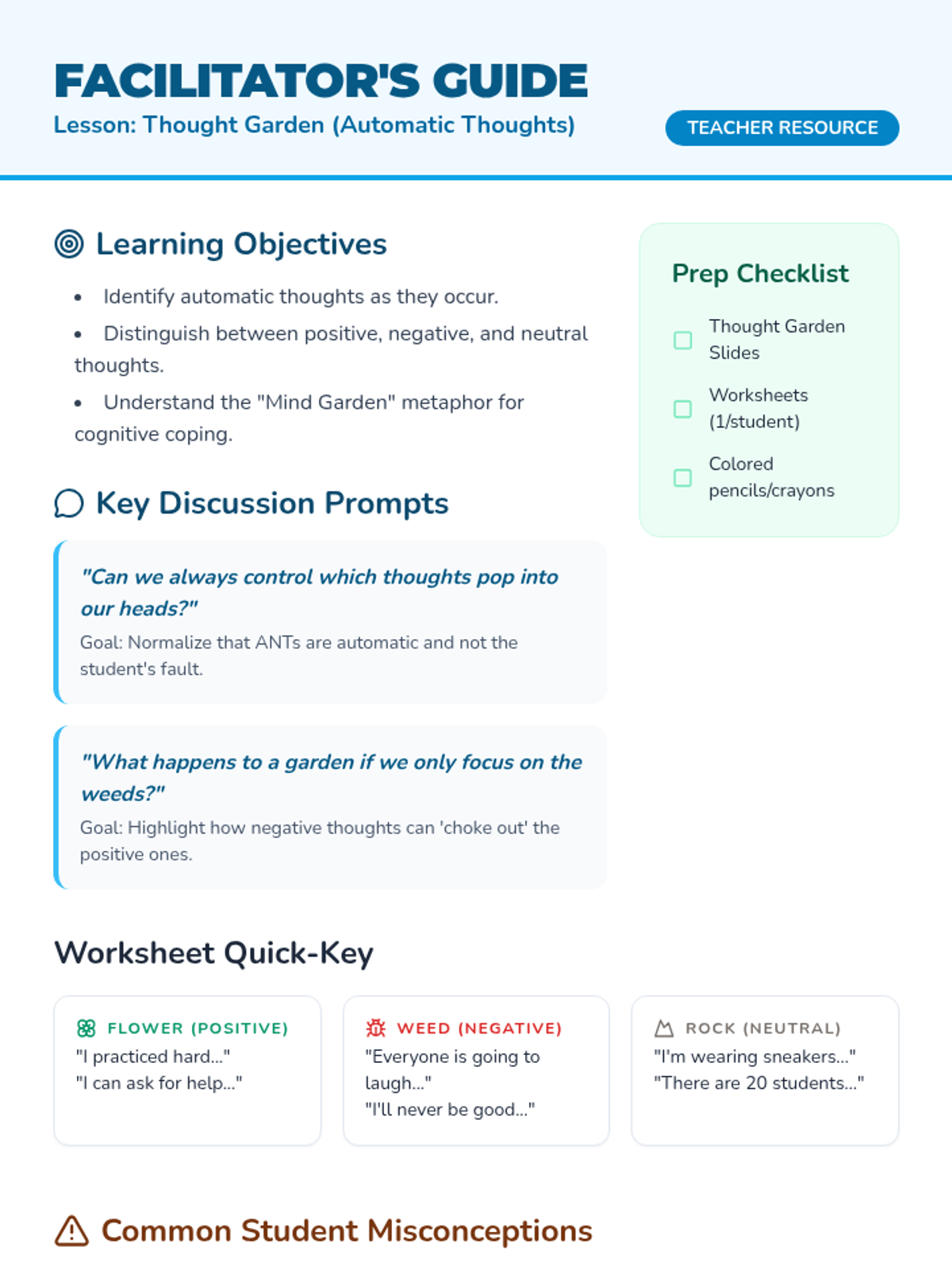
A teacher-facing facilitation guide for the Thought Garden lesson, including learning objectives, discussion prompts, prep checklists, and troubleshooting tips for common student misconceptions.
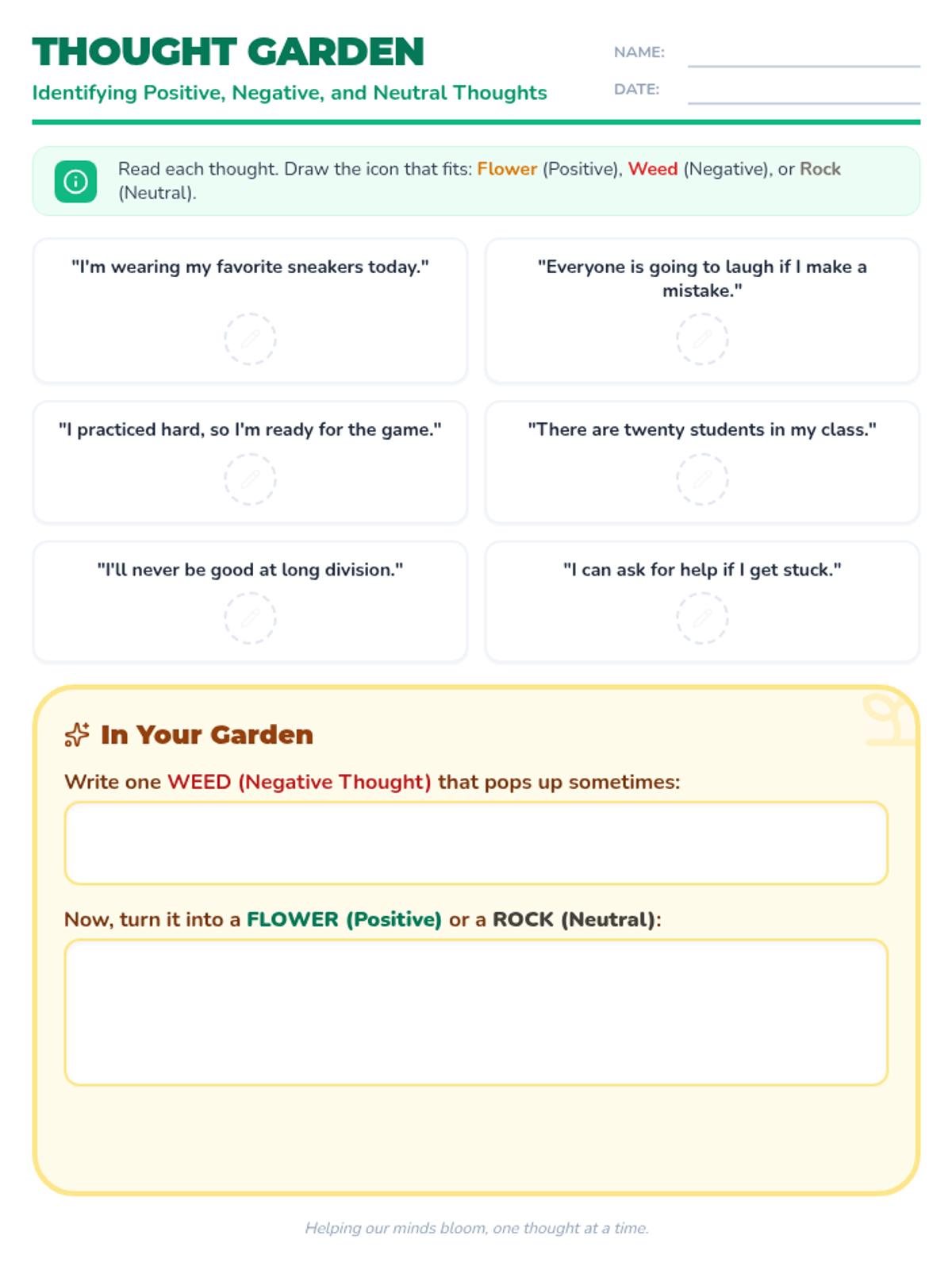
A student worksheet where 3rd graders categorize automatic thoughts as positive, negative, or neutral and practice reframing a negative thought into a positive or neutral one.
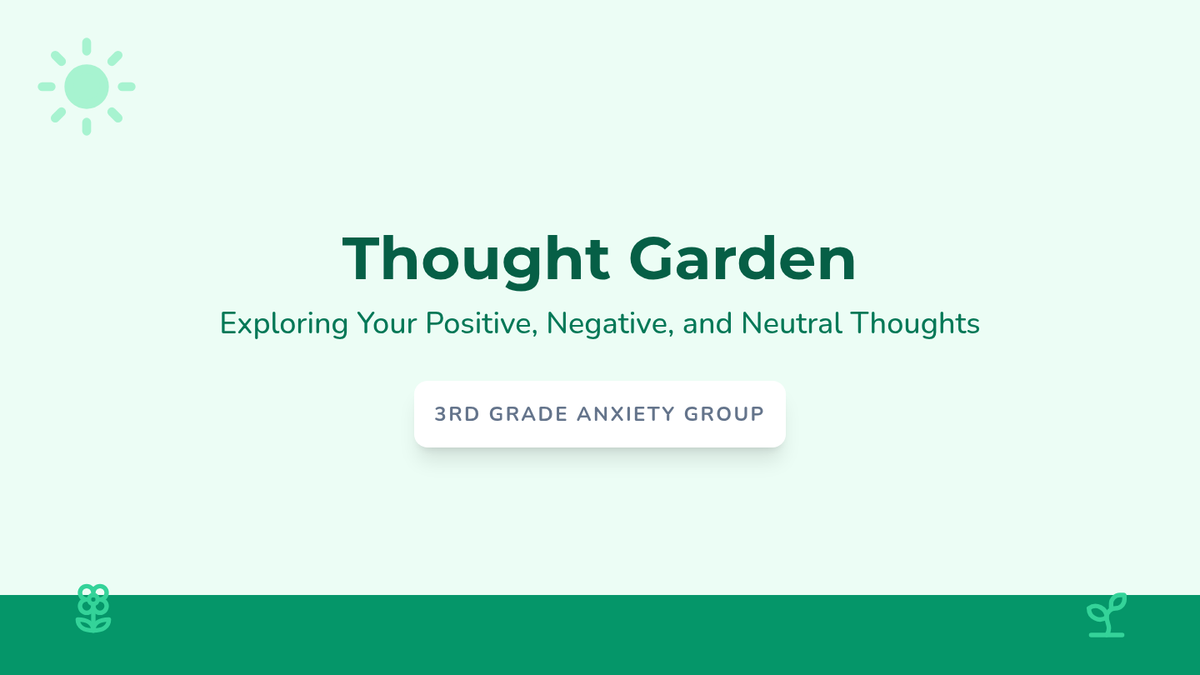
A vibrant slide presentation for 3rd grade students that introduces the garden metaphor for automatic thoughts, defining positive (flowers), negative (weeds/ANTs), and neutral (rocks) thoughts with examples.
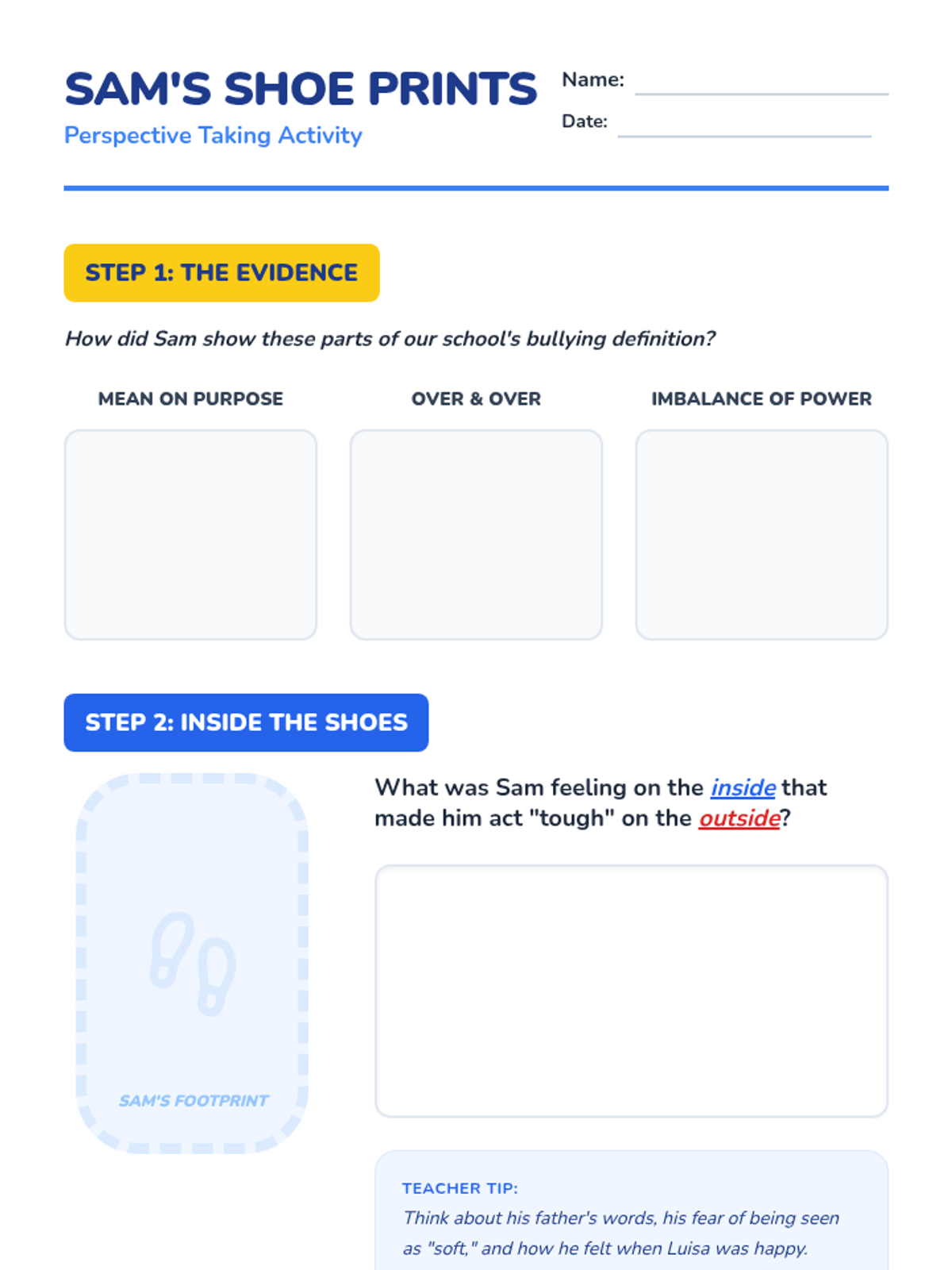
A reflective student worksheet for the lesson on Tough. It includes sections for identifying bullying behaviors according to the school's definition and a creative perspective-taking activity.
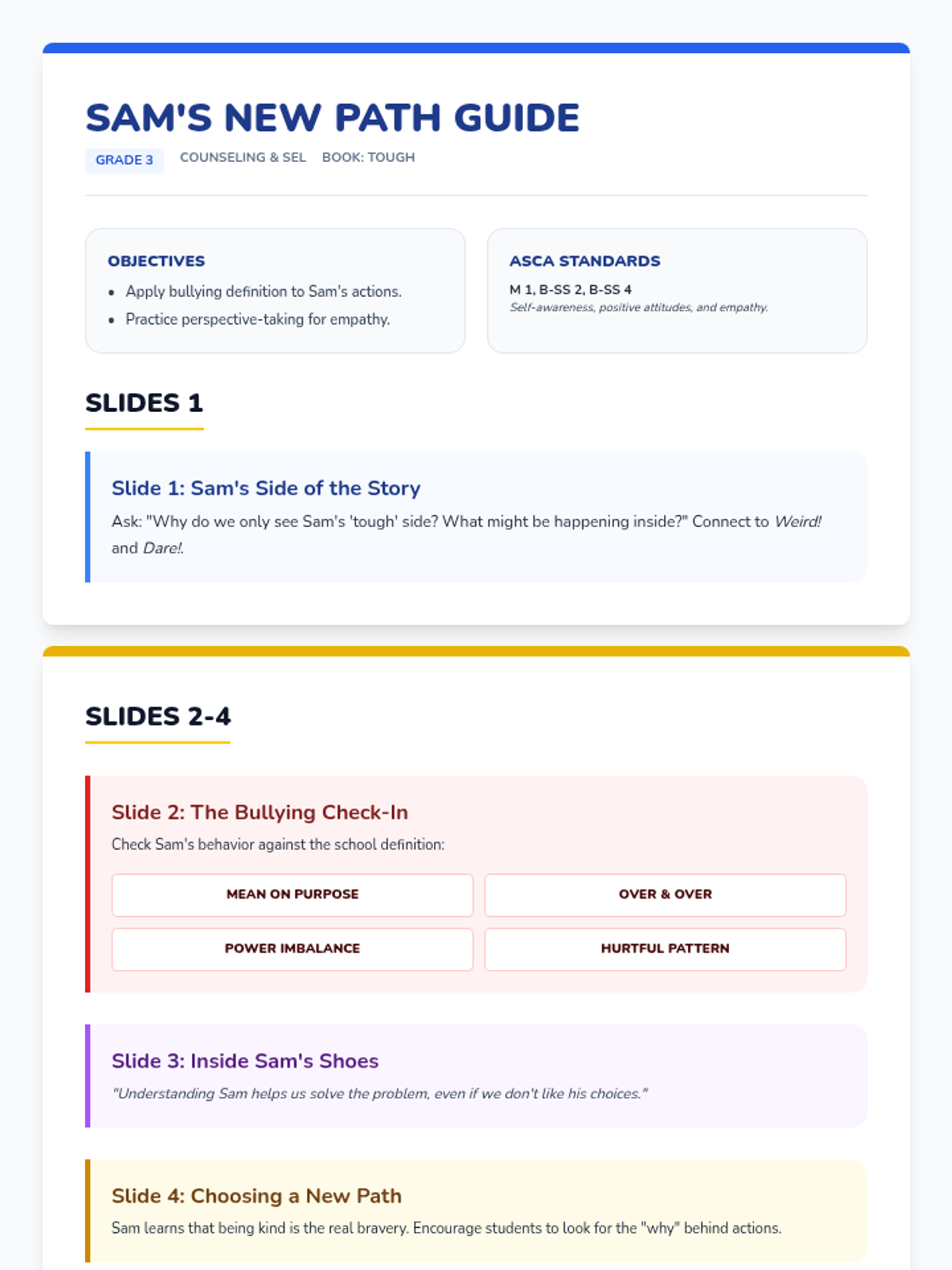
A facilitation guide for the Sam's New Path lesson, including ASCA alignment, learning objectives, and slide-by-slide discussion prompts for the book Tough.
A bright and engaging 4-slide presentation focused on the book Tough by Erin Frankel. It reinforces the school's definition of bullying while teaching 3rd graders about perspective-taking through Sam's character.
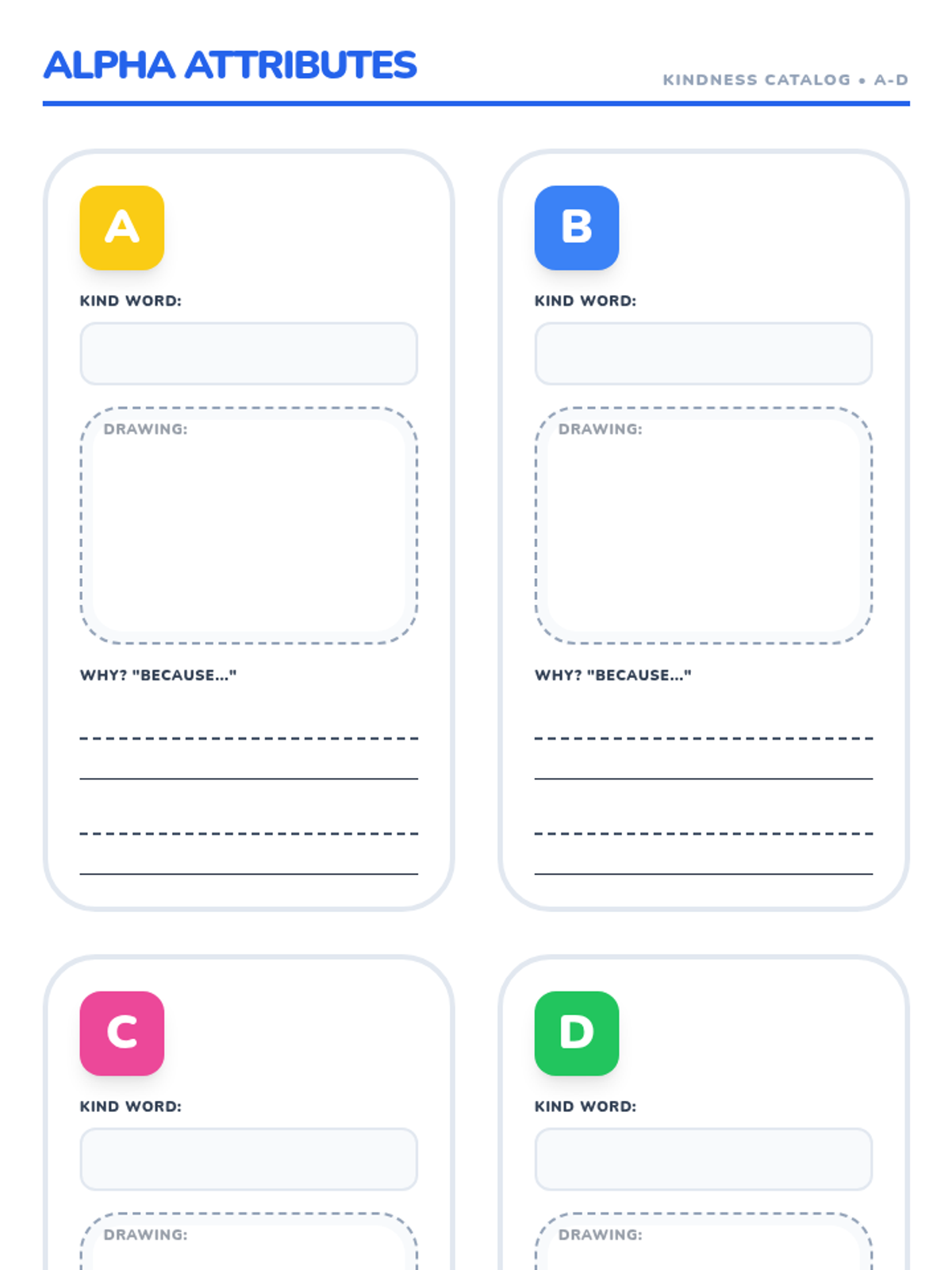
A series of printable templates for the A-Z project, where students identify a positive attribute starting with a specific letter, illustrate a classmate who embodies it, and explain their choice. Includes specialized 1st-grade handwriting lines.
A student-facing reflection journal for the Kindness Catalog lesson, featuring space for vocabulary practice, peer appreciation, and emotional reflection.
A vibrant slide deck designed for first-grade instruction, introducing the concept of a 'Kindness Catalog' and guiding students through the brainstorming and creation process.
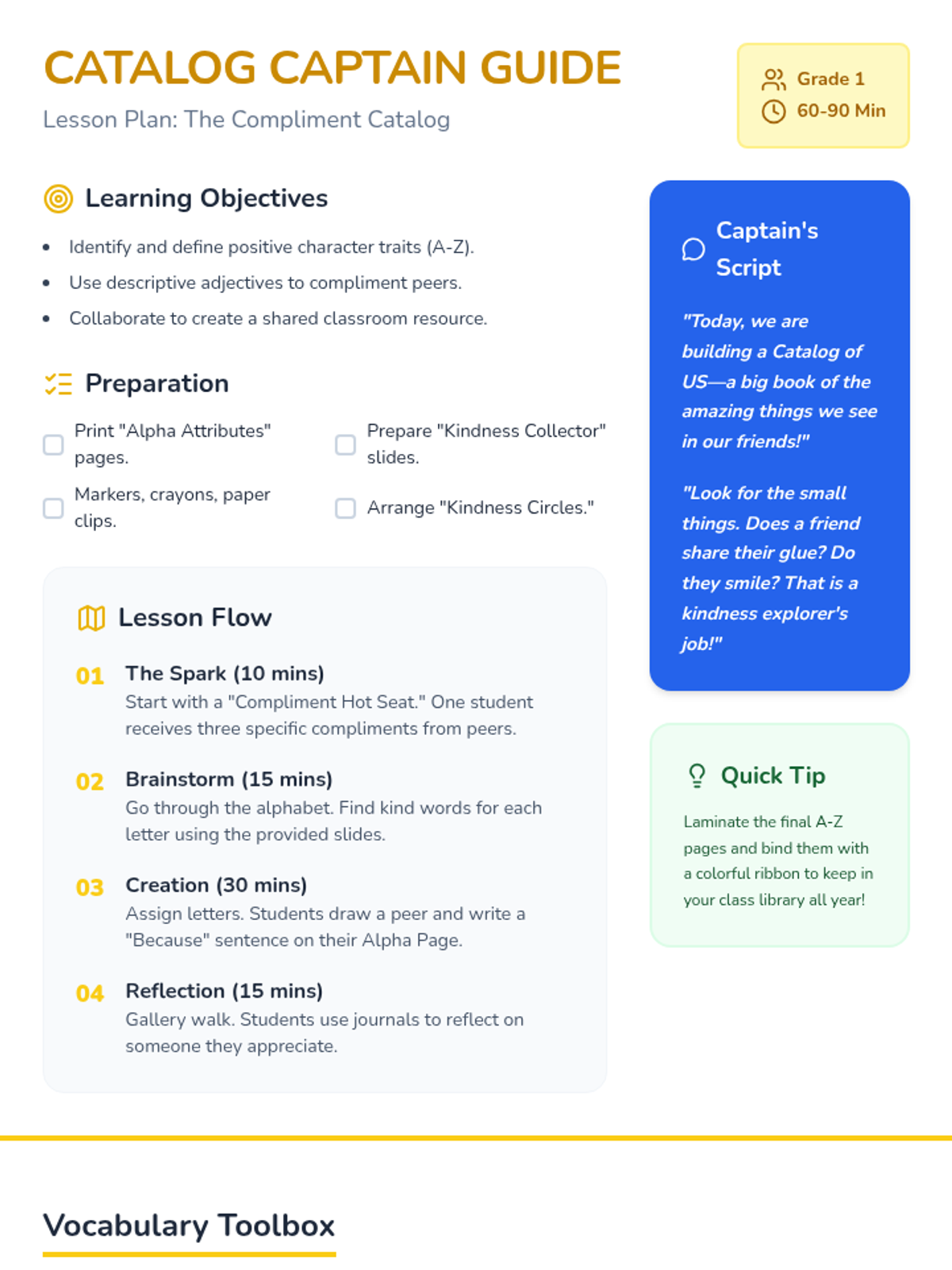
A comprehensive teacher facilitation guide for the Kindness Catalog lesson, including a structured lesson flow, vocabulary list from A-Z, and differentiation strategies for first-grade students.
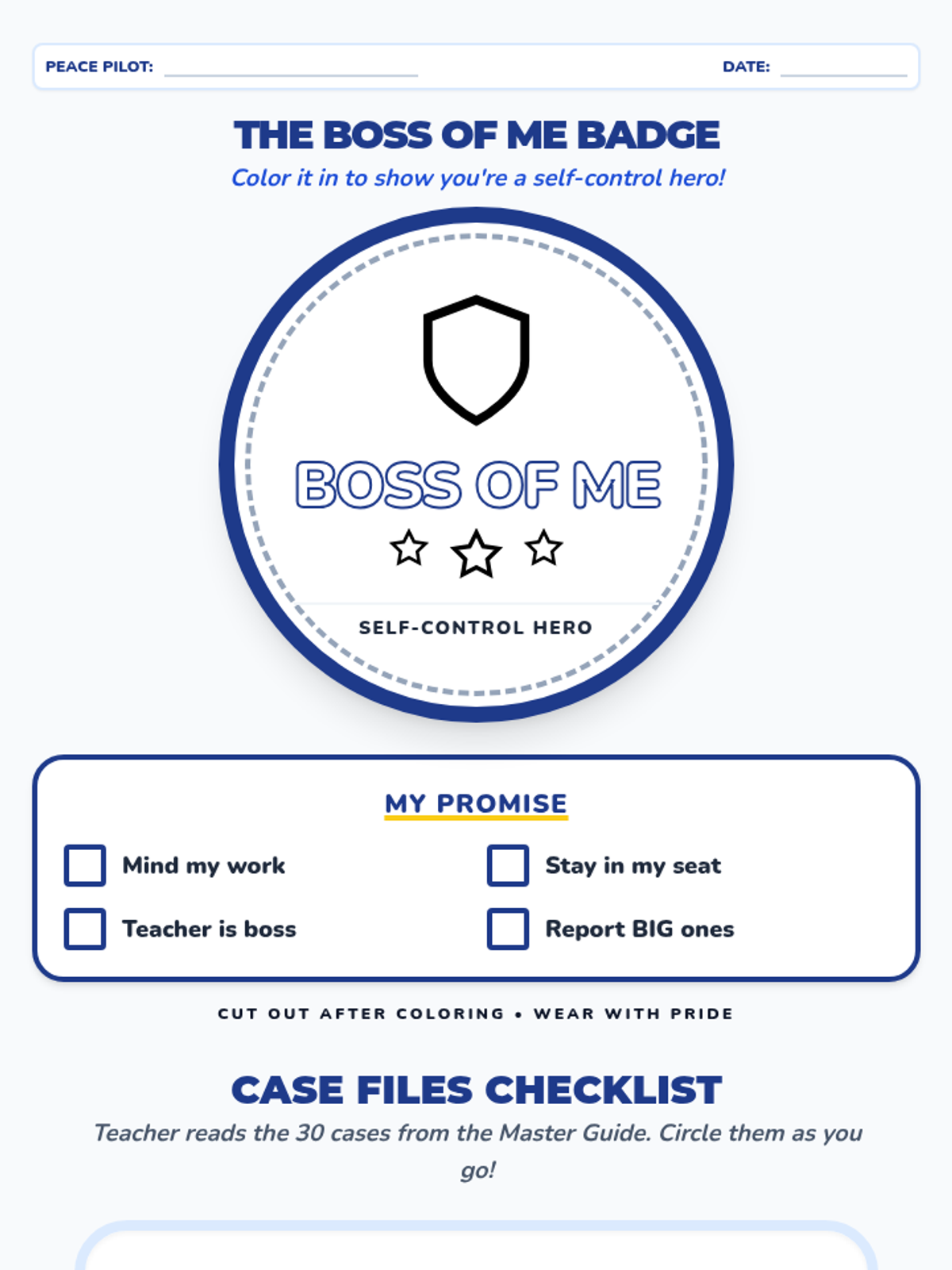
A multi-page reflection handout for kindergarteners including a coloring badge and a 'Case Files' icon grid to follow along with 30 scenarios.
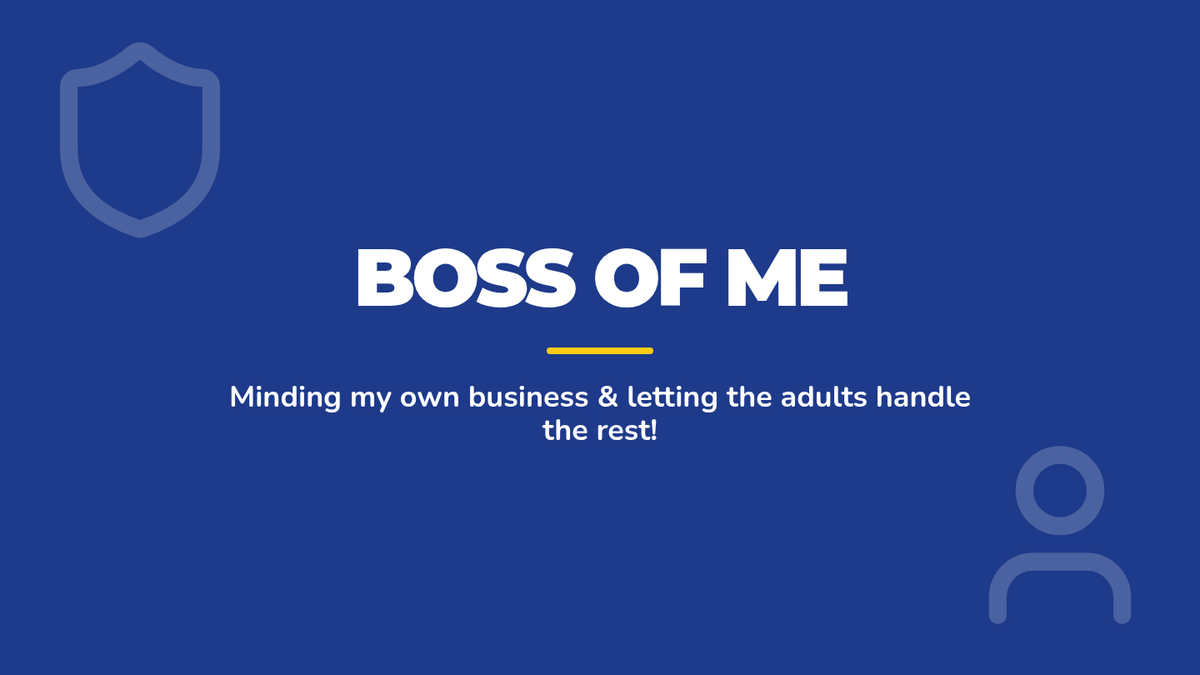
A high-impact slide deck for kindergarteners that introduces the 'Boss of Me' concept, featuring visual scenario rounds to practice when to mind their own business and when to ask for help.
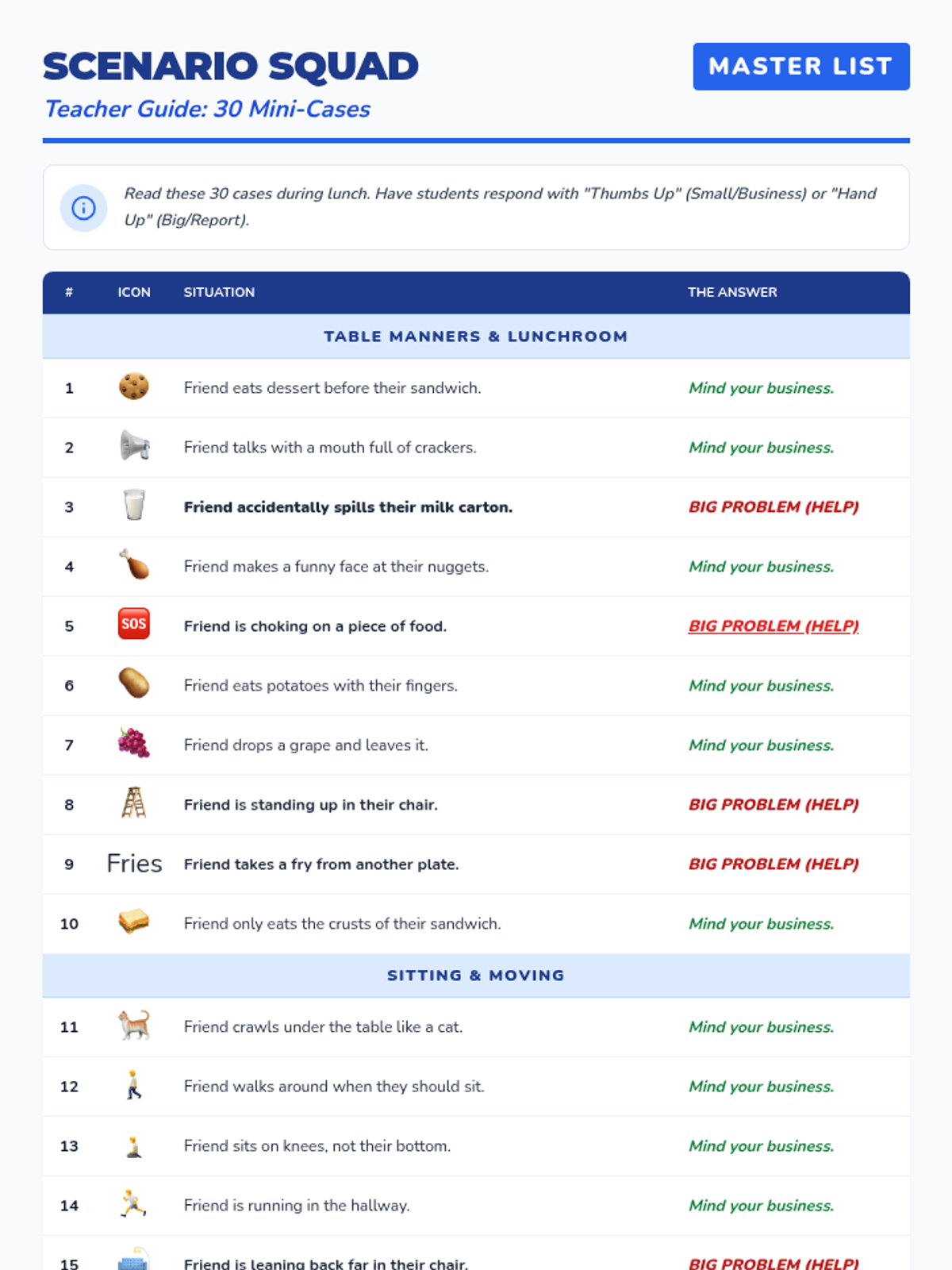
A comprehensive guide for teachers containing 30 varied scenarios to help kindergarteners distinguish between minding their own business and reporting big problems.
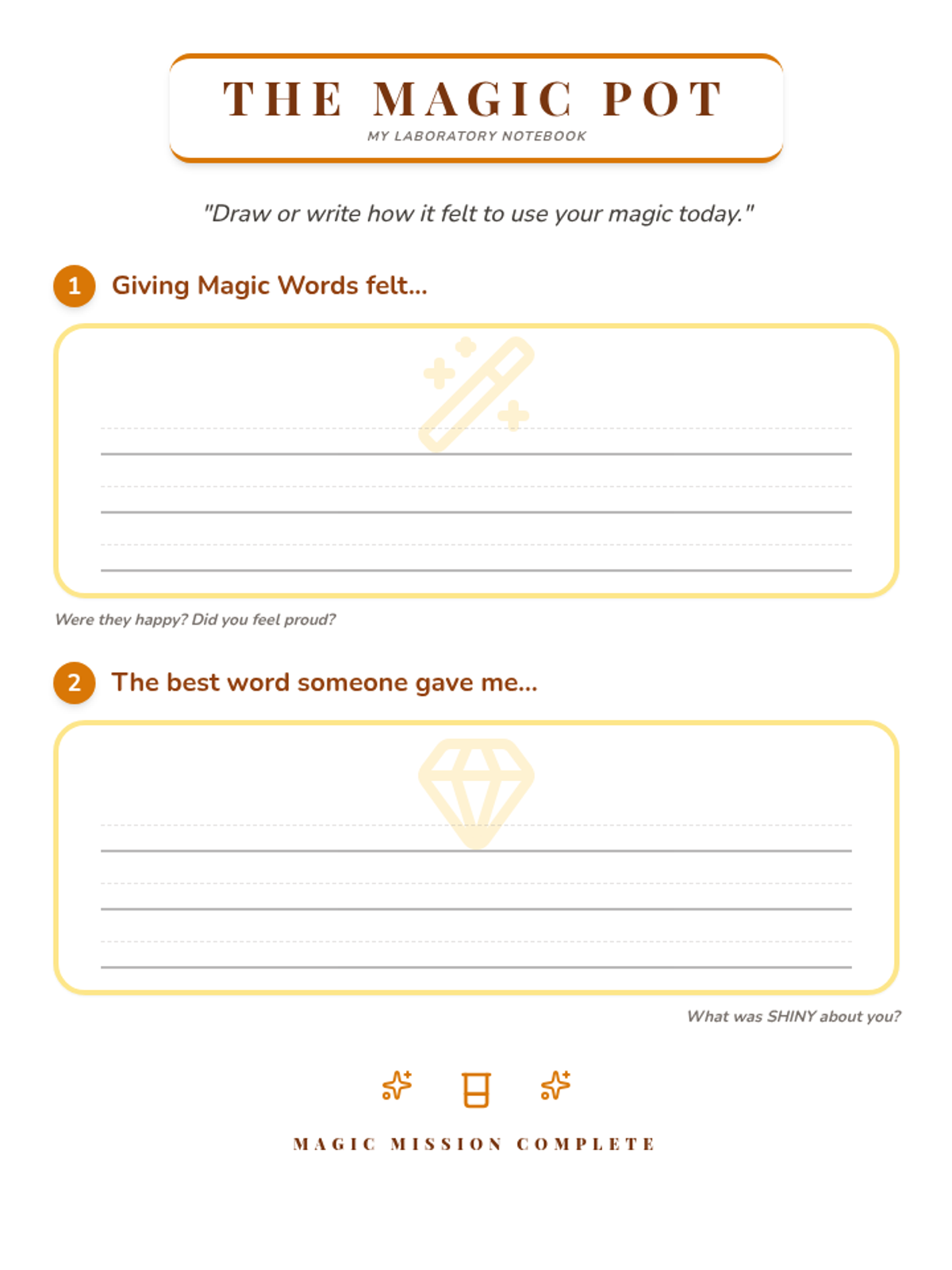
A reflection sheet for 2nd and 3rd graders that encourages both drawing and writing. It focuses on the emotional experience of giving and receiving 'Magic Words'. Features standard primary lines (dashed midlines) and watermark icons. Consolidated to a single page.
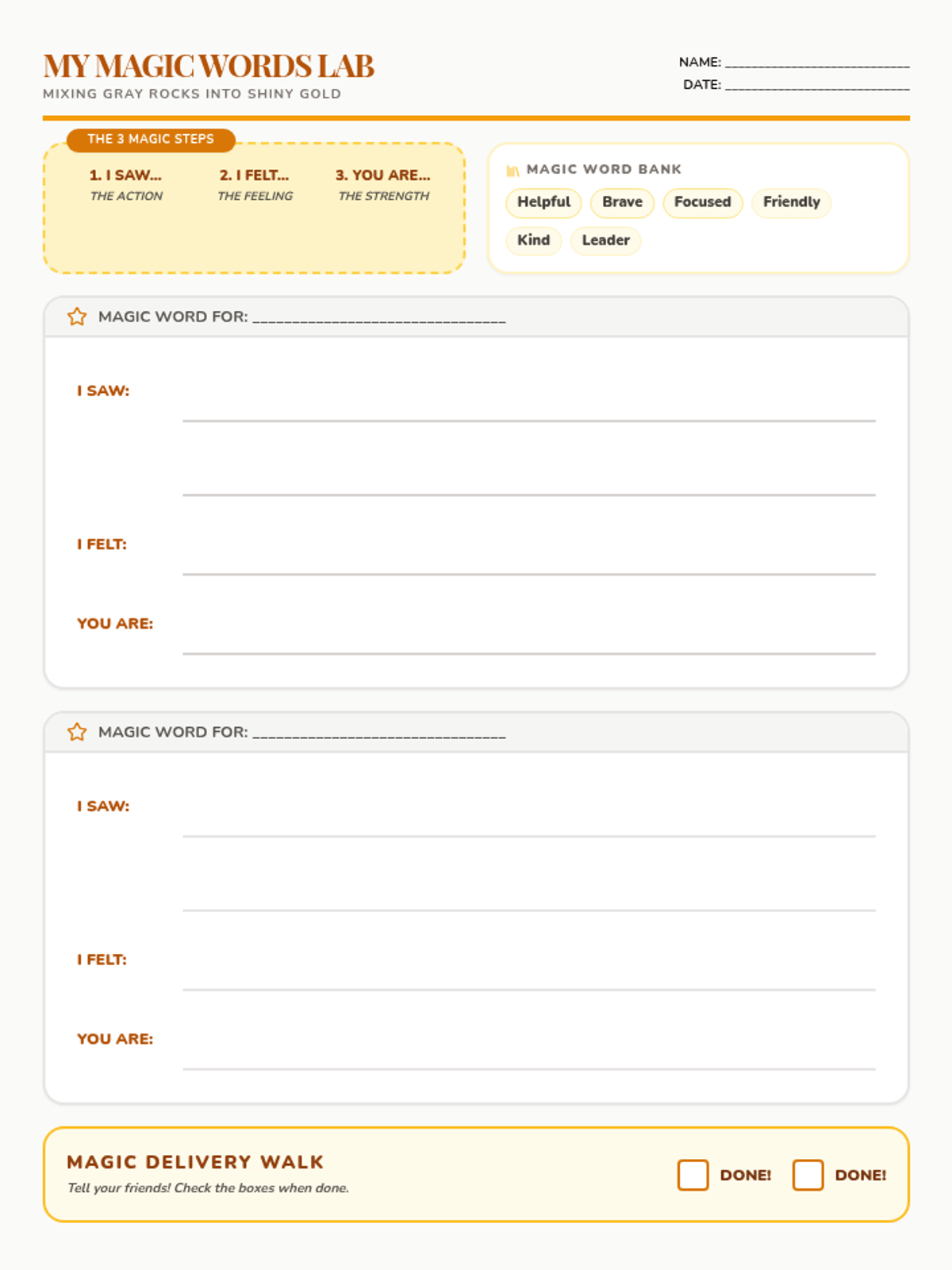
A worksheet for 2nd and 3rd graders with large writing lines (32px+ height) and simplified prompts. It includes a Magic Word Bank to help younger students identify strengths in their peers. Consolidated into a single page with space for 2 friend reflections.
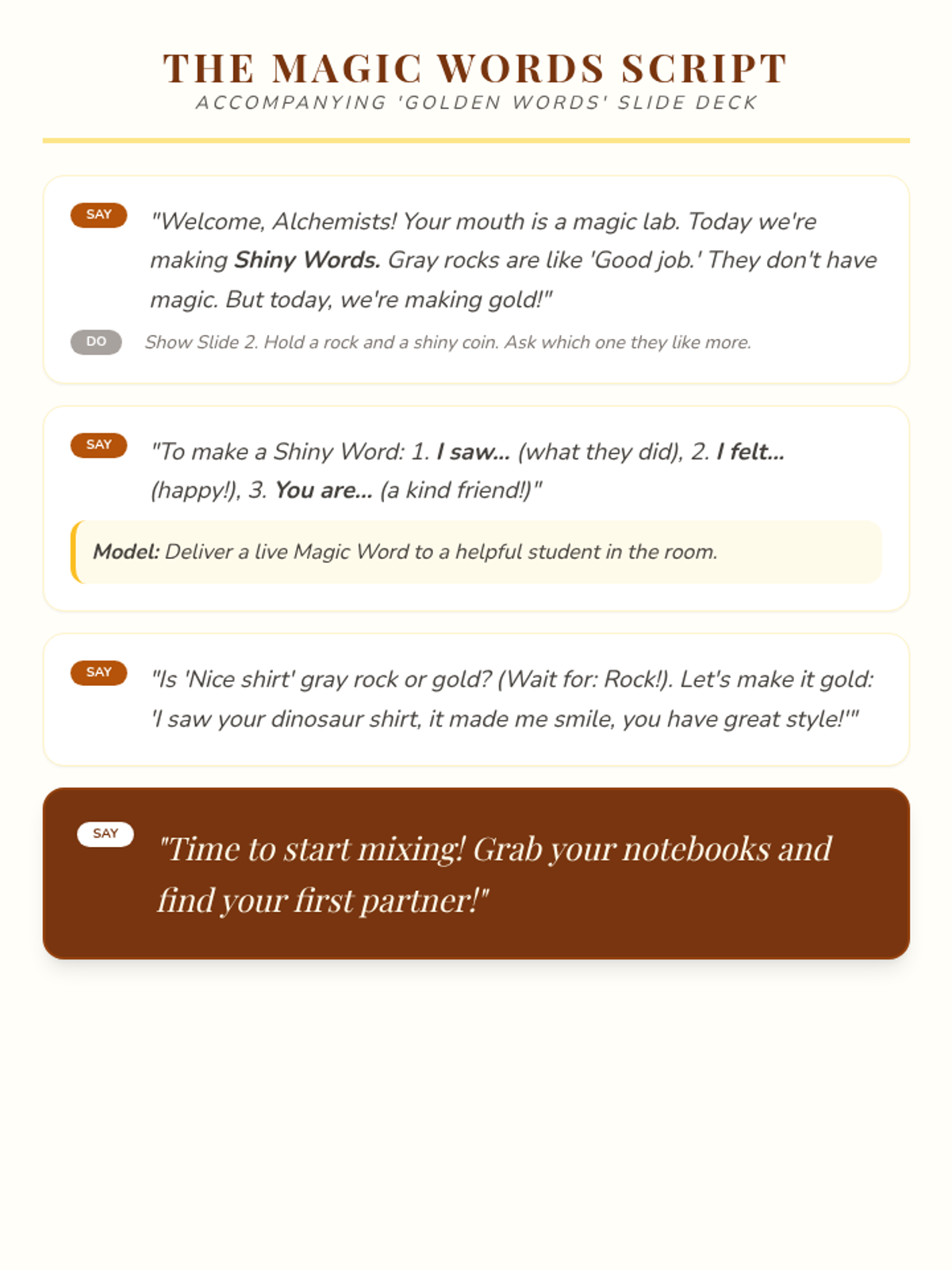
A facilitation script tailored for 2nd and 3rd grade teachers. It uses simplified metaphors ('Heavy vs. Shiny' words) and a clear 3-step formula. Consolidated into a single-page layout for easy classroom use.
A 5-slide presentation designed for 2nd and 3rd graders. It uses high-contrast colors, large fonts (min 28px), and simplified concepts to teach the difference between generic and specific appreciation. Includes a new word bank slide and improved text contrast.
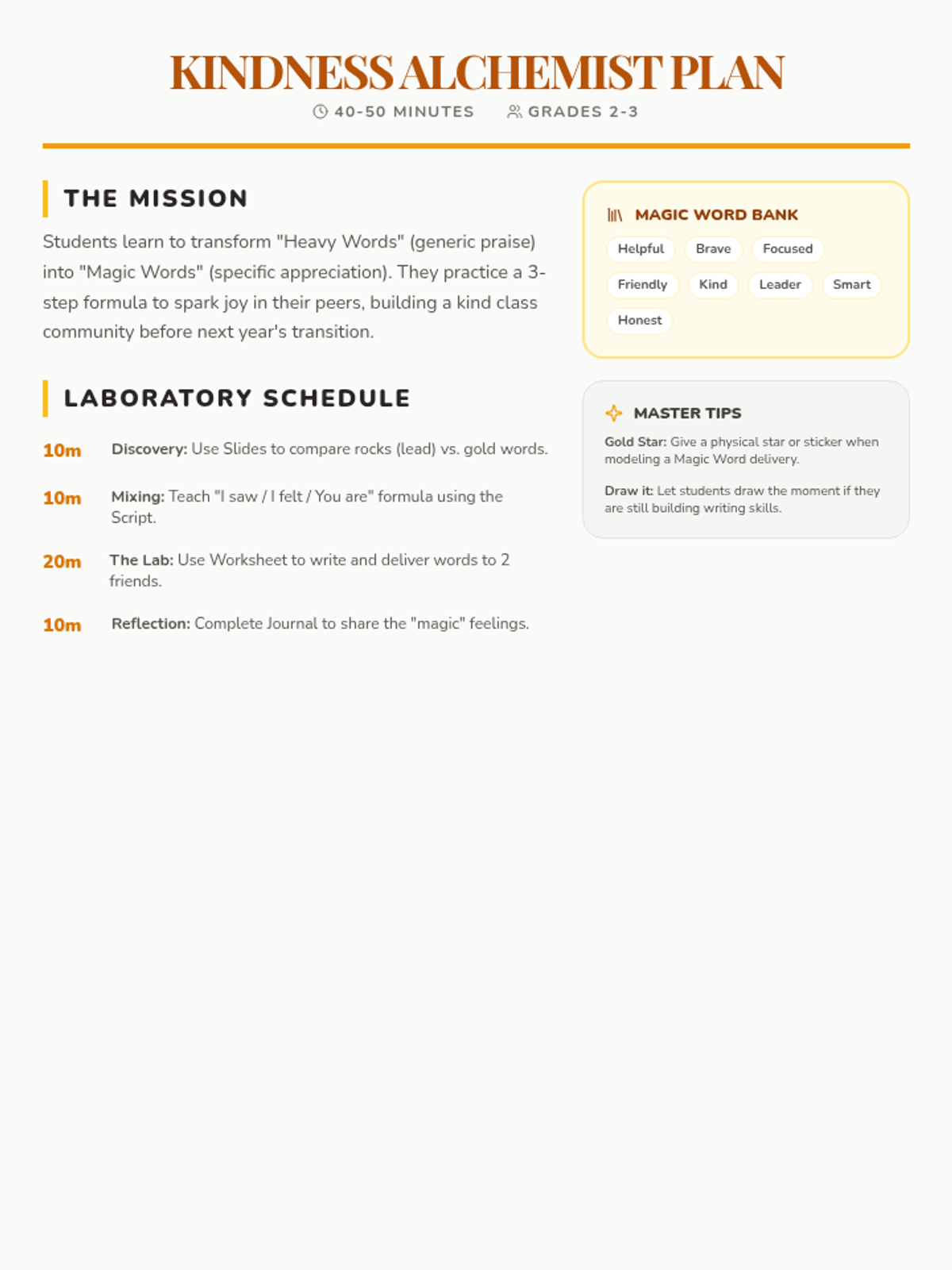
A teacher's guide for the 2nd-3rd grade version of the 'Appreciation Alchemists' lesson. It simplifies the core concepts of specific feedback into 'Magic Words' and provides a clear pacing guide for younger learners. Optimized for a single-page layout.
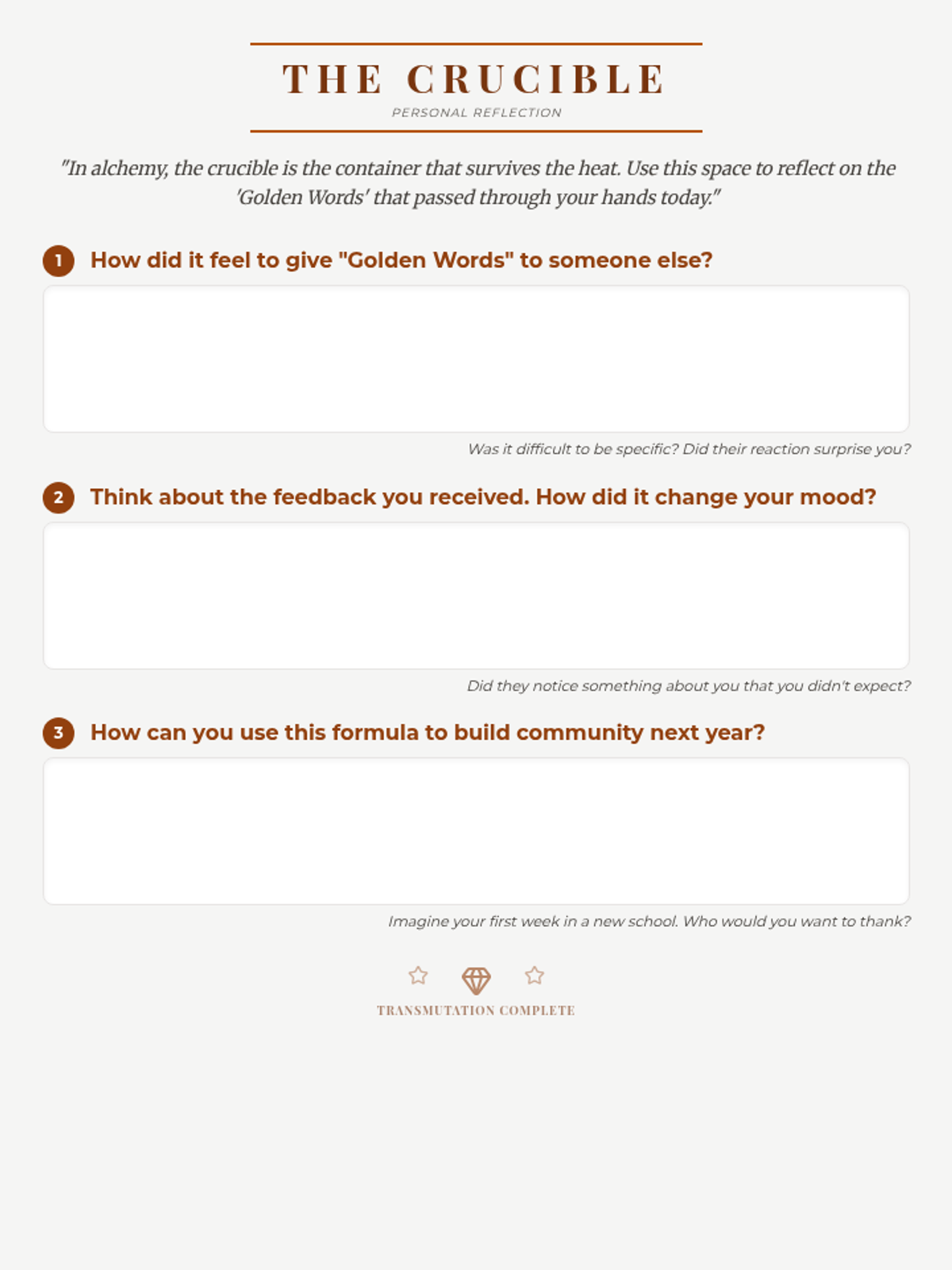
A reflection journal page called 'The Crucible', designed for students to introspect on their experience giving and receiving high-quality feedback. It emphasizes the long-term social benefits of these skills for upcoming transitions.