A worksheet featuring six sets of happy and sad face circles designed to be cut out and glued together to create double-sided mood communication tools for students.
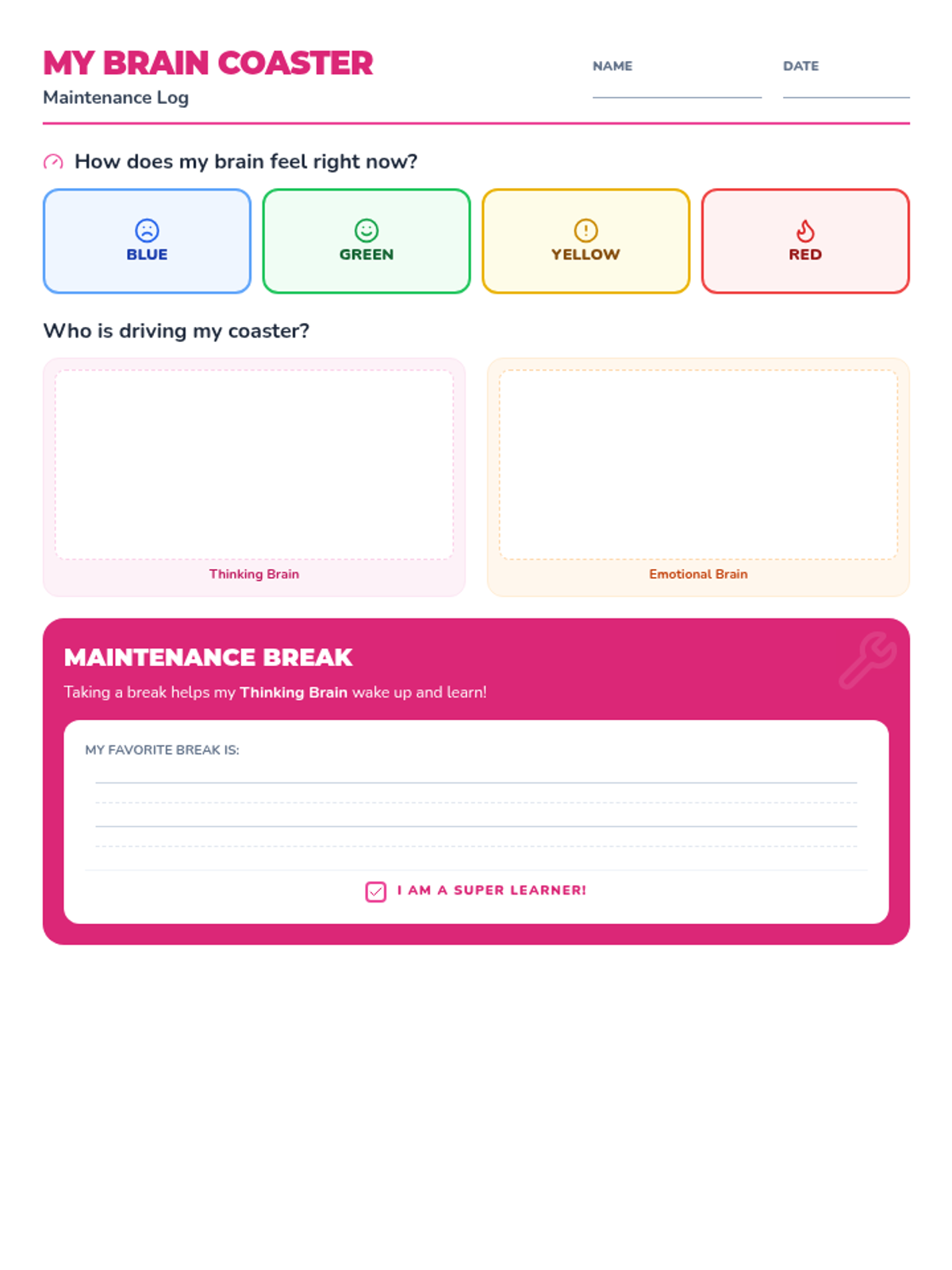
A student-facing worksheet using the rollercoaster theme to help students identify their current zone and plan a 'maintenance break' to re-engage their thinking brain. Features visual icons for 1st-grade support and improved handwriting spaces. Optimized for single-page print.
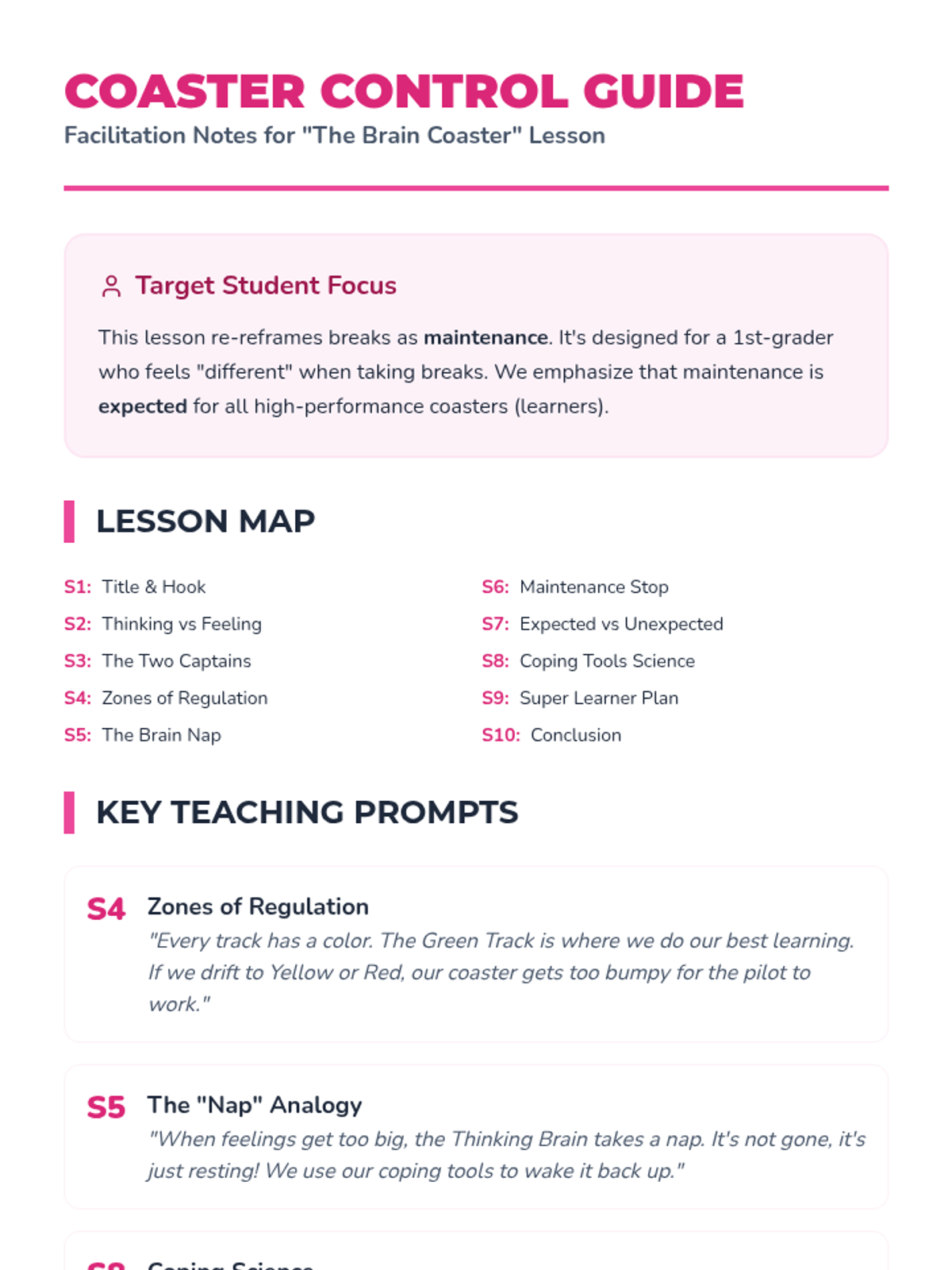
Updated teacher facilitation guide for the Brain Coaster lesson, providing prompts for the new Zones slide, updated analogies, and a full lesson map. Fixed character encoding issues.
Updated visual slide deck using a pink rollercoaster theme to explain the science of brain regulation, featuring simplified analogies, the Zones of Regulation, and specific coping skills. Fixed contrast and icon issues.
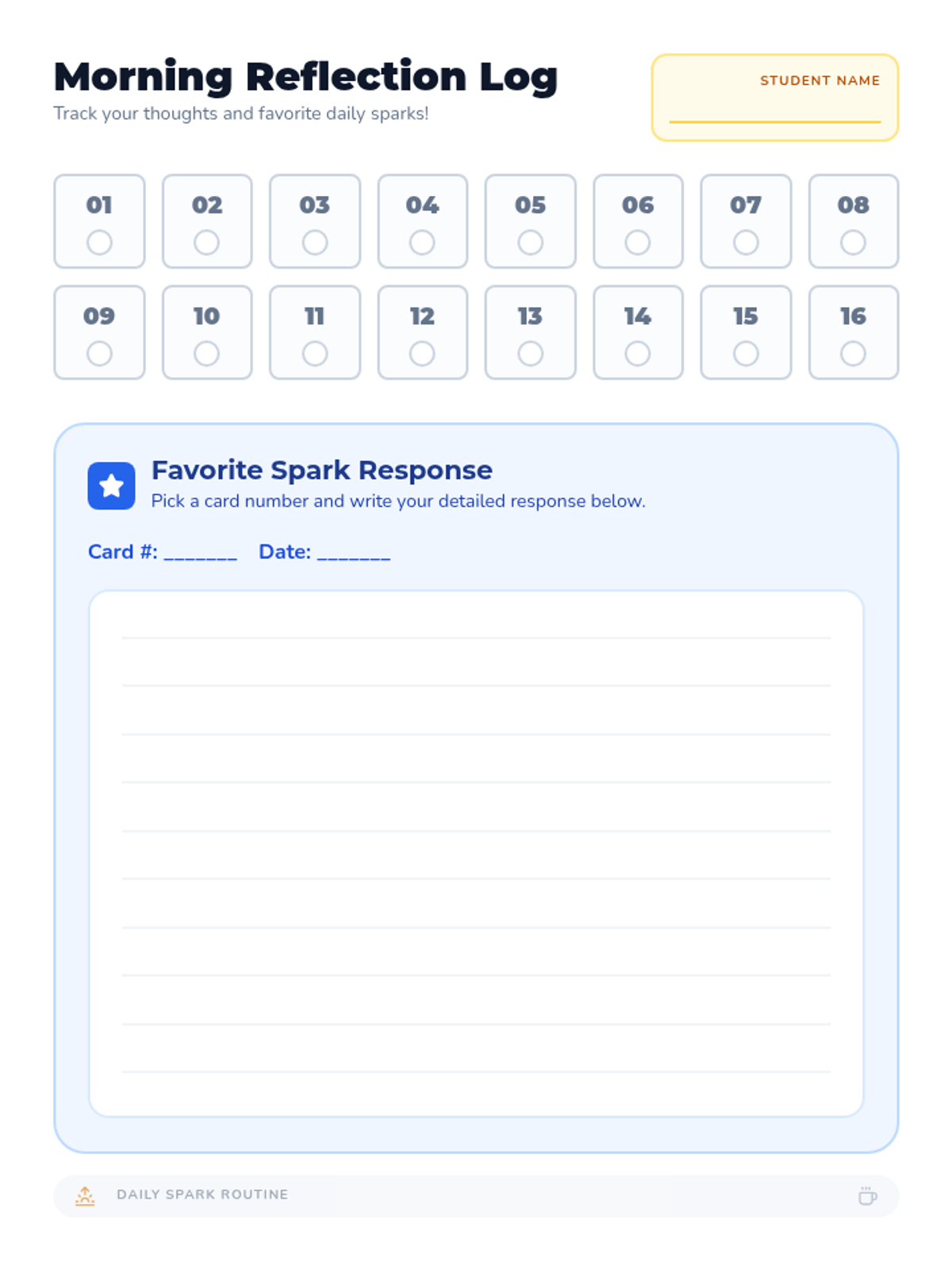
A student-facing log for tracking completed morning meeting questions and recording a detailed reflection on a favorite prompt.
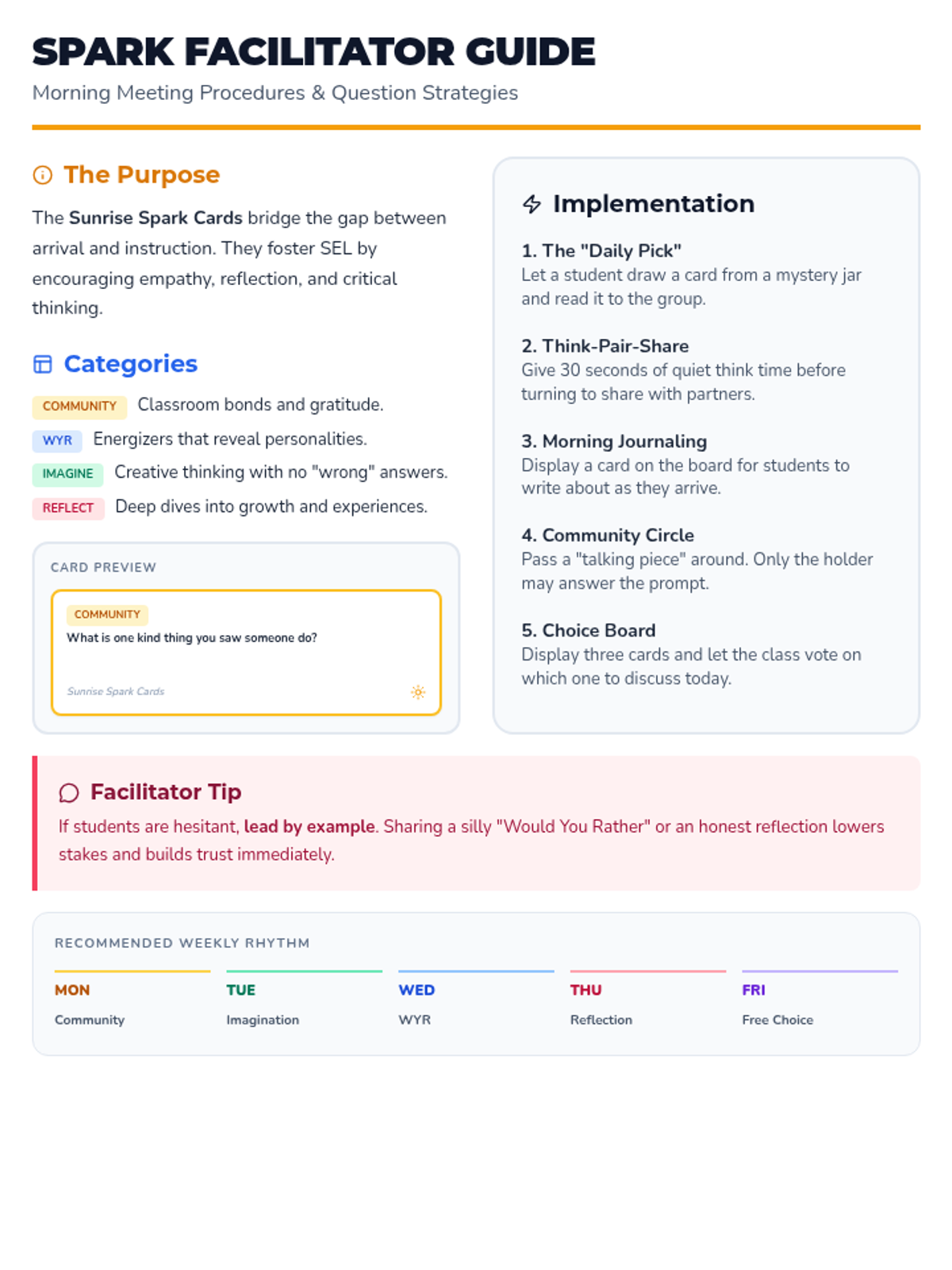
A facilitator's guide providing instructions, category breakdowns, and implementation strategies for using morning meeting prompt cards.
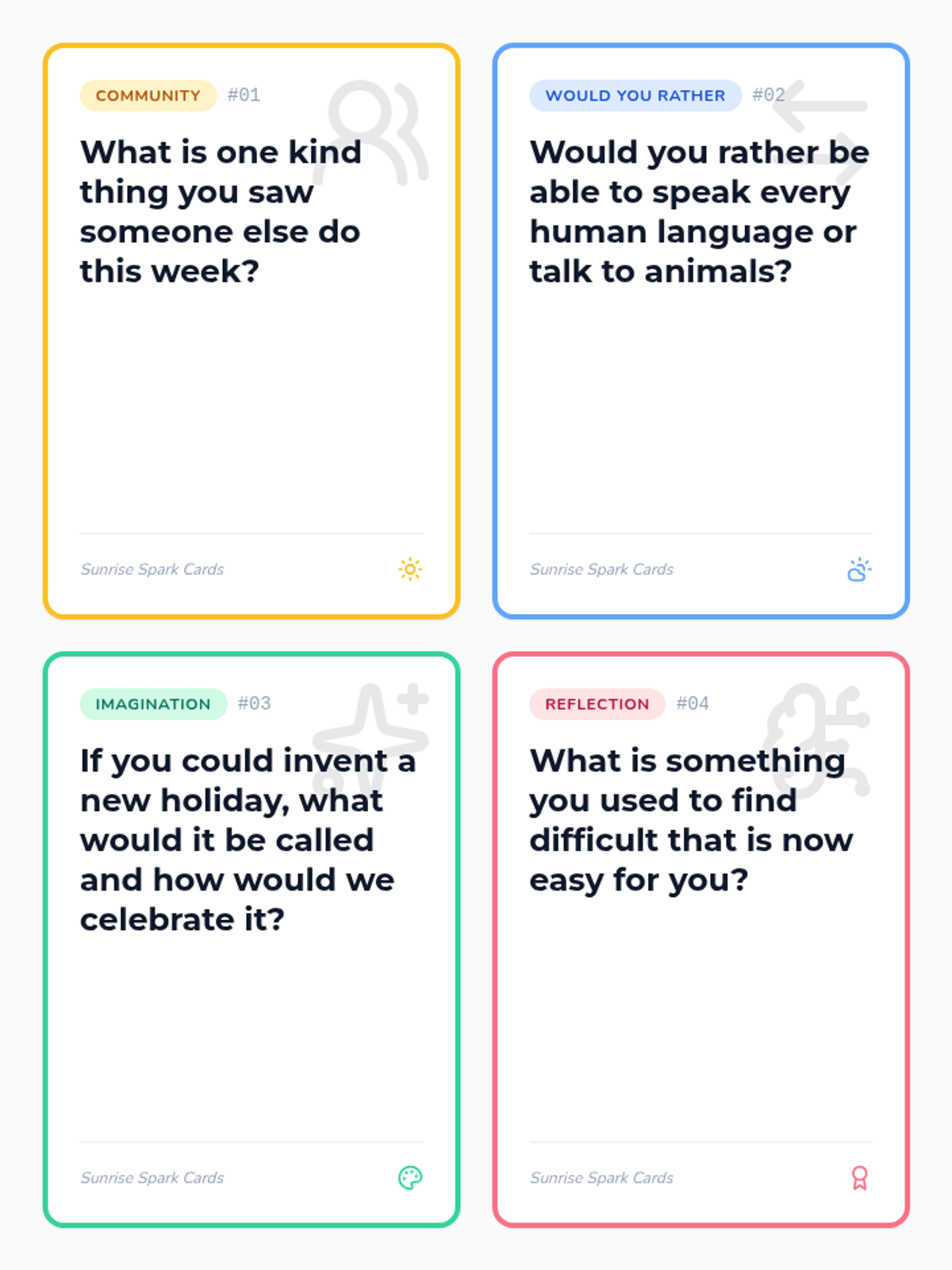
A set of 16 vibrant, themed morning meeting task cards covering community building, reflection, imagination, and "would you rather" questions.
A visually bright and engaging slide deck for 1st graders to learn about self-esteem, featuring the "Inner Sun" concept and classroom activities.
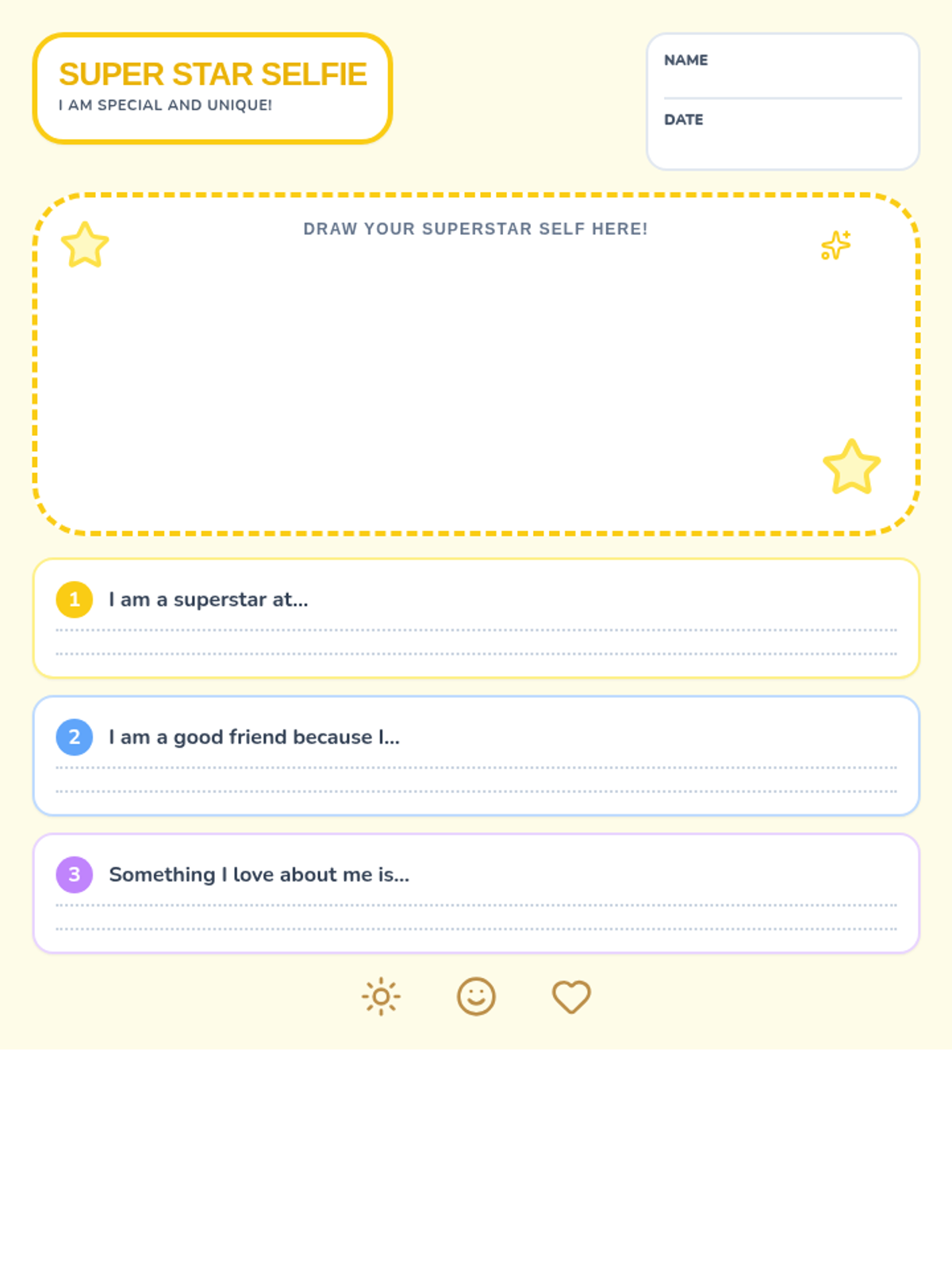
An engaging 1st-grade worksheet where students draw a "superstar selfie" and complete prompts about their strengths and positive traits.
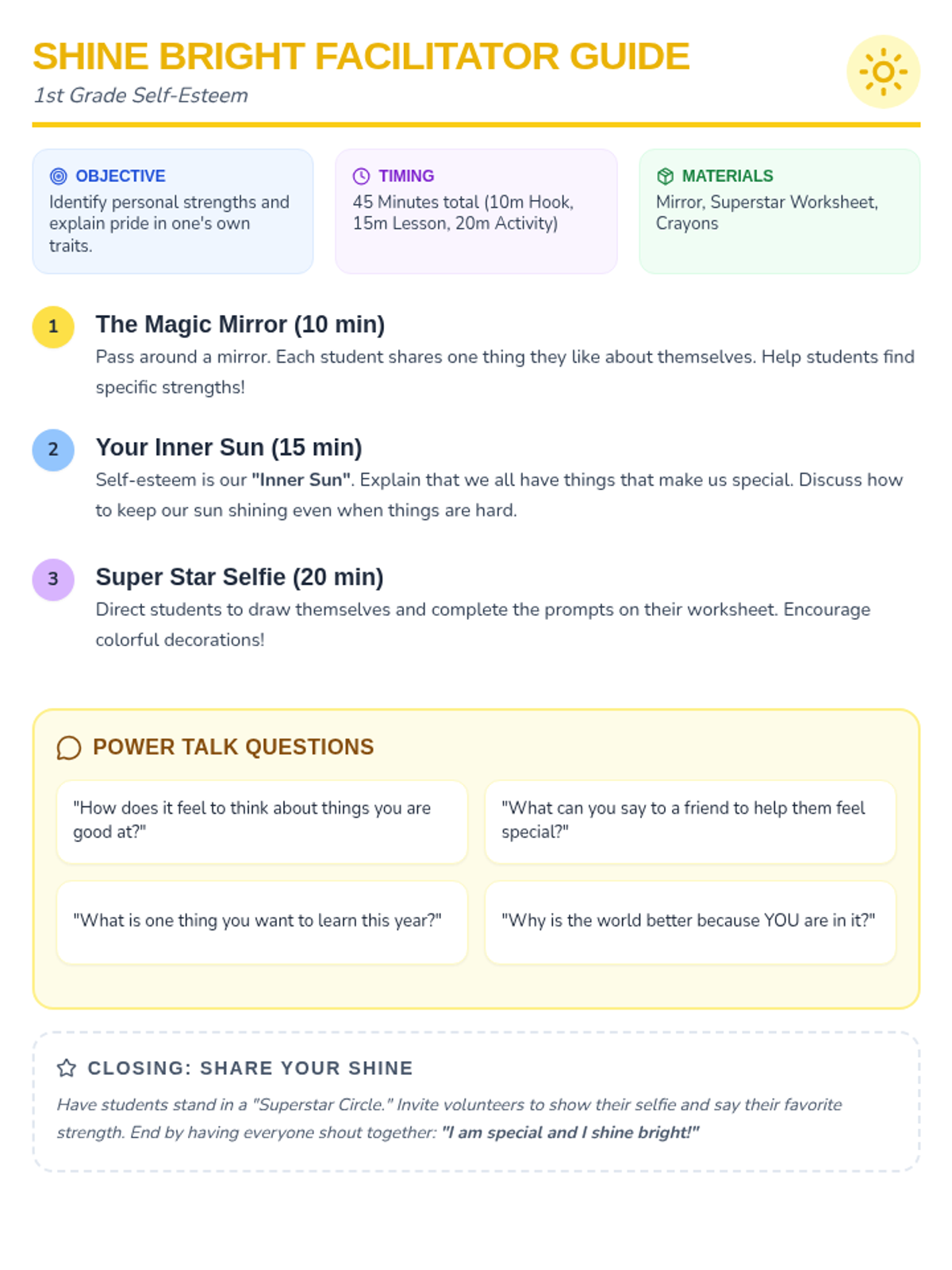
A comprehensive teacher's guide for a 1st-grade self-esteem lesson, featuring a "Magic Mirror" hook, clear instructional steps, and discussion prompts.
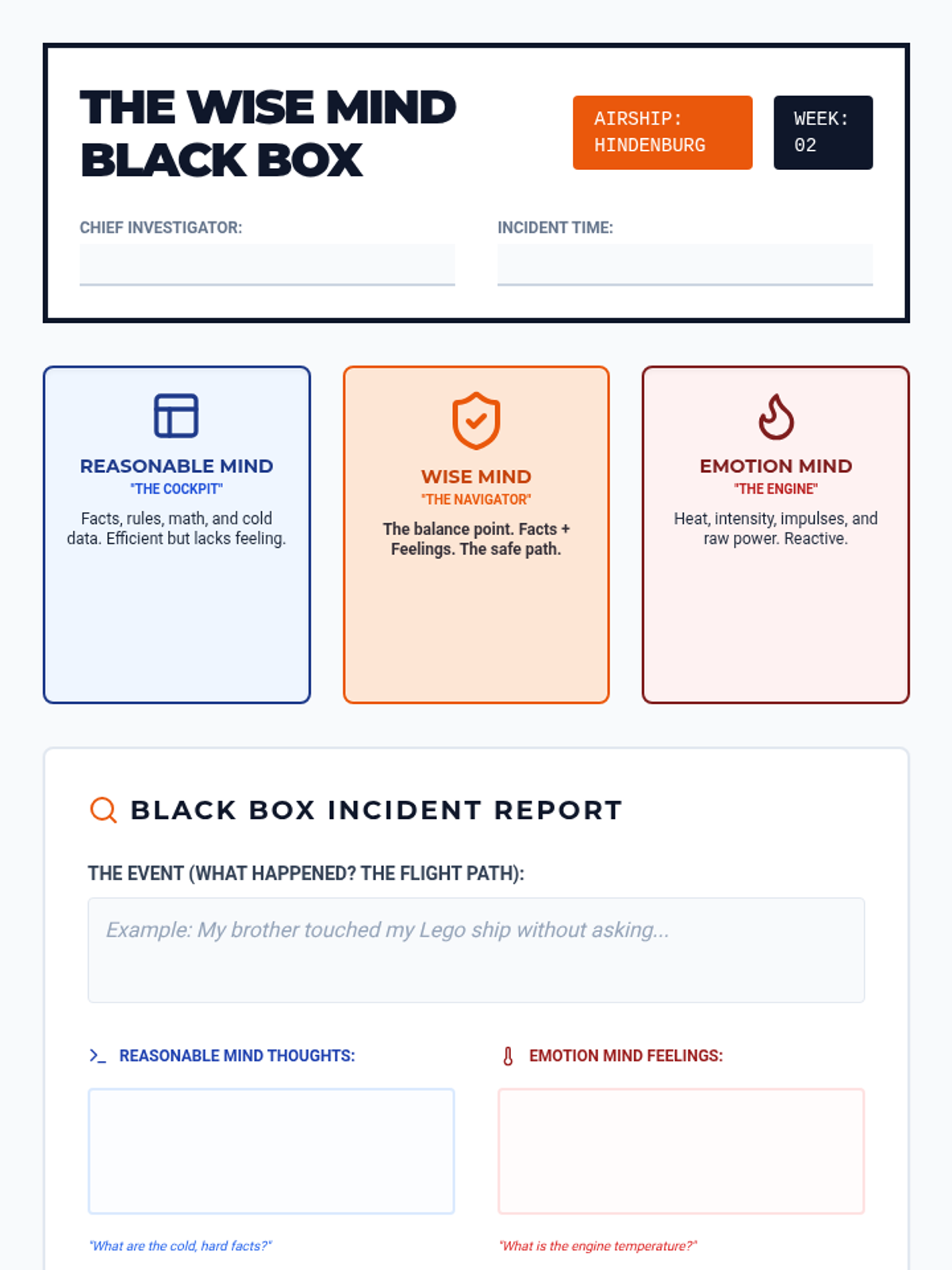
A student-facing worksheet for identifying the three states of mind (Reasonable, Emotion, and Wise) using the Hindenburg airship metaphor. Revised for single-page layout and increased writing space.
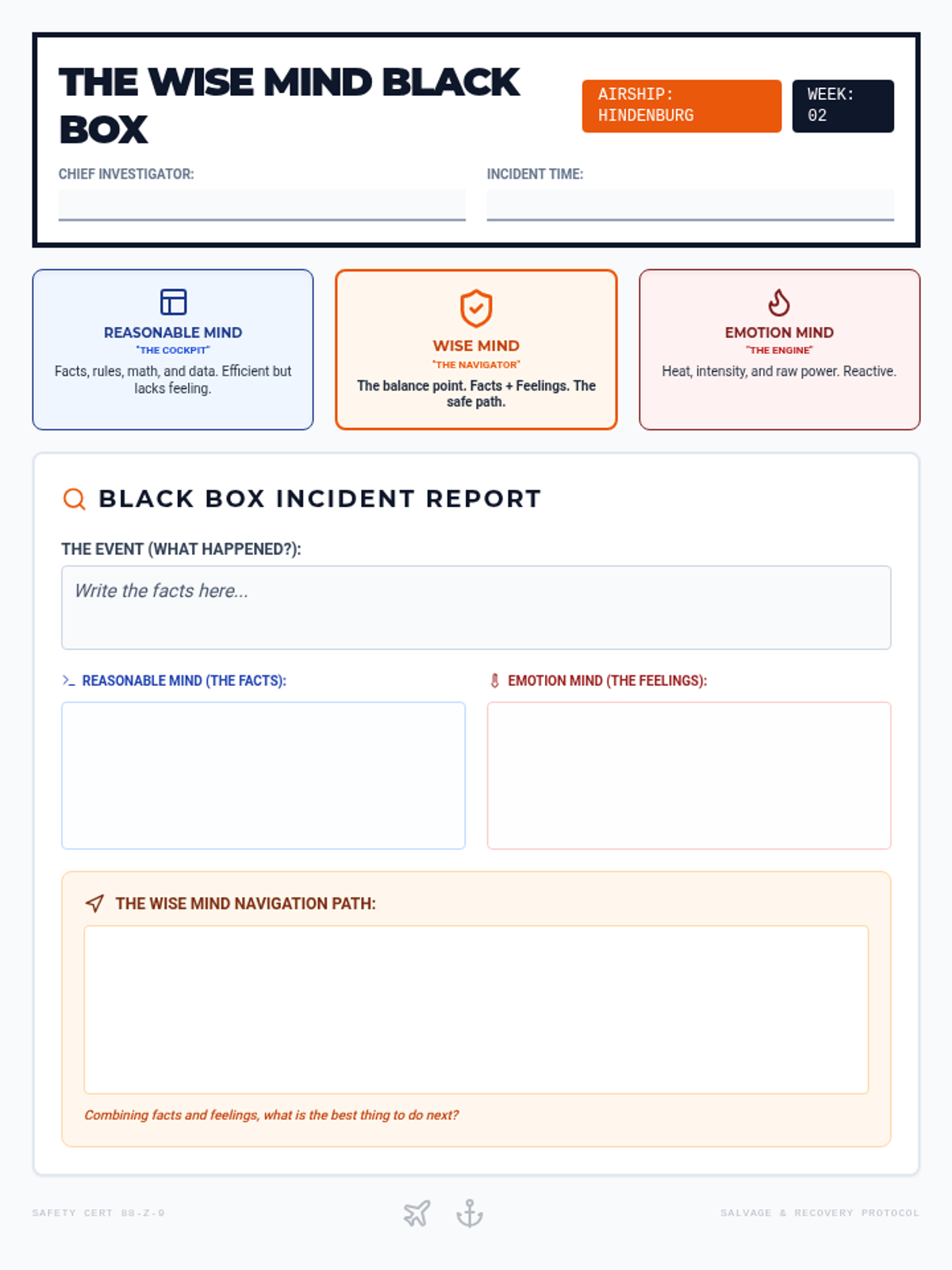
A student-facing worksheet for identifying the three states of mind (Reasonable, Emotion, and Wise) using the Hindenburg airship metaphor. Includes an incident report section for personal reflection.
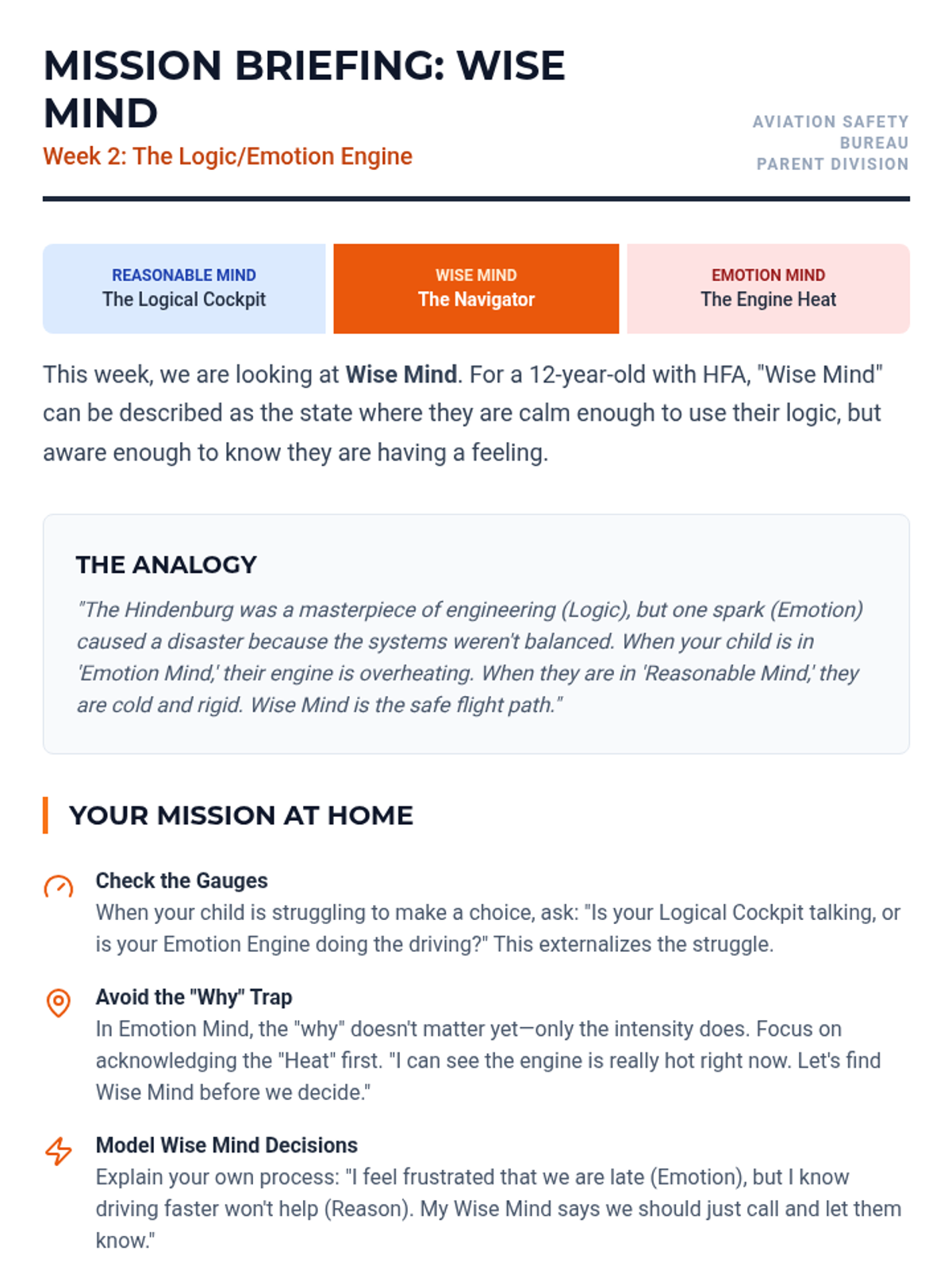
Parent guide for Week 2 of the Survival and Salvage DBT program, introducing the 'Wise Mind' concept using aviation metaphors for autism-friendly communication.
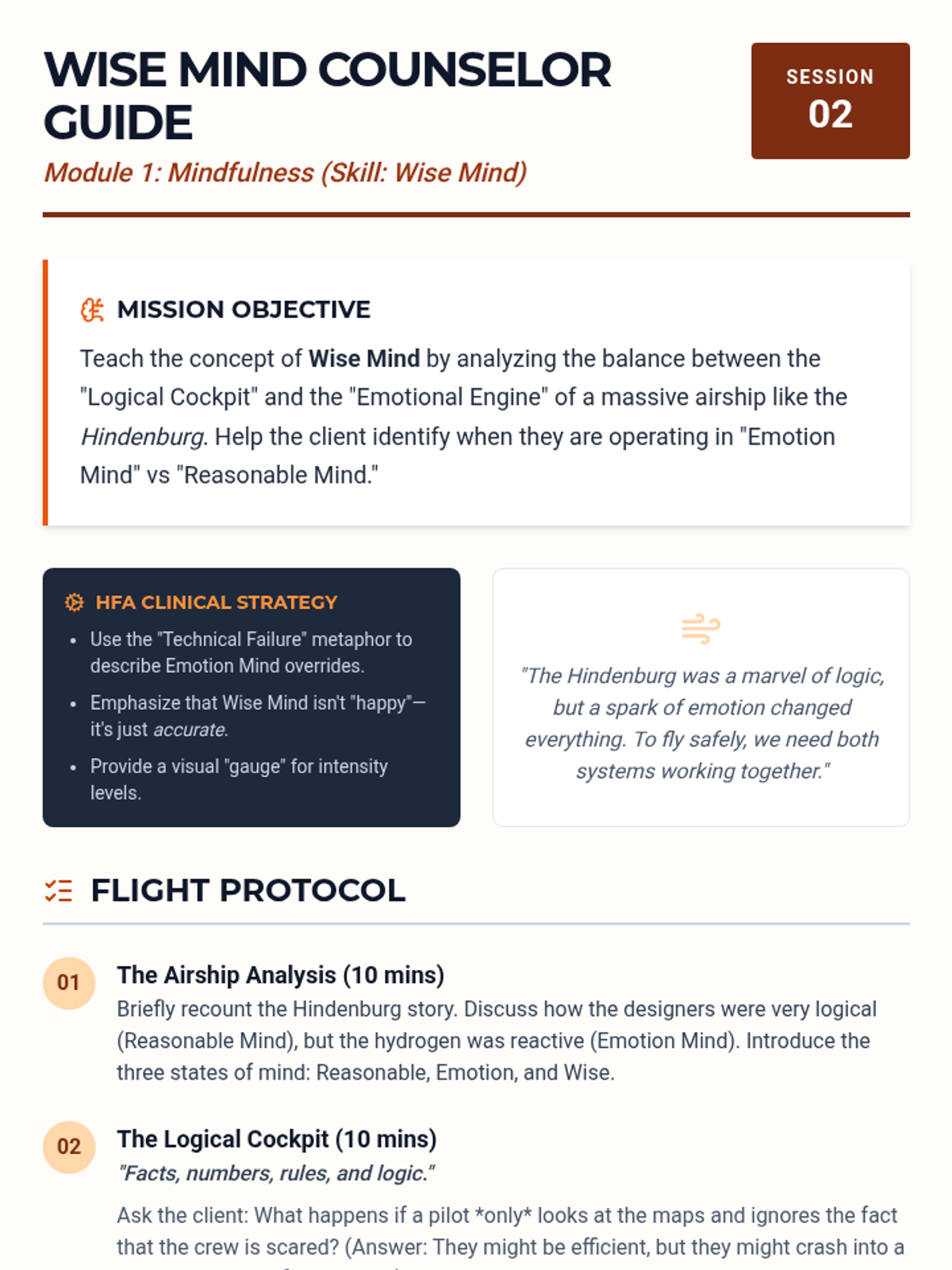
Counselor guide for Week 2 of the Survival and Salvage DBT program, focusing on the 'Wise Mind' skill using the Hindenburg as a metaphor for balancing logic and emotion.
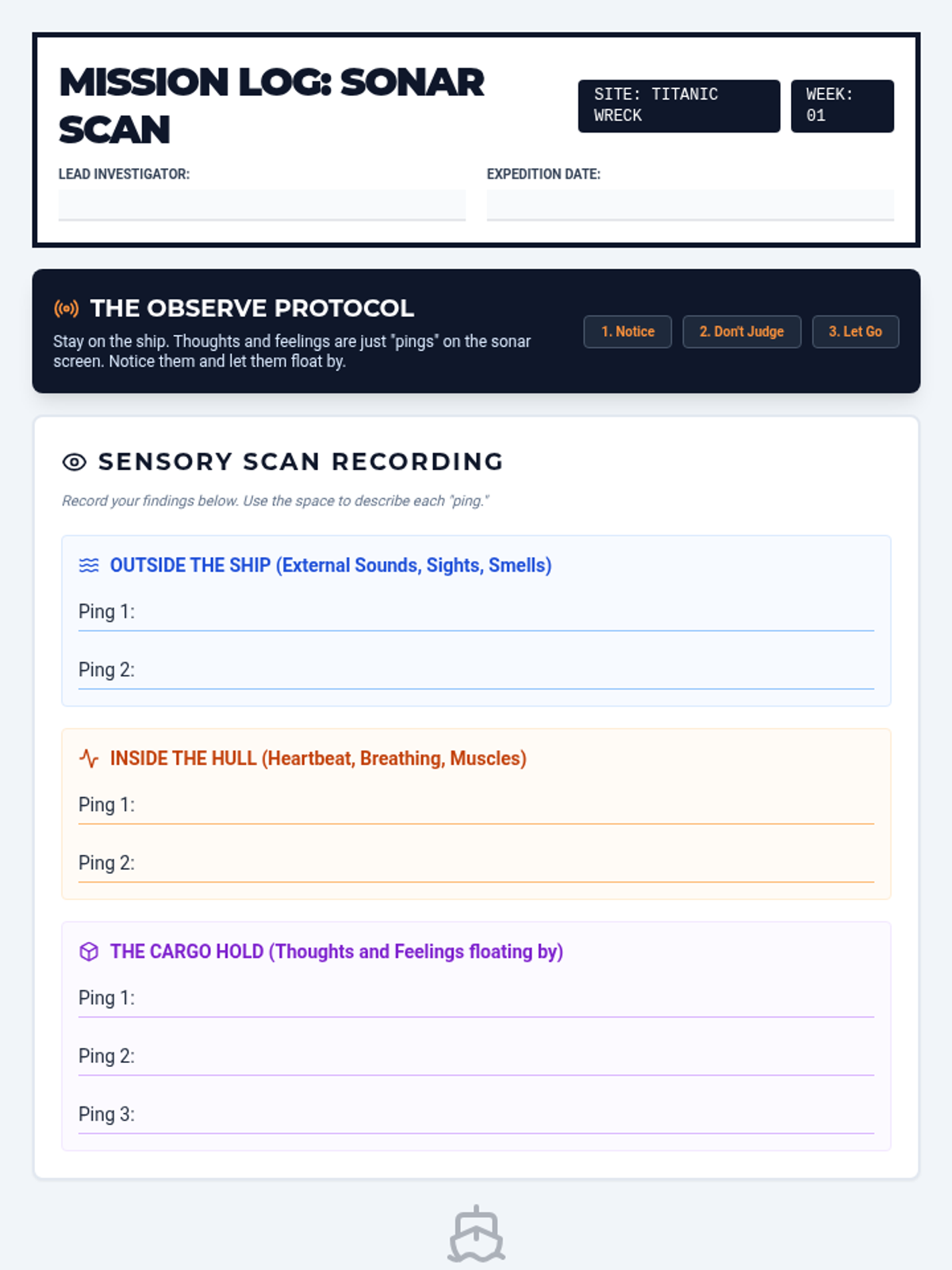
A student-facing worksheet for practicing the 'Observe' skill in DBT, themed around a Titanic sonar search mission. Includes space for recording external, internal, and cognitive 'pings'. Revised to fit a single page and provide better writing space.
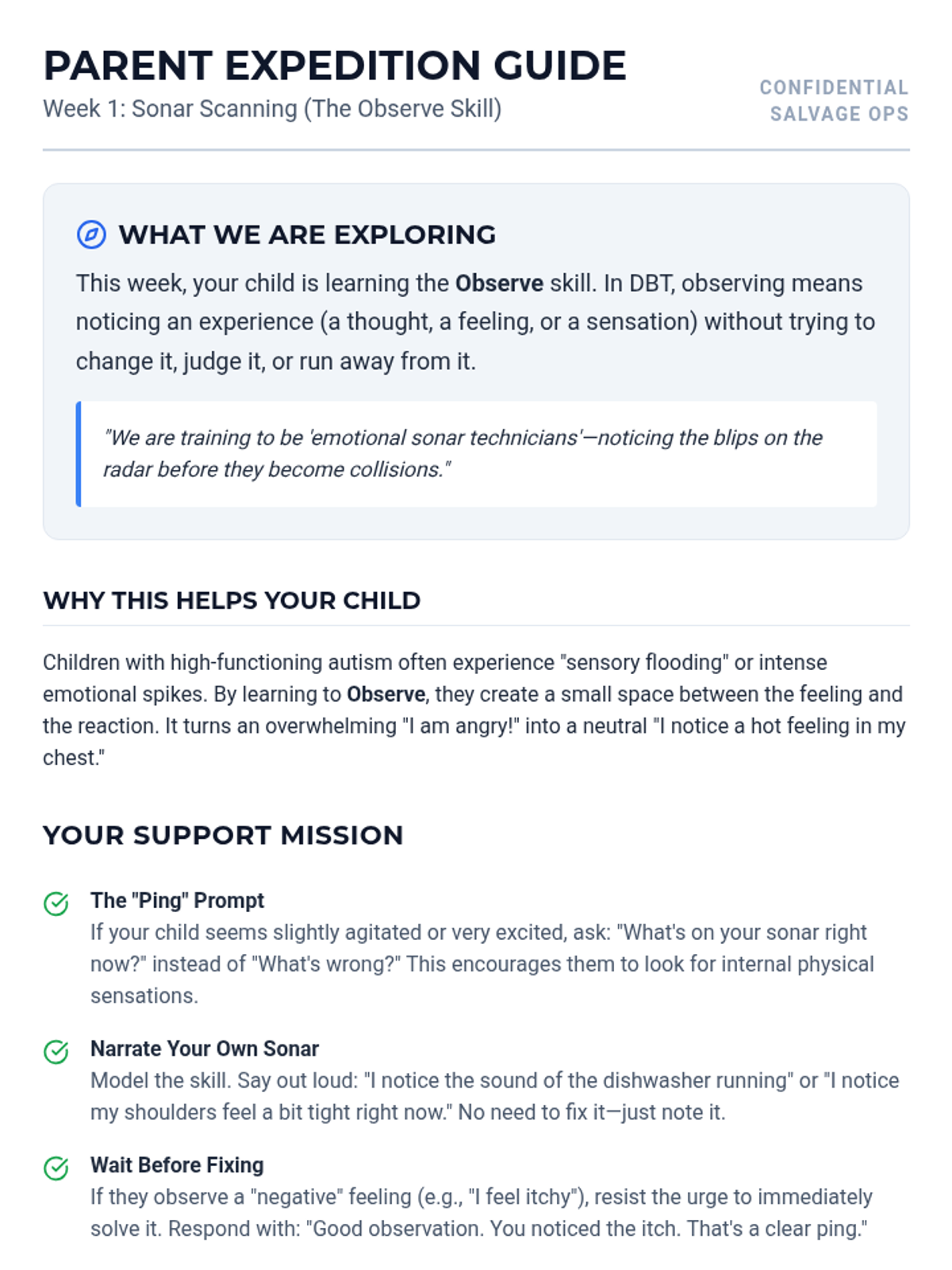
Parent guide for Week 1 of the Survival and Salvage DBT program, explaining the 'Observe' skill and providing home-based strategies for children with HFA.
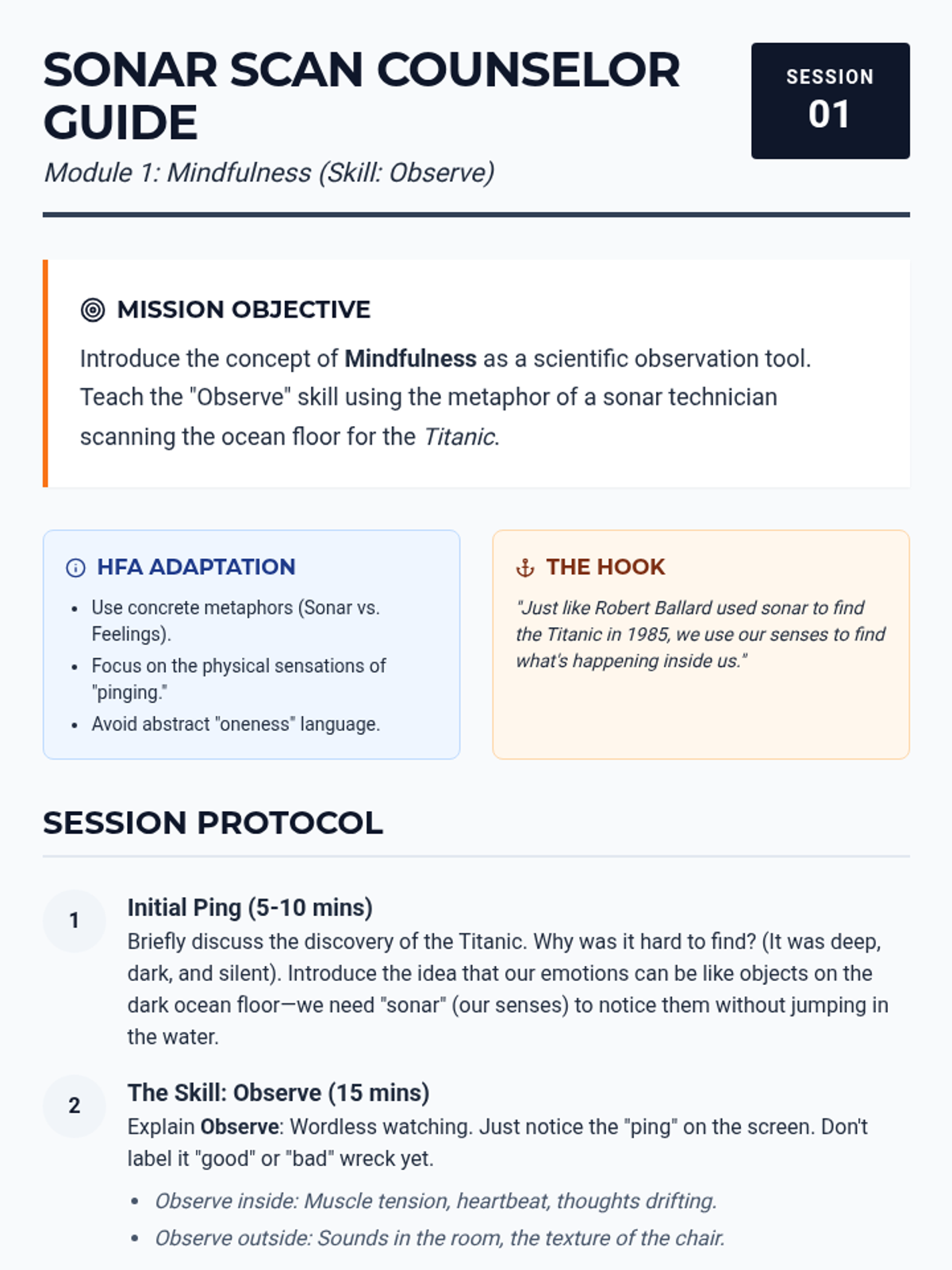
Counselor guide for Week 1 of the Survival and Salvage DBT program, focusing on the 'Observe' mindfulness skill using a Titanic sonar metaphor.
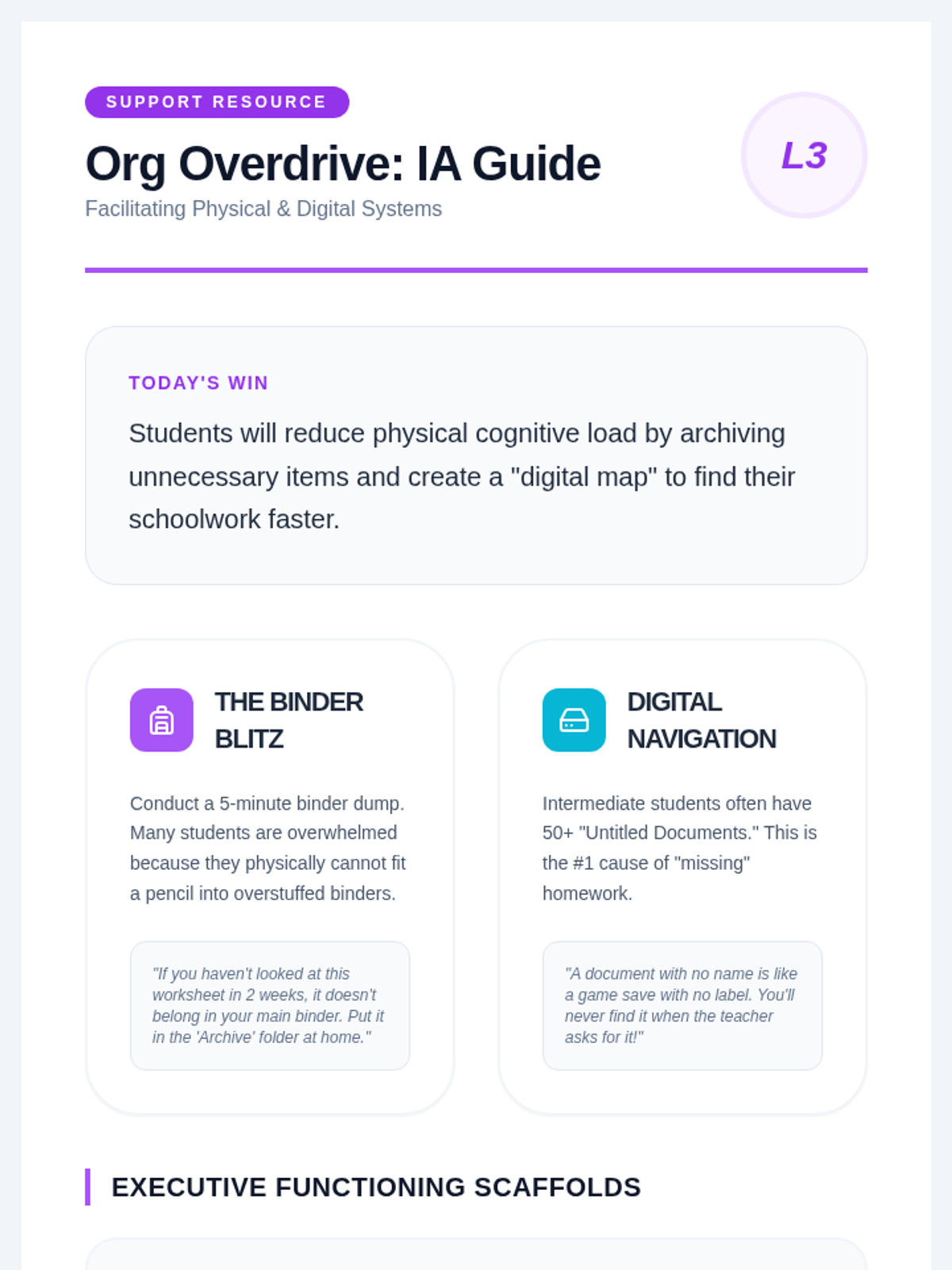
A guide for IAs on facilitating physical and digital organization lessons. Provides actionable strategies for 'The Binder Blitz' and digital file management, including specific scripting and weekly maintenance routines.
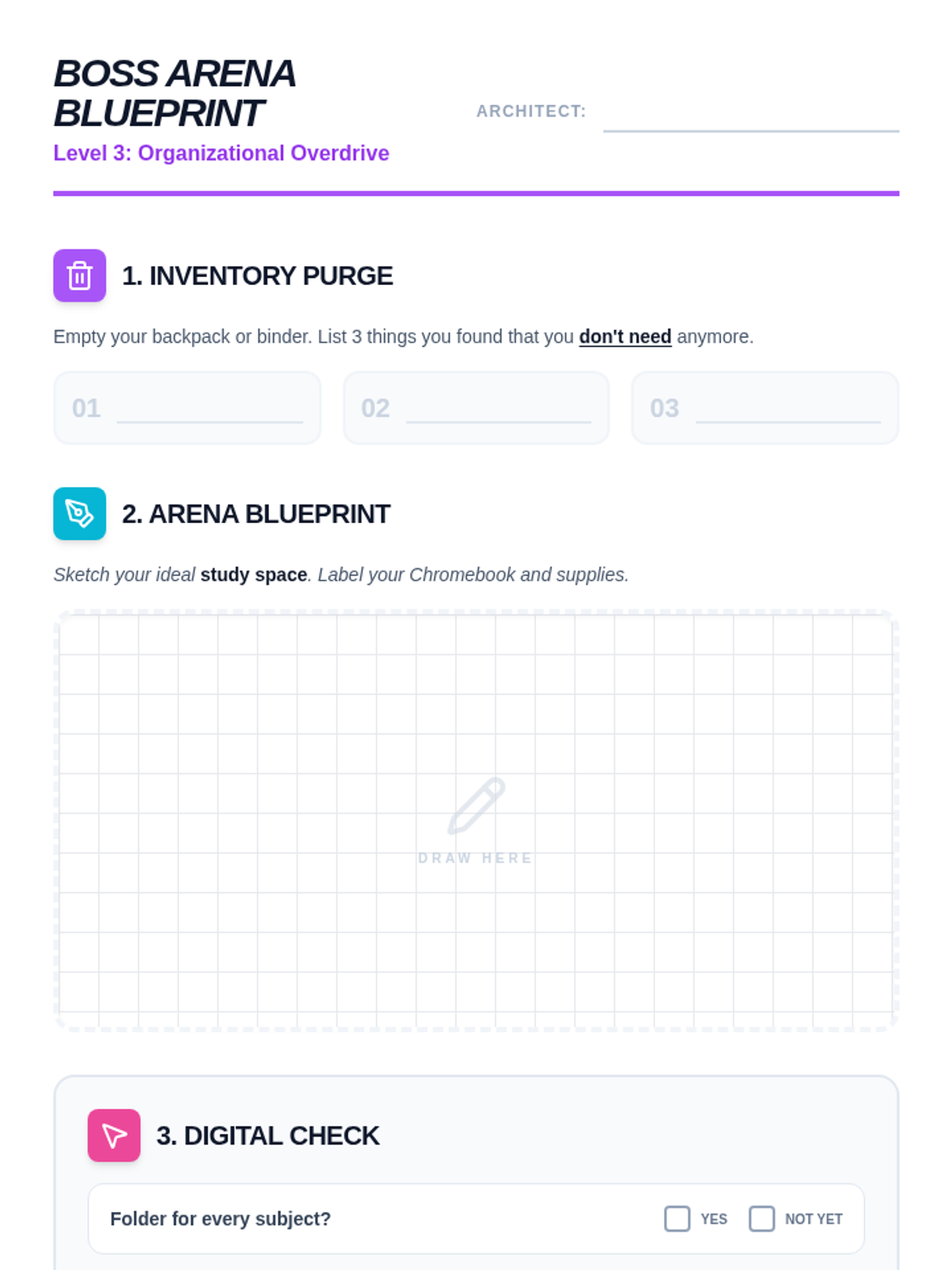
A visual worksheet for organizing physical and digital spaces. Includes a 'Purge' list for cleaning backpacks, a blueprint drawing area for designing a study space, and a digital checklist for organizing computer files. High-engagement design for intermediate students.