A visually engaging slide deck that introduces the 'Money Team'—pennies, nickels, dimes, and quarters—with clear identification traits and values.
A printable student worksheet for analyzing personal punctuality barriers, drafting three specific reliability strategies, and tracking arrival habits over a two-week period.
A step-by-step planning worksheet where students reverse-engineer their morning routines, identify micro-stalls, and design friction-free habit cues.
A student-facing 1-page activity sheet styled as an emergency protocol matrix. It facilitates the pairing phase where students swap plans, identify failure triggers, draft Plan B and Plan C contingencies, and commit to a 48-hour micro-action.
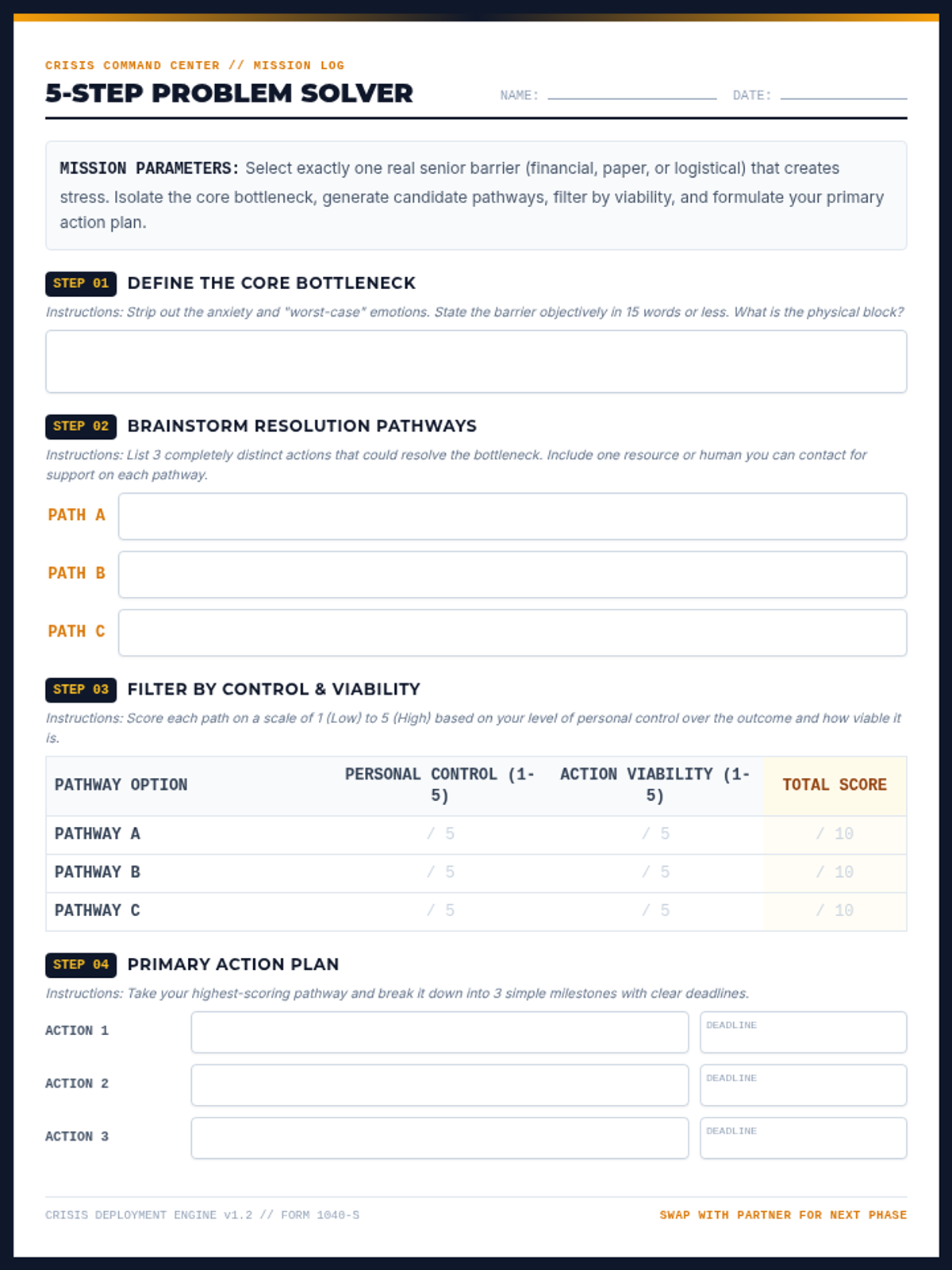
A student-facing 1-page worksheet styled as a tactical mission briefing sheet. High school seniors select a primary transition barrier and systematically work through the first four steps of the 5-step problem-solving process (Define, Brainstorm, Filter, Plan) in dedicated handwriting-friendly work blocks.
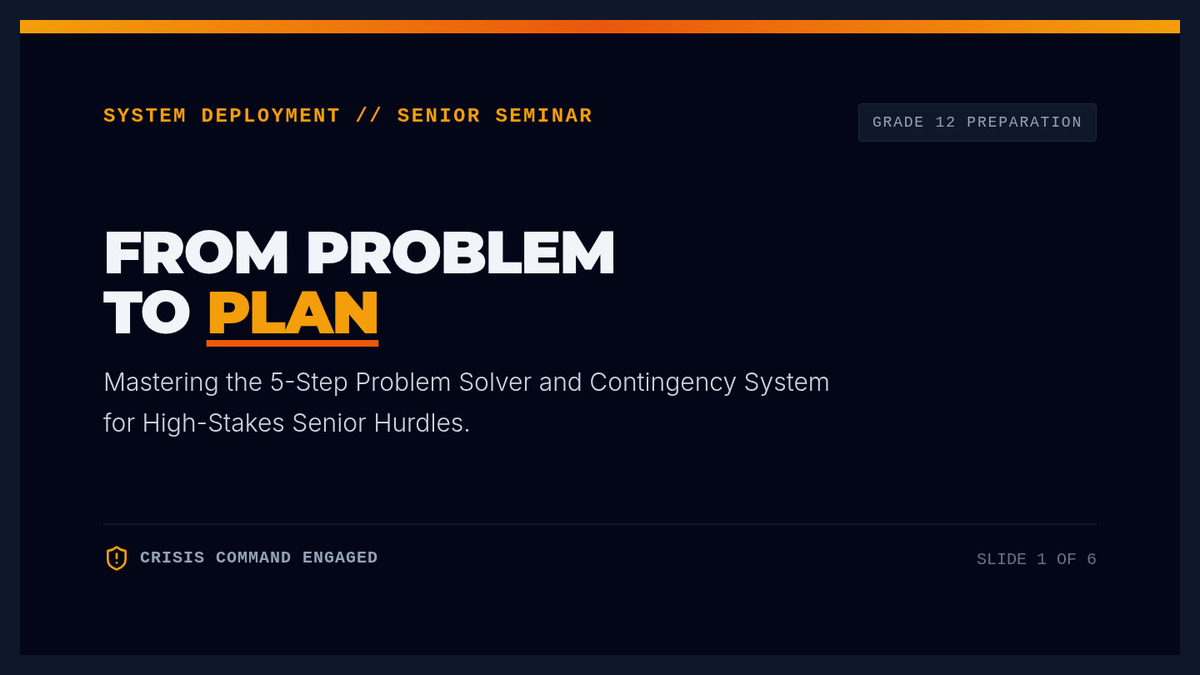
A 6-slide deck styled with a high-contrast 'Crisis Command' visual theme. It guides high school seniors through the physiological 'stress freeze', the 5-step problem-solving system, real-world academic/financial scenarios, and the creation of clear triggers for backup plans.
A comprehensive slide deck covering employability skills, high school credit impacts, habit loops, and practical morning routine strategies.
A comprehensive, 2-page teacher facilitation guide styled as a technical flight command manual. It outlines pacing, instructional prompts, scaffolding questions, and specific coaching tips to guide 12th graders through the 5-step problem-solving framework and contingency planning.
A comprehensive 45-minute lesson plan and facilitation guide for teachers, mapping out the instructional arc, pacing, core concepts, and teacher scripts to help 12th graders build reliable punctuality habits.
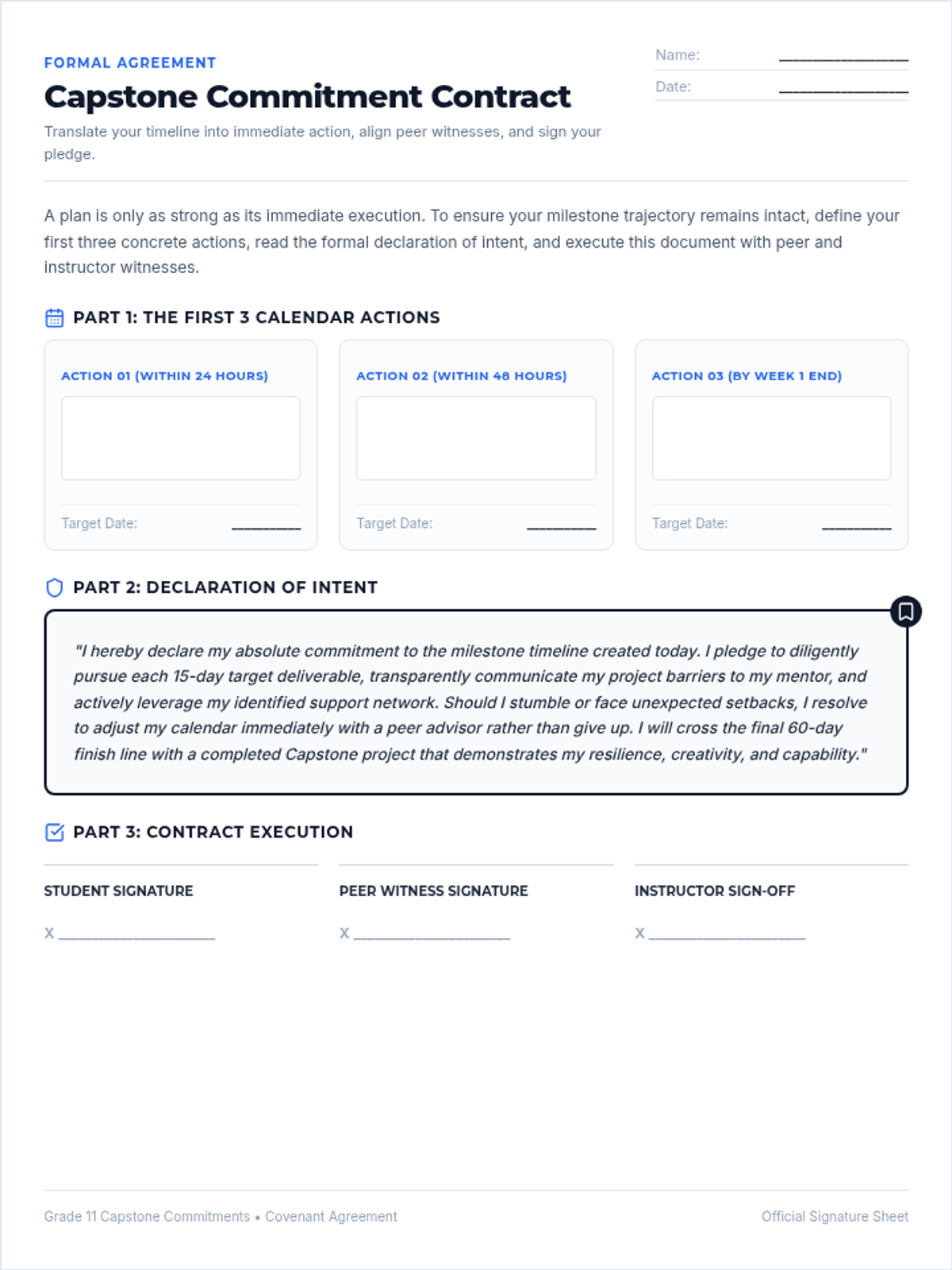
A 1-page formal student commitment contract featuring three immediate action calendar boxes, a written pledge, and formal signature blocks.
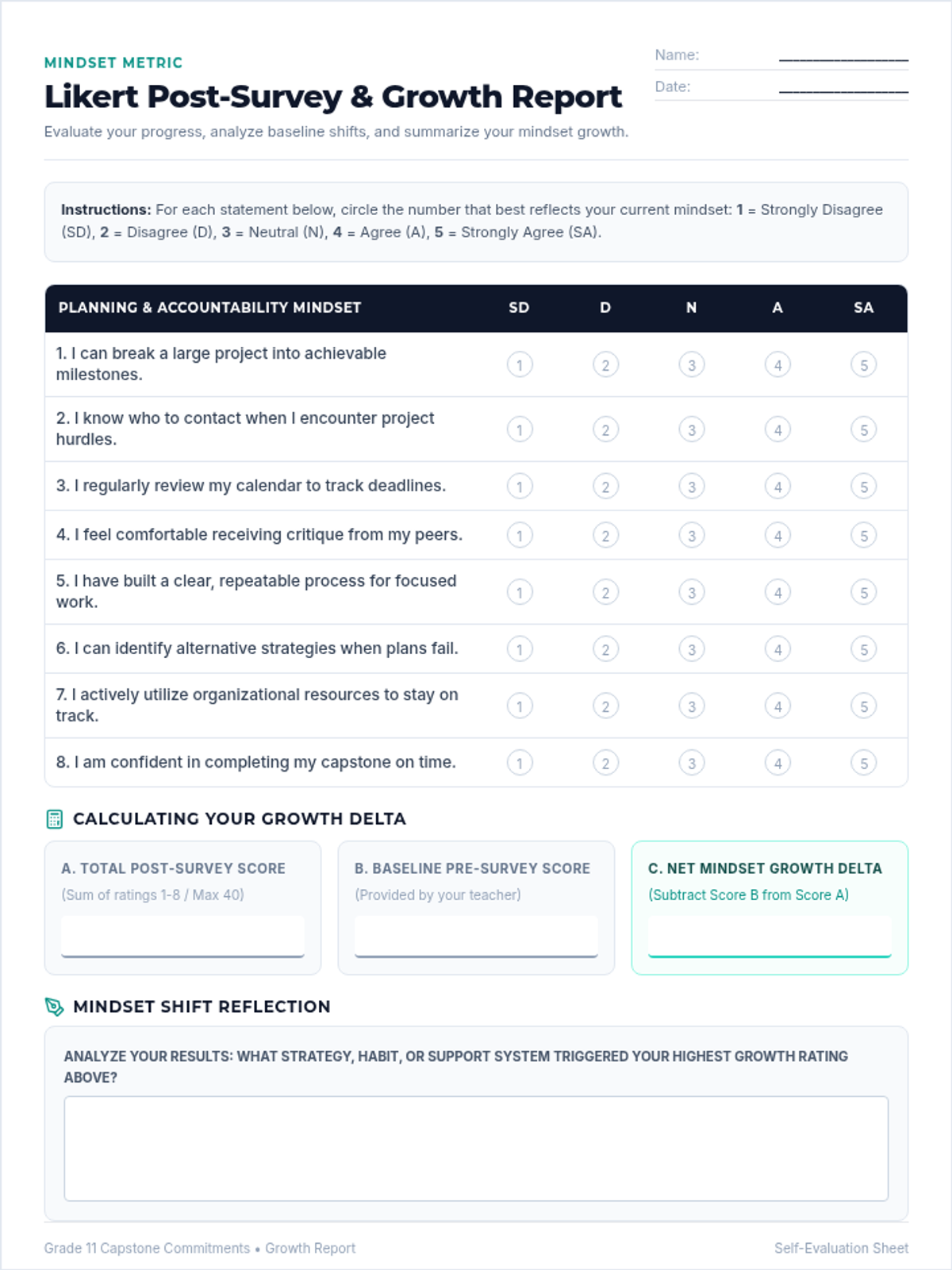
A 1-page student self-assessment featuring an 8-item Likert scale post-survey, a quantitative growth delta calculation table, and a guided reflection prompt.
A highly structured student planning worksheet featuring a 4-part 60-day milestone timeline, input fields for target dates, and explicit columns for required supports.
A highly visual 6-slide presentation guiding students step-by-step through status pitching, peer feedback loops, calculating survey growth metrics, and sealing their commitment contracts.
A comprehensive 2-page teacher guide detailing the pacing, discussion prompts, student accommodations, and step-by-step instructional arc for the Capstone Commitments lesson.
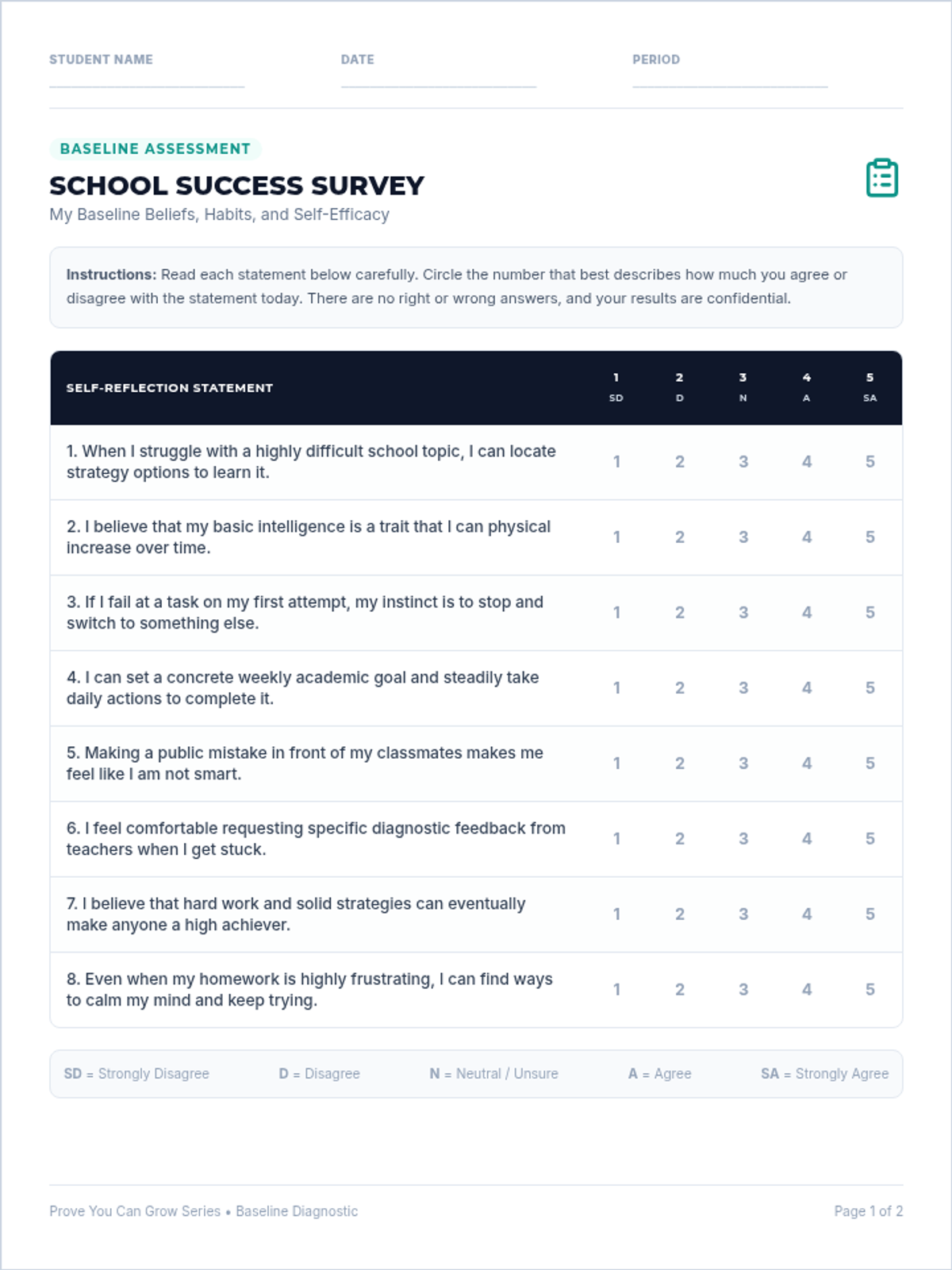
A baseline 8-item student-facing school success survey utilizing a 5-point Likert scale, accompanied by an executive teacher scoring matrix and intervention guide.
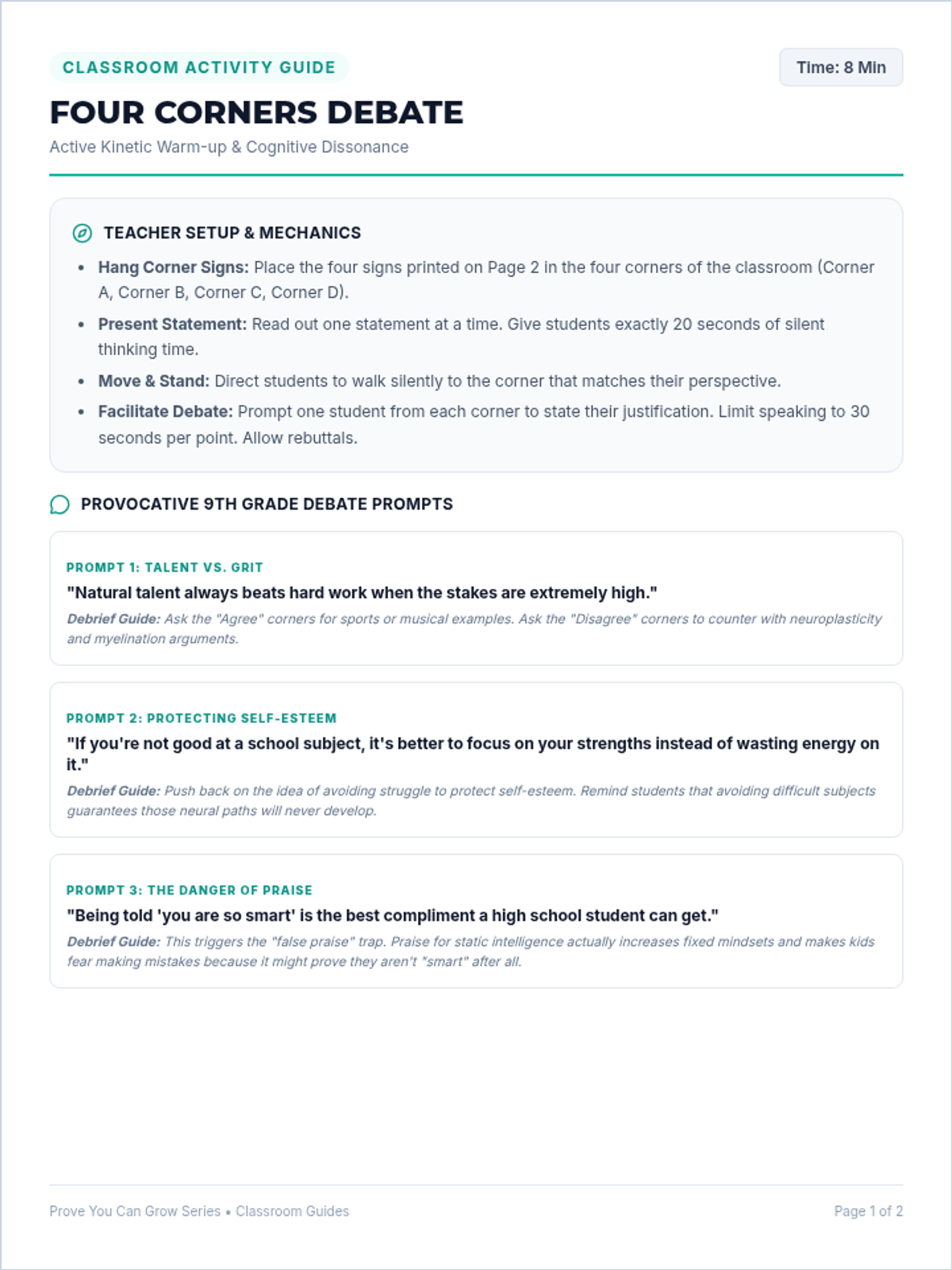
An interactive classroom guide and printable corner signs for the Four Corners warm-up debate, exploring controversial statements on natural talent vs. hard work.
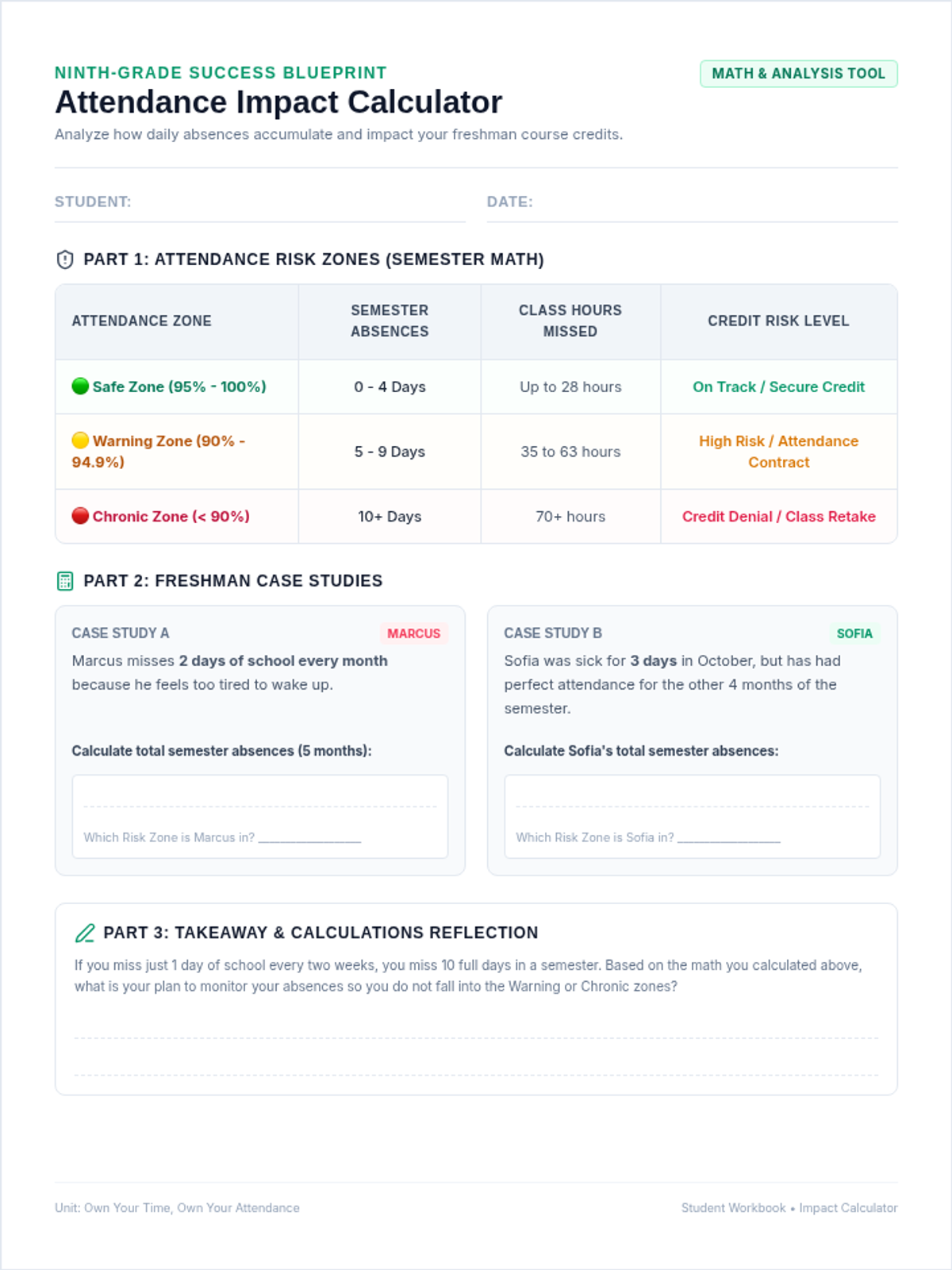
A practical student and teacher-facing math resource to analyze cumulative missed instruction and credit risk profiles based on monthly attendance rates.
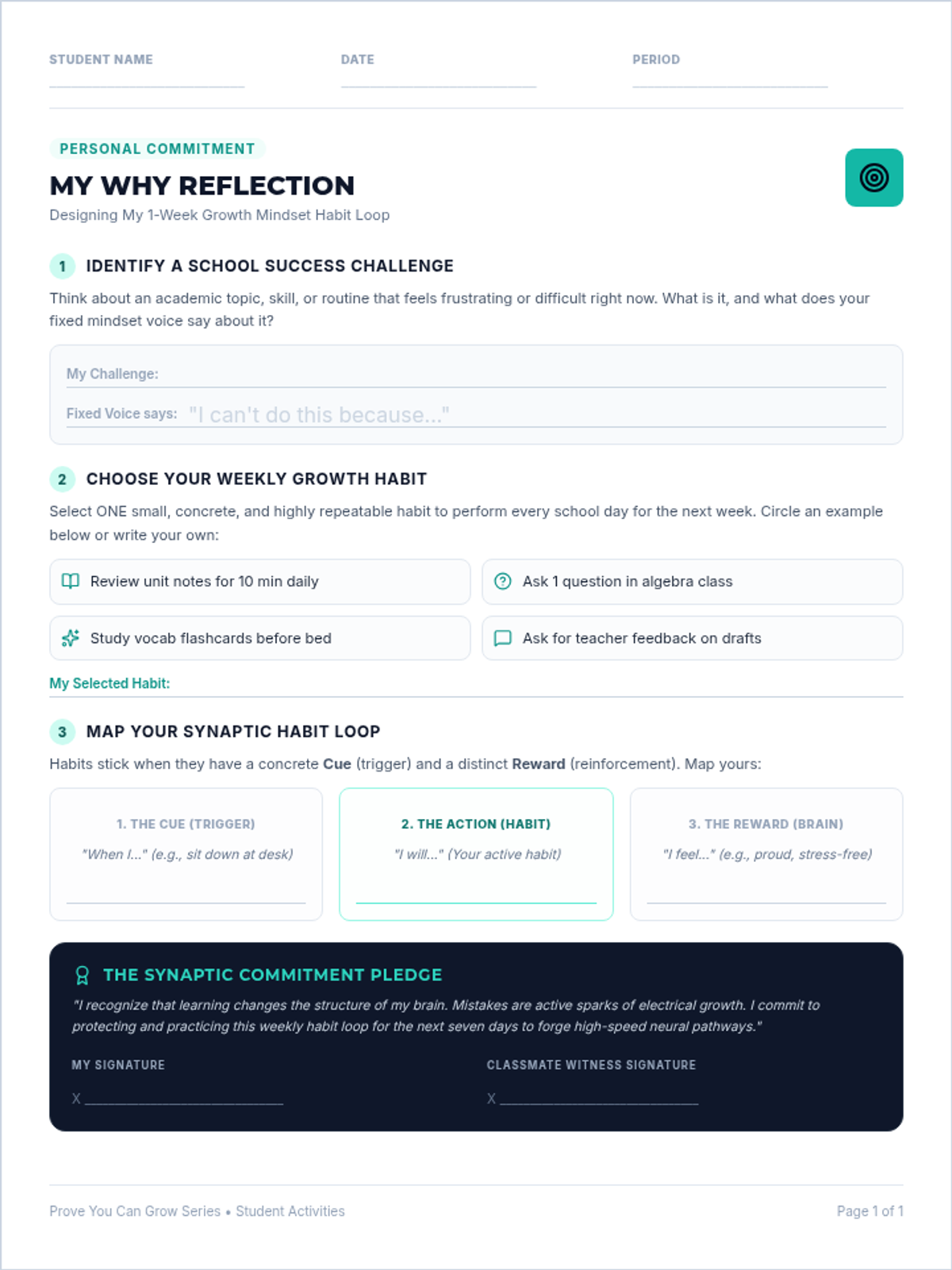
A collaborative and reflective student worksheet for defining a concrete weekly growth habit and designing a corresponding cues/reward habit loop.
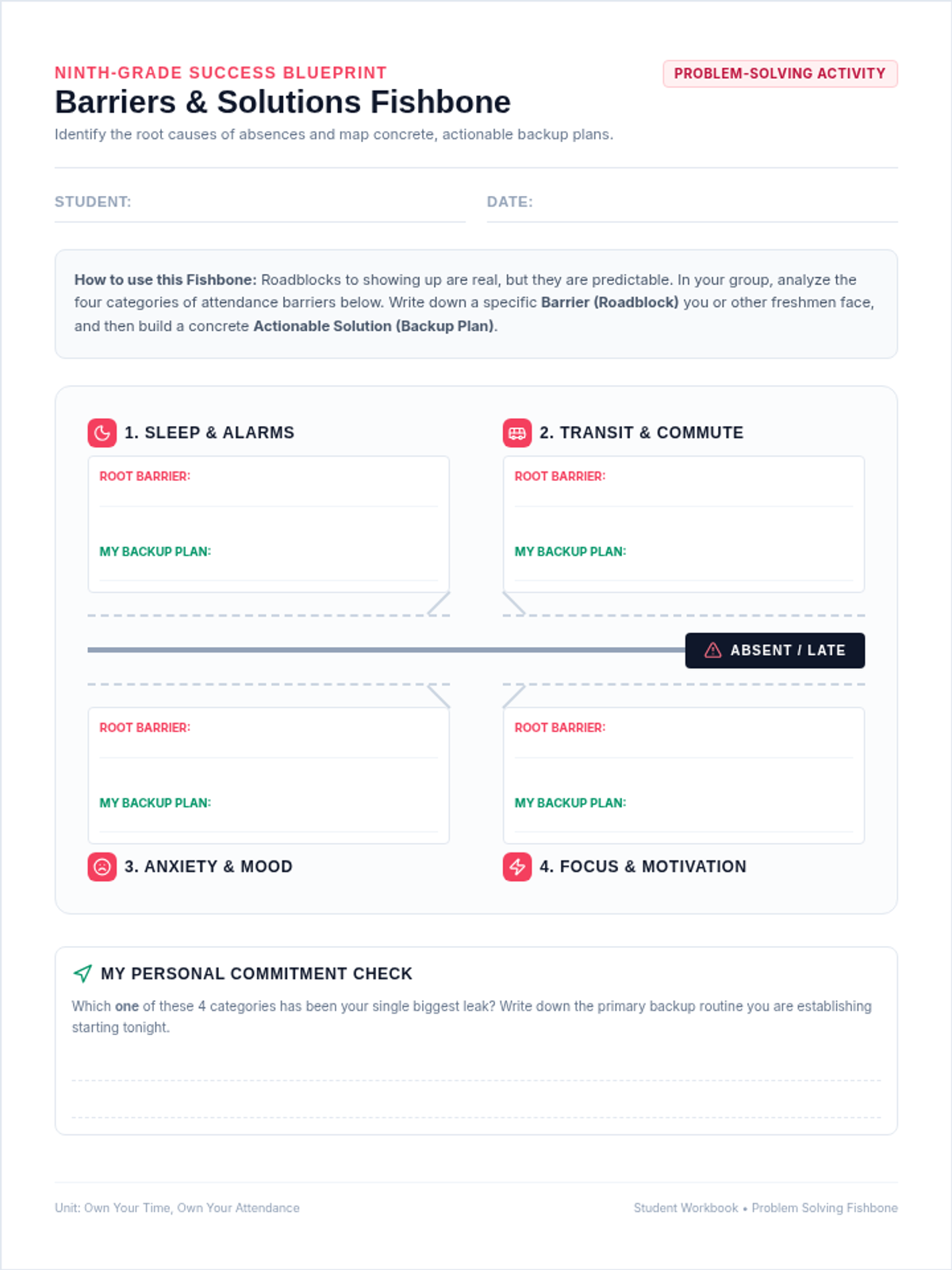
A collaborative student worksheet featuring a structural fishbone cause-and-effect diagram to categorize high school attendance barriers (such as sleep, transport, stress, and routine) and co-create matching, actionable solutions.
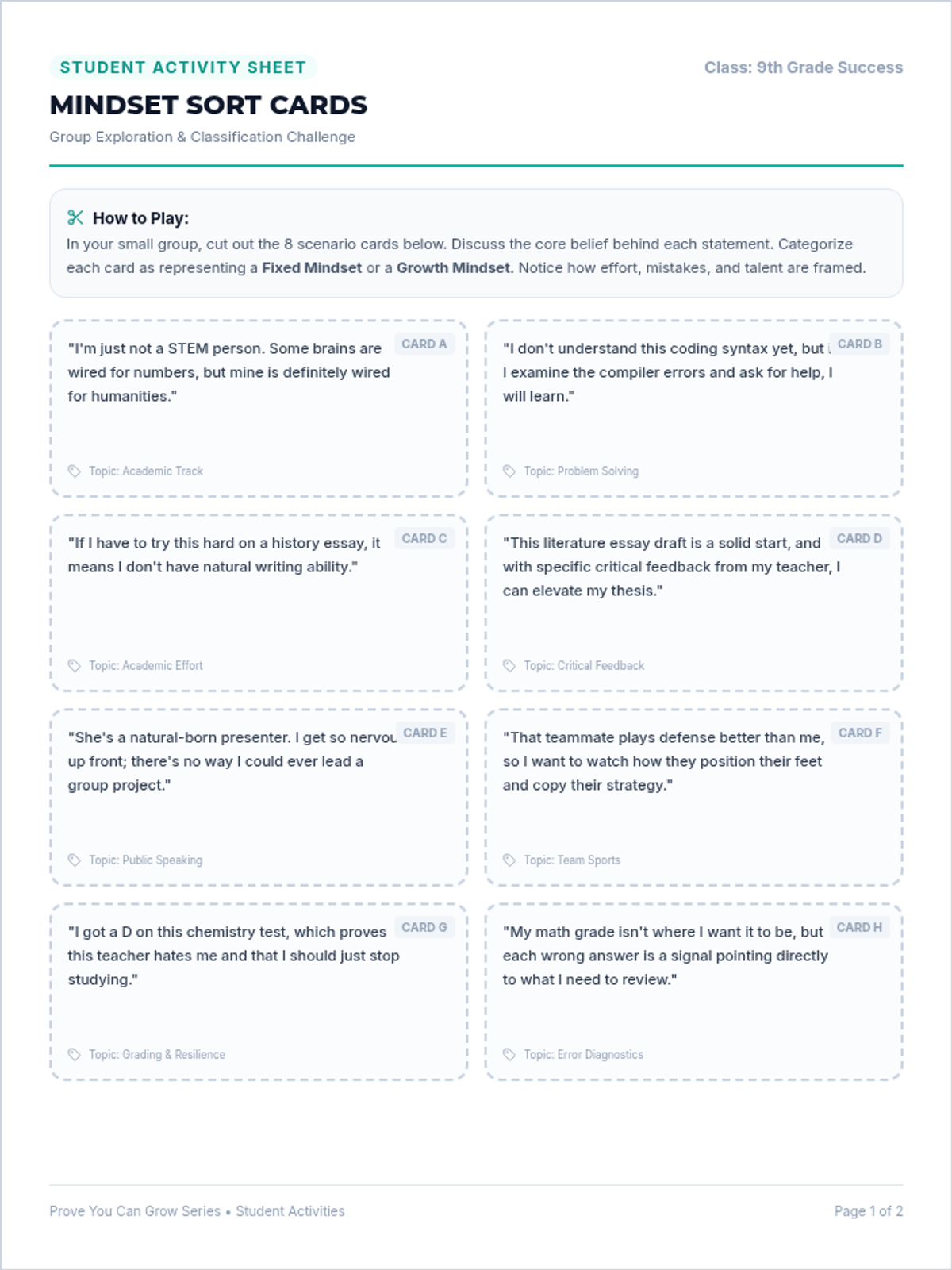
A collaborative classroom sorting activity featuring 8 realistic academic and social mindset scenario cards, designed to be cut out and analyzed by student teams.
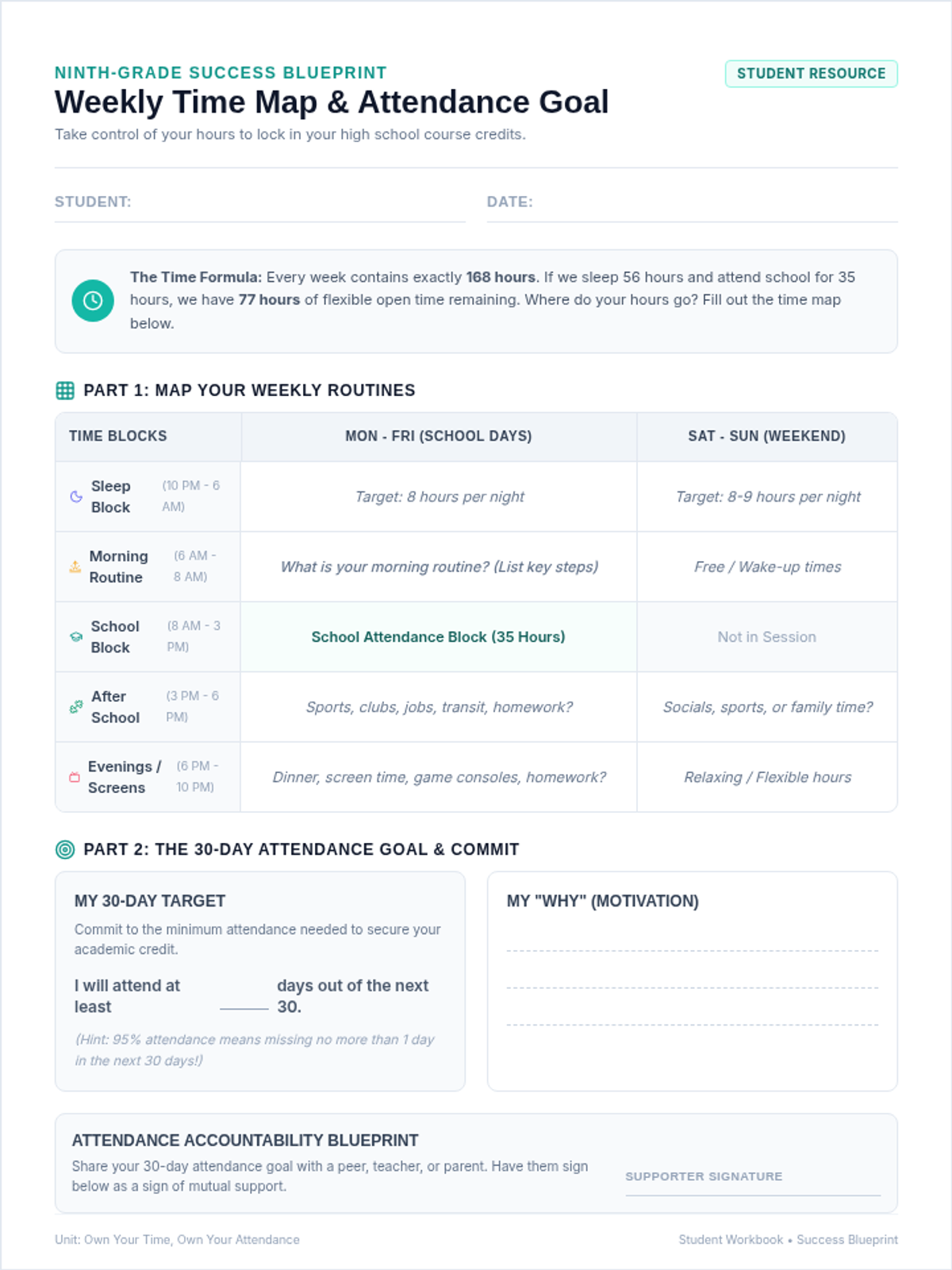
A student worksheet containing a simplified 168-hour weekly planner and a 30-day attendance goal-setting framework, allowing freshmen to structure daily habits and identify time blocks for sleep, school, and leisure.
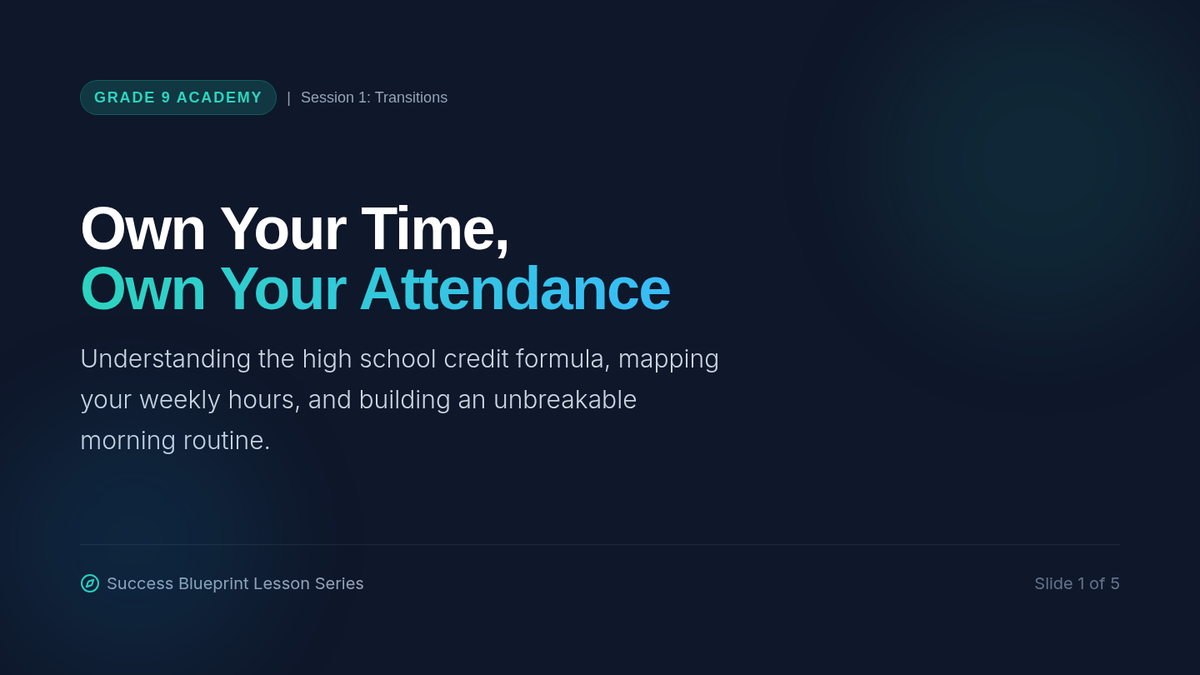
An interactive, visual slide presentation linking attendance directly to high school course credits, analyzing the math behind attendance, and breaking down sleep and morning habit loops.
A highly visual and scientific 6-slide deck introducing 9th graders to neuroplasticity, neuron pathways, and how mistakes literally spark growth in the brain.
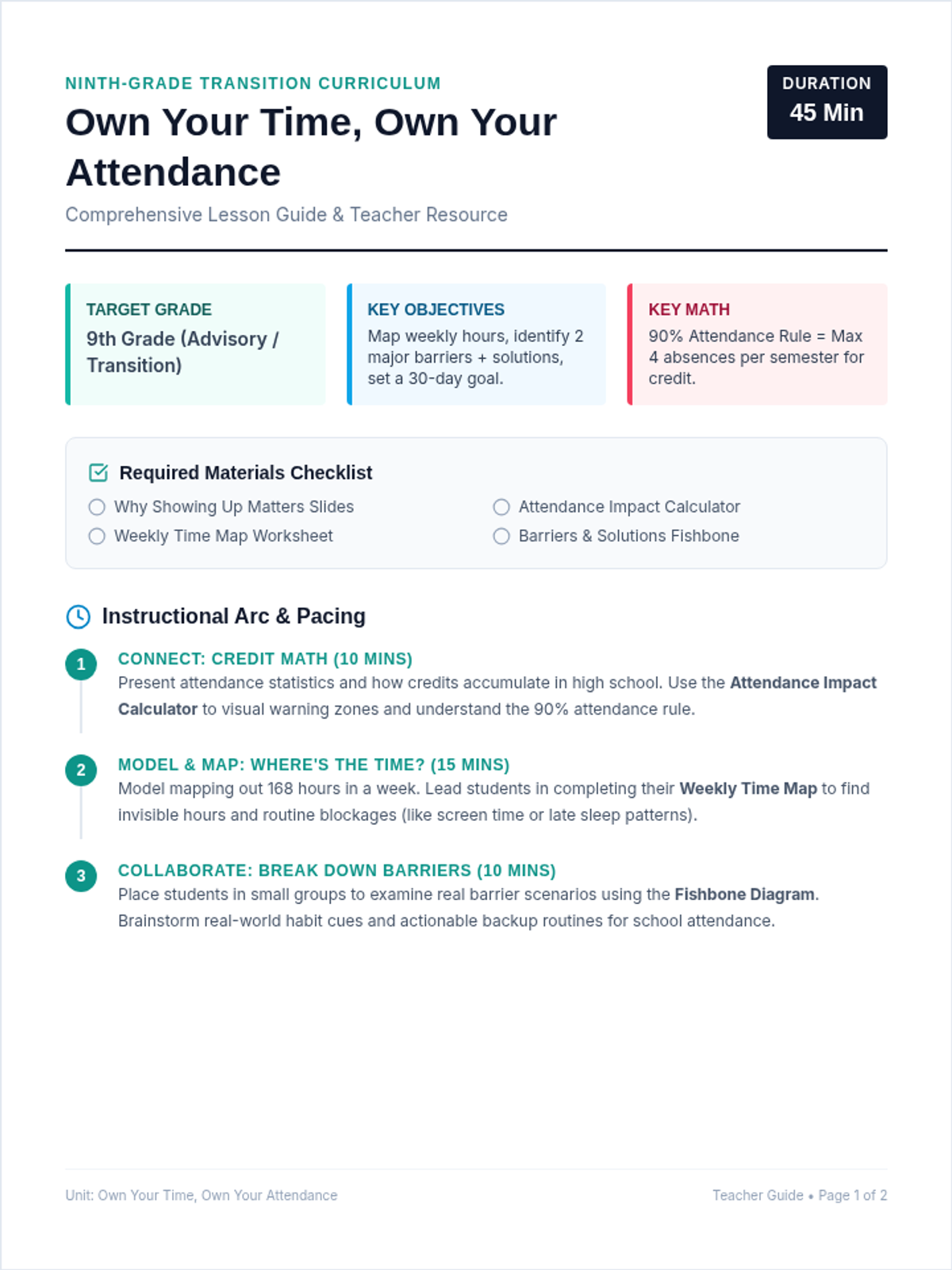
A comprehensive teacher guide for leading the 45-minute lesson, including pacing, detailed instructional scripts, classroom management tips, and discussion prompts for ninth-grade attendance transitions.
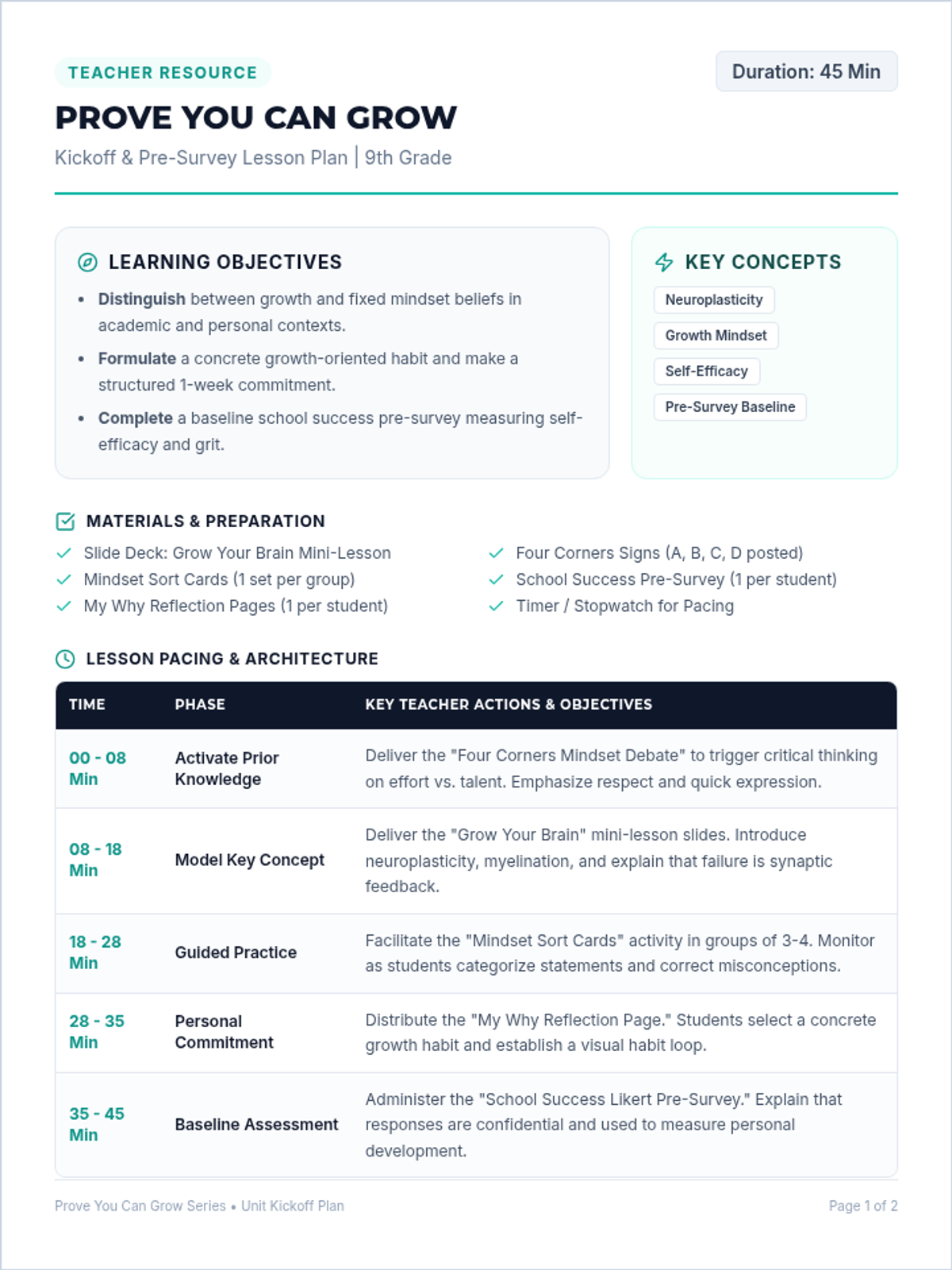
A comprehensive teacher facilitation guide and pacing plan for the kickoff lesson, outlining the 45-minute instructional flow, objectives, materials checklist, and scripting prompts.
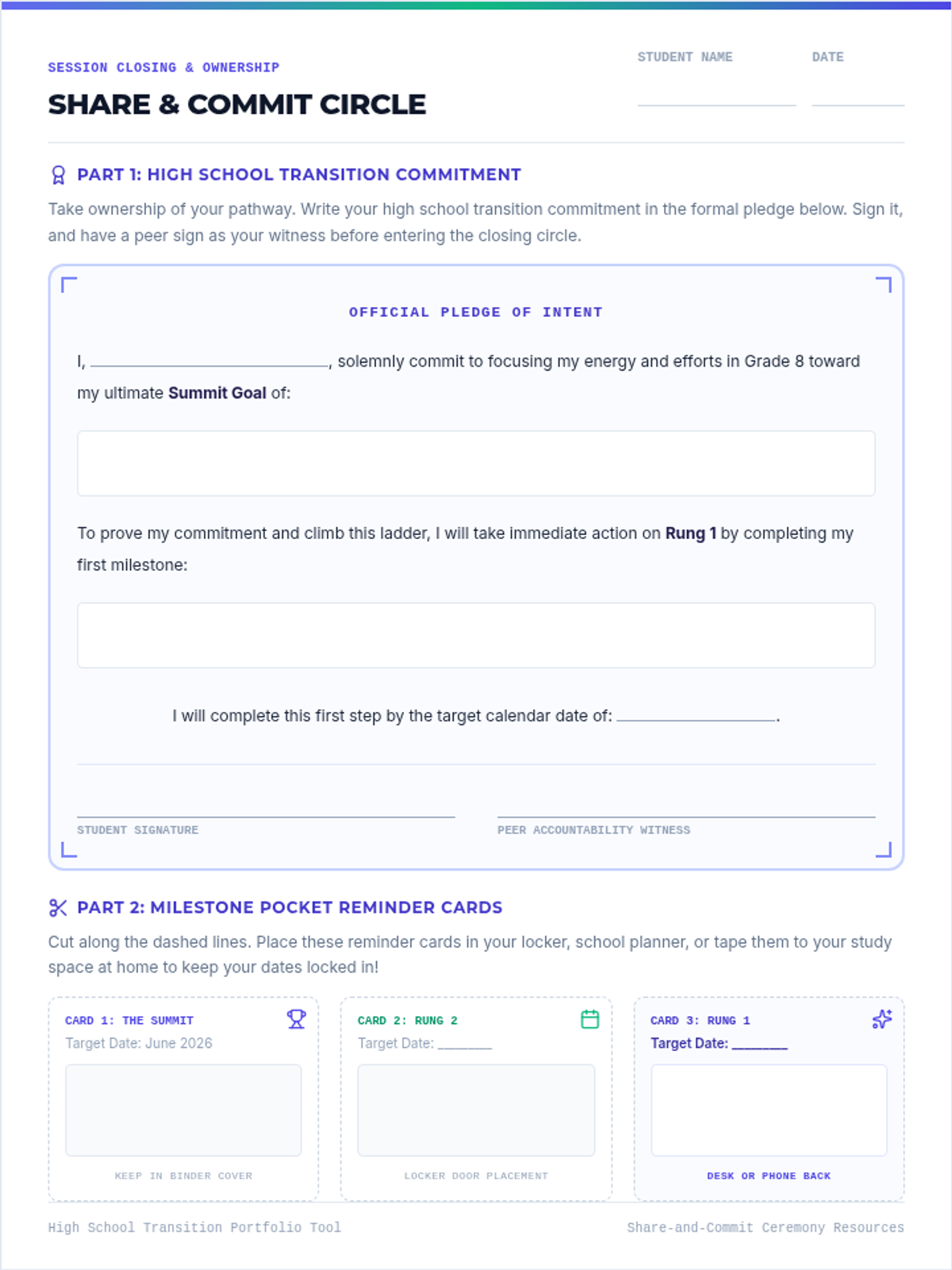
A 1-page student reflection and card cut-out sheet featuring a formal commitment pledge, peer signatures, and three wallet-sized milestone reminder cards with cutting guidelines to help students track their calendar dates.
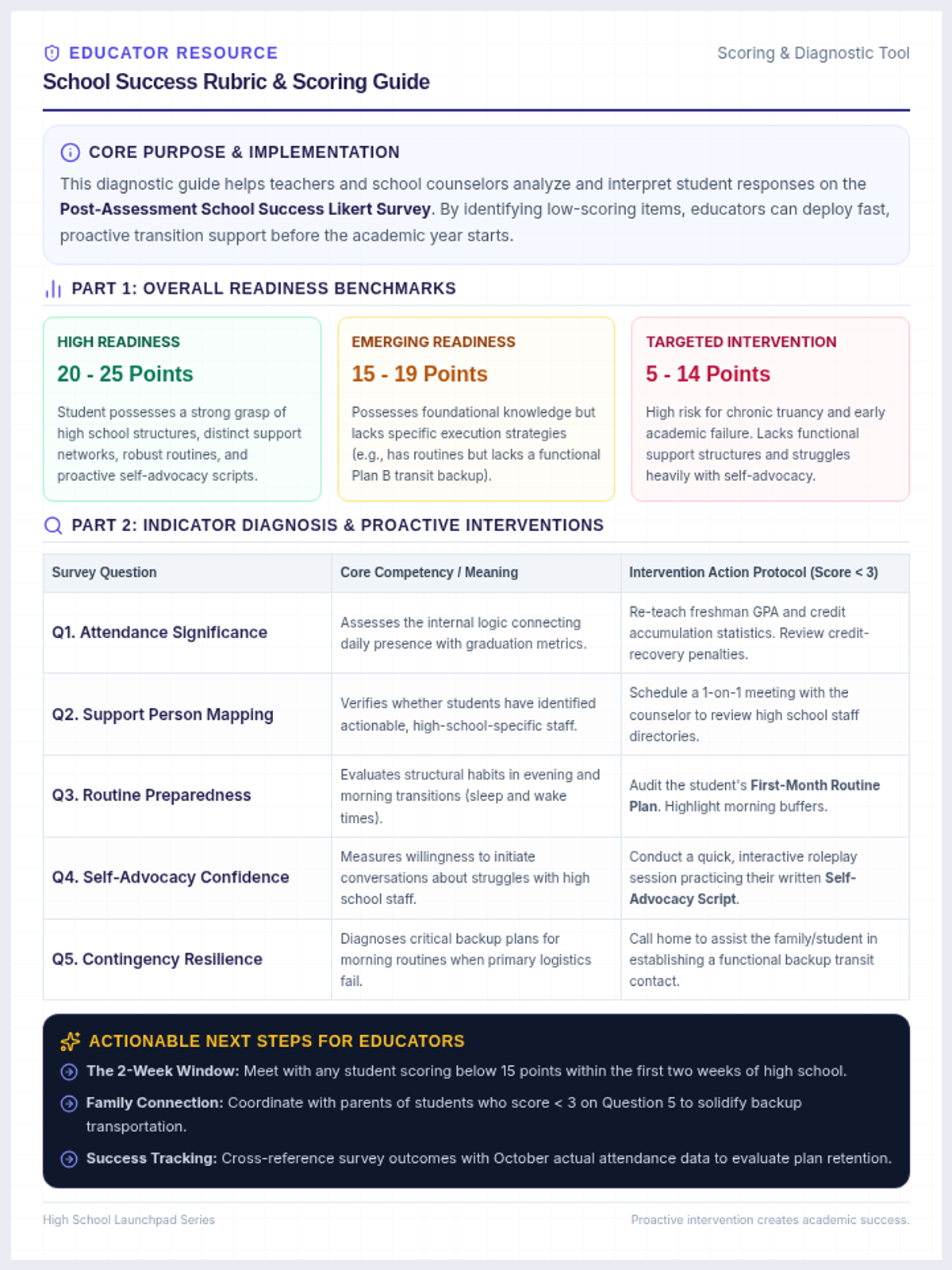
A teacher-facing diagnostic scoring guide and rubric to interpret the Post-Assessment School Success Likert Survey, with structured academic, social-emotional, and logistical intervention protocols.
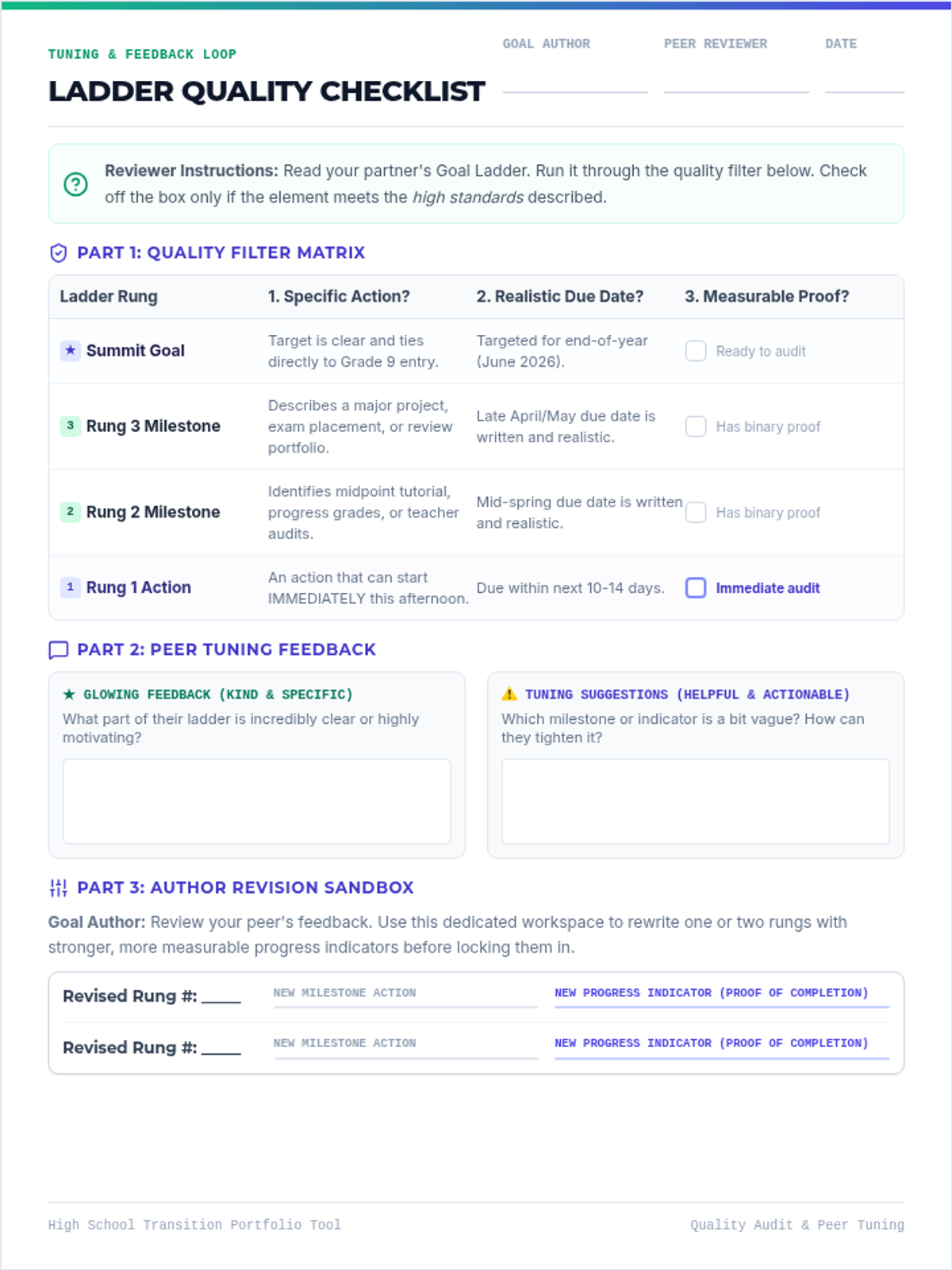
A comprehensive peer-review worksheet with check-off matrices for goal specificity, actionability, and progress indicators, including dedicated student writing frames for glow/grow comments and revision drafts.
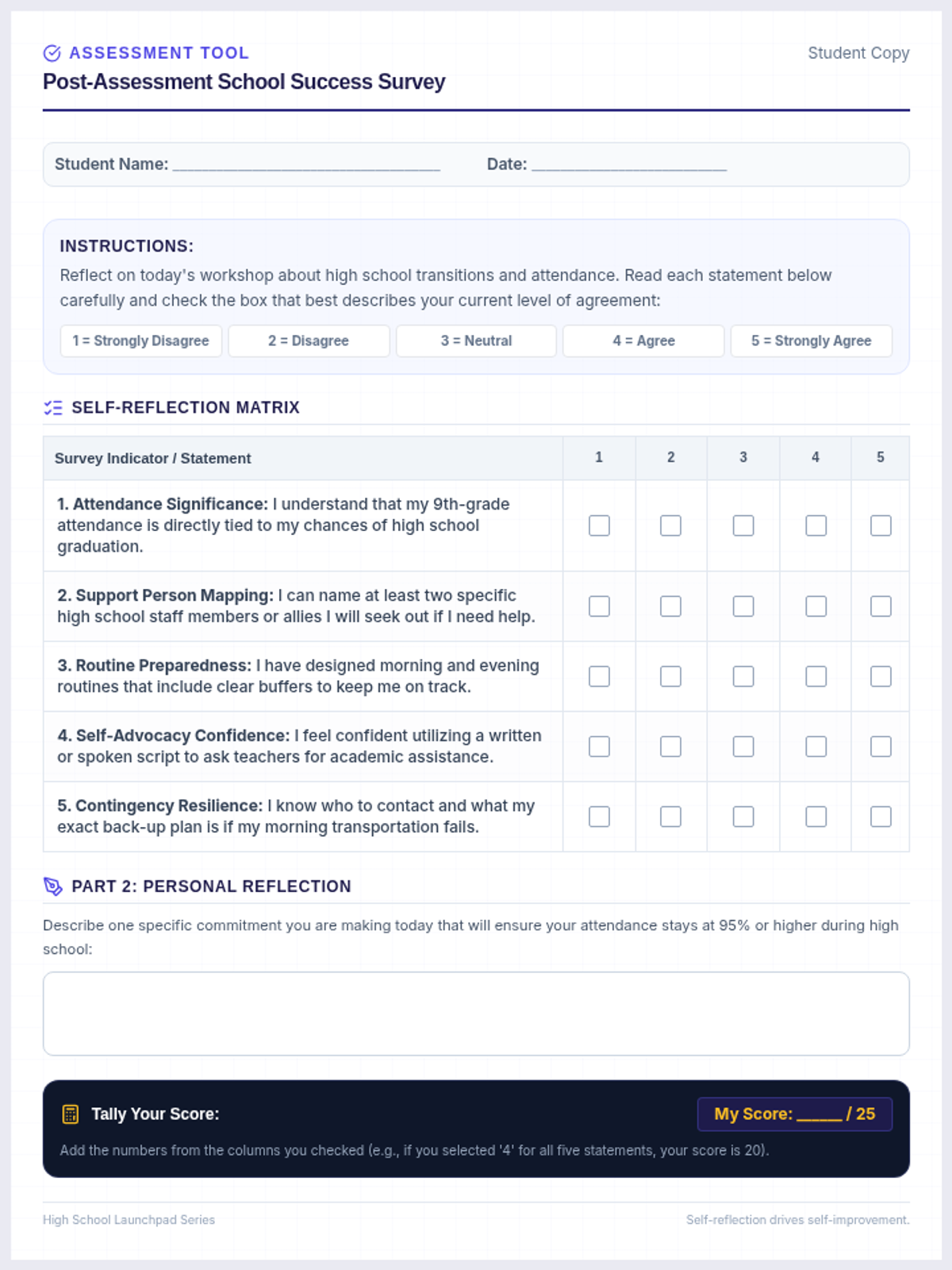
A student-facing post-assessment self-reflection survey utilizing a 5-point Likert scale to gauge confidence, knowledge of supports, self-advocacy readiness, and daily routine preparedness for high school.
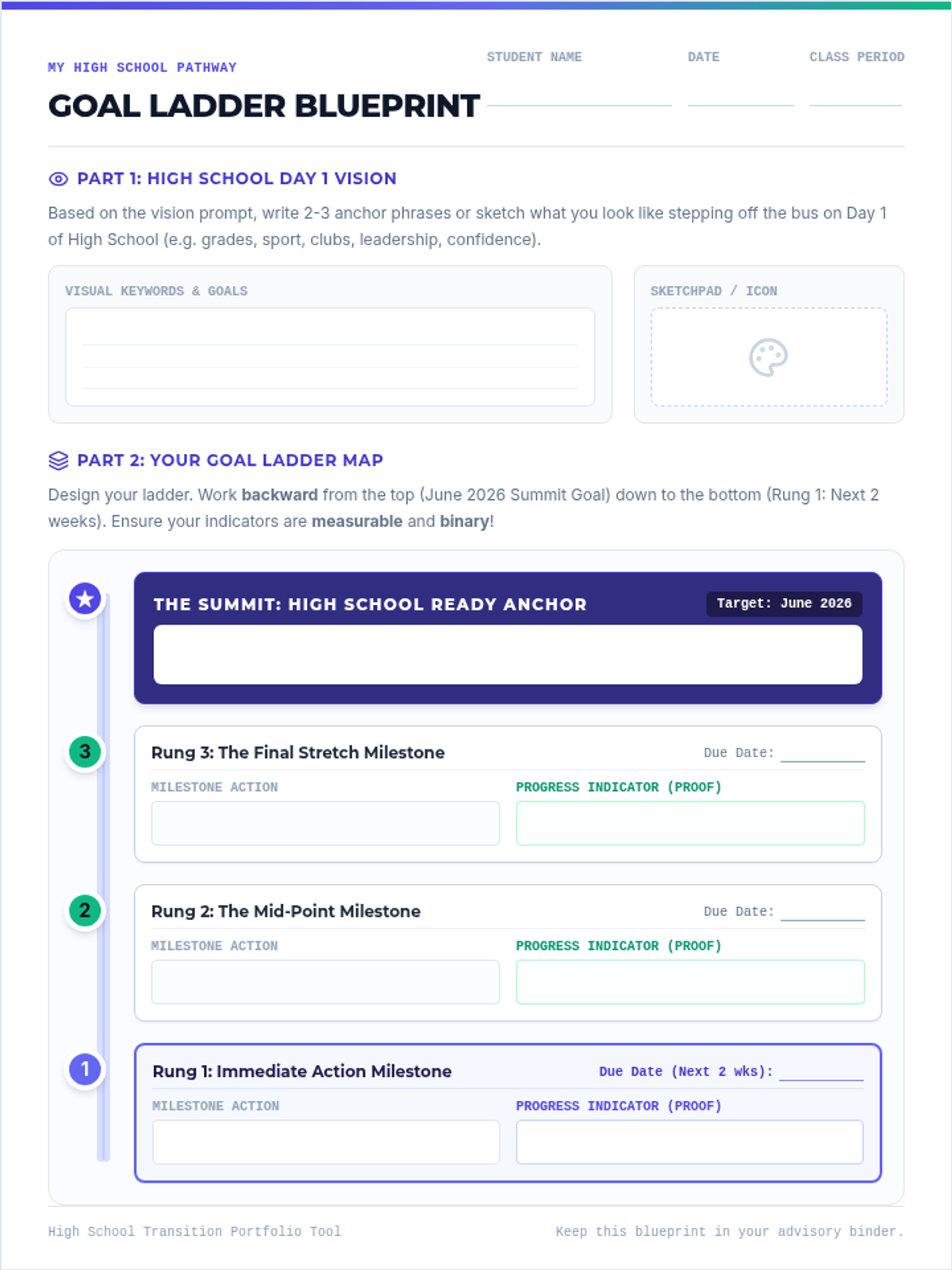
A beautifully structured, 1-page student goal-mapping worksheet featuring name/date headings, a creative vision prompt area, and a large, high-capacity, physical-style ladder blueprint with three rungs, due dates, and progress indicator entry boxes.
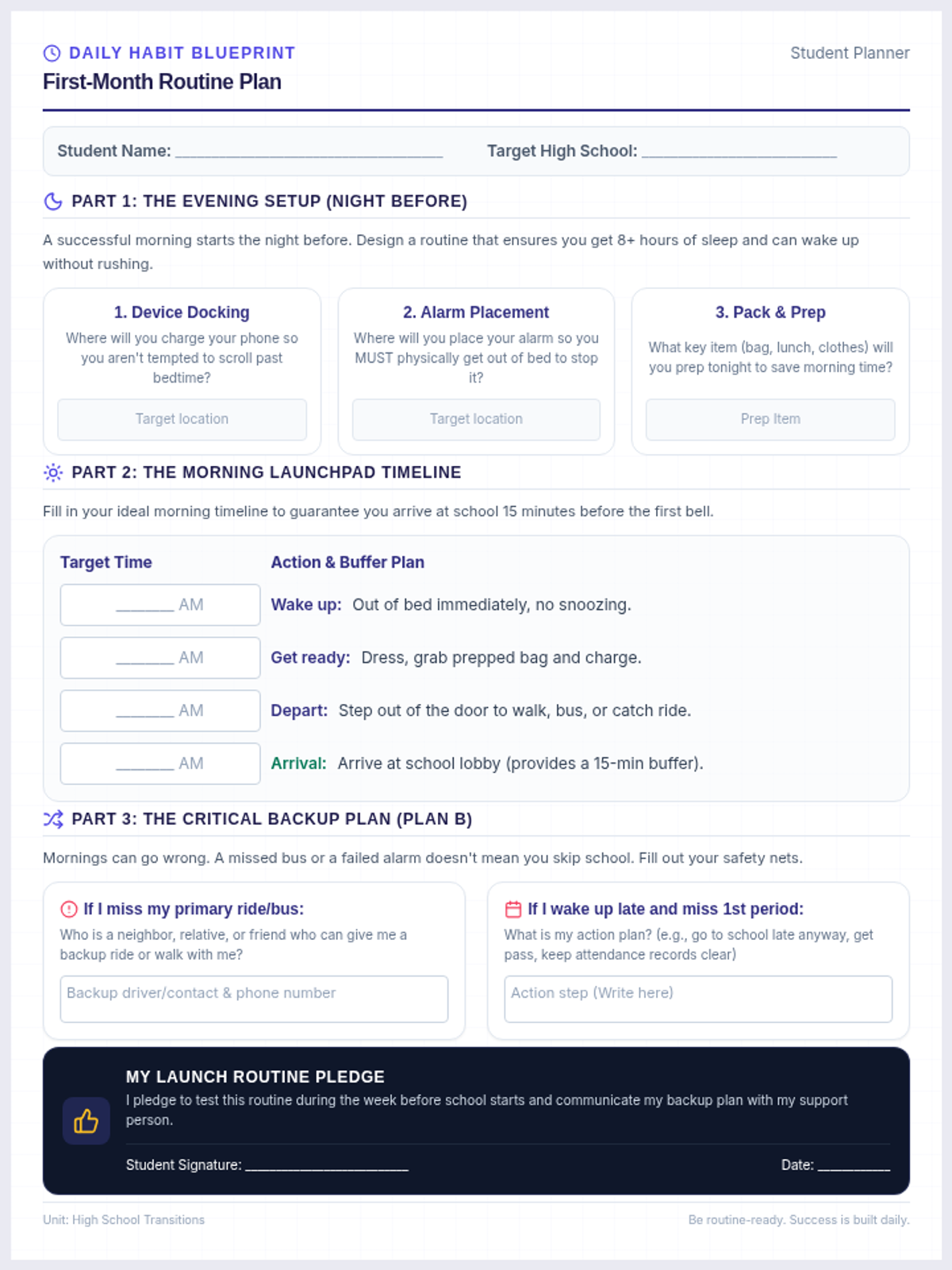
A student-facing daily routine blueprint to build morning, evening, and contingency transit routines for the critical first month of high school.
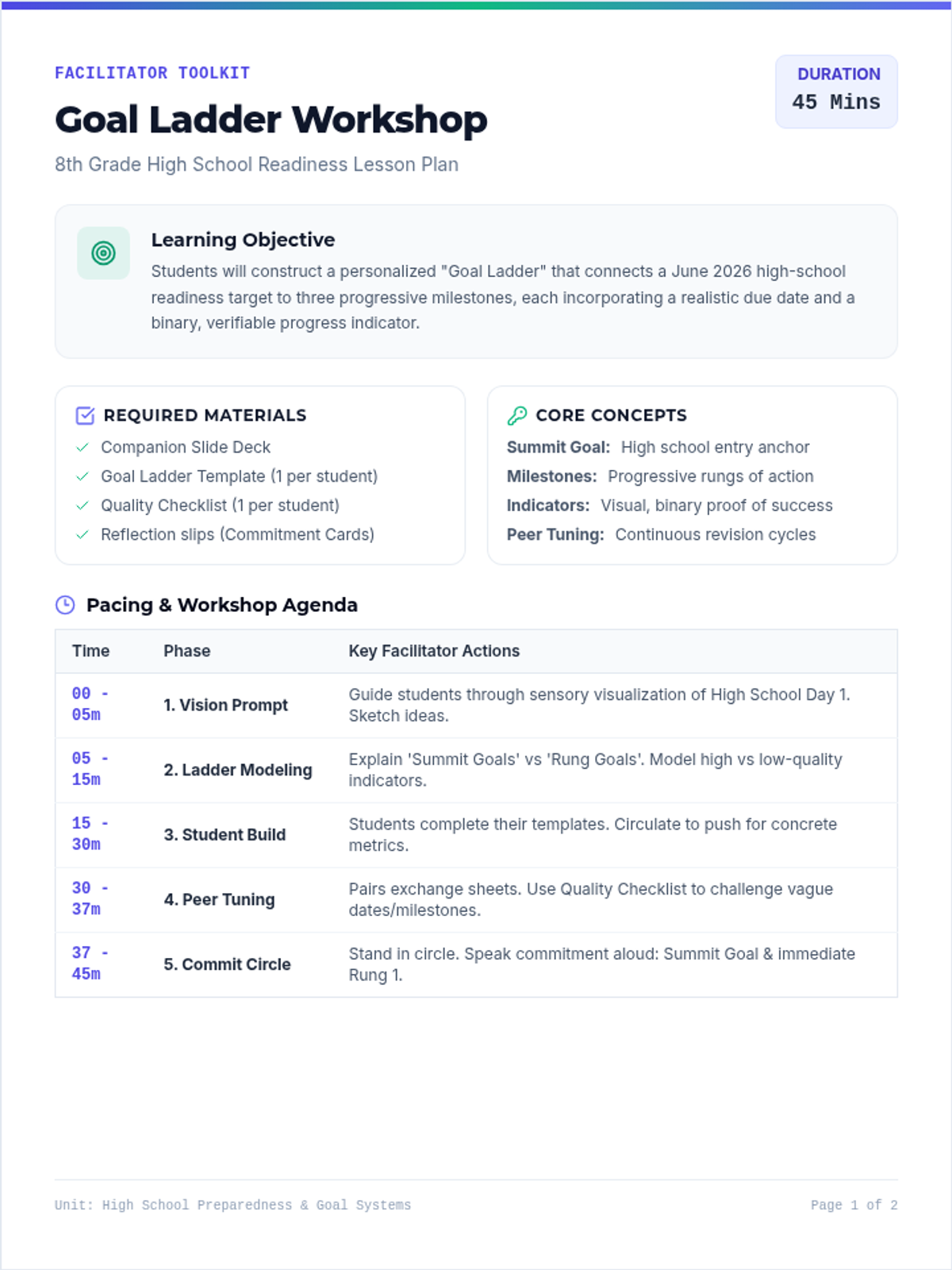
A comprehensive, 2-page teacher facilitation guide outlining pacing, detailed instructional scripts, modeling walkthroughs, and peer review strategies for the 45-minute Goal Ladder lesson.
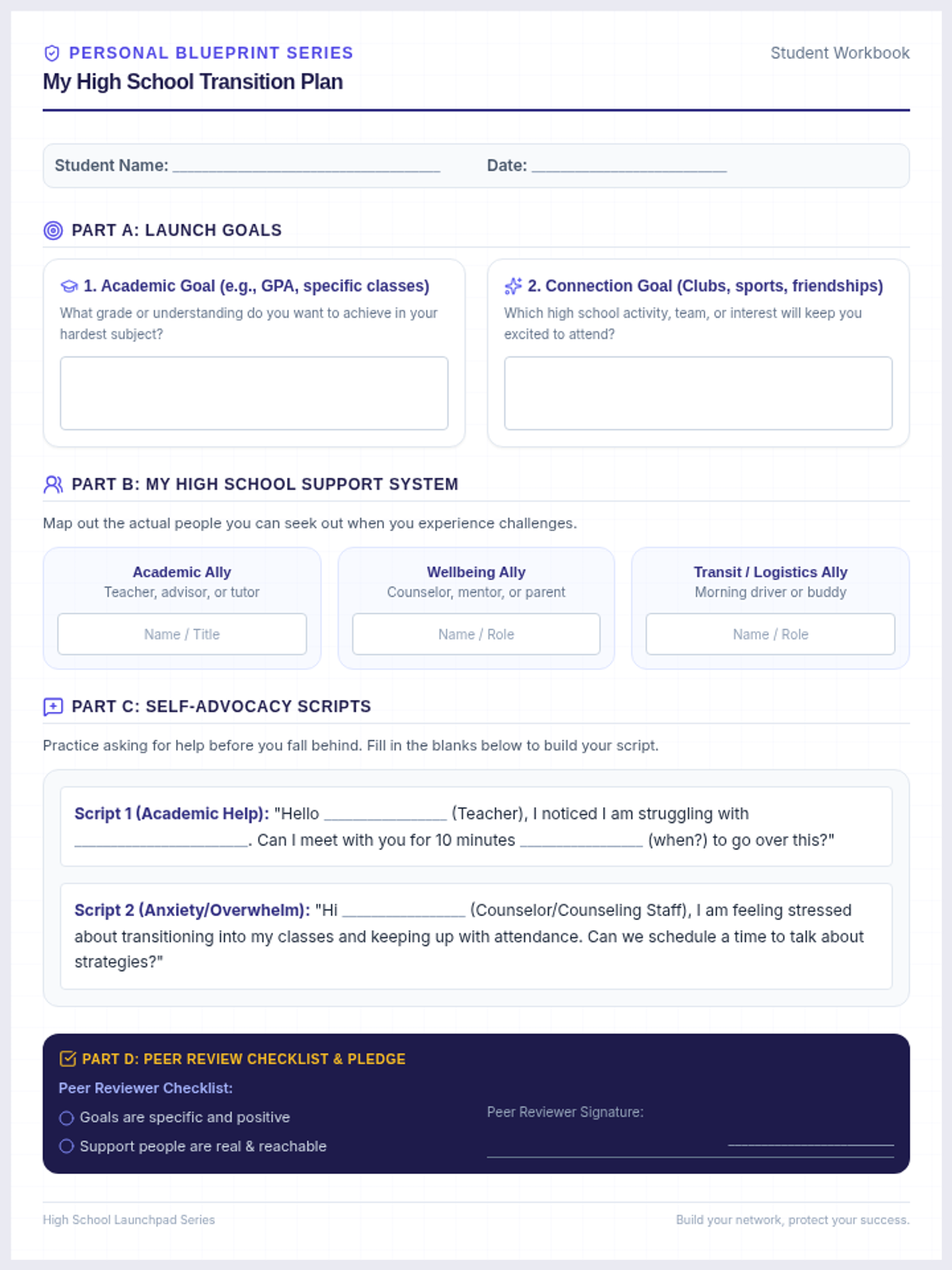
A comprehensive high school transition planning template allowing students to draft academic goals, map out support systems, and write custom self-advocacy scripts.
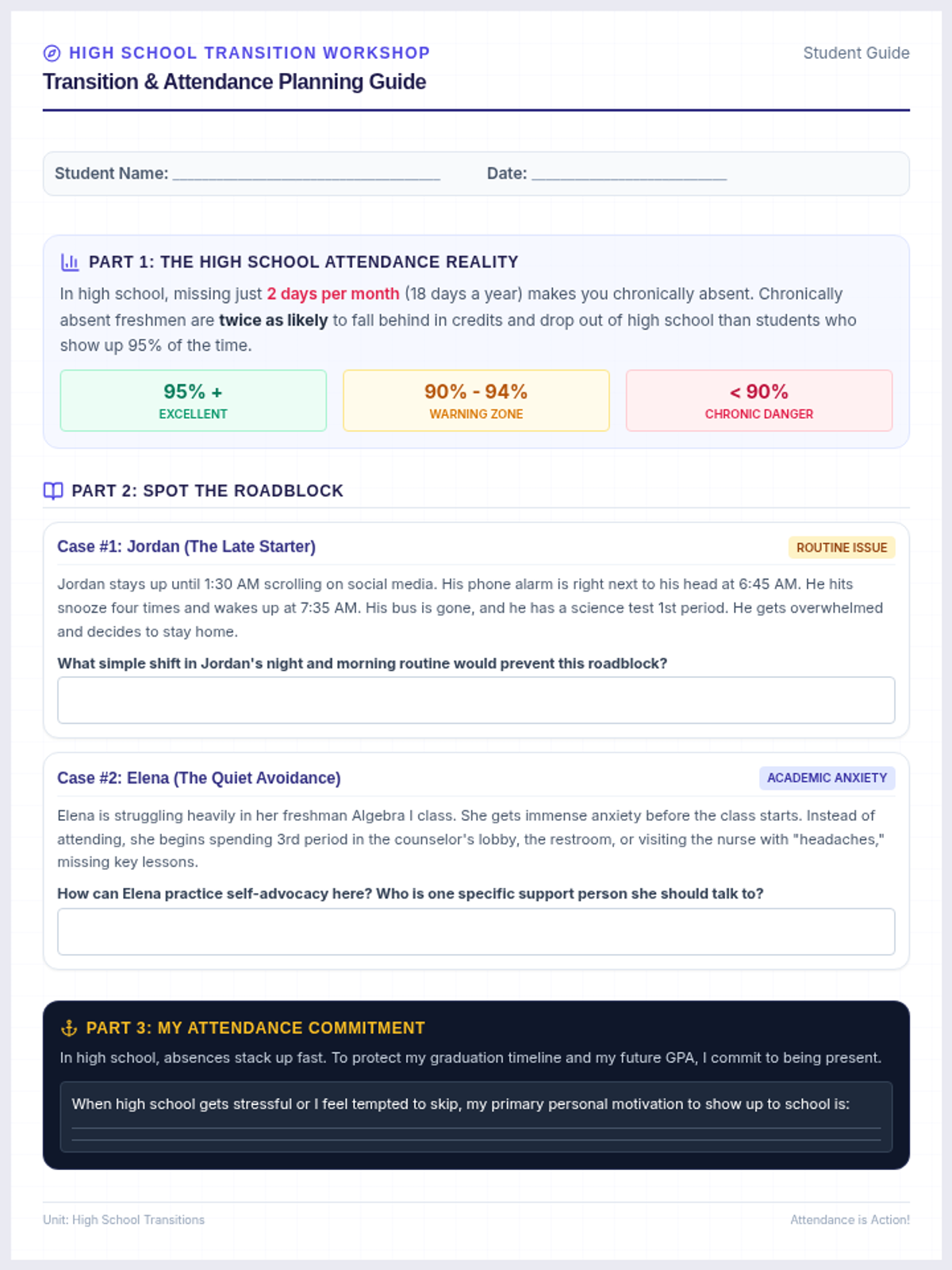
A student-facing guide and scenario analyzer focusing on the importance of high school attendance, featuring case studies of transition roadblocks and short answer reflection questions.
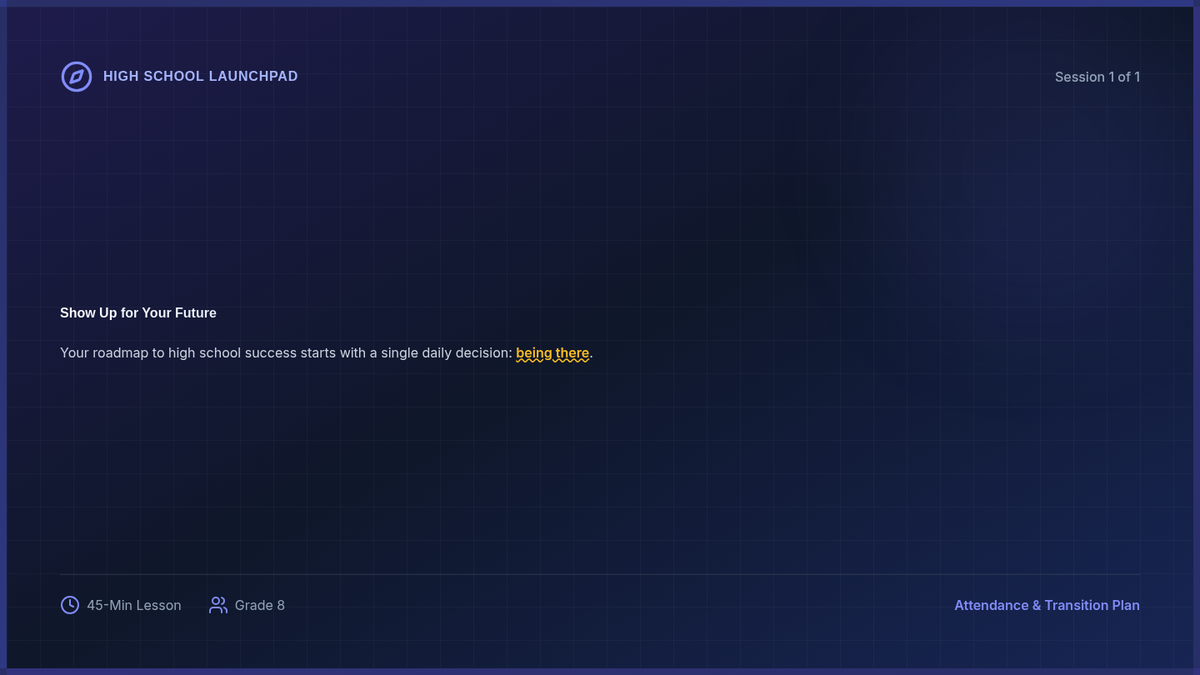
A highly engaging 6-slide presentation that guides 8th graders through the lesson. Features visual hooks on attendance statistics, high school transition scenarios, routine building, support networks, and peer review prompts.
A modern, 7-slide presentation designed to guide 8th-grade students from visualizing their high school debut to breaking down that long-term goal into structured, actionable ladder rungs with due dates and progress indicators.
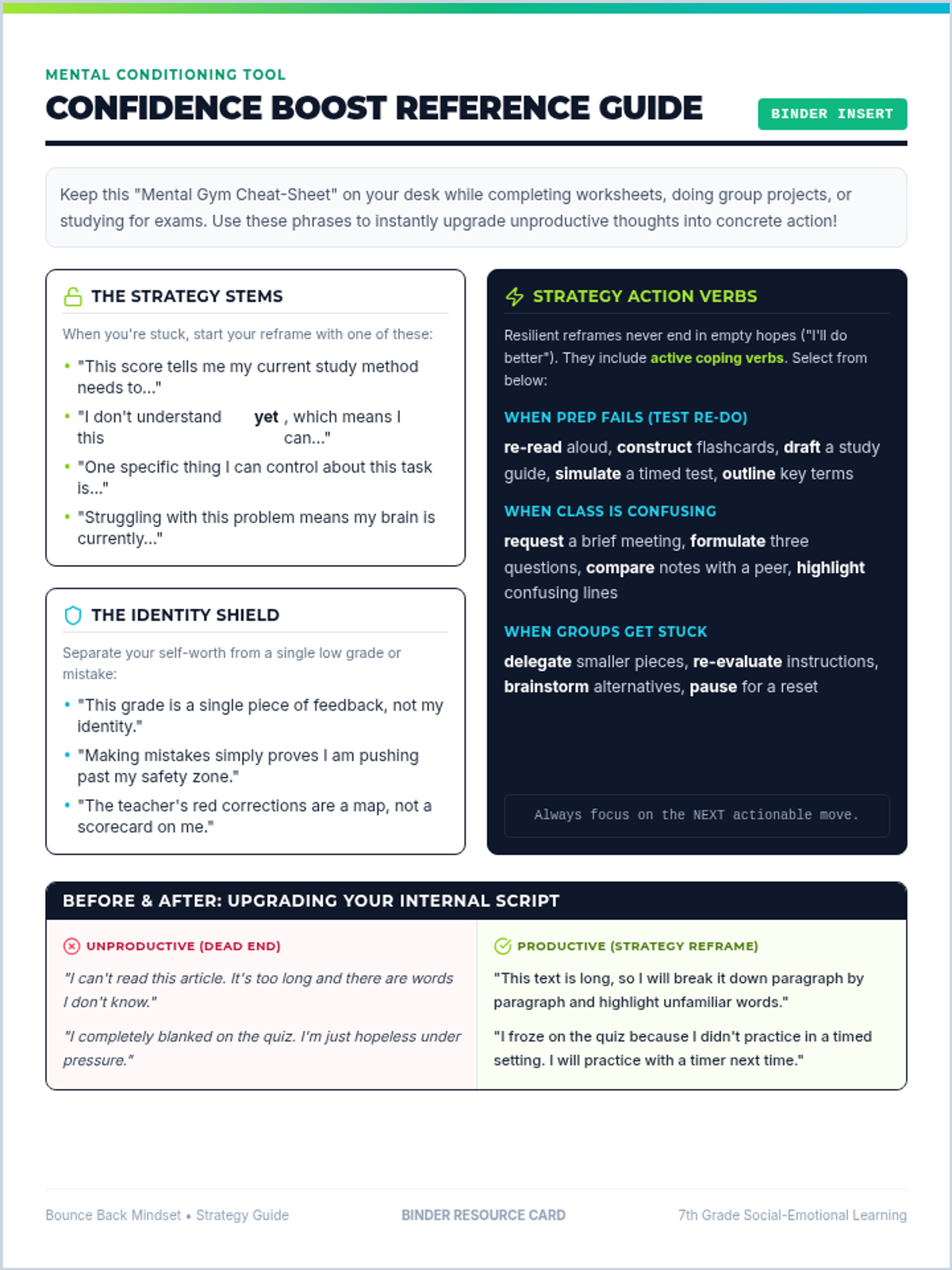
A 1-page student-facing reference guide packed with growth-oriented sentence stems, active coping verbs, and cognitive restructuring strategies to help students reframe setbacks.
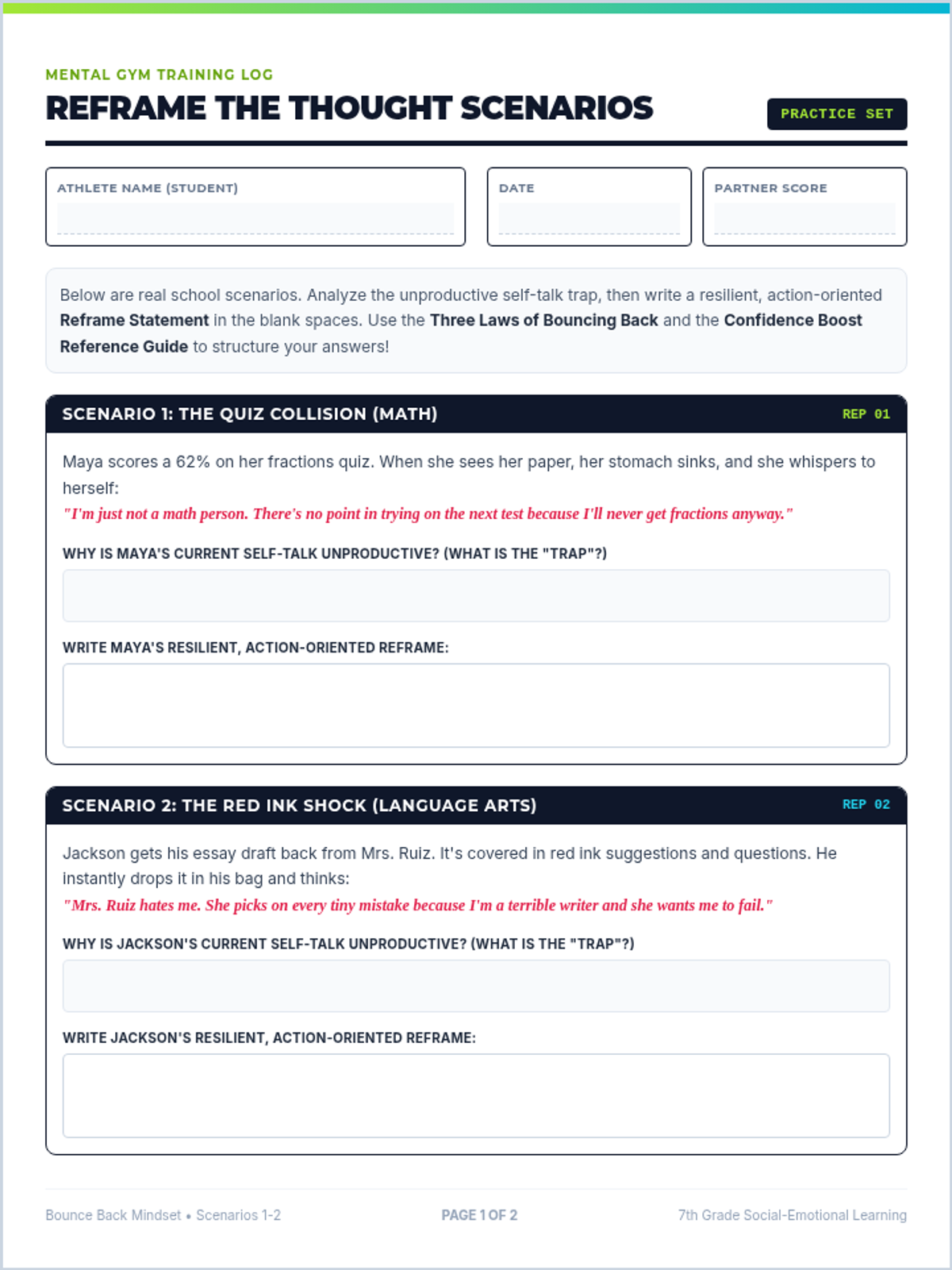
A 2-page student-facing worksheet containing four academic setback scenarios, prompting students to identify the self-talk trap and write a strategic, growth-oriented reframe.
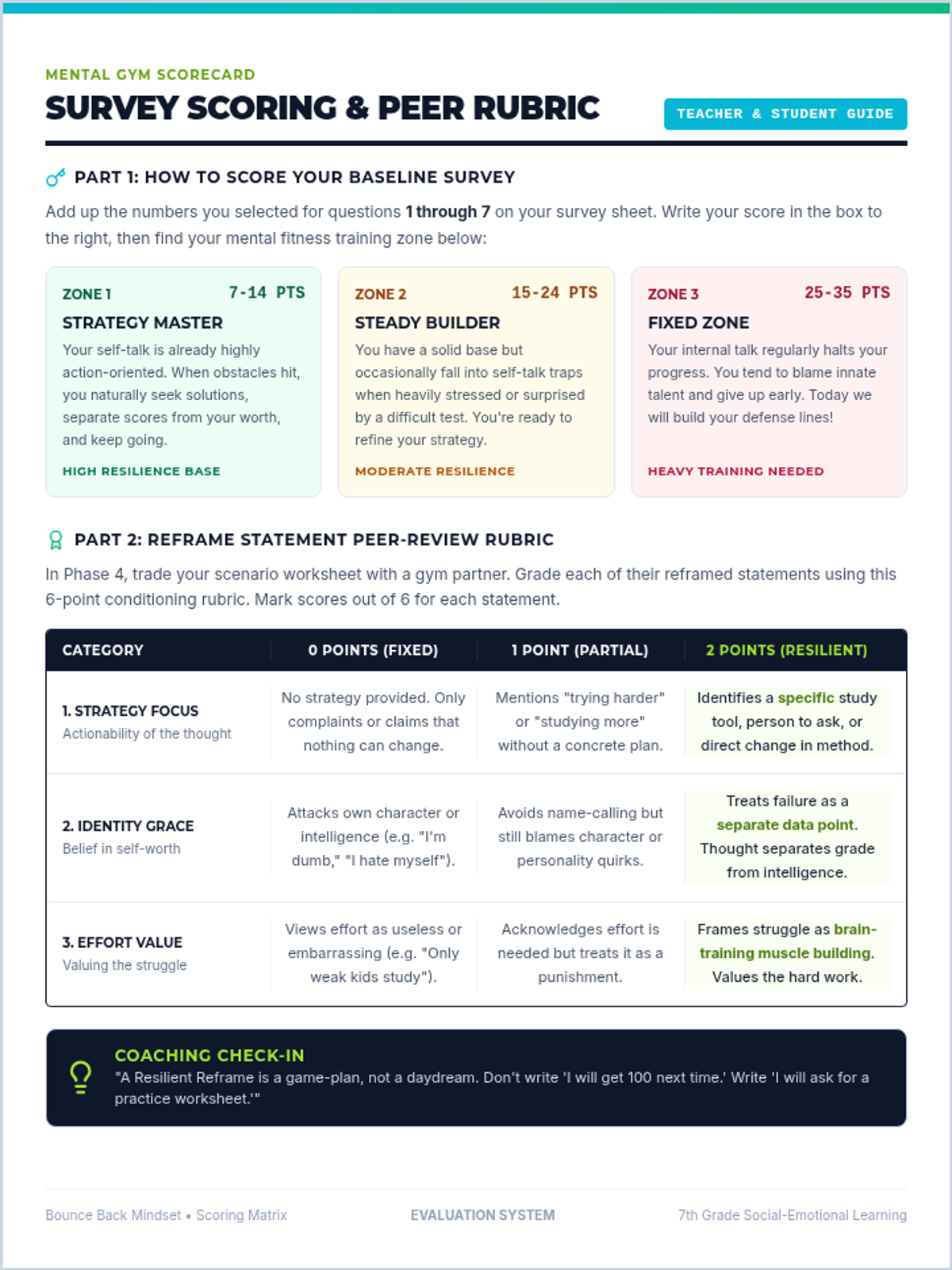
A 1-page scoring guide and evaluation rubric that helps students interpret their Survey scores and peer-assess their reframed academic statements.
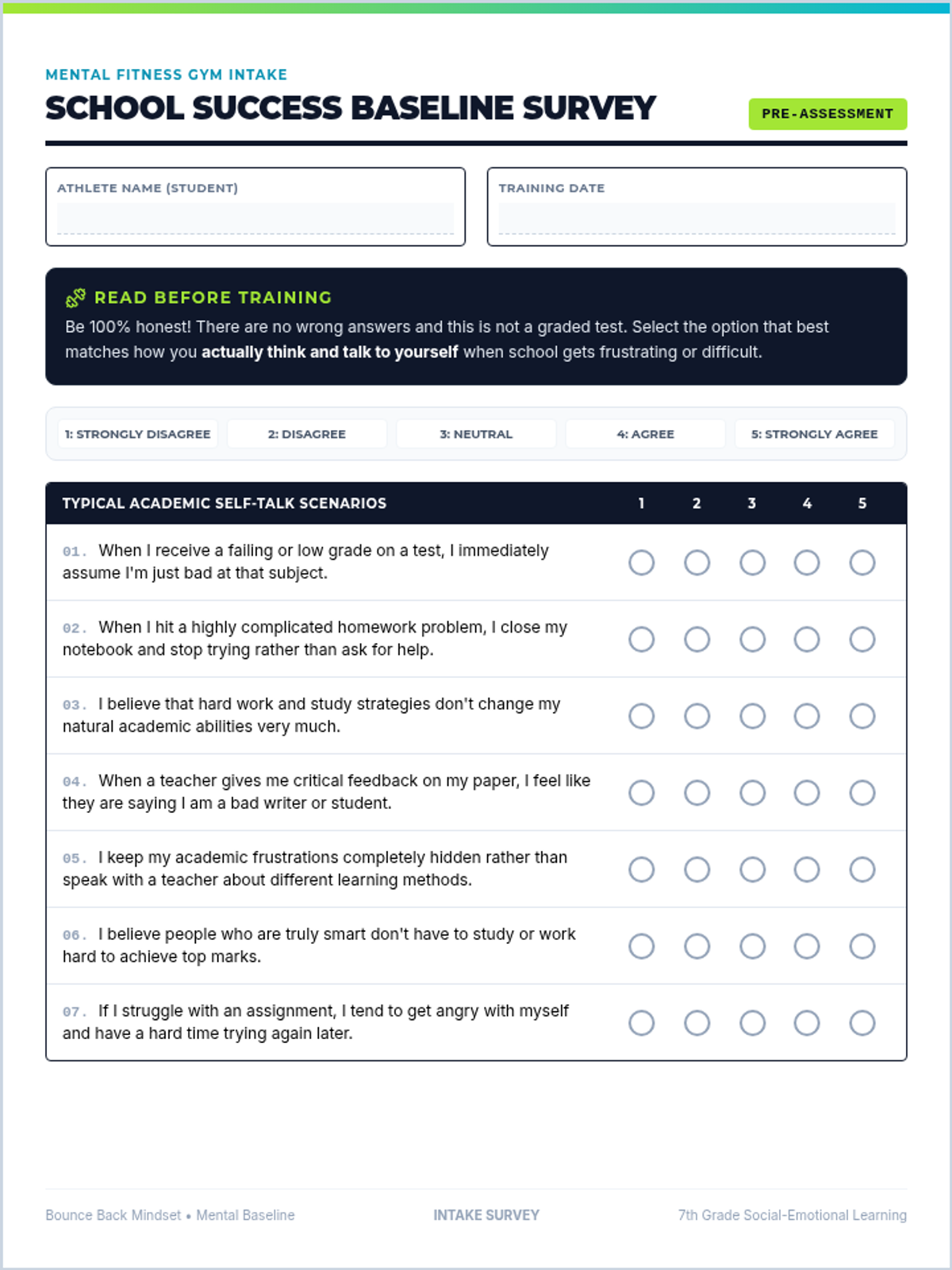
A 1-page student-facing pre-assessment Likert-scale survey styled as a mental baseline fitness check to measure school mindset and self-talk patterns.
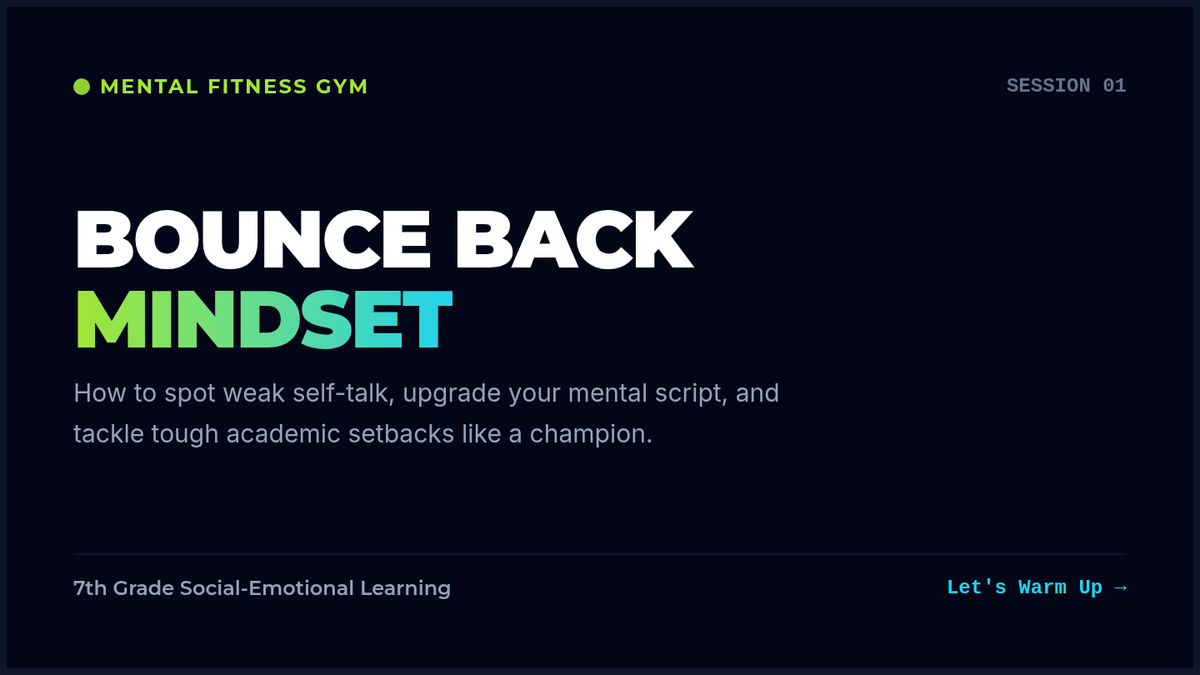
A 6-slide presentation deck designed for whole-class instruction, featuring the "Mental Gym" aesthetic, guiding students from warm-up through concepts of self-talk and practical reframing.
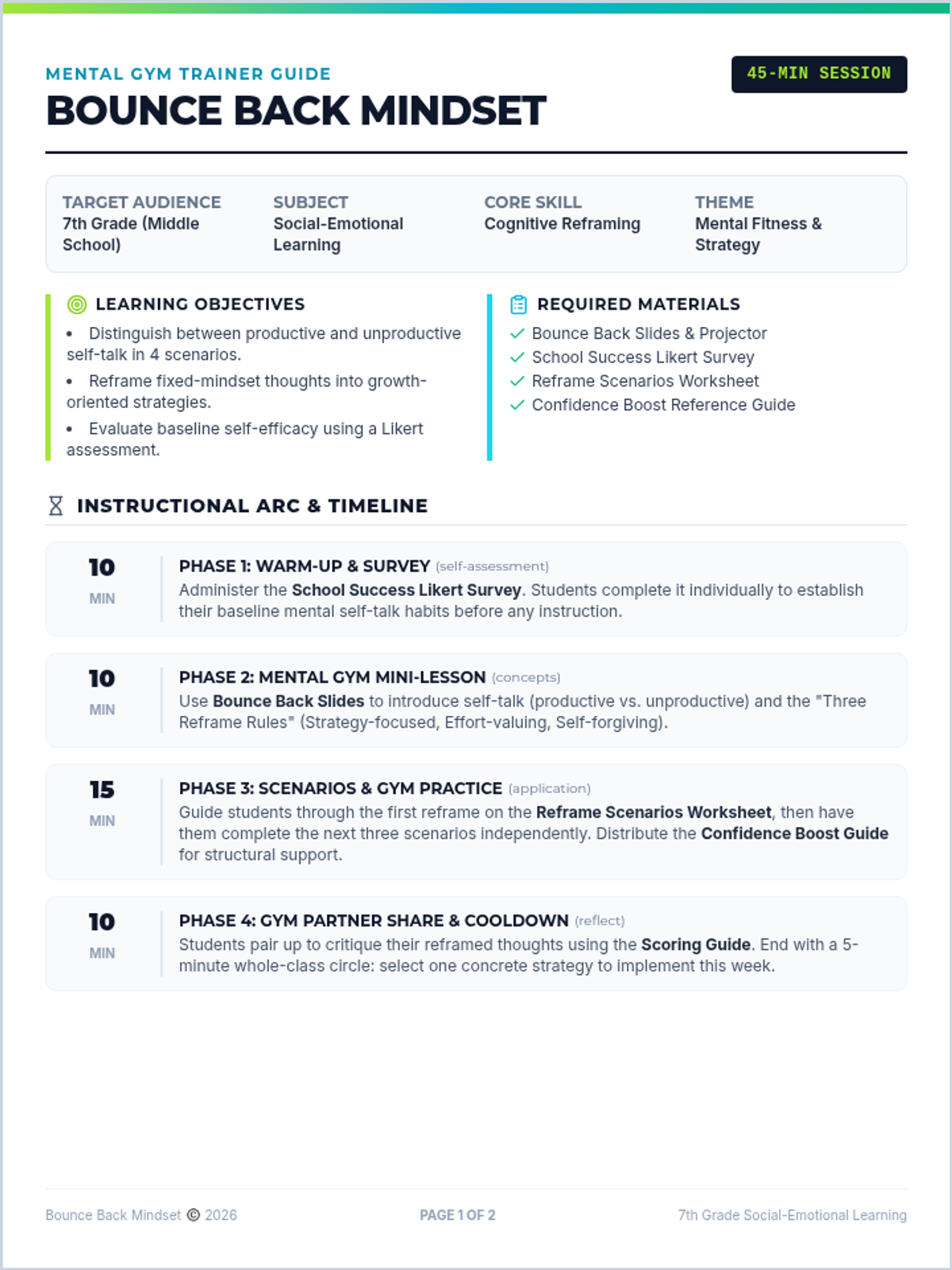
A 2-page teacher-facing lesson plan outlining the 45-minute social-emotional learning session on cognitive reframing, providing a minute-by-minute timeline, teaching scripts, and differentiation tips.
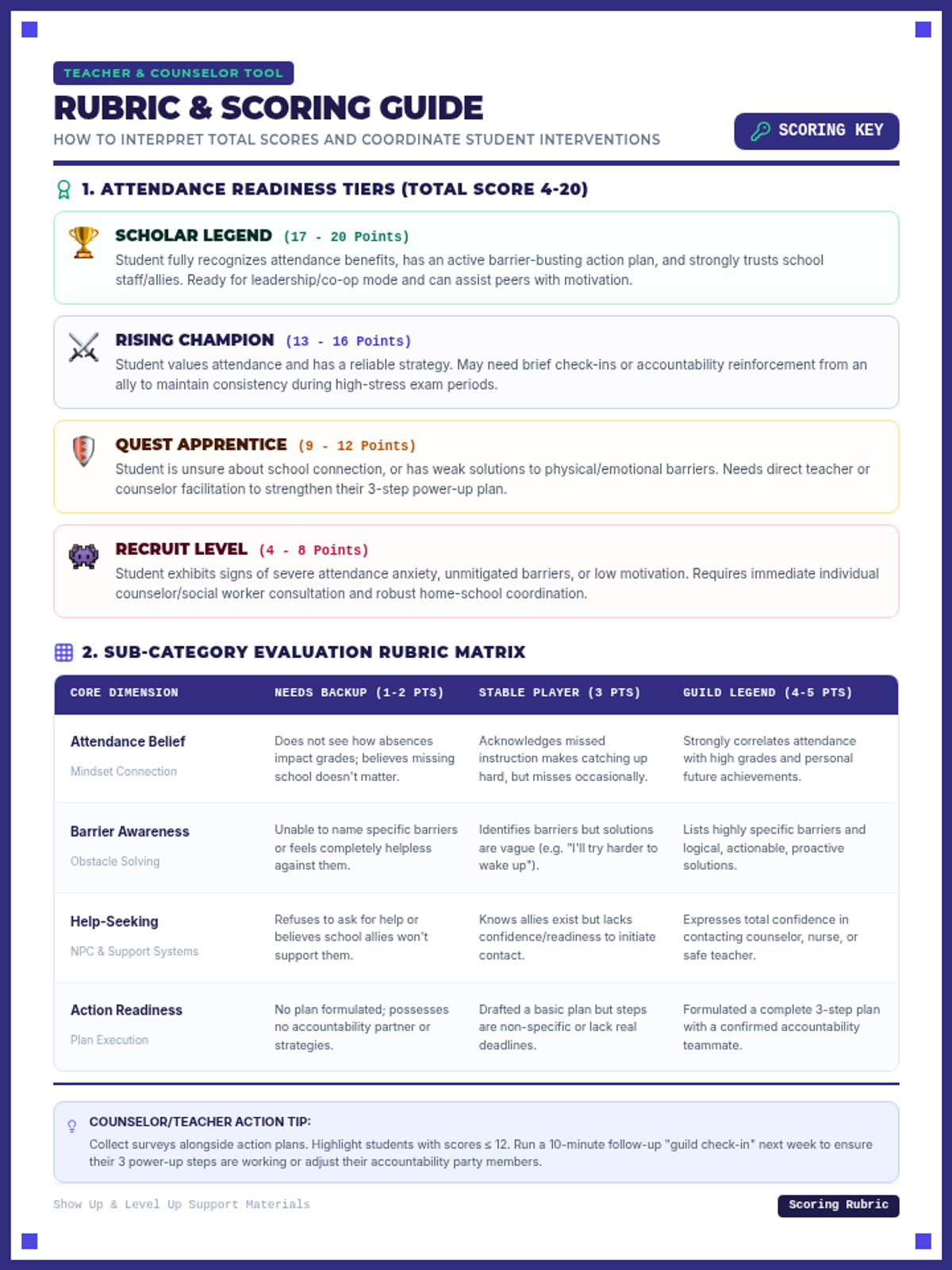
A detailed Rubric and Scoring Guide for the School Success post-assessment survey. It defines the four readiness levels (Recruit, Apprentice, Champion, Legend) and provides teachers and students with a clear matrix to evaluate scores.
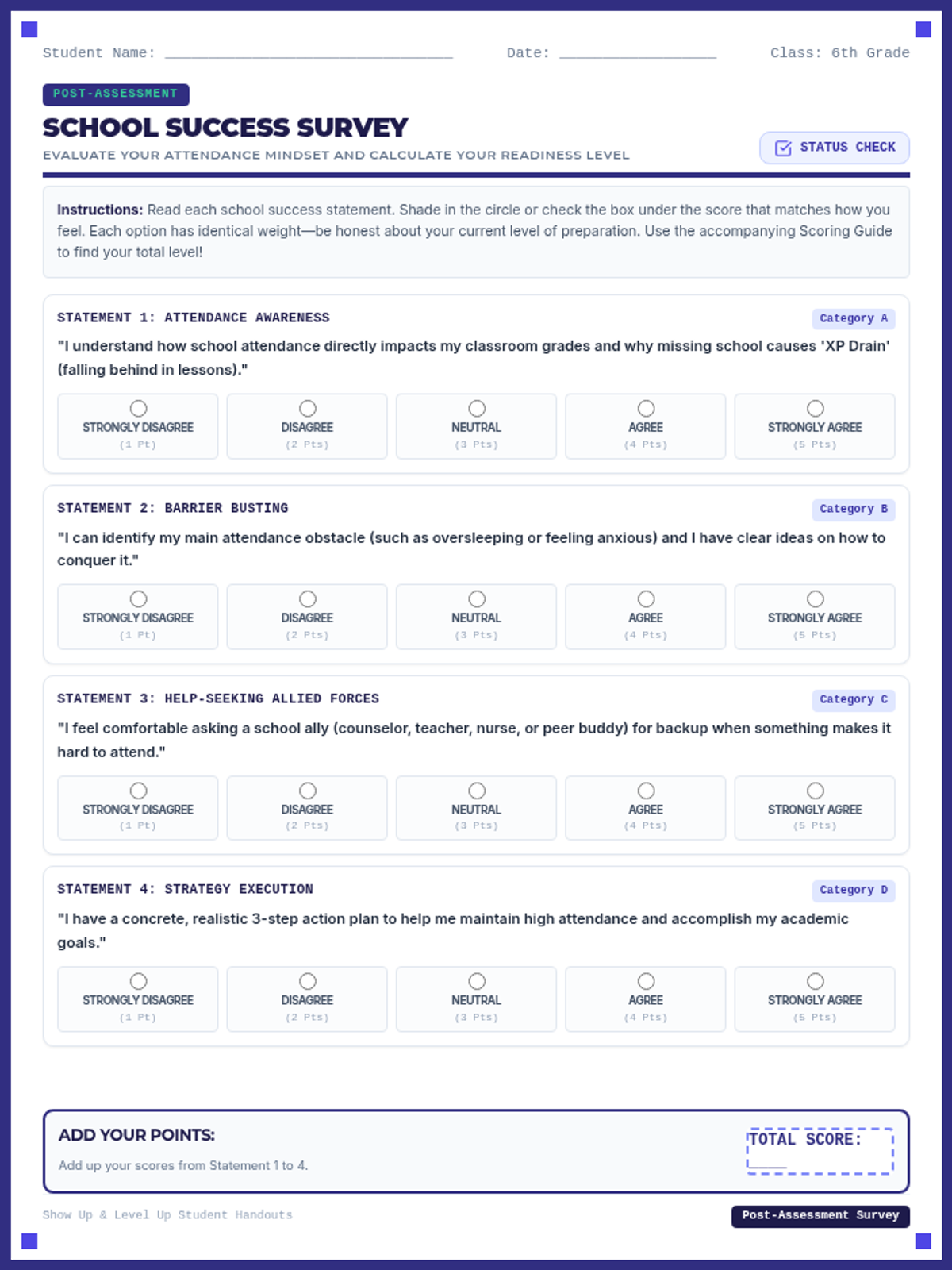
A student-facing post-assessment survey containing four standardized Likert-scale questions to measure students' belief in attendance, barrier awareness, help-seeking confidence, and action readiness, formatted for easy completion.
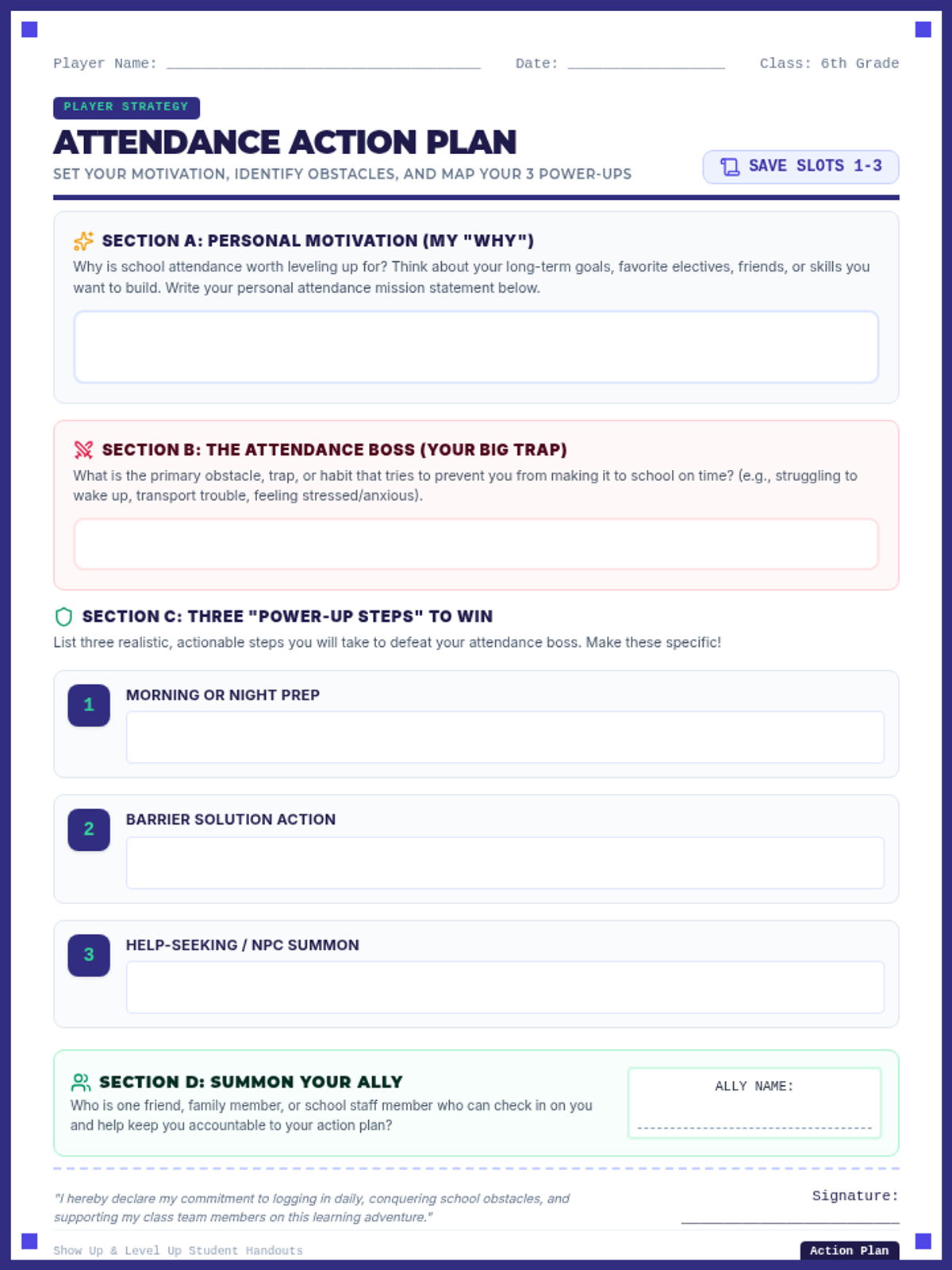
An interactive, student-facing Attendance Action Plan worksheet. It guides students to write a personal motivation statement, identify an attendance barrier, draft three actionable 'Power-Up' steps, and identify an accountability ally.
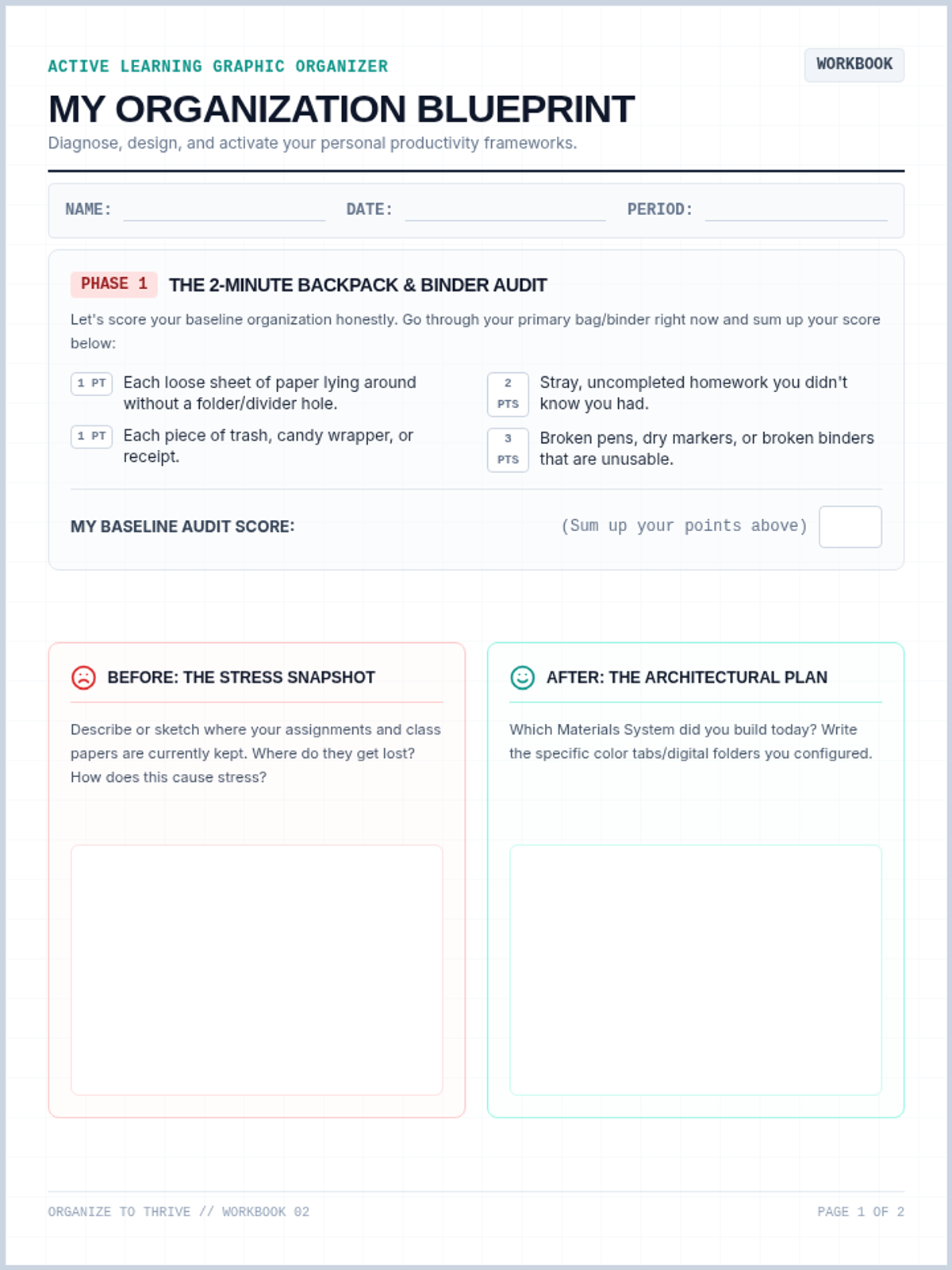
A student-facing printable workbook containing the 2-Minute Backpack/Binder Challenge scoring, a Before/After system snapshot map, a build checklist for their selected system, and a practice ledger to log mock assignments during instruction.
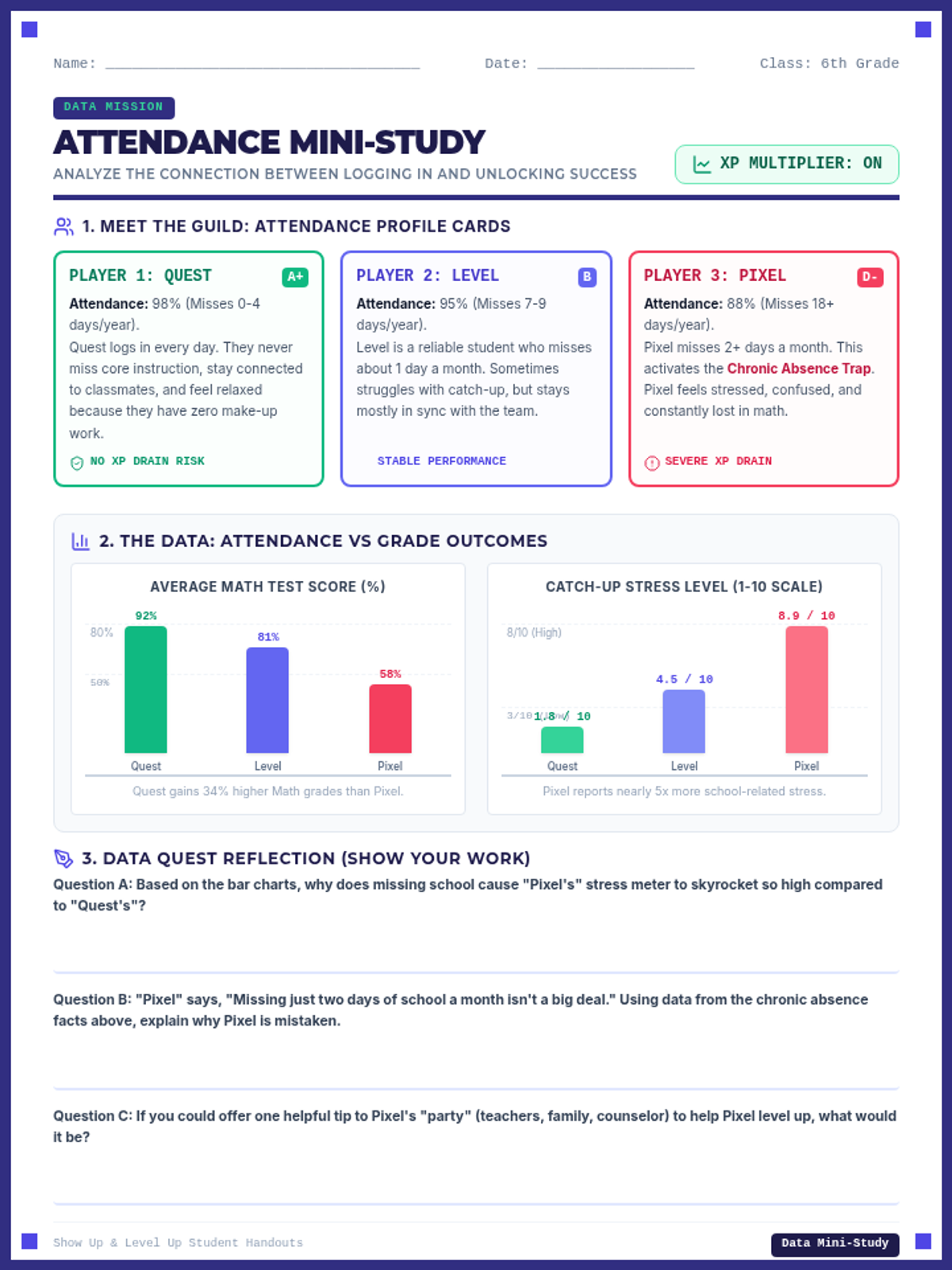
A student-facing, one-page reading and data analysis handout. It details three student profiles (Quest, Level, and Pixel) and contains visual bar charts demonstrating the correlation between attendance rate and final school grades, along with guided reflection questions.
A modern, high-engagement 6-slide deck designed to guide instruction during the 45-minute lesson. Styled with a retro arcade gaming 'Level Up' theme, it links attendance to achievement, breaks down barriers, and features clear visual prompts with text sizes optimized for student readability.
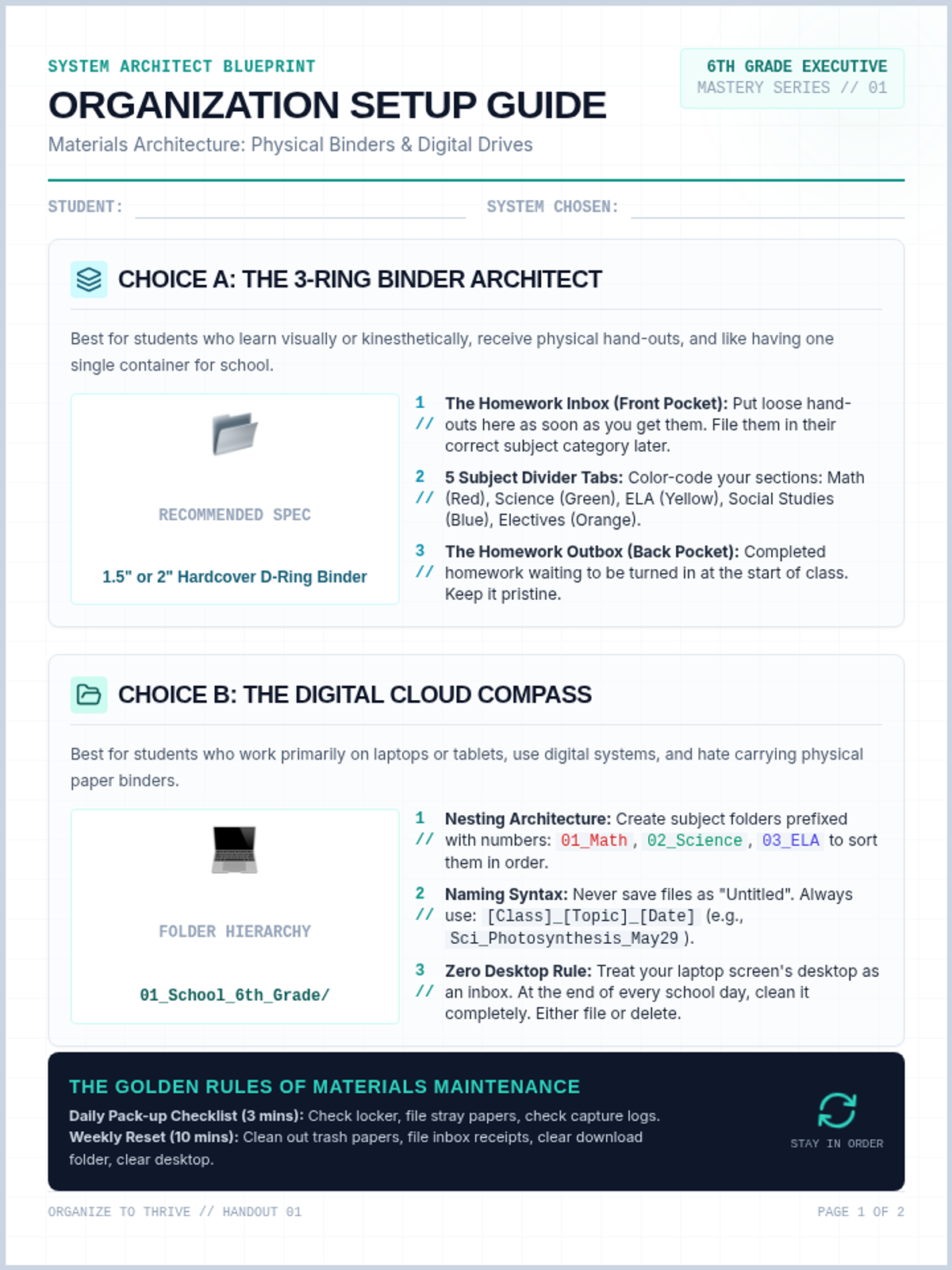
A print-ready dual-page reference handout containing detailed instructions for physical binder construction vs. digital file hierarchy setup, paired with the Capture System Menu which compares three assignment tracking workflows.
An interactive, highly visual slide deck for teaching 6th graders how to architect physical or digital organization systems and design effective assignment capture methods. Includes slides for the 2-Minute Backpack Challenge, the Binder/Digital Folder Blueprints, the Capture System Menu, and a guided practice session.
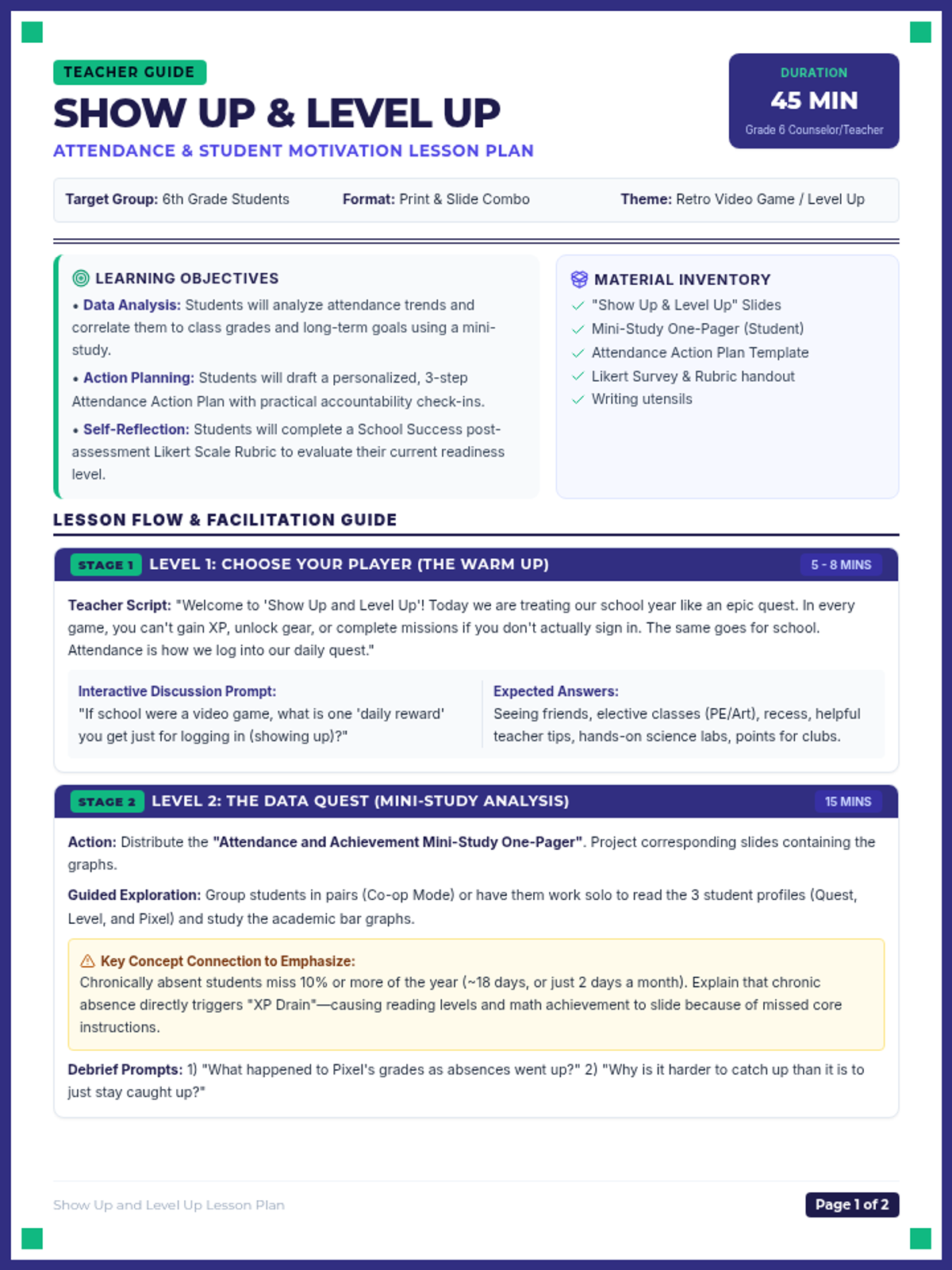
A comprehensive, two-page teacher facilitation guide for the 45-minute 6th-grade attendance lesson, featuring detailed step-by-step instructions, discussion prompts, timing, and differentiation strategies structured around a gaming 'Level Up' theme.