A formative assessment worksheet for students to demonstrate their ability to identify coins by name, match them to their monetary values, and recall physical characteristics.
A 3-page student packet including a social story about self-advocacy, a diagnostic checklist, reflection questions with drawing space, and standalone printable tools (sentence starters and mini cards). Updated to reflect Maya's interests.
A collection of small, cut-out advocacy cards including the 'Am I Stuck?' checklist and quick sentence starters. Designed to be taped to a desk or kept in a pencil case for portable support.
A full-page visual reference of sentence starters for self-advocacy, categorized by situation (Starting, Pacing, Teamwork, and Specifics). Designed for easy reference on a desk or wall. Now fits on a single page.
A teacher's facilitation guide for the Voice Power lesson, including instructional tips, discussion prompts, and differentiation strategies for middle school self-advocacy.
A supportive slide deck designed for direct instruction on self-advocacy. Covers 'the fog' of confusion, the 2-minute rule for seeking help, and practical sentence starters for middle schoolers.
Financial Friday presentation slides. Connects financial literacy to stress management by introducing the concept of a 'Resiliency Fund' (emergency savings) and distinguishing between needs and wants. Now with improved text contrast and balanced visual layout.
Talk It Out Thursday presentation slides. Focuses on assertive communication using 'I' statements and identifying social support networks as a component of resiliency.
Wellness Wednesday presentation slides. Introduces the biology of stress (Fight or Flight vs. Rest and Digest) and leads students through the 4-7-8 breathing technique as a resiliency tool. Now features a split 'Wellness Menu' across two slides to ensure readability and full content visibility.
Time Management Tuesday presentation slides. Focuses on the 'Big Rocks' analogy and the concept of 'Buffer Zones' to mitigate time-related stress and build scheduling resiliency.
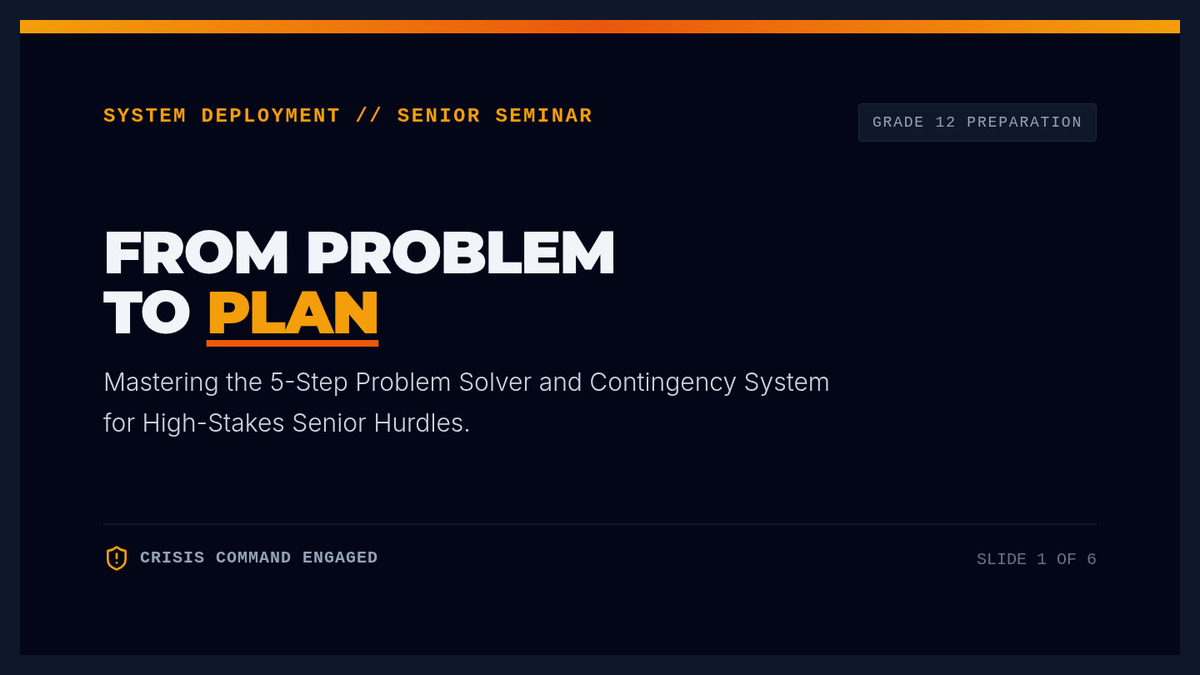
A visual presentation for Mindset Monday focusing on the 'Power of Yet' and building mental resiliency. Includes a bell ringer, the Stress Balloon analogy, and guided instructions for independent work.
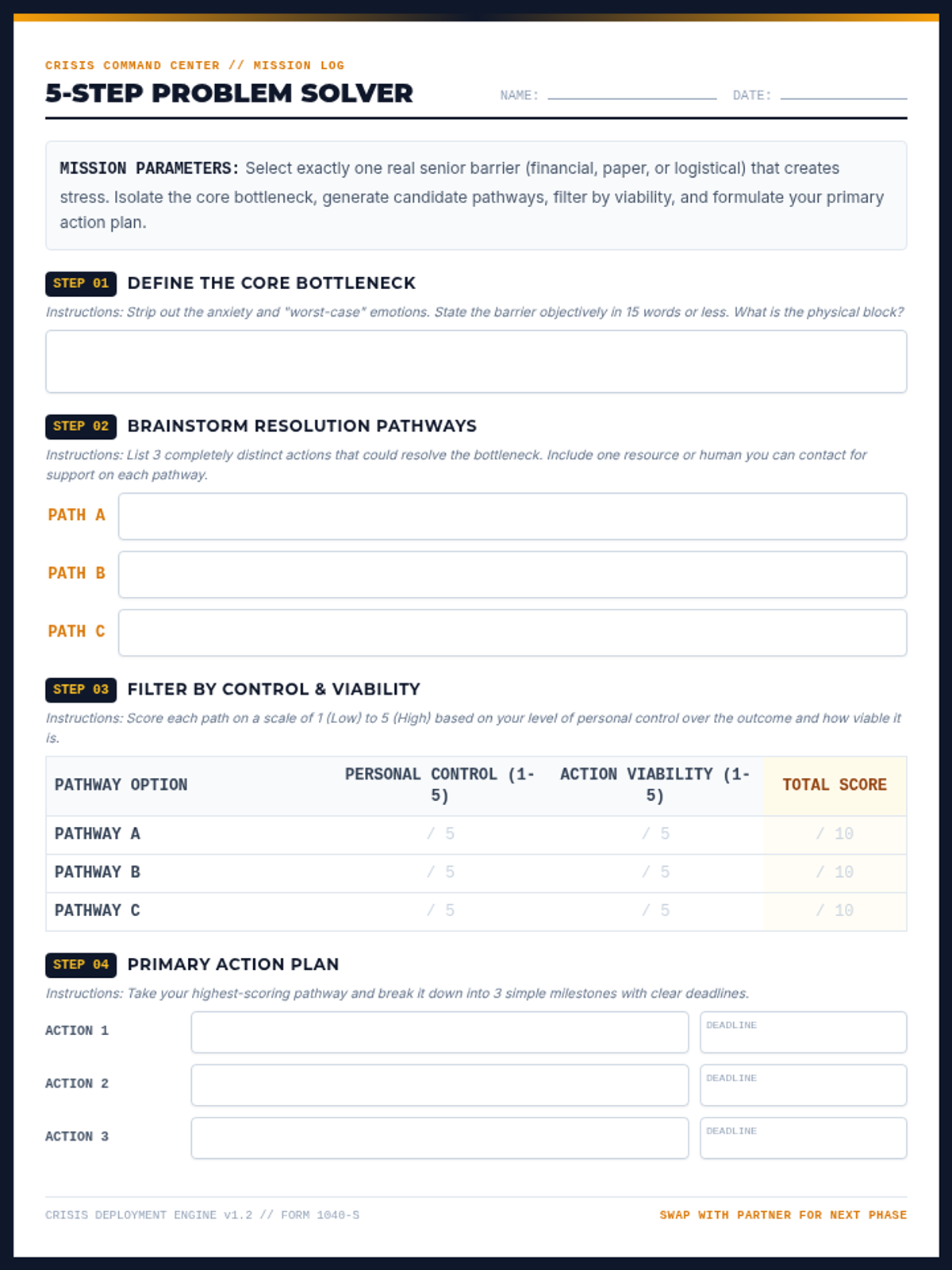
A printable student workbook containing daily bell ringers, independent activities, and exit tickets for the entire Resiliency week. Uses a durable 'Field Guide' aesthetic with high-contrast labels and clear, boxed work areas for students. Organized to ensure each day's work is easily readable and contained.
A detailed teacher facilitation guide for the Resiliency unit, providing a weekly overview, daily 54-minute pacing breakdowns, instructional ideas for whole-group activities, and independent work summaries. Day-by-day lesson plans are organized for clear viewing.
A facilitation guide for teachers/counselors to lead the Social Compass session, including scripted prompts, lesson flow, and tips for managing group dynamics. Page breaks and checklist layout improved to strictly fit on two pages.
A graphic organizer for 6th-grade girls to process social pressure and peer feedback by 'filtering' it through their core values. Updated to strictly fit on a single page with a more descriptive funnel graphic. Handwriting areas improved for 6th-grade use.
Visual presentation for a small group session on self-confidence, covering social pressure, friendship red/green flags, and the 'Friendship Filter' concept. Updated with higher contrast for better accessibility.
A revised set of discussion scenarios for a PLC meeting, featuring expanded response areas with writing lines and improved visual layout for collaborative teacher work.
A revised one-page reference guide for teachers outlining immediate interventions and communication scripts for sleepy students, optimized for single-page printing.
A 15-slide PLC presentation for teachers focused on empathetic strategies for managing students sleeping in class, expanded to include general off-task behavior scripts and reflection questions. Based on Edutopia insights.
A facilitation guide for daycare providers, outlining implementation strategies and verbal scripts. Updated for better layout and to avoid awkward page breaks.
A 'Super Reward Menu' showcasing five no-cost incentives for daycare children, including choices for music, stories, snacks, fort-building, and leadership roles.
A visual incentive tracker for three children, featuring five check-boxes for stars and a trophy icon to mark reaching a reward milestone. Updated with better contrast, rule reminders, and placeholder icons.
A visually engaging wall poster using a 'Squad Mission' theme to display four core daycare rules (Tidy Up, Gentle Hands, Listen Up, Kind Voices) with large icons for 4-5 year olds.
A sophisticated group growth inventory for 6th graders. Revised with 6 session-specific reflection boxes, increased writing space, and improved text sizing.
Facilitator guide for Lesson 6. Revised for single-page fit, increased contrast for Facilitator Note, and tightened layout.
Lesson 6 slides for 6th graders on sustainable growth. Explores the internal nature of forgiveness and the critical importance of healthy social, digital, and emotional boundaries.
The Strategy Map for 6th graders. Revised for single-page fit, corrected spelling of 'Dialogue', and increased handwriting box heights to 110px+.
Facilitator guide for Lesson 5, focusing on a 4-step mediation process for middle school conflict. Includes 'Tug-of-War' demo and strategy mapping.
Lesson 5 slides for 6th graders on conflict mediation. Introduces a professional 4-step mediation process and the concept of sustainable 'Win-Win' solutions in complex social environments.
The Social Lens Handout for 6th graders. Revised for single-page fit, improved text contrast, increased font sizes (14px descriptions), and added handwriting guides.
Facilitator guide for Lesson 4, focusing on advanced perspective-taking for 6th grade social nuances. Includes a 'Lens Demo' and 'Perspective Tunnel' analysis.
Lesson 4 slides for 6th graders on social perception. Explores the complexity of middle school social dynamics and the difference between 'My Lens' and 'Her Lens' in confusing peer interactions.
The Exchange Cards for 6th graders. Revised to include 3 realistic scenarios (Aggressive, Passive, Digital), fit on one page, and provide expanded writing areas for the Blueprint formula.
Facilitator guide for Lesson 3, focusing on assertive communication and digital tone. Includes a 'Tone-Text' demo and 'Blueprint' practice.
Lesson 3 slides for 6th graders on assertive communication. Focuses on Passive/Assertive/Aggressive distinctions and an upgraded I-Statement formula (The Blueprint) including digital tone.
Root Analysis worksheet for 6th graders. Revised for single-page fit, increased writing area height, and improved layout/text contrast.
Facilitator guide for Lesson 2, focusing on common middle school triggers like digital drama and social hierarchy. Includes a 'Group Chat Web' activity.
Lesson 2 slides for 6th graders on conflict triggers. Revised for content completeness (4 slides) and proper heading spacing.
Values inventory worksheet for 6th graders to identify character requirements for friendships. Revised to ensure single-page fit and increased writing space.
Facilitator guide for Lesson 1, elevating the friendship qualities theme for 6th graders by focusing on values vs. proximity. Revised for single-page fit and better list formatting.
Introductory slide deck for Lesson 1, designed for 6th graders. Focuses on the distinction between situational and value-based friendships using a sophisticated botanical theme.
A two-page reflective worksheet on Meaning-Focused Coping. Page 1 features an introductory explanation and a substantial reflective response area. Page 2 provides guided application exercises for identifying growth and value alignment in overwhelming situations.
Teacher reference guide updated to reflect the new "want" items in the examples, providing successful and unsuccessful budgeting combinations for grading.