A detailed lesson plan and facilitation guide for teachers to manage the Adulting Navigator simulation, including pacing, talking points, and differentiation strategies.
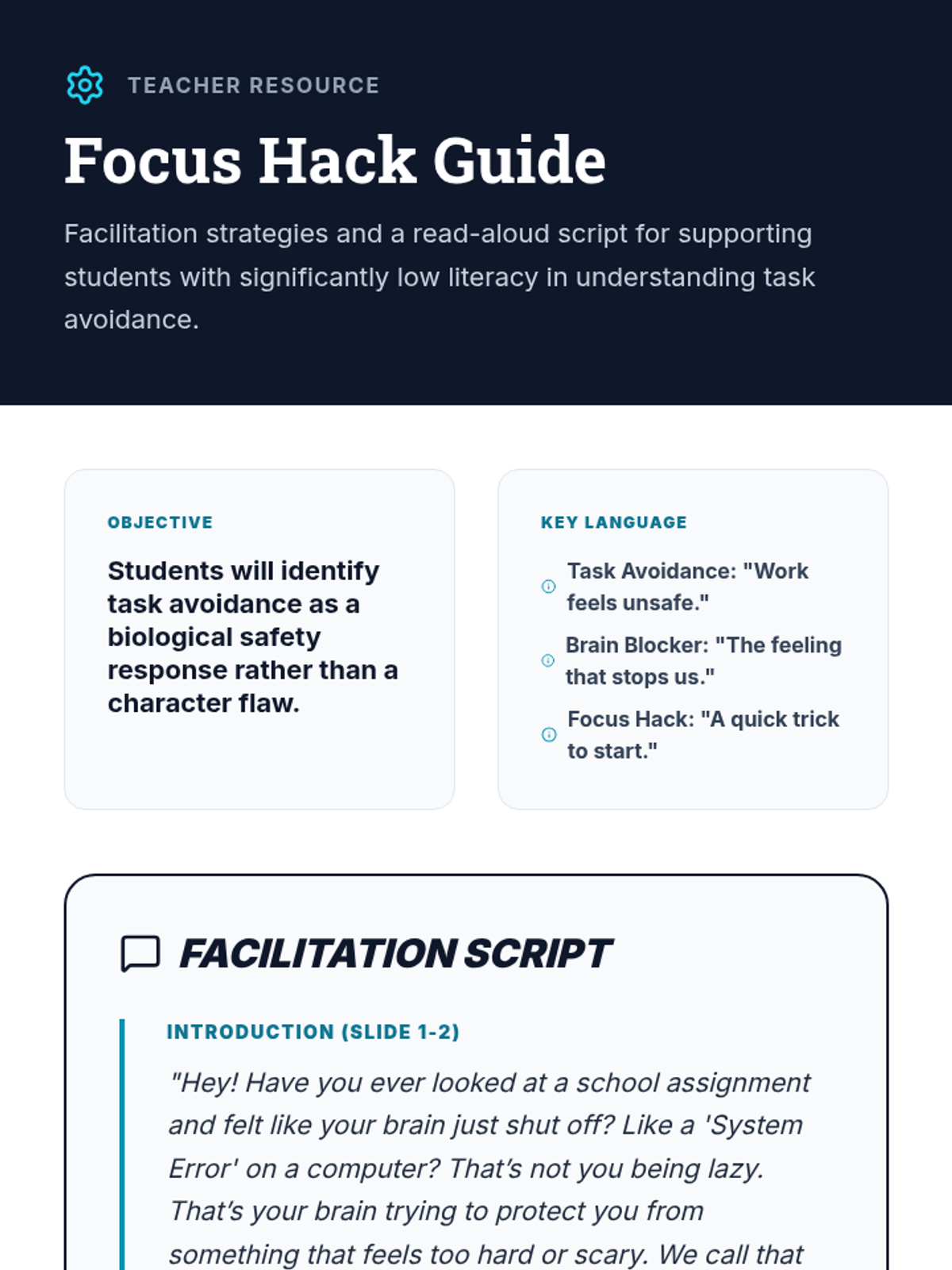
A comprehensive teacher guide for facilitating the 'Focus Hack' lesson with students who have low literacy skills. Revised for better layout balance, script continuity, and page break management.
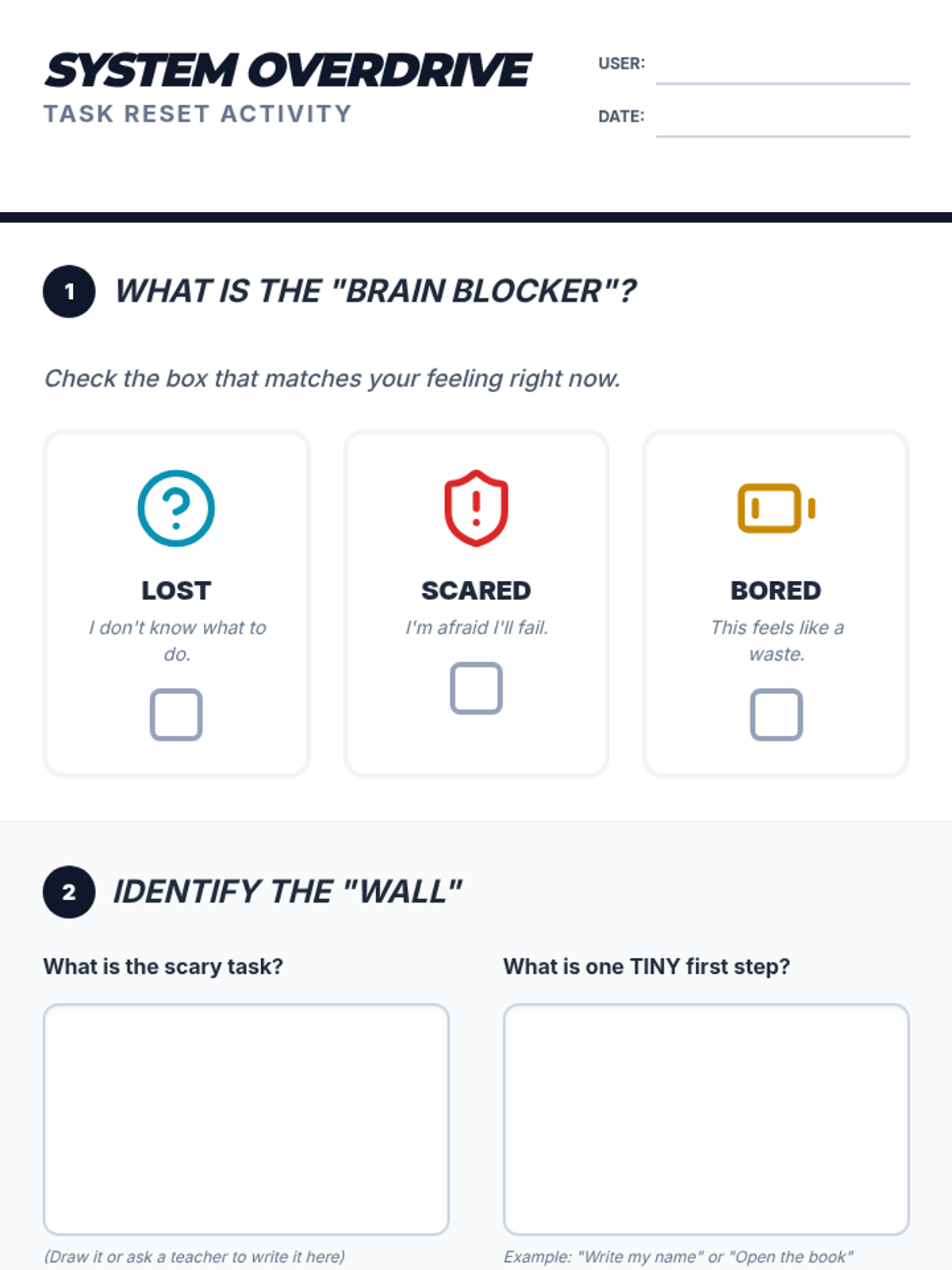
A visual activity sheet for 9th-grade students with low literacy to identify brain blockers and choose strategies for overcoming task avoidance. Revised with better page break management, darker text for accessibility, and clearer input boundaries.
A highly visual slide deck for 9th-grade students with low literacy skills, explaining task avoidance through a 'System Error' theme. Uses large icons, minimal text, and simple 'Focus Hacks' to make self-regulation concepts accessible. Revised for better contrast and layout balance.
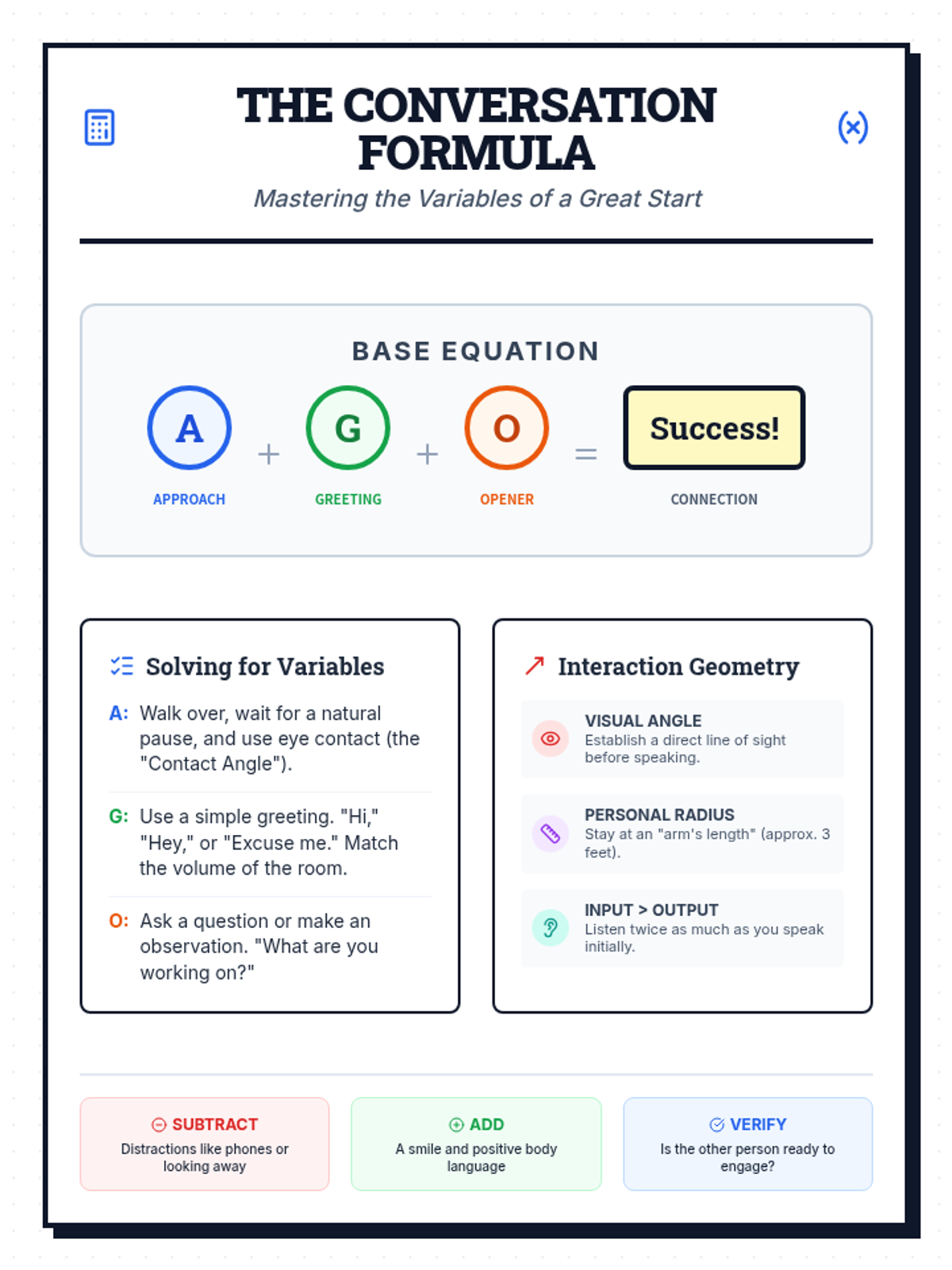
A revised math-themed anchor chart for conversation skills, now optimized to fit on a single page with a non-wrapping horizontal equation metaphor. Teach A+G+O=Connection with clear visual variables.
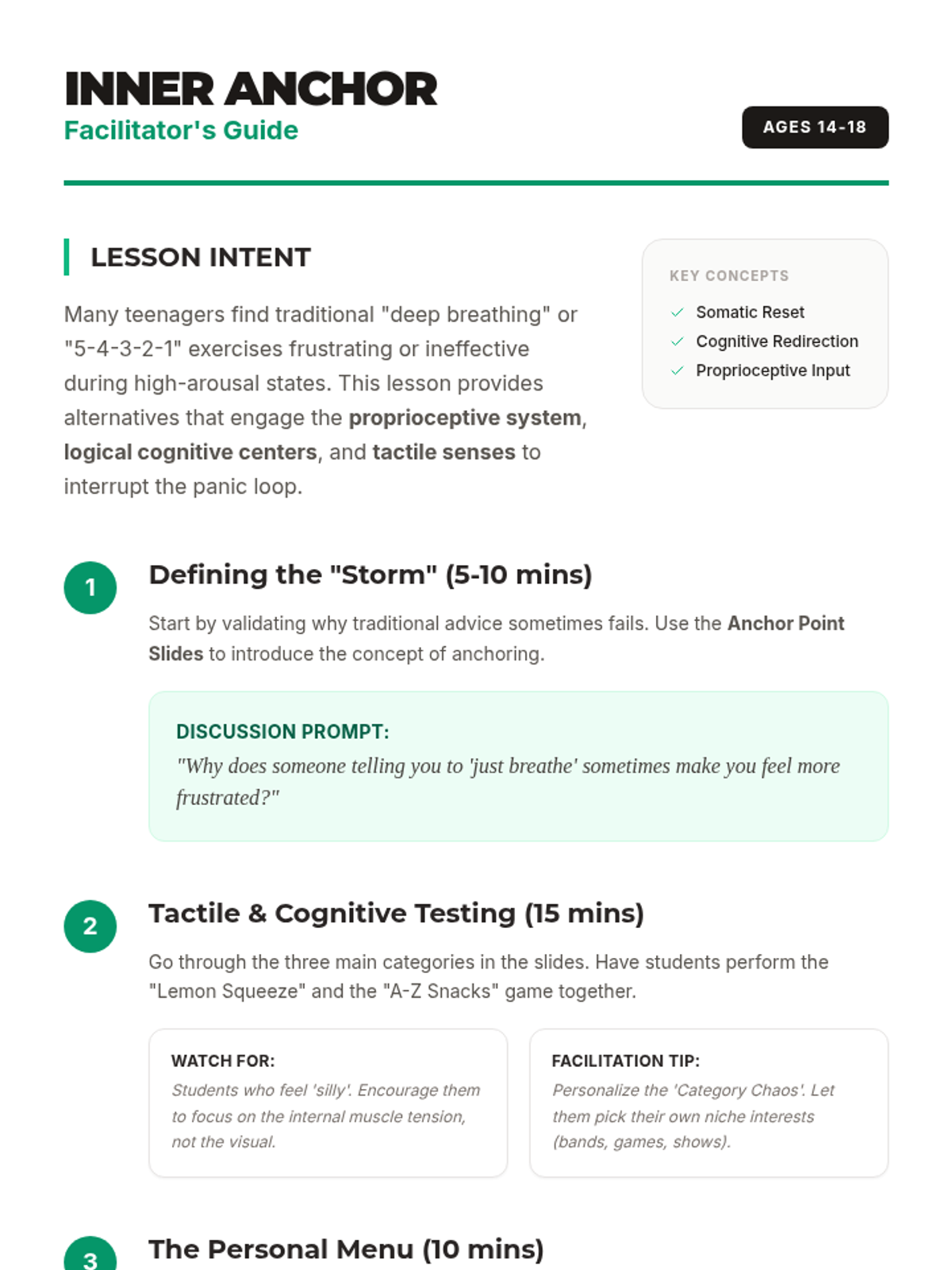
A teacher facilitation guide providing instructional scripts, discussion prompts, and troubleshooting tips for teaching non-traditional grounding techniques to teenagers.
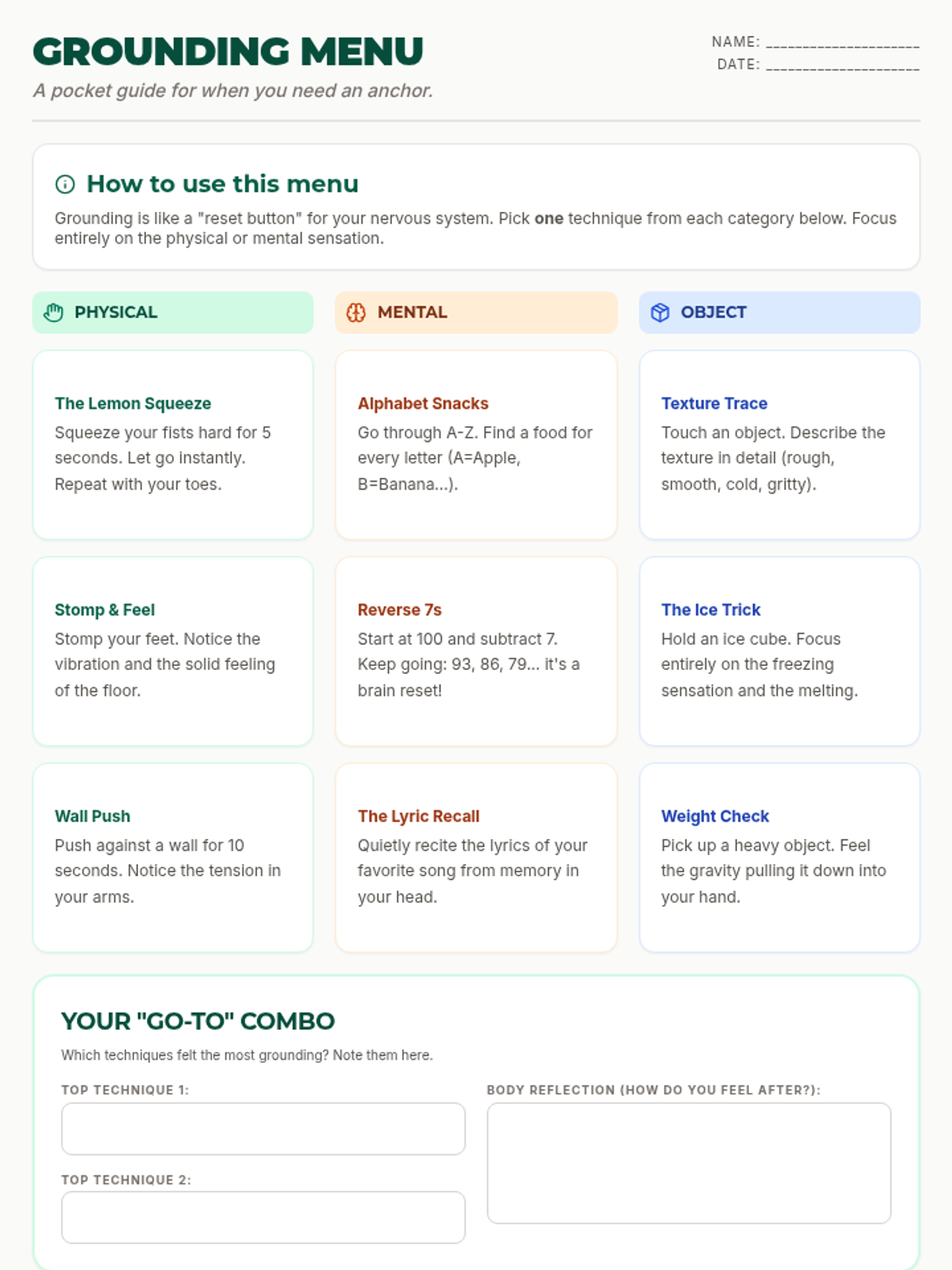
A student-facing menu of non-breathing grounding techniques designed for personal reference and practice, with a clean and supportive design.
A slide deck focused on non-breathing grounding techniques for teenagers, featuring physical, mental, and object-based strategies with a modern, high-contrast aesthetic.
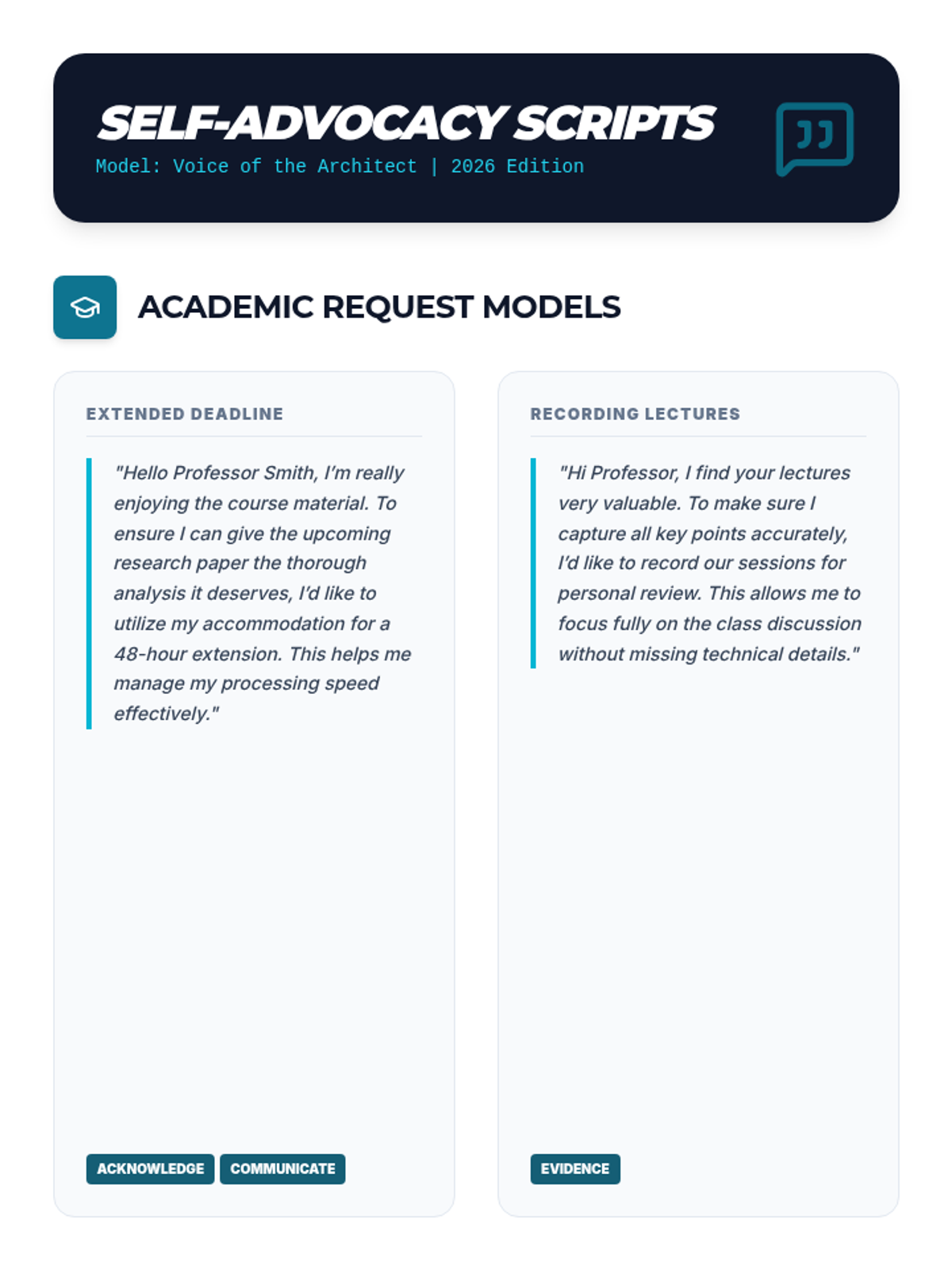
A collection of professional scripts and talking points for students to use when advocating for their mental health needs in academic and professional settings.
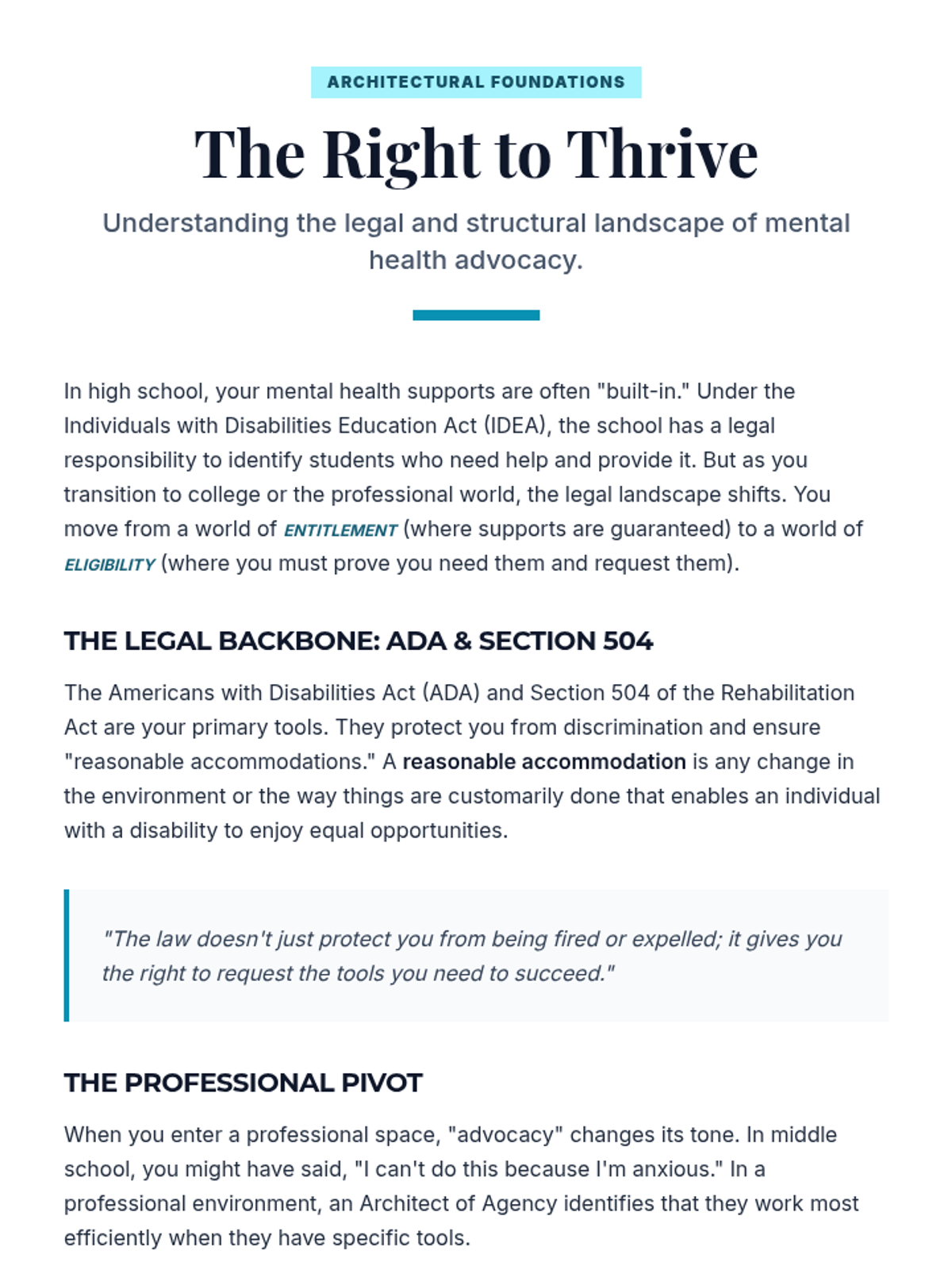
An informative reading passage that explains the legal transition from high school (IDEA) to college/workplace (ADA/504) and the strategic shift toward agency-driven advocacy.
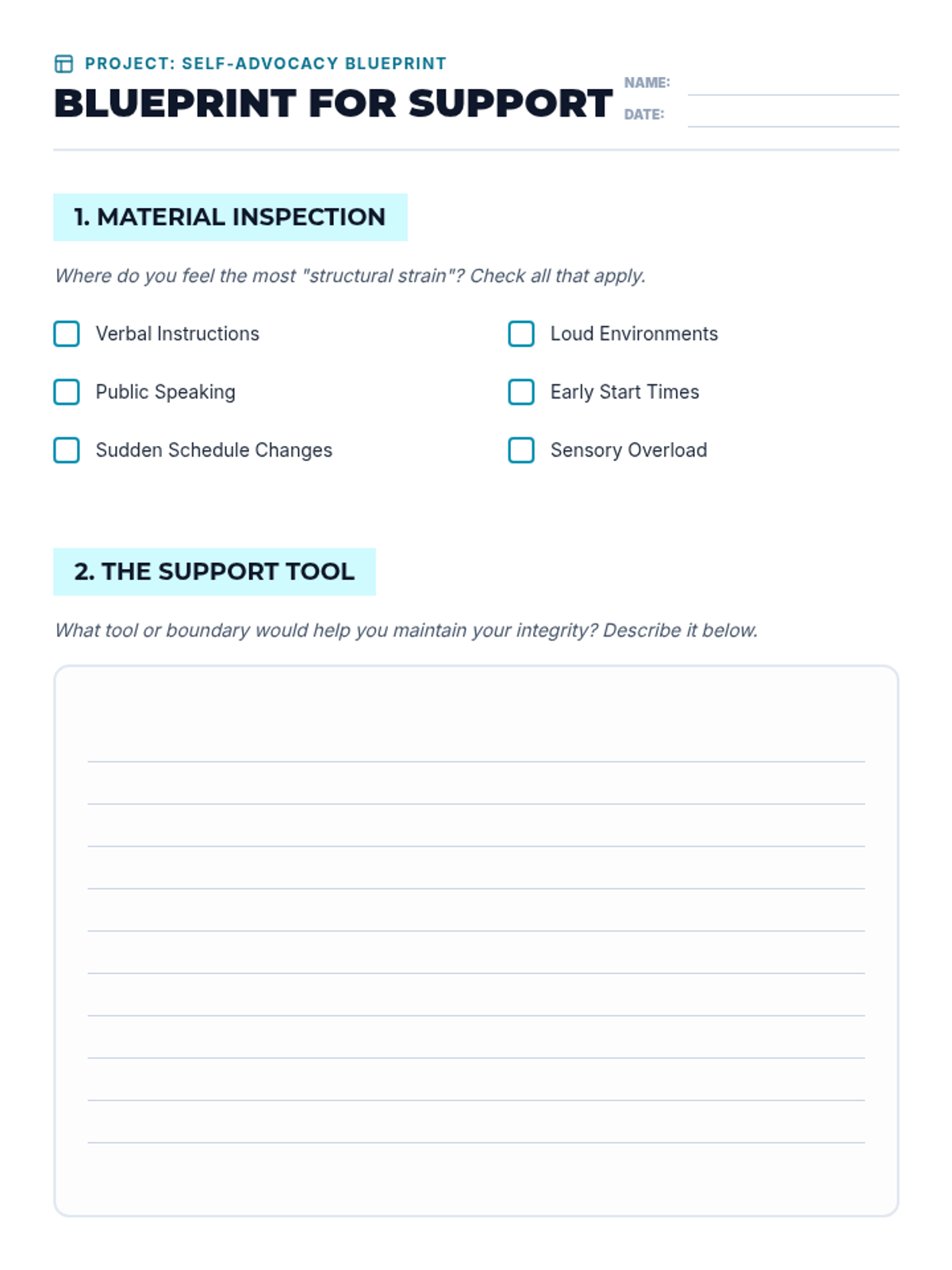
A structured worksheet that guides students through identifying their mental health needs and drafting a Professional Support Request (PSR) using the ACE framework.
A bold, high-contrast slide deck using an architectural blueprint aesthetic to teach students the difference between disclosure and support requests, and the ACE framework for self-advocacy.
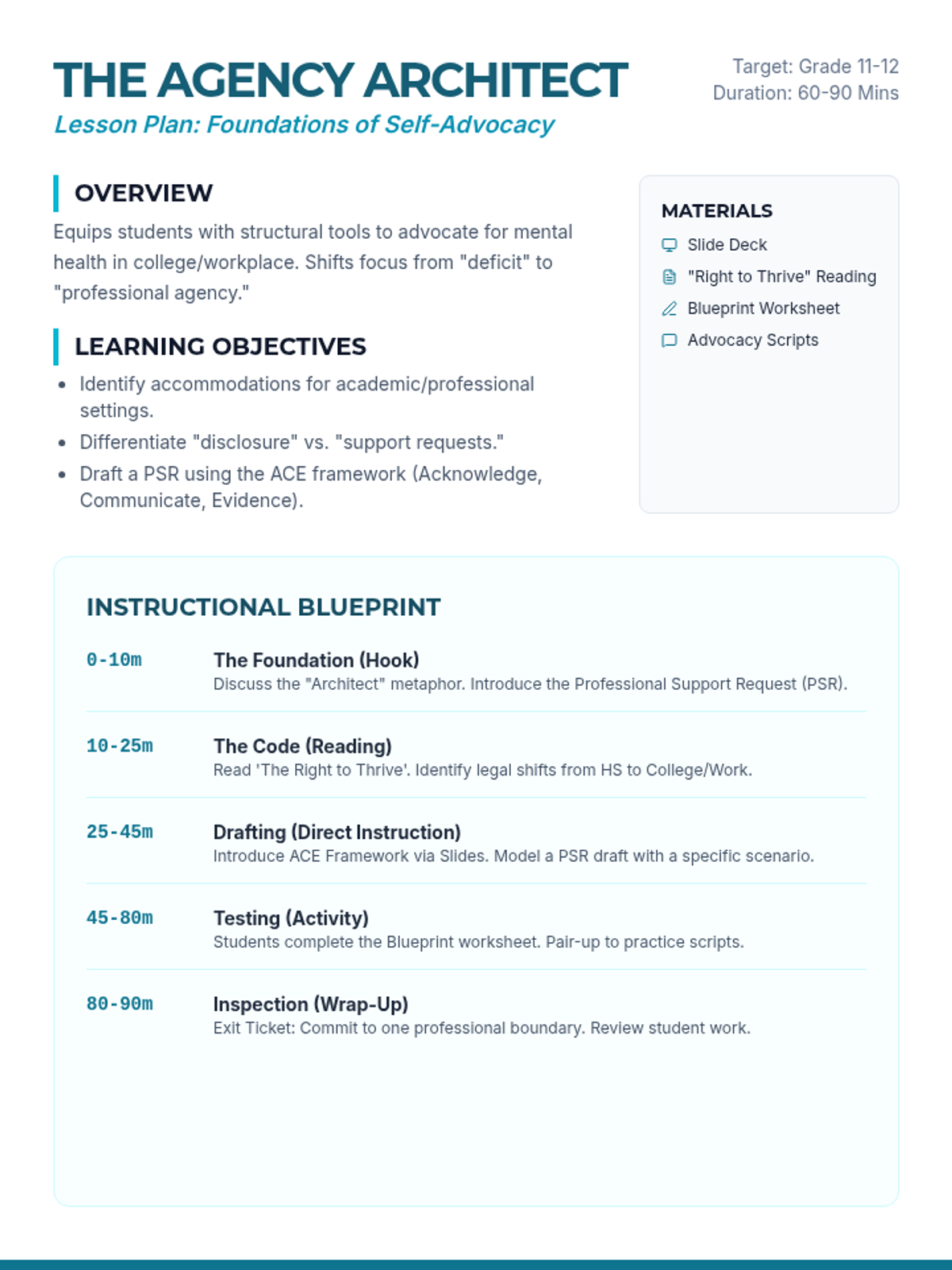
A comprehensive teacher guide for the Agency Architect lesson, featuring timing, objectives, instructional strategies, and tips for maintaining psychological safety.
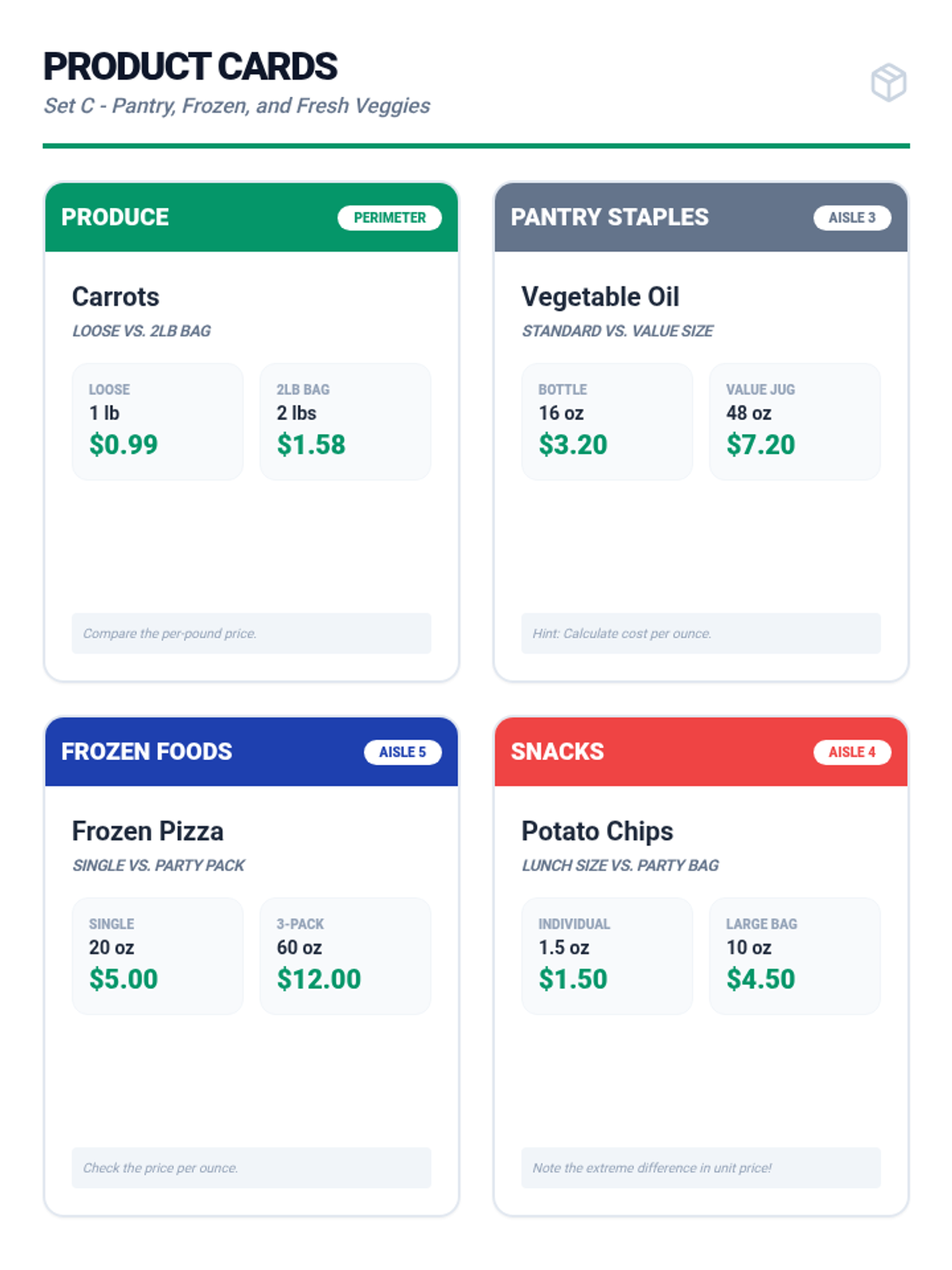
An additional set of 8 product cards (Sets C and D) for the Supermarket Showdown, covering pantry staples, produce, snacks, and frozen foods to provide more variety for the simulation.
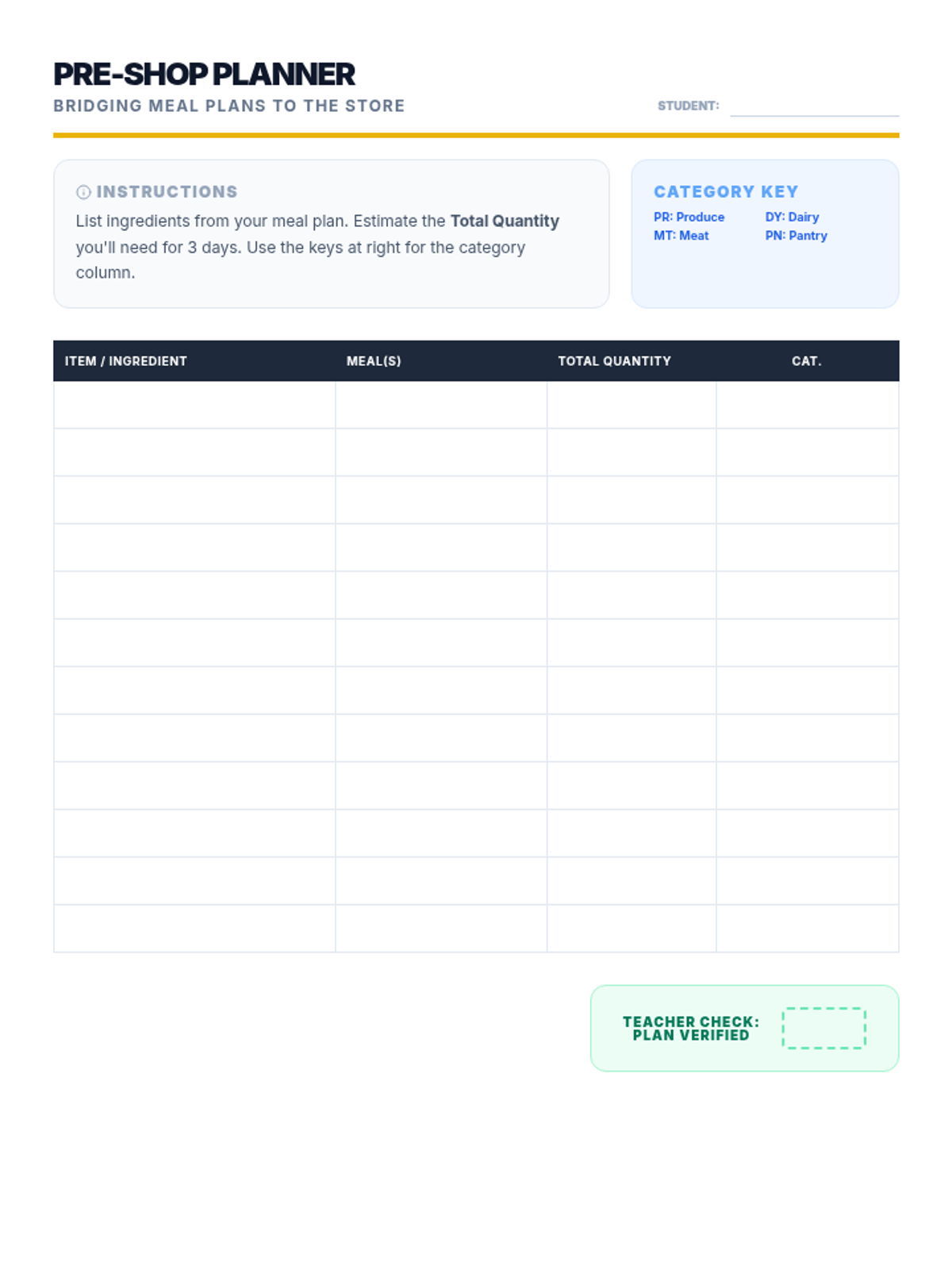
A pre-simulation planning worksheet where students translate their 3-day meal plans into a categorized shopping list with estimated quantities.
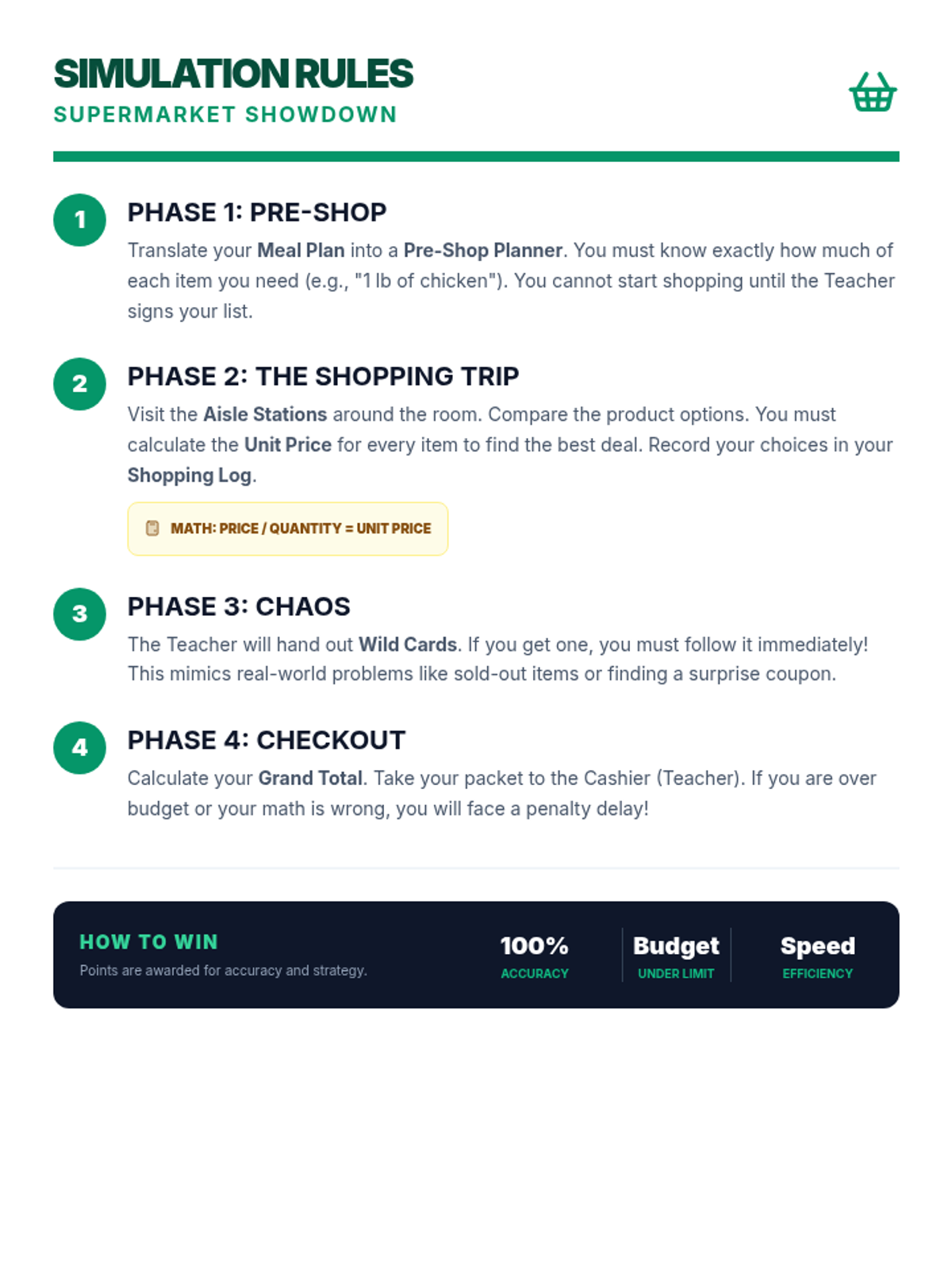
A student-facing rule sheet that outlines the steps for the Supermarket Showdown simulation, including pre-shopping, navigating aisles, handling wild cards, and the final checkout process.
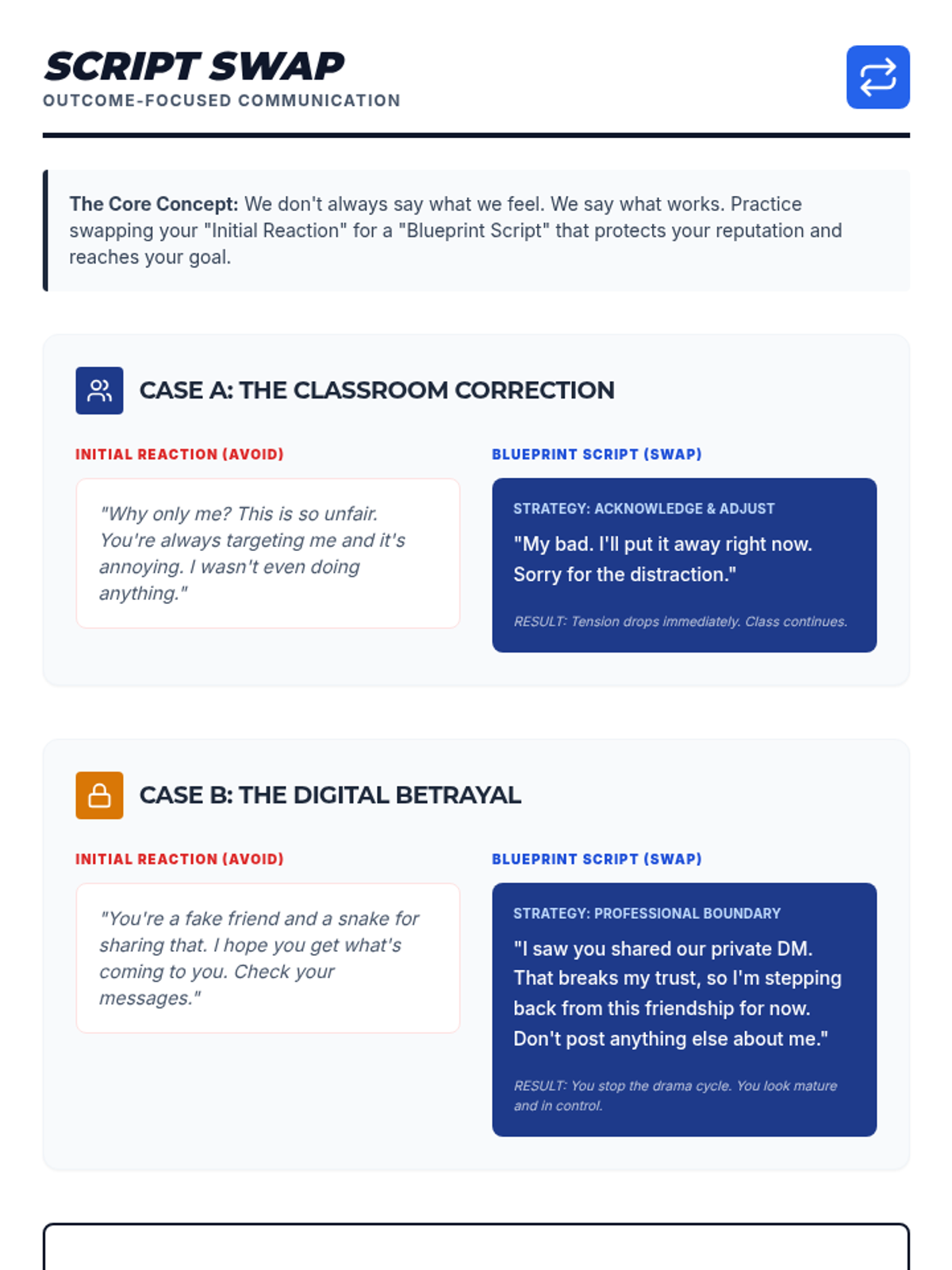
Role-play templates and practice scenarios focusing on 'script swapping' to improve social outcomes. Fixes contrast and provides a dedicated student practice page.
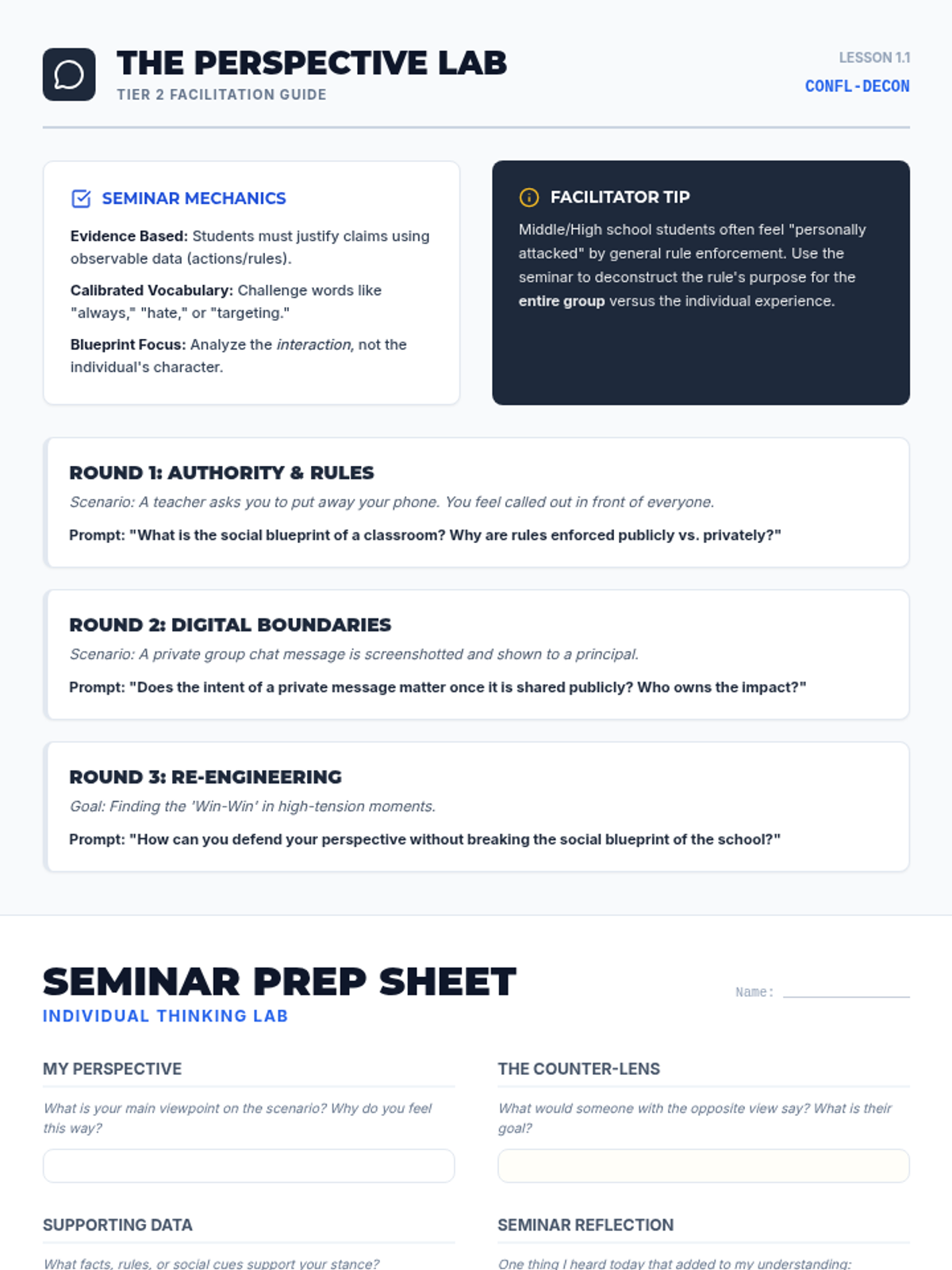
Facilitation guide for Socratic seminars with an added student prep sheet for interactivity. Fixes page breaks and content distribution.
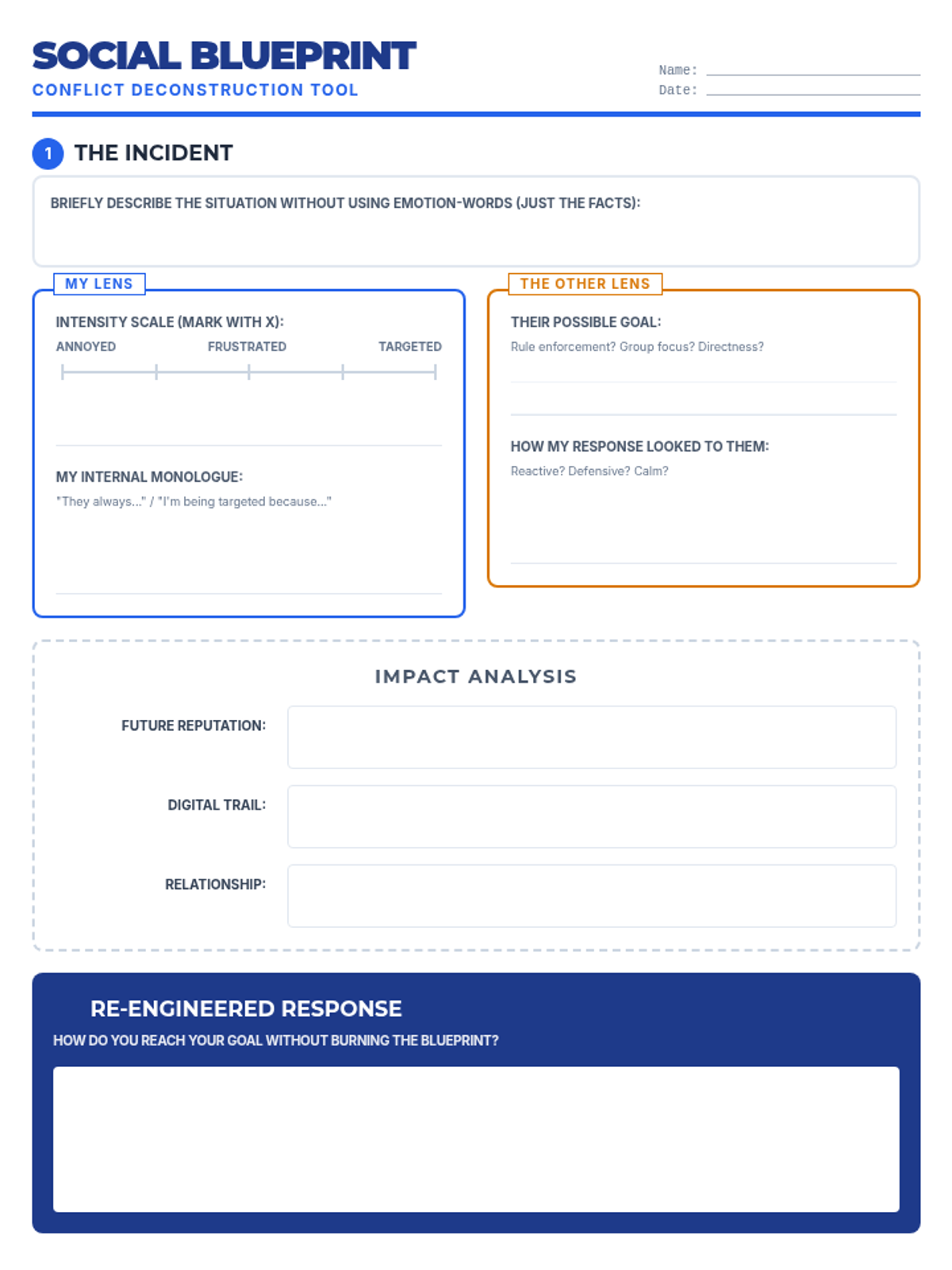
A structured graphic organizer designed for middle and high school students to deconstruct social conflicts, analyze internal vs. external perspectives, and re-engineer social responses. Fixes scale interactivity and increases text contrast.