Four comic-book styled scenario cards for student role-playing activities. Each card features a common 1st-grade conflict and a scripted I-Message to practice.
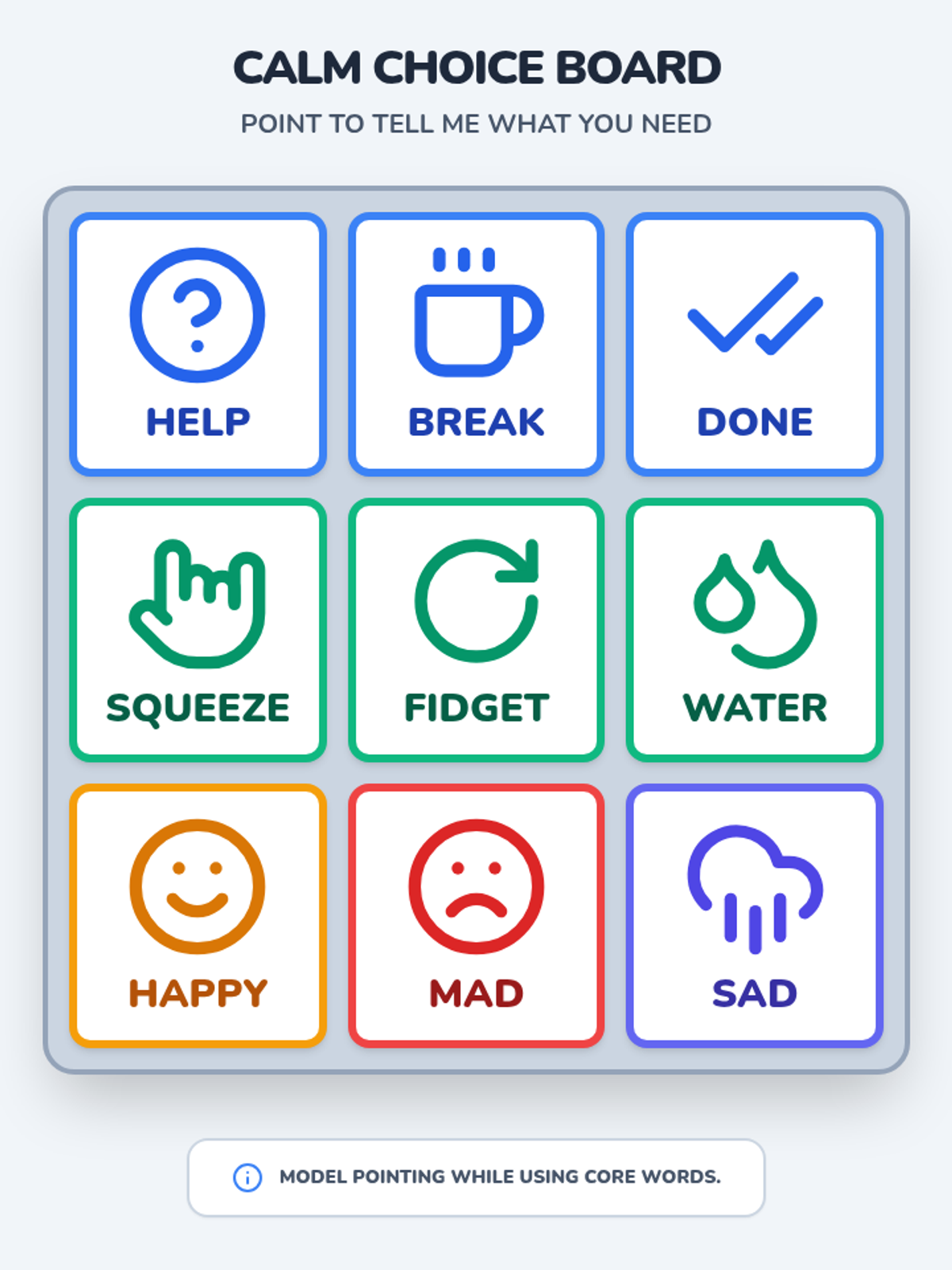
A high-contrast visual communication board with core icons for needs, emotions, and sensory regulation tools, optimized for accessibility.
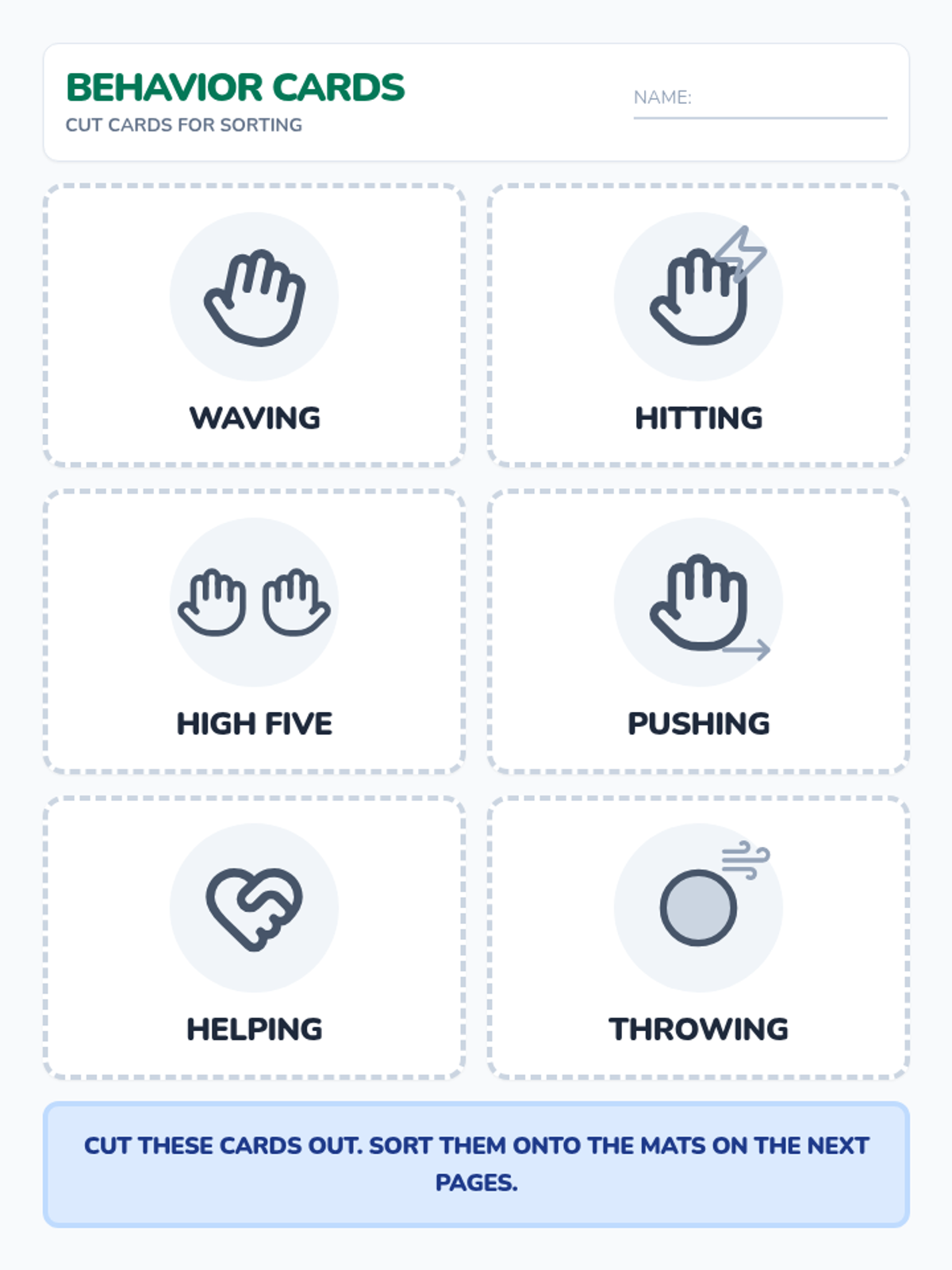
A multi-page sorting activity with large visual cards and dedicated full-page sorting mats for safe vs. unsafe hand behaviors. Optimized for 8.5x11 printing with ample space for high-needs students.
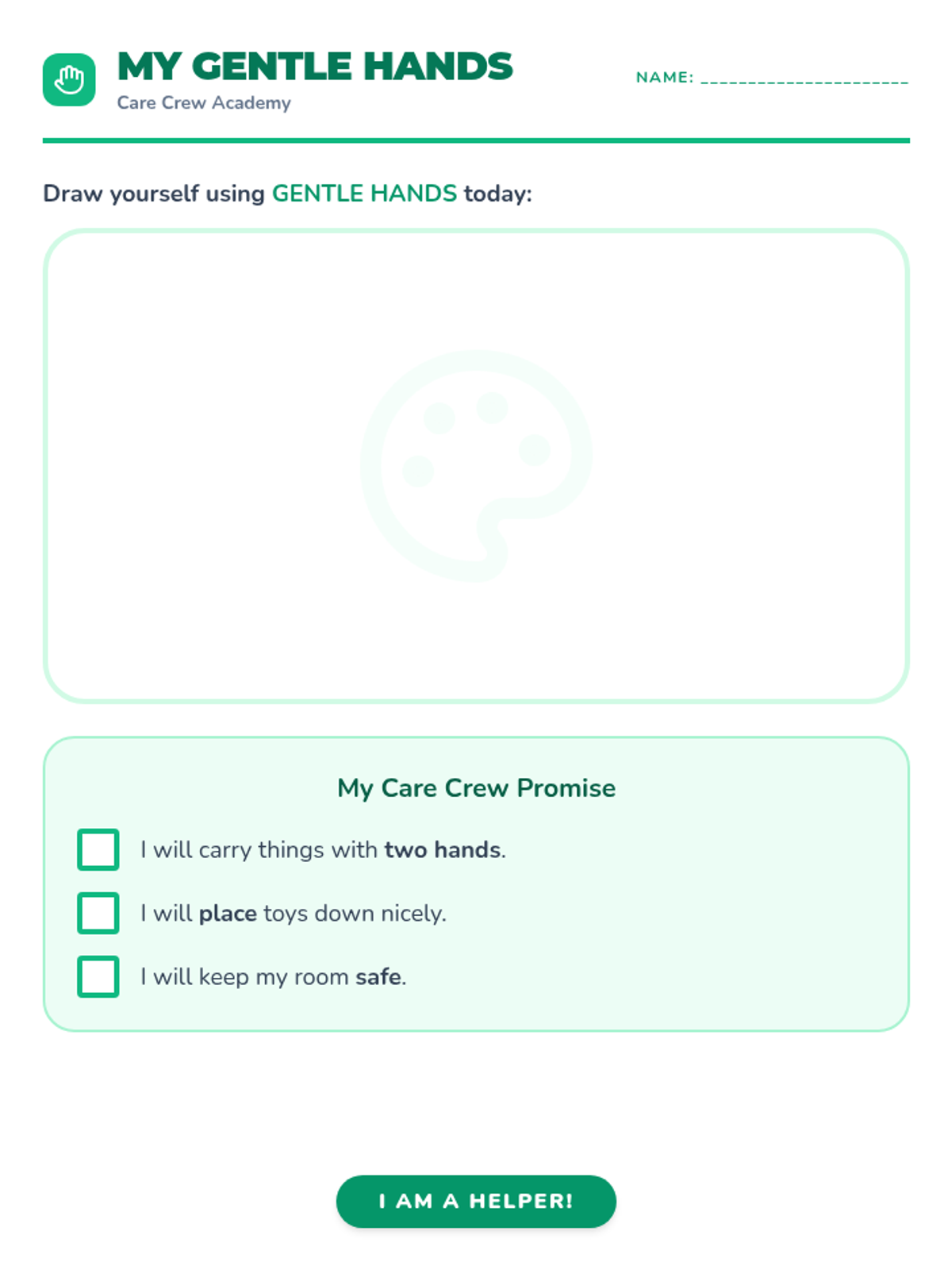
A reflection worksheet for K-1 students where they draw themselves using gentle hands and check off their Care Crew promises. Optimized to fit on a single page with a balanced layout.
A simple social story with large visuals and clear text explaining that hitting hurts and hands are for helping. Each page is a full-size panel for easy reading and binding.
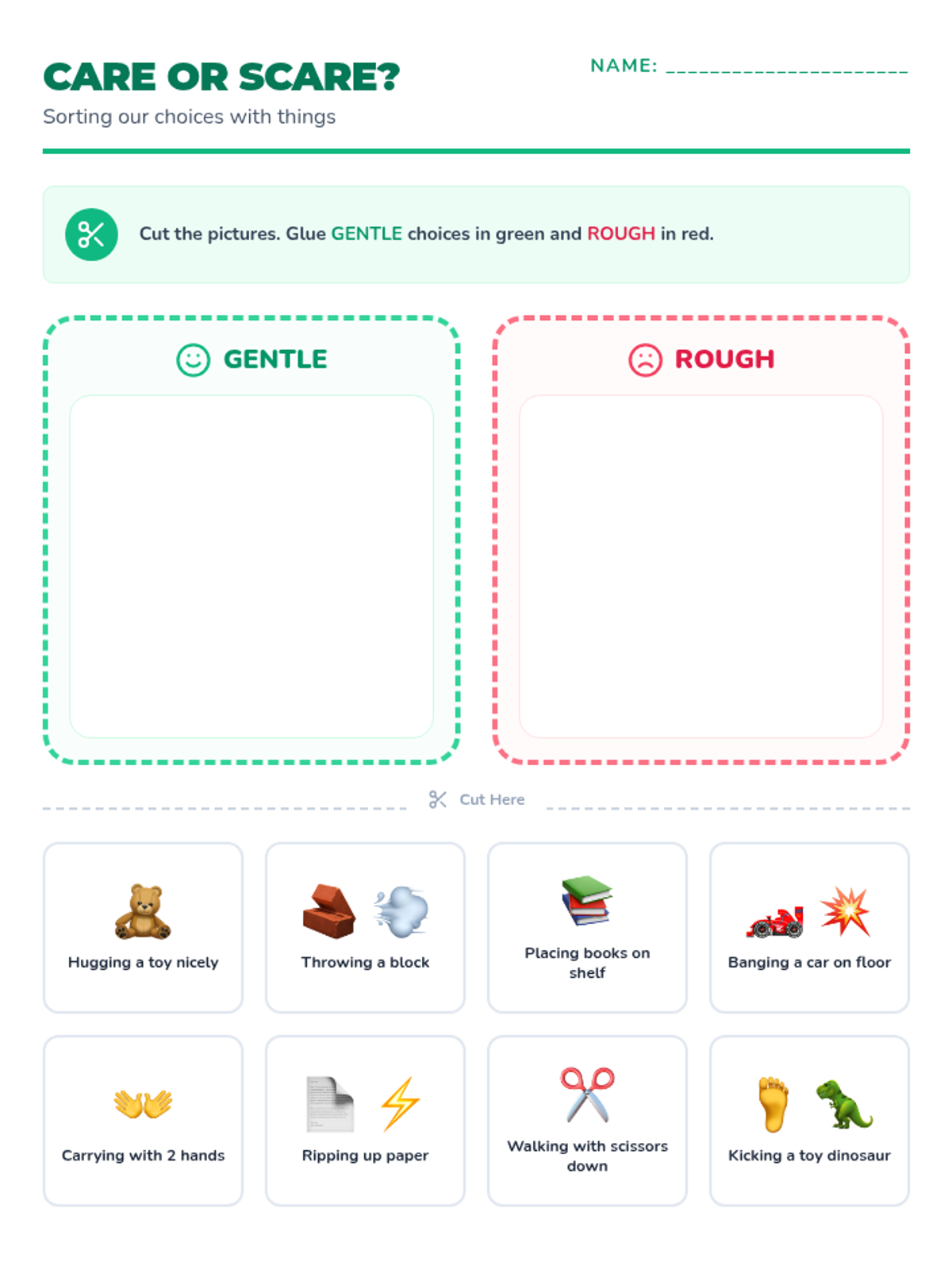
A cut-and-paste sorting activity for K-1 students to differentiate between gentle and rough handling of objects. Uses clear icons and simple text to support early readers and students with behavioral needs. Final version optimized to fit on a single page with larger, readable labels.
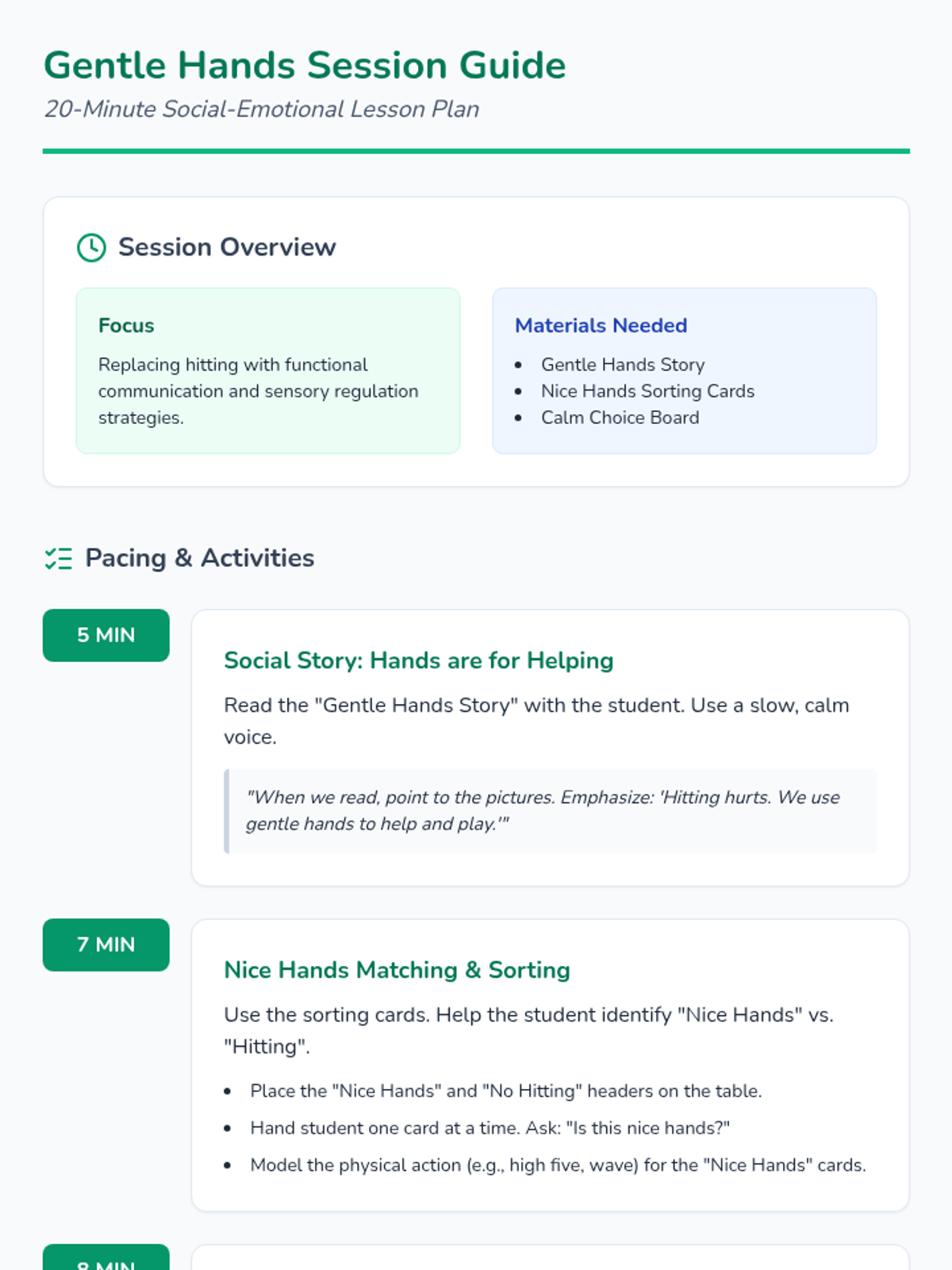
A facilitation guide for a 20-minute counseling session focused on gentle hands and replacement behaviors.
A visual slide deck for teaching K-1 students about handling objects gently. Features large, readable text, high-contrast visuals, and a clear 'No-Throw' rule, including a pledge to wrap up the lesson.
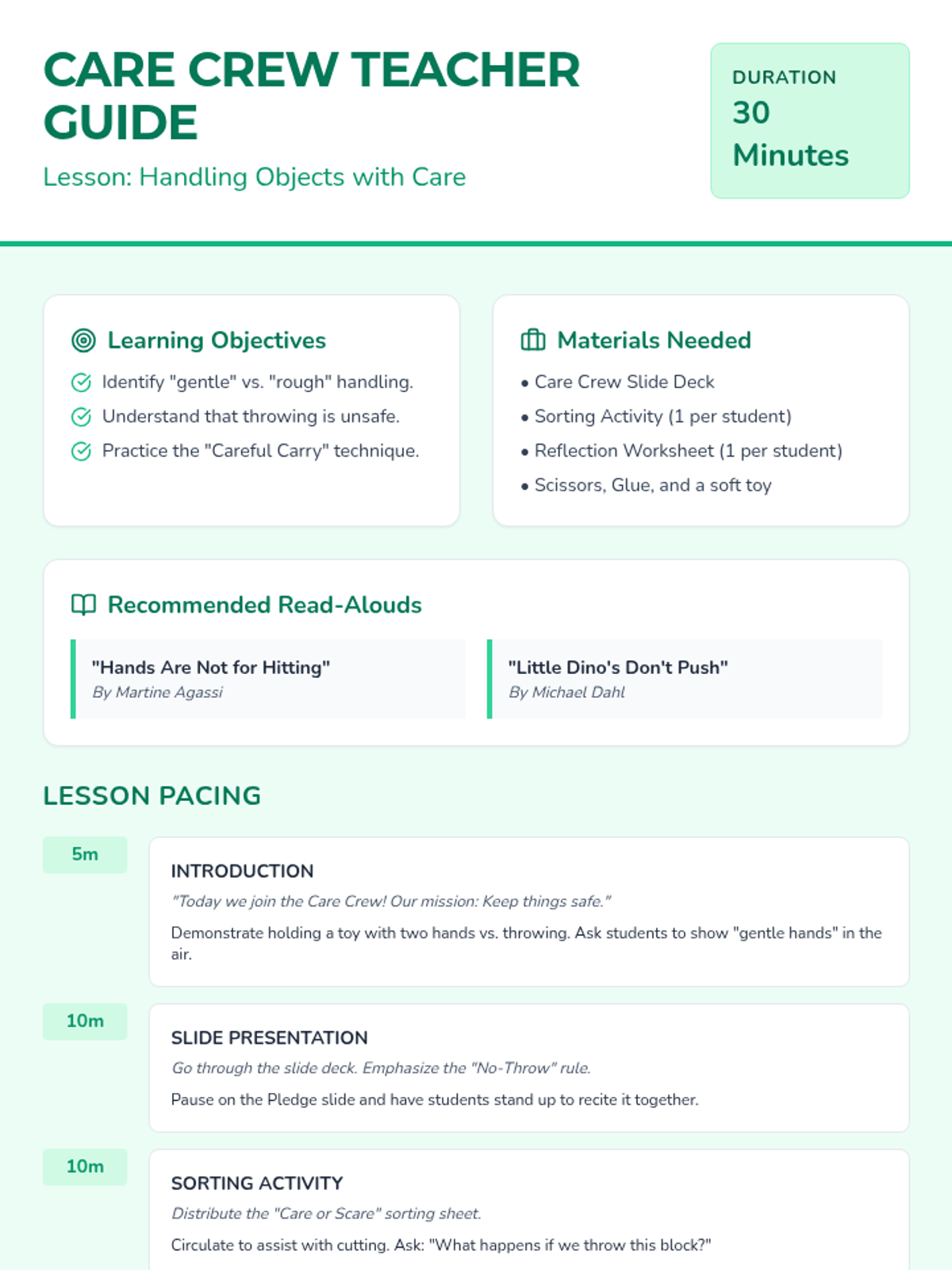
A comprehensive teacher guide for a 30-minute K-1 behavior lesson on handling objects gently. Includes pacing, book recommendations, and specific behavior management strategies for students who struggle with throwing objects.
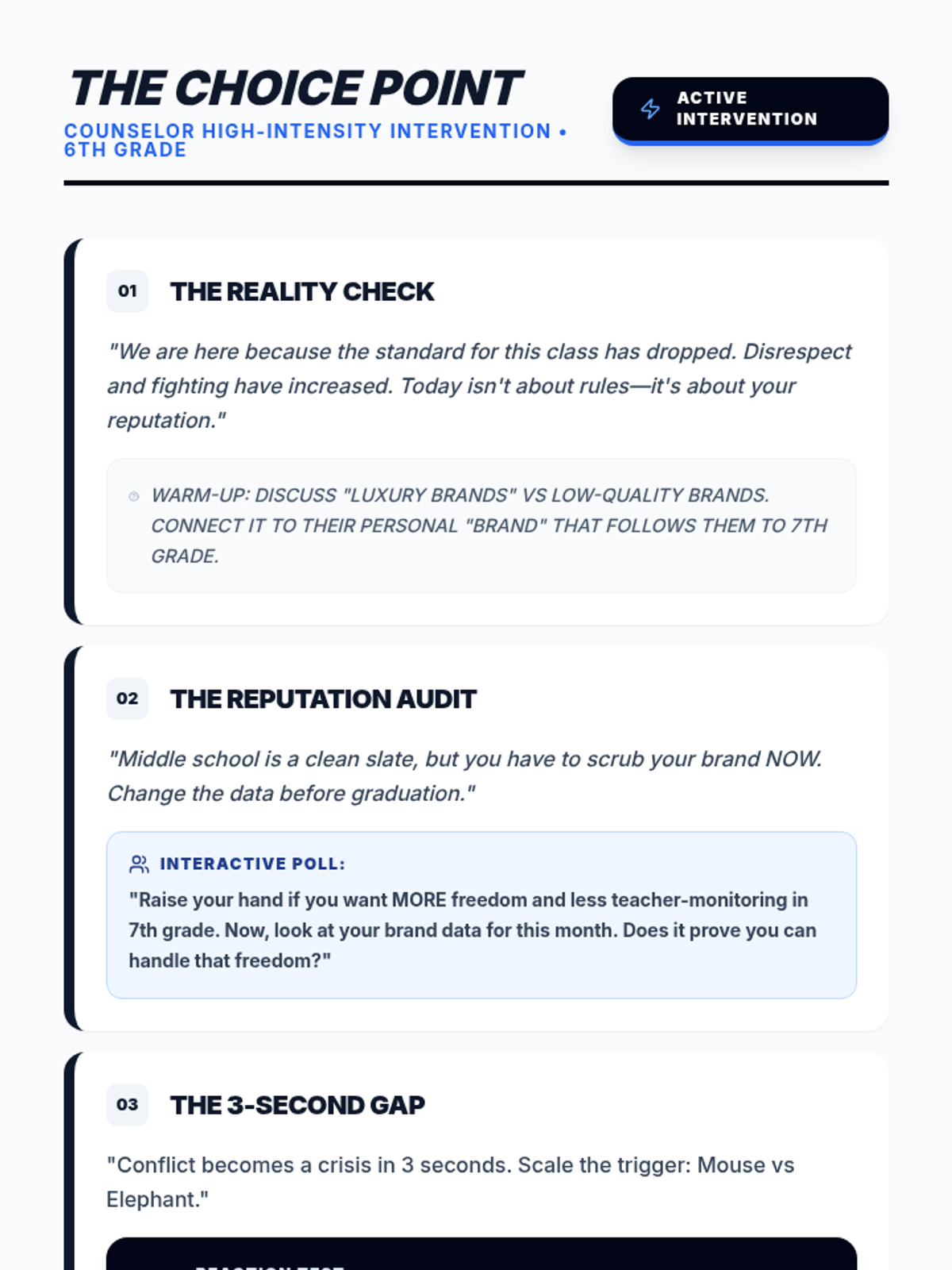
A detailed facilitation guide for the 15-minute 6th grade 'Choice Point' intervention. Provides scripts and interactive components, including specific de-escalation guidance for high-intensity scenarios like being 'cornered' or blocked. Updated with scenario examples and improved contrast.
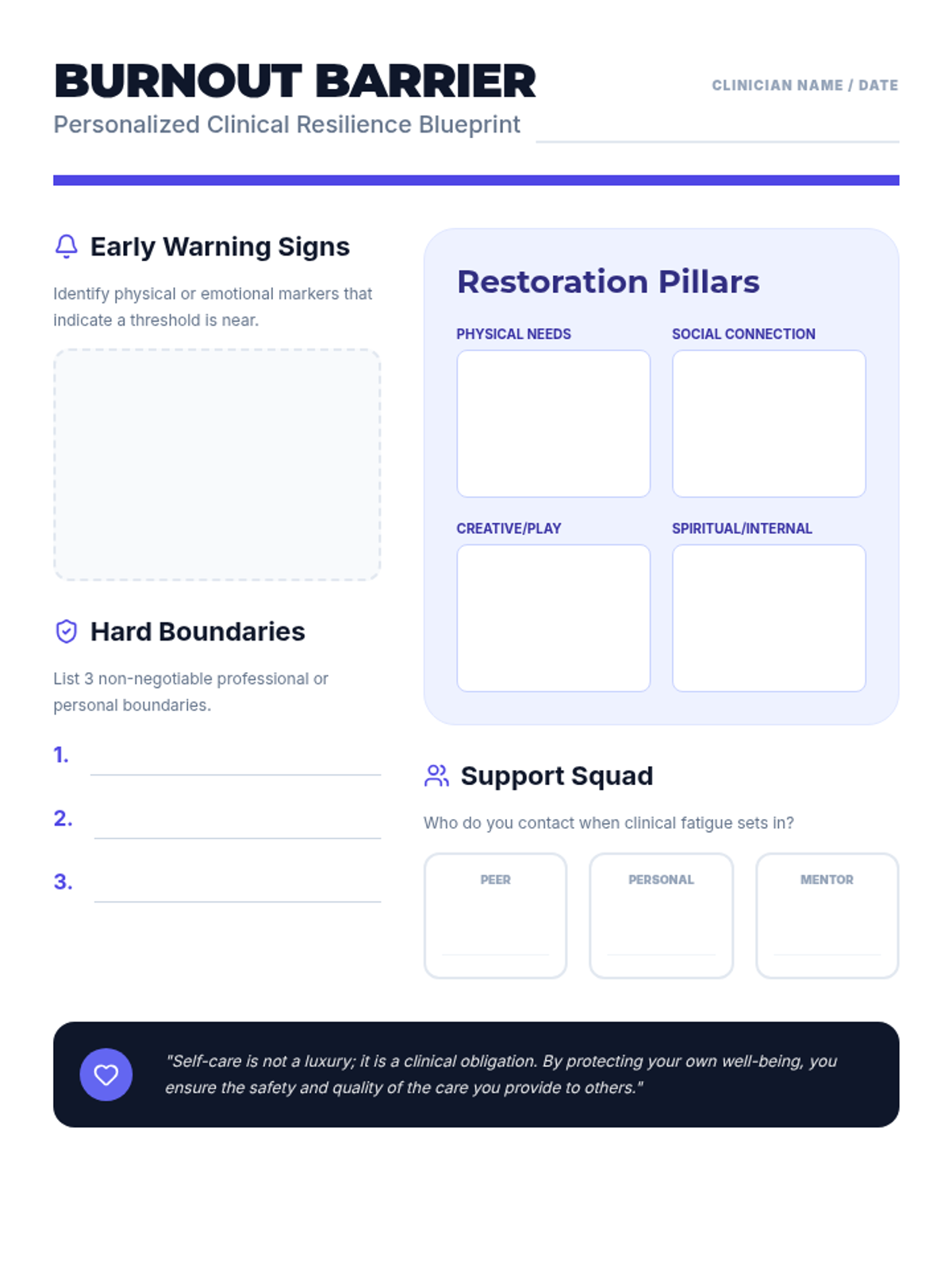
A self-care plan template for clinicians to prevent burnout, featuring sections for early warning signs, boundaries, restoration pillars, and support networks.
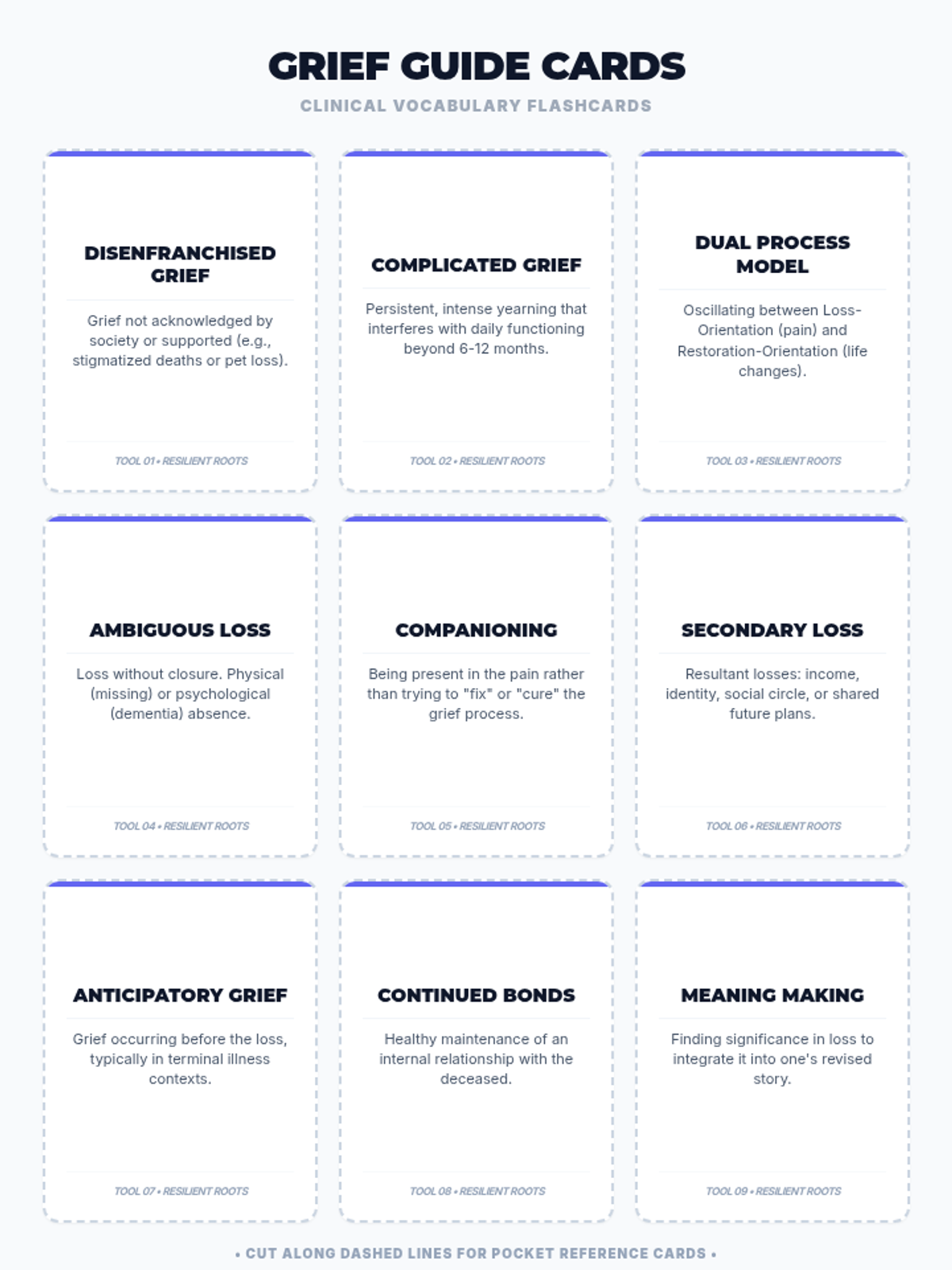
A set of 9 professional vocabulary flashcards for grief and loss counseling, featuring concepts like disenfranchised grief, the dual process model, and ambiguous loss.
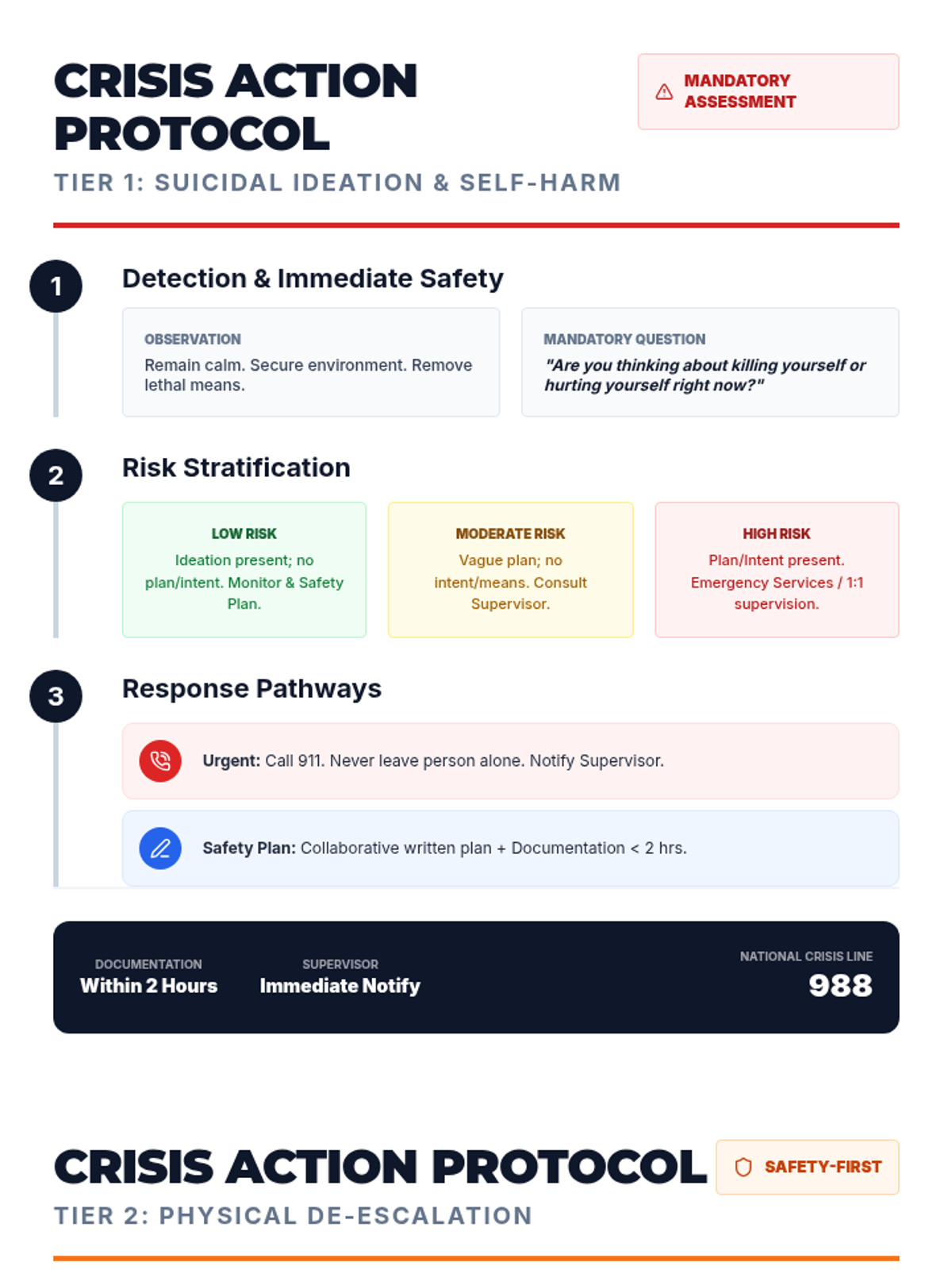
A double-sided staff protocol flowchart for managing suicidal ideation, self-harm, and physical de-escalation in a clinical setting. Includes risk stratification, intervention pathways, and debriefing models.
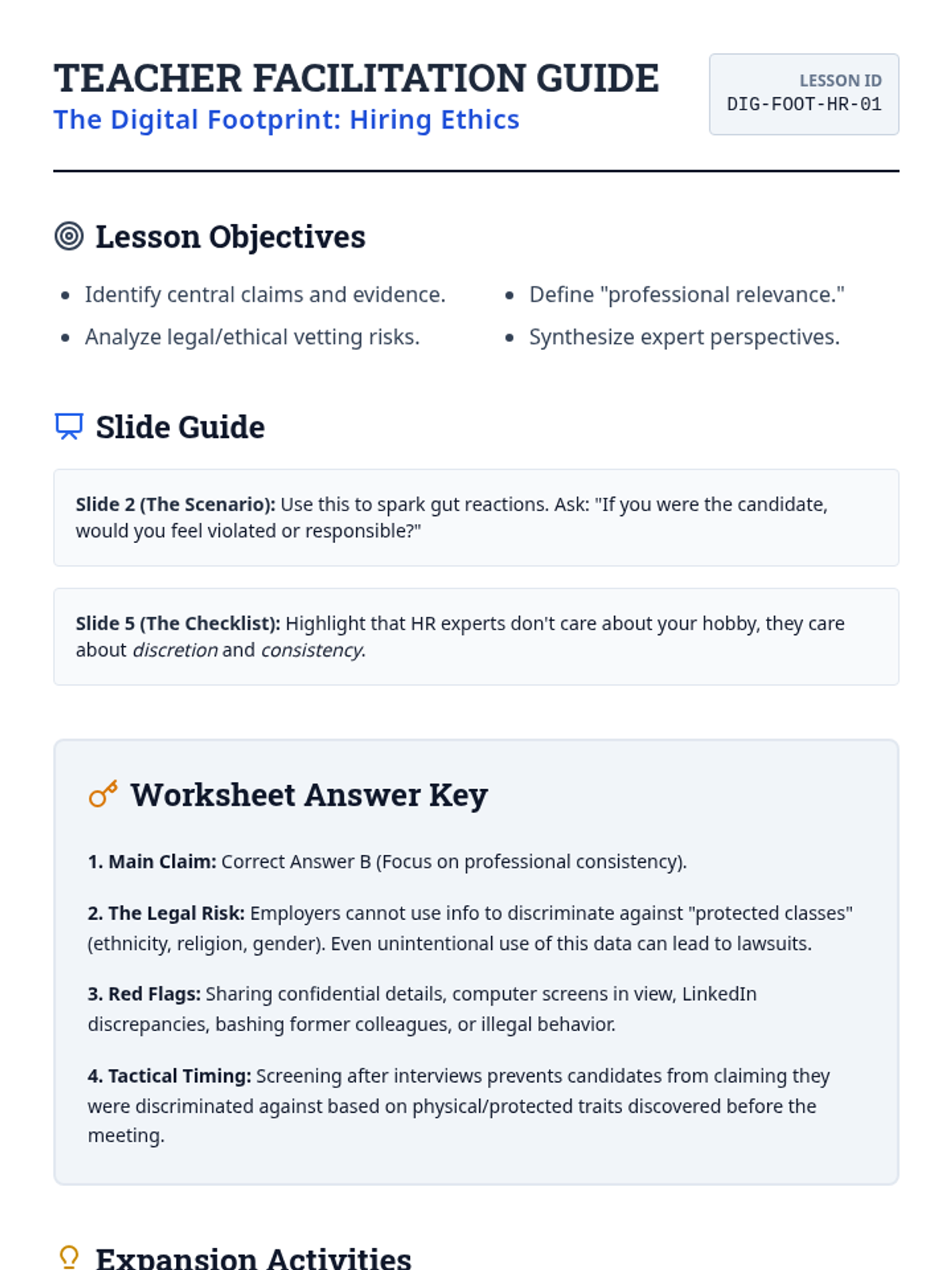
A teacher-facing facilitation guide containing the lesson objectives, worksheet answer key, slide-by-slide teaching tips, and suggestions for classroom expansion activities.
A professional slide deck that outlines the core arguments of the social media vetting debate. It presents the pros and cons, the legal implications, and a concluding discussion prompt to facilitate a classroom debate.
A presentation on mindfulness techniques for clinical anxiety management, featuring box breathing, sensory grounding, and the RAIN protocol for therapists and supervisors.
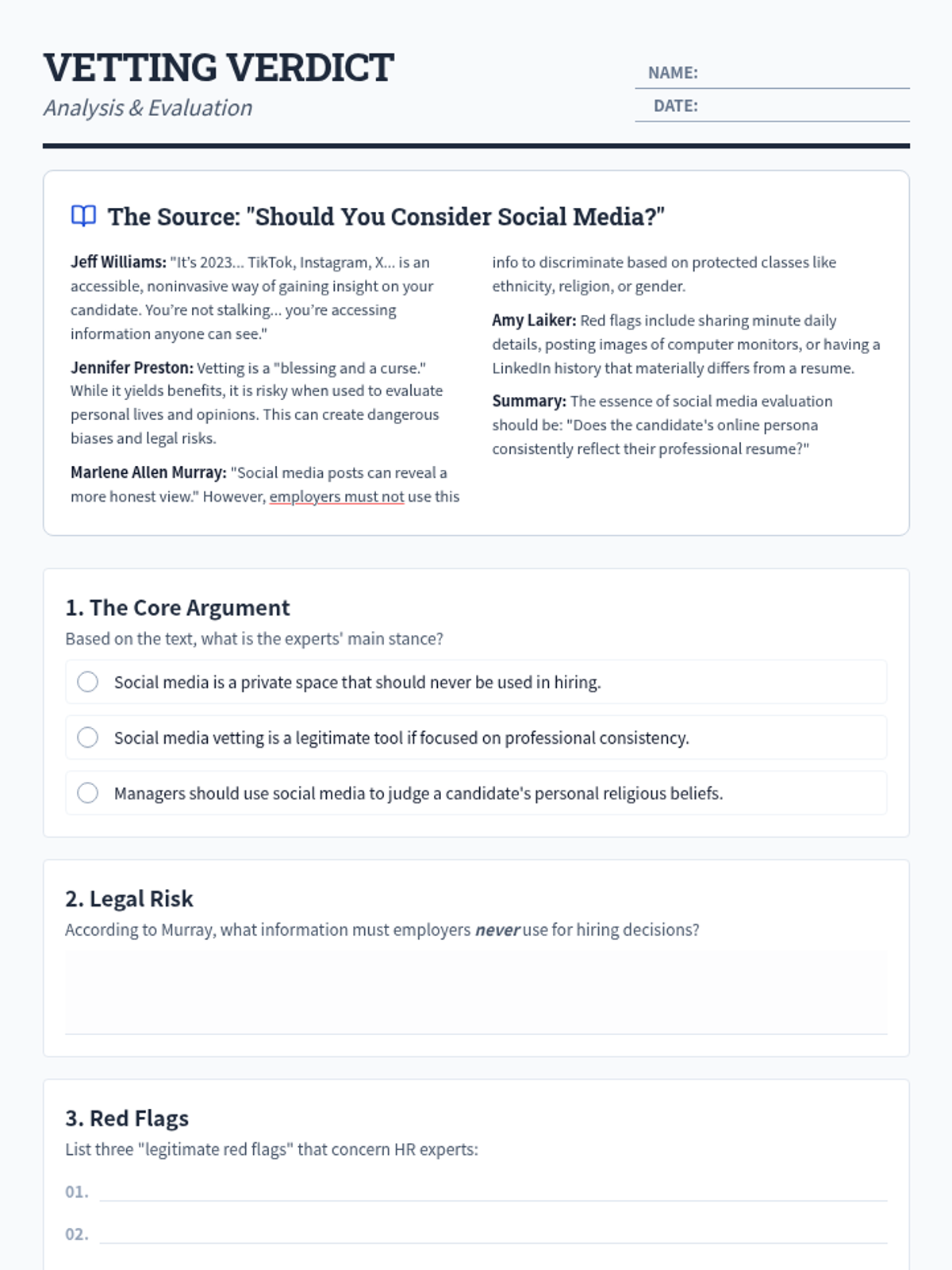
A revised guided analysis worksheet featuring the source text alongside comprehension questions. Includes a dedicated, full-page reflection section for the "Final Verdict" argument, ensuring adequate writing space and clear page breaks.
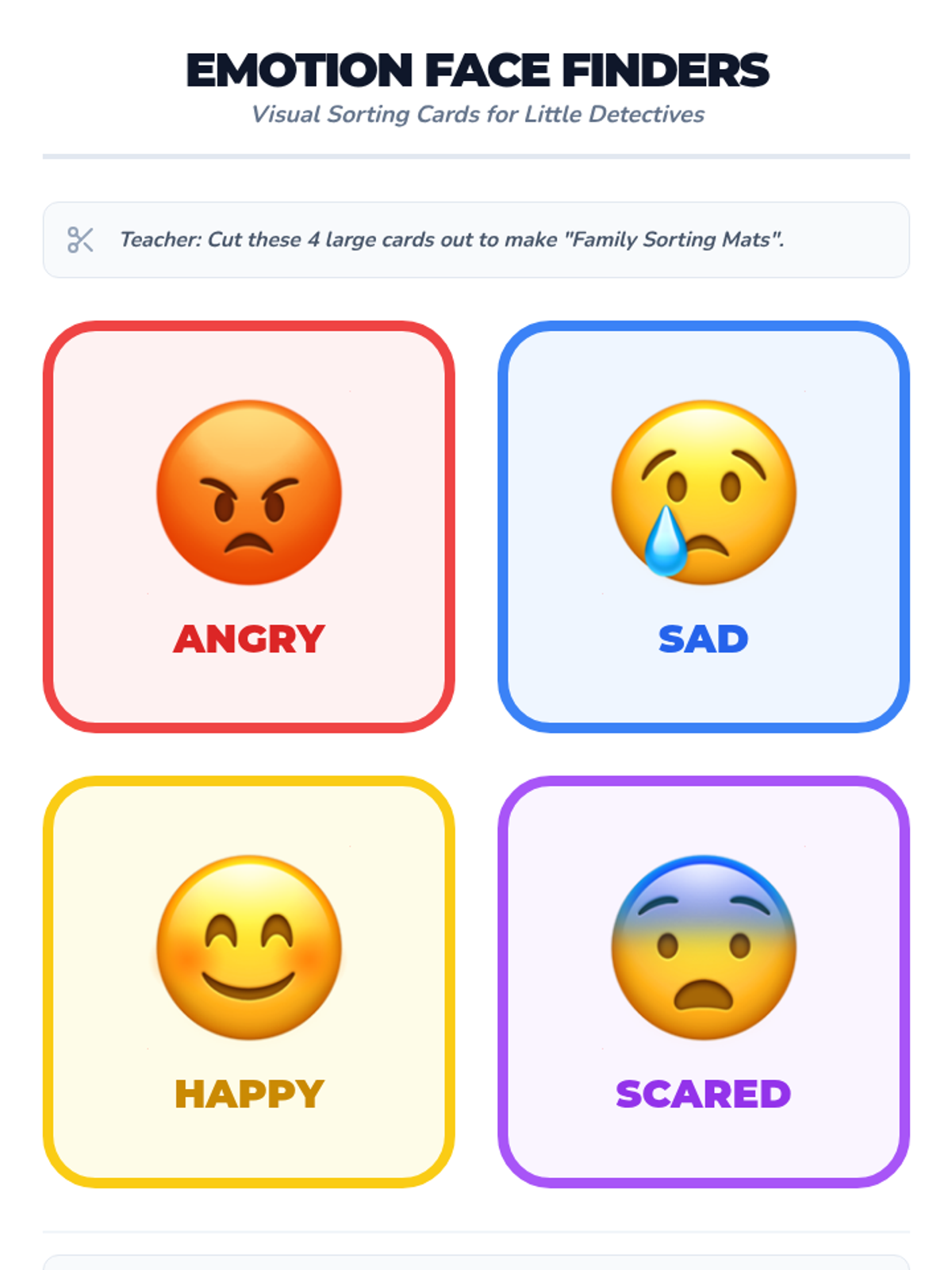
Visual sorting cards and puppet stick templates for Early Years students to identify and categorize emotion families without needing to read or write. Revised with neutral borders and appropriate emojis.
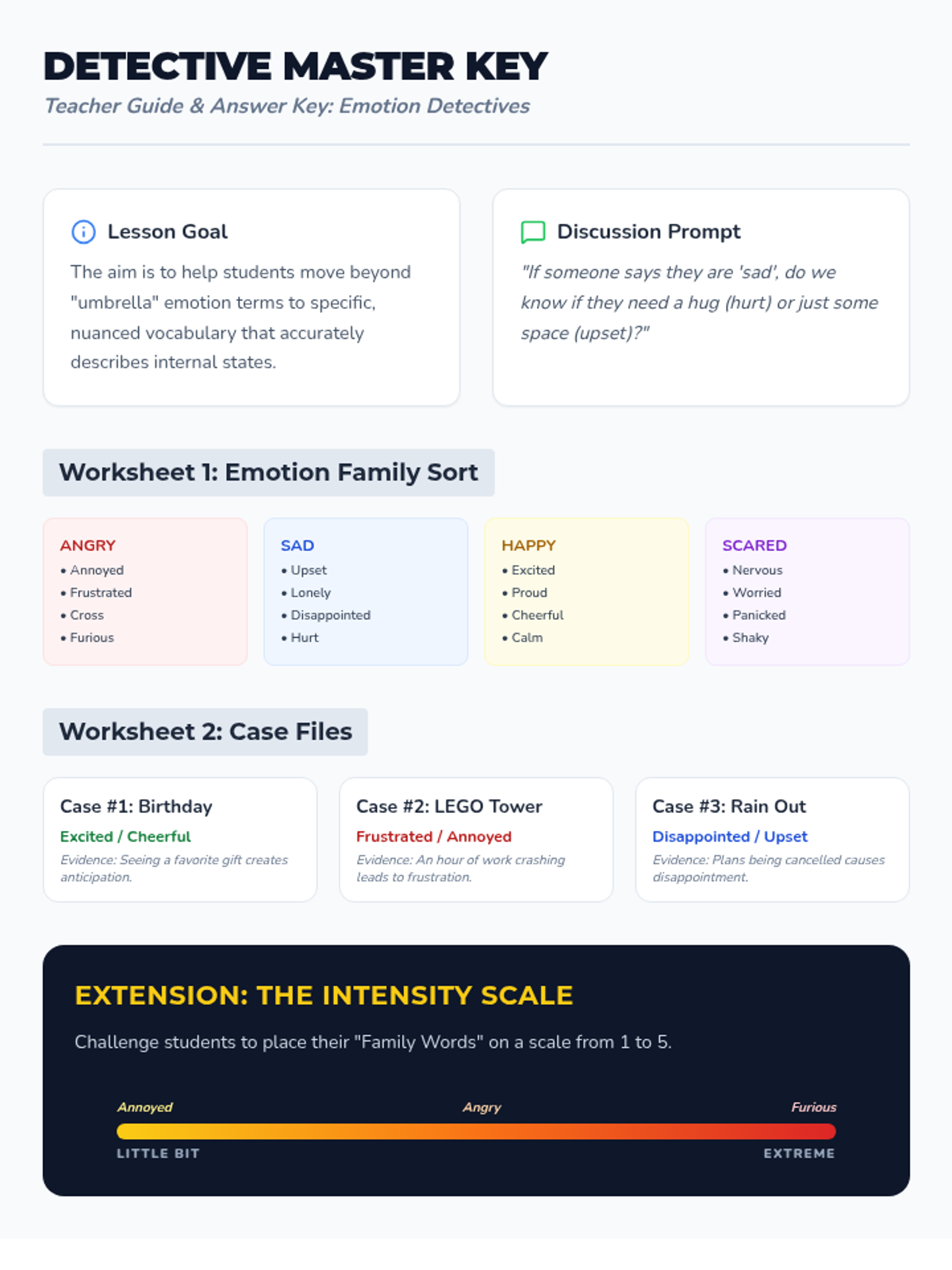
Teacher-facing resource containing the answer key and extension ideas. Revised for improved page layout and visual alignment of the intensity scale.
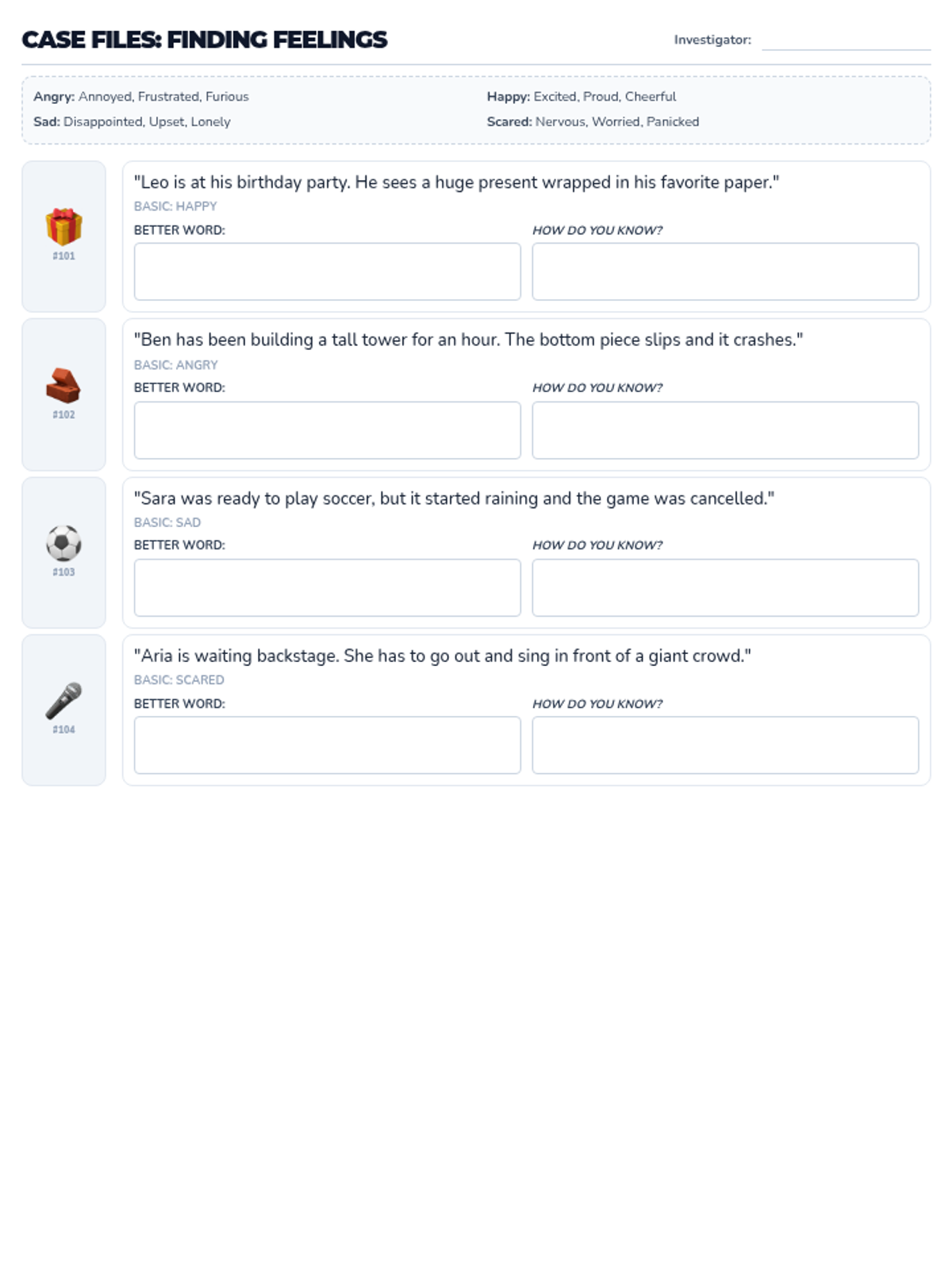
A scenario-based worksheet for P3 students to replace basic emotion words with nuanced vocabulary. Revised with word bank scaffolding and improved layout to fit four cases on a single page.
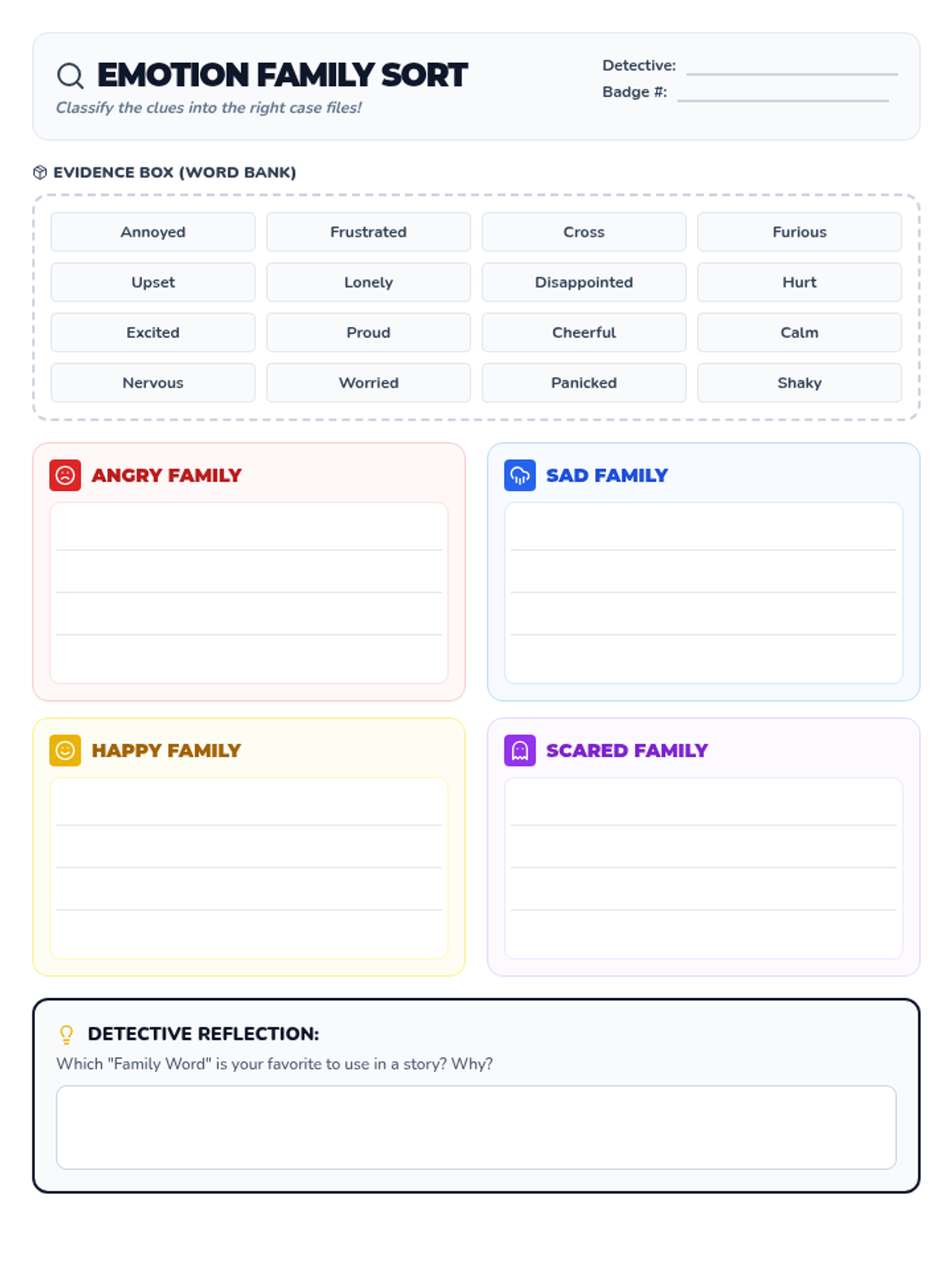
A sorting activity where students categorize nuanced emotion words into four primary emotion families: Angry, Sad, Happy, and Scared. Revised for single-page layout and improved handwriting areas.
Visual presentation for teaching emotion families (Angry, Sad, Happy, Scared) and identifying nuanced vocabulary for different scenarios.