A quick reference chart of common anxious thoughts (traps) paired with evidence-based coping statements (builders) for cognitive restructuring.
A "Quality Control Check" checklist worksheet where students evaluate various household items and food alongside currency to identify if they are money, using real photos for coins.
A structured worksheet for participants to analyze their feedback defensive mechanisms and practice reframing feedback into actionable growth data.
A visually striking reference guide explaining the core differences between fixed and growth mindsets, featuring the 'The Power of Yet' framework and common mindset triggers.
A reflective worksheet for participants to audit their own professional triggers and practice reframing fixed thoughts using the 'yet' framework.
Instructional guide and visual template for the 'Boundary Map' poster project, helping students visualize and categorize their personal space and communication limits.
A two-page practice blueprint (worksheet) for 7th graders, featuring scenarios to identify boundary crossings and space to practice assertive communication and pre-project brainstorming.
A high-impact slide deck for 7th-grade students on physical and interpersonal boundaries, using an architect-inspired 'blueprint' aesthetic.
A detailed teacher's facilitation guide for a lesson on boundaries, featuring a 'blueprint' theme, instructional flow, discussion prompts, and an observation checklist for 7th-grade educators.
A reflective journaling sheet for high school girls to process boundary concepts, identify physical stress cues, and practice drafting assertive communication using 'I' statements.
Visual aid slides for the Boundary Blooms session, featuring calming botanical aesthetics, the 'Hula Hoop' boundary metaphor, physical cue identification, and communication tools.
A comprehensive facilitator guide for a mindfulness group therapy session, including a detailed 60-minute timeline, step-by-step instructions, and a full guided meditation script focused on healthy boundaries.
A "Money Inspector" checklist worksheet where students evaluate items and check "Yes" or "No" to identify if they are currency, using real photos for coins and optimized for 8.5x11 fit.
A matching activity where students draw lines to categorize items into a "Treasure Chest" for money or a "Toy Box" for toys and stickers, using real photos for coins.
A "Money Detective" search-and-find worksheet where students identify and circle currency items (real coin photos and bills) hidden among toys and stickers. Removed redundant instruction text and optimized for 8.5x11 fit.
A color-by-category worksheet where students use green for money and yellow for non-monetary items (toys and stickers) to practice visual identification.
A cut-and-paste sorting activity where students distinguish between various currency items (real photos of coins and bills) and non-monetary items like toys and stickers.
A printable reflection document with ample writing space, strictly using the prompts from the restorative circle outline to guide students through self-reflection.
A restorative circle presentation focusing on leadership and good judgment, using the exact prompts and structure from the user's outline.
A comprehensive teacher facilitation guide for the "Me" circle lesson. Includes pacing, instructional scripts, inclusive language tips, role-play setup instructions, and a master list of scenarios with target techniques.
A two-page student worksheet for exploring personal identity and practicing boundary-setting techniques. Includes sections for likes/dislikes, values, family heritage, and a guided "I" statement template.
A 15-slide presentation for the "Me" circle of the Circles Curriculum. It covers personal identity (likes, family, heritage) and provides structured guidance and role-play scenarios for four different ways to say "no" and establish boundaries. All text meets accessibility standards (24px+).
A 2-page guide and checklist for neurodivergent high school students in Colorado experiencing housing instability, refined to fit perfectly on standard paper.
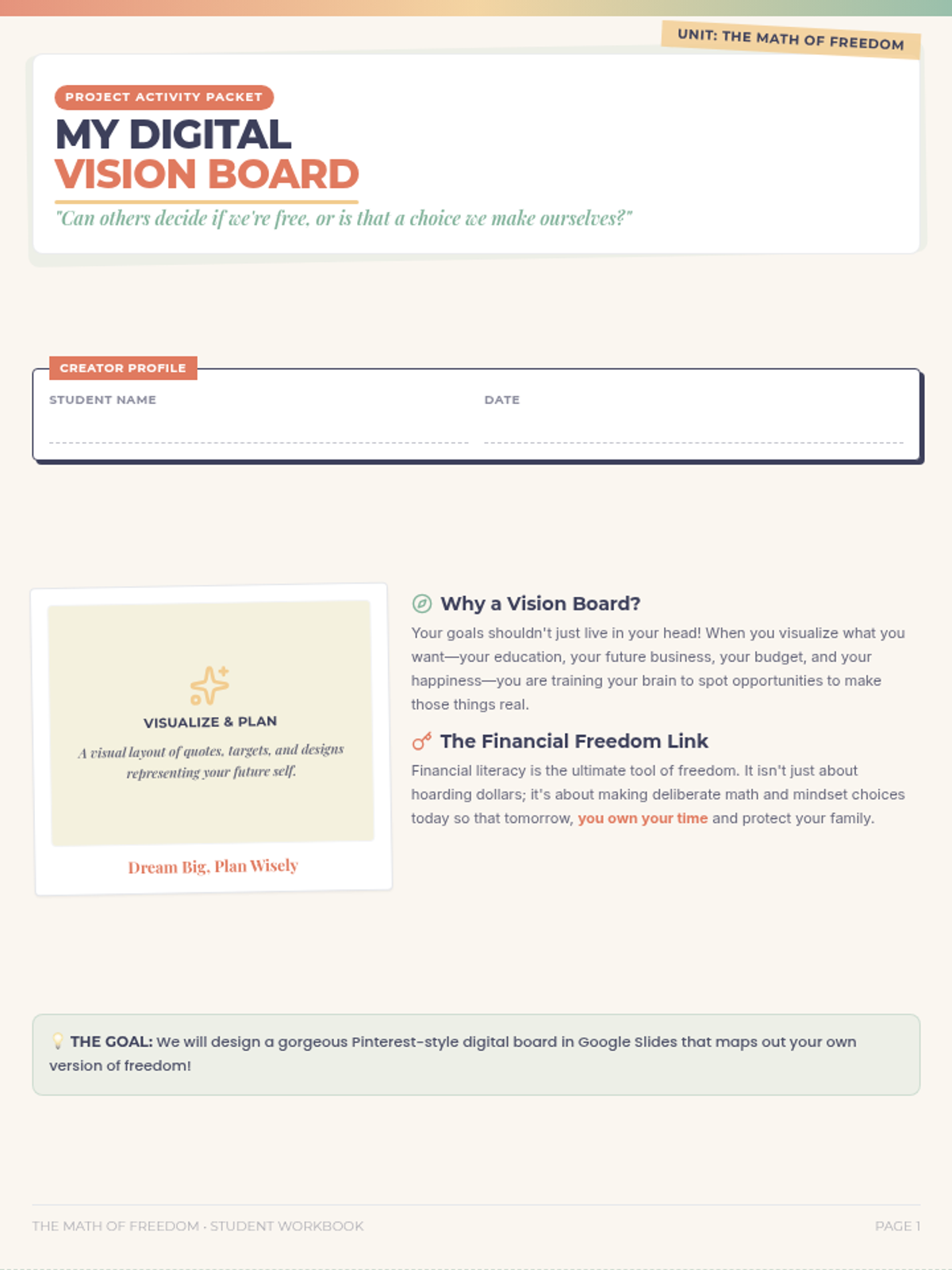
A student-facing self-reflection worksheet and checklist to help students track their classroom behavior, set personal respect goals, and practice professional social skills.
A set of printable scenario cards for small group work, featuring common 6th-grade social situations where students must practice "Pro Moves" and "Pro Phrases" for respectful behavior.
A professional development slide deck for educators and school staff on how to identify and support students experiencing housing instability, including legal rights and local resources.
A visual presentation for 6th-grade students that distinguishes between personal liking and professional respect, covering boundaries and respectful disagreement.
A facilitator's guide for teachers and counselors to effectively support students experiencing housing instability, including distribution tips and McKinney-Vento legal summaries.
A teacher-facing lesson plan outlining the objectives, materials, and step-by-step procedures for teaching professional respect and social boundaries to 6th-grade students.
A student-facing survival guide for Denver metro high school students experiencing homelessness, featuring critical contacts for emergency shelter, food security, and clothing banks.
A set of four modern, bold strategy cards for high school students corresponding to the Mood Meter domains. Each card provides academic-focused resets and mindfulness techniques tailored to specific emotional states.