The capstone project for the sequence: a structured, one-page personal 'User Manual' where students synthesize their environmental, structural, and regulatory focus strategies.
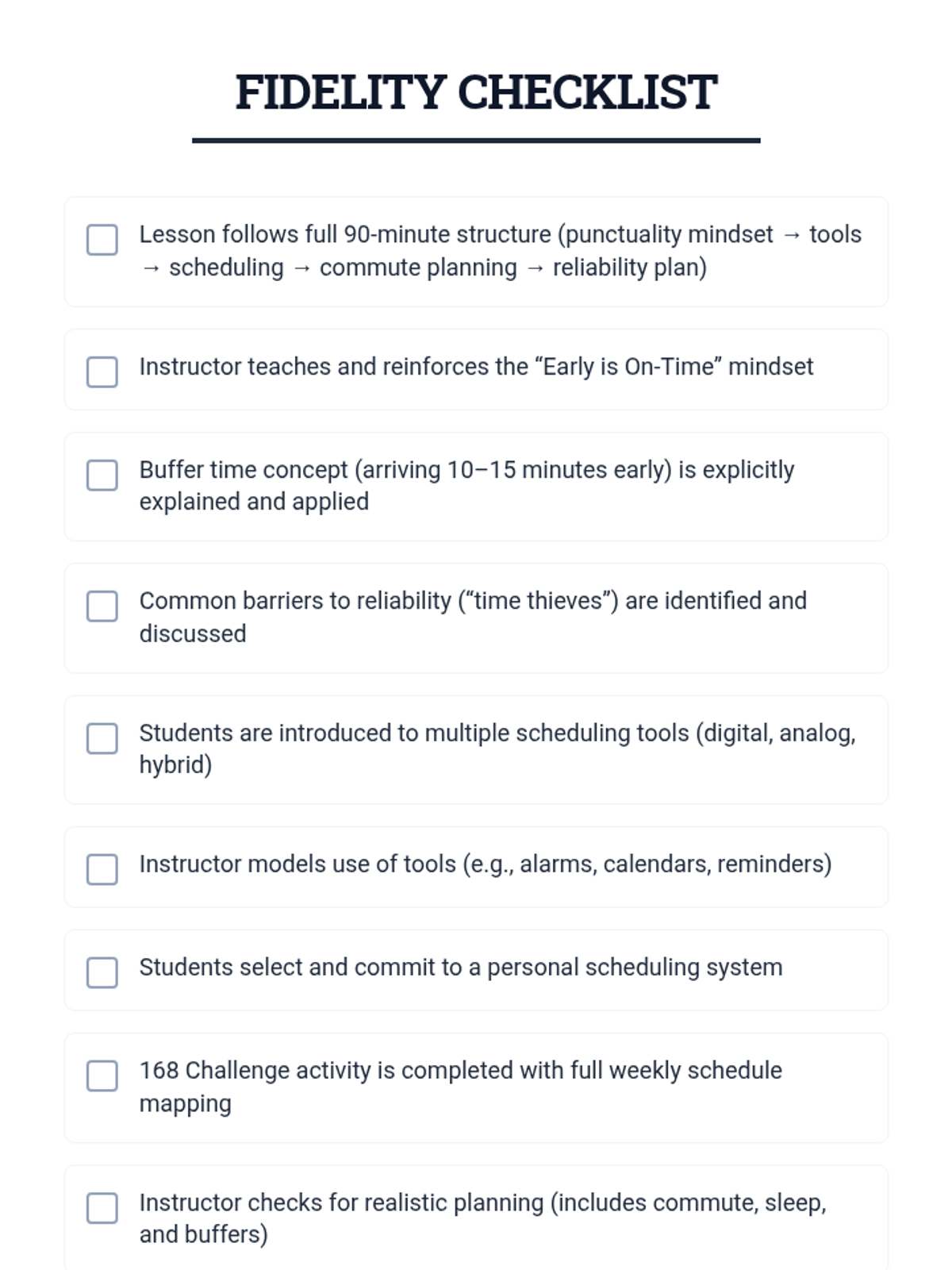
A simplified fidelity checklist featuring only the core 15 requirements for the Punctuality & Reliability lesson in a clean, checkbox format.
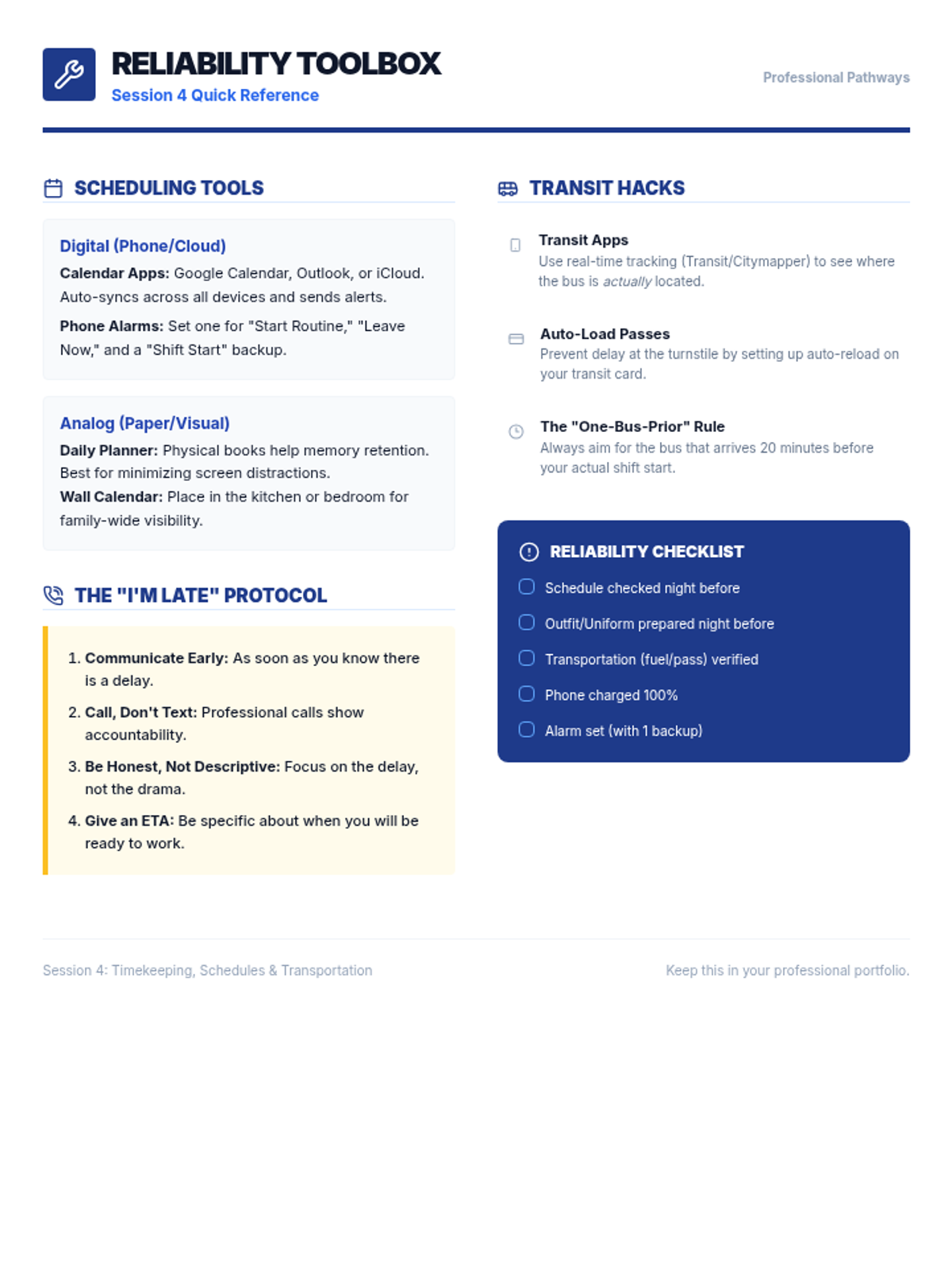
A one-page quick reference handout for participants, summarizing scheduling tools (updated with Calendar Apps), transit hacks, and the communication protocol.
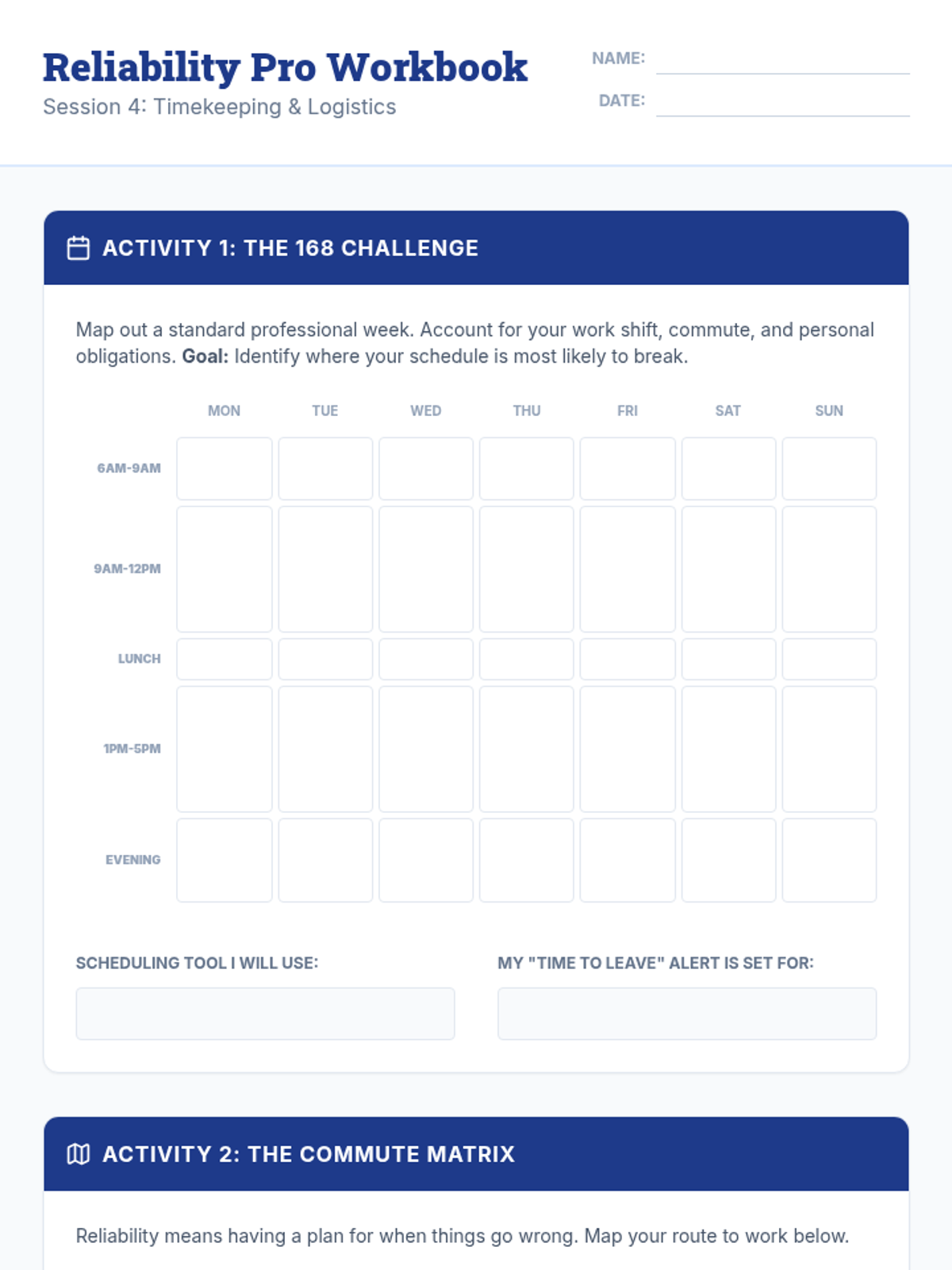
A participant workbook containing the 168 Challenge schedule building activity, a commute matrix contingency mapping exercise, and the final Reliability Plan deliverable template.
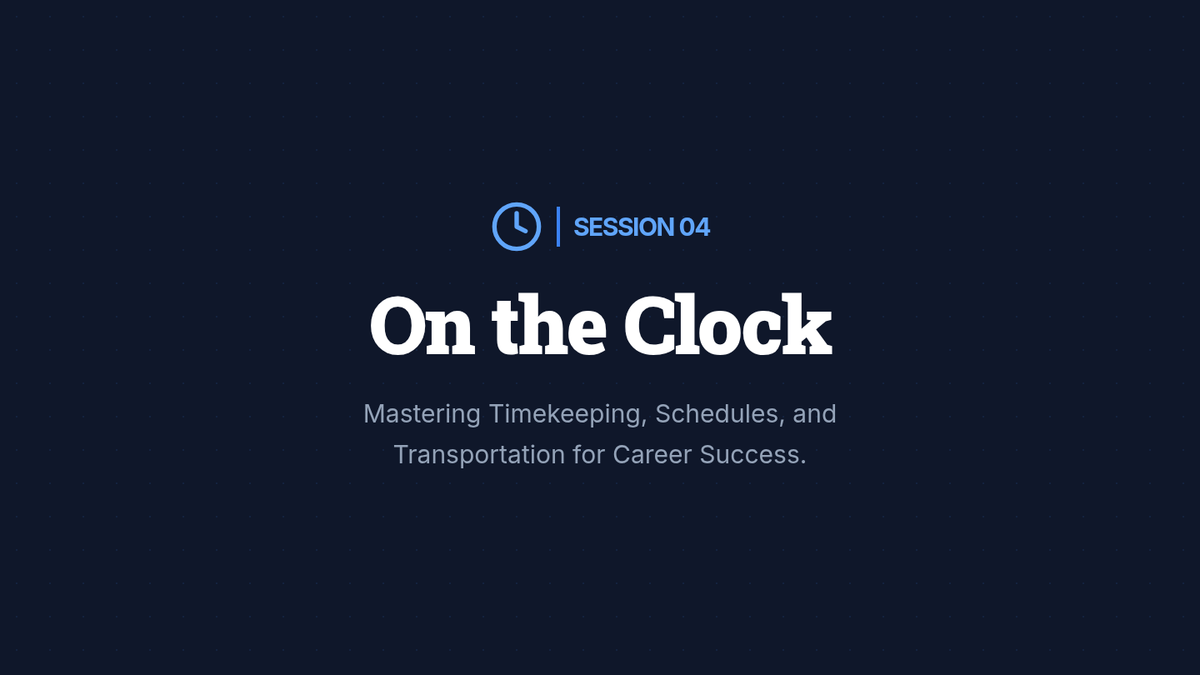
A visual presentation for Session 4, expanded to 90 minutes with new slides on Time Thieves, Transit Hacks, and the Communication Protocol.
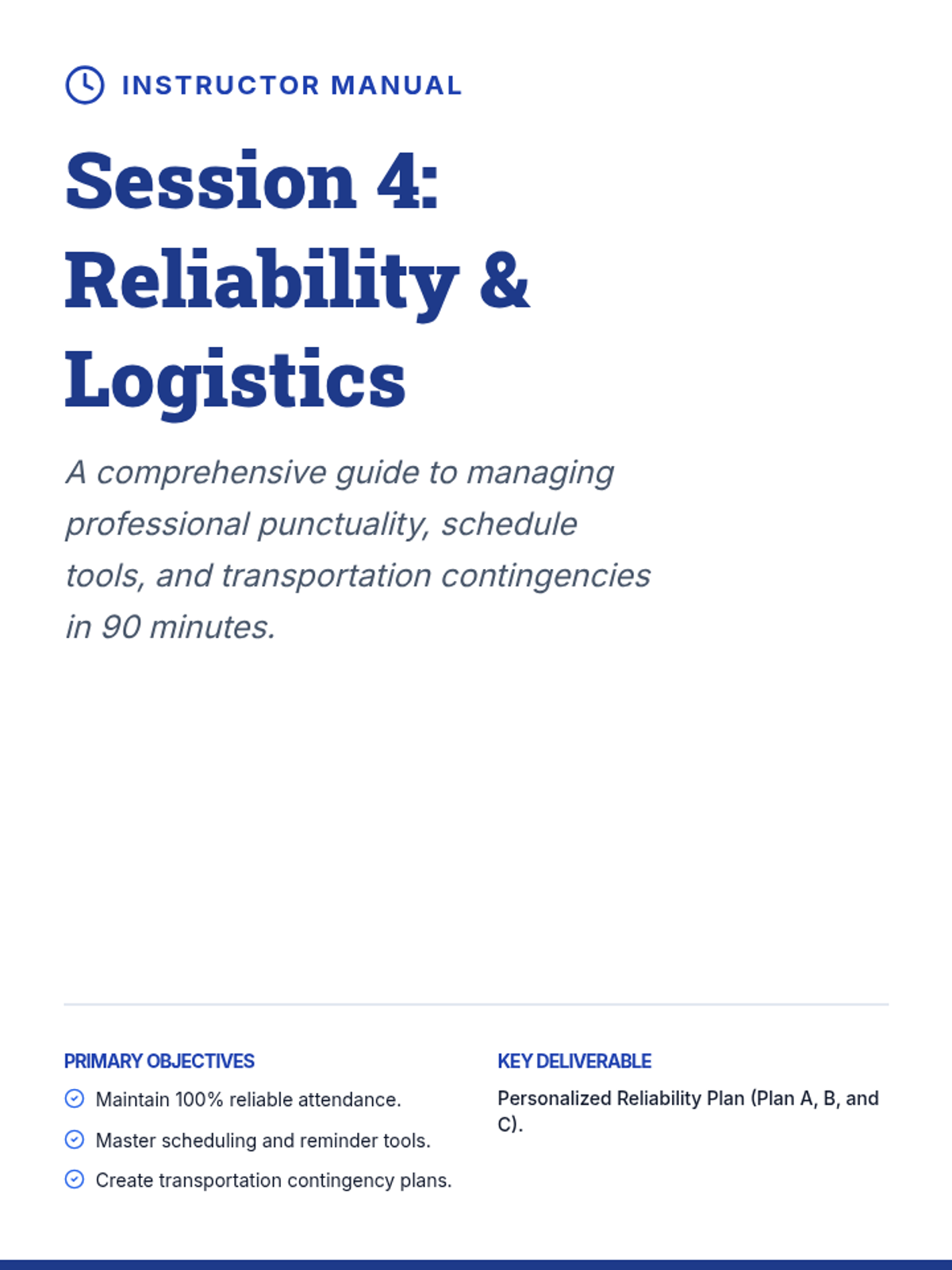
A comprehensive 8-page instructor manual for Session 4, updated for a 90-minute session with revised scripts, pacing guides, and expanded appendix notes.
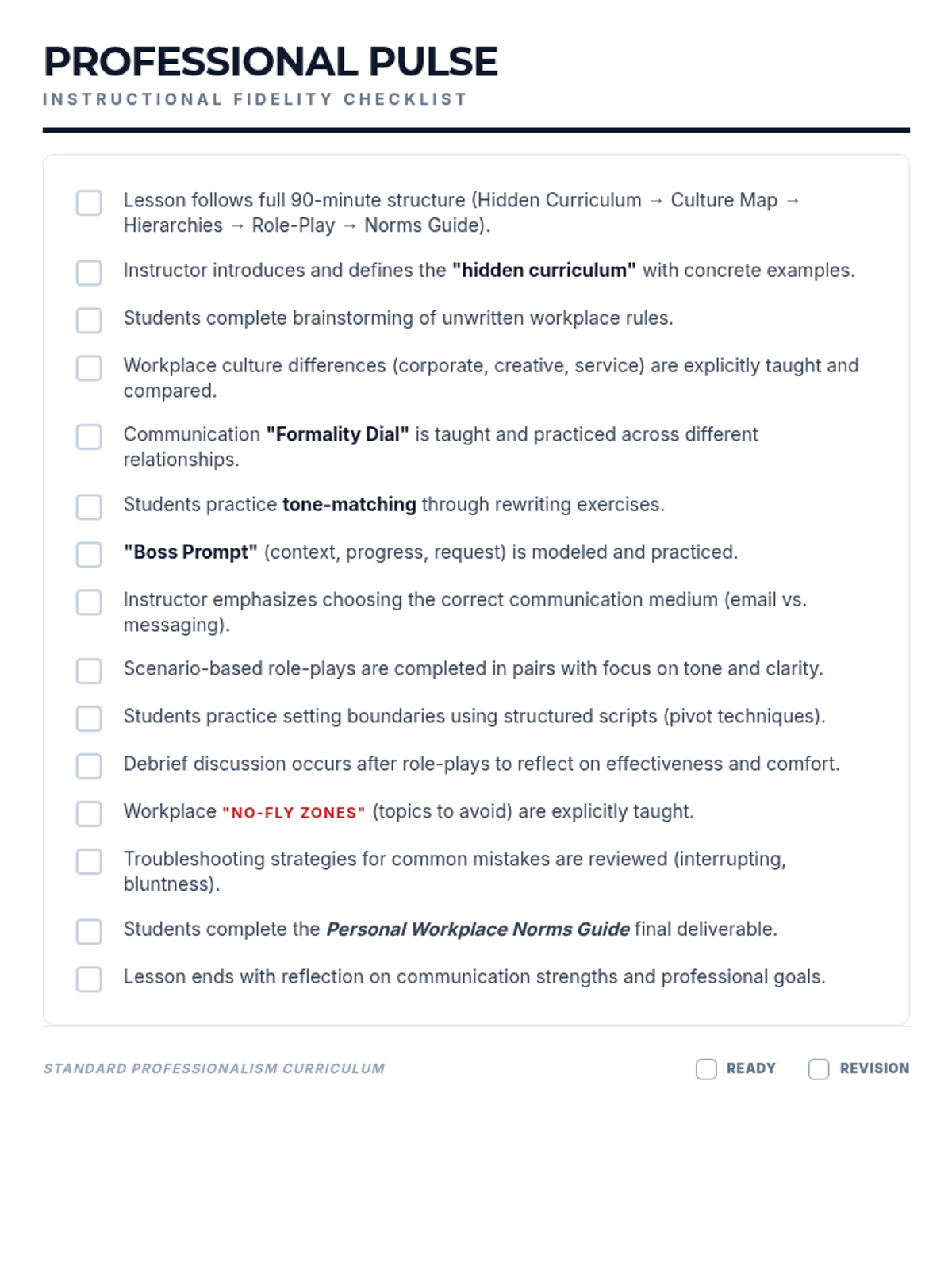
A clean, minimal one-page instructor fidelity checklist with only the title and a unified list of 15 essential items, optimized for quick professional review.
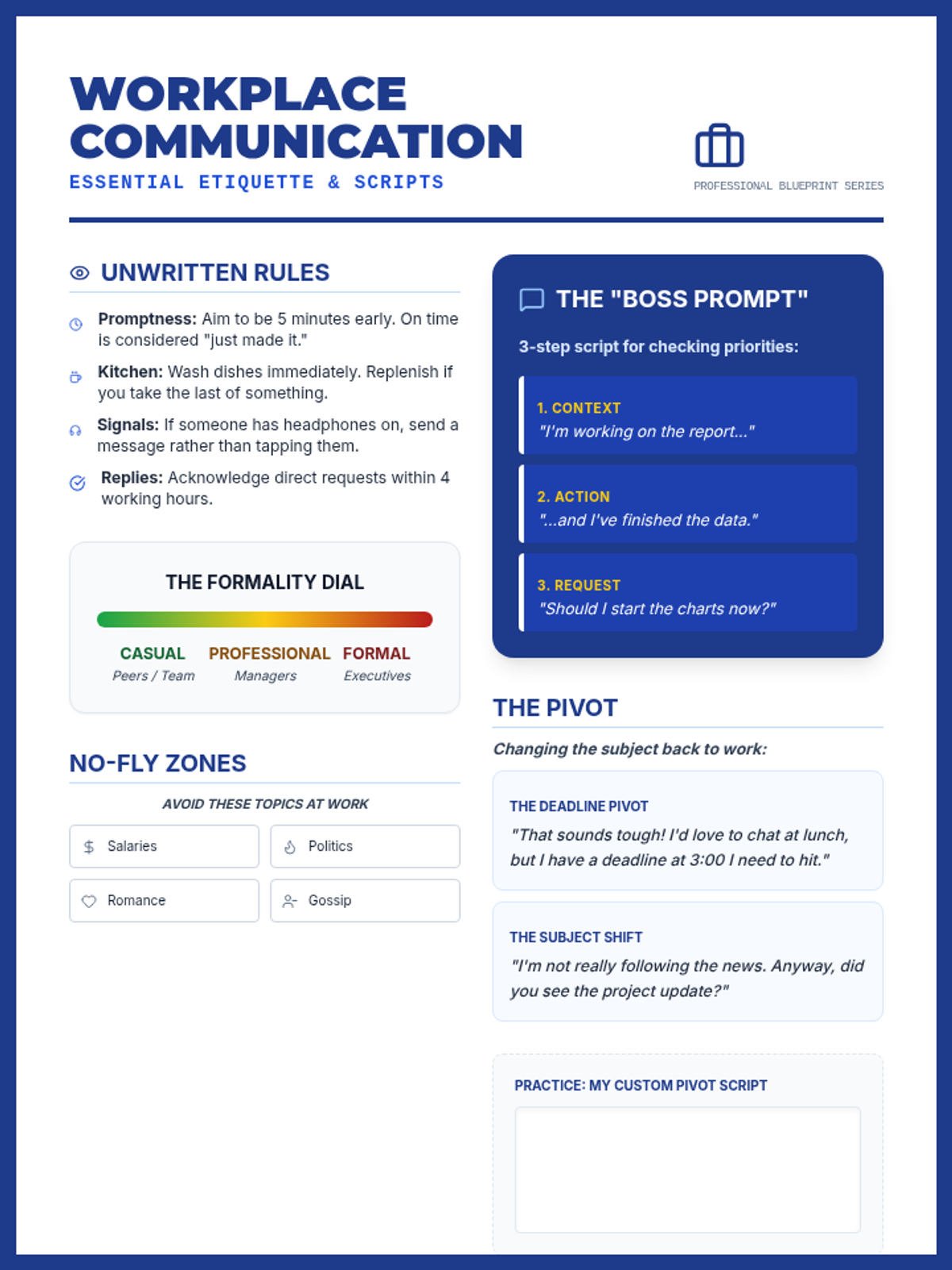
A comprehensive one-page handout summarizing workplace unwritten rules, the formality dial for tone-matching, essential "Boss Prompt" scripts, and "The Pivot" technique for maintaining professional boundaries. Revised with larger text and work area.
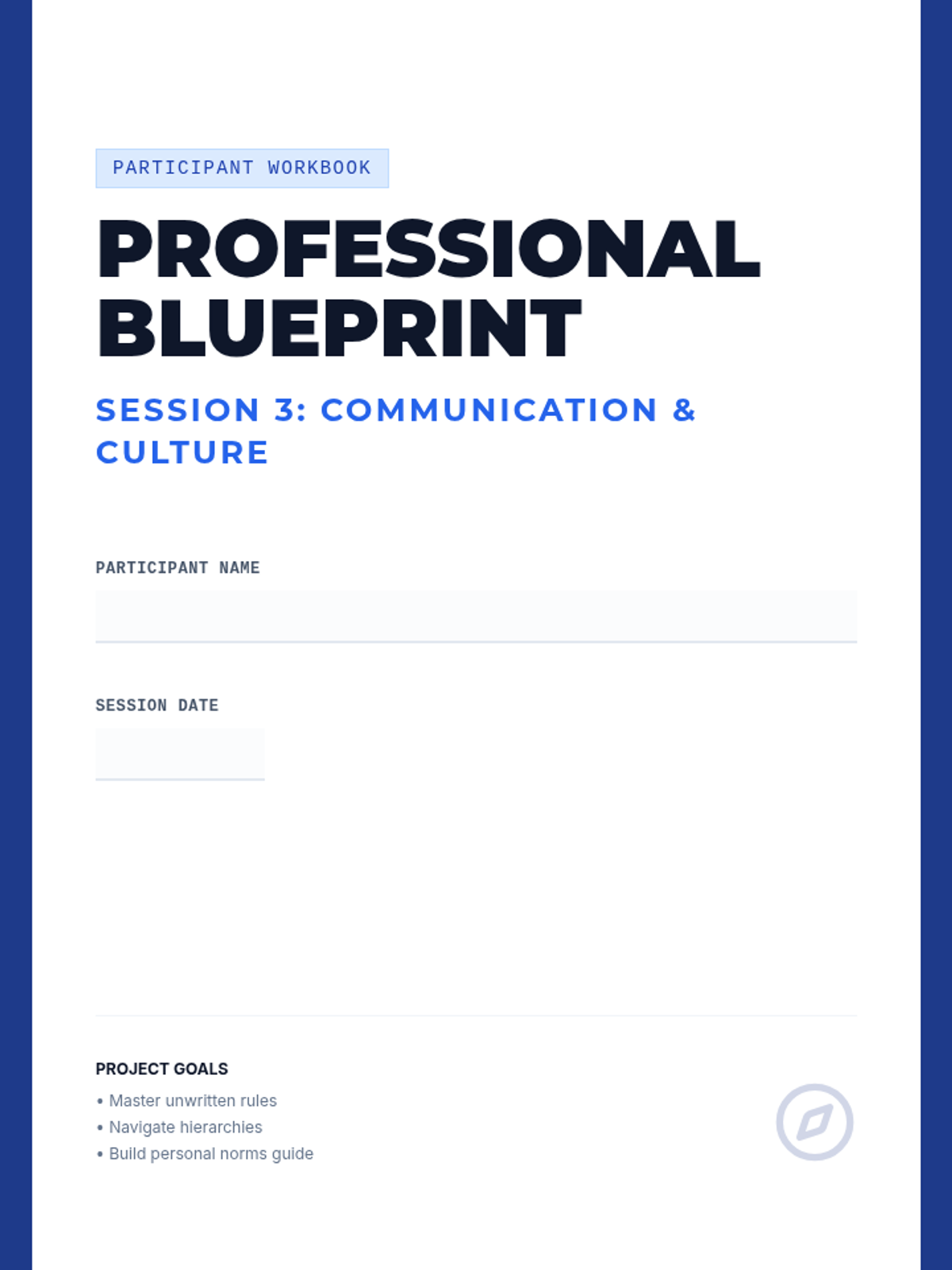
A 5-page student workbook for Session 3, focused on identifying unwritten rules, practicing tone-matching, and setting professional boundaries. Features structured exercises for drafting emails, scripts, and a personalized norms guide.
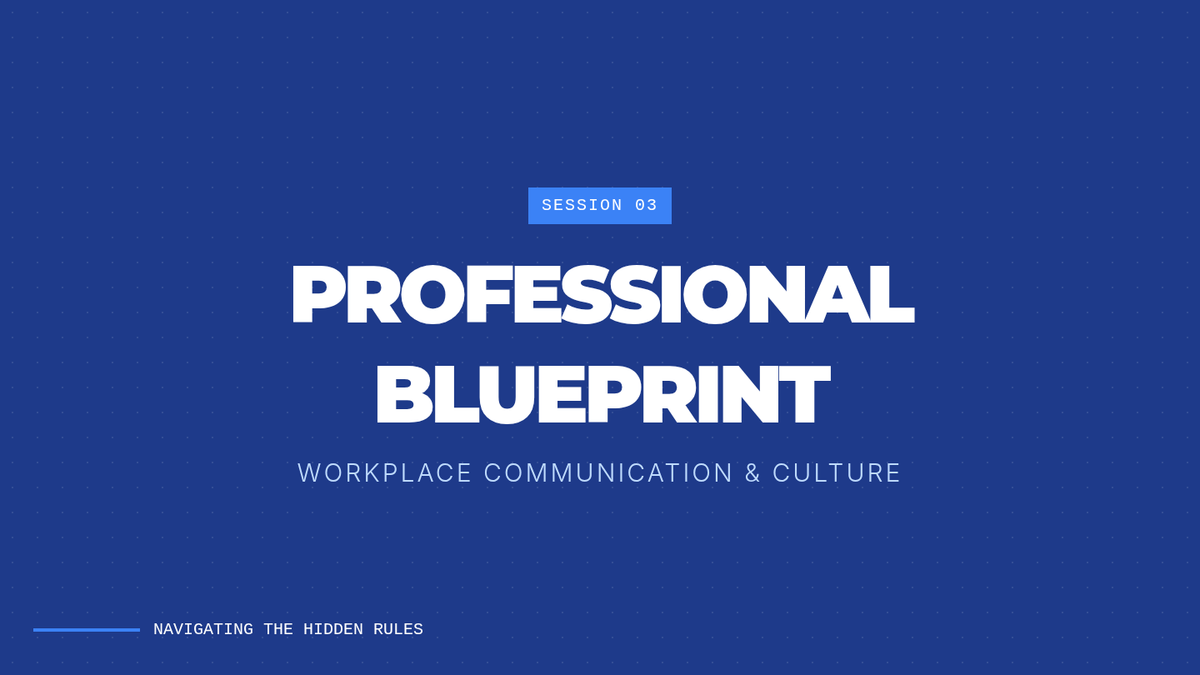
A high-impact professional slide deck for Session 3, focusing on demystifying workplace etiquette. Features the "Formality Dial," "Boss Prompt" scripts, culture comparison grids, and professional boundary-setting techniques.
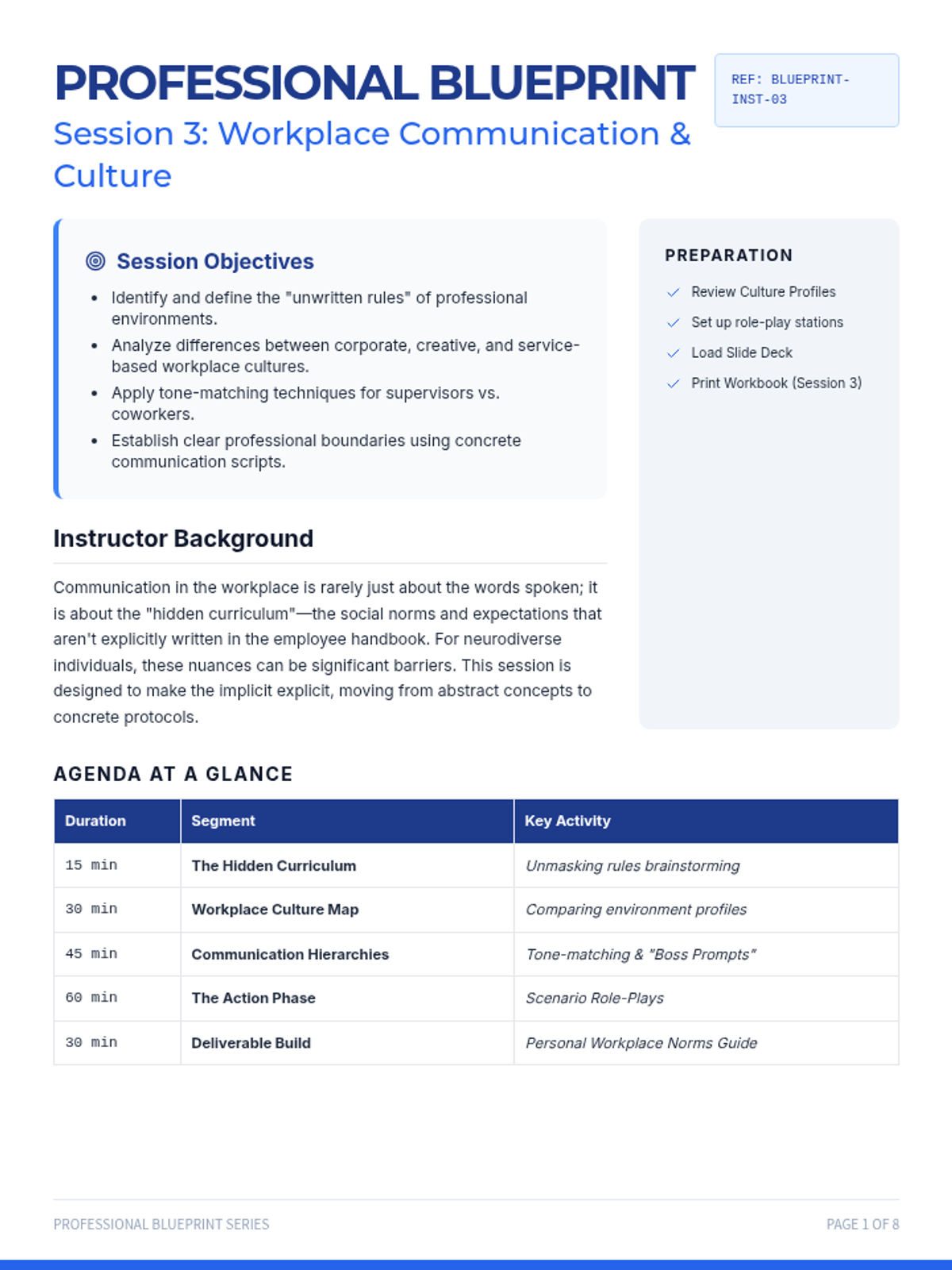
An 8-page comprehensive instructor manual for Session 3 of the Professional Blueprint series. It covers workplace unwritten rules, culture mapping, communication hierarchies, and professional boundary setting with detailed facilitation notes adjusted for a 90-minute session. Revised to include "Medium Choice" and improved formatting.
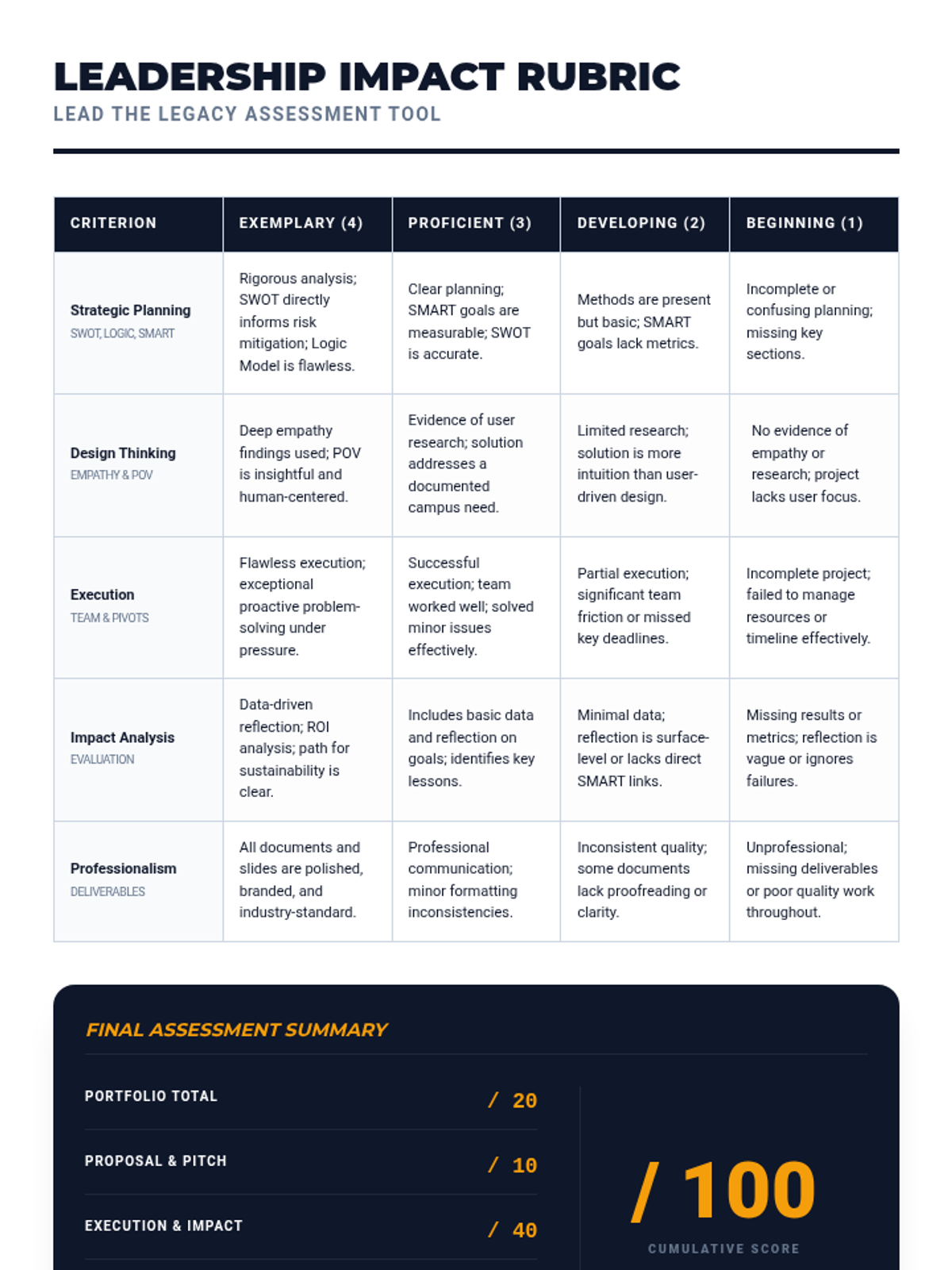
A detailed teacher rubric for evaluating the 'Lead the Legacy' culminating project. It assesses strategic planning, design thinking application, execution, impact analysis, and overall professionalism on a 4-point scale.
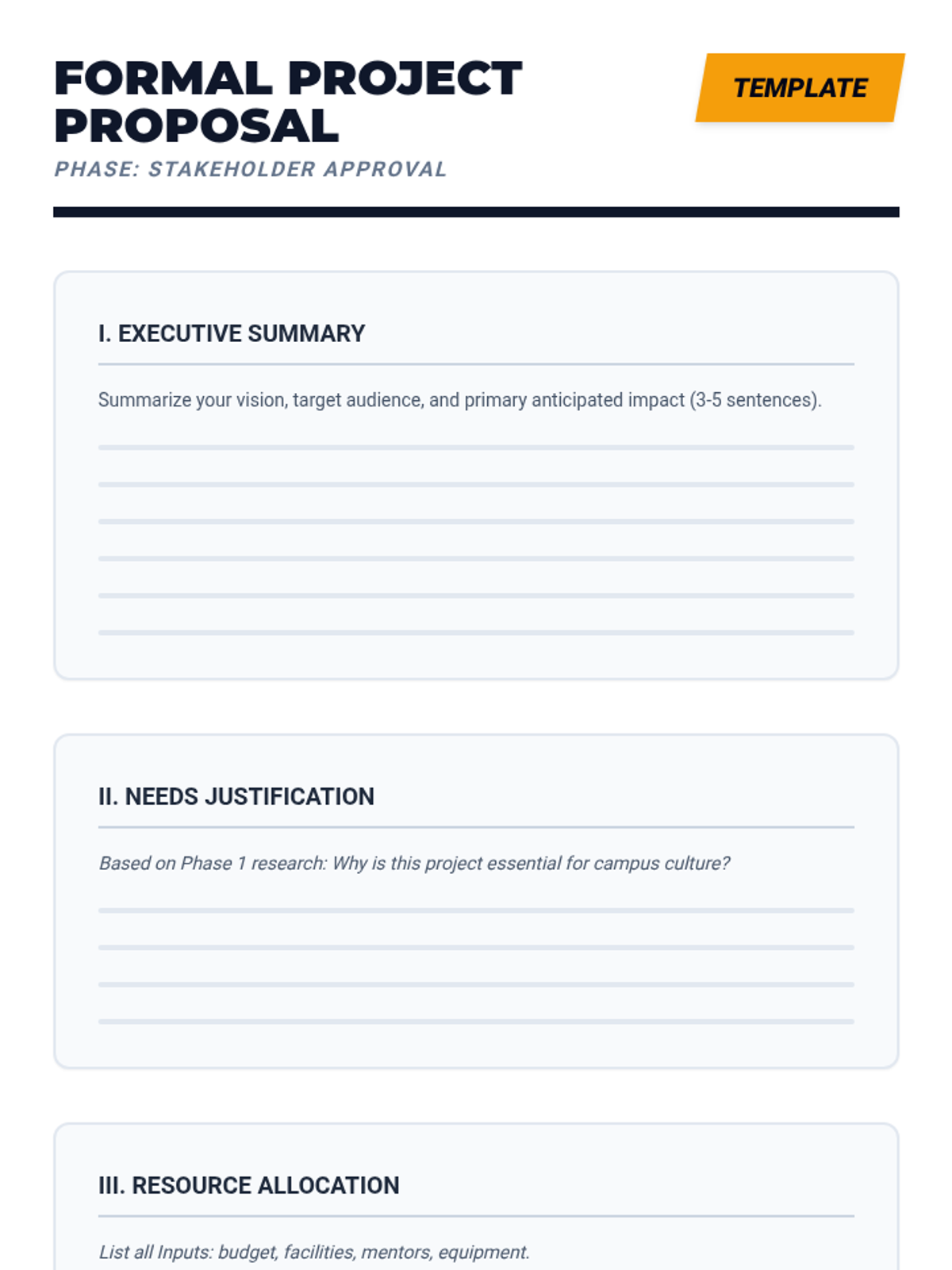
Scaffolded templates for the two primary written deliverables of the 'Lead the Legacy' project: the formal project proposal and the final post-event impact report. Each section includes guiding prompts for strategic analysis.
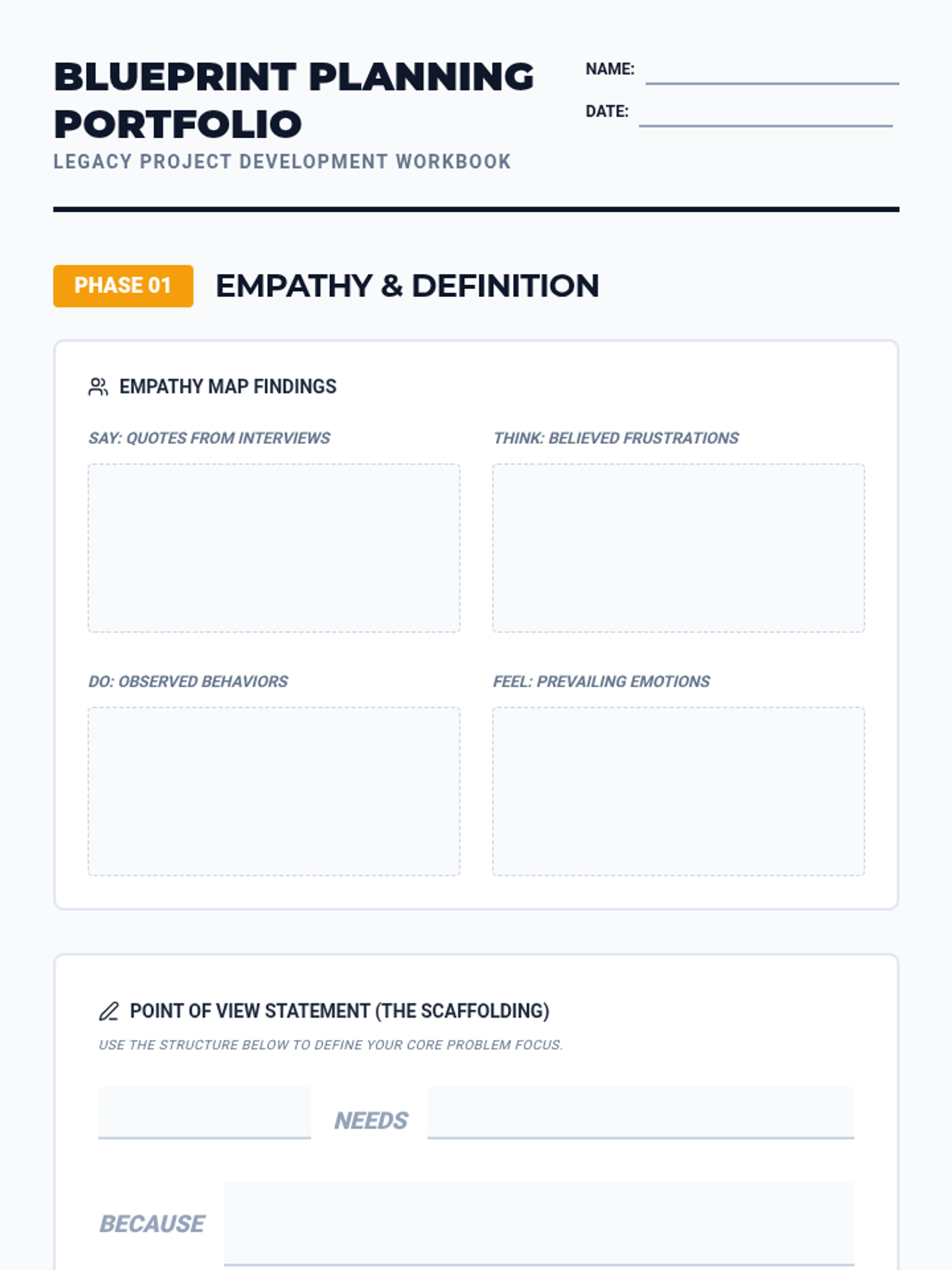
A structured workbook for leadership students to document their strategic planning process. It includes dedicated workspaces for Empathy Mapping, SWOT Analysis, a Logic Model chart, and SMART Goal definition.
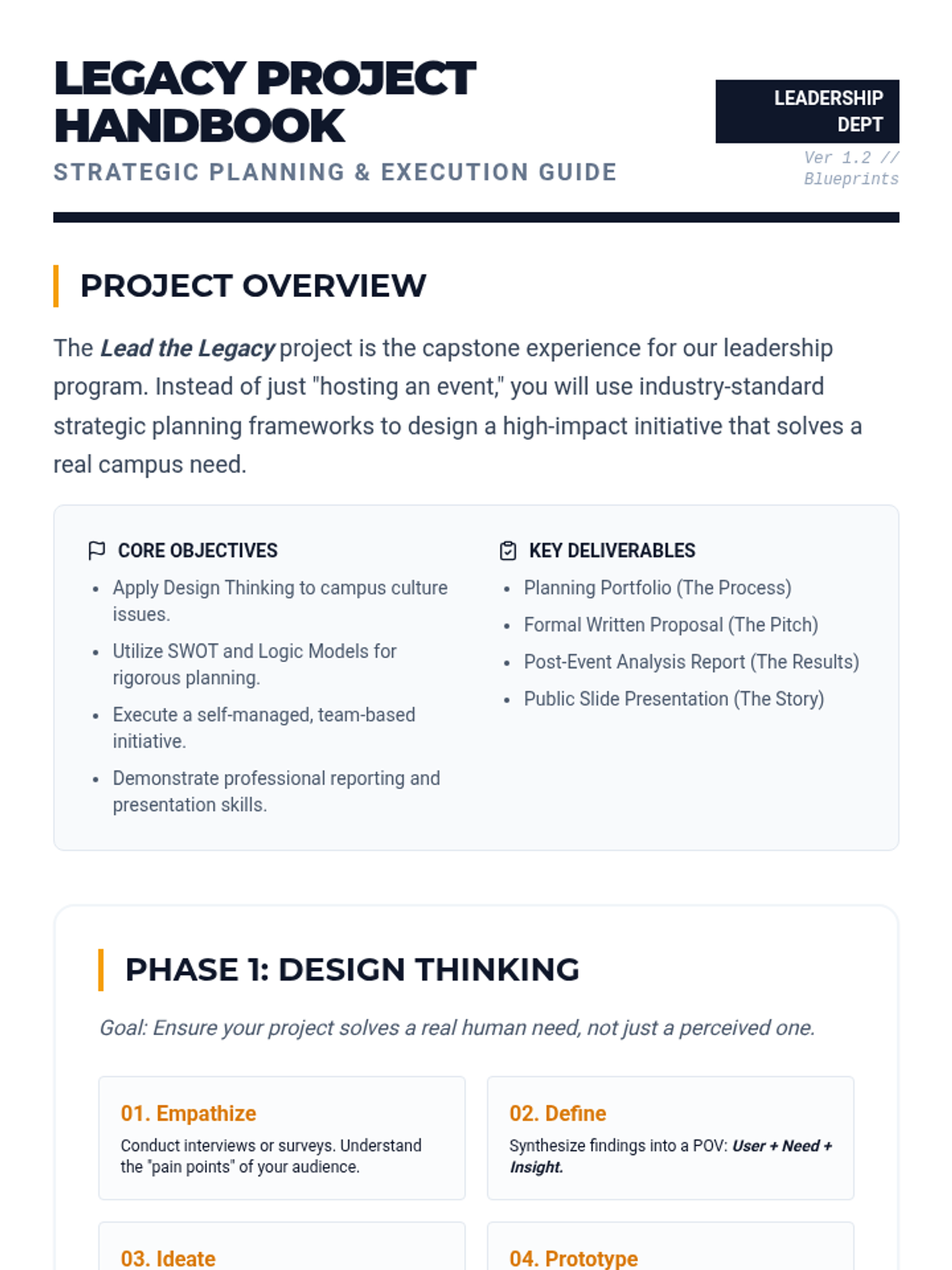
A comprehensive reference guide for students outlining the project's phases, strategic methodologies (Design Thinking, SWOT, Logic Model, SMART Goals), and deliverable requirements for the 'Lead the Legacy' culminating project.
A dynamic presentation for leadership students introducing the 'Lead the Legacy' project. It covers the four core methodologies: Design Thinking, SWOT Analysis, Logic Models, and SMART Goals, while outlining project expectations and deliverables.
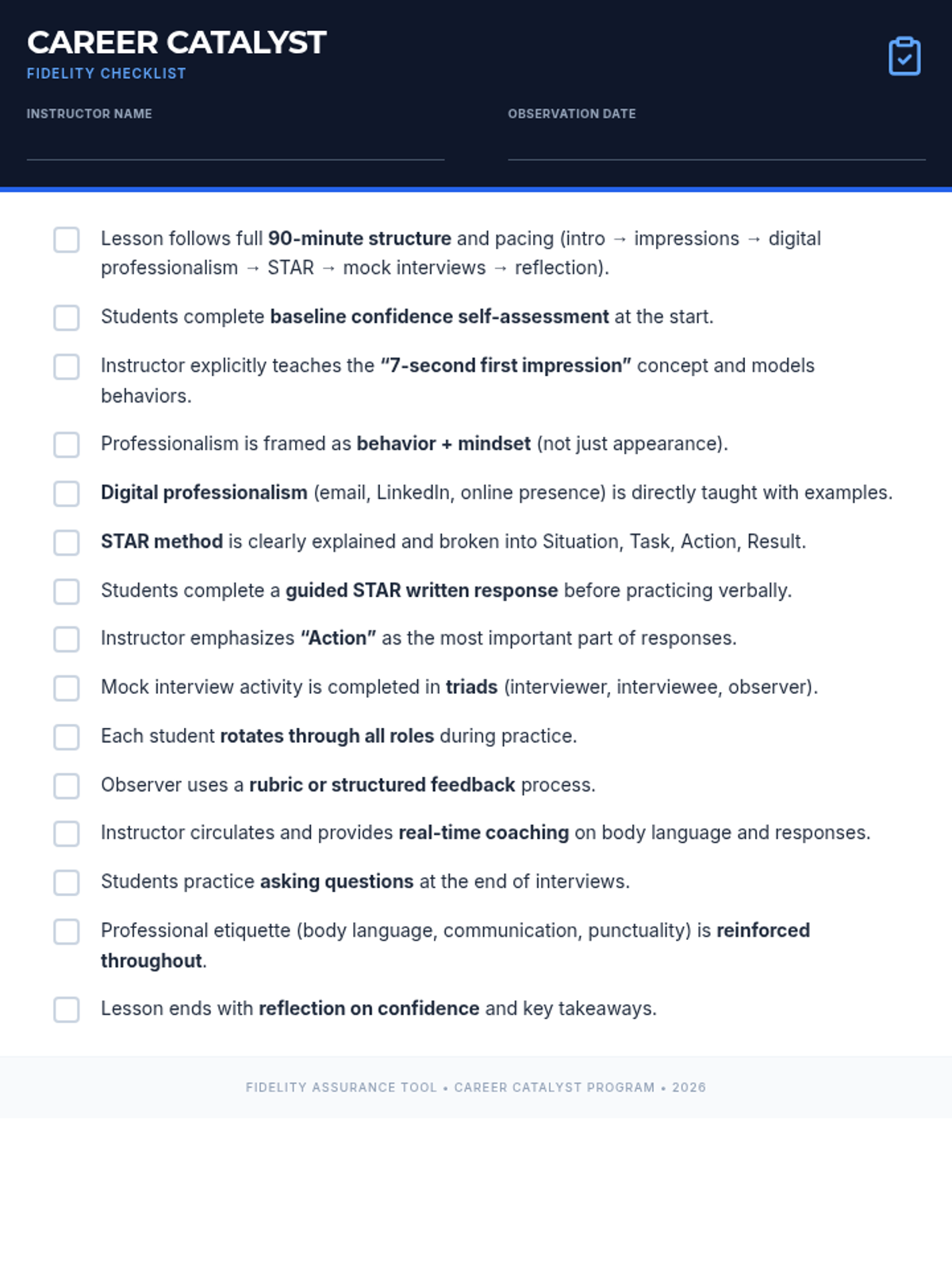
A simplified, professional fidelity checklist for instructors featuring a single, clean continuous list of key components. This version removes all section titles, phases, and note areas for a focused assessment tool.
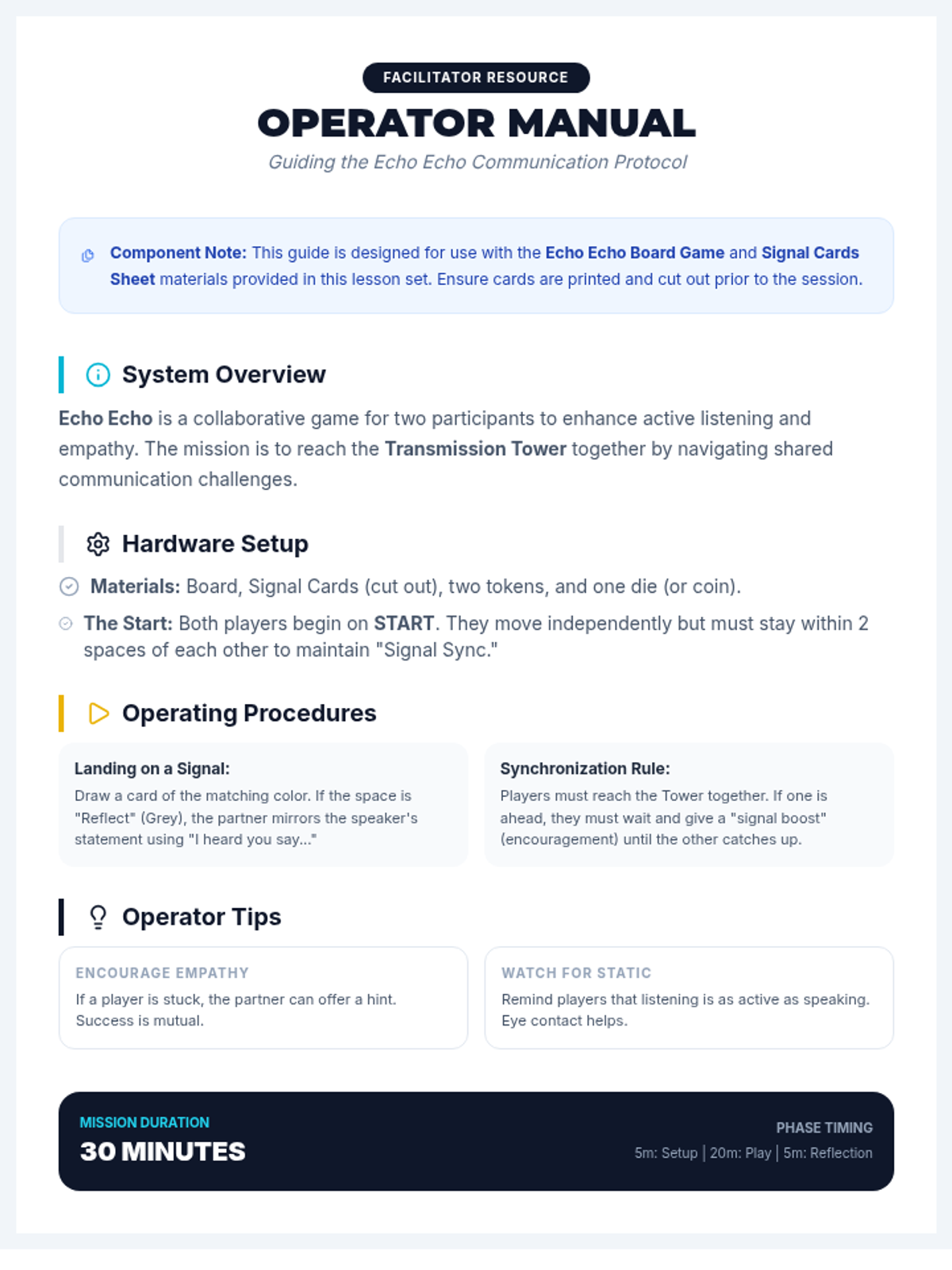
A facilitator guide for teachers or therapists, outlining the rules, setup, and instructional tips for implementing the Echo Echo communication game.
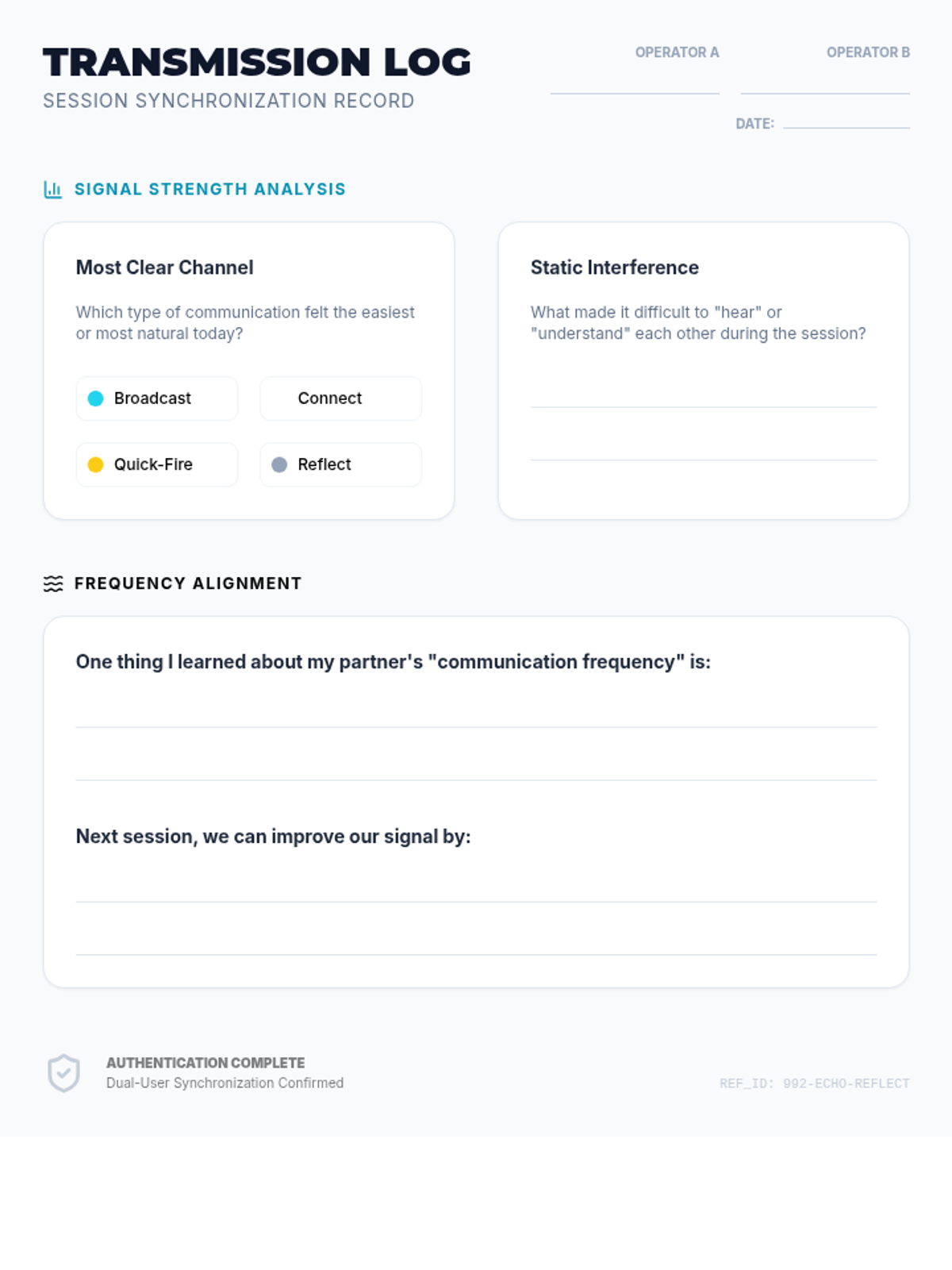
A post-game reflection sheet for two students to document their communication strengths, challenges, and insights gained during the game session.
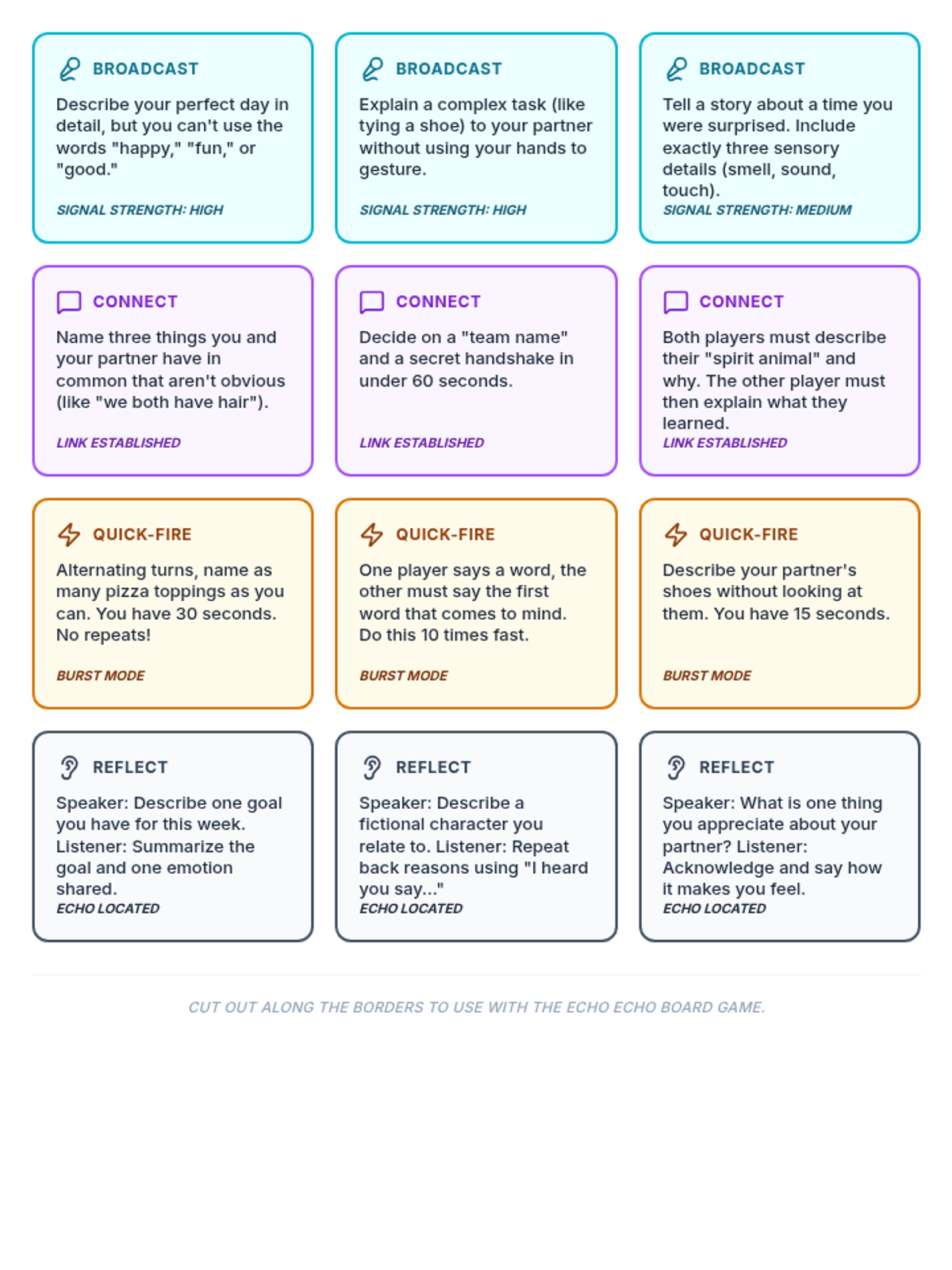
A set of 12 printable prompt cards for the Echo Echo game, categorized into Broadcast, Connect, Quick-Fire, and Reflect challenges to stimulate varied communication styles.
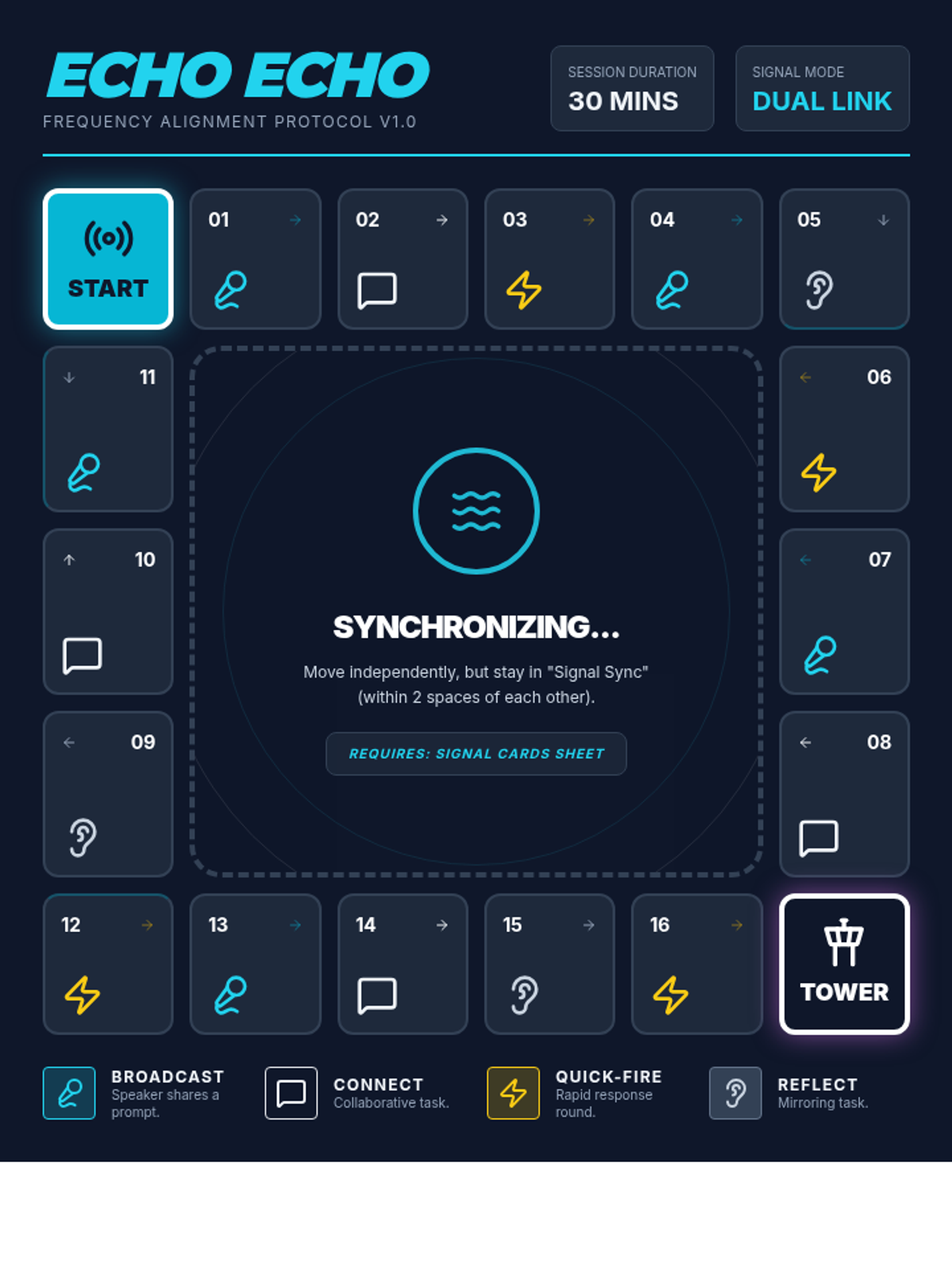
A high-contrast, neon-themed board game for two players focused on communication skills. Features a winding frequency path with different challenge types: Broadcast, Connect, Quick-Fire, and Reflect.
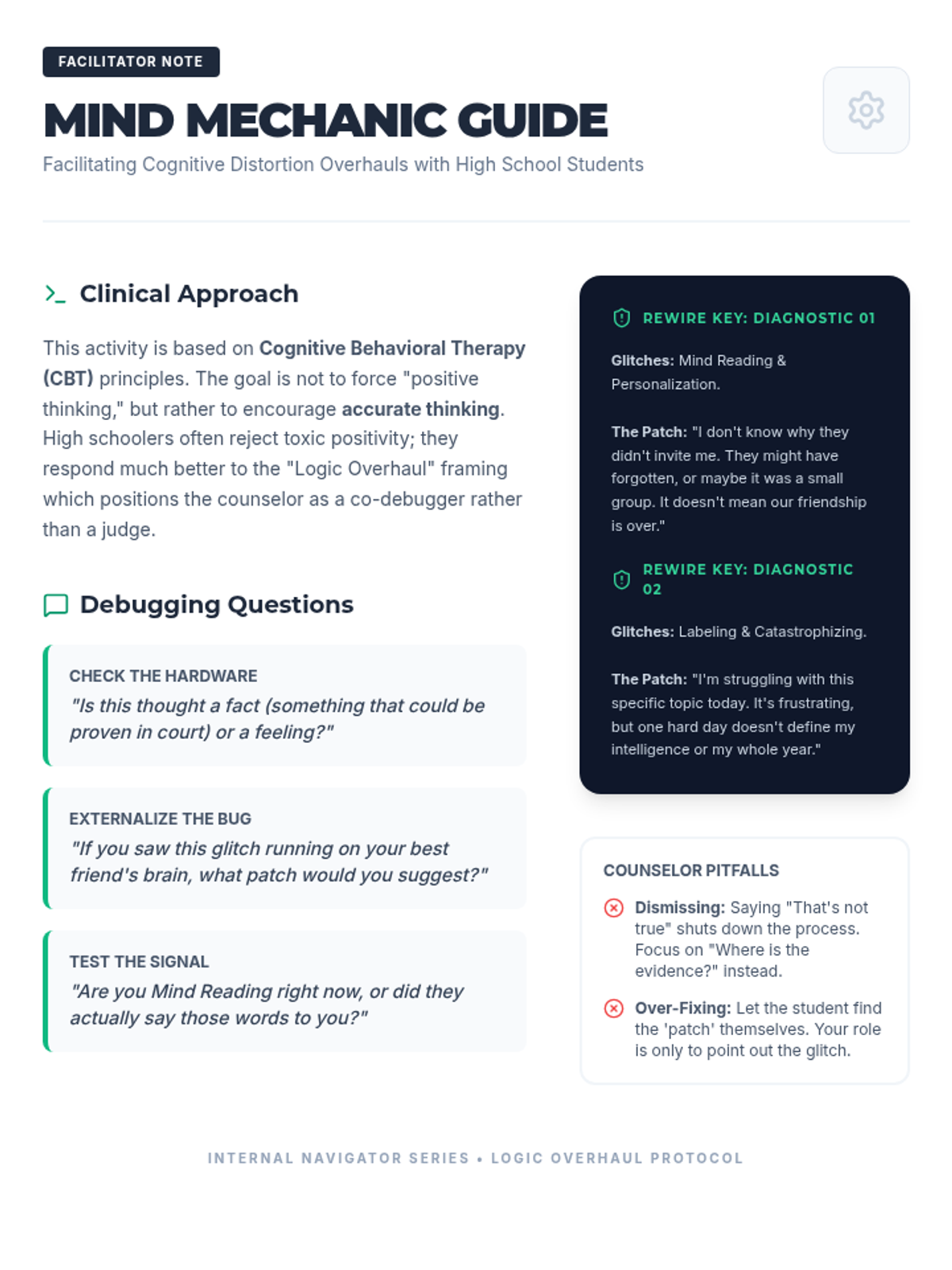
A facilitator's guide for counselors using the 'Logic Overhaul' lesson. Includes facilitation strategies based on CBT, probing questions to challenge distortions, and an answer key for the student worksheet.
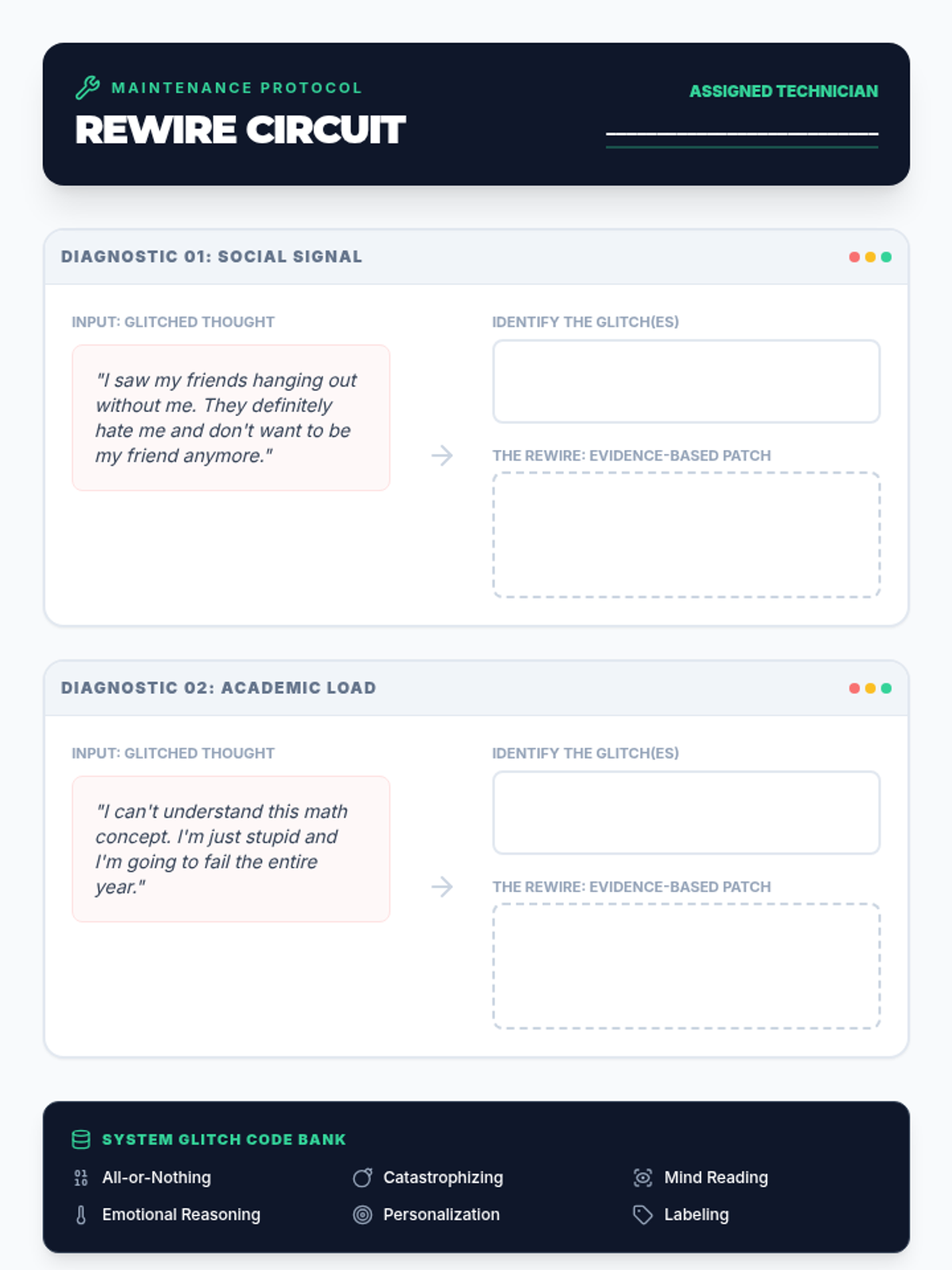
An interactive worksheet where high school students practice identifying cognitive distortions in scenarios and 'rewiring' them into balanced, evidence-based thoughts. Features a technical 'circuit repair' aesthetic.
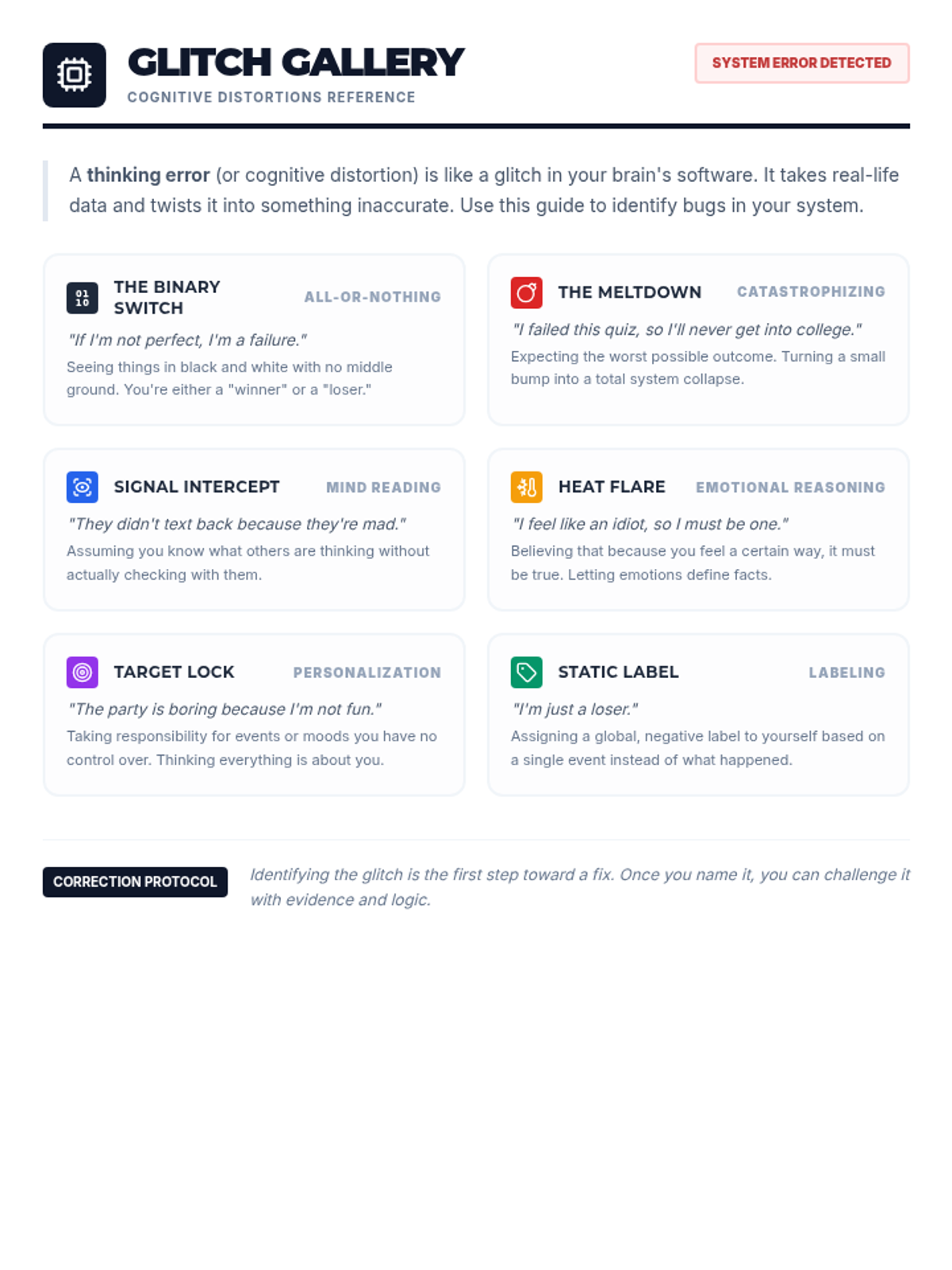
A visually engaging reference sheet for high school students that defines common cognitive distortions (thinking errors) using a 'digital system glitch' theme. Features clear examples and icons for each error.
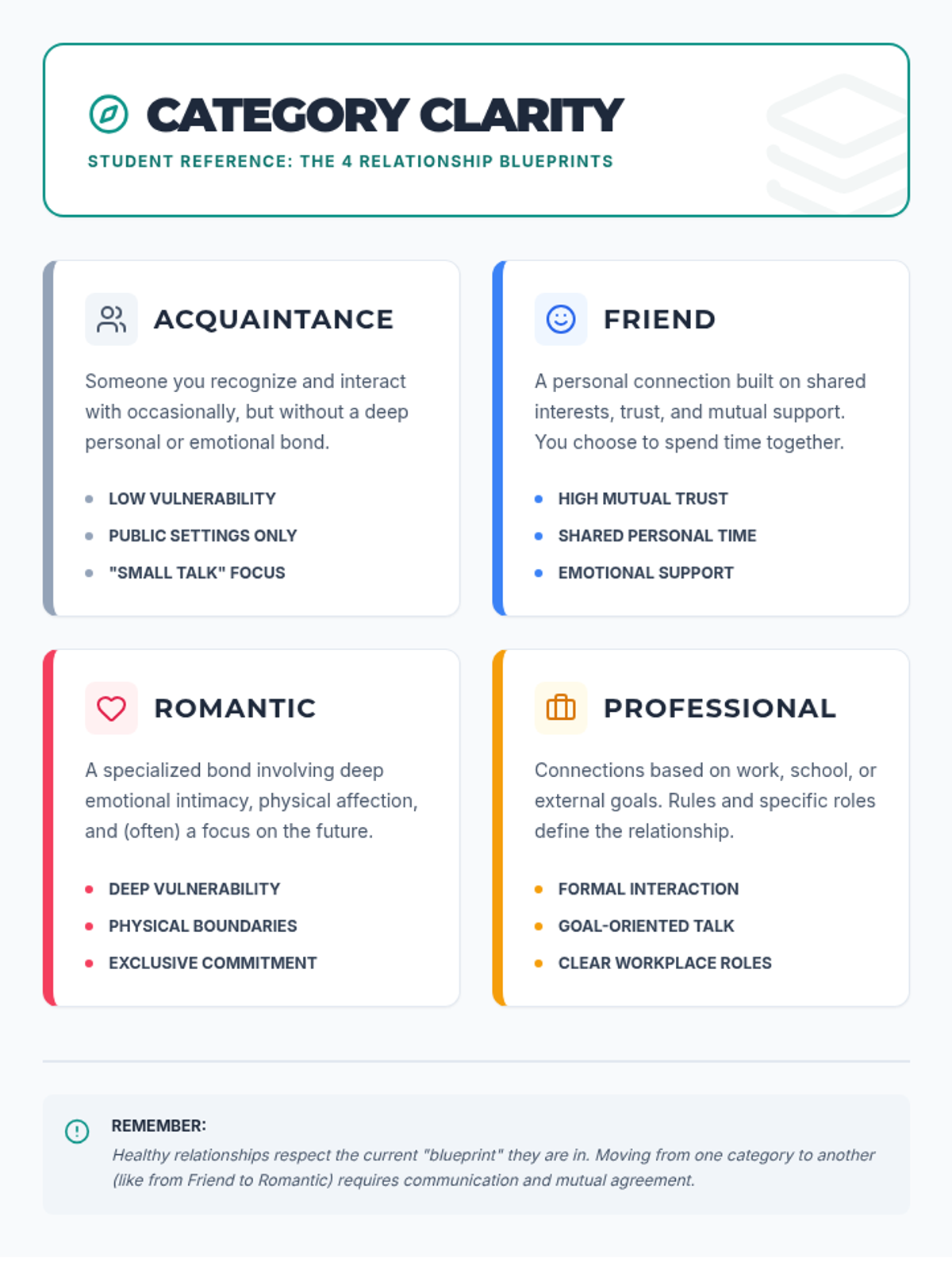
A student reference sheet that defines the four relationship categories (Acquaintance, Friend, Romantic, Professional) with key traits and boundary markers to help with the card sort activity.
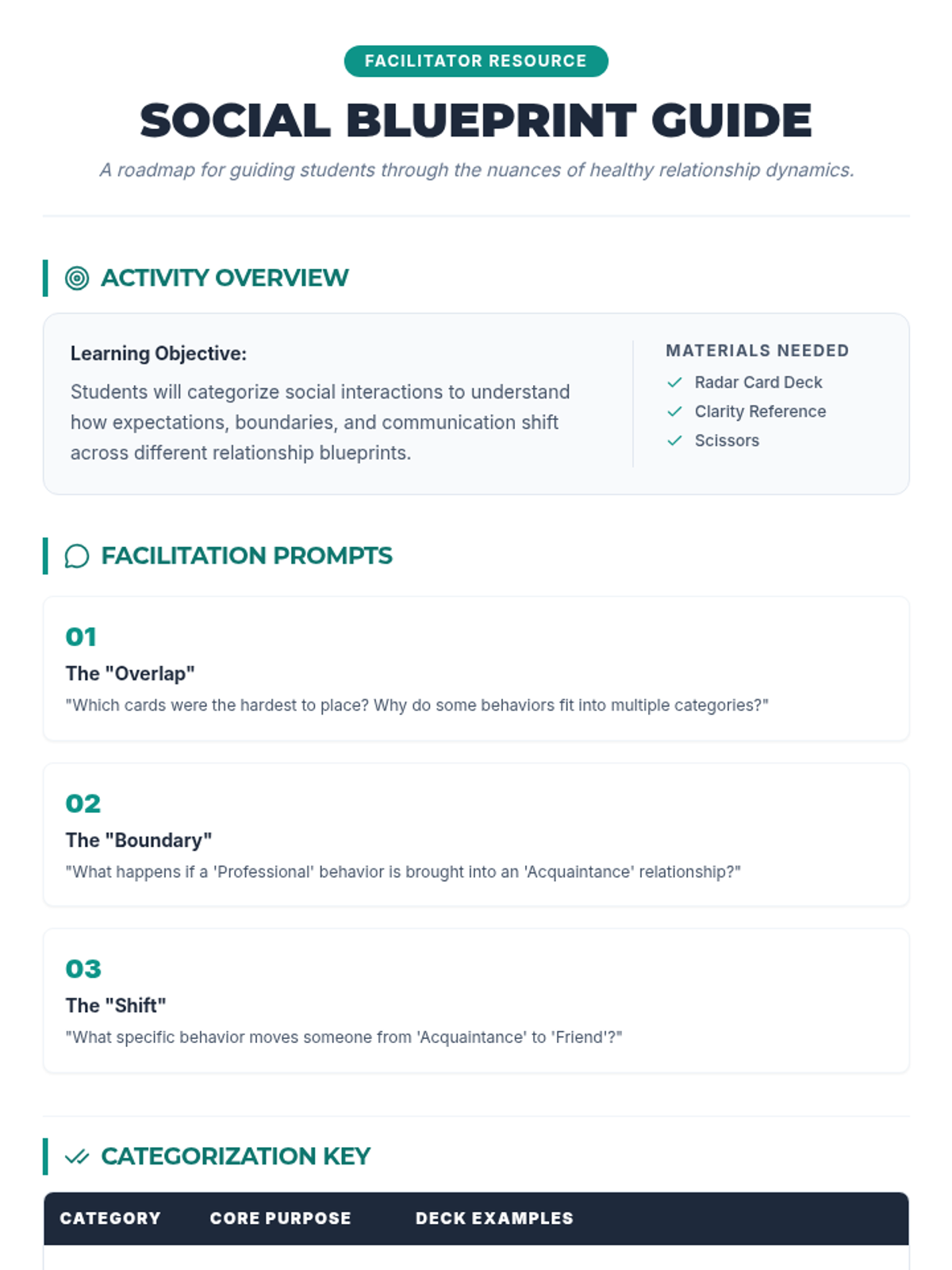
A comprehensive teacher guide for facilitating the relationship card sort activity. Includes learning objectives, discussion prompts, and a categorization key to help guide high school students through the lesson.
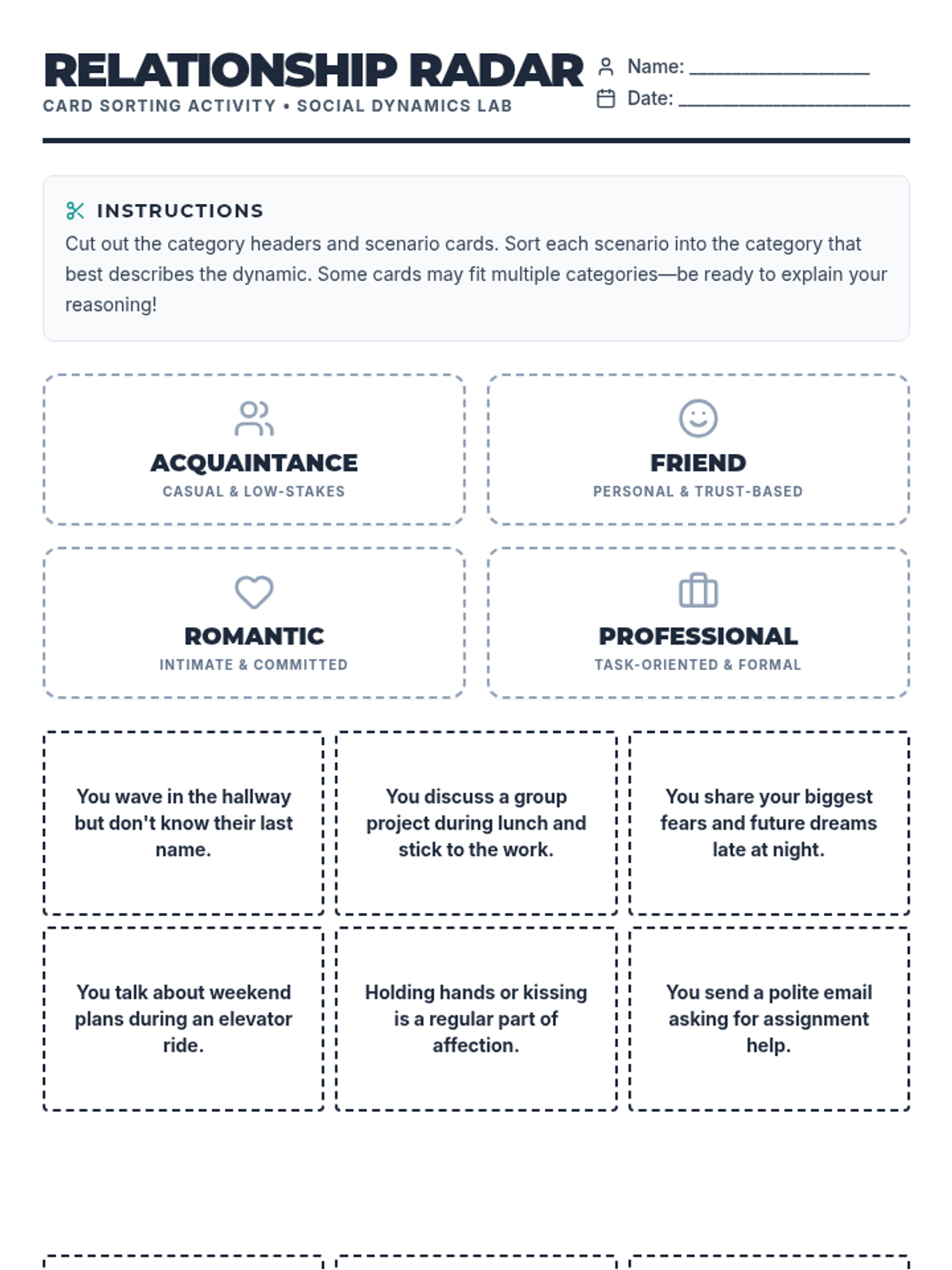
A two-page printable card deck featuring category headers and 18 scenario cards designed for a relationship-sorting activity. Includes acquaintance, friend, romantic, and professional categories with high-school appropriate scenarios.
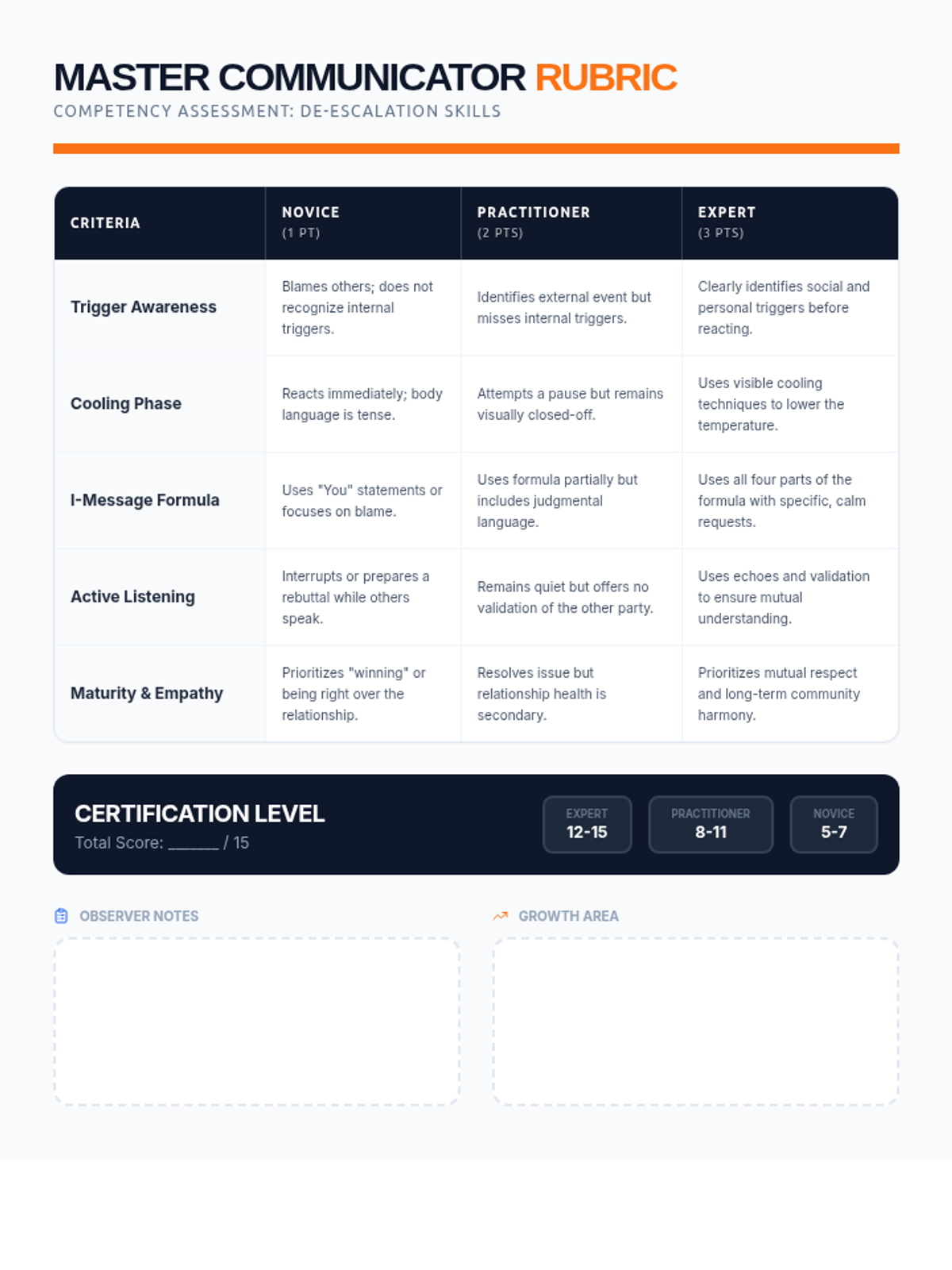
A formal assessment tool for evaluating student proficiency in de-escalation techniques, identifying growth areas in trigger awareness, communication formulas, and active listening.
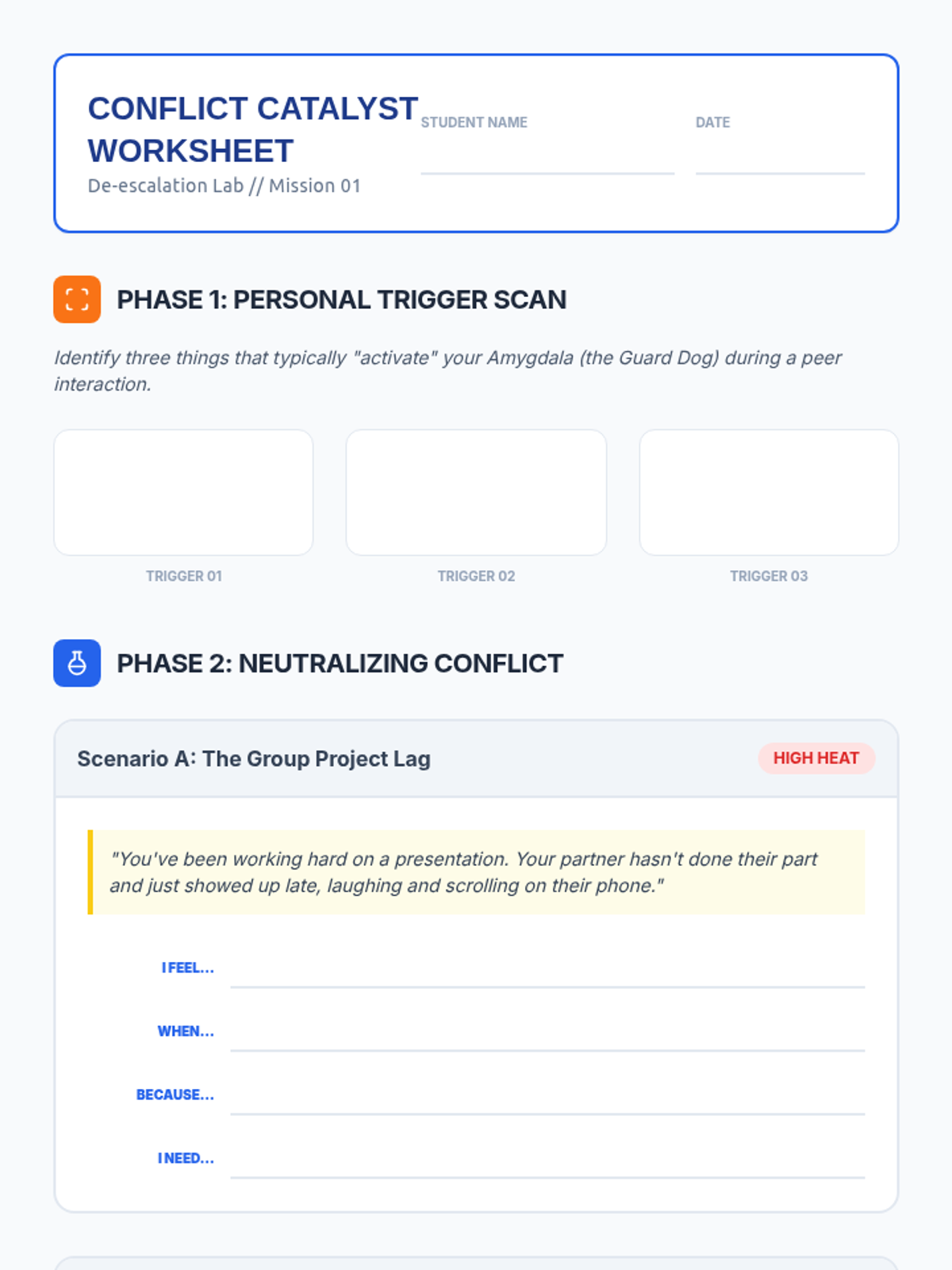
A student-facing activity worksheet featuring scenario-based practice for identifying emotional triggers and formulating 'I-Message' de-escalation responses.
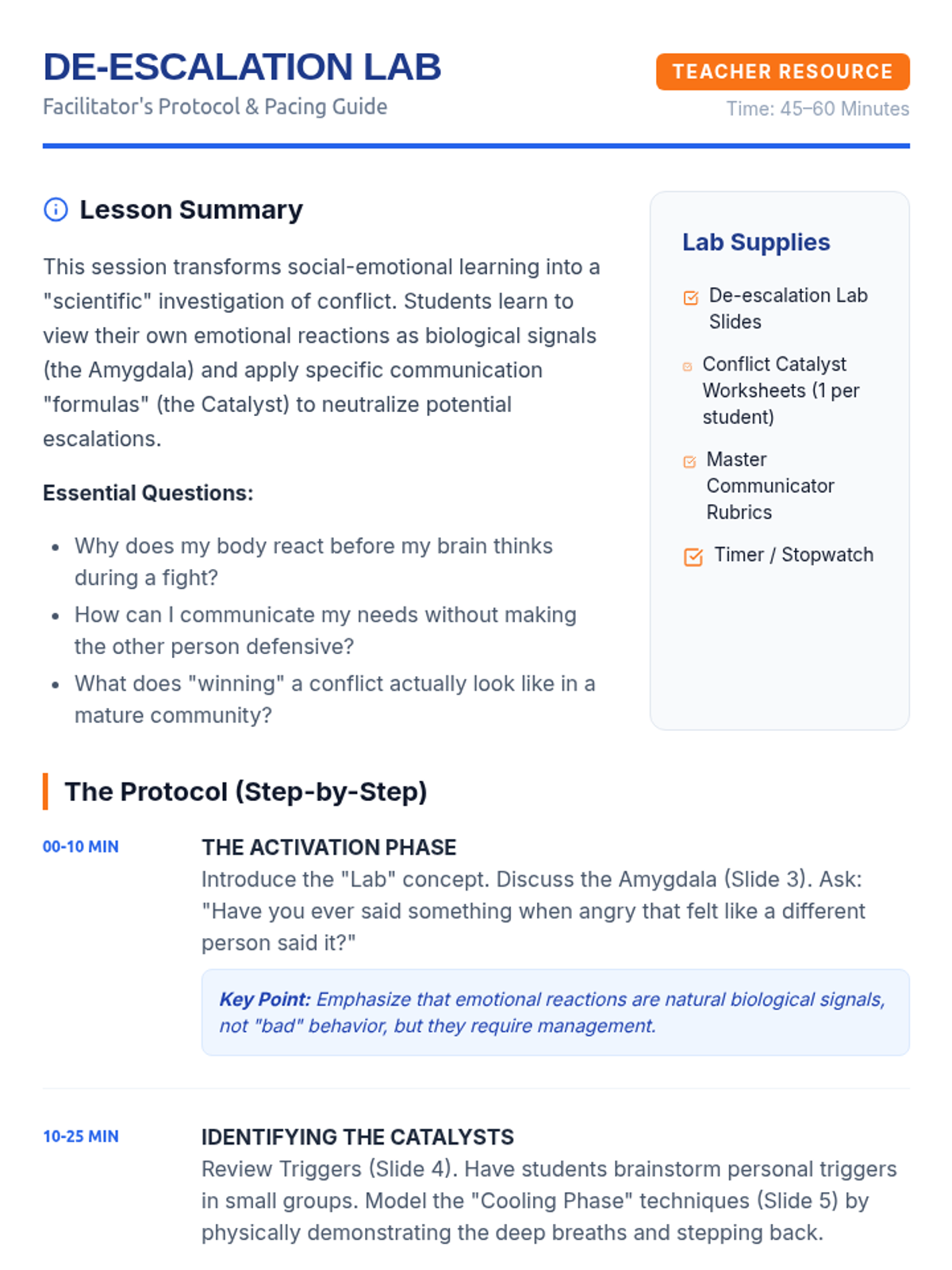
A comprehensive facilitator guide for the De-escalation Lab, featuring pacing instructions, essential questions, and differentiation strategies for managing the social-emotional session.