A 10-slide presentation designed for teachers, providing a beginner-friendly overview of Lenny Learning's assignment workflows, study tools, and dashboard features.
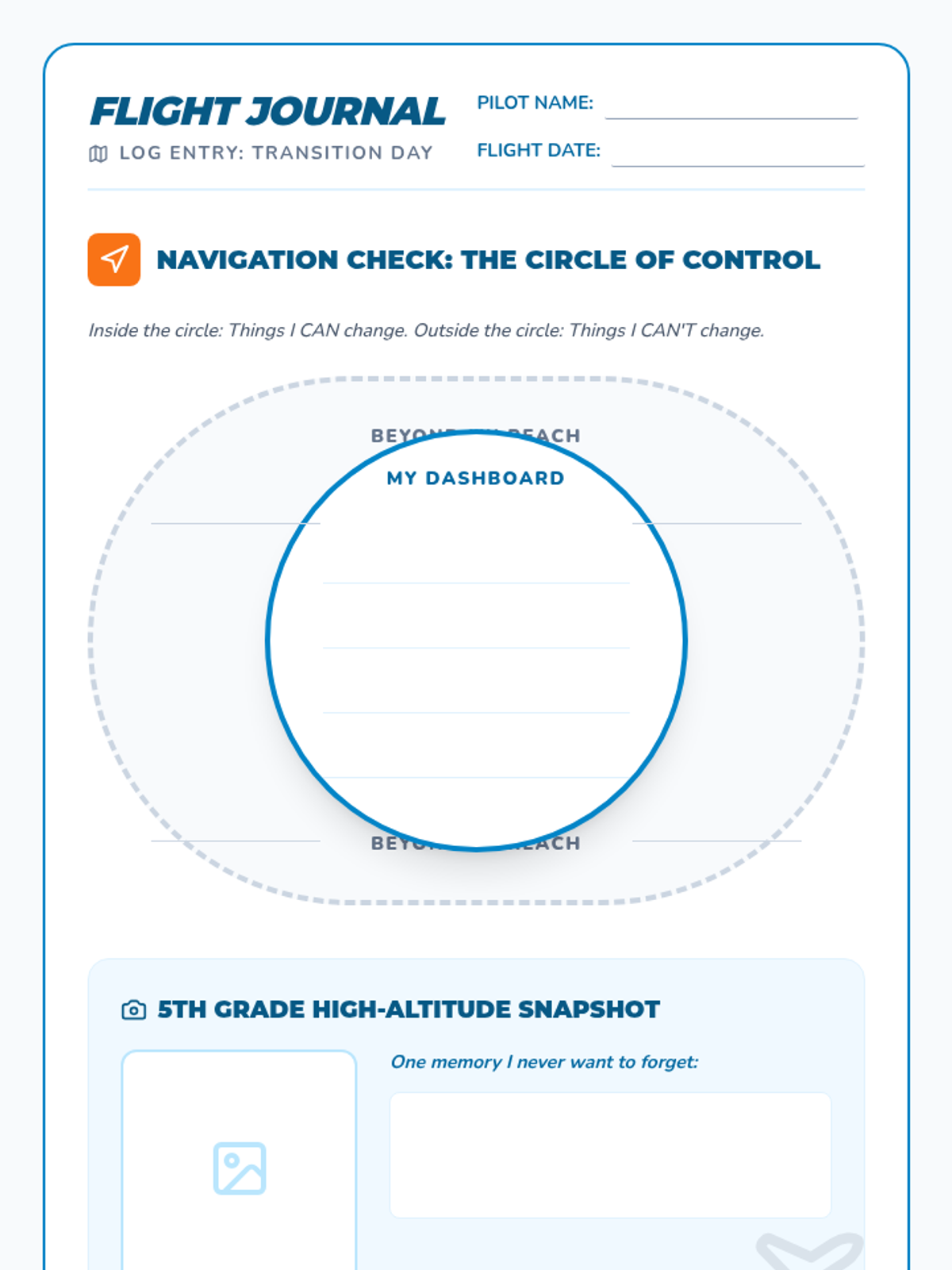
A two-page student activity booklet featuring a Circle of Control diagram, a 5th-grade memory page, a goal-setting chart for middle school, and a reflective letter to their future self.
Visual slide deck for the Flight Path lesson, introducing Locus of Control, the Circle of Control concept, and transition reflection.
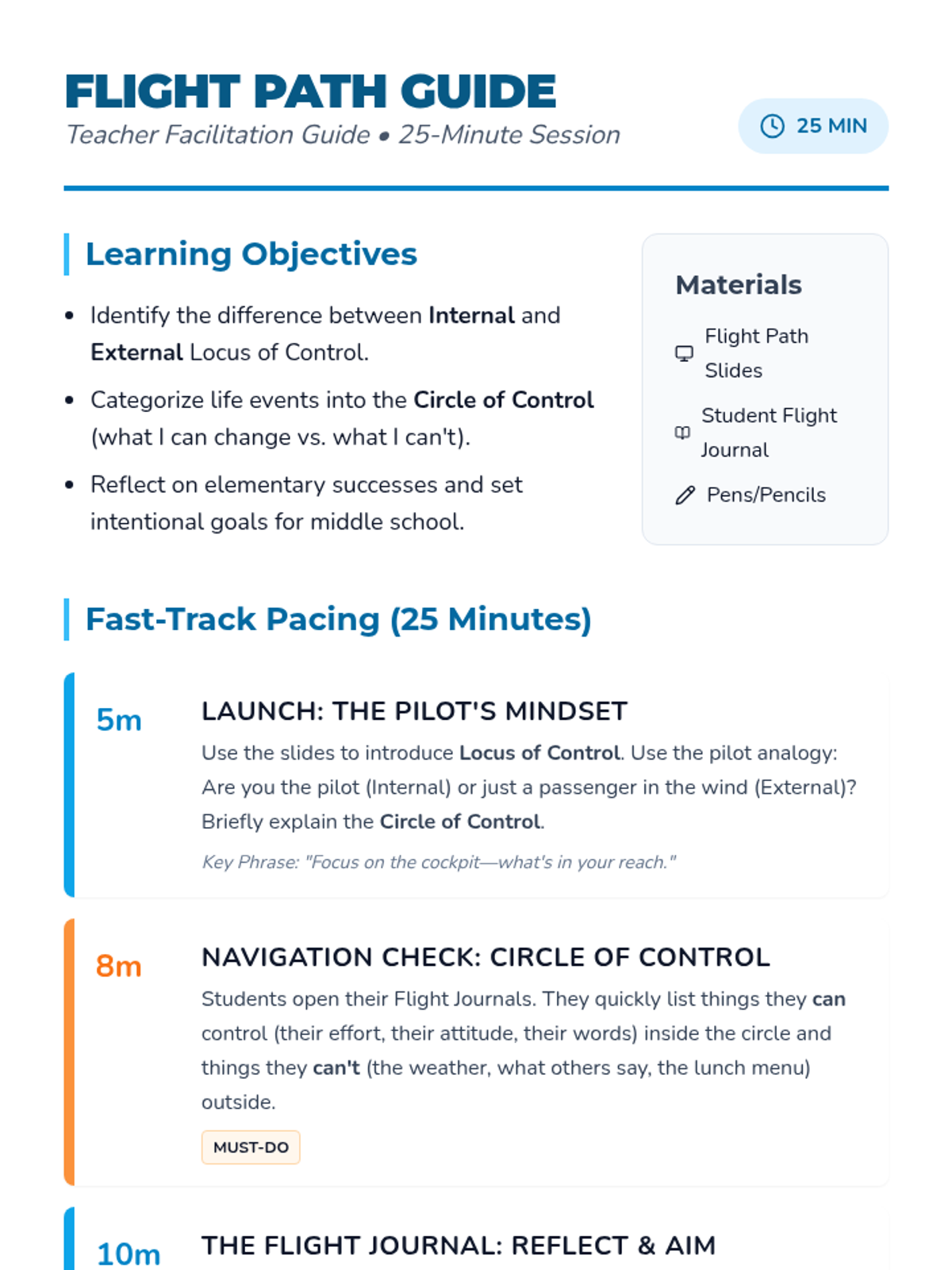
A concise teacher's guide for a 25-minute lesson on Locus of Control and transition reflection, featuring a high-speed pacing guide and discussion prompts.
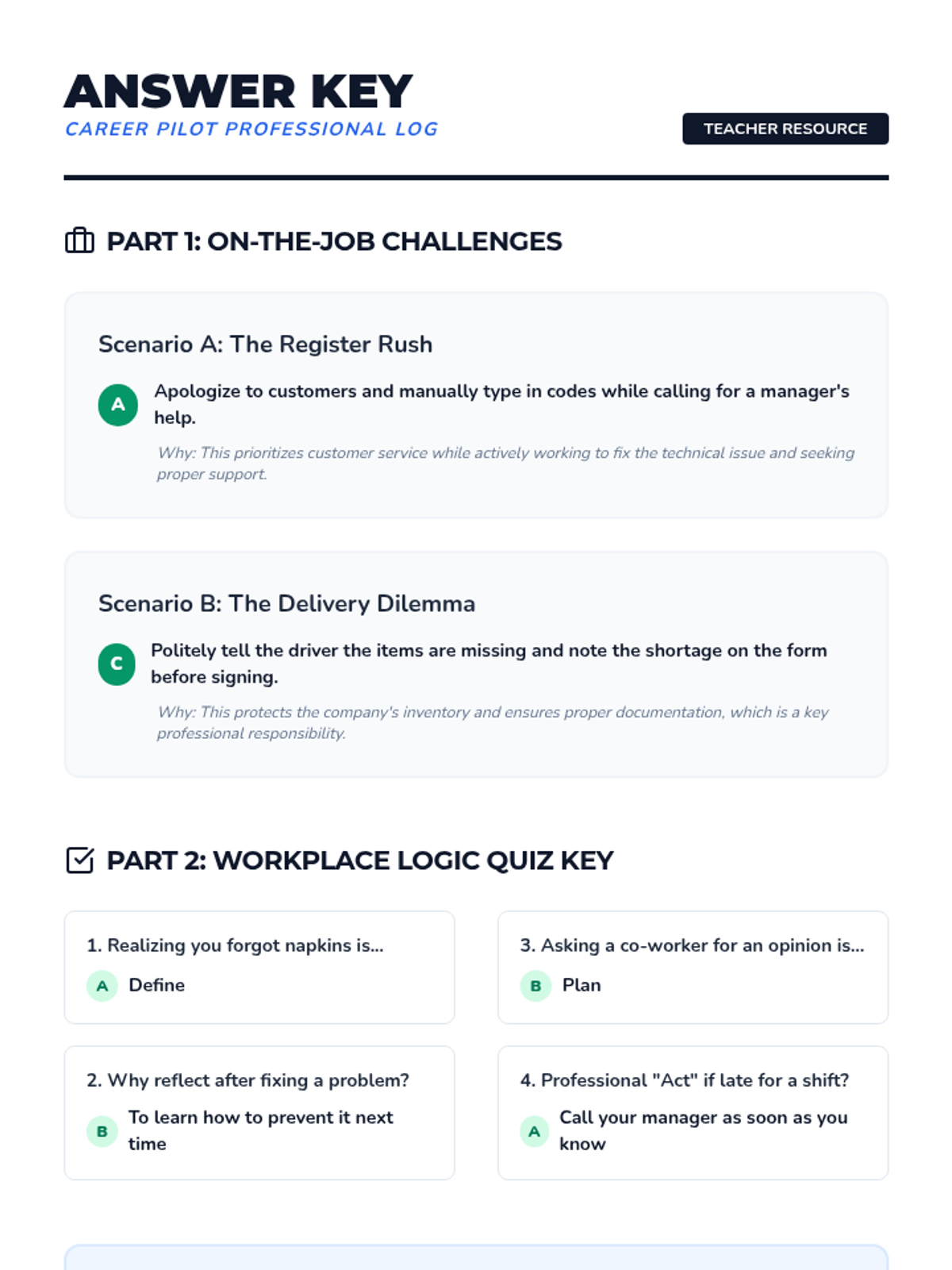
The updated answer key for entry-level workplace scenarios, providing correct multiple-choice selections and brief rationales.
A career-focused slide deck for entry-level workers, teaching the 4-step problem-solving sequence with examples from service and logistics.
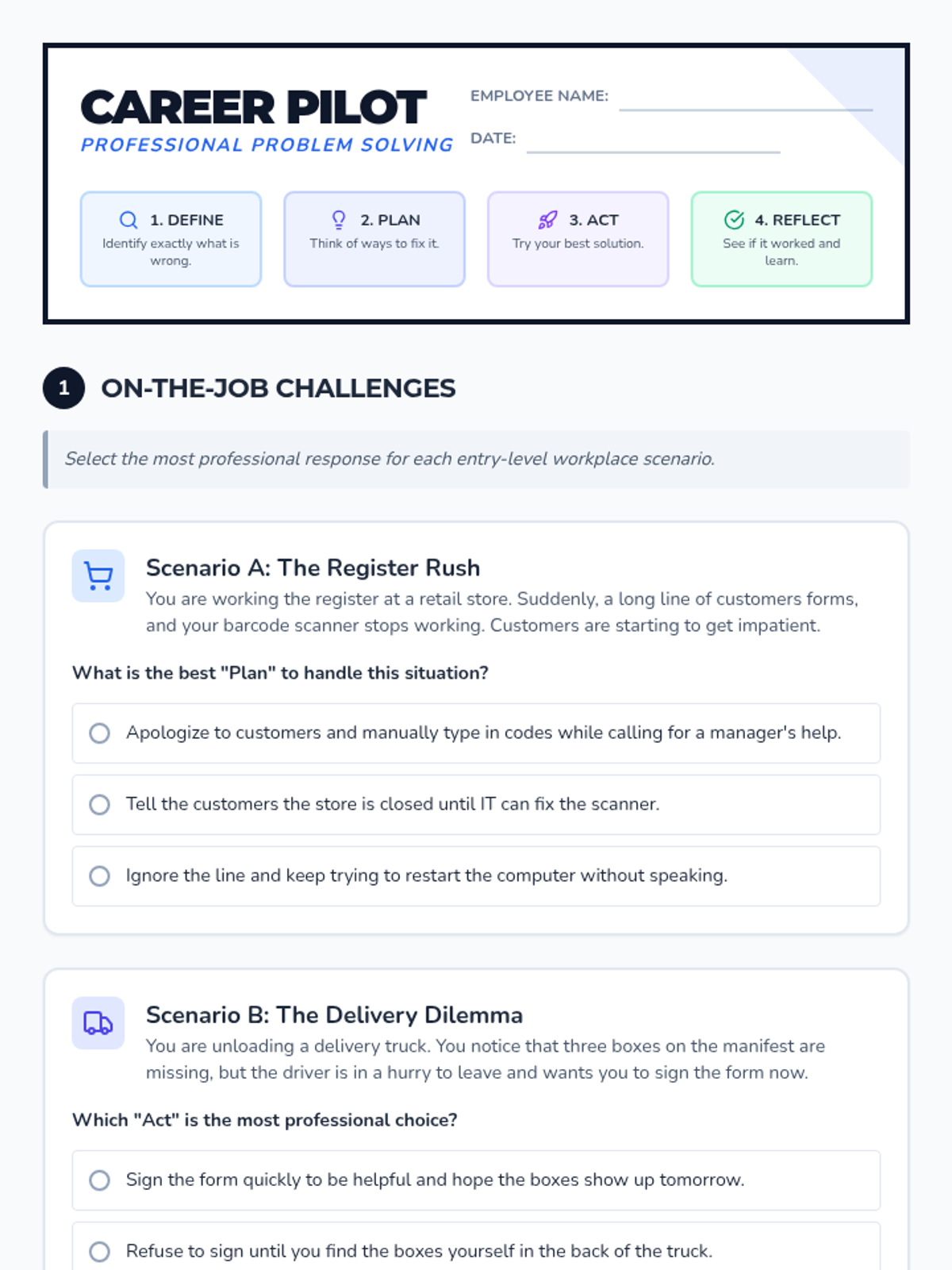
An entry-level workplace problem-solving worksheet with multiple-choice scenarios involving retail, delivery, and basic workplace etiquette.
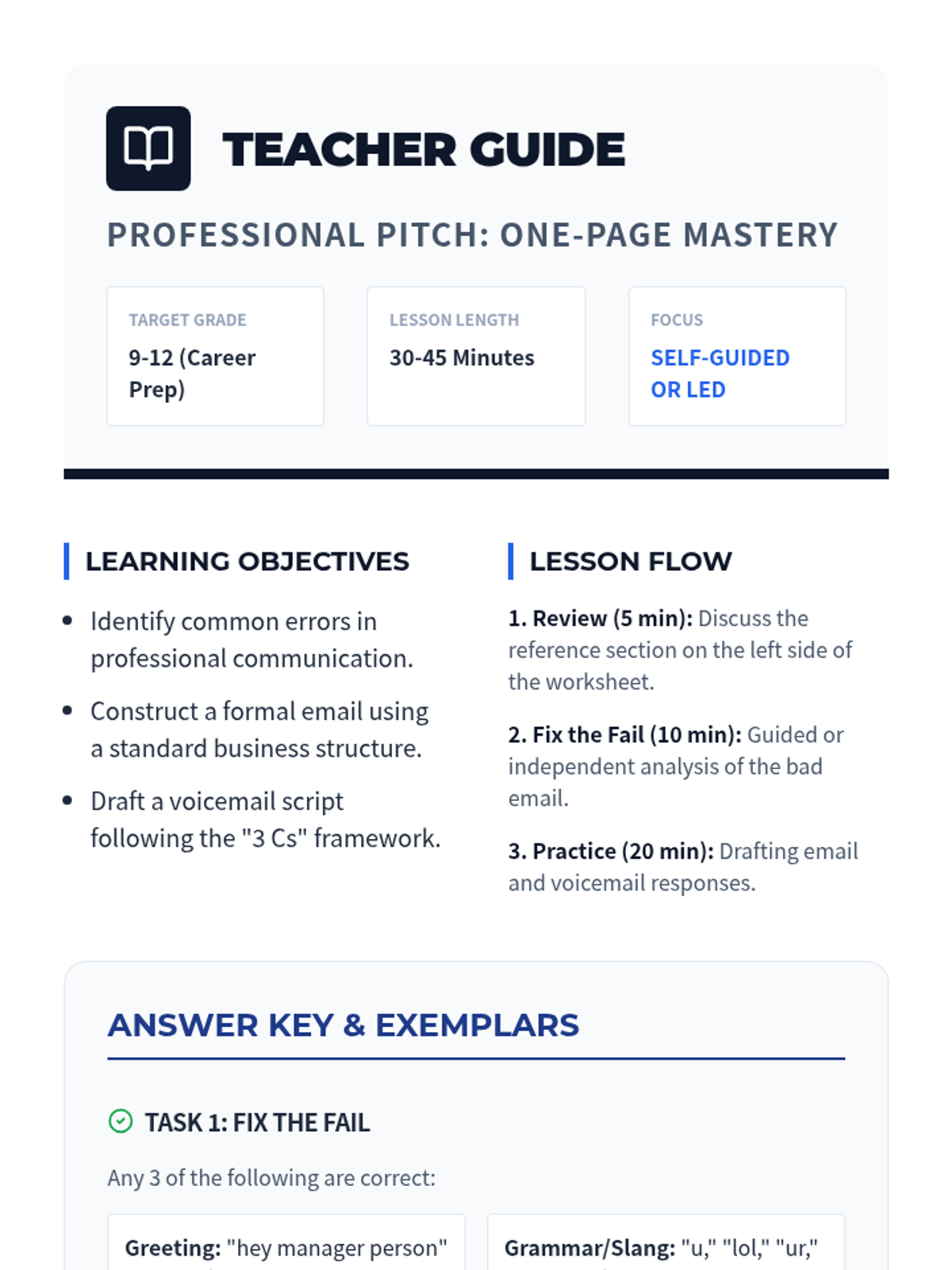
A condensed teacher guide for the one-page Professional Pitch lesson, including learning objectives, a streamlined facilitation plan, and answer keys.
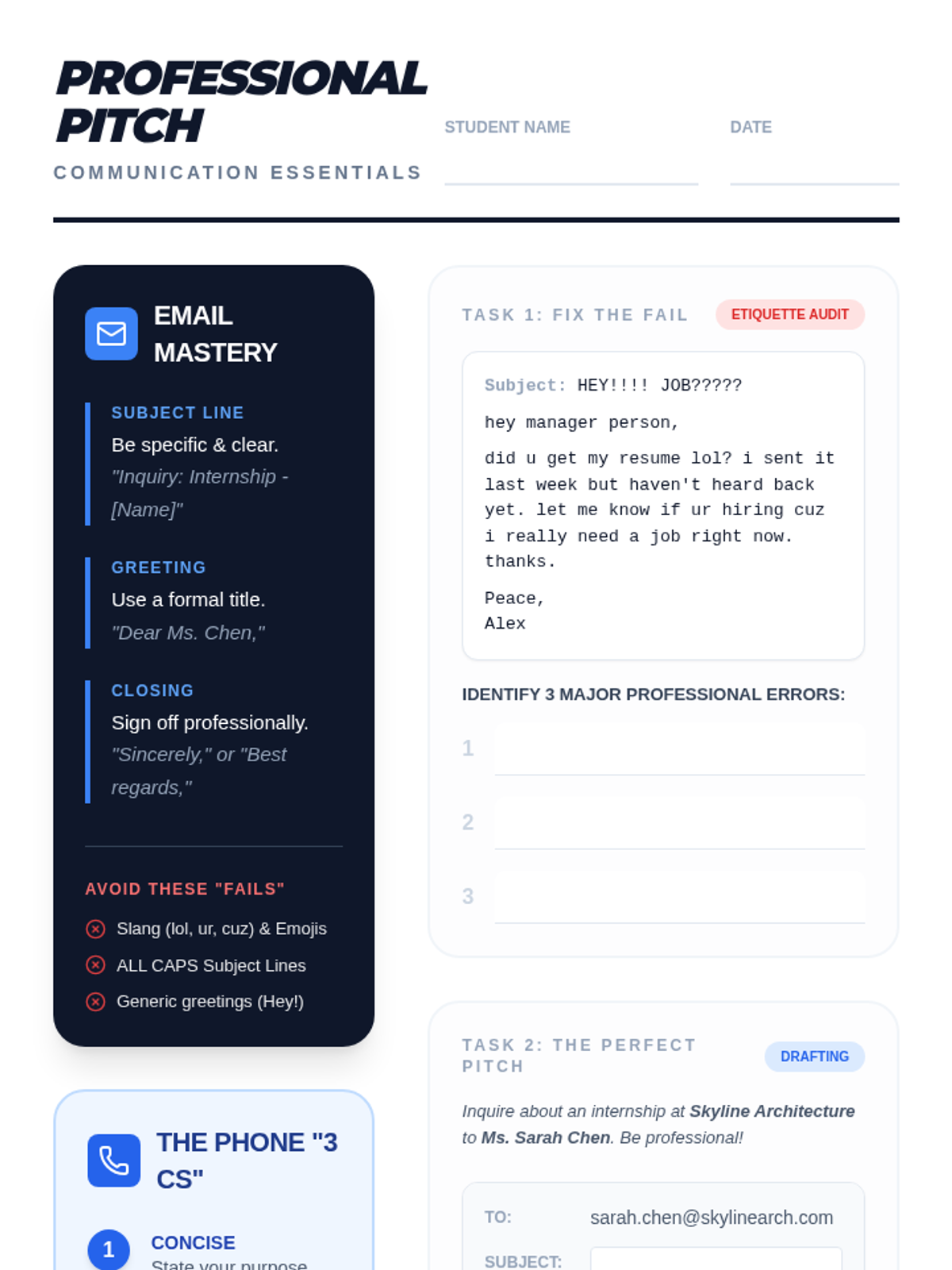
An updated one-page professional communication worksheet with improved spacing, font sizes for readability, and a cleaner layout. Combines instruction with three practice tasks.
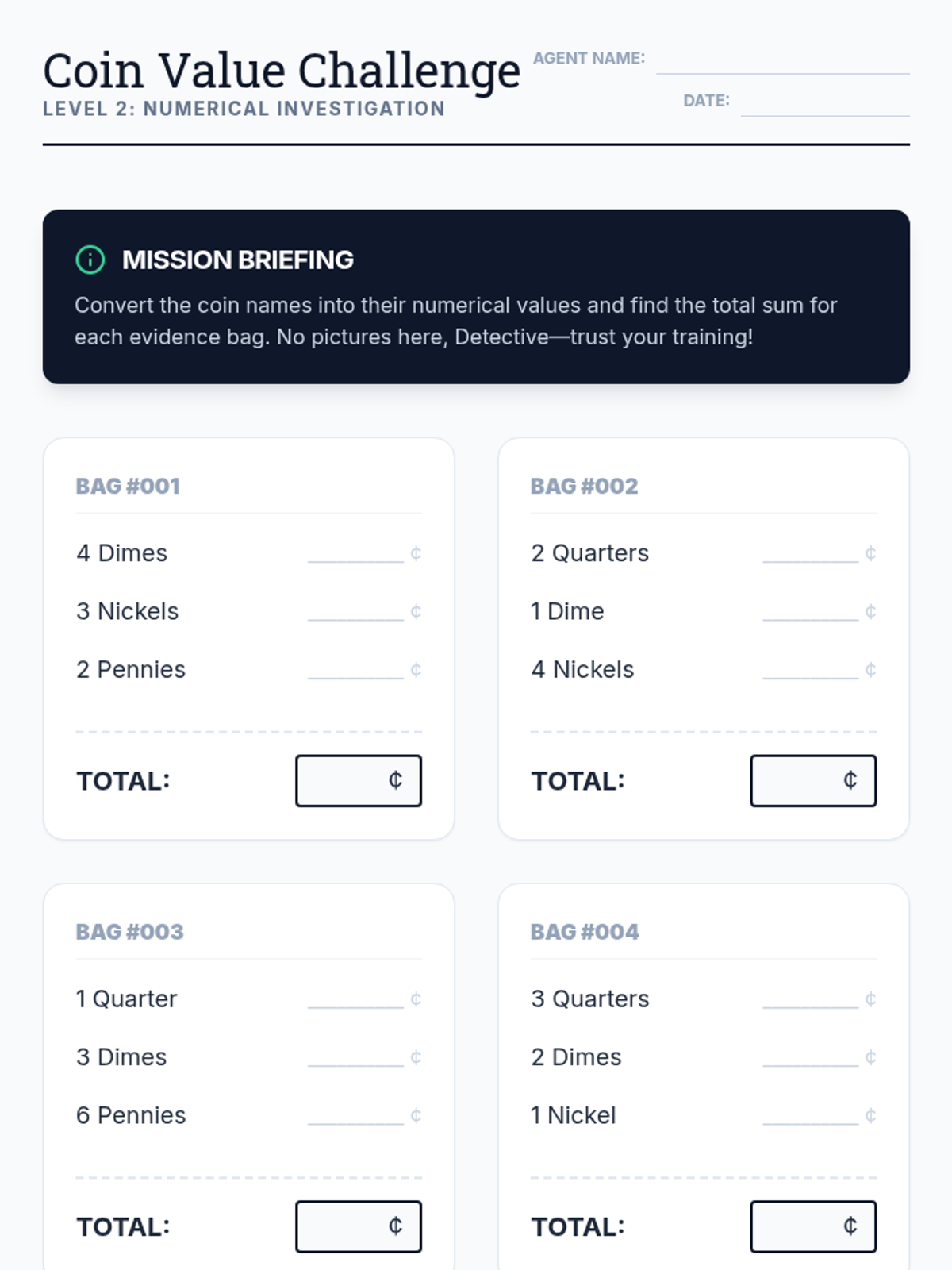
A coin value worksheet without visual supports. Students convert coin names and quantities (e.g., "4 Dimes") into numerical values and calculate the total for each "bag."
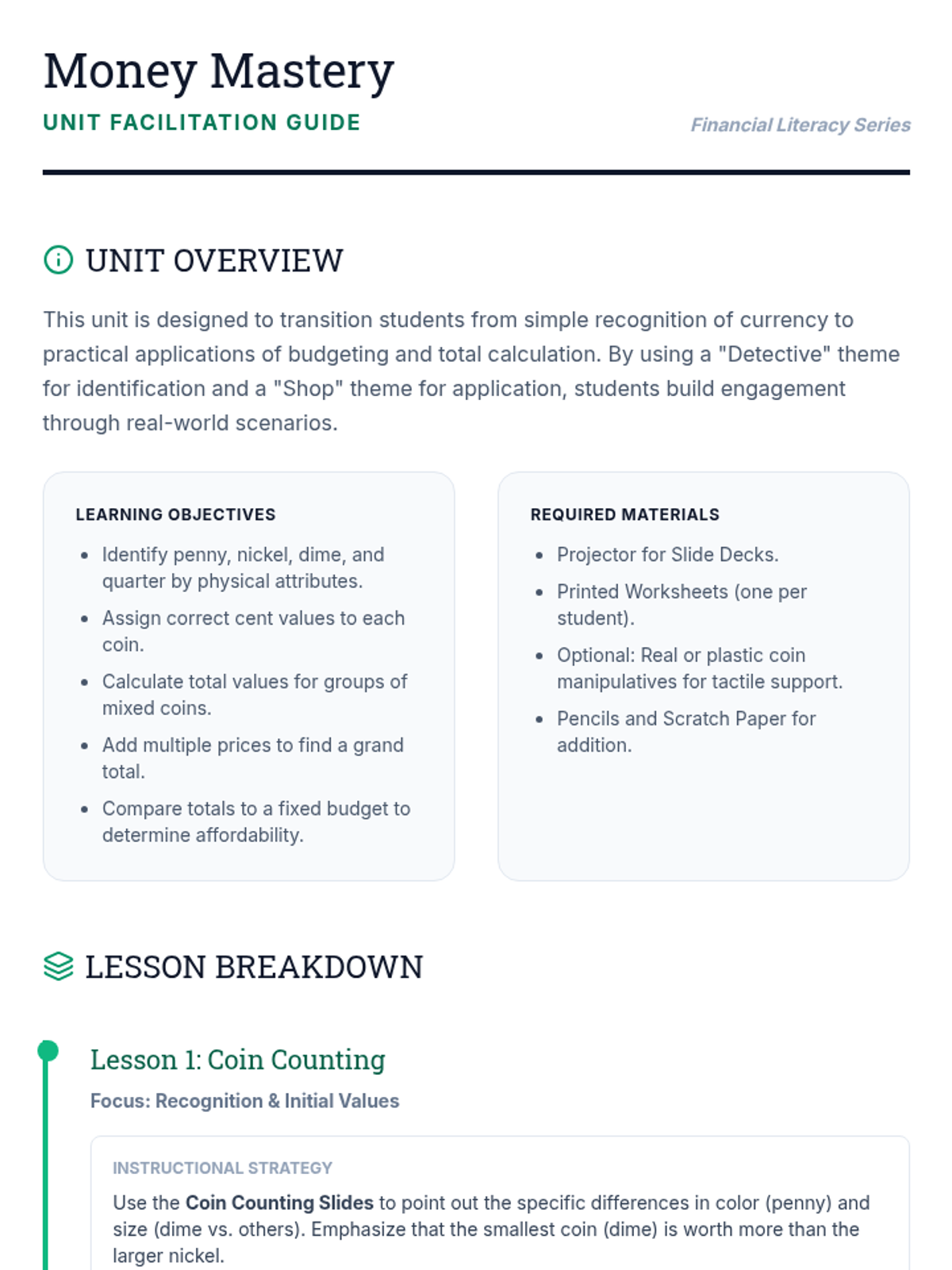
A comprehensive teacher's guide for the Money Mastery unit, including learning objectives, lesson breakdowns, and differentiation strategies for coin counting and budgeting.
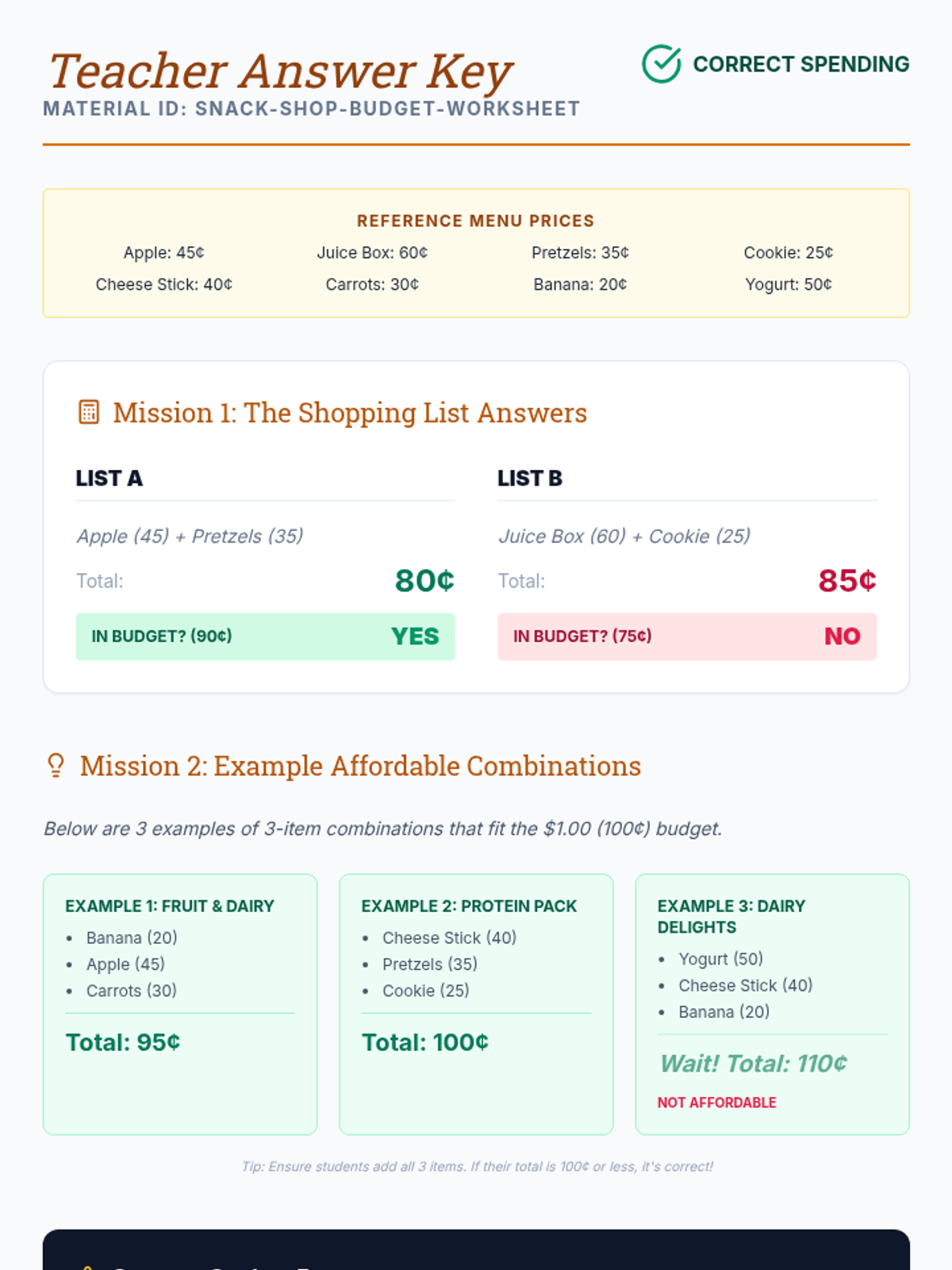
Teacher answer key for the Snack Shop Budget Worksheet, including sample affordable combinations and common student pitfalls.
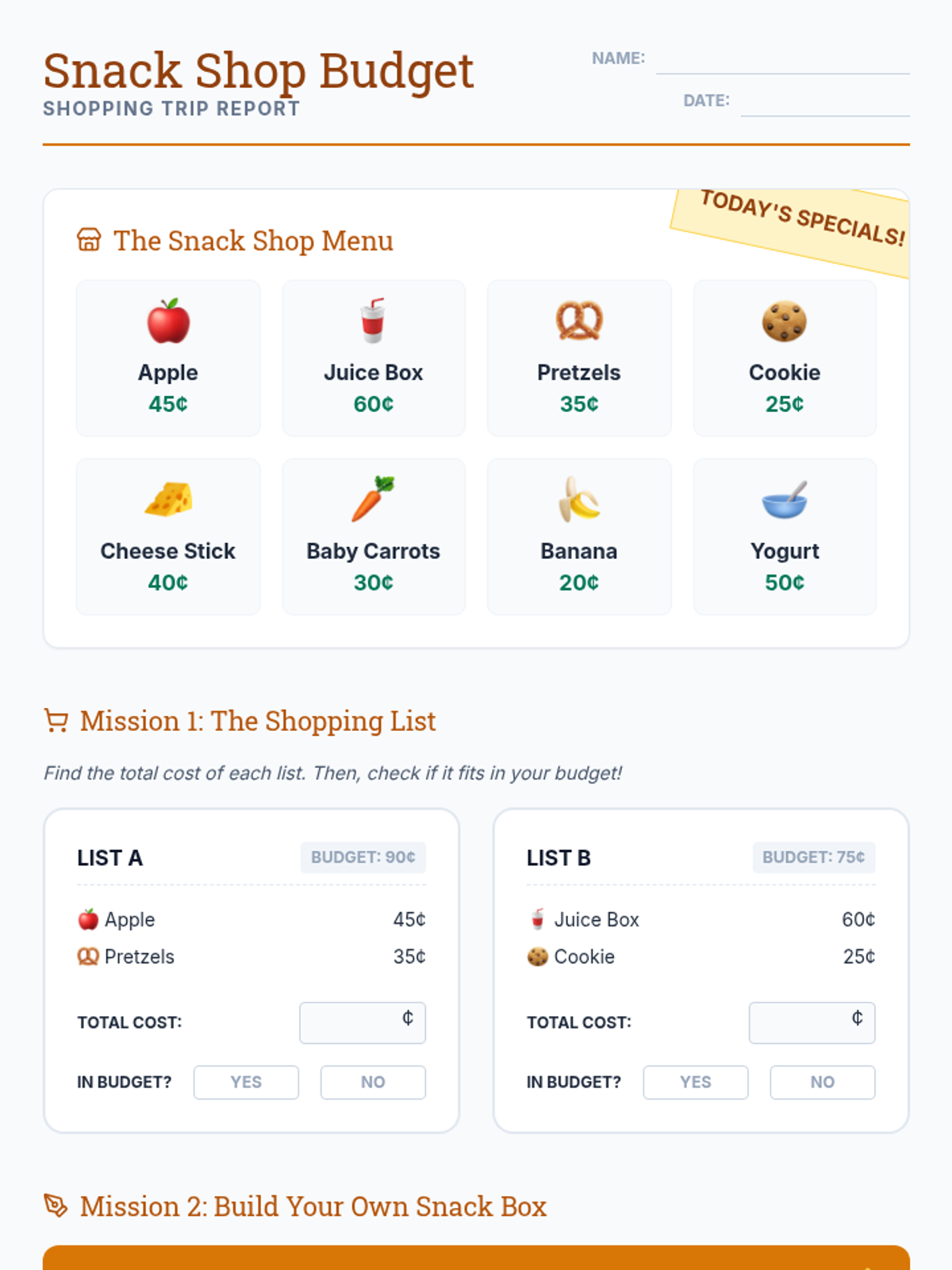
A student worksheet for identifying snack prices, calculating totals for pre-set lists, and making spending choices within a $1.00 budget.
Instructional slides for calculating total costs and making budgeting decisions, featuring "The Golden Rule of Spending" and clear comparison examples.
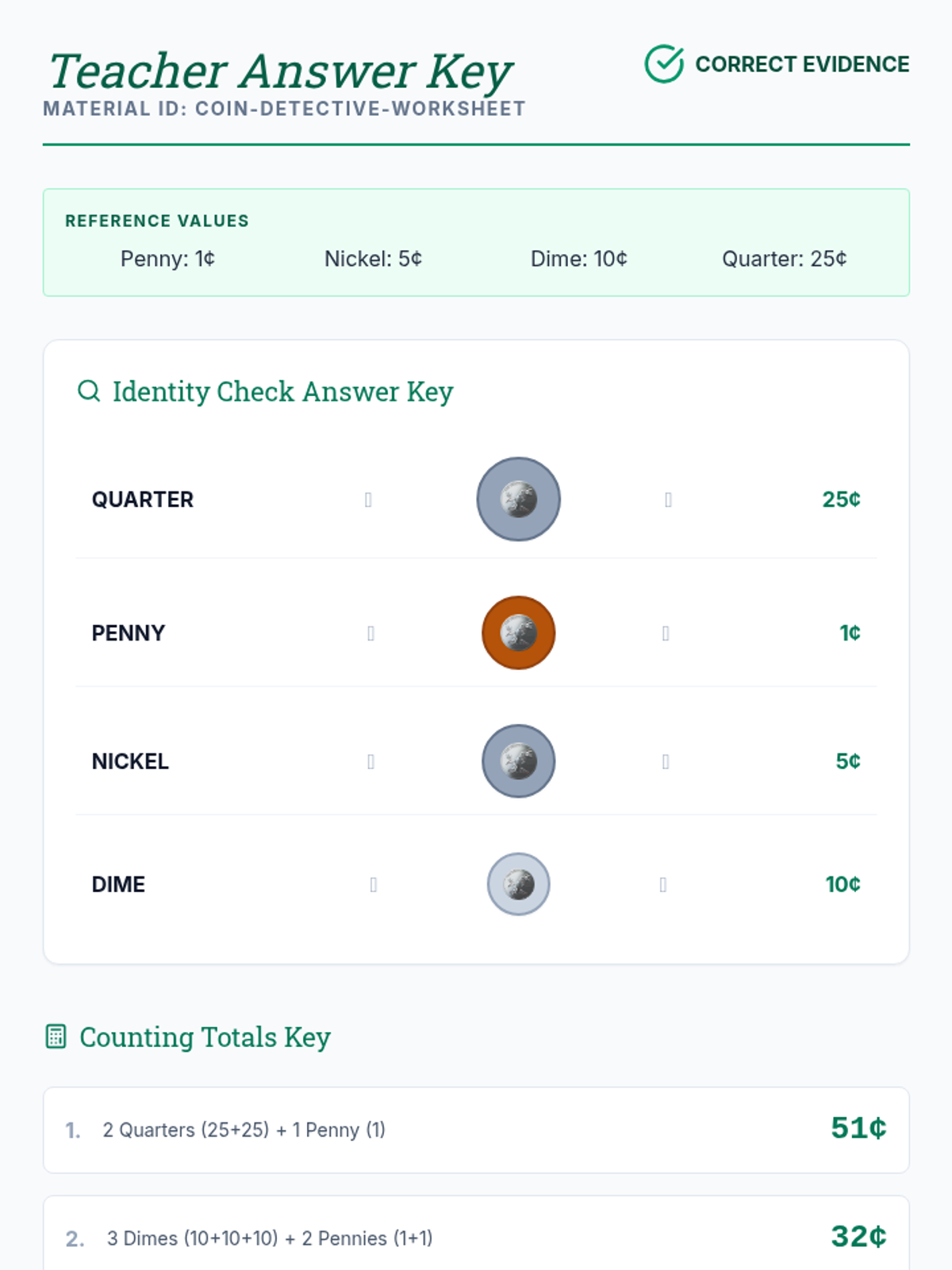
Teacher answer key for the Coin Detective Worksheet, including visual matching solutions and total value calculations.
A visual slide deck introducing the four main US coins (penny, nickel, dime, quarter) with their identification features and values. features a "Coin Detective" theme.
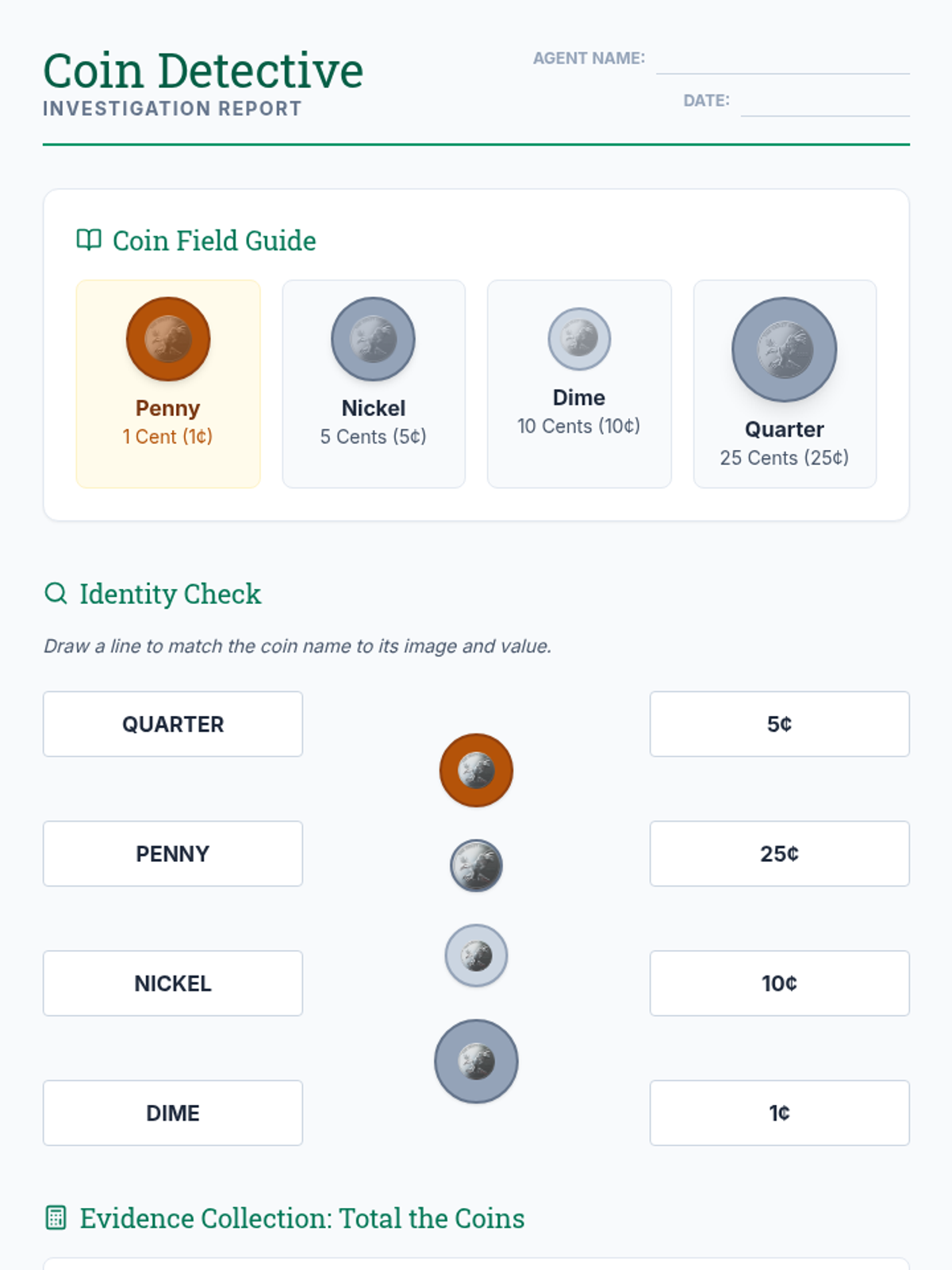
A coin identification and value worksheet using a "Coin Detective" theme. Includes a field guide, matching activity, and basic counting problems.
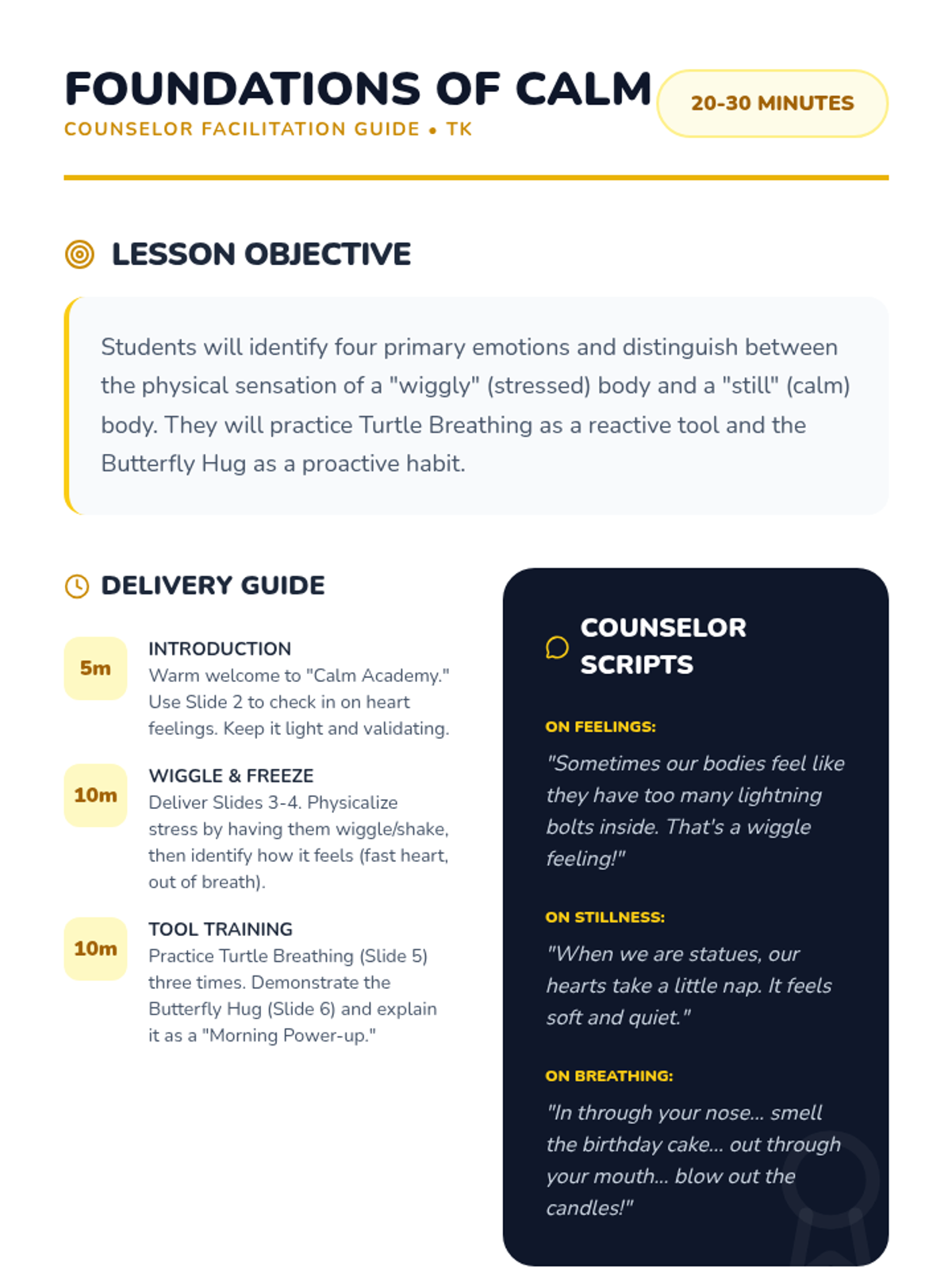
A comprehensive teacher/counselor guide for the TK 'Foundations of Calm' lesson. Includes pacing, scripts for delivery, and strategies for physicalizing the concepts of stress and calm.
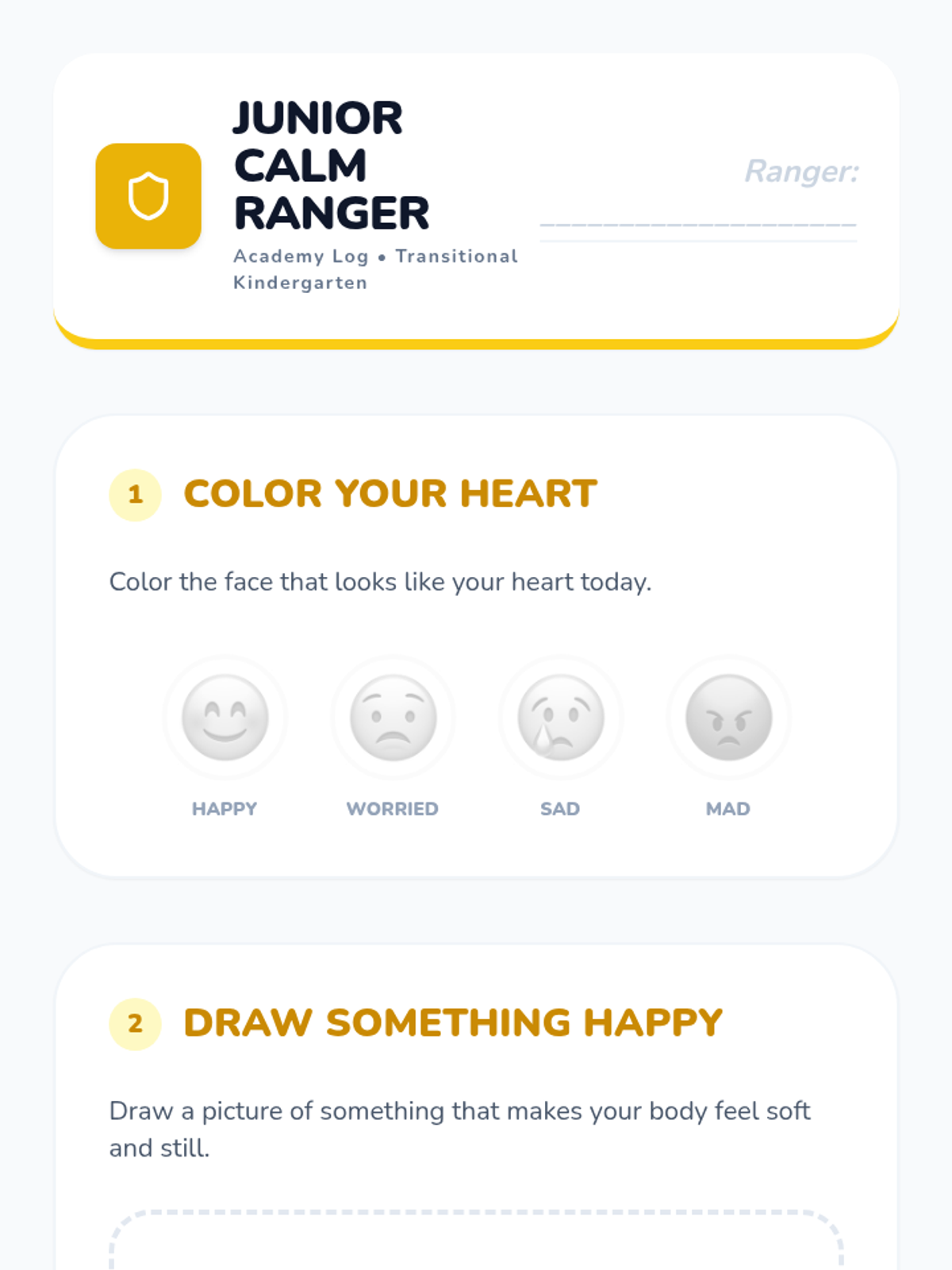
A foundational worksheet for TK students to identify emotions through coloring and express their calm place through drawing. Features a visual reminder of 'Turtle Breathing'.
A foundational 7-slide presentation for TK students focusing on the difference between 'wiggly' (stressed) and 'still' (calm) bodies. Introduces Turtle Breathing and the Butterfly Hug as essential tools.
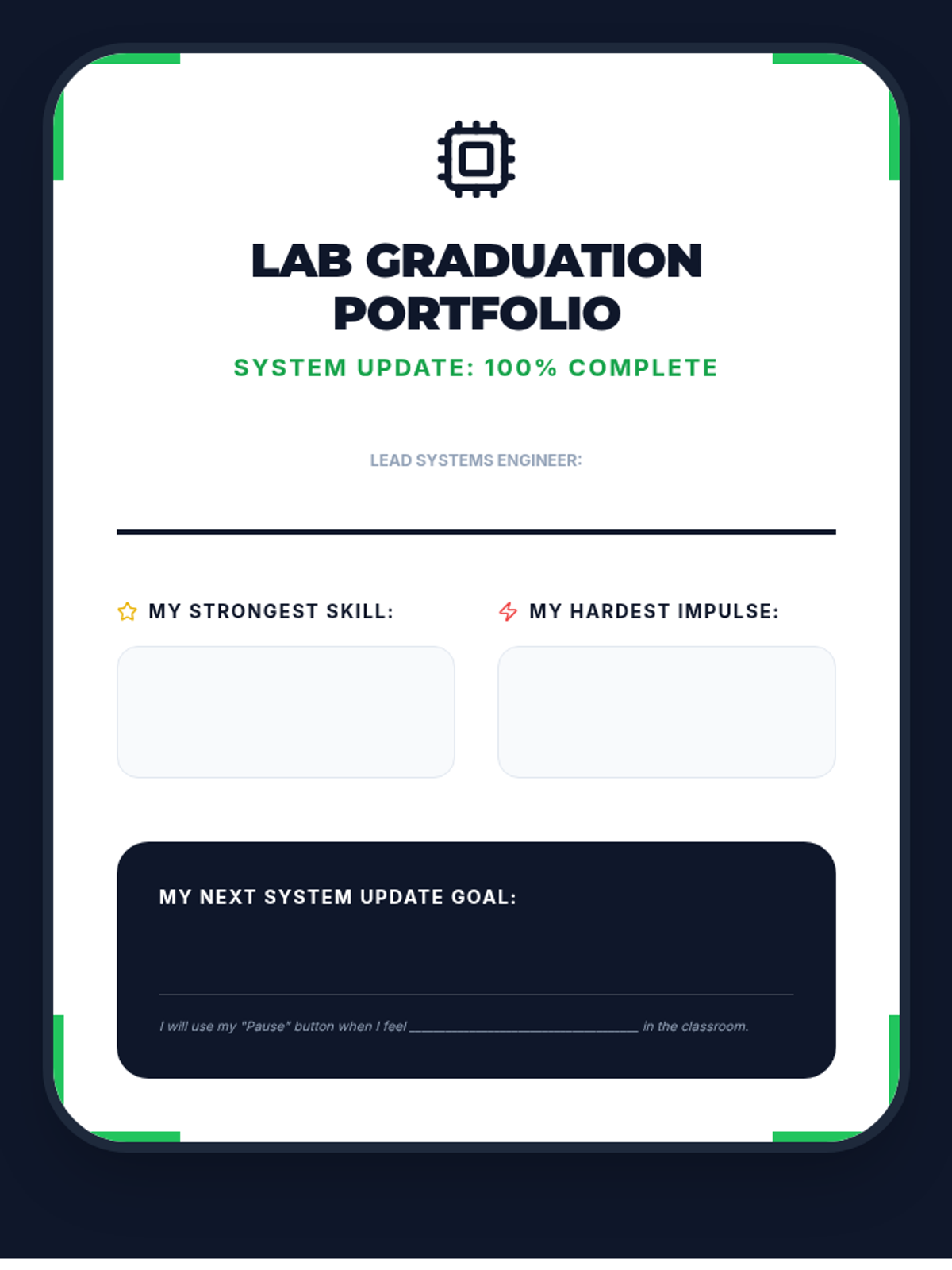
A graduation portfolio and reflection sheet for the final week of the Remote Control Lab. Students identify their strengths, challenges, and set a future goal for applying their self-control skills.
Week 6 slides for "System Update". Reviews all four major strategies (Pause, Rewind, Volume, Forward) and celebrates the students' progress in the Remote Control Lab.
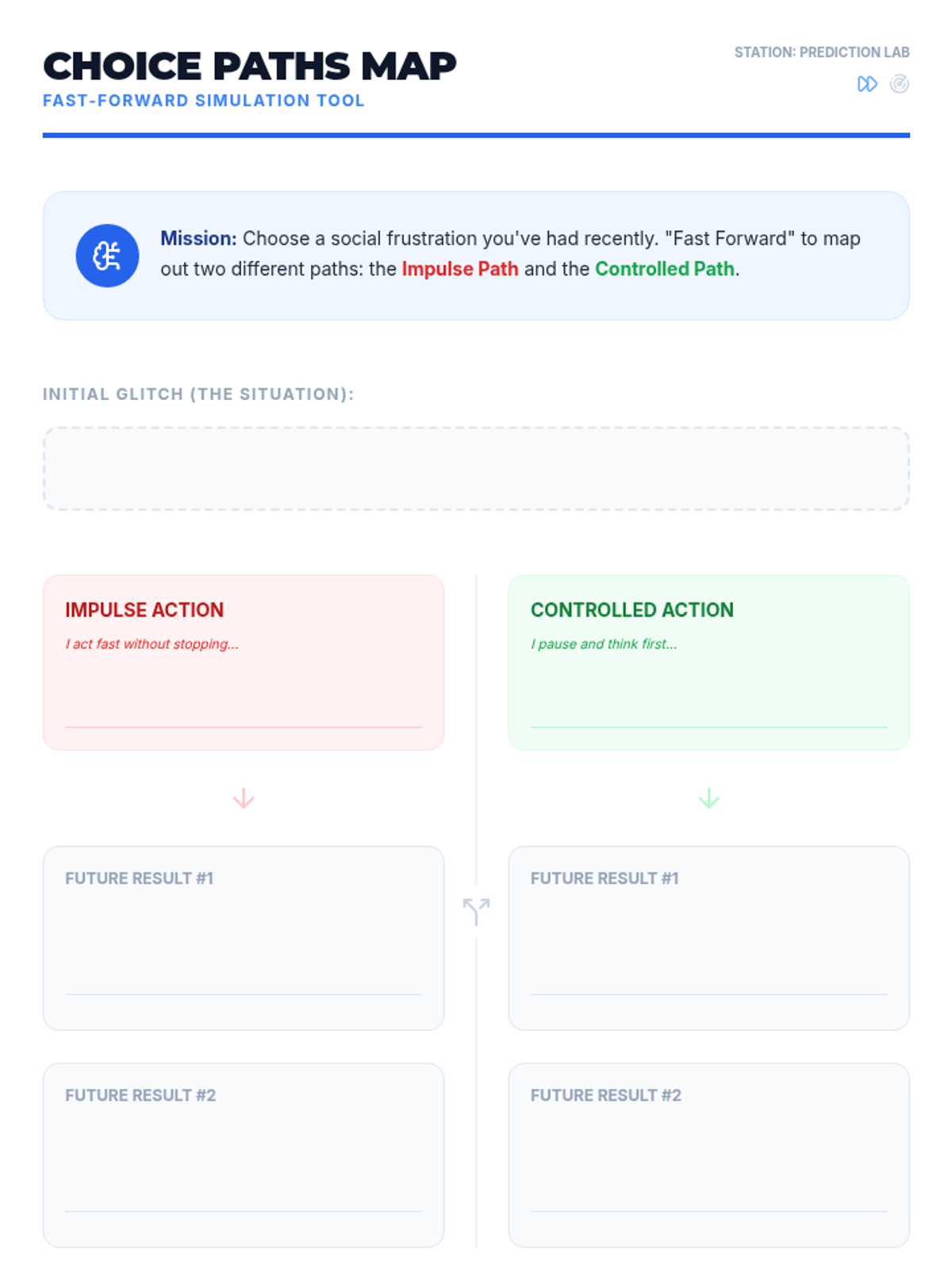
A "Choice Paths Map" worksheet for Lesson 5. Students practice "Fast Forward" thinking by mapping out the potential consequences of an impulsive action versus a controlled action for a specific scenario.
Week 5 slides for "Future Vision". Teaches students the "Fast Forward" technique to predict consequences and visualize the different outcomes of their choices.
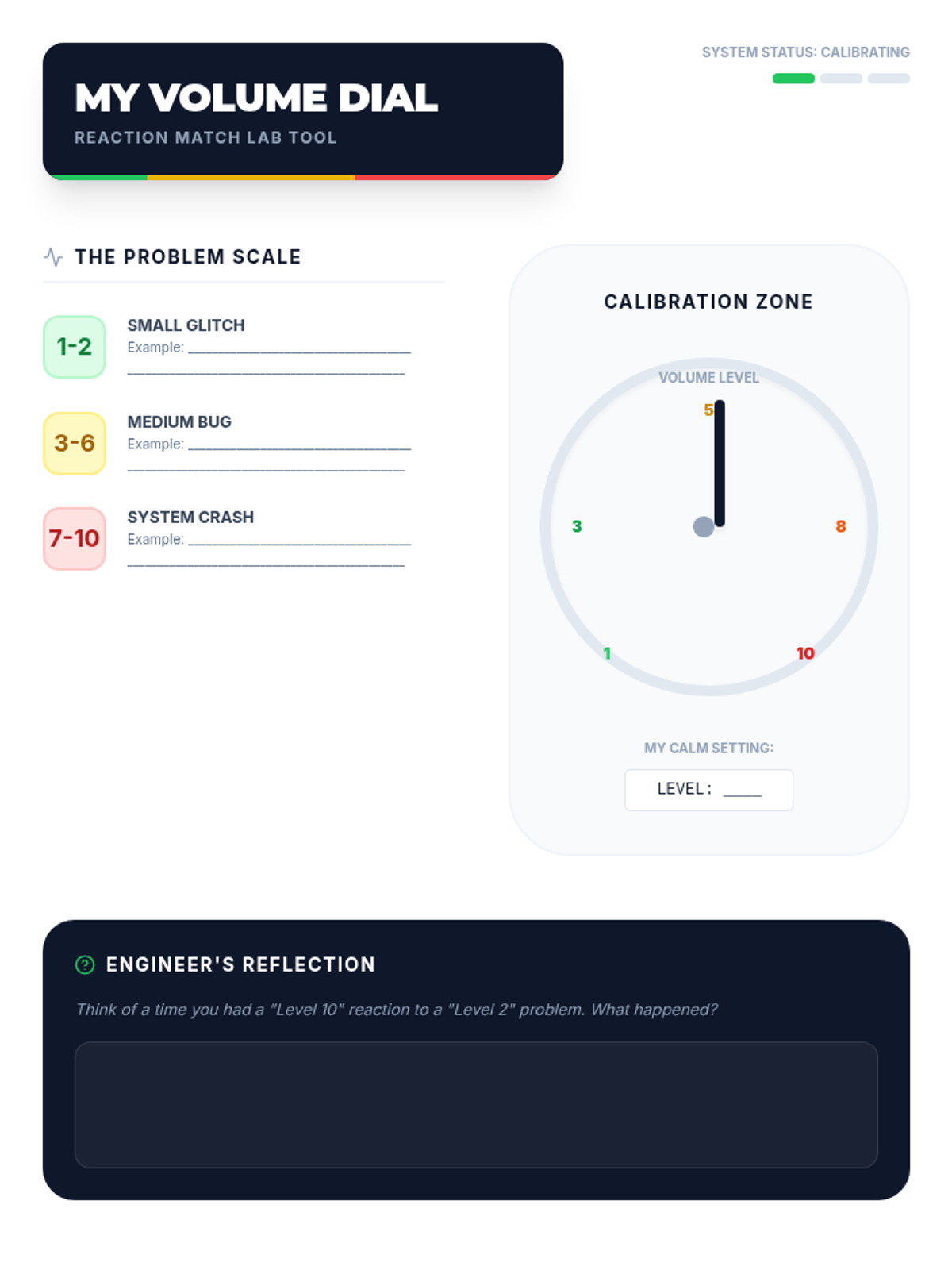
A "My Volume Dial" worksheet for Lesson 4. Students identify examples of small, medium, and big problems and use a dial graphic to reflect on matching their reaction intensity.
Week 4 slides for "Setting Levels". Introduces the "Volume Dial" metaphor for emotional regulation, teaching students to match the intensity of their reactions to the size of the problem.
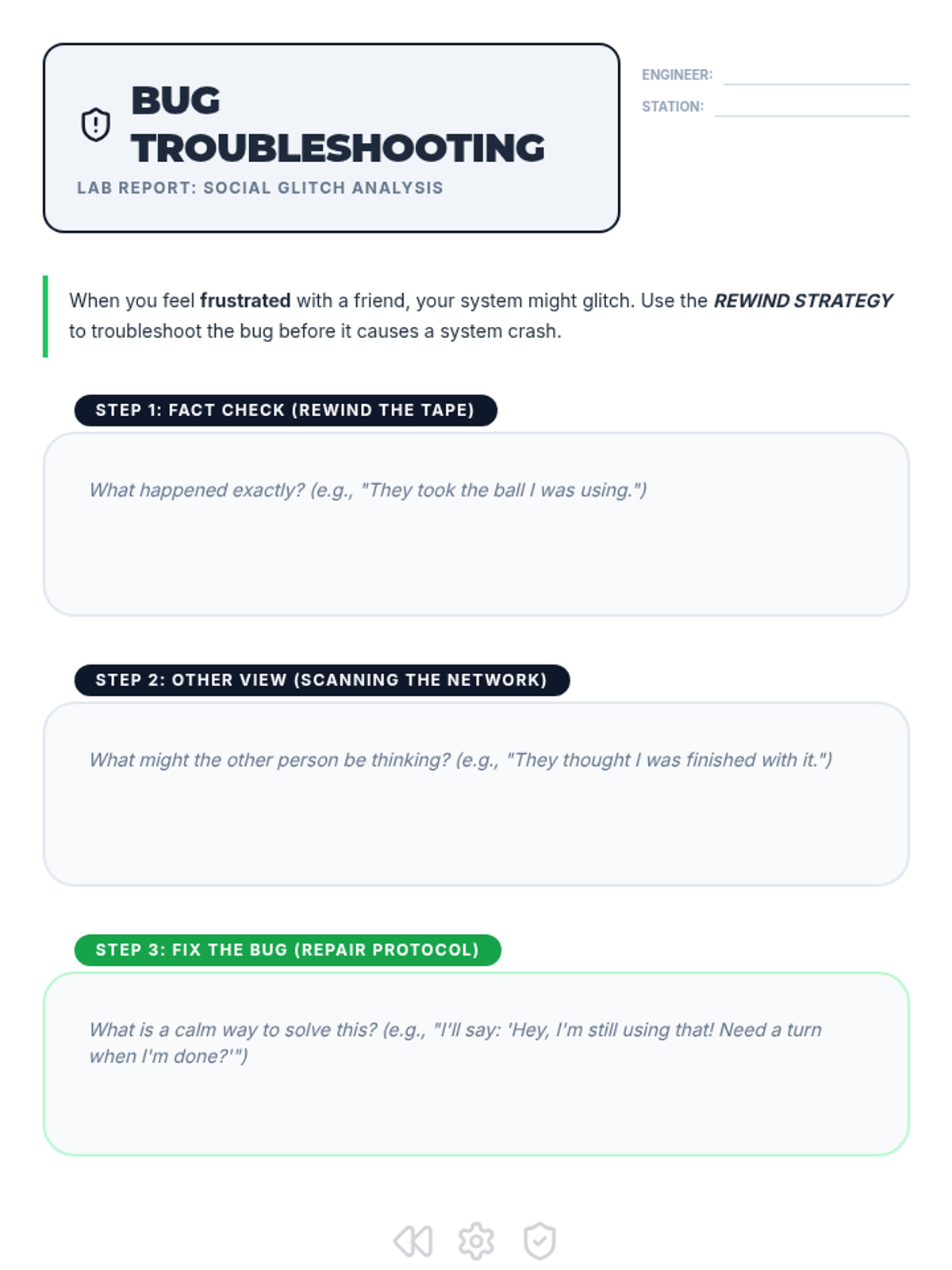
A "Bug Troubleshooting" graphic organizer for Lesson 3. Students use a 3-step rewind process to analyze a real or hypothetical social frustration and brainstorm calm solutions.
Week 3 slides focusing on "Social Glitches" and the "Rewind" strategy. Helps students analyze social frustrations and practice perspective-taking before reacting.
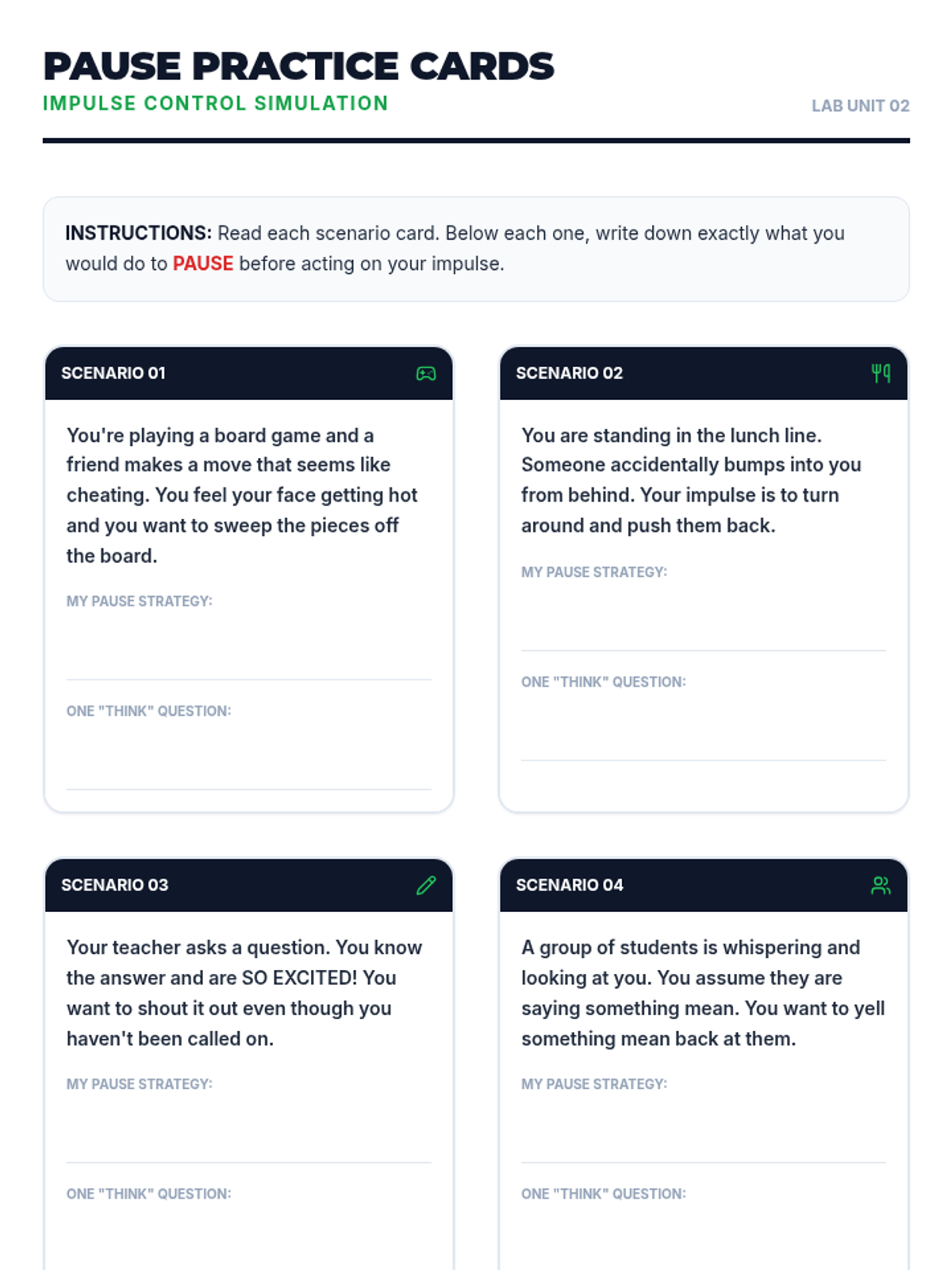
A student worksheet with four scenario cards for practicing the "Pause" button. Each scenario requires the student to identify a specific physical pause strategy and a thoughtful question to ask themselves.
Week 2 slides focusing on the "Pause" button. Teaches students the 5-second gap technique and physical stopping strategies to manage immediate impulses.
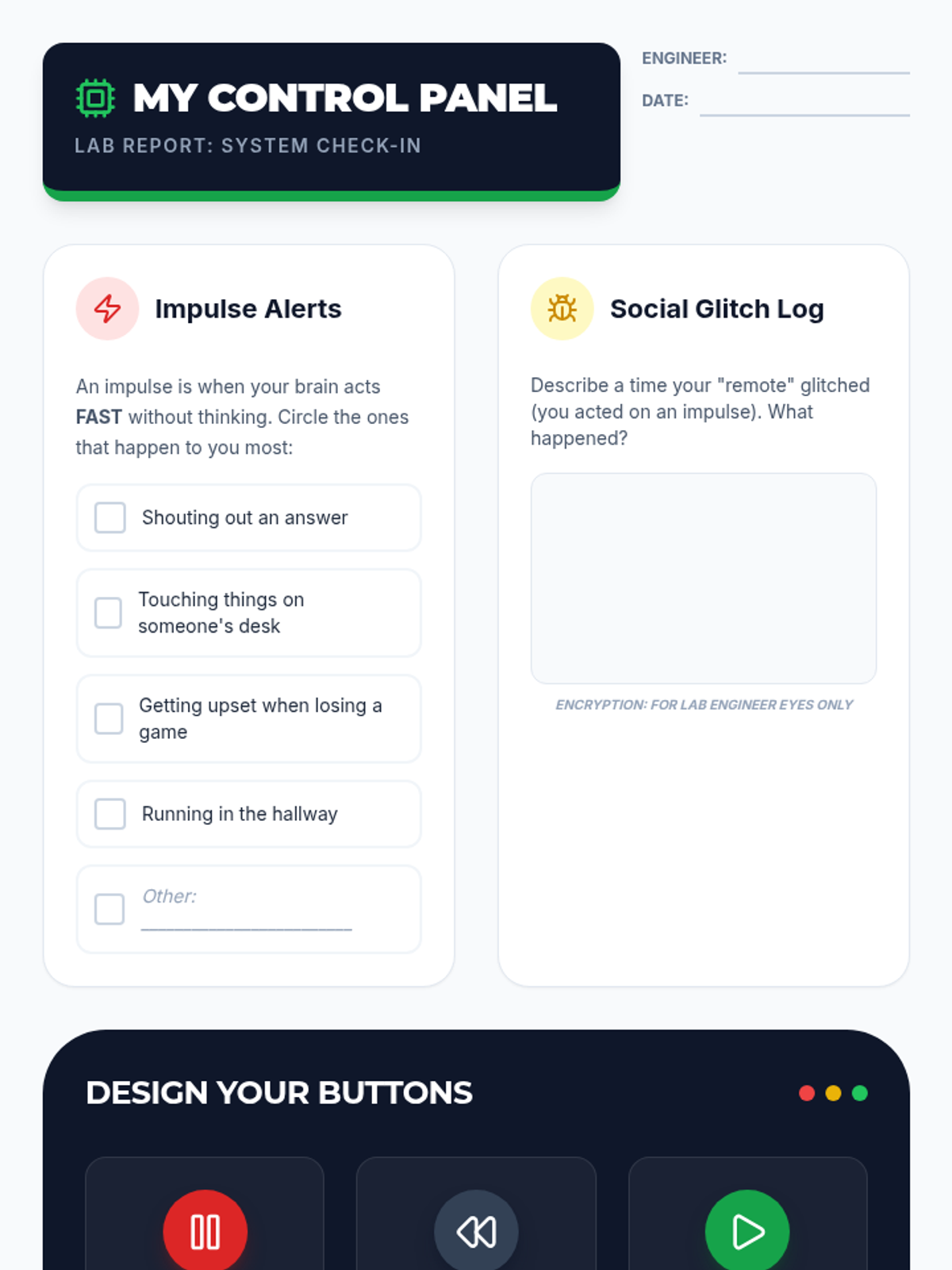
A student-facing activity sheet for Week 1 of the Remote Control Lab. Helps students identify their personal impulses and social "glitches" while introducing the metaphor of the control panel buttons.
Week 1 introductory slide deck for the Remote Control Lab. Introduces the metaphor of self-control as an internal remote control and explains the concept of impulses and social "glitches" to 4th-grade students.
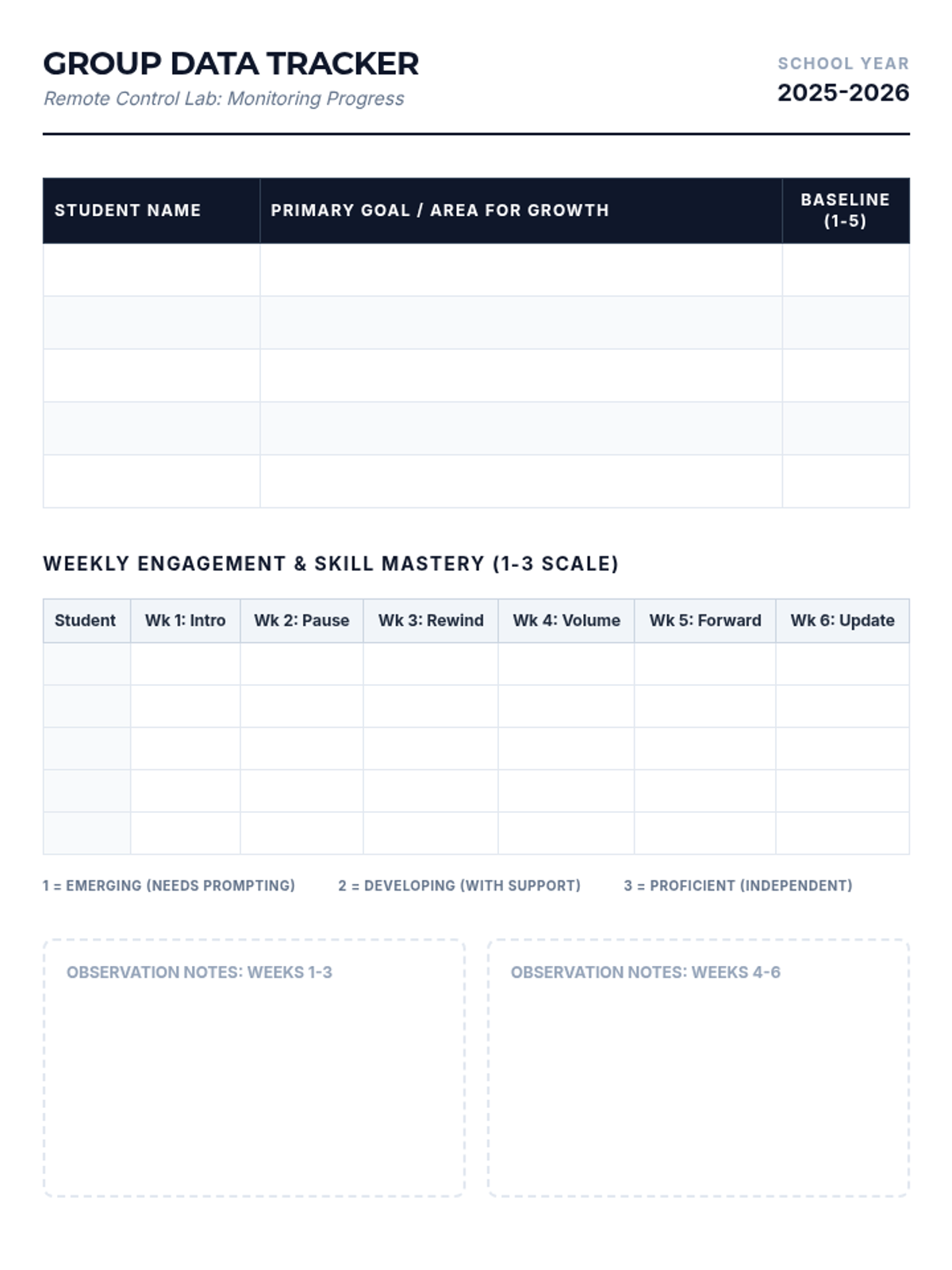
A data tracking tool for facilitators to monitor student progress in self-control skills over the 6-week program. Includes sections for baseline assessment, weekly skill mastery, and observation notes.
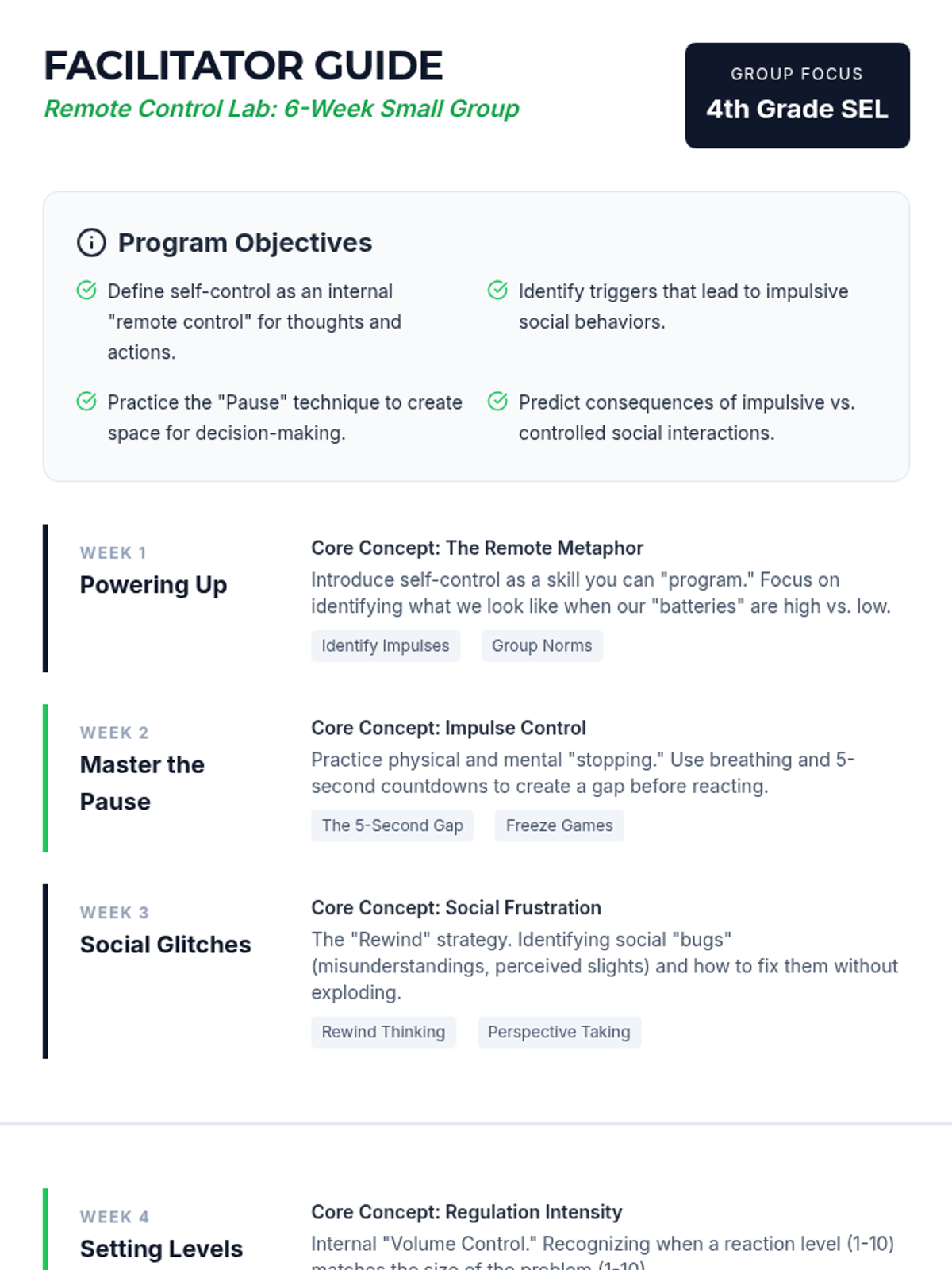
A comprehensive facilitator guide for the 6-week Remote Control Lab small group. It provides weekly core concepts, objectives, and facilitation tips for 4th-grade social-emotional learning.
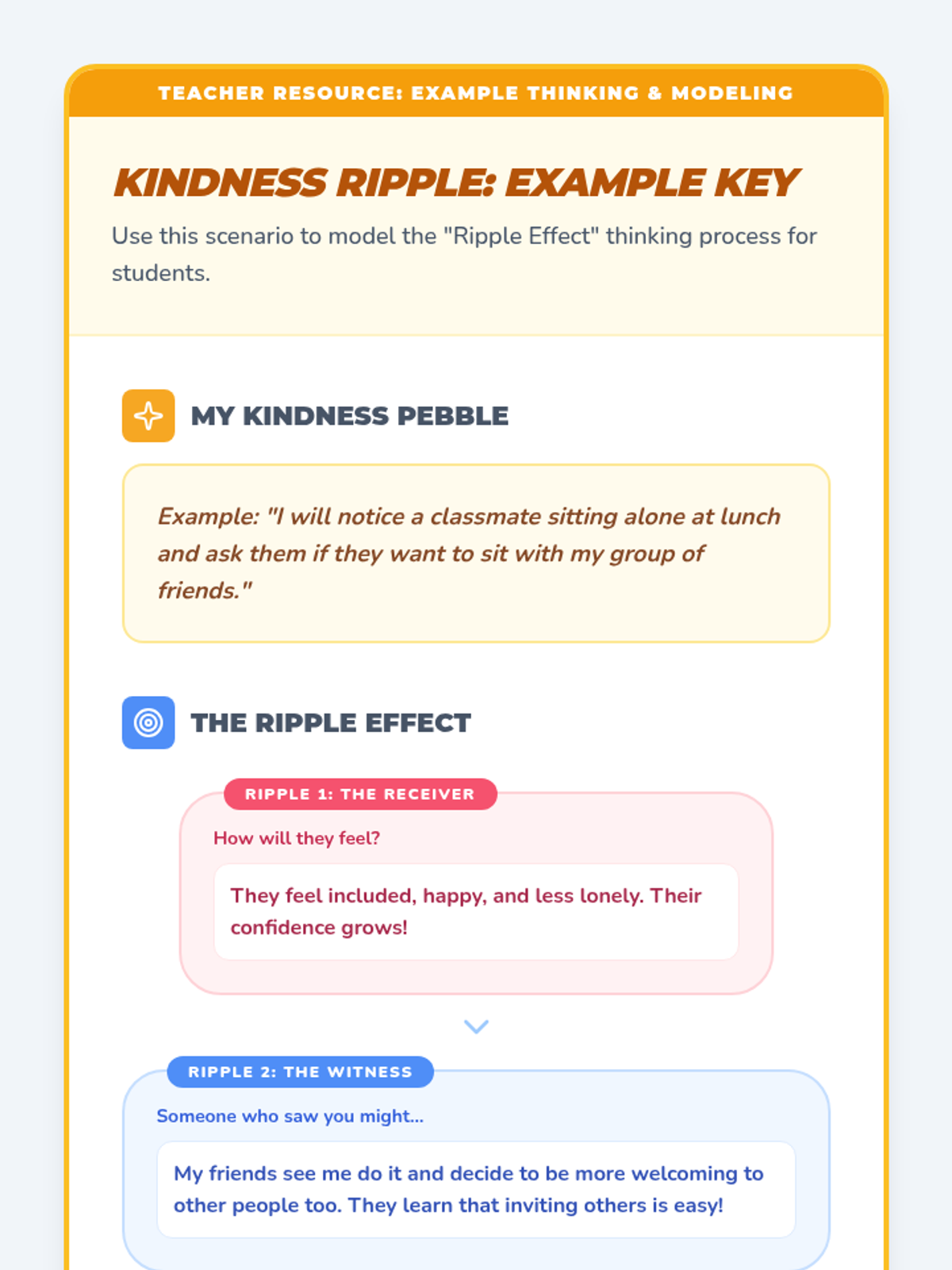
An example-filled version of the Kindness Ripple worksheet for teachers to use as a modeling tool during the lesson.
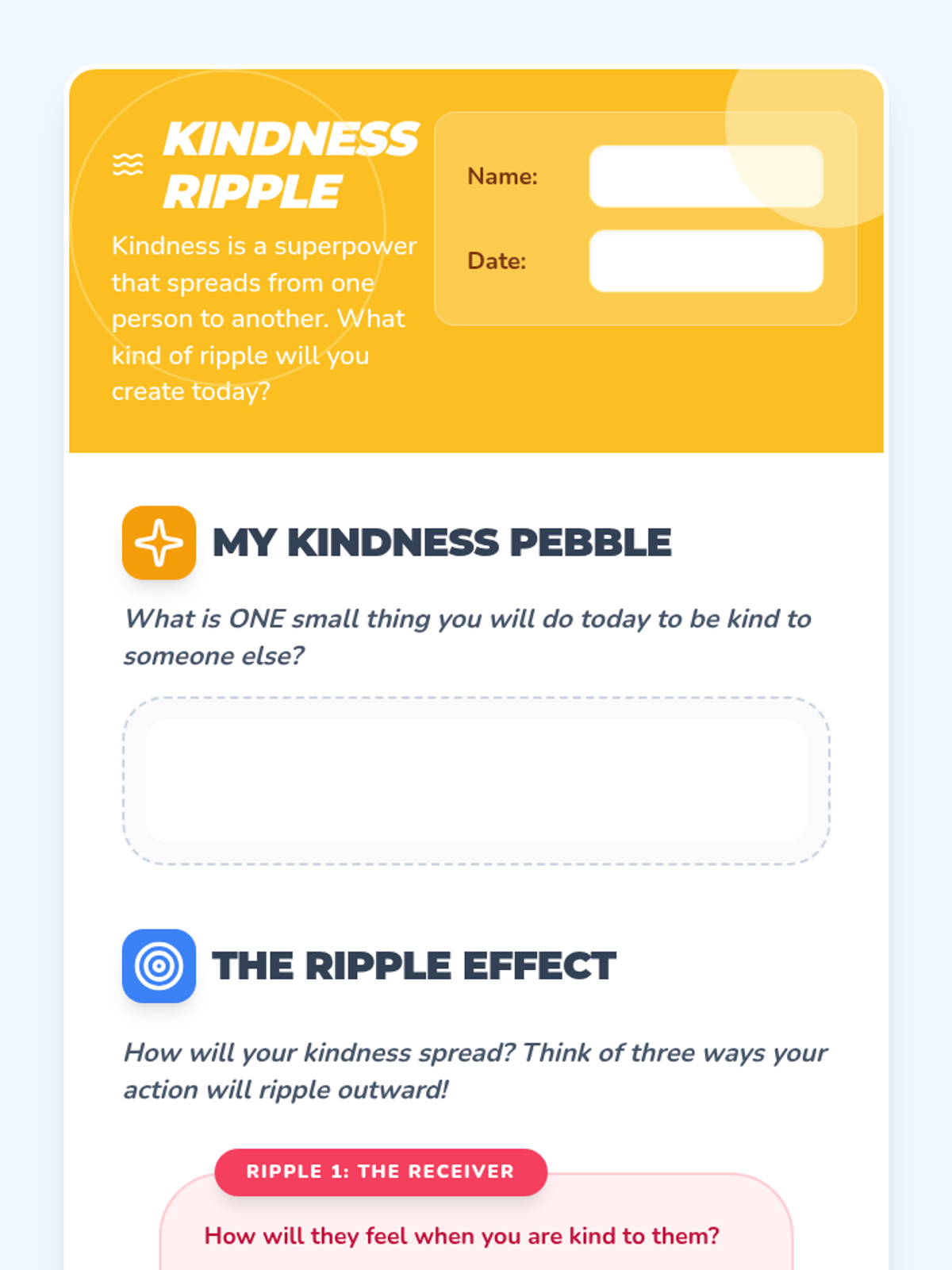
A student worksheet where 4th graders plan a kind act and visualize its ripple effect on the receiver, witnesses, and the wider school community.
A vibrant slide presentation for 4th graders that explains the 'Ripple Effect' of kindness, the 3-Way Win benefit system, and a call to action.
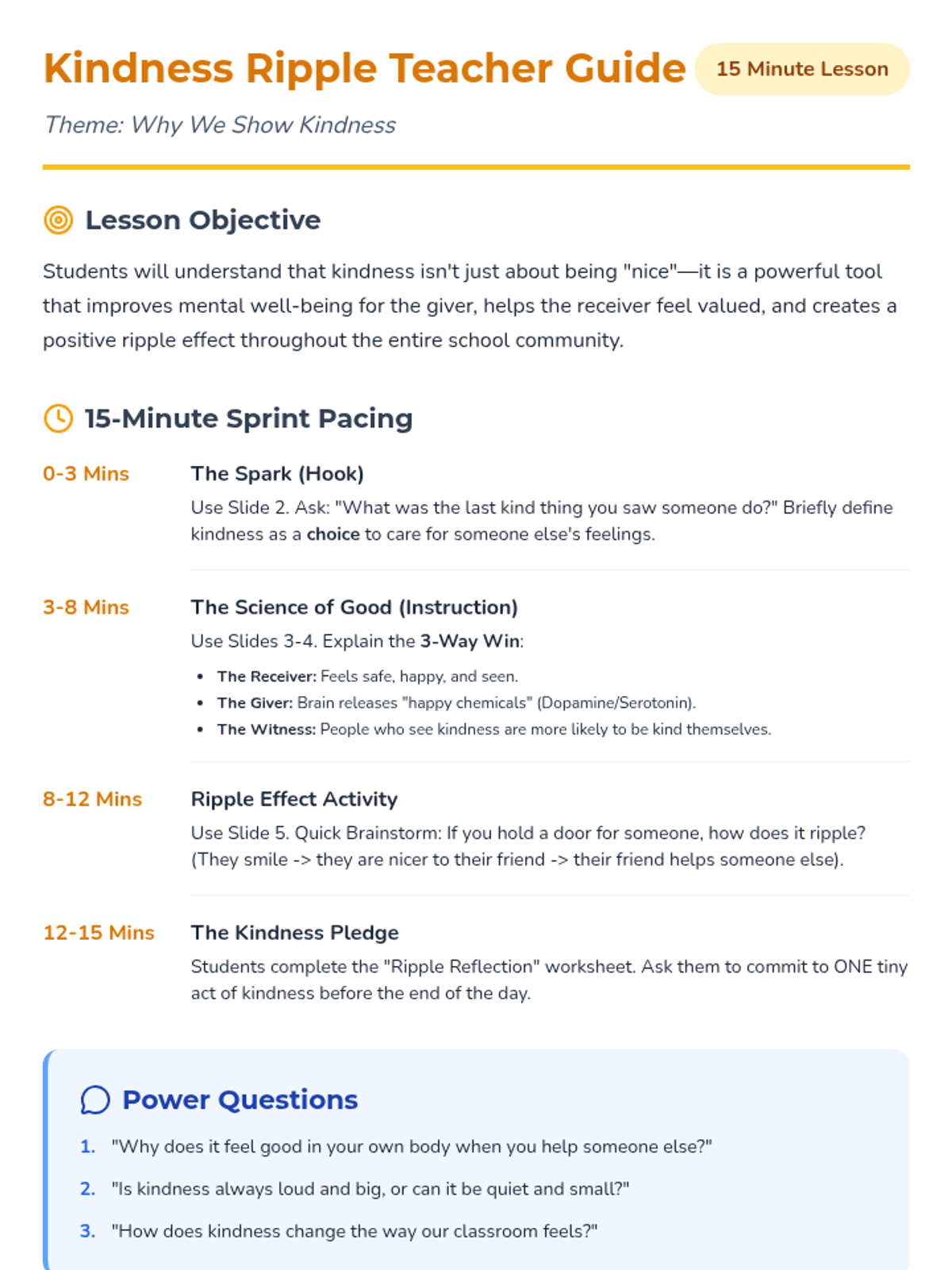
A teacher's instructional guide for a 15-minute lesson on kindness, featuring a timed pacing guide, key discussion questions, and pedagogical tips.
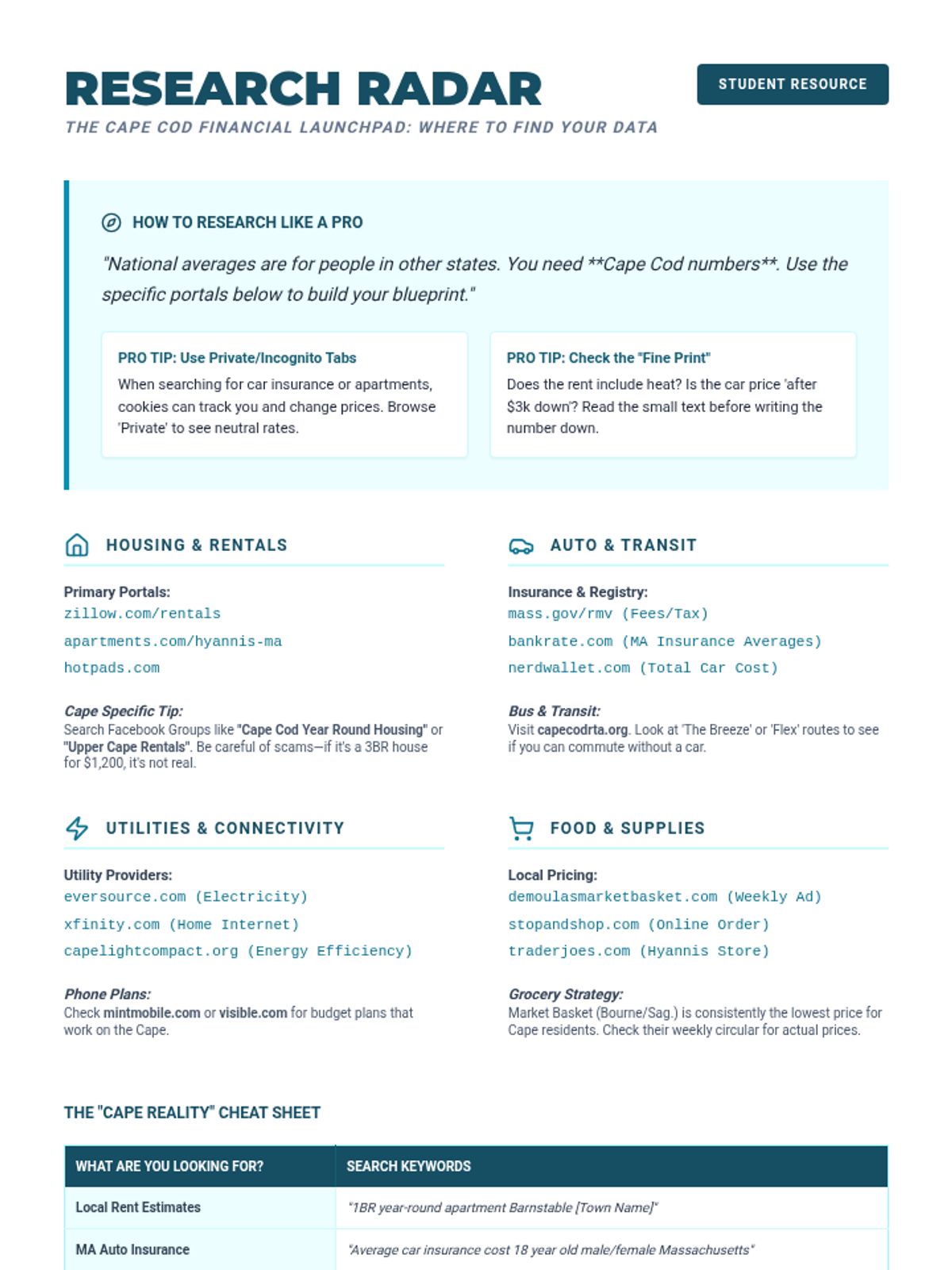
A student-facing reference guide providing specific keywords, reliable local websites, and verification checklists for researching financial data on Cape Cod.
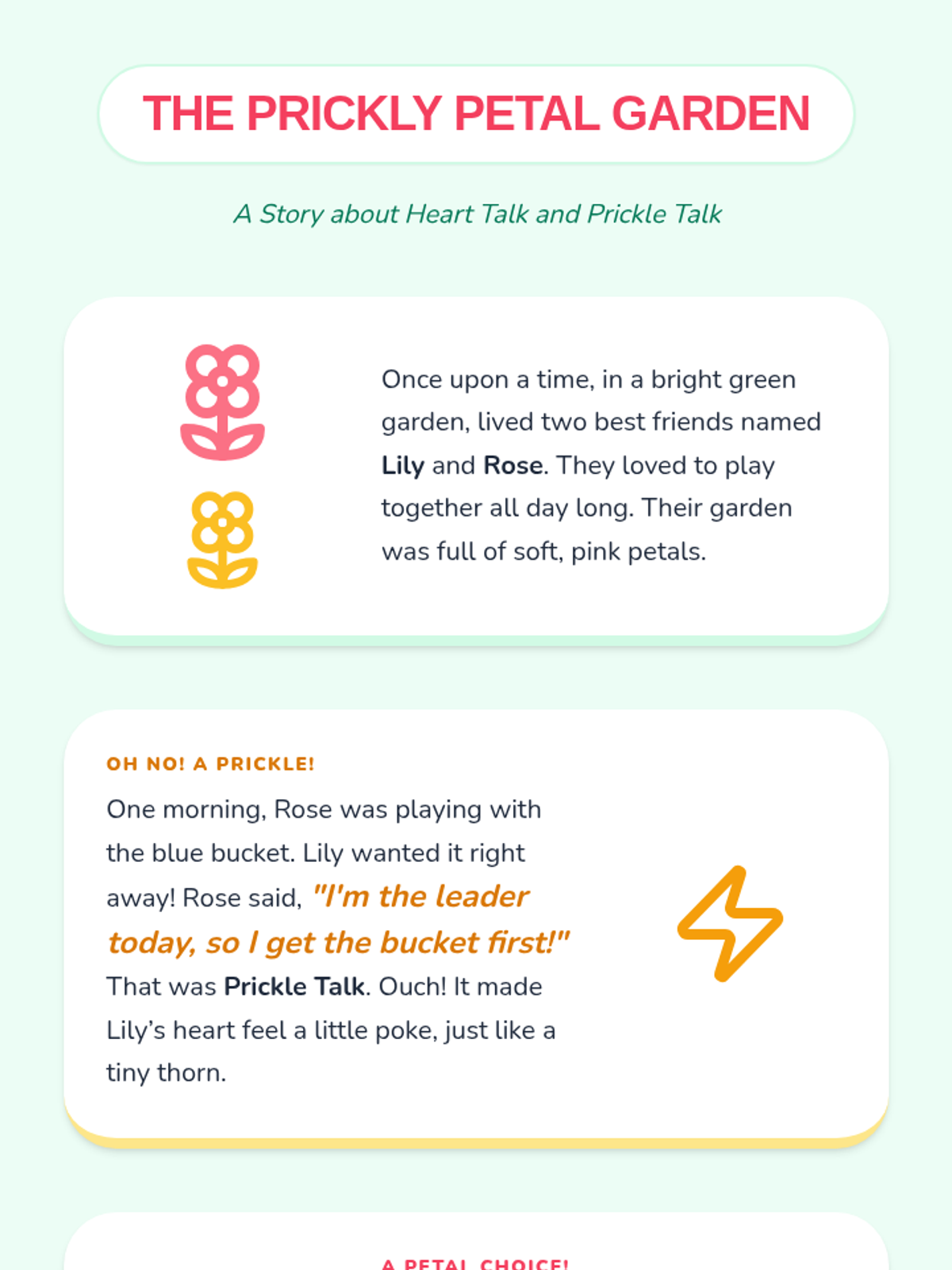
A short illustrated story for kindergarten students featuring two friends, Lily and Rose, who learn to choose soft 'Heart Talk' (petals) over tiny, constant 'Prickly Talk' (thorns).
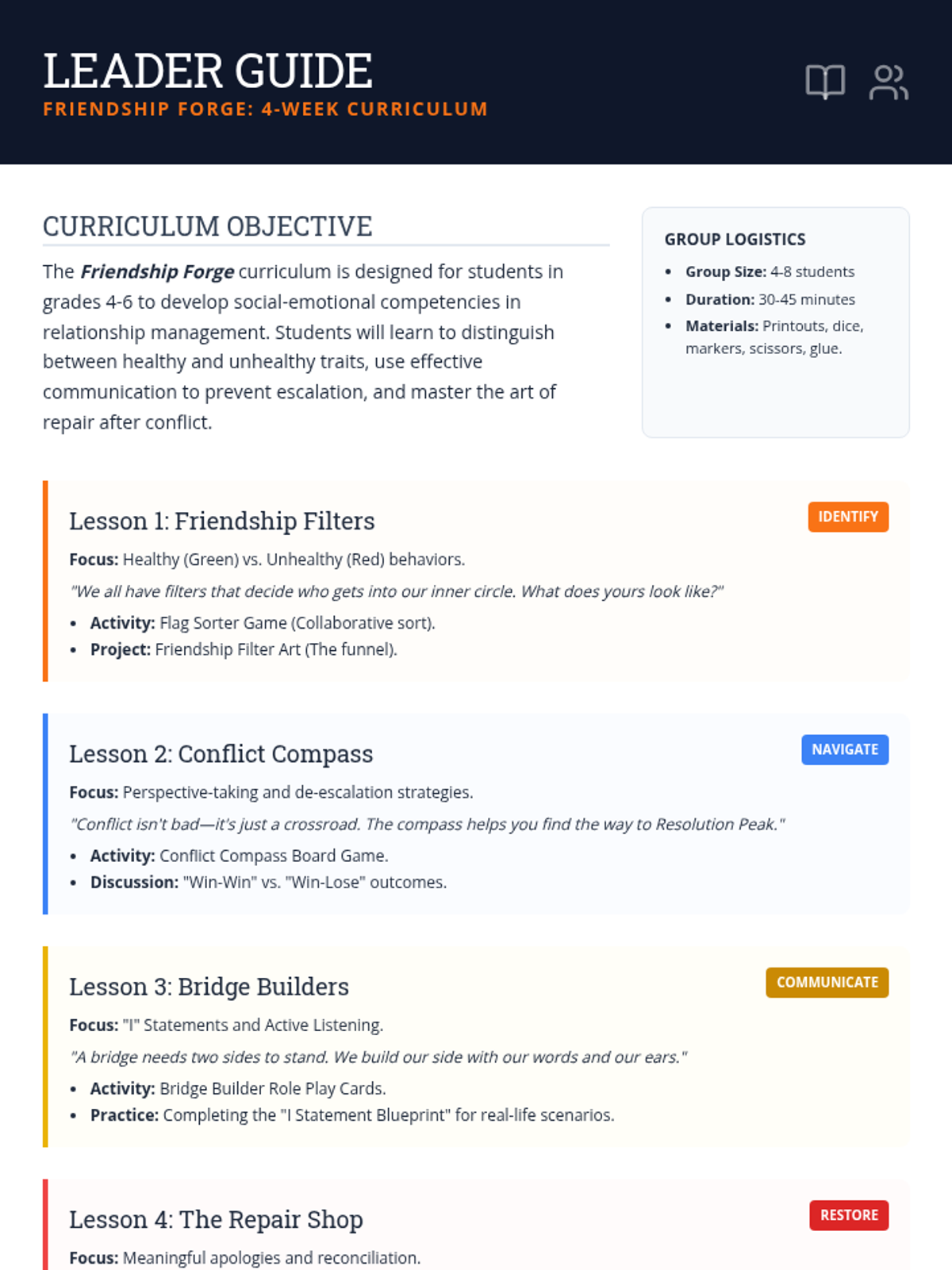
A comprehensive teacher's guide for the 4-lesson curriculum, providing lesson objectives, discussion prompts, and activity instructions.
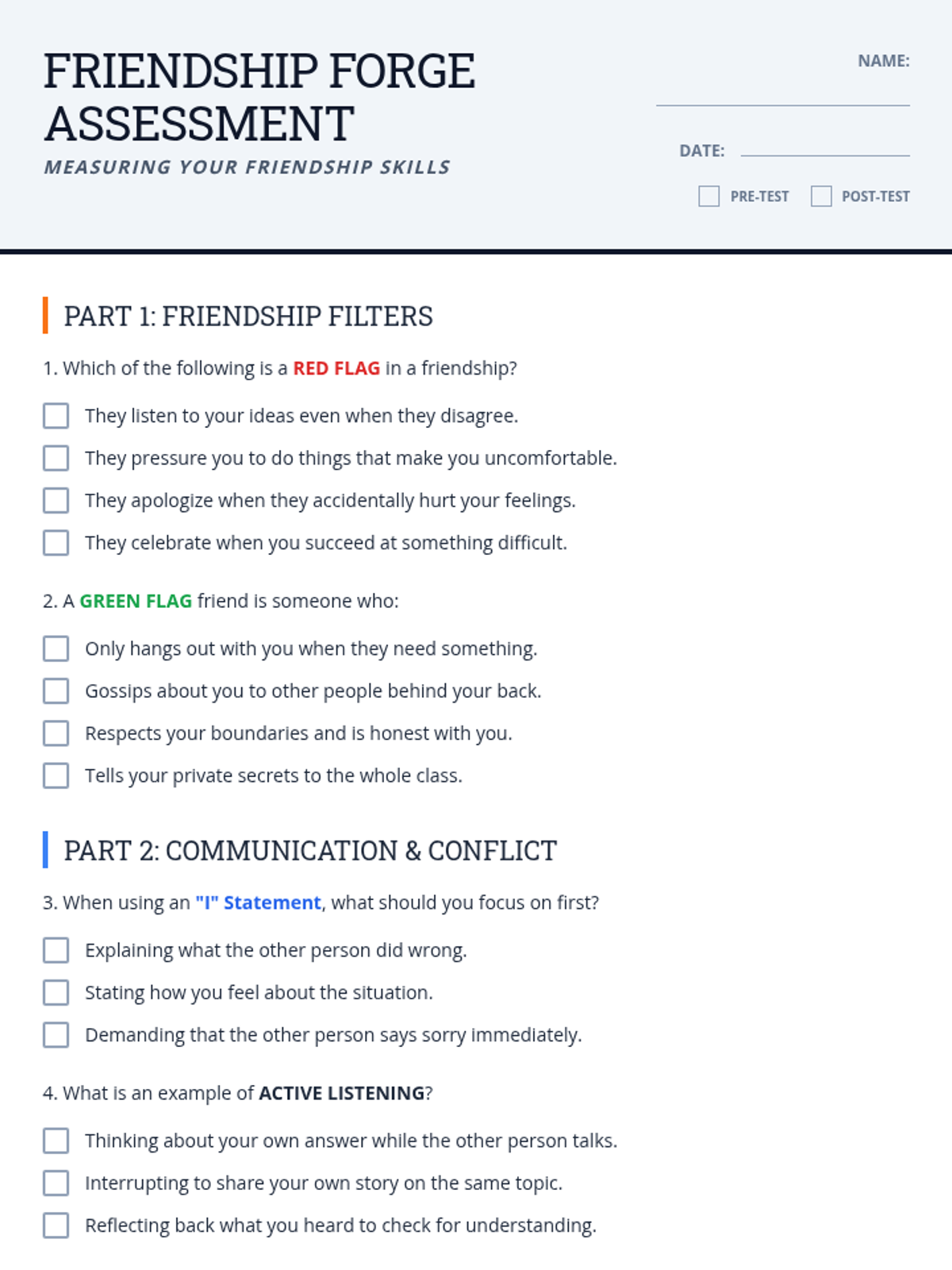
A pre- and post-test designed to measure student growth in identifying friendship traits, using communication tools, and applying conflict resolution strategies.
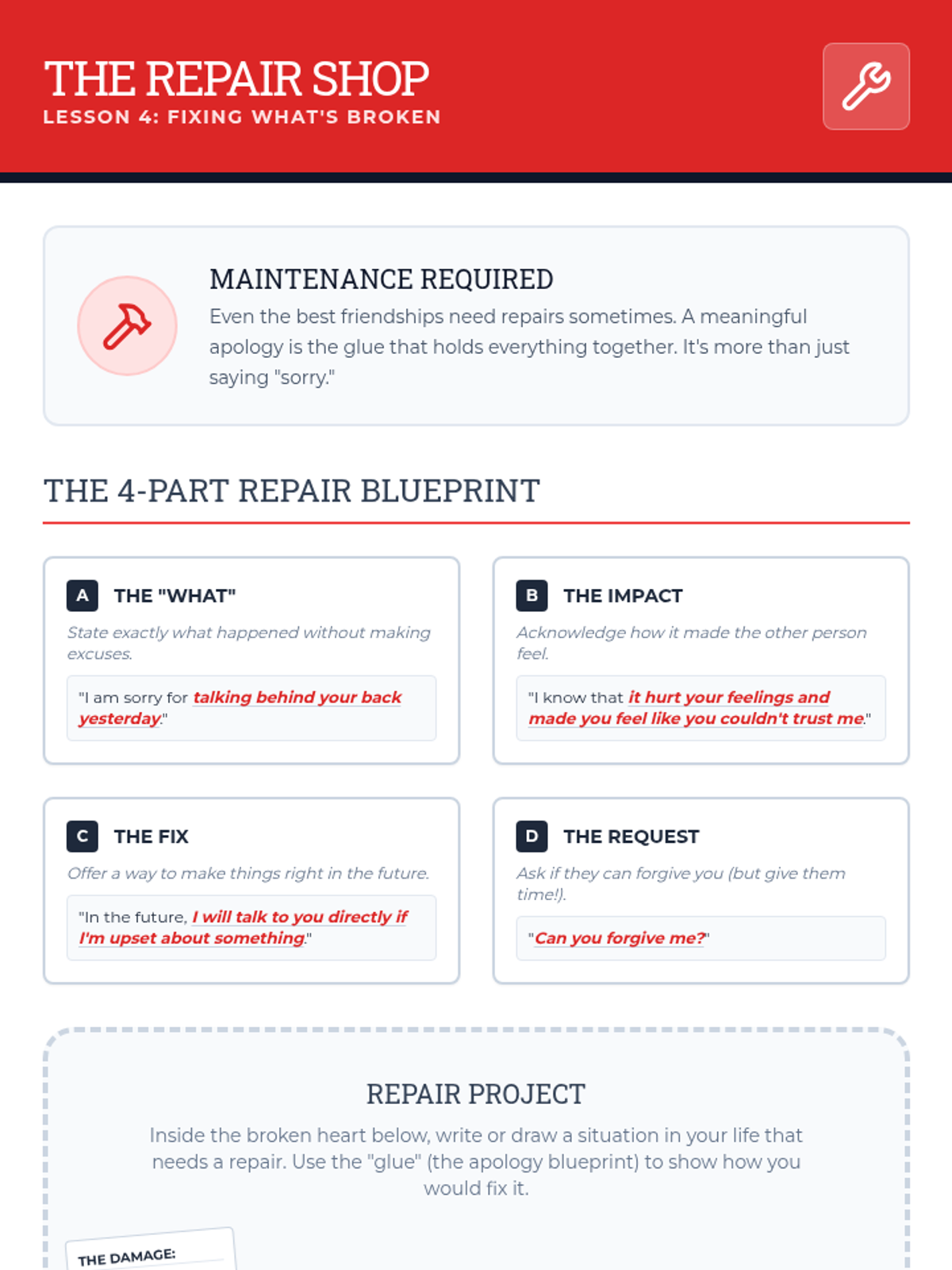
A worksheet focusing on the 4 parts of a meaningful apology and an art activity for reconciliation.
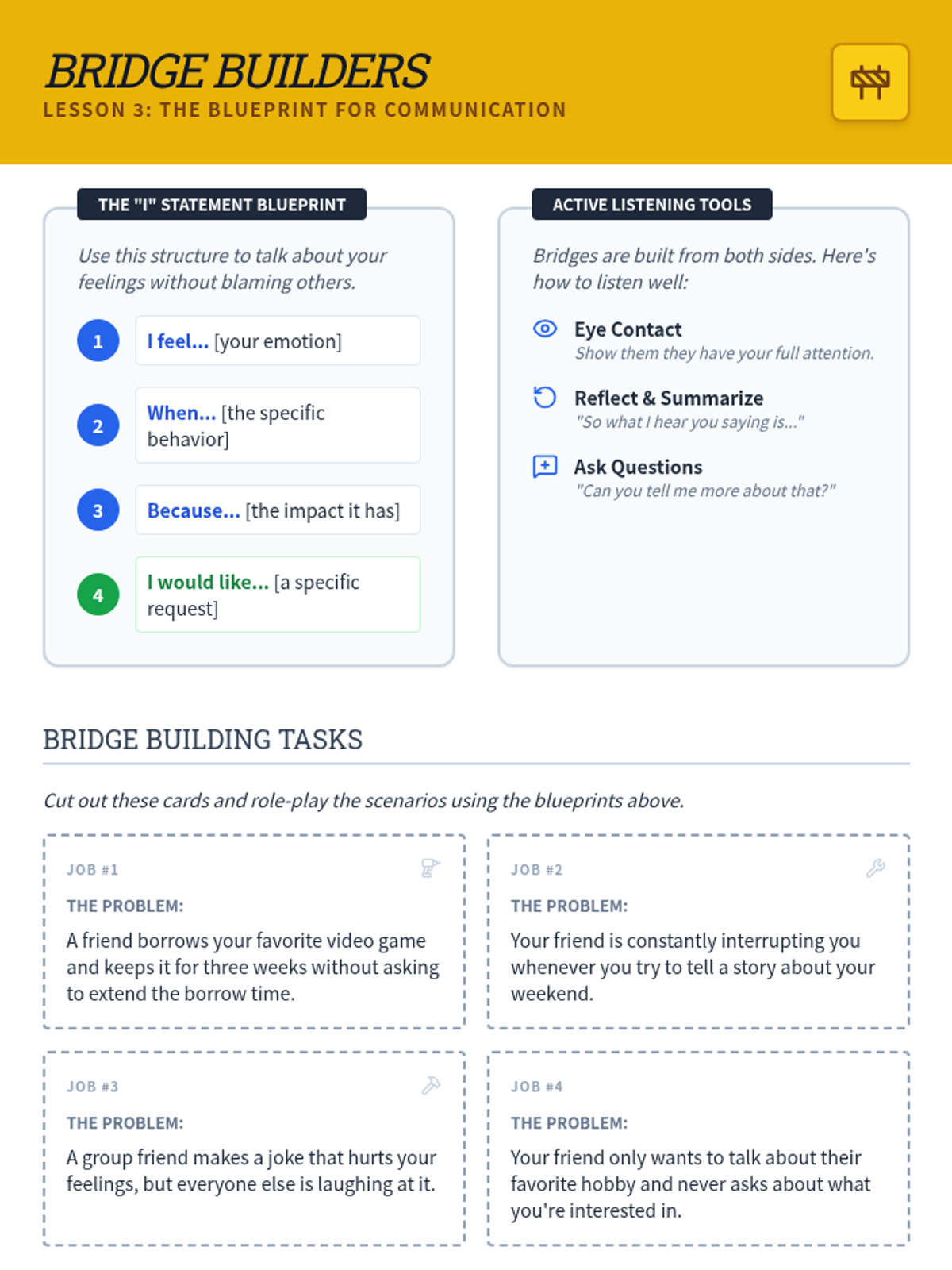
Communication reference sheet and role-play cards focused on active listening and using "I" statements.
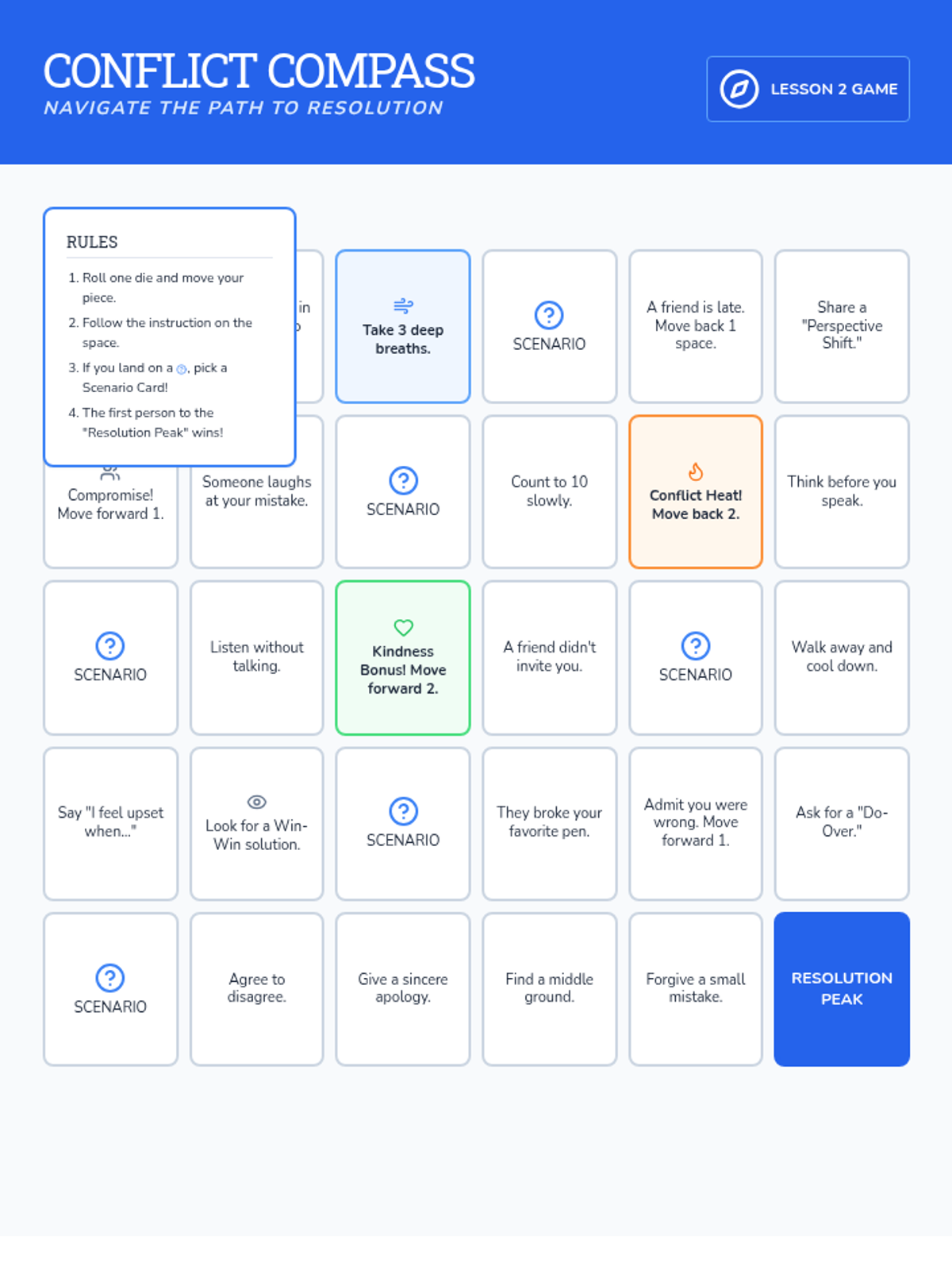
A printable board game designed to help students practice conflict resolution strategies and perspective-taking through various scenarios.
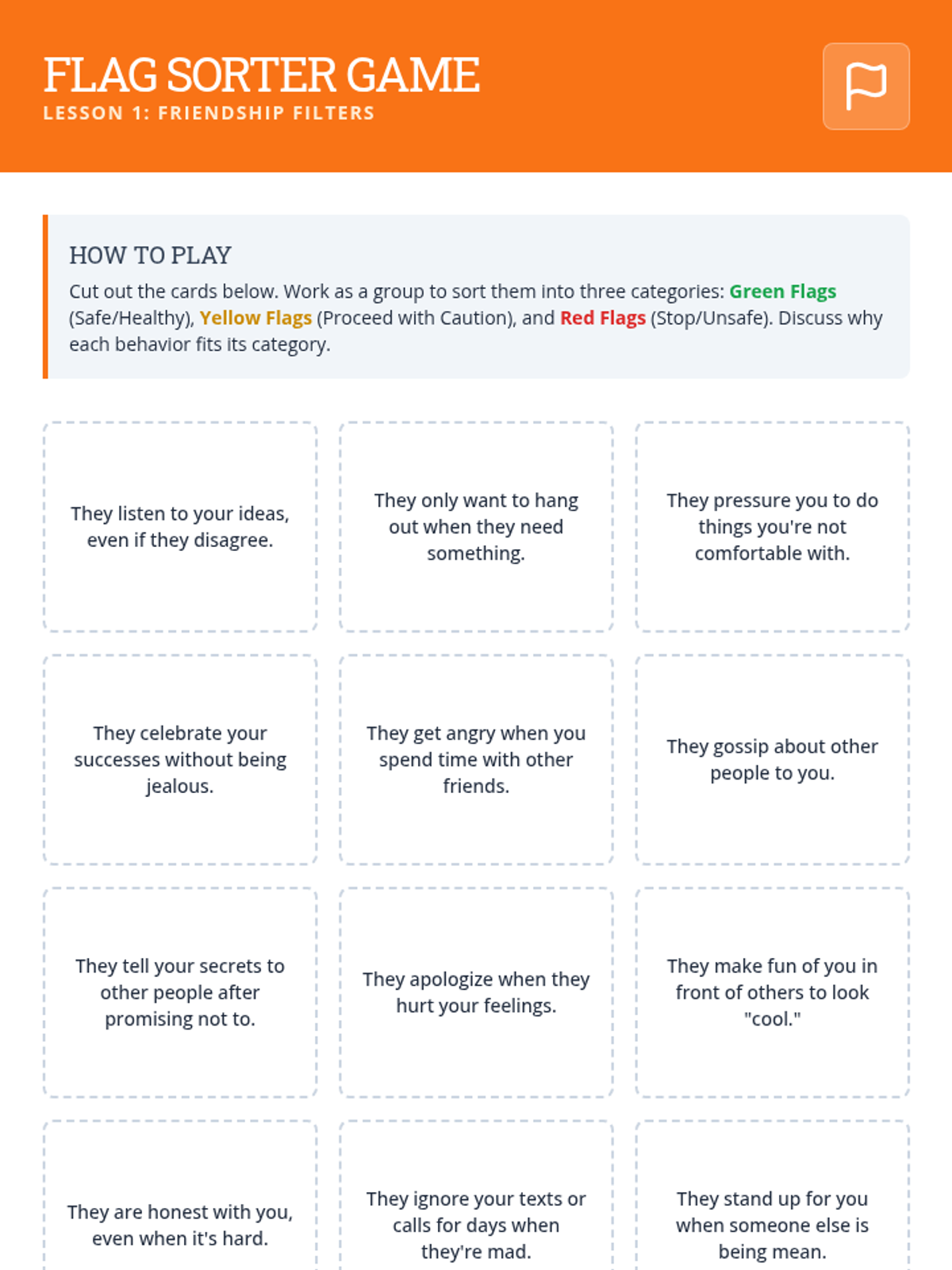
A printable sorting game with behavior cards and category mats to help students distinguish between healthy and unhealthy relationship traits.
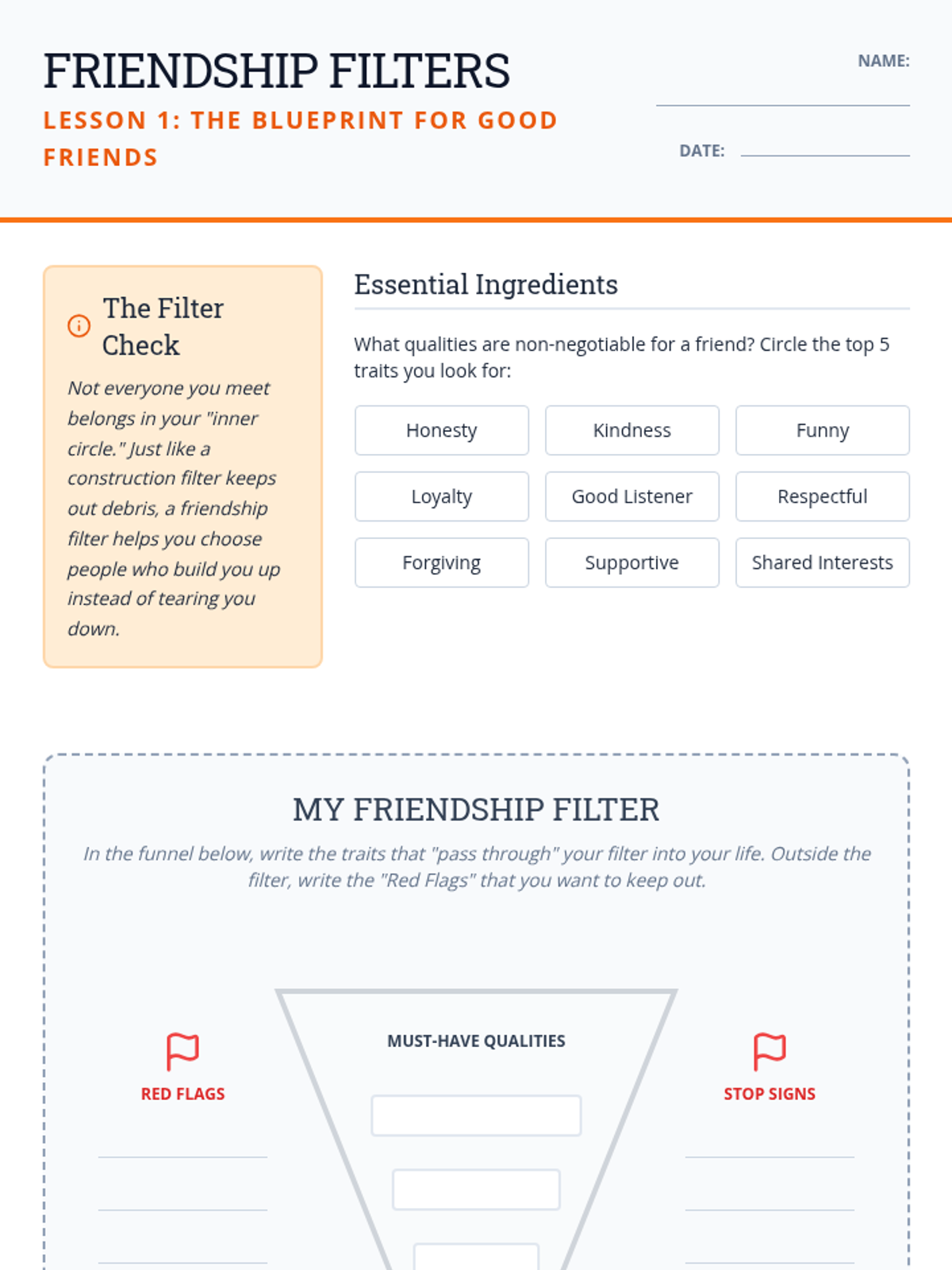
A worksheet and art project focused on helping students identify healthy friendship qualities (Green Flags) and warning signs (Red Flags).
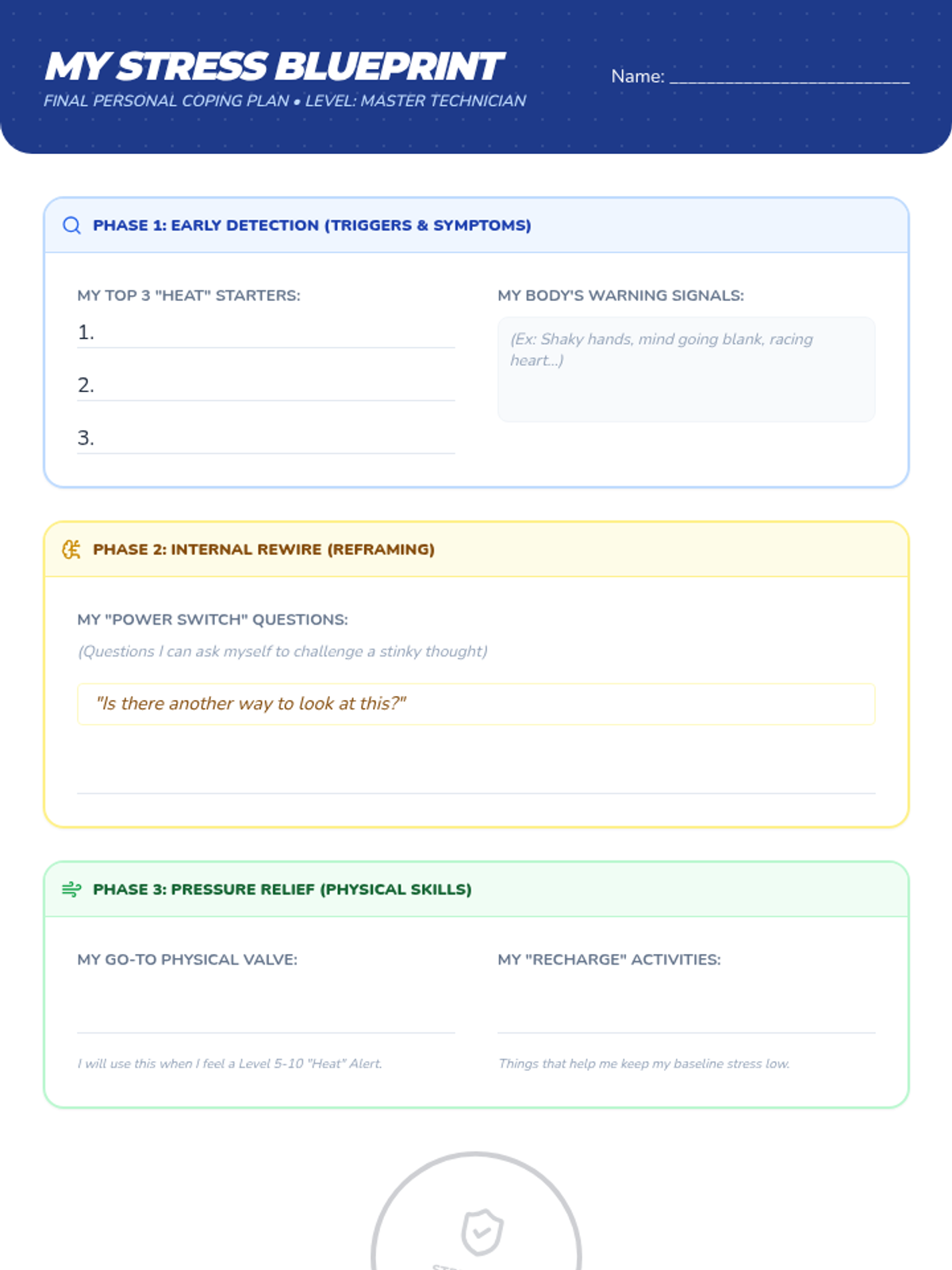
The final personal coping plan document for students, allowing them to synthesize their learning from all four sessions into a single "blueprint" for future use.
Slide presentation for Session 4, reviewing the unit's core concepts (Detection, Reframing, Regulation) and guiding students through the creation of their personal coping blueprints.
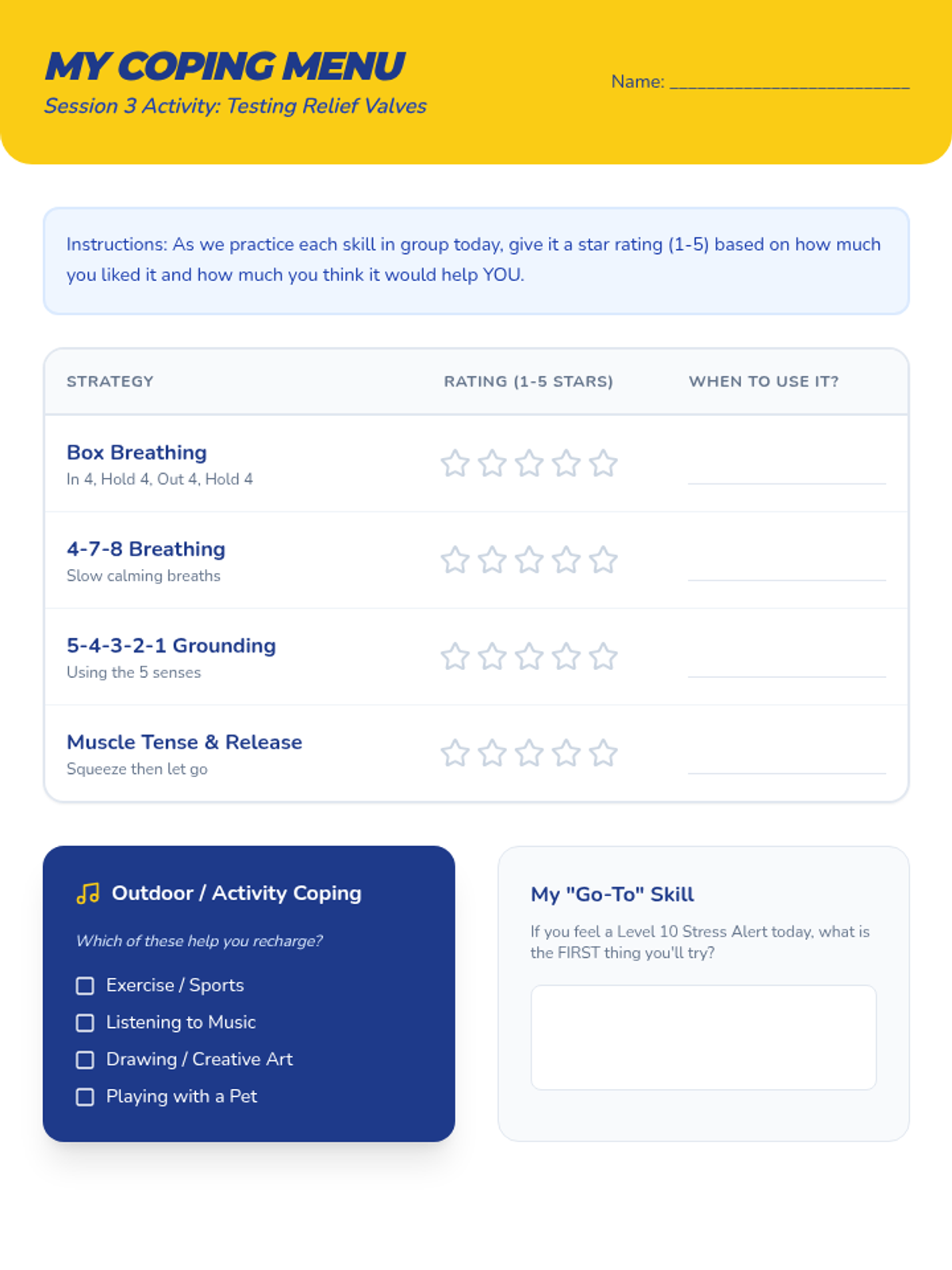
Coping strategy menu for students to trial and rate different physical and grounding techniques (e.g., box breathing, grounding) to identify what works best for them.
Slide presentation for Session 3, introducing physical coping mechanisms like controlled breathing, the 5-4-3-2-1 grounding technique, and explaining the physiological benefits of these strategies.