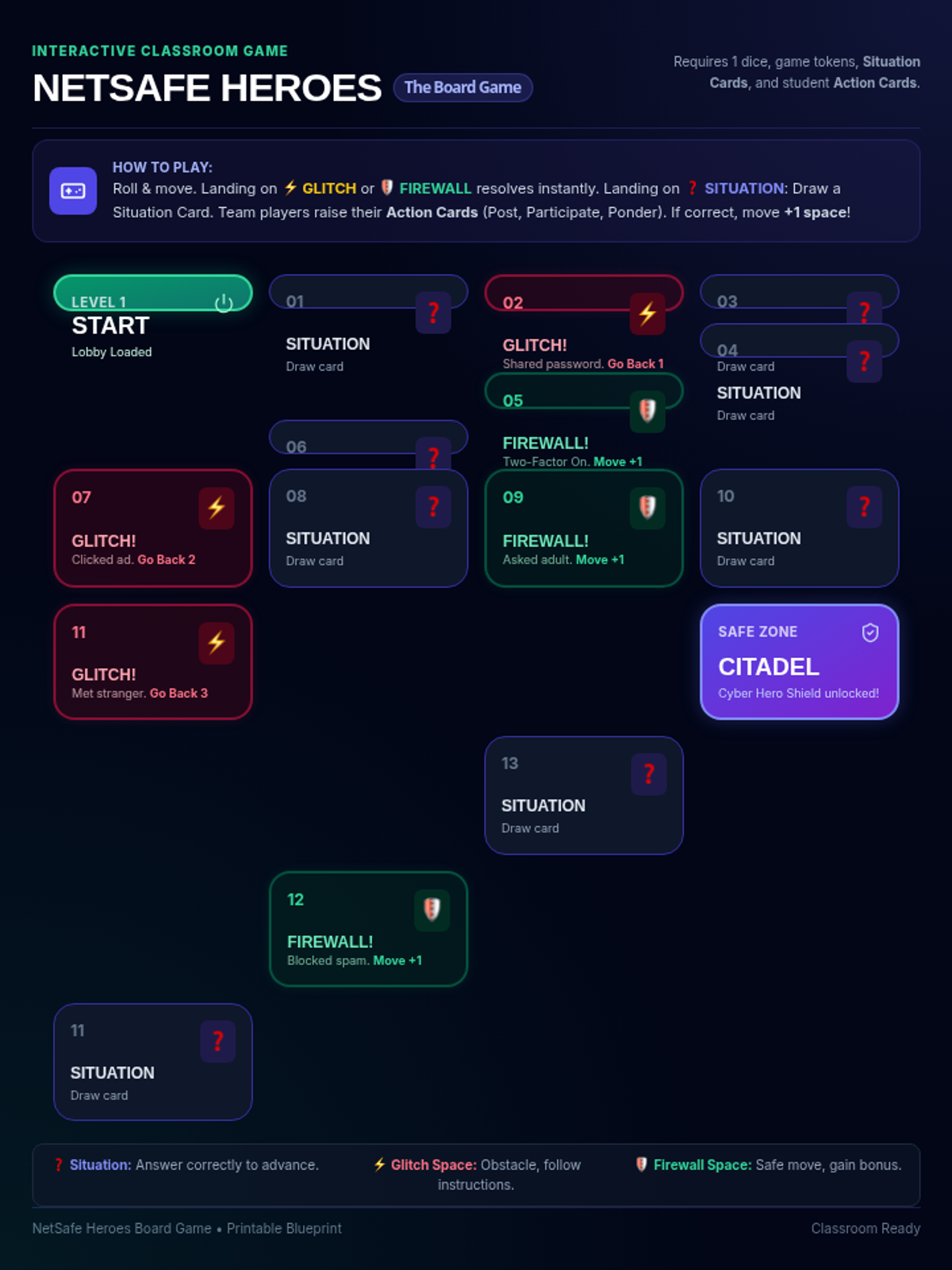
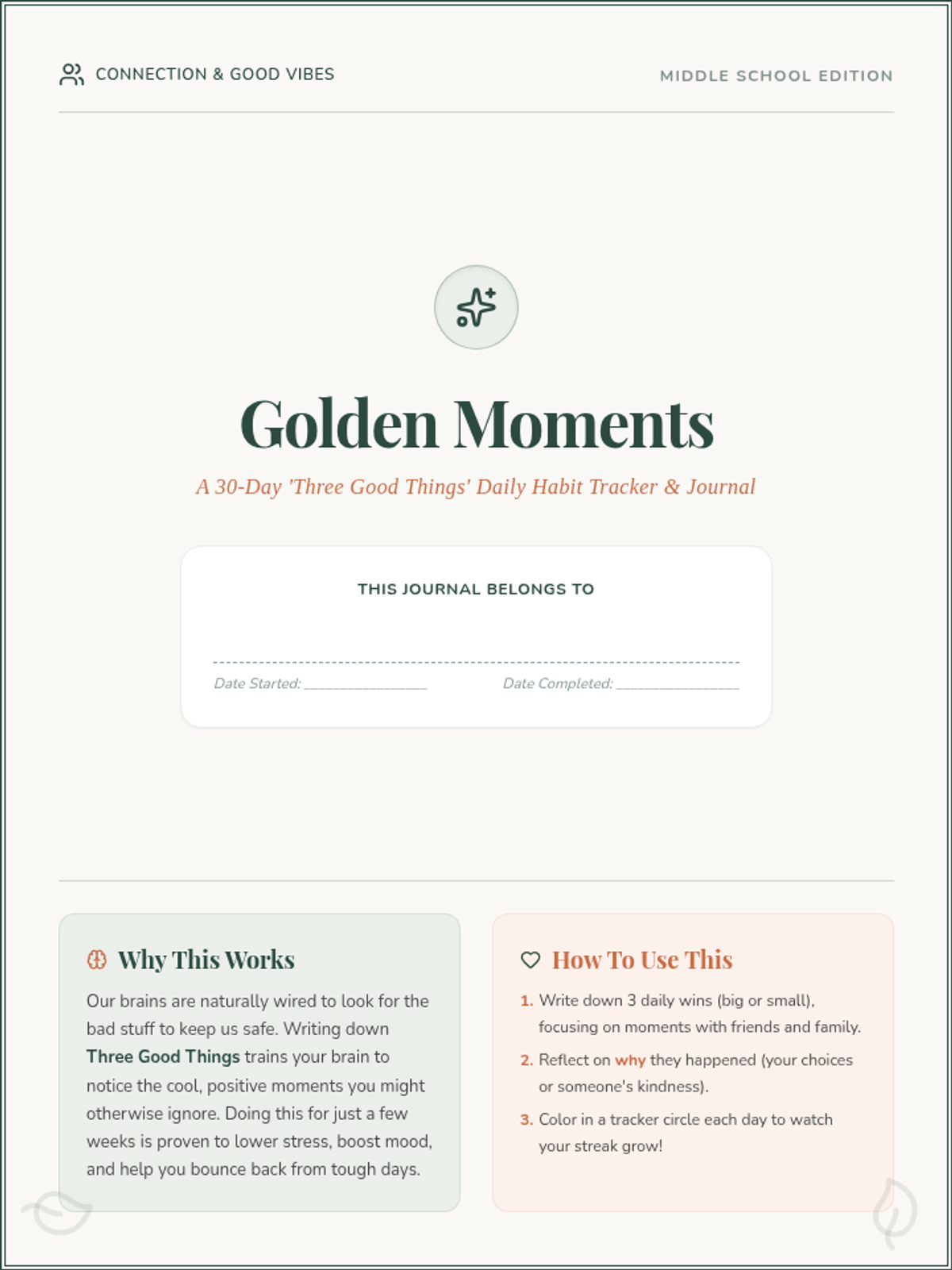
The "Point Heist" activity where students practice prioritizing easy questions over hard ones to maximize their total score under a strict time limit.
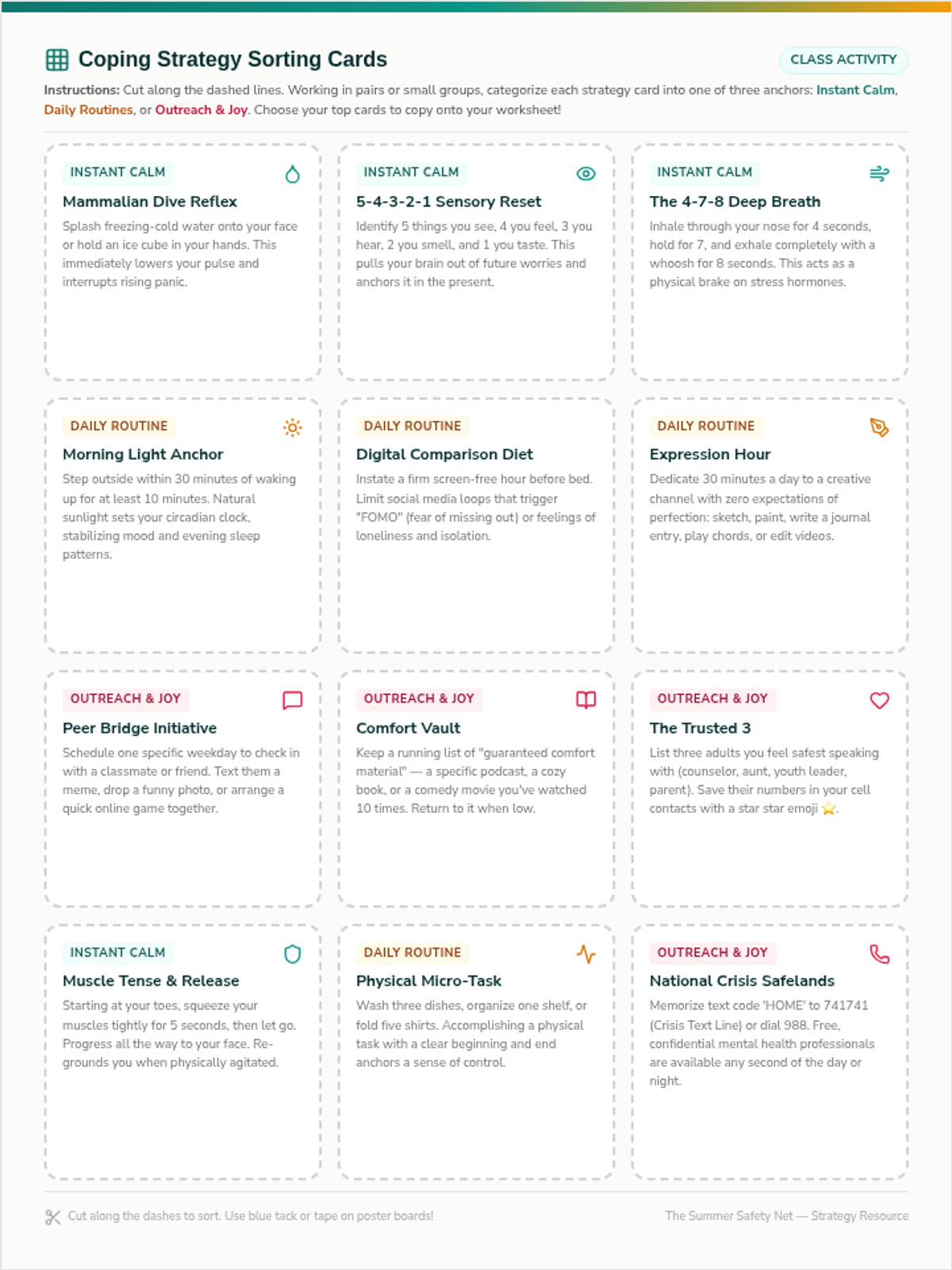
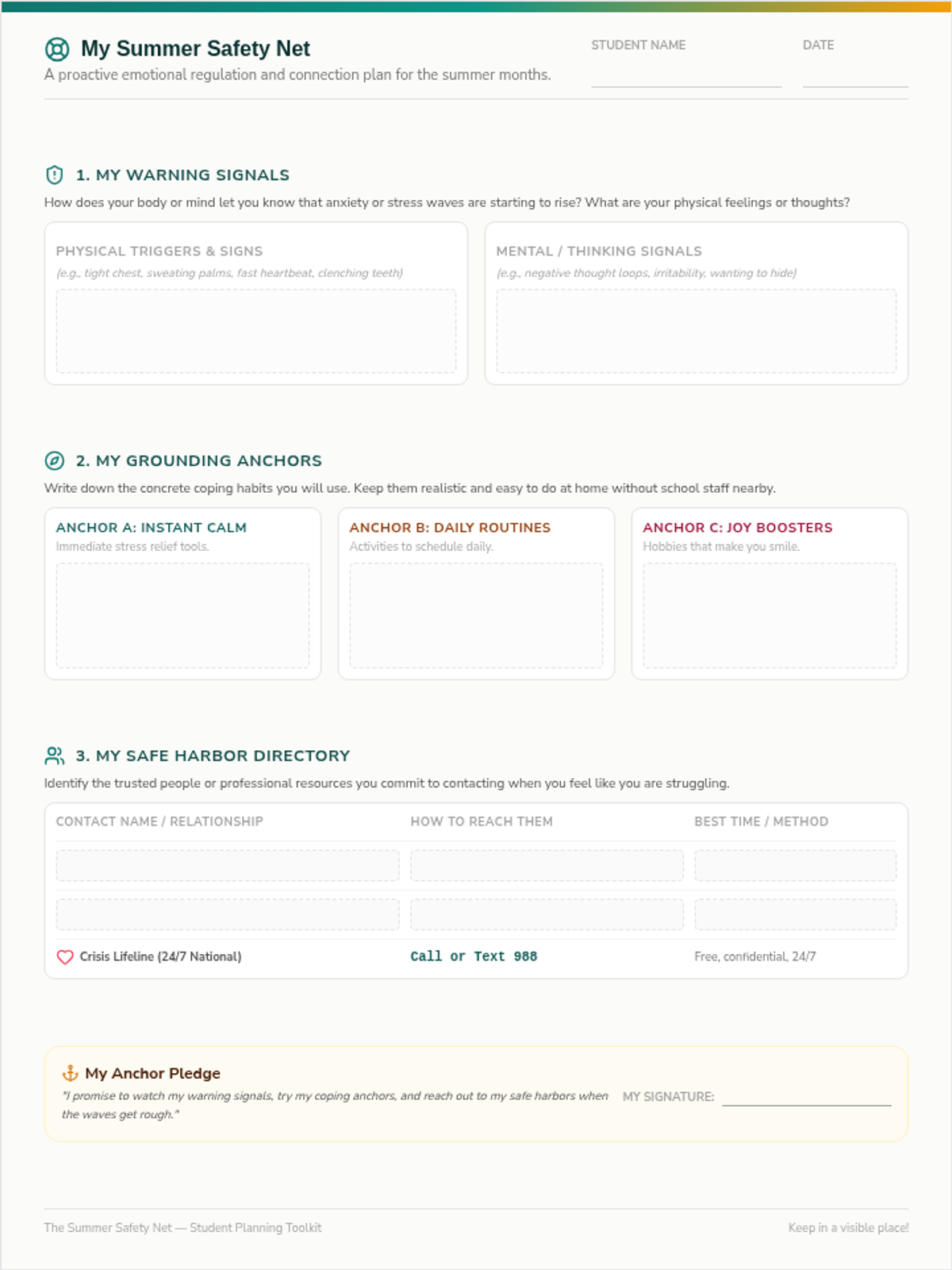
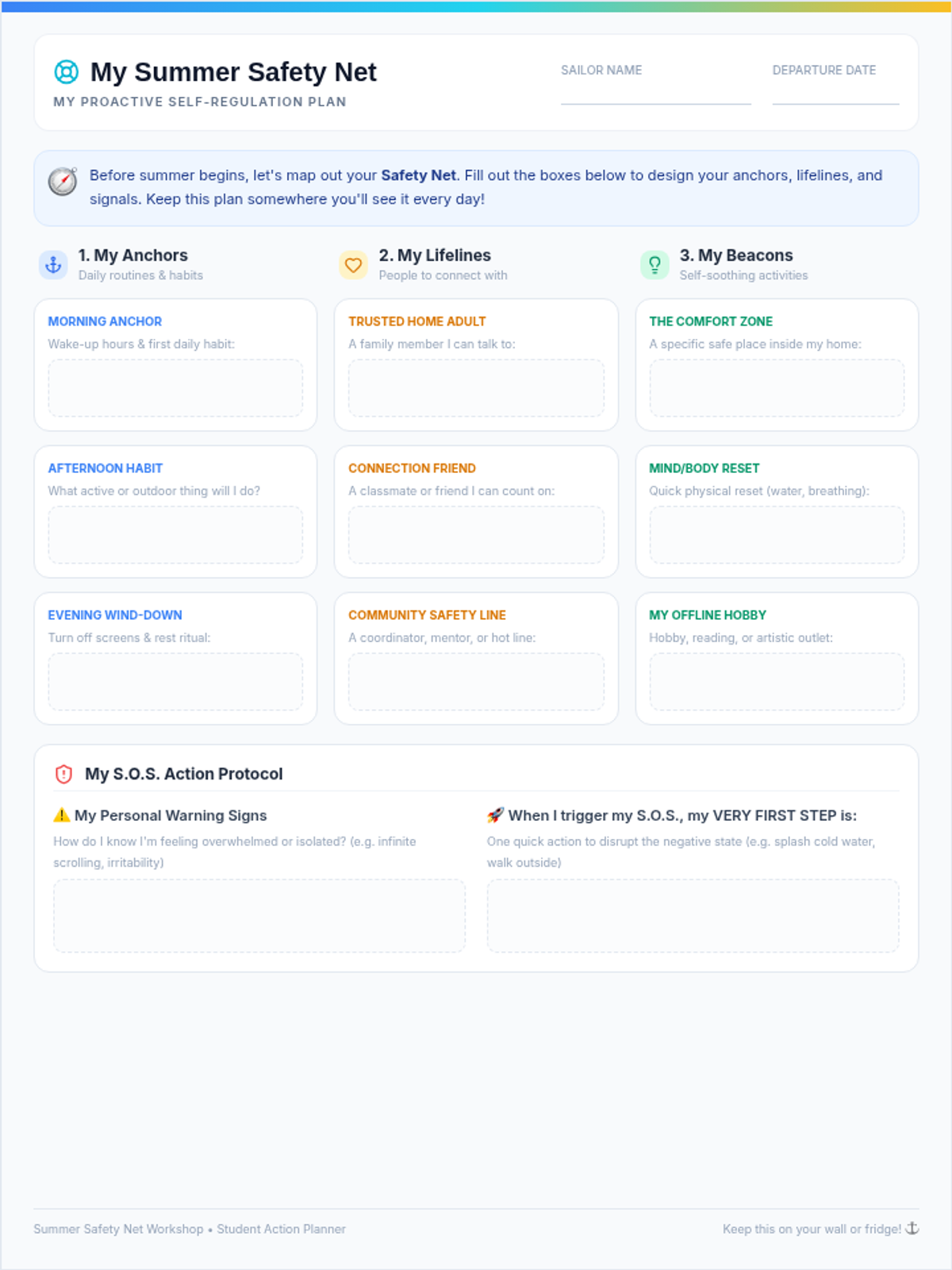
The final personal coping plan document for students, allowing them to synthesize their learning from all four sessions into a single "blueprint" for future use.
Slide presentation for Session 4, reviewing the unit's core concepts (Detection, Reframing, Regulation) and guiding students through the creation of their personal coping blueprints.
Coping strategy menu for students to trial and rate different physical and grounding techniques (e.g., box breathing, grounding) to identify what works best for them.
Slide presentation for Session 3, introducing physical coping mechanisms like controlled breathing, the 5-4-3-2-1 grounding technique, and explaining the physiological benefits of these strategies.
Student worksheet featuring common middle school stressors as "Stinky Thoughts" scenarios. Students practice cognitive reframing by writing realistic and positive "Power Thoughts" for each situation.
Slide presentation for Session 2, focusing on the connection between thoughts, feelings, and behaviors, and teaching students how to identify and reframe cognitive distortions.
Student activity sheet for Session 1. Students identify their physical stress symptoms on a body map and list their primary personal triggers.
Slide presentation for Session 1, introducing the concept of stress using the pressure cooker analogy and explaining the body's fight/flight/freeze response.
Unit pre- and post-assessment to measure student growth in identifying stressors and coping strategies.
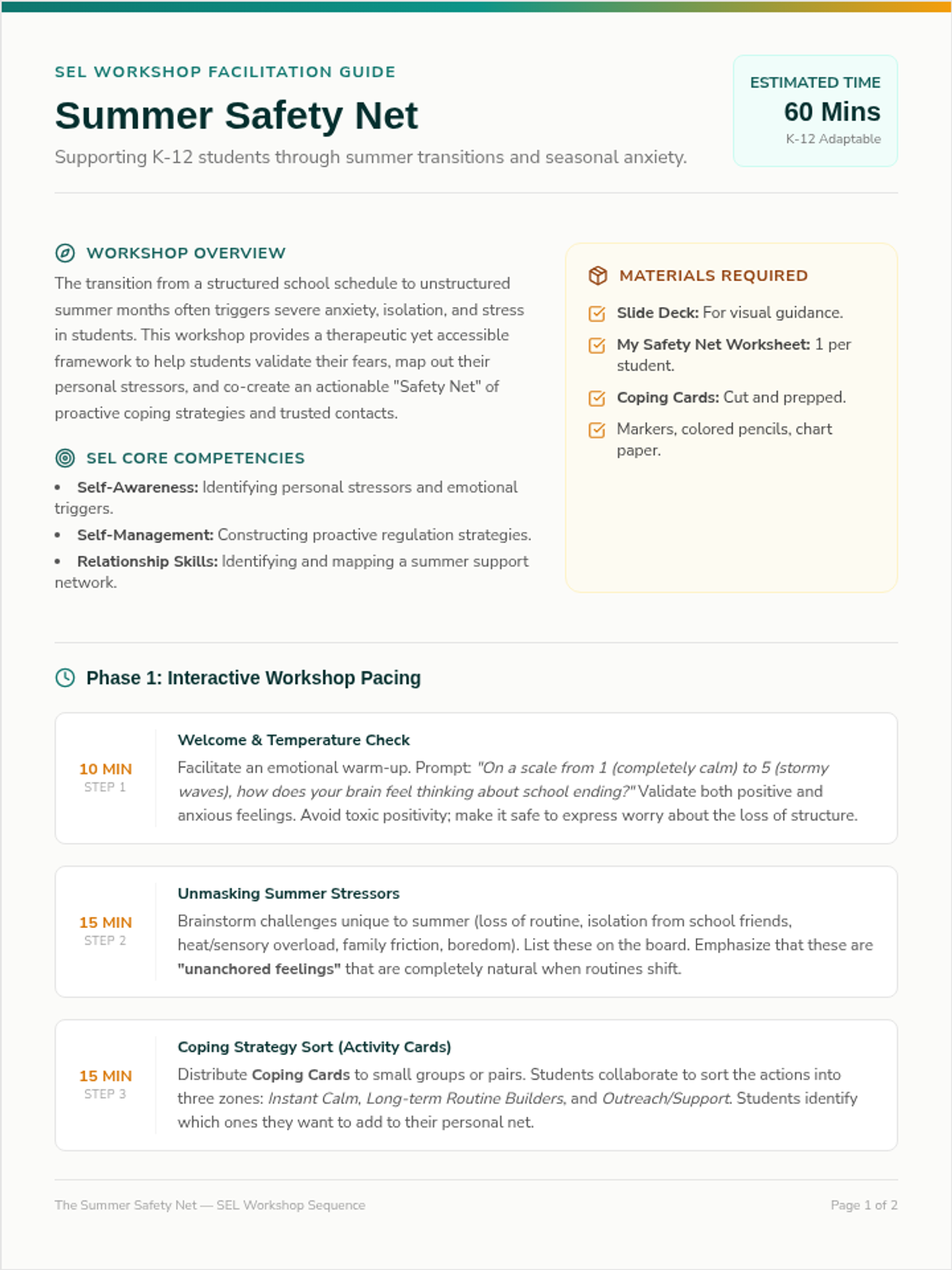
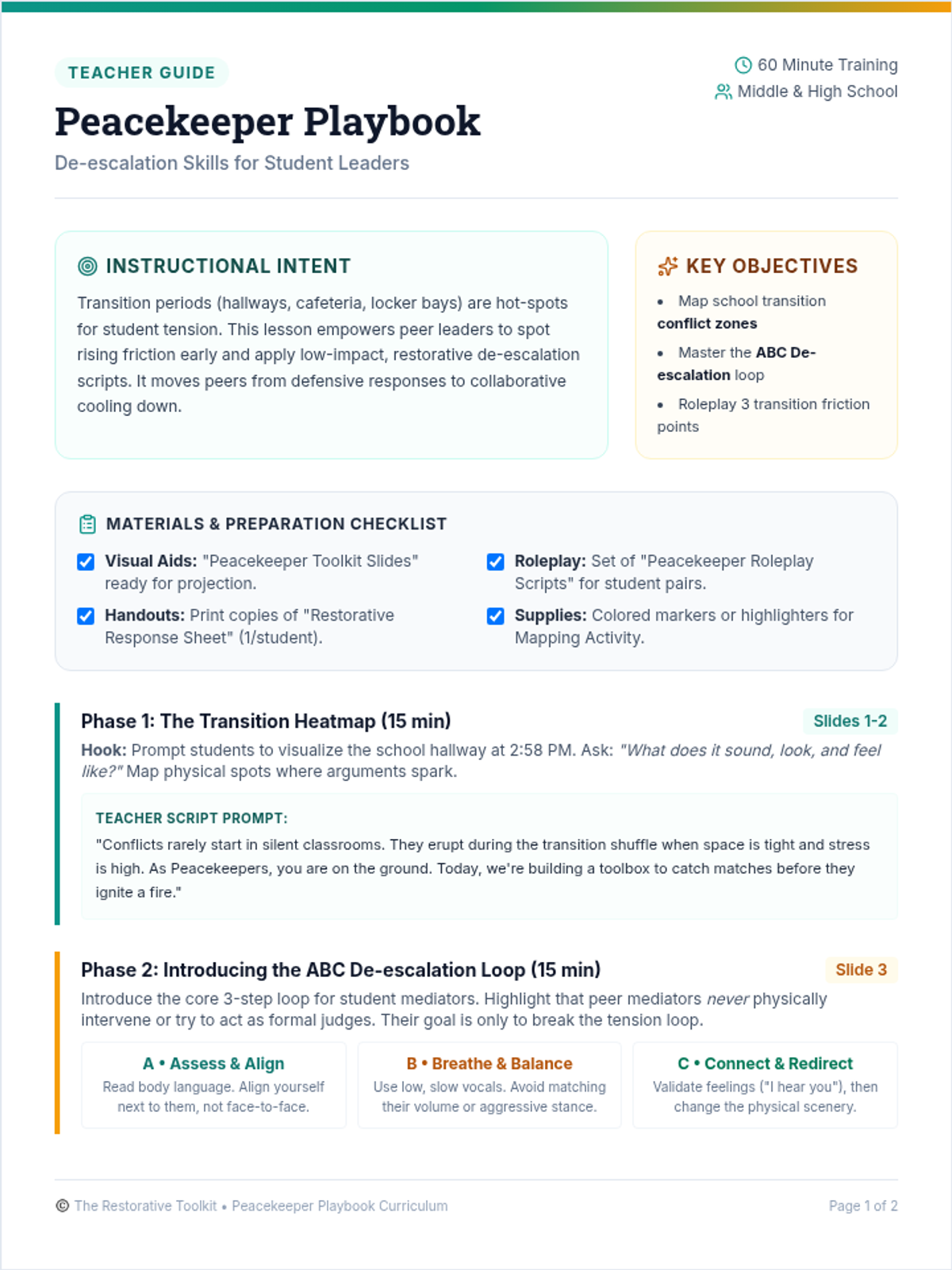
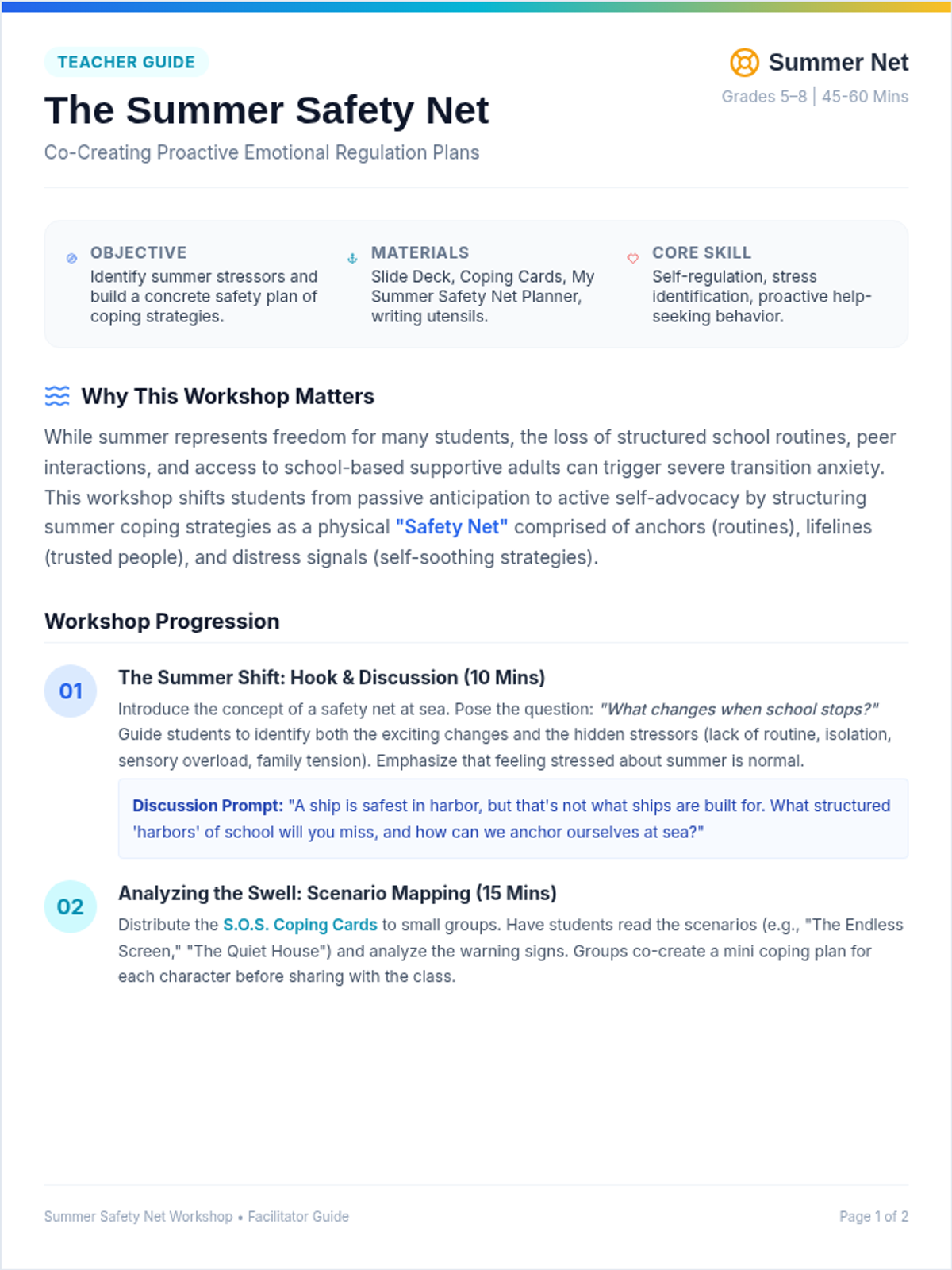
Facilitator guide for the 4-week unit, including ASCA alignment, objectives, and weekly plans.