Fully updated teacher lesson plan for Lesson 6.3 with answer keys for all 4 Round 1 questions, all 4 Round 2 questions (including critical thinking), and the revised exit ticket. Layout mirrors the structured grid provided in the sample lessons.
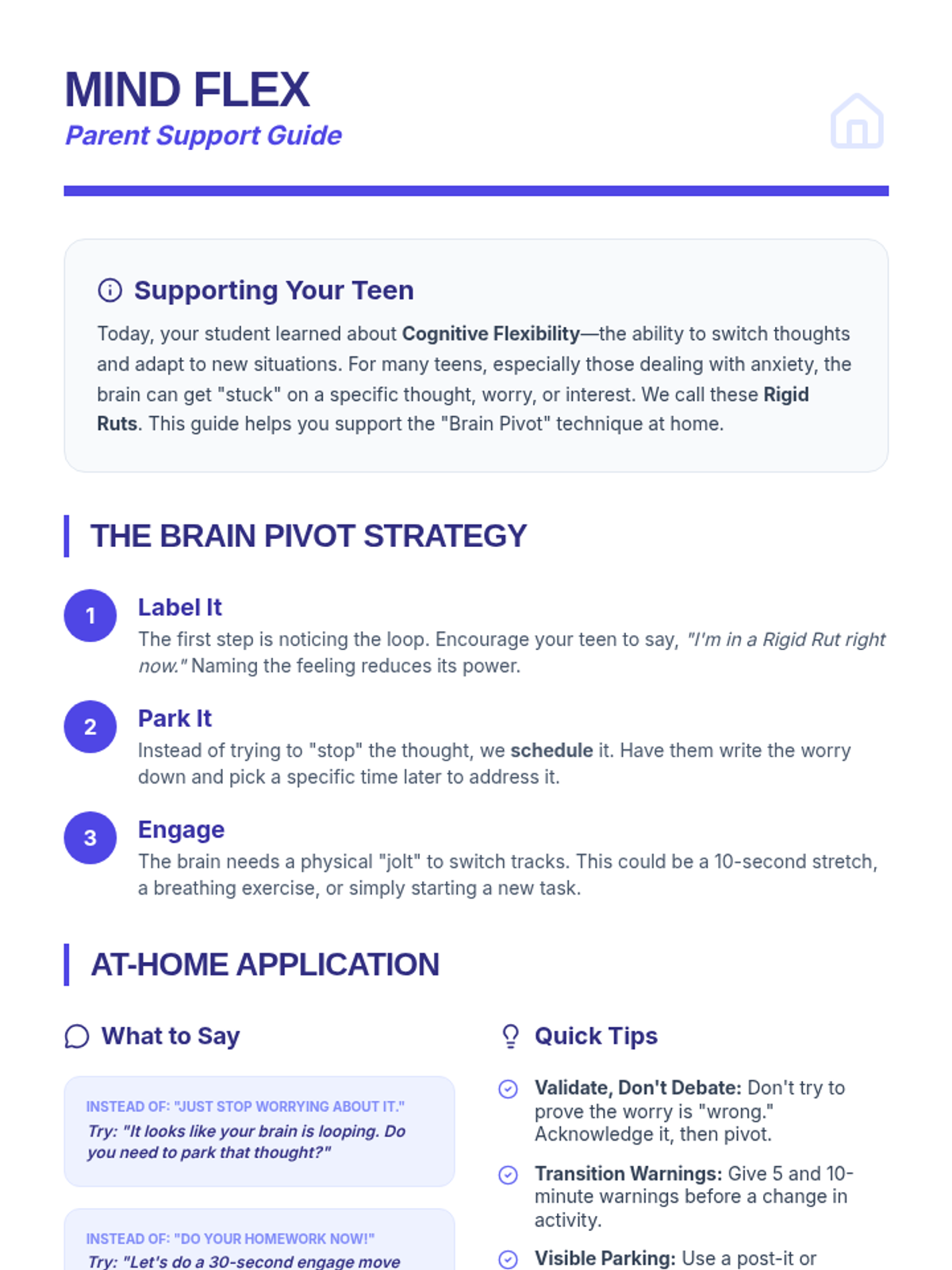
A supportive guide for parents to understand and reinforce the 'Brain Pivot' technique at home. Includes language prompts, transition tips, and advice on validating their teen's experience without increasing anxiety.
A supportive slide deck focusing on growth mindset in the context of restorative justice. It explores mistakes as learning data, the difference between fixed and growth mindsets, and the power of 'yet' during the re-entry process.
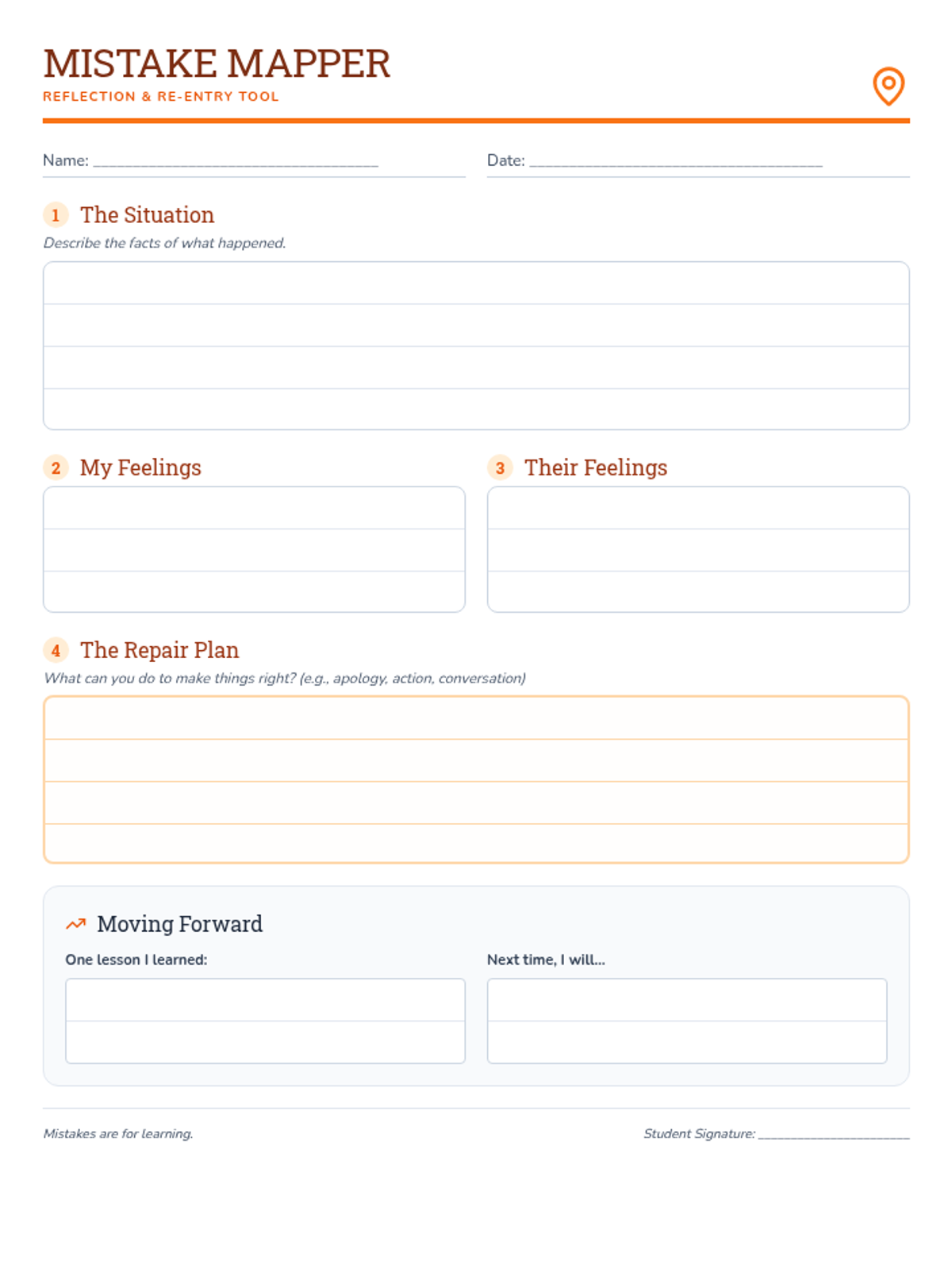
A restorative re-entry worksheet designed for students to reflect on a mistake, identify impacts on themselves and others, and create a concrete repair plan with a growth mindset.
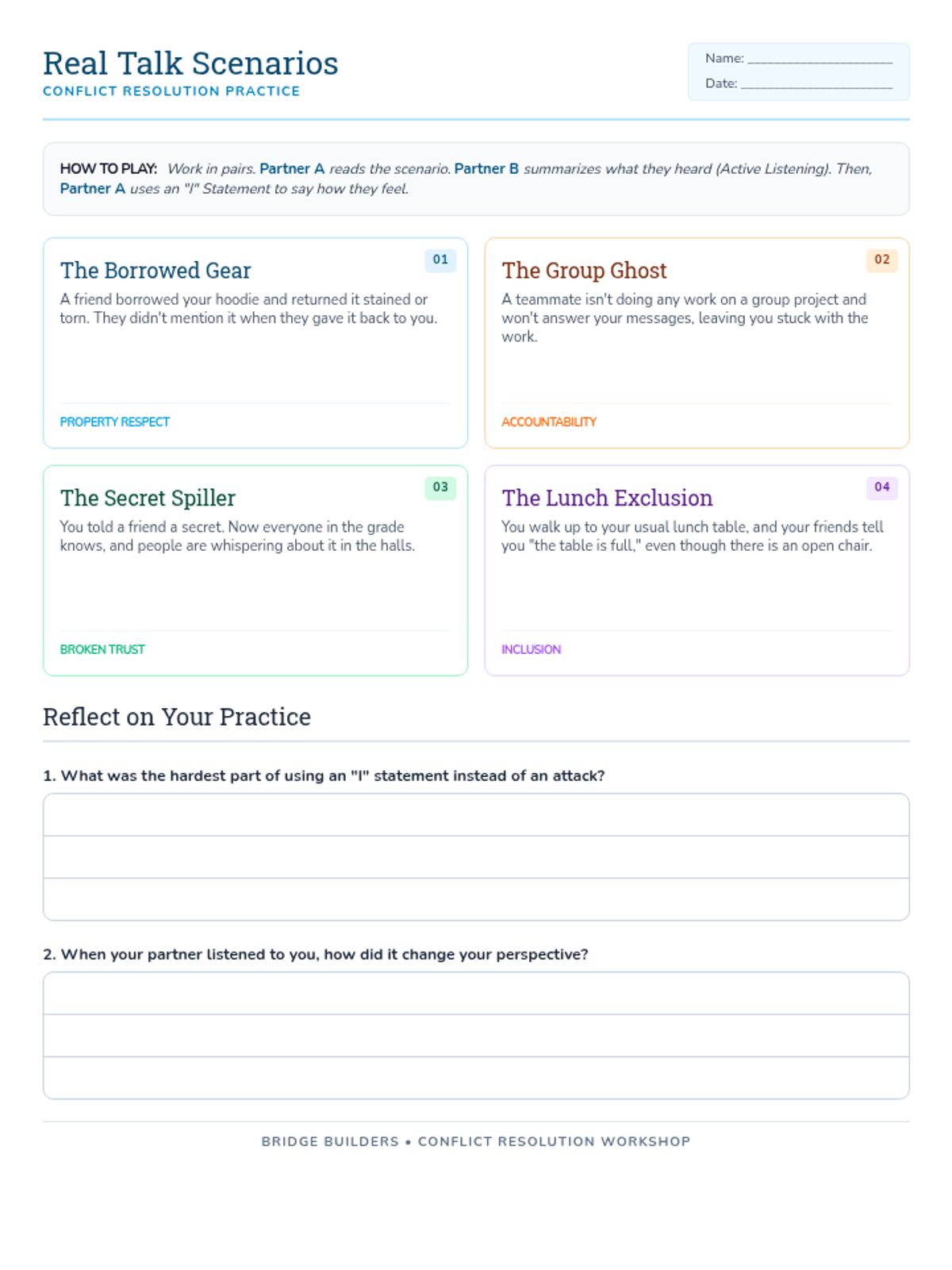
A set of four realistic conflict scenarios for student role-play. Each card provides a situation for practicing active listening and 'I' statements, followed by reflection questions.
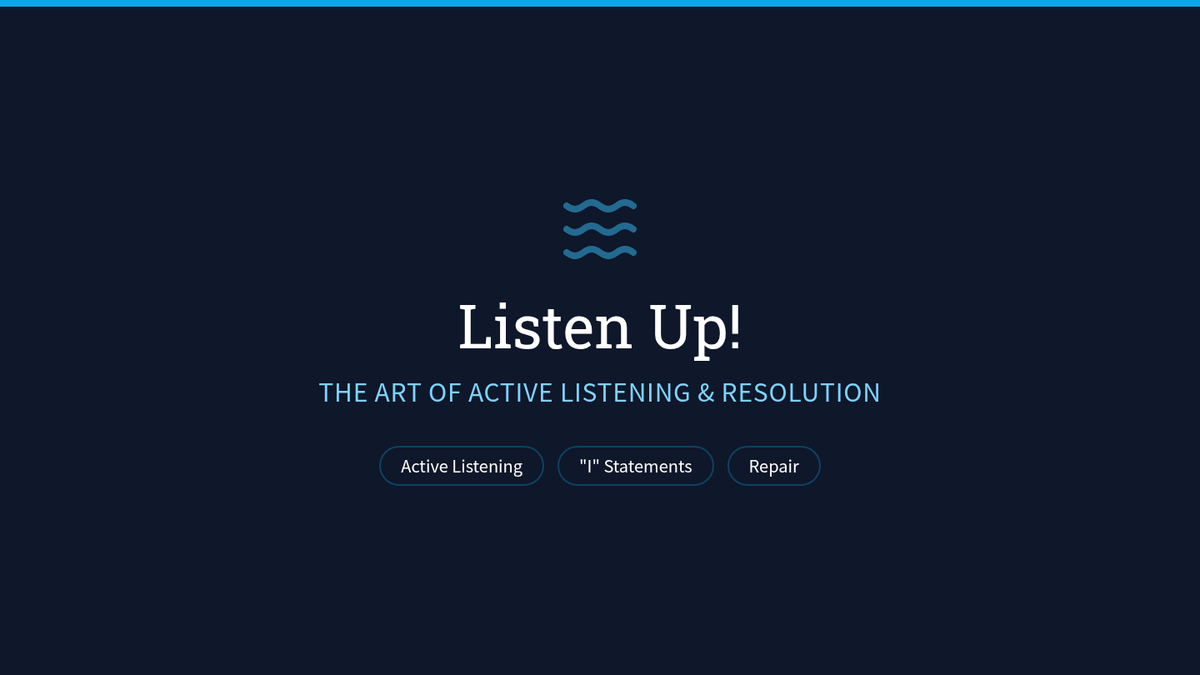
A dynamic slide deck for a conflict resolution workshop. It covers the difference between hearing and listening, the three pillars of active listening, and the 'I' statement formula with practical examples.
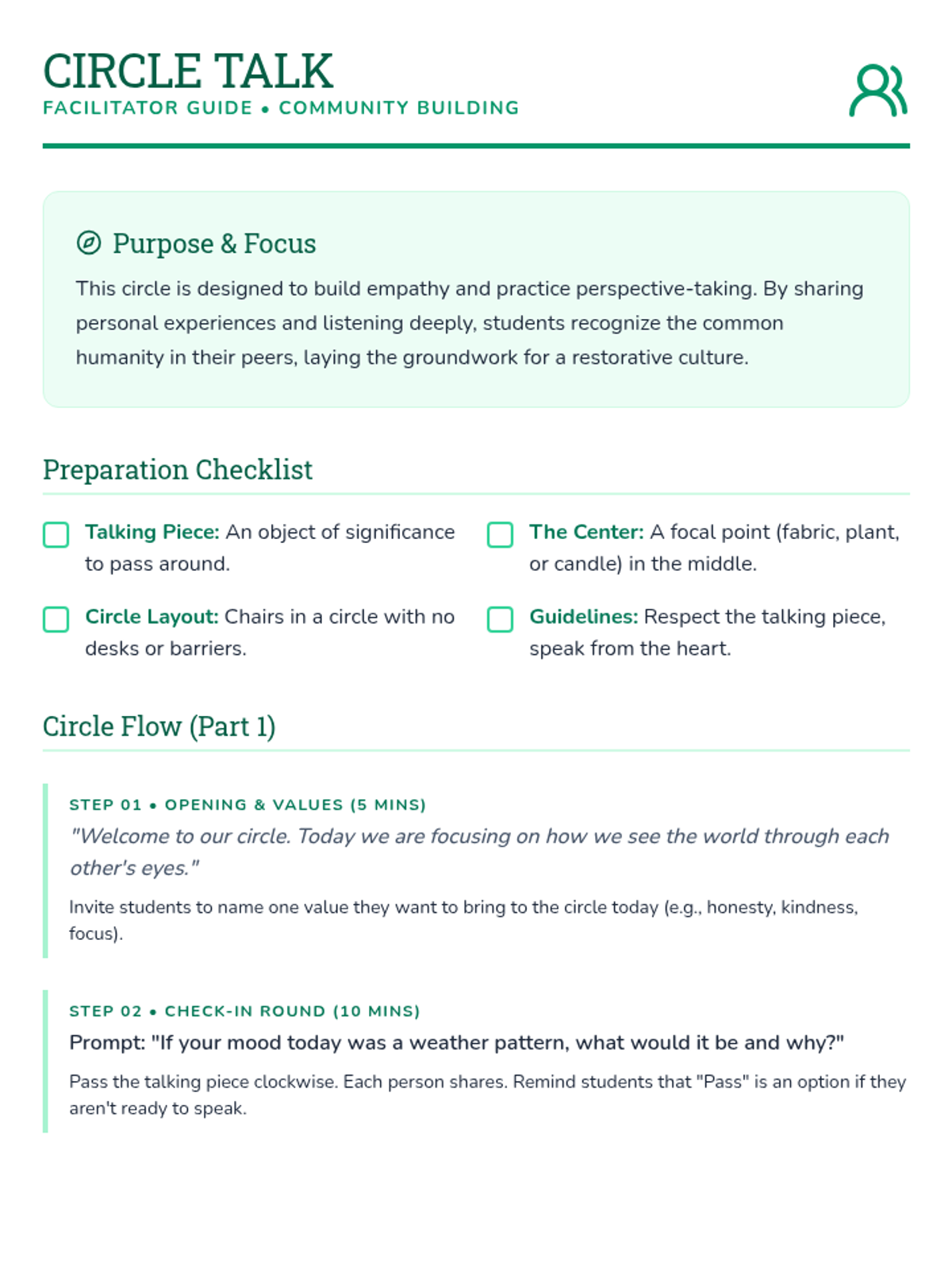
A comprehensive facilitator guide for conducting community-building circles centered on empathy and perspective-taking. It includes prompts, preparation checklists, and a structured flow for the session.
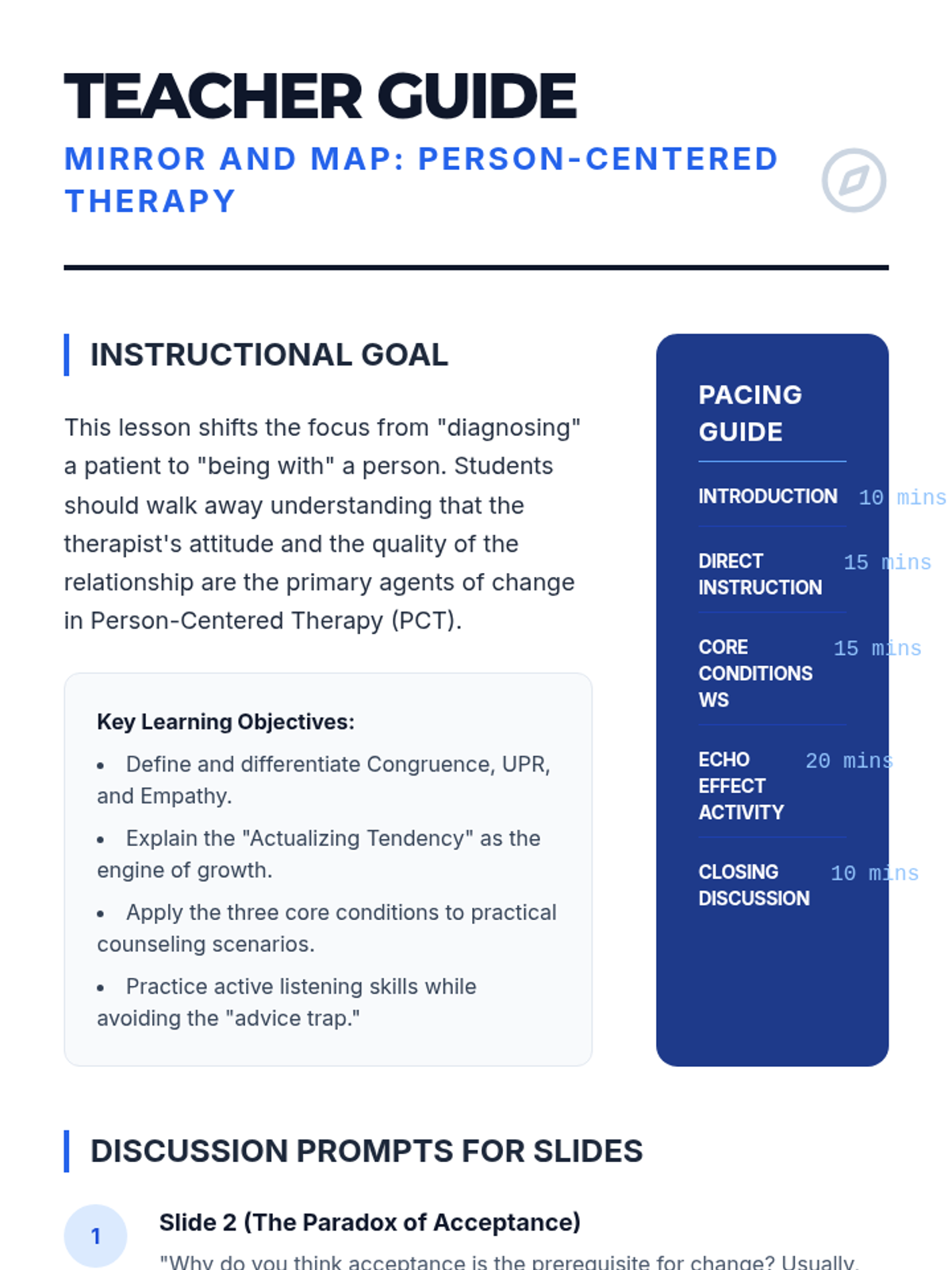
A facilitation guide for teachers covering instructional goals, discussion prompts for slides, an answer key for the worksheet, and differentiation strategies.
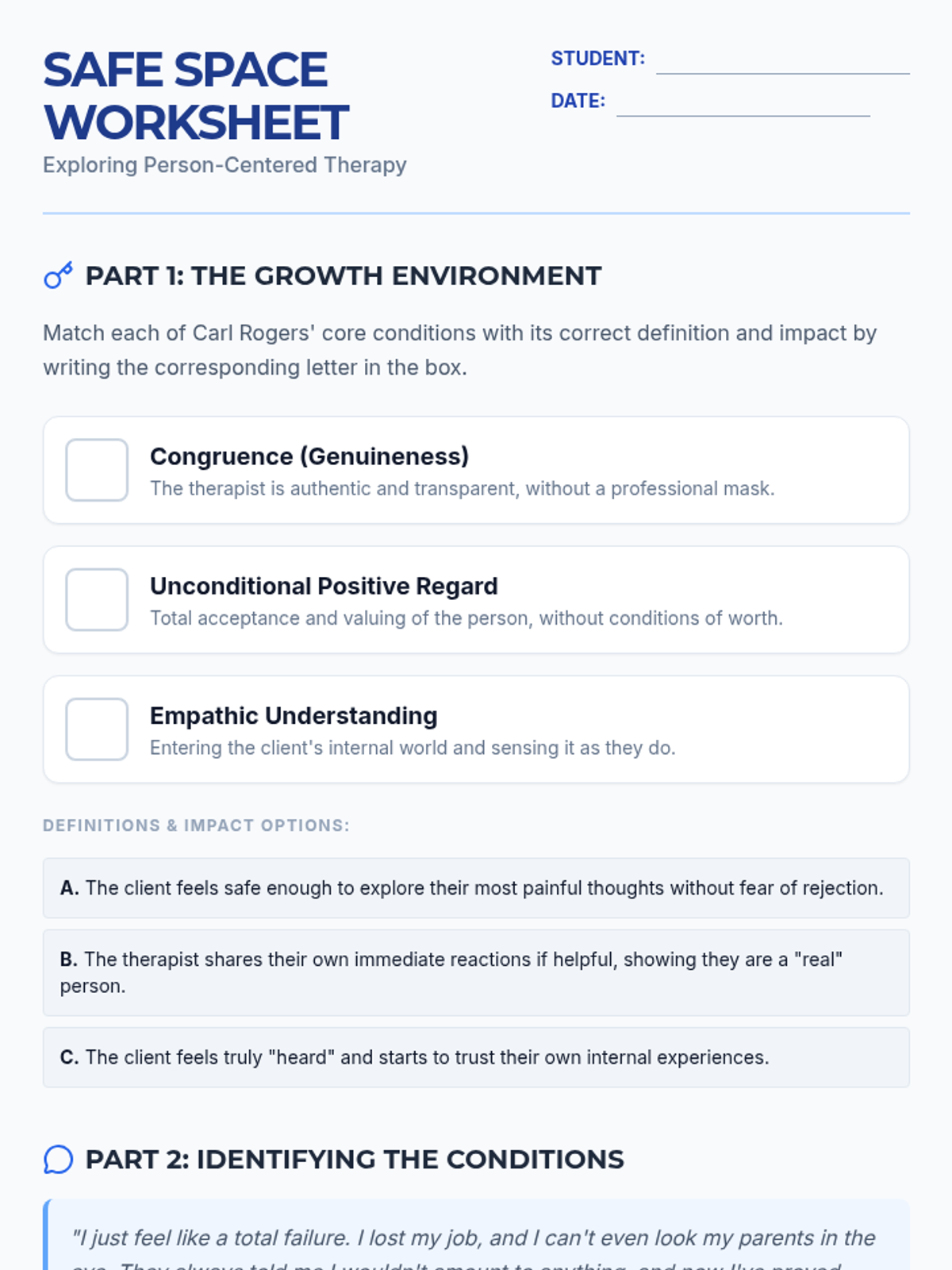
A student worksheet for identifying and applying the three core conditions of Person-Centered Therapy (Congruence, UPR, and Empathy) to scenarios and personal growth.
A visual presentation introducing Carl Rogers' Person-Centered Therapy, the concept of the actualizing tendency, and the three core conditions for growth.
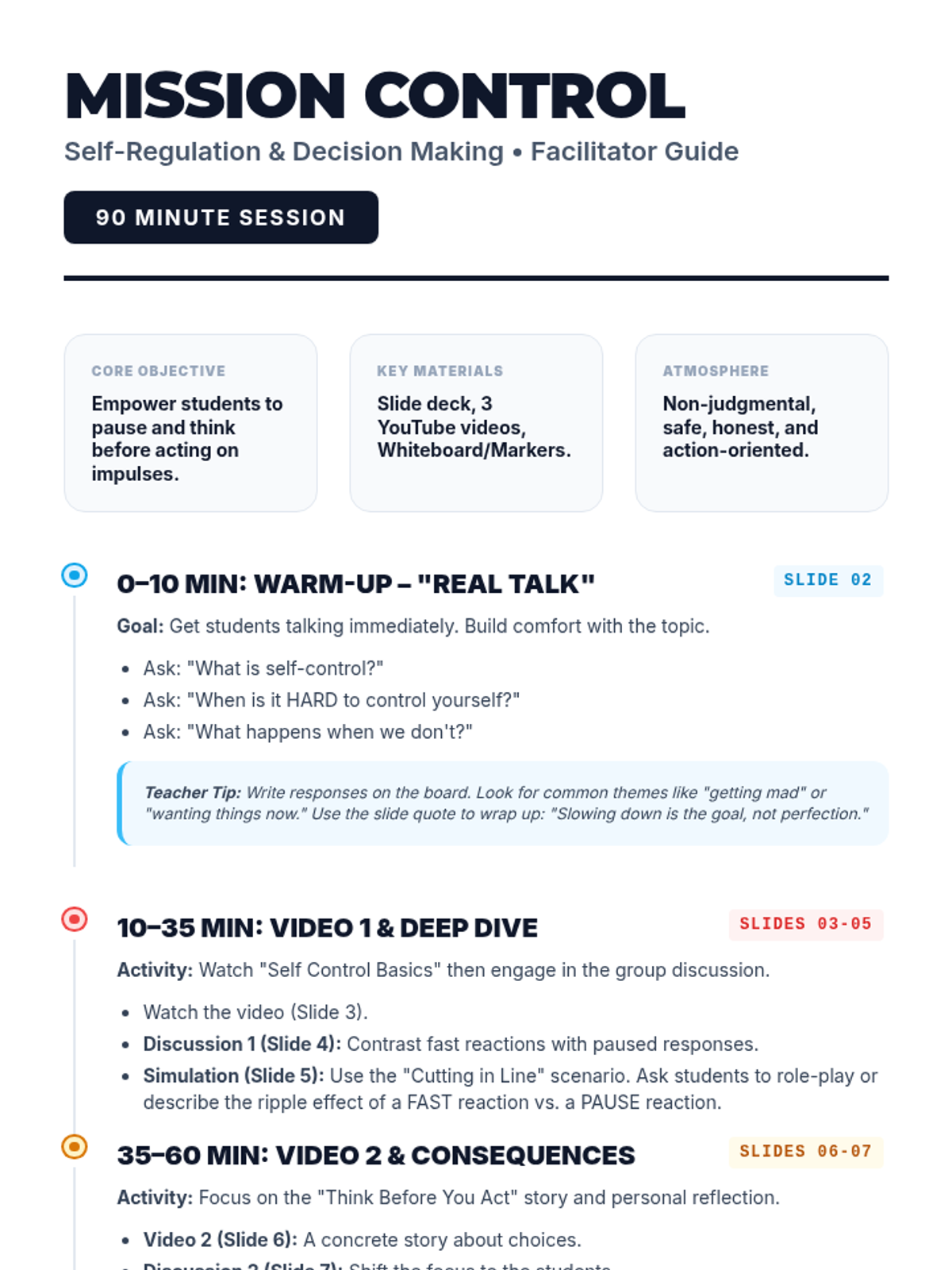
A detailed facilitator guide for the Mission Control lesson, providing time-stamped instructions, discussion prompts, and teacher tips for managing a 90-minute session.
A high-energy, 10-slide presentation for teaching self-control, featuring embedded YouTube videos, discussion prompts, and interactive simulation scenarios.
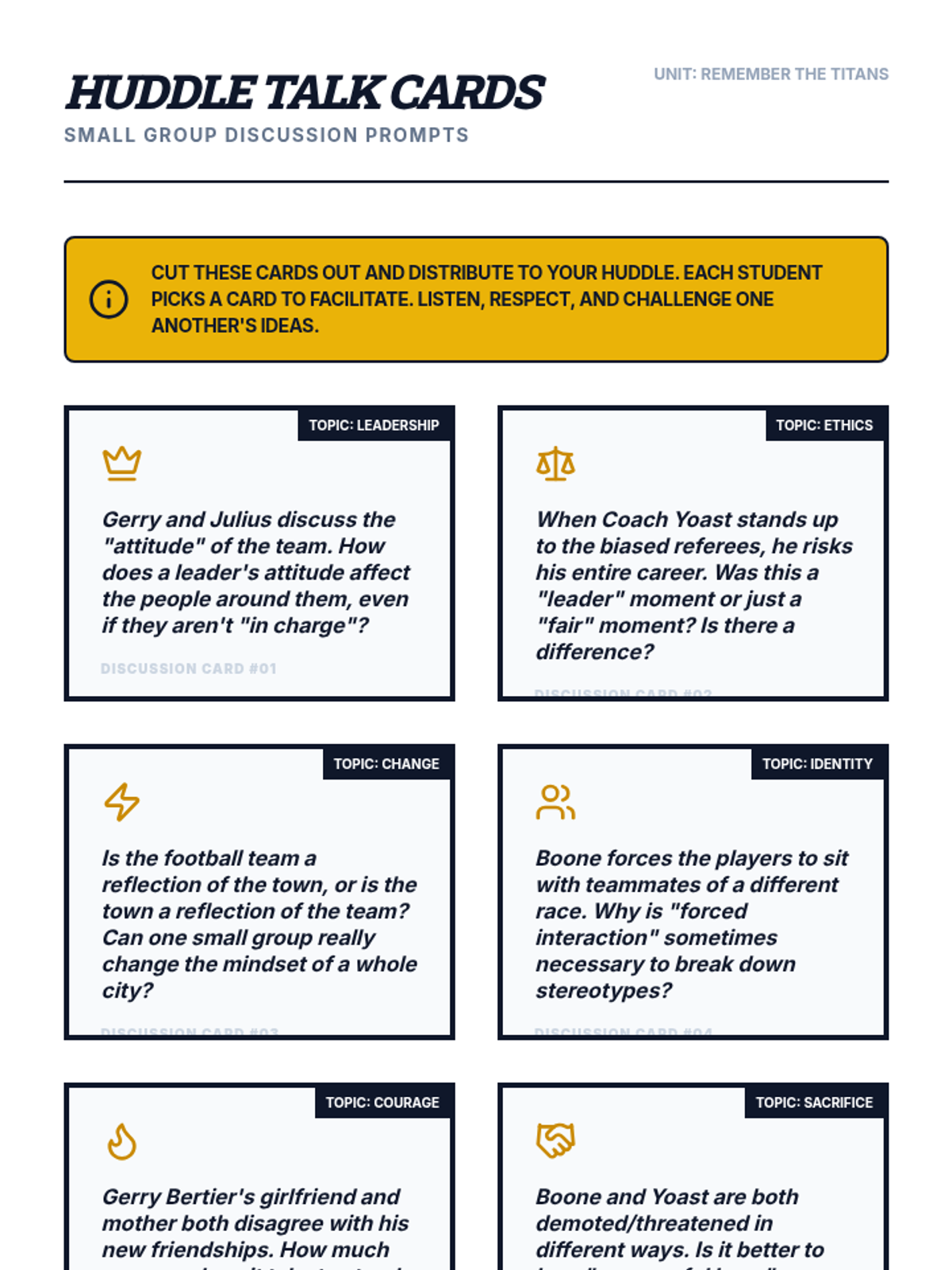
A set of printable discussion cards for small group huddles, featuring high-interest prompts about leadership, ethics, and social change in Remember the Titans.
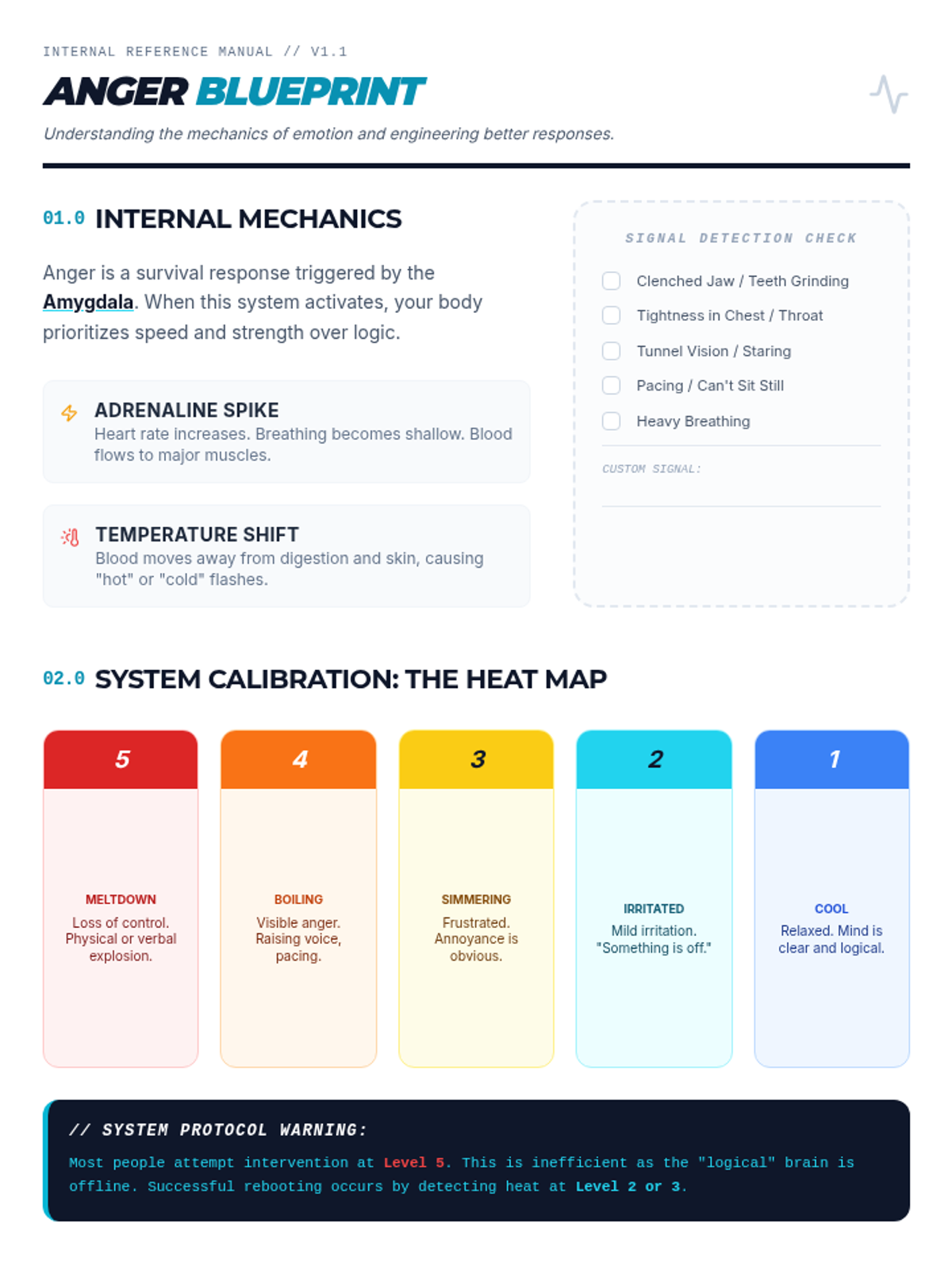
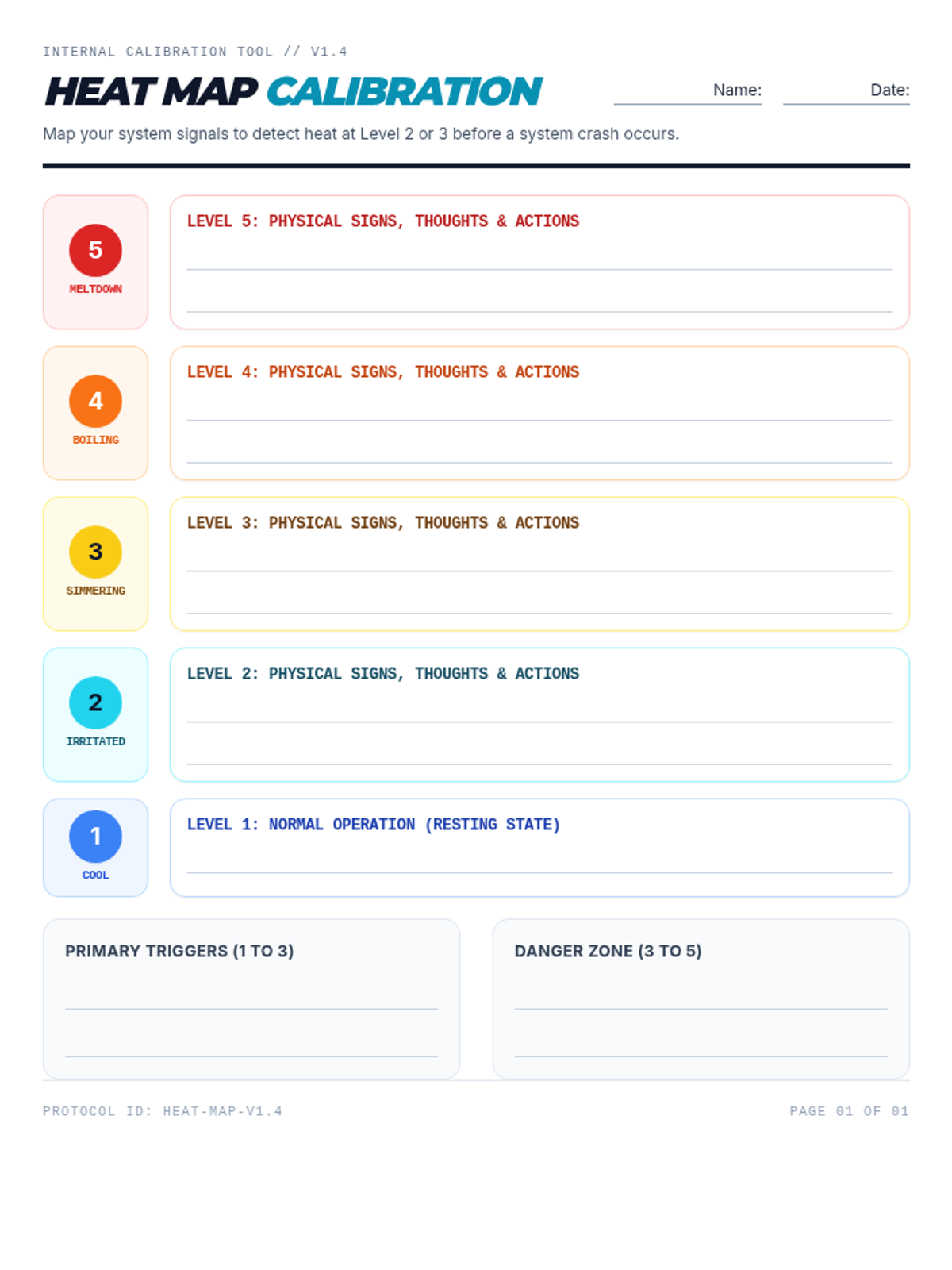
A two-page reference handout for teenagers that consolidates the Anger Blueprint curriculum, including internal mechanics, the Heat Map scale, 'I' statement syntax, and de-escalation protocols.
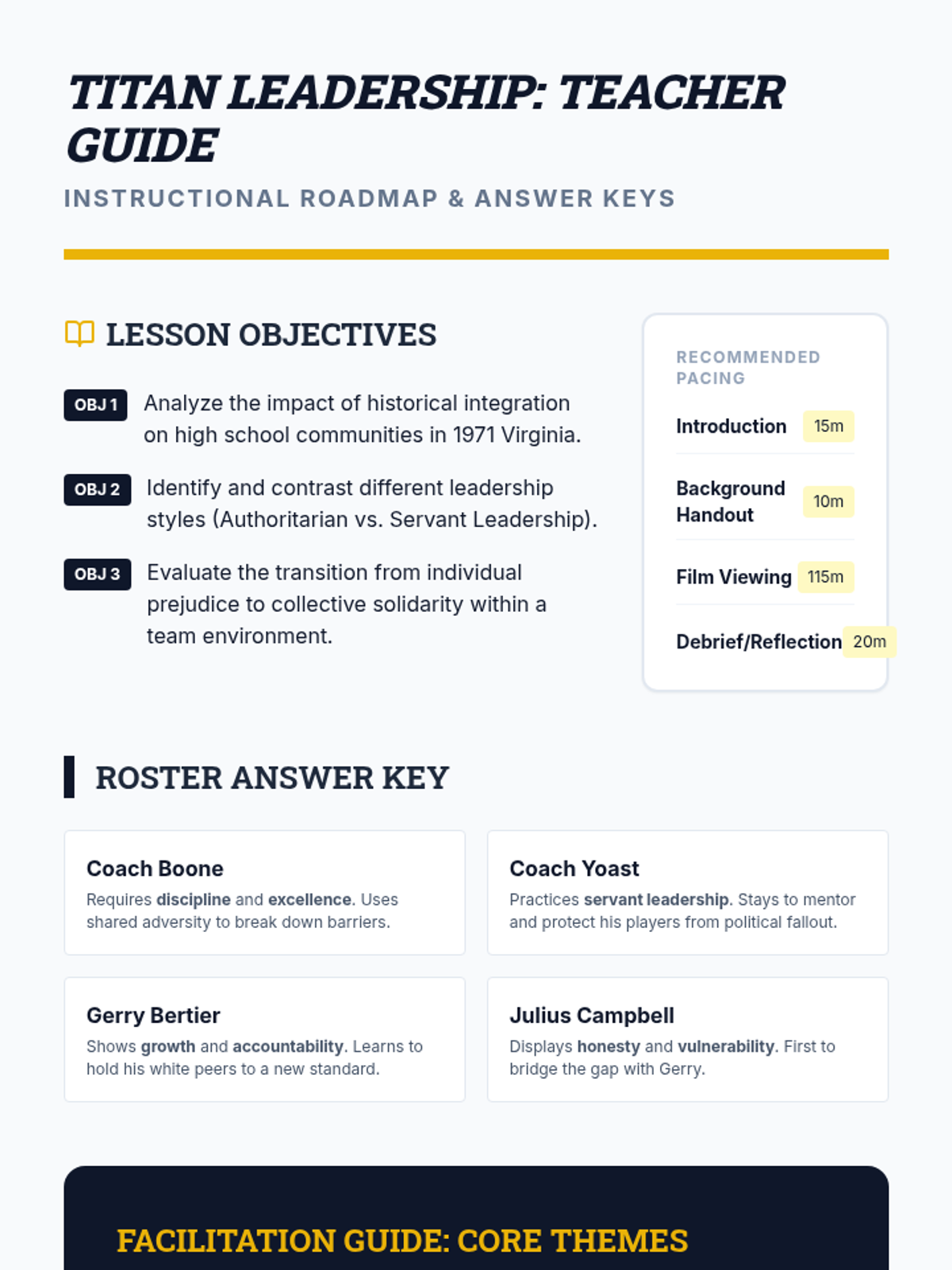
A comprehensive teacher guide for the Remember the Titans unit, featuring lesson objectives, recommended pacing, character analysis keys, and tips for facilitating discussions on racial prejudice and leadership.
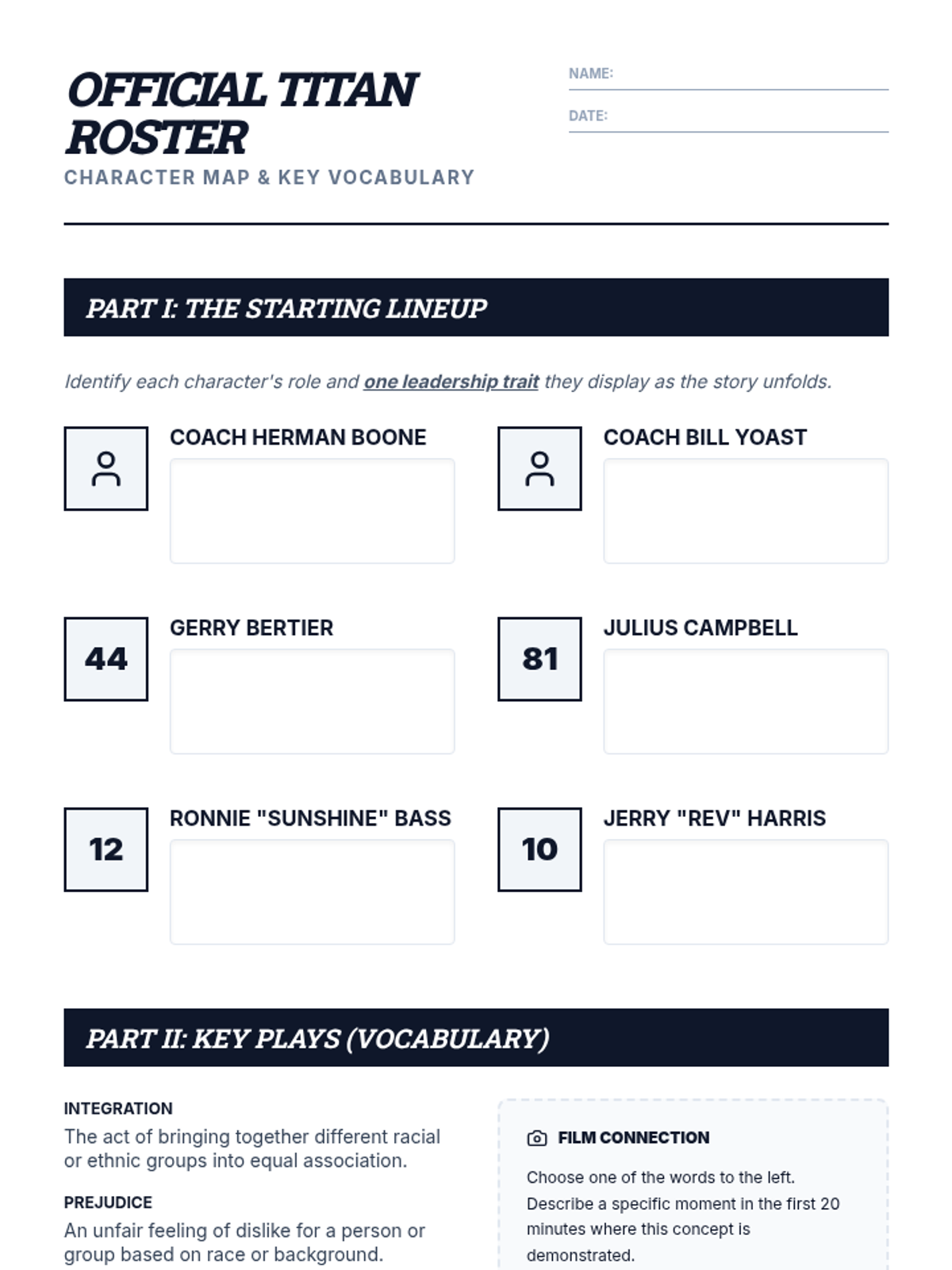
A character mapping and vocabulary worksheet for students to complete while watching Remember the Titans. It focuses on identifying leadership traits in key characters and applying sociological concepts to the film's events.
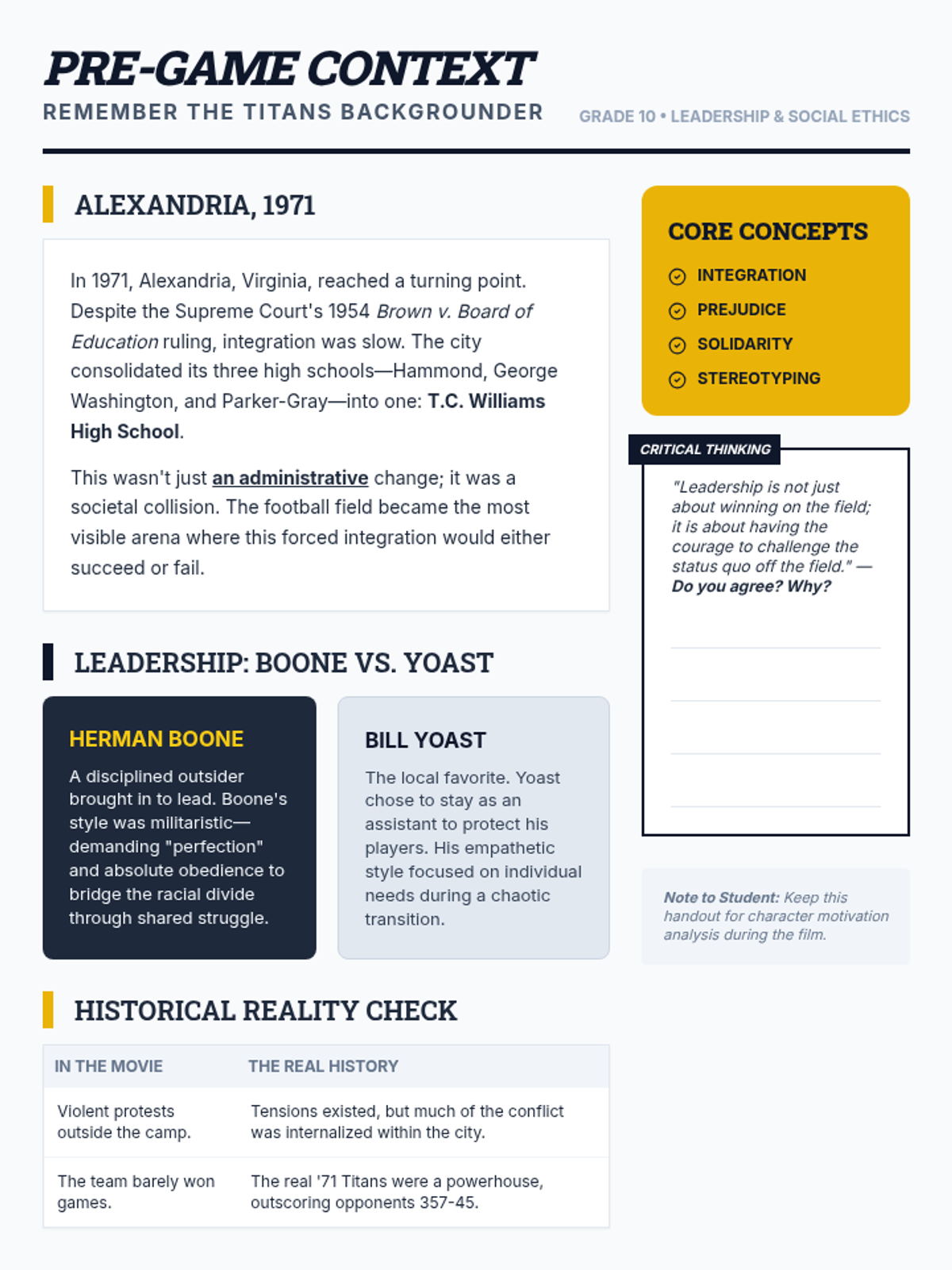
A student-facing handout providing historical context on the integration of T.C. Williams High School, the Civil Rights background of 1971 Alexandria, and a comparison of historical facts vs. cinematic dramatization.
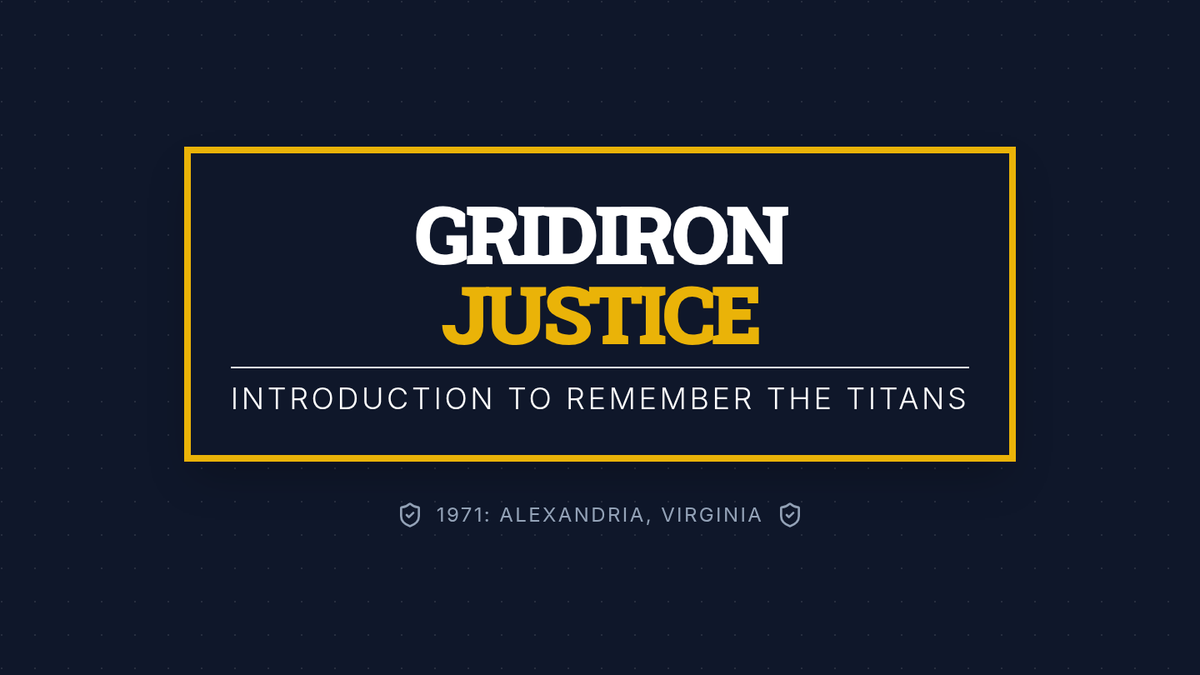
A visual presentation introducing the setting, main characters, and core themes of Remember the Titans. It sets the stage for the 1971 integration context and establishes the contrasting leadership styles of Coaches Boone and Yoast.
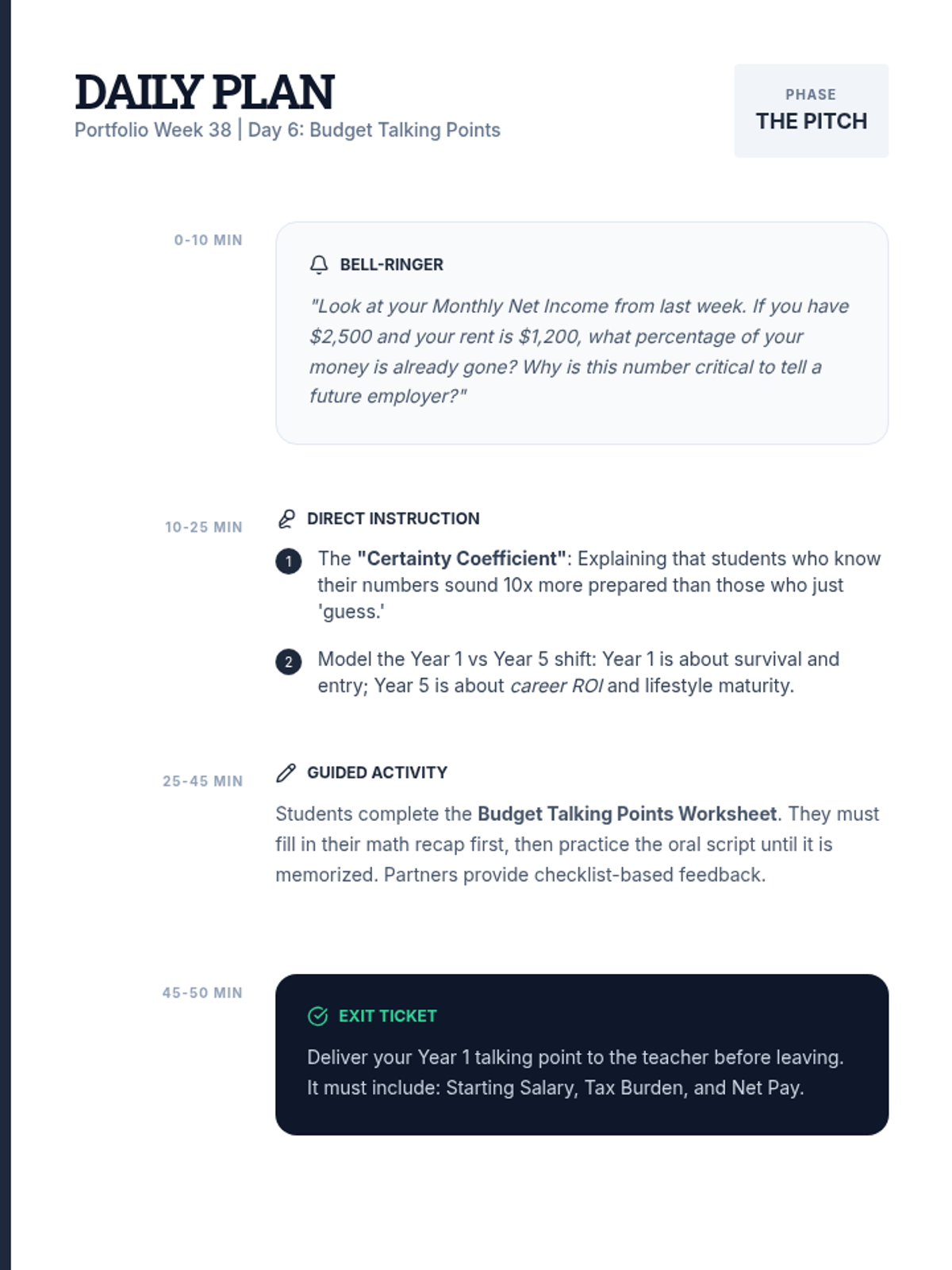
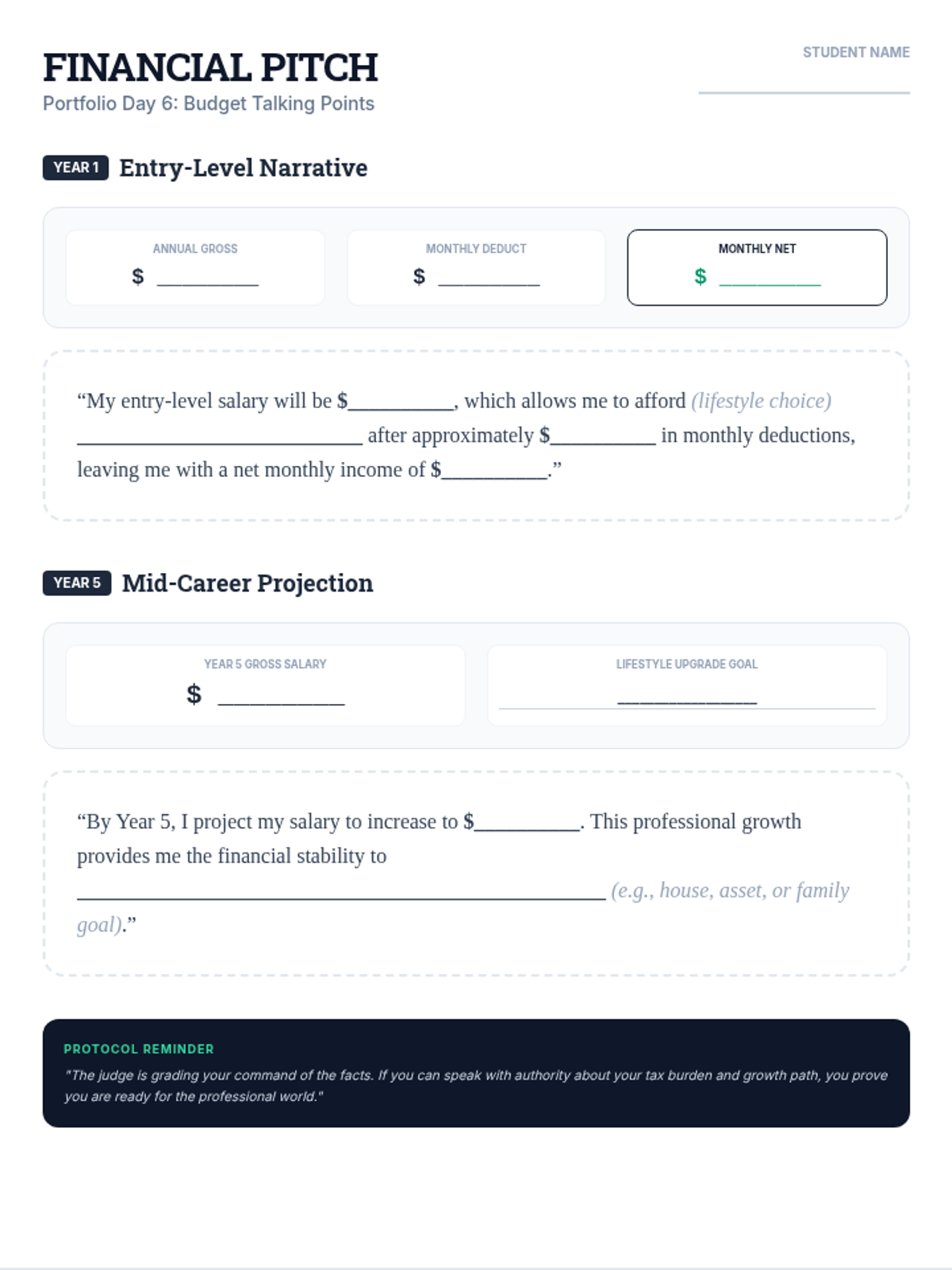
Day 6 teacher guide focusing on preparing students for the financial portion of their oral defense. Includes instruction on the "Certainty Coefficient" and facilitates script practice for Year 1 and Year 5 budgets.
A 2-page worksheet specifically for Budget Talking Points (Year 1 and Year 5). Provides structured drafting areas for the mandatory financial scripts, data recap boxes, and a partner-review protocol for oral defense fluency. Revised for better page breaks and contrast.
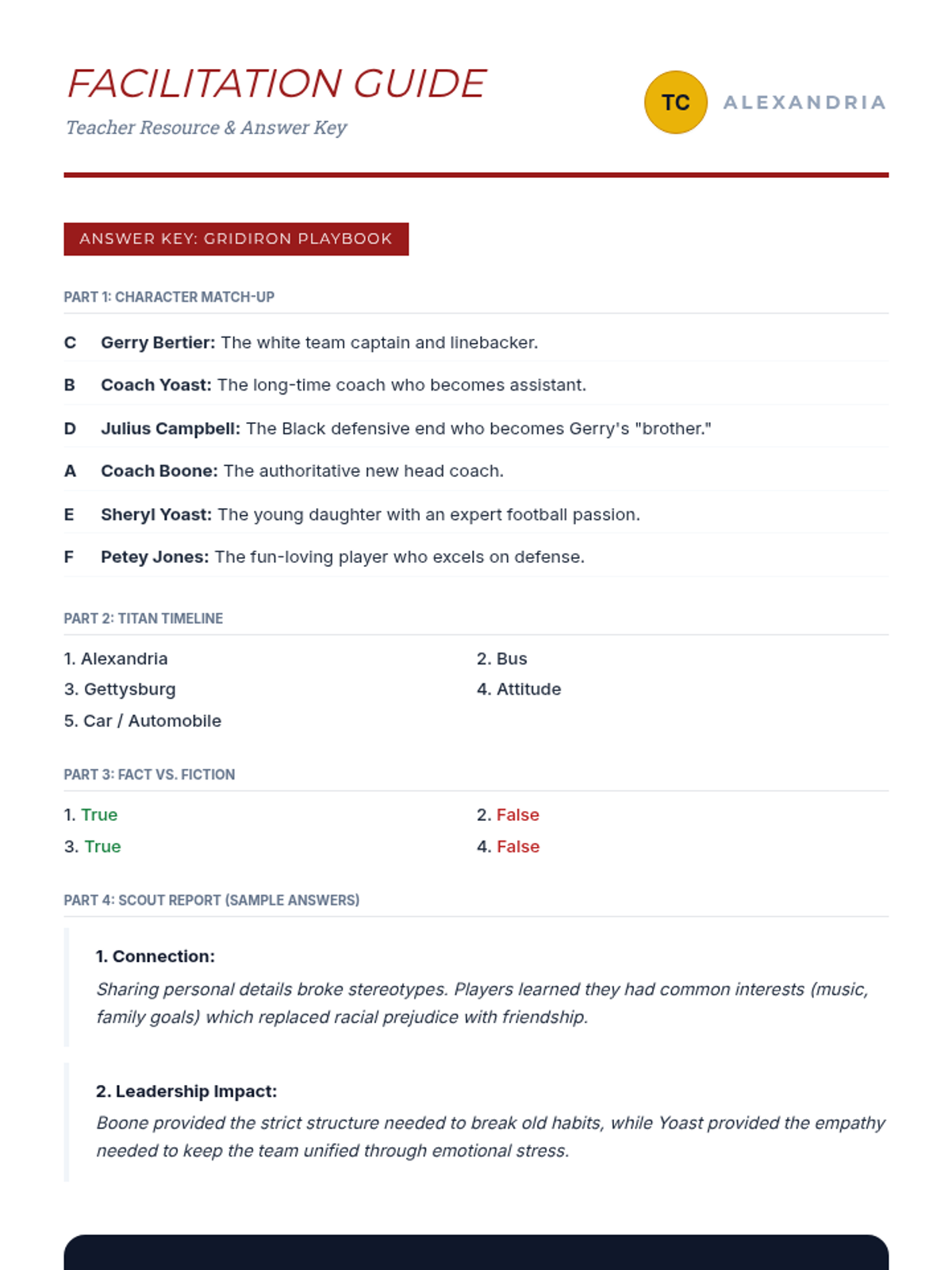
A teacher's facilitation guide and answer key for the 'Remember the Titans' lesson. Includes lesson objectives, detailed answers for the movie guide, and discussion tips for classroom management.
A visual presentation for 'Remember the Titans' focusing on leadership styles, historical context, and key character moments like the Gettysburg speech. High-contrast athletic theme with clear takeaways.
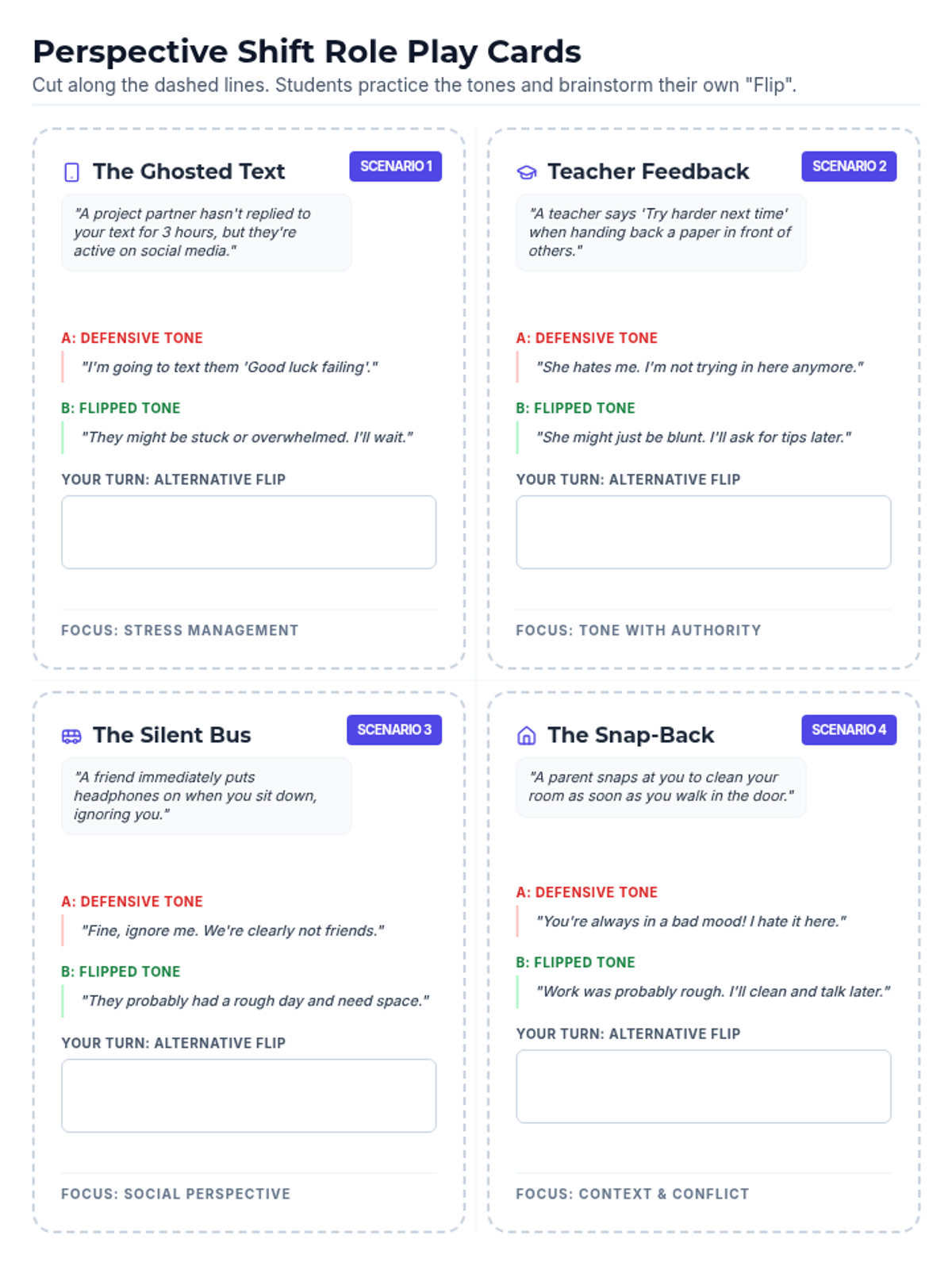
A set of printable role-play cards featuring common high school transition scenarios. Each card includes a "defensive" reaction and a "perspective flip" reaction to practice tone and empathy.
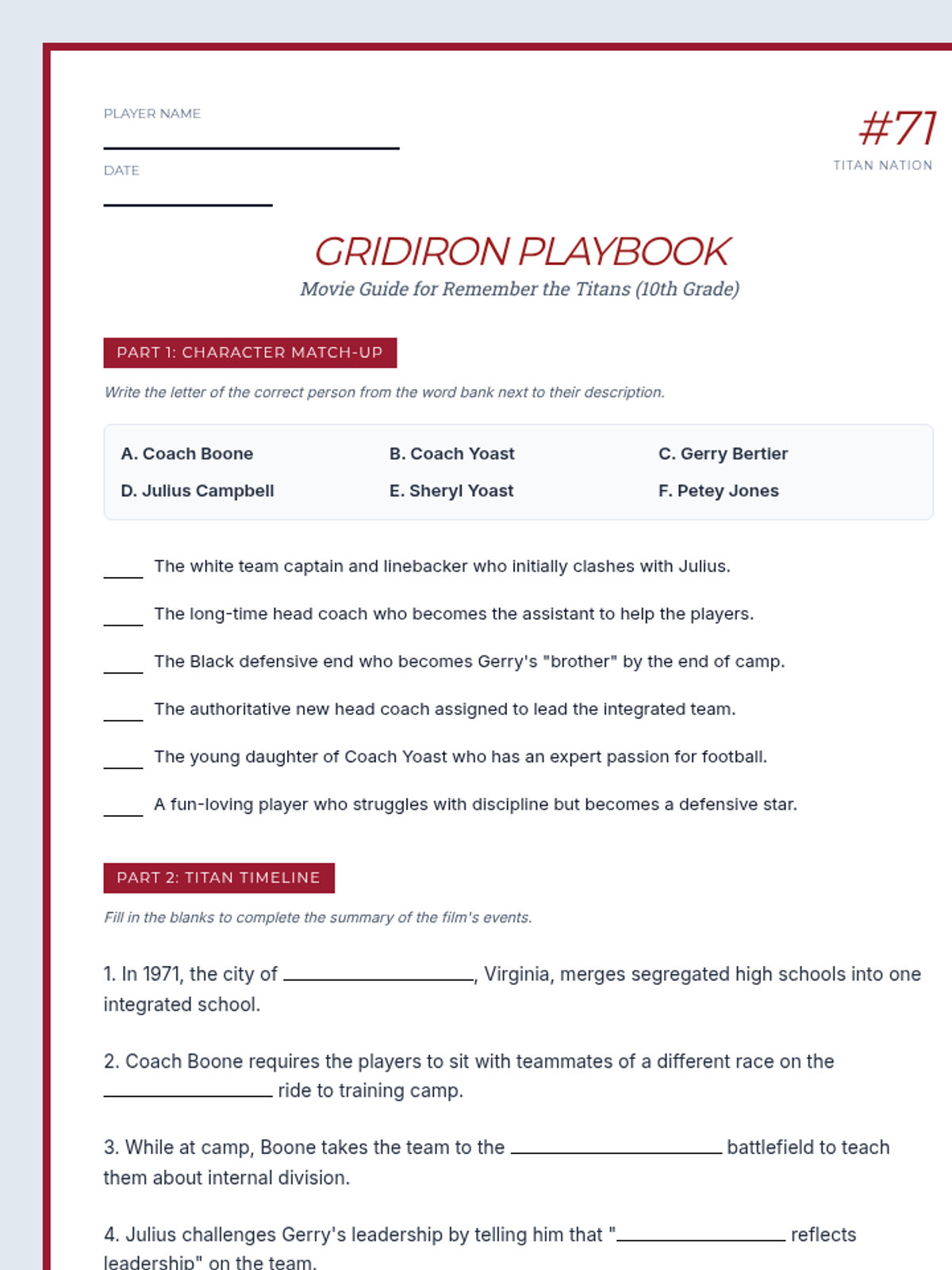
A simplified movie guide for 'Remember the Titans' tailored for 10th-grade students. It includes character matching, fill-in-the-blank sentences, true/false questions, and short analysis prompts within a varsity-themed layout.
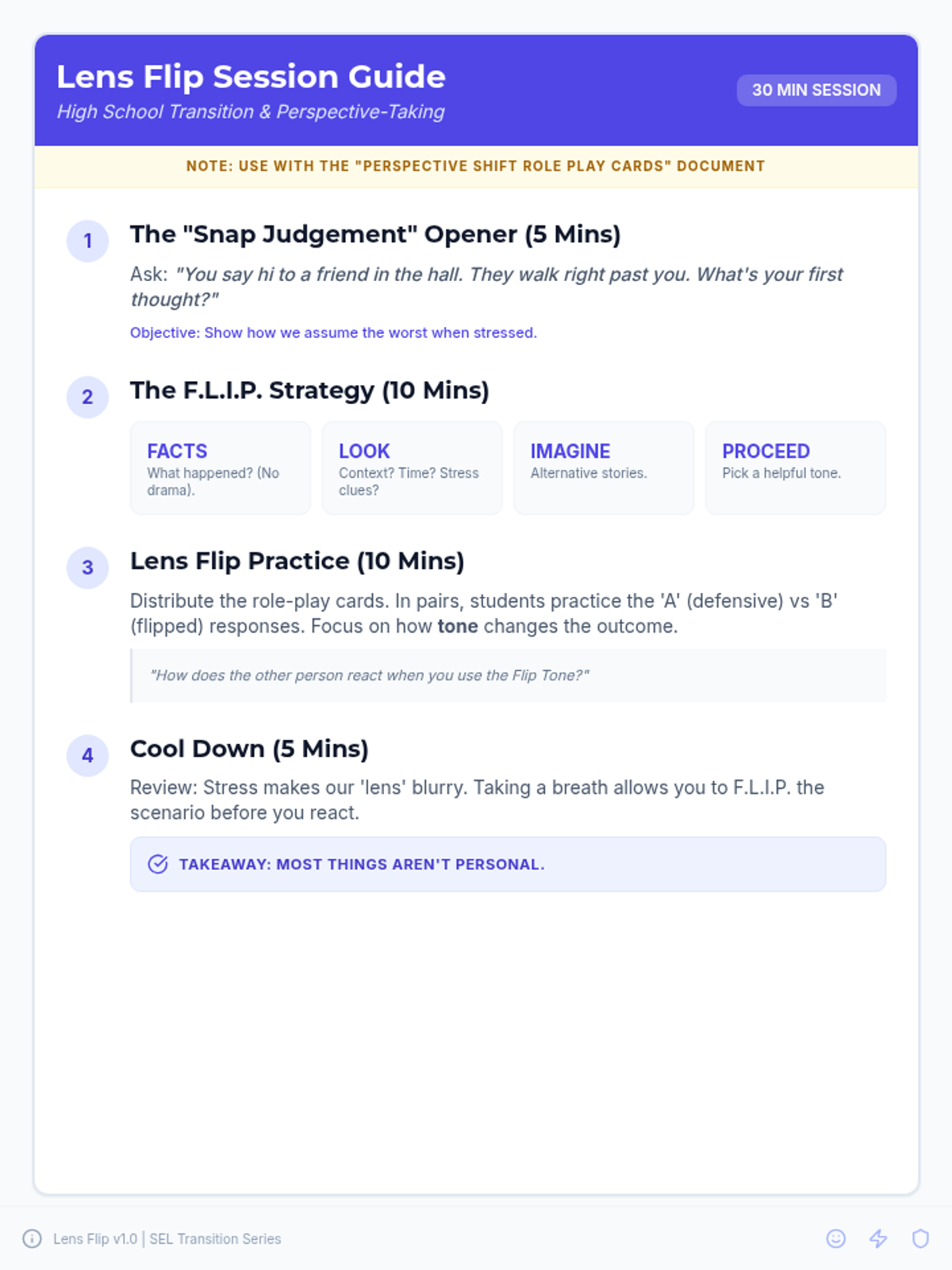
A comprehensive facilitator guide for a 30-minute perspective-taking session for high schoolers, featuring the F.L.I.P. strategy and structured discussion prompts.
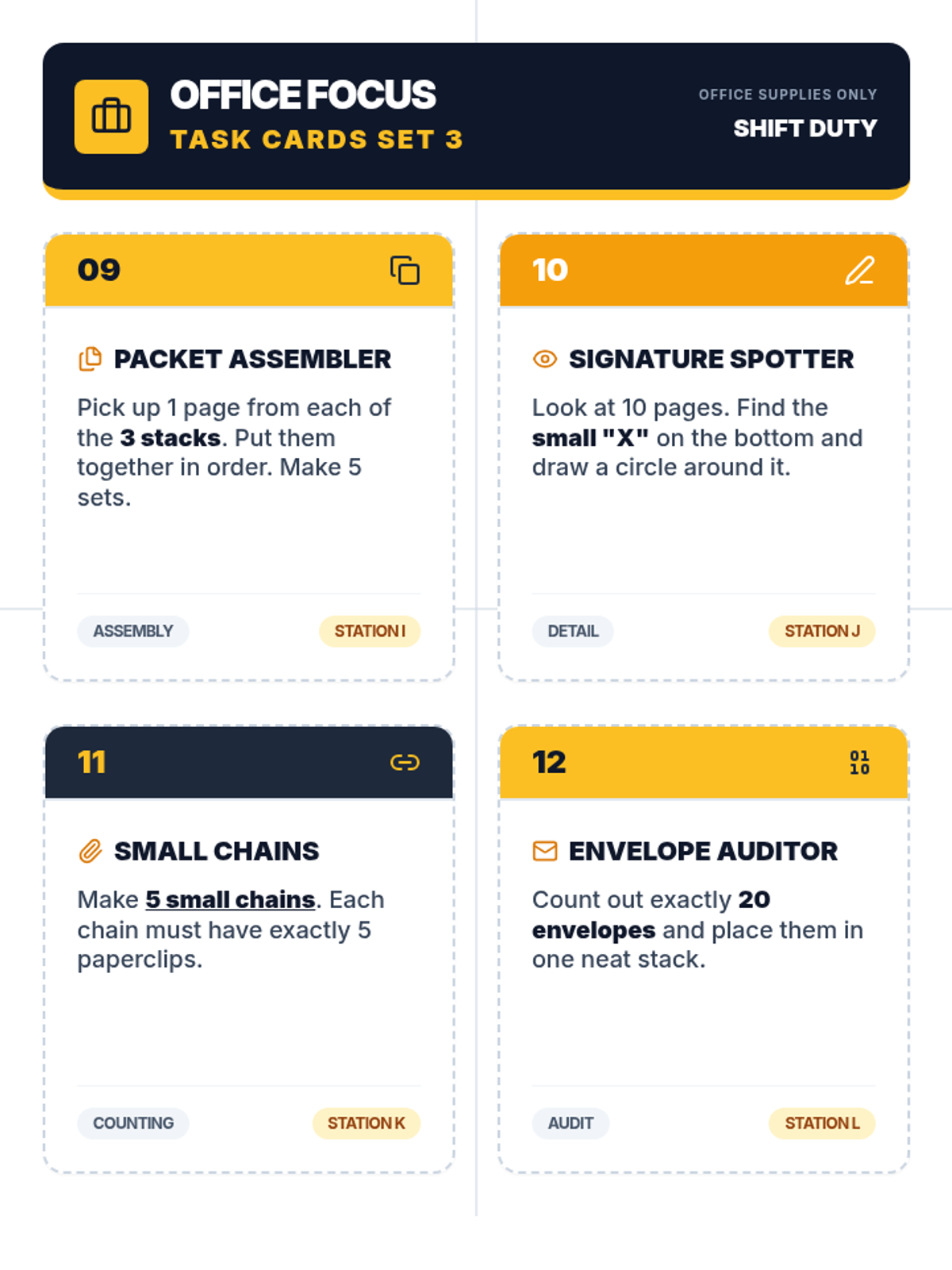
A third set of four printable task cards for the 'Focus Factory' simulation using standard office supplies like paperclips, pens, and envelopes. Includes tasks for assembling packets, spotting signatures, and auditing envelopes.
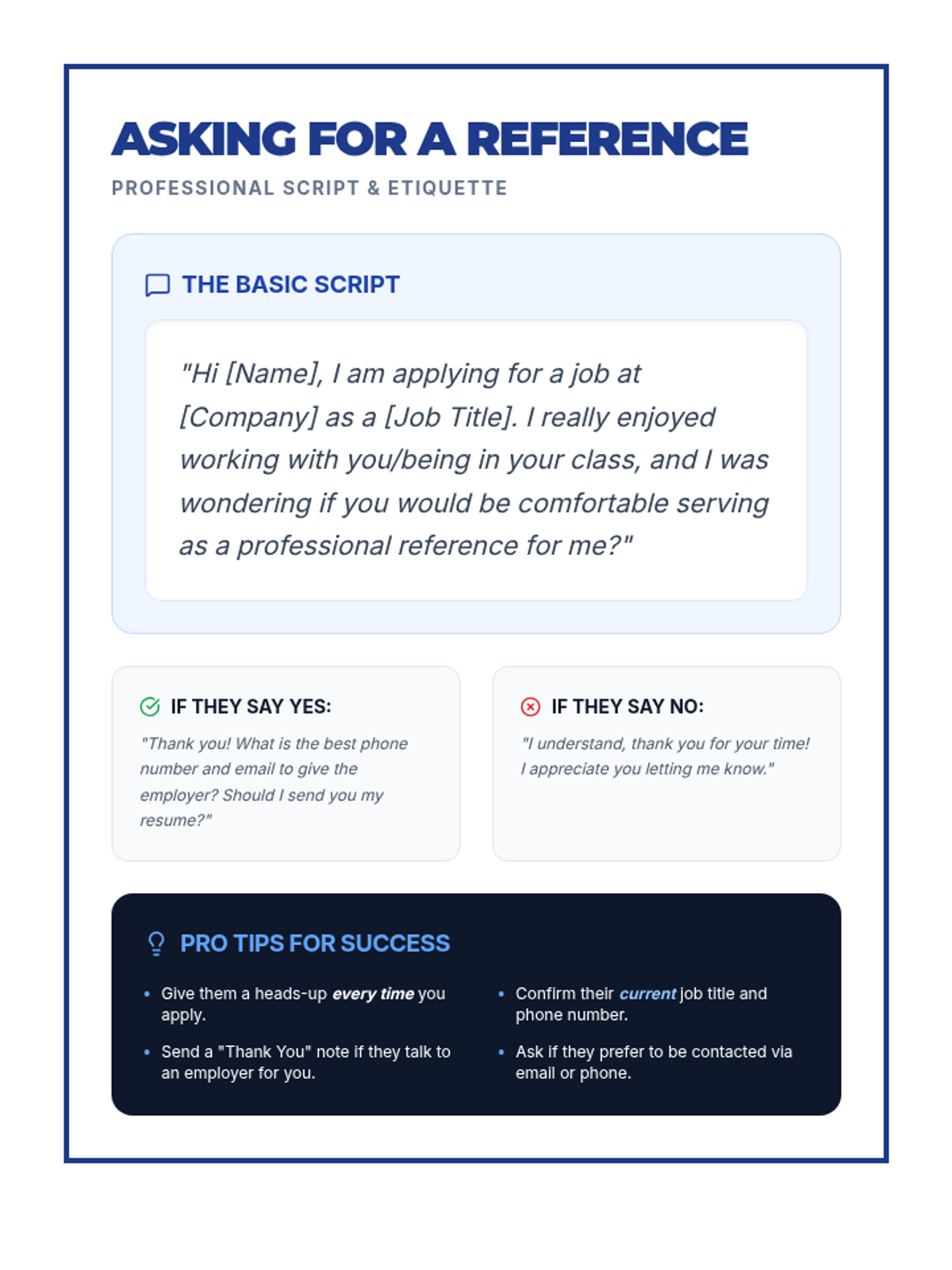
A professional etiquette handout for asking for references, now optimized for a single-page layout.
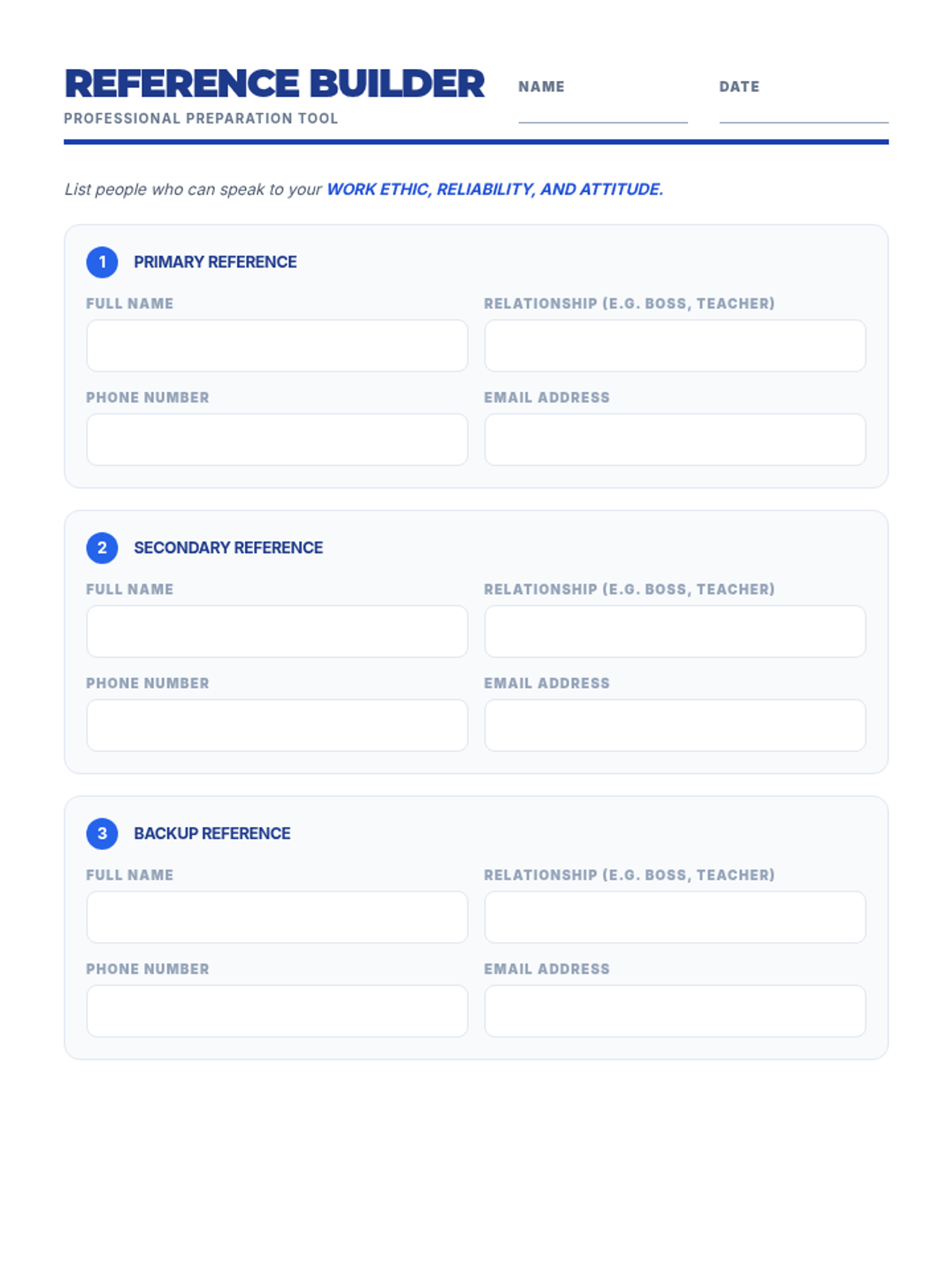
A structured worksheet for students to record potential professional references on a single printable page.
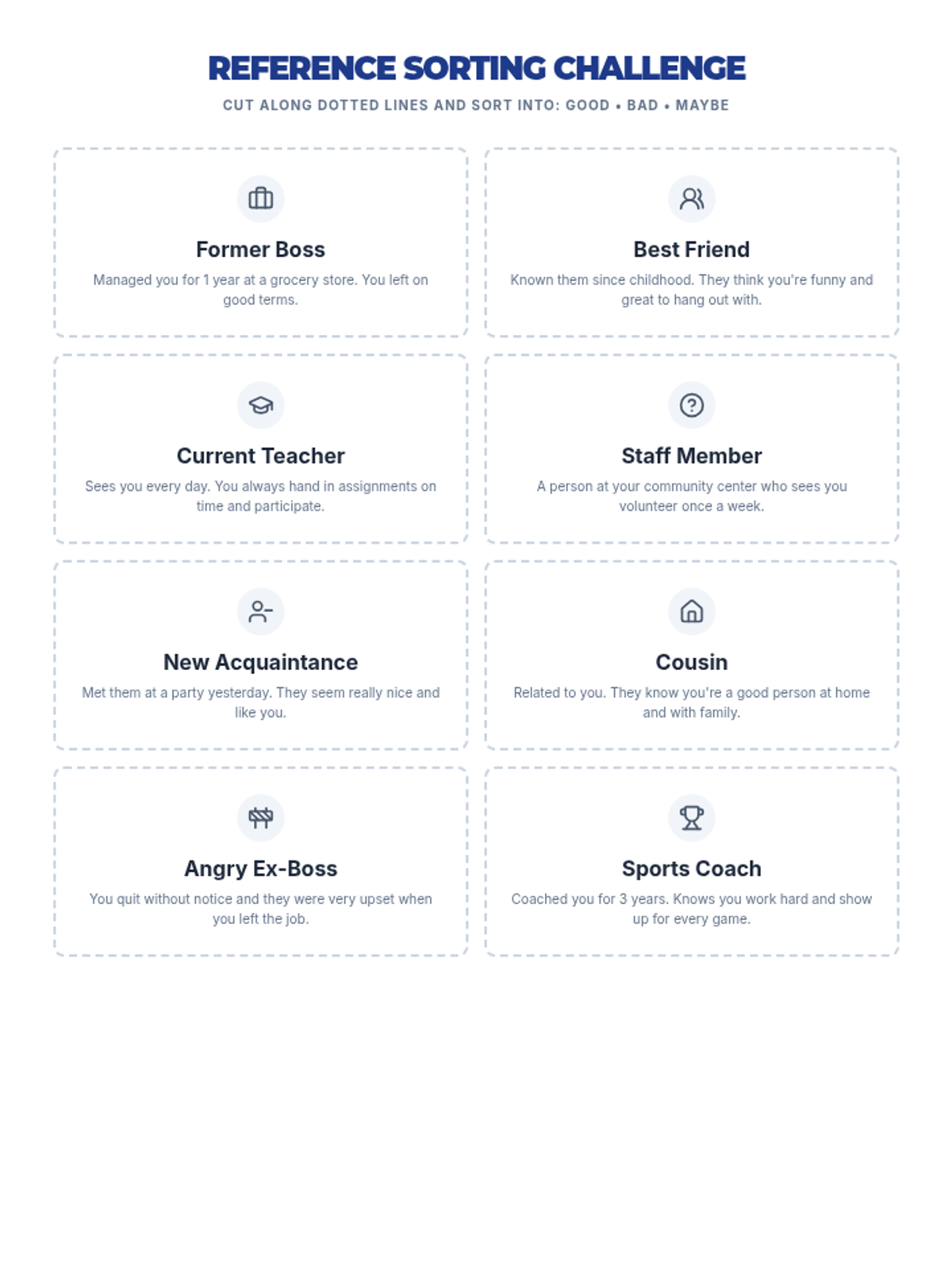
A single-page printable set of sorting cards for identifying high-quality professional references.
Visual presentation slides for a workshop on employment references, covering definitions, activity instructions, and common red flags.
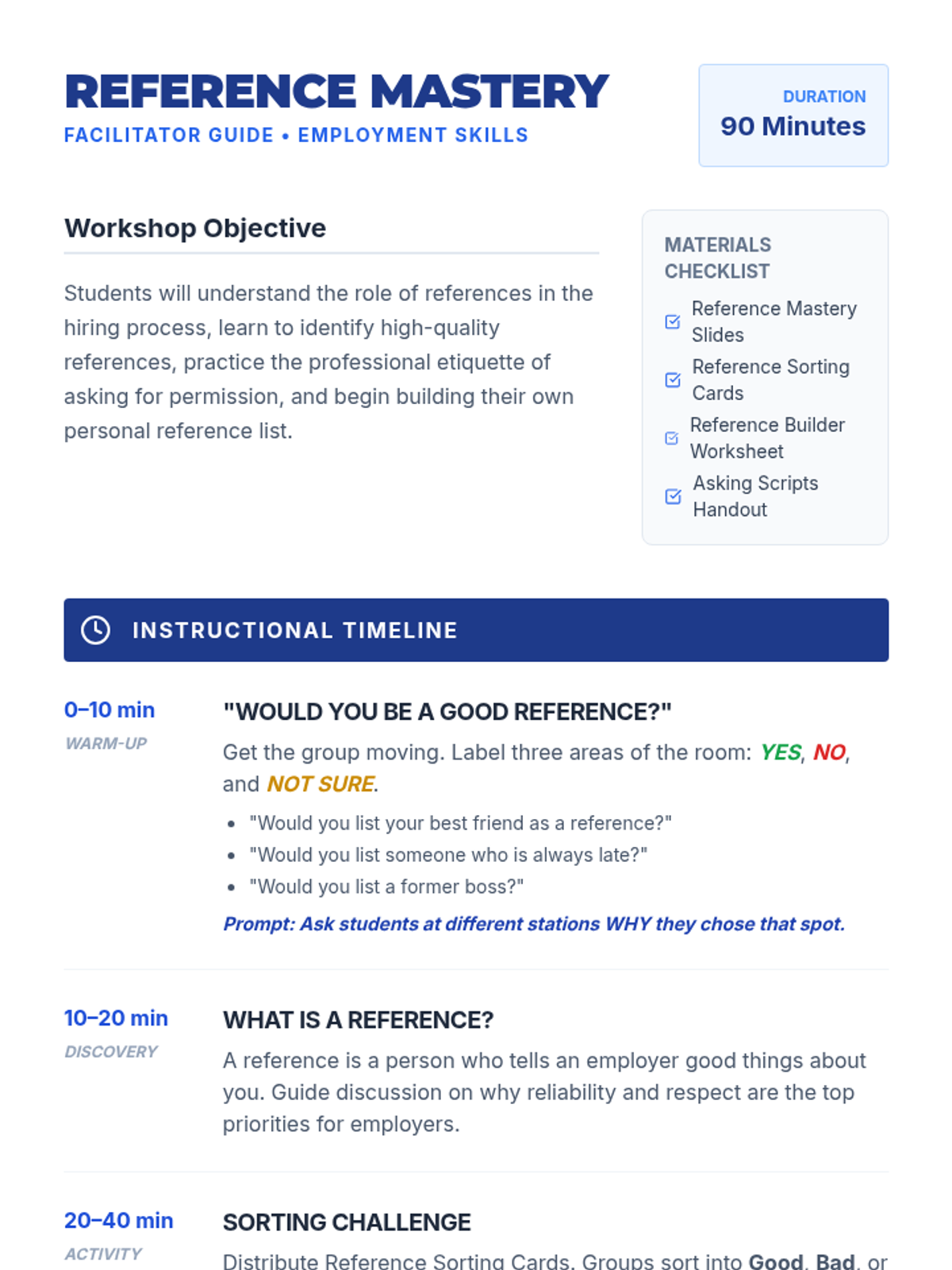
A detailed 90-minute workshop plan for employment training, focusing on selecting, building, and professionally asking for job references.
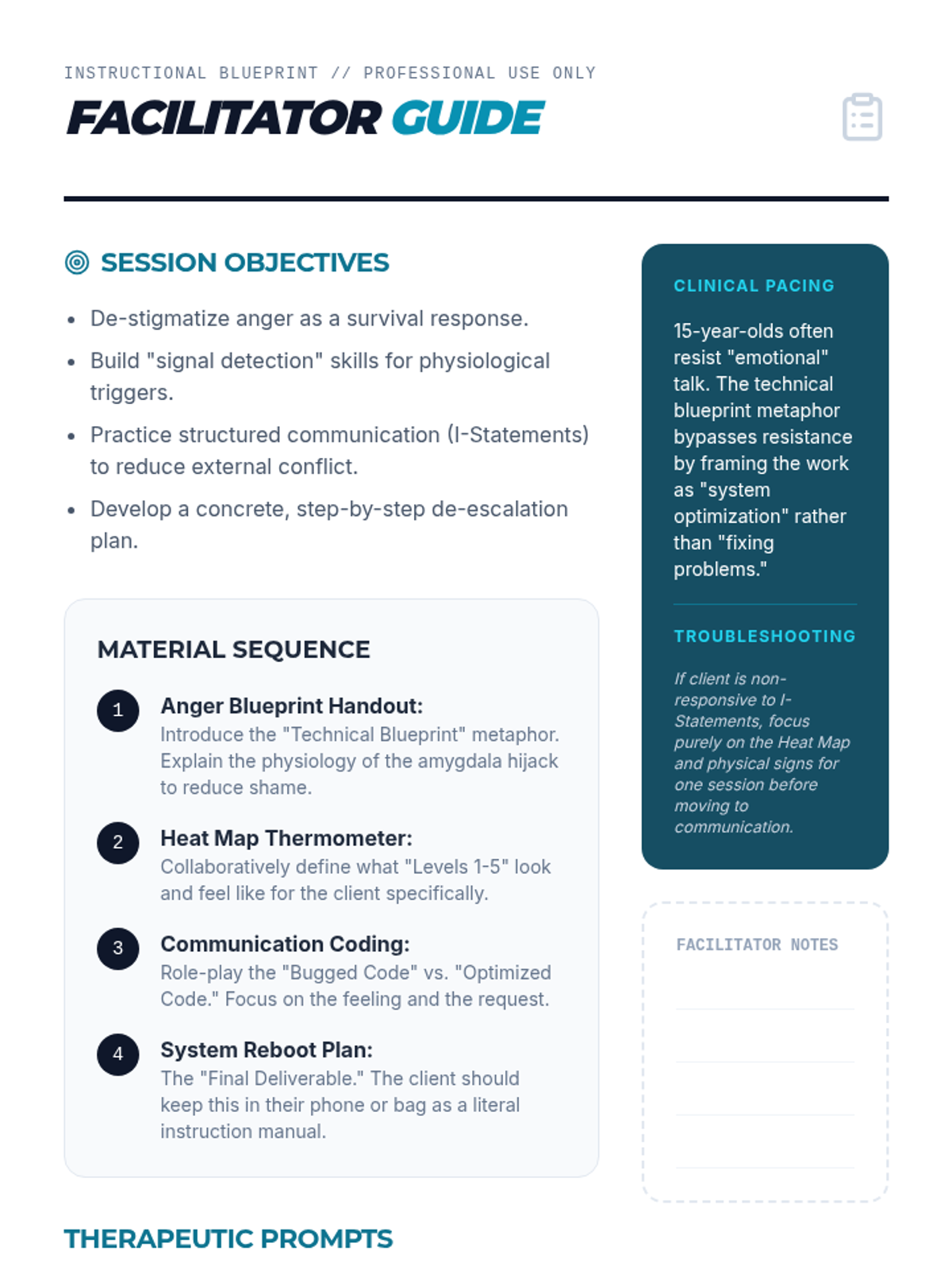
A teacher/therapist facilitation guide providing clinical context, session objectives, and delivery strategies for using the Anger Management Blueprint materials with teenagers.
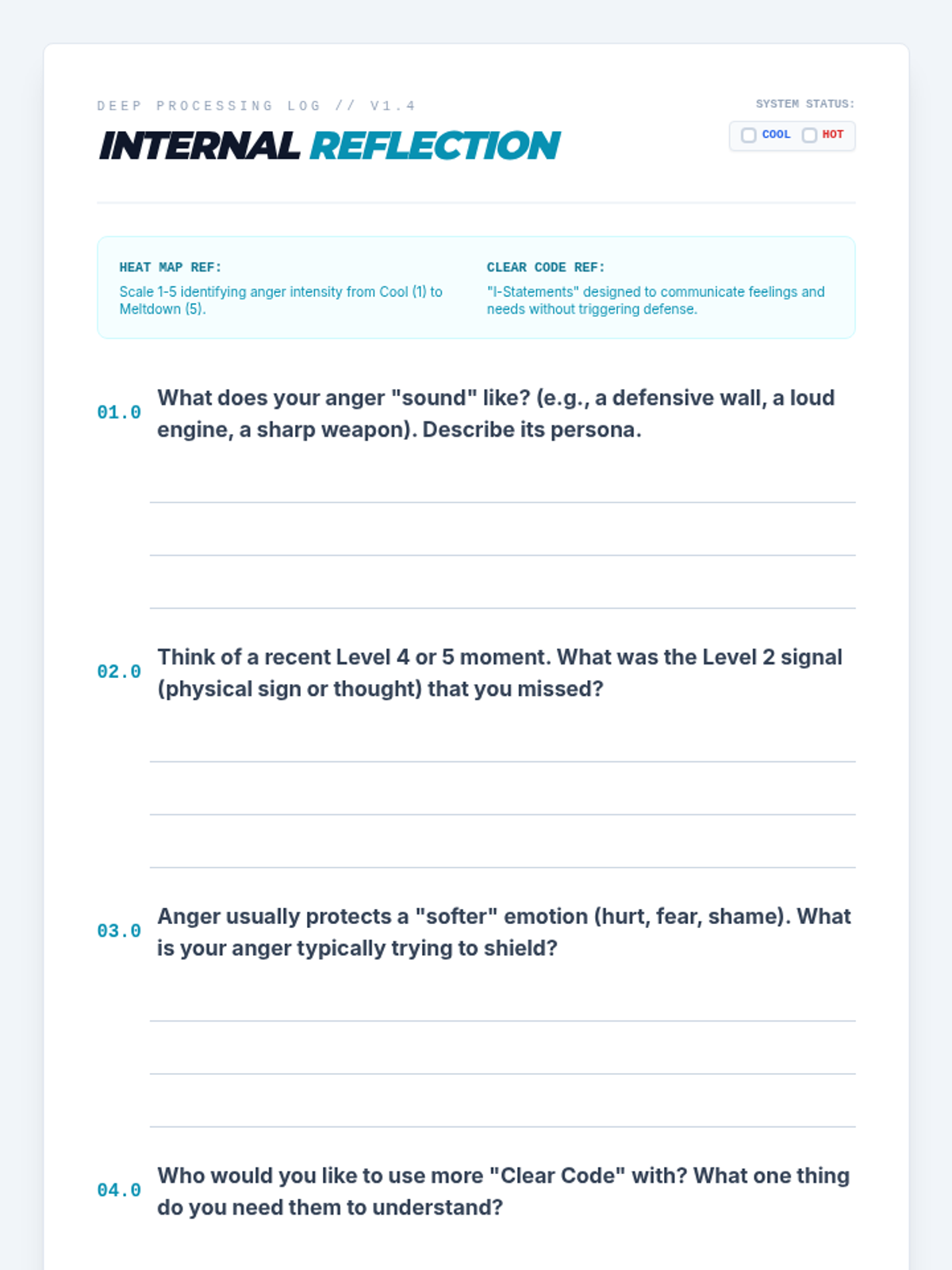
A reflective journaling document for teenagers with deep prompts about the persona of their anger, body signals, and the emotions hidden beneath anger.
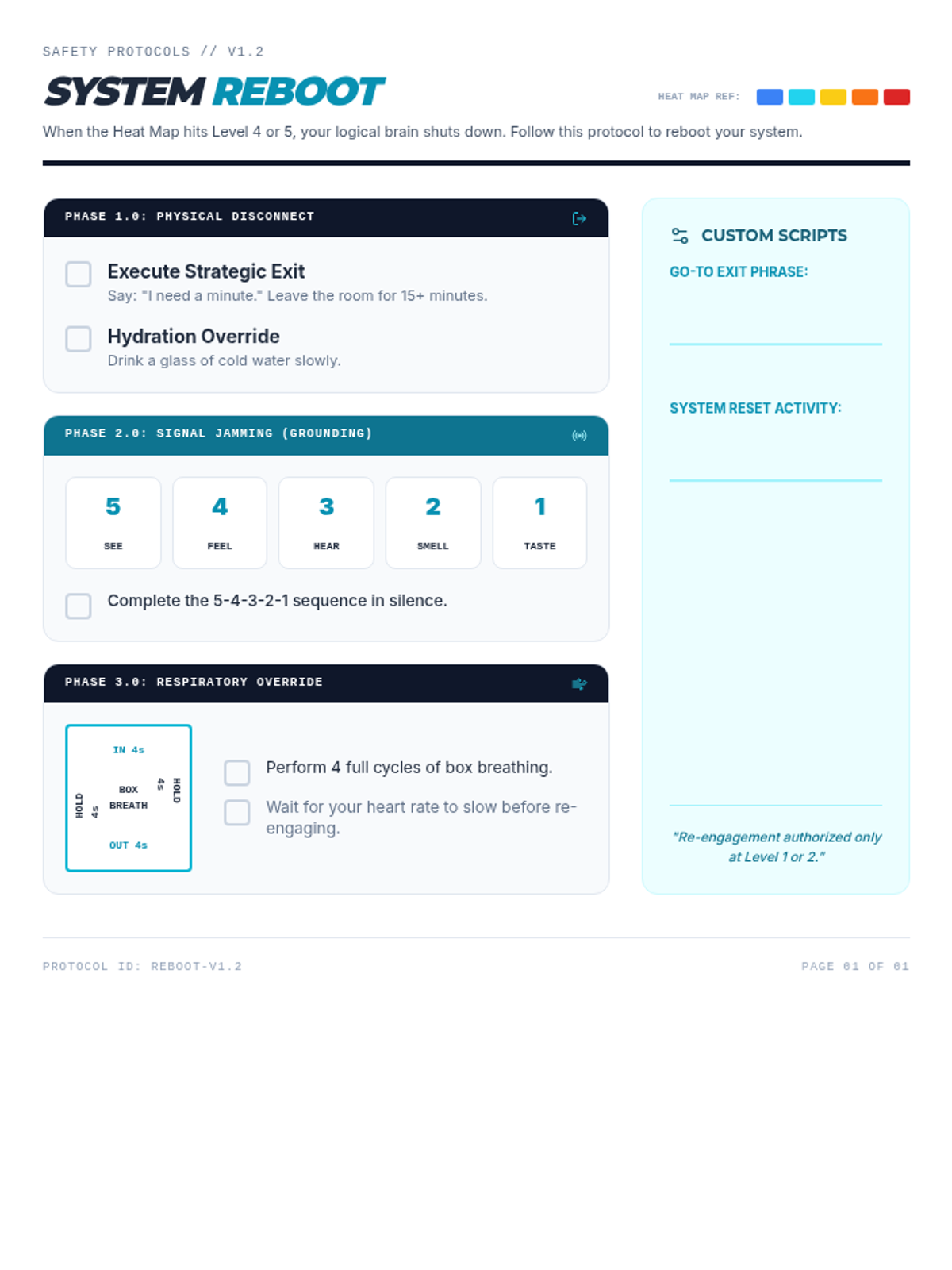
A step-by-step de-escalation checklist for teenagers featuring a physical exit protocol, 5-4-3-2-1 grounding, and box breathing exercises in a clean technical style.
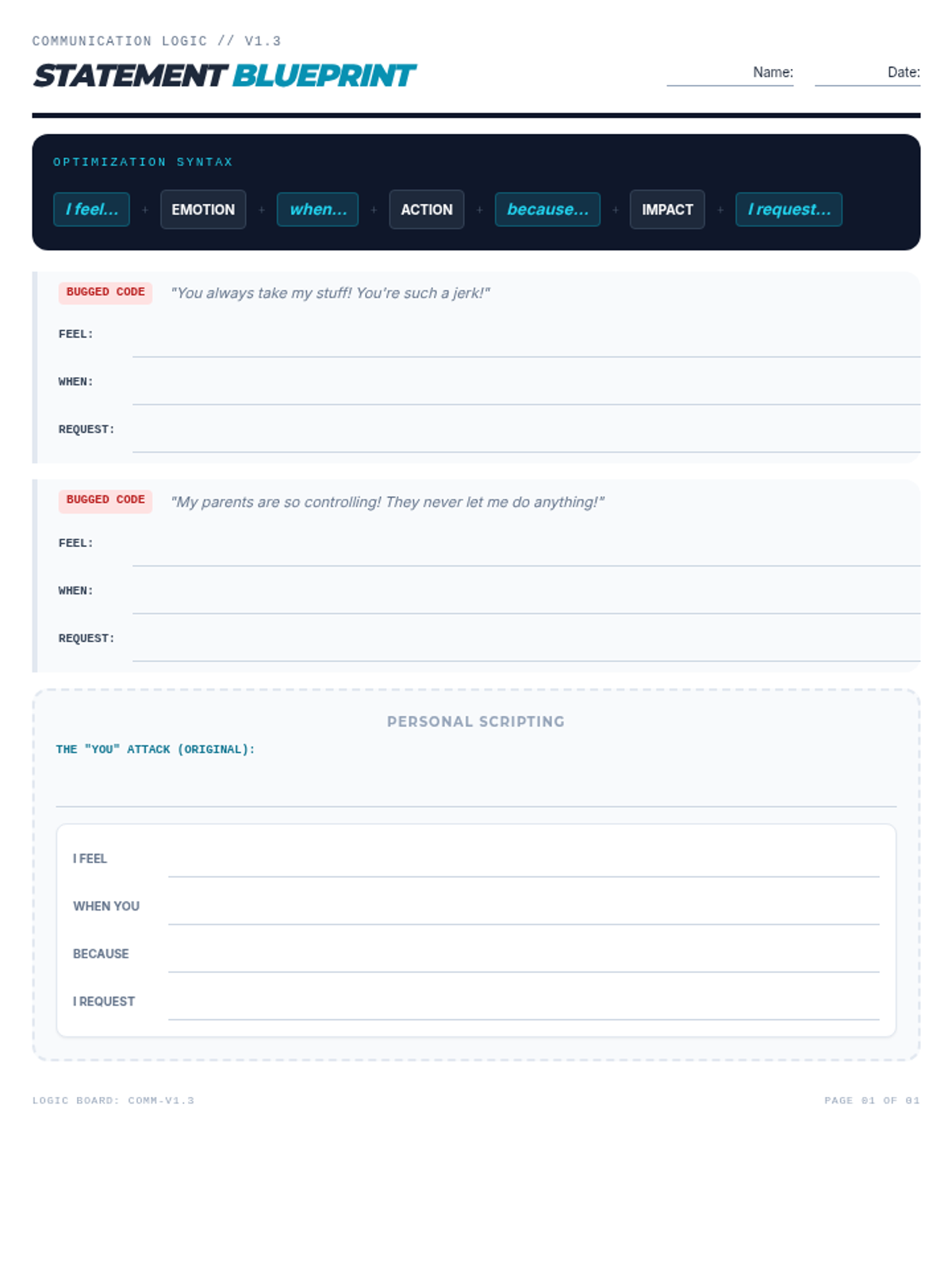
A worksheet that helps teenagers practice 'I' statements using a technical 'blueprint' format, transforming aggressive 'you' attacks into effective communication scripts.
A visual anger thermometer worksheet designed for teenagers to map their physical signs and triggers across five intensity levels using a technical heat-map aesthetic.
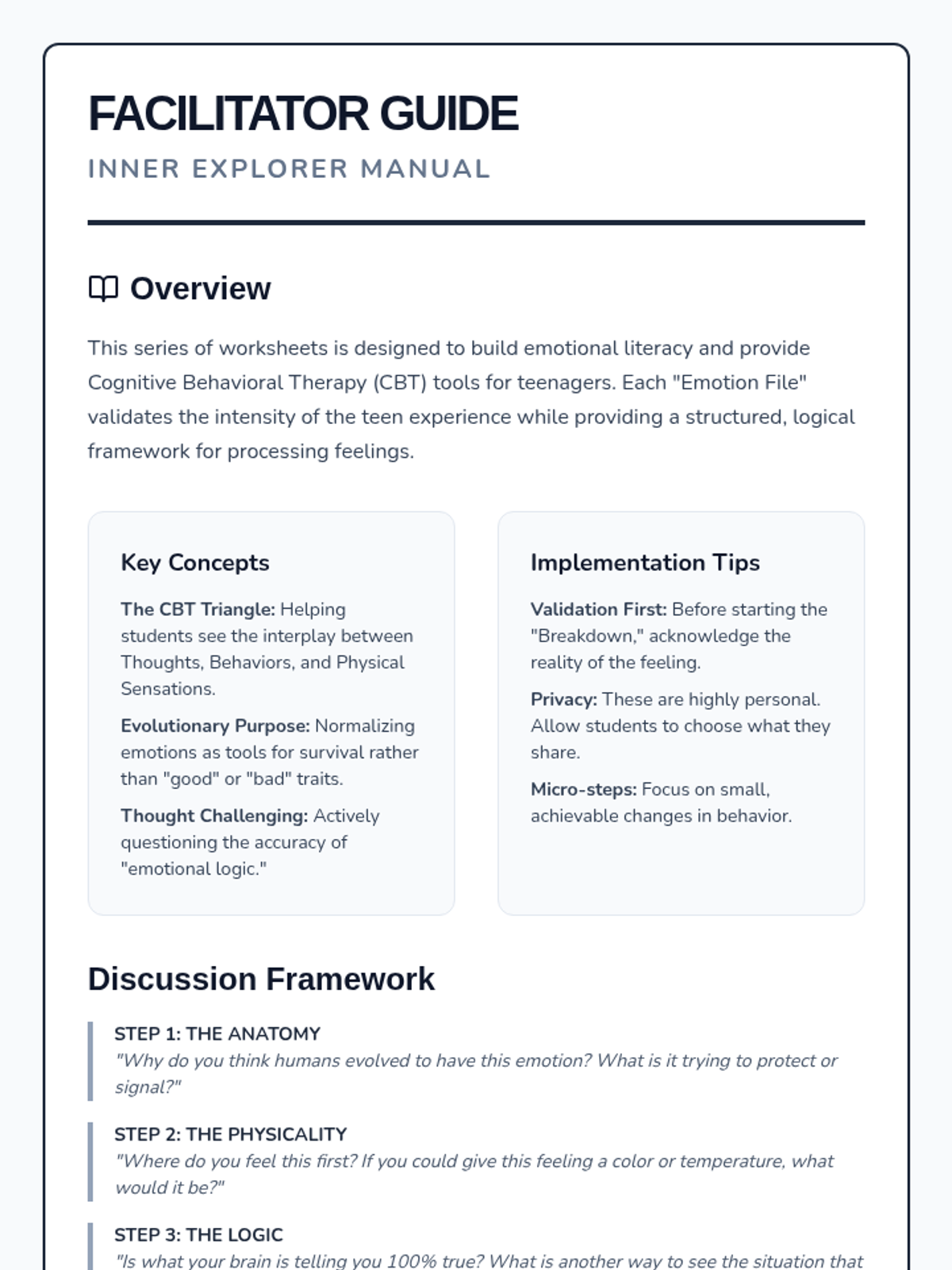
A facilitator guide for the Inner Explorer Manual, providing educators and counselors with an overview of the CBT concepts used in the worksheets, implementation tips, and a three-step discussion framework for group or individual sessions.
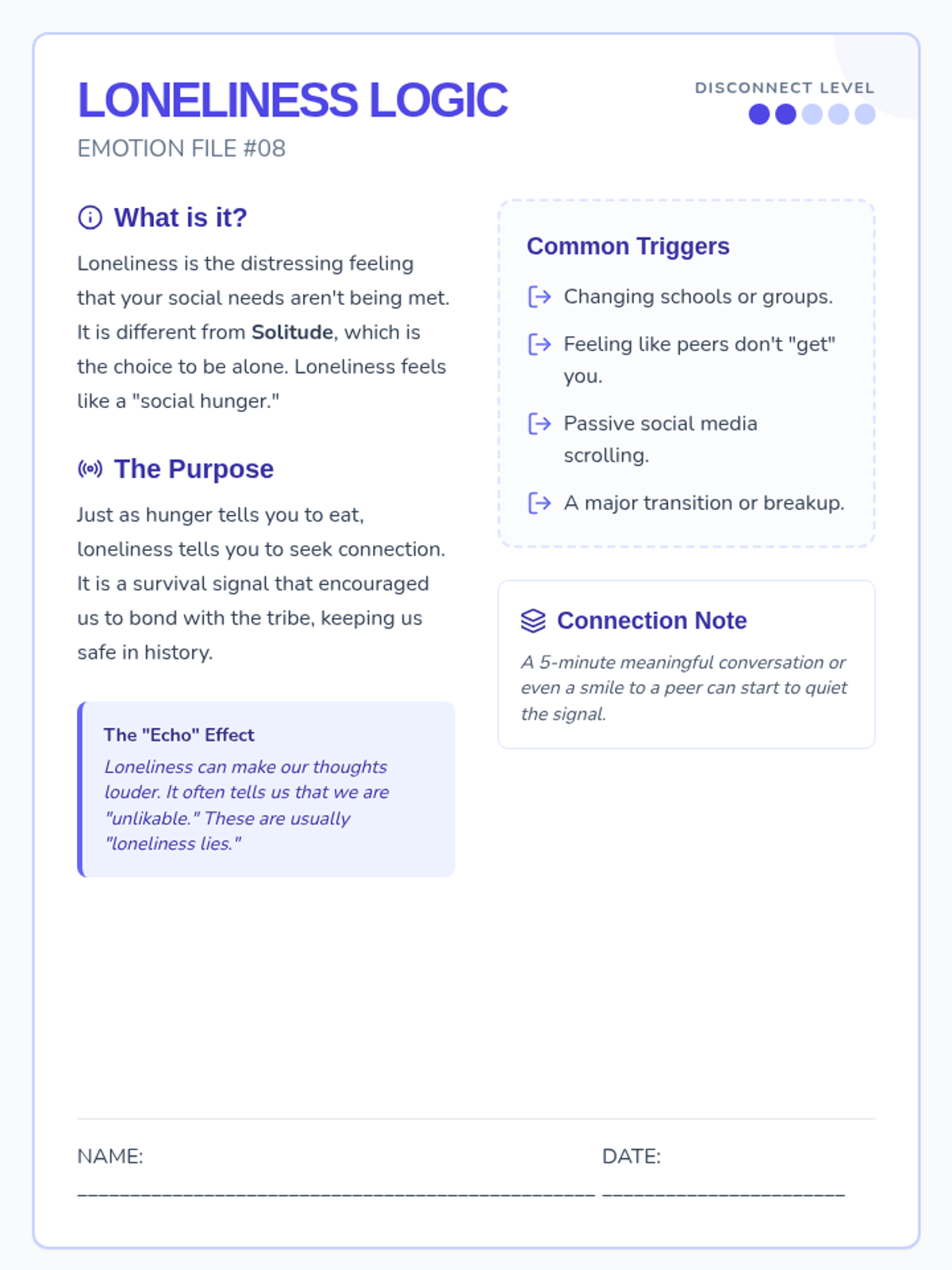
A two-page worksheet on loneliness, explaining its evolutionary role as a "social hunger." It includes a mapping exercise for isolation habits and CBT-based strategies for challenging negative thoughts and initiating small, low-pressure connections.
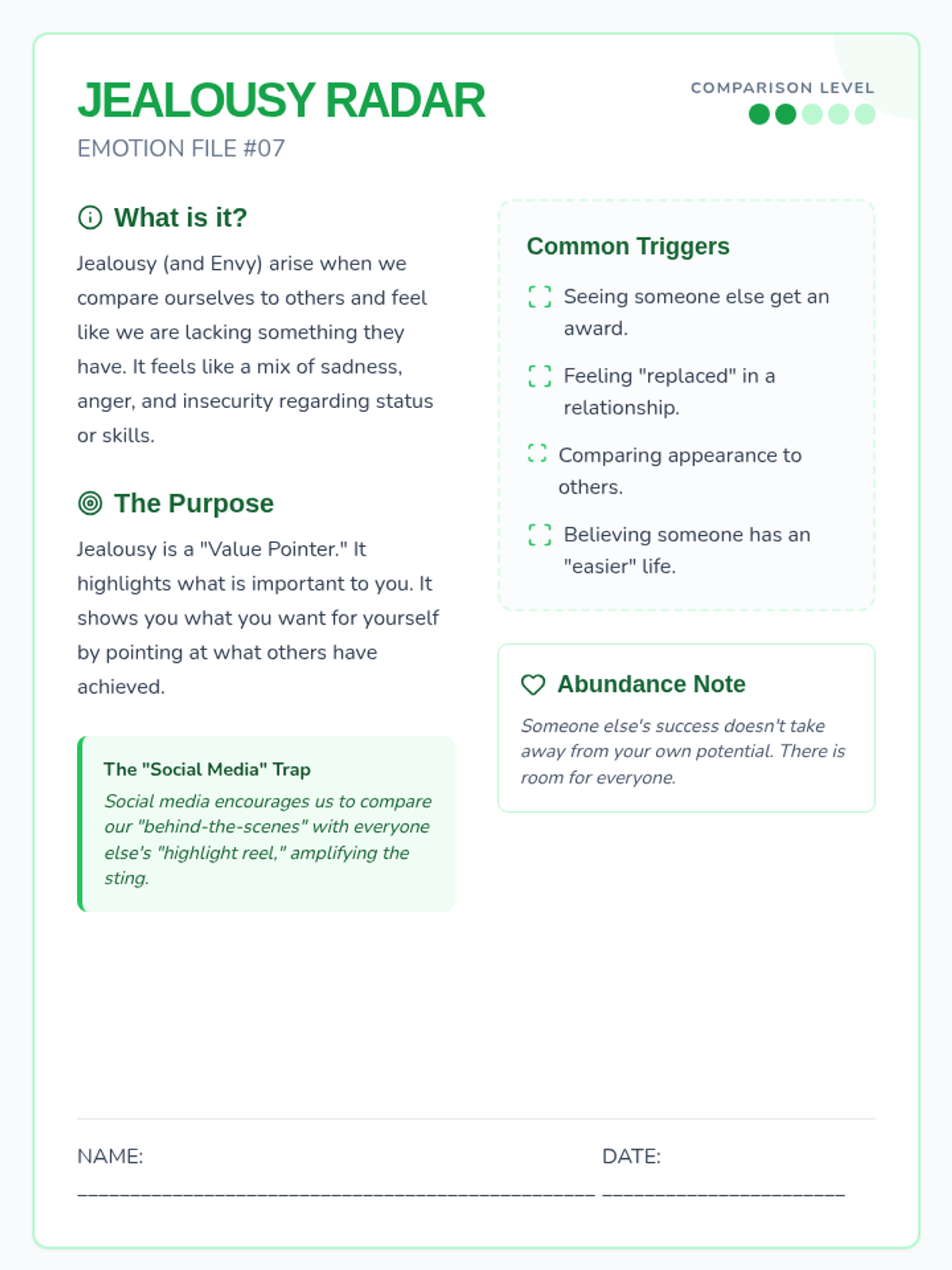
A two-page worksheet on jealousy, helping teenagers view the emotion as a "Value Pointer" that reveals personal goals. It includes a CBT breakdown and an exercise to decode the sting of comparison into actionable personal growth.
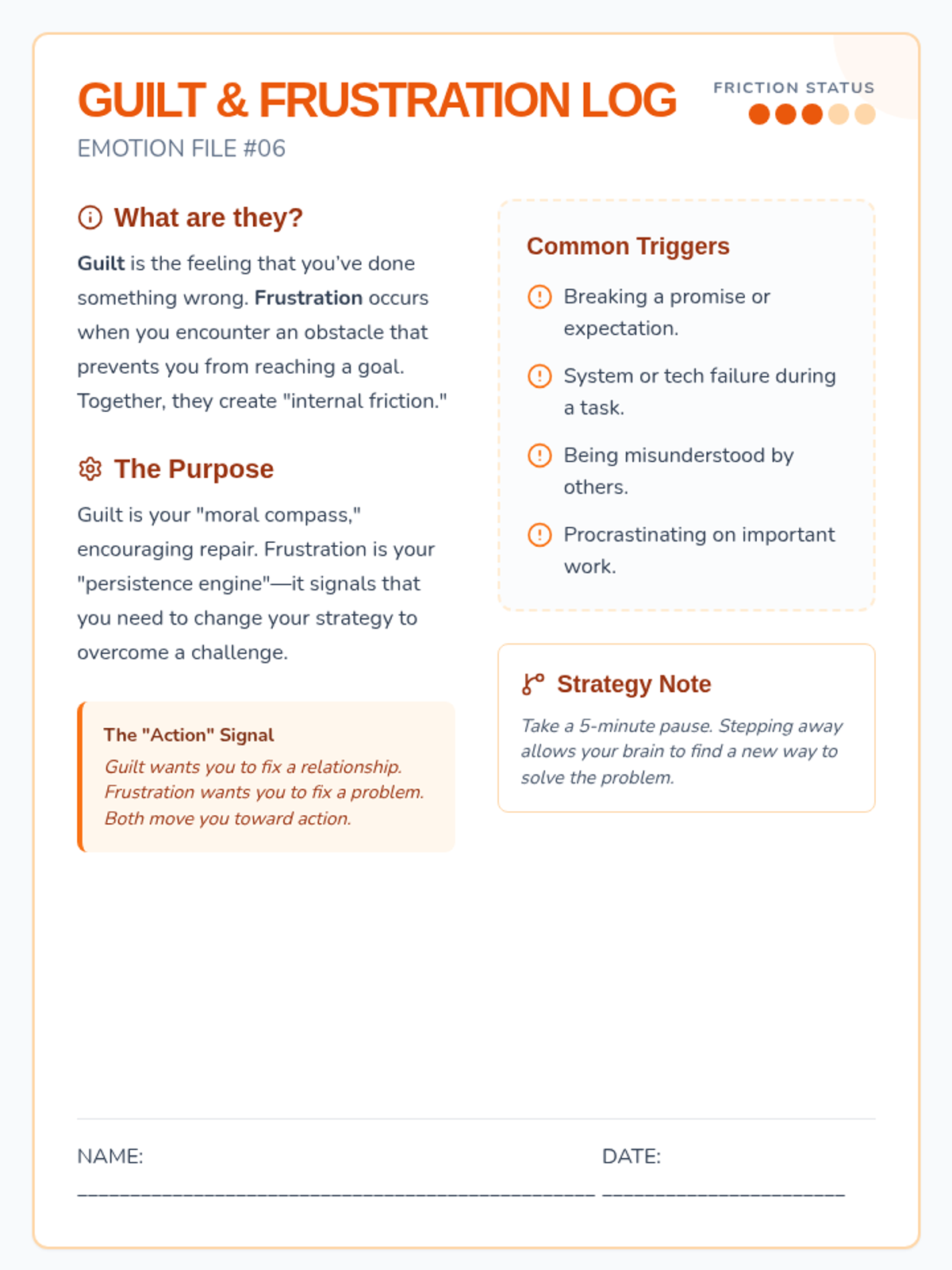
A two-page worksheet grouping guilt and frustration. It defines these emotions as signals for repair and persistence, providing students with a structured way to map their reactions and create actionable plans for making amends or solving obstacles.
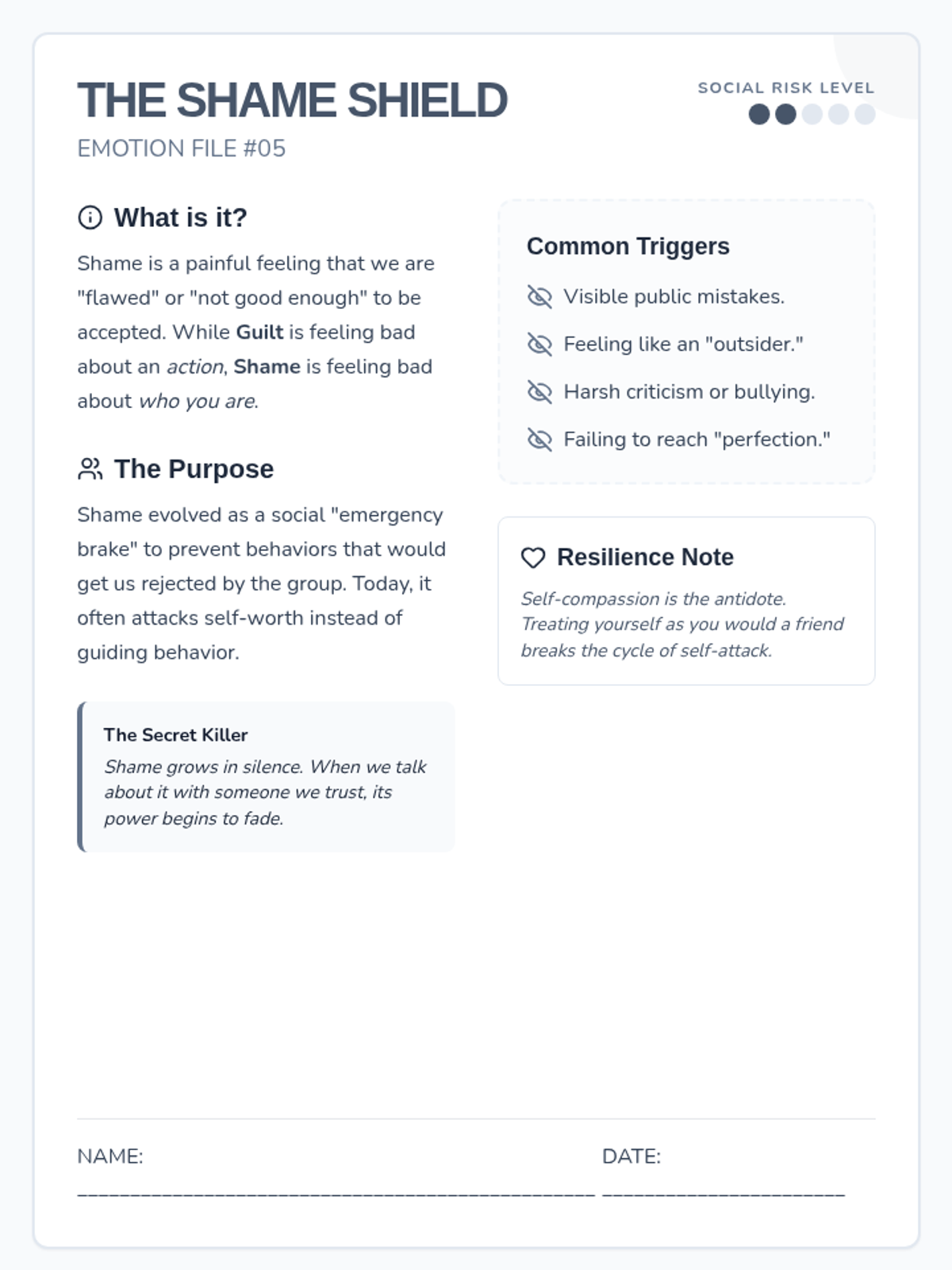
A two-page CBT worksheet focused on shame. It clarifies the difference between guilt and shame, explains the evolutionary social function of shame, and provides structured exercises for distinguishing between actions and identity while building self-compassion.
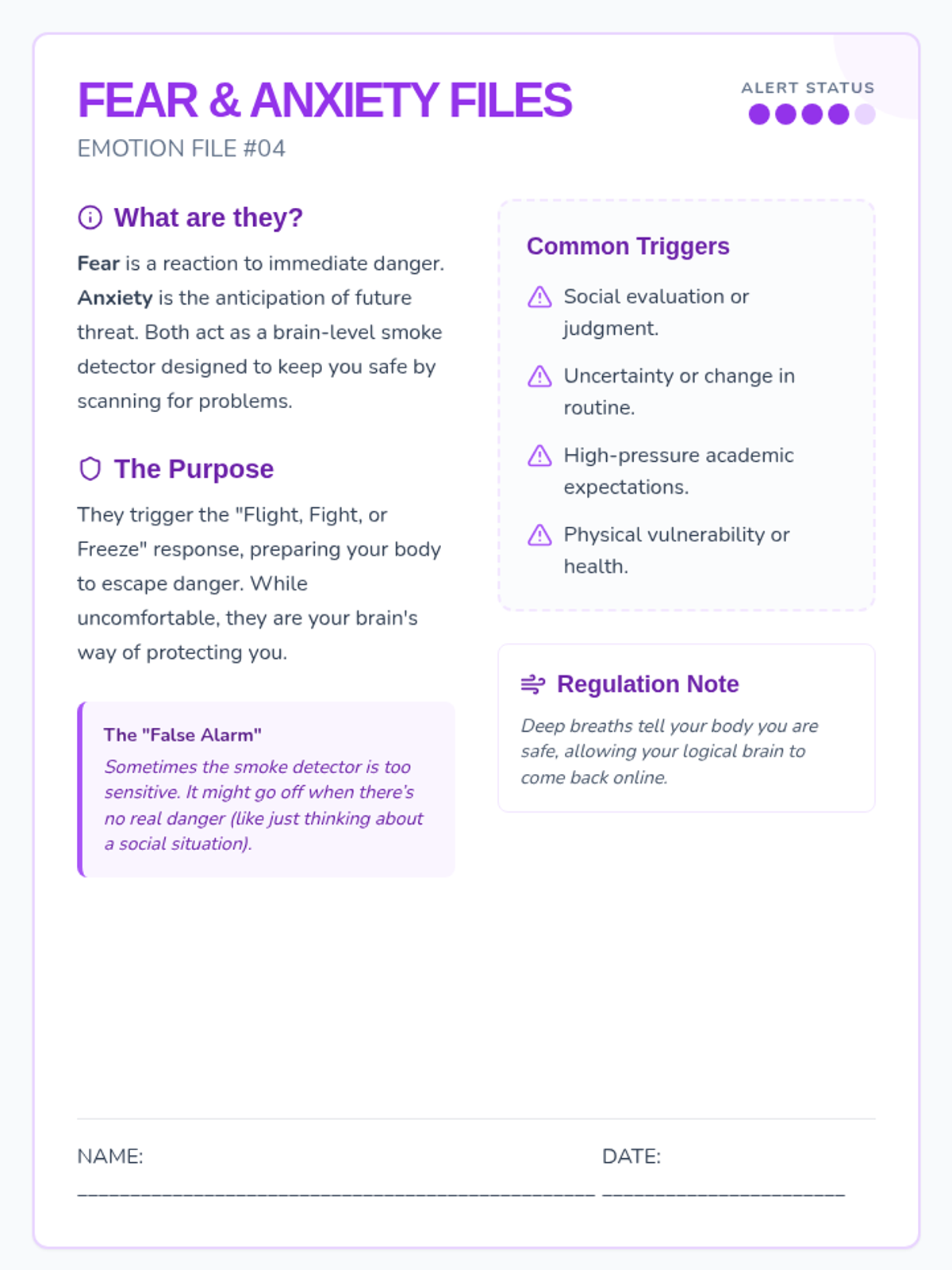
A two-page worksheet addressing fear and anxiety through a CBT lens. The first page distinguishes between fear and anxiety and explains their evolutionary purpose, while the second page includes a mapping exercise for reactions and a "probability check" to counter catastrophic thinking.
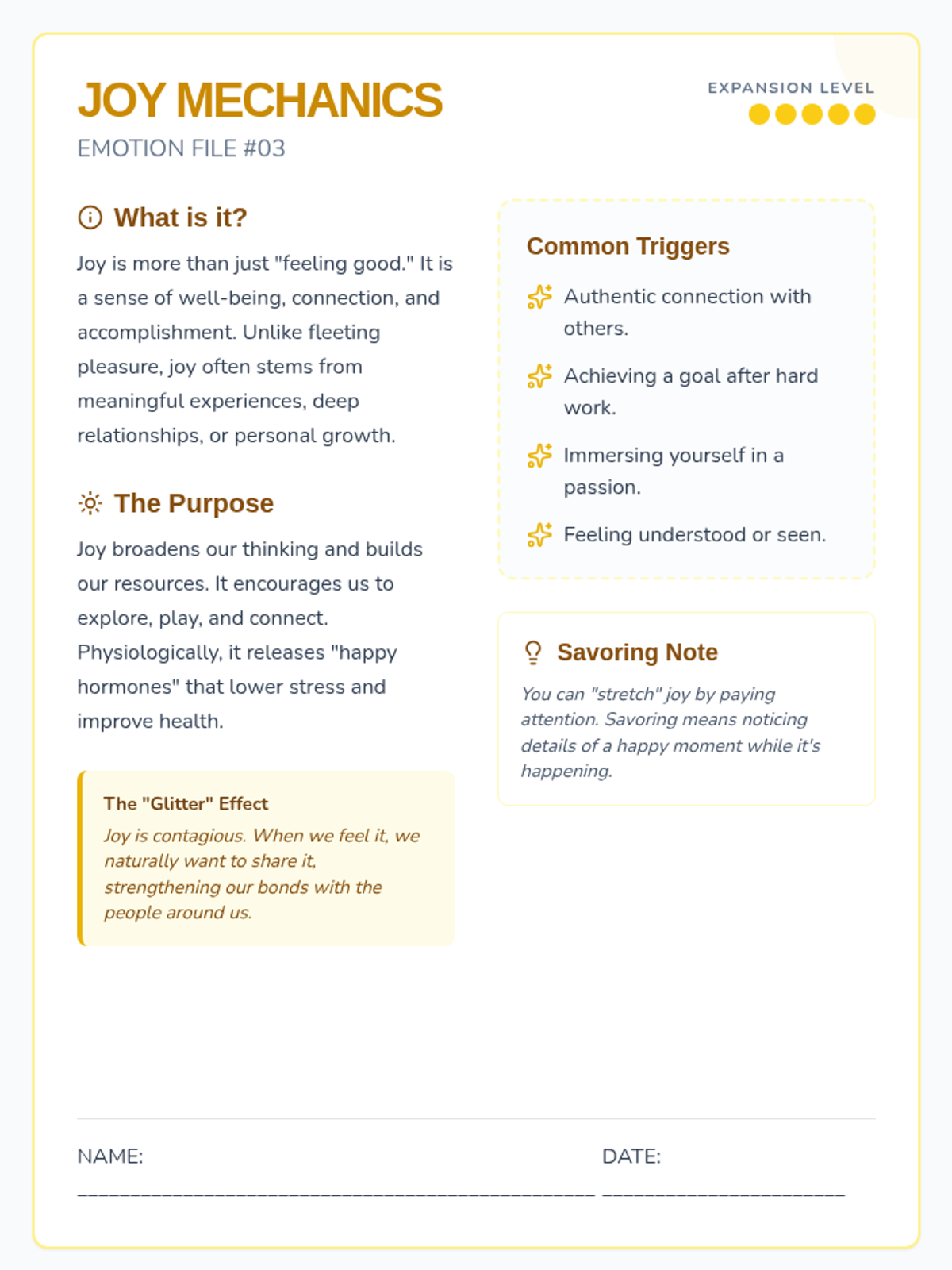
A two-page worksheet focusing on the mechanics of joy. It explains the biological and social purposes of positive emotions and provides a structured area for students to map their joy responses and practice "savoring" through sensory and internal reflection.
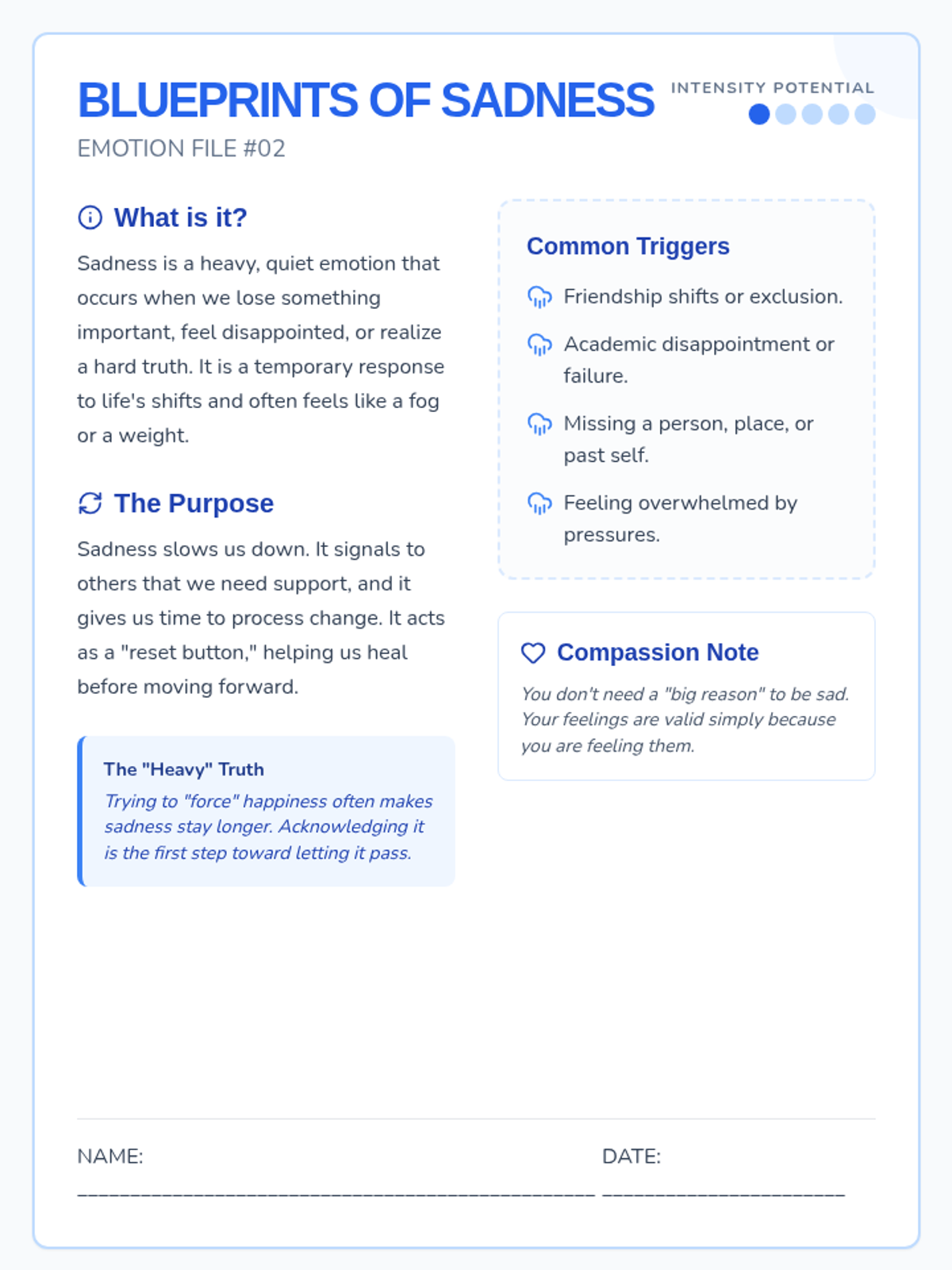
A two-page CBT-based worksheet for teenagers focusing on sadness. It includes a descriptive overview of the emotion's purpose and triggers, followed by a CBT mapping exercise to identify thoughts, behaviors, and physical sensations, including a reframe for "absolute" thinking.
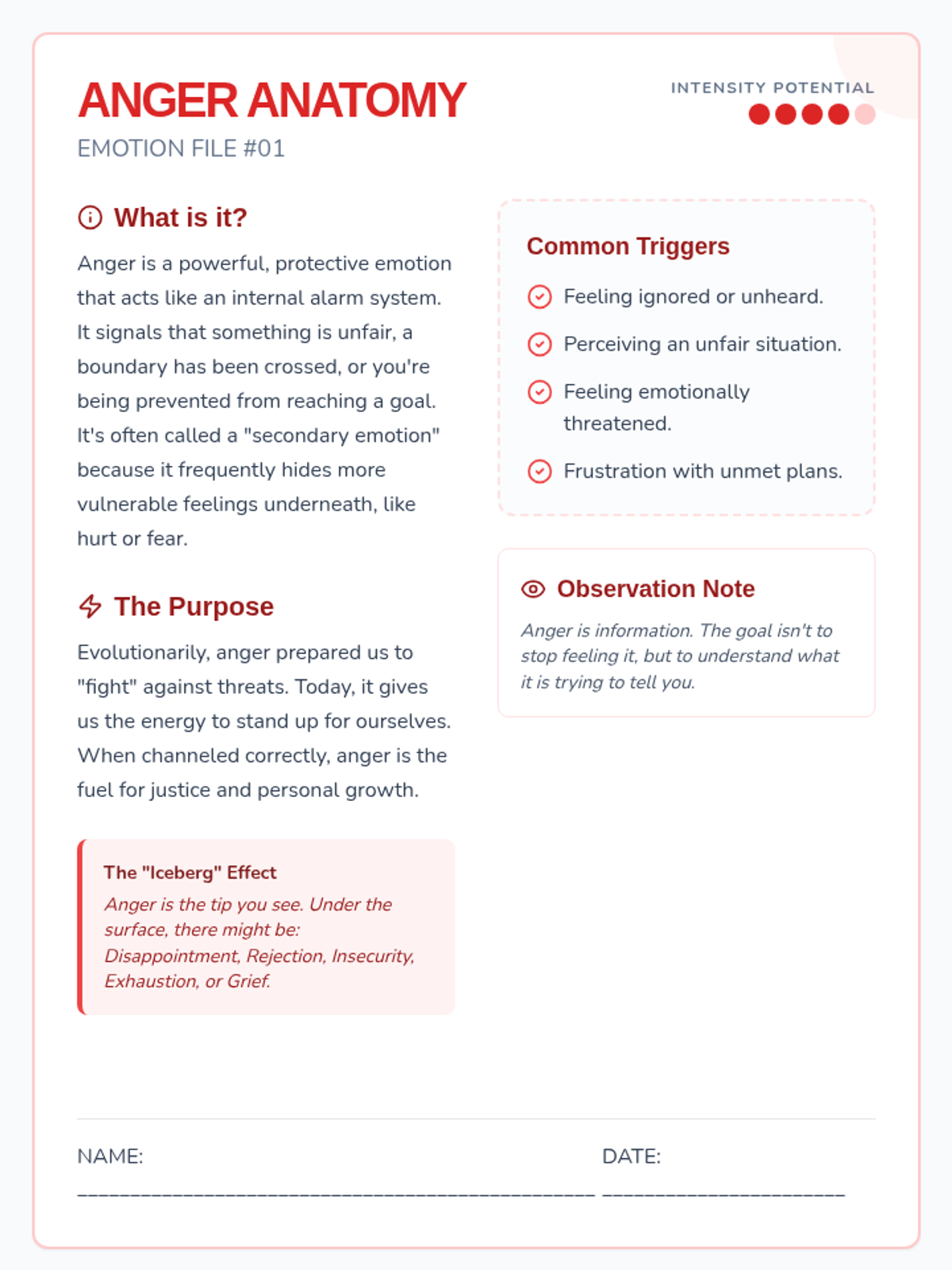
A two-page CBT-based worksheet for teenagers focusing on anger. The first page provides an anatomical breakdown of the emotion, its purpose, and common triggers, while the second page offers space for students to map their thoughts, behaviors, and physical sensations alongside a thought-challenging exercise.