A visual presentation exploring the physiological basis of stress, the amygdala hijack, and three foundational mindfulness techniques for student use.
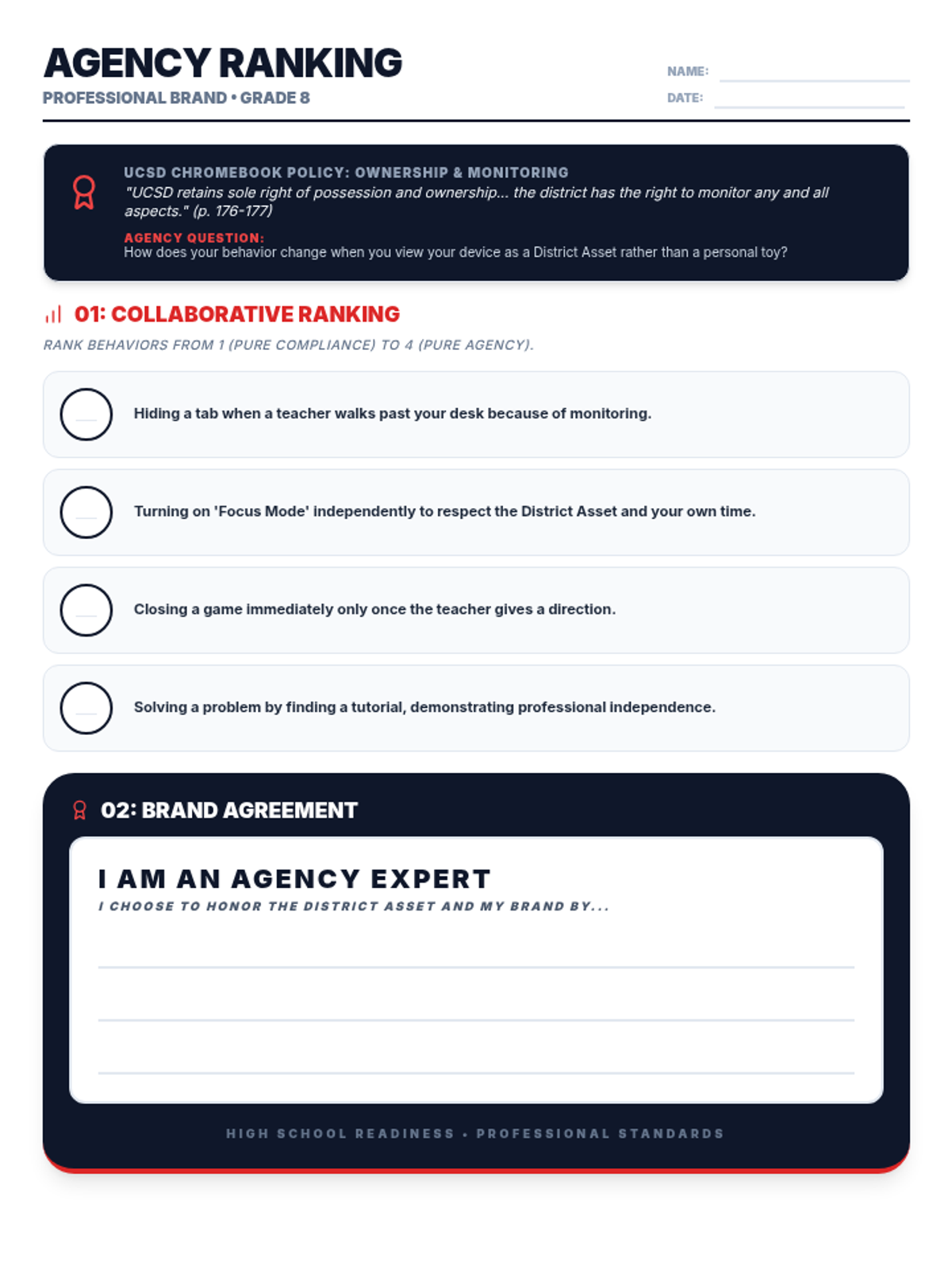
A printable student task sheet for ranking digital behaviors, updated with UCSD Chromebook Policy language on 'Ownership' and 'Monitoring' to emphasize professional agency. Improved typography and guide lines for student input.
Visual presentation for the Grade 8 Agency Experts lesson, updated with UCSD Chromebook Policy language regarding 'Equipment Ownership' and 'Monitoring' to promote professional agency. Improved contrast and visual hierarchy for classroom readiness.
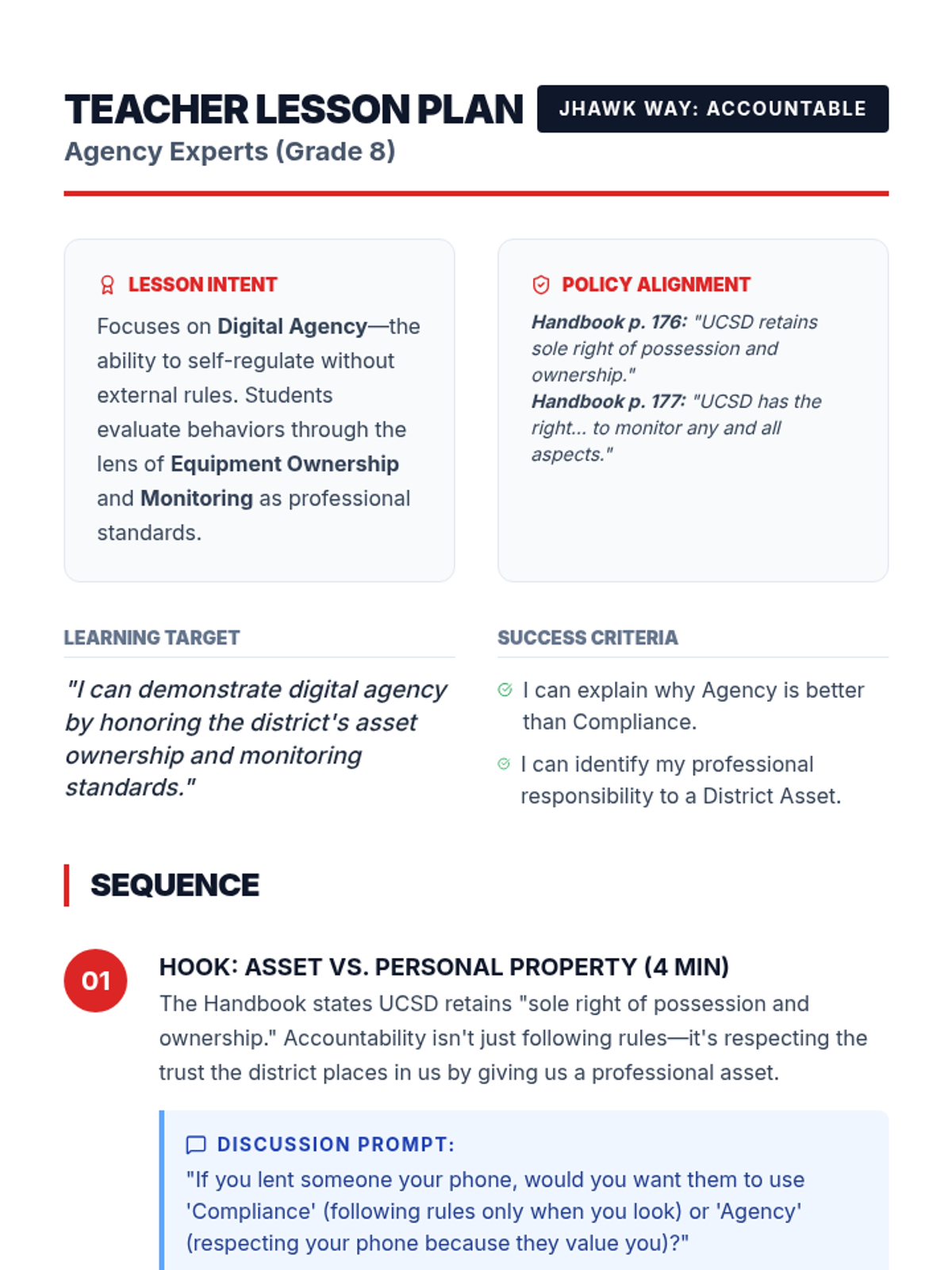
Teacher lesson plan for Grade 8, focusing on digital agency and professional branding, updated to include UCSD Chromebook Policy language on 'Equipment Ownership' and 'Monitoring'. Includes instructional pacing and page-break protection.
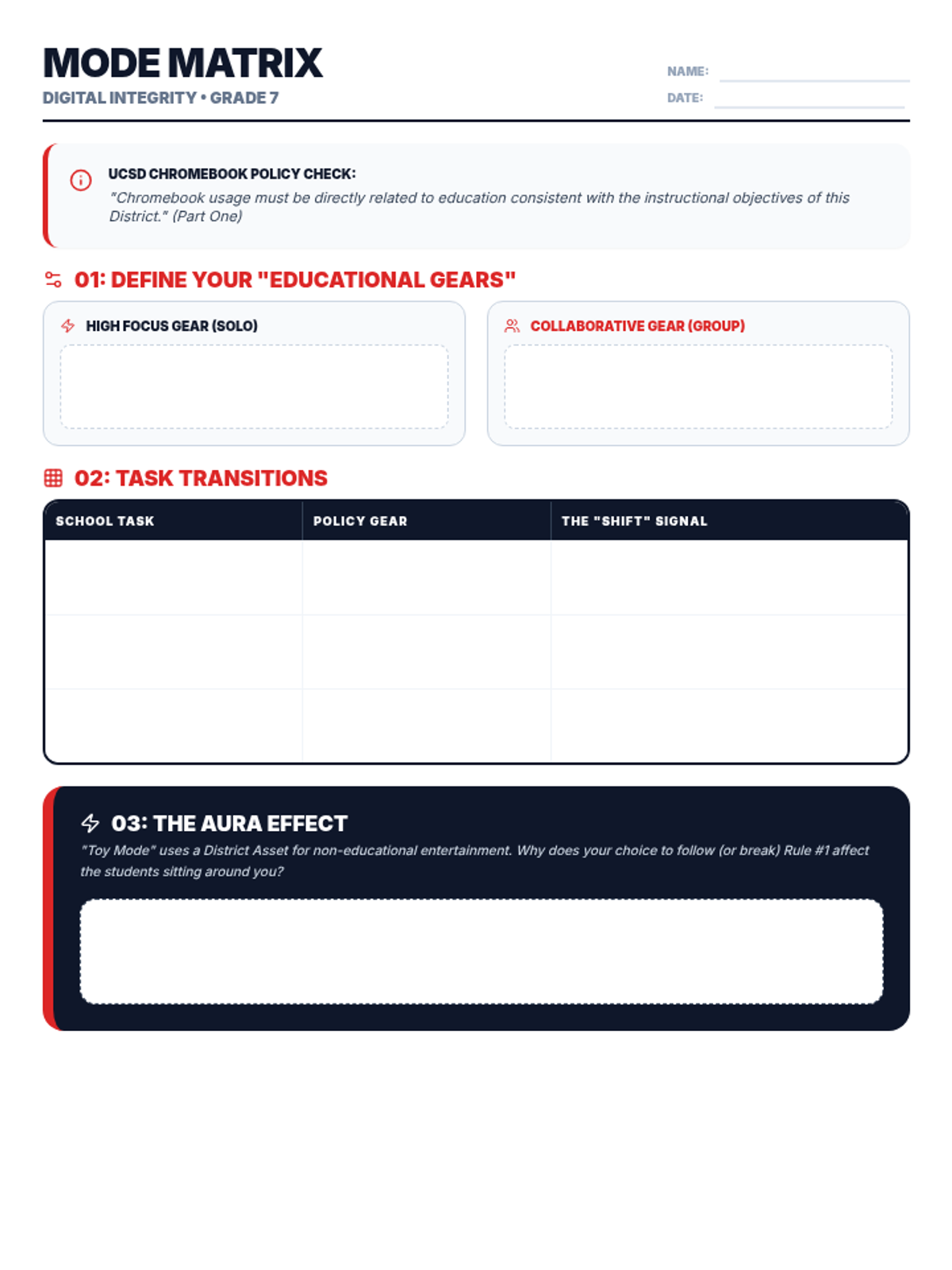
A printable student task sheet for analyzing classroom tasks and gear shifts, updated to include explicit connections to the UCSD Chromebook Policy.
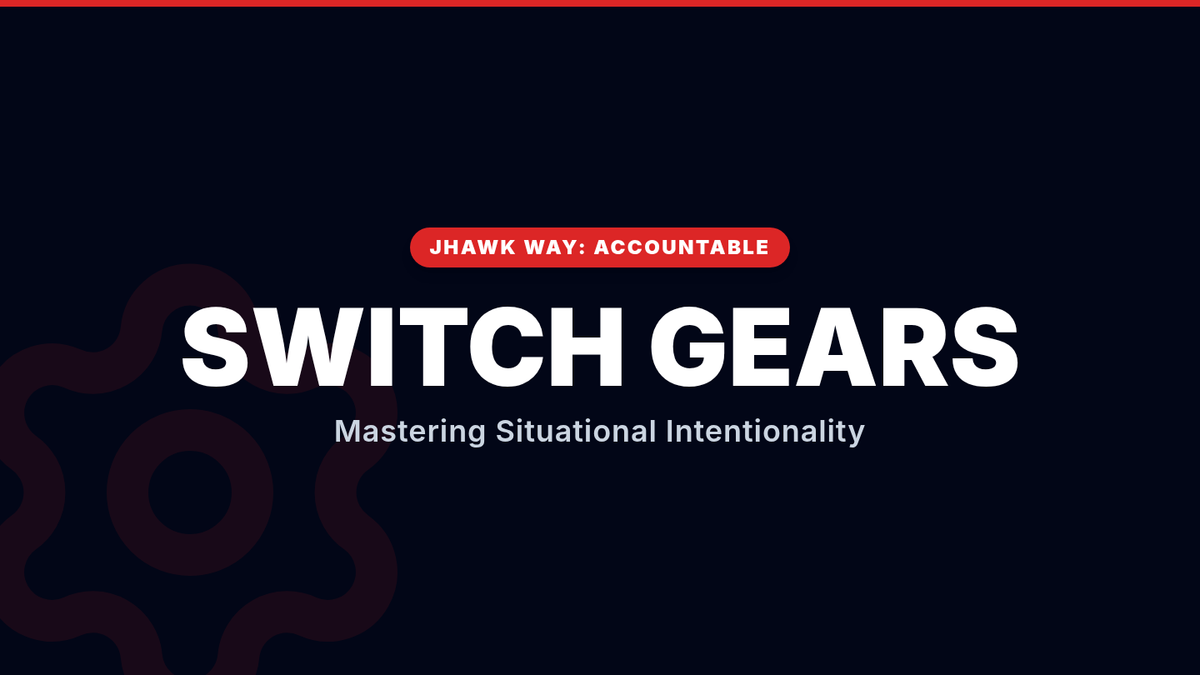
Visual presentation for the Grade 7 Switch Gears lesson, updated with references to the UCSD Chromebook Handbook's 'Educational Purpose' rule. Polished typography and spacing for high-impact classroom presentation.
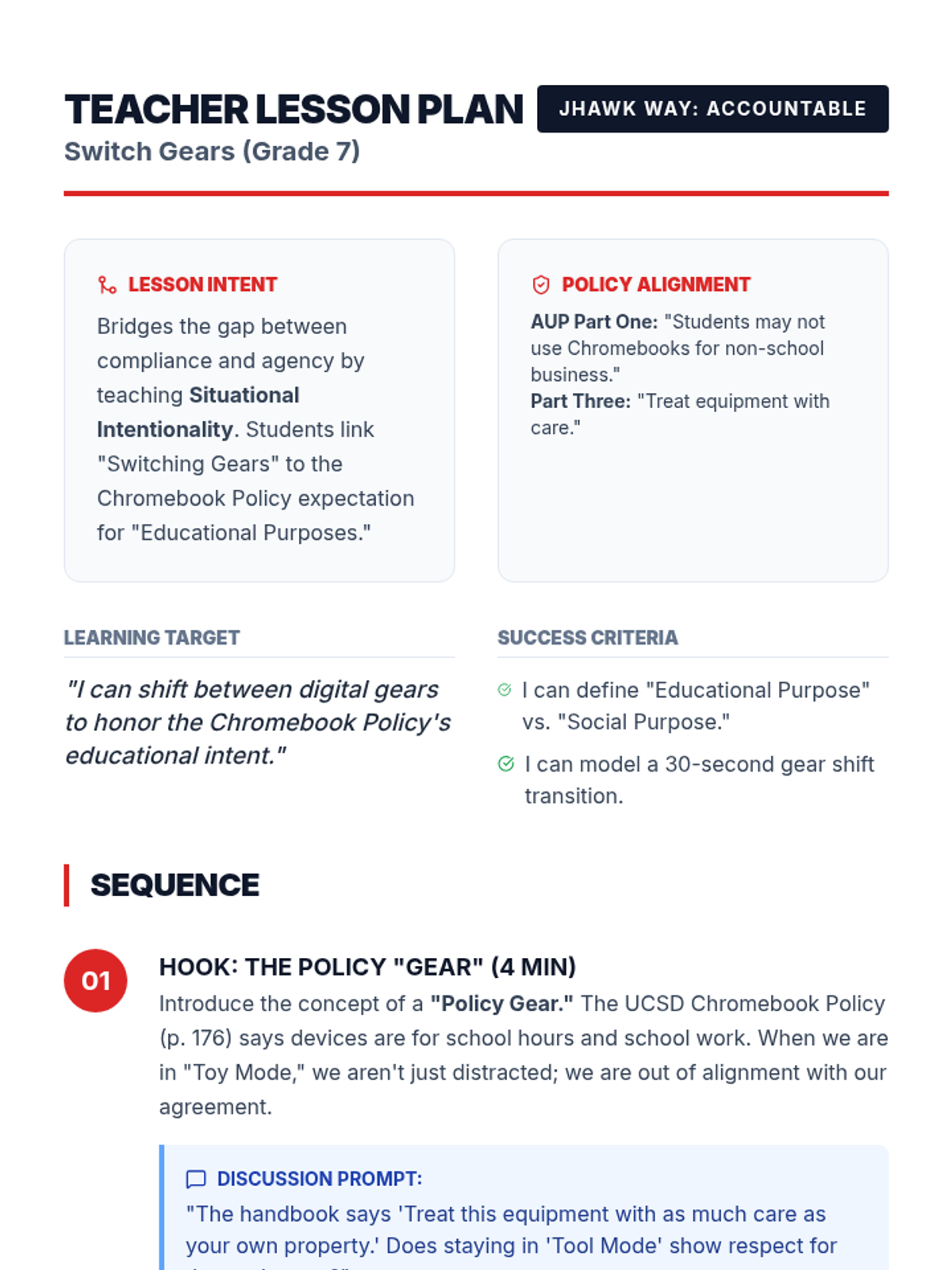
Teacher lesson plan for Grade 7, focusing on 'Switching Gears' between digital modes, updated to align with UCSD Chromebook Policy Part One and Three. Includes page-break protection for discussion prompts.
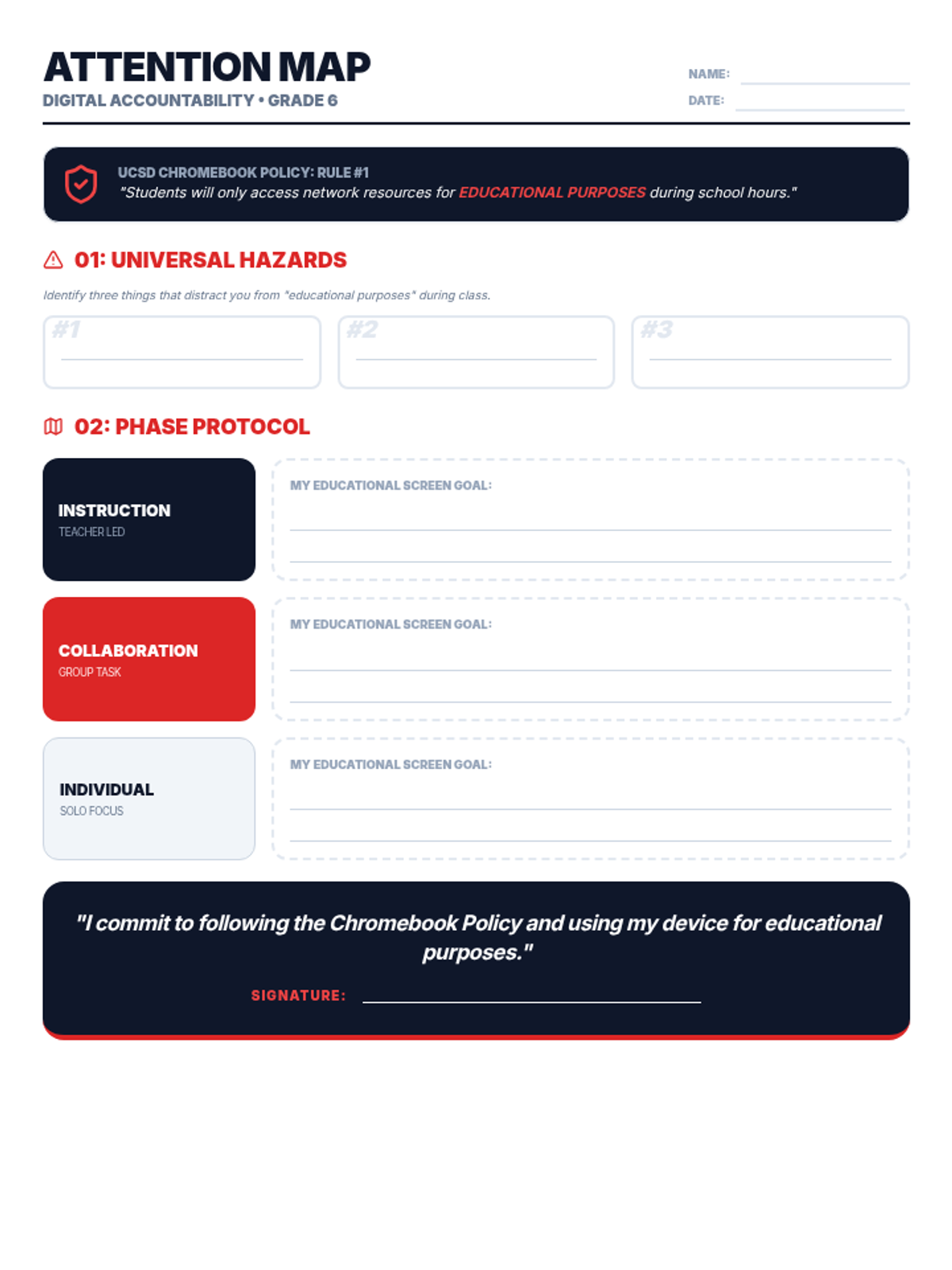
A printable student task sheet for mapping out digital accountability goals, updated with a specific reference to UCSD Chromebook Policy Rule #1.
Visual presentation for the Grade 6 Attention Map lesson, updated with explicit references to the UCSD Chromebook Policy Rule #1 regarding 'educational purposes'. Polished typography and visual contrast for classroom clarity.
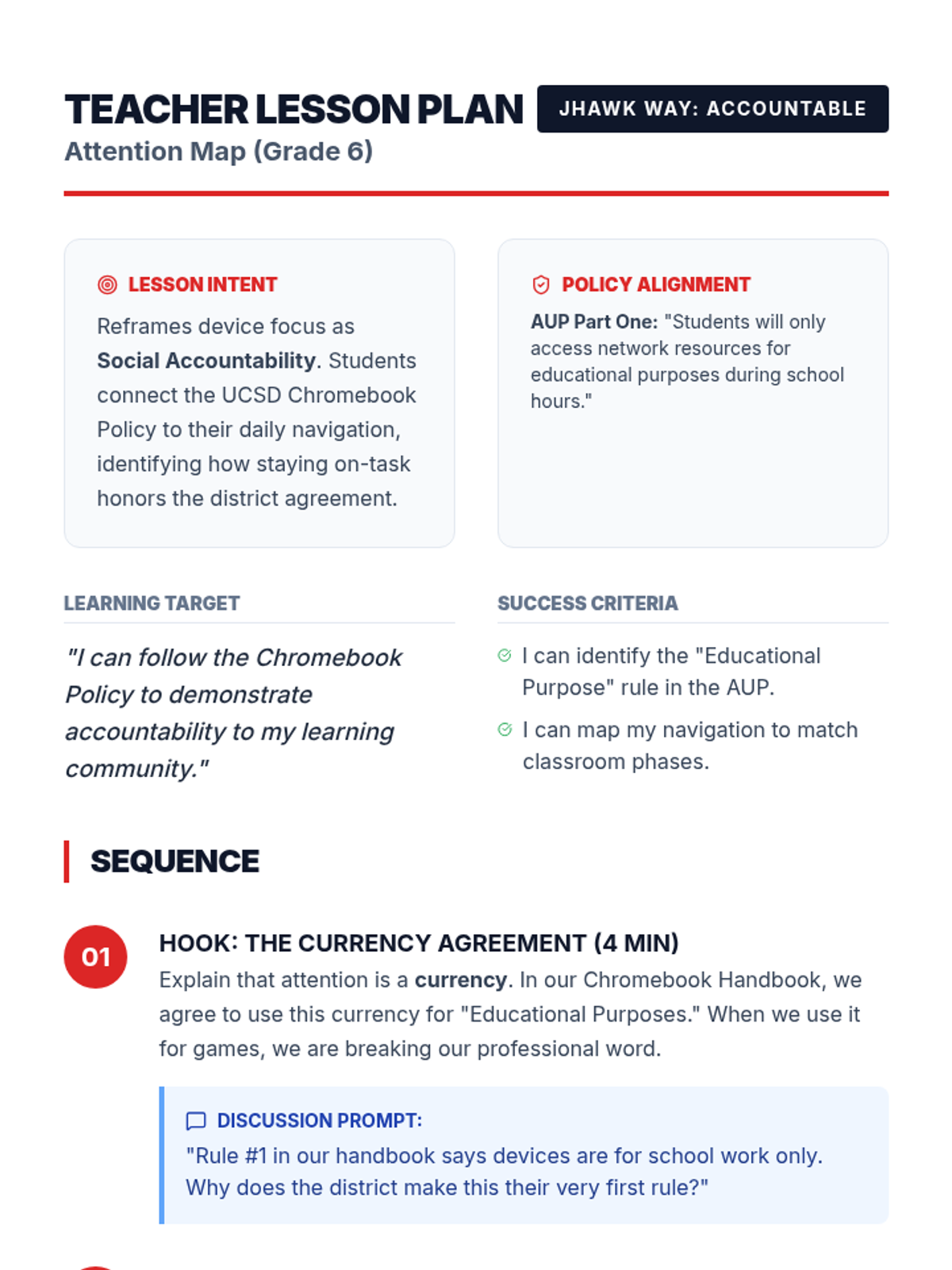
Teacher lesson plan for Grade 6, focusing on digital accountability and the 'Attention Economy', updated to explicitly link student behaviors to the UCSD Chromebook Policy Part One. Includes instructional flow with page-break protection.
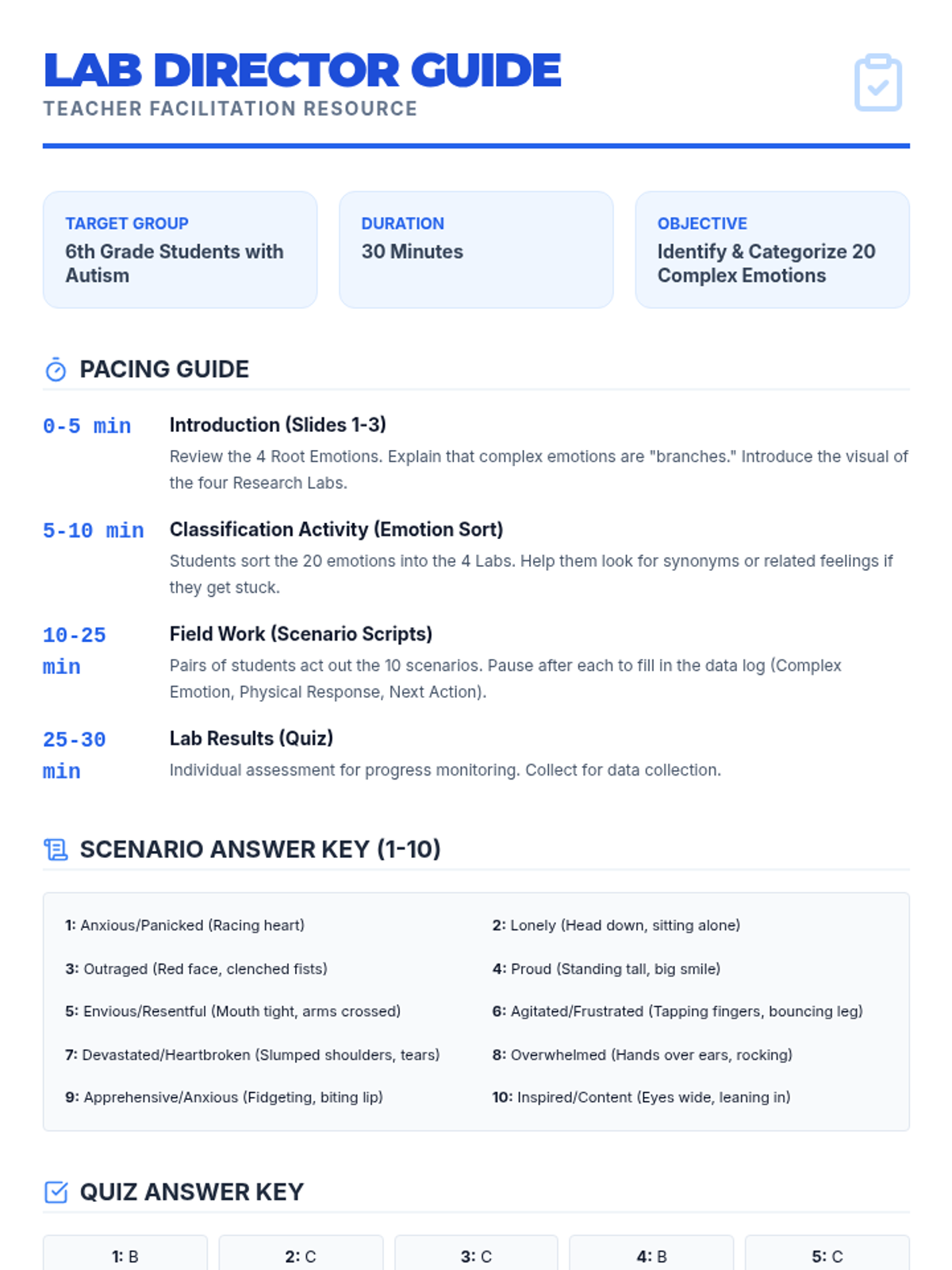
A teacher facilitation guide for "The Feeling Lab" lesson, including a 30-minute pacing guide, answer keys for the sorting activity and scenarios, and differentiation strategies for students with Autism.
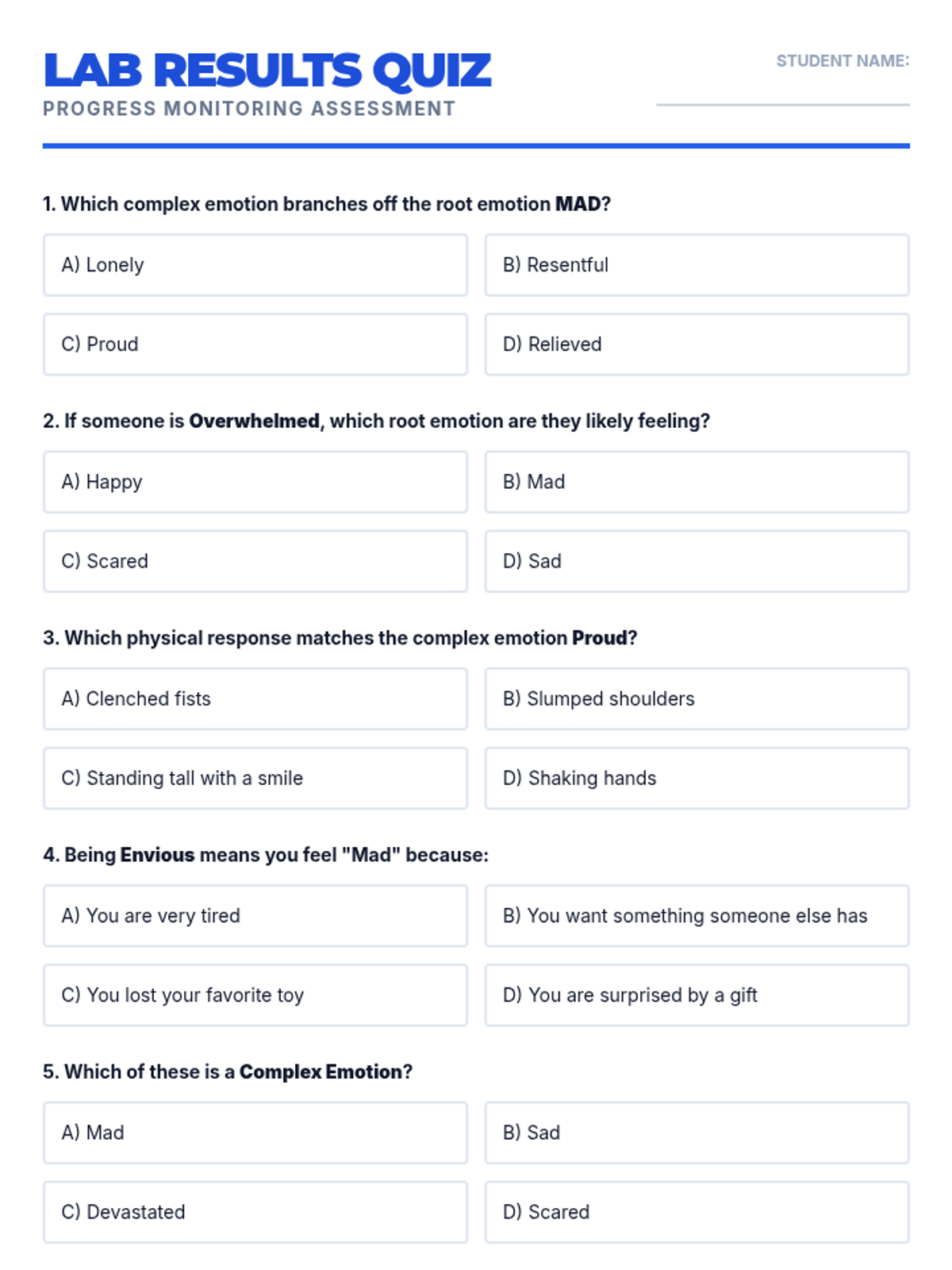
A 10-question multiple-choice quiz designed for progress monitoring. It assesses students' ability to categorize complex emotions into root categories, identify physical responses, and understand the purpose of naming specific feelings.
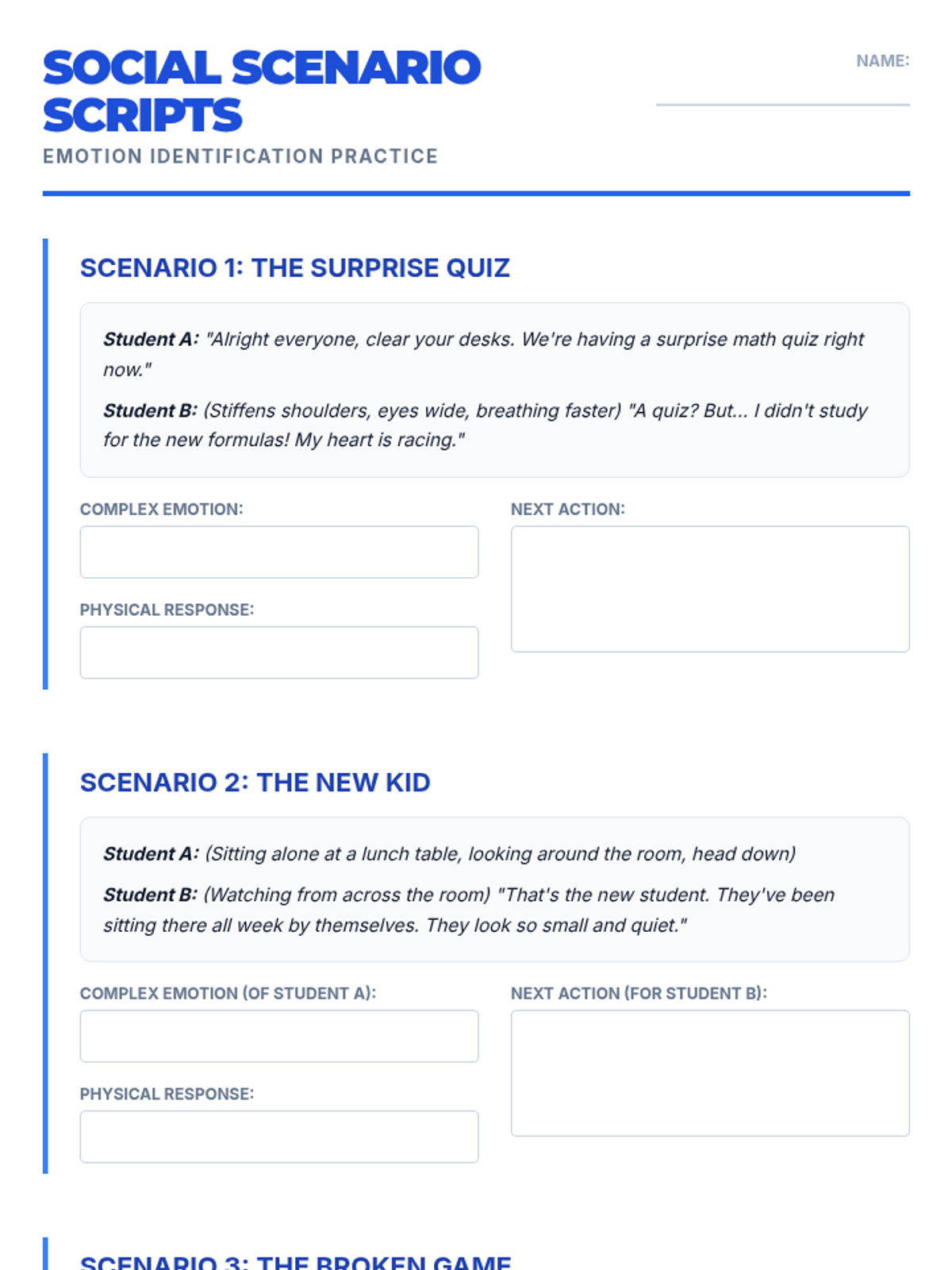
A set of 10 role-play scenarios in script format designed for two students. Each scenario focuses on a complex emotion and includes space for students to identify the emotion, describe physical body responses, and plan a next step.