Visual presentation for Lesson 3, covering the STAR method for persuasive writing and techniques for creating compelling hooks and body paragraphs.
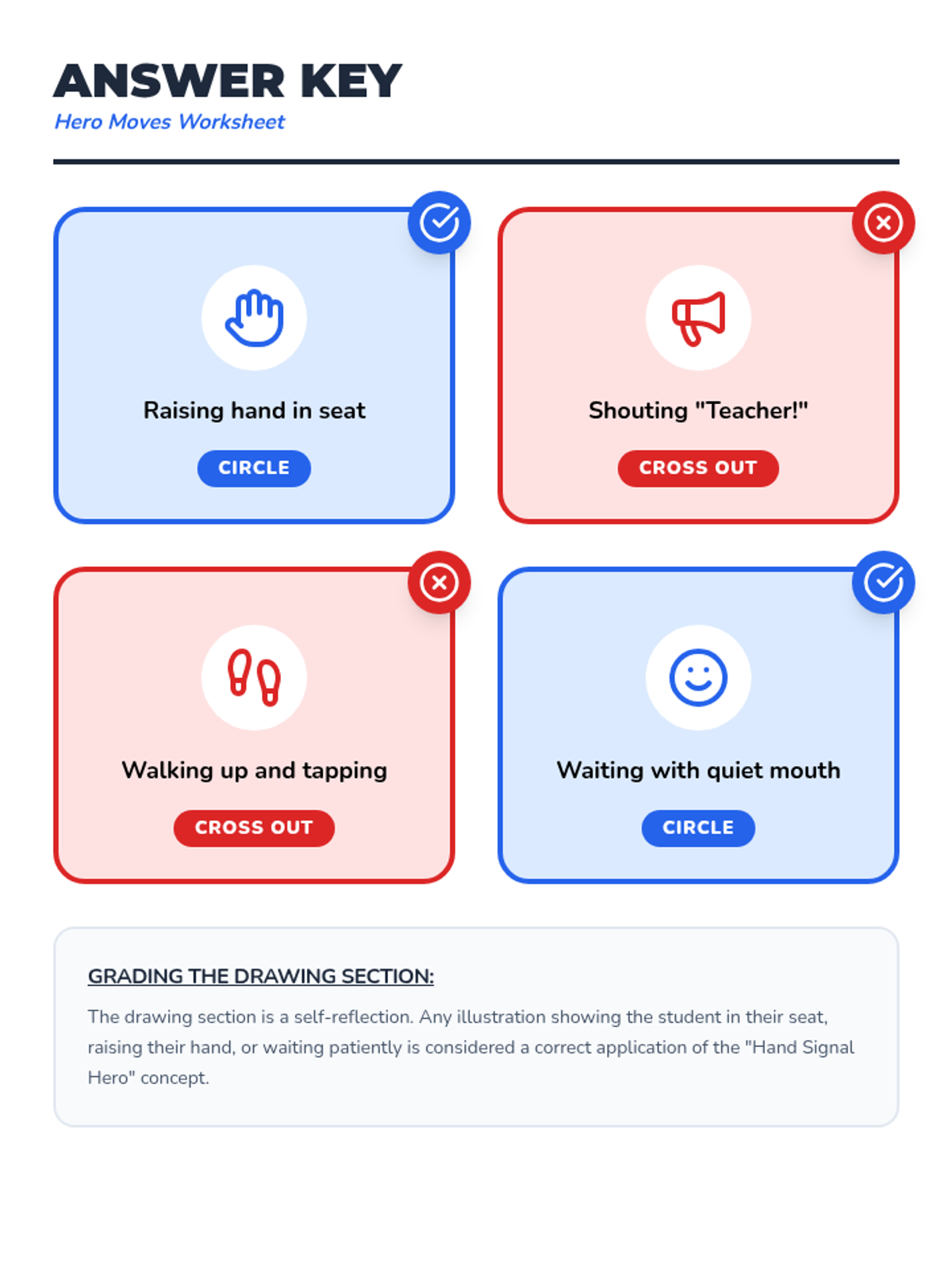
An answer key for the Hero Moves Worksheet, clearly indicating which behaviors should be circled as "Hero Moves" and which should be crossed out.
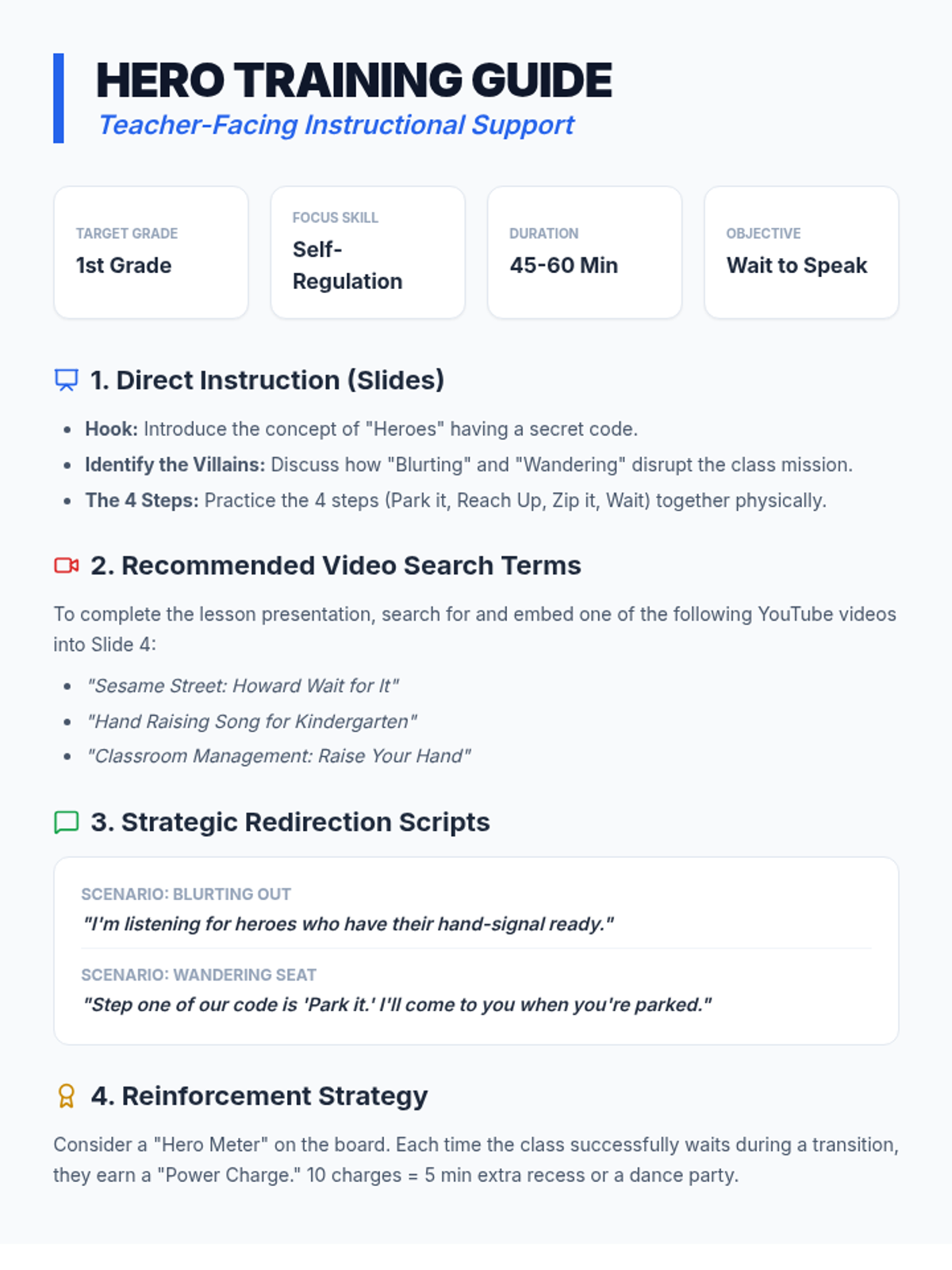
A comprehensive teacher guide for implementing the Hand Signal Heroes lesson, including lesson flow, video search suggestions, and redirection scripts.
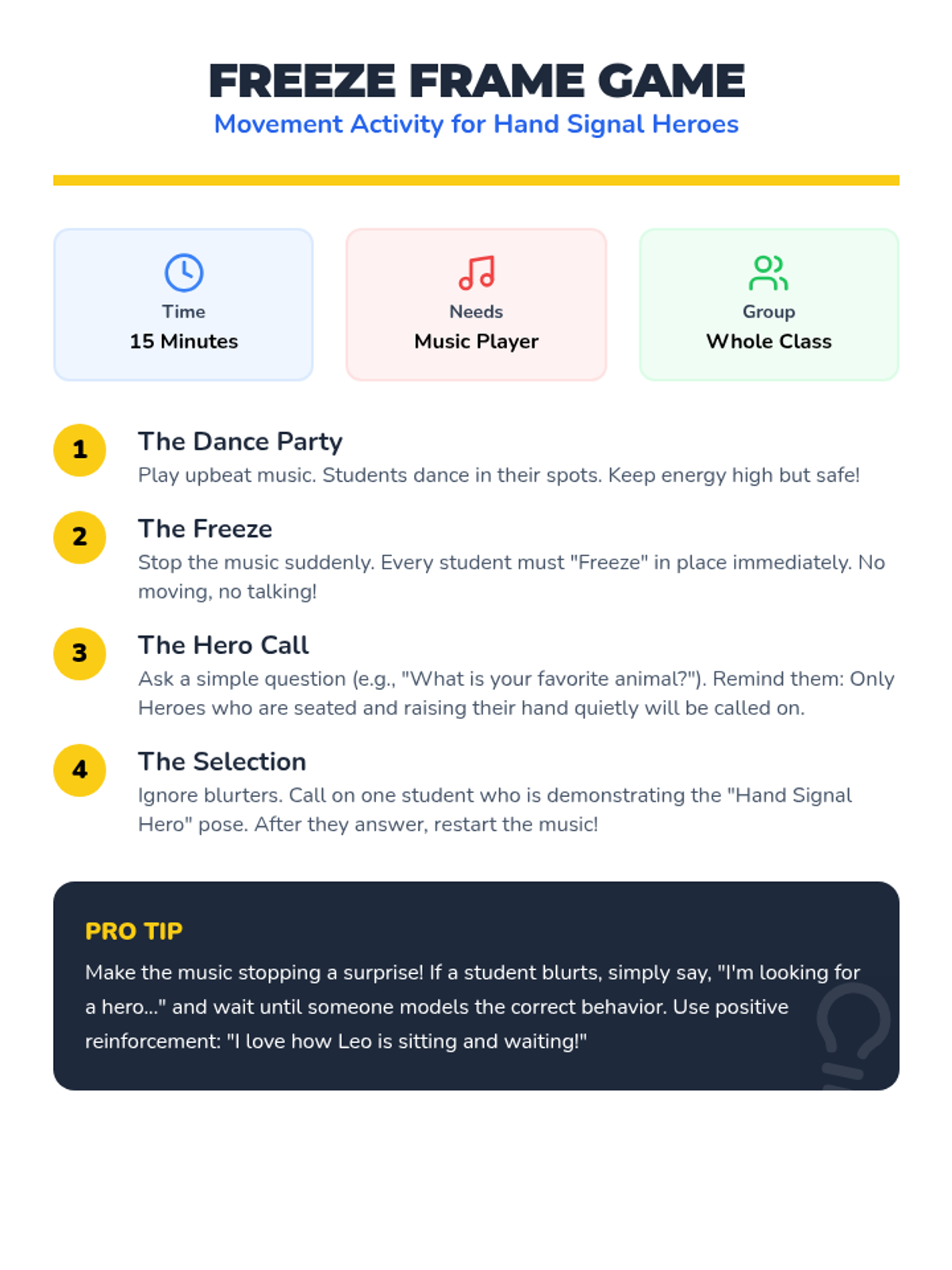
A guide for teachers to lead a "Freeze Frame" movement activity that practices hand-raising and waiting skills in a high-energy classroom setting.
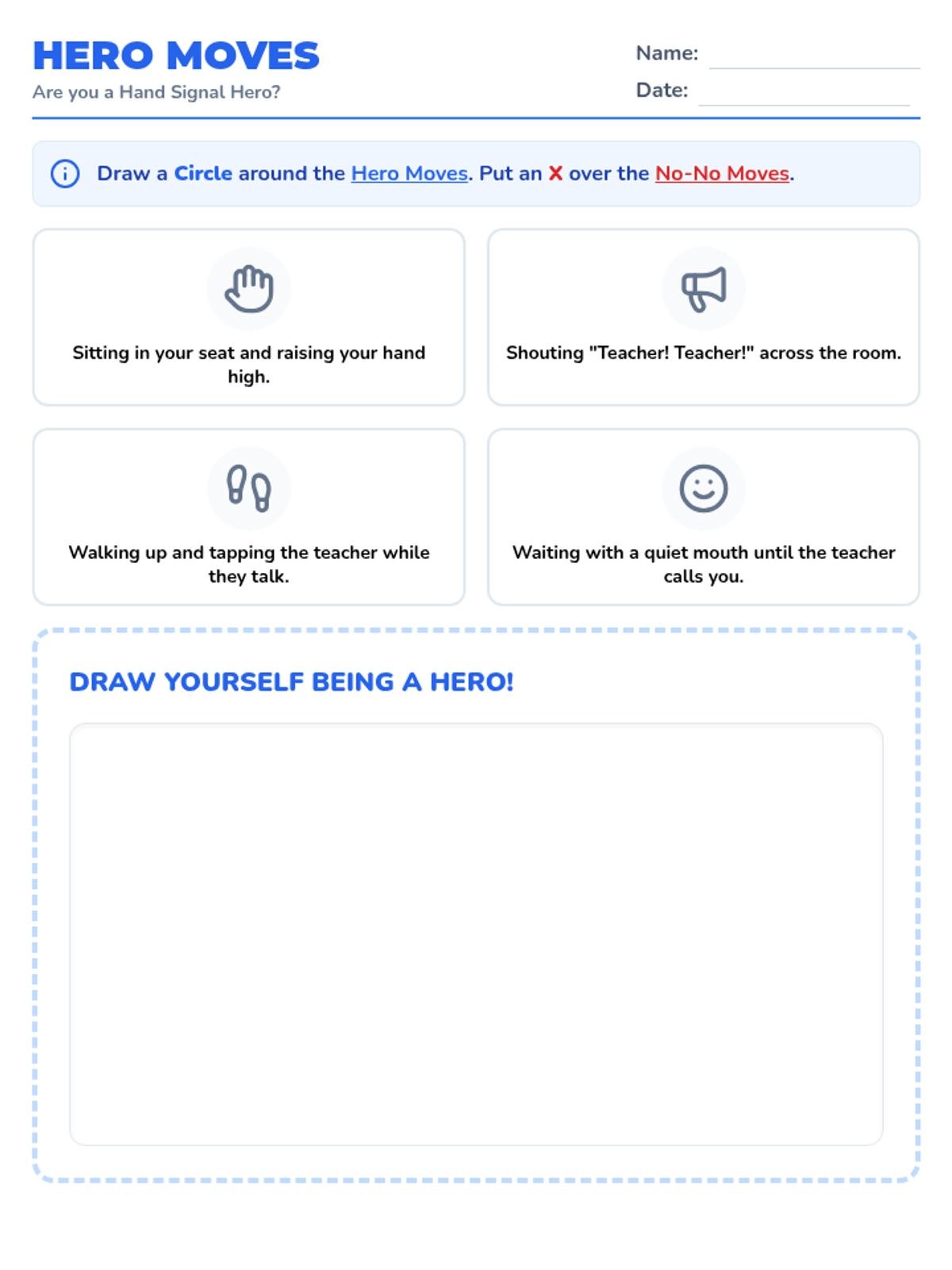
A student worksheet where 1st graders identify positive and negative ways to get a teacher's attention through a sorting activity and drawing.
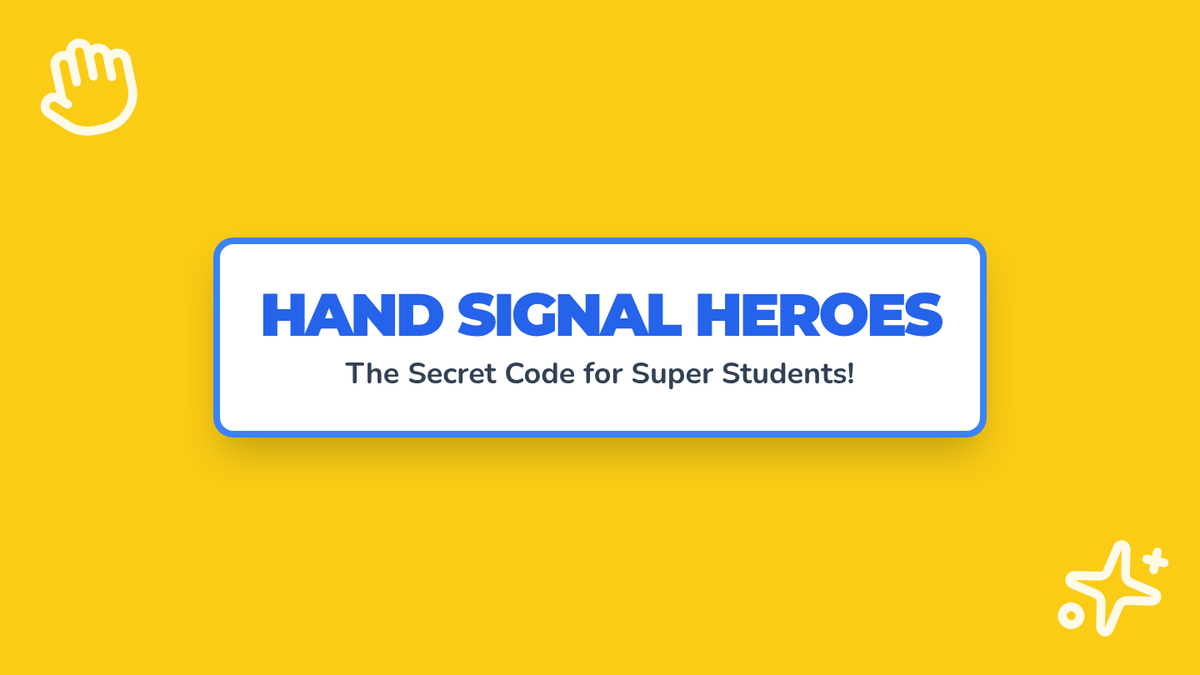
A vibrant, comic-book themed slide deck teaching 1st graders the four steps of being a "Hand Signal Hero": sit in seat, raise hand, stay quiet, and wait.
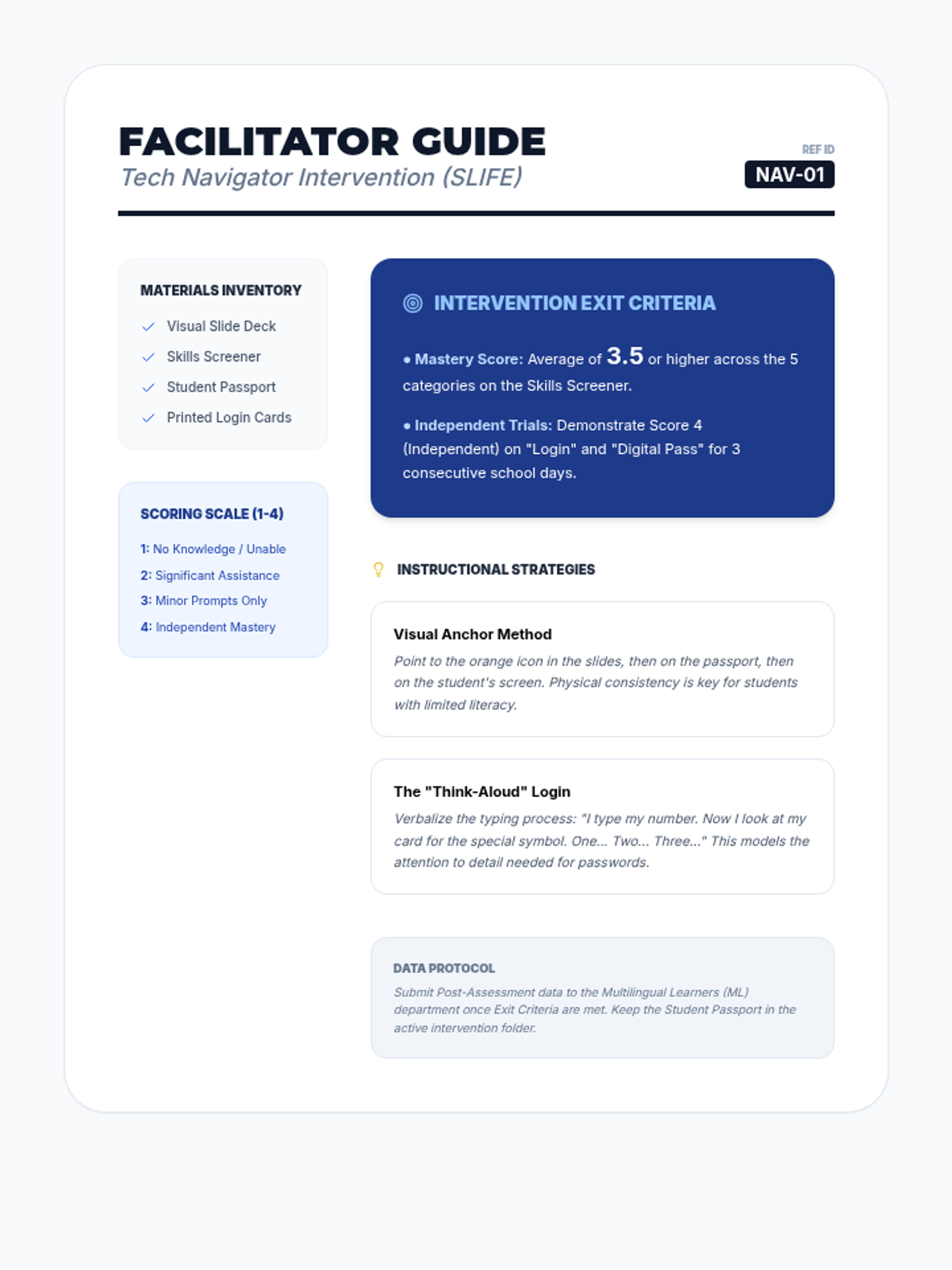
A facilitator guide for teachers delivering the Tech Navigator intervention, outlining clear exit criteria, pacing suggestions, and evidence-based instructional strategies specifically tailored for SLIFE students.
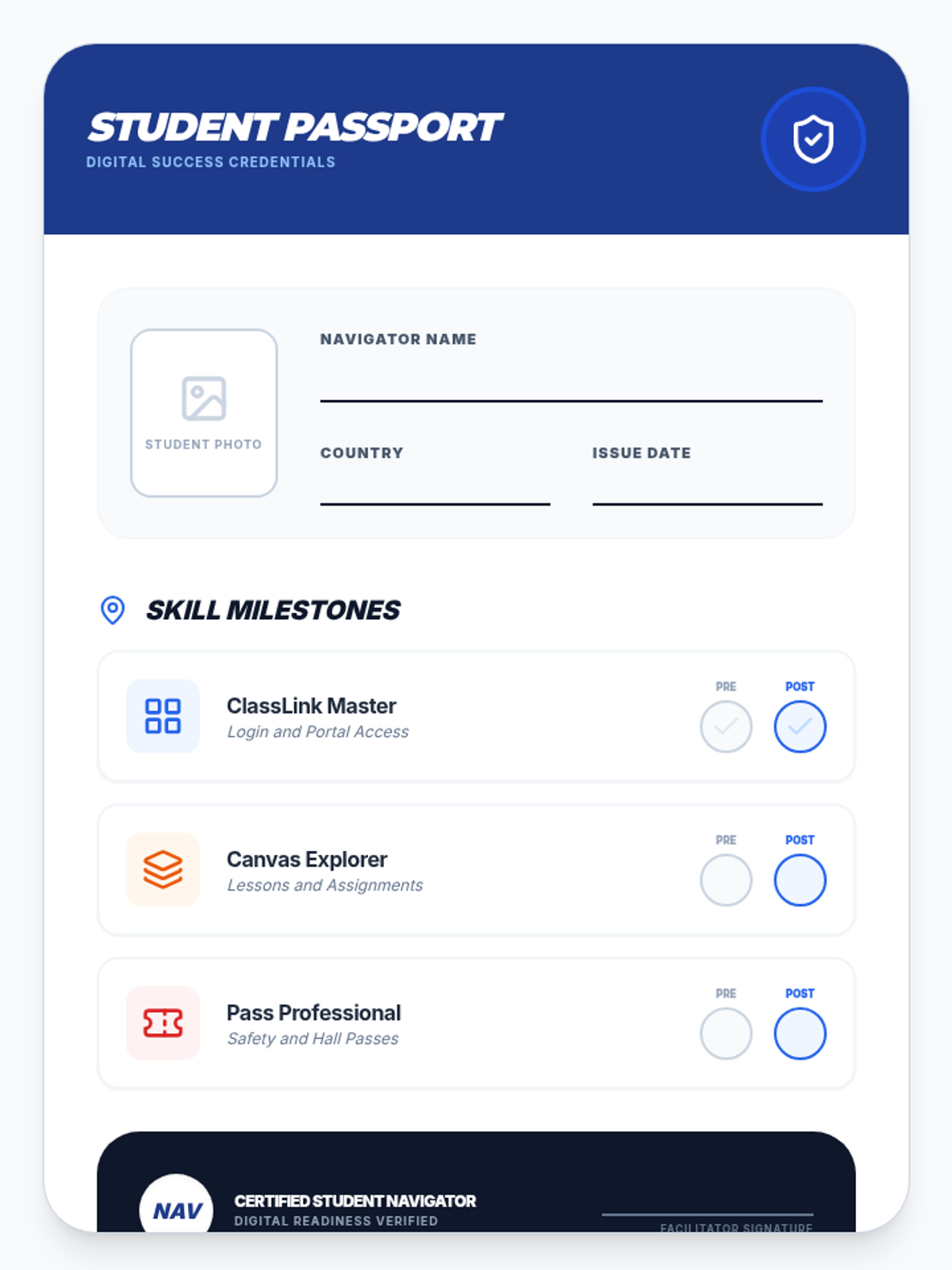
An engaging, passport-style progress tracker for students to visually record their mastery of core digital skills, including dedicated certification stamps for ClassLink, Canvas, grades, email, and digital hall passes.
A highly visual slide deck designed for SLIFE students, introducing core digital school skills like ClassLink, Canvas, email, and digital hall passes with large icons and clear, simplified language.
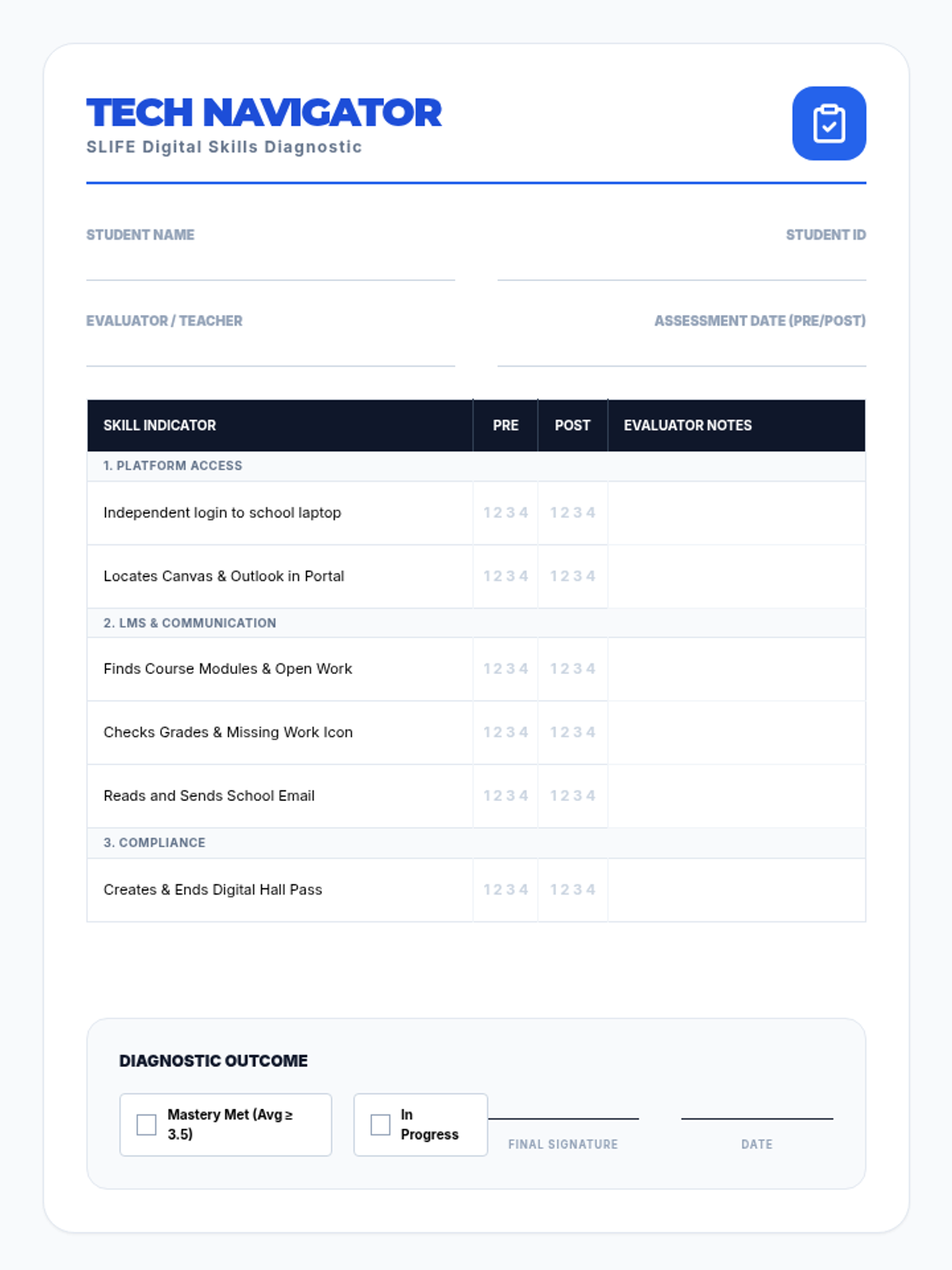
A comprehensive pre- and post-intervention screener for teachers to assess SLIFE students' proficiency in essential digital school skills, featuring a 4-point proficiency scale and specific skill indicators for ClassLink, Canvas, grades, email, and digital passes.
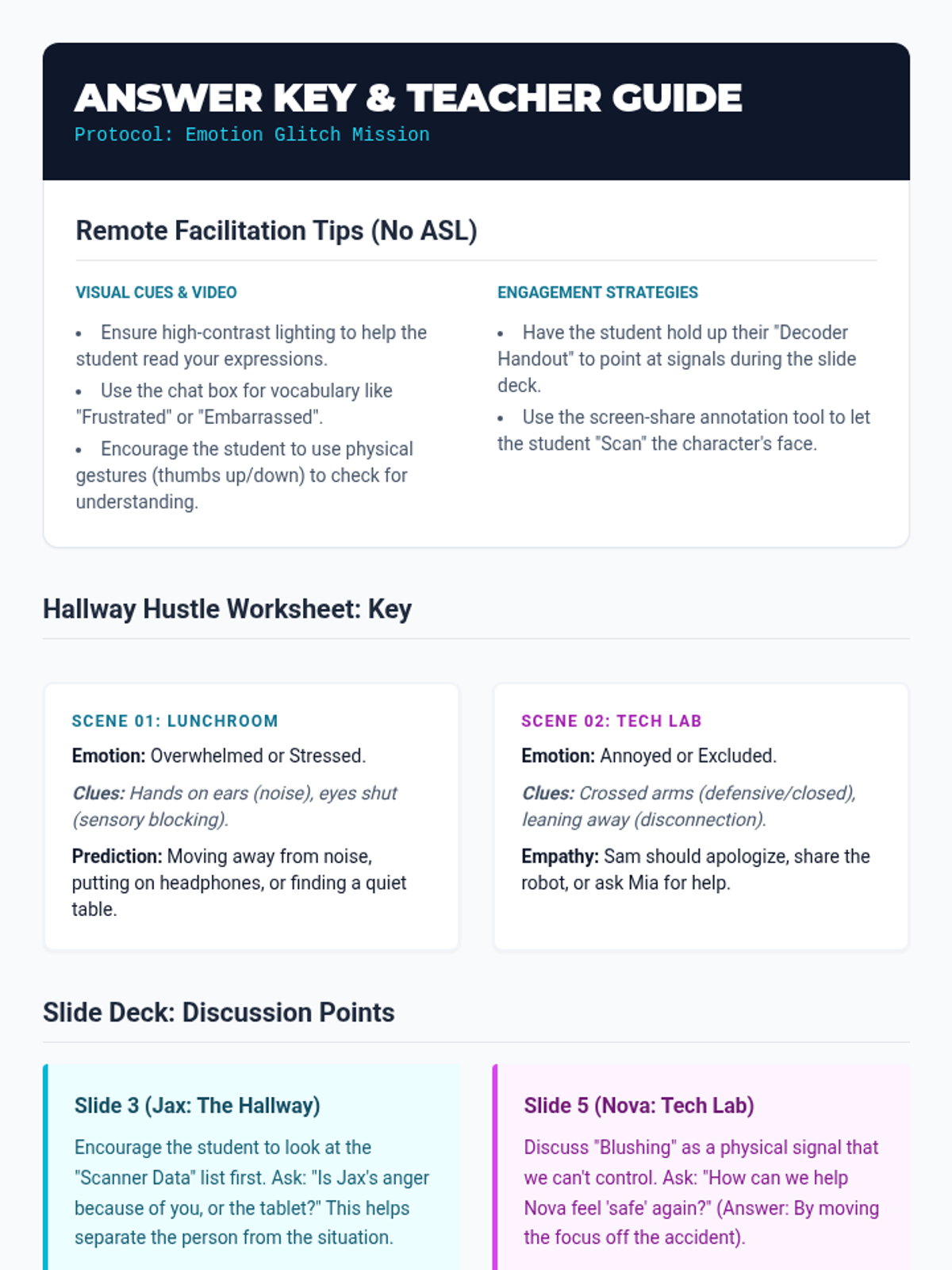
A teacher resource providing the answer key for the Hallway Hustle worksheet and specialized instructional strategies for remote teaching DHH students without the use of ASL.
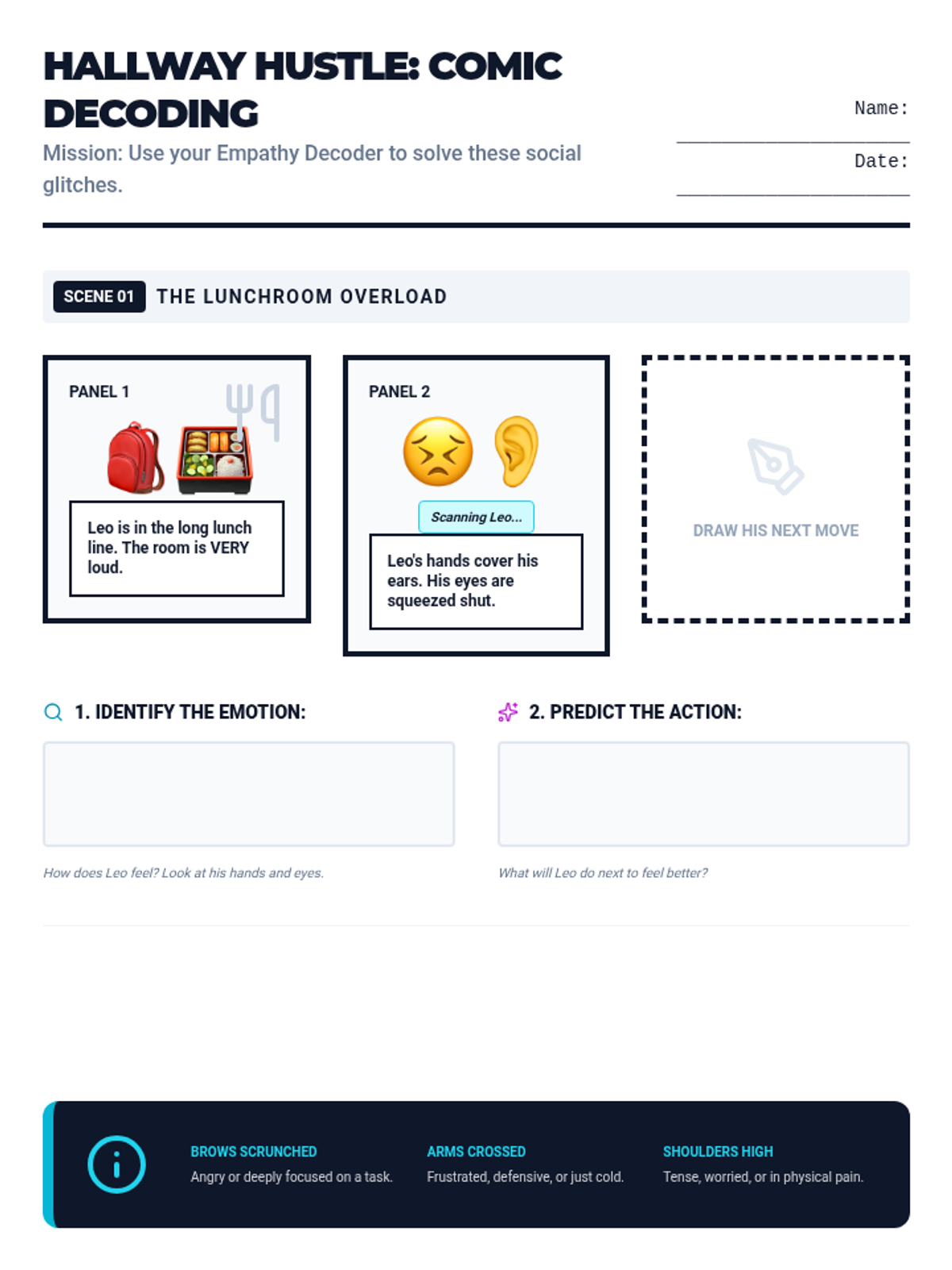
A comic-style worksheet where students analyze social situations in school settings. It includes 'scannable' panels and requires students to identify emotions and predict appropriate social responses.
An interactive slide deck set in a futuristic 'cyber-school' environment. Students navigate social scenarios in a hallway and tech lab, practicing emotion recognition and empathy responses through a narrative 'Mission' framework.
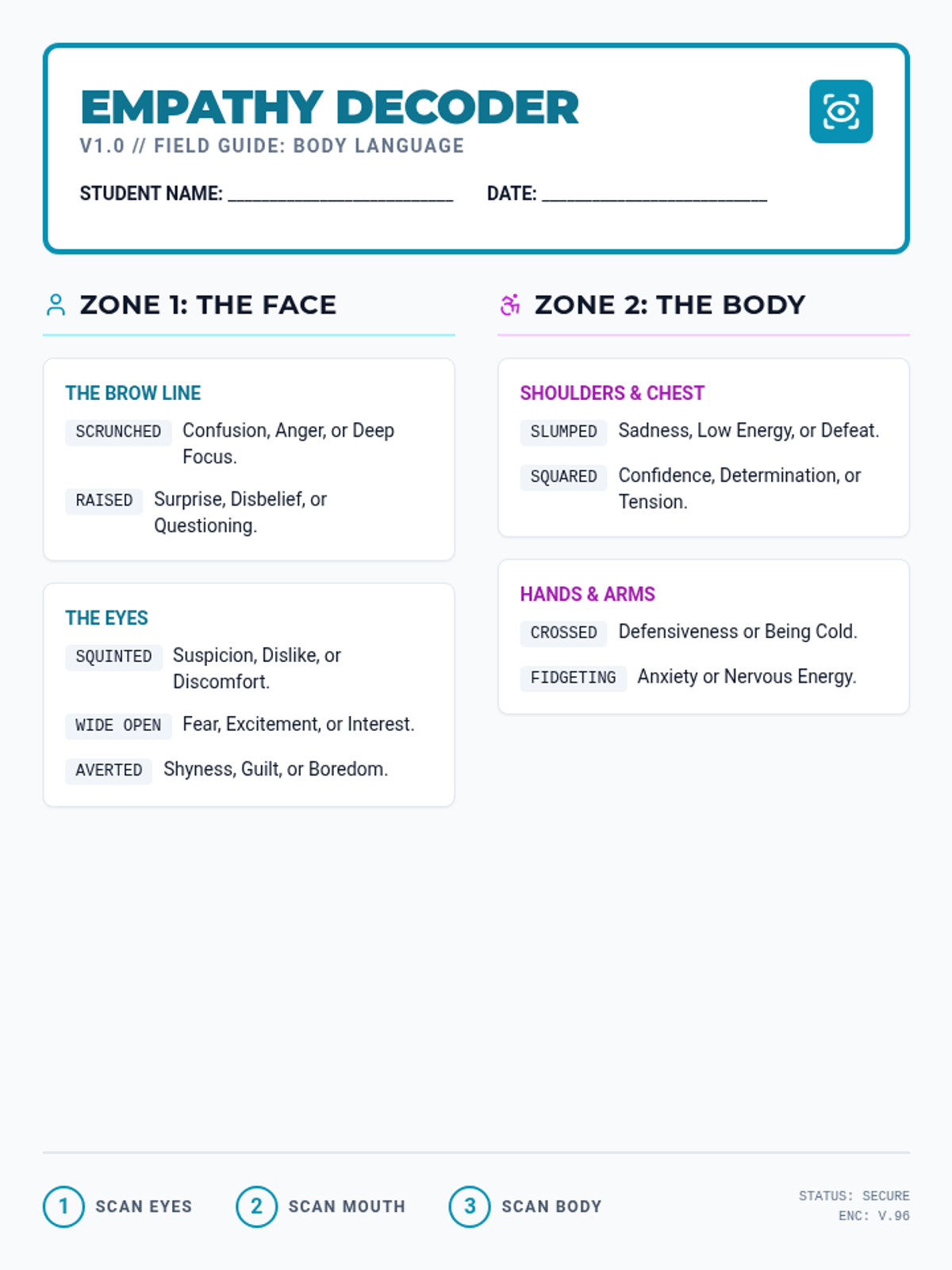
A visual cheat sheet for decoding body language and facial expressions, designed with a futuristic 'cyber-decoder' aesthetic to engage DHH students. Includes specific physical cues for the face and body.
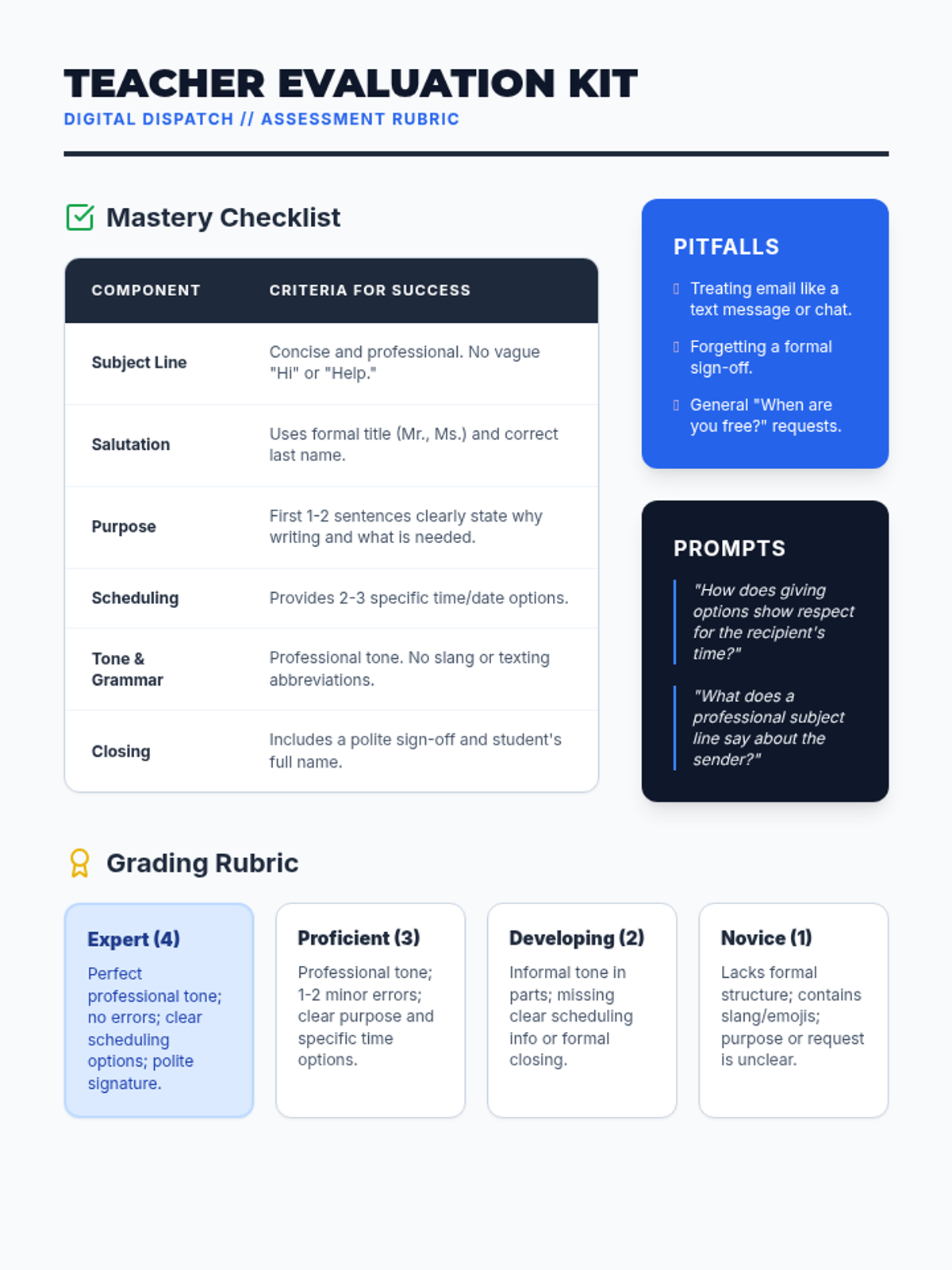
A teacher evaluation resource with a mastery checklist, grading rubric, and common pitfalls to help assess student emails.
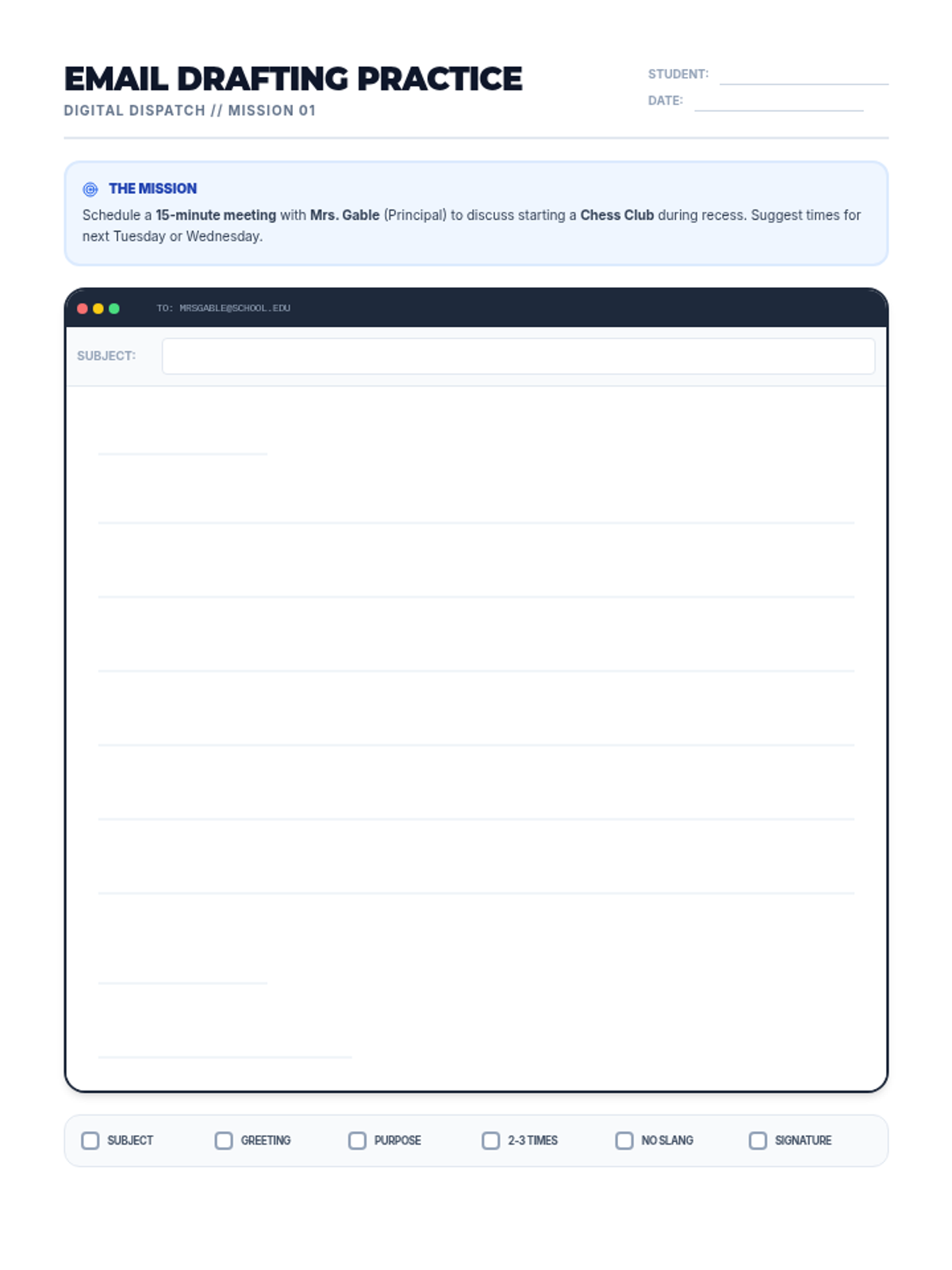
A practice worksheet where students draft their own professional email based on a specific meeting request scenario.
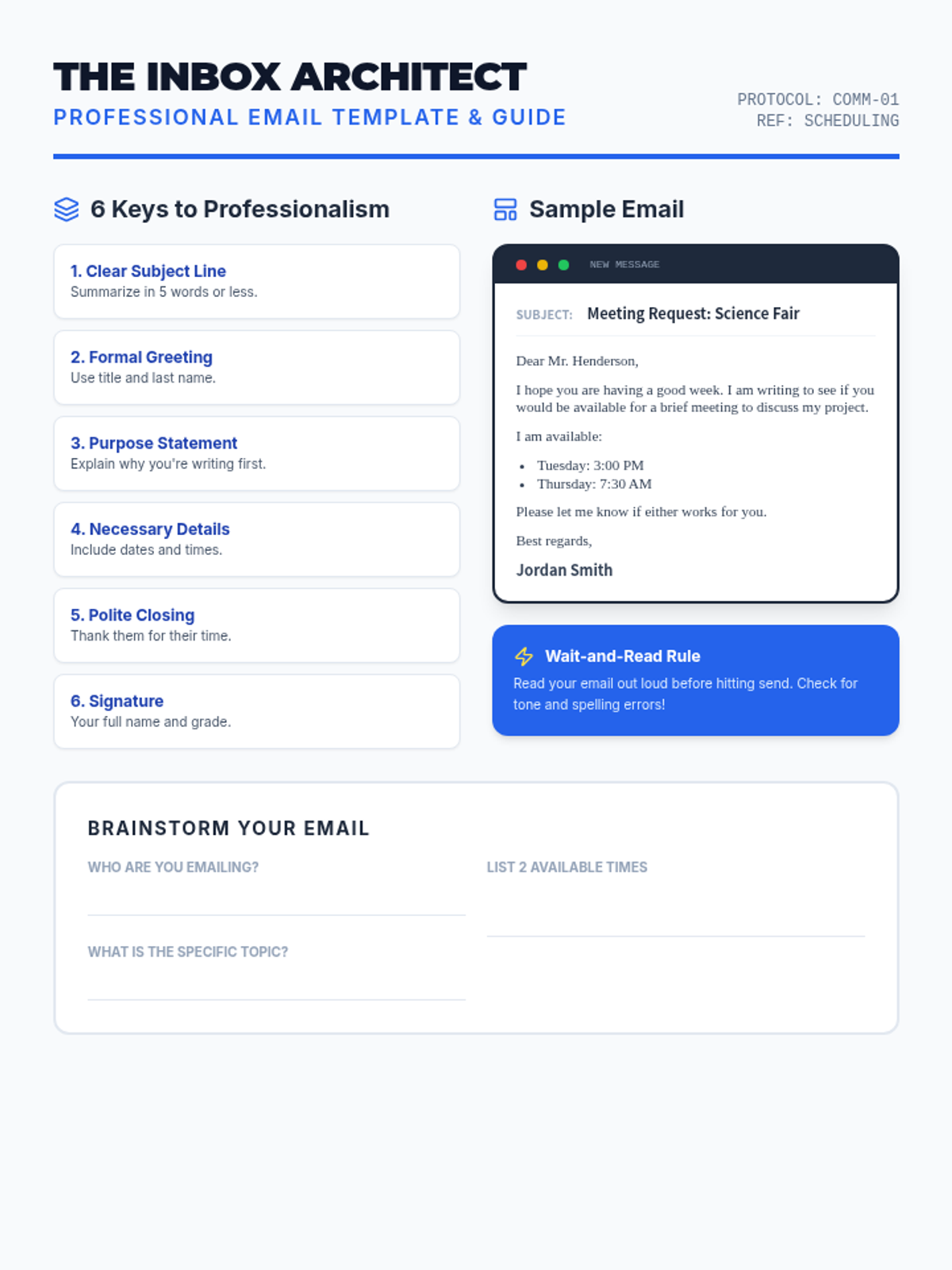
A reference guide and template for students, providing a clear example of a professional email for scheduling a meeting.
A visual presentation covering the essentials of professional email etiquette, designed for middle school students.
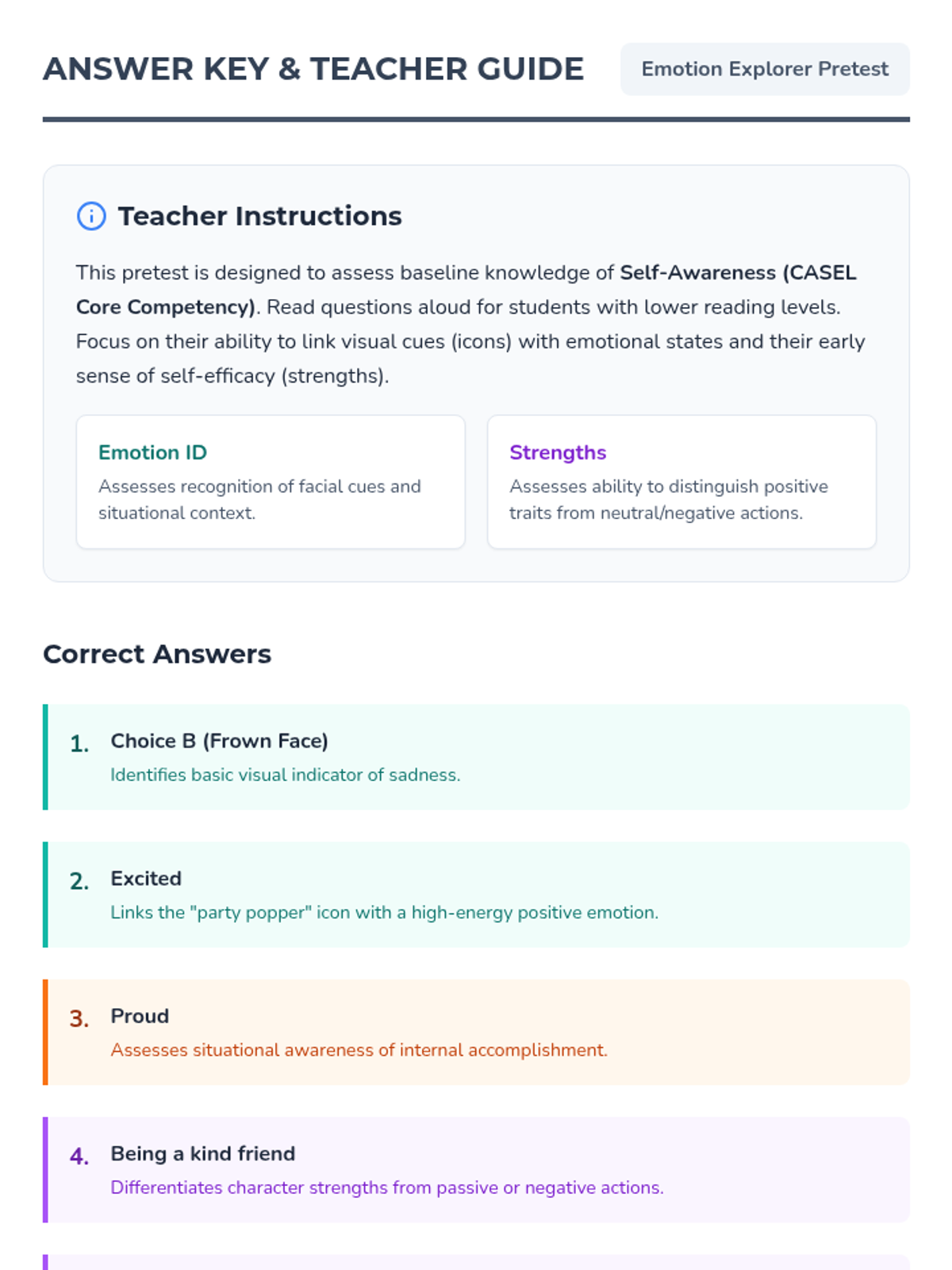
A teacher resource including the answer key for the Emotion Explorer Pretest and a guide for observing student self-awareness levels.
An engaging slide presentation introducing the concepts of self-awareness, emotions, and personal strengths to 2nd-grade students. Updated with standardized interactive quiz styling.
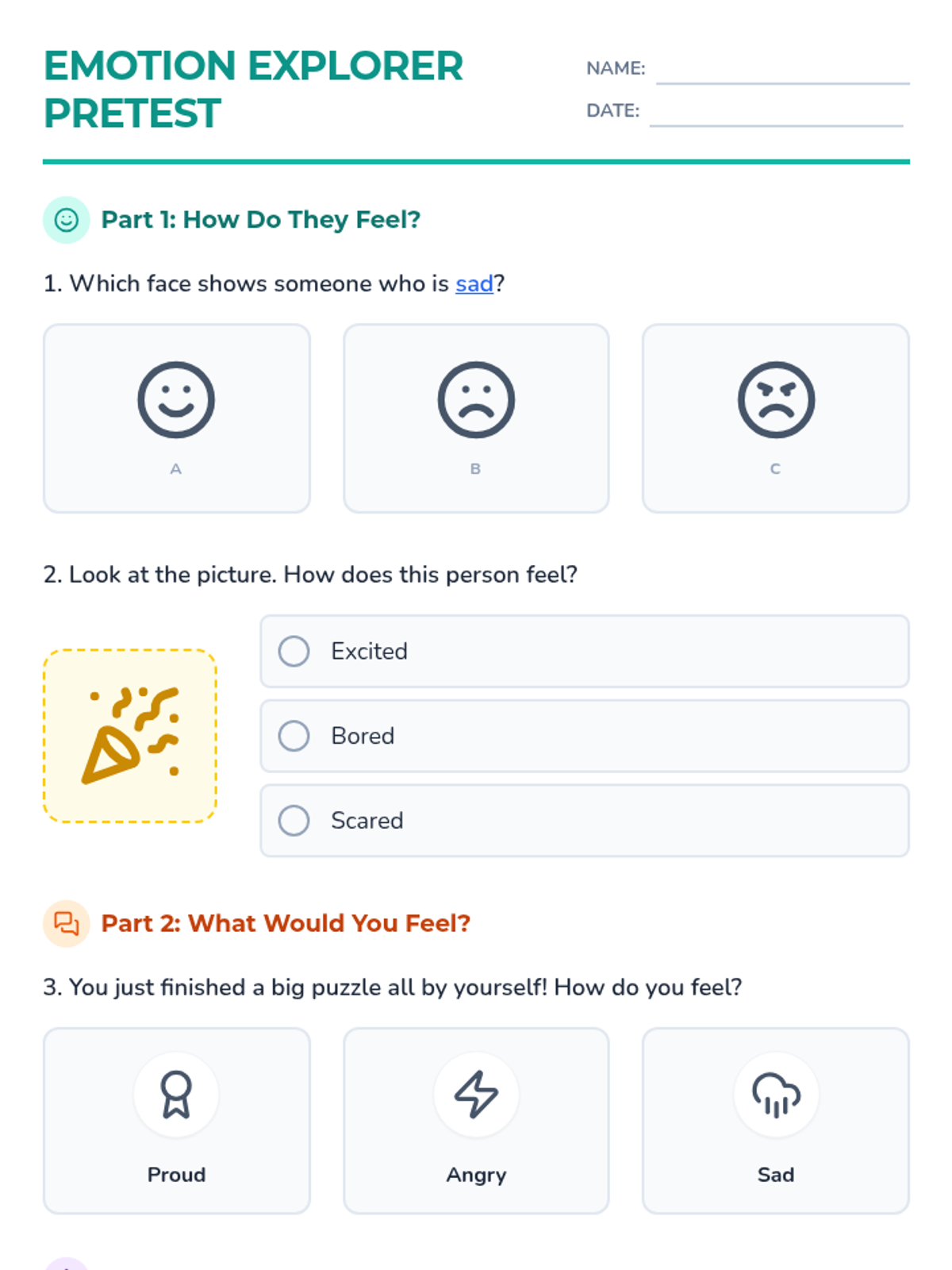
A visual pretest for 2nd graders to assess their ability to identify basic emotions and recognize personal strengths using icons and simple scenarios. Condensed to 2 pages with improved consistency.
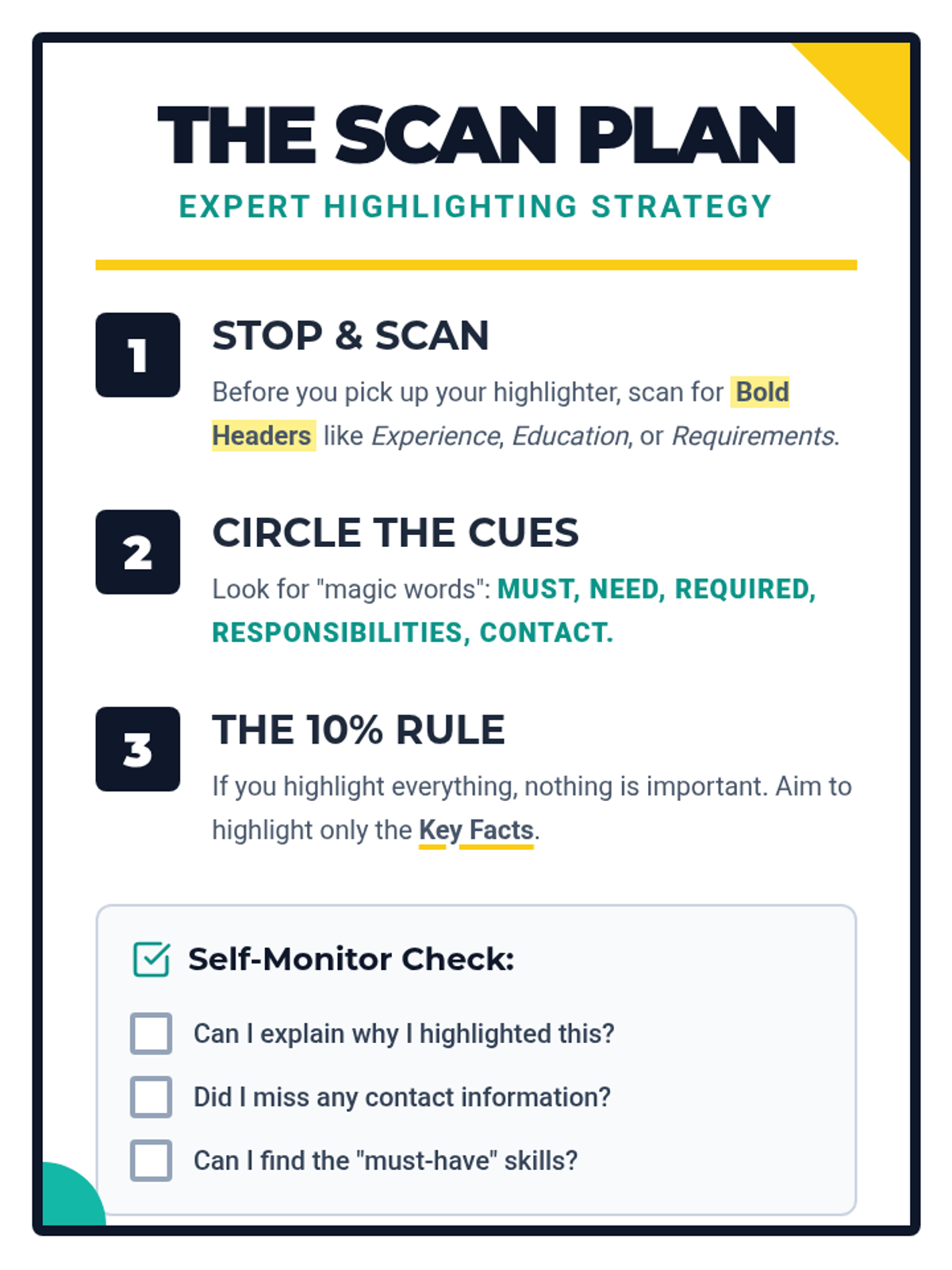
An anchor chart for self-monitoring highlighting strategies, providing students with a step-by-step "Scan Plan" for functional texts. Optimized for single-page printing.
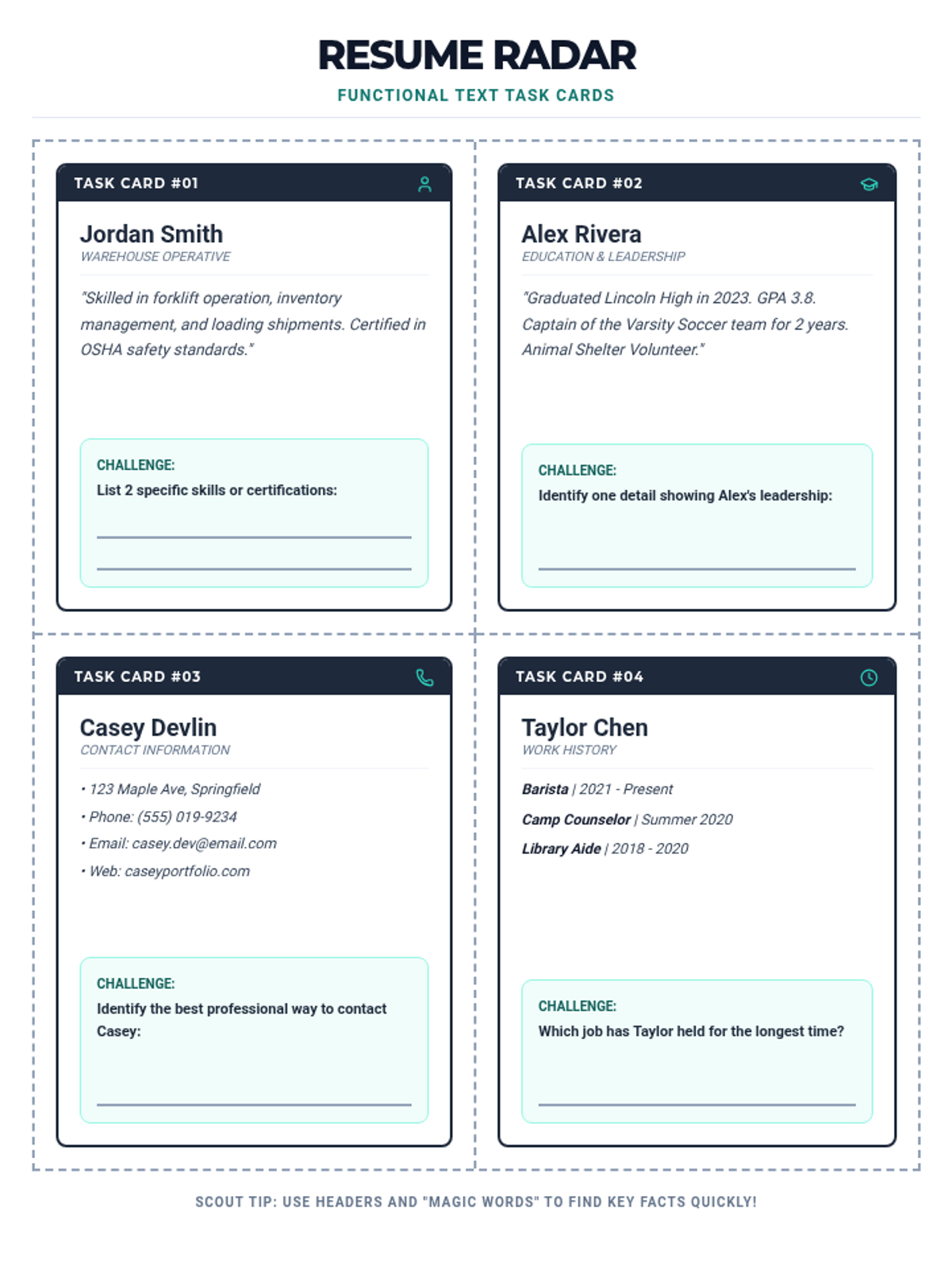
A set of 4 functional text task cards focusing on scanning resumes for specific details like experience, contact info, and work history. Includes cutting guides and student response areas.
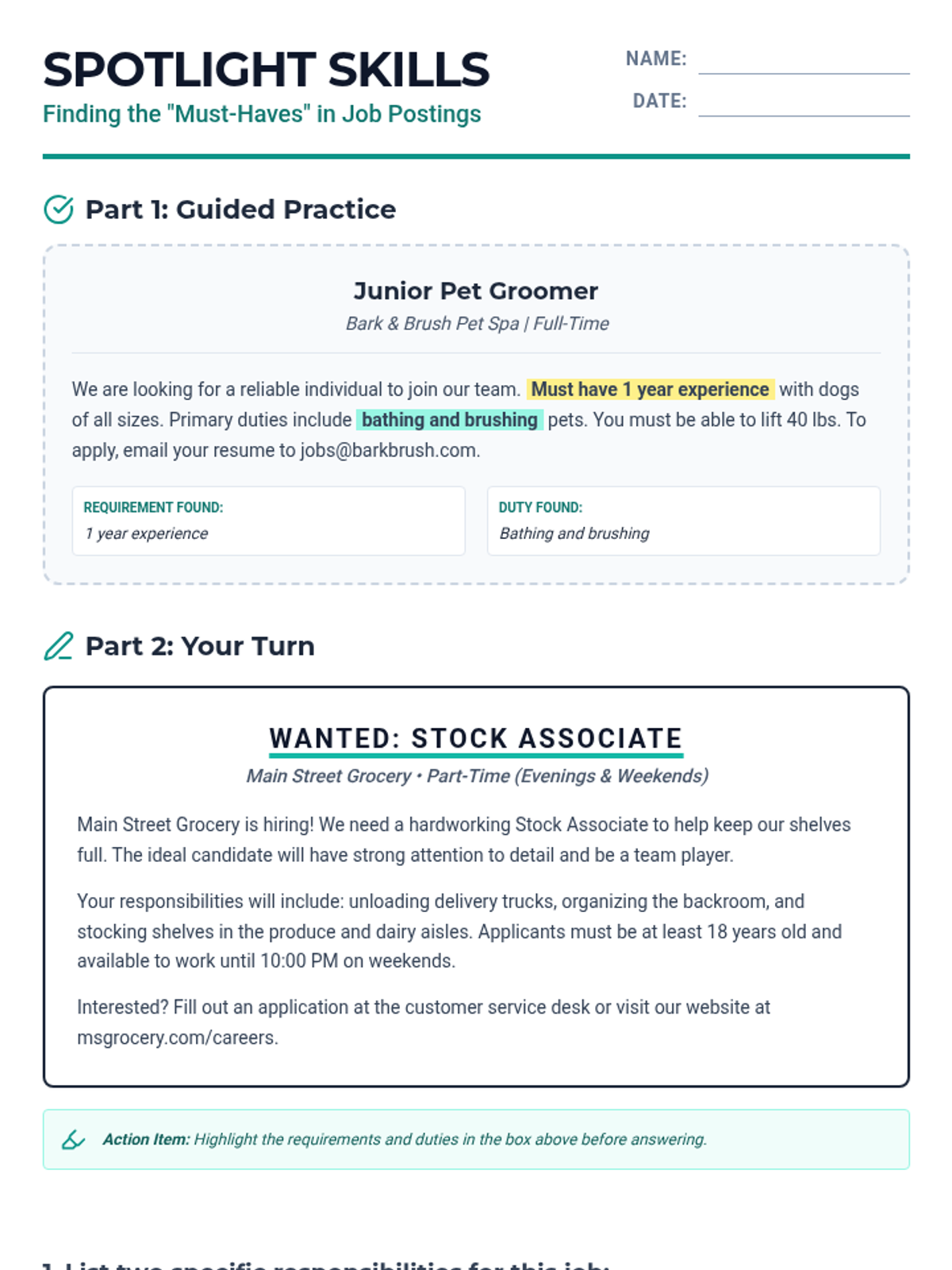
A two-page worksheet designed to help students identify and highlight key information in job postings using guided examples and independent practice. Revised for better page flow and work space.
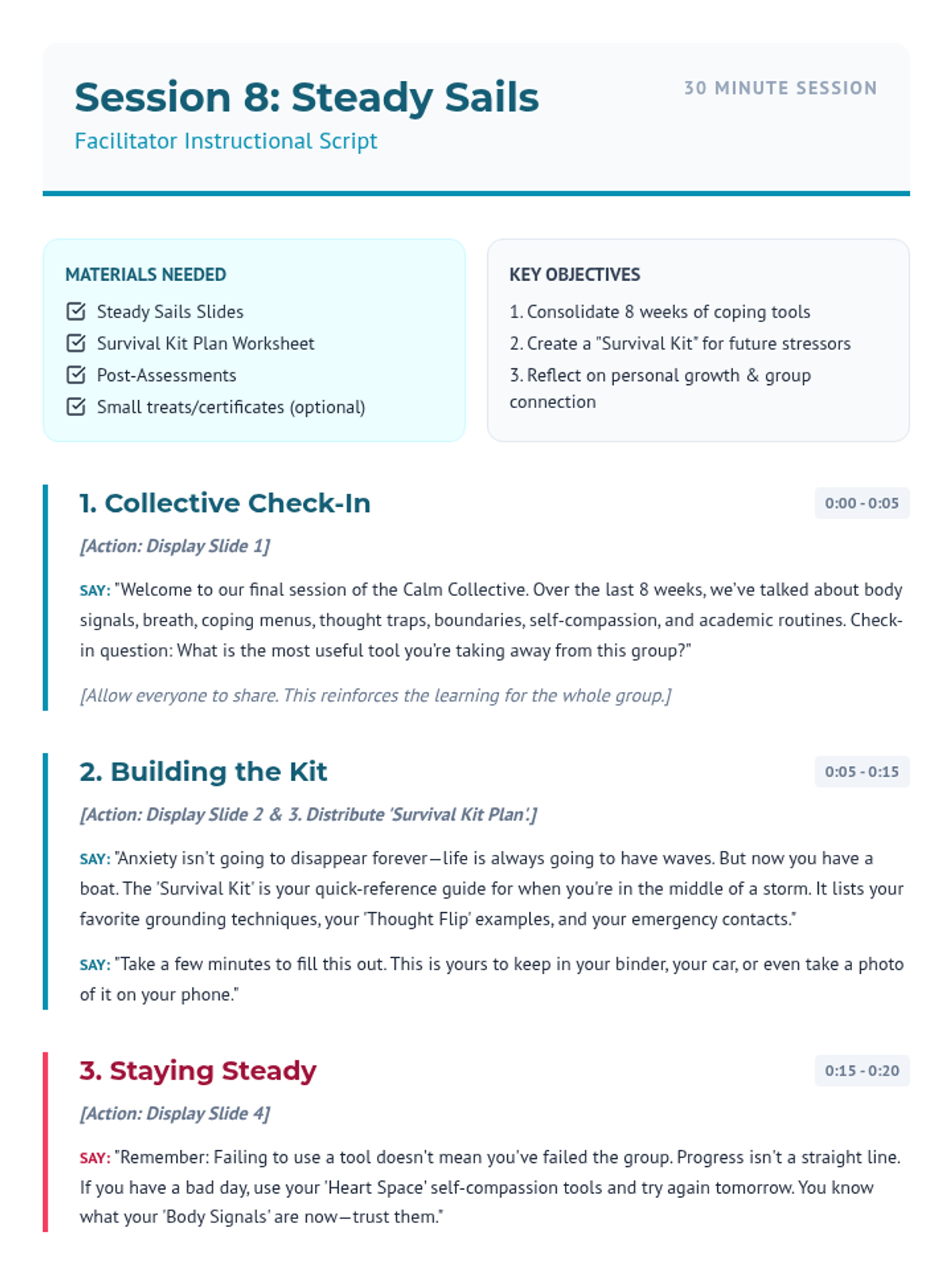
A detailed facilitation script for the final session of the Calm Collective, providing time-stamped sections, "what to say" prompts, and "what to do" instructions for the counselor. Focuses on consolidation and the "Survival Kit."
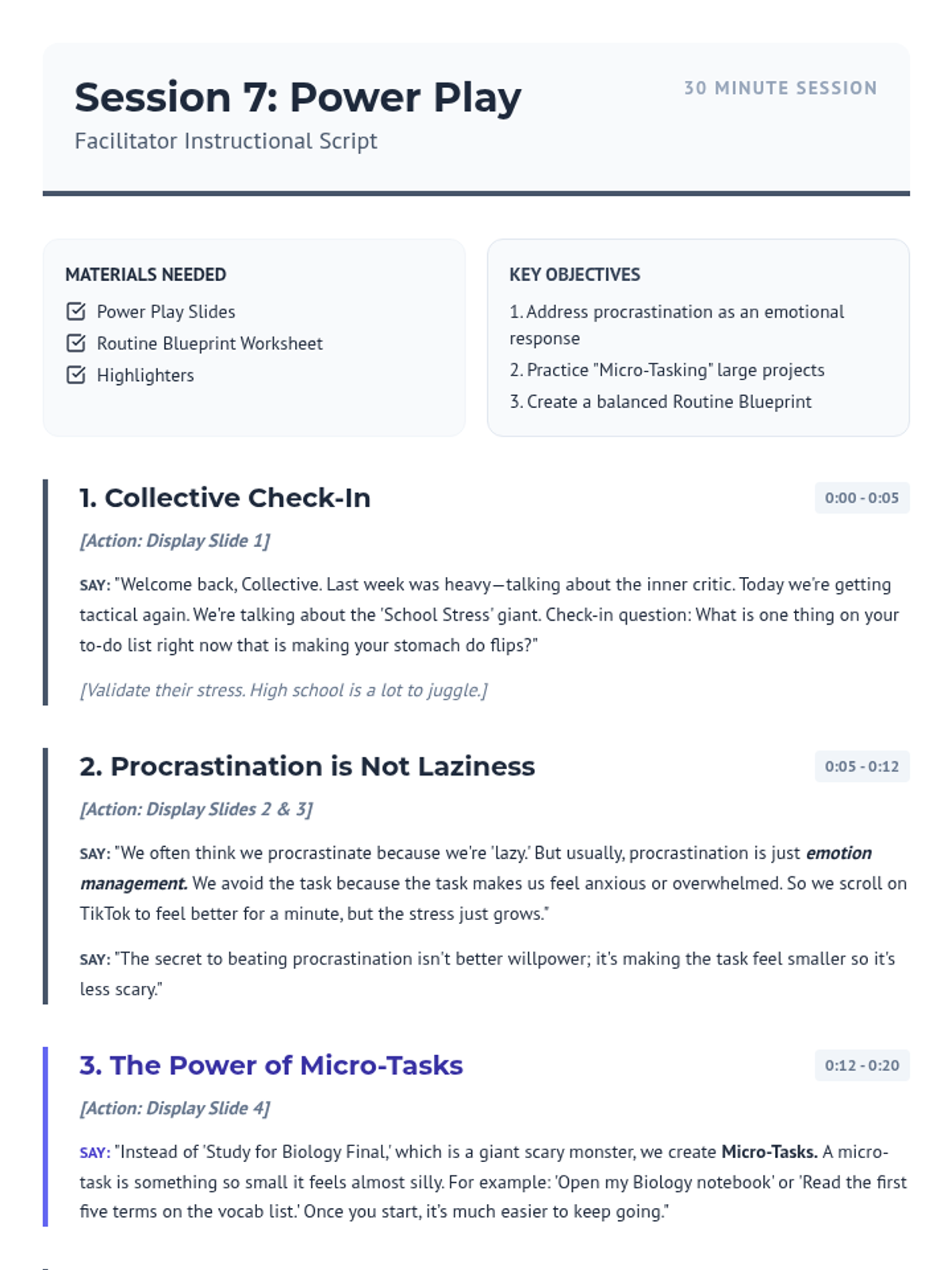
A detailed facilitation script for the seventh session of the Calm Collective, focusing on academic stress management, time-blocking, and overcoming procrastination.
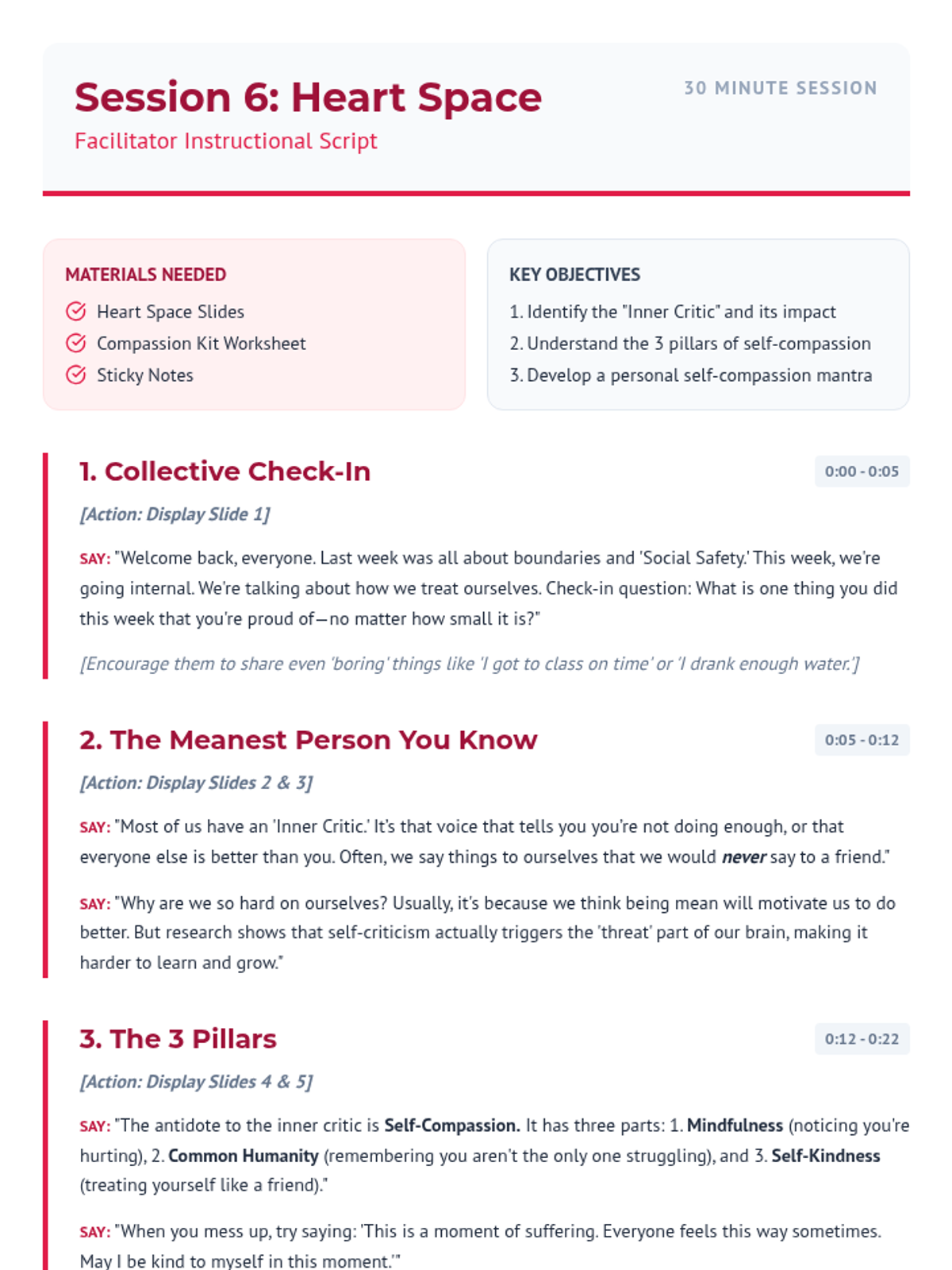
A detailed facilitation script for the sixth session of the Calm Collective, addressing perfectionism, the inner critic, and self-compassion. Fixed icon rendering and page breaks.
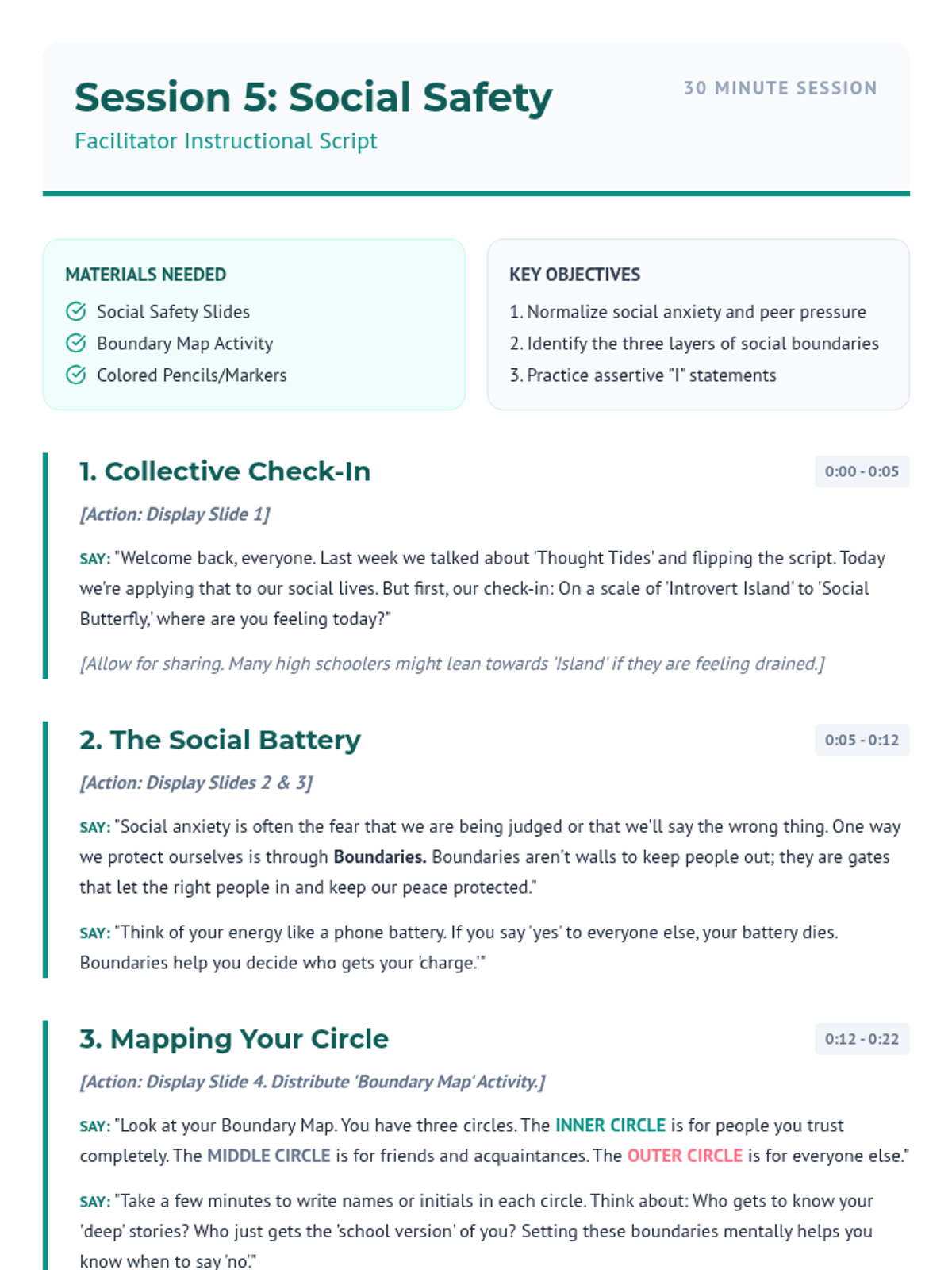
A detailed facilitation script for the fifth session of the Calm Collective, focusing on social anxiety, boundary mapping, and assertive communication skills. Fixed layout overlap and contrast.
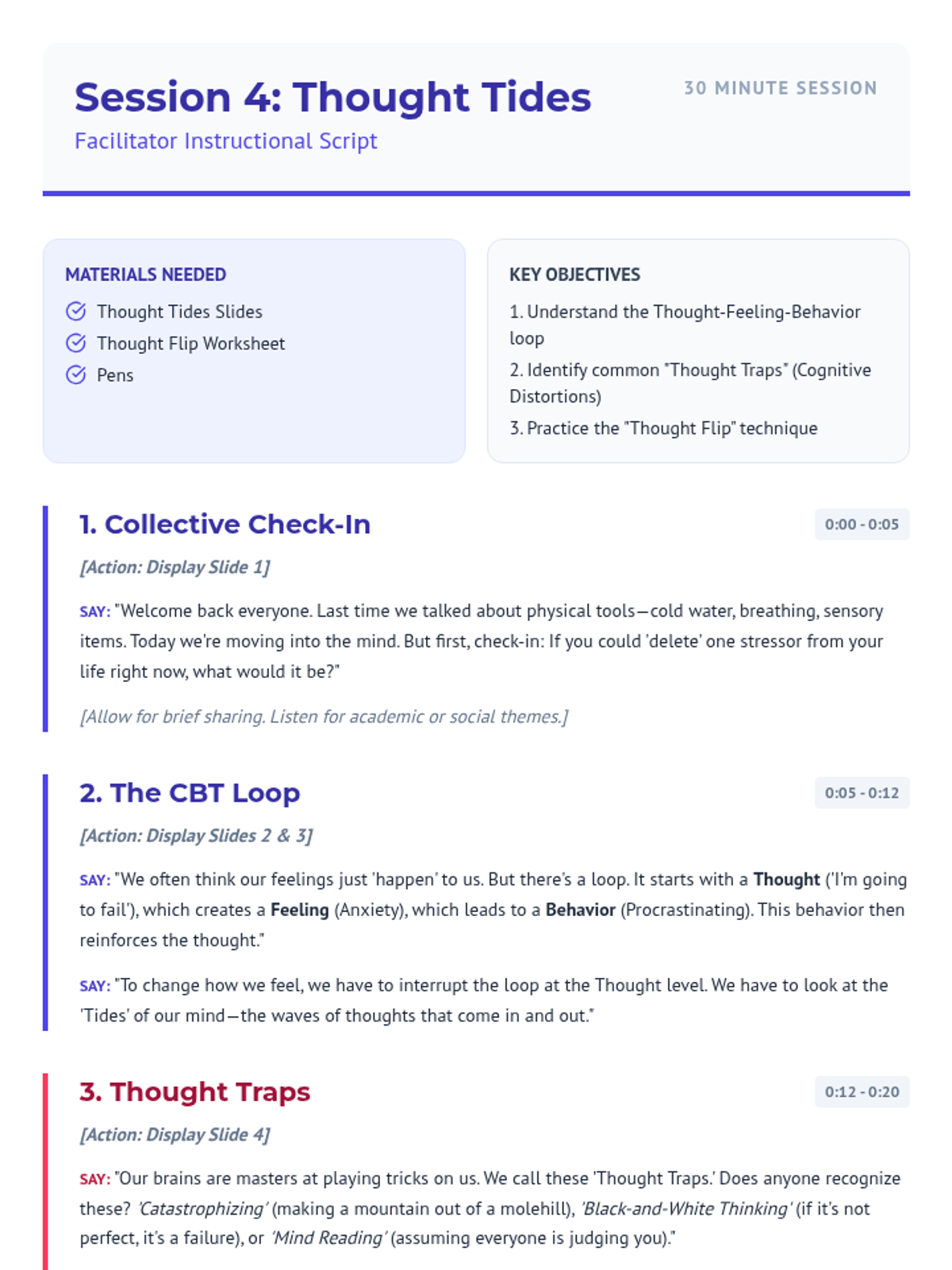
A detailed facilitation script for the fourth session of the Calm Collective, focusing on the CBT loop, identifying thought traps, and practicing cognitive reframing. Fixed icon rendering and page breaks.
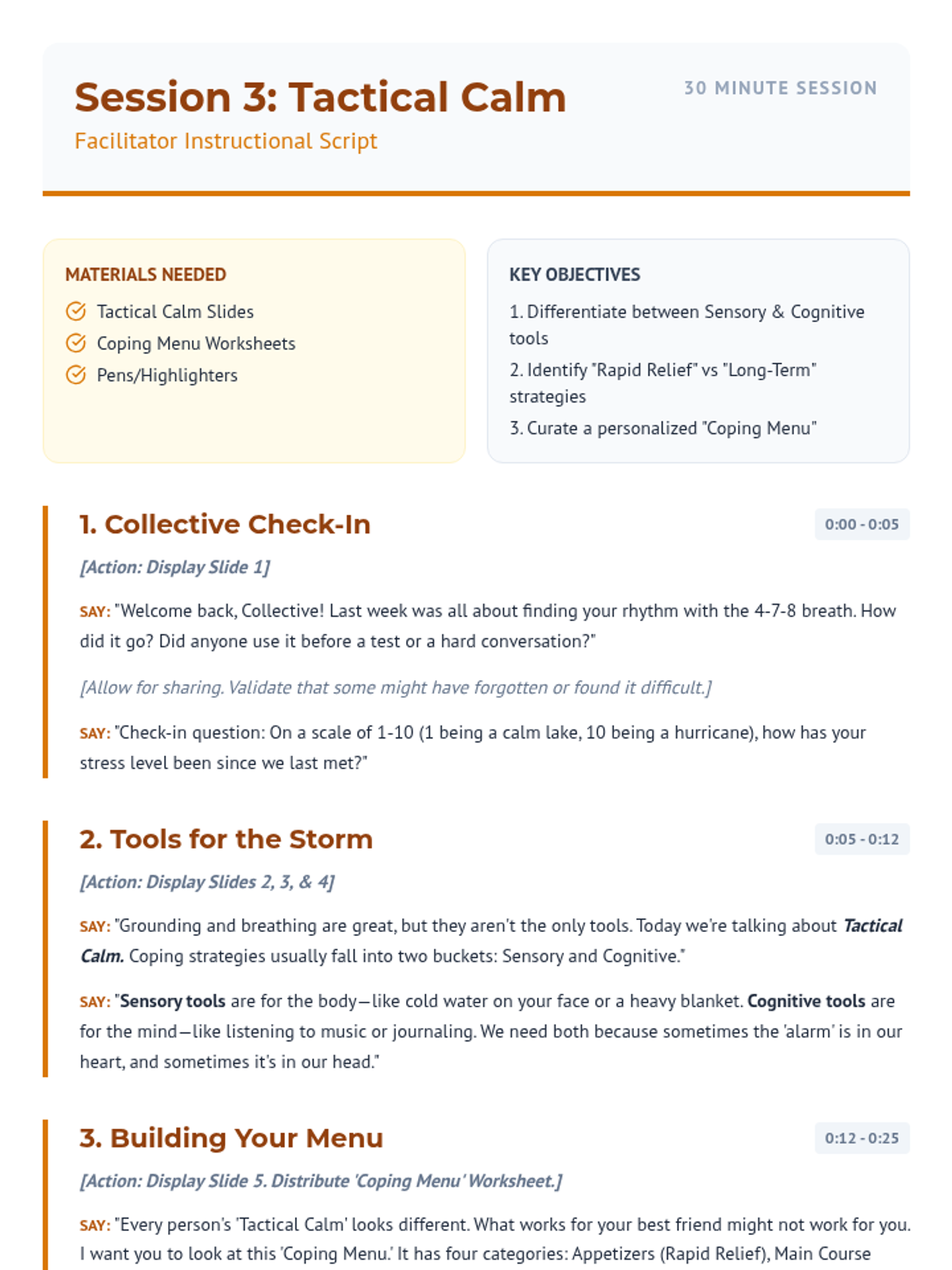
A detailed facilitation script for the third session of the Calm Collective, focusing on sensory vs. cognitive coping strategies and the creation of a personalized Coping Menu. Fixed icon rendering and page breaks.
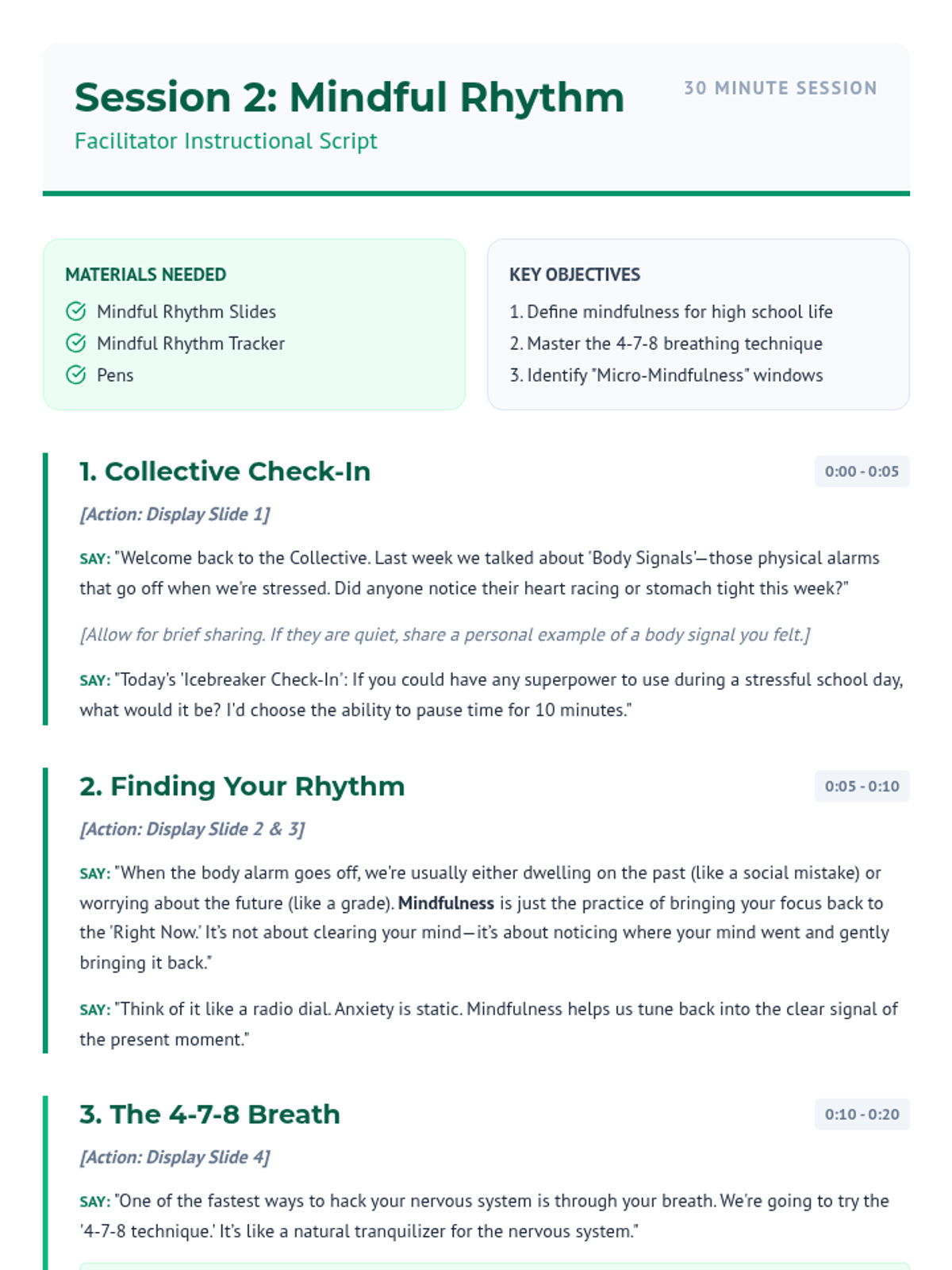
A detailed facilitation script for the second session of the Calm Collective, providing time-stamped sections, "what to say" prompts, and "what to do" instructions for the counselor. Focuses on mindfulness and the 4-7-8 breathing technique. Adjusted colors and fixed page breaks.
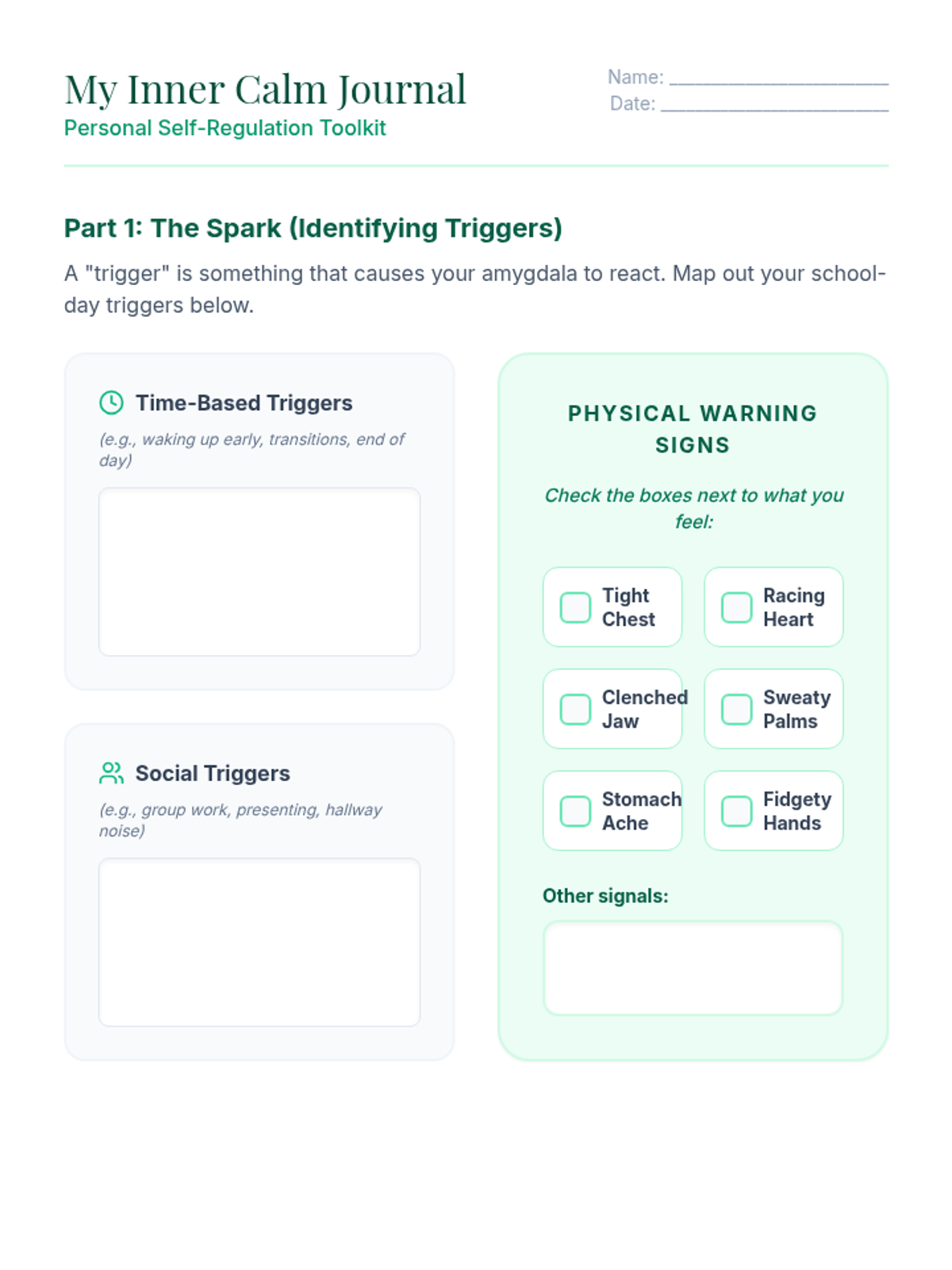
A student journal for identifying personal triggers, reflecting on mindfulness station activities, and documenting a personalized self-regulation toolkit.
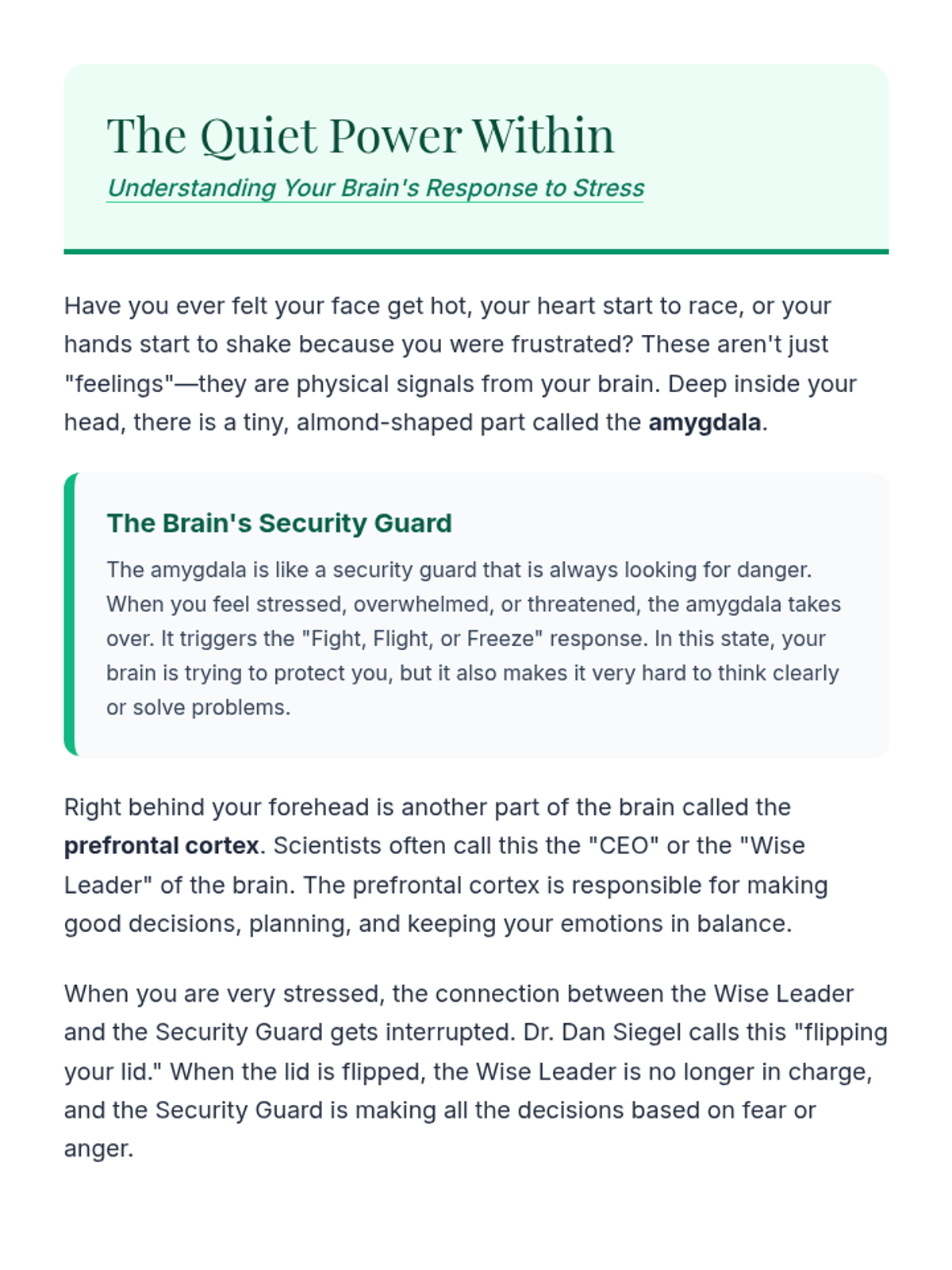
An informative reading passage about the neuroscience of self-regulation, focusing on the roles of the amygdala and prefrontal cortex.
A visual slide deck covering the science of self-regulation, breathing techniques, grounding exercises, and a cool-down choice board.
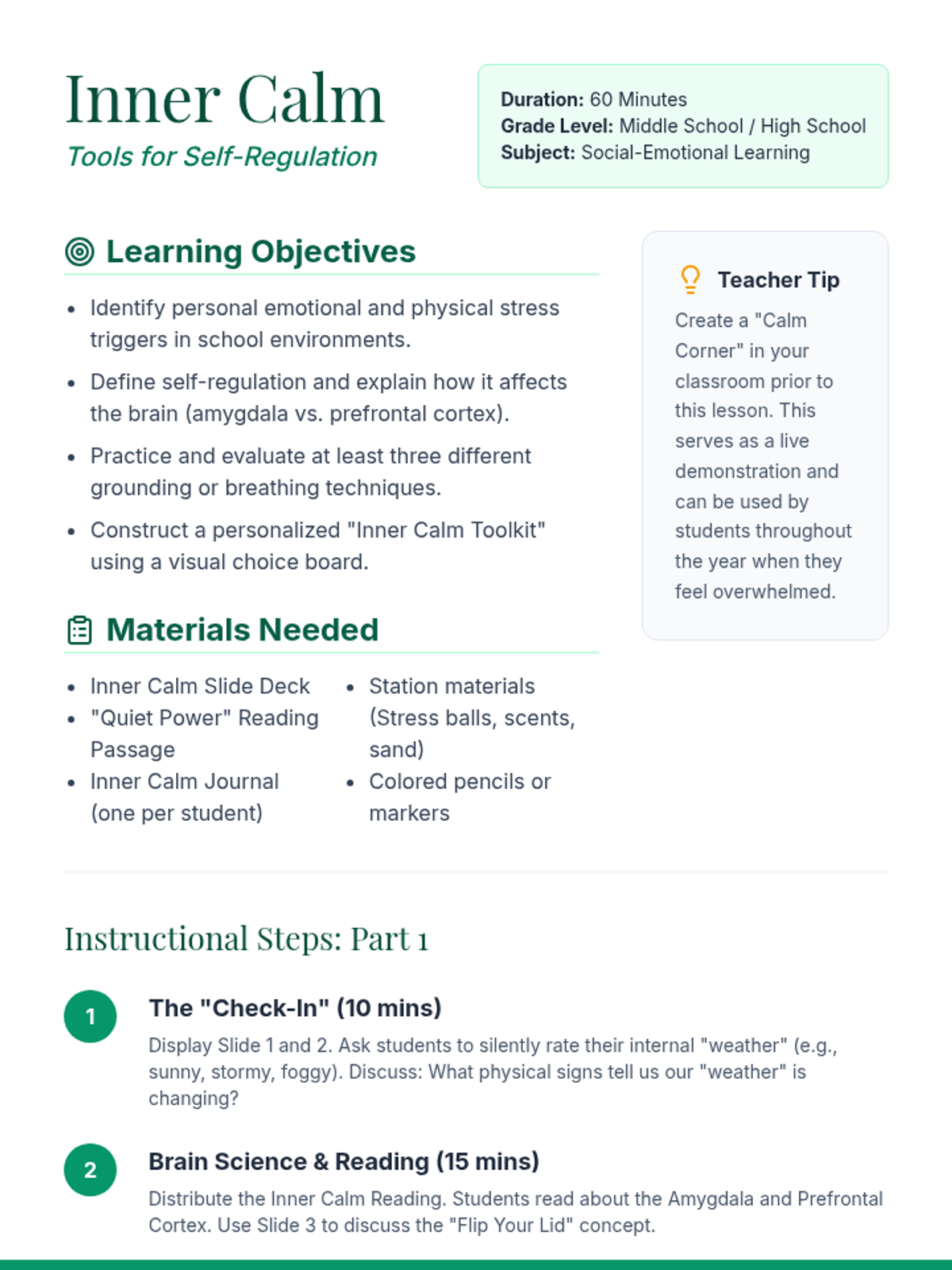
A detailed lesson plan for teaching self-regulation, including instructional steps, station activities, and differentiation strategies.
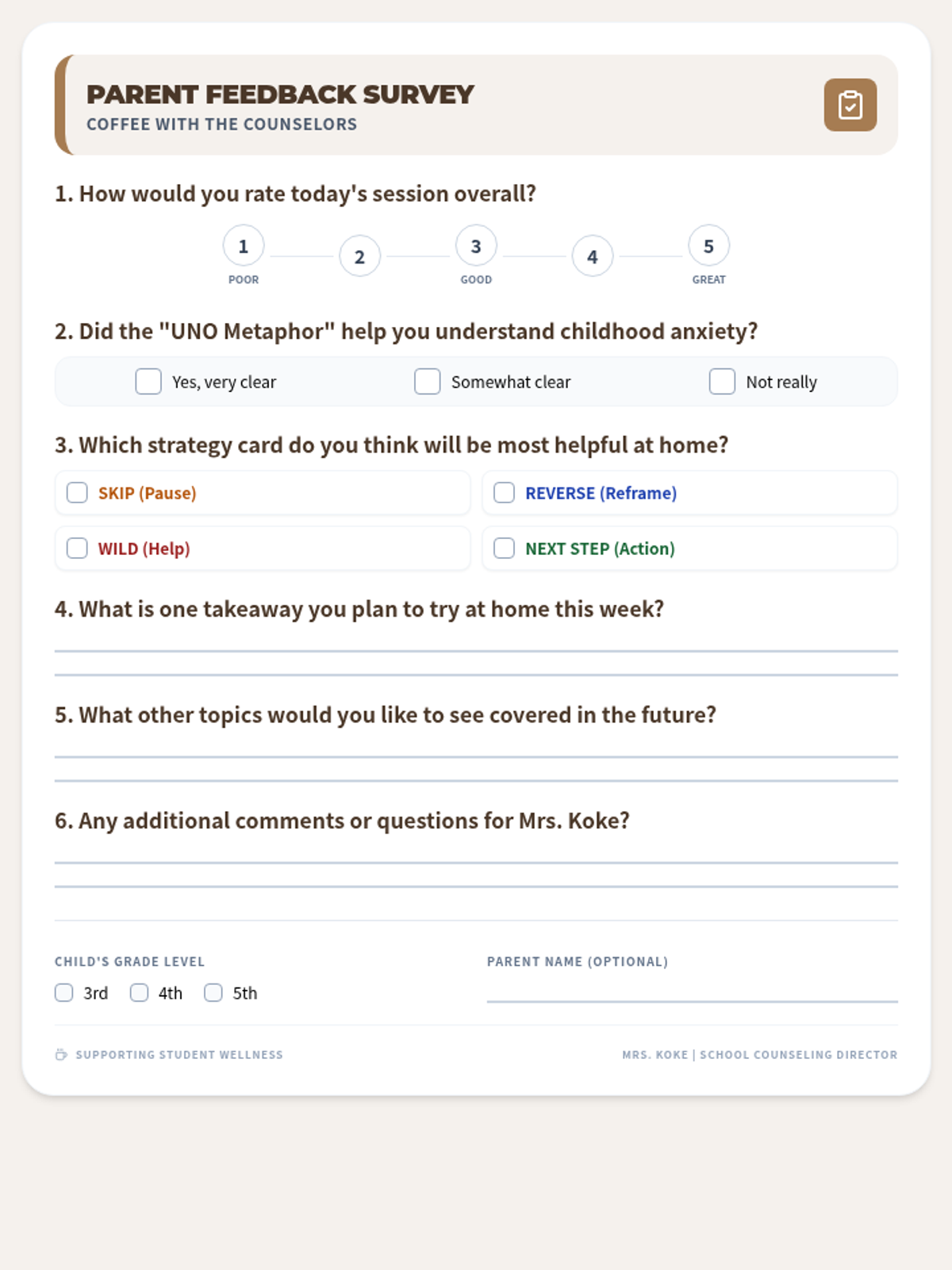
A professional feedback survey for parents to complete at the end of the 'Coffee with the Counselors' session. It features a clean design with thematic elements, gathering data on session quality, the effectiveness of the UNO metaphor, and interest in future topics.
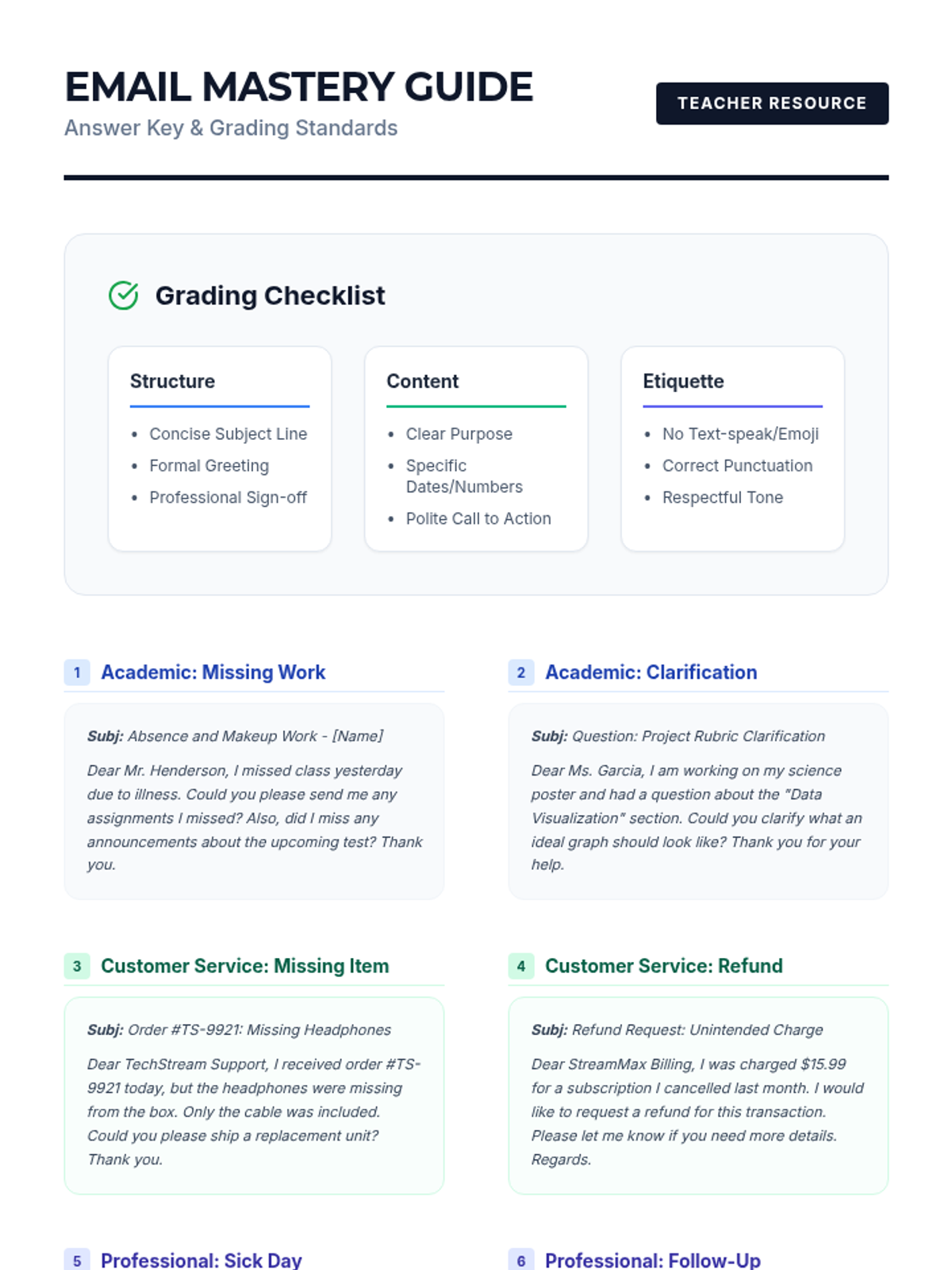
A teacher guide containing grading criteria, common pitfalls, and sample email responses for various student scenarios to assist in evaluation and modeling.