Un guide d'animation pour l'enseignant, focalisé sur la mise en œuvre des défis pratiques et les feedbacks positifs basés sur la plasticité cérébrale.
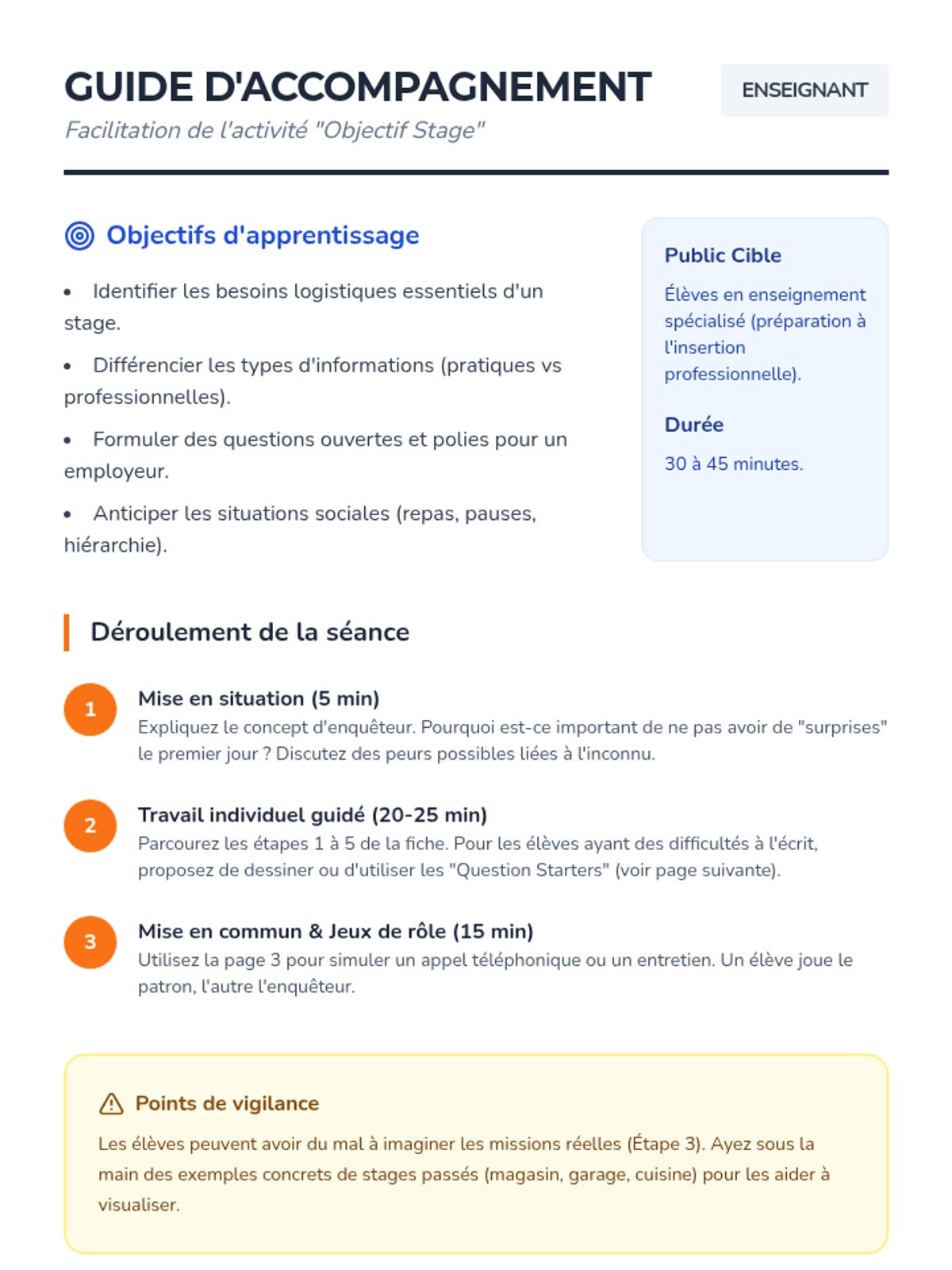
Un guide pour l'enseignant contenant les objectifs pédagogiques, le déroulement de la séance, des déclencheurs de phrases pour les élèves et des conseils d'adaptation pour l'enseignement spécialisé.
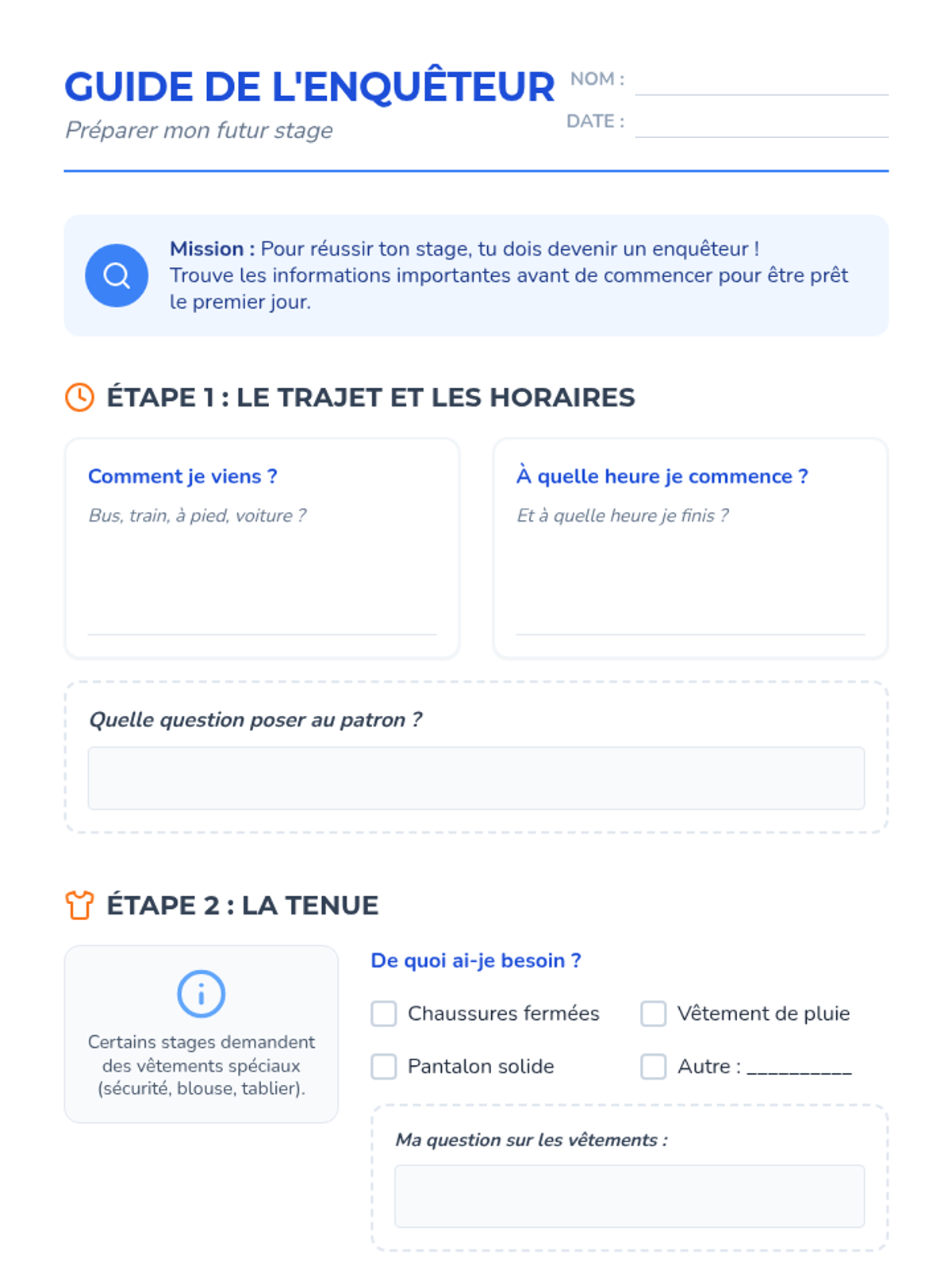
Une fiche d'activité structurée en plusieurs étapes pour aider les élèves à identifier et noter les questions essentielles avant un stage (logistique, tenue, missions, repas).
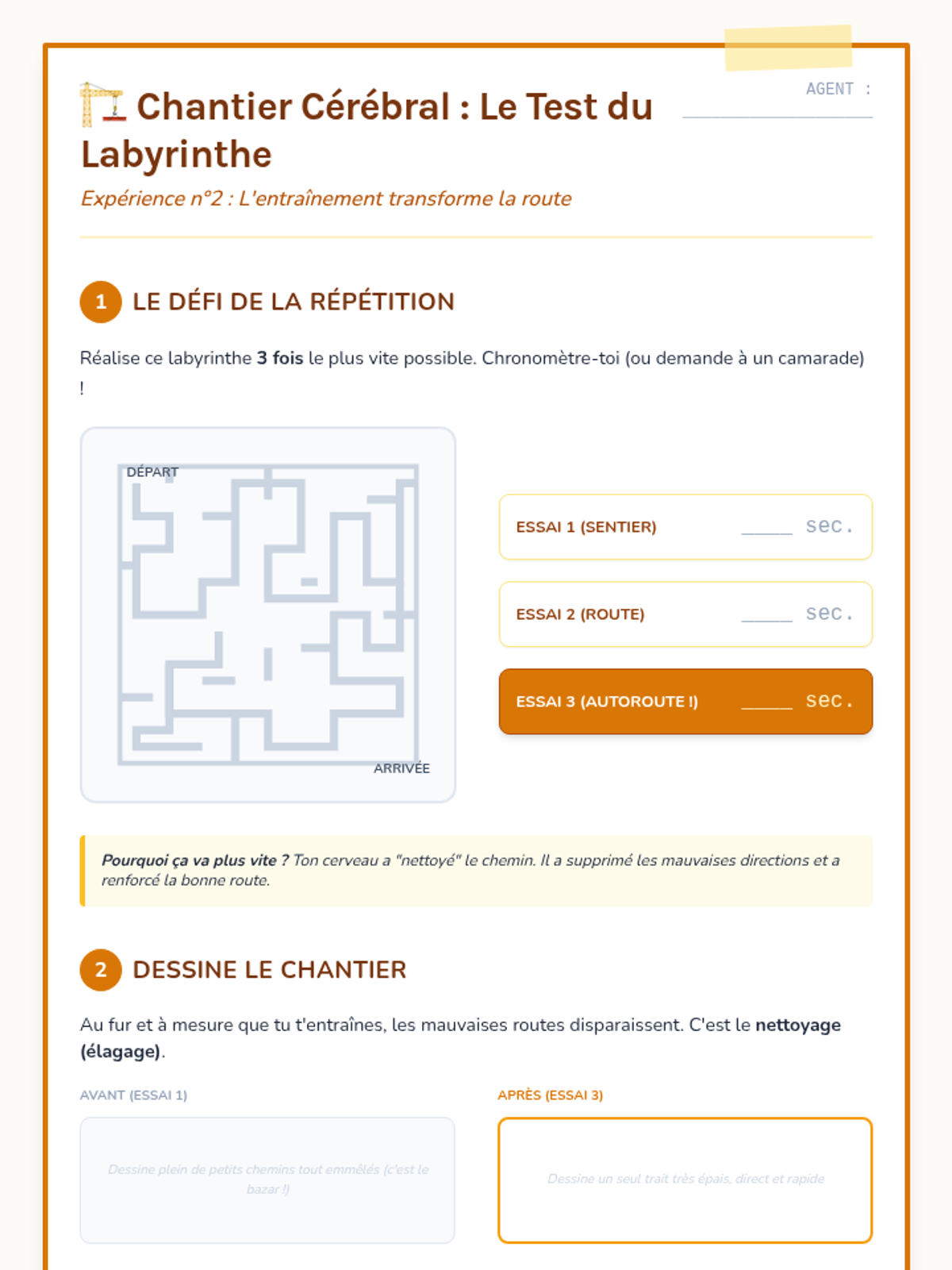
Une fiche d'élève interactive avec un labyrinthe complexe pour tester la répétition et une check-list hebdomadaire pour suivre l'entraînement des neurones. Version finale optimisée.
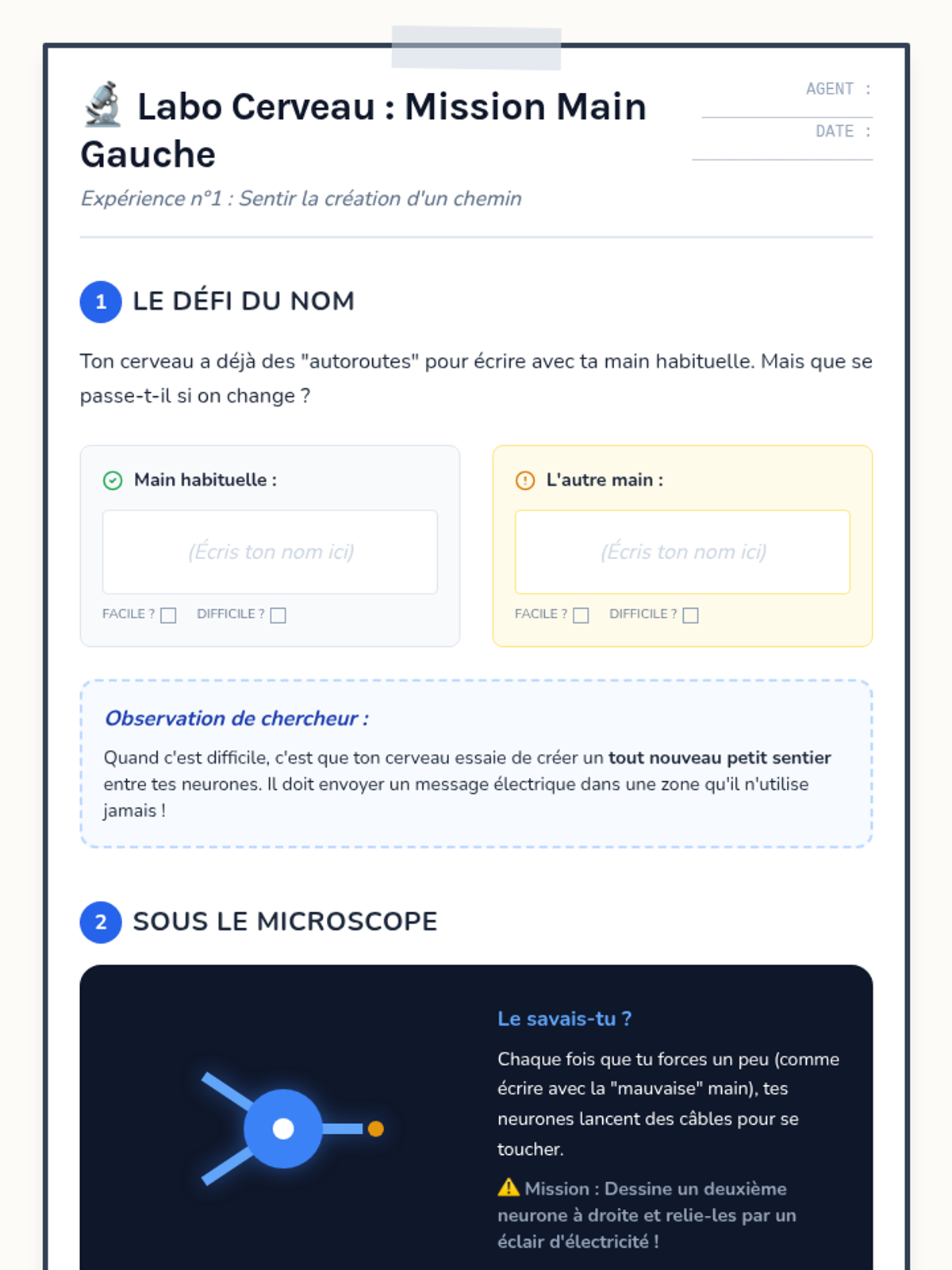
Une fiche d'élève pratique type "carnet de bord" proposant une expérience concrète (écrire de la main non-dominante) pour ressentir la création de nouvelles connexions neuronales. Version révisée moins théorique.
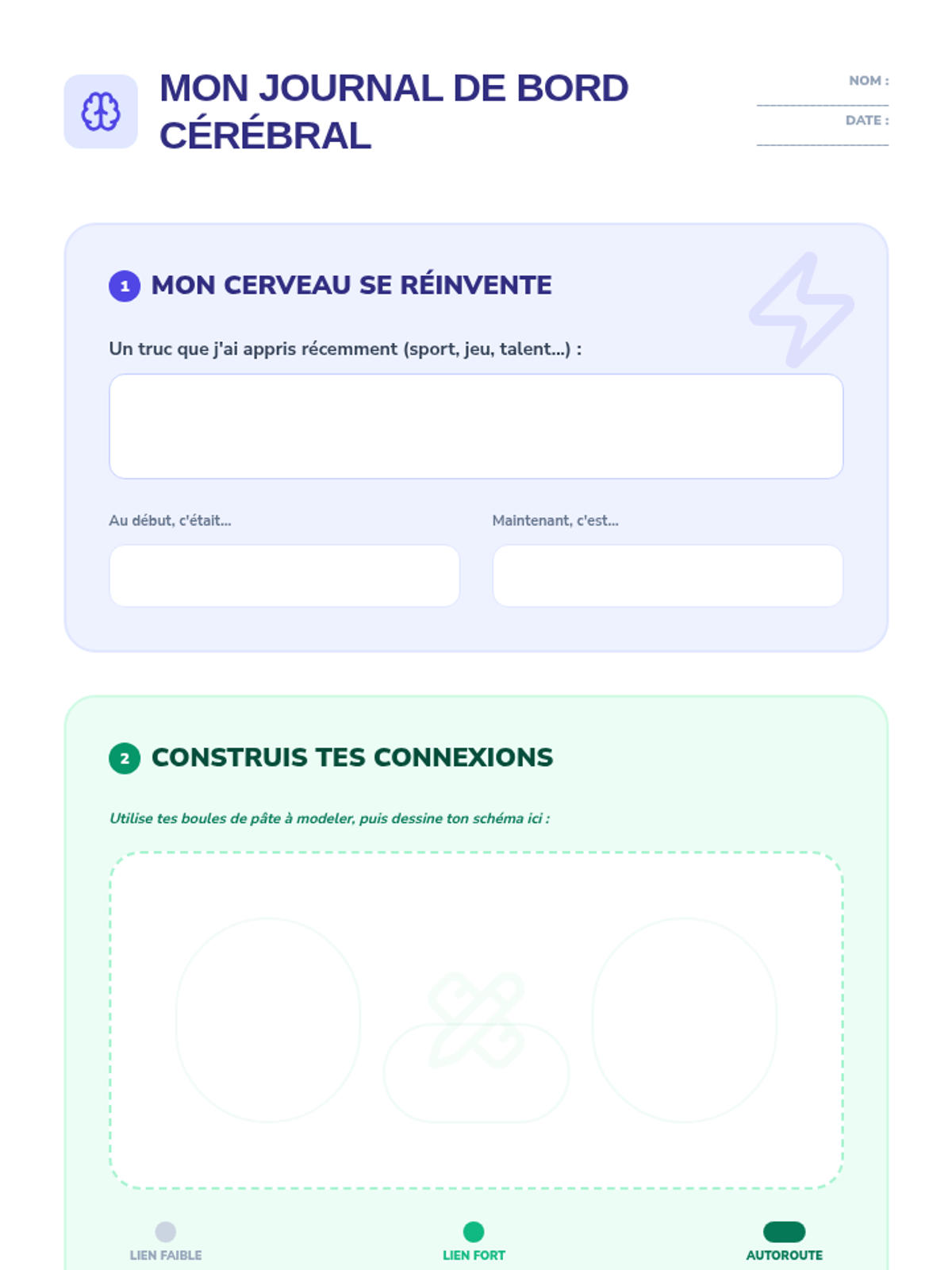
Un journal d'activités pour l'élève permettant de consigner ses apprentissages, de dessiner ses connexions neuronales et de réfléchir à son "élagage" cérébral. Complément interactif au guide visuel.
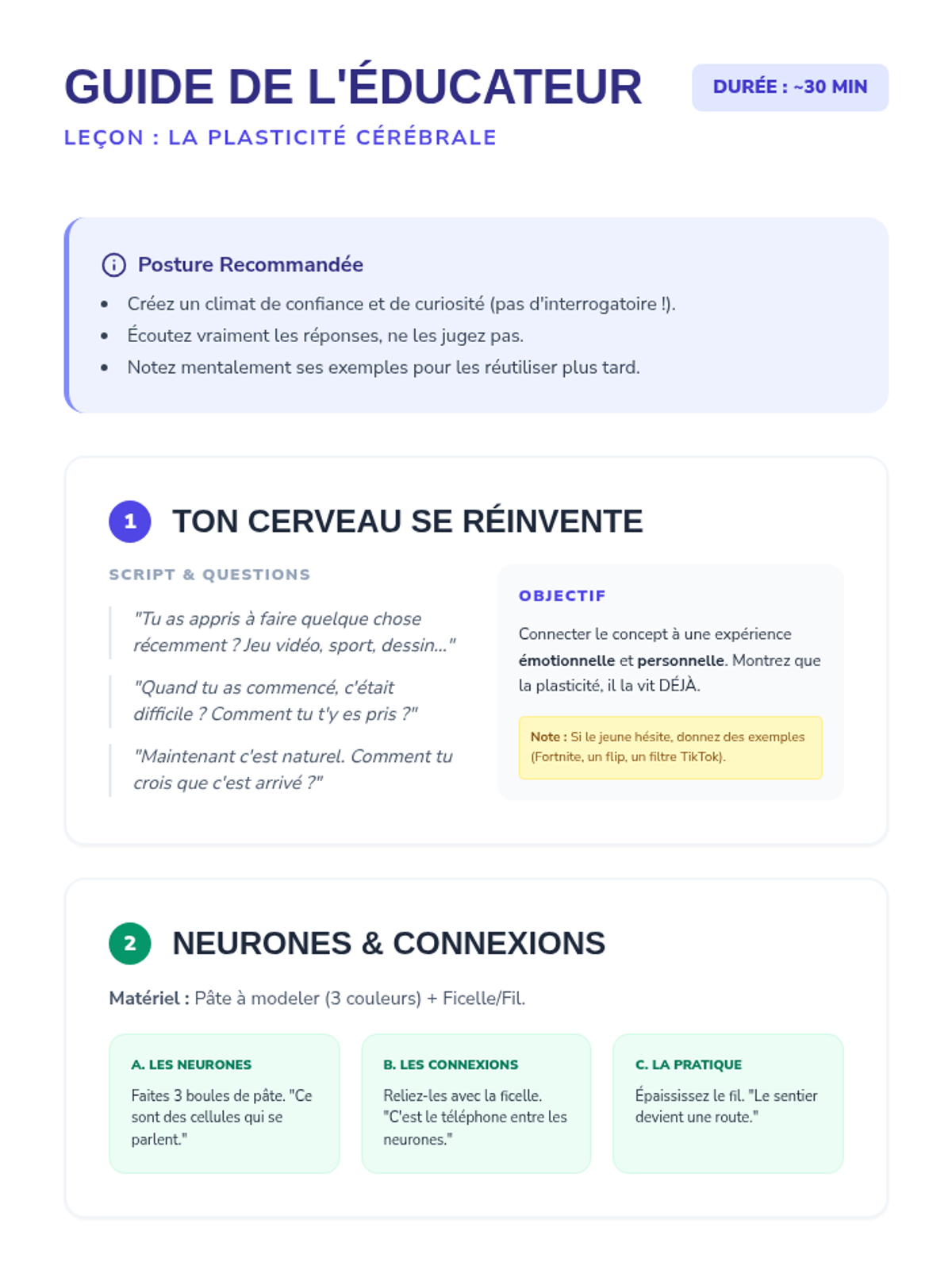
Un guide détaillé pour l'éducateur structurant la leçon sur la plasticité cérébrale en 4 étapes clés, incluant des scripts, des objectifs pédagogiques et des conseils de facilitation.
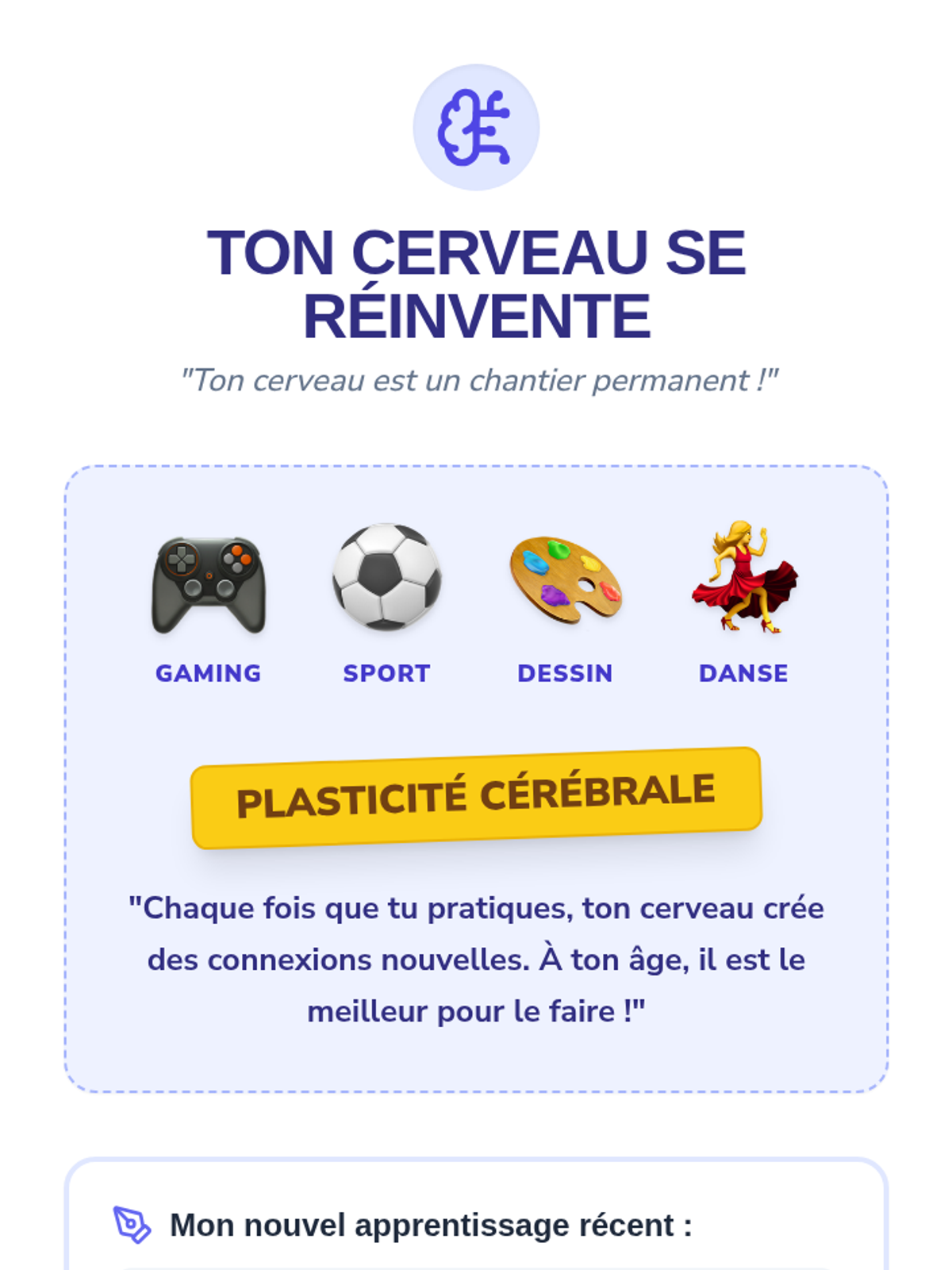
Un guide illustré au style cartoon pour les adolescents sur la plasticité cérébrale, comprenant des schémas sur les neurones, l'élagage neuronal et la fenêtre d'apprentissage optimale. Version améliorée avec des visuels plus percutants et une meilleure hiérarchie.
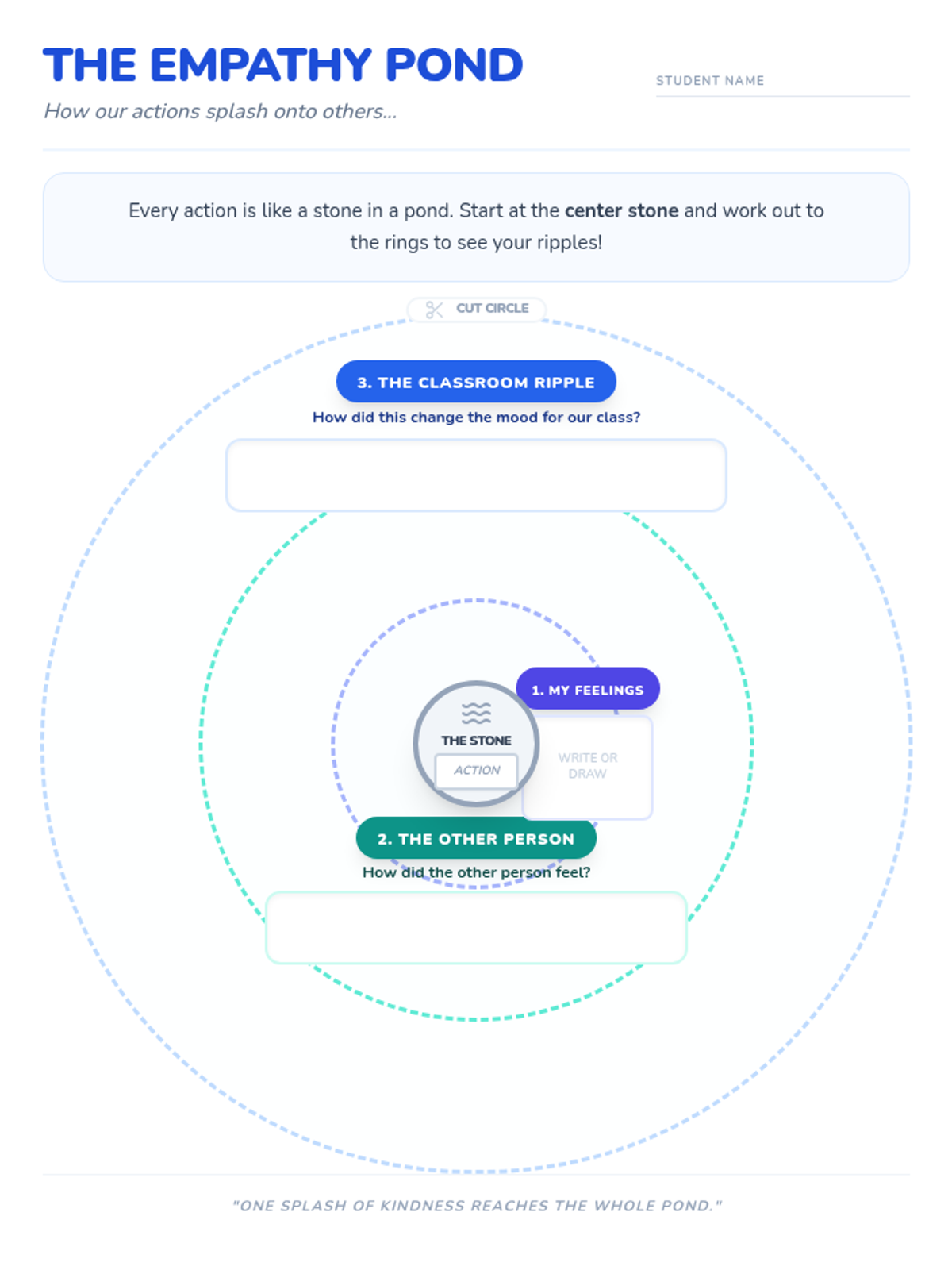
A display-ready empathy activity for Year 2 students featuring a staggered concentric ripple diagram to ensure legibility and printable classroom decorations. designed for easy cutting and visual reflection.
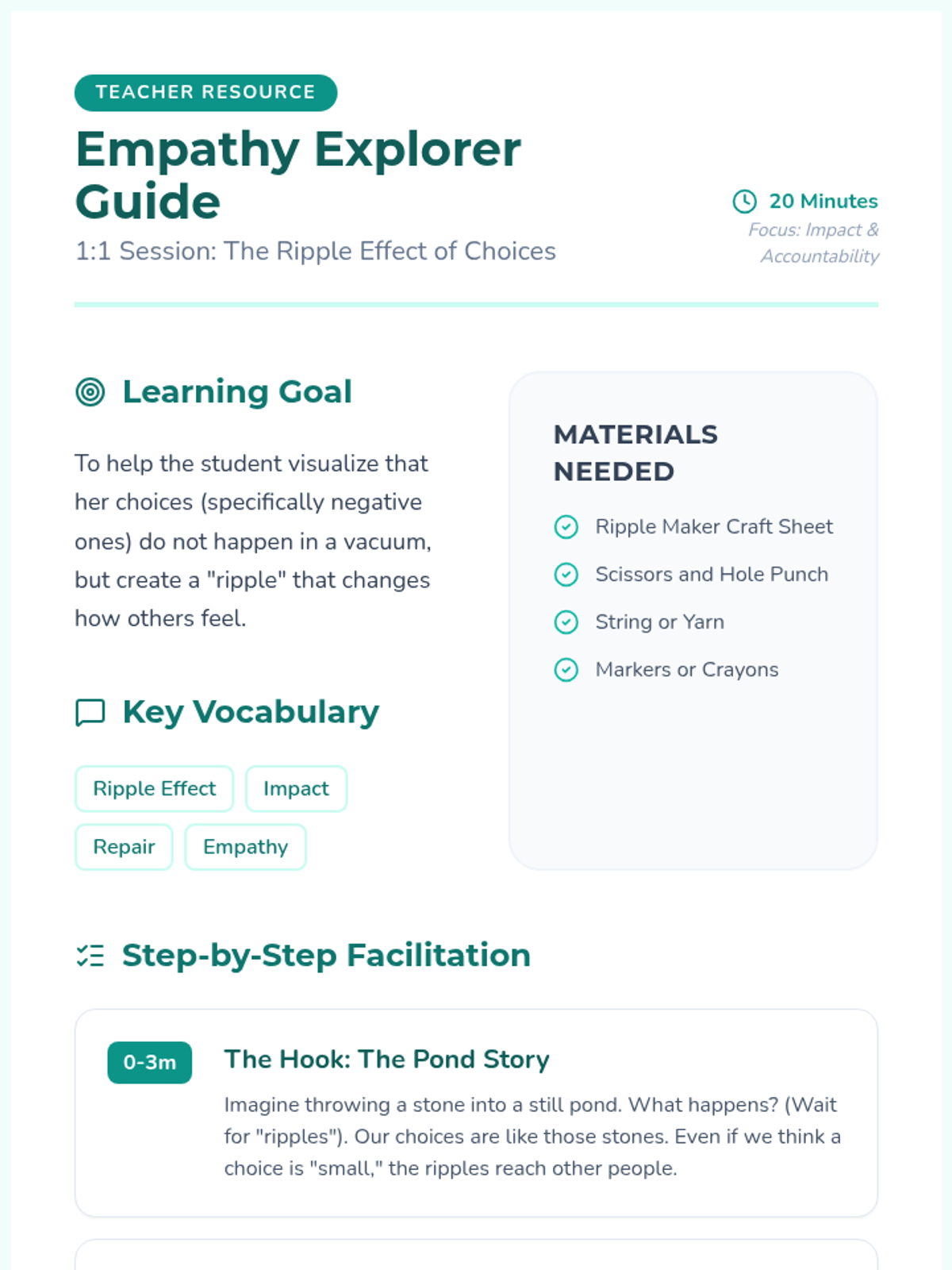
A comprehensive teacher facilitation guide for a 20-minute 1:1 empathy session. It includes a session timeline, discussion prompts, and vocabulary to help students understand the impact of their actions.
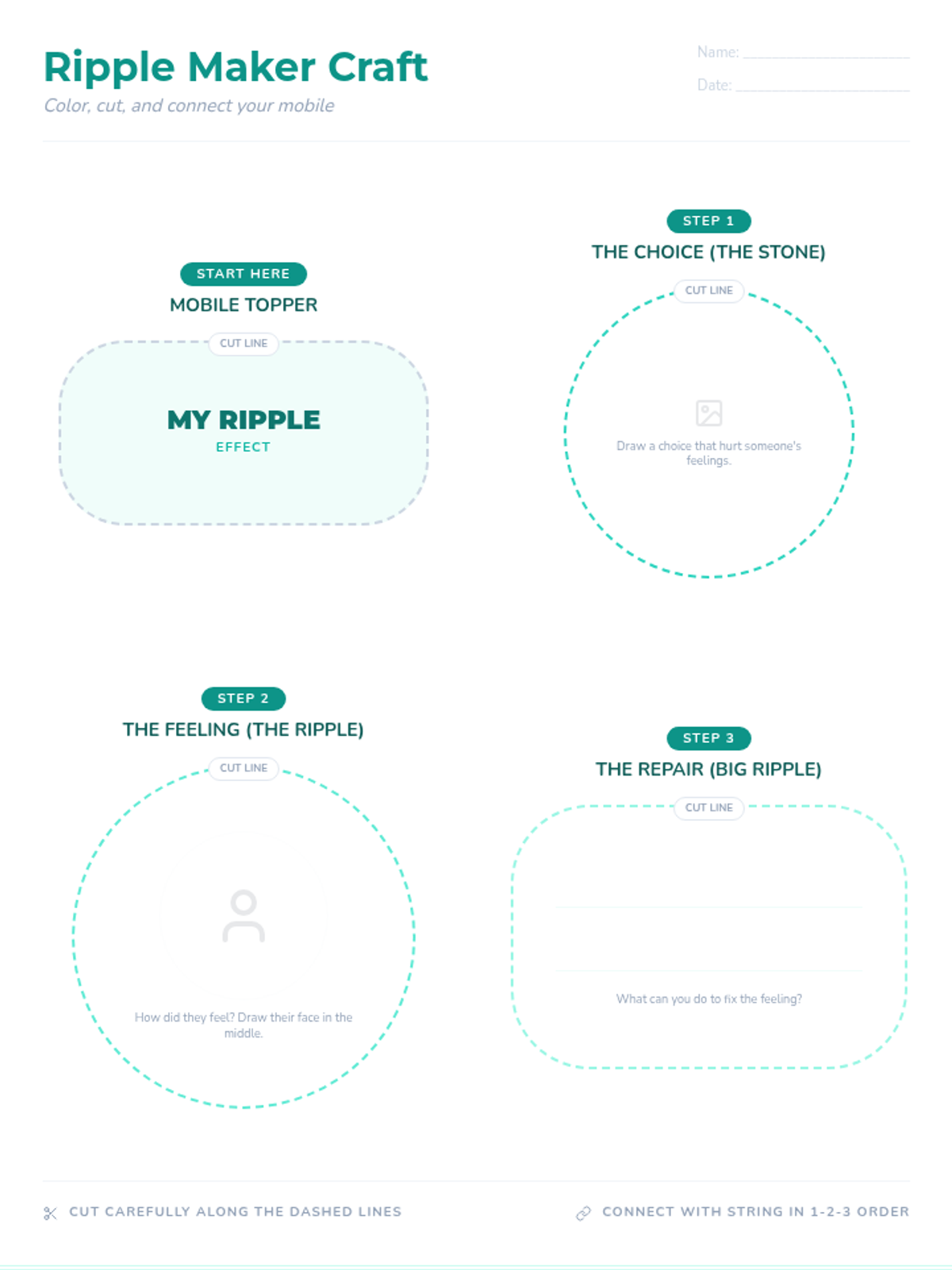
A hands-on craft activity where students visualize the connection between their actions, others' emotions, and the path to making things right. It features four cut-out components on a single page for perfect printing, with a separate instruction page.
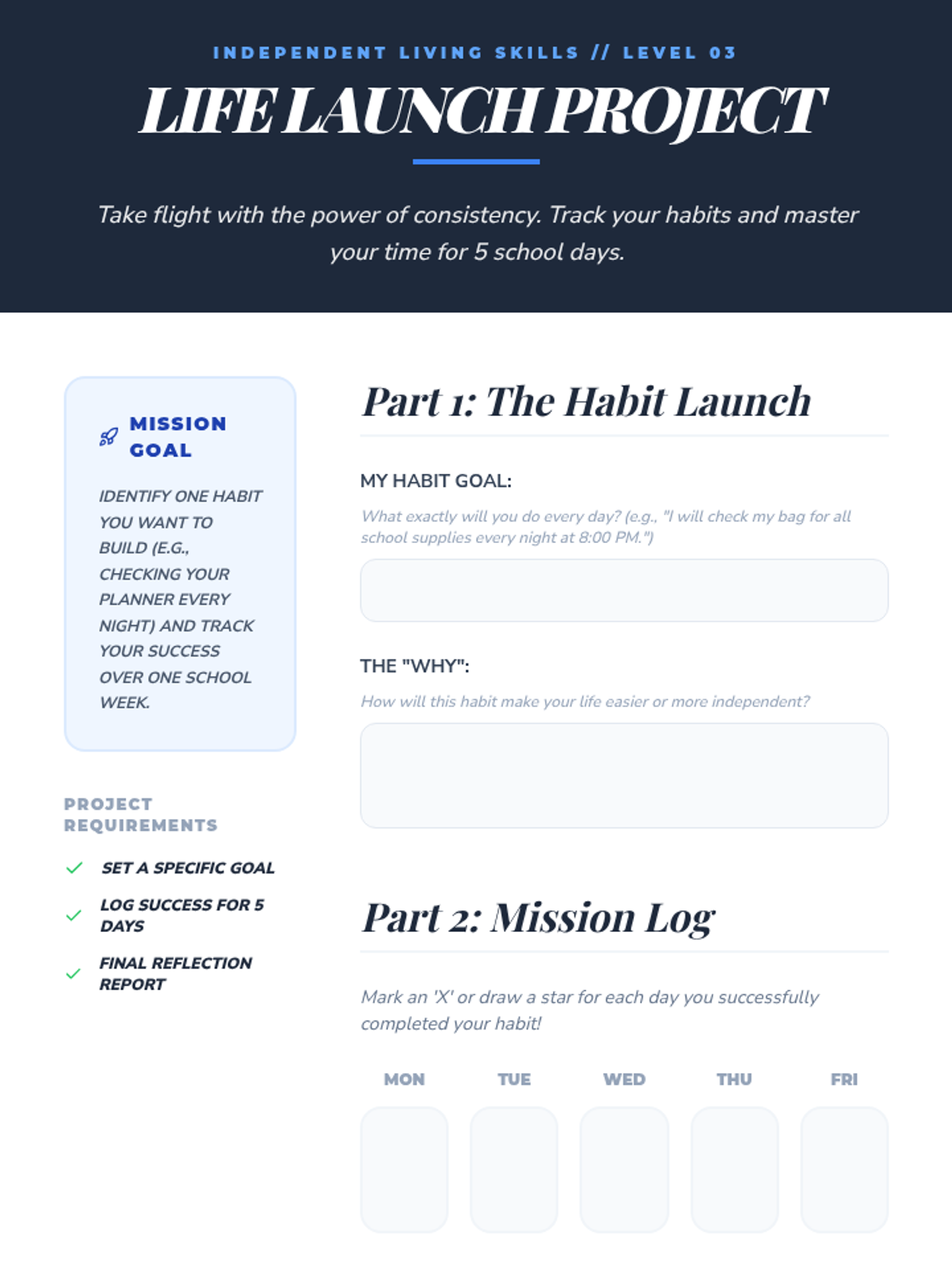
A student project guide for "Master Planner" where students choose a specific habit to track for one week. Includes a goal-setting section, a 5-day habit tracker, and a final debrief for self-reflection.
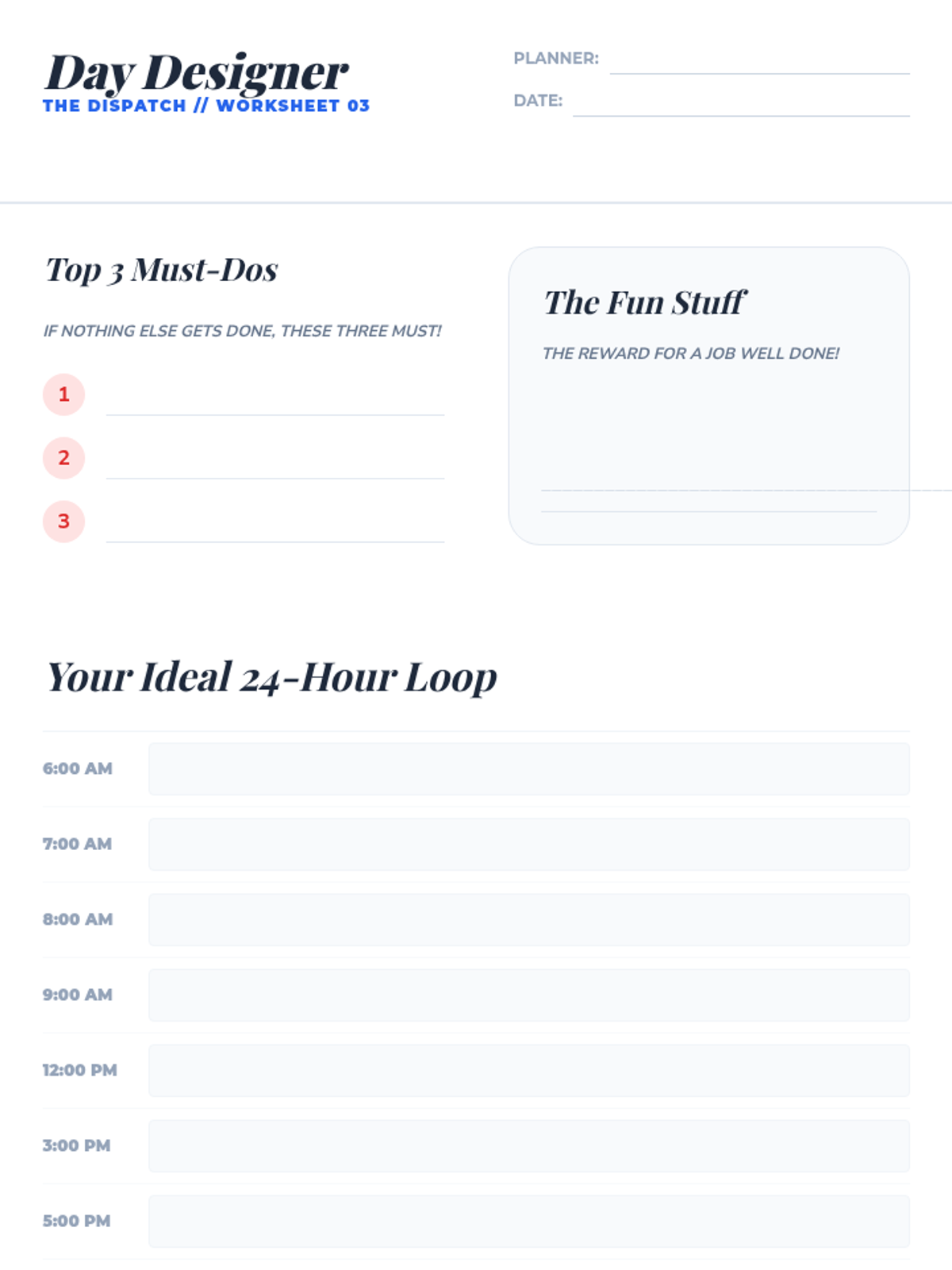
A student worksheet for "Master Planner" focusing on task prioritization and daily scheduling. Includes a priority list for "Must-Dos," space for rewarding activities, and a timeline to map out a productive 24-hour cycle.
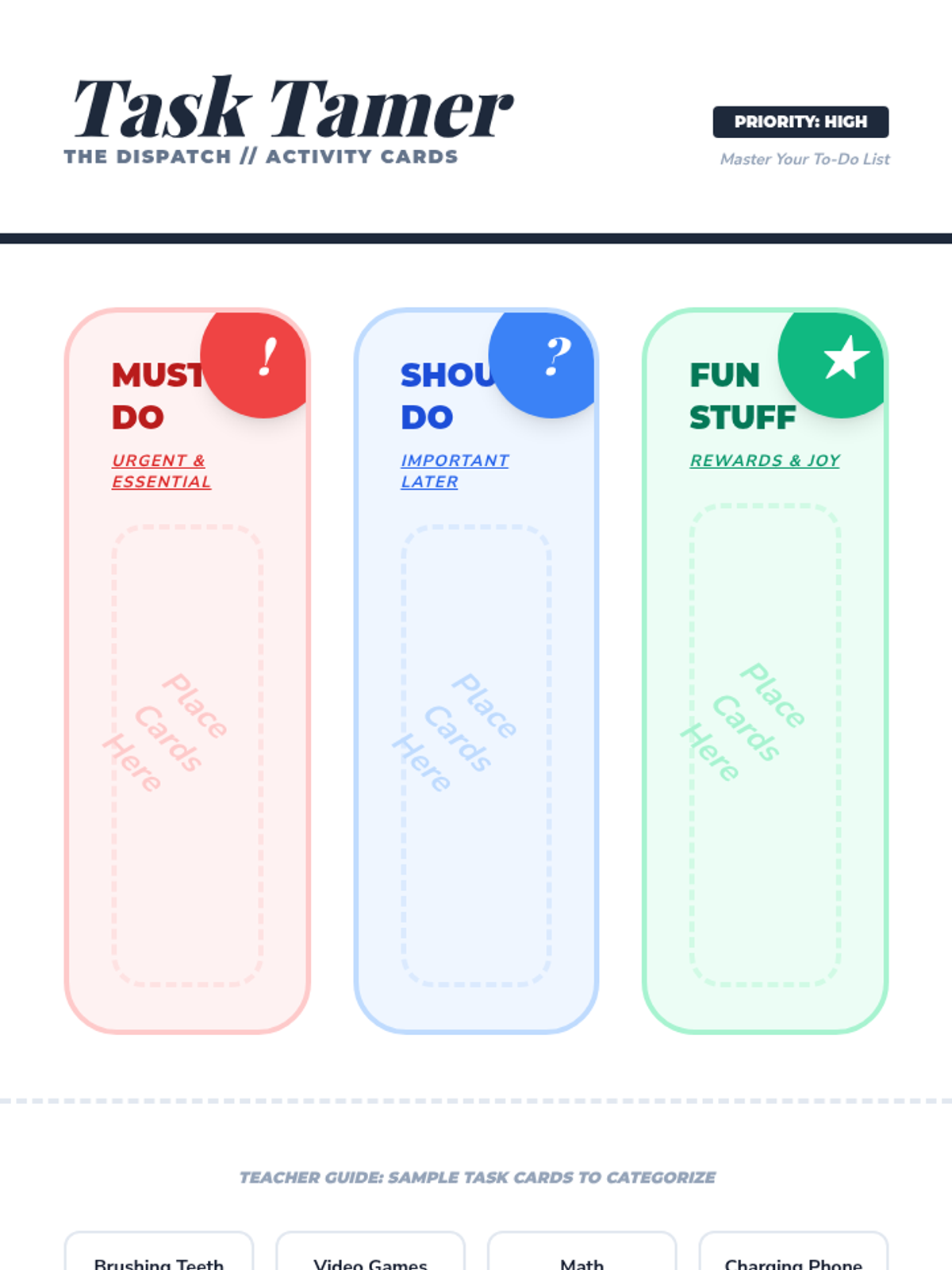
Activity cards and sorting mats for "Task Tamer." Students learn to prioritize daily responsibilities into categories like "Must Do," "Should Do," and "Fun Stuff" to better manage their time.
A visual slide deck for "Master Planner," covering time management benefits, morning/evening routine building, and the "Must/Should/Fun" task prioritization system. Designed with high-contrast, large text for classroom use.
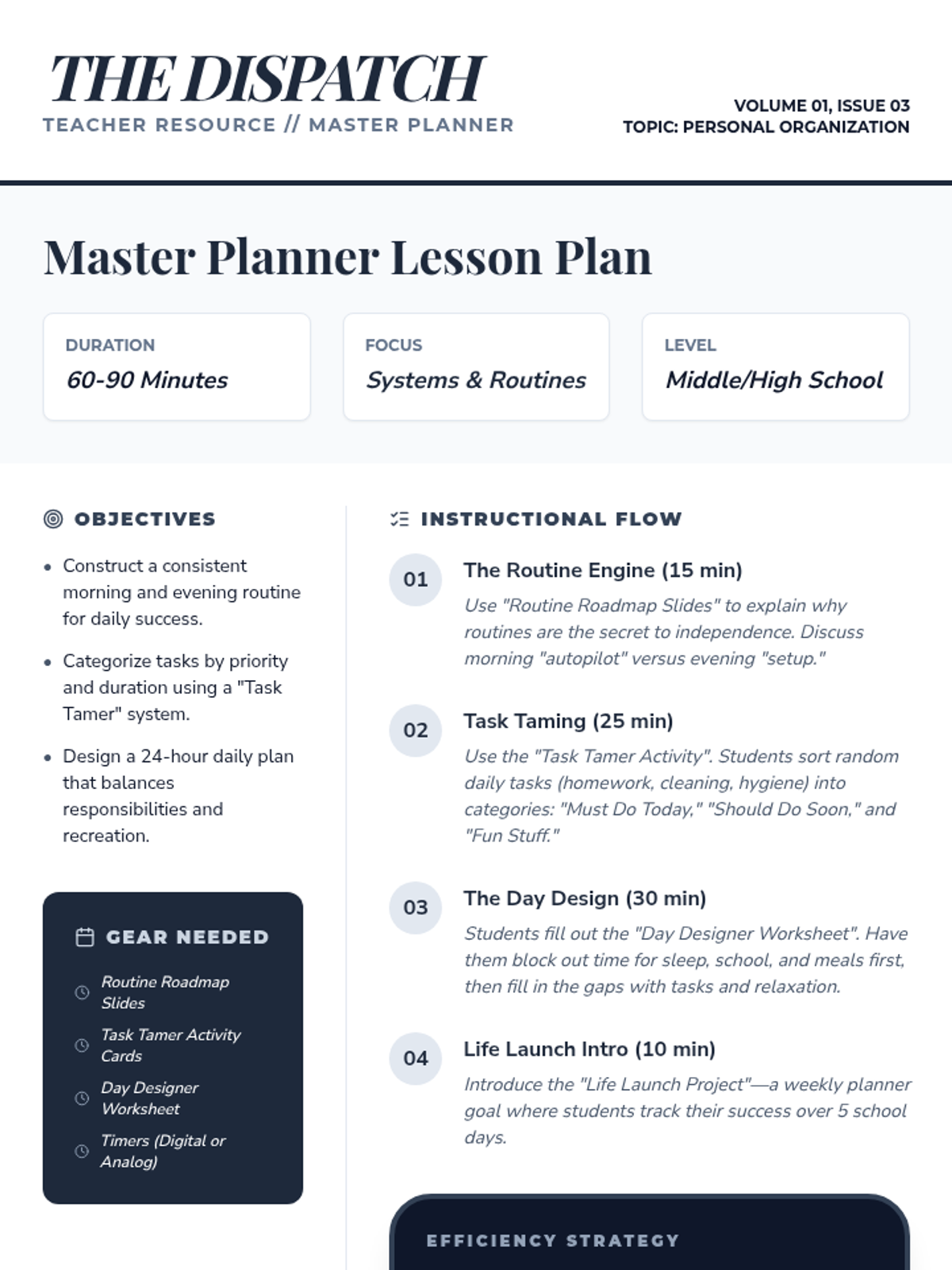
A teacher-facing lesson plan for "Master Planner," focusing on time management, task prioritization, and routine building. Includes a detailed instructional flow and time-anchor strategy.
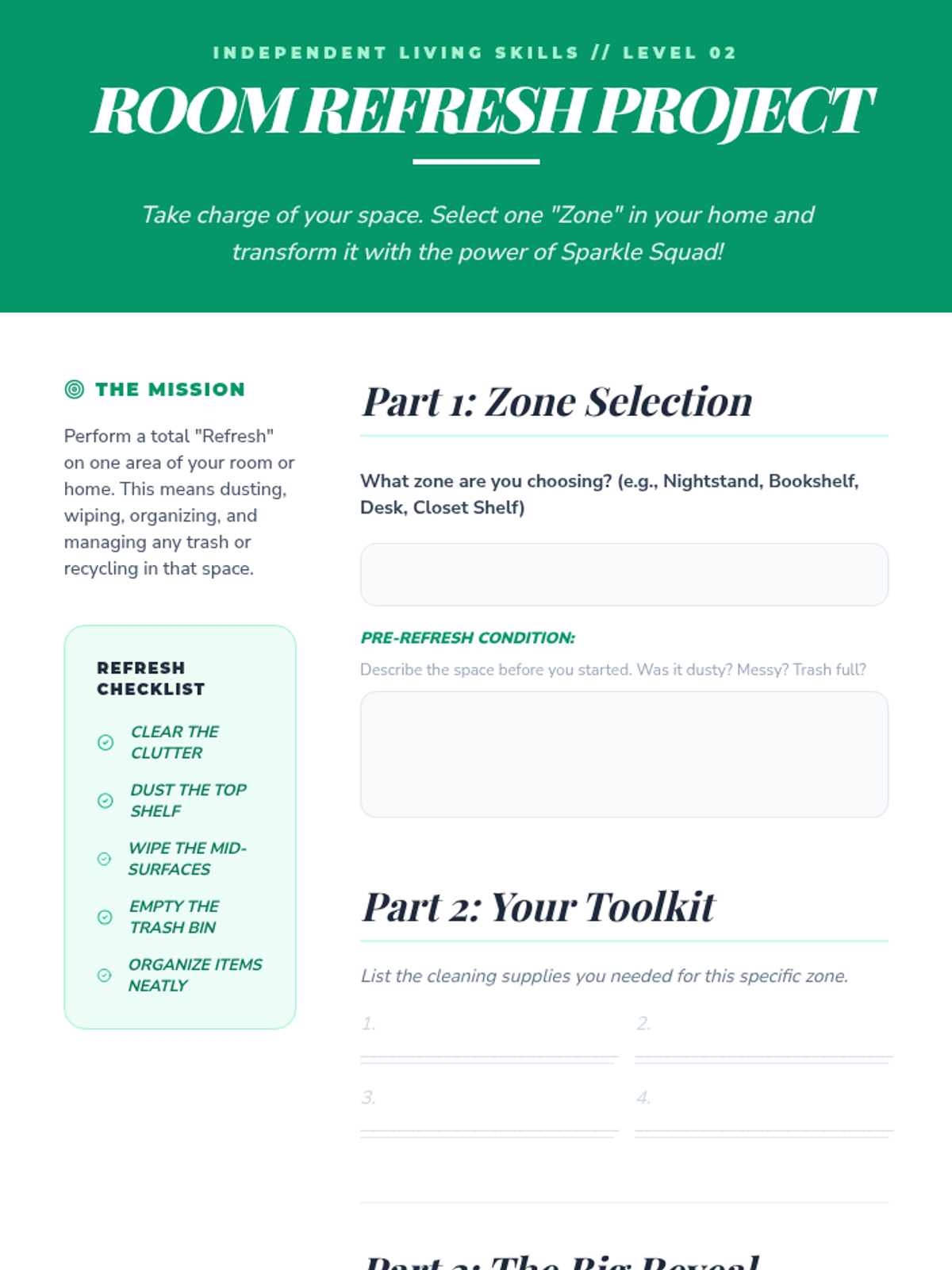
A student project guide for "Sparkle Squad" where students choose a "zone" in their home to clean and organize. Includes a zone selection area, supply list, transformation report, and a verification signature line.
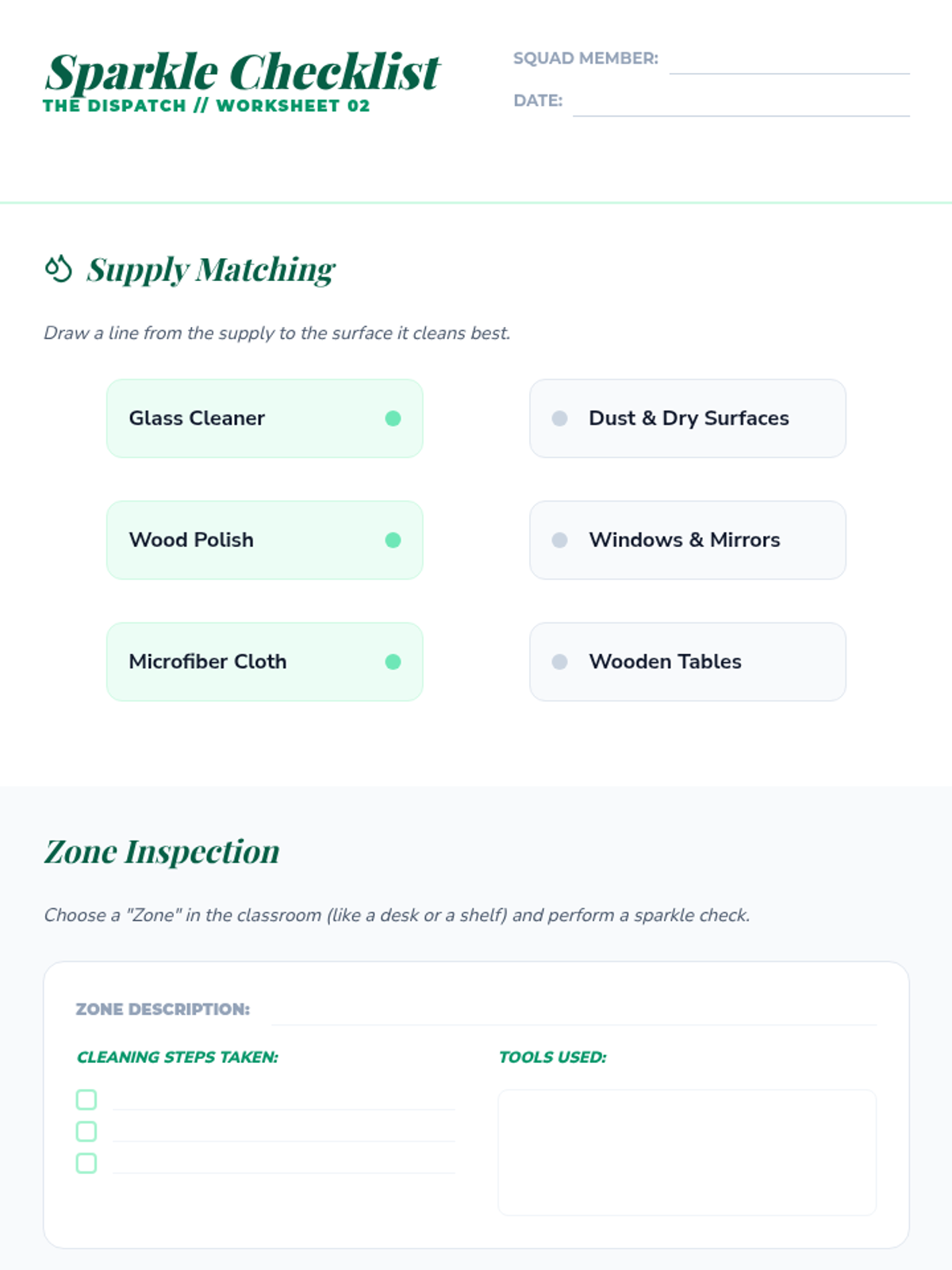
A student worksheet for "Sparkle Squad" focusing on matching cleaning supplies to surfaces and documenting a practice cleaning "zone." Includes space for steps, tool lists, and a reflection question.
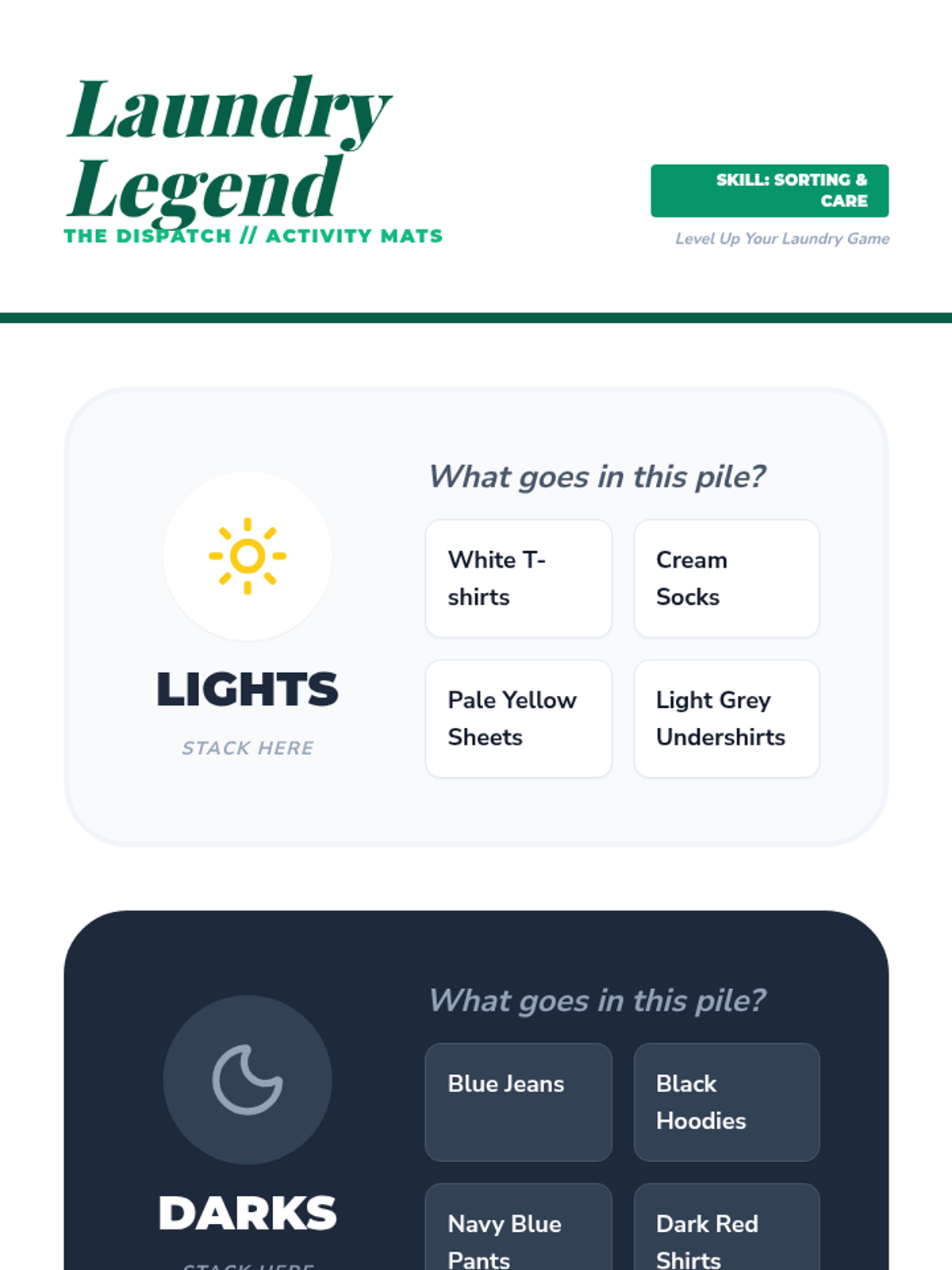
Activity mats for "Laundry Legend." These provide visual sorting guides for lights and darks, including specific examples of clothing items and important pre-wash tips.
A visual slide deck for "Sparkle Squad," covering cleaning motivations, laundry sorting rules, and surface care techniques. Includes large, high-contrast text and icon-driven layouts.
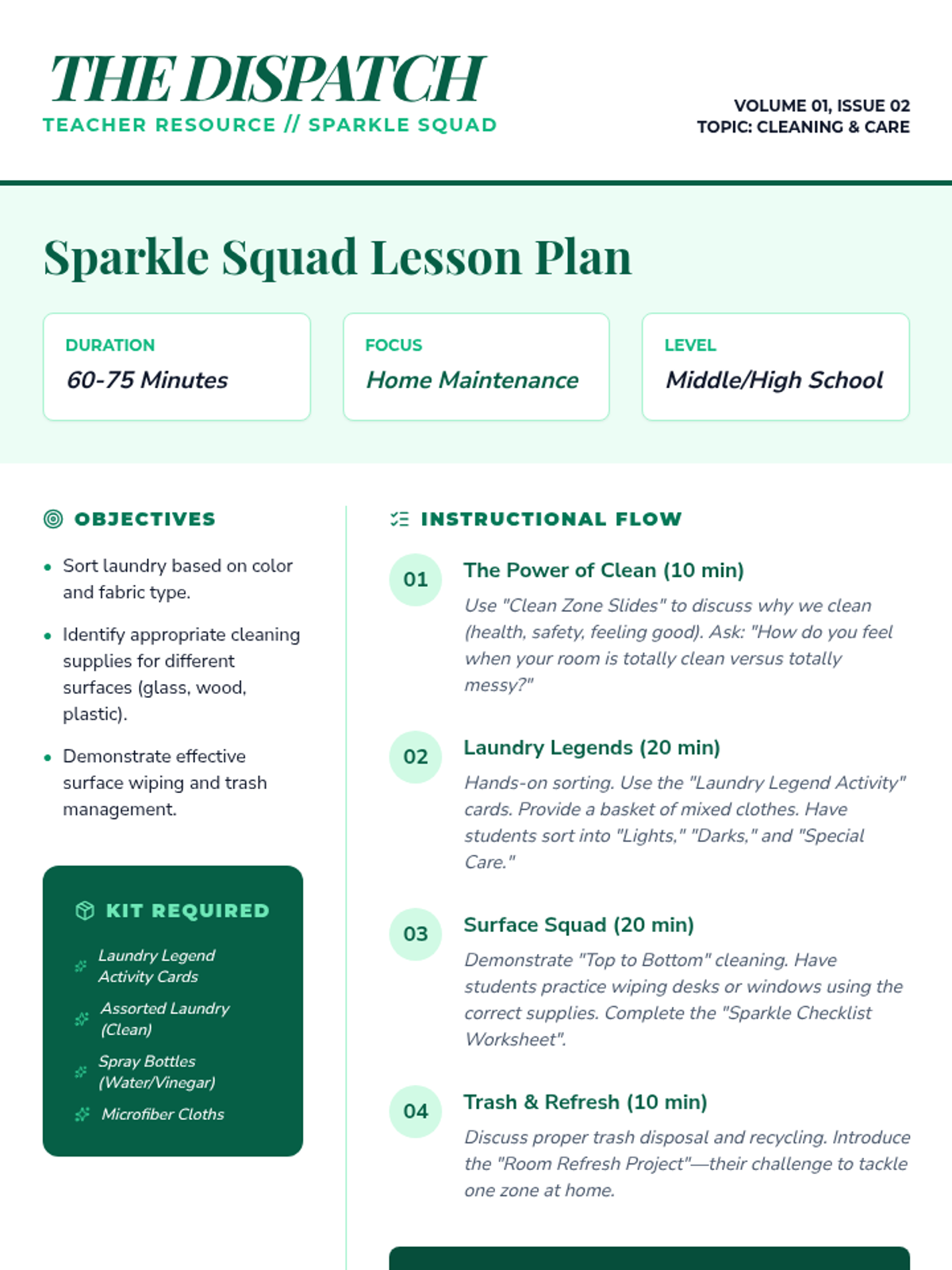
A teacher-facing lesson plan for "Sparkle Squad," focusing on cleaning habits, laundry sorting, and surface care. Includes time-stamped instructional flow and sensory considerations.
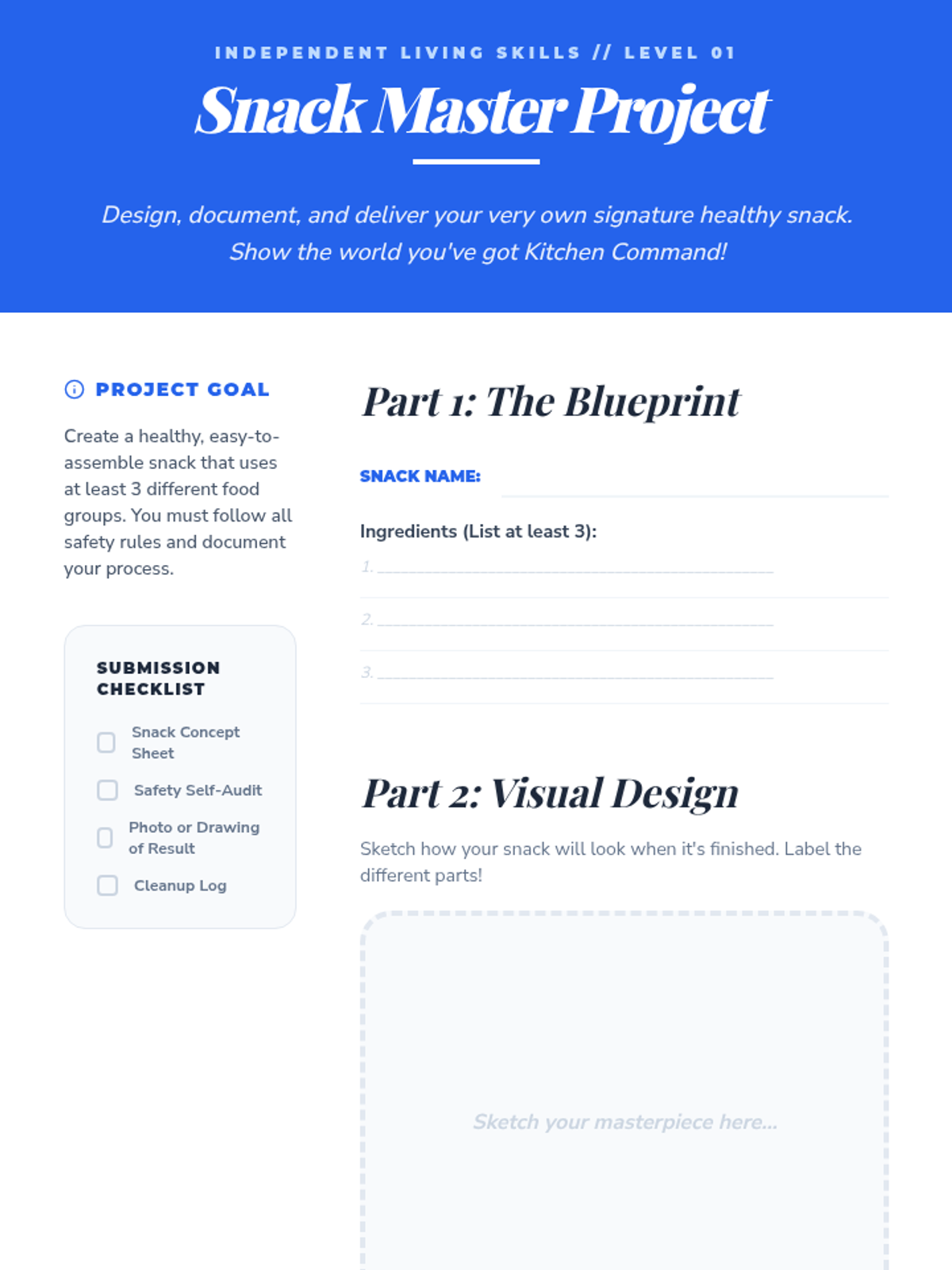
A student project guide for "Kitchen Command" where students design and prepare their own healthy snack. Includes a concept sheet, a sketching area for visual design, and a safety/cleanup audit.
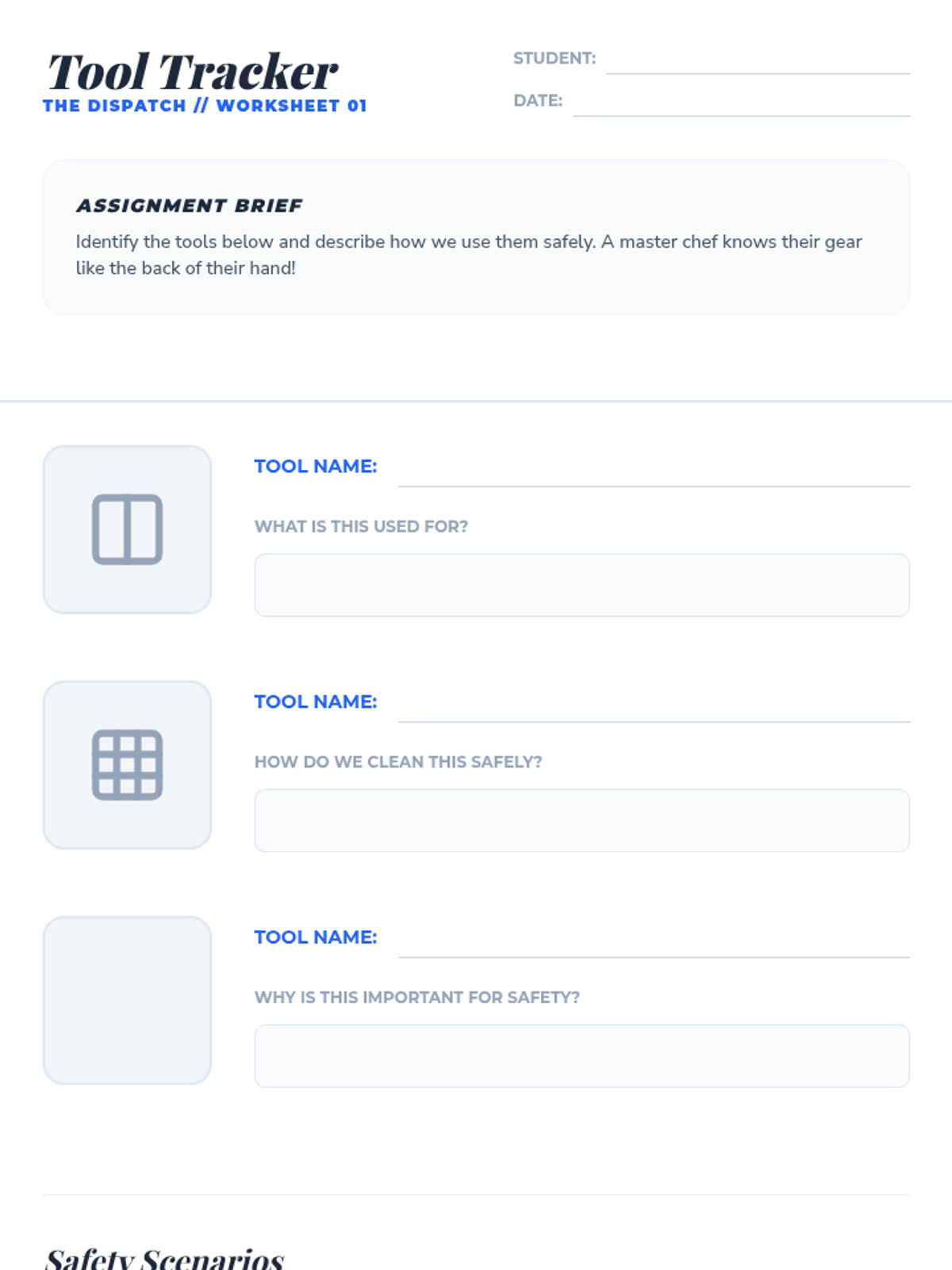
A student worksheet for "Kitchen Command" focusing on tool identification and safety knowledge. Includes visual icons for tools and scenario-based safety questions with ample writing space.
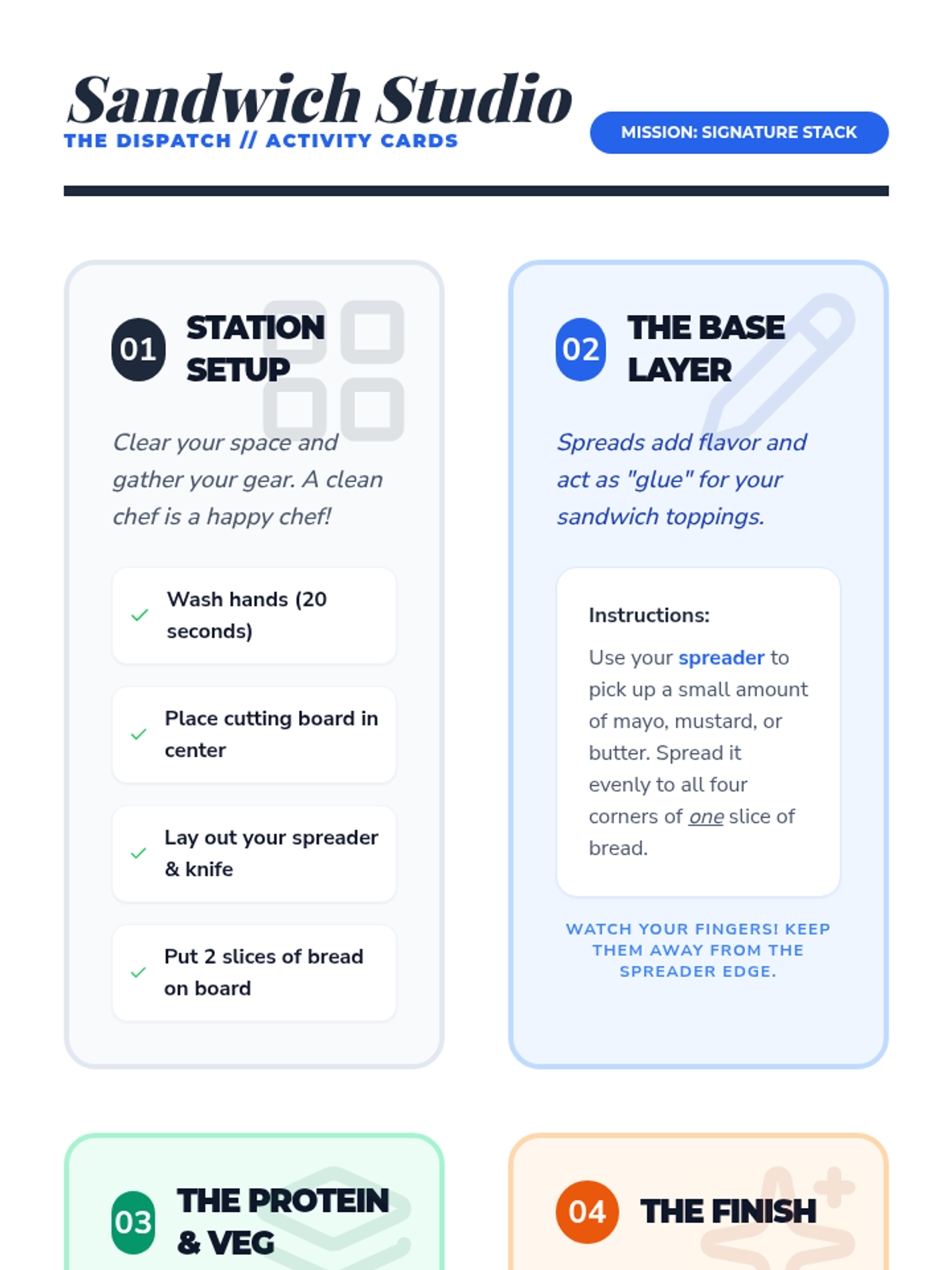
Visual task cards for the "Sandwich Studio" activity. These cards provide step-by-step instructions for station setup, spreading, layering, and finishing a sandwich, emphasizing safety and hygiene at each stage.
A visual slide deck for "Kitchen Command," covering essential kitchen safety rules, tool identification, and the basics of meal assembly. Designed with high-contrast, large text for easy viewing in a classroom setting.
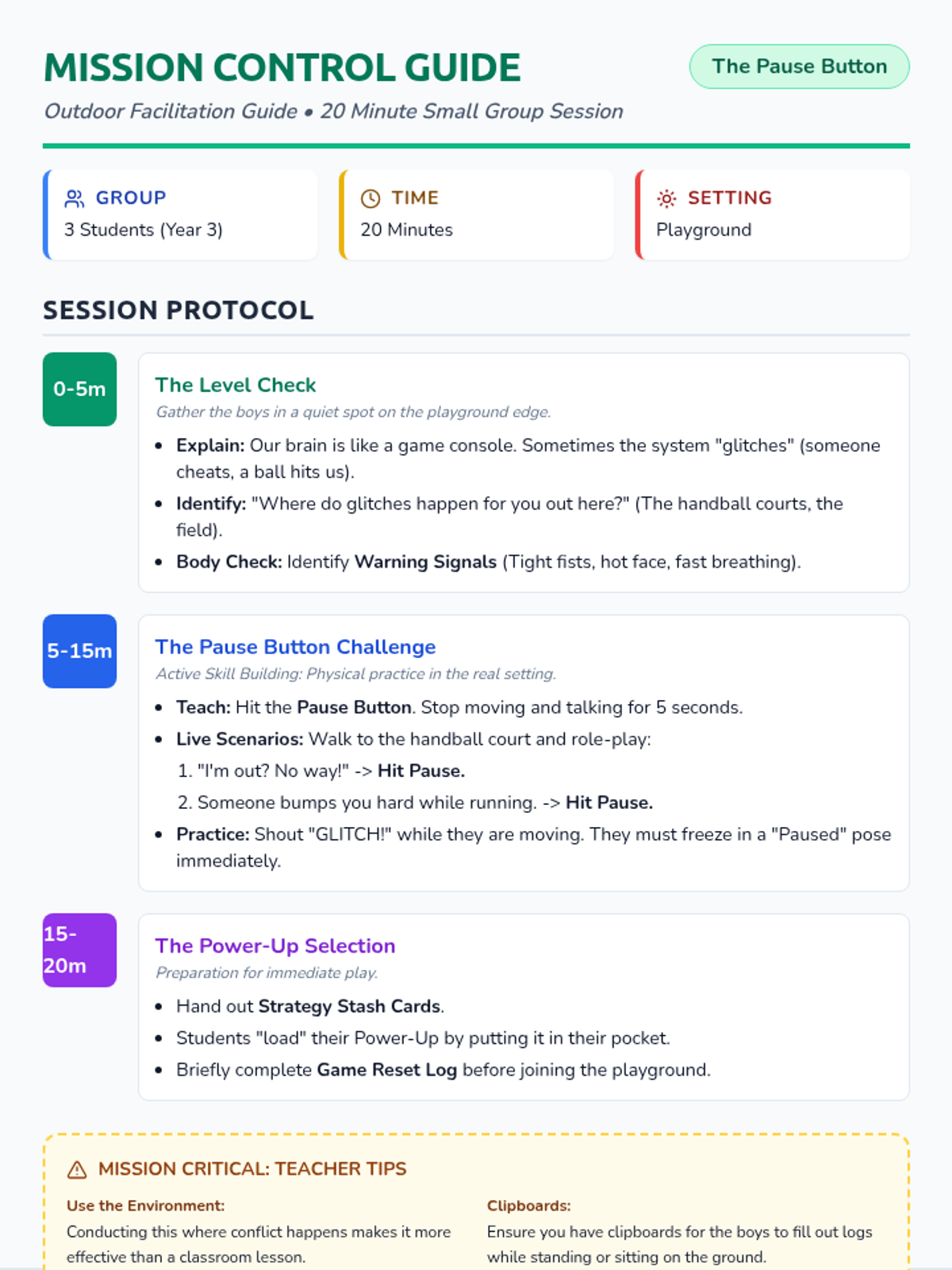
A comprehensive 3-page printable resource pack including the teacher facilitation guide, student strategy cards, and a reflection log, all in a single PDF for easy export.
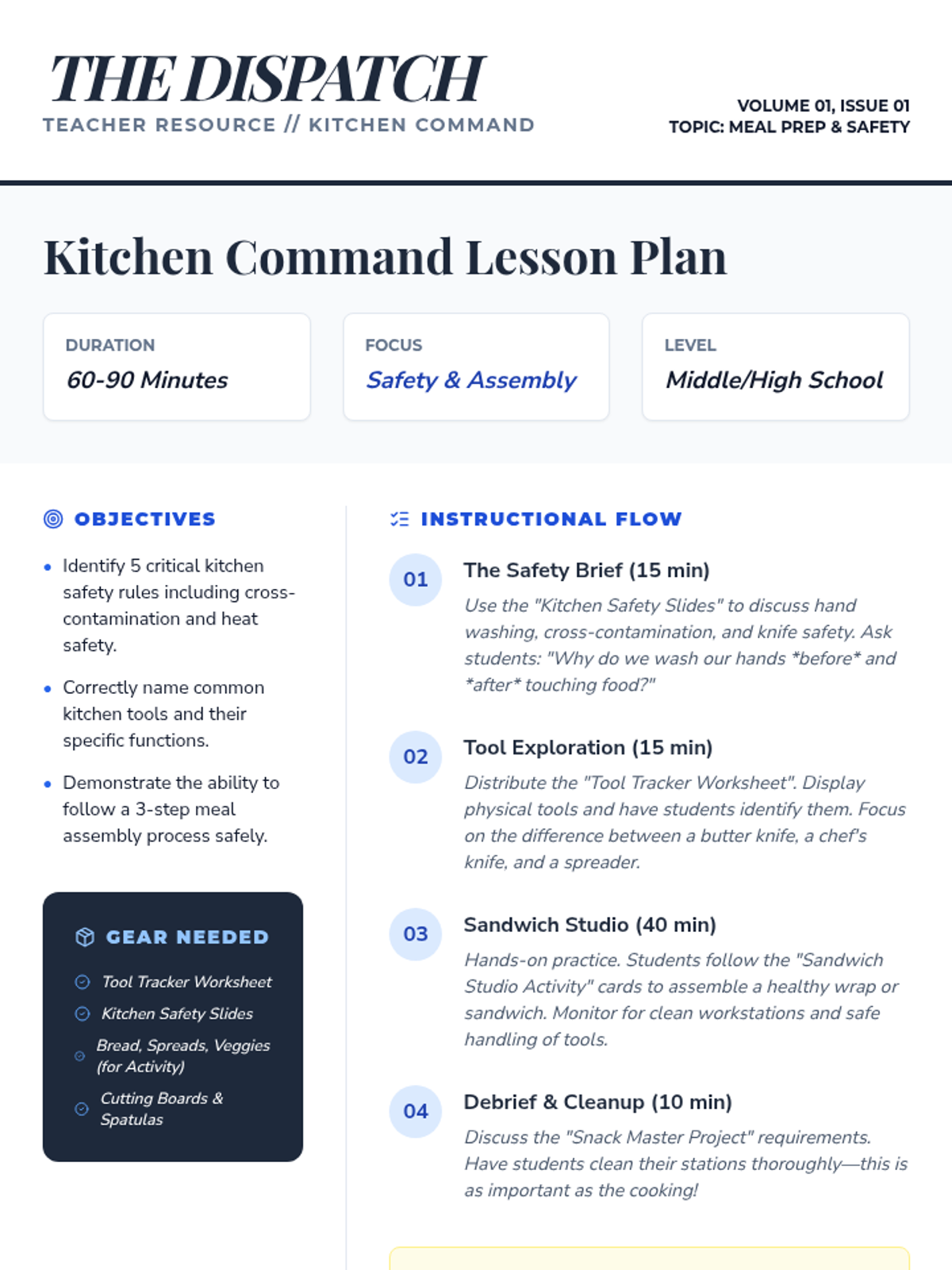
A teacher-facing lesson plan for "Kitchen Command," providing a structured 60-90 minute flow focusing on safety, tool identification, and meal assembly. Includes objectives, materials list, and differentiation strategies.
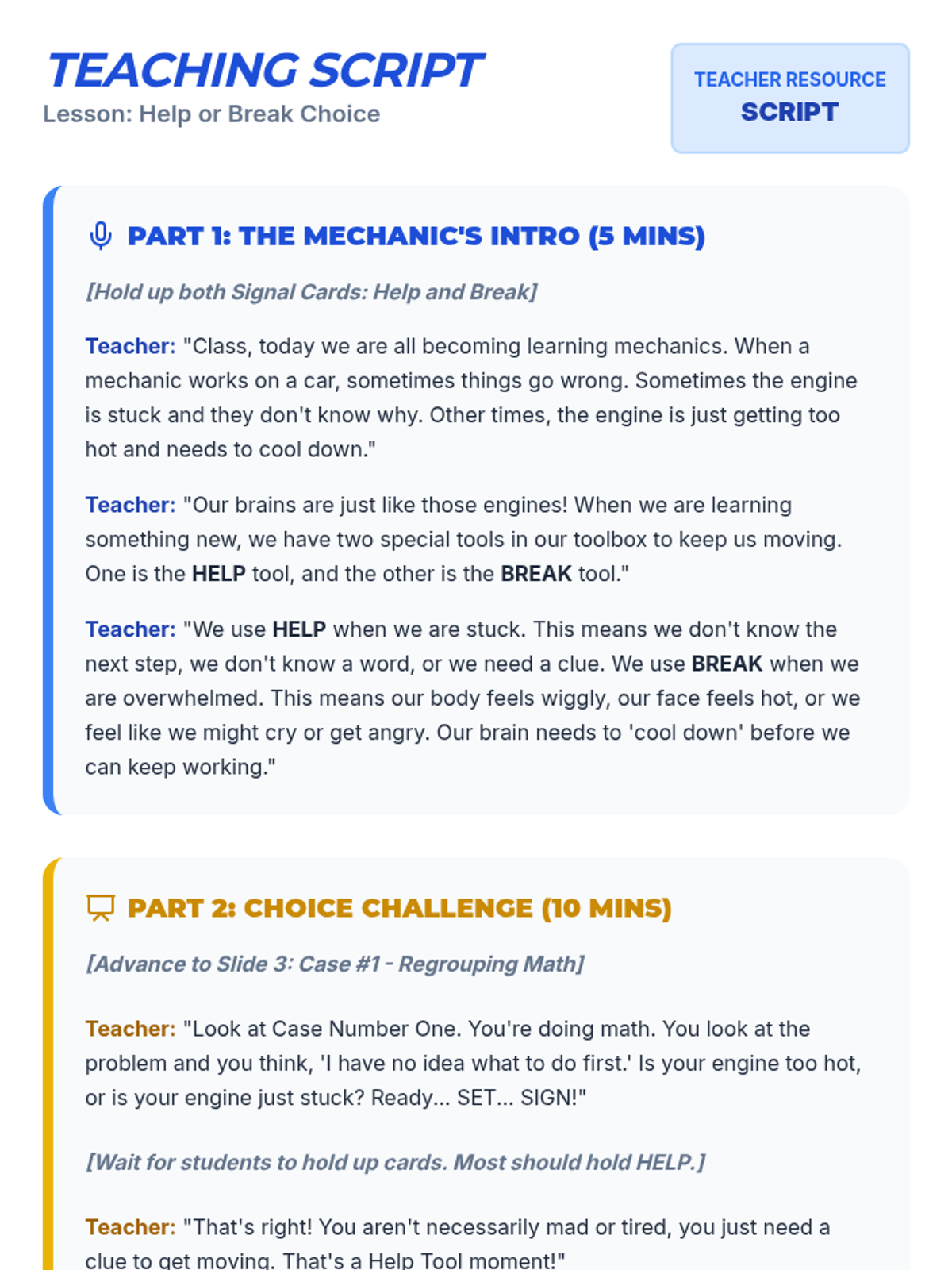
A detailed teacher script for the 'Help or Break Choice' lesson. Provides word-for-word prompts, instructional cues, and guided discussion points to lead second-grade students through the core concepts.
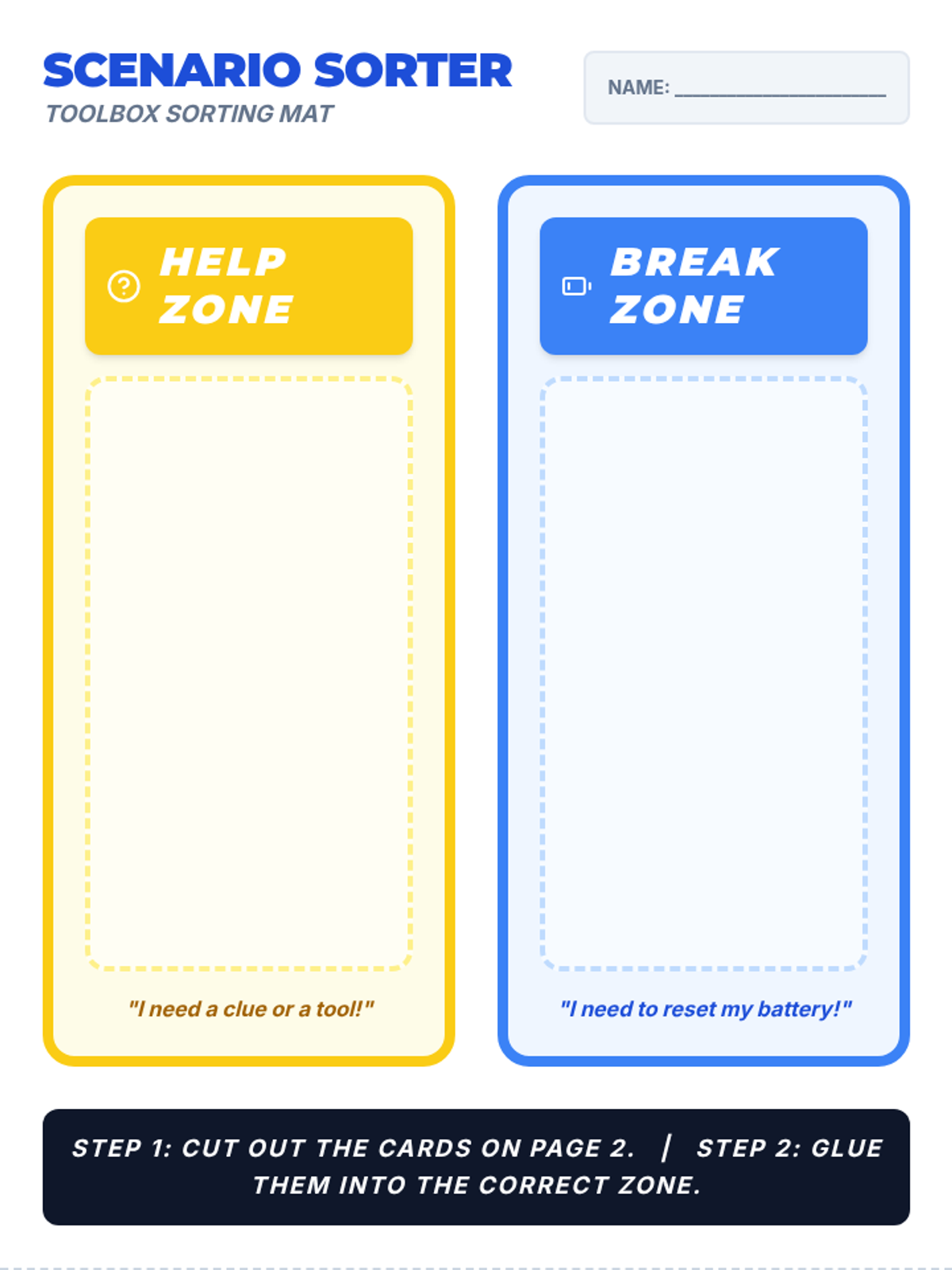
A hands-on activity where students sort 10 specific scenarios into 'Help' and 'Break' categories using a toolkit-themed sorting mat. Promotes critical thinking and problem-identification skills.