A 2-page student reflection journal and gallery walk feedback sheet. Includes curation brainstorming, a gallery-walk peer guestbook, structured post-exhibition synthesis questions, and a summer growth-mindset pledge.
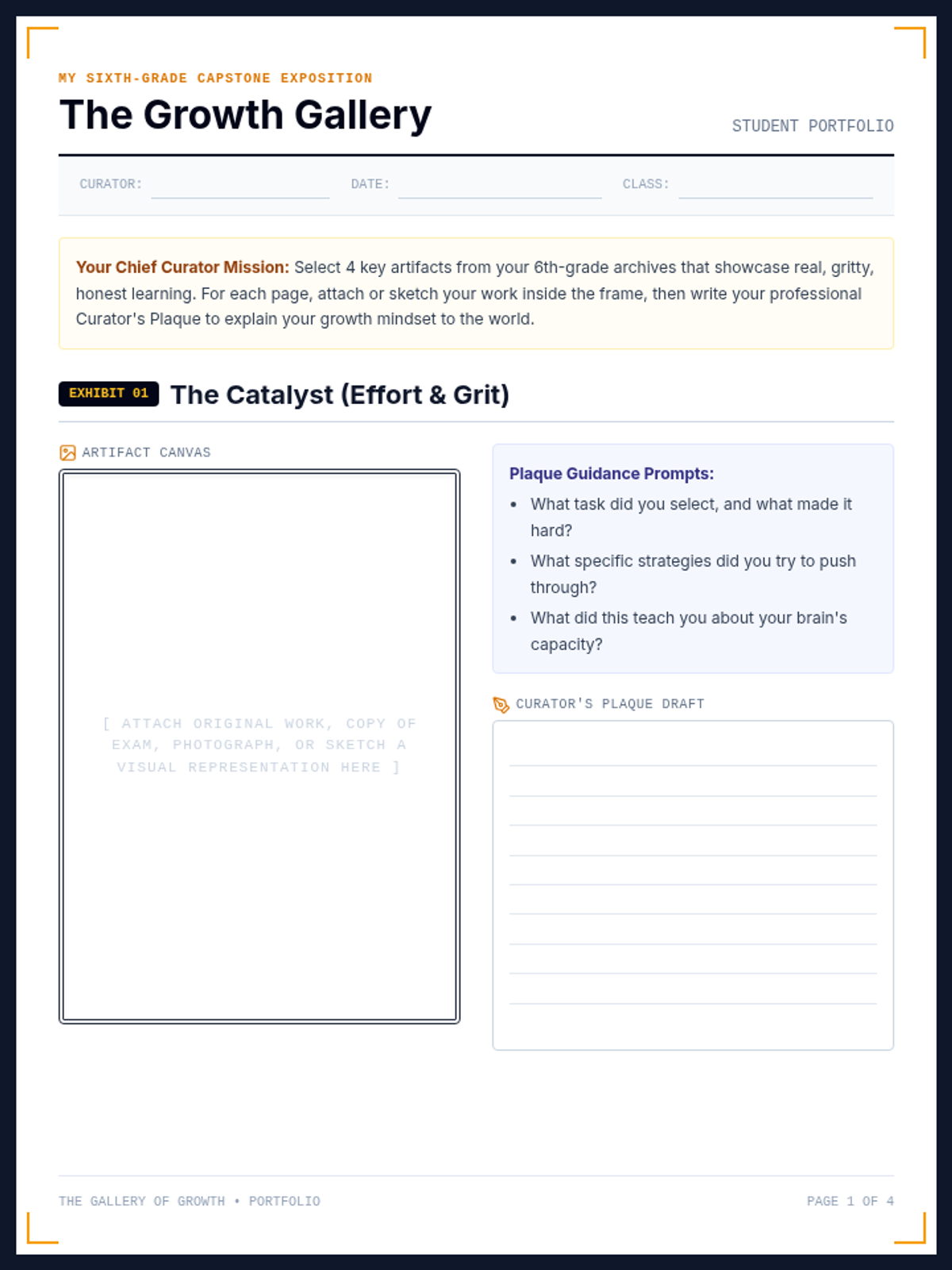
A beautiful, 4-page student-facing workbook designed as a physical curation portfolio. Each page represents a different exhibition category (Catalyst, Pivot, Breakthrough, Pinnacle) with high-legibility blank writing fields and layout space for attaching or drawing artifacts.
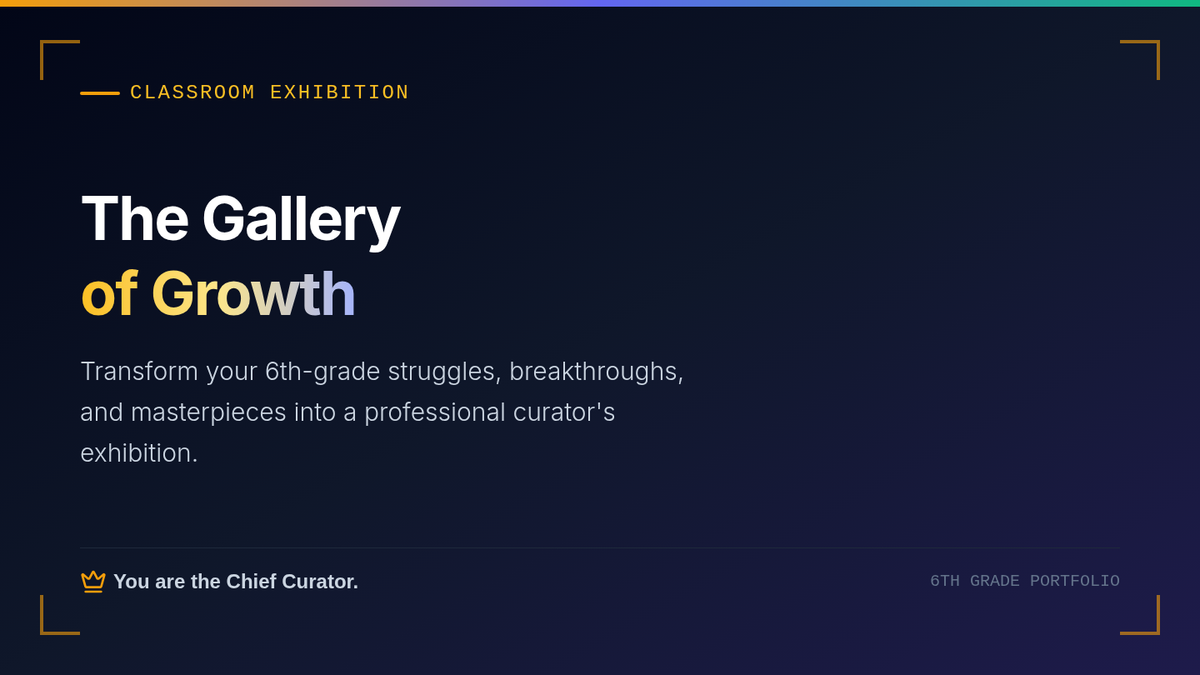
An elegant 5-slide presentation to introduce students to the concepts of curation, selecting artifacts representing struggle and triumph, writing metacognitive curator plaques, and executing the final gallery walk.
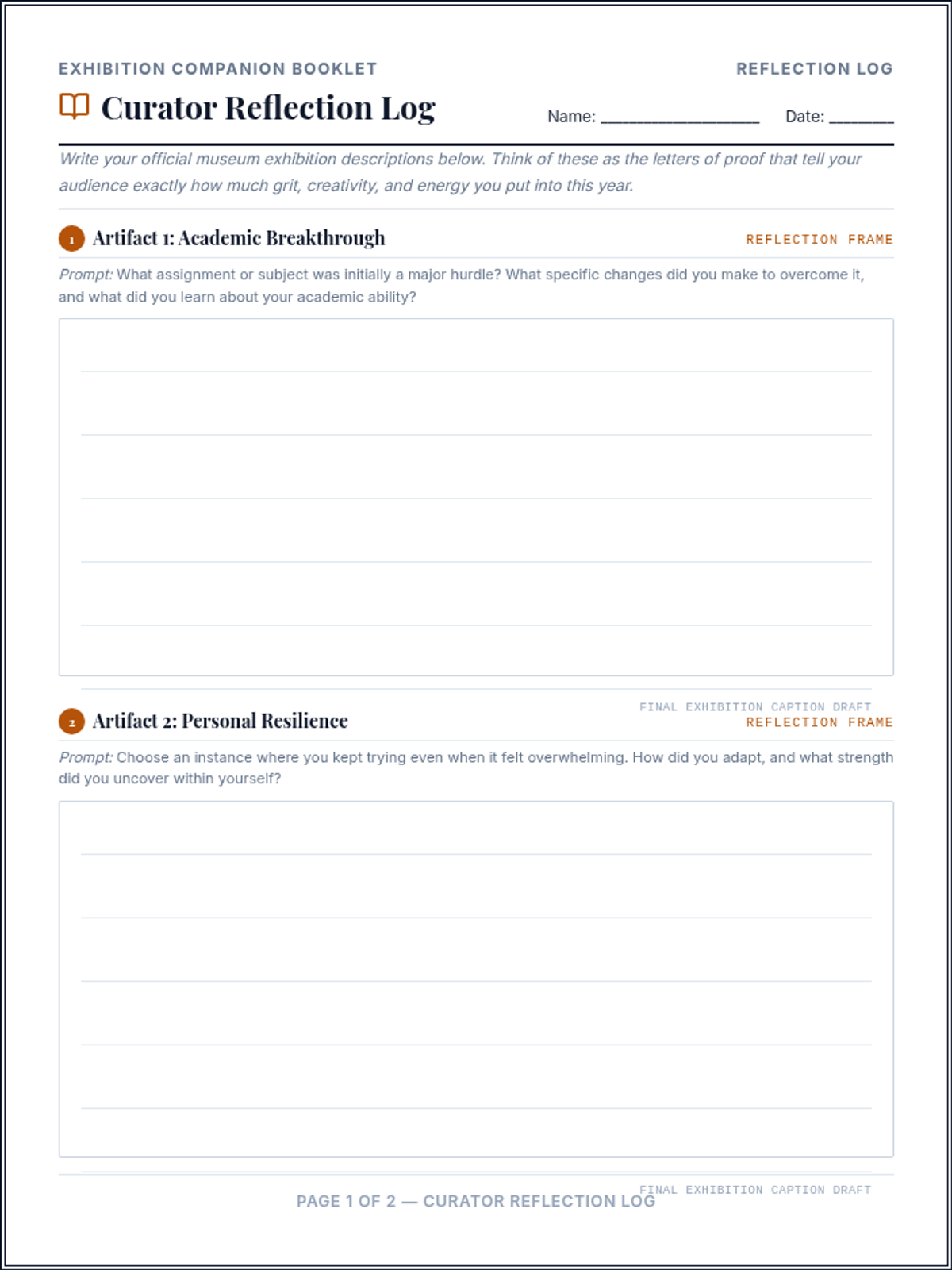
A 2-page reflection journal where students draft their official exhibition captions, reflecting on academic hurdles, emotional endurance, and self-belief.
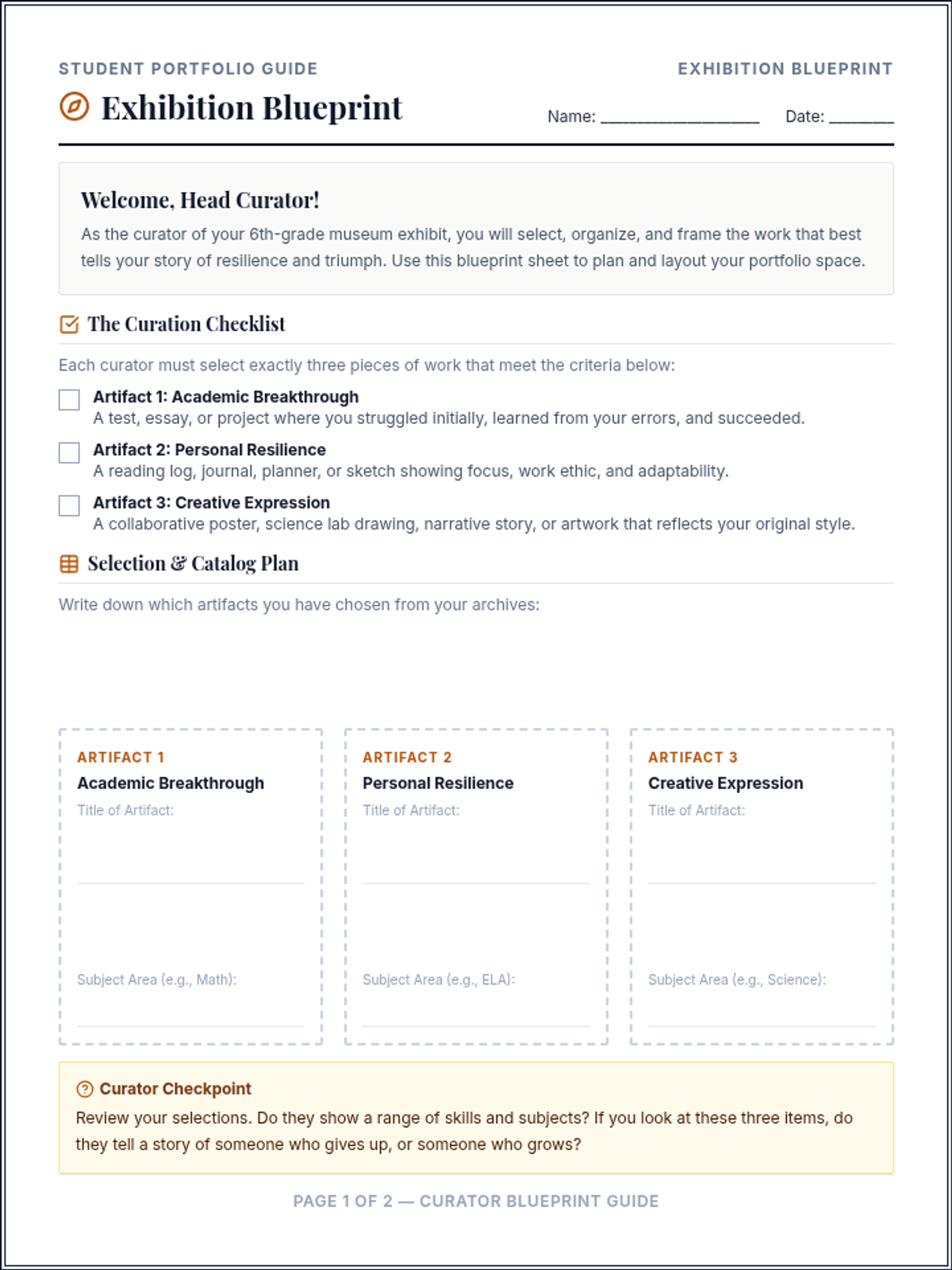
A 2-page student project guide and blueprint layout sheet designed to help students map out, select, and organize their portfolio layout before writing final entries.
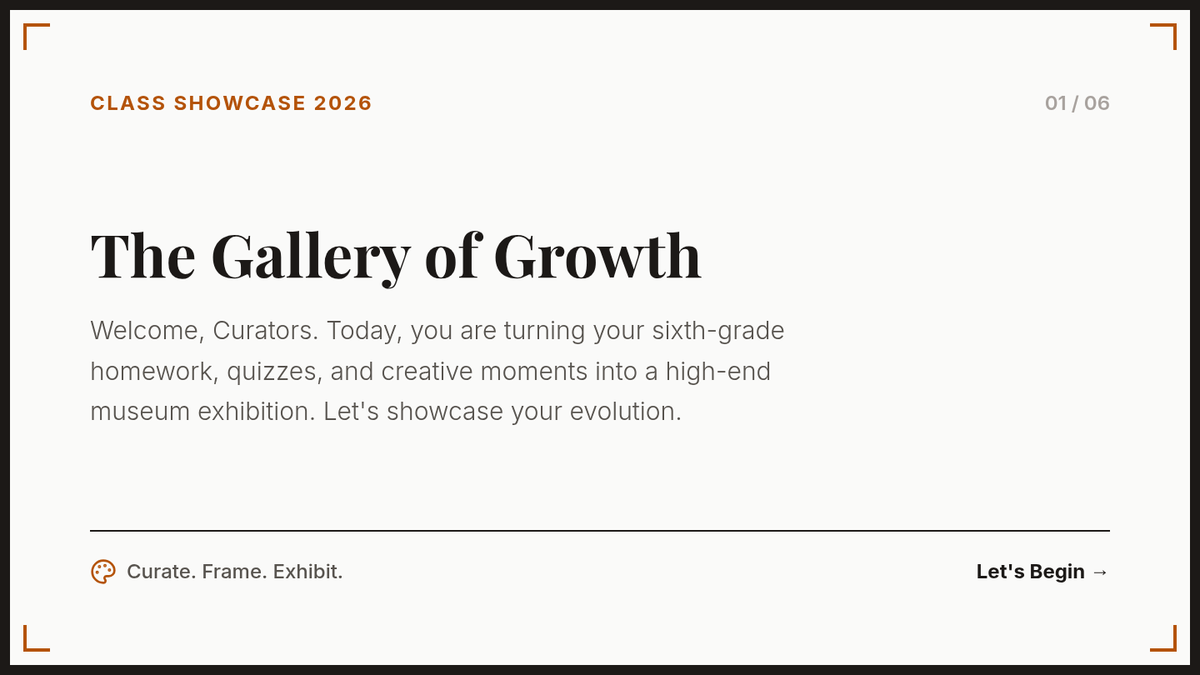
An elegant 6-slide presentation to introduce sixth graders to the art of portfolio curation, self-reflection, framing artifacts, and peer feedback rules.
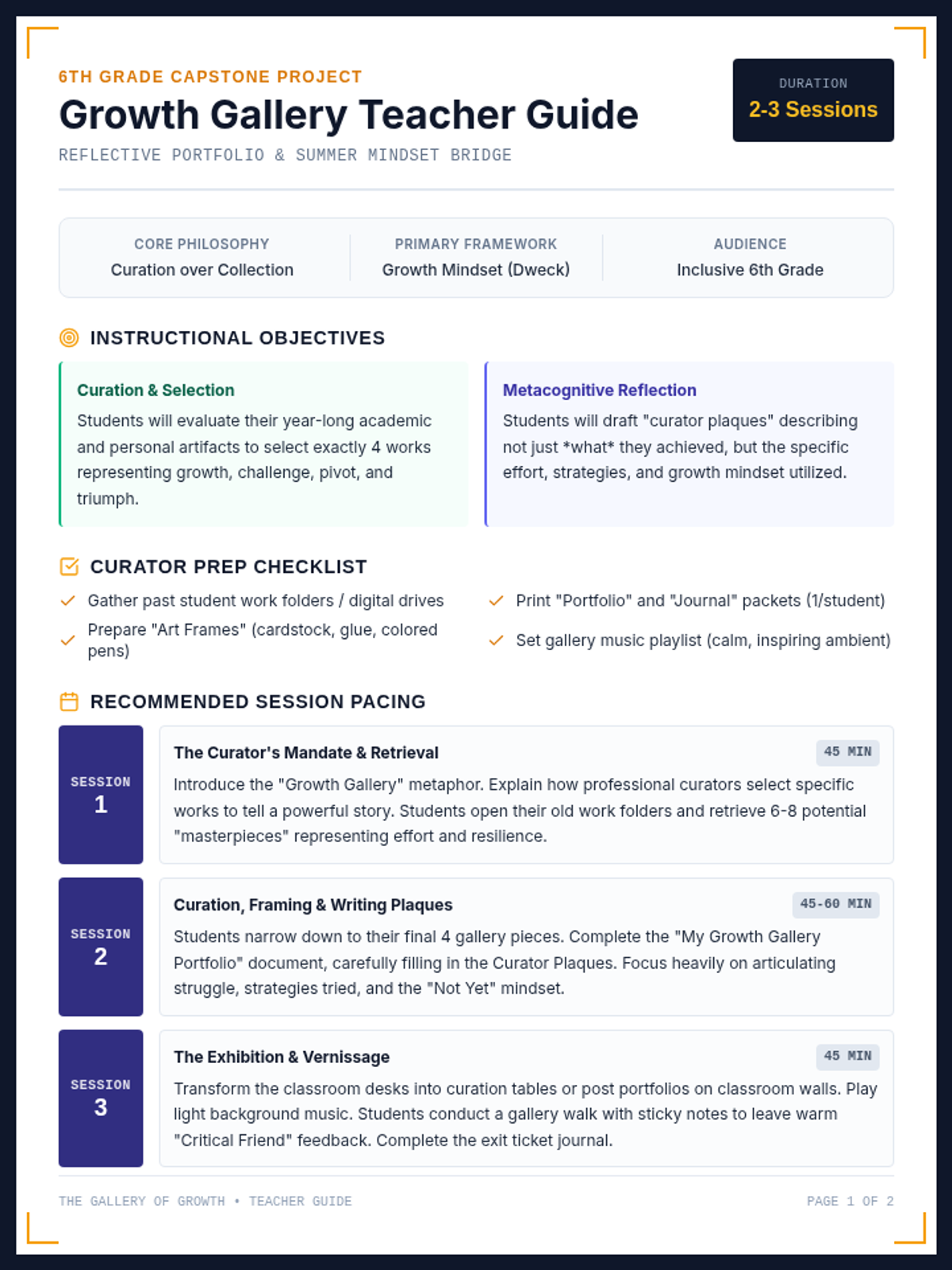
A comprehensive 2-page teacher facilitation guide outlining the gallery-themed portfolio project, including lesson pacing, discussion prompts, student curation guides, and differentiation strategies.
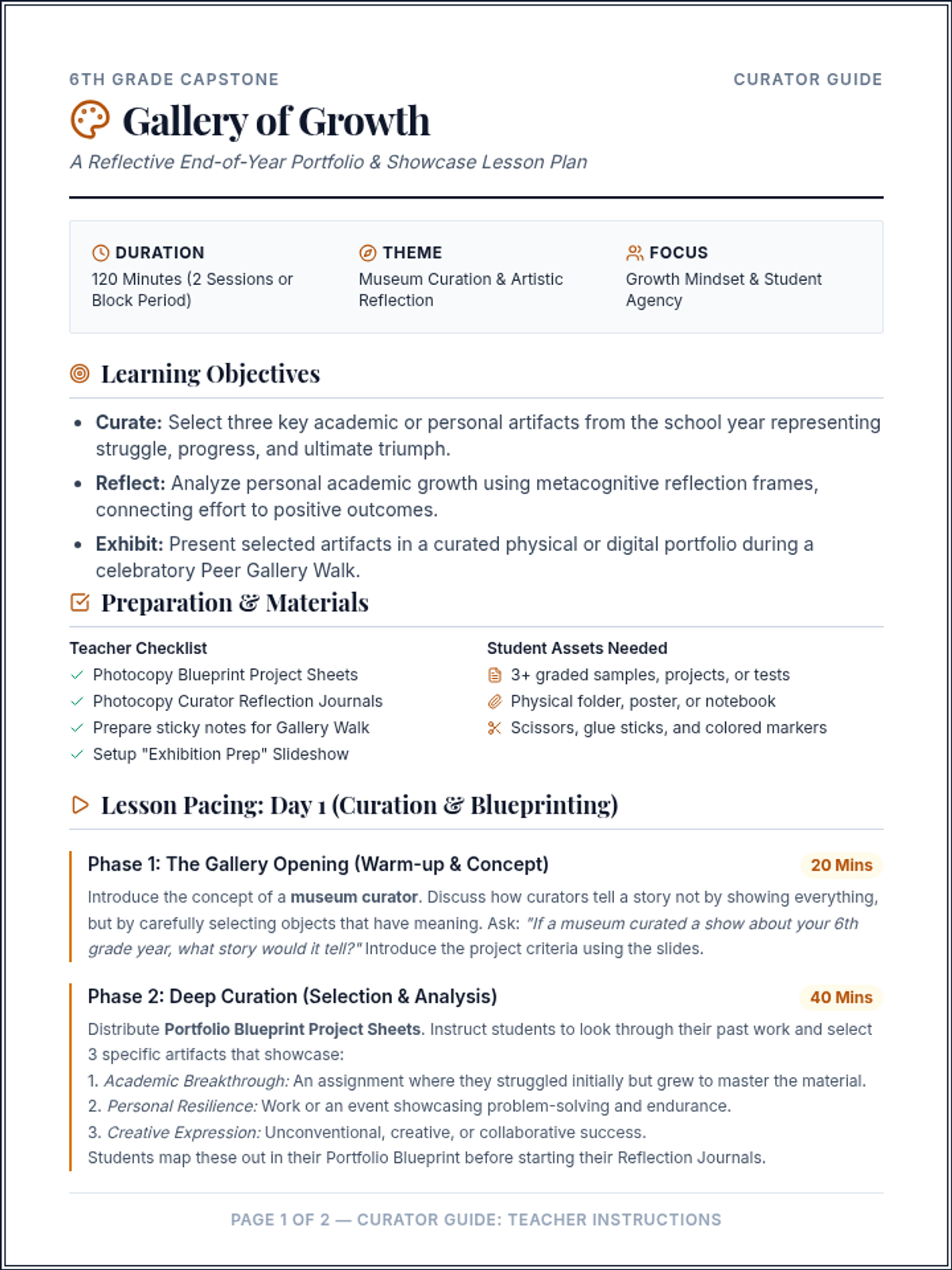
A 2-page teacher-facing facilitation guide for implementing the Gallery of Growth portfolio project. Includes an instructional pacing guide, prep checklist, adaptive differentiation strategies for diverse learning needs, and guided reflection prompts.
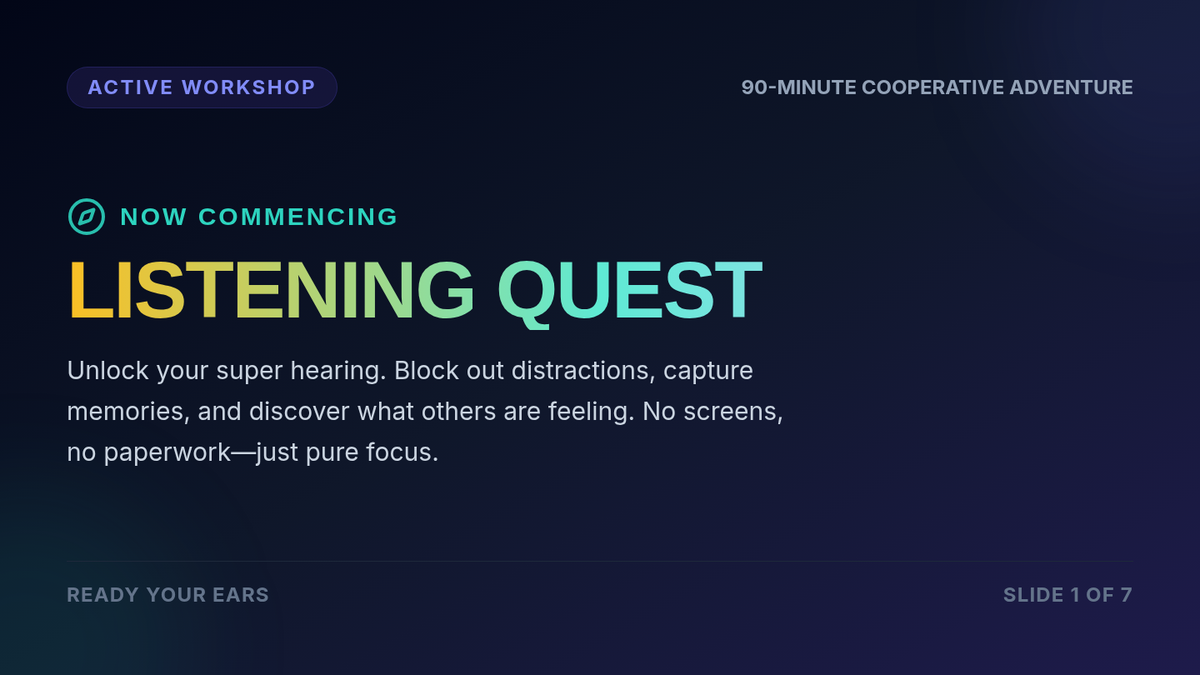
A beautifully themed, high-visibility 16:9 slide presentation for teachers to display during the 90-minute workshop. It leads teams through the four pillars of active listening and the three interactive classroom challenges with large, clear prompt slides.
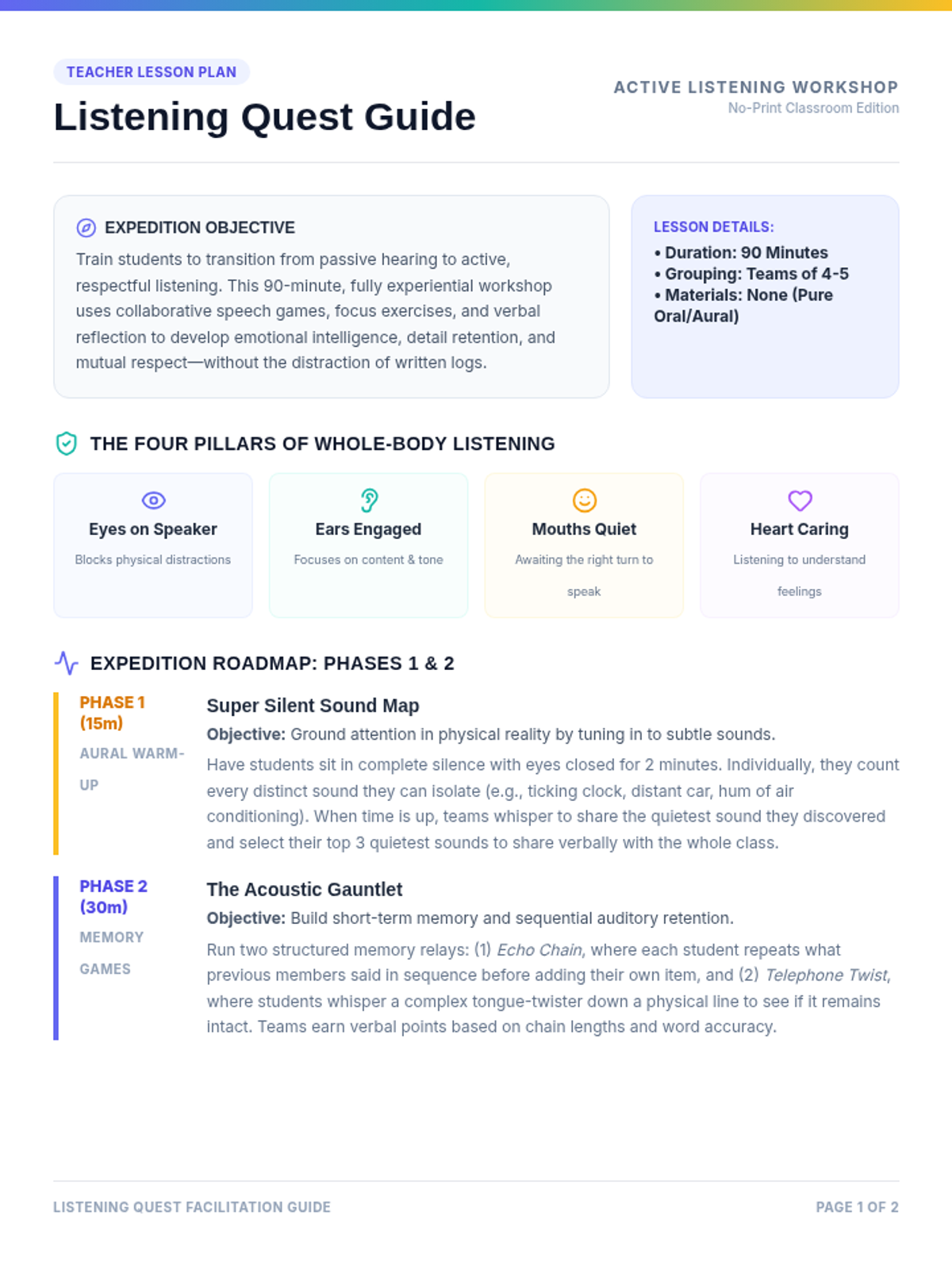
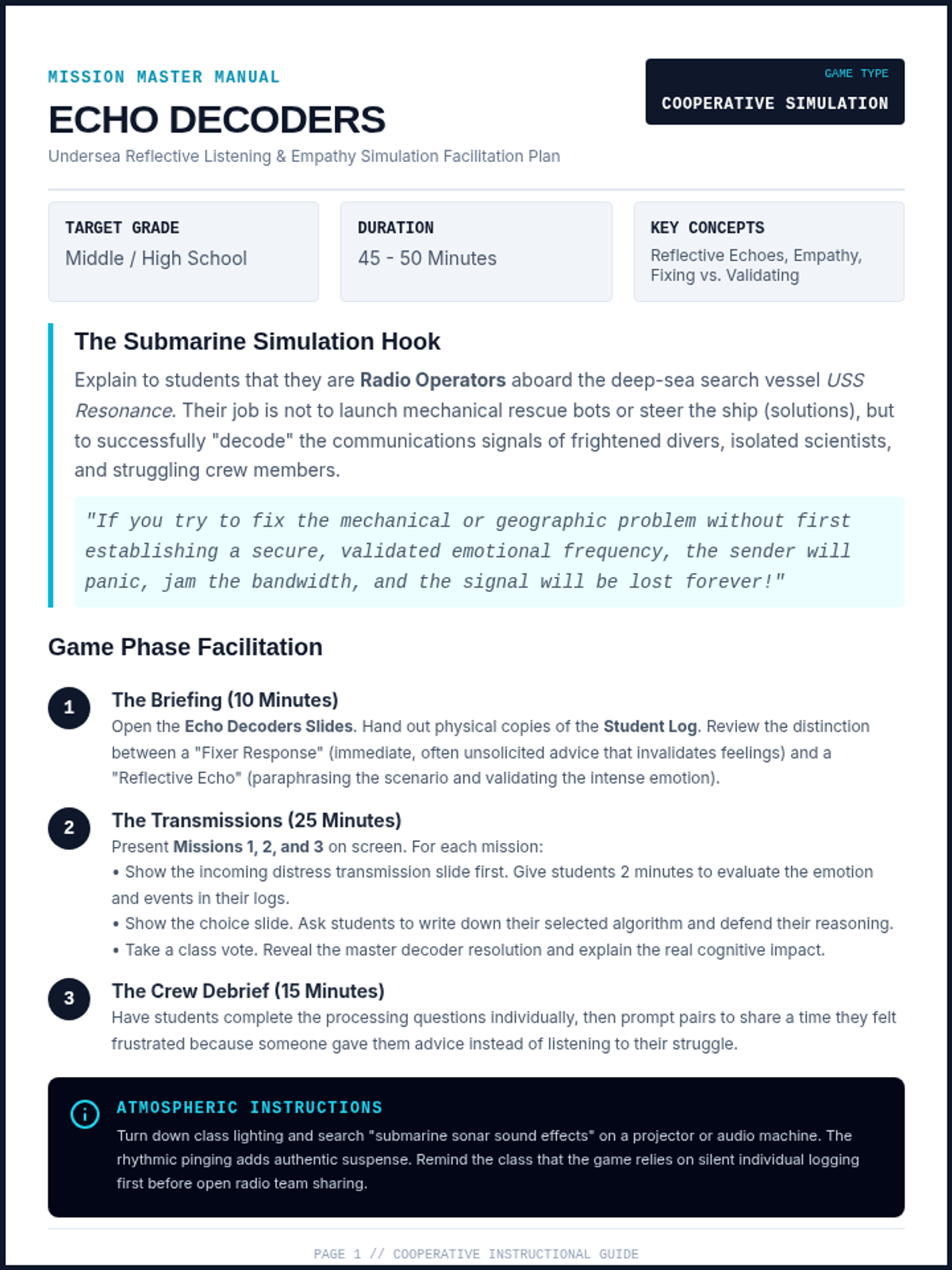
A comprehensive 2-page print-ready lesson plan and facilitation guide for teachers to lead the 90-minute Listening Quest. This guide contains detailed setup instructions, game scripts, verbal discussion prompts, and differentiation strategies without requiring any student worksheets.
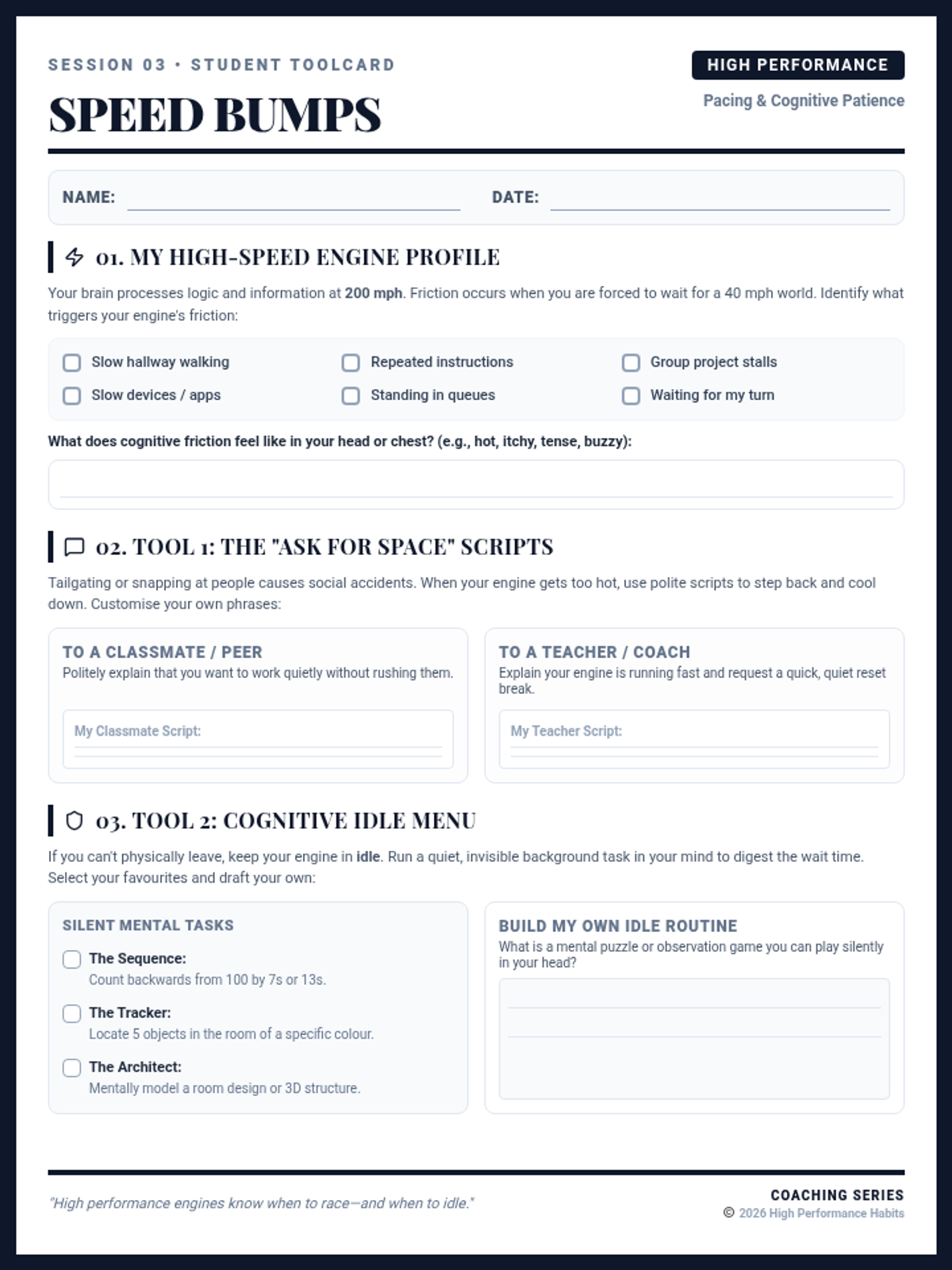
A single-page printable student worksheet and toolcard. It helps students map their cognitive friction triggers, draft polite space-asking scripts, and choose silent background cognitive idle tasks.
A 9-slide presentation for Lesson 3, exploring how to handle frustration when others move too slowly. It validates the student's high-speed brain while providing strategies like 'Asking for Space' and 'Cognitive Idle' to manage interpersonal friction.
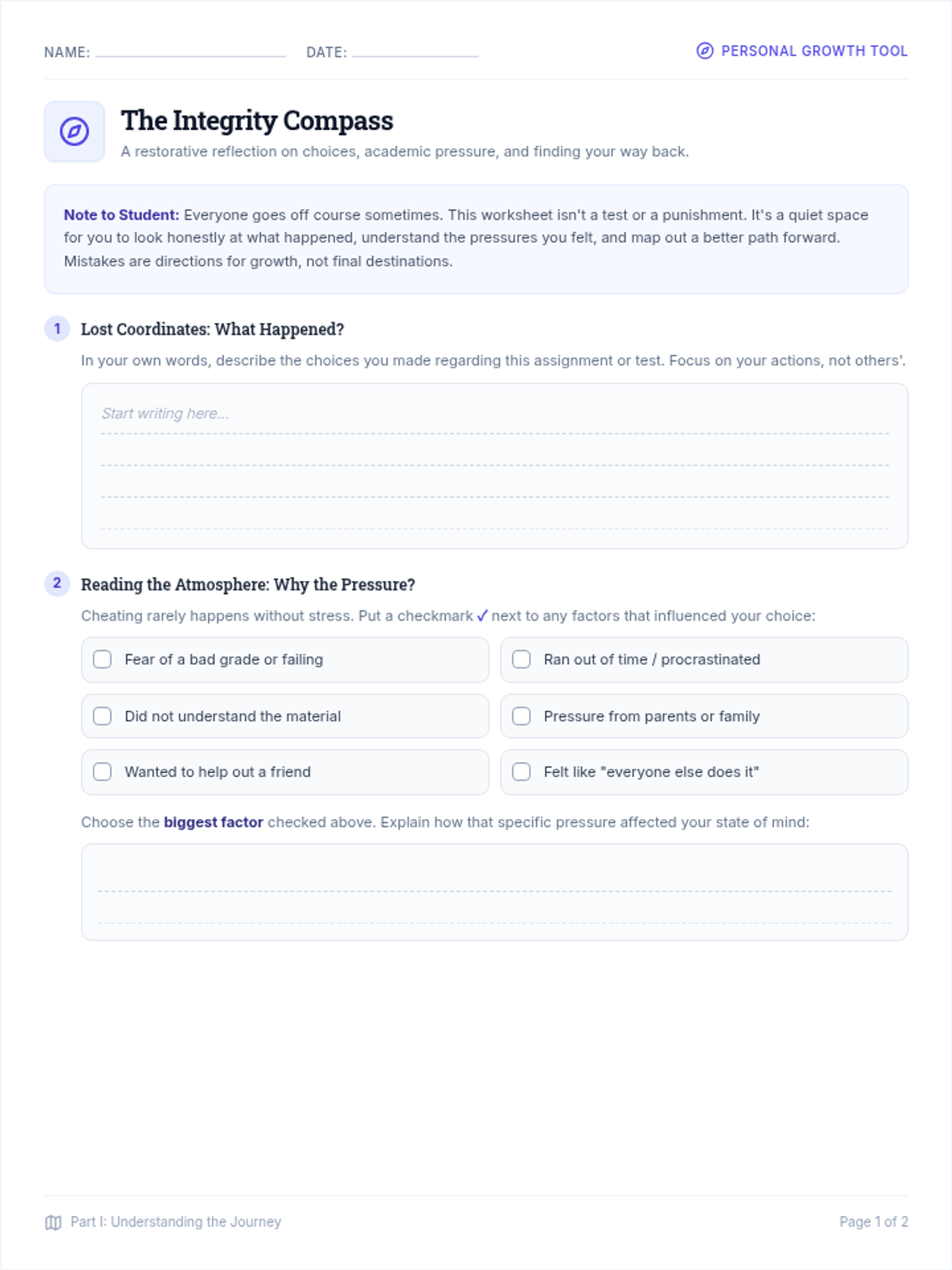
A premium, 2-page restorative reflection worksheet for middle school students caught cheating. It uses a supportive "Integrity Compass" theme to guide students through describing what happened, identifying underlying pressures (fear, peer pressure), understanding the impact on others, and developing a practical action plan.
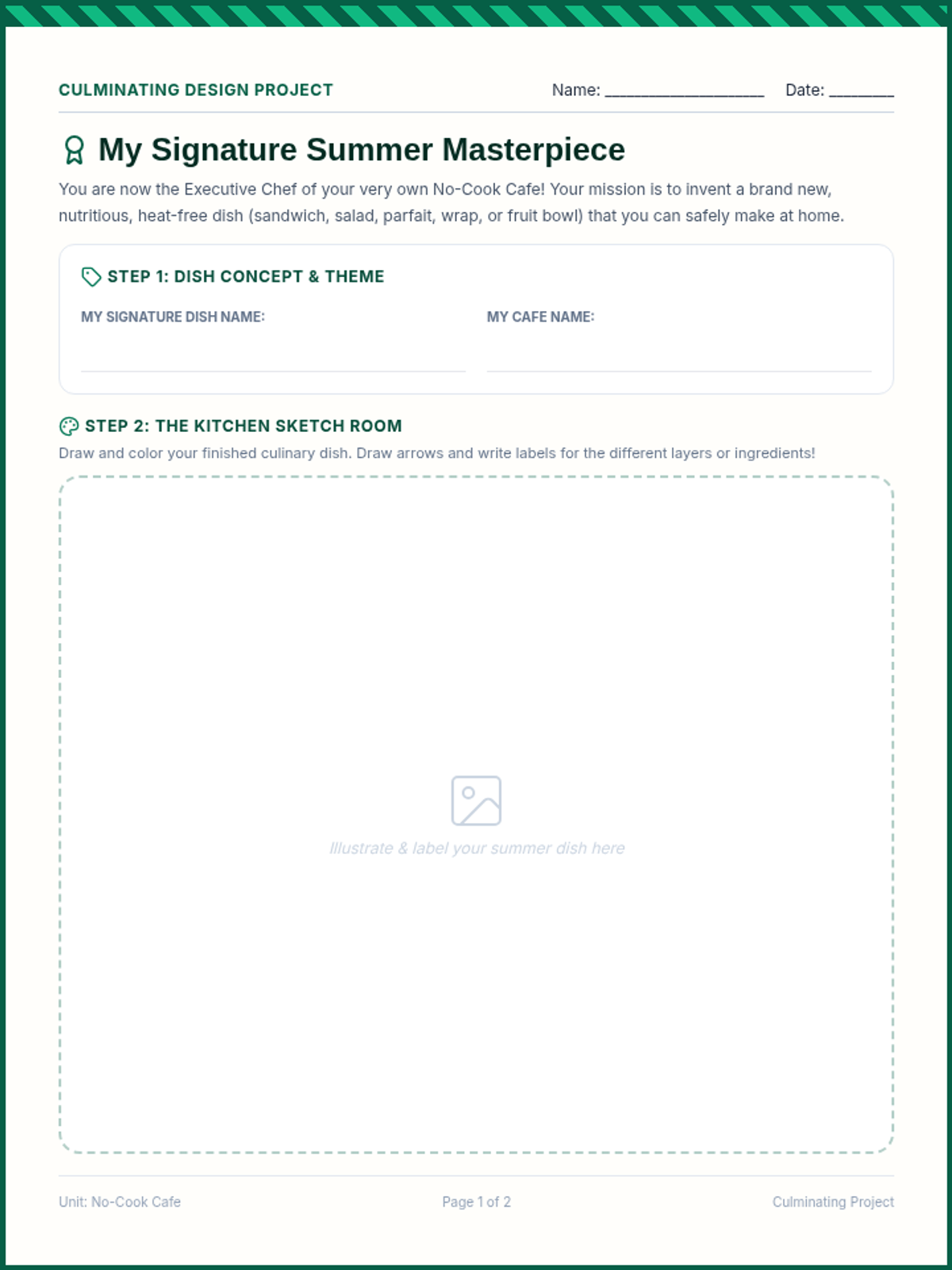
A creative 2-page project booklet that empowers students to invent, illustrate, catalog, and step-out their own signature heat-free recipe as a culminating assessment.
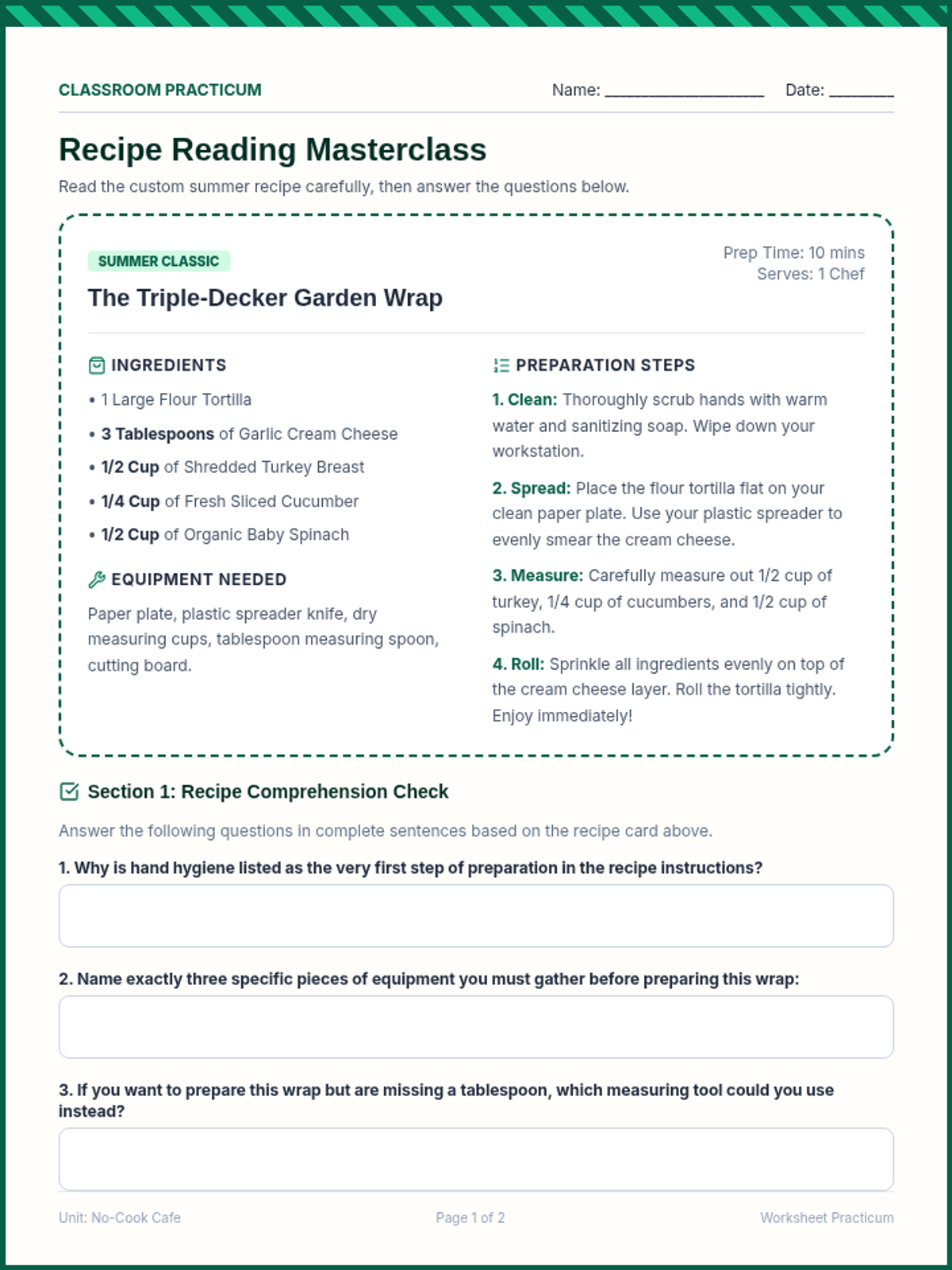
A comprehensive, 2-page student worksheet featuring a simulated recipe card, comprehension checks, fraction scaling math, and a food safety true/false challenge.
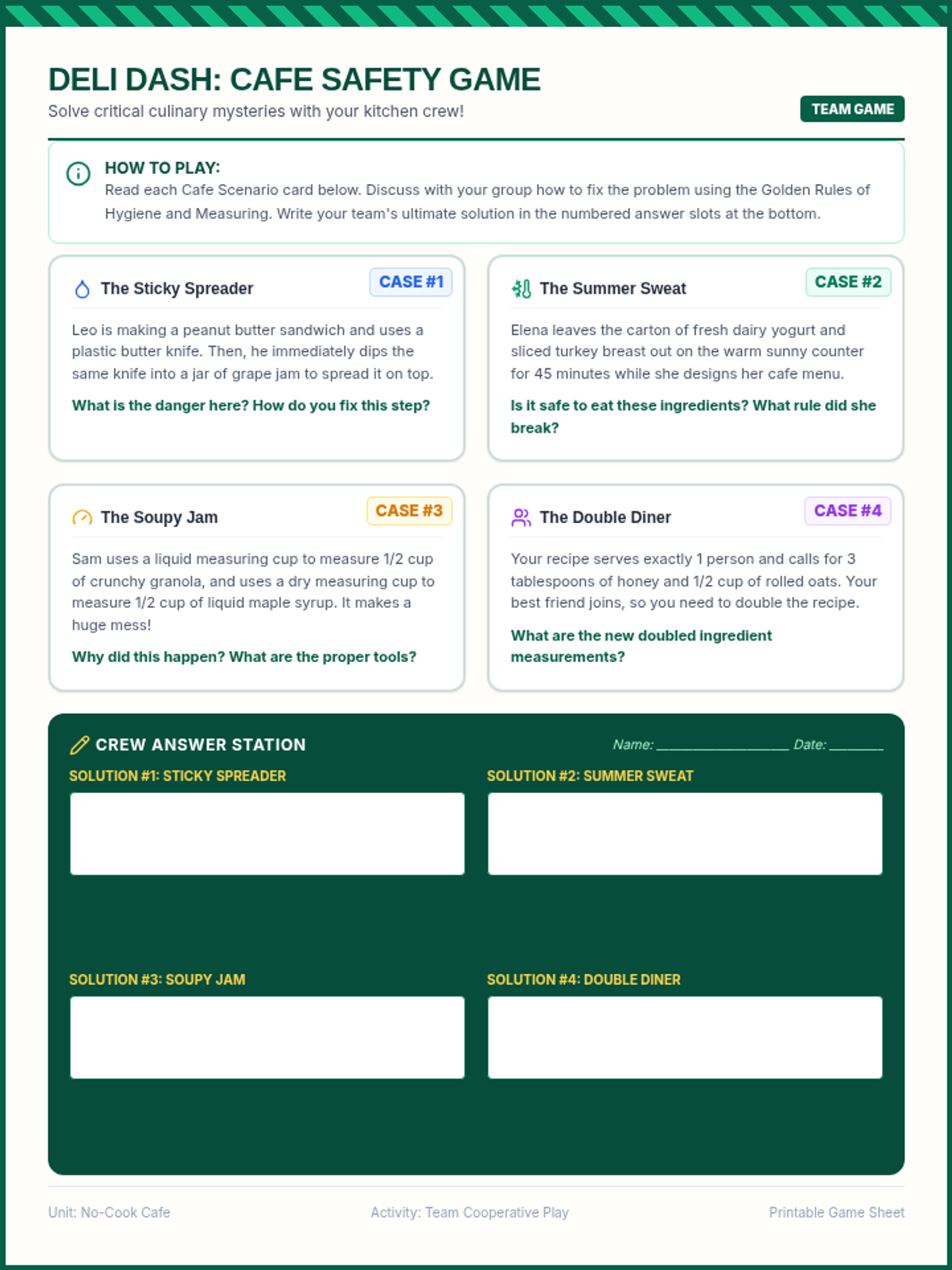
An interactive, print-and-play classroom activity sheet featuring 4 real-world scenario cards that challenge students to solve safety, hygiene, and kitchen math mysteries.
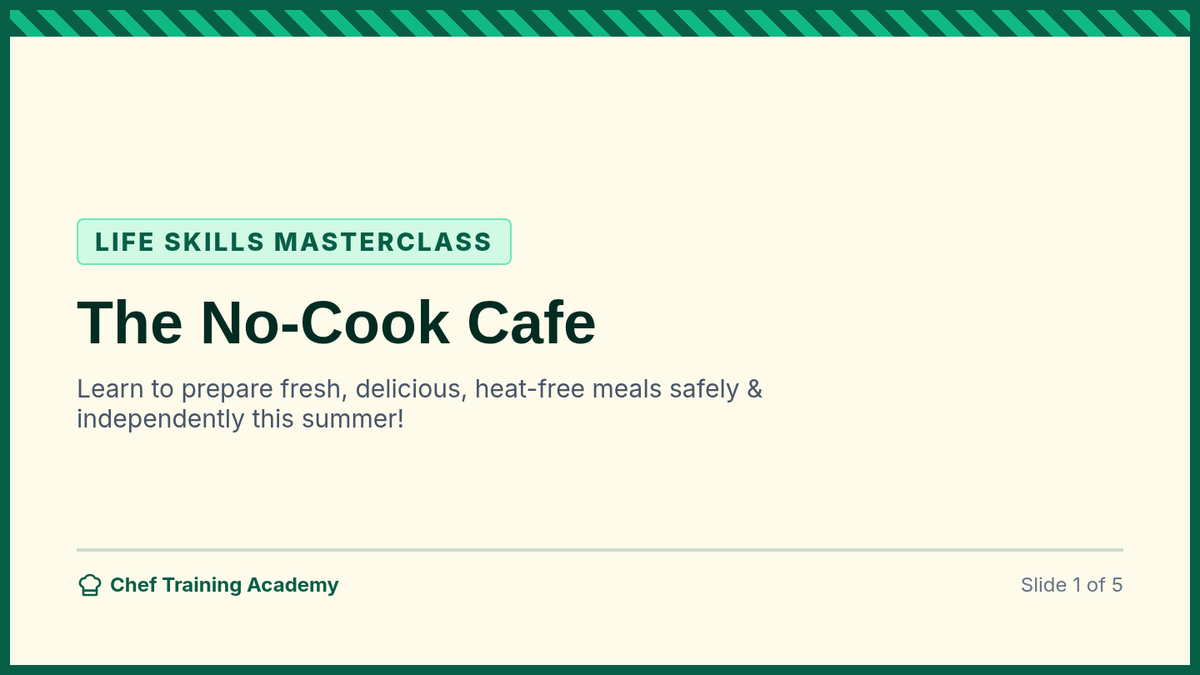
An engaging, high-impact 5-slide presentation designed to guide students through the principles of kitchen hygiene, reading recipe instructions, and precision measuring techniques.
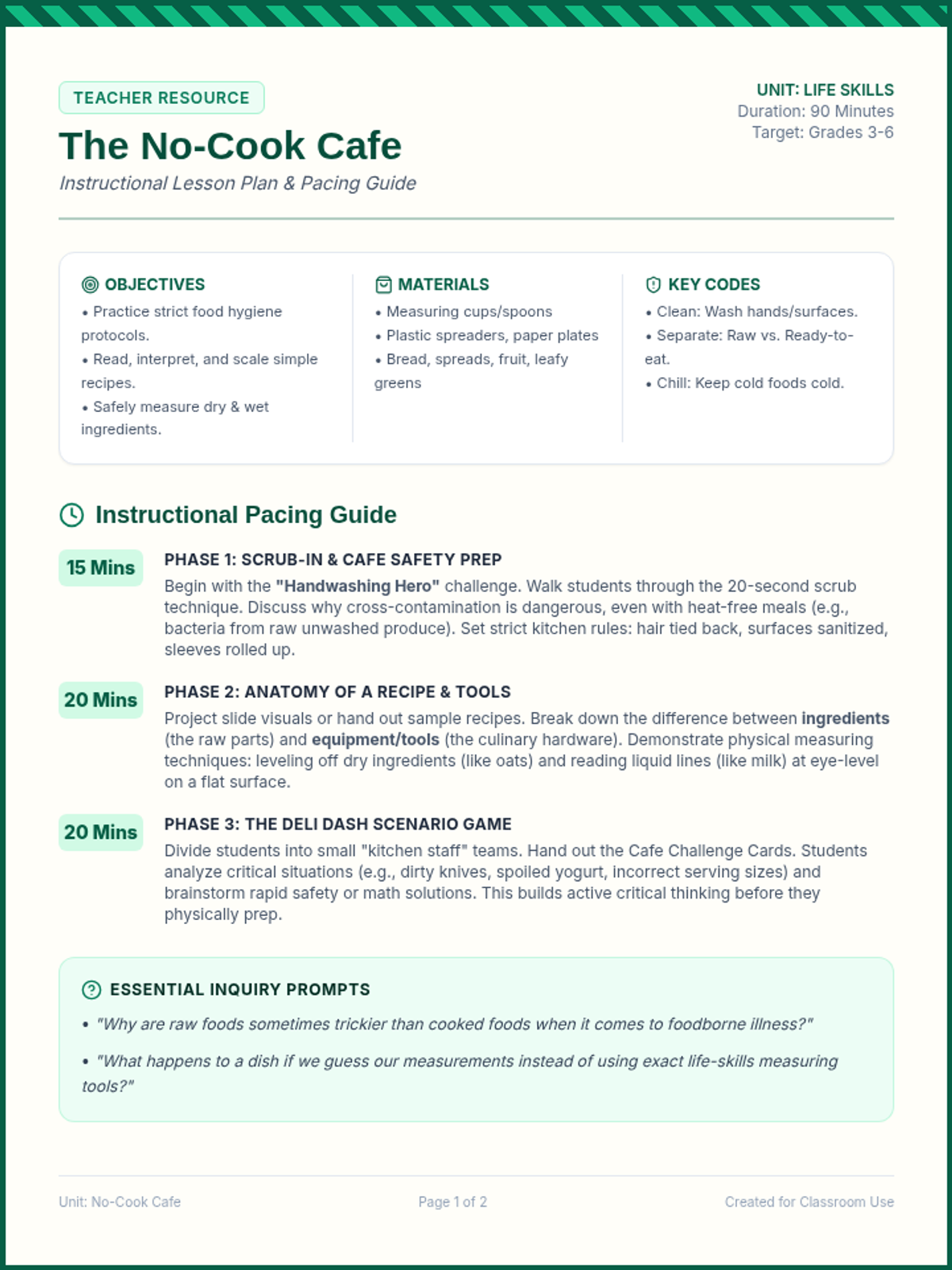
A comprehensive, 2-page teacher-facing lesson plan outlining objectives, pacing, food hygiene safety protocols, guided activities, and assessment rubrics for teaching heat-free culinary skills.
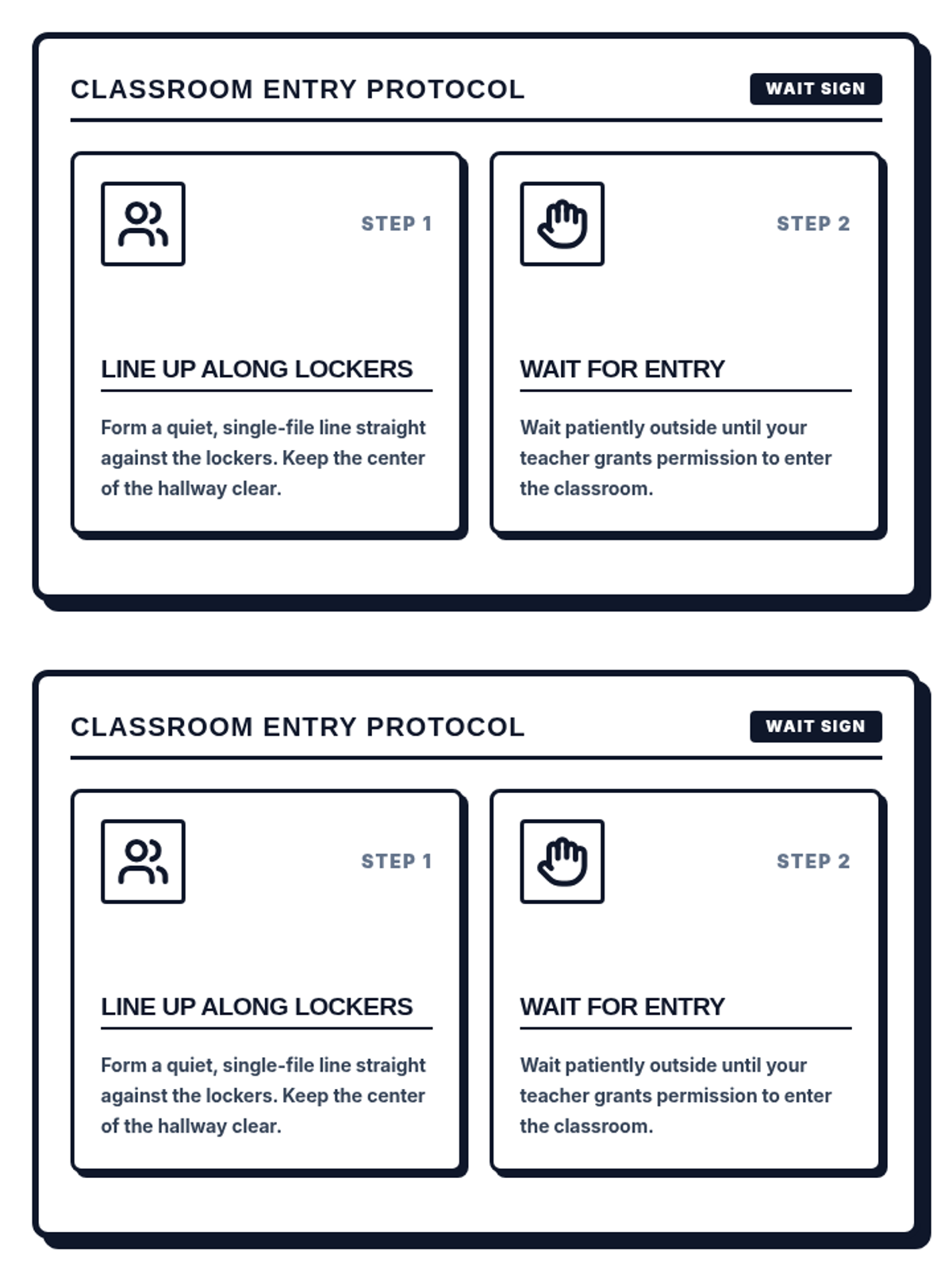
A cleaner, simplified pair of doubled half-sheet signs with the middle dashed cut lines removed. The vertical layout, sizing, and spacing have been perfectly preserved using an invisible spacer.
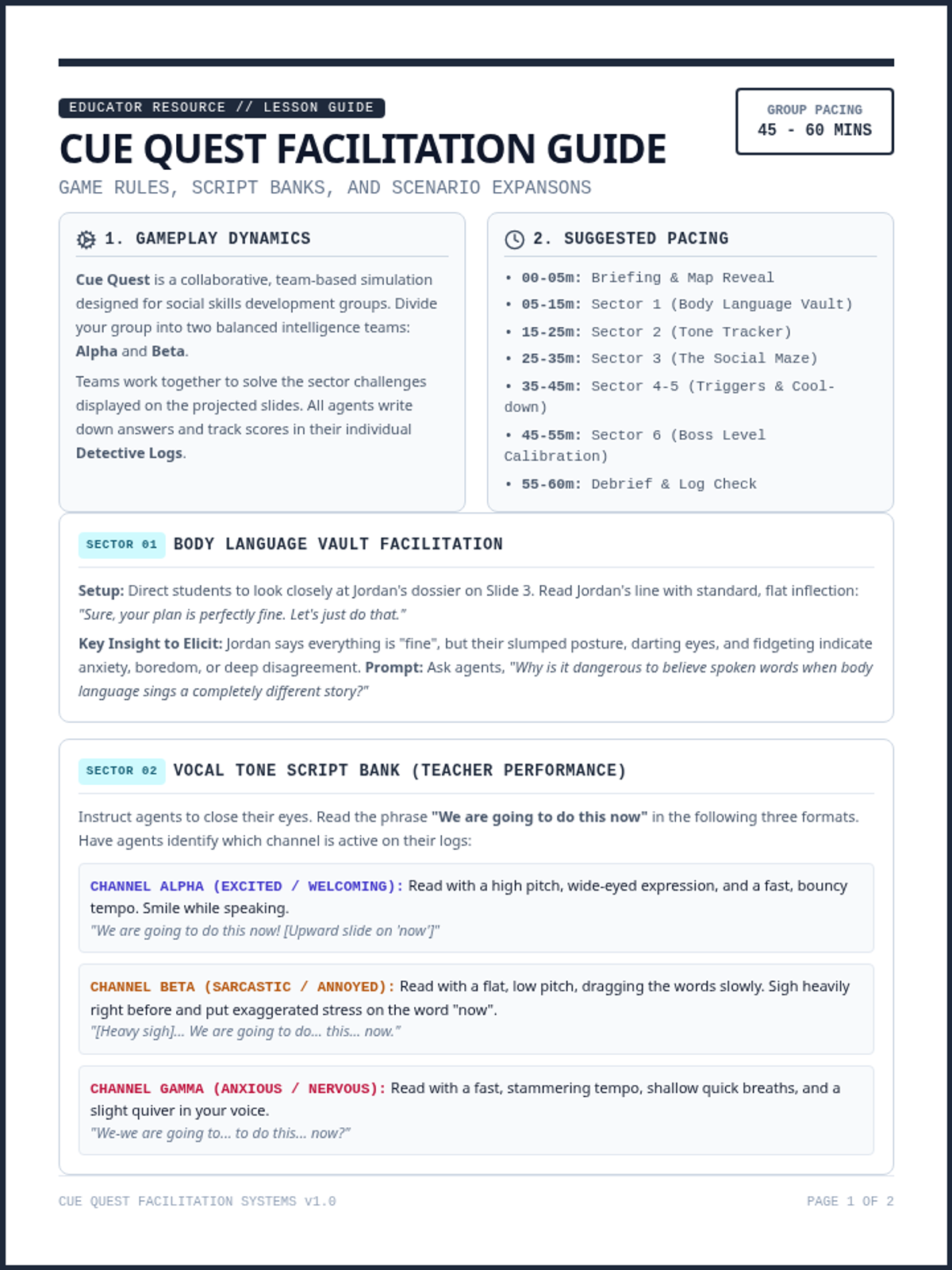
A print-ready teacher facilitation and script guide outlining setup procedures, pacing suggestions, vocal tone performance cues, roleplay prompt expansions, and reflective group debrief questions.
The facilitator guide and lesson plan containing scripts, scenario analyses, classroom game mechanics, and answer keys.