Visual presentation for Lesson 5, focusing on long-term funding strategy, the multi-layered funding model, and the 12-month application cycle.
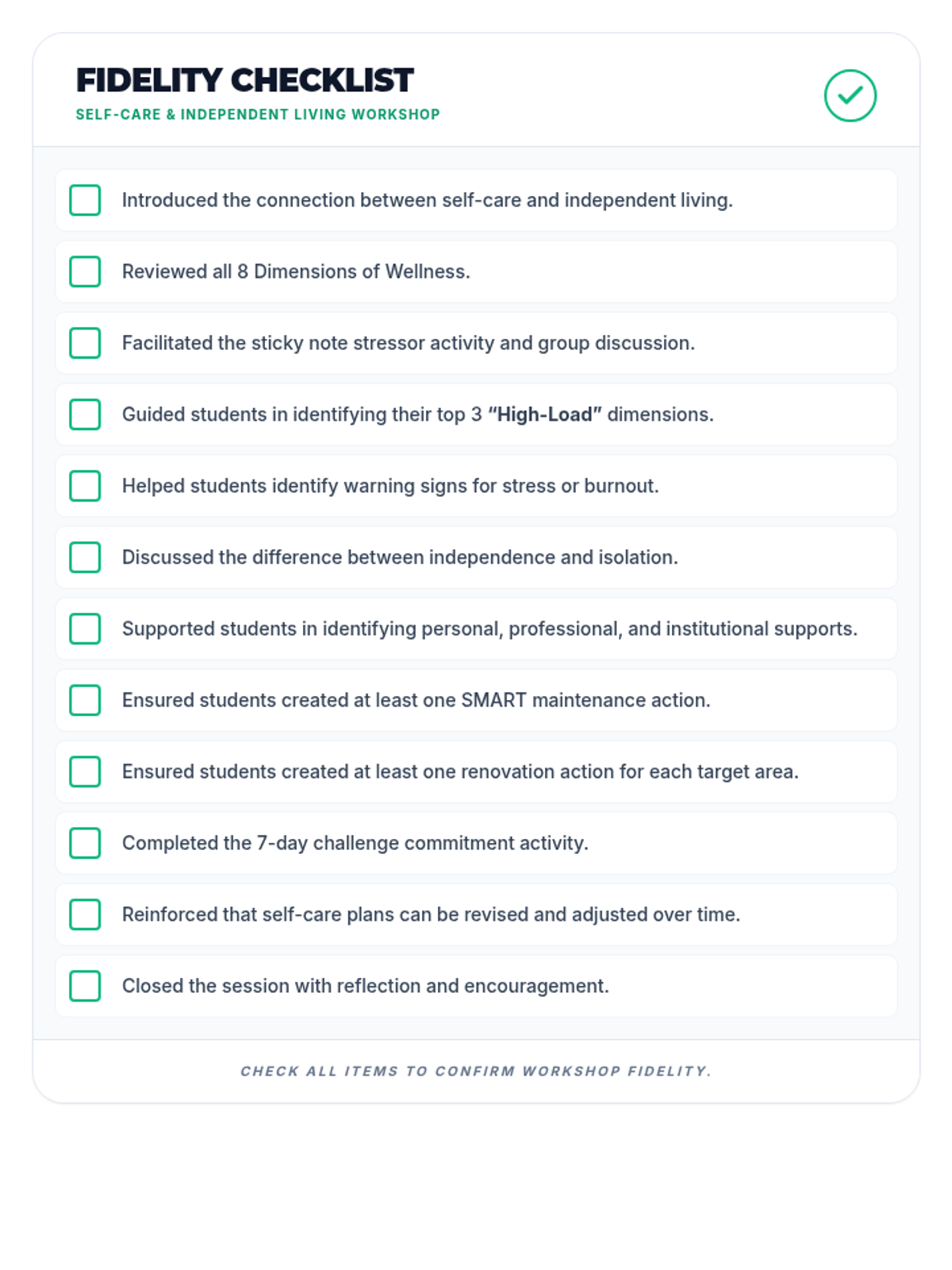
A comprehensive teacher guide for the Office Clarity lesson, including pacing, role-play prompts, answer keys, and facilitation tips.
A comprehensive worksheet for practicing workplace communication skills including over-explaining, social cues, professional scripting, and reflection.
A comprehensive reading guide on workplace communication social skills, covering over-explaining, small talk, directions, and boundaries.
A professional slide deck focusing on workplace communication, over-explaining, following directions, reporting errors, and setting boundaries.
A clinical reference "cheat sheet" for graduate counseling students, featuring translation guides for surface-to-depth language, question stems, and a session checklist.
A slide presentation for graduate counseling students, now updated for group dynamics. It includes the required definitions of depth, why it matters, and specific facilitator techniques like linking and modeling vulnerability.
Student-facing role-play scenarios and a clinical observation tracker designed for school counseling graduate students to practice identifying underlying themes.
A clinical facilitation guide for instructors, redesigned for group counseling. It includes the Iceberg model, specific definitions of depth, and techniques for facilitating group process and cohesion.
A facilitation guide for the "Waiting Way" lesson, including pacing suggestions, discussion points, and an answer key for the scenario worksheet to help trainers lead effective staff development sessions.
A set of 8 roleplay cards for nursing home staff, featuring diverse scenarios like dementia care, family conflict, and physical pain. Designed for staff huddles to practice the WAIT framework (Watch, Acknowledge, Inform, Transition) in real-world situations.
A scenario-based worksheet for nursing home staff to practice the WAIT framework (Watch, Acknowledge, Inform, Transition). Includes four realistic care situations with dedicated areas for students to write their observations and responses.
A 8-slide presentation for nursing home staff introducing the WAIT framework (Watch, Acknowledge, Inform, Transition) for managing resident wait times with compassion and professionalism.
A facilitation guide for educators conducting 1:1 sessions, featuring session pacing, empathetic questioning frameworks, and common roadblocks for students recovering from injury and depression.
A student-facing worksheet to help map energy levels, break down tasks into micro-tasks, and log 5-minute rule attempts.
A visual guide for 1:1 sessions focusing on energy management, the 5-minute rule, and lowering friction to help students restart schoolwork after a break.
A teacher-facing discussion guide containing categorized conversation prompts to help students explore their emotional weather metaphors deeply.
A creative activity sheet where students draw a meteorological 'mood map' of their internal emotional landscape, using isobars, fronts, and weather icons to represent feelings. Updated to fix technical structure.
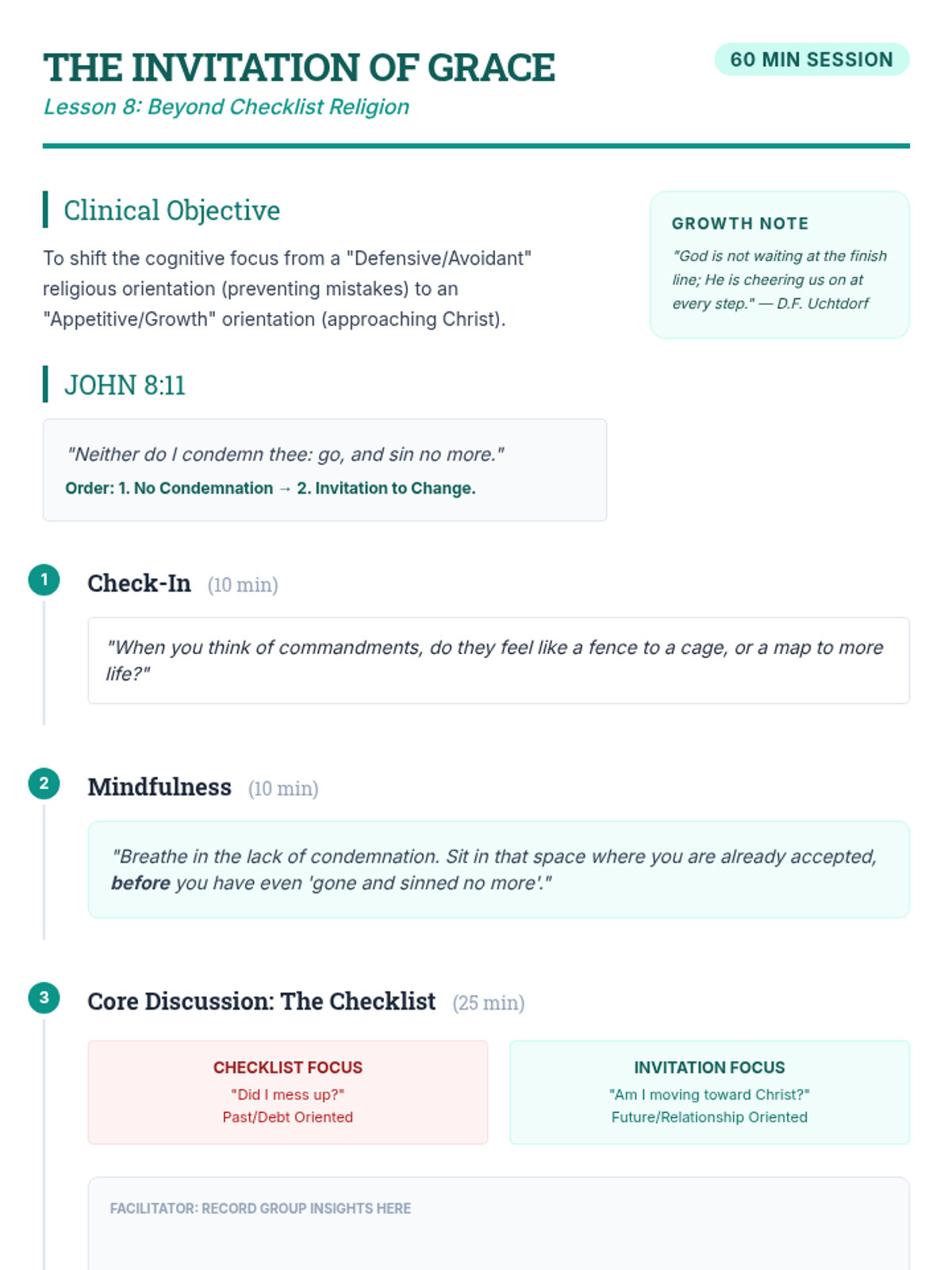
A student reflection sheet that provides space for daily emotional check-ins, identification of physical sensations (pressure systems), and grounding practice planning using weather metaphors.
A visually engaging instructional slide deck that introduces the 'Internal Weather' metaphor, explains high and low pressure emotional systems, and teaches the 5-4-3-2-1 grounding technique. Updated to ensure all text meets minimum visibility requirements.
A comprehensive lesson plan for the 'Internal Weather' module, providing objectives, vocabulary, timing, facilitation tips, and differentiation strategies for teaching emotional regulation through weather metaphors.
A multi-page reflective 'Growth Log Journal' for students, featuring sections for modality discovery, self-advocacy script building, and goal setting to promote long-term metacognitive growth.
A student worksheet titled 'Strengths Compass', focusing on identifying academic strengths, soft skills, and environmental 'blind spots' to facilitate self-advocacy.
A set of printable 'Modality Mixer Cards' designed for a classroom activity. These cards provide specific tasks for students to test their visual, auditory, reading/writing, and kinesthetic learning preferences at different stations.
A visually engaging slide deck titled 'Unlocking You', exploring various learning modalities (VARK), self-advocacy strategies, and goal-setting for students from high school to graduate level.
A comprehensive lesson plan for educators titled 'Pathway Guide', detailing the instructional flow, objectives, and strategies for teaching students about personalized learning styles and self-advocacy.
A comprehensive project guide and rubric for students to create a visual career timeline and strategic roadmap, integrating their research and self-discovery into a 5-10 year professional plan.
A student worksheet for self-discovery using the Ikigai framework and a structured research matrix to evaluate potential career paths, salaries, and future industry outlooks.
An activity where students map core transferable skills to various industries, identifying how specialized skills can be applied in different professional contexts.