A printable matching activity with terms and icons found on medicine labels and grocery ads to help students define functional reading vocabulary. This version includes 10 matching pairs with uniform styling and improved layout on a single page.
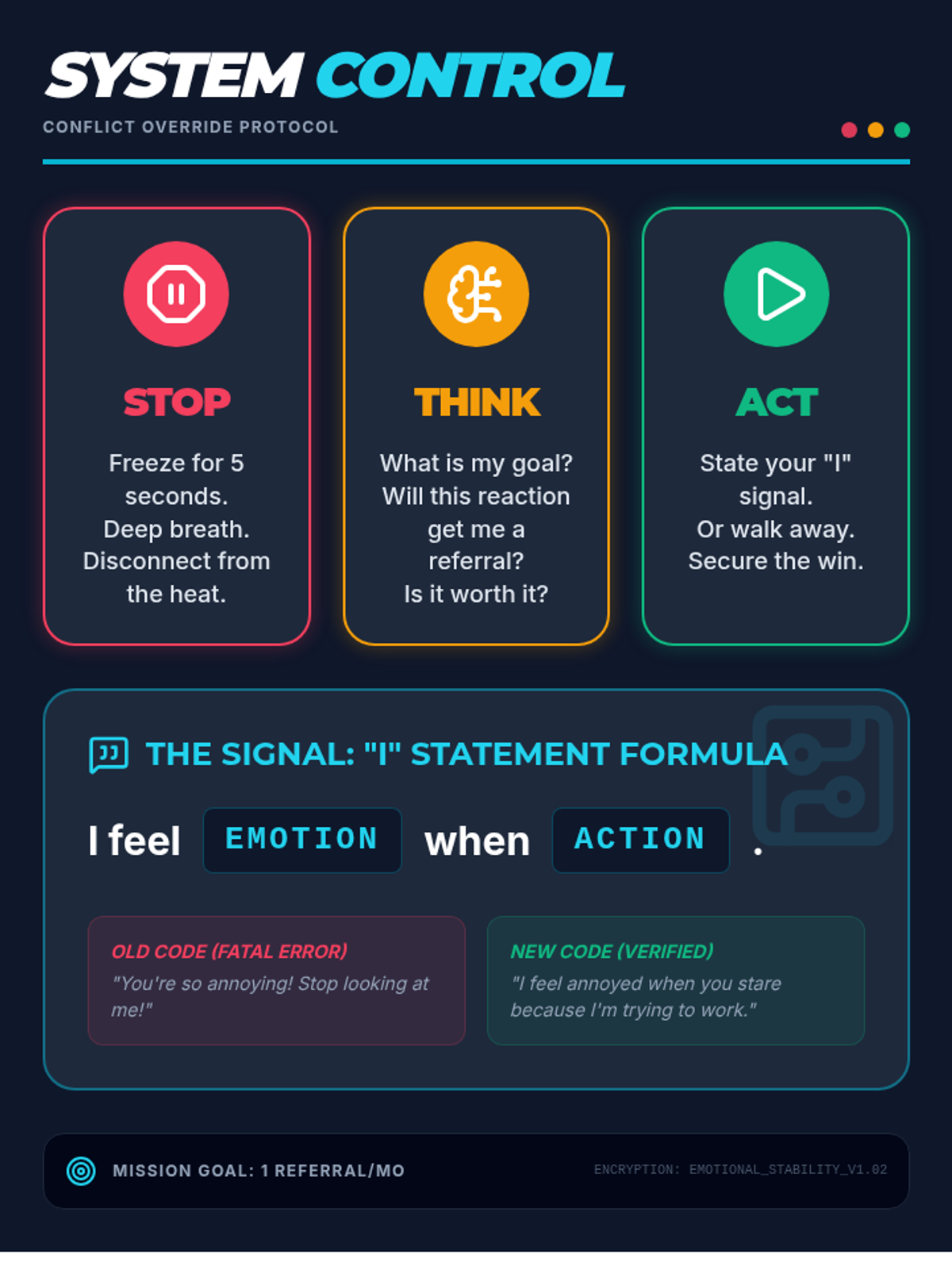
A high-impact visual anchor chart for a student's desk, featuring the Stop-Think-Act circuit breaker and the "I" statement formula in a modern, tech-themed design.
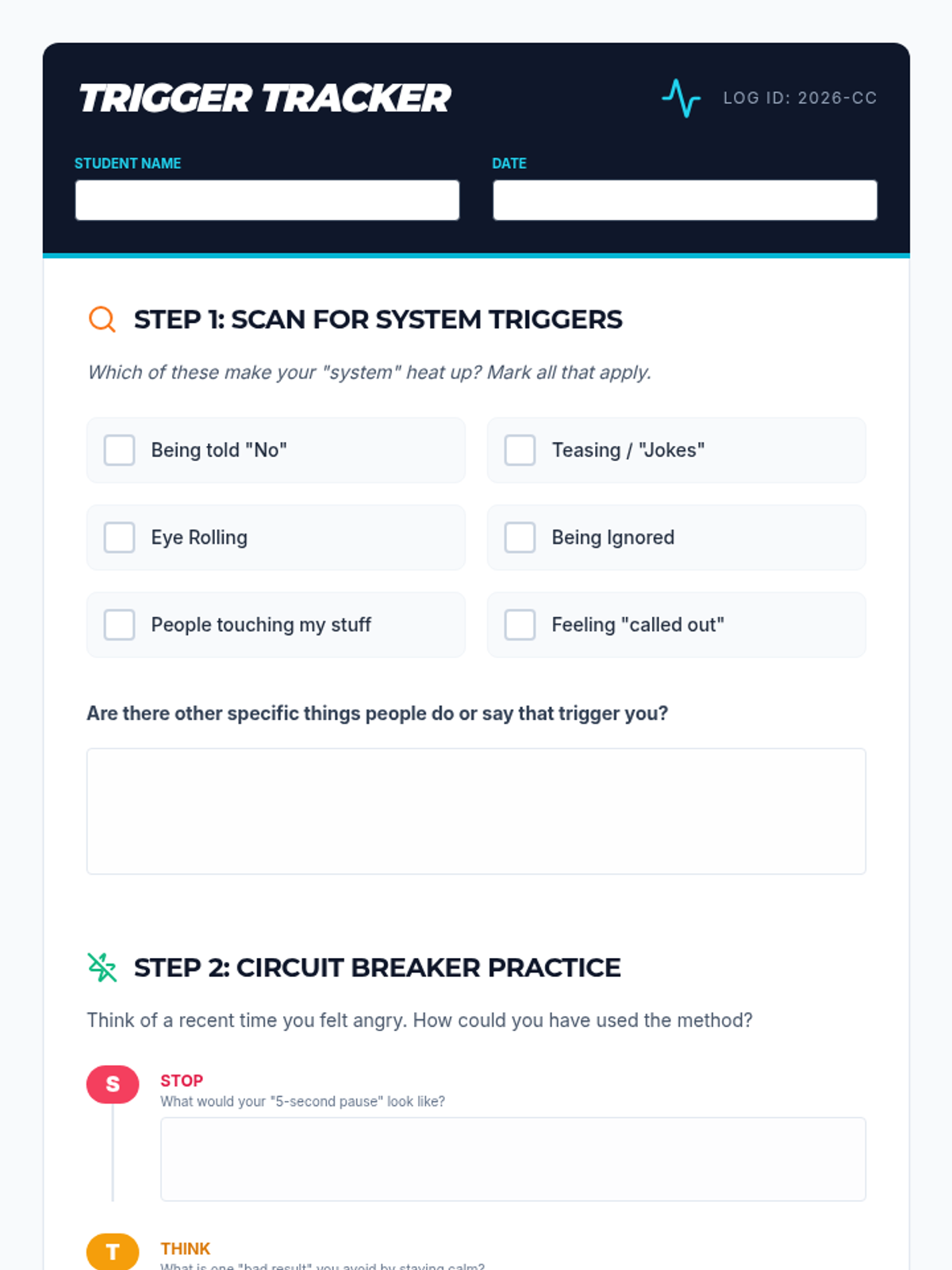
A guided self-reflection worksheet for the student to identify their personal triggers and practice the Stop-Think-Act method and "I" statements in a technical, log-style format.
A modern, tech-themed slide deck designed for remote screen-sharing. It guides a student through identifying emotional triggers, the Stop-Think-Act method, and the mechanics of "I" statements.
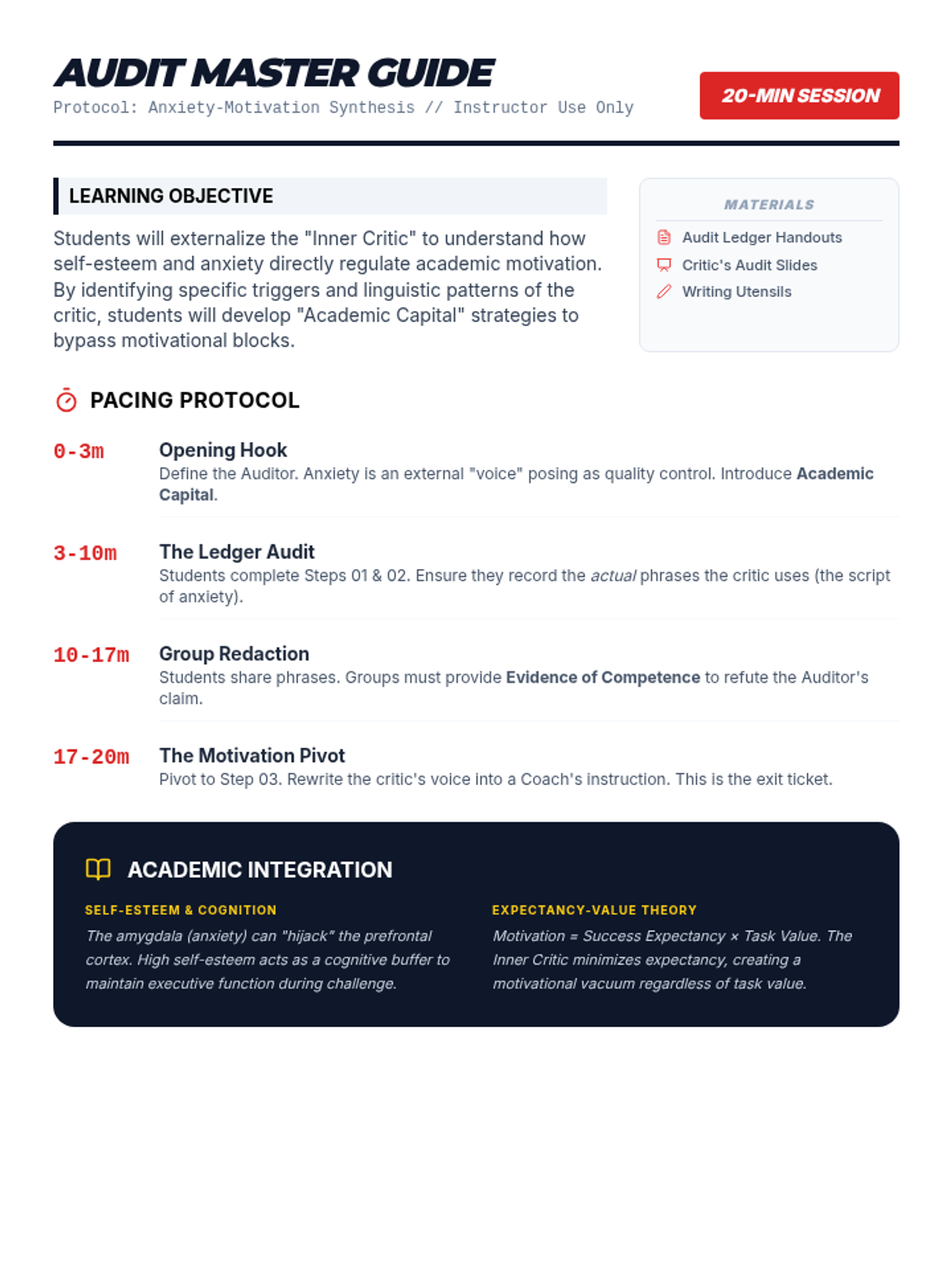
A teacher-facing facilitation guide for the 'Critics Audit' session. Includes a tight 20-minute pacing protocol, discussion prompts for groups, and deep academic background connecting self-esteem to cognitive function and motivation theory.
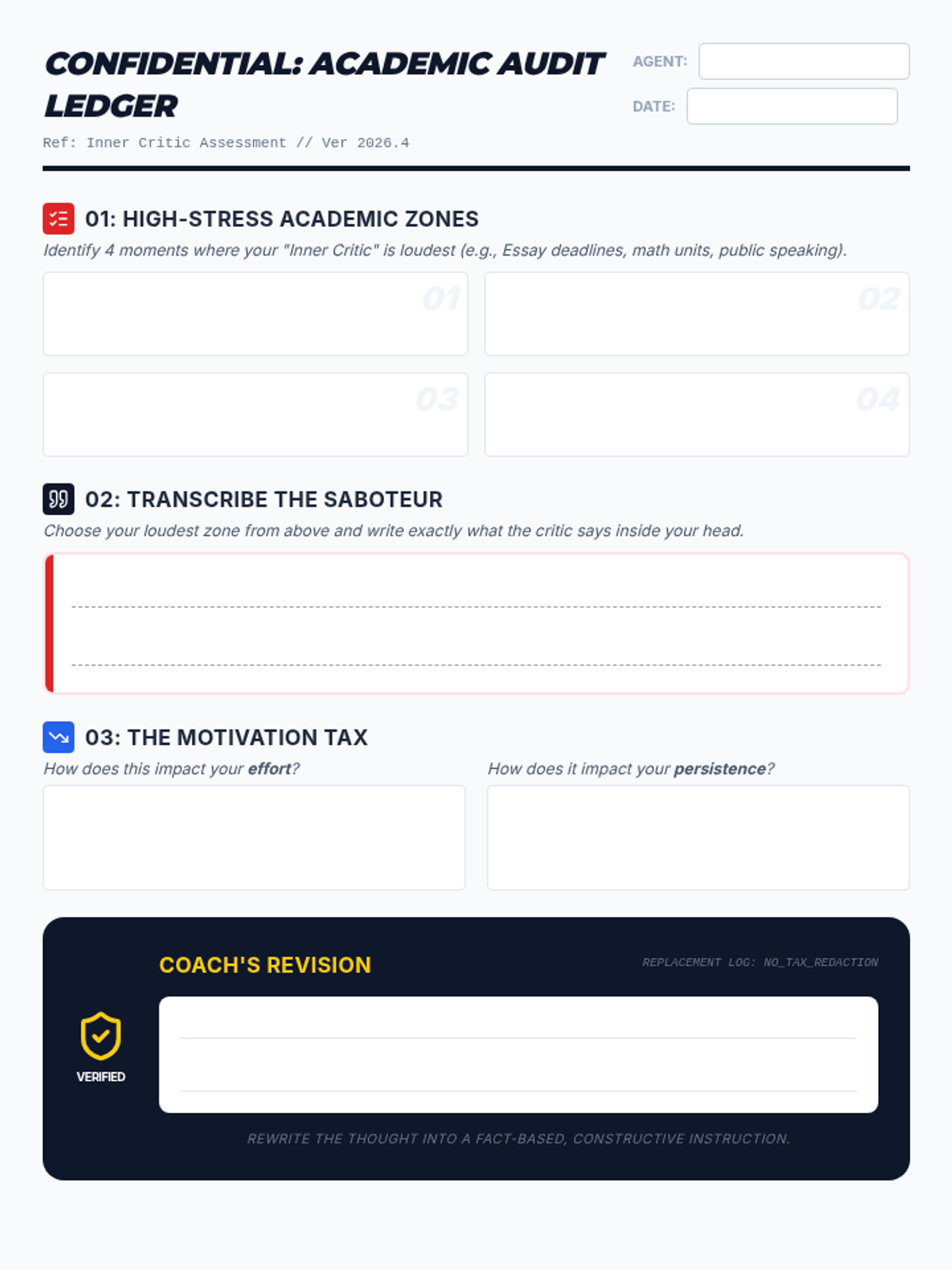
A structured 'Academic Audit Ledger' handout where students list their academic anxiety triggers, transcribe their inner critic's specific messaging, and map out the negative impact on their motivational effort and persistence.
A high-energy, 20-minute slide deck that guides students through an 'Academic Audit' of their inner critic. The presentation frames self-esteem as 'academic capital' and provides a structured flow for identifying and refuting anxious thoughts that hinder school motivation.
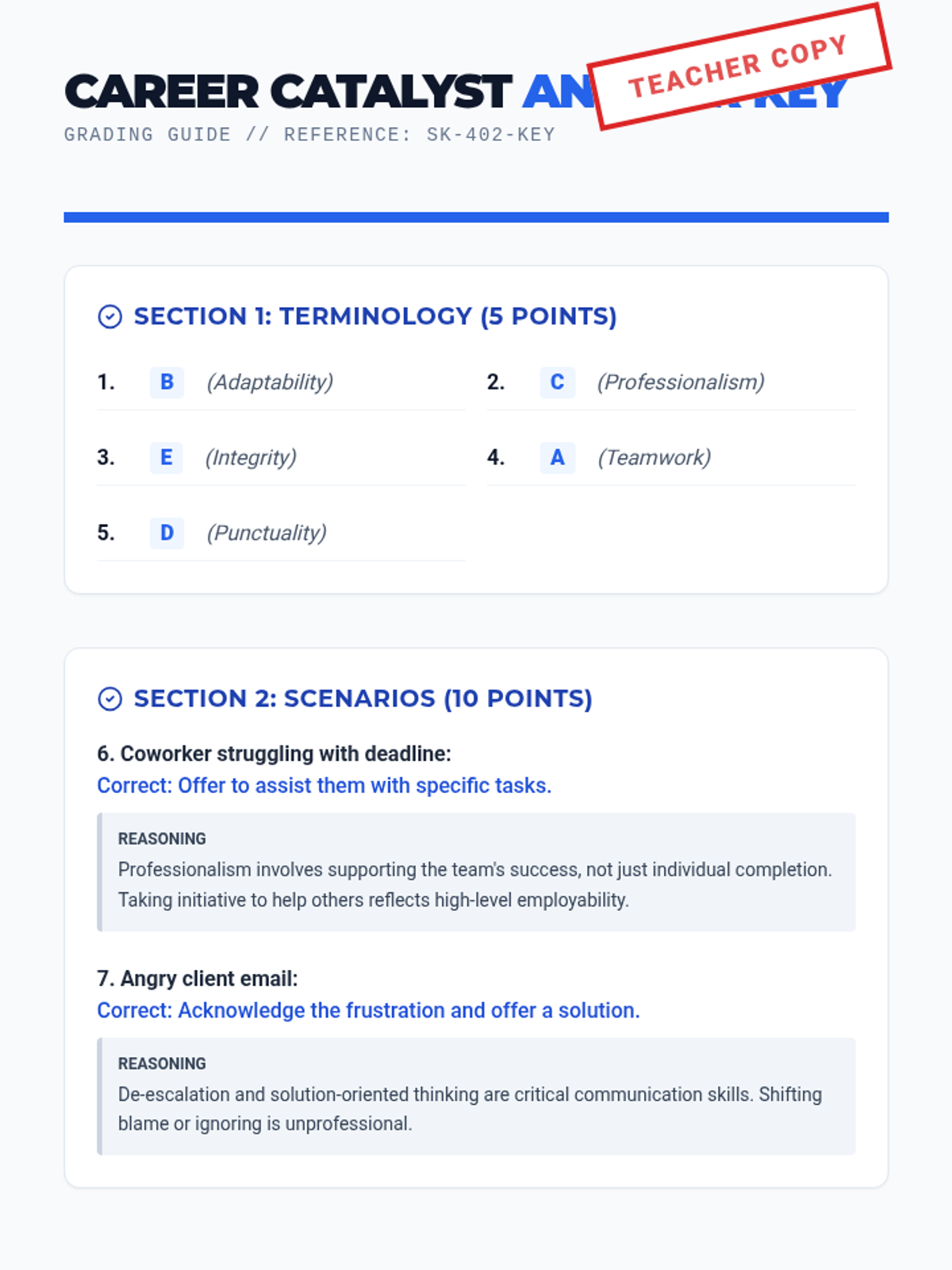
An answer key for the Career Catalyst Quiz, providing correct responses, grading points, and detailed reasoning for the open-ended questions. Improved for readability and layout consistency. Fixed page breaks and contrast issues.
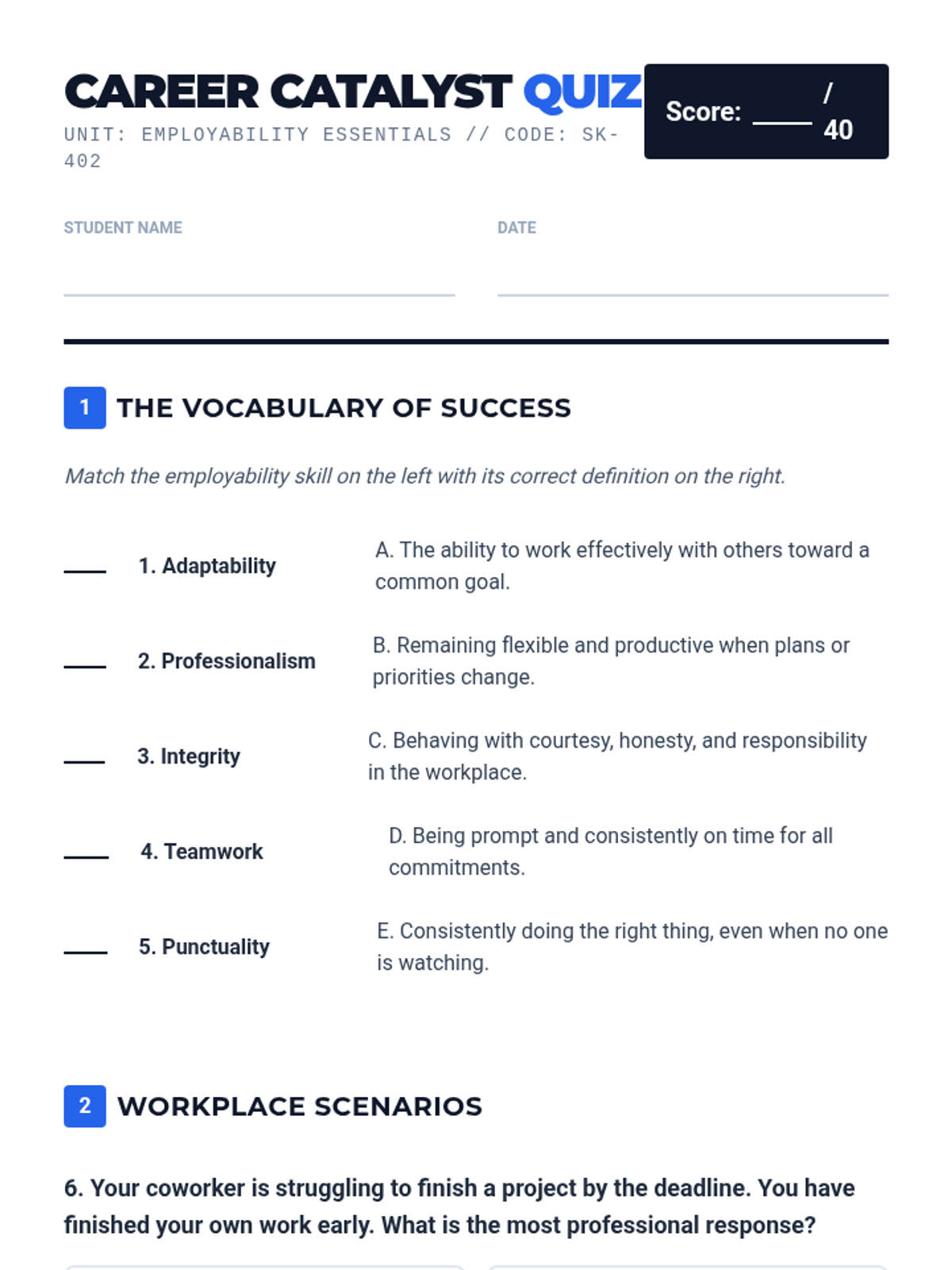
A comprehensive assessment covering key employability skills including vocabulary matching, scenario-based multiple choice, and critical thinking short responses. Optimized for print with improved spacing and layout stability. Fixed self-audit alignment.
A visual presentation introducing key employability skills including communication, teamwork, problem-solving, time management, and professionalism through high-impact slides, now including interactive knowledge checks. Fixed answer choice uniformity and layout overlaps.
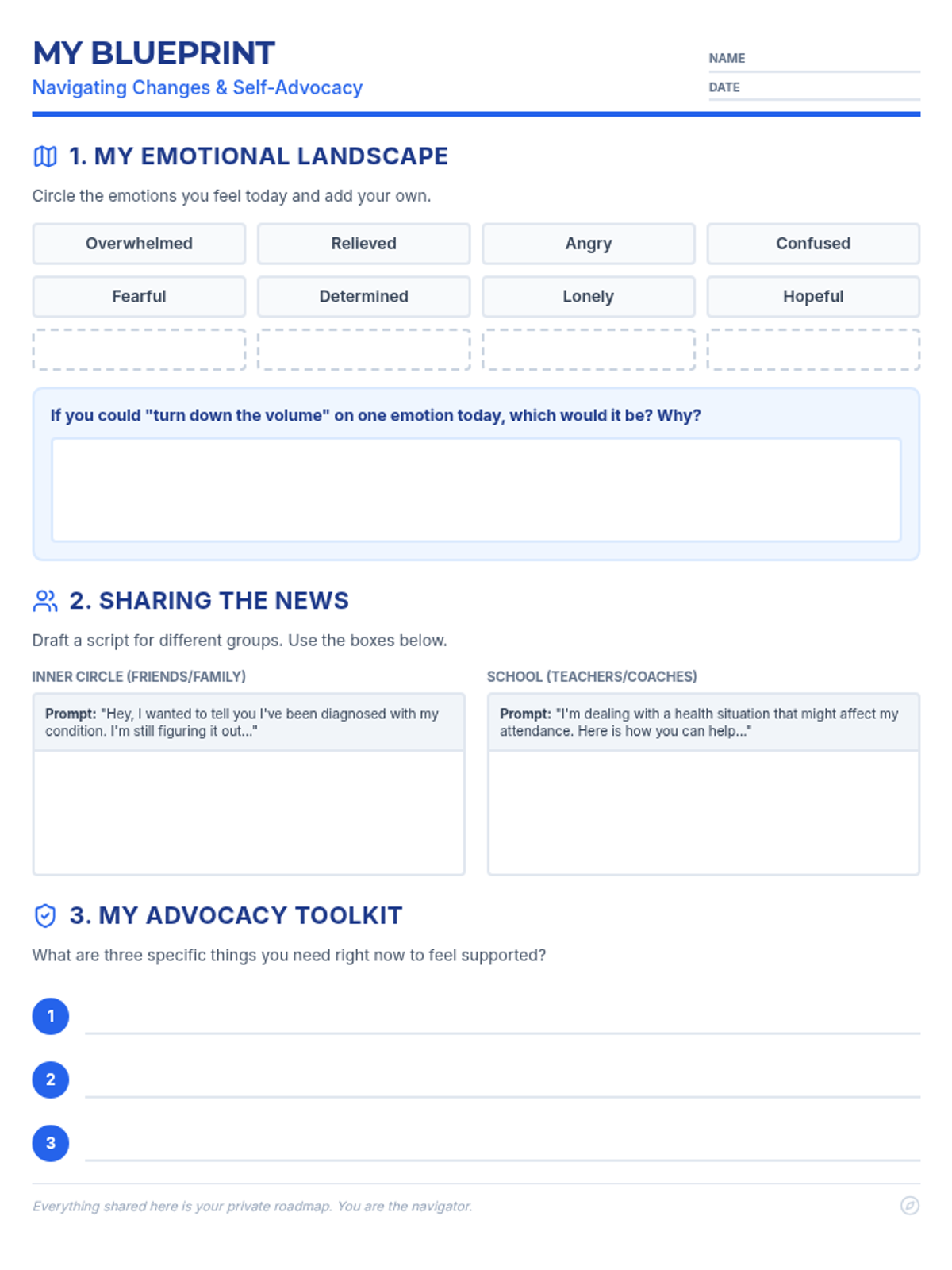
A student-facing reflection worksheet designed to help 11th graders process emotions after a medical diagnosis, plan communication strategies with friends and teachers, and identify specific self-advocacy needs.
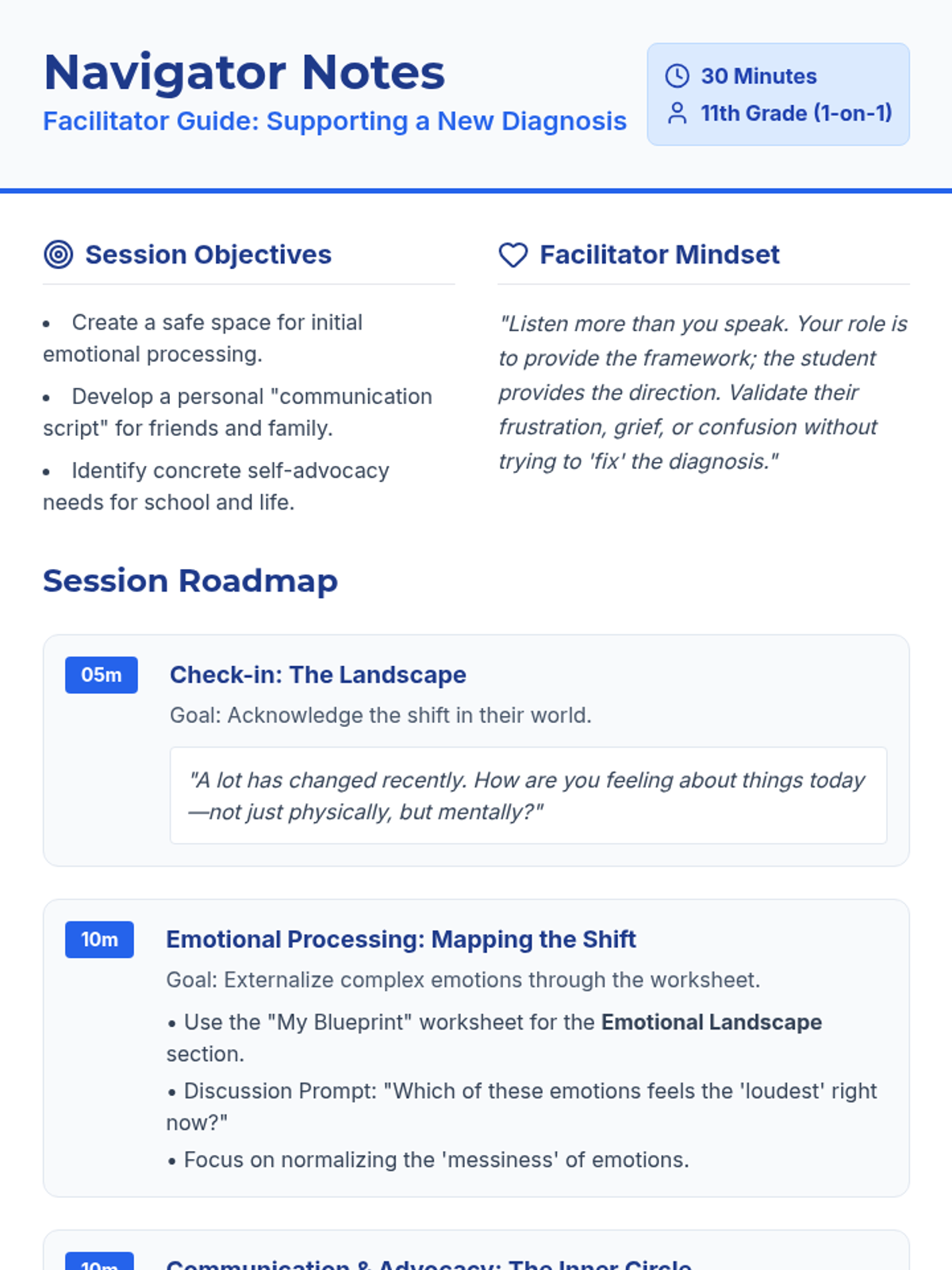
A comprehensive facilitator guide for a 1-on-1 session with an 11th grader navigating a new medical diagnosis, featuring a 30-minute timeline, discussion prompts, and key mindset strategies for educators.
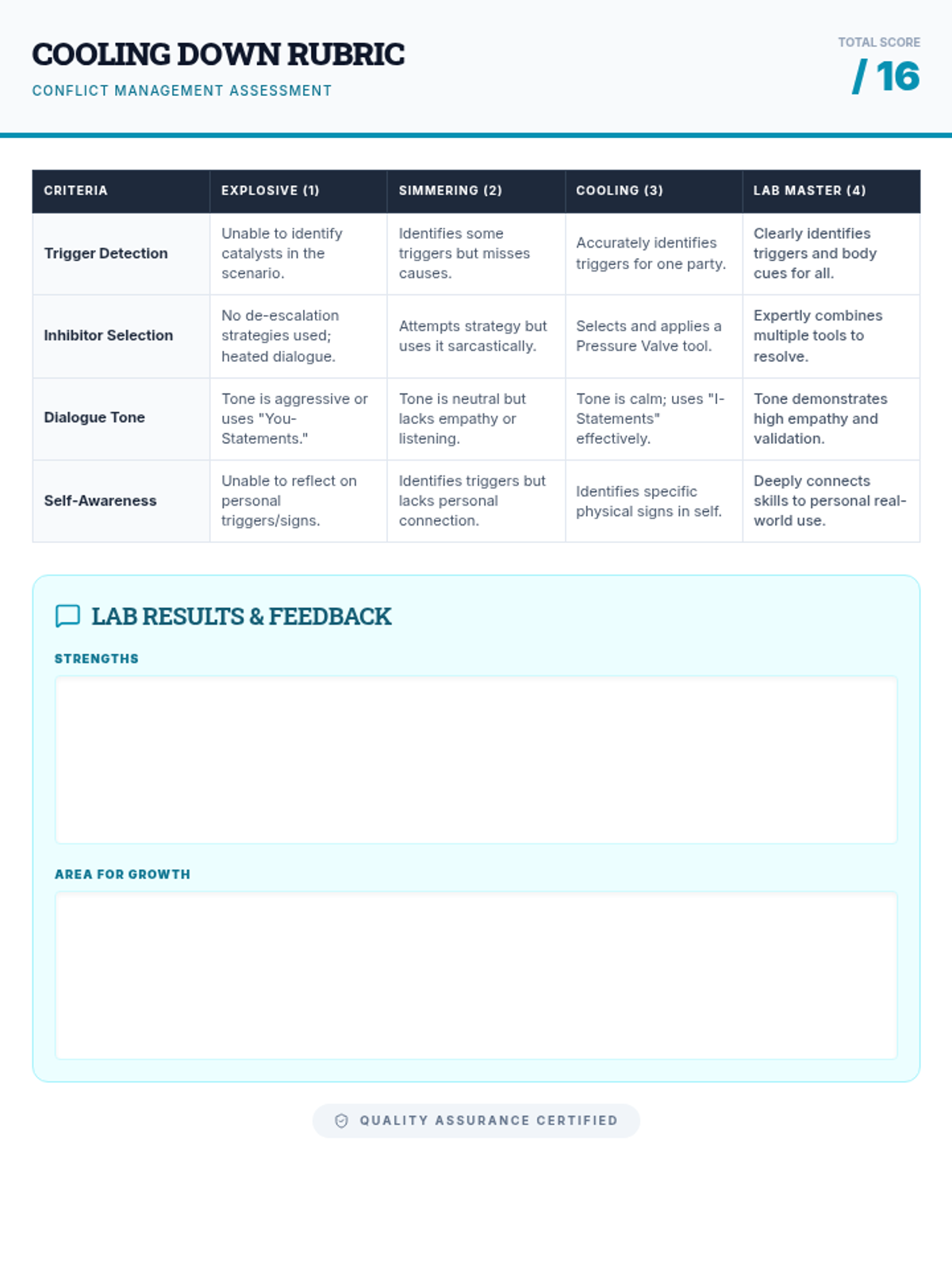
A detailed grading rubric for teachers to assess student work on de-escalation skills, ranging from 'Explosive' to 'Lab Master' levels of proficiency.
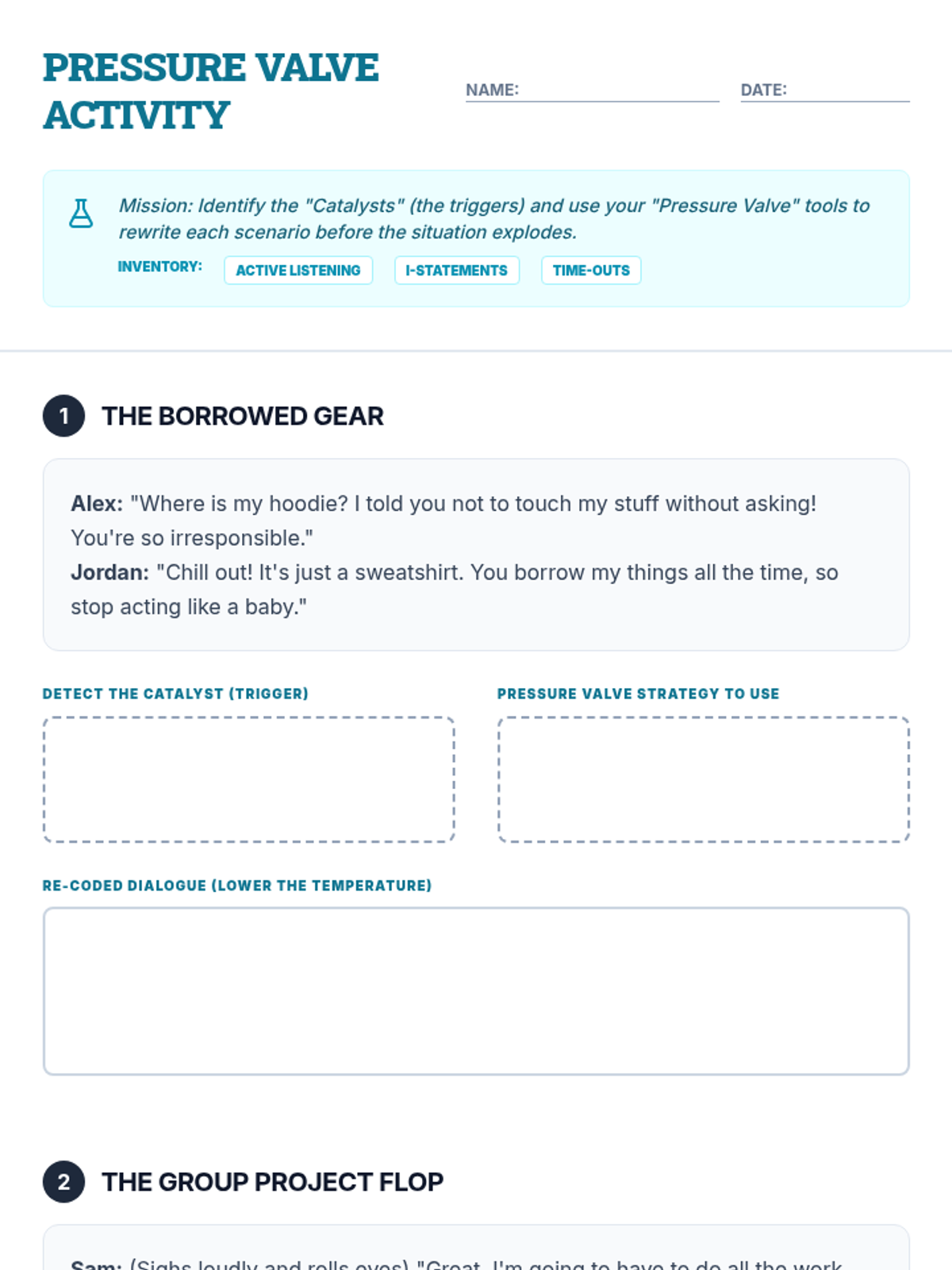
A student worksheet featuring conflict scenarios ('The Borrowed Gear' and 'The Group Project Flop') where students identify triggers and rewrite dialogue using de-escalation techniques.
A visually engaging slide deck titled 'Conflict Chemist' that explains the concepts of catalysts (triggers) and inhibitors (de-escalation tools) using a lab-themed metaphor.
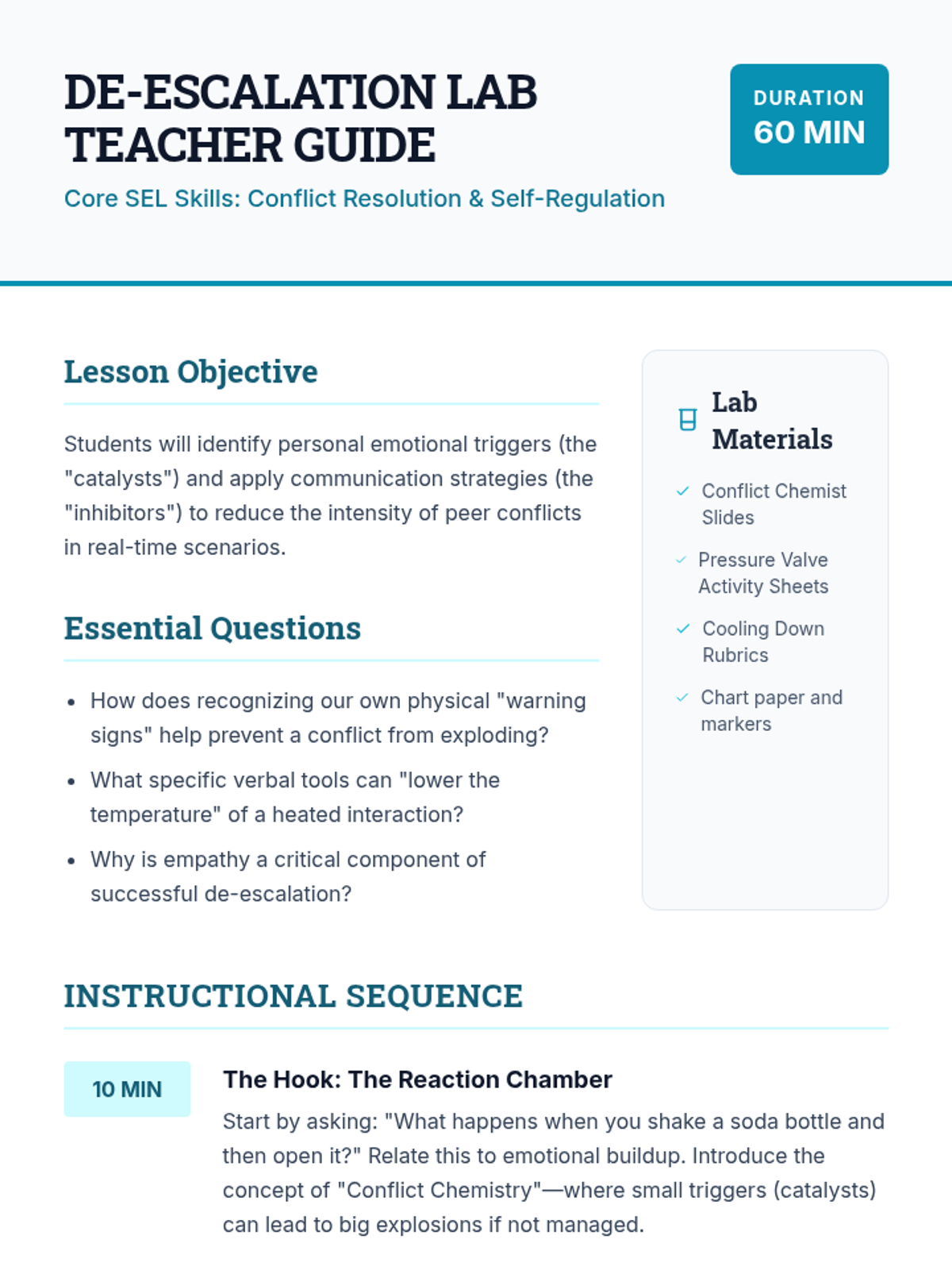
A comprehensive facilitation guide for teachers to lead the De-escalation Lab session, including lesson objectives, timing, step-by-step instructions, and differentiation strategies.
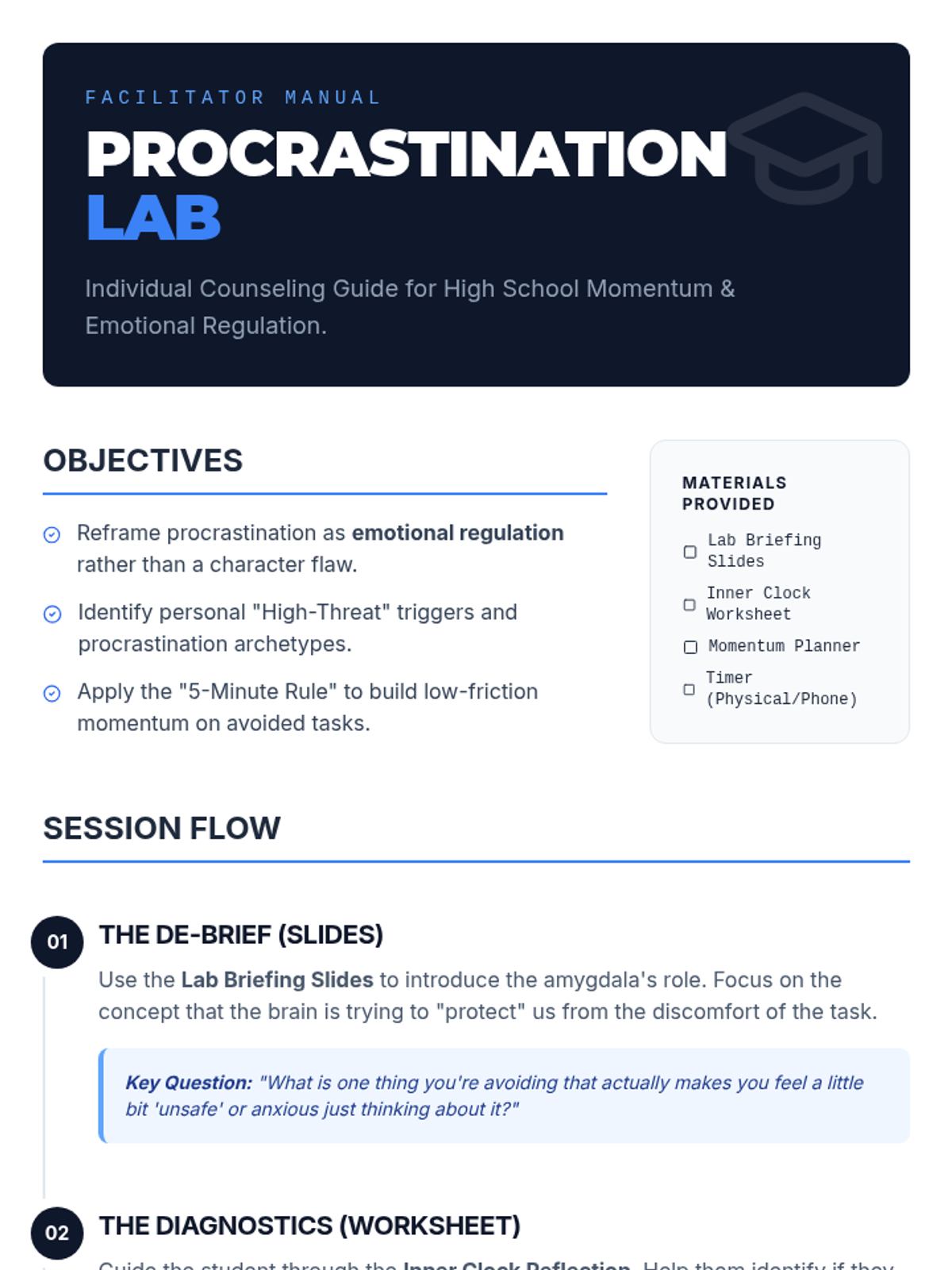
A facilitator's guide for counselors to deliver the Procrastination Lab lesson, including objectives, session flow, and discussion prompts.
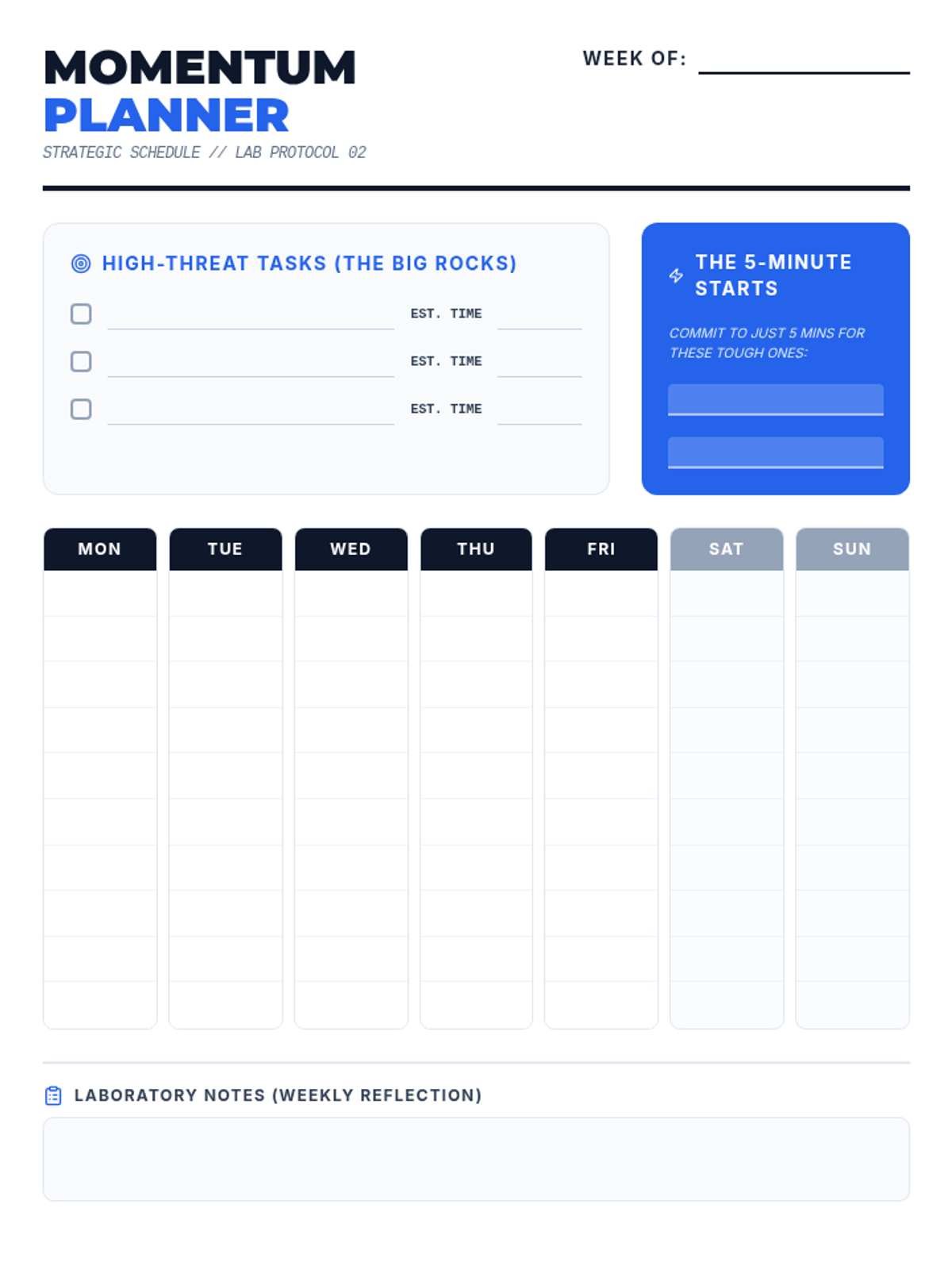
A specialized weekly planner template for high schoolers that prioritizes "High-Threat" tasks and encourages the "5-Minute Start" strategy.