Student checklist for Friday clean-ups, featuring categories for papers, supplies, and zones.
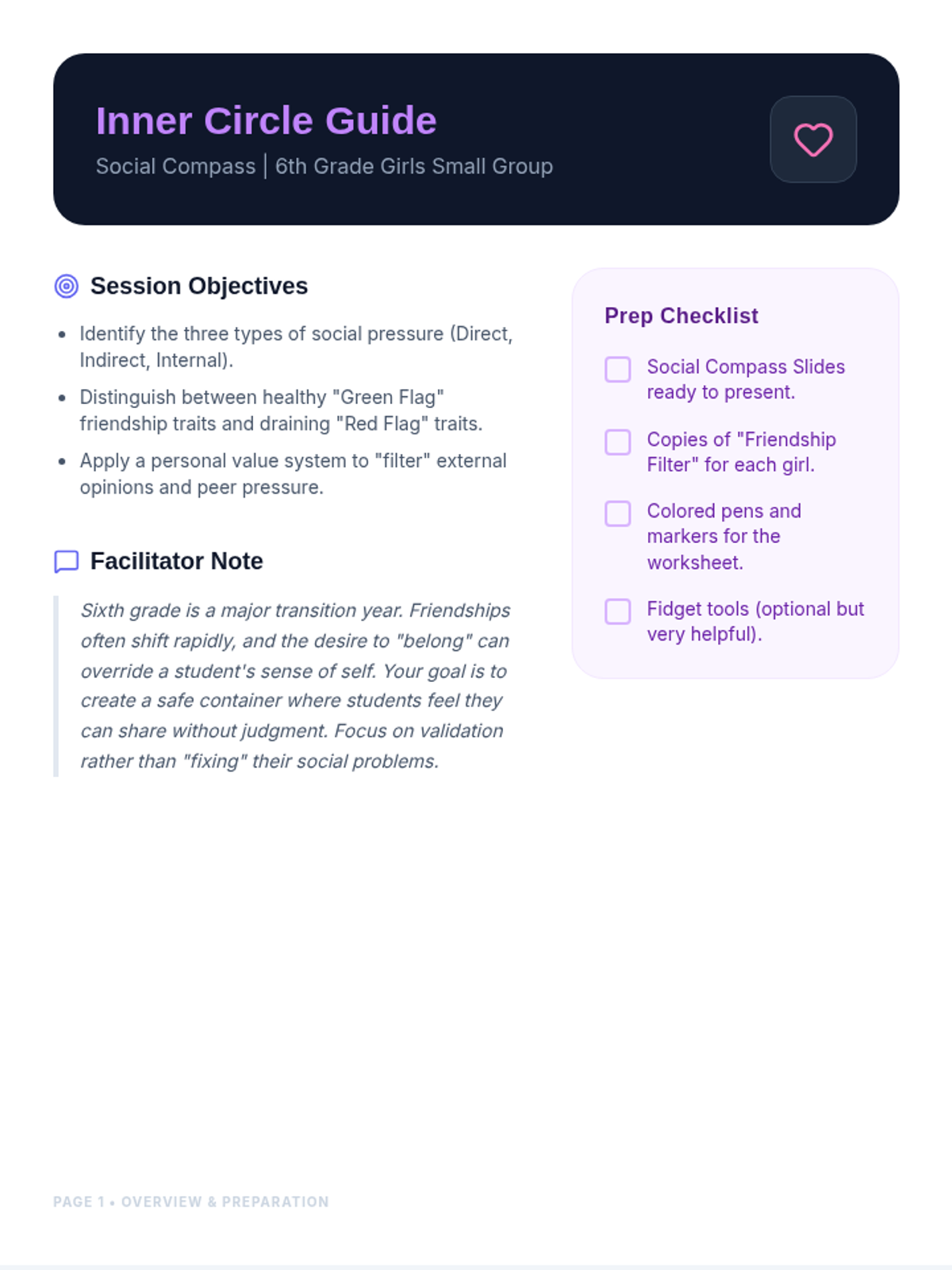
A facilitation guide for teachers/counselors to lead the Social Compass session, including scripted prompts, lesson flow, and tips for managing group dynamics. Page breaks and checklist layout improved to strictly fit on two pages.
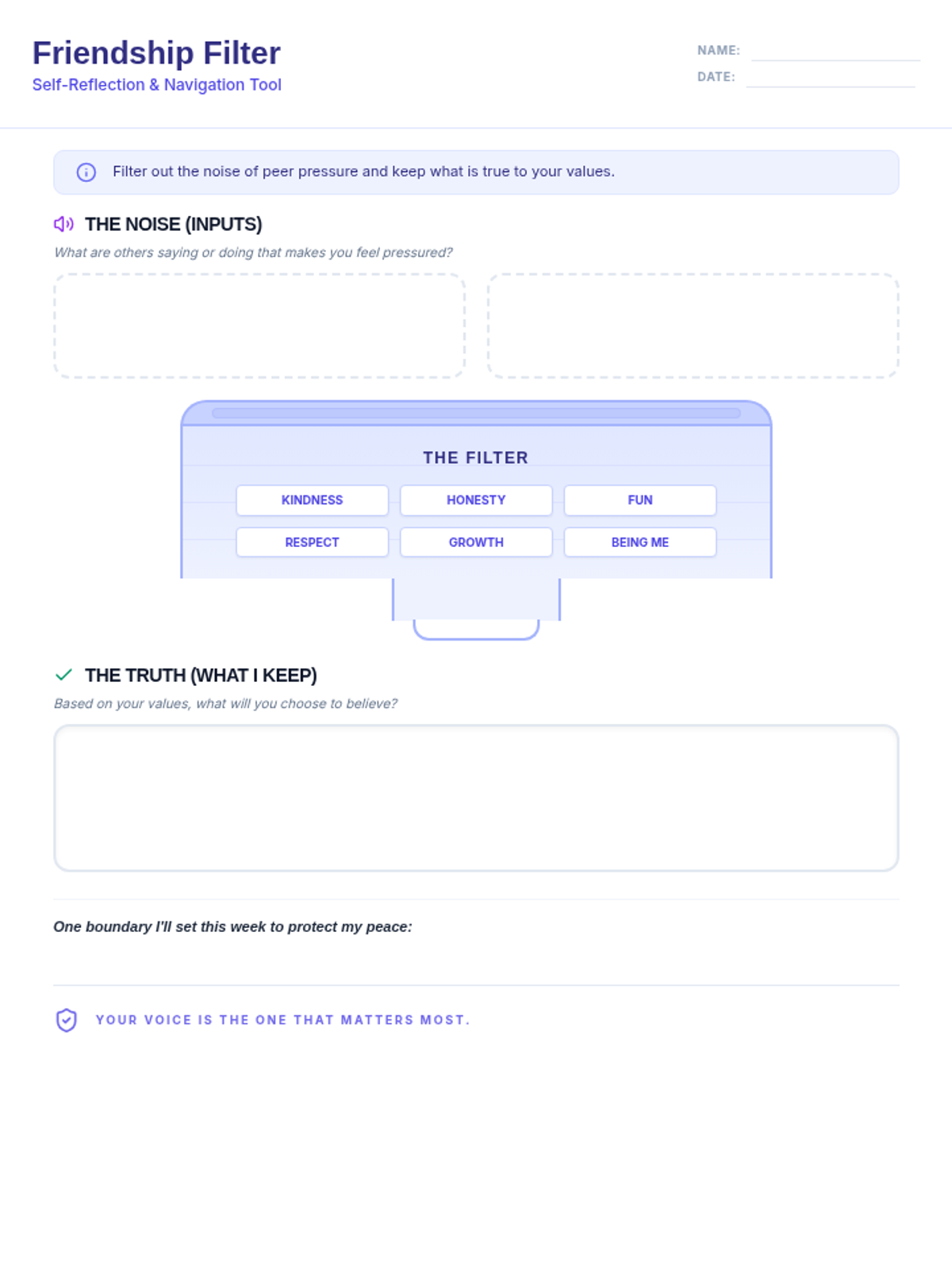
A graphic organizer for 6th-grade girls to process social pressure and peer feedback by 'filtering' it through their core values. Updated to strictly fit on a single page with a more descriptive funnel graphic. Handwriting areas improved for 6th-grade use.
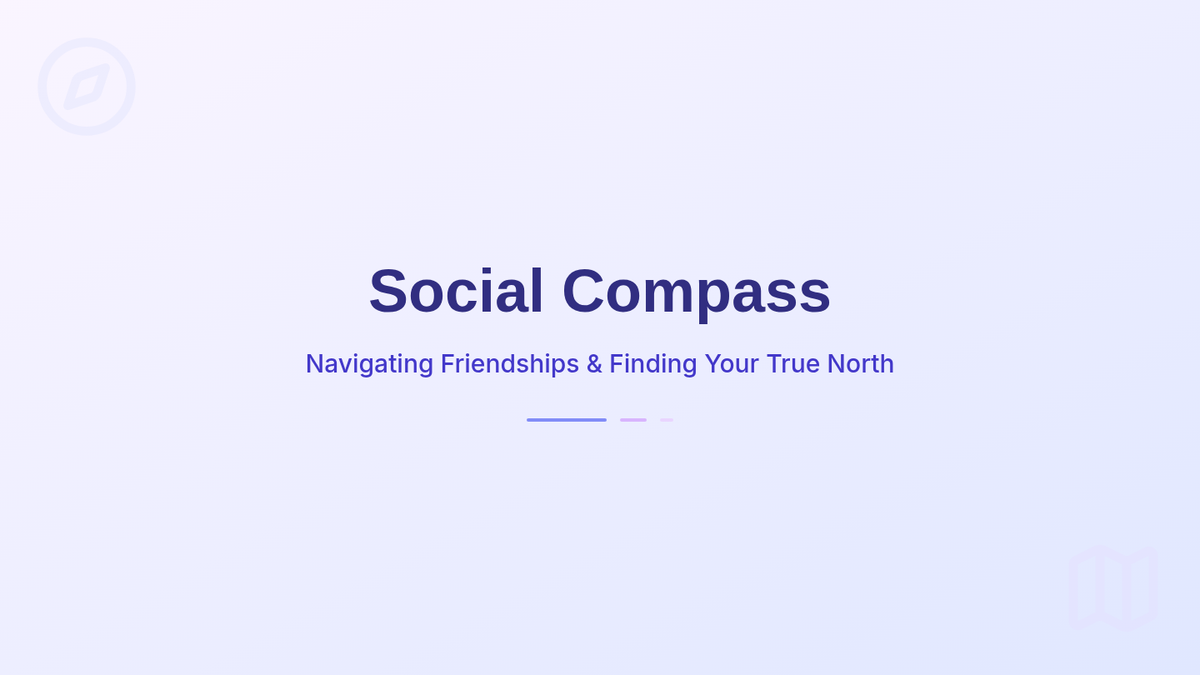
Visual presentation for a small group session on self-confidence, covering social pressure, friendship red/green flags, and the 'Friendship Filter' concept. Updated with higher contrast for better accessibility.
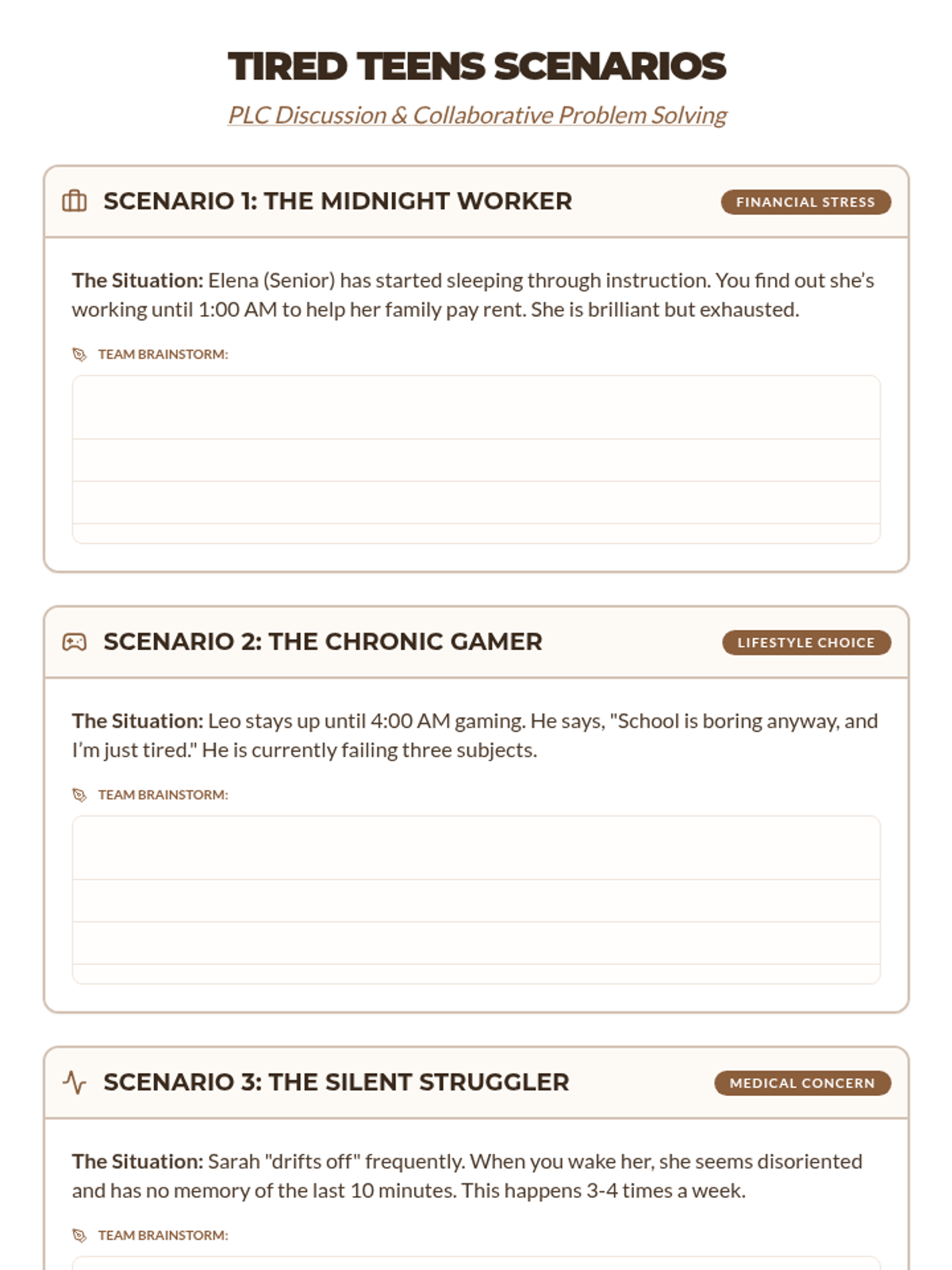
A revised set of discussion scenarios for a PLC meeting, featuring expanded response areas with writing lines and improved visual layout for collaborative teacher work.
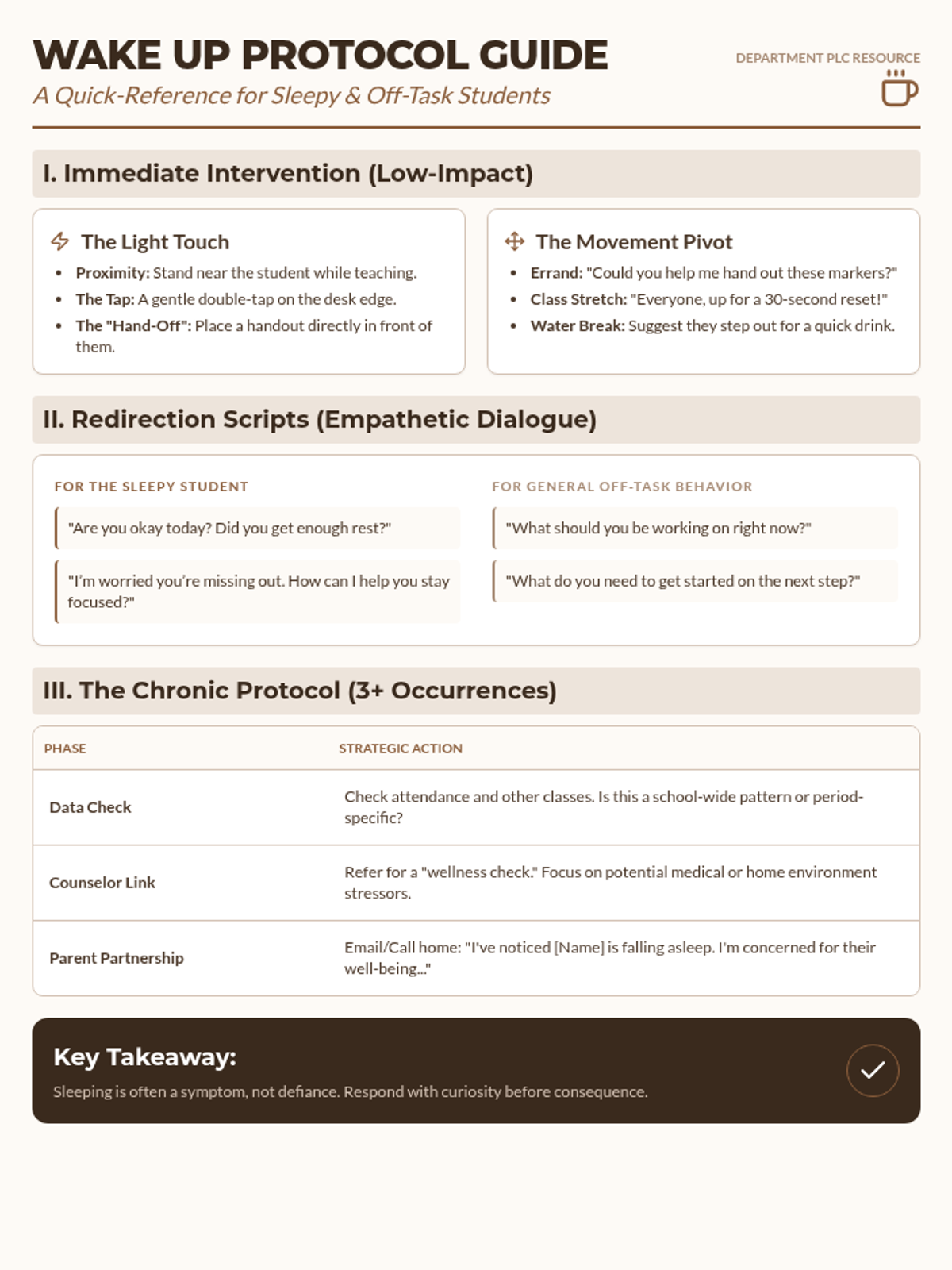
A revised one-page reference guide for teachers outlining immediate interventions and communication scripts for sleepy students, optimized for single-page printing.
A 15-slide PLC presentation for teachers focused on empathetic strategies for managing students sleeping in class, expanded to include general off-task behavior scripts and reflection questions. Based on Edutopia insights.
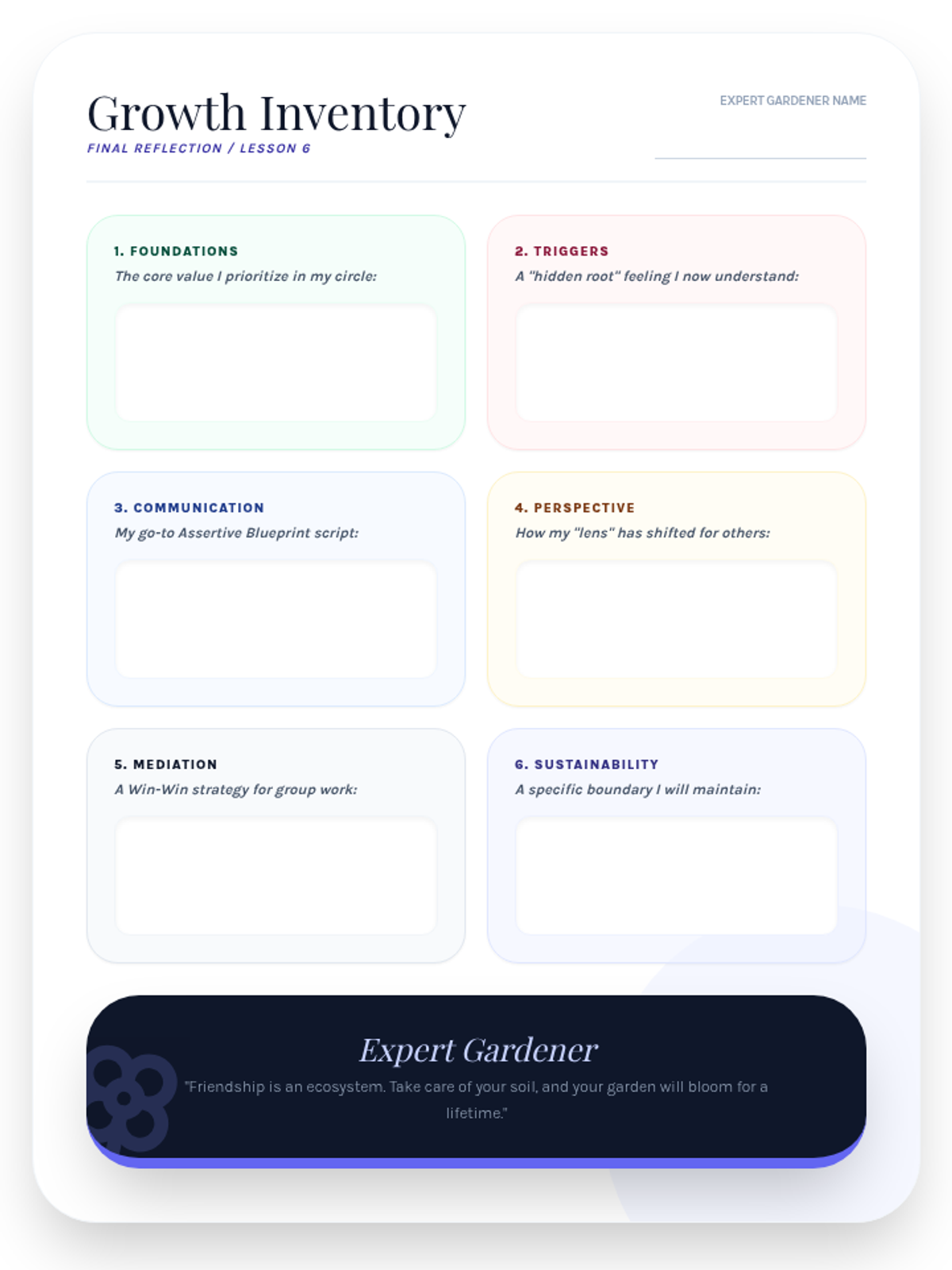
A sophisticated group growth inventory for 6th graders. Revised with 6 session-specific reflection boxes, increased writing space, and improved text sizing.
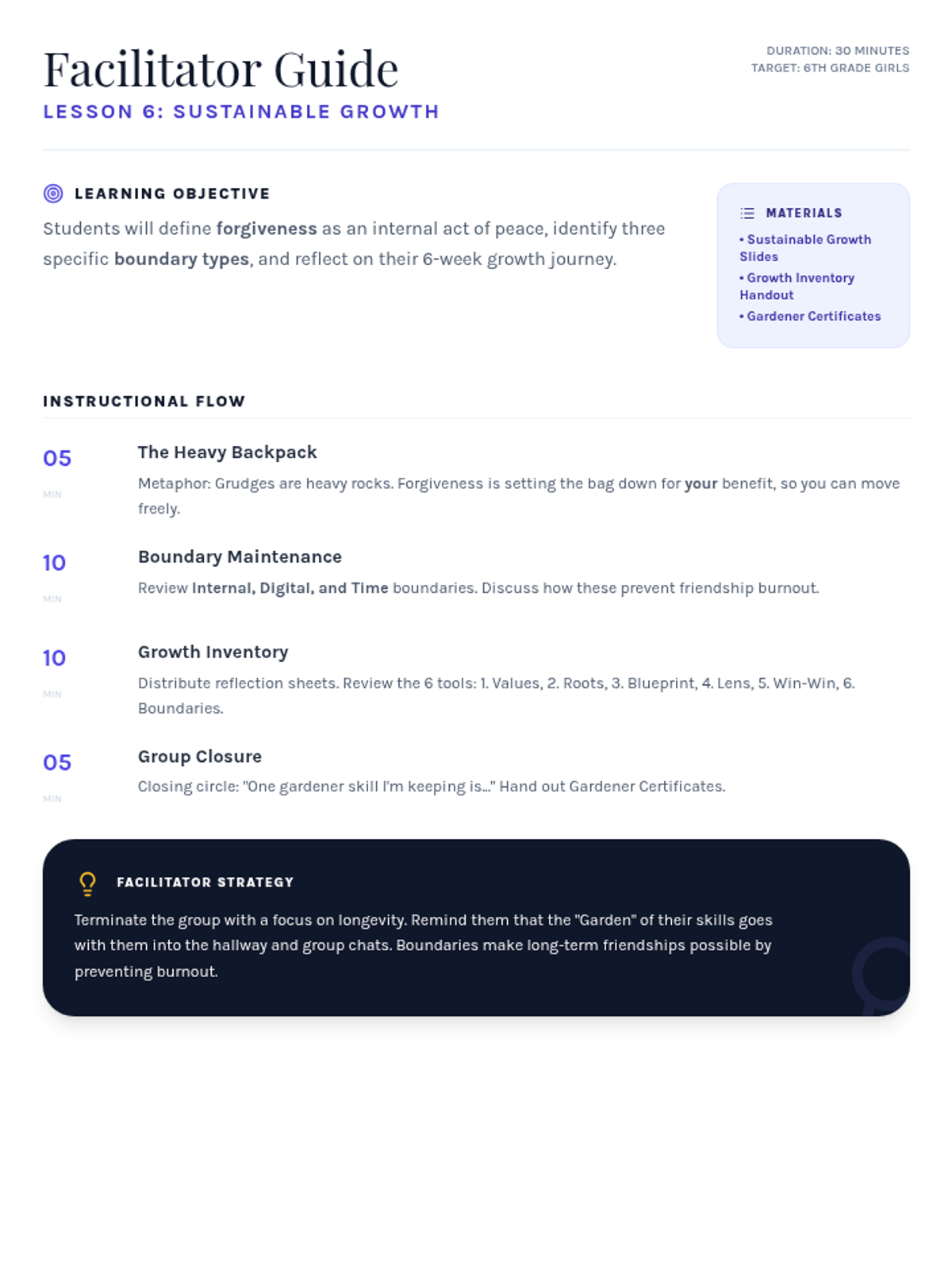
Facilitator guide for Lesson 6. Revised for single-page fit, increased contrast for Facilitator Note, and tightened layout.
Lesson 6 slides for 6th graders on sustainable growth. Explores the internal nature of forgiveness and the critical importance of healthy social, digital, and emotional boundaries.
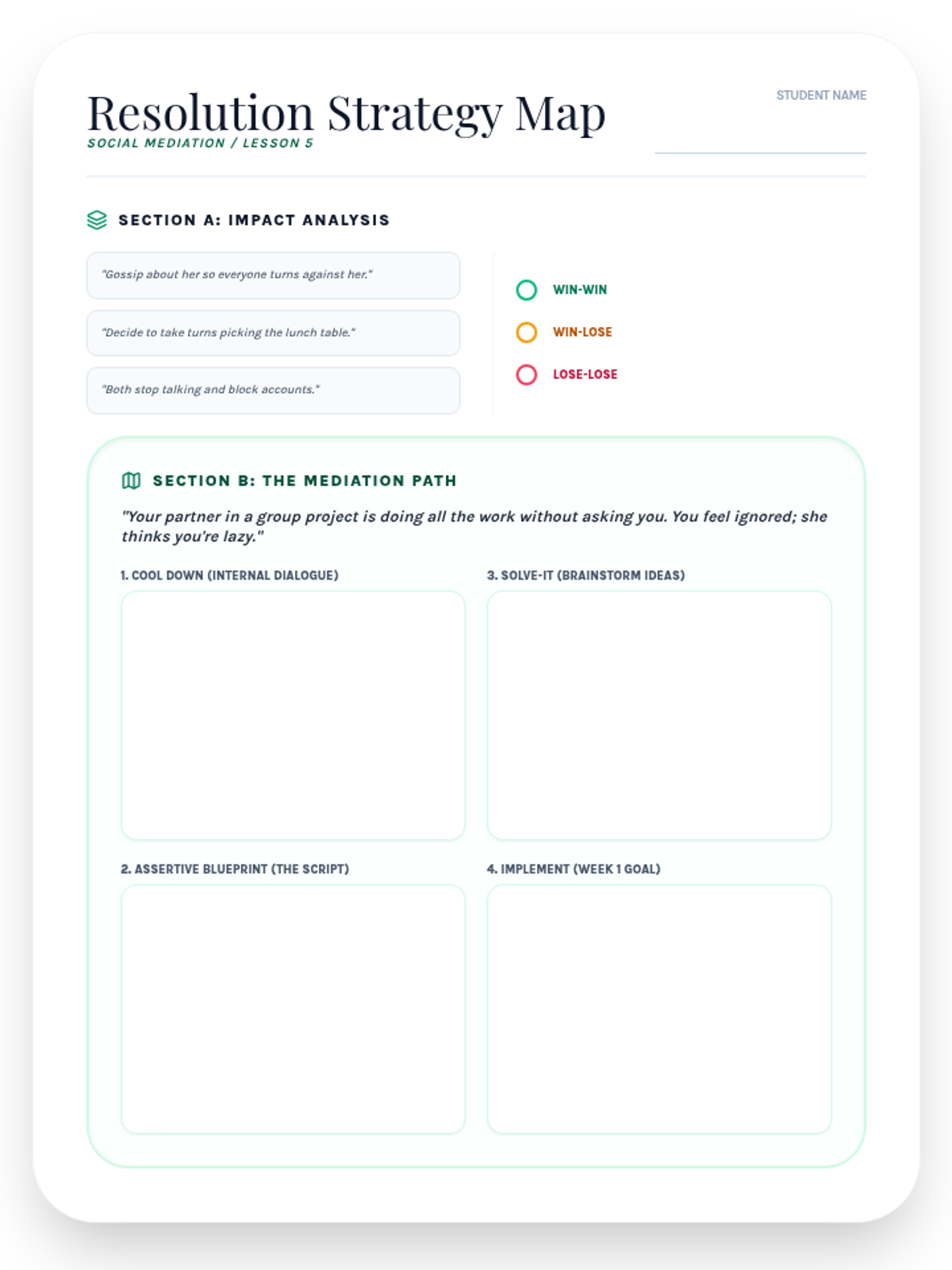
The Strategy Map for 6th graders. Revised for single-page fit, corrected spelling of 'Dialogue', and increased handwriting box heights to 110px+.
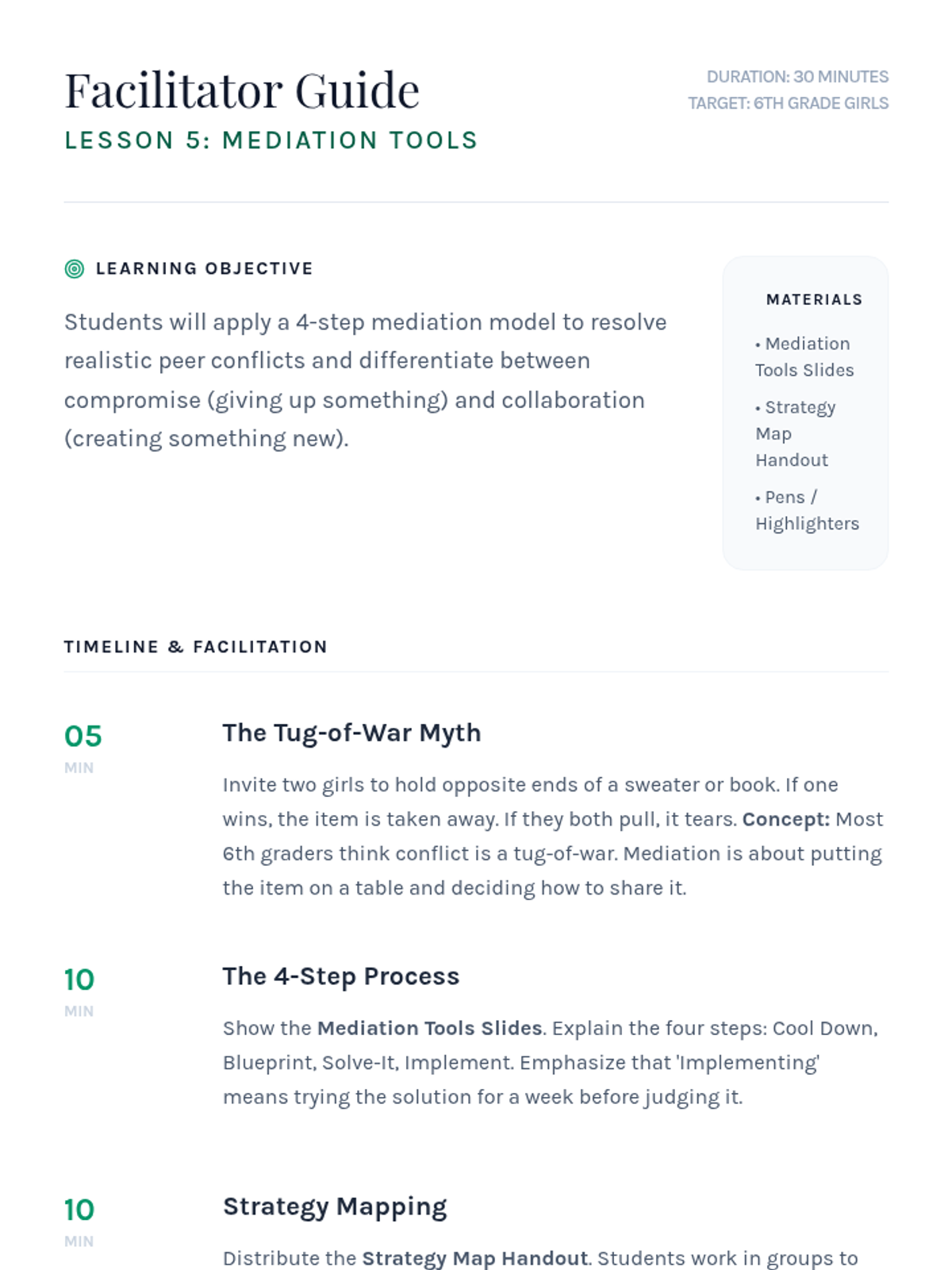
Facilitator guide for Lesson 5, focusing on a 4-step mediation process for middle school conflict. Includes 'Tug-of-War' demo and strategy mapping.
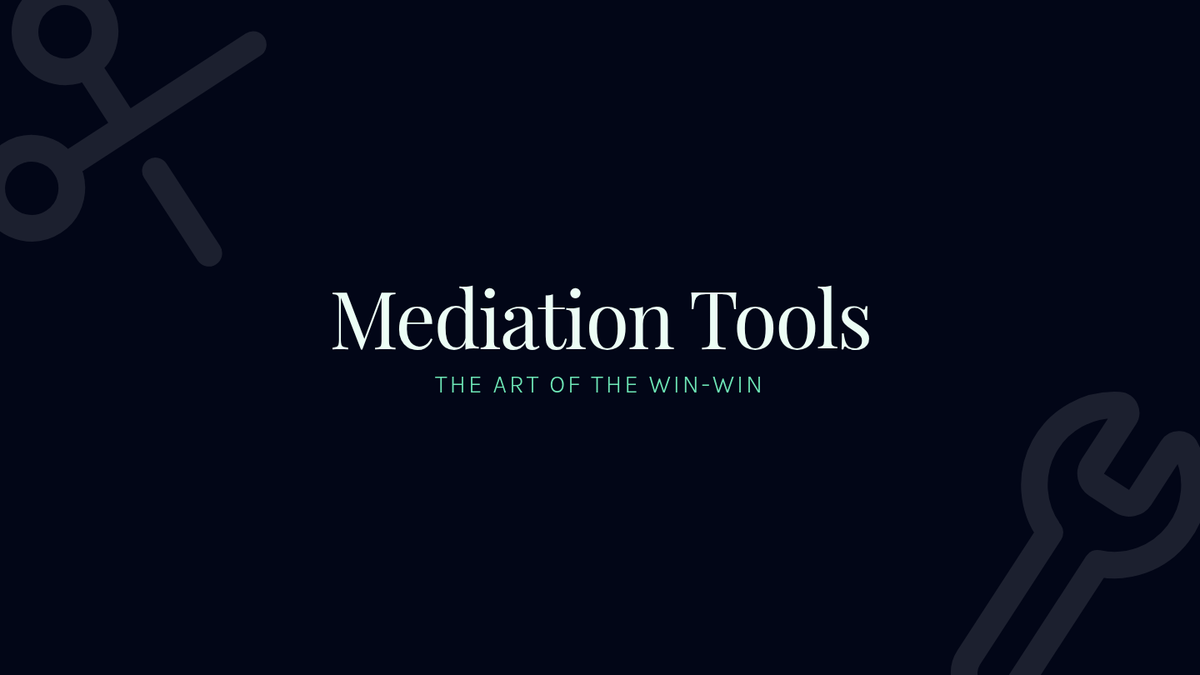
Lesson 5 slides for 6th graders on conflict mediation. Introduces a professional 4-step mediation process and the concept of sustainable 'Win-Win' solutions in complex social environments.
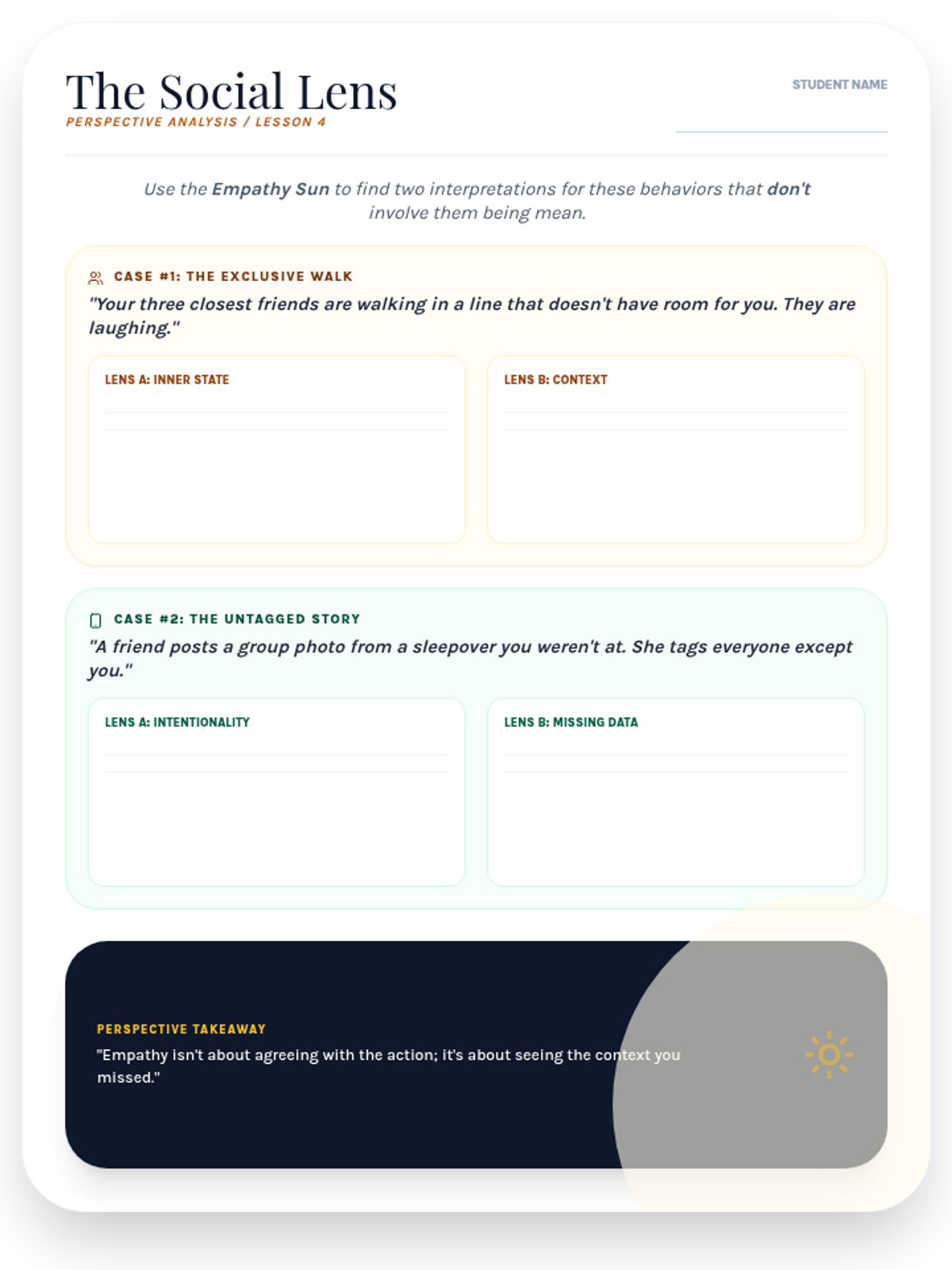
The Social Lens Handout for 6th graders. Revised for single-page fit, improved text contrast, increased font sizes (14px descriptions), and added handwriting guides.
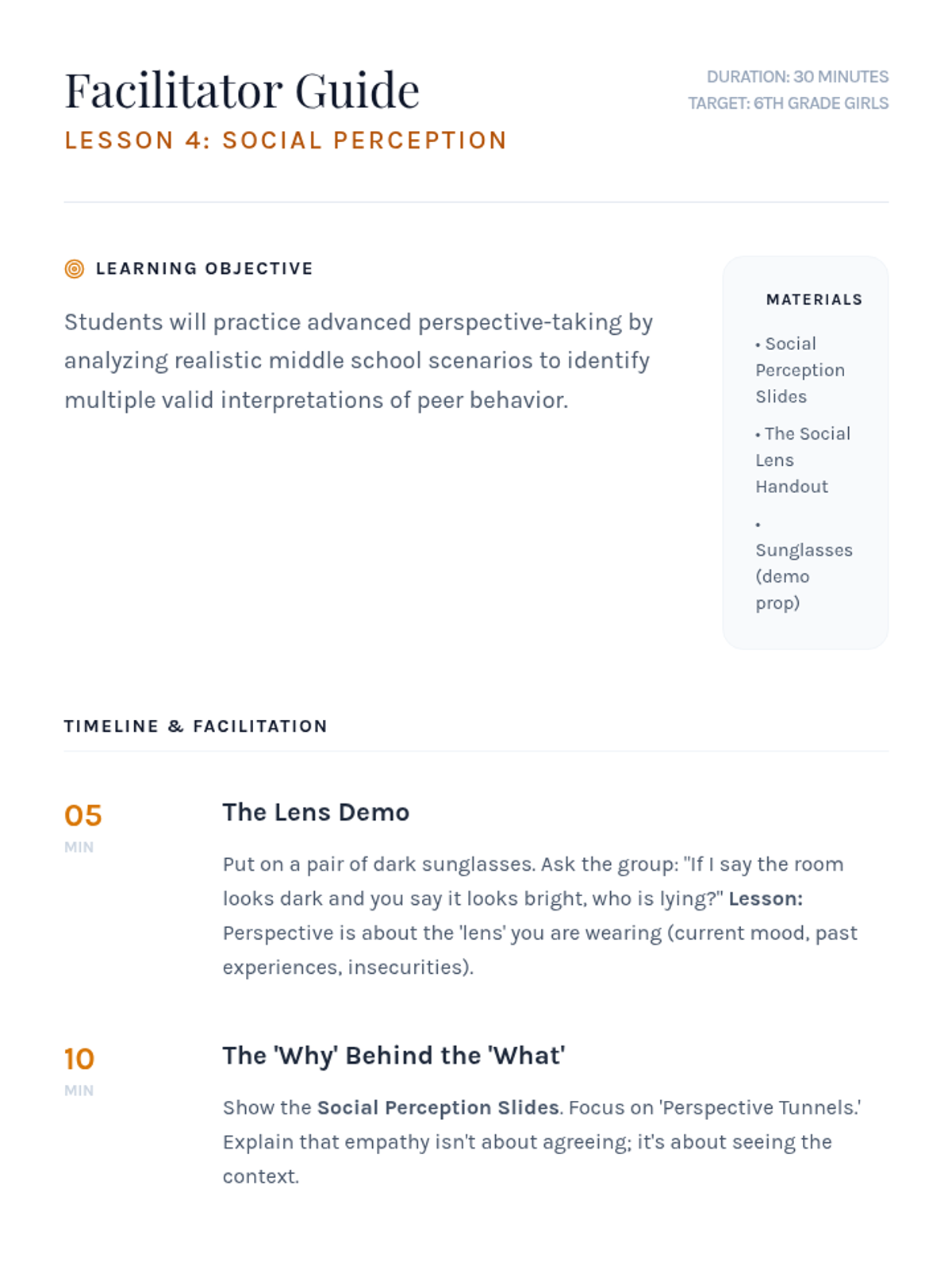
Facilitator guide for Lesson 4, focusing on advanced perspective-taking for 6th grade social nuances. Includes a 'Lens Demo' and 'Perspective Tunnel' analysis.
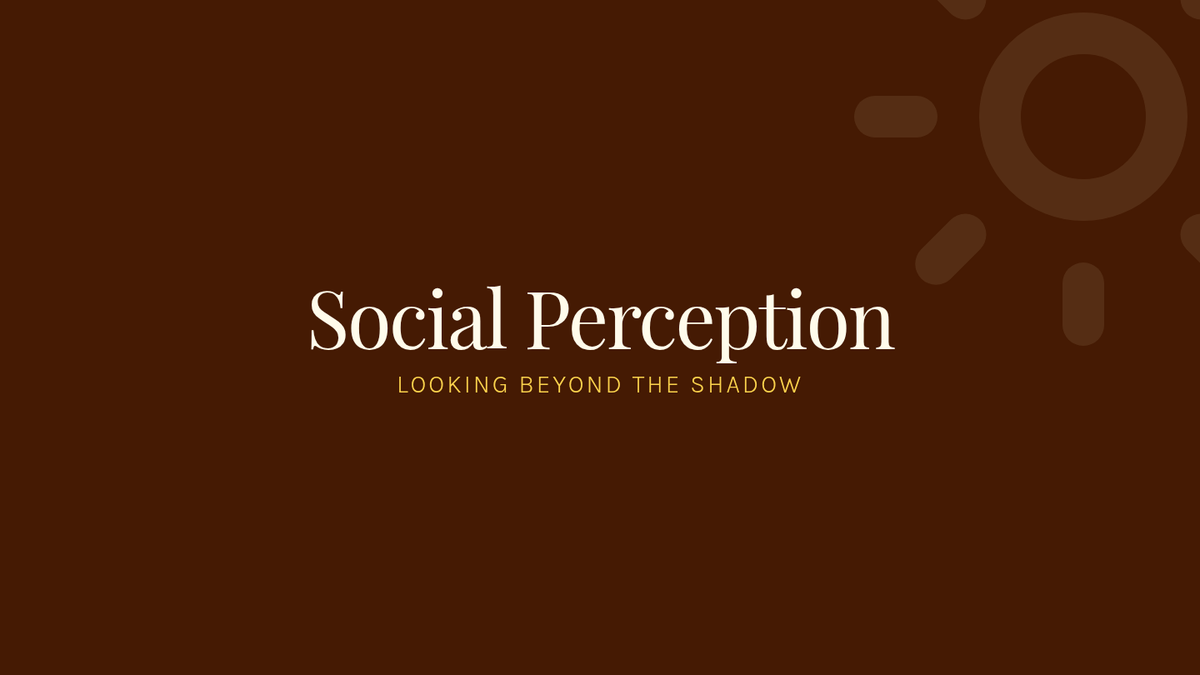
Lesson 4 slides for 6th graders on social perception. Explores the complexity of middle school social dynamics and the difference between 'My Lens' and 'Her Lens' in confusing peer interactions.
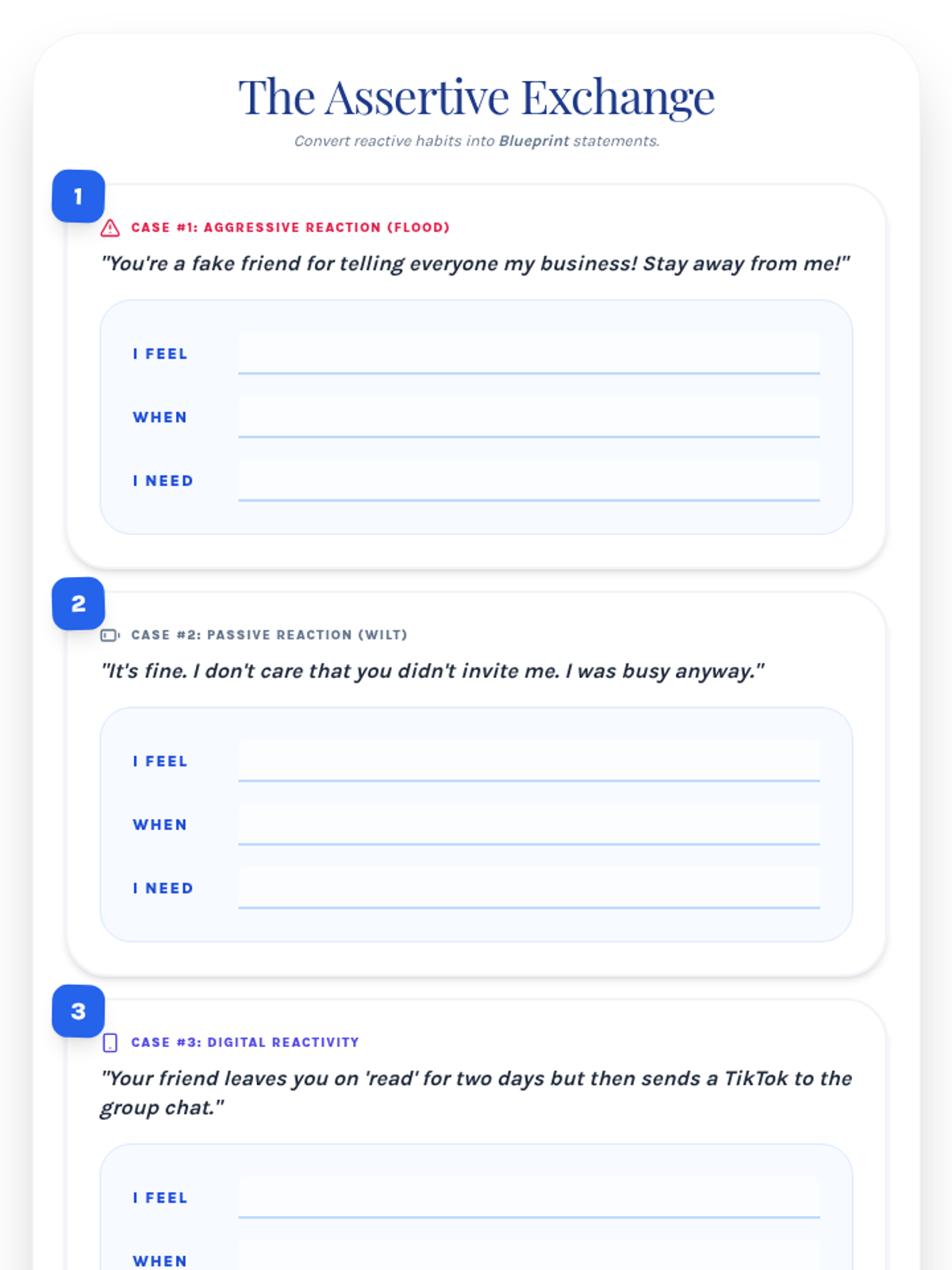
The Exchange Cards for 6th graders. Revised to include 3 realistic scenarios (Aggressive, Passive, Digital), fit on one page, and provide expanded writing areas for the Blueprint formula.
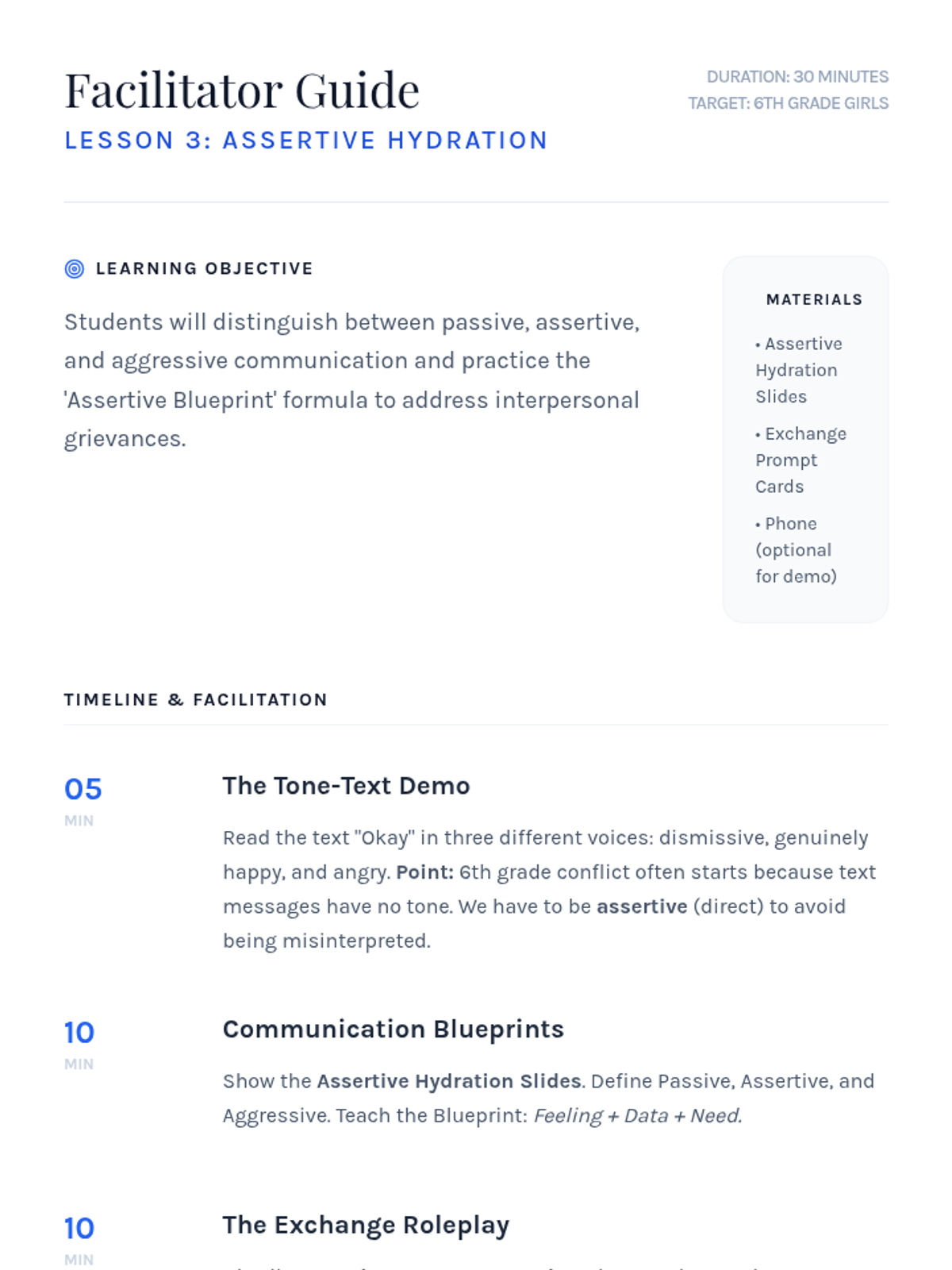
Facilitator guide for Lesson 3, focusing on assertive communication and digital tone. Includes a 'Tone-Text' demo and 'Blueprint' practice.
Lesson 3 slides for 6th graders on assertive communication. Focuses on Passive/Assertive/Aggressive distinctions and an upgraded I-Statement formula (The Blueprint) including digital tone.
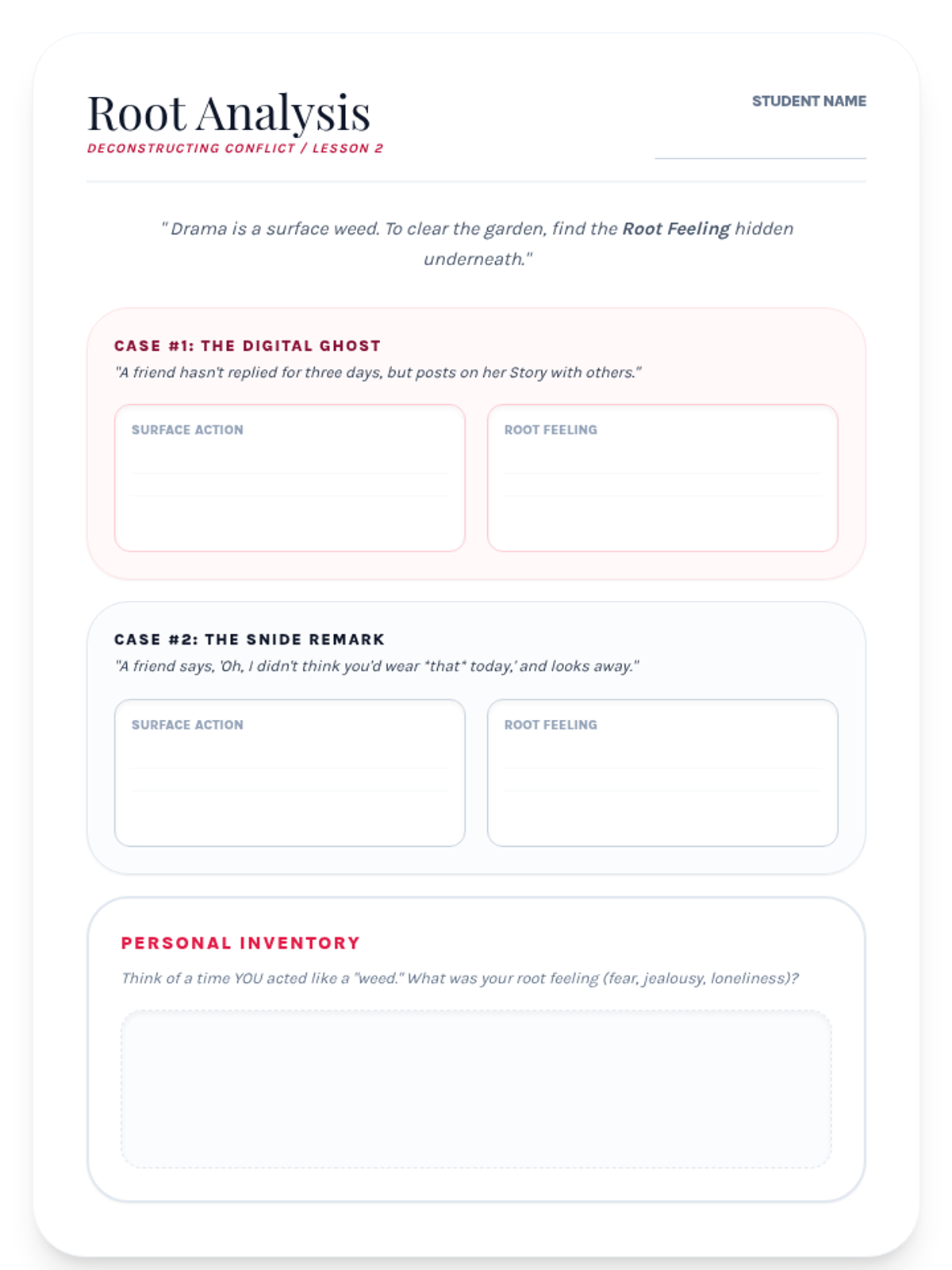
Root Analysis worksheet for 6th graders. Revised for single-page fit, increased writing area height, and improved layout/text contrast.
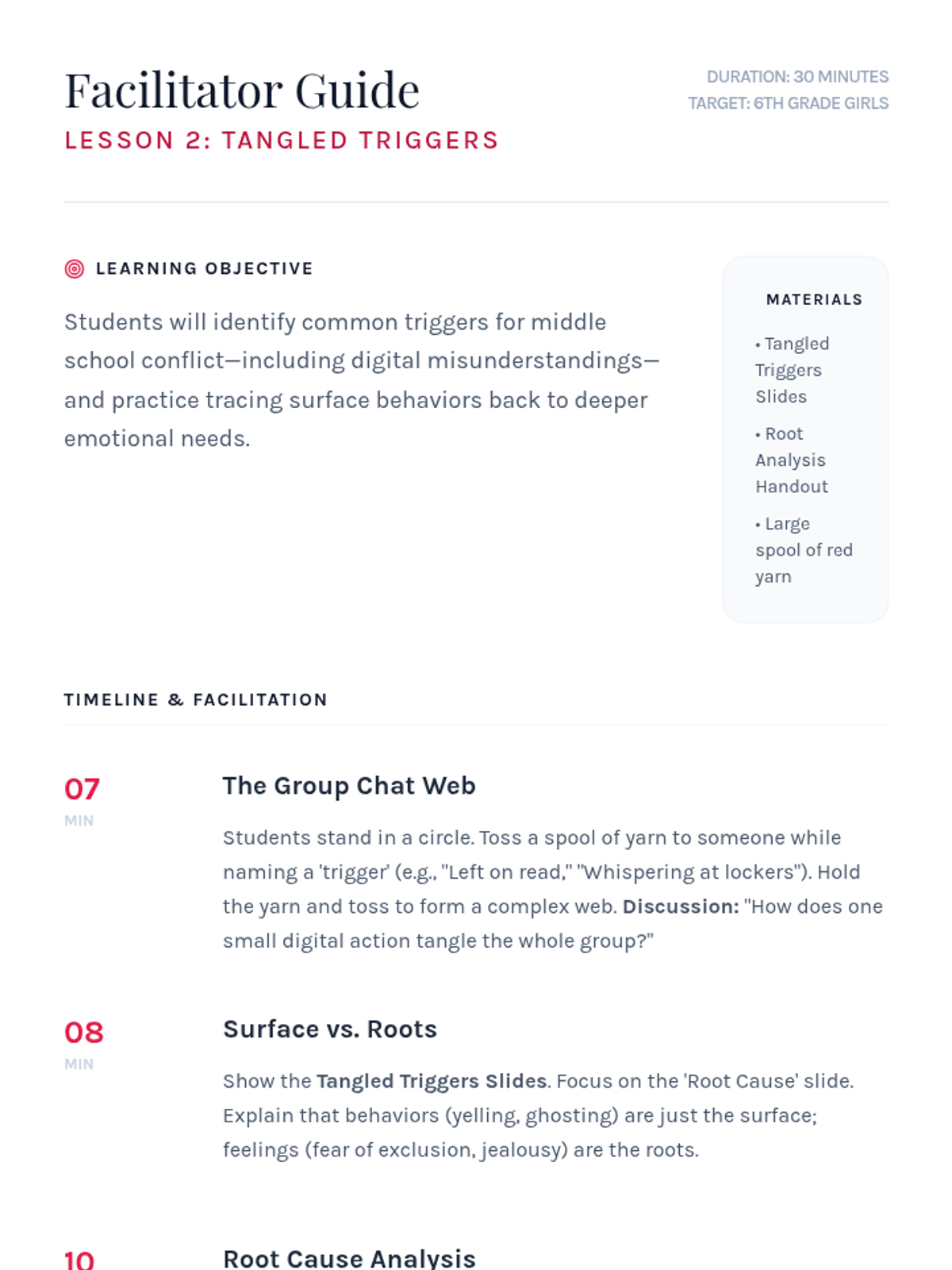
Facilitator guide for Lesson 2, focusing on common middle school triggers like digital drama and social hierarchy. Includes a 'Group Chat Web' activity.
Lesson 2 slides for 6th graders on conflict triggers. Revised for content completeness (4 slides) and proper heading spacing.
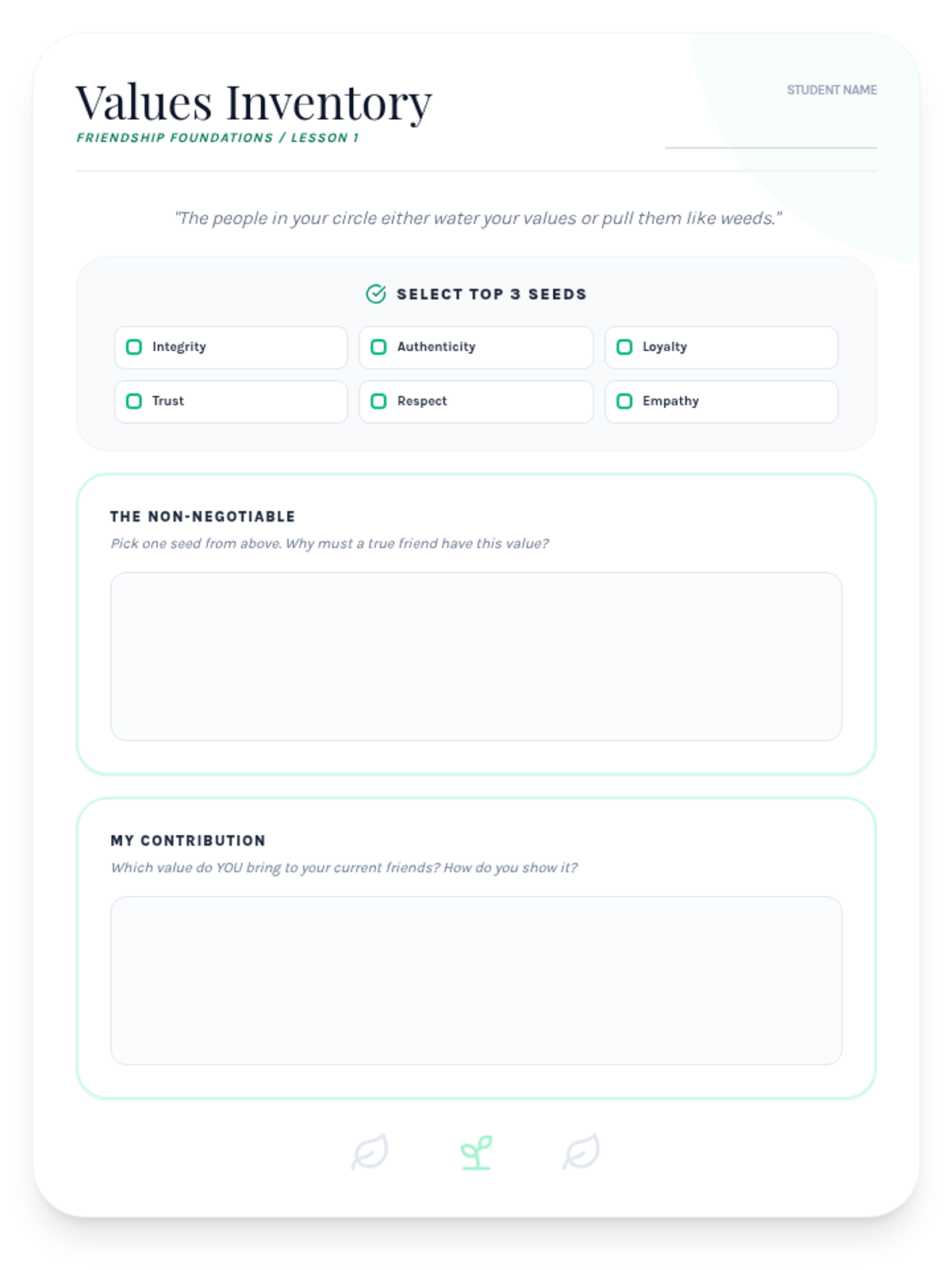
Values inventory worksheet for 6th graders to identify character requirements for friendships. Revised to ensure single-page fit and increased writing space.
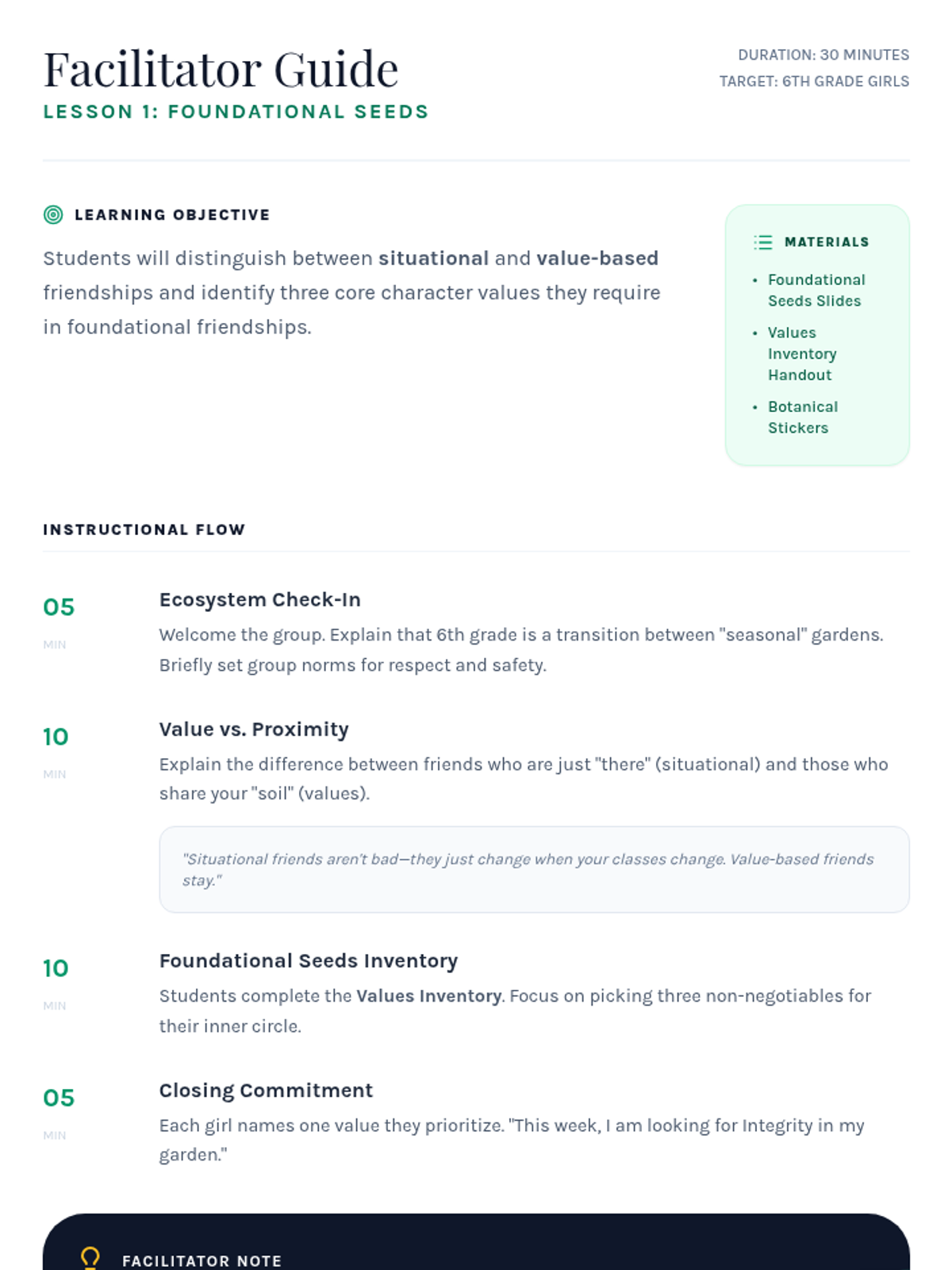
Facilitator guide for Lesson 1, elevating the friendship qualities theme for 6th graders by focusing on values vs. proximity. Revised for single-page fit and better list formatting.
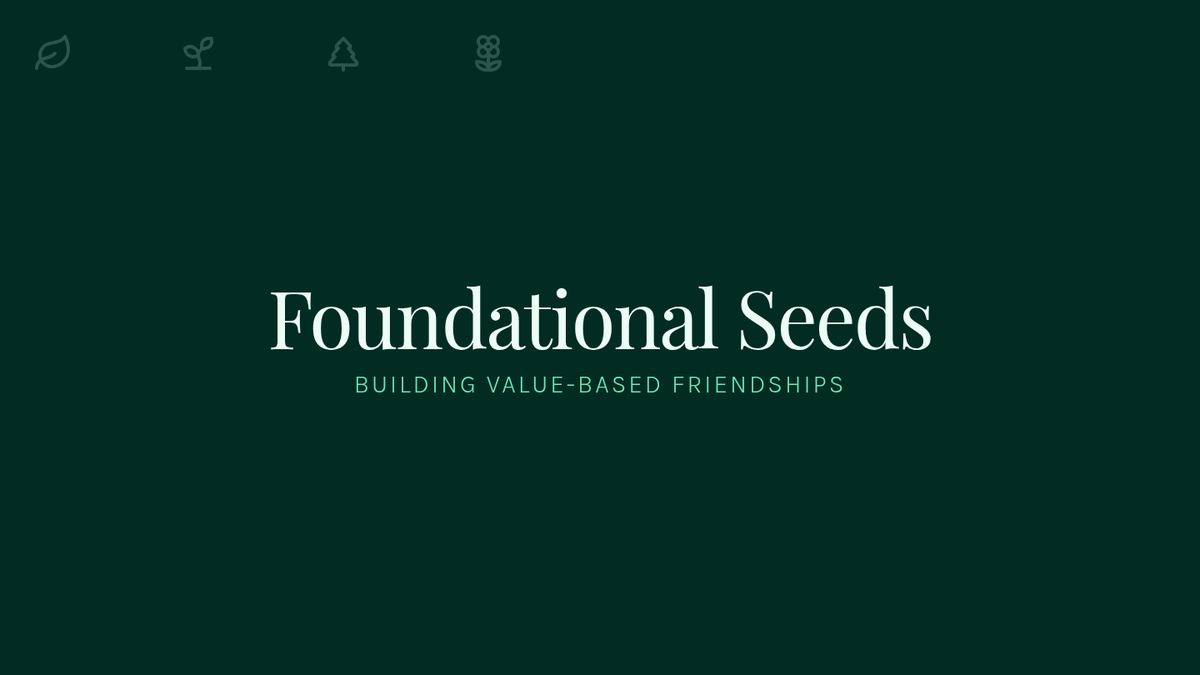
Introductory slide deck for Lesson 1, designed for 6th graders. Focuses on the distinction between situational and value-based friendships using a sophisticated botanical theme.
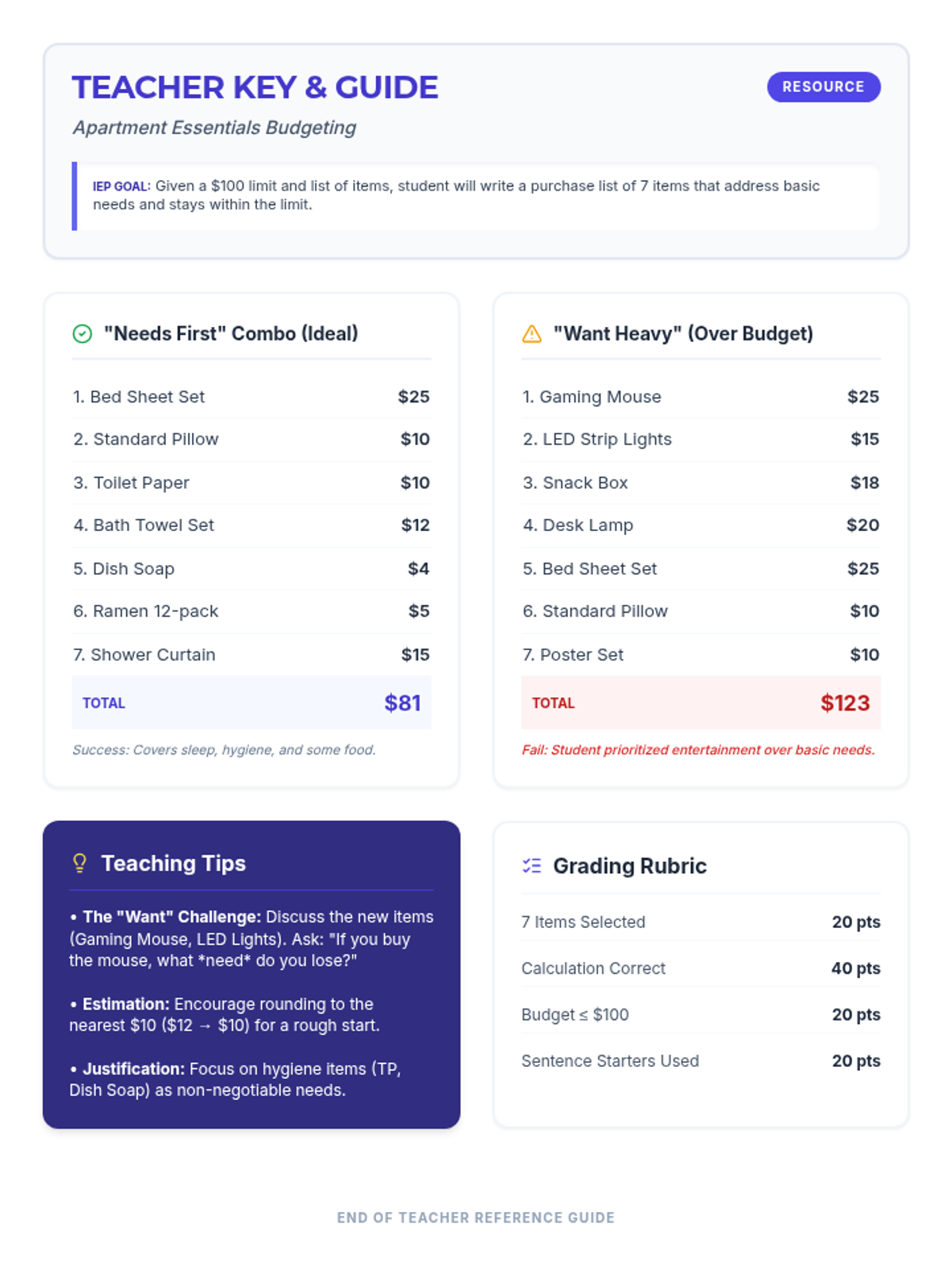
Teacher reference guide updated to reflect the new "want" items in the examples, providing successful and unsuccessful budgeting combinations for grading.
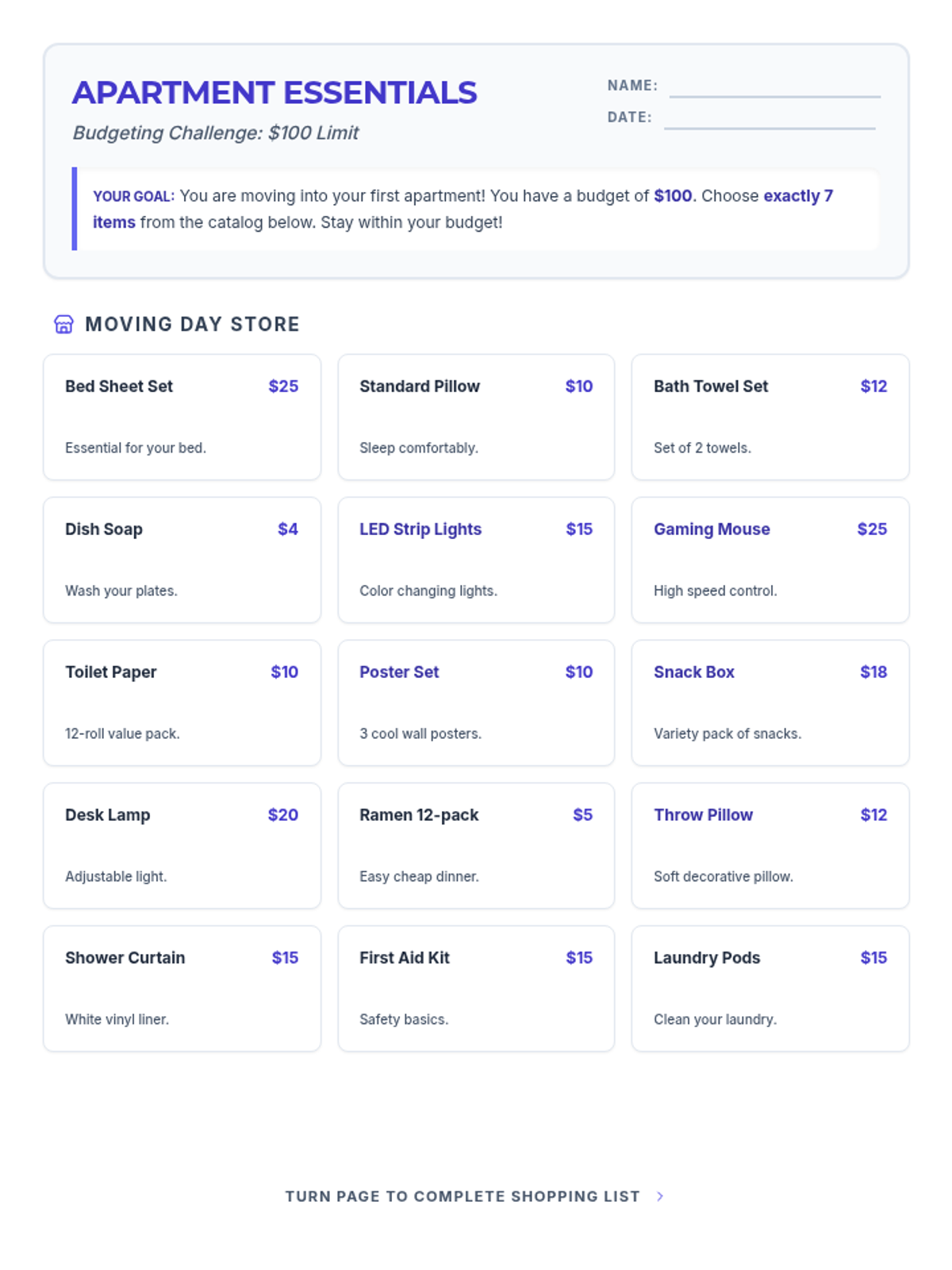
A budgeting worksheet where students select 7 apartment essentials from a 15-item catalog to stay within a $100 budget, including a shopping list table and justification section. Now updated with higher-temptation "want" items.
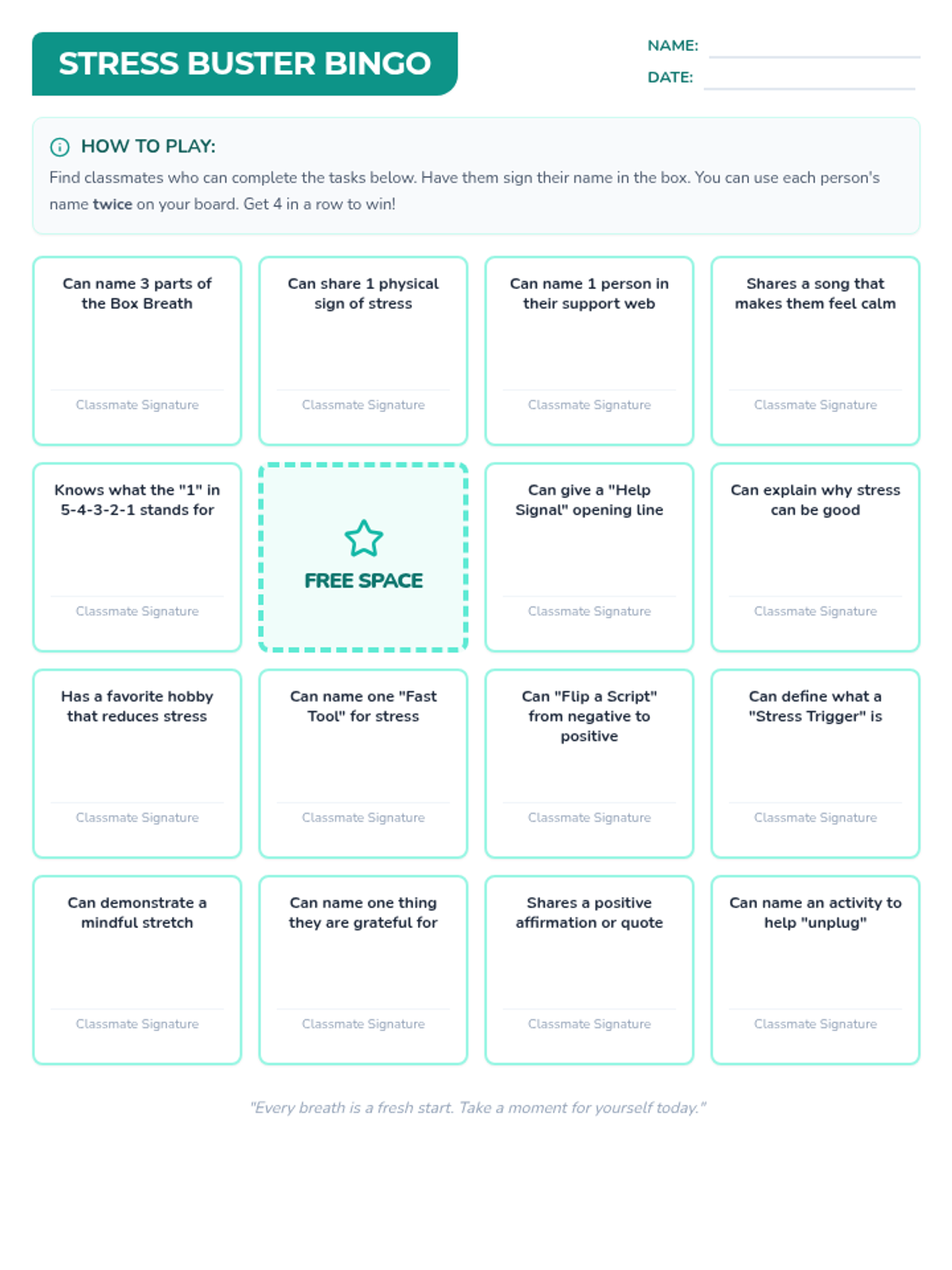
A revised 4x4 Human Bingo board activity designed to help students interact while reviewing stress-management strategies. Optimized for single-page printing and readability.
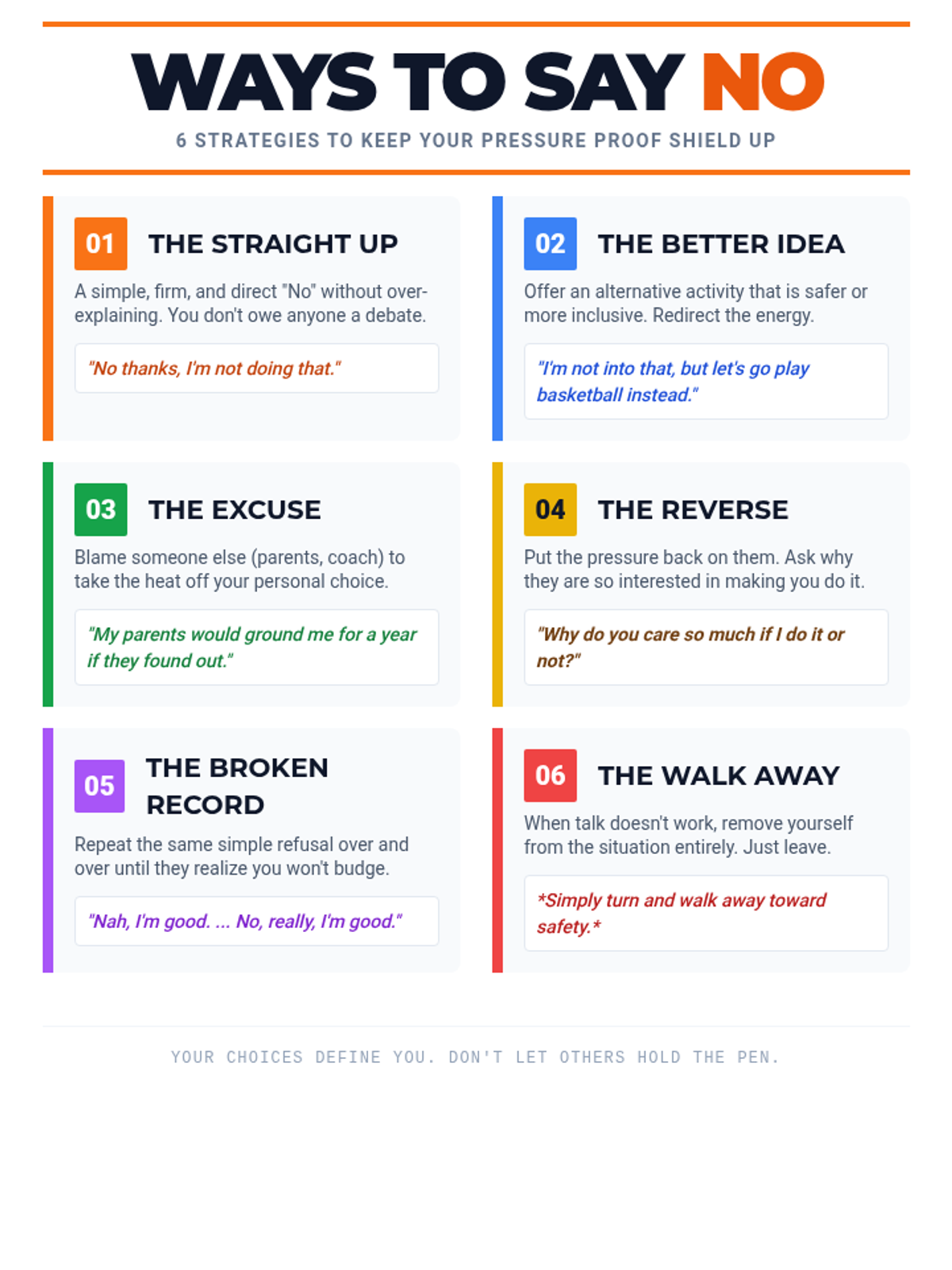
A high-impact visual poster for classrooms or counseling offices outlining six effective strategies for refusing peer pressure, with clear examples for each.
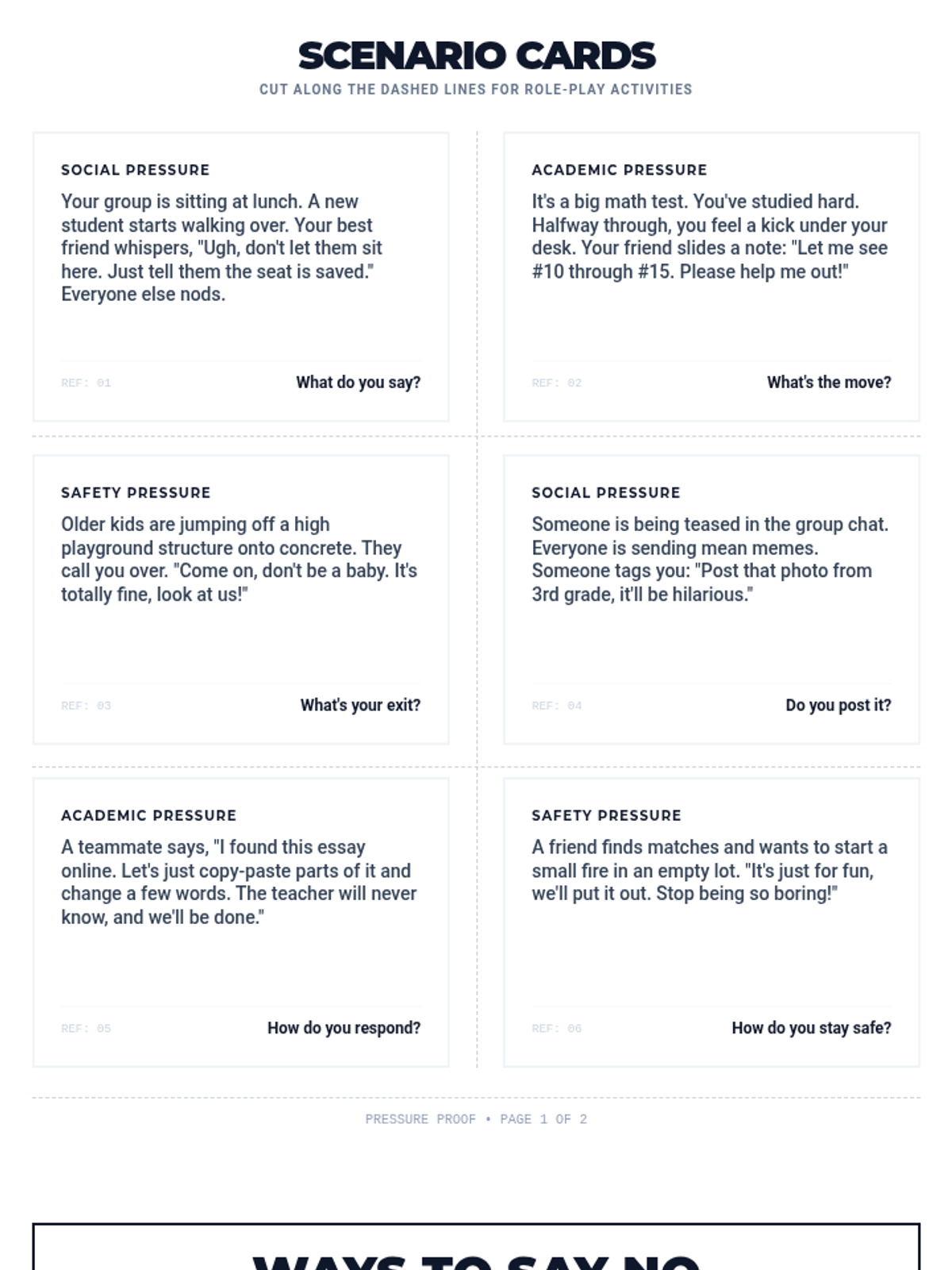
A set of six printable discussion cards featuring real-world peer pressure scenarios involving exclusion, academic dishonesty, and physical safety. Now includes a student reference page for refusal strategies.
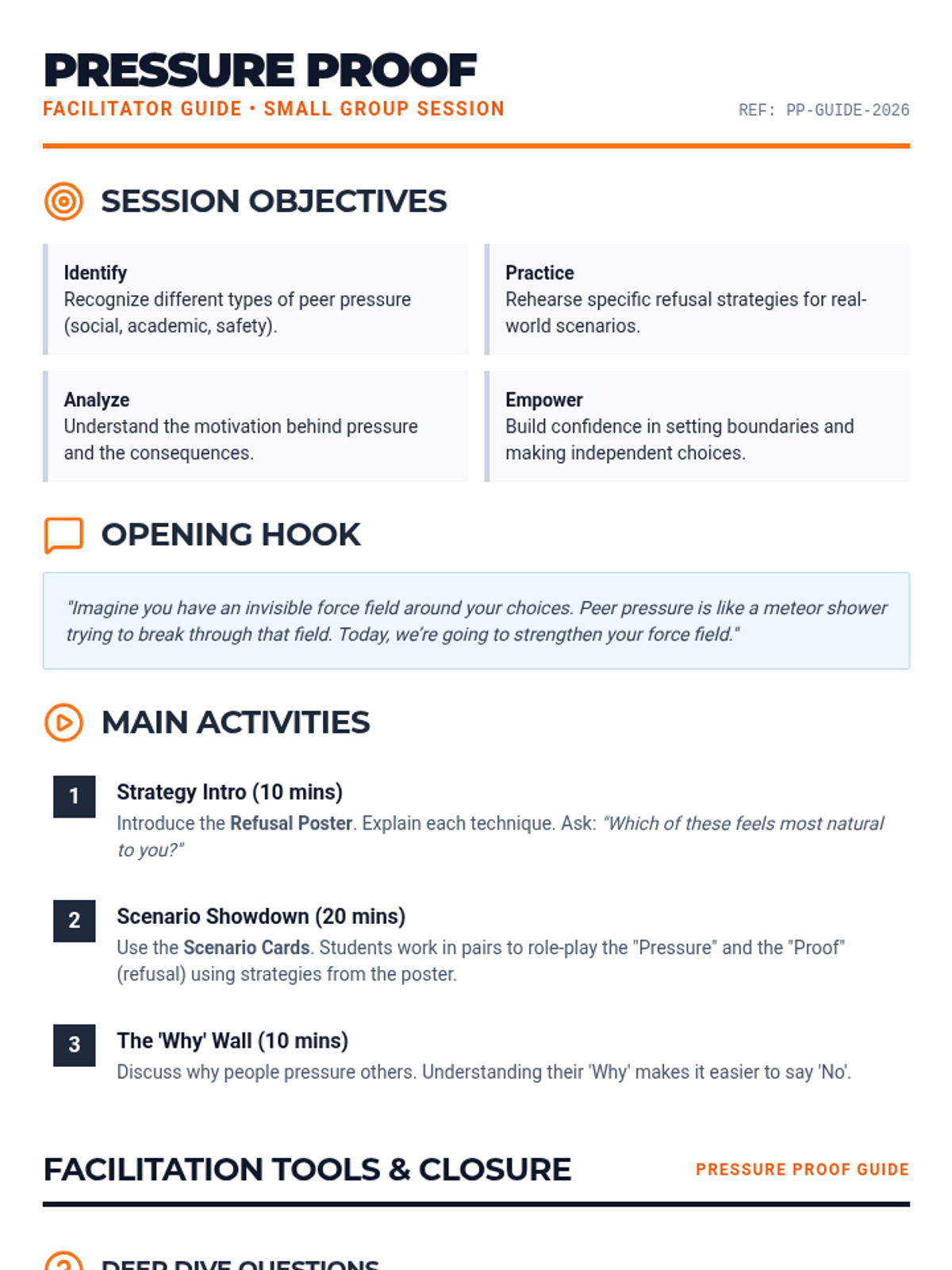
A facilitator guide for teachers or counselors leading a small group on peer pressure, featuring session objectives, activity outlines, and deep-dive discussion questions.
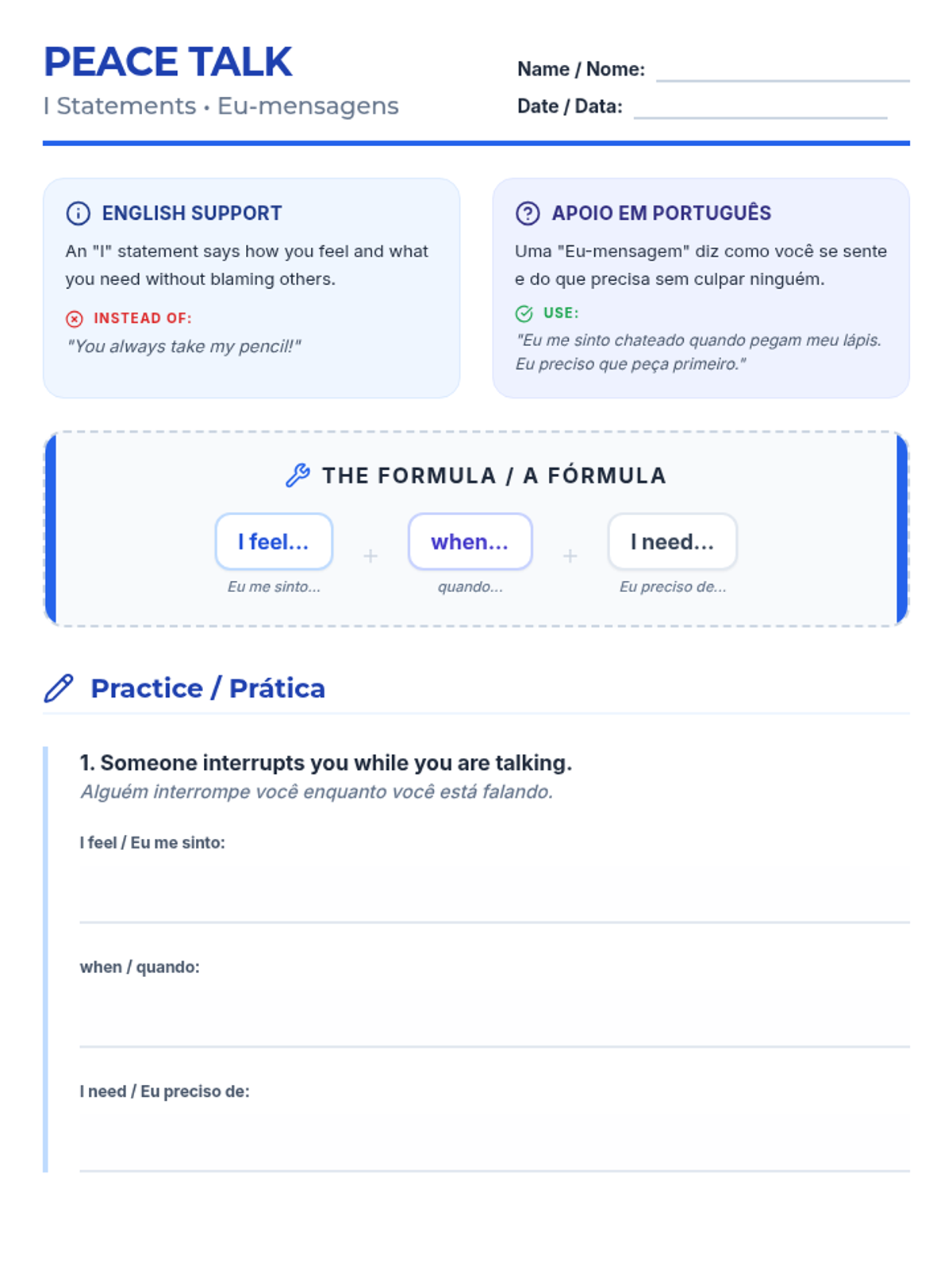
A bilingual (English/Portuguese) worksheet focused on teaching 'I statements' for classroom social situations, featuring structured practice exercises and a creative scenario section. Revised to use the 'I feel + when + I need' formula with updated translations and more spacious writing lines.
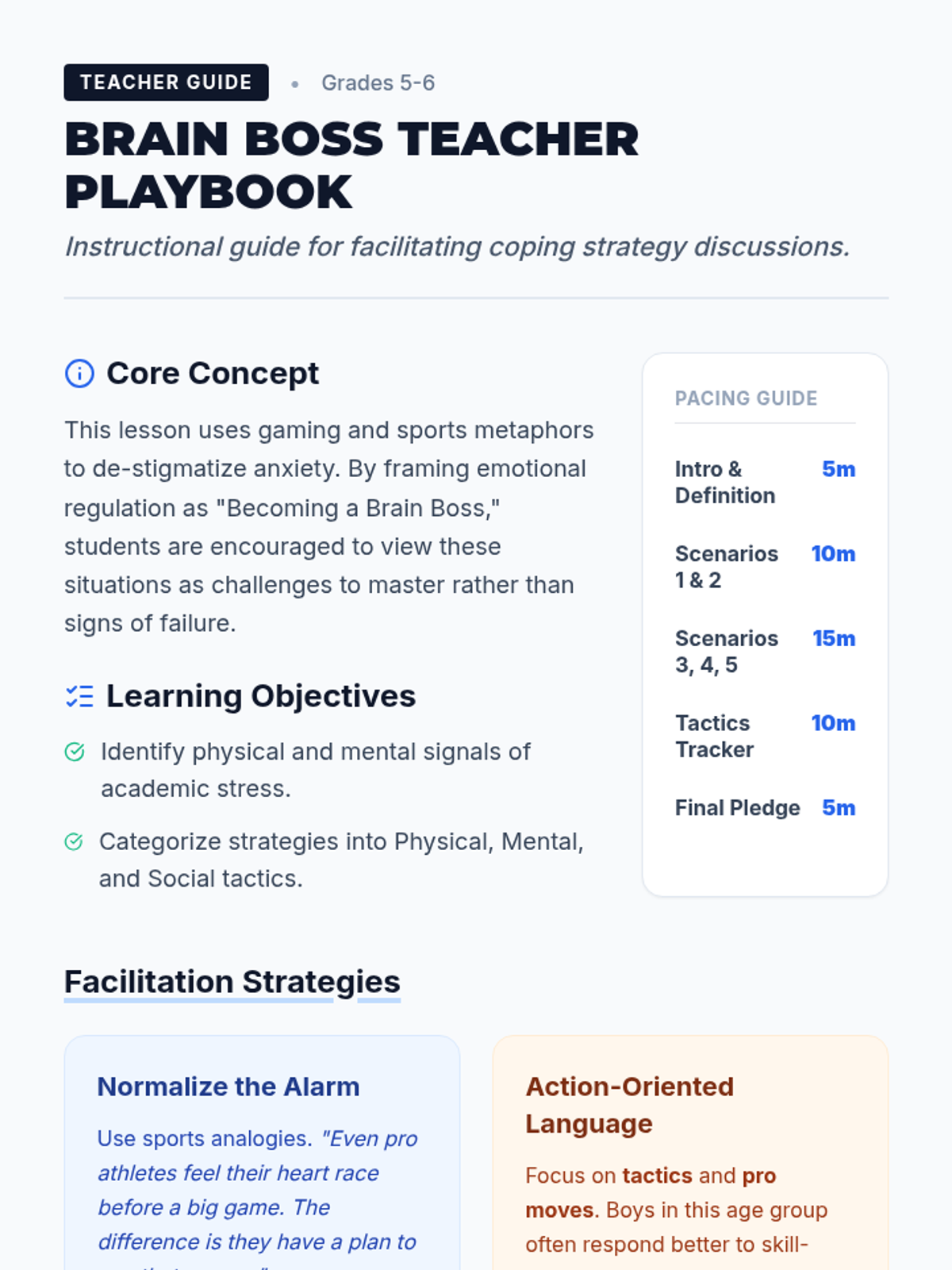
A comprehensive instructional guide for teachers providing pacing suggestions, pedagogical background, and specific discussion prompts to accompany the Brain Boss lesson. It includes differentiation strategies tailored for 5th-grade boys and tips for using metaphors effectively.
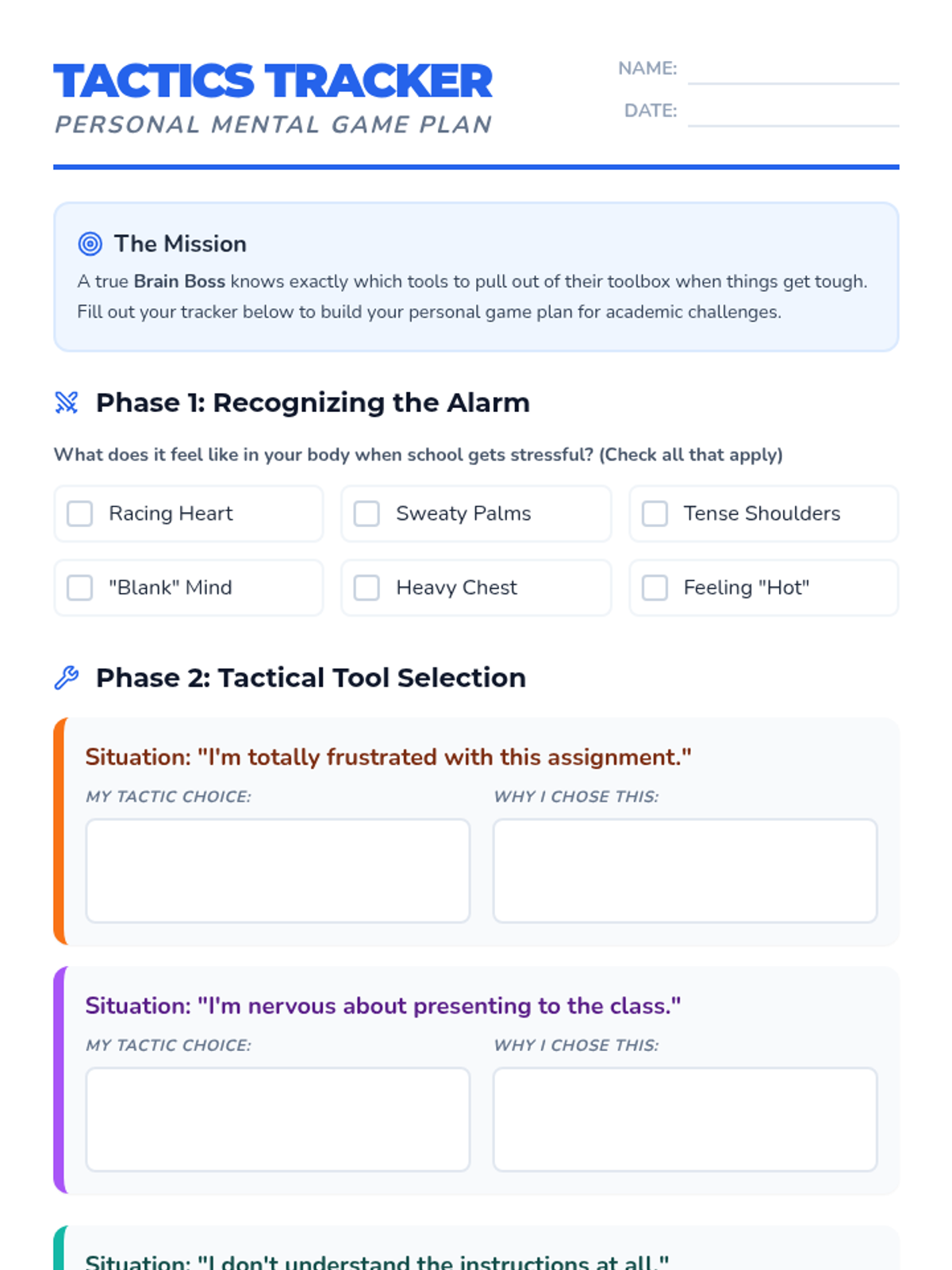
A self-reflection worksheet for students to identify their physical stress signals and select specific coping strategies (tactics) for different academic scenarios. It includes space for creating a personal 'Power Word' and a signed commitment to practicing these skills.
A dynamic slide deck designed for 5th-grade boys that uses a gaming-inspired 'Brain Boss' theme to teach coping strategies for academic anxiety, frustration, and confusion. Each slide presents a hypothetical classroom scenario followed by discussion questions and practical tactics.
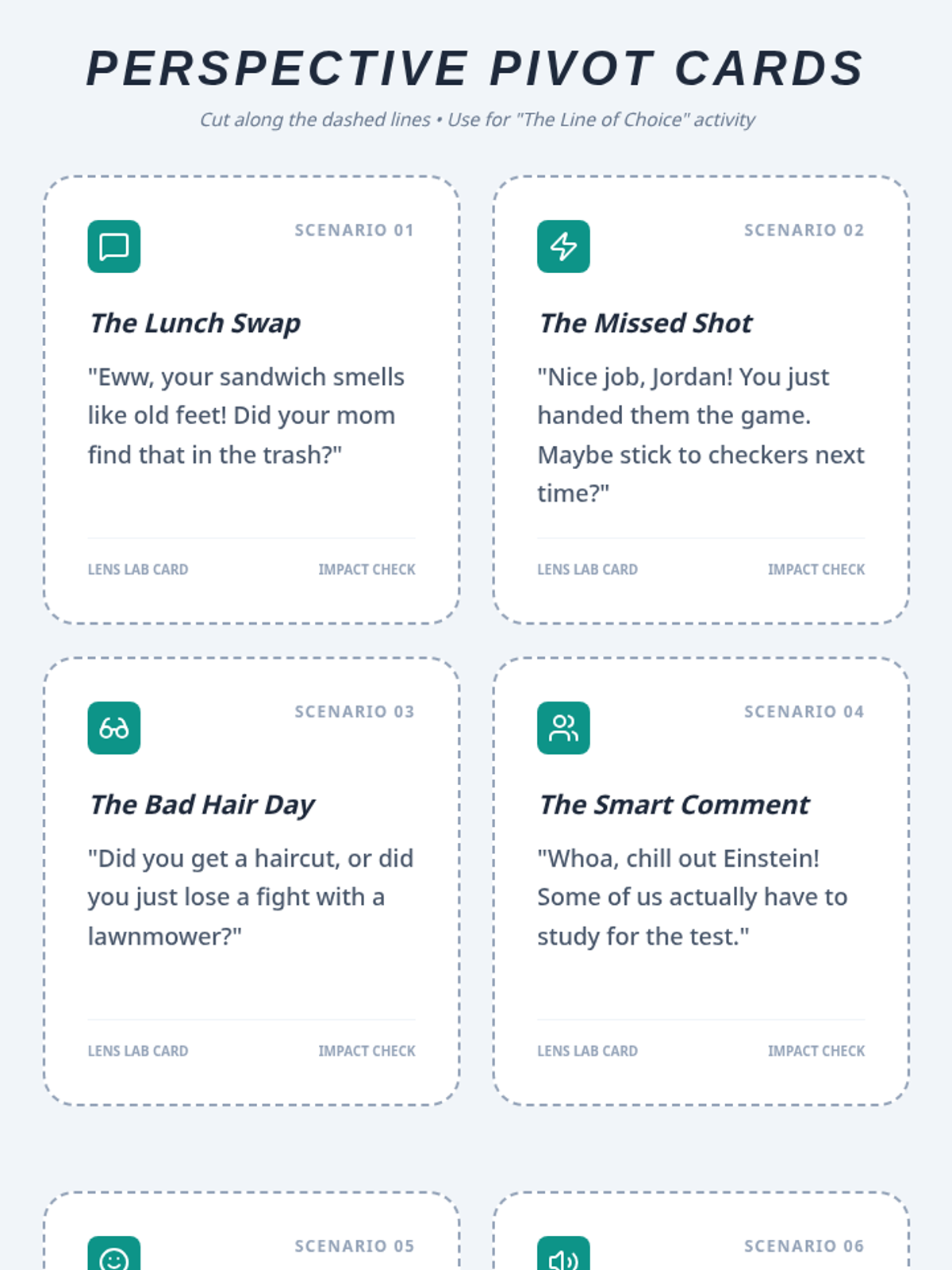
A set of scenario cards for role-playing and movement-based activities to distinguish between joking and being mean.
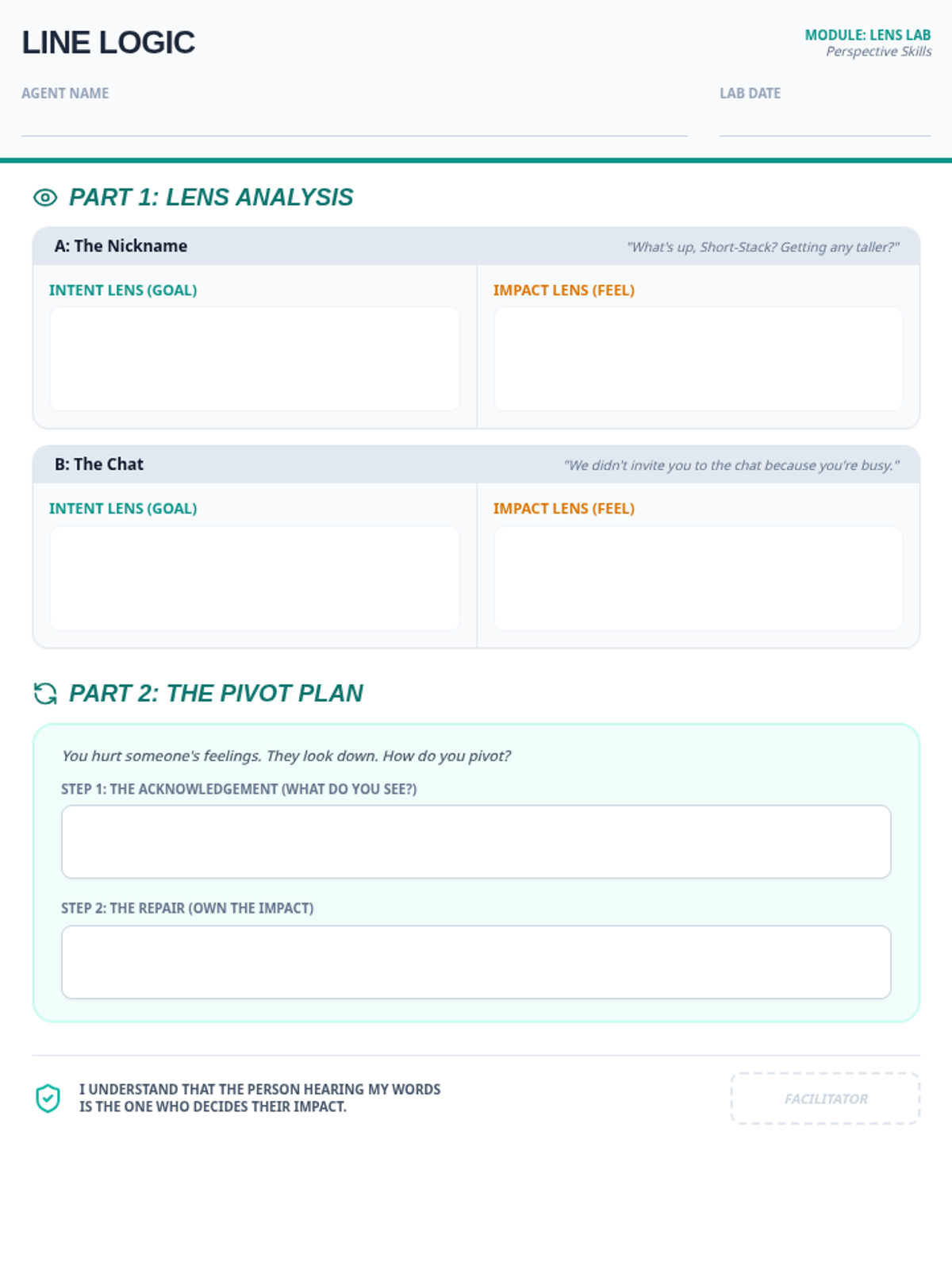
Student worksheet for analyzing intent vs. impact in social scenarios and practicing the 'Perspective Pivot' script.
Visual presentation for the Lens Lab lesson, introducing Intent vs. Impact and the criteria for healthy joking.
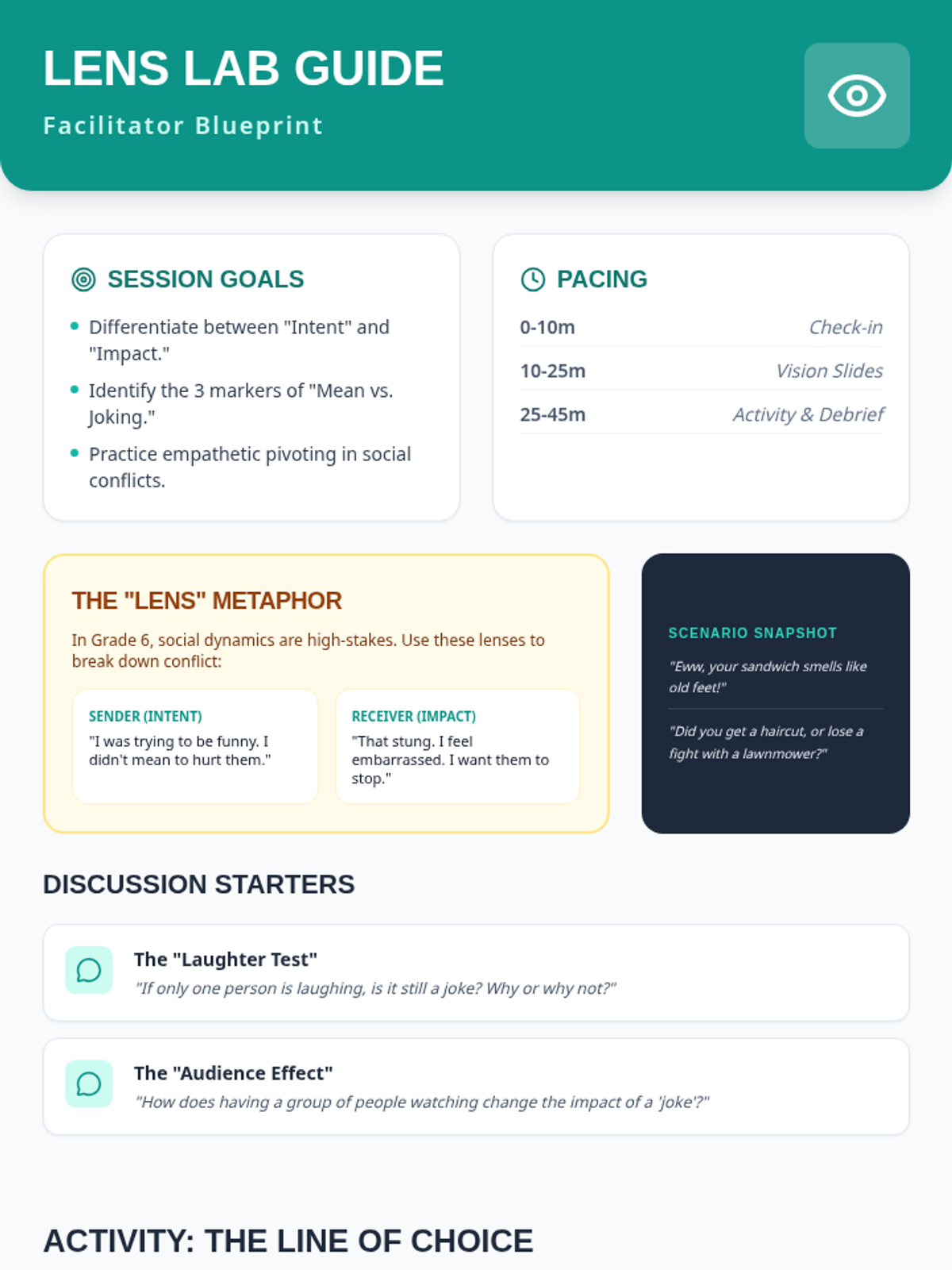
A comprehensive teacher guide for facilitators running the Lens Lab social skills group, including pacing, discussion prompts, and activity instructions.
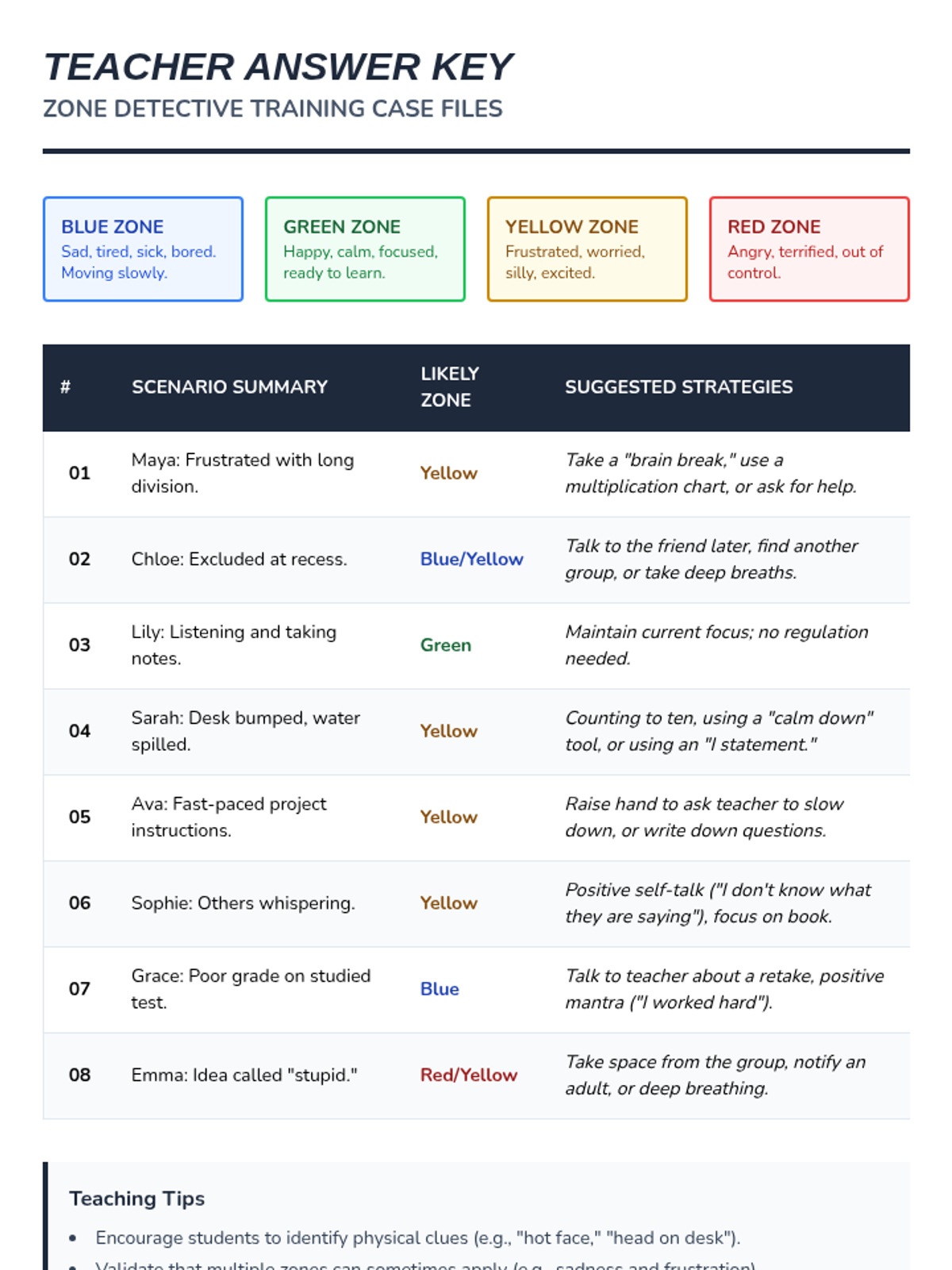
An answer key for the Zone Detective Worksheet providing likely zones and suggested regulation strategies. Includes accessible color contrast for the Yellow Zone and pedagogical tips for instruction.
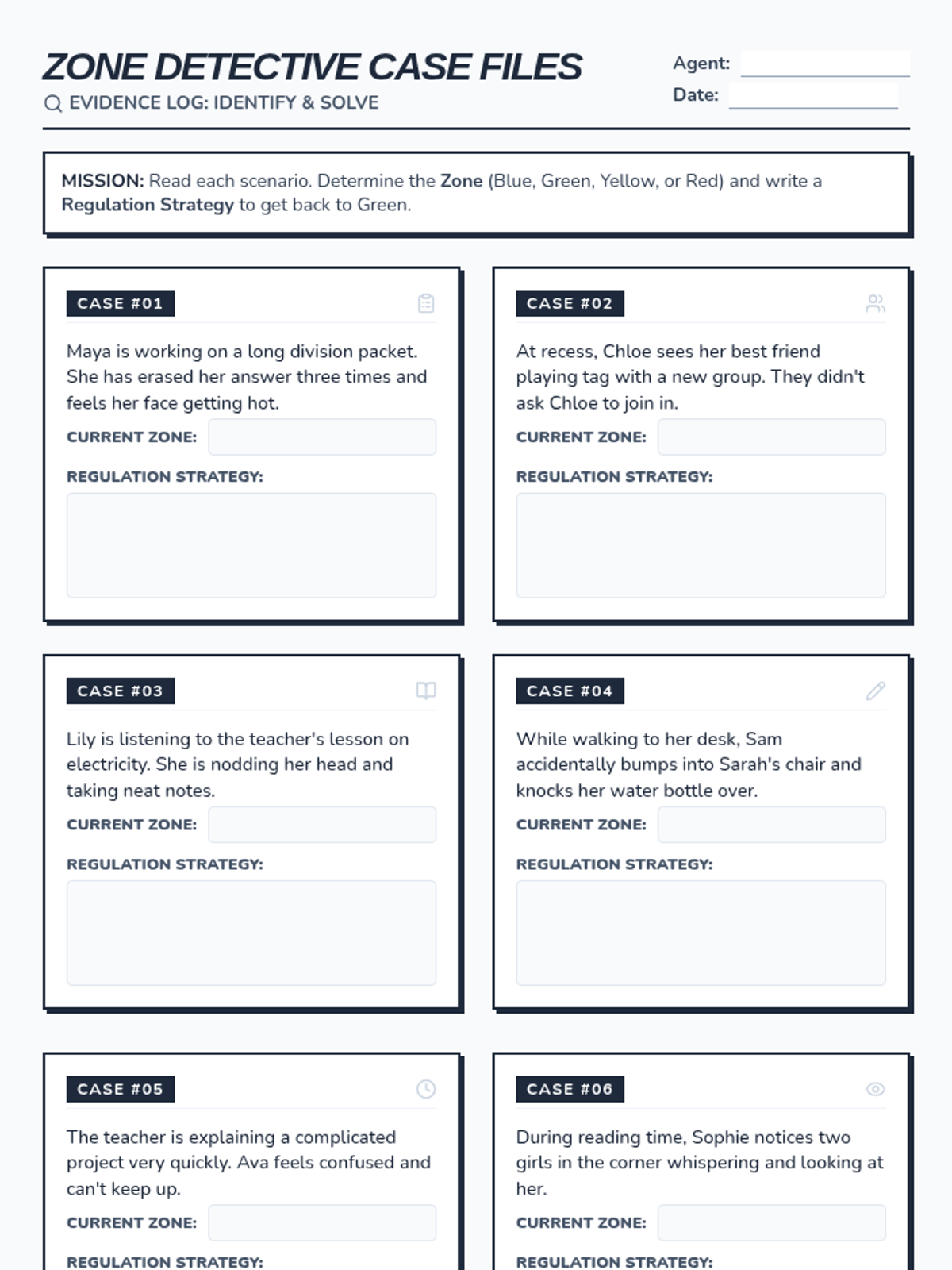
A scenario-based worksheet where students identify the emotional Zone and suggest regulation strategies for classroom and social situations. High-contrast boxes and break-resistant cards ensure clarity and usability.
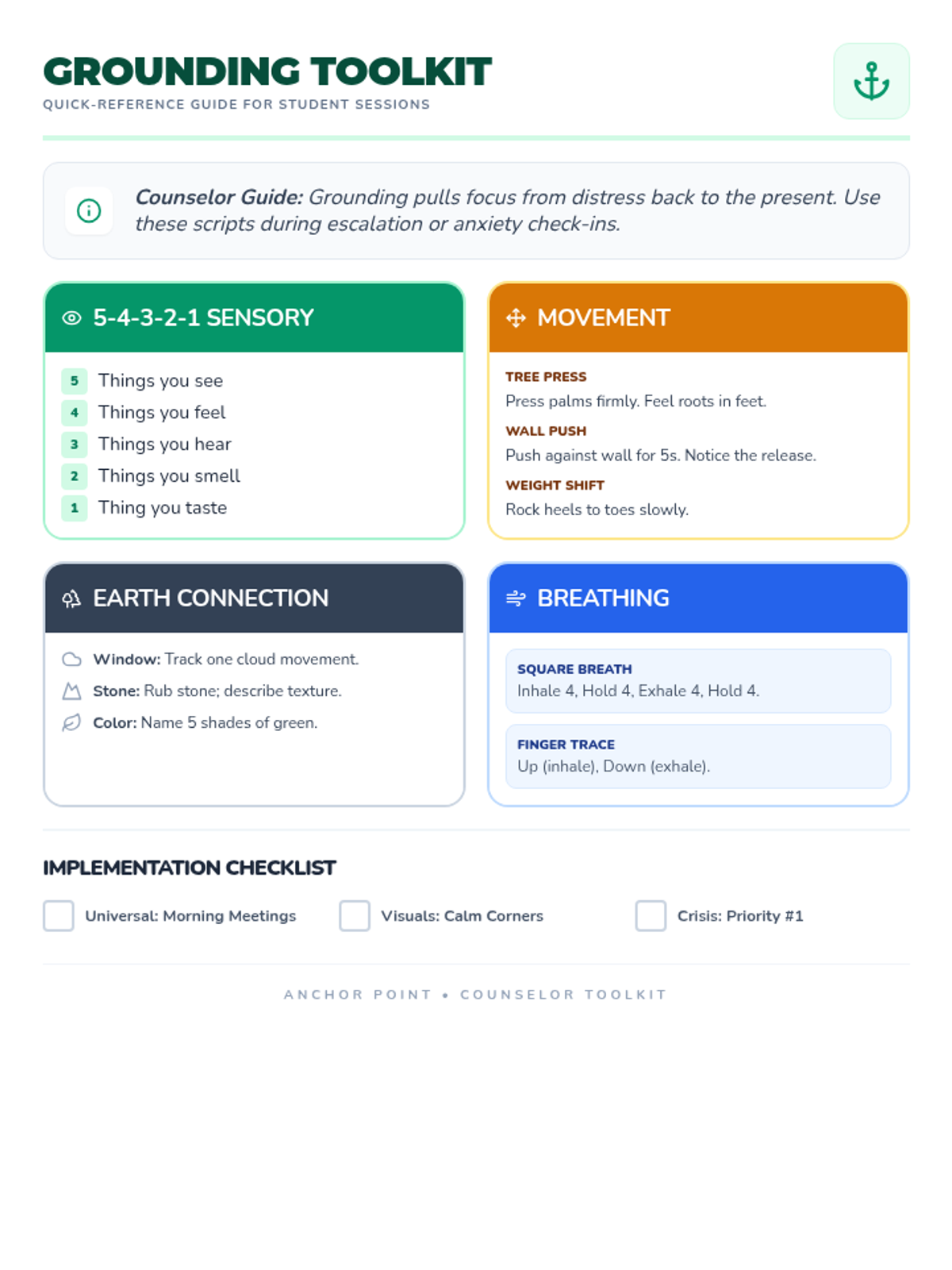
A quick-reference toolkit for school counselors containing specific grounding scripts, movement techniques, nature-based prompts, and breathing exercises. Designed as a desk reference or session handout.
A comprehensive slide deck for school counselors focusing on four primary grounding techniques: the 5-4-3-2-1 sensory method, movement-based grounding, nature connection, and rhythmic breathing. Includes implementation strategies for different tiers of student support.
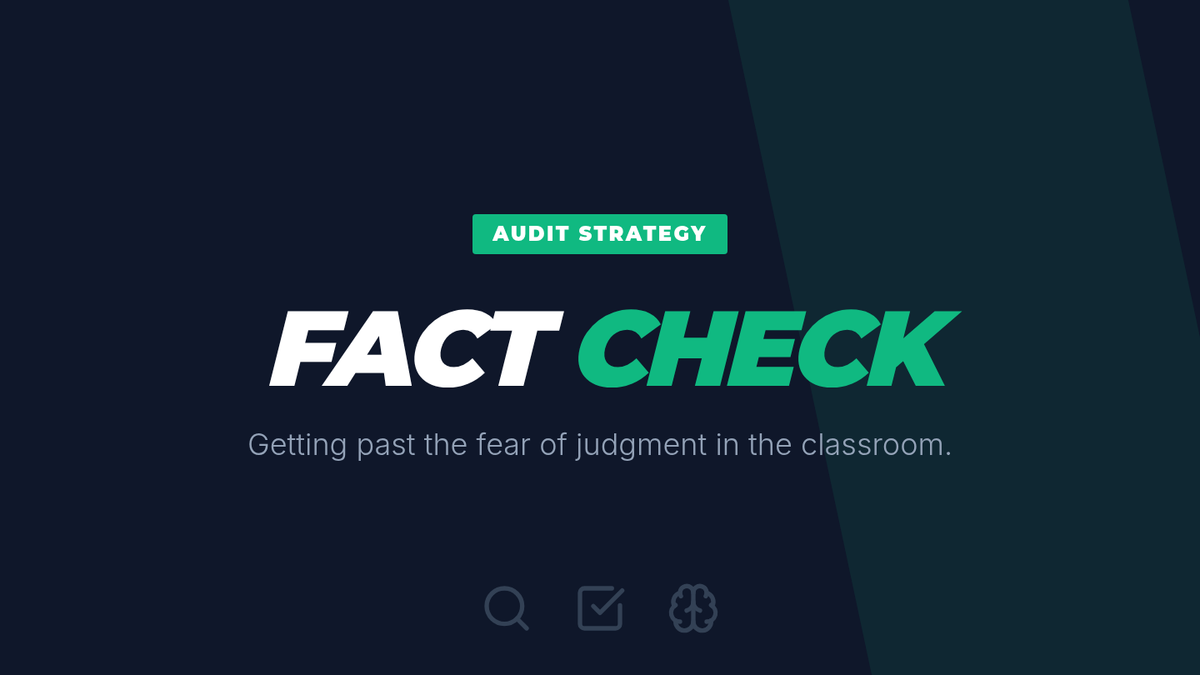
A presentation slide deck for the Help Fact Check lesson, using a literal 'Fear vs. Fact' strategy. Revised for visual polish.
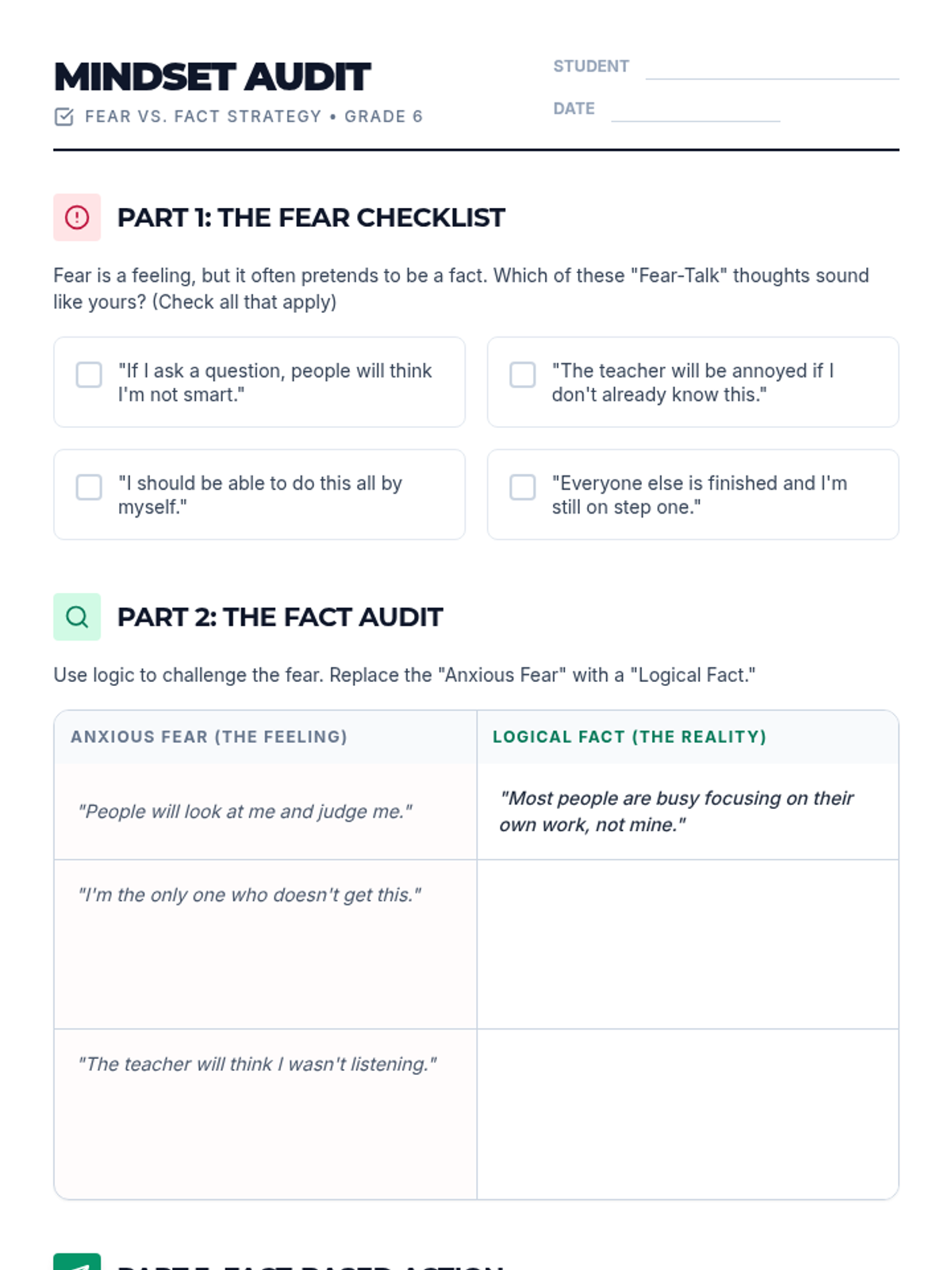
A student worksheet for Grade 6 that uses a 'Fear vs. Fact' audit to challenge anxiety and practice literal help-seeking scripts. Revised for better page breaks and writing space.
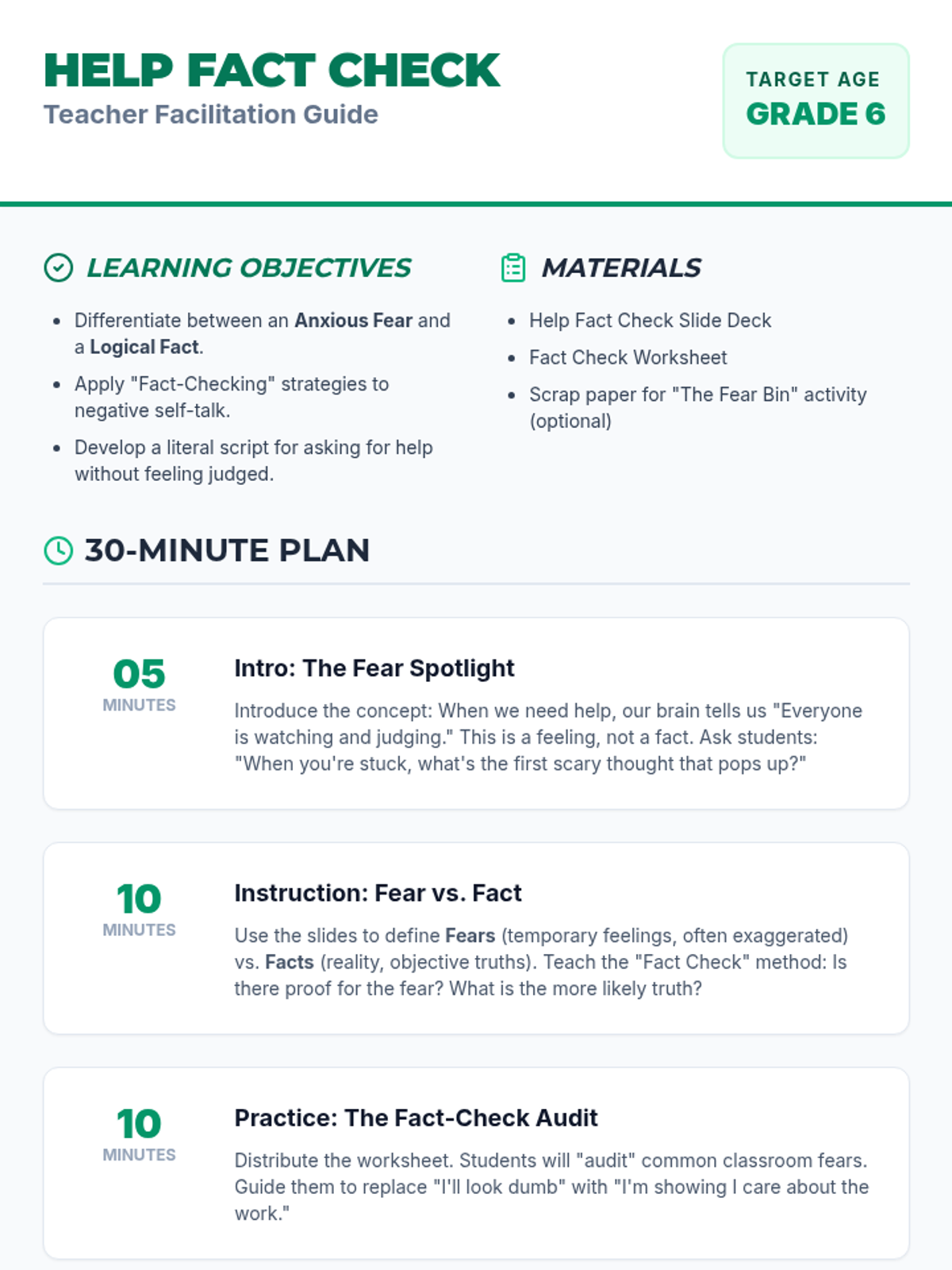
A teacher facilitation guide for the 30-minute Help Fact Check lesson, focusing on the literal Fear vs. Fact strategy for 6th grade students.