A student-facing activity worksheet to identify distractions and design a personal focus shield. Includes bilingual prompts and space to map out a 25-minute Pomodoro study block.
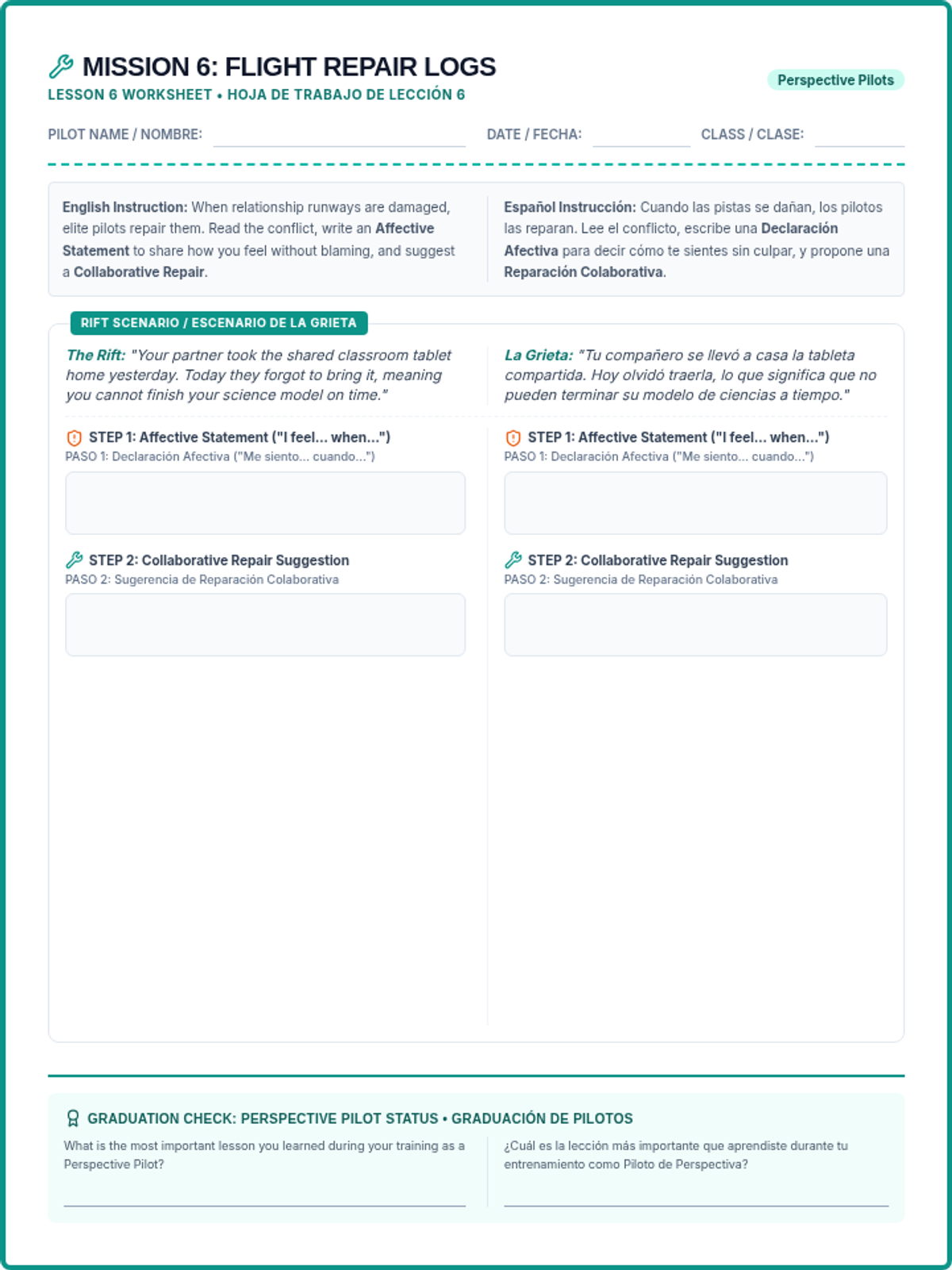
A worksheet for Lesson 6 where students draft affective statements and collaborative repair plans to resolve a peer conflict restoratively.
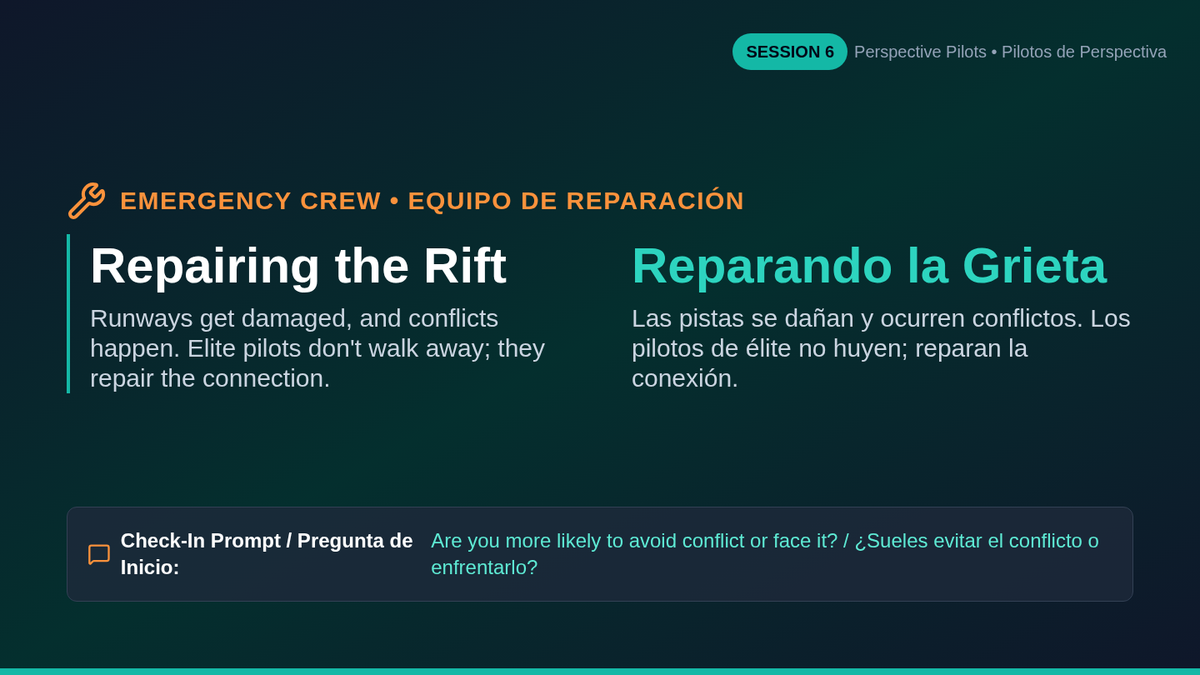
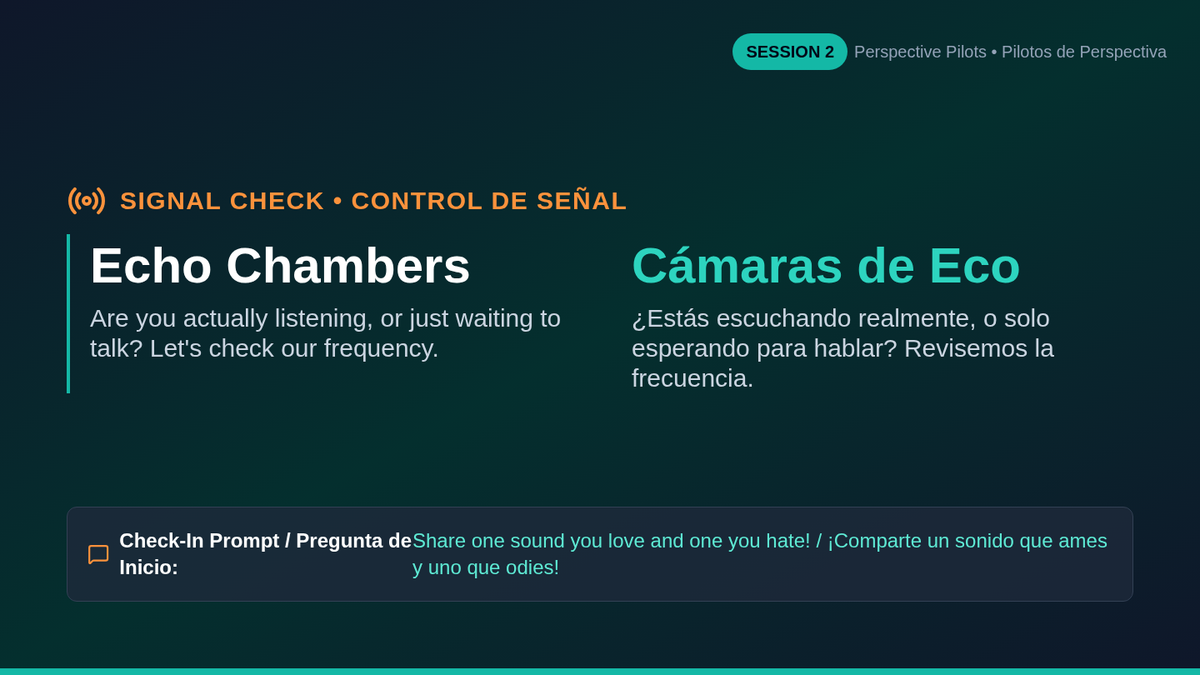
Interactive bilingual (English/Spanish) presentation slides for Lesson 6, introducing the 3-step restorative conflict resolution process with side-by-side columns.
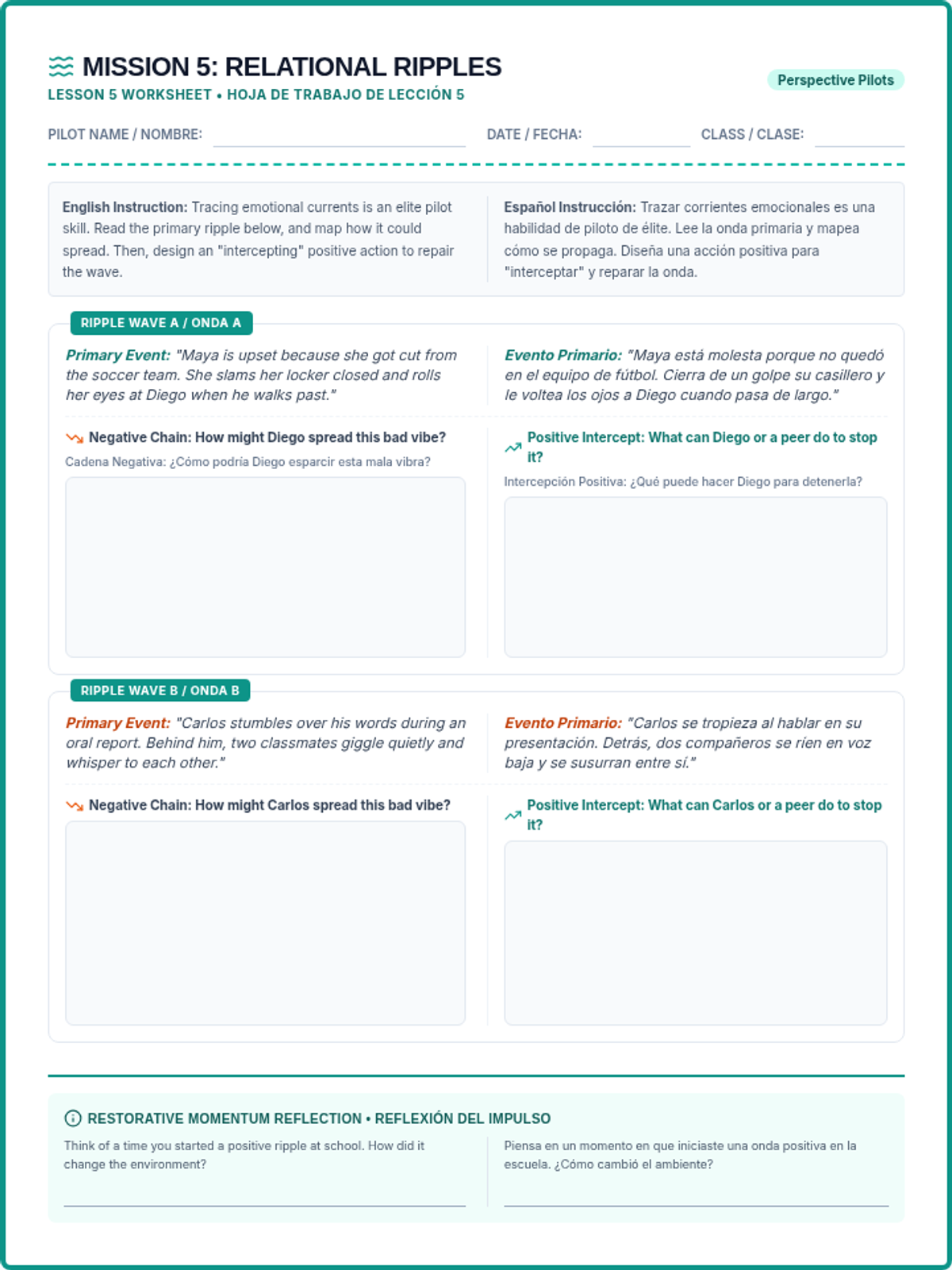
A relational mapping worksheet for Lesson 5, helping students map out emotional ripple effects and trace how a single action affects an entire group.
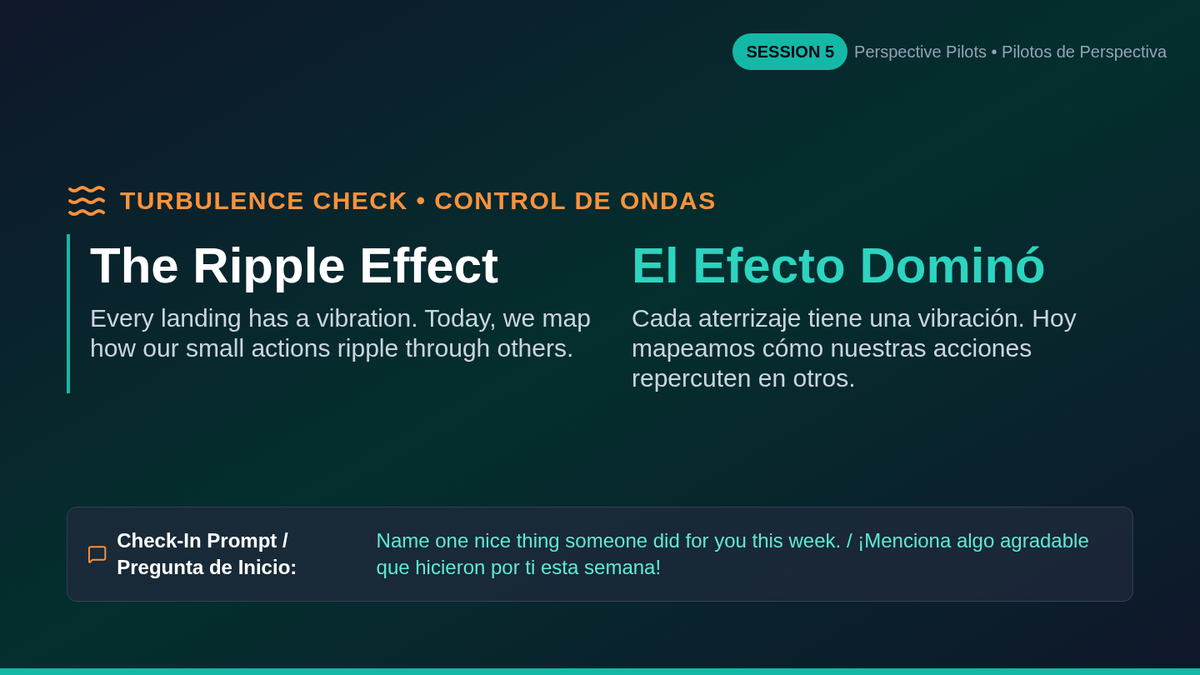
Interactive bilingual (English/Spanish) presentation slides for Lesson 5, exploring how positive and negative actions ripple through a school community.
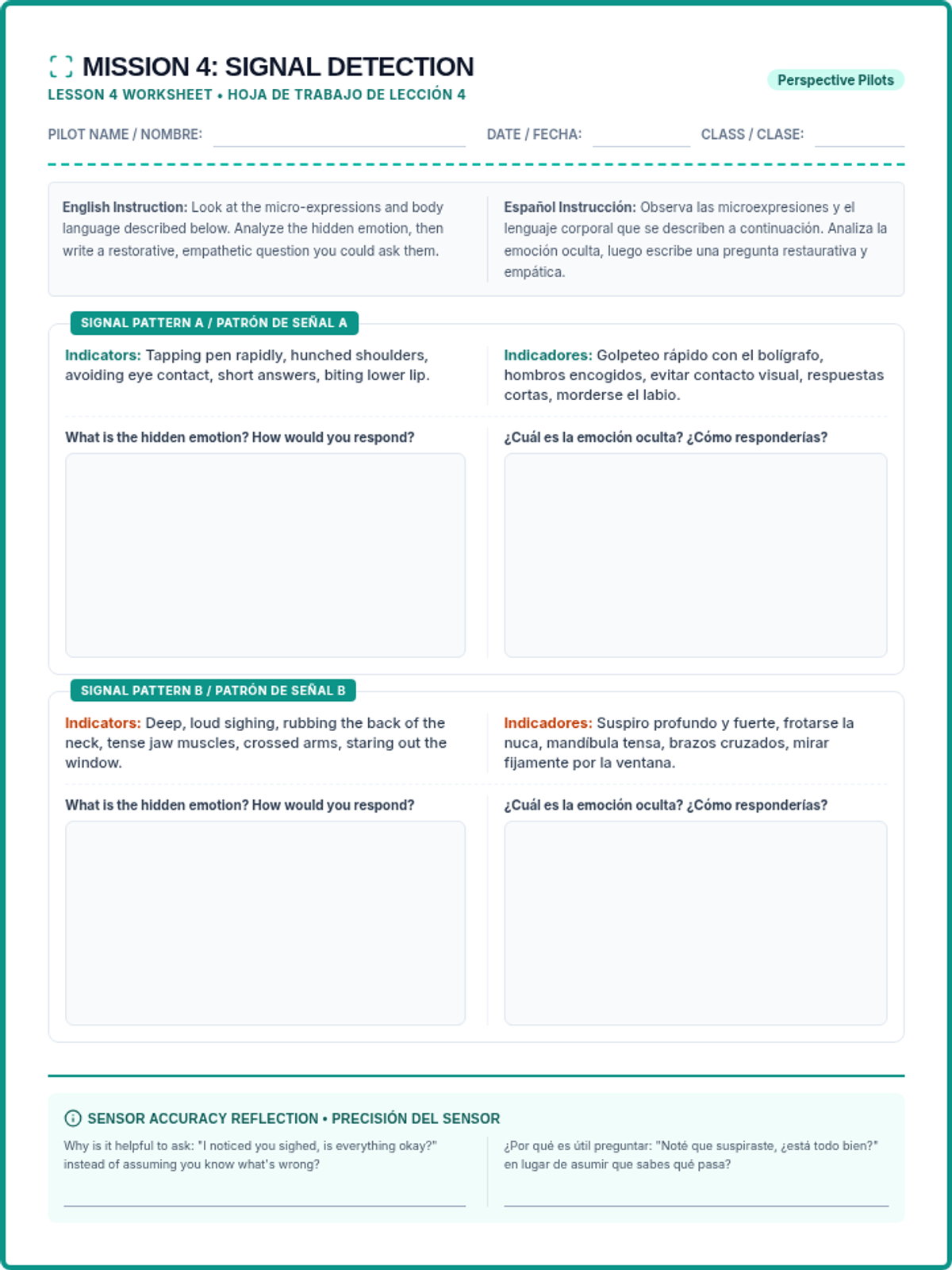
An observational student worksheet for Lesson 4, training students to decode body language and non-verbal cues. Features a side-by-side format for dual-language instruction.
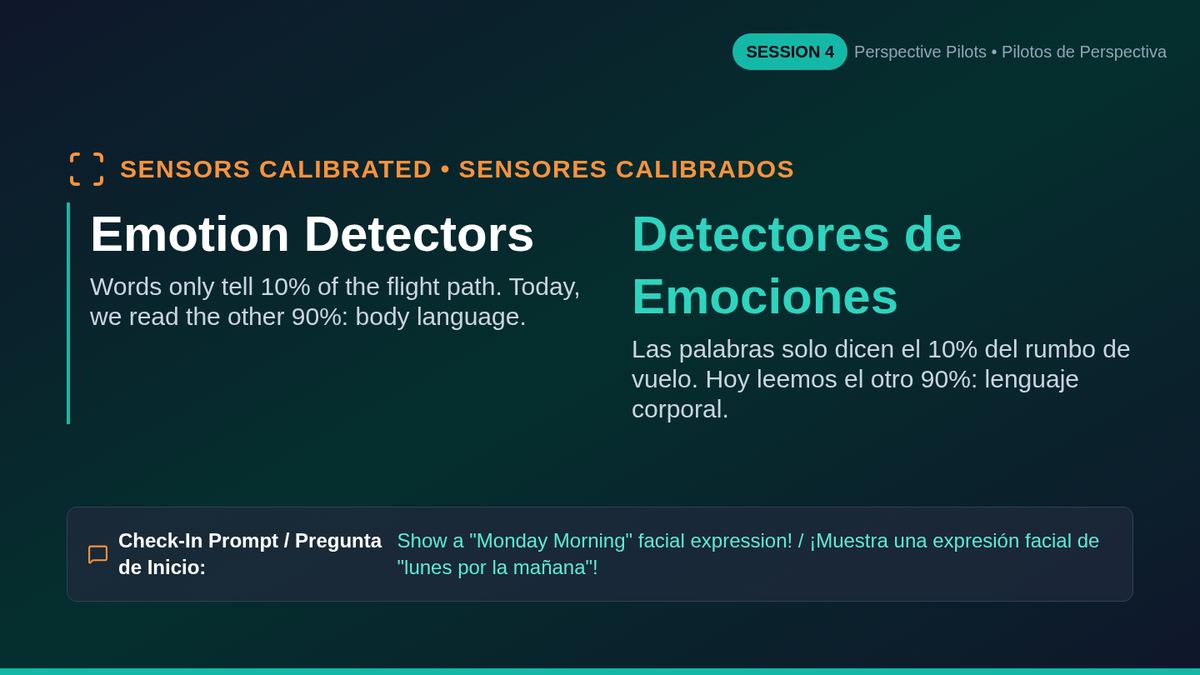
Interactive bilingual (English/Spanish) presentation slides for Lesson 4, training students to decode body language and non-verbal cues with side-by-side translation.
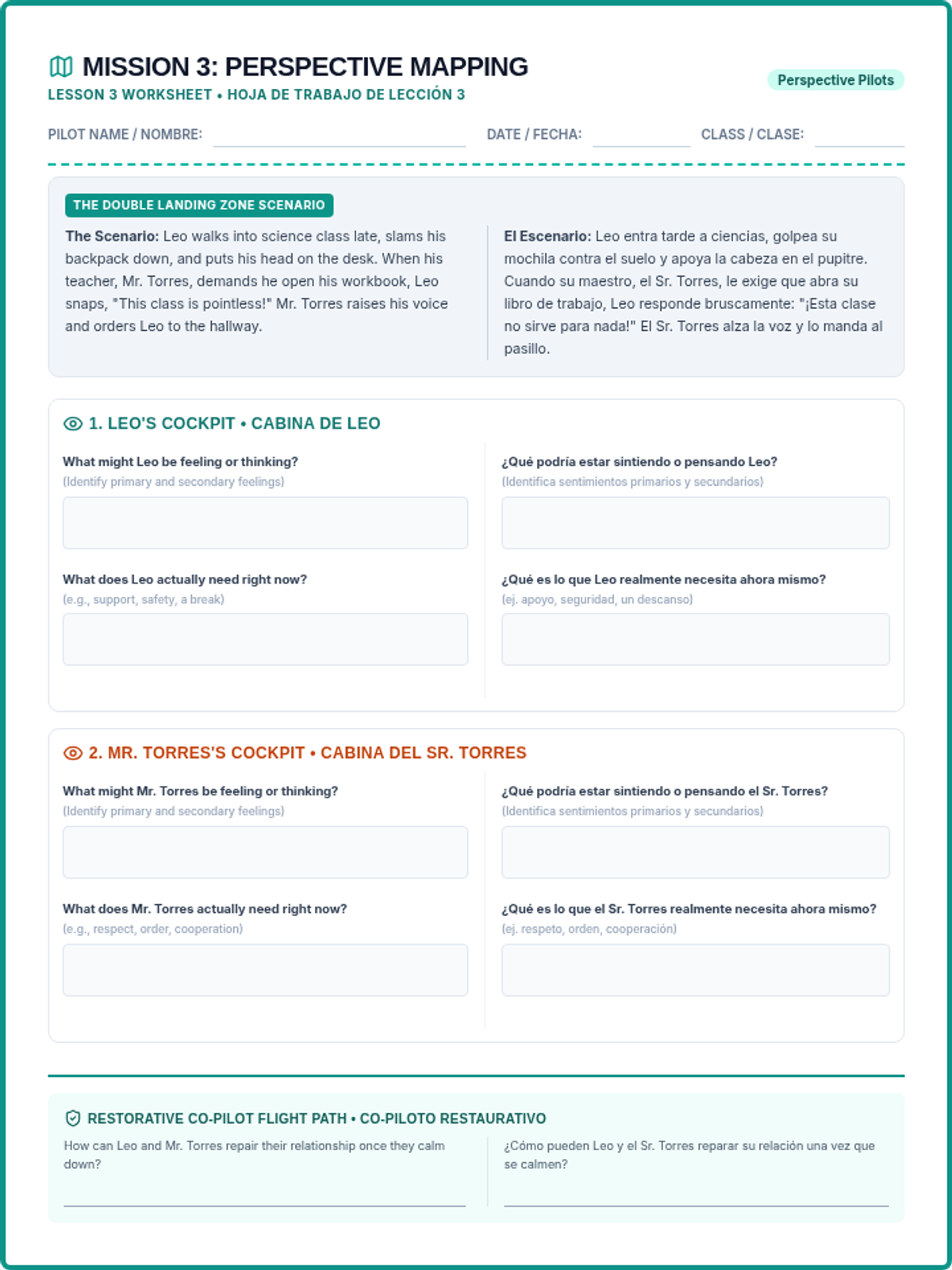
A worksheet for Lesson 3 where students map the perspectives, feelings, and underlying needs of different people involved in a school misunderstanding.
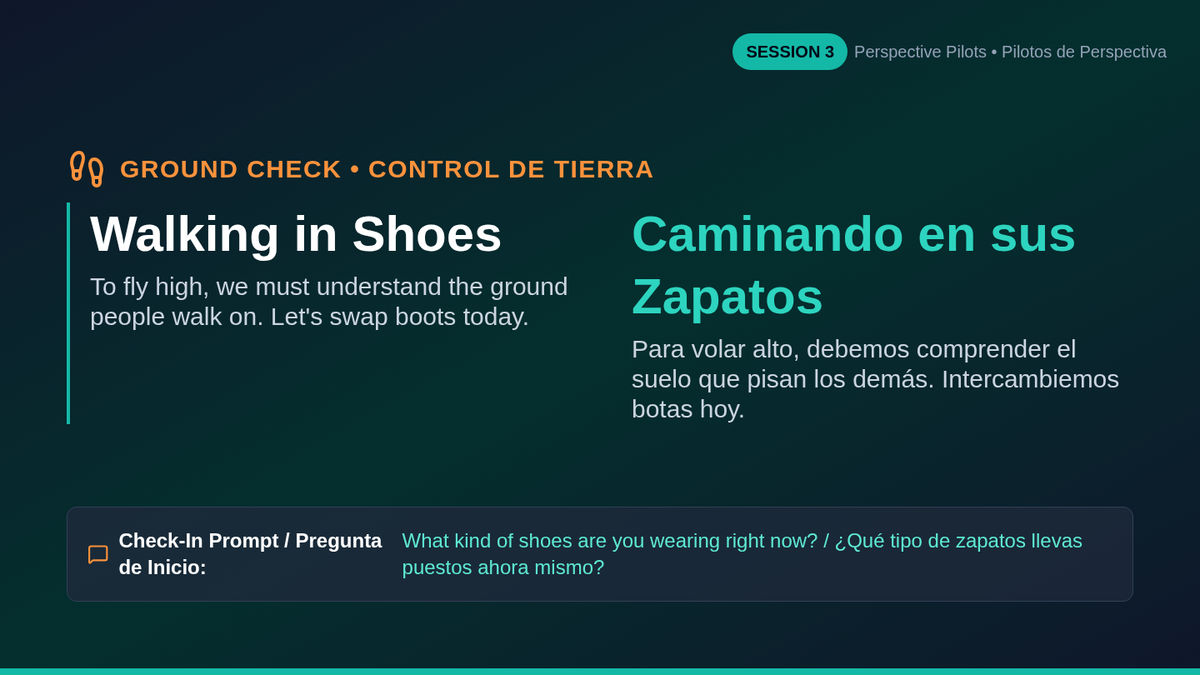
Interactive bilingual (English/Spanish) presentation slides for Lesson 3, focusing on perspective-taking and identifying underlying needs with side-by-side translation and discussion prompts.
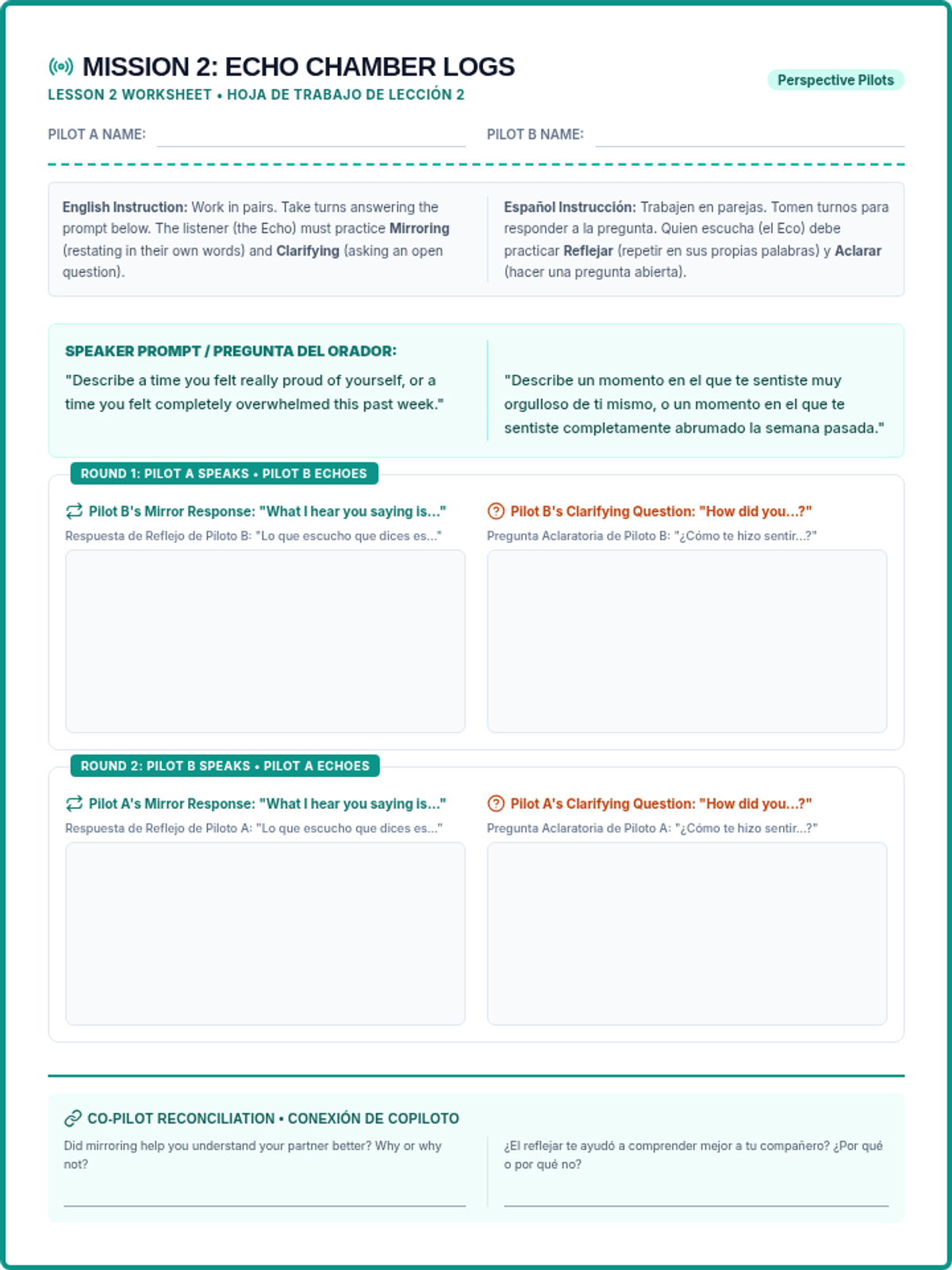
A partner activity sheet for Lesson 2, logging active listening practices. Features structured spaces for mirroring and clarifying questions in dual-language formats.
Interactive bilingual (English/Spanish) presentation slides for Lesson 2, teaching the mechanics of active listening with dual-language guidelines and turn-and-talk prompts.
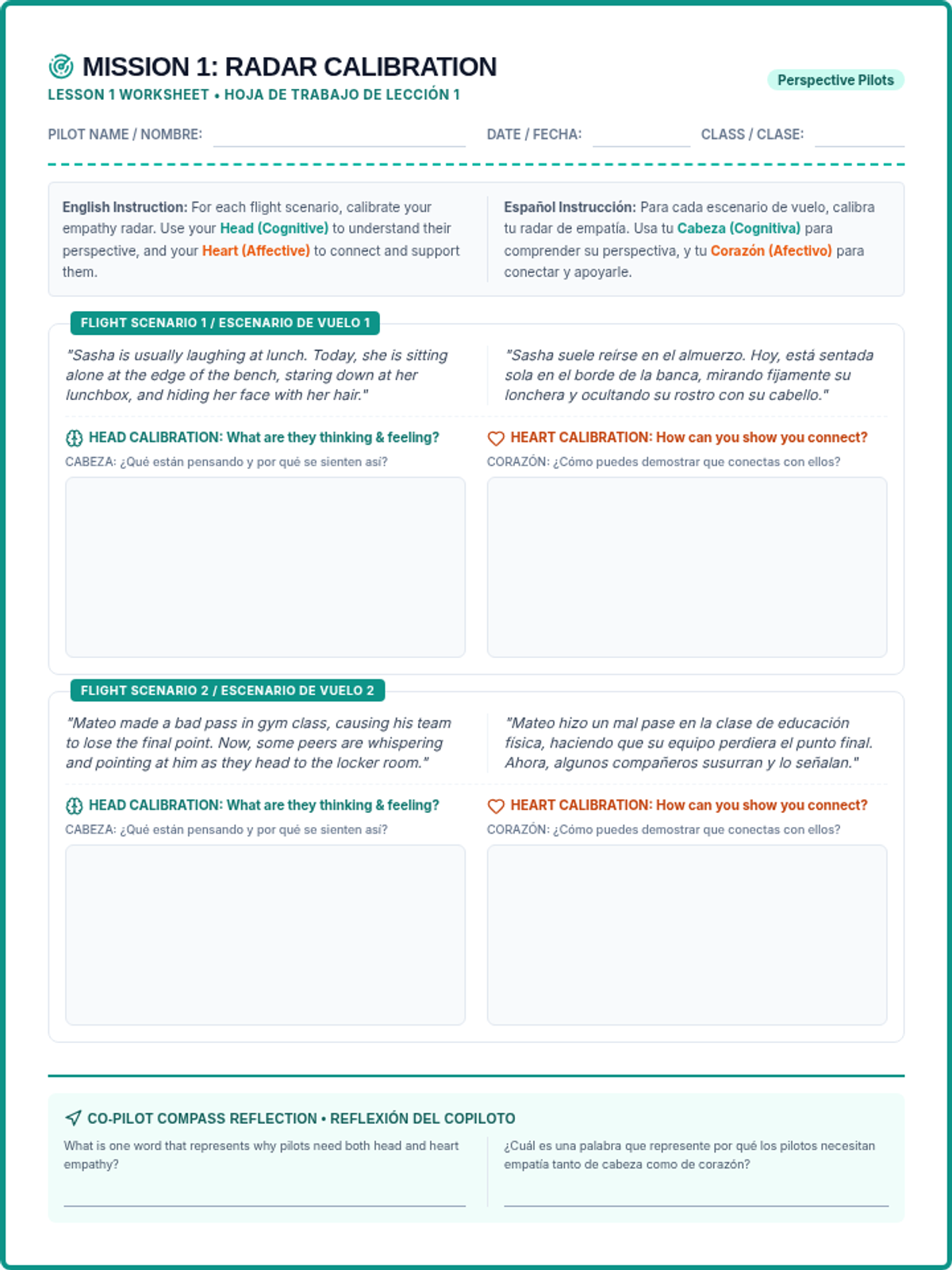
A student worksheet for Lesson 1, calibrating their empathy radar. Features dual-language side-by-side scenarios and handwriting boxes to practice cognitive vs. affective empathy.
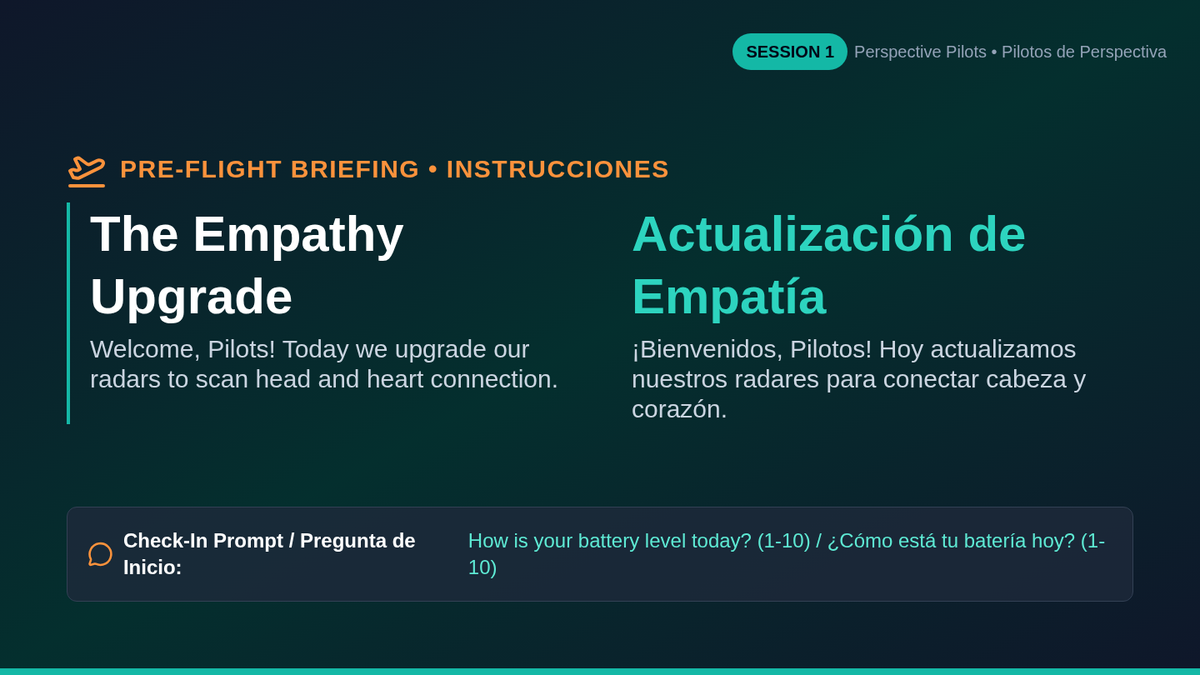
Interactive bilingual (English/Spanish) presentation slides for Lesson 1, introducing cognitive vs. affective empathy with side-by-side translation and discussion prompts.
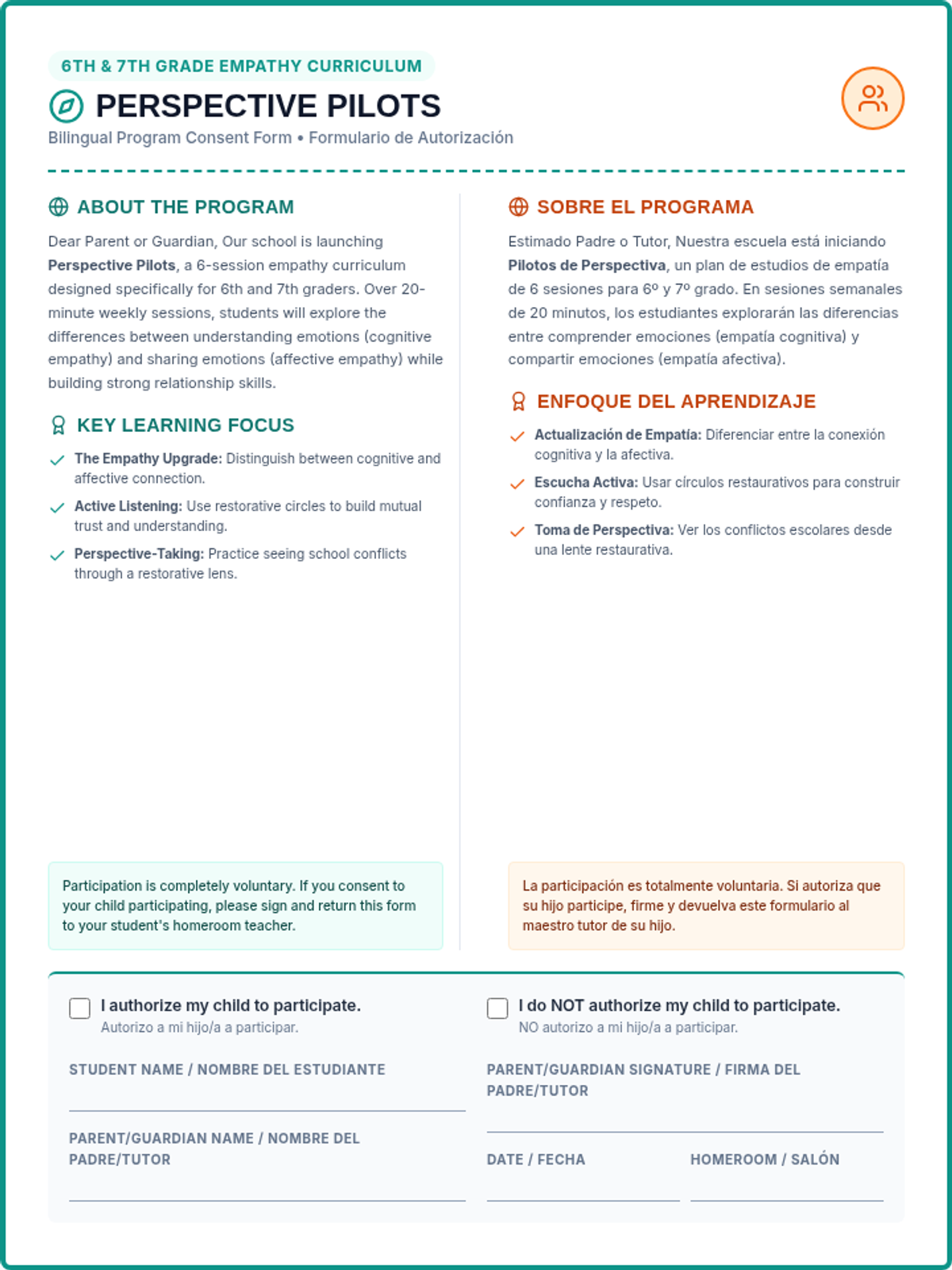
A bilingual (English/Spanish) parent permission letter and consent slip for the Perspective Pilots empathy curriculum, presented in a side-by-side dual-column layout.
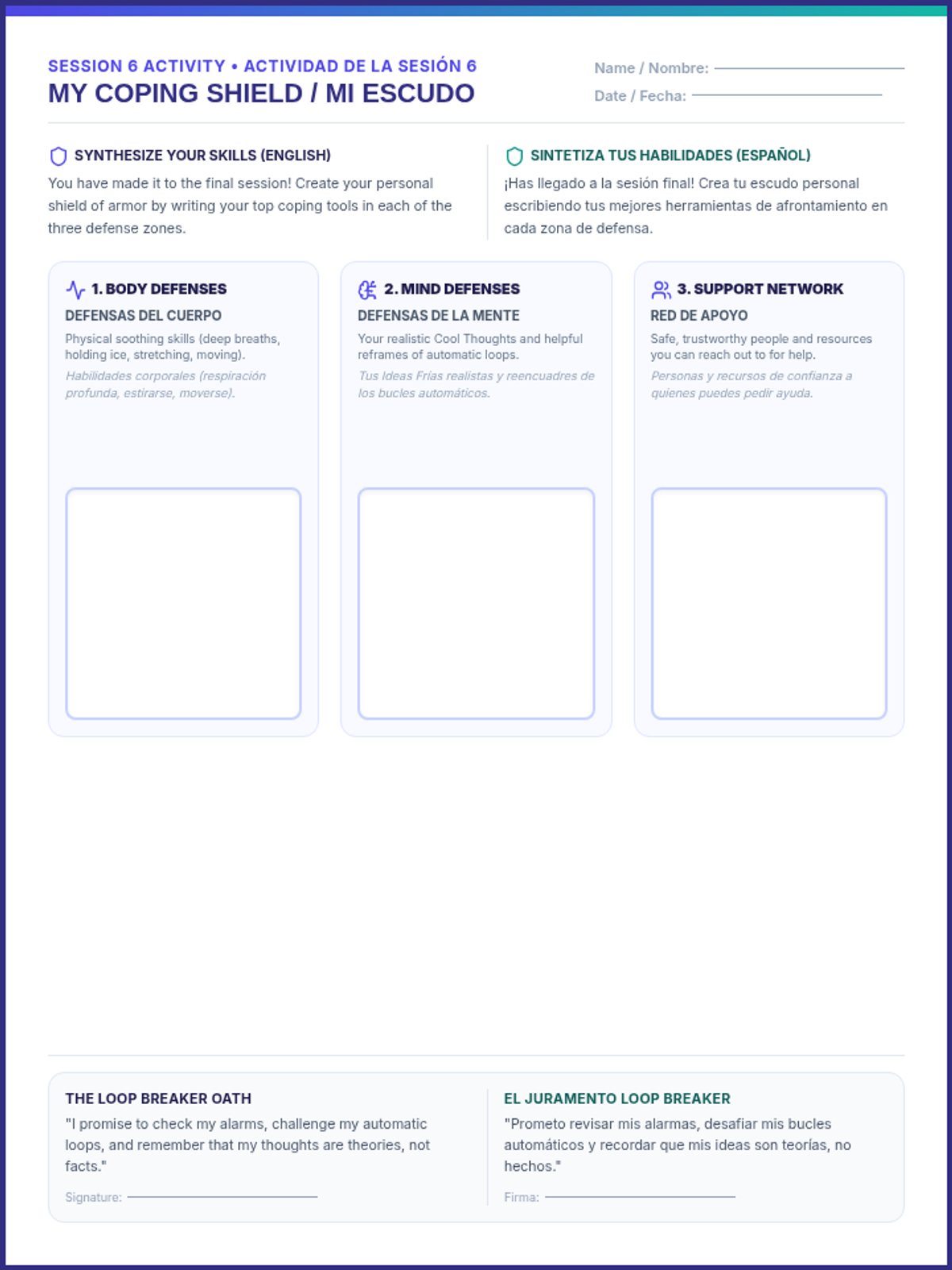
Bilingual worksheet for Lesson 6. Features a customized 'Coping Shield' graphic organizer where students write down their personalized body, mind, and support system coping strategies.
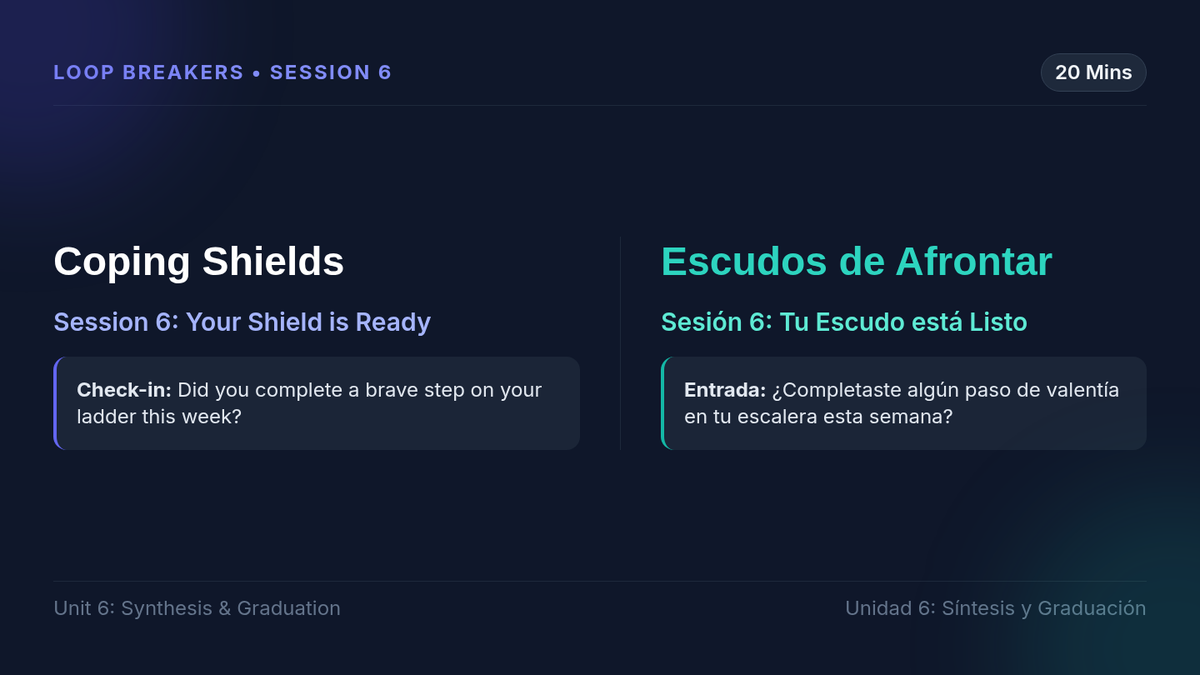
Bilingual 16:9 presentation slides for Lesson 6 (Coping Shields). Explains how to integrate physical soothing, cognitive reframing, and support networks into a personal safety plan.
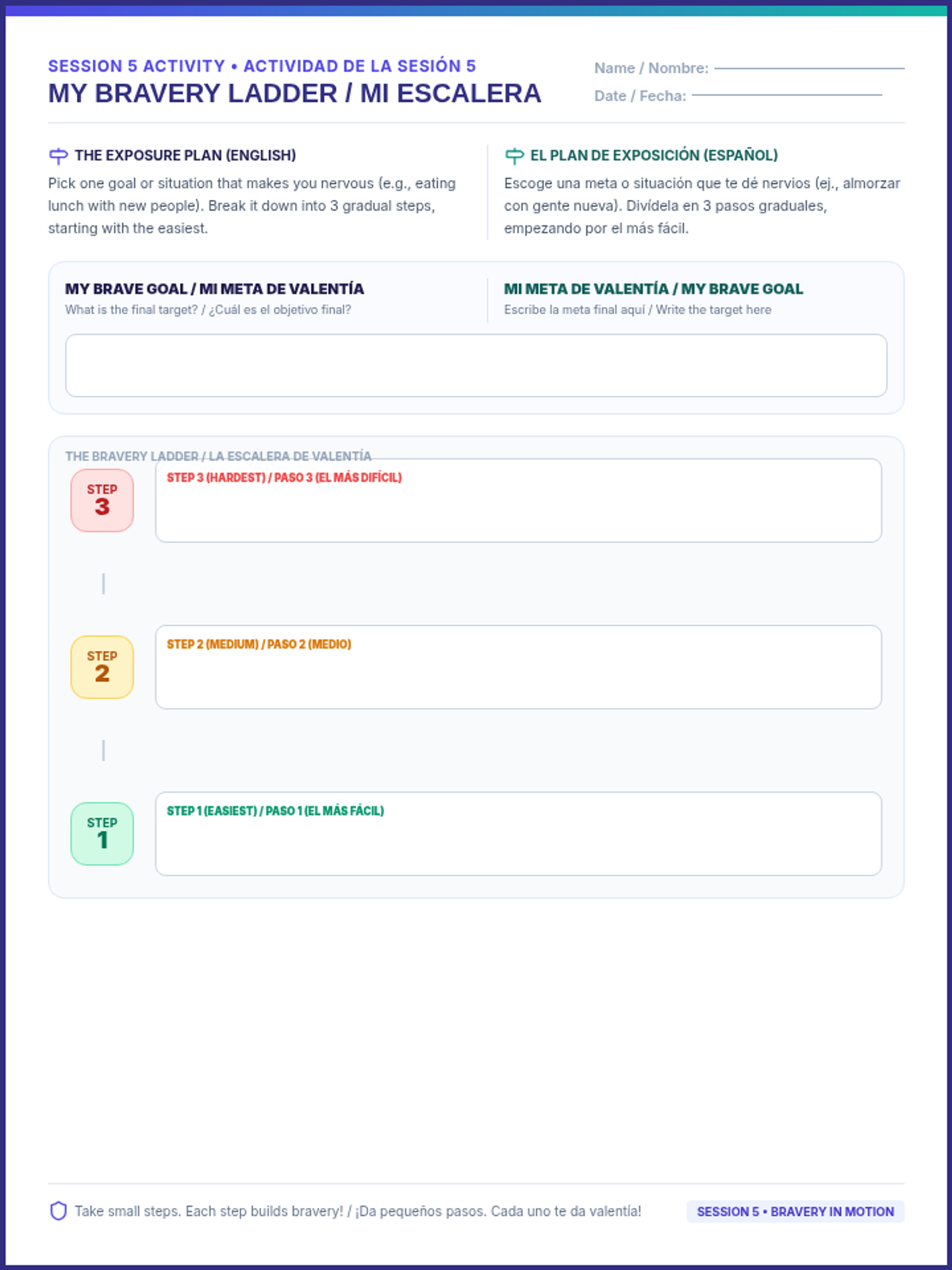
Bilingual worksheet for Lesson 5. Features a 3-step 'Bravery Ladder' graphic organizer for students to break down a scary scenario into safe, gradual exposure steps.
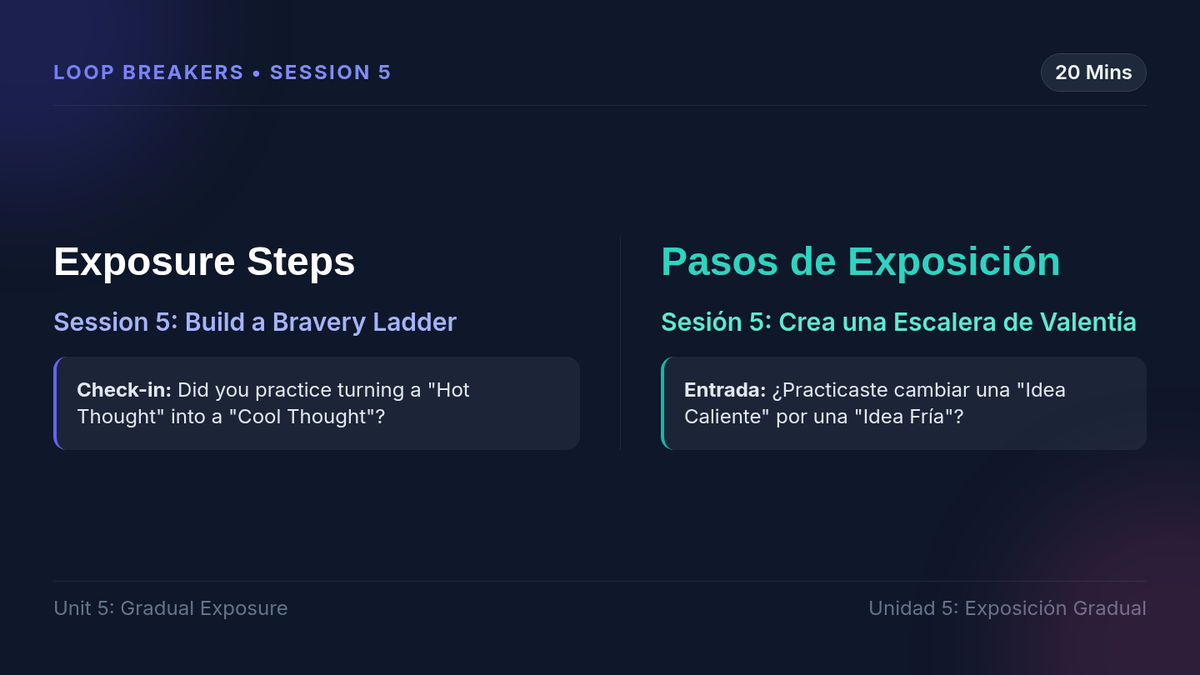
Bilingual 16:9 presentation slides for Lesson 5 (Exposure Steps). Teaches the importance of gradual exposure, how avoidance feeds anxiety, and how to build a bravery ladder.
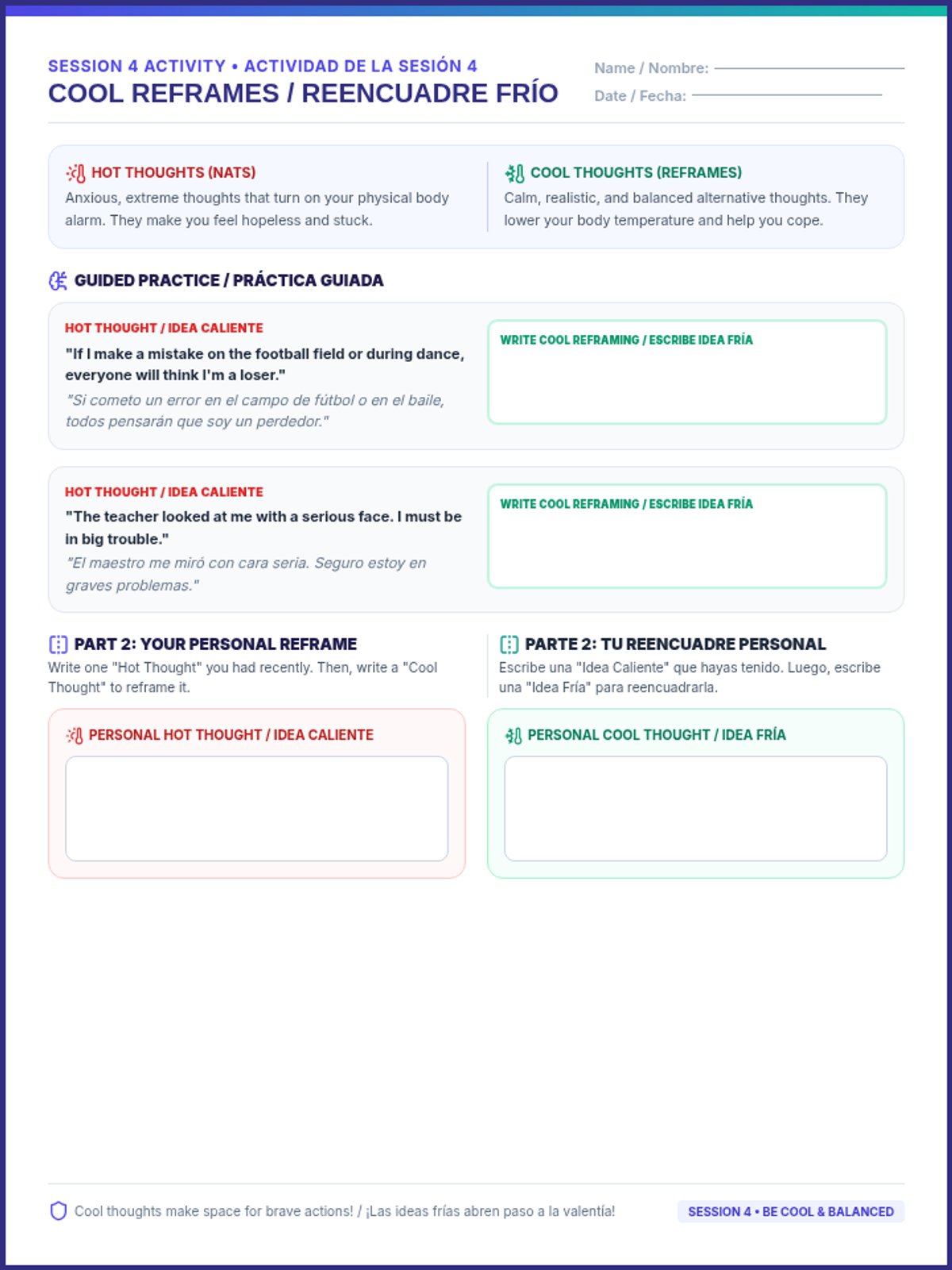
Bilingual worksheet for Lesson 4. Features a guided practice table to transform common anxious 'Hot Thoughts' into balanced 'Cool Thoughts', plus space for a personal reframe.
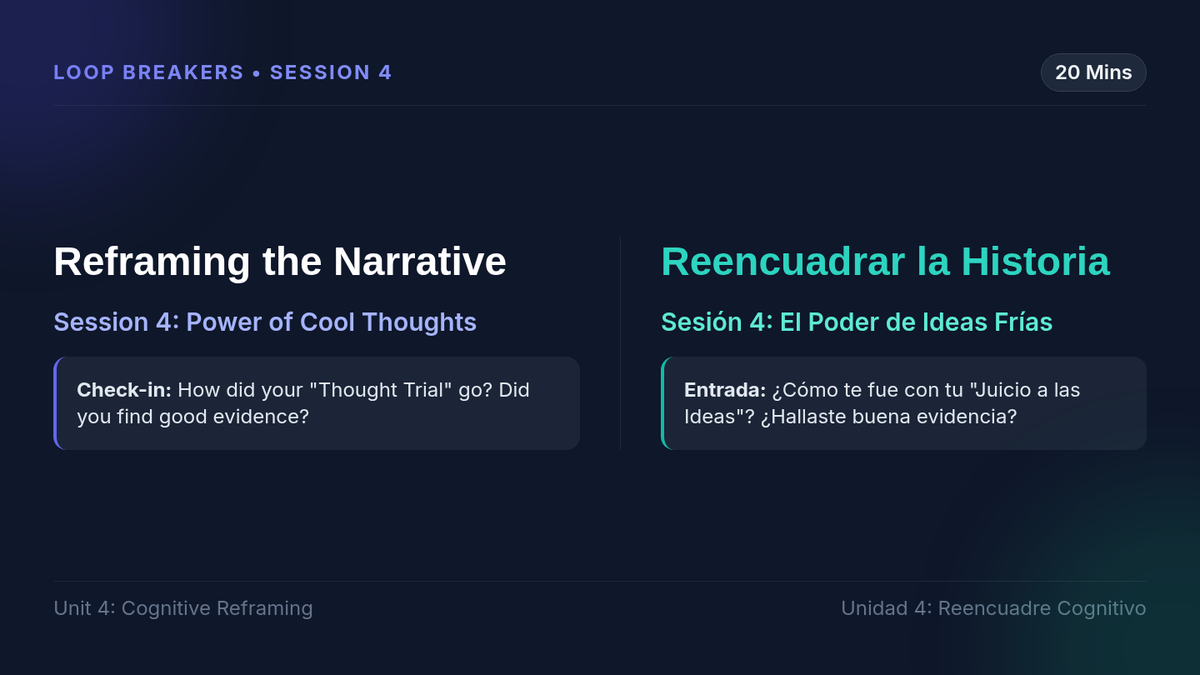
Bilingual 16:9 presentation slides for Lesson 4 (Reframing the Narrative). Teaches how to transform Negative Automatic Thoughts (NATs) into balanced and realistic coping thoughts.
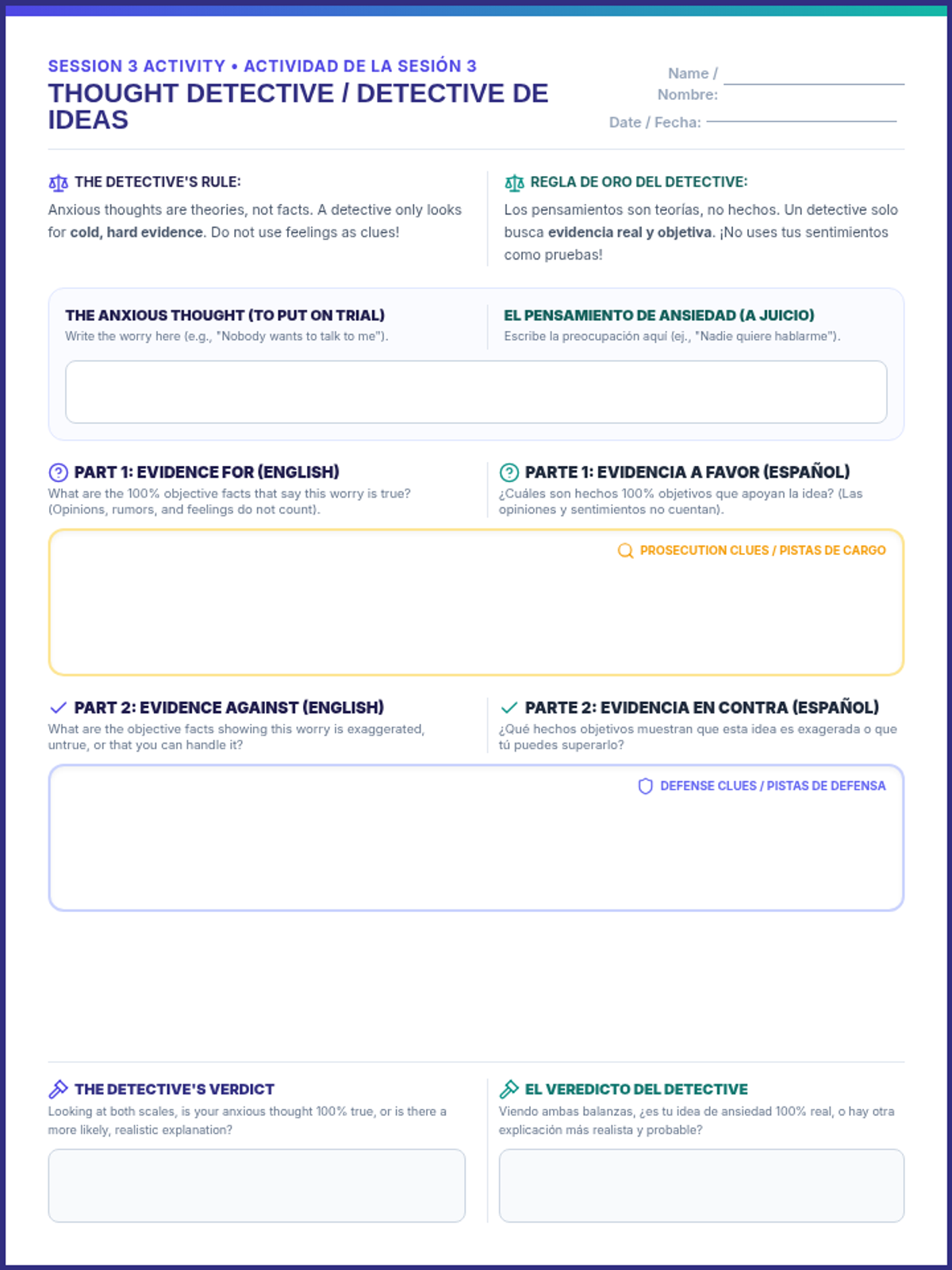
Bilingual worksheet for Lesson 3. Features a dual-column 'Evidence Scale' template for students to dissect an anxious thought by separating feelings from facts.
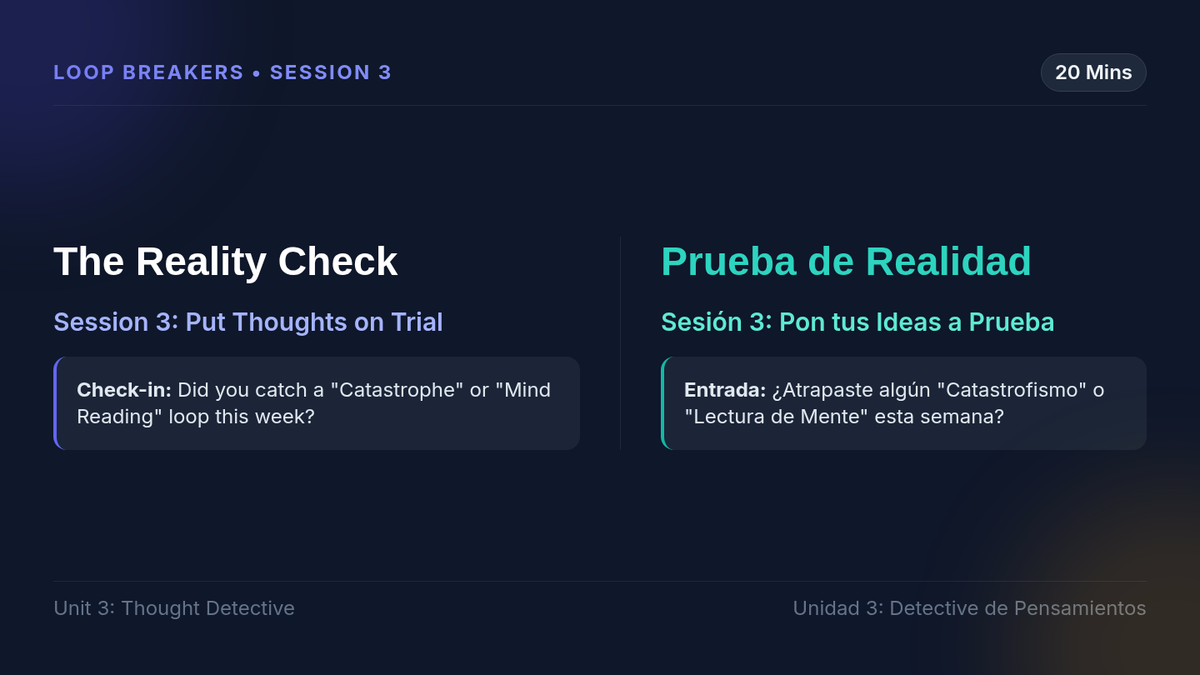
Bilingual 16:9 presentation slides for Lesson 3 (The Reality Check). Teaches the CBT 'thought detective' technique, helping students examine objective evidence for and against their anxious thoughts.
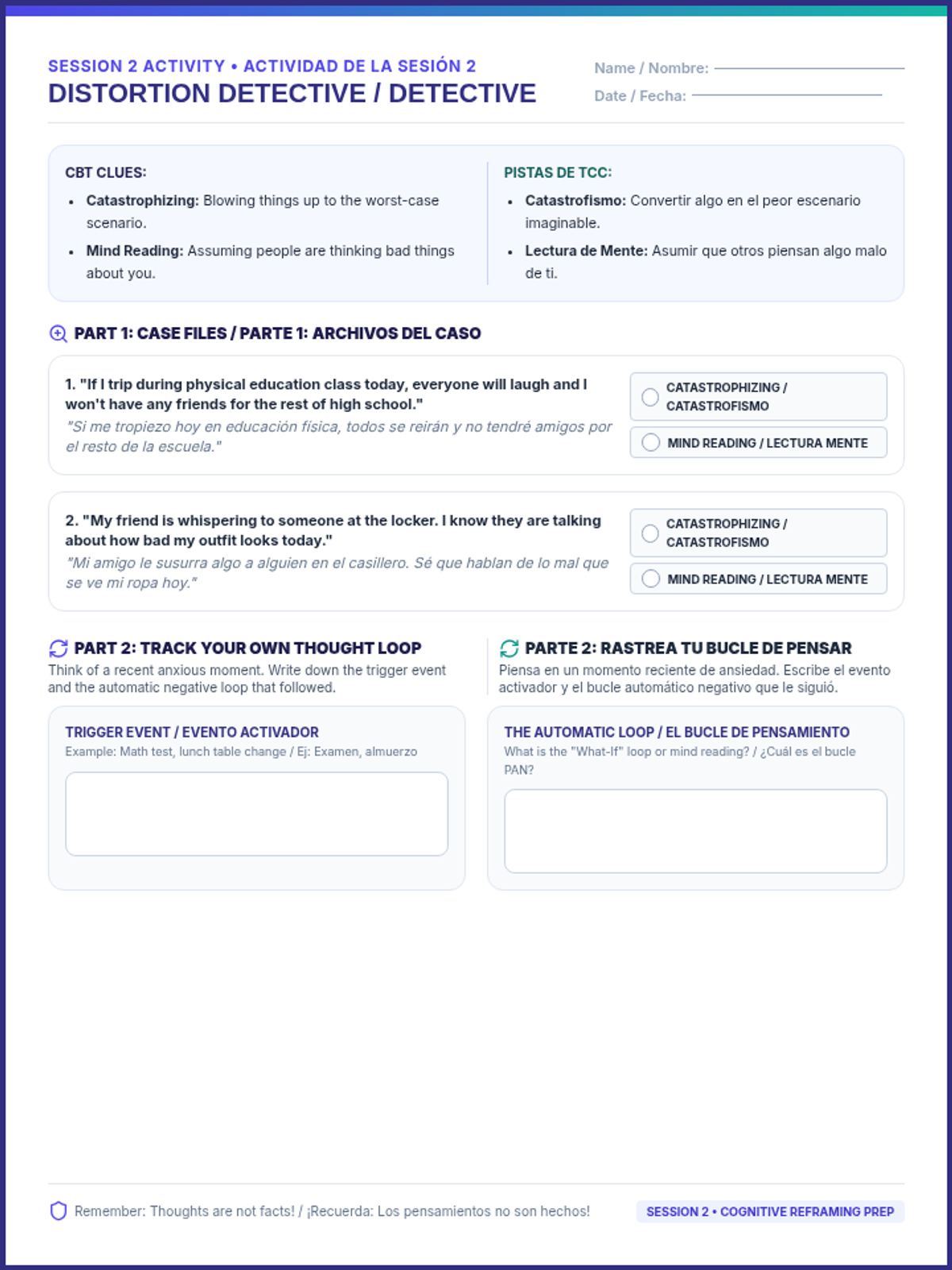
Bilingual worksheet for Lesson 2. Features scenarios for students to classify as either catastrophizing or mind reading, plus a section to trace a personal thought loop.
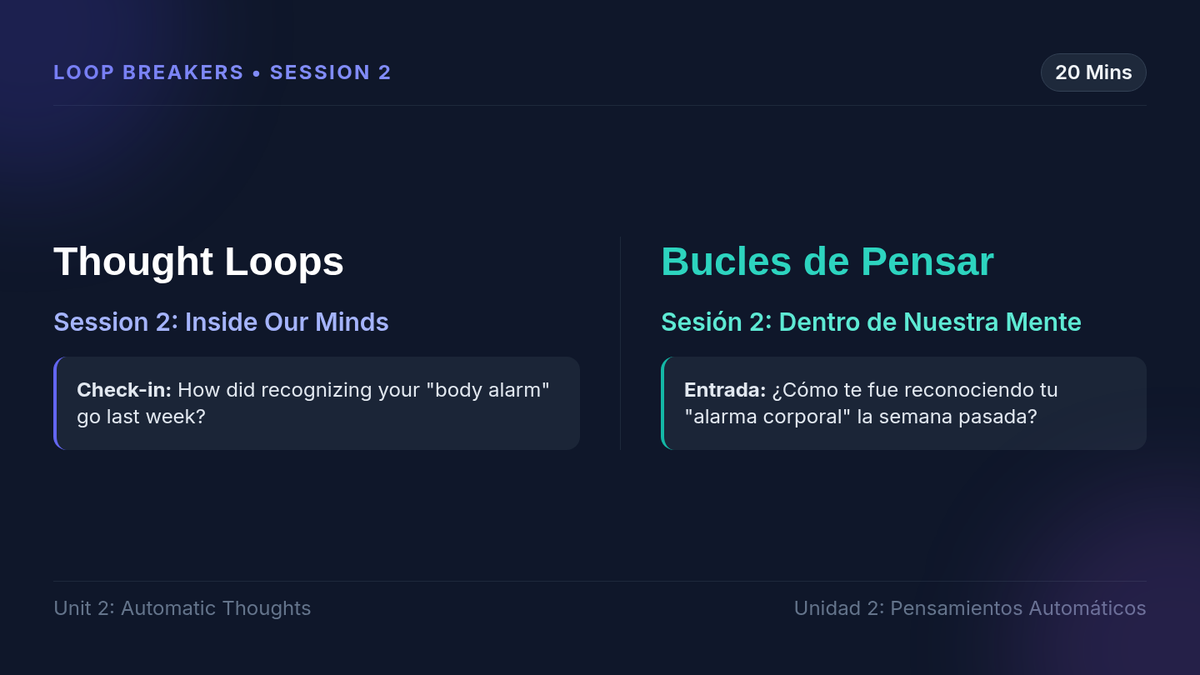
Bilingual 16:9 presentation slides for Lesson 2 (Thought Loops). Explains Negative Automatic Thoughts (NATs) and two common distortions: catastrophizing and mind reading.
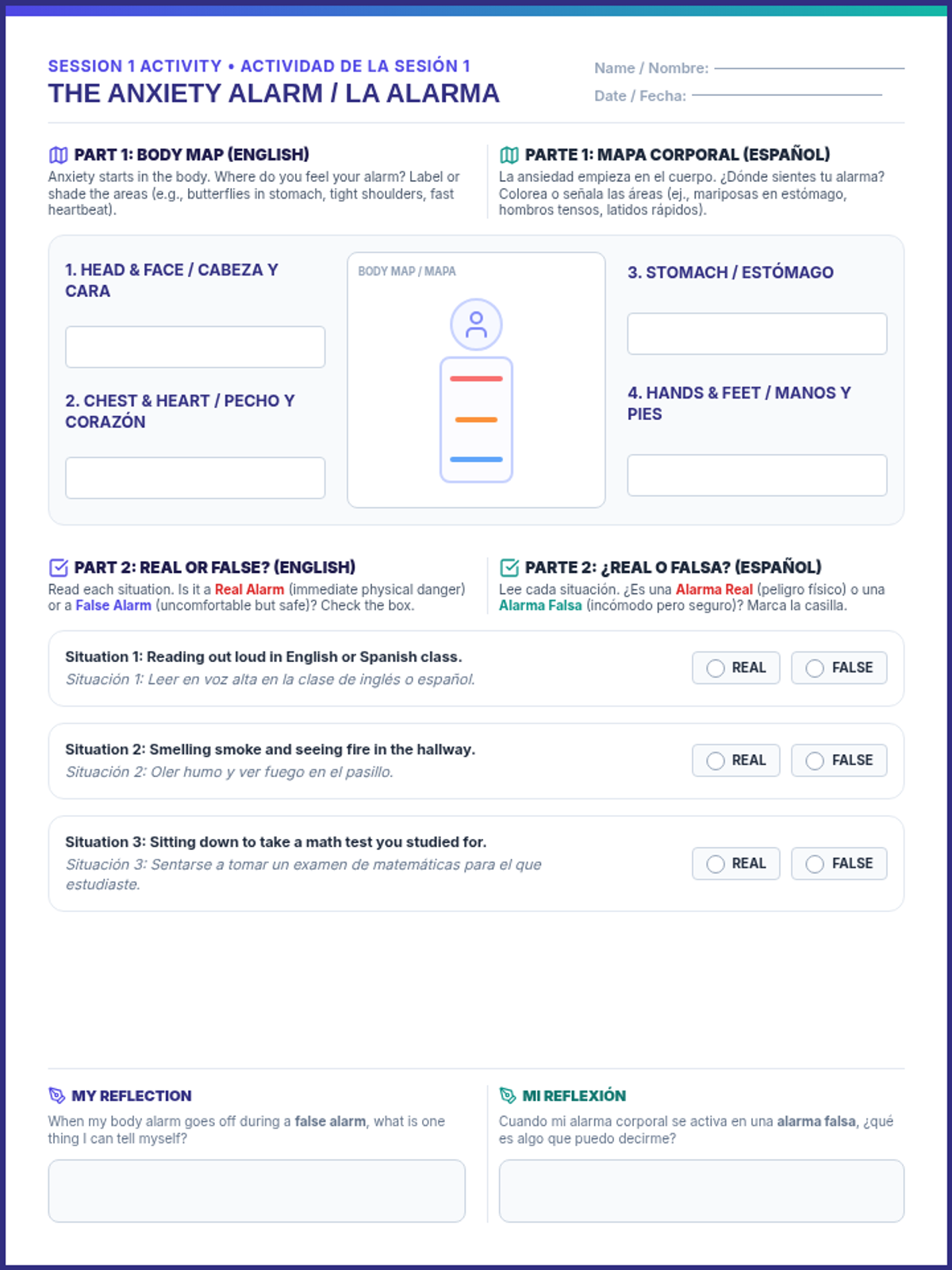
Bilingual worksheet for Lesson 1. Includes a body mapping activity to identify physical anxiety symptoms and a real vs. false alarm classification task.
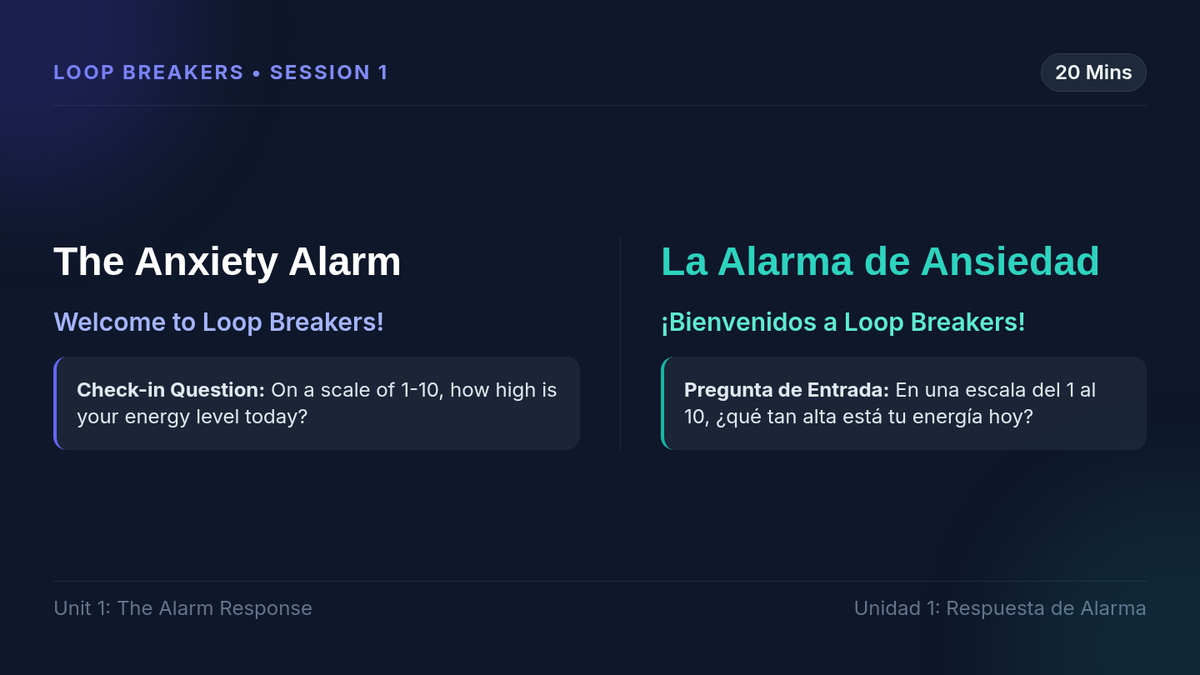
Bilingual 16:9 presentation slides for Lesson 1 (The Anxiety Alarm). Teaches the evolution of the fight-or-flight response, body alarms, and real vs. false alarms with side-by-side English/Spanish columns.
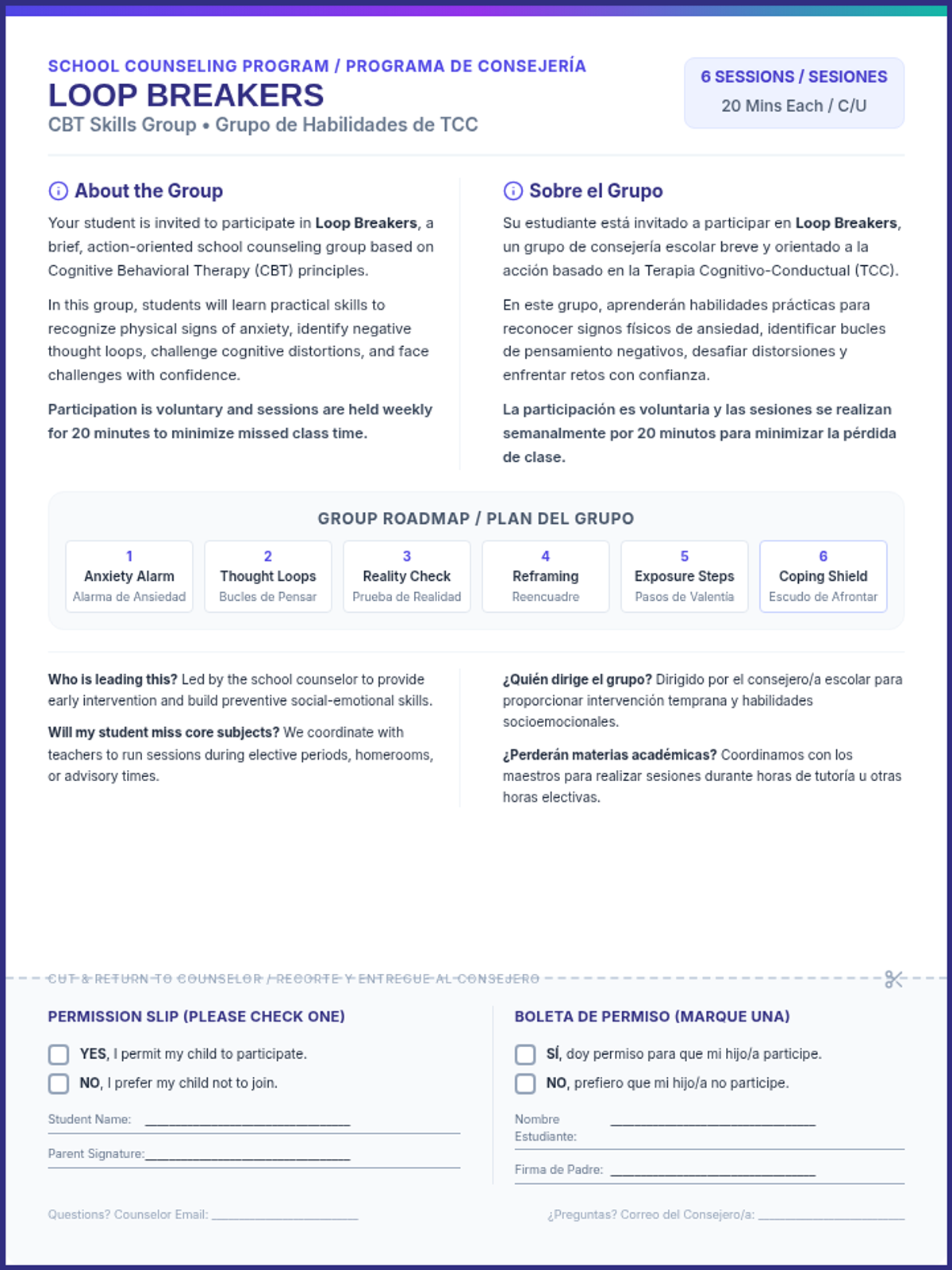
Bilingual parent permission slip / consent form for the CBT counseling group. Features side-by-side English and Spanish translations detailing the group's goals, schedules, and a tear-off signature slip.
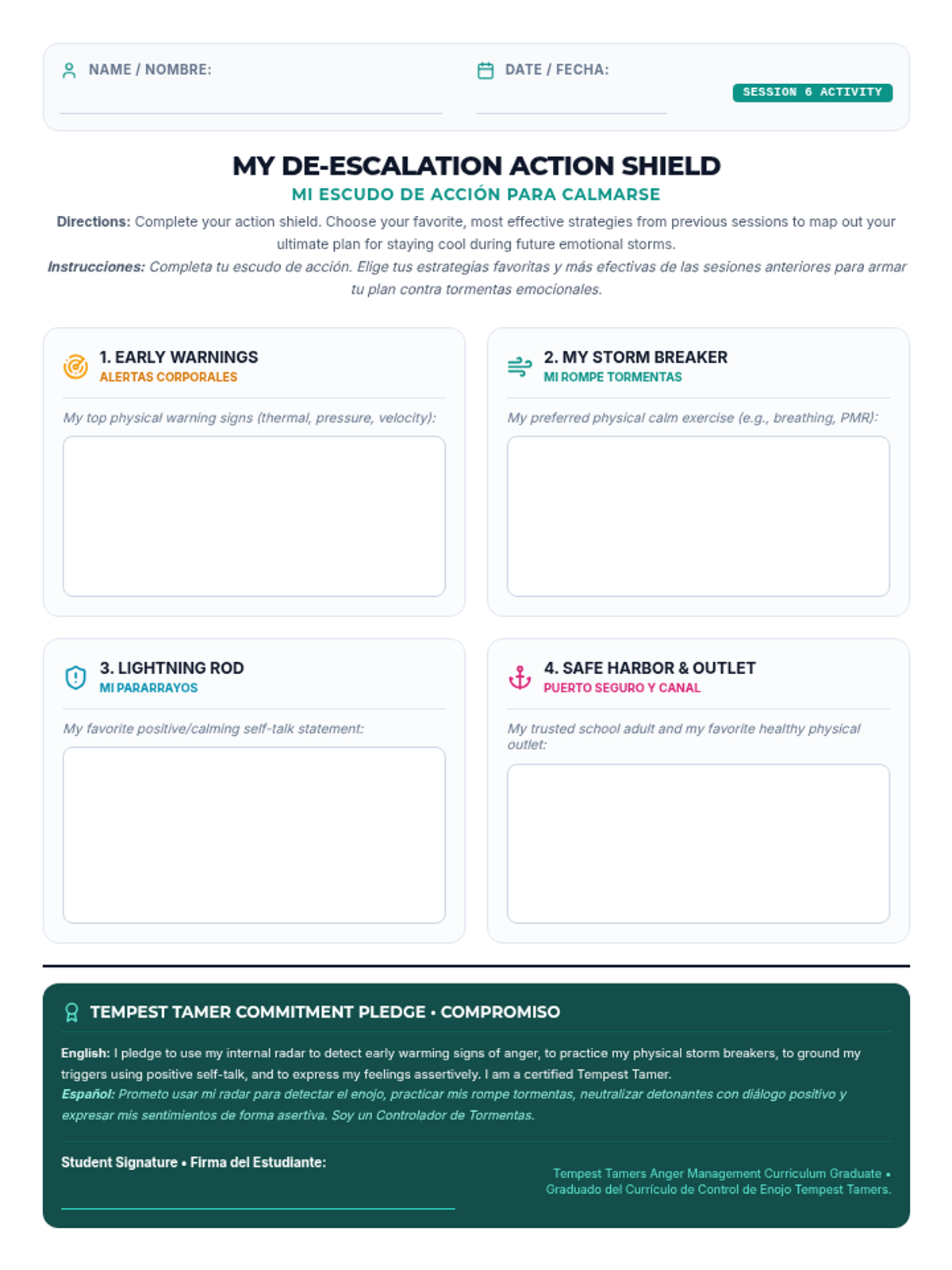
Bilingual student activity sheet for Lesson 6 (Horizon Planner) of Tempest Tamers. Features a personalized de-escalation action shield and a program commitment pledge.
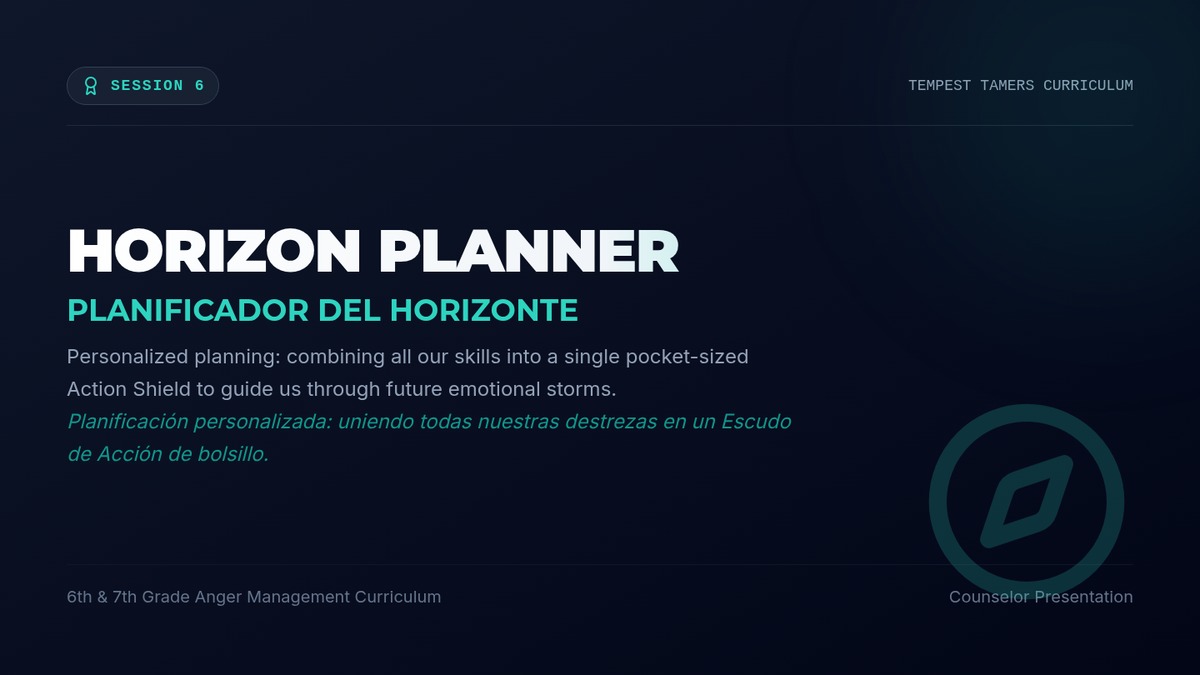
Bilingual, 5-slide presentation for Lesson 6 (Horizon Planner) of Tempest Tamers. Details how to build a personalized, comprehensive de-escalation plan and select healthy physical outlets.
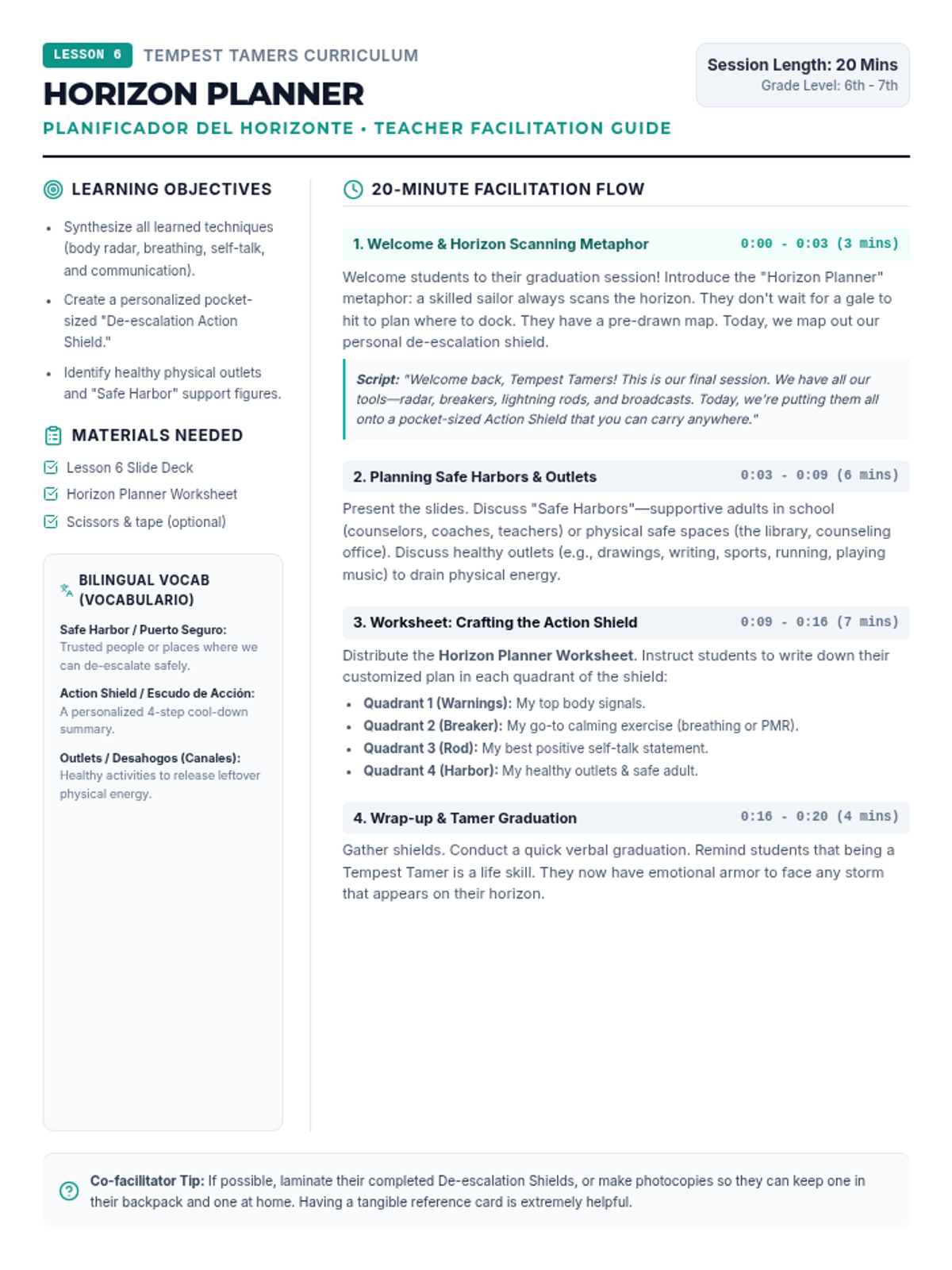
Detailed, 1-page teacher facilitation guide for Lesson 6 (Horizon Planner) of the Tempest Tamers curriculum. Features a structured 20-minute pacing plan, questioning guides, and a graduation script.
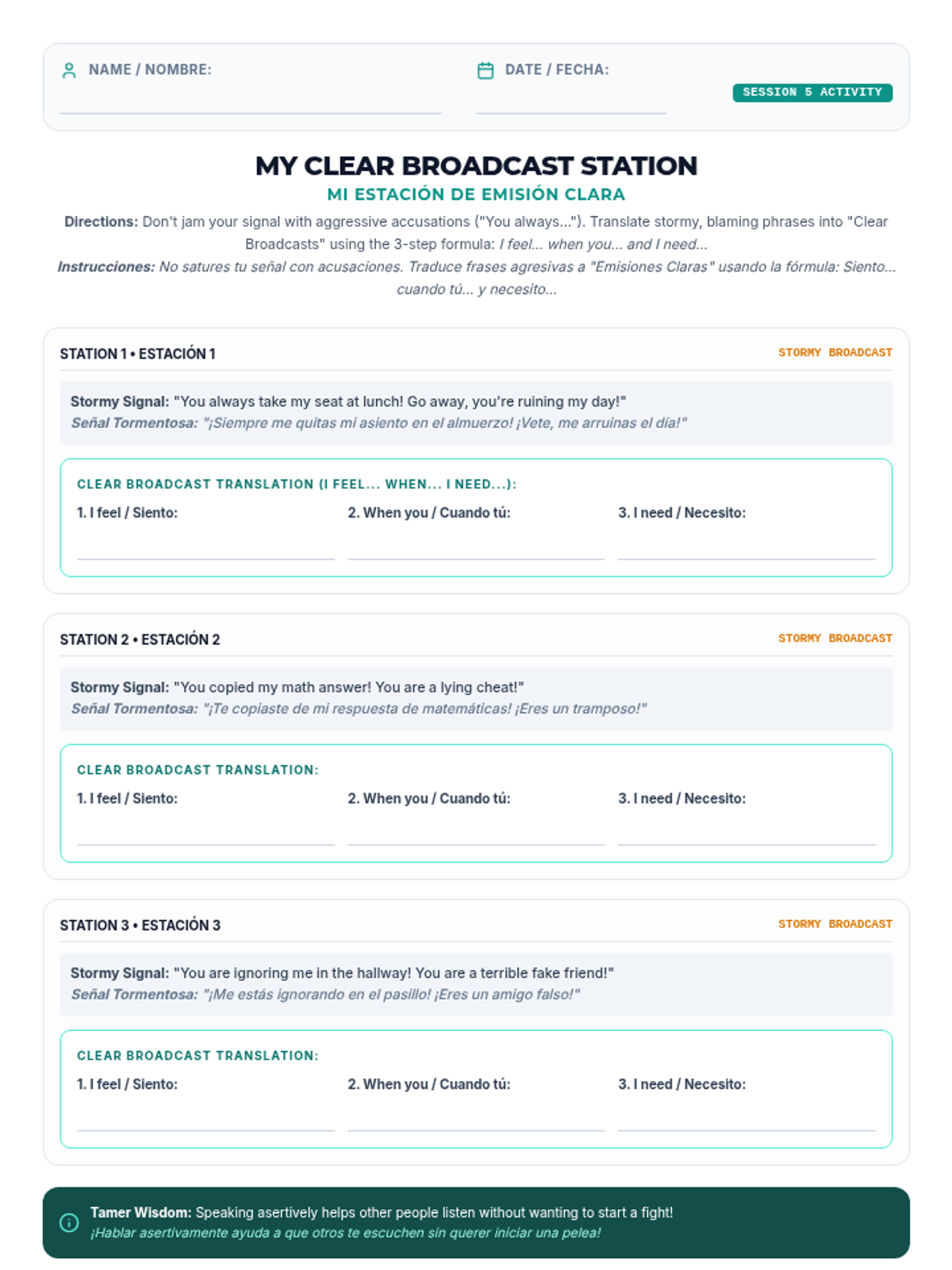
Bilingual student worksheet for Lesson 5 (Clear Broadcast) of Tempest Tamers. Features a scenario-reframing grid to practice I-statements and assertive communication.
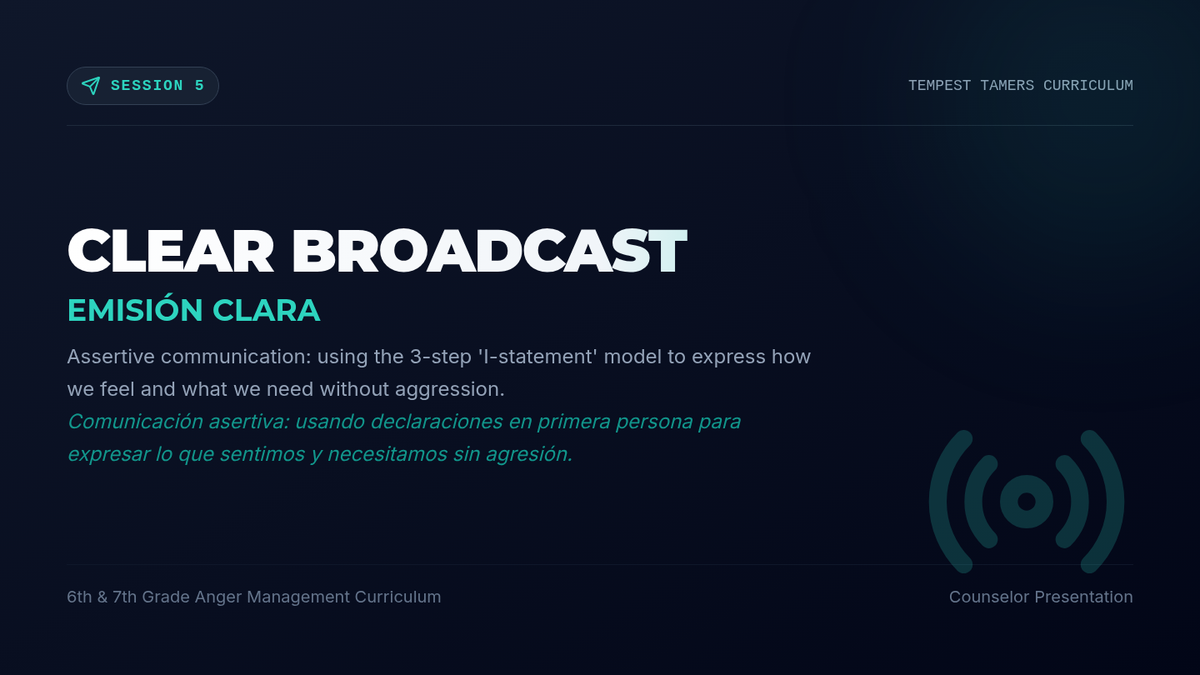
Bilingual, 5-slide presentation for Lesson 5 (Clear Broadcast) of Tempest Tamers. Details how to express feelings constructively using a clear weather broadcast metaphor and I-statements.
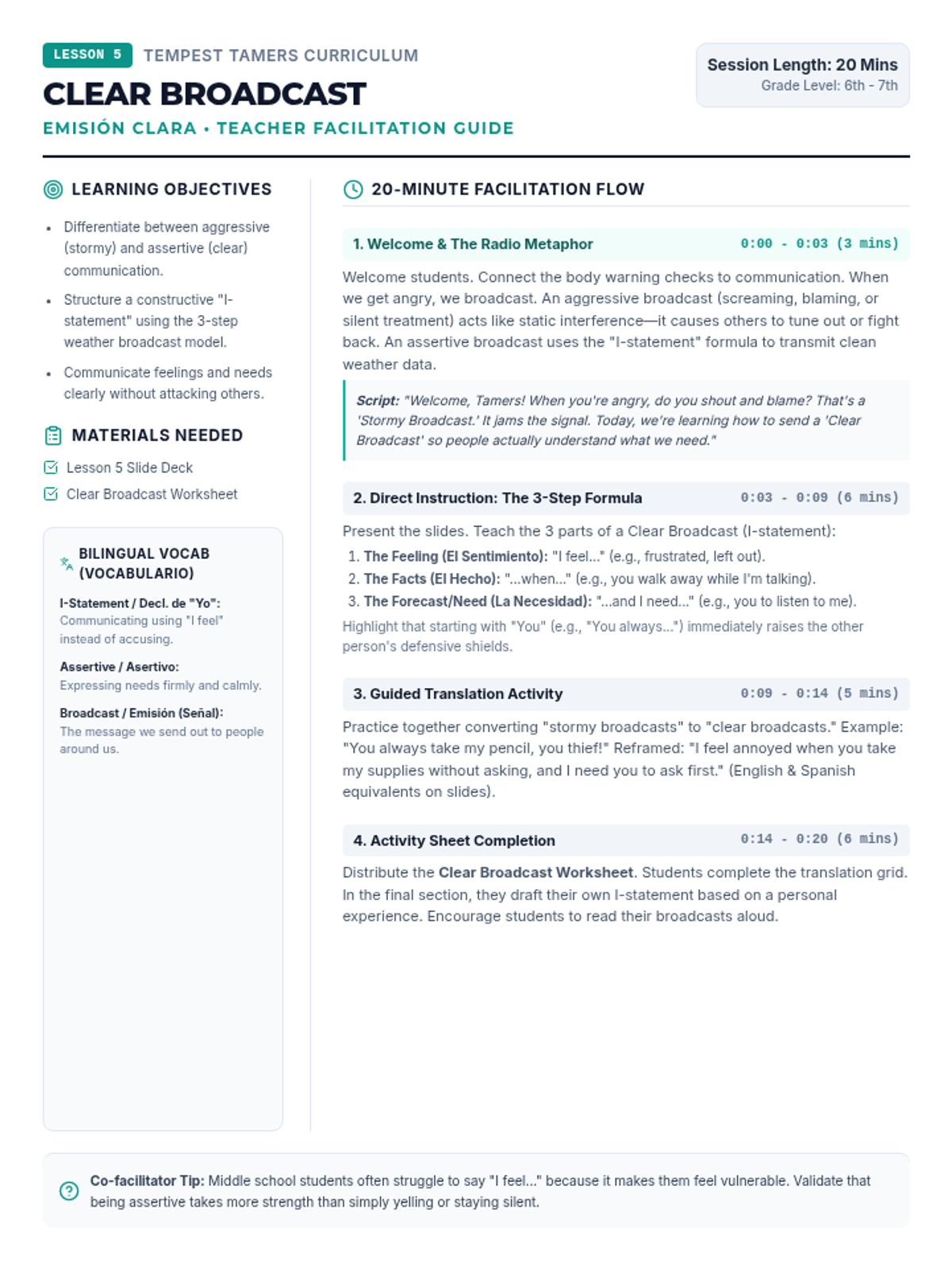
Detailed, 1-page teacher facilitation guide for Lesson 5 (Clear Broadcast) of the Tempest Tamers curriculum. Features a structured 20-minute pacing plan, questioning guides, and bilingual I-statement templates.
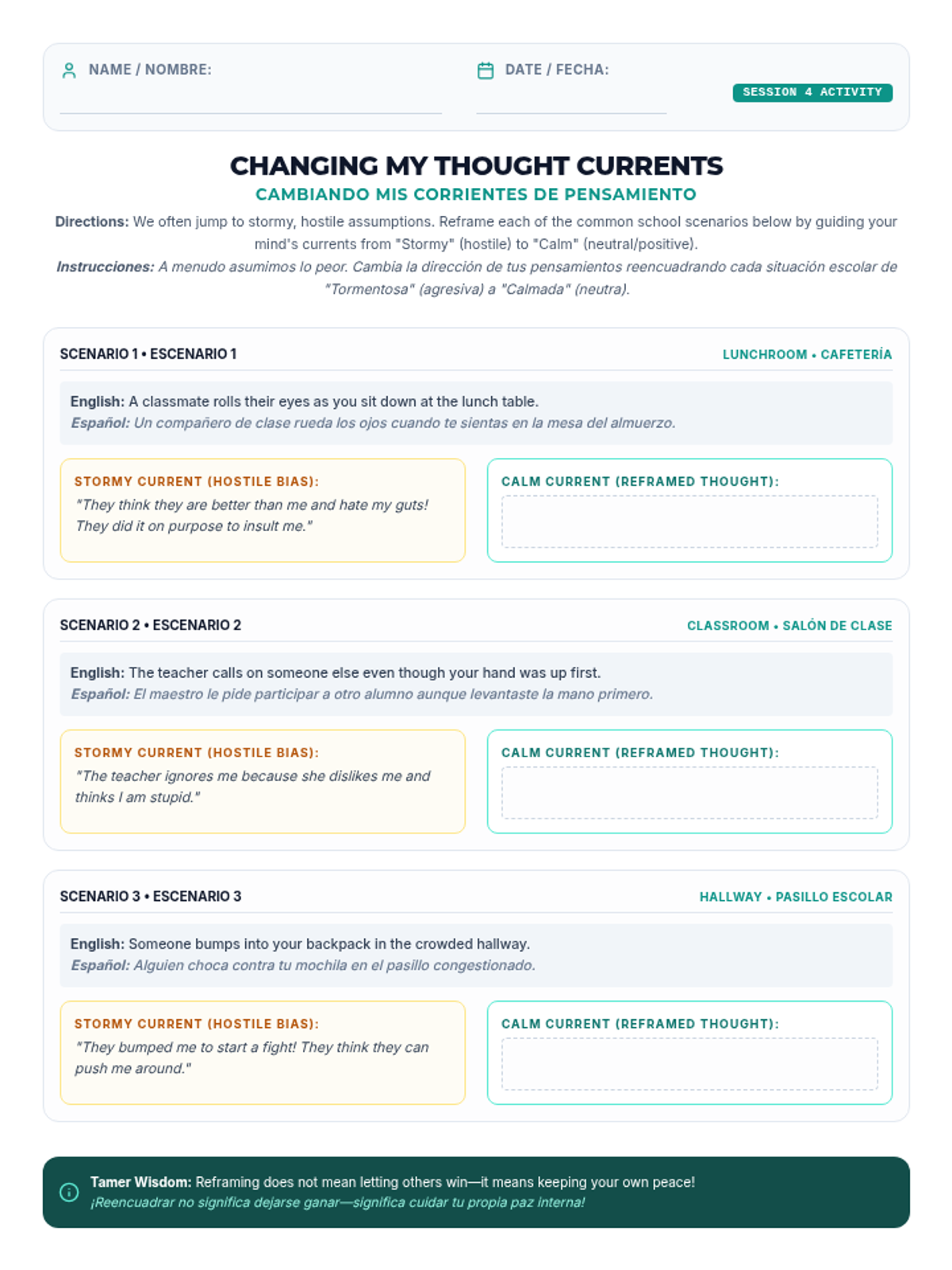
Bilingual student worksheet for Lesson 4 (Changing Currents) of Tempest Tamers. Features a scenario-reframing grid to practice cognitive reframing of hostile assumptions.
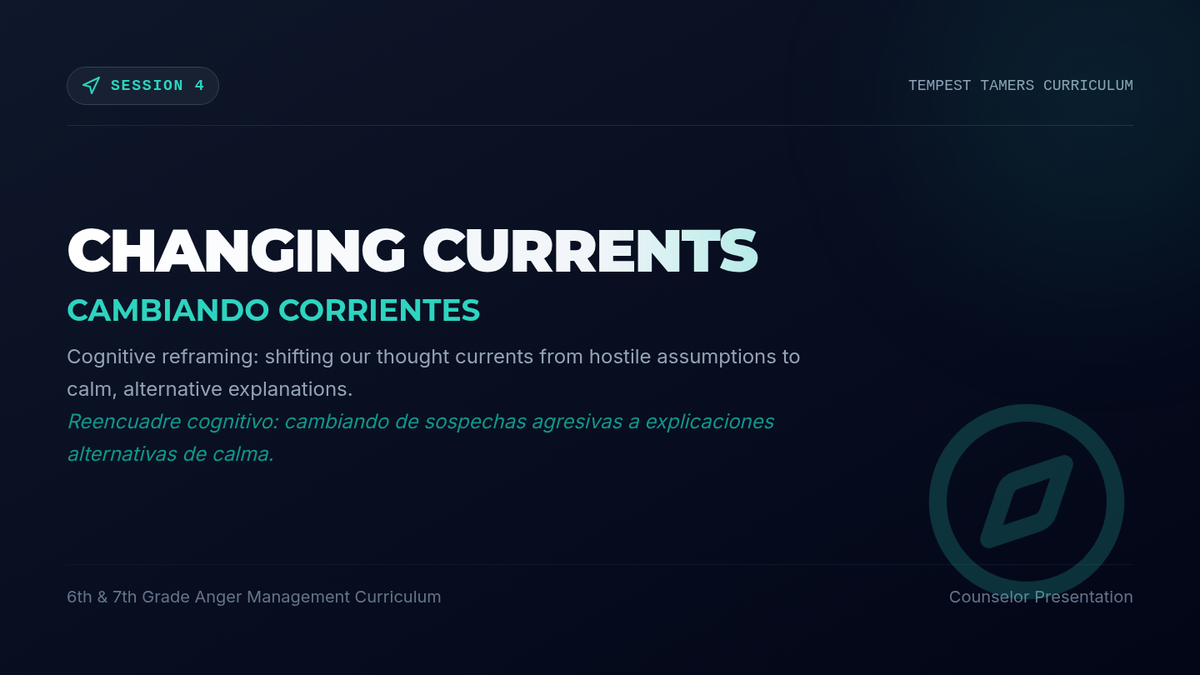
Bilingual, 5-slide presentation for Lesson 4 (Changing Currents) of Tempest Tamers. Details how to shift from hostile assumptions to calm, alternative explanations.